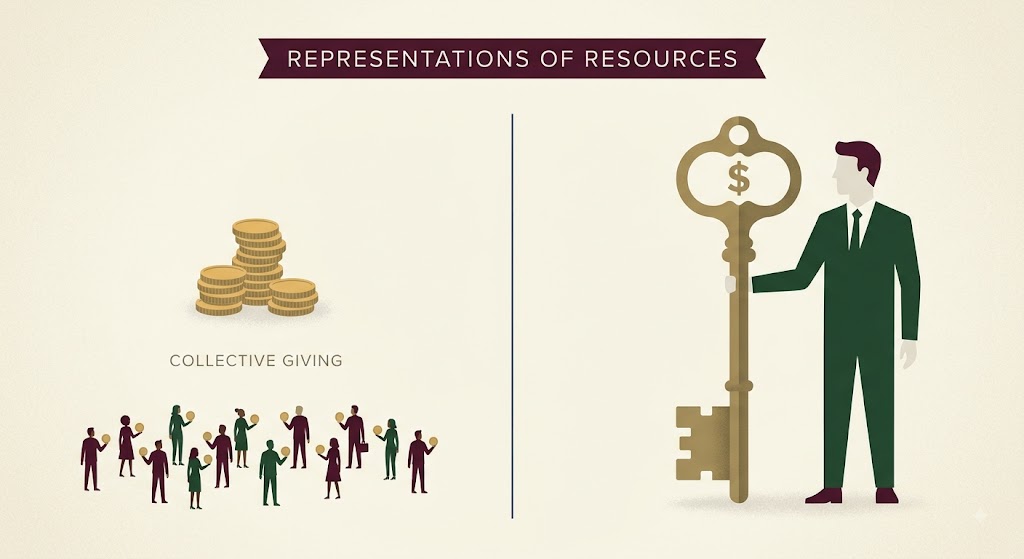
Tag Archives: capital retention

Building Dynasties: What It Will Take for African American Families to Rise to Power

“control, control of resources, control of self, control of nation, requires preparation — Garveyism was about total preparation.” – Dr. John Henrik Clarke, writing on Marcus Garvey’s philosophy of Black institutional power

In 1952, a mason in Americus, Georgia bought eleven acres with cash he’d saved from three decades of laying brick. He built a house on it, a smokehouse behind it, and a wraparound porch where he told his grandchildren that the land was the family’s now, forever. He died in 1979. By 1994, the eleven acres had been split six ways, sold in fragments to cover a funeral, a divorce, and two bad business loans. Today a subdivision sits where the smokehouse stood. The mason did everything right by the logic he was given: work, save, buy, own. What he lacked was not virtue. It was infrastructure. Nobody had ever taught him that land without governance is just land waiting to be divided.

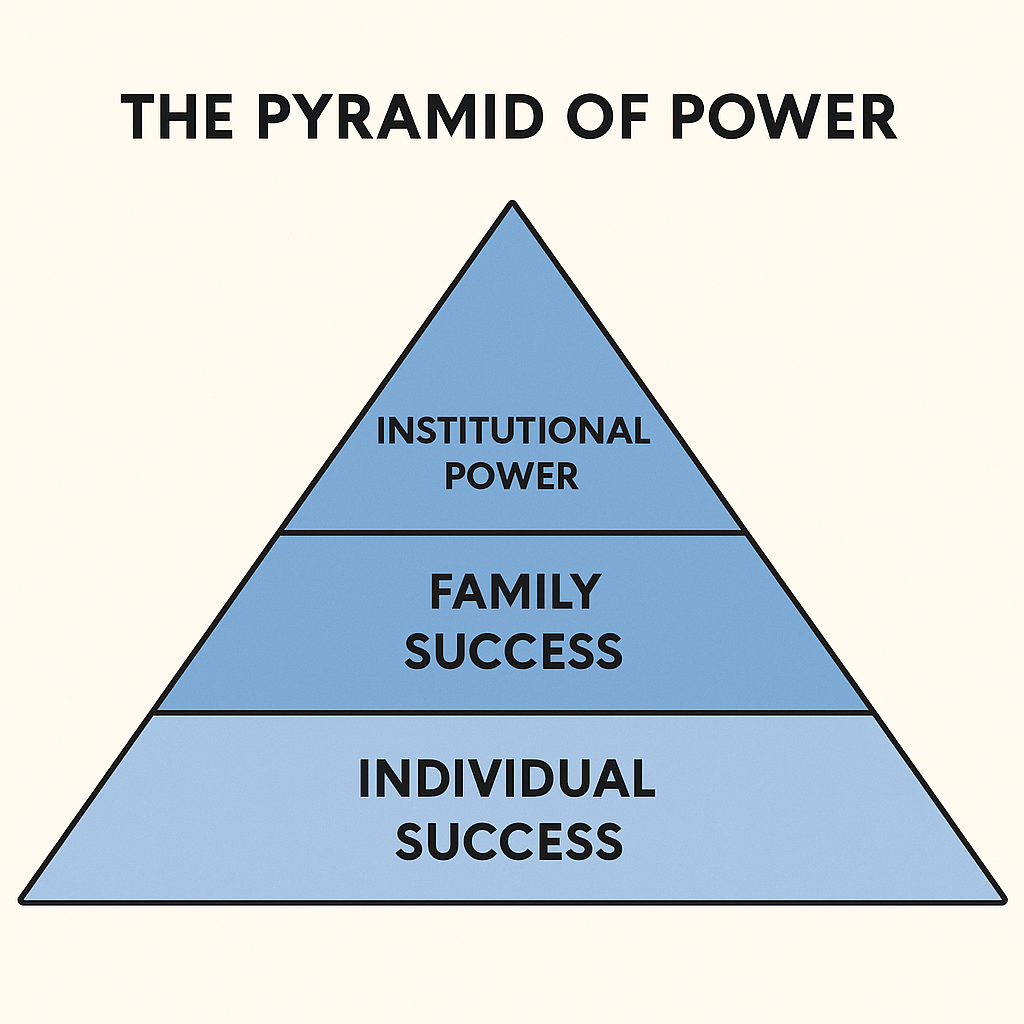
That story is not an outlier. It is the median outcome. And it is the central argument of this piece: African America’s problem was never a shortage of individual achievement. It is a near-total absence of the legal, financial, and cultural machinery that converts one generation’s success into the next generation’s platform. Until that machinery is built, deliberately and aggressively, every dollar earned by this community will keep dying with the person who earned it.

Start with the scoreboard, because the scoreboard is brutal. The Federal Reserve’s 2022 Survey of Consumer Finances put median Black household net worth at $44,900, against $285,000 for the median White household — a gap of more than six to one, and one that widened in absolute dollar terms even as Black wealth grew faster in percentage terms during the pandemic recovery. Growth rate is a vanity metric when the base is this small. A 60 percent increase on $28,000 is still poverty with better arithmetic. The gap is not closing. It is compounding, in the same way interest compounds, except in the wrong direction.

Now layer on top of that the single largest wealth movement in American history, already underway. Cerulli Associates projects that $84 trillion will pass from the Baby Boomer and Silent Generations to heirs and charities through 2045, the bulk of it concentrated among households that were already high-net-worth. This is not a rising tide. It is an inheritance economy, and inheritance economies reward whoever already has family structures in place to receive, consolidate, and reinvest capital across generations. Families without that structure will watch the transfer happen around them, not to them. The transfer is not going to wait for African America to get its paperwork in order.

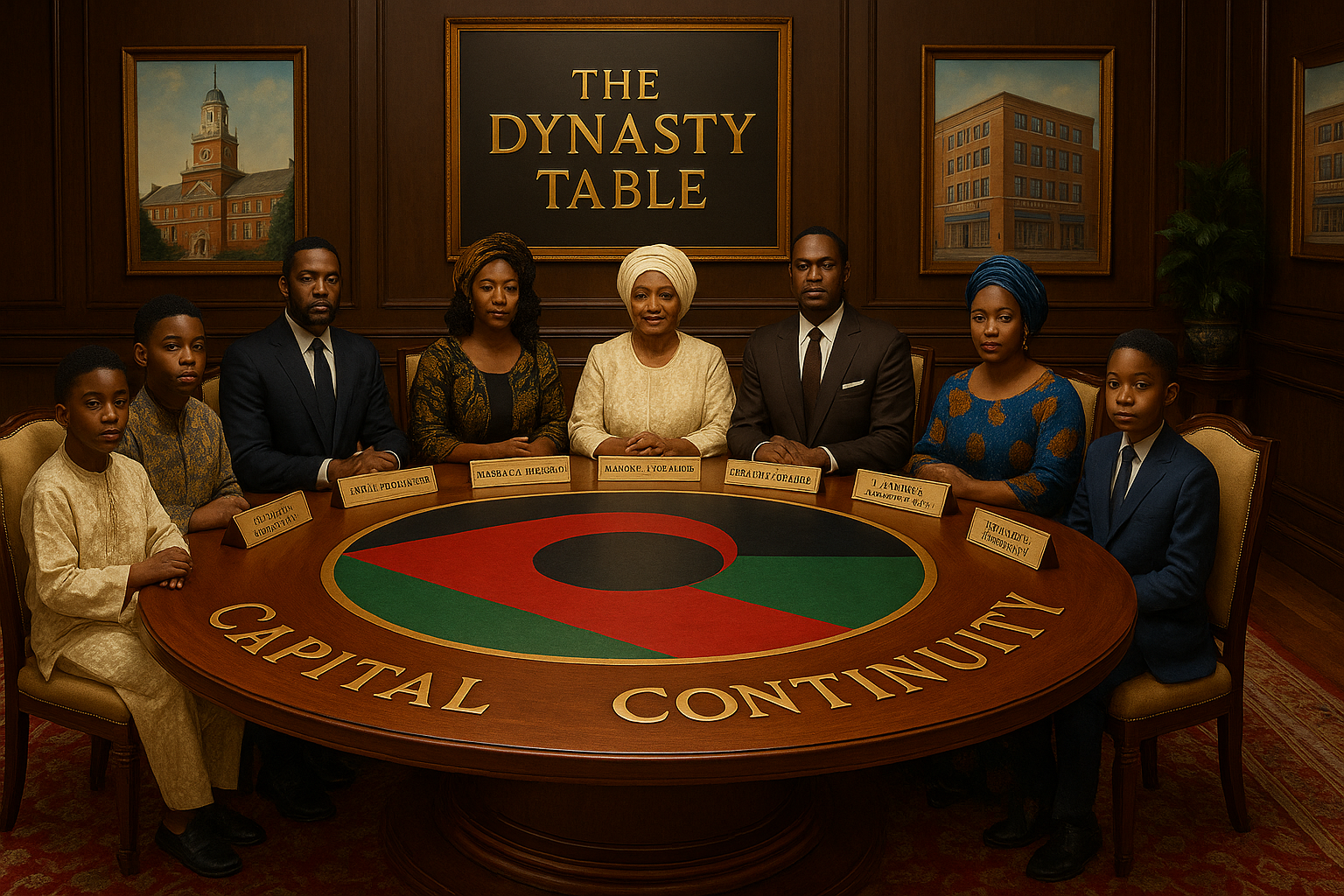
This is where the sentimental version of “generational wealth” needs to be retired. Passing down money is not the same as passing down power, and Black America has been sold the former as if it were the latter. Power, as any serious student of the Waltons, the Rockefellers, or the Kochs understands, does not come from an inheritance check. It comes from the entity that controls the check. The Walton family does not merely benefit from Walmart’s success; through Walton Enterprises LLC and the Walton Family Holdings Trust, they collectively control roughly 45 percent of the company’s outstanding shares, a concentrated bloc large enough to determine board composition, executive succession, and long-term strategy three generations after Sam Walton’s death. That is not inheritance. That is institutionalized command, engineered through trust structures, family governance, and a refusal to let ownership fragment. Jay-Z’s net worth impresses a magazine cover. It does nothing for the fortieth Black family down the street, because it is not organized as an institution — it is one man’s balance sheet, subject to one man’s mortality.

The uncomfortable truth is that most families, of any race, fail at this. Research tracked by the Family Business Institute finds that roughly 30 percent of family-owned businesses survive into a second generation, about 12 percent make it to a third, and only 3 percent endure into a fourth. Succession is hard even with capital, even with lawyers, even with three generations of practice at running something. What that data point exposes is not that Black families are uniquely undisciplined — it’s that family continuity is a discipline nobody is taught, and African America has had roughly one-fifth of the time (counting from Emancipation, and accounting for the systematic destruction of Black wealth through redlining, urban renewal, and outright terrorism such as the 1921 razing of Tulsa’s Greenwood district) to build the muscle memory that older American dynasties built over five and six generations. The response to that deficit cannot be more individual grit. It has to be structure, copied deliberately from where it already works, and adapted ruthlessly to this community’s actual starting conditions.

So build the structure. A family constitution — a written document specifying mission, capital rules, and succession mechanics — costs nothing but discipline and an afternoon with a competent estate attorney, yet almost no Black family has one, while every dynasty mentioned above treats theirs as more binding than a corporate bylaw. A family office does not require billionaire assets to justify its existence; pooled family capital in the low six figures is sufficient to retain a fee-only advisor, establish an LLC or trust structure, and begin making coordinated decisions across a real portfolio — brokerage accounts, retirement vehicles, business equity, insurance-funded trusts, even royalty and intellectual-property streams — instead of six relatives each managing a fragment of the same family’s capital in isolation. Land is one asset class among several and should be governed the same way the rest are: never liquidated to cover an emergency when it could instead be collateralized, folded into a trust, or held alongside an equity stake in a family business and a diversified investment account, each professionally managed rather than administered by whichever relative answered the phone first.

None of these families stayed inside their founding asset. Koch Industries began as a part-interest in a single Minnesota oil refinery bought out in the 1940s and 1960s; under Charles Koch it diversified deliberately into pipelines, fertilizer, pulp and paper, ranching, glass, electronics, and commodities trading, so that no single market downturn — a refining glut, a paper-price collapse, a bad cattle season — could touch the whole estate at once. The Rothschilds began as court bankers to European nobility in the 1760s and, over two centuries, moved family capital into railways, mining, real estate, energy, and, notably, wine estates like Château Lafite and Château Mouton — acquired not as hobbies but as productive, appreciating assets that diversified the family’s holdings away from the banking sector that made them. Even the Waltons, whose fortune is most associated with a single company, don’t hold it as a single asset: Walton Enterprises runs its own internal investment arm allocating family capital into private equity, real estate, and outside ventures entirely apart from Walmart stock, precisely so the family’s fate isn’t fused to one retailer’s stock price. In every case, the founding asset became the seed capital for a portfolio, not the permanent shape of the estate. That is the model the eleven acres in Americus should be measured against. The land was never meant to be the ceiling of that family’s wealth — it was meant to be collateral for the next asset, security for a loan into a business, a hedge alongside a brokerage account, one holding in a portfolio instead of the whole of it. Held that way, structured that way, it doesn’t matter whether the estate a family passes down began as land, a barbershop, a nursing license, or a pension. What matters is whether it was ever allowed to grow past its origin.

None of this is exotic. It is standard operating procedure for every dynasty this essay has named. It has simply never been marketed to African America as something within reach, because the wealth management industry profits more from selling individual products than from building family institutions that don’t need it.

Institutions of the wider Black ecosystem have a direct, self-interested role here, and this is where the case must be made in dollars, not sentiment. A Black-owned bank or credit union that captures family trust deposits and estate accounts gains stable, patient capital instead of transactional balances. A historically Black college or university that structures a real endowed-chair or scholarship-naming relationship with a family — rather than accepting a one-time gift — gains a recurring donor relationship spanning generations rather than a single tax-season transaction. Fisk, Tougaloo, Dillard, and Xavier of Louisiana have decades of experience cultivating exactly this kind of multigenerational donor family; Alcorn State, Coppin State, Savannah State, Bethune-Cookman, Norfolk State, Delaware State, Fort Valley State, and Morgan State could each become the anchor institution for a rising family dynasty if they pursued the relationship as deliberately as the Rockefellers pursued the University of Chicago or the Dukes pursued the university that bears their name. The institution that captures a family early, before its capital scales, is the institution that owns the relationship when that capital multiplies. This is not charity. It is customer acquisition, and any HBCU treating it otherwise is leaving its own endowment on the table.

The same logic extends past the water’s edge. Diaspora capital coordination — joint investment vehicles linking African American family offices with counterparts in the Caribbean and across Africa Core — is not a symbolic gesture toward Pan-Africanism. It is a hedge against the concentration risk of building wealth inside a single, historically hostile domestic market. A family real estate or infrastructure fund co-managed across African American, Jamaican, and Ghanaian family offices diversifies political risk, currency exposure, and asset class in one structure, while building exactly the kind of institutional density and strategic coordination that isolated, single-country family wealth can never achieve alone.

None of this happens through moral appeal, and this publication has no interest in making one. Appeals to racial solidarity have moved conferences and Twitter timelines; they have not moved balance sheets. The case for family institutionalization has to be made the way the Waltons, the Kochs, and the Wallenbergs made it to their own descendants: this structure protects what you have from your own children’s mistakes, from probate courts, from market volatility, and from the actuarial certainty that someone in every family eventually dies without a plan. Estate planning is not morbid. It is the single highest-leverage act of institution-building available to a family with under a million dollars in assets, and it costs less than a used car.

There is also a governance failure hiding inside the sentimental version of Black wealth-building that deserves direct confrontation. Families that treat wealth distribution as an equality exercise — splitting everything evenly among heirs regardless of role, competence, or commitment — are optimizing for fairness at the expense of survival. The Family Business Institute’s own data on why family enterprises collapse points overwhelmingly to succession disputes and undefined governance, not lack of capital. A family that assigns real roles — someone accountable for investment decisions, someone accountable for philanthropic strategy, someone accountable for legal and tax exposure — and backs those roles with actual authority, not just a title at Thanksgiving, will outlast a family that insists every cousin gets an equal, undifferentiated vote on every decision. Institutions require hierarchy. Families building institutions will have to get comfortable with that, however uncomfortable it sits against a cultural instinct toward flattened, communal decision-making.

The alternative to all of this is not neutral. It is continued erosion. Every family that fails to formalize governance sends its capital back into the undifferentiated churn of individual consumption — the paycheck model this publication has criticized elsewhere, in which wealth is treated as something to be spent rather than something to be commanded. Every dollar that leaves the Black institutional ecosystem through an unplanned estate, an uninsured death, or a liquidated piece of land is a dollar the next generation has to earn from zero, while families with institutional infrastructure simply compound what they already hold. The compounding gap in the Federal Reserve’s data is not an accident of history. It is the visible output of one set of families running institutional software and another set running none at all.

The mason in Americus did not fail his family. He succeeded at everything available to him in 1952, in a state where a Black man building wealth at all was itself an act of defiance. What failed him was the absence of a structure that could have held what he built past his own lifetime, and the absence of a plan to let that first asset become seed capital for a second and third — a trust, a governance document, a designated successor with both the authority and the training to keep the estate whole and growing, whatever form that estate took or became. That absence is fixable, at a scale of millions of families, in this generation, and it applies as much to a brokerage account or a stake in a family business as it does to eleven acres of Georgia clay. The Kochs turned one refinery into a dozen industries. The Rothschilds turned a banking desk into vineyards and mines. Neither family mistook where they started for where they had to stay. It requires no act of Congress and no act of philanthropy from outside the community. It requires families to stop organizing themselves as clusters of individuals bound by affection, and start organizing as institutions bound by structure, because affection does not survive probate court and structure does. The eleven acres are gone. Whatever the next generation holds — land, equity, a business, a portfolio, or something none of them have thought to build yet — does not have to stop there, and does not have to follow them into the ground.

Disclaimer: This article was assisted by ClaudeAI.
Philadelphia and Boston, Jaylen and Jayson, Black and Biracial, and America’s Continued and Growing Reshaping of Blackness

“The doll that’s a nice doll… the doll that’s a bad doll.” – Dr. Kenneth Clark, recalling the study’s core questions, 1985

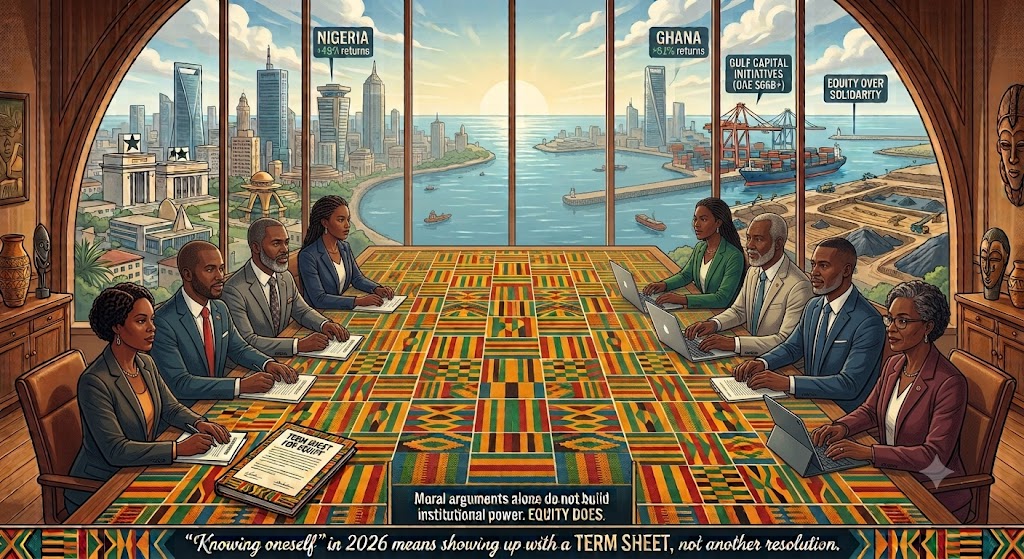
In the old Akan trading towns along the Gold Coast, a young carver could choose one of two paths once his hands proved skilled enough to earn coin. The first path led to the chief’s court, where a steady commission awaited any carver willing to produce masks and stools bearing the court’s preferred likeness, paid promptly, praised publicly, and forgotten the moment a newer hand arrived. The second path led to the carver’s own workshop, built slowly with his own timber, stocked with his own apprentices, selling to whoever would buy but owned by no patron. The court path paid faster. The workshop path paid forward, to sons, to students, to a guild that outlived the carver himself. Both carvers were skilled. Both were paid. Only one built something that did not depend on being chosen again tomorrow.

On July 1, 2026, the Boston Celtics traded Jaylen Brown to the Philadelphia 76ers for Paul George and four draft picks, ending a ten-season partnership that produced an NBA championship and six trips to the Eastern Conference finals. Boston’s stated rationale was structural, and every part of it is true: a roster straining under two supermax contracts, a collapsed pursuit of Giannis Antetokounmpo, and a first-round exit that exposed real fit problems on the floor. None of that is manufactured. But a trade’s stated logic and its full logic are rarely the same document, and this one is worth reading past the press release.

For a decade Boston fielded one pairing of stars, and the city called them, with the affection reserved for a matched set, “the Jays.” Brown and Tatum arrived within a year of each other, won a championship together in 2024, and built back-to-back supermax contracts that made them two of the highest-paid athletes in league history. They shared a locker room, a coaching staff, and a fan base that likes to believe it is more progressive than any other in professional basketball. What they never shared was an economic strategy, and that gap is worth sitting with not because one man was more talented, but because their divergence resembles a pattern in how American capital treats Black masculinity that this piece can only describe, not adjudicate.

What makes the trade’s timing worth reading closely is what did not happen in the weeks before it. As speculation mounted that Boston might move Brown, Tatum said nothing; no public defense of his co-star, no stated wish that the front office keep the partnership intact. The silence was loud enough that Bill Simmons devoted airtime to it, speculating it reflected an understanding, shared inside the organization, that Brown wanted a team of his own and Tatum probably wanted him to have it. Tatum had separately acknowledged in a January interview that the partnership carried real “growing pains.” None of this proves intent, and this piece draws no conclusion about what Tatum was or wasn’t thinking. It does mean the silence around the trade was not neutral, it had already been noticed and discussed by the same media apparatus this piece is describing.

Start with the ledger. In 2023, Brown turned down more than $50 million in conventional endorsement offers — turned them down, not failed to receive them — to fund 741 Performance, his own apparel and footwear company, and to scale 7uice, the media venture he had already built. A year later he launched Boston XChange, an incubator modeled on the idea of Black Wall Street, targeting $5 billion in community wealth across Greater Boston, with a first cohort of grants, workspace, and Harvard Business School (we will forgive him for it not being an HBCU Business School) delivered coaching for local Black founders. Brown’s public language around these moves is institutional rather than personal: he describes the goal as addressing a wealth disparity “no one wants to talk about,” not building his own celebrity profile.

Tatum’s ledger runs the other direction, and it runs long. By industry counts he has endorsed more than two dozen brands; Nike and Jordan Brand, Gatorade, AT&T, Amica, Coach, Subway, 2K Sports, Ruffles, JBL, and others making him one of the most heavily endorsed players in the league by sheer volume of paid-spokesman relationships. This is not a marginal career; it is the standard model for a superstar of his caliber, the same model that has generated wealth for Black athletes going back to Michael Jordan. Tatum is good at it, and there is nothing dishonorable in the choice. But it is a fundamentally different choice than his backcourt partner made, and the difference invites a question rather than answers one since it is not about talent or marketability, since both men have those in comparable measure.

What explains two stars, on the same roster, choosing such different relationships to capital? Part of the answer may be personal preference, which deserves respect without further interrogation. But part may sit inside research worth taking seriously: the market narrates lighter skin and biracial identity differently than it narrates darker skin, even within a league that is overwhelmingly Black. A 2019 American Journal of Sociology study of televised college basketball found broadcasters consistently described lighter-skinned players in terms of intelligence and control, and darker-skinned players in terms of raw physicality, a gap that held even after controlling for on-court performance and the announcer’s own race. A Brookings review reached the same conclusion: skin tone, not race alone, shapes how a player is narrated, and that narration is the raw material brands buy in an endorsement deal. A separate compensation study found weaker evidence that skin tone directly moves pay, a useful caution against overclaiming. None of this proves what happened between one front office and two players. It documents a pattern the Brown-Tatum split resembles closely enough to raise, not settle.

This is not a new pattern, and skin tone alone has never been the whole explanation for it, values and choices may matter just as much. Muhammad Ali’s refusal of the draft cost him three years of his career and most of his commercial appeal, not because promoters doubted his marketability but because his assertion of autonomy over his own body and institutional affiliations read as a threat rather than a story brands wanted to rent. A generation later, Craig Hodges, a two-time NBA champion and elite three-point shooter, tested that same autonomy from inside his own locker room: he asked Michael Jordan and Magic Johnson to boycott Game 1 of the 1991 Finals over the beating of Rodney King, wore a dashiki to the Bulls’ White House visit that year, and handed President Bush’s staff a letter demanding a real plan to address poverty in Black communities. He was out of the league within a year, still one of its most accurate shooters, and no team called. Jordan is instructive precisely because he is not light-skinned or biracial, he is one of the most conventionally marketed dark-skinned athletes in American history, and by Hodges’s own account, Jordan understood that taking a political stance could hamper his economics, and declined to test that trade-off. Hodges and Jordan shared a skin tone and a locker room. Only one was pushed out, a fact that raises a question rather than answers it. Colin Kaepernick’s endorsement portfolio collapsed to essentially one relationship after asserting similar autonomy from NFL ownership, and Kaepernick himself is biracial, a detail that should complicate any account of this pattern as pure colorism rather than erase colorism’s role elsewhere. Two of these three men do not even share a skin tone. What they may share, more than pigment, is a decision to make institutional autonomy non-negotiable; though a pattern across three careers is a pattern, not a proof. Brown’s version is lower-stakes than any of the three, but the same open question recurs: does capital move more easily toward Black athletes who remain legible as spokesmen for institutions they do not control, and more cautiously toward those who assert control of their own, regardless of skin tone? This piece cannot answer that with certainty. It can only note how often the shape recurs.

The pattern extends past Boston, and past sports entirely, though here too what follows is an observation, not a verdict. Patrick Mahomes and Dak Prescott, the two most heavily endorsed quarterbacks of their generation, are both biracial, sons of Black fathers and white mothers. Mahomes has built one of the largest endorsement portfolios in American sports, anchored by a record-setting Adidas deal alongside State Farm and Oakley; Prescott’s corporate slate runs comparably broad. None of this proves brands set out to favor biracial athletes. But it sits alongside the pattern documented above closely enough to warrant the question, in a league and sport where the majority of players are Black. A second pattern is worth placing beside the first, one this publication has already reported without moralizing: Black men have recorded the fastest-growing intermarriage rate of any male demographic group in America, from 8 percent of newly married Black men in 1980 to 24 percent by 2015, according to Pew Research Center analysis, concentrated precisely among the educated, high-earning cohort most likely to reach the kind of professional visibility Mahomes and Prescott occupy. No causal line connects that statistic to either man’s marriage, and this piece draws none. What it raises is a broader question this publication is positioned to ask: whether a market’s comfort with biracial Black men and a fast-growing intermarriage rate concentrated in the same professional class are two separate stories, or two readings of one. If they are one story, the connective thread is unlikely to be race in the abstract. It is more plausibly ownership, or the absence of it, across every domain a community needs to hold its own capital. Jaylen Brown’s story, told above, describes what happens when a Black athlete tries to build wealth inside institutions he controls rather than institutions that rent his image. Does the intermarriage data describe a parallel mechanism operating on family formation — capital and talent flowing toward whichever institutions exist to receive them, absent Black-owned alternatives built to receive them instead? This piece cannot answer that with the data available. It can note that no institutional framework currently exists to prepare African American partnerships before formation, comparable to what other communities have long maintained for their own members, and that this absence, not any individual’s marriage, may be the more consequential gap. Whether it constitutes a liability the community carries into every domain where Black institutional ownership remains thin — family, business, media, capital — is the question this piece leaves open. Patterns are not proof. But a community that declines to ask the question because it lacks proof is choosing a different kind of vulnerability.

The trade also relocates Brown to a city whose relationship with Black institutional life is a different proposition than Boston’s. Bill Russell, who won eleven championships in this same uniform, called Boston a flea market of racism in his memoir, describing a city that layered institutional bigotry over civic pride without ever reconciling the two. That reputation has proven durable: in Boston Globe surveys of Black residents conducted in 2010, 2013, and 2017, Boston finished last among seven major cities behind Atlanta, Chicago, New York, Charlotte, San Francisco, and Philadelphia on how welcoming it is to people of color. The same reporting found the median net worth of non-immigrant Black households in Greater Boston to be $8, against $247,500 for white households, and Black representation on Massachusetts corporate boards at roughly one percent. Philadelphia carries its own history of segregation and disinvestment, and no one should romanticize it. But it is also the city where, in 1837, a Quaker philanthropist’s bequest founded what became Cheyney University, the nation’s first institution of higher learning for African Americans, and where Lincoln University, seventeen years later, became the first HBCU to confer degrees. Whether a builder of Black-owned infrastructure landing in the city that produced the nation’s first Black-serving colleges, rather than remaining in the city its own most decorated Black player once called a flea market of racism, is coincidence or pattern is a question this publication’s readers are equipped to sit with.

None of this requires believing any single Celtics executive consciously weighed Jaylen Brown’s politics before making the call, and treating it as a boardroom conspiracy would badly undersell how institutional racism can function when it exists. It can survive in culture rather than decision memos. Boston’s sports-media environment has its own well-documented record independent of any front office. In 2017, Baltimore Orioles outfielder Adam Jones said he had been called a racial slur and had peanuts thrown at him at Fenway Park; Black journalists who covered the aftermath have said the dominant response on Boston sports radio was indignation directed at Jones rather than reckoning with the city’s reputation. In February 2023, a host on Boston’s top sports-talk station was suspended for a racist joke; weeks later, another used an ethnic slur on air against a Black woman sportswriter. Black reporters who cover Boston teams have described vetting spaces before entering them; Black fans have described watching games at home rather than risk a stadium environment they cannot control. None of that required anyone in the Celtics organization to think a conscious thought about Brown specifically. It raises the question of whether the trade simply moved through a press box and a call-in culture that have, for decades, treated assertive Black men with more suspicion than compliant ones, an environment that would not need anyone’s permission to shape which star ends up costing more to keep. This piece does not claim to have proven that. It notes only that the pattern, once named, is difficult to unsee.

None of this is an accusation against Jayson Tatum, who has built a disciplined, values-driven endorsement career, including a foundation for generational wealth-building in his hometown of St. Louis. The point is not that one Jay is virtuous and the other compromised. The point is structural, and it is a pattern this publication keeps observing rather than a verdict on any single institution’s intent: corporate America has a well-developed machinery for renting a Black athlete’s image, and a comparatively undeveloped machinery for financing his ownership stakes in Black-controlled infrastructure. Endorsement money flows easily because it requires nothing of the brand except a media budget and a face. Ownership capital, the kind Brown is building with Boston XChange; requires a brand, a bank, or an institution to accept a Black founder as a peer with equity claims rather than a spokesperson with a contract term. The endorsement machine is fast and comfortable. The ownership machine barely exists, and where it does, it is disproportionately built by athletes willing to walk away from the safer story.

This is where this publication’s readers should focus, because the lesson is about capital formation, not sports pages. If African American-owned financial institutions, HBCU business schools, and Black venture networks are serious about closing the wealth gap Brown keeps naming publicly, they cannot treat athletes as donor targets for one-time gifts or career-day speakers. Boston XChange is, functionally, an unincorporated development fund with a five-year, $304 million balance sheet behind it. Institutions like Fisk, Tougaloo, and Grambling’s business programs, not only the flagships that already receive this attention, have more to gain by building pipeline relationships with athlete-founded ventures like Brown’s than by waiting for a landmark gift that may never come. Equity partnerships, curriculum ties to incubators like BXC’s creator accelerator, and coordinated deal flow between HBCU alumni networks and athlete-backed funds would do more for capital retention than another round of applause for a sneaker deal.

The two Jays no longer share a locker room, and nothing here requires believing anyone in Boston’s front office consciously moved against Jaylen Brown for what he represents. Institutional racism, when it operates at all, rarely announces itself as intent. It can accumulate instead as a weather pattern in press boxes, call-in shows, and roster rooms, quietly making the assertive, self-determined Black star cost more to keep than the compliant one, until a trade that reads as pure salary-cap logic also leaves the more marketable Jay standing alone as the face of the franchise. Whether that is what happened here is a question this piece raises rather than settles. What is not in question is where Brown lands: a city with a deeper institutional relationship to Black self-determination than the one that just let him go. What HBCU business schools, alumni networks, and Black venture funds can control is what they do with his arrival in a city already home to Cheyney and Lincoln and whether they treat it as a genuine opening or let it pass as sports-page trivia.

Disclaimer: This article was assisted by Claude AI.

Invite Allies to the Potluck but Protect the Cookout

Do not show me the person dancing to our music, enjoying our food, fetishizing the Black man, or some other cultural consumption. Show me the one who is demanding Harvard deposit $100 million of their own funds to OneUnited Bank so that OneUnited, Liberty Bank, and other African American owned banks can make loans to our community for business and homeownership. Show me the ones who uses their privilege to stick up for what society has done and does to Black women and Black family. That is who can come to the potluck, but the cookout is ours. We have a tendency to shrink ourselves to Others’ fragility of real conversations that we need to have for ourselves when Others are present. – William A. Foster, IV

There is an old story, told in various forms across African American communities, about a family that learned to cook in secret. For generations, they had grown their own food, developed their own techniques, and built a kitchen that could feed a neighborhood. One day, a neighbor knocked on the door, drawn by the smell. They were welcomed in, fed generously, and they returned often. They brought friends. They praised the food. They called themselves part of the family. Eventually they began to suggest improvements to the kitchen — a different arrangement, a new appliance, a recipe adjusted for broader tastes. The family, grateful for the company, accommodated each request. By the time they looked up, the kitchen still stood. The neighbor’s name was on the deed. The family was still cooking. They just no longer owned the stove.

But generosity extended without institutional clarity is not community building. It is exposure. And the history of African American institutional life is, in no small part, a history of spaces built with collective sacrifice that were subsequently absorbed, diluted, defunded, or dismantled once their value became legible to the outside world.

The cookout, in other words, is not a metaphor. It is an asset. And assets require more than governance, they require protection. Not the passive protection of a community that hopes its institutions will be respected, but the active, disciplined defense of people who understand that what they have built has value precisely because others will seek to capture it. Protection, at the institutional level, is not always a defensive posture. Sometimes it means going on offense by organizing buying power before the crisis arrives, building legal capacity before the lawsuit is filed, funding Black media before the narrative is set by someone else. Communities that wait to protect what they have until after it is threatened are communities that spend their energy on recovery rather than accumulation. The history of Black Wall Street, of the Freedman’s Bank, of the systematic dismantling of Black-owned cooperatives during the mid-twentieth century is not a history of insufficient gratitude from the outside world. It is a history of insufficient institutional defense from within. The lesson is not to be less generous. It is to be better armed.

The analytical literature on Black wealth formation is consistent on a foundational point: communities that retain capital, talent, and institutional loyalty generate compounding returns across generations. Communities that allow those resources to migrate outward whether through spending patterns, marriage partners, talent pipelines, or cultural appropriation subsidize the wealth accumulation of others while undermining their own. The cookout dynamic maps directly onto this framework. When African American cultural production, social spaces, and institutional knowledge are shared without reciprocal investment, the result is a net transfer of value from Black institutions to non-Black ones. This is not a theoretical concern. It is the operating condition of the present economy.

Consider the structure of the music industry, where Black artists have generated the dominant commercial genres of the twentieth and twenty-first centuries — blues, jazz, rock and roll, hip-hop, R&B — while the majority of accumulated wealth from those genres has resided in non-Black-owned labels, distributors, publishing houses, and streaming platforms. Consider the food economy, where Black culinary traditions have been commodified into billion-dollar restaurant chains and packaged goods while the originators of those traditions remain systematically underbanked and undercapitalized. Consider the fashion and beauty industries, where aesthetics developed within African American communities command global markets while the infrastructure of those markets sits largely outside Black institutional ownership. In each case, the cultural product was welcomed. The economic architecture was not extended.

Allies who celebrate Black culture without supporting Black institutions are not allies in any operationally meaningful sense. They are consumers. The distinction is not semantic. An ally, by institutional definition, extends their power, capital, and access in support of an aligned party’s strategic objectives. A consumer extracts value from a community’s production without contributing to the institutional conditions that make that production possible. The presence of a non-Black person at the potluck enjoying the food, the music, the wit, the aesthetic while opposing or simply ignoring the policy conditions, banking relationships, and institutional investments that African American communities require to sustain themselves, is the profile of a consumer, not a coalition partner. They have not earned the potluck. They have certainly not been invited to the cookout.

This distinction becomes especially critical in the current political economy. Federal and state policy over the past several decades has systematically defunded or defanged the institutional infrastructure of Black America: HBCUs chronically underfunded relative to their peer institutions; Black-owned banks capitalized at a fraction of the levels needed to serve their communities; Black neighborhoods subject to environmental, housing, and educational policies that extract tax revenue while withholding proportional investment. In this context, cultural adjacency or rather the willingness to celebrate Juneteenth, consume Black media, or engage Black social vernacular is insufficient as an expression of solidarity. It may, in fact, function as cover for the absence of the structural commitments that matter.

The HBCU sector offers a particularly instructive case study. Historically Black Colleges and Universities were built precisely because African Americans were excluded from the educational institutions of their own country. They were not a gesture of separatism; they were an institutional response to exclusion. Over the course of the twentieth century, HBCUs produced a disproportionate share of the Black professional class, trained the majority of Black doctors, lawyers, engineers, and teachers of their generation, and served as incubators for the civil rights movement’s leadership and organizational capacity. They are, by any rigorous measure, among the most productive institutions in American higher education history relative to the resources they have been given.

Yet HBCUs now operate in a competitive landscape that rewards endowment size, federal research designation, and alumni giving rates; all measures that reflect historical access to capital rather than institutional quality or community impact. Predominantly white institutions that previously excluded Black students now recruit them aggressively, drawing talent and tuition revenue that would otherwise compound within the HBCU ecosystem. The language used to justify this recruitment is almost always the language of inclusion and opportunity. But inclusion in another institution’s ecosystem is not equivalent to investment in your own. A Black student who attends a well-resourced predominantly white institution may gain individual credentials. The HBCU they did not attend loses the tuition, the alumni relationship, endowment compounding, and the network density that transforms good universities into great ones.

This is not an argument against shared space. There are potlucks to which allies are genuinely welcome that inlcude moments of coalition, cross-cultural solidarity, and mutual investment where the presence of non-Black partners strengthens rather than dilutes collective purpose. But a potluck is not a cookout, and the distinction is not decorative. At a potluck, everyone brings something to the table. The host provides the space; the guests contribute to the meal. It is a transaction of mutual provision, and it works precisely because no one arrives empty-handed expecting to be fed. A cookout is different. A cookout is the community’s own table that is prepared by Black hands, funded by Black resources, held in Black space, for Black people. Its purpose is not coalition. Its purpose is sustenance, honesty, and the particular freedom that only comes when a people can speak plainly among themselves without managing anyone else’s comfort. Both gatherings have their place. They are not interchangeable, and confusing one for the other is how communities lose the only space that was ever entirely their own.

What African American institutional life requires is a clear distinction between spaces of engagement and spaces of sovereignty. Spaces of engagement are where coalitions are built, where allies demonstrate reciprocity, where the community interfaces with the broader economy and polity on its own terms. Spaces of sovereignty are where Black families and communities convene among themselves to assess the wealth gap without softening the diagnosis, to discuss the particular pressures facing Black women and Black men without moderating the conversation for outside sensibilities, to make strategic decisions about institutional investment and political alignment without the distortion that comes from managing the reactions of those who do not share the same structural position. Both kinds of space are necessary. Only one of them is currently treated as optional.

What does that governance structure look like in practice? It looks like HBCU alumni choosing, as a default rather than an afterthought, to bank with Black-owned financial institutions the Liberty Banks, the OneUnited Banks, the First Independence Banks rather than routing deposits to institutions that do not reinvest proportionally in Black communities. It looks like Black professionals who have achieved positions of institutional authority actively directing contracts, investment mandates, and philanthropic dollars toward Black-owned firms and HBCU vendors rather than defaulting to the institutional relationships they inherited. It looks like African American civic organizations insisting on quantifiable reciprocity as a condition of coalition not cultural appreciation, not rhetorical solidarity, but measurable investment.

There is a separate and equally important argument that must be made here, because it is the one most frequently obscured by well-intentioned framing: inclusion is not ownership. Even in the most favorable version of the ally relationship where non-Black partners, institutions, and individuals are genuinely committed to diversity, sincerely supportive of Black participation, and actively working to open doors none of that changes the structural necessity of Black-owned institutions. Inclusion operates within someone else’s architecture. Ownership builds your own.

This distinction is not abstract. It has a balance sheet. When a Black professional is included in a non-Black-owned firm, their labor generates returns that compound within that firm’s ownership structure and those are returns that flow to shareholders, partners, and stakeholders who are, in the aggregate, not Black. The professional may advance. They may be compensated well. They may even occupy positions of genuine authority. But the wealth generated by their inclusion does not build Black institutional capital; it builds the institution that included them. Inclusion, at scale, is a mechanism by which Black talent subsidizes non-Black institutional growth. It is not a substitute for ownership. It is, in many cases, its alternative.

The same logic applies to HBCUs operating in a landscape of ostensibly inclusive predominantly white institutions. The argument made against HBCU investment that the best Black students should simply attend the best-resourced universities, wherever those happen to be is structurally an argument against Black institutional ownership in higher education. It accepts inclusion as a terminal condition rather than a transitional one. A Black student included at Harvard is not the same institutional fact as Harvard-level resources flowing into an HBCU. One is a credential extended to an individual. The other is capacity built within a community-owned institution that will outlast any single student and compound across generations.

Ownership is also the only form of institutional participation that is durable against shifts in political will. Inclusion depends on the continued goodwill of those doing the including. When political climates shift, when diversity commitments are deprioritized, when administration changes, when economic contractions force budget realignments the “included” are the first to absorb the cost. Ownership is not subject to another party’s goodwill. A Black-owned bank does not require a non-Black institution to remain committed to serving Black depositors. A Black-owned media organization does not require a conglomerate’s editorial patience. An HBCU does not require a predominantly white institution to remain interested in Black academic excellence. Ownership is the only form of institutional security that does not expire when someone else’s priorities change.

This is why the recent assault on diversity, equity, and inclusion programs in American corporations and universities however dismaying as a political signal is not the fundamental crisis for African American institutional life that it is sometimes framed as being. The fundamental crisis predates the DEI rollback and will outlast its reversal. It is the historical condition of a community that has been systematically excluded from ownership while being selectively included in participation. DEI programs, at their most effective, opened doors into institutions that someone else owned. Their elimination forecloses that access. But their presence never resolved the ownership question. The community that owns nothing is equally vulnerable in both eras, it simply has a longer walk to the door in one of them.

The same analytical framework applies to an institution that is rarely named as such in discussions of Black economic strategy: the Black family. The family unit is not a private matter sealed off from institutional analysis. It is the primary site of intergenerational wealth transfer, the first school of civic and financial literacy, and the foundational node in any network of community institutional density. How the Black family is formed, sustained, and oriented toward community investment is therefore a question of institutional consequence, not merely personal preference.

This makes the question of interracial partnership and specifically, the assumptions that sometimes travel with it a legitimate subject of institutional inquiry. The concern here is not interracial partnership as such. It is the set of ideological commitments that non-Black partners sometimes bring into Black family formation, and what those commitments mean for the community institutions that depend on family-level investment and loyalty to survive.

A non-Black person who partners with a Black man or woman has not, by virtue of that partnership, demonstrated any commitment to African American institutional empowerment. The relationship is personal. The institutional question is separate, and it must be asked separately. Does this person bank at Black-owned financial institutions? Do they support HBCU attendance, alumni giving, and network loyalty as a family value? Do they understand that the wealth gap their Black partner navigates is not an abstraction but a structural condition reproduced through specific policy and capital allocation decisions and that their own family’s economic choices either mitigate or compound that condition? Personal love does not answer institutional questions. Only institutional behavior does.

The specific case of non-Black women partnered with Black men warrants direct analysis, because it intersects with a set of structural realities that the colorblind framework is particularly ill-equipped to see. Black women in America face a documented and compounding disadvantage in the partner market, a disadvantage produced not by individual preference alone but by the structural devaluation of Black femininity in American cultural and economic life, by the incarceration and early mortality rates that reduce the available pool of Black men, and by media and social ecosystems that actively hierarchize desirability along racial lines. These are not grievances. They are measurable structural conditions with identifiable institutional causes.

Non-Black women who partner with Black men enter this landscape with structural advantages they did not earn and, in the colorblind framework, are not required to acknowledge. The colorblind framework of “we are the world,” love is love, race doesn’t matter to me functions in this context not as enlightenment but as insulation from accountability. It allows a person to benefit from the aesthetics and community of Blackness, to be welcomed into Black family life and Black social space, while remaining ideologically committed to a universalism that forecloses any obligation to the specific institutional needs of the community whose door they have entered. The distinction between a potluck and a cookout becomes precise here: they have been given a seat at the table of coalition, but they have wandered into the cookout consuming its warmth, its honesty, its intimacy without ever acknowledging who built the table or accepting any obligation to help it stand.

This matters institutionally because family formation is where ideology meets capital allocation. A household in which one partner is oriented toward Black institutional investment and one is oriented toward a colorblind universalism that treats all institutions as equivalent is a household with a structural conflict embedded in its financial decisions. Where will their children attend college? Which financial institutions will hold their savings? Which civic organizations will receive their philanthropic commitments? Which political candidates and policy frameworks will they support? These are not questions that love resolves. They are questions that ideology answers and the colorblind ideology consistently answers them in ways that route resources away from the Black institutional ecosystem and toward the universal one, which in practice means the mainstream one, which in practice means the predominantly non-Black one.

The institution of the Black family, therefore, must be understood as requiring the same institutional clarity as any other node in the African American ecosystem. Welcoming a non-Black partner into Black family life is not categorically different from inviting a non-Black guest to the potluck. In both cases, the question is not the warmth of the welcome. The question is whether the guest understands what was built, what it cost, and what it requires to survive and whether they comprehend that the cookout, the sovereign space, the honest table, was never theirs to enter simply because they were loved by someone who belonged there. Structural advantages do not disappear because they are unacknowledged. They accumulate. And a household ideology that refuses to see those advantages and to accept the institutional obligations they create is not a neutral position. It is a position that benefits from Black institutional labor while declining to contribute to it.

It also looks like intellectual clarity about co-optation, which is the more subtle and in many ways more consequential threat to Black institutional space. Co-optation does not require hostility. It requires only that a framework, a concept, a methodology, or a space developed with Black intellectual labor and institutional capital be adopted and repackaged by actors who do not acknowledge its origin, do not direct resources back to its source, and do not bear the institutional costs that made its development possible. This happens in academia, where Black Studies frameworks migrate into mainstream curricula without corresponding investment in Black Studies departments. It happens in corporate diversity programs, where the conceptual vocabulary of African American equity movements is deployed in the service of institutional reputation management rather than structural change. It happens in media, where Black cultural aesthetics are packaged for mass consumption while Black-owned media organizations operate on fractional budgets.

The question facing African American institutional leadership is not whether to engage with the broader economy and polity of course it must. The question is on what terms. Engagement without institutional conditions is simply absorption. The HBCU sector, the network of Black-owned banks and CDFIs, the ecosystem of Black professional associations and civic organizations, the tradition of Black media, these are not relics of a segregated past. They are the institutional architecture of a future in which African Americans participate in American (and global) economic and political life from a position of institutional strength rather than perpetual dependency.

That institutional architecture does not sustain itself through cultural warmth. It sustains itself through capital, coordination, and the disciplined exercise of institutional loyalty. The potluck can be generous and it should be, because coalition requires genuine exchange. But the cookout is not the potluck. The cookout is where the community gathers to be honest with itself, to protect what it has built, and to plan for what it still must build. Allies are welcome at the potluck when they bring something real. The cookout is not their invitation to extend.

The fire is on. The food is ready. But the table was built by people who had no other table to go to. That history is not decoration. It is the deed.

Disclaimer: This article was assisted by Claude AI.

The HBCU Card? Why the Community’s Institutional Dollar Constantly Fails to Circulate at the HBCU’s Front Door

Let us put our money together; let us use our money; let us put our money out at usury among ourselves, and reap the benefit ourselves. – Maggie Lena Walker

The HBCU Card routes HBCU community spending through a family-owned Minnesota bank. African American-owned financial institutions are watching from the sideline. HBCUs are institutions with balance sheets, alumni networks, and banking relationships. When those relationships run through a family-owned bank in St. Paul, Minnesota, the question is not whether the partnership is well-intentioned. The question is who is building institutional capacity for whom.

There is an old arrangement, familiar to the sharecropping South, called the company store. The employer owned the land, controlled the wages, and operated the only store within reach. The worker labored, earned, and spent and every dollar completed a circle that ended back in the employer’s pocket. The arrangement was not presented as exploitation. It was presented as convenience. As service. As the reasonable way things worked given the options available. The options, of course, were controlled by the same party that ran the store. HBCUs in 2026 are not sharecroppers. They are institutions with endowments, alumni networks, and balance sheets. Which makes it harder, not easier, to explain why they are running the company store model on their own communities.

A prepaid Mastercard called the HBCU Card is circulating in HBCU communities, issued through Sunrise Banks, N.A., a family-owned bank headquartered in St. Paul, Minnesota. It carries the logos of individual HBCUs. It returns a fraction of transaction fees to participating schools. The pitch is that HBCU students and alumni can express institutional pride through their spending and send a little money back to their alma mater in the process. That is the whole proposal. Read it twice if you need to.

It is not alignment. It is a licensing agreement dressed up as solidarity.

Sunrise Banks is a privately held, family-owned institution headquartered in St. Paul, Minnesota, wholly owned by University Financial Corp, GBC, led by CEO David Reiling and his father, Bill Reiling. The bank is a certified B Corporation and holds CDFI designation from the U.S. Treasury. Its social impact commitments are real. None of that is the point. Sunrise Banks is not an African American-owned institution. It has no ownership ties to the HBCU community. It is not part of the African American financial ecosystem in any structural sense. It is a vendor that found a distribution channel, and the distribution channel said yes. Banking is not a transaction. It is infrastructure. Deposits flow into balance sheets that fund mortgages, small business loans, and community reinvestment. When that capital is held by institutions with ownership accountability to the depositing community, it compounds within that ecosystem. When it flows to an outside institution, however well-certified, however socially conscious its marketing, it leaves. A branded card does not change the direction of the outflow. Pride does not reroute capital. Ownership does.

HBCUs are, by their founding logic, in the business of building something that lasts. Endowments. Land. Research infrastructure. Alumni networks that compound across generations. That is the institutional premise. Against that premise, the HBCU Card is an embarrassment. It asks HBCU communities to generate transaction fee revenue, a rounding error in any serious capital strategy — and hand the actual value of the arrangement to a Minnesota family bank. The HBCU gets logo placement. Sunrise Banks gets a branded distribution network across dozens of historically Black institutions, customer acquisition at scale, and the reputational association with one of African America’s most symbolically resonant set of institutions. That is not a partnership. That is a concession. This would be forgivable if there were no alternative. There is. There are 221 of them.

As of 2025, there are 205 active African American-owned credit unions holding more than $8.15 billion in assets and serving nearly 727,000 members across 29 states and the District of Columbia. There are 16 African American-owned banks holding $6.7 billion in combined assets. Louisiana alone has 25 African American-owned credit unions. Illinois has 23. Virginia has 13. These institutions are not obscure. They are documented, chartered, federally insured, and in many cases operating within miles of HBCU campuses. Six HBCU-affiliated credit unions, institutions built specifically to serve the campus financial community, are still active after five such institutions closed or were absorbed since 2020. Their combined assets total $76.8 million. They are contracting. The HBCU Card is expanding. This is the choice being made.

The six that remain deserve to be named because the institutions they were built to serve have apparently forgotten them. Southern Teachers & Parents Federal Credit Union, founded to serve the Southern University system across its Baton Rouge, New Orleans, and Shreveport campuses, is the largest of the survivors at $30.3 million in assets. Florida A&M University Federal Credit Union serves the flagship public HBCU in Florida. Virginia State University Federal Credit Union serves one of Virginia’s historically Black institutions. Councill Federal Credit Union serves the Alabama A&M University community. Arkansas A&M College Federal Credit Union serves the University of Arkansas at Pine Bluff. Xavier University of Louisiana Federal Credit Union serves the only historically Black Catholic university in the Western Hemisphere. These six institutions held a combined $76.8 million in assets as of the most recent reporting, a number that should be ten times larger given the campus communities they sit inside. Prairie View A&M University Federal Credit Union, founded in 1937 by sixteen people who built a financial institution to serve the employees of Texas’s first state-supported college for African Americans, did not survive. It was absorbed by Cy-Fair Federal Credit Union, the credit union of a Houston-area school district with a documented record of racial inequity in its own student discipline. An 85-year-old Black institution, built by and for a Black university community, became a subsidiary of a school district credit union. Prairie View A&M University has nothing publicly to say about it. These institutions are not disappearing because they failed their communities. They are disappearing because their communities’ own flagship institutions will not anchor them.

The scale of what coordinated HBCU engagement could mean to this sector is not theoretical. The median African American-owned credit union holds approximately $2.47 million in assets and serves roughly 618 members, operating at the margin of viability in an asset tier where the national system is contracting fastest. Only 40 percent have a functional public website. Thirty percent are congregation-affiliated, with succession risks that threaten their continuity across a single pastoral transition. These institutions are not failing for lack of purpose. They are failing for lack of the institutional anchor relationships that would capitalize and stabilize them. HBCUs are precisely that anchor. A single mid-sized HBCU redirecting its payroll processing and student financial services to an African American-owned financial institution is a capitalization event for that institution. Six HBCUs doing it in a coordinated way reshape a sector. Instead, the sector contracts and HBCUs sign prepaid card deals.

The HBCU Card requires nothing from the institution except a logo. There is no governance, no balance sheet commitment, no strategic partnership to build or manage. An administrator with a full calendar can execute it in an afternoon. That is the real explanation, and it is worth saying plainly: this is what institutional avoidance looks like when it has been dressed up with branding. Banking with an African American-owned institution requires relationships to be built, terms to be negotiated, and sometimes real advocacy inside a bureaucracy that defaults to the path of least resistance. It is harder. It is supposed to be harder. Institutions that will not do the harder work in service of their own community’s financial ecosystem are not being strategic. They are being comfortable.

The Jewish American institutional ecosystem did not build generational financial infrastructure by licensing its brand to well-intentioned outside vendors. It built banks. It built credit unions. It built investment vehicles and directed capital toward them, institution by institution, decade by decade. Cuban American financial infrastructure in South Florida did not emerge from branded prepaid cards issued by Anglo-owned banks. It emerged from institutional discipline from the deliberate decision to route deposits, payroll, and investment relationships toward institutions owned by the community they were meant to serve. African American institutions are capable of the same discipline. The question that must be asked plainly, at this point, is whether they intend to practice it.

Sunrise Banks will receive a branded distribution network across the HBCU ecosystem, customer acquisition at scale, and the reputational weight of an association with institutions that African America has defended, funded, and attended for over 150 years. HBCUs will receive a transaction fee drip. That is the deal, and anyone who has read a term sheet in their life can see which side of it they want to be on. The deeper insult is that the card’s central premise that cultural identity can be expressed through a branded payment instrument is not wrong. OneUnited Bank, one of the largest African American-owned bank in the country with $756 million in assets, already offers a full range of culturally branded debit card designs as part of its standard deposit product. The infrastructure to do this through a Black-owned bank already exists. HBCUs have simply chosen not to direct their communities toward it.

The alternative does not require building anything new. It requires redirecting what already moves. Payroll. Student fee processing. Operating accounts. Auxiliary enterprise banking. These are cash flows that exist at every HBCU right now, today, flowing through institutions with no ownership accountability to the African American community. Fort Valley State University in Georgia operates with Citizens Trust Bank and Carver State Bank in the same state. Edward Waters University in Jacksonville, Florida sits in a market with documented African American-owned financial institution presence. Bethune-Cookman University and Florida Memorial University operate in a Florida context where redirecting institutional banking relationships would register immediately and materially in the balance sheets of the African American-owned credit unions that are currently fighting to survive. None of this requires a capital campaign. It requires a decision.

Delaware State University sits in proximity to one of the most financially sophisticated African American communities on the East Coast and banks with institutions that have no structural accountability to that community. Cheyney University, the oldest HBCU in the country, founded in 1837, older than the Civil War, operates in Pennsylvania, a state with documented African American-owned financial institutions, without a formal banking relationship with a single one of them. These are not resource constraints. These are not governance complications. These are choices. Call them what they are.

This is not an indictment of Sunrise Banks. The Reiling family built a legitimate community development institution and its credentials are real. But good intentions held by people outside a community are not a substitute for ownership infrastructure inside it and this distinction should not have to be explained to the leadership of institutions that exist precisely because the African American community refused to accept the benevolence of outside institutions as a substitute for their own. The HBCU was the answer to that substitution. The HBCU Card reverses the logic entirely.

The pattern is not new and it is not subtle. African American institutions accept the role of distribution channel, brand partner, and program host for arrangements that deliver the primary economic value to someone else. The community benefit is always in the framing. It is often partially real. What it never builds is the ownership infrastructure that makes a community institutionally durable across generations. HBCU Money has documented this in research pipelines that route HBCU-generated intellectual capital into PWI commercialization structures. In philanthropic arrangements that deliver program dollars without governance rights. In workforce development partnerships that build human capital for employers with no reciprocal obligation to the communities supplying the talent. The HBCU Card is the same transaction in a different category. The African American community keeps accepting these terms. Its institutions keep modeling the acceptance. And then everyone wonders why the ecosystem does not compound.

HBCUs are not passive observers of the African American financial ecosystem. They are, or should be, its institutional anchors. A single HBCU redirecting its payroll, student financial services, and auxiliary enterprise banking to African American-owned institutions is a capitalization event for those institutions. Six doing it in coordination reshape the sector’s asset base. Twenty doing it is a structural transformation of African American financial infrastructure that no amount of philanthropic giving or federal grant-making has ever achieved. That is what is being traded away for transaction fee revenue from a prepaid card. Let that land.

The 205 African American-owned credit unions and 16 African American-owned banks — Liberty Bank and Trust, Citizens Trust Bank, Mechanics and Farmers Bank, Optus Bank, Industrial Bank, First Independence Bank, and the rest — are not waiting to be discovered. They are chartered, capitalized, and operational. They have been there. What they have not had is the institutional anchor relationships that HBCUs are positioned to provide and have repeatedly declined to provide. That is the record. It is not ambiguous.

The HBCU Card will keep finding takers. The path of least institutional resistance always does. What it will not build, what it cannot build, is the African American financial ecosystem that 150 years of HBCU existence should by now have helped to anchor. That ecosystem is being built, slowly and against the current, by institutions that have received none of the loyalty that their community’s flagship universities should be directing toward them. HBCUs were founded as an act of defiance against a system that refused to invest in Black institutional capacity. The HBCU Card is an act of surrender to the same logic, branded in school colors.

African America knows the statistic. It has been recited at every convocation, posted on every community Facebook page, cited in every financial literacy workshop for the last thirty years: a dollar circulates in the Jewish American community for an estimated 20 days, in Asian American communities for roughly 28 days, and exits the African American community in less than 6 hours. The room nods. The speaker moves on. And then the HBCU signs a deal with Sunrise Banks. This is the part that should produce institutional shame and does not. The circulation of the Black dollar has become African America’s most repeated and least practiced idea. It functions as a ritual, spoken to affirm shared values, set aside before the next institutional decision is made. And the institutional decisions are where the actual economy is built or surrendered. HBCUs are supposed to be different. They are the institutions African America built when it was not allowed to build them. They carry that founding act in their names. They commemorate it at every homecoming. And then Alabama State University hands a $125 million investment management contract to a European American-owned firm without a public accounting of whether a single African American-owned asset manager was seriously considered. And Howard University puts PNC’s name on a center for entrepreneurship. And HBCU after HBCU runs its student financial services through Wells Fargo or Bank of America while Liberty Bank, Citizens Trust, and Mechanics and Farmers Bank operate in the same states, serve the same communities, and wait for a relationship that does not come. “Buy Black” is the slogan. The institutional behavior is: accept the proposal from whoever shows up with the most polished deck. This cannot be fixed at the household level. Individual people buying Black cannot compensate for institutions that do not. When HBCUs alongside fraternities, sororities, churches, and every other pillar of African American institutional life model the extraction rather than the retention, the community internalizes the lesson being taught, not the slogan being chanted. The HBCU Card is not an isolated mistake. It is a current example of a durable institutional posture: perform solidarity, outsource the economics.

Disclaimer: This article was assisted by ClaudeAI.

The Prospect Heights Empire, Part II: From Newsprint to Natural Resources — How Flavor Group Holdings Built a Vertical Integration Strategy for the Ages

We ain’t gotta dream no more, man. We got real shit. Real estate we can touch. – Stringer Bell

There is a concept in corporate strategy called vertical integration which is the deliberate extension of a company’s ownership up or down its supply chain in order to capture margin that would otherwise accrue to a third party, reduce dependency on suppliers with competing interests, and build structural moats that competitors cannot easily replicate. Standard Oil practiced it. Carnegie Steel perfected it. The major timber and paper conglomerates of the twentieth century built generational fortunes on it. Khadijah James understood something about the magazine business that most publishers learn too late: the product you sell is content, but the input you cannot live without is paper. And paper, in the mid-1990s, was not simply a commodity. It was a strategic vulnerability. Flavor Group Holdings, had it been built with the institutional discipline the prior analysis outlined, would have recognized this vulnerability by no later than 1997. What follows is the story of how it would have addressed it and how that address would have positioned the company for a generational transformation that most legacy media firms failed to execute.

In 1997, the average ton of coated magazine paper cost between $850 and $1,100, depending on grade, supplier relationship, and contract structure. For an independent publisher without the purchasing leverage of Condé Nast or Hearst, paper costs could represent 25 to 35 percent of total production expense. Flavor magazine, growing its print run and expanding its distribution footprint, would have been acutely sensitive to this dynamic. Kyle Barker, reviewing the company’s cost structure with the same analytical discipline he applied to equity portfolios, would have identified paper as the single largest controllable variable in the production budget. He could not control advertiser sentiment. He could not control newsstand foot traffic. He could not control the postal rates that governed subscription economics. But he could, in theory, control the cost of the raw input upon which everything else depended.

The strategic logic of timber acquisition was straightforward. Timberland in the Northeast — the forests of Maine, Vermont, and upstate New York — and the Southeast — the pine flatwoods of Georgia, Alabama, and North Carolina — had been the backbone of American papermaking since the late nineteenth century. By the mid-1990s, consolidation in the timber industry had created an unusual market dynamic: large tracts of productive timberland were available at prices that undervalued their long-term yield, precisely because institutional investors had not yet developed the appetite for timberland as an asset class that they would later demonstrate through the proliferation of Timber Investment Management Organizations. Overton Wakefield Jones, whose expertise in physical infrastructure extended naturally to land assessment and property management, would have led the due diligence on initial timber acquisitions. Kyle would have structured the financing, likely through a combination of SBA rural development lending and community development financial institution capital. Maxine would have drafted the easement agreements, the timber rights contracts, and the supply agreements that would formalize the relationship between the timber subsidiary and the magazine operation.

The initial acquisition target was 15,000 to 20,000 acres of mixed hardwood and softwood timberland in Maine and Georgia, purchased between 1997 and 2001 at an average price of $400 to $700 per acre consistent with market rates for productive timberland in those regions during that period. Total acquisition cost at the midpoint: approximately $9 million, financed with 60 percent debt against the land’s appraised productive value. What Flavor Group Properties now held was not simply commercial real estate in Brooklyn. It held a natural resource asset with a biological growth cycle, a recurring harvest yield, and a supply relationship with its sister company that guaranteed a baseline demand for its output. The New York Times connection deserves its own examination. By the late 1990s, the Times consumed approximately 200,000 metric tons of newsprint annually, sourcing from multiple suppliers across North America and Scandinavia. An independent, Black-owned timber operation with certified sustainable forestry practices and competitive delivered costs to the Times’ printing facilities in New York and New Jersey would have represented precisely the kind of supplier diversity that large institutional customers were beginning to prioritize under pressure from shareholders and advocacy organizations. Flavor Group Timber, positioned as a minority-owned sustainable forestry operation with direct supply relationships to the Northeast’s largest paper consumers, would have been a compelling commercial proposition, one that combined genuine cost competitiveness with the reputational differentiation that procurement officers could document. The Times as a primary customer would not have been charity. It would have been commerce.

The structural shift in paper demand did not arrive without warning. The signals were present and legible well before their full consequences materialized. U.S. newsprint consumption peaked in 1998 and began a decline that would prove both sustained and accelerating. Printing and writing paper demand followed a similar trajectory after 2000, ultimately falling more than 30 percent from its peak by 2010. The causes were not mysterious: digital news consumption, desktop publishing, email, and eventually the smartphone demolished the economic foundation of the industries that had historically consumed the most paper. Kyle Barker, reading the data with the same discipline he applied to equity valuations, would have begun signaling concern about the long-term demand trajectory of printing and writing paper no later than 2002. The question before the Flavor Group Holdings board was not whether the shift was real — the data made that question moot. The question was what to do with timberland optimized for a demand profile that was structurally contracting.

The answer came in two phases, both of which required the kind of strategic patience that only a company with a diversified revenue base and a disciplined governance structure could sustain. The first phase was a deliberate pivot within the timber portfolio toward the segments of the paper market that were growing rather than contracting. Packaging paper — corrugated boxes, containerboard, kraft paper — was experiencing demand growth driven by a structural shift that would later be named e-commerce but was already visible in the late 1990s as catalog retail and early internet commerce began to reshape consumer purchasing behavior. The same digital transformation that was destroying demand for newsprint was simultaneously creating demand for the boxes that delivered the products ordered online. By 2005, packaging paper represented over 40 percent of total U.S. paper production. By 2020, it accounted for more than 50 percent. Flavor Group Timber’s response was to work with its mill partners and supply chain relationships to shift harvest and processing toward fiber grades appropriate for packaging applications, a conversion that required capital investment but was achievable within the existing land base and timber management infrastructure. The Southeast pine holdings were particularly well-suited for this transition, given the fiber characteristics of Southern yellow pine and the geographic concentration of containerboard manufacturing capacity in Georgia, Alabama, and the Carolinas. The second category that continued to perform was sanitary paper products such as tissue, paper towels, and related consumer hygiene products that demand for which proved remarkably durable across economic cycles. This segment is dominated by large integrated manufacturers with proprietary consumer brands, making direct market entry difficult for a company of Flavor Group’s scale. The strategic play here was not manufacturing but supply: positioning the timber holdings as a certified sustainable fiber source for contract manufacturers and consumer products companies seeking to strengthen their environmental sourcing credentials.

The second phase of the timber strategy represented a more ambitious conceptual leap, and it required the company to think about its land holdings not as a paper input operation but as a biological platform capable of supporting multiple overlapping output streams. By 2008, it was apparent to anyone watching the materials science and energy sectors that biomass — organic material derived from forest and agricultural waste, including wood chips, sawdust, bark, and non-merchantable timber — was becoming a meaningful feedstock for both energy generation and next-generation materials production. The forest residuals that had historically been burned as waste or left to decompose were being revalued as inputs for cellulosic ethanol production, biogas generation, and, most significantly for Flavor Group’s strategic trajectory, the emerging field of bioplastics. Bioplastics, materials derived from biological sources rather than petrochemical inputs, were receiving significant research investment and early commercial development from companies seeking alternatives to conventional plastics in packaging applications. The confluence of e-commerce-driven packaging demand, regulatory pressure on single-use plastics in European markets, and consumer preference shifts created a market pull for bio-based packaging materials that was structurally aligned with precisely what Flavor Group Timber’s land base could provide.

The strategic investment here was not vertical integration into bioplastics manufacturing which is a capital-intensive, technically complex undertaking beyond the company’s core competency at that stage of development. It was equity participation in early-stage bioplastics and biomass ventures through Flavor Group Ventures, the holding company’s investment vehicle that Kyle had been building since the early 2000s as a repository for the company’s excess cash flow. The investment thesis was straightforward: companies developing bio-based packaging materials needed not only capital but also feedstock security that had reliable, sustainable, cost-competitive access to the biological raw materials their processes required. Flavor Group Timber, with its certified sustainable land base and established supply chain infrastructure, could provide both financial capital and strategic value to early-stage bioplastics ventures in a way that purely financial investors could not. It was, in the language of modern venture capital, a strategic investor with genuine operational relevance to the companies it was backing. By 2015, Flavor Group Ventures held equity positions in four bioplastics and biomass processing companies — two of which had reached commercial scale in packaging applications for e-commerce clients, creating a financial return that compounded the underlying land value of the timber holdings.

Step back and consider what Flavor Group Holdings had assembled by 2015, beginning from a magazine operation and a Brooklyn brownstone in 1995. The media and content division, anchored by Flavor magazine’s digital transition and Synclaire’s talent network, had evolved into a multi-platform content business with subscription revenue, branded partnerships, and a podcast and video operation serving the same audience the original magazine had cultivated for two decades. The legal and advisory division, under Maxine Shaw’s continued leadership, had become one of the most respected Black-owned commercial law practices in the Northeast, with a client roster that included entertainment companies, real estate developers, and the timber industry supply chain relationships that Flavor Group’s own business development had generated. The real estate and land management division held commercial and residential properties in Prospect Heights, Crown Heights, and Bedford-Stuyvesant alongside approximately 22,000 acres of productive timberland in Maine and Georgia. The timber and natural resources division supplied packaging paper clients across the Northeast, held supply agreements with consumer products manufacturers seeking certified sustainable fiber, and managed a portfolio of forest residuals contracts with biomass energy facilities in the Southeast. The ventures division held minority equity positions in bioplastics, biomass processing, and sustainable materials companies, an early-stage portfolio assembled at valuations that by 2020 had generated returns consistent with the upper quartile of venture capital performance in the materials science sector. A conservative enterprise value estimate for this portfolio in 2020: between $400 million and $600 million, depending on the bioplastics portfolio’s mark-to-market performance and the real estate cap rate applied to the Brooklyn holdings.

There is a temptation to read this analysis as speculation, an exercise in imagining what fictional characters might have accomplished had their writers been economists rather than television producers. That temptation should be resisted, because the companies described here are not fictional. Every business model, every asset class, every strategic pivot outlined in this analysis has real-world precedents built by real people with the same inputs available to Khadijah, Kyle, Maxine, Régine, Synclaire, and Overton. Boise Cascade began as a lumber company and became a diversified paper and packaging enterprise. Potlatch Corporation managed timberland as a REIT and generated durable returns across multiple paper market cycles. Sappi, the South African pulp and paper company, executed a packaging pivot in its North American operations that preserved institutional value through the printing paper decline. The difference between those companies and the one that was never built on that Brooklyn brownstone is not talent, geography, or access to capital in any absolute sense. It is the deliberate decision to build an institution rather than simply pursue a career.

Khadijah James understood that Flavor was more than a magazine. The question she never got to answer on television and that every ambitious professional working from a brownstone office or a shared apartment in a gentrifying neighborhood ought to be asking right now is how deep the roots of that institution could have grown. Timber is patient capital. So is institution building. Both require the wisdom to plant trees whose shade you may not sit under for decades. Both reward the discipline to tend what you have planted rather than sell it before the harvest. The forest, it turns out, was always the point.

Disclaimer: This article was assisted by ClaudeAI.