Tag Archives: generational wealth

The Collapse of African America’s Timber Companies Parallels Its Land Ownership Collapse

We are forced to trust the very institutions who stole the land in the first place because we have not developed and maintained our own. – William A. Foster, IV

A grandfather in Wilcox County plants loblolly pine on forty acres in 1961, the year the trees will outlive him being the whole point. He tells his children the timber is not for cutting; it is for holding. When he dies without a will, the forty acres become the property of nine heirs, then, a generation later, of thirty-one. No bank will lend against a title held by thirty-one people who cannot agree to sign the same document. The family calls the county forester listed on the state’s directory, the only one covering their district, because there is no other option in the phone book and no other name anyone in the family has ever heard mentioned with trust. The advice that comes back is vague, the timeline uncertain, and there is no second opinion to check it against, no other firm to call, no one who looks like the family sitting across the table. The pines keep growing, undermanaged not for lack of care but for lack of anywhere safe to take that care. Forty years after planting, a timber company buys out the confused heirs for a fraction of the standing timber’s value, and the grandfather’s patient capital becomes someone else’s harvest.

That scene is not a story about one bad forester or one unlucky family. It is a story about what happens when an entire asset class has exactly zero Black-owned institutions capable of serving it; no brokerage, no financing arm, no forestry consultancy, no appraisal firm built by and accountable to the community whose land is on the table. For nearly every other category of wealth-building infrastructure, HBCU Standard has documented at least a partial institutional base: Black-owned banks and credit unions, Black-owned commercial real estate firms, Black-owned construction companies. In rural land and timberland specifically, a category increasingly discussed as an inflation hedge, a carbon-credit asset, and a durable multigenerational holding — that base does not exist. Not a small one. Not a regional one. None. And the absence does not simply mean missed opportunity. It means that every African American family holding rural land, and every one considering buying it, is doing so without the single thing that would let them tell the difference between good advice and bad: a trusted counterparty inside the industry with something to lose if it gets that advice wrong.

This is the predicament worth naming plainly. A family that already holds land has, in most of the rural South, exactly one state district forester assigned to their county, no competing Black-owned firm to call for a second opinion, and no institutional recourse if that forester’s guidance turns out to serve someone else’s interests rather than theirs. A family looking to buy timberland as an asset has no Black-owned equivalent of a firm like Hall and Hall, which does not simply broker land but finances it directly, offering loan programs ranging from low variable rates to full thirty-year fixed terms so a client can originate, appraise, and fund an acquisition inside a single relationship. That vertical integration is precisely what makes an institution durable across a timber rotation: the same firm that helps a client find and value a parcel can also lend against it, rather than sending the client back out to a separate lender with no connection to the land or the deal.

To understand why that absence matters, it helps to see what a firm like Hall and Hall actually does, because it bears almost no resemblance to the real estate transaction most readers know from buying a house. A residential agent lists a property, compares it against recent sales of similar homes nearby, and hands the buyer off to a conventional mortgage lender who underwrites based on the buyer’s income and an appraiser’s estimate of the house’s value alone. None of those tools transfer to timberland. Valuing a working forest requires an actual cruise of the standing timber; a forester physically walking the property to inventory species, age, volume per acre, and growth rate because the trees themselves are a separate, living asset with their own market price, layered on top of the bare land value, changing every year whether anyone touches it or not. Financing the purchase means underwriting against decades of projected harvest income, and often against secondary income like grazing or hunting leases, rather than a buyer’s fixed monthly paycheck, which is why Hall and Hall runs its own loan programs instead of referring clients to a bank teller. And the transaction itself carries considerations a residential closing never touches: mineral rights that may or may not convey with the surface, water rights in Western states, conservation easements that permanently restrict future use in exchange for tax benefits, access easements across neighboring land, and a formal management plan for what happens to the timber over the next thirty years, not just what happens at the closing table. A firm built to handle all of that under one roof, continuously, is a fundamentally different kind of institution than a residential brokerage that occasionally lists rural acreage on the side and it is exactly why calling a local real estate agent, however well-intentioned, is not a substitute for the thing that’s missing.

No Black-owned firm offers any piece of that stack, let alone all of it. A family that finds its way past appraisal and negotiation on its own still has to secure financing from an institution outside the community entirely often the very kind of lender whose historical record with Black landowners is the reason for caution in the first place.

That wariness is not paranoia. It has a documented record behind it. Pigford v. Glickman, settled in 1999 as one of the largest civil rights settlements in American history, established in federal court that the USDA had systematically discriminated against Black farmers in the allocation of farm loans and disaster assistance between 1981 and 1996 delaying and denying credit that white farmers received routinely, and for over a decade failing to functionally operate the very civil rights office meant to investigate complaints about it. Congress appropriated another $1.2 billion in 2010 for a second settlement, Pigford II, because so many farmers with legitimate claims had been unable to file the first time. This is not ancient history from the era of outright land theft after emancipation. It is a pattern of institutional behavior toward Black landowners that persisted into living memory, inside the very federal agency structure that state and district foresters, county extension offices, and agricultural lenders all sit within. A family that has watched that pattern play out in the district office, in the bank, sometimes in their own family’s dealings with a local forester has every reason to want a trusted, accountable alternative before signing anything. The absence of that alternative is the actual risk, not an inconvenience layered on top of one.

Layer the heirs’ property problem on top of that trust deficit and the predicament compounds rather than adds. Research out of the University of Georgia’s Warnell School of Forestry has documented how clouded title land passed down without a will, held as an undivided interest among a growing number of descendants locks families out of financing, cost-share programs, and professional forest management, because no lender or agency wants to deal with an ownership structure that any single heir could blow up with a partition sale. Resolving that title requires legal expertise most families cannot afford and most local firms are not built to provide with any particular care. Mavis Gragg’s organization HeirShares exists specifically to clear these legal pathways, and the Federation of Southern Cooperatives has run a Land Assistance Fund toward the same end for decades. But neither is a brokerage, a lender, or a forestry management firm. They can help a family reach clean title. They cannot then walk that family through financing a thinning operation, negotiating a fair timber sale, or acquiring a second parcel to expand the holding, the actual services a firm like Hall and Hall provides continuously to the families who already trust it. Clearing title without a trusted destination to route the resulting clean parcel toward simply relocates the risk rather than resolving it.

The scale of what’s been lost while this institutional vacuum sat unfilled is worth stating plainly, in the register this publication uses for these numbers rather than the multi-trillion projections other outlets reach for. In 1910, according to the National Forest Foundation, Black Americans owned 195 timber companies and comprised roughly a quarter of all employees in the forest products industry. By 1920, per the Land Trust Alliance, African American farmers controlled approximately 14 percent of the nation’s farmland; today that figure is under 1 percent, and total African American land ownership across every category; timberland, farmland, residential, everything has fallen from an estimated 15 to 16 million acres to under 2 million. Set that number against a single entry on the Land Report’s 2025 ranking of America’s largest private landowners: the Emmerson family, through Sierra Pacific Industries, holds 2.44 million acres of timberland in California, Oregon, and Washington alone more than the entirety of Black land ownership nationwide, across every category, combined. John Malone holds roughly 2.2 million acres across four states. The Reed family’s Green Diamond Resource Company, built from a Pacific Northwest logging operation started in 1897, holds about 2.1 million acres. Each of those holdings is the product of a century or more of uninterrupted institutional continuity: clean title passed down without interruption, financing relationships maintained across generations, professional forestry management retained continuously rather than improvised family by family. That continuity is precisely what heirs’ property and the absence of a trusted institutional counterparty have made structurally difficult for Black landowners to replicate, no matter how much care any individual family brings to the effort.

None of this argues that timberland is a bad asset for African American families to hold or acquire. It argues the opposite: that the fundamentals of the asset class; steady periodic cash flow from harvests, low correlation with equity markets, a growing carbon-credit revenue stream for standing forest, and a purchase price still within reach of pooled institutional capital make it exactly the kind of holding worth building durable infrastructure around. And the talent to staff that infrastructure is not the missing piece. Alabama A&M University, one of the nineteen 1890 land-grant HBCUs rather than one of the handful of flagship HBCUs (Howard, Morehouse, Spelman) usually invoked in this conversation, runs the only professionally accredited forestry degree at an HBCU and operates as a USDA Forest Service Center of Excellence. Southern University and A&M College in Baton Rouge, part of the only historically Black land-grant university system in the country, offers a bachelor’s, master’s, and Ph.D. in Urban Forestry through a program it describes as the most comprehensive of its kind in the nation. Tuskegee University runs combined forestry programs with Auburn, Iowa State, the University of Michigan, and Idaho State, sending its students on to finish accredited degrees at partner institutions. And a partnership dating to 1993 between the U.S. Forest Service and four HBCUs; Alabama A&M, Southern, Tuskegee, and Florida A&M has, according to the Forest Service’s own national diversity student programs manager, trained two-thirds of the Black foresters currently working inside the agency. That is not a thin pipeline. It is a substantial, decades-old talent base, producing credentialed foresters at meaningful scale, virtually none of whom currently have the option of being hired into a private Black-owned brokerage, appraisal, or land-management firm because no such firm exists to hire them. The gap in this asset class was never expertise. It is the institution that expertise would staff.

What the Wilcox County family needed in 1961, and what a family looking to buy its first parcel of timberland needs today, is the same thing: an institution built specifically to hold this asset class the way Sierra Pacific and Green Diamond hold theirs, financed the way Hall and Hall finances its own clients’ acquisitions, staffed by graduates of Alabama A&M, Southern, and Tuskegee who are accountable to the community whose trust the industry has not yet earned, and structured to move a family from clouded title through financing through active management without ever requiring them to extend blind faith to a district office or an outside lender with no history of earning it. Every piece of that institution’s eventual capability already exists somewhere, disconnected from the others; title-clearing organizations, a credentialed forestry pipeline, cooperative land trusts, community capital sitting in Black-owned banks and HBCU endowments. Coordinating those pieces into one accountable, professionally staffed, vertically financed institution is not a distant aspiration. It is the specific, buildable answer to a specific, well-documented predicament.

The grandfather who planted loblolly pine in 1961 was making an institutional bet without an institution to back it, trusting that the trees, the family, and eventually someone trustworthy to manage them, would all still be standing when the rotation came due. The trees held up their end. What failed was everything around them: the title no bank would recognize, the forester no one had reason to trust, the financing that had to be sought from strangers, the firm that never got built to stand between the family and the forced sale. Until African America has its own version of the institution that holds land the way Sierra Pacific and Green Diamond hold theirs and finances it the way Hall and Hall finances its own, every acre already owned and every acre still to be bought carries a risk no amount of individual caution can fully offset.

Disclaimer: This article was assisted by ClaudeAI.
Building Dynasties: What It Will Take for African American Families to Rise to Power

“control, control of resources, control of self, control of nation, requires preparation — Garveyism was about total preparation.” – Dr. John Henrik Clarke, writing on Marcus Garvey’s philosophy of Black institutional power

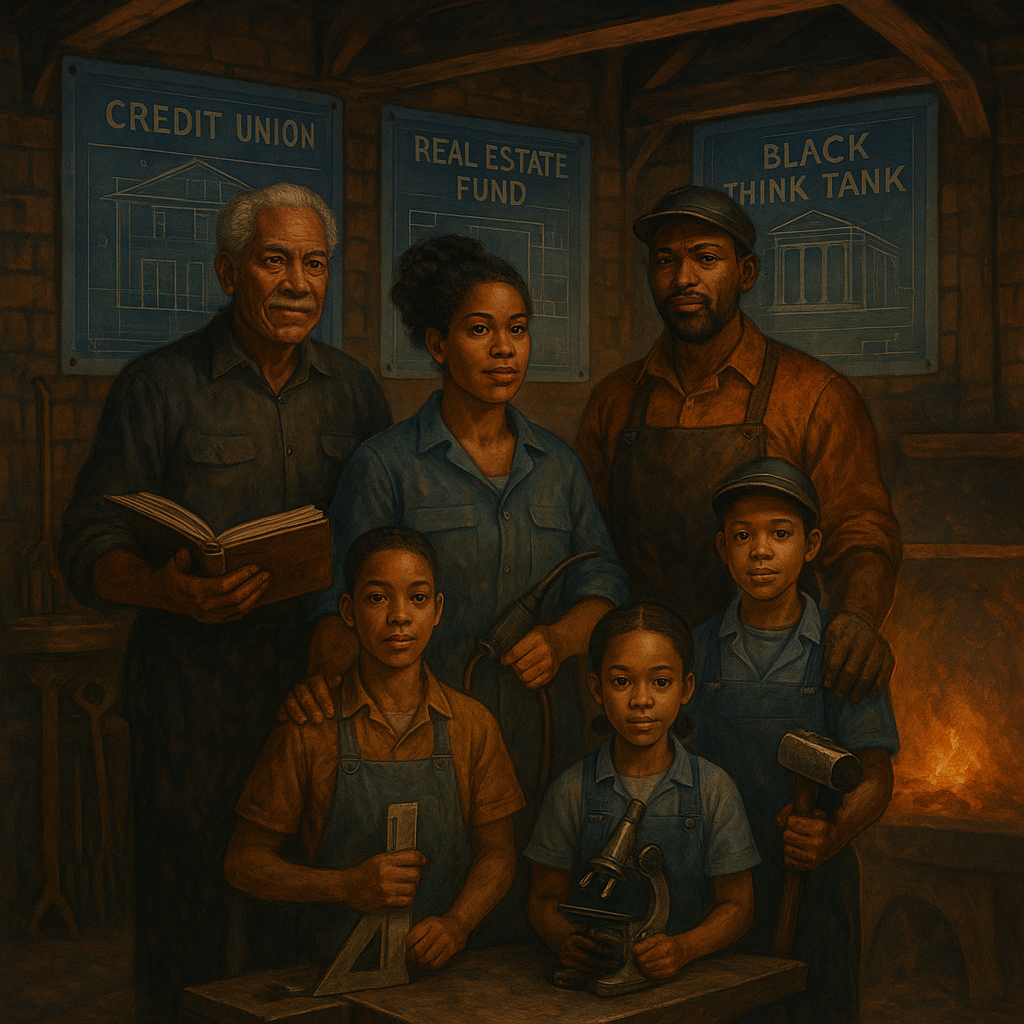
In 1952, a mason in Americus, Georgia bought eleven acres with cash he’d saved from three decades of laying brick. He built a house on it, a smokehouse behind it, and a wraparound porch where he told his grandchildren that the land was the family’s now, forever. He died in 1979. By 1994, the eleven acres had been split six ways, sold in fragments to cover a funeral, a divorce, and two bad business loans. Today a subdivision sits where the smokehouse stood. The mason did everything right by the logic he was given: work, save, buy, own. What he lacked was not virtue. It was infrastructure. Nobody had ever taught him that land without governance is just land waiting to be divided.

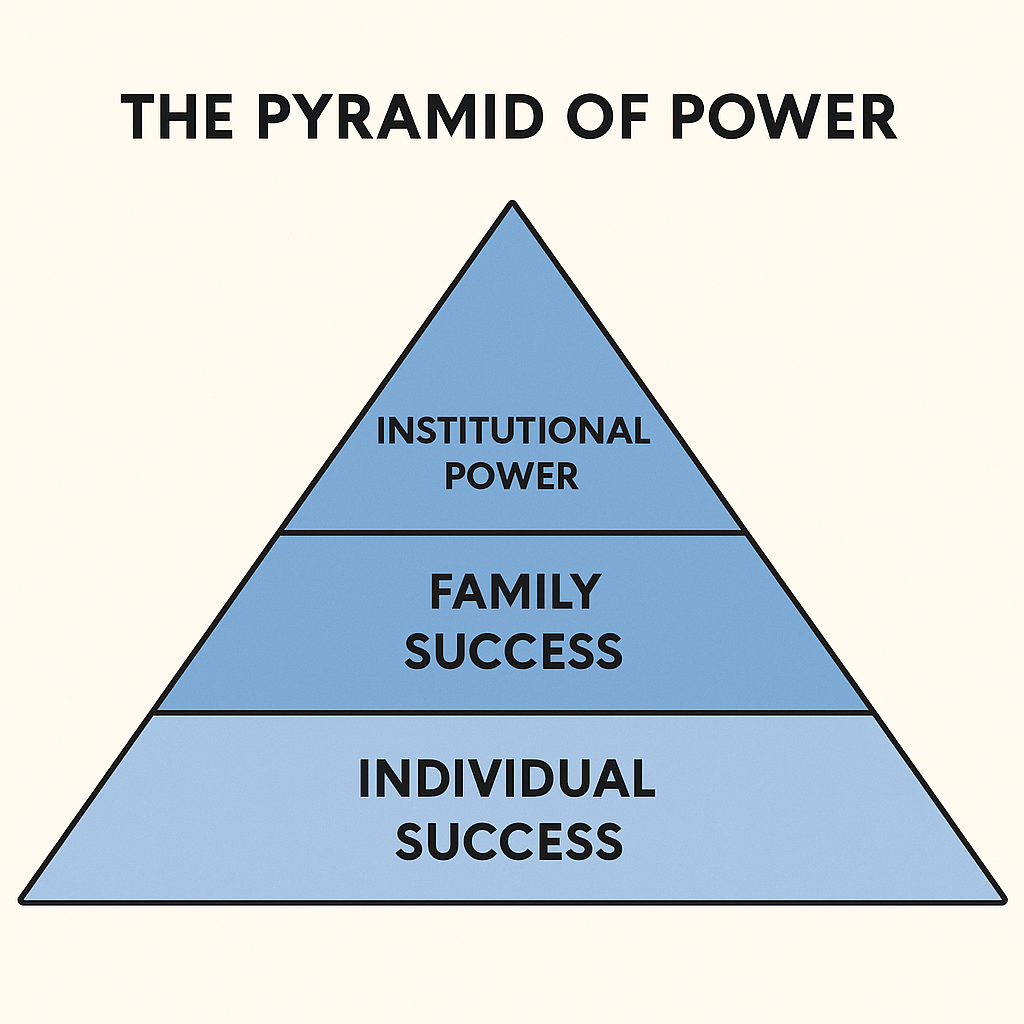
That story is not an outlier. It is the median outcome. And it is the central argument of this piece: African America’s problem was never a shortage of individual achievement. It is a near-total absence of the legal, financial, and cultural machinery that converts one generation’s success into the next generation’s platform. Until that machinery is built, deliberately and aggressively, every dollar earned by this community will keep dying with the person who earned it.

Start with the scoreboard, because the scoreboard is brutal. The Federal Reserve’s 2022 Survey of Consumer Finances put median Black household net worth at $44,900, against $285,000 for the median White household — a gap of more than six to one, and one that widened in absolute dollar terms even as Black wealth grew faster in percentage terms during the pandemic recovery. Growth rate is a vanity metric when the base is this small. A 60 percent increase on $28,000 is still poverty with better arithmetic. The gap is not closing. It is compounding, in the same way interest compounds, except in the wrong direction.

Now layer on top of that the single largest wealth movement in American history, already underway. Cerulli Associates projects that $84 trillion will pass from the Baby Boomer and Silent Generations to heirs and charities through 2045, the bulk of it concentrated among households that were already high-net-worth. This is not a rising tide. It is an inheritance economy, and inheritance economies reward whoever already has family structures in place to receive, consolidate, and reinvest capital across generations. Families without that structure will watch the transfer happen around them, not to them. The transfer is not going to wait for African America to get its paperwork in order.

This is where the sentimental version of “generational wealth” needs to be retired. Passing down money is not the same as passing down power, and Black America has been sold the former as if it were the latter. Power, as any serious student of the Waltons, the Rockefellers, or the Kochs understands, does not come from an inheritance check. It comes from the entity that controls the check. The Walton family does not merely benefit from Walmart’s success; through Walton Enterprises LLC and the Walton Family Holdings Trust, they collectively control roughly 45 percent of the company’s outstanding shares, a concentrated bloc large enough to determine board composition, executive succession, and long-term strategy three generations after Sam Walton’s death. That is not inheritance. That is institutionalized command, engineered through trust structures, family governance, and a refusal to let ownership fragment. Jay-Z’s net worth impresses a magazine cover. It does nothing for the fortieth Black family down the street, because it is not organized as an institution — it is one man’s balance sheet, subject to one man’s mortality.

The uncomfortable truth is that most families, of any race, fail at this. Research tracked by the Family Business Institute finds that roughly 30 percent of family-owned businesses survive into a second generation, about 12 percent make it to a third, and only 3 percent endure into a fourth. Succession is hard even with capital, even with lawyers, even with three generations of practice at running something. What that data point exposes is not that Black families are uniquely undisciplined — it’s that family continuity is a discipline nobody is taught, and African America has had roughly one-fifth of the time (counting from Emancipation, and accounting for the systematic destruction of Black wealth through redlining, urban renewal, and outright terrorism such as the 1921 razing of Tulsa’s Greenwood district) to build the muscle memory that older American dynasties built over five and six generations. The response to that deficit cannot be more individual grit. It has to be structure, copied deliberately from where it already works, and adapted ruthlessly to this community’s actual starting conditions.

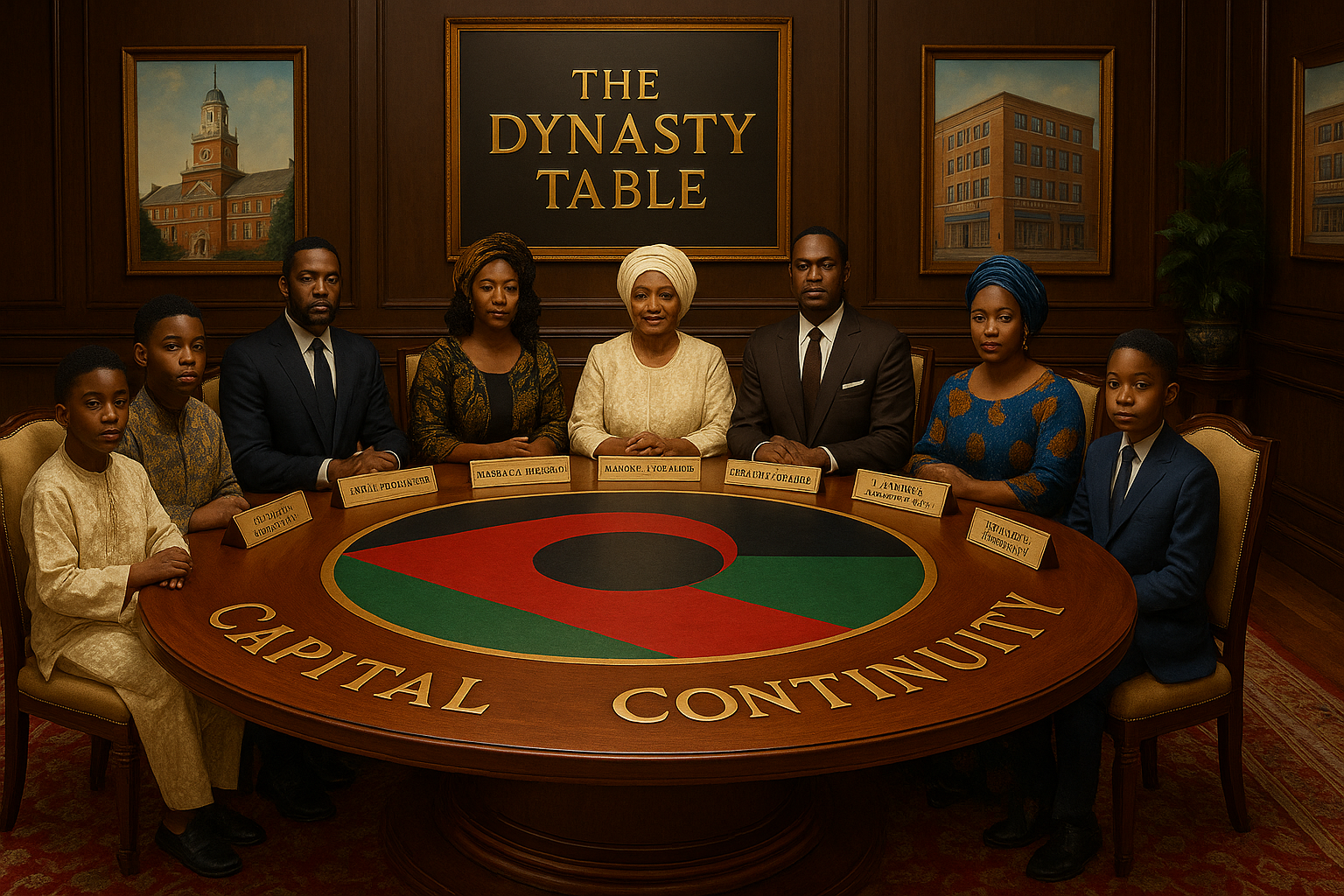
So build the structure. A family constitution — a written document specifying mission, capital rules, and succession mechanics — costs nothing but discipline and an afternoon with a competent estate attorney, yet almost no Black family has one, while every dynasty mentioned above treats theirs as more binding than a corporate bylaw. A family office does not require billionaire assets to justify its existence; pooled family capital in the low six figures is sufficient to retain a fee-only advisor, establish an LLC or trust structure, and begin making coordinated decisions across a real portfolio — brokerage accounts, retirement vehicles, business equity, insurance-funded trusts, even royalty and intellectual-property streams — instead of six relatives each managing a fragment of the same family’s capital in isolation. Land is one asset class among several and should be governed the same way the rest are: never liquidated to cover an emergency when it could instead be collateralized, folded into a trust, or held alongside an equity stake in a family business and a diversified investment account, each professionally managed rather than administered by whichever relative answered the phone first.

None of these families stayed inside their founding asset. Koch Industries began as a part-interest in a single Minnesota oil refinery bought out in the 1940s and 1960s; under Charles Koch it diversified deliberately into pipelines, fertilizer, pulp and paper, ranching, glass, electronics, and commodities trading, so that no single market downturn — a refining glut, a paper-price collapse, a bad cattle season — could touch the whole estate at once. The Rothschilds began as court bankers to European nobility in the 1760s and, over two centuries, moved family capital into railways, mining, real estate, energy, and, notably, wine estates like Château Lafite and Château Mouton — acquired not as hobbies but as productive, appreciating assets that diversified the family’s holdings away from the banking sector that made them. Even the Waltons, whose fortune is most associated with a single company, don’t hold it as a single asset: Walton Enterprises runs its own internal investment arm allocating family capital into private equity, real estate, and outside ventures entirely apart from Walmart stock, precisely so the family’s fate isn’t fused to one retailer’s stock price. In every case, the founding asset became the seed capital for a portfolio, not the permanent shape of the estate. That is the model the eleven acres in Americus should be measured against. The land was never meant to be the ceiling of that family’s wealth — it was meant to be collateral for the next asset, security for a loan into a business, a hedge alongside a brokerage account, one holding in a portfolio instead of the whole of it. Held that way, structured that way, it doesn’t matter whether the estate a family passes down began as land, a barbershop, a nursing license, or a pension. What matters is whether it was ever allowed to grow past its origin.

None of this is exotic. It is standard operating procedure for every dynasty this essay has named. It has simply never been marketed to African America as something within reach, because the wealth management industry profits more from selling individual products than from building family institutions that don’t need it.

Institutions of the wider Black ecosystem have a direct, self-interested role here, and this is where the case must be made in dollars, not sentiment. A Black-owned bank or credit union that captures family trust deposits and estate accounts gains stable, patient capital instead of transactional balances. A historically Black college or university that structures a real endowed-chair or scholarship-naming relationship with a family — rather than accepting a one-time gift — gains a recurring donor relationship spanning generations rather than a single tax-season transaction. Fisk, Tougaloo, Dillard, and Xavier of Louisiana have decades of experience cultivating exactly this kind of multigenerational donor family; Alcorn State, Coppin State, Savannah State, Bethune-Cookman, Norfolk State, Delaware State, Fort Valley State, and Morgan State could each become the anchor institution for a rising family dynasty if they pursued the relationship as deliberately as the Rockefellers pursued the University of Chicago or the Dukes pursued the university that bears their name. The institution that captures a family early, before its capital scales, is the institution that owns the relationship when that capital multiplies. This is not charity. It is customer acquisition, and any HBCU treating it otherwise is leaving its own endowment on the table.

The same logic extends past the water’s edge. Diaspora capital coordination — joint investment vehicles linking African American family offices with counterparts in the Caribbean and across Africa Core — is not a symbolic gesture toward Pan-Africanism. It is a hedge against the concentration risk of building wealth inside a single, historically hostile domestic market. A family real estate or infrastructure fund co-managed across African American, Jamaican, and Ghanaian family offices diversifies political risk, currency exposure, and asset class in one structure, while building exactly the kind of institutional density and strategic coordination that isolated, single-country family wealth can never achieve alone.

None of this happens through moral appeal, and this publication has no interest in making one. Appeals to racial solidarity have moved conferences and Twitter timelines; they have not moved balance sheets. The case for family institutionalization has to be made the way the Waltons, the Kochs, and the Wallenbergs made it to their own descendants: this structure protects what you have from your own children’s mistakes, from probate courts, from market volatility, and from the actuarial certainty that someone in every family eventually dies without a plan. Estate planning is not morbid. It is the single highest-leverage act of institution-building available to a family with under a million dollars in assets, and it costs less than a used car.

There is also a governance failure hiding inside the sentimental version of Black wealth-building that deserves direct confrontation. Families that treat wealth distribution as an equality exercise — splitting everything evenly among heirs regardless of role, competence, or commitment — are optimizing for fairness at the expense of survival. The Family Business Institute’s own data on why family enterprises collapse points overwhelmingly to succession disputes and undefined governance, not lack of capital. A family that assigns real roles — someone accountable for investment decisions, someone accountable for philanthropic strategy, someone accountable for legal and tax exposure — and backs those roles with actual authority, not just a title at Thanksgiving, will outlast a family that insists every cousin gets an equal, undifferentiated vote on every decision. Institutions require hierarchy. Families building institutions will have to get comfortable with that, however uncomfortable it sits against a cultural instinct toward flattened, communal decision-making.

The alternative to all of this is not neutral. It is continued erosion. Every family that fails to formalize governance sends its capital back into the undifferentiated churn of individual consumption — the paycheck model this publication has criticized elsewhere, in which wealth is treated as something to be spent rather than something to be commanded. Every dollar that leaves the Black institutional ecosystem through an unplanned estate, an uninsured death, or a liquidated piece of land is a dollar the next generation has to earn from zero, while families with institutional infrastructure simply compound what they already hold. The compounding gap in the Federal Reserve’s data is not an accident of history. It is the visible output of one set of families running institutional software and another set running none at all.

The mason in Americus did not fail his family. He succeeded at everything available to him in 1952, in a state where a Black man building wealth at all was itself an act of defiance. What failed him was the absence of a structure that could have held what he built past his own lifetime, and the absence of a plan to let that first asset become seed capital for a second and third — a trust, a governance document, a designated successor with both the authority and the training to keep the estate whole and growing, whatever form that estate took or became. That absence is fixable, at a scale of millions of families, in this generation, and it applies as much to a brokerage account or a stake in a family business as it does to eleven acres of Georgia clay. The Kochs turned one refinery into a dozen industries. The Rothschilds turned a banking desk into vineyards and mines. Neither family mistook where they started for where they had to stay. It requires no act of Congress and no act of philanthropy from outside the community. It requires families to stop organizing themselves as clusters of individuals bound by affection, and start organizing as institutions bound by structure, because affection does not survive probate court and structure does. The eleven acres are gone. Whatever the next generation holds — land, equity, a business, a portfolio, or something none of them have thought to build yet — does not have to stop there, and does not have to follow them into the ground.

Disclaimer: This article was assisted by ClaudeAI.

The Institutional Imperative: Moving Beyond Individual Black Wealth Narratives

I would rather earn 1% off a 100 people’s efforts than 100% of my own efforts. – John D. Rockefeller

The contrast is stark and telling. On one screen, a promotional poster for a docuseries about Black wealth features accomplished individuals—entrepreneurs, entertainers, and personal finance influencers. On another, the Bloomberg Invest conference lineup showcases representatives from Goldman Sachs, BlackRock, sovereign wealth funds, and central banks. This visual juxtaposition reveals a fundamental problem in how African American wealth building is conceived, discussed, and ultimately constrained in America: we’re having an individual conversation while everyone else is having an institutional one.

When African American wealth is discussed in mainstream media and even within our own communities, the focus overwhelmingly centers on individual achievement and personal financial literacy. The narrative typically revolves around budgeting tips, entrepreneurship stories, side hustles, and the importance of “building your own.” While these elements certainly matter, they represent only a fraction of how wealth is actually created, preserved, and transferred across generations in America.

Compare this to how other communities approach wealth building. Bloomberg conferences don’t feature panels on how to save money or start a small business. Instead, they convene institutional investors managing trillions of dollars, central bankers who set monetary policy, executives from asset management firms overseeing pension funds, and sovereign wealth fund managers representing entire nations’ financial interests. The conversation isn’t about individual wealth accumulation it’s about institutional capital allocation, market infrastructure, regulatory frameworks, and systemic wealth generation. This isn’t merely a difference in scale; it’s a difference in kind. Individual wealth building, no matter how successful, operates within a system. Institutional wealth building shapes that system.

The economic implications of this gap are staggering. Consider the arithmetic presented in the text message exchange: if approximately 95% of African American debt is held by non-Black institutions, and that debt carries an average interest rate of 8%, African American households collectively transfer roughly $120 billion annually in interest payments to institutions that have no vested interest in Black wealth creation or community reinvestment. This figure isn’t just large it’s transformative. To put it in perspective, $120 billion annually exceeds the GDP of many nations. That likely at least 10% of African America’s $2.1 trillion in buying power is leaving the community for interest before a single bill is paid or single investment can be made. It represents capital that flows out of Black communities without generating corresponding wealth-building infrastructure within those communities. This is the cost of institutional absence.

When communities lack their own lending institutions, investment banks, insurance companies, and asset management firms, they become permanent capital exporters. Every mortgage payment, every car loan, every credit card balance becomes a wealth transfer rather than a wealth circulation mechanism. Other communities long ago recognized this dynamic and built institutional frameworks to capture, recycle, and multiply capital within their own ecosystems.

Institutional wealth building operates on fundamentally different principles than individual wealth accumulation. It involves capital pooling and deployment, where institutions aggregate capital from thousands or millions of sources and deploy it strategically for returns that benefit the collective. Pension funds, for instance, don’t teach their beneficiaries how to pick stocks they hire professional managers to generate returns that secure retirements for entire workforces. Large institutions don’t just participate in markets; they shape them. They influence interest rates, capital flows, regulatory frameworks, and investment trends. When BlackRock or Vanguard shifts their investment thesis, entire sectors respond.

Institutions are designed to outlive individuals. They create mechanisms for wealth transfer that transcend personal mortality, ensuring that capital accumulates across generations rather than dispersing with each estate. By pooling resources, institutions can absorb risks that would devastate individuals, enabling them to pursue longer-term, higher-return strategies that individuals cannot access. Perhaps most importantly, institutional capital commands political attention and shapes policy in ways that individual wealth, however substantial, simply cannot.

The current institutional deficit in African American communities isn’t accidental it’s the product of deliberate historical forces. During the early 20th century, Black communities did build impressive institutional infrastructure. Black Wall Street in Tulsa, thriving business districts in Rosewood, Florida, and numerous Black-owned banks, insurance companies, and investment firms represented genuine institutional wealth building. These were systematically destroyed sometimes literally, as in the Tulsa Race Massacre of 1921, and sometimes through discriminatory policies, denial of business licenses, exclusion from capital markets, and targeted regulatory enforcement. The institutions that survived faced existential challenges during desegregation, as the most affluent Black customers gained access to white institutions that had previously excluded them. The result is that African Americans today face a unique challenge: rebuilding institutional infrastructure in a mature capitalist economy where the institutional landscape is already dominated by established players with centuries of accumulated capital, networks, and political influence.

Given this context, why does African American wealth discourse remain so focused on individual action? Several factors contribute to this pattern. American culture celebrates individual achievement and self-made success. This narrative is particularly seductive for African Americans seeking to overcome discrimination through personal excellence. However, it obscures the reality that most substantial wealth in America is institutional, not individual. Teaching people to budget or start a business is concrete and actionable. Discussing the need for African American-owned asset management firms managing hundreds of billions in capital is abstract and seemingly impossible for most people to influence. Individual success stories make compelling content. Institutional finance is complex, technical, and doesn’t generate the emotional engagement that drives social media metrics and television ratings.

Institutional finance is deliberately exclusionary, with high barriers to entry, specialized knowledge requirements, and established networks that are difficult to penetrate. This makes it harder for diverse voices to participate in and shape these conversations. Moreover, focusing on individual responsibility can deflect attention from systemic inequalities and the need for institutional reform. If wealth gaps are framed as the result of individual choices rather than institutional access, the solution becomes personal change rather than structural change.

The problem is that individual wealth building, while important, simply cannot close the wealth gap or address the capital hemorrhage happening through institutional absence. You cannot budget your way to institutional power. You cannot side-hustle your way to sovereign wealth fund influence. Closing the institutional gap would require coordinated action across multiple domains. This means growing and creating Black-owned banks, credit unions, insurance companies, asset management firms, and investment banks capable of competing at scale—institutions managing not millions but billions and eventually trillions in assets.

It requires ensuring that the substantial capital in public pension funds, university endowments, and foundation assets that serve African American communities is managed with intentionality about wealth creation within those communities. Building investment funds that can provide growth capital to Black-owned businesses beyond the startup phase, enabling them to scale to institutional size, becomes essential. Creating institutions that can acquire, develop, and manage commercial and residential real estate at scale, capturing appreciation and rental income for community benefit, must be prioritized. Developing institutional voices that can effectively advocate for policies that support Black wealth building, from community reinvestment requirements to procurement set-asides to tax structures that favor long-term capital formation, is critical.

This isn’t a call to abandon individual financial responsibility or entrepreneurship both remain important. Rather, it’s a recognition that these individual efforts need institutional infrastructure to support them, multiply their effects, and prevent the constant capital drain that currently undermines them. The Bloomberg conference model reveals what serious wealth building conversations look like among communities that already possess institutional power. The participants aren’t there to learn how to balance their personal checking accounts they’re there to discuss macroeconomic trends, regulatory changes, emerging markets, and trillion-dollar capital allocation decisions.

African American communities need forums that operate at the same level of institutional sophistication. This means convening the leaders of Black-owned financial institutions, pension fund managers, university endowment chiefs, foundation presidents, private equity partners, and policymakers to discuss not individual wealth tips but institutional strategy. It means asking questions like: How do we coordinate capital deployment across Black-owned financial institutions to maximize community impact? How do we leverage public pension fund capital to support Black wealth building without sacrificing returns? What regulatory changes would most effectively support Black institutional development? How do we build the pipeline of talent needed to manage billions in institutional capital?

The real challenge can be distilled into three interconnected imperatives: individually Black people must get wealthier, there must be an increase in Black institutional investing, and the overall wealth of Black people as a whole must increase. All three are important, yet the current discourse focuses almost exclusively on the first element while neglecting the second and third. The reality is that without institutional infrastructure, individual wealth gains will continue to leak out of the community rather than accumulating into collective wealth.

A fundamental truth that much of African American wealth discourse has yet to fully internalize is that wealth is created through institutions. There exists a critical misalignment between how wealth is actually built and how we talk about building it. We prioritize individual wealth accumulation without recognizing that the causality runs in the opposite direction—institutional infrastructure creates the conditions for sustainable individual and collective wealth building, not the other way around. We can celebrate individual achievement, teach financial literacy, promote entrepreneurship, and encourage personal responsibility all we want. But until African American communities build and control institutions that can pool capital, shape markets, influence policy, and deploy resources strategically across generations, the wealth gap will persist and likely widen.

A docuseries about successful individuals may be inspiring. But inspiration without infrastructure leads nowhere. Other communities learned this lesson generations ago (from us) and built accordingly. A critical question cuts to the heart of the matter: Who in these wealth-building conversations is representing an African American institution? When wealth dialogues feature only individuals representing themselves or individual brands rather than institutions representing collective capital and community interests, we’re having the wrong conversation at the wrong altitude.

It’s time for African American wealth conversations to graduate from the individual focus to the institutional imperative. The Bloomberg model isn’t just for other people it’s a template for how serious wealth building actually works. The question isn’t whether African Americans can produce individually wealthy people we’ve proven that repeatedly. The question is whether we can build the institutional infrastructure that turns individual success into collective, multigenerational wealth. That’s the conversation we should be having, and it needs to happen at the same level of sophistication and institutional focus that other communities take for granted. Until then, we’re simply rearranging deck chairs while hundreds of billions if not trillions flow out of our communities annually, enriching institutions that have no stake in our collective prosperity.

Disclaimer: This article was assisted by ClaudeAI.
Teaching the Next Generation: A Guide to Empowering African American Youth Through Strategic Philanthropy

A single twig breaks, but the bundle of twigs is strong. – Tecumseh

The tradition of giving runs deep in African American communities. From the mutual aid societies formed during enslavement to the church collections that funded the Civil Rights Movement, Black Americans have always understood that our collective survival depends on our willingness to invest in one another. Yet somewhere between necessity and aspiration, we’ve lost the language to teach our children that philanthropy isn’t charity—it’s power.

Teaching African American children ages 5-18 about philanthropy means doing more than dropping coins in a collection plate. It means helping them understand that strategic giving builds the institutions that will protect, educate, and employ them throughout their lives. It means showing them that every dollar they contribute to Black-led organizations is a vote for their own future.

Starting Early: Philanthropy for Elementary Ages (5-10)

Young children understand fairness instinctively. They know when something isn’t right, and they want to help fix it. This natural empathy creates the perfect foundation for introducing philanthropic concepts.

Begin with concrete examples from African American history. Tell them about the Free African Society, founded in 1787 by Richard Allen and Absalom Jones, which provided mutual aid to Black Philadelphians. Explain how enslaved people pooled resources to purchase freedom for family members. These aren’t abstract concepts they’re survival strategies that became institutional frameworks.

Create a family giving jar where children can contribute a portion of their allowance or gift money. Let them research and choose a Black-led organization to support quarterly. This could be a local youth program, a historical preservation society, or an HBCU scholarship fund. The key is giving them agency in the decision-making process. When children see their small contributions combine with others to create meaningful impact, they begin to understand collective power.

Use storytelling to illustrate how institutions are built. Talk about how HBCUs were created because white institutions excluded Black students. Explain how Mary McLeod Bethune started a school with $1.50 and turned it into Bethune-Cookman University. Show them that great institutions often begin with small, consistent contributions from people who understood the long game.

Middle School: Understanding Institutional Building (11-13)

By middle school, children can grasp more sophisticated concepts about how money moves and how power is built. This is when we introduce them to the difference between charity and institutional philanthropy.

Charity addresses immediate needs—feeding the hungry, clothing the poor. Institutional philanthropy builds the structures that create long-term change: schools, hospitals, community development corporations, legal defense funds, policy organizations. Both matter, but only institutional philanthropy shifts power dynamics.

Teach them about the NAACP Legal Defense Fund, established in 1940. Explain how sustained philanthropic support allowed lawyers like Thurgood Marshall to develop the legal strategy that led to Brown v. Board of Education. This wasn’t a one-time donation it was years of investment that transformed American society.

Introduce the concept of endowments and investment income. Too many African American organizations operate in perpetual crisis mode, chasing donations year after year. Show students the difference between an organization with a $100,000 annual budget that must be fundraised every twelve months and an organization with a $2 million endowment generating $80,000 annually in investment income. The second organization can focus on mission instead of survival.

Start a philanthropy club at school or in your community. Let students identify a need in their community and develop a giving circle to address it. They should practice everything: setting fundraising goals, researching organizations, making collective decisions, tracking impact, and understanding how their contributions grow through consistent giving. This hands-on experience transforms abstract concepts into practical skills.

High School: Strategic Power Building (14-18)

High school students are ready to understand philanthropy as a tool for social, economic, and political empowerment. They can analyze power structures and recognize how institutional support or the lack thereof shapes outcomes in Black communities.

Teach them to read institutional budgets and annual reports. Show them how to evaluate whether an organization has sufficient reserves, how much goes to programs versus overhead, and whether they’re building long-term sustainability. This financial literacy is essential for effective philanthropy.

Explore the concept of investment income in depth. Many students don’t realize that major institutions—universities, museums, hospitals—operate primarily on endowment income, not annual fundraising. Harvard’s endowment generated approximately $2.3 billion in investment income in recent years. Imagine if HBCUs collectively had similar resources. Explain that building Black institutional power requires moving beyond the donation mentality to an investment mindset.

Discuss how philanthropy intersects with political power. Show them how think tanks, policy organizations, and advocacy groups are funded. Explain that when Black communities don’t adequately fund our own policy organizations, others define the agenda affecting our lives. The Tea Party movement and its affiliated organizations received hundreds of millions in philanthropic support that reshaped American politics. What might be possible if African American communities invested similarly in organizations advancing our interests?

Examine collective philanthropy models. Traditional philanthropy often centers wealthy donors making large gifts. But collective giving where many people contribute smaller amounts has always been the African American philanthropic model. From church building funds to contemporary giving circles, we’ve understood that our strength lies in numbers. Today’s technology makes collective philanthropy more powerful than ever. A thousand people giving $100 monthly creates $1.2 million annually enough to endow a scholarship, support a community organization, or launch a new initiative.

Encourage students to start giving now, even if it’s $5 monthly to an organization they believe in. The habit matters more than the amount. A teenager who gives $10 monthly from age 16 to 66 contributes $6,000 in direct donations, but if that money is invested and earns average returns, it represents tens of thousands in institutional support.

Teaching African American youth about philanthropy means helping them understand its components and how they work together to build institutional power.

Educational Institutions: HBCUs, independent schools, scholarship funds, and educational support organizations create pathways to opportunity and preserve cultural knowledge. Sustained philanthropic support allows these institutions to build endowments, improve facilities, and attract top faculty and students.

Economic Development: Community development corporations, Black-owned business incubators, affordable housing organizations, and loan funds build wealth and economic stability. These institutions require patient capital and sustained support to create generational impact.

Legal and Policy Organizations: Civil rights organizations, legal defense funds, policy think tanks, and advocacy groups shape the rules that govern society. Inadequate funding in this sector means Black interests remain underrepresented in policy formation.

Cultural Institutions: Museums, historical societies, arts organizations, and media companies preserve our stories and shape narratives. Control over our cultural narrative requires institutional infrastructure that only sustained philanthropy can build.

Health and Social Services: Community health centers, mental health organizations, and social service providers address immediate needs while building the institutional capacity to serve Black communities long-term.

Each component requires different funding strategies. Some need operating support, others need capital for buildings or technology, many need endowment building. Teaching youth to think strategically about where and how they give helps them maximize impact.

The most important lesson we can teach African American children about philanthropy is that it’s not optional it’s essential. Every community that has built institutional power has done so through sustained, strategic philanthropy. Jewish communities support Jewish institutions. Asian American communities support Asian American institutions. African American communities must do the same.

Start conversations early. Make giving a family practice. Teach children to evaluate organizations critically. Help them understand that building Black institutional power is a marathon, not a sprint. Show them that their contributions, combined with others, create the schools, organizations, and institutions that will serve generations to come.

This isn’t about guilt or obligation. It’s about power, self-determination, and legacy. When we teach our children that philanthropy is institution-building, we give them tools to shape their own future rather than waiting for others to determine it for them.

The question isn’t whether African American communities can afford to invest in our institutions. The question is whether we can afford not to.

The Gridiron Mirage: Debunking the NFL as the Engine of African American Wealth

“A lot of enslaved people actually made money, but they had no power.” – William Rhoden

In the annals of American mythology, few institutions occupy as outsized a symbolic role in African American economic advancement as the National Football League. It is a league awash in spectacle and saturated with the rhetoric of opportunity. “The NFL has made more African American millionaires than any other institution,” say its defenders. This refrain—recited with patriotic pride or cynical resignation—has come to function as a social truism, a talisman held up to justify the nation’s meager investments in structural equity. But like most myths, its repetition does not make it true.

This article contends that this notion is not only false but insidious. It misrepresents the scale and structure of wealth in the African American community, diverts attention from more potent engines of generational prosperity, and masks the extractive and precarious nature of professional sports as a vehicle for wealth creation. The NFL is not a wealth escalator; it is, at best, a short-lived income spurt machine for a statistical elite, and at worst, a cultural and physical treadmill leading back to zero.

Gridiron Arithmetic: The Numbers Game

The first fallacy is numerical. As of the 2023 season, there were approximately 1,696 active NFL players spread across 32 teams. Around 58% of these players identified as African American, or roughly 984 athletes. Even when one accounts for the extended rosters, practice squads, and recent retirees still living off their earnings, the figure remains marginal—perhaps a few thousand men across multiple generations.

Contrast this with sectors such as healthcare, education, government, and business. The National Black MBA Association alone counts tens of thousands of members, many of whom have built sustainable wealth through entrepreneurship, investment, or corporate ascendancy. African American doctors number over 50,000. Black-owned businesses, according to the U.S. Census Bureau, exceed 140,000 with paid employees, and millions more operate as sole proprietorships.

The American Bar Association reports over 50,000 African American attorneys. Even the public sector, often decried as slow or bureaucratic, employs hundreds of thousands of Black professionals across local, state, and federal levels. These occupations, while lacking the glamour of a touchdown, generate far more stable, scalable, and generationally transferrable wealth.

Income vs. Wealth: The Shaky Foundations of NFL Riches

To understand the illusion, one must disentangle income from wealth. Wealth is not what one earns; it is what one owns. It is the portfolio, the property, the equity stake, the passive income stream, and, perhaps most critically, the ability to transfer resources across generations. NFL players earn substantial salaries during their brief careers—an average of $2.7 million per year, though the median is closer to $860,000. But careers are short, averaging just 3.3 years.

This creates what economists call a “high burn rate, low accumulation” profile. Studies have found that 15% of NFL players file for bankruptcy within 12 years of retirement, despite millions in earnings. Others do not go bankrupt but live in quiet precarity, reduced to local celebrity gigs and motivational speaking to sustain a post-football identity. The 2022 National Bureau of Economic Research paper “Bankruptcy Rates among NFL Players with Short-Lived Income” confirms this vulnerability, showing how the lack of financial literacy, support systems, and institutional guidance leads to dissipation rather than accumulation.

Meanwhile, wealth in America is driven by ownership: of businesses, real estate, stocks, and institutions. The NFL offers none of these to the vast majority of its Black athletes. Ownership, it must be said, remains the exclusive domain of white billionaires. As of 2025, there are zero majority African American owners of NFL franchises. While the NBA has made token strides—see Michael Jordan’s brief tenure as majority owner of the Charlotte Hornets—the NFL remains rigid in its old-world capital structure.

The Plantation Paradigm: Extraction, Not Empowerment

It is hard to avoid the uncomfortable metaphor that the NFL structurally resembles a modern-day plantation. African American bodies fuel the labor force, endure the risks, suffer the injuries, and entertain the masses. White ownership, white commissioners, and white-centered media conglomerates reap the institutional profits. The league generates $18 billion in annual revenue. The average team is valued at $5 billion. And yet, the athletes, even at the apex of their earning power, remain labor, not capital.

This is not a critique of sports per se. Athletics can inspire and galvanize. But the mythologizing of football as a viable strategy for racial uplift is akin to mistaking a single rainstorm for an irrigation system. The commodification of Black excellence in a space so structurally white in ownership and control cannot plausibly be the foundation for true economic emancipation.

This is made all the more clear by examining the fates of even the most successful. Players like Vince Young, who signed a $26 million contract and ended up broke, or Warren Sapp, who earned $82 million only to file for bankruptcy, are cautionary tales. Exceptions like LeBron James, who has parlayed his brand into equity ownerships and venture capital, are held up as archetypes. But these are aberrations, not templates. And they are not NFL stories.

The Opportunity Cost of Myth-Making

Perhaps the greatest harm of the “NFL creates millionaires” myth is opportunity cost. It distorts the allocation of attention, aspiration, and investment within the African American community. While youth in other demographics are taught to pursue STEM, financial literacy, or entrepreneurship, too many African American boys are sold a lottery ticket disguised as a profession. A 2021 study by the Journal of Black Studies found that African American adolescent males are 40 times more likely to aspire to a professional sports career than to become an engineer or entrepreneur.

This has ramifications far beyond the individual. It weakens pipelines to industries that are scalable, recession-resistant, and foundational to intergenerational wealth. No serious community-wide wealth can be built on the shoulders of 53-man rosters. Nor can economic independence arise from dependency on one of the most exploitative and physically damaging professions in modern labor.

There are also societal consequences. The overrepresentation of African Americans in professional sports distorts public perception. It fosters the narrative that “Black people are doing fine” because a few are seen in Super Bowl commercials or luxury car ads. It becomes a justification for denying systemic reform, funding cutbacks to HBCUs, or underinvestment in majority-Black schools. “Why do they need help?” ask the indifferent. “They have the NFL.”

Institutional Power vs Individual Stardom

In the game of wealth, institutions win. The NFL is an institution—one whose structure benefits its owners and media affiliates. The real wealth in sports lies not in being a player but in being an owner, a broadcaster, a media rights holder, or a licensed merchandiser. It lies in being Robert Kraft, not the running back who suffers a concussion under his ownership.

African American wealth building must shift its focus toward institutions that compound, aggregate, and replicate power. HBCUs, Black-owned banks, cooperative land trusts, investment syndicates, media companies, and technology accelerators are more viable pathways to collective advancement than any draft pick. Consider that a single Black-owned private equity fund managing $500 million will produce more Black millionaires than five decades of NFL careers.

In fact, historical analogues suggest that professional exclusion led to the construction of powerful Black institutions. During segregation, African Americans built hospitals, universities, bus lines, and newspapers. These were incubators of both economic and cultural power. In today’s integrationist fantasy, too many of these have been sacrificed in favor of proximity to elite white institutions—like the NFL—that will never relinquish true control.

The Global Lens: Transnational Wealth Thinking

Moreover, the fixation on domestic sports ignores the global economic realignment. The world’s fastest-growing wealth markets are in Africa, Asia, and Latin America. Forward-thinking African Americans should be exporting services, partnering with Pan-African institutions, and investing in sovereign wealth opportunities. Yet, the “NFL as savior” narrative keeps too many tethered to a narrow, provincial idea of success.

The NFL does not build factories. It does not fund innovation. It does not seed capital. It does not provide passive income. It does not own land, develop cities, or engage in infrastructure. It sells tickets. It sells ads. It breaks bodies. It builds billion-dollar stadiums on taxpayer subsidies and pays its workers less than hedge fund interns.

Real wealth is built through scale and succession. The Black farmer who owns 1,000 acres and passes it down is more transformative than the Pro Bowler whose children inherit post-career medical bills and reality show royalties.

Toward a New Narrative: Wealth Without Injury

African American communities need new wealth myths—ones grounded in fact, finance, and future orientation. The idea that the NFL is a pinnacle of Black achievement should be retired. In its place must come narratives about investment clubs, fintech startups, regenerative agriculture, urban development, and cooperative real estate ventures.

Educational institutions and cultural gatekeepers have a responsibility here. Public school counselors, pastors, and media platforms should deglamorize the sports-to-riches narrative and illuminate more durable paths. Foundations and philanthropies should invest not in football camps, but in coding bootcamps, maker spaces, and entrepreneurship labs.

Policy must evolve, too. Tax incentives should reward community ownership and capital retention. States should support Black-owned banks the way they support stadium construction. Reparations conversations should be about equity stakes, not honorary jerseys.

The NFL is not evil. It is, however, a business. And like all businesses, it is designed to maximize returns for its investors—not to solve racial inequality. The sooner we disabuse ourselves of the myth that it is a wealth escalator, the sooner we can begin the real work of building wealth—wealth that endures beyond the roar of the crowd, the flicker of the lights, or the brevity of a three-season career.

Trading Helmets for Holdings

In conclusion, the NFL is a distraction, not a development strategy. It is a parade, not a pipeline. It is a pageant of athletic excellence exploited for institutional enrichment. And it is a cultural sedative—one that soothes legitimate anger over systemic inequality with the spectacle of a few lucky gladiators.

The real revolution will not be televised on Monday Night Football. It will be written in balance sheets, ownership ledgers, and multi-generational trusts. African Americans must trade the helmet for holdings, the franchise tag for franchise ownership, and the myth of athletic salvation for the measured, compound reality of institutional power.

That is not as thrilling as a fourth-quarter comeback. But it is the only way to win the long game.