
Tag Archives: african american families

Building Dynasties: What It Will Take for African American Families to Rise to Power

“control, control of resources, control of self, control of nation, requires preparation — Garveyism was about total preparation.” – Dr. John Henrik Clarke, writing on Marcus Garvey’s philosophy of Black institutional power
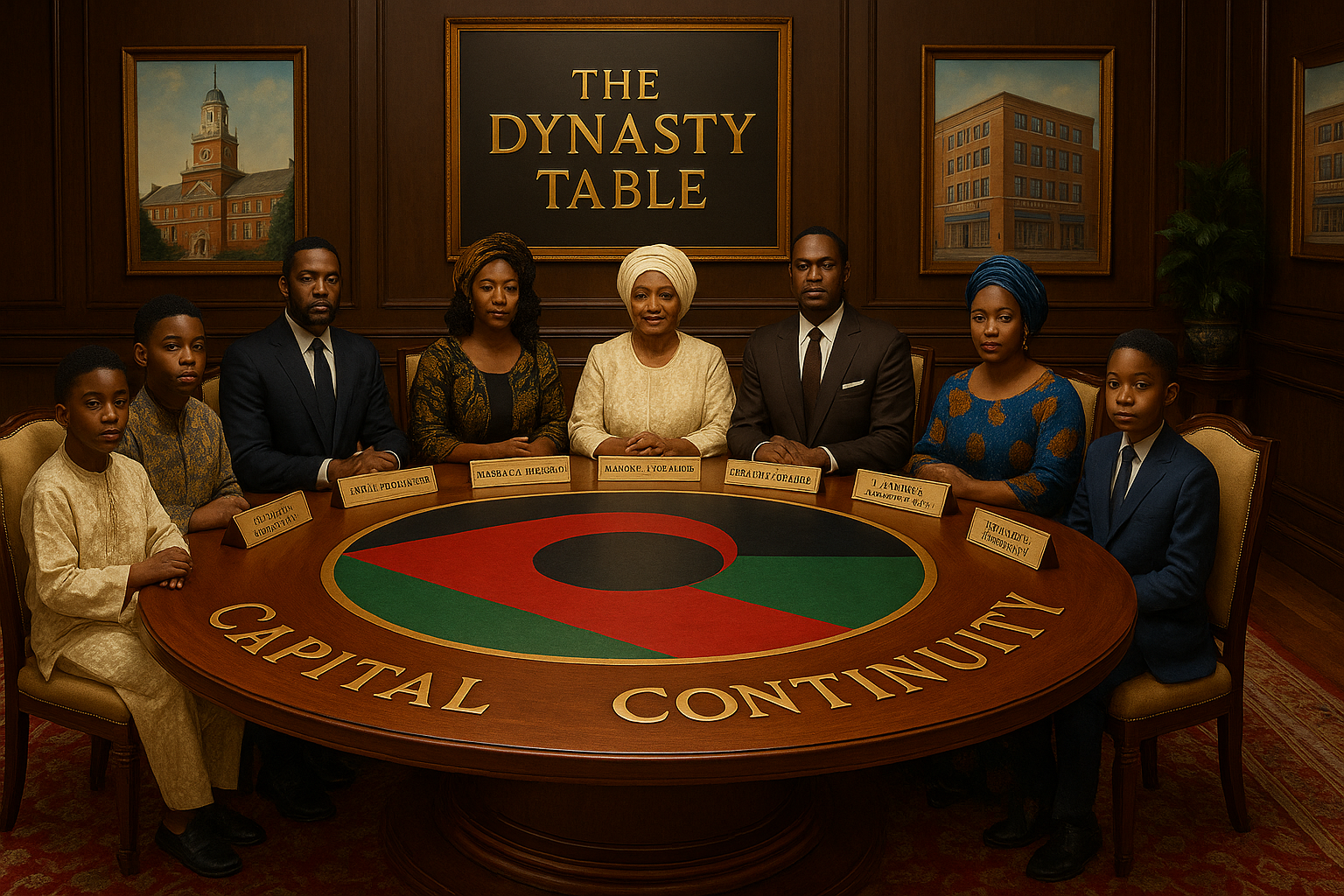
In 1952, a mason in Americus, Georgia bought eleven acres with cash he’d saved from three decades of laying brick. He built a house on it, a smokehouse behind it, and a wraparound porch where he told his grandchildren that the land was the family’s now, forever. He died in 1979. By 1994, the eleven acres had been split six ways, sold in fragments to cover a funeral, a divorce, and two bad business loans. Today a subdivision sits where the smokehouse stood. The mason did everything right by the logic he was given: work, save, buy, own. What he lacked was not virtue. It was infrastructure. Nobody had ever taught him that land without governance is just land waiting to be divided.

That story is not an outlier. It is the median outcome. And it is the central argument of this piece: African America’s problem was never a shortage of individual achievement. It is a near-total absence of the legal, financial, and cultural machinery that converts one generation’s success into the next generation’s platform. Until that machinery is built, deliberately and aggressively, every dollar earned by this community will keep dying with the person who earned it.

Start with the scoreboard, because the scoreboard is brutal. The Federal Reserve’s 2022 Survey of Consumer Finances put median Black household net worth at $44,900, against $285,000 for the median White household — a gap of more than six to one, and one that widened in absolute dollar terms even as Black wealth grew faster in percentage terms during the pandemic recovery. Growth rate is a vanity metric when the base is this small. A 60 percent increase on $28,000 is still poverty with better arithmetic. The gap is not closing. It is compounding, in the same way interest compounds, except in the wrong direction.

Now layer on top of that the single largest wealth movement in American history, already underway. Cerulli Associates projects that $84 trillion will pass from the Baby Boomer and Silent Generations to heirs and charities through 2045, the bulk of it concentrated among households that were already high-net-worth. This is not a rising tide. It is an inheritance economy, and inheritance economies reward whoever already has family structures in place to receive, consolidate, and reinvest capital across generations. Families without that structure will watch the transfer happen around them, not to them. The transfer is not going to wait for African America to get its paperwork in order.

This is where the sentimental version of “generational wealth” needs to be retired. Passing down money is not the same as passing down power, and Black America has been sold the former as if it were the latter. Power, as any serious student of the Waltons, the Rockefellers, or the Kochs understands, does not come from an inheritance check. It comes from the entity that controls the check. The Walton family does not merely benefit from Walmart’s success; through Walton Enterprises LLC and the Walton Family Holdings Trust, they collectively control roughly 45 percent of the company’s outstanding shares, a concentrated bloc large enough to determine board composition, executive succession, and long-term strategy three generations after Sam Walton’s death. That is not inheritance. That is institutionalized command, engineered through trust structures, family governance, and a refusal to let ownership fragment. Jay-Z’s net worth impresses a magazine cover. It does nothing for the fortieth Black family down the street, because it is not organized as an institution — it is one man’s balance sheet, subject to one man’s mortality.

The uncomfortable truth is that most families, of any race, fail at this. Research tracked by the Family Business Institute finds that roughly 30 percent of family-owned businesses survive into a second generation, about 12 percent make it to a third, and only 3 percent endure into a fourth. Succession is hard even with capital, even with lawyers, even with three generations of practice at running something. What that data point exposes is not that Black families are uniquely undisciplined — it’s that family continuity is a discipline nobody is taught, and African America has had roughly one-fifth of the time (counting from Emancipation, and accounting for the systematic destruction of Black wealth through redlining, urban renewal, and outright terrorism such as the 1921 razing of Tulsa’s Greenwood district) to build the muscle memory that older American dynasties built over five and six generations. The response to that deficit cannot be more individual grit. It has to be structure, copied deliberately from where it already works, and adapted ruthlessly to this community’s actual starting conditions.

So build the structure. A family constitution — a written document specifying mission, capital rules, and succession mechanics — costs nothing but discipline and an afternoon with a competent estate attorney, yet almost no Black family has one, while every dynasty mentioned above treats theirs as more binding than a corporate bylaw. A family office does not require billionaire assets to justify its existence; pooled family capital in the low six figures is sufficient to retain a fee-only advisor, establish an LLC or trust structure, and begin making coordinated decisions across a real portfolio — brokerage accounts, retirement vehicles, business equity, insurance-funded trusts, even royalty and intellectual-property streams — instead of six relatives each managing a fragment of the same family’s capital in isolation. Land is one asset class among several and should be governed the same way the rest are: never liquidated to cover an emergency when it could instead be collateralized, folded into a trust, or held alongside an equity stake in a family business and a diversified investment account, each professionally managed rather than administered by whichever relative answered the phone first.

None of these families stayed inside their founding asset. Koch Industries began as a part-interest in a single Minnesota oil refinery bought out in the 1940s and 1960s; under Charles Koch it diversified deliberately into pipelines, fertilizer, pulp and paper, ranching, glass, electronics, and commodities trading, so that no single market downturn — a refining glut, a paper-price collapse, a bad cattle season — could touch the whole estate at once. The Rothschilds began as court bankers to European nobility in the 1760s and, over two centuries, moved family capital into railways, mining, real estate, energy, and, notably, wine estates like Château Lafite and Château Mouton — acquired not as hobbies but as productive, appreciating assets that diversified the family’s holdings away from the banking sector that made them. Even the Waltons, whose fortune is most associated with a single company, don’t hold it as a single asset: Walton Enterprises runs its own internal investment arm allocating family capital into private equity, real estate, and outside ventures entirely apart from Walmart stock, precisely so the family’s fate isn’t fused to one retailer’s stock price. In every case, the founding asset became the seed capital for a portfolio, not the permanent shape of the estate. That is the model the eleven acres in Americus should be measured against. The land was never meant to be the ceiling of that family’s wealth — it was meant to be collateral for the next asset, security for a loan into a business, a hedge alongside a brokerage account, one holding in a portfolio instead of the whole of it. Held that way, structured that way, it doesn’t matter whether the estate a family passes down began as land, a barbershop, a nursing license, or a pension. What matters is whether it was ever allowed to grow past its origin.
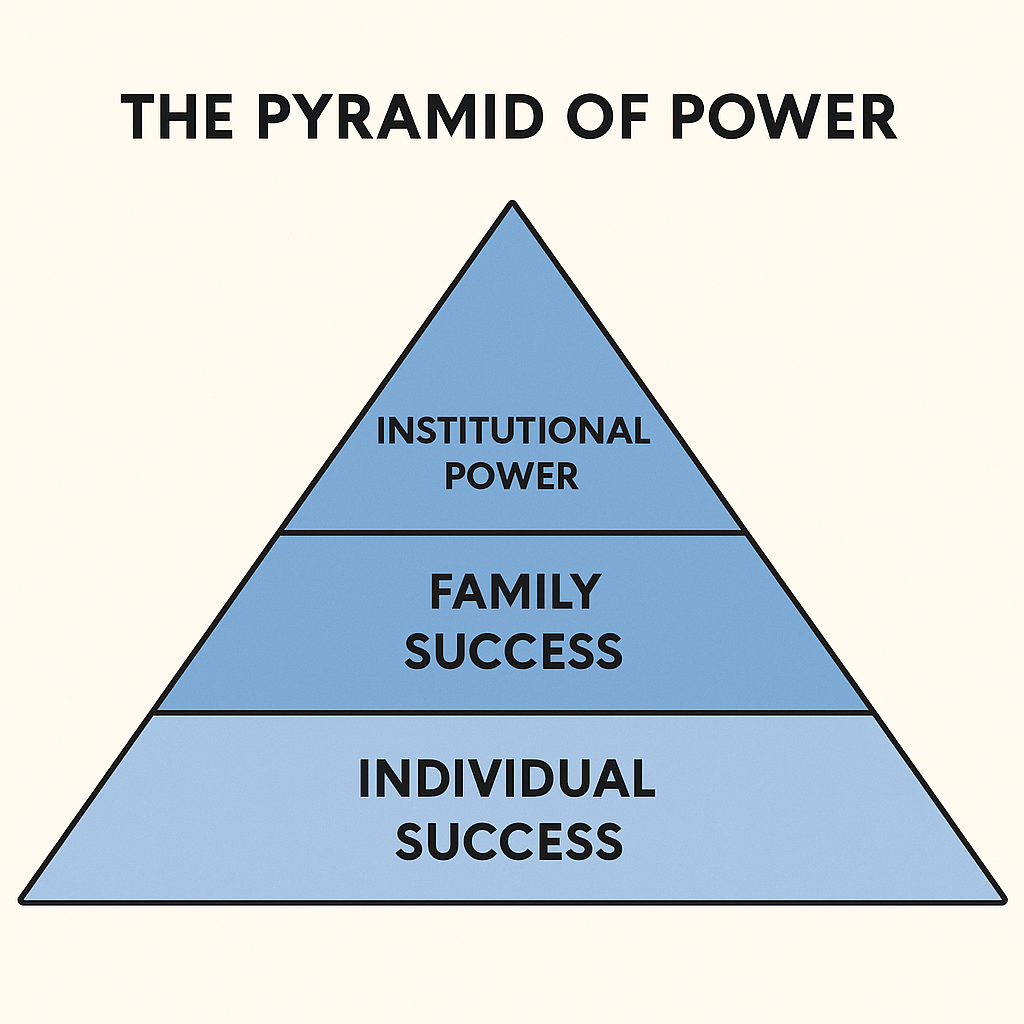
None of this is exotic. It is standard operating procedure for every dynasty this essay has named. It has simply never been marketed to African America as something within reach, because the wealth management industry profits more from selling individual products than from building family institutions that don’t need it.

Institutions of the wider Black ecosystem have a direct, self-interested role here, and this is where the case must be made in dollars, not sentiment. A Black-owned bank or credit union that captures family trust deposits and estate accounts gains stable, patient capital instead of transactional balances. A historically Black college or university that structures a real endowed-chair or scholarship-naming relationship with a family — rather than accepting a one-time gift — gains a recurring donor relationship spanning generations rather than a single tax-season transaction. Fisk, Tougaloo, Dillard, and Xavier of Louisiana have decades of experience cultivating exactly this kind of multigenerational donor family; Alcorn State, Coppin State, Savannah State, Bethune-Cookman, Norfolk State, Delaware State, Fort Valley State, and Morgan State could each become the anchor institution for a rising family dynasty if they pursued the relationship as deliberately as the Rockefellers pursued the University of Chicago or the Dukes pursued the university that bears their name. The institution that captures a family early, before its capital scales, is the institution that owns the relationship when that capital multiplies. This is not charity. It is customer acquisition, and any HBCU treating it otherwise is leaving its own endowment on the table.

The same logic extends past the water’s edge. Diaspora capital coordination — joint investment vehicles linking African American family offices with counterparts in the Caribbean and across Africa Core — is not a symbolic gesture toward Pan-Africanism. It is a hedge against the concentration risk of building wealth inside a single, historically hostile domestic market. A family real estate or infrastructure fund co-managed across African American, Jamaican, and Ghanaian family offices diversifies political risk, currency exposure, and asset class in one structure, while building exactly the kind of institutional density and strategic coordination that isolated, single-country family wealth can never achieve alone.

None of this happens through moral appeal, and this publication has no interest in making one. Appeals to racial solidarity have moved conferences and Twitter timelines; they have not moved balance sheets. The case for family institutionalization has to be made the way the Waltons, the Kochs, and the Wallenbergs made it to their own descendants: this structure protects what you have from your own children’s mistakes, from probate courts, from market volatility, and from the actuarial certainty that someone in every family eventually dies without a plan. Estate planning is not morbid. It is the single highest-leverage act of institution-building available to a family with under a million dollars in assets, and it costs less than a used car.

There is also a governance failure hiding inside the sentimental version of Black wealth-building that deserves direct confrontation. Families that treat wealth distribution as an equality exercise — splitting everything evenly among heirs regardless of role, competence, or commitment — are optimizing for fairness at the expense of survival. The Family Business Institute’s own data on why family enterprises collapse points overwhelmingly to succession disputes and undefined governance, not lack of capital. A family that assigns real roles — someone accountable for investment decisions, someone accountable for philanthropic strategy, someone accountable for legal and tax exposure — and backs those roles with actual authority, not just a title at Thanksgiving, will outlast a family that insists every cousin gets an equal, undifferentiated vote on every decision. Institutions require hierarchy. Families building institutions will have to get comfortable with that, however uncomfortable it sits against a cultural instinct toward flattened, communal decision-making.

The alternative to all of this is not neutral. It is continued erosion. Every family that fails to formalize governance sends its capital back into the undifferentiated churn of individual consumption — the paycheck model this publication has criticized elsewhere, in which wealth is treated as something to be spent rather than something to be commanded. Every dollar that leaves the Black institutional ecosystem through an unplanned estate, an uninsured death, or a liquidated piece of land is a dollar the next generation has to earn from zero, while families with institutional infrastructure simply compound what they already hold. The compounding gap in the Federal Reserve’s data is not an accident of history. It is the visible output of one set of families running institutional software and another set running none at all.

The mason in Americus did not fail his family. He succeeded at everything available to him in 1952, in a state where a Black man building wealth at all was itself an act of defiance. What failed him was the absence of a structure that could have held what he built past his own lifetime, and the absence of a plan to let that first asset become seed capital for a second and third — a trust, a governance document, a designated successor with both the authority and the training to keep the estate whole and growing, whatever form that estate took or became. That absence is fixable, at a scale of millions of families, in this generation, and it applies as much to a brokerage account or a stake in a family business as it does to eleven acres of Georgia clay. The Kochs turned one refinery into a dozen industries. The Rothschilds turned a banking desk into vineyards and mines. Neither family mistook where they started for where they had to stay. It requires no act of Congress and no act of philanthropy from outside the community. It requires families to stop organizing themselves as clusters of individuals bound by affection, and start organizing as institutions bound by structure, because affection does not survive probate court and structure does. The eleven acres are gone. Whatever the next generation holds — land, equity, a business, a portfolio, or something none of them have thought to build yet — does not have to stop there, and does not have to follow them into the ground.

Disclaimer: This article was assisted by ClaudeAI.

Is the Love of Sports Costing African America the STEM Future It Desperately Needs?

The future will not belong to those who can jump the highest, but to those who can think the deepest.” — Anonymous (Modern African Proverb Reimagined)

For every hour a Black boy or girl spends practicing, playing, or watching sports, it becomes an hour not spent mastering math, science, literature, or history. Over time, those missed hours compound not just in skill gaps, but in confidence gaps. And confidence, in education as in life, is everything. The long-term consequence of this imbalance may be far greater than lost academic opportunities. It may be the loss of African America’s ability to compete in the 21st-century economy and the slow erosion of its intellectual sovereignty.

Sports are a cherished part of African American culture, woven through family traditions, community pride, and generational memory. From Jackie Robinson to Serena Williams, from Doug Williams to Simone Biles, athletic greatness has symbolized resilience and excellence in a world that too often sought to deny both. But beneath the surface of that cultural triumph lies an uncomfortable reality: the love of the game may have become too consuming, crowding out the time, attention, and aspiration needed for mastery in science, technology, engineering, and mathematics — the disciplines defining wealth and power in the modern world.

A study by GradePower Learning found that American students spend about 1,000 hours in school each year — and roughly the same amount watching screens. For African American youth, however, there’s an additional pull: sports participation, practices, and games can consume 10 to 20 hours a week, not counting the time spent watching sports media, highlights, or discussing the latest player stats. By the time a child reaches high school graduation, those hours can exceed 8,000 — the equivalent of four full years of math or science instruction. What might have been time spent learning quadratic equations or Newton’s laws becomes time devoted to perfecting a crossover dribble or memorizing playbooks.

In theory, sports are said to teach discipline, teamwork, and perseverance — invaluable traits for life and leadership. But decades of African American participation in sports have shown that, in practice, these virtues rarely translate into collective advancement or institutional power for the community. Sports teach many to endure, but not necessarily to build. They inspire personal excellence but often without structural returns. Meanwhile, other ethnic groups are compounding their time in STEM preparation. In Asian households, it is not uncommon for students to attend supplemental weekend academies for math and science. The same can be said of many immigrant families who prioritize educational mastery as a direct pathway to generational wealth.

This divergence begins early. By middle school, African American students already lag behind in math and science proficiency, and by high school, many have internalized the belief that they “aren’t math people.” Yet, that belief is not innate; it’s cultivated by the habits of time and attention society rewards.

The youth sports economy in the United States is now valued at over $30 billion, according to USA Today. Parents are spending thousands each year on club fees, travel tournaments, gear, and coaching — often with dreams of athletic scholarships or professional contracts that statistically almost never come. A 2025 USA Today report noted that many parents invest between $5,000 and $10,000 annually per child in competitive sports, hoping to secure a college scholarship. Yet, NCAA data show that less than 2% of high school athletes earn athletic scholarships, and an even smaller fraction go on to professional sports.

When those numbers are mapped against household wealth, the economic irony becomes staggering. The median net worth of African American families remains around $44,900, compared to $285,000 for White families. If the average family spends $10,000 per year on youth sports for a decade, they could instead have invested $100,000 into a 529 education savings plan or a family investment fund. Compounded annually at 7%, that investment would yield roughly $196,000 by the time their child turns 18 — enough to pay for college tuition, or serve as seed capital for a business. But the investment goes into jerseys, tournaments, and sneakers. Sports is not just a pastime anymore; it’s an industry — one that thrives on hope, marketing, and the dream of ascension. For African American families, that dream often overshadows a deeper one: intellectual independence.

From the earliest ages, children internalize the models of success they see. If every hero they admire dribbles, runs, or dunks, it subtly shapes what they believe they must become to matter. The African American community has created icons in every field, but sports icons receive disproportionate visibility, media coverage, and cultural veneration. Young boys can name more NFL quarterbacks than Black engineers, scientists, or inventors. This imbalance creates a quiet but powerful feedback loop. The more the community celebrates athletic success as the highest expression of Black excellence, the fewer young people will be inspired to emulate scientific or entrepreneurial greatness. The idolization of the athlete — rather than the innovator — becomes a generational tax on imagination.

STEM confidence, like athletic skill, is built through repetition and exposure. A child who spends thousands of hours practicing sports builds confidence in their athletic identity. A child who spends thousands of hours exploring robotics or chemistry develops confidence in their intellectual identity. The problem is not talent — it’s time allocation.

If African America’s endowments are to grow, its intellectual capital must first be rebalanced. STEM fields are not just high-paying; they are high-leverage. Engineers design cities, coders build economies, and scientists control the frontiers of technology and medicine. When African American students are absent from these sectors, it isn’t just a diversity gap — it’s a sovereignty gap. Every innovation African America fails to own is an innovation it must rent from others. Every algorithm not written, every patent not filed, every lab not funded contributes to institutional dependency. Historically Black Colleges and Universities sit at a unique crossroads. While they have been strong in liberal arts, education, and social sciences, they must now pivot aggressively toward STEM dominance. Yet even they face a cultural headwind — many incoming students have been nurtured to see physical performance as validation of worth, while intellectual rigor is often seen as a burden rather than a badge.

An HBCU graduate in engineering or computer science may go on to invent, design, and build. An HBCU athlete may entertain millions. But the wealth gap between those two trajectories is not just individual — it’s institutional. Consider the compound effect of lost hours: one hour per day diverted from academic enrichment equals 365 hours per year. Over 13 years of schooling (Pre-K through 12th grade), that’s nearly 4,750 hours — more than two full school years of instruction. That’s just for one hour. Many student-athletes spend much more time — often 10 or more hours weekly — on practice, travel, and games. By high school, this could exceed 10,000 hours — the exact amount Malcolm Gladwell famously cited as the threshold for mastery in any field.

African American students are becoming masters — just not in the fields where mastery translates into institutional control or generational wealth. Imagine if even half of those hours were redirected into robotics clubs, science fairs, financial literacy programs, or coding bootcamps. The shift in intellectual and economic trajectory would be profound. Culture cannot change overnight, but it can evolve intentionally. African American parents, educators, and institutions must begin redefining what excellence looks like — and where the applause should go. Families should celebrate as loudly when a child aces a chemistry exam or builds a mobile app as when they score a touchdown. Public affirmation must follow academic achievement with the same enthusiasm it gives athletic performance.

The money spent on club sports, travel, and equipment could be partially reallocated to STEM programs, tutoring, or even early college credit courses. Financial discipline must mirror the rigor of athletic discipline. Imagine a Saturday morning robotics league with the same energy as youth basketball — complete with team jerseys, community support, and trophies. Institutions like HBCUs could sponsor regional competitions to make intellectual pursuit a spectator event. HBCUs can create mentorship pipelines connecting student-athletes with STEM majors to promote balance. Athletic departments should collaborate with STEM departments on interdisciplinary projects that merge sports analytics, biomechanics, and data engineering. Families can begin small: a weekly science documentary, math challenges at the dinner table, or trips to museums and tech expos. What matters most is that curiosity and analysis become part of the household rhythm.

America’s future wealth and power will flow through those who master technology, not those who merely consume it. The engineers designing renewable energy grids, the programmers writing AI code, and the scientists developing space propulsion systems are the ones shaping the next civilization. African America cannot afford to be absent from that frontier — nor can it afford to lose another generation to the illusion of athletic access as a substitute for academic and economic power. The cultural love of sports, once a symbol of survival and community, must now evolve into a love of systems, science, and strategy. The same passion that drives the athlete can drive the engineer. The same discipline that fuels a 5 a.m. workout can fuel a 5 a.m. study session. But only if the institutions — families, schools, and HBCUs — are intentional in redirecting that energy.

The African American community once used sports as a pathway to dignity in a segregated world. Now, the challenge is to use STEM as a pathway to dominance in a digitized one. The scoreboard has changed, and so must the game. For every hour spent on a basketball court, a track, or a field, there should be an equal hour at a computer, in a lab, or under a microscope. Not because sports don’t matter, but because the future does. To win this century, African America must love the pursuit of knowledge more than the pursuit of applause. Its children must learn to compete not just on the field — but in the lab, the boardroom, and the data center. Otherwise, the highlight reels will continue to roll, but the ownership of the next generation’s wealth and innovation will belong to someone else.

Disclaimer: This article was assisted by ChatGPT.

Love It Or Hate It: African American Education Needs More Private Schools

If you want a good education, go to private schools. If you can’t afford it, tough luck. You can go to the public school. – Paul LePage

The education landscape for African American students has long been marked by systemic challenges, including underfunded public schools and limited access to quality resources. As parents, educators, and community leaders seek solutions to these persistent issues, the establishment of more private schools specifically serving African American communities emerges as a potential avenue for improving educational outcomes. These institutions can provide tailored educational experiences that meet the unique needs of African American students, while also creating a stronger pipeline to historically Black colleges and universities (HBCUs).

If European Americans wanted to have quality public education for ALL Americans by now, we would have it. They do not and we can not afford to wait in hopes of appealing to a moral consciousness for it to happen. We must also accept that even it were to happen, the curriculum still would leave us out of the shaping and decision making process as it always has. Then we are surprised when our kids go through K-12 and know little to nothing about the contributions of African Americans and the African Diaspora upon finishing. There was slavery and then Martin Luther King, Jr. as it pertains to the “history” of African Americans in the United States in the current school systems for which we are dependent upon to educate our community and if some textbooks have their way slavery will soon be erased from the literature. In the intellectual arms race happening both here in the United States and throughout the world, African American education is sinking faster than the Titanic (it took approximately five minutes). The demarcation line has been crossed (long ago some would argue – desegregation) and it is time to take the offensive. African American private schools allow for African America to create its own de facto school systems where it controls the culture, curriculum, teacher quality, finances, and all of the subtleties that go into the education of our children from Early Childhood/Pre-K through 12th Grade.

In the United States, there are currently 30,492 private schools employing 529,574 teachers and educating almost 4.7 million students according to recent data by the NCES. On the public school side, there are 98,469 institutions employing 3.2 million teachers and educating 48.1 million students. For African Americans, they comprise 15 percent (7.22 million African American students) of the public school enrollment and 6 percent (423,000 African American students) of the private school enrollment. That is a national average of 18 teachers and 154 students for a ratio of 8 students per 1 teacher per private institution versus an average 33 teachers and 489 students for a ratio of 15 students per 1 teacher per public institution. Despite this reality, African American participation is second lowest among all groups just ahead of Hispanics, 50 percent behind European Americans, and 40 percent behind Asian Americans in private school participation. Private education for Asian Americans comprises almost 15 percent of their public/private student population, while private education only comprises 6 percent of the African American public/private population.

Addressing Systemic Inequities

Public schools in predominantly African American neighborhoods often face significant funding disparities, resulting in overcrowded classrooms, outdated materials, and limited extracurricular opportunities. Private schools can offer smaller class sizes, individualized attention, and enhanced resources such as more experienced teachers, state of the art technology and facilities just to name a few. By creating more private educational options, families can access environments that better meet their children’s academic and emotional needs.

Emphasis on Cultural Relevance

Private schools that cater to African American students can incorporate culturally relevant curricula that celebrate heritage and address the unique experiences of these students. Such an approach can foster a sense of belonging and identity, helping students thrive academically and socially. By emphasizing African American history, literature, and contributions, these schools can instill cultural pride and motivation in their students.

Diverse Educational Models

The expansion of private schools can introduce diverse educational models, including Montessori, Waldorf, and project-based learning, which may better suit the learning styles of African American students. These alternatives can provide innovative teaching methods that engage students more effectively than traditional approaches.

Strengthening the Pipeline to HBCUs

A significant benefit of increased private school options is the potential to strengthen the pipeline to HBCUs. Private schools can establish partnerships with HBCUs, offering students mentorship programs, college preparatory courses, and exposure to campus life.

  1. Early College Programs: Private schools can implement early college initiatives that allow high school students to earn college credits while still in high school. This can ease the transition to higher education and increase the likelihood of enrollment in HBCUs.
  2. College Counseling: Enhanced college counseling services can guide students through the application process, focusing on HBCUs and highlighting the unique opportunities these institutions offer, including supportive environments and rich cultural experiences.
  3. Scholarship Opportunities: Private schools can work with HBCUs to create scholarship programs specifically for their graduates, ensuring financial support for students who choose to continue their education at these institutions.

Parental Choice and Empowerment

More private schools can empower parents by offering them choices in their children’s education. Many African American families seek options beyond their local public schools, and increased access to African American private institutions can enable parents to select environments that align with their educational philosophies and cultural values.

Community Investment and Leadership

Establishing private schools within African American communities can encourage local investment and leadership. The New England 8, a set of premier boarding schools in the New England region, control over $8 billion in net assets alone. There is no reason to believe that African American boarding and private schools could not emerge to enhance African American institutional asset control through their own endowments and have an acute impact on African American towns and communities. Community members can take active roles in governance and decision-making, ensuring that schools reflect the needs and aspirations of the families they serve. This involvement can strengthen community ties and promote a sense of ownership in the educational process.

While private schools are not a panacea for the challenges facing African American education, increasing their availability can provide valuable alternatives for families seeking quality educational options. By addressing systemic inequities, offering culturally relevant curricula, and empowering communities, more private schools could play a crucial role in fostering academic success, personal growth for African American students, and ultimately provides more African American institutional ownership.

How many African American private schools are there? According to Black Minds Matter’s Black-Owned Schools Directory there are approximately 140 African American private schools.

Disclosure: This article was assisted with by ChatGPT.