Tag Archives: generational wealth building

Building Dynasties: What It Will Take for African American Families to Rise to Power

“control, control of resources, control of self, control of nation, requires preparation — Garveyism was about total preparation.” – Dr. John Henrik Clarke, writing on Marcus Garvey’s philosophy of Black institutional power
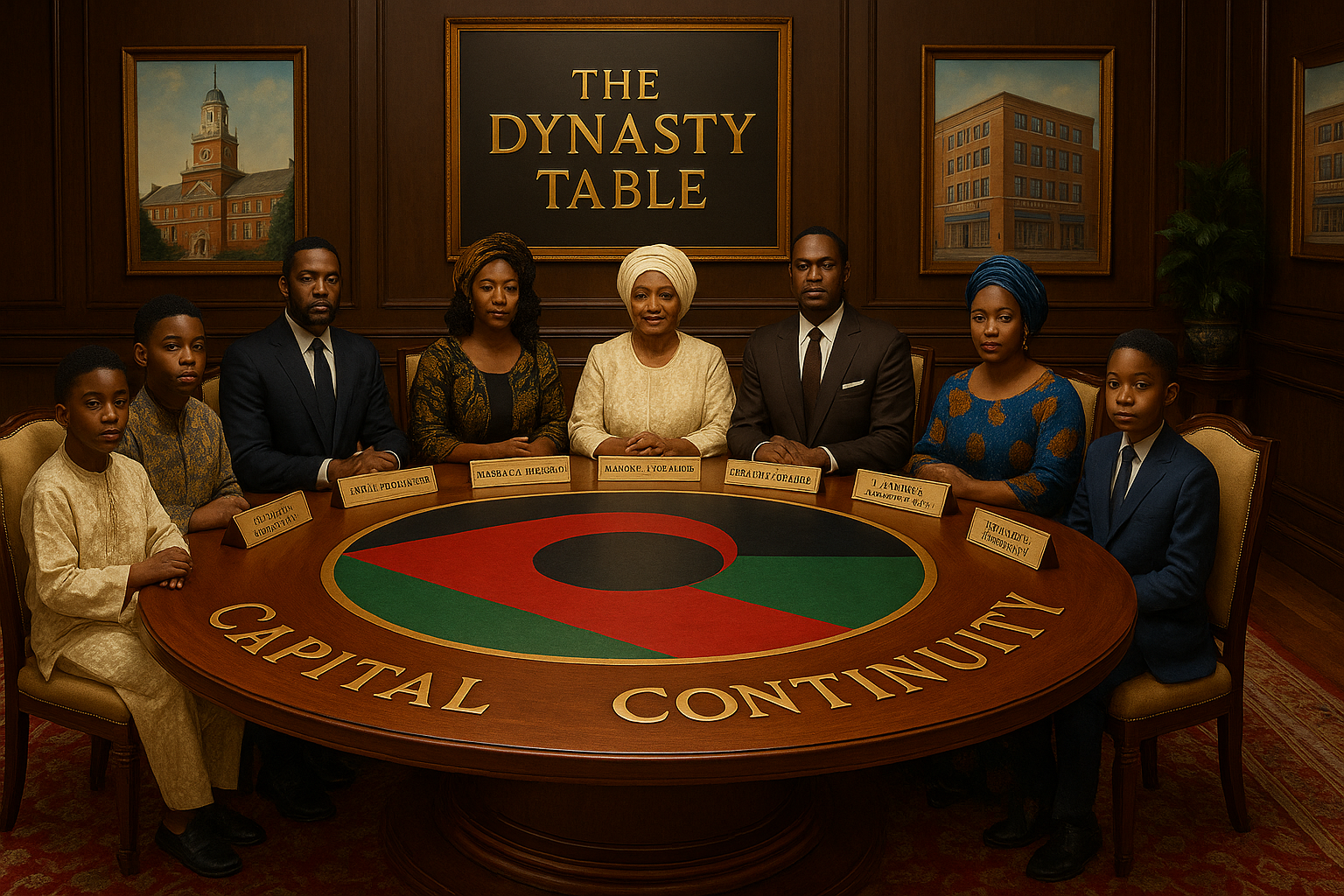
In 1952, a mason in Americus, Georgia bought eleven acres with cash he’d saved from three decades of laying brick. He built a house on it, a smokehouse behind it, and a wraparound porch where he told his grandchildren that the land was the family’s now, forever. He died in 1979. By 1994, the eleven acres had been split six ways, sold in fragments to cover a funeral, a divorce, and two bad business loans. Today a subdivision sits where the smokehouse stood. The mason did everything right by the logic he was given: work, save, buy, own. What he lacked was not virtue. It was infrastructure. Nobody had ever taught him that land without governance is just land waiting to be divided.

That story is not an outlier. It is the median outcome. And it is the central argument of this piece: African America’s problem was never a shortage of individual achievement. It is a near-total absence of the legal, financial, and cultural machinery that converts one generation’s success into the next generation’s platform. Until that machinery is built, deliberately and aggressively, every dollar earned by this community will keep dying with the person who earned it.

Start with the scoreboard, because the scoreboard is brutal. The Federal Reserve’s 2022 Survey of Consumer Finances put median Black household net worth at $44,900, against $285,000 for the median White household — a gap of more than six to one, and one that widened in absolute dollar terms even as Black wealth grew faster in percentage terms during the pandemic recovery. Growth rate is a vanity metric when the base is this small. A 60 percent increase on $28,000 is still poverty with better arithmetic. The gap is not closing. It is compounding, in the same way interest compounds, except in the wrong direction.

Now layer on top of that the single largest wealth movement in American history, already underway. Cerulli Associates projects that $84 trillion will pass from the Baby Boomer and Silent Generations to heirs and charities through 2045, the bulk of it concentrated among households that were already high-net-worth. This is not a rising tide. It is an inheritance economy, and inheritance economies reward whoever already has family structures in place to receive, consolidate, and reinvest capital across generations. Families without that structure will watch the transfer happen around them, not to them. The transfer is not going to wait for African America to get its paperwork in order.

This is where the sentimental version of “generational wealth” needs to be retired. Passing down money is not the same as passing down power, and Black America has been sold the former as if it were the latter. Power, as any serious student of the Waltons, the Rockefellers, or the Kochs understands, does not come from an inheritance check. It comes from the entity that controls the check. The Walton family does not merely benefit from Walmart’s success; through Walton Enterprises LLC and the Walton Family Holdings Trust, they collectively control roughly 45 percent of the company’s outstanding shares, a concentrated bloc large enough to determine board composition, executive succession, and long-term strategy three generations after Sam Walton’s death. That is not inheritance. That is institutionalized command, engineered through trust structures, family governance, and a refusal to let ownership fragment. Jay-Z’s net worth impresses a magazine cover. It does nothing for the fortieth Black family down the street, because it is not organized as an institution — it is one man’s balance sheet, subject to one man’s mortality.

The uncomfortable truth is that most families, of any race, fail at this. Research tracked by the Family Business Institute finds that roughly 30 percent of family-owned businesses survive into a second generation, about 12 percent make it to a third, and only 3 percent endure into a fourth. Succession is hard even with capital, even with lawyers, even with three generations of practice at running something. What that data point exposes is not that Black families are uniquely undisciplined — it’s that family continuity is a discipline nobody is taught, and African America has had roughly one-fifth of the time (counting from Emancipation, and accounting for the systematic destruction of Black wealth through redlining, urban renewal, and outright terrorism such as the 1921 razing of Tulsa’s Greenwood district) to build the muscle memory that older American dynasties built over five and six generations. The response to that deficit cannot be more individual grit. It has to be structure, copied deliberately from where it already works, and adapted ruthlessly to this community’s actual starting conditions.

So build the structure. A family constitution — a written document specifying mission, capital rules, and succession mechanics — costs nothing but discipline and an afternoon with a competent estate attorney, yet almost no Black family has one, while every dynasty mentioned above treats theirs as more binding than a corporate bylaw. A family office does not require billionaire assets to justify its existence; pooled family capital in the low six figures is sufficient to retain a fee-only advisor, establish an LLC or trust structure, and begin making coordinated decisions across a real portfolio — brokerage accounts, retirement vehicles, business equity, insurance-funded trusts, even royalty and intellectual-property streams — instead of six relatives each managing a fragment of the same family’s capital in isolation. Land is one asset class among several and should be governed the same way the rest are: never liquidated to cover an emergency when it could instead be collateralized, folded into a trust, or held alongside an equity stake in a family business and a diversified investment account, each professionally managed rather than administered by whichever relative answered the phone first.

None of these families stayed inside their founding asset. Koch Industries began as a part-interest in a single Minnesota oil refinery bought out in the 1940s and 1960s; under Charles Koch it diversified deliberately into pipelines, fertilizer, pulp and paper, ranching, glass, electronics, and commodities trading, so that no single market downturn — a refining glut, a paper-price collapse, a bad cattle season — could touch the whole estate at once. The Rothschilds began as court bankers to European nobility in the 1760s and, over two centuries, moved family capital into railways, mining, real estate, energy, and, notably, wine estates like Château Lafite and Château Mouton — acquired not as hobbies but as productive, appreciating assets that diversified the family’s holdings away from the banking sector that made them. Even the Waltons, whose fortune is most associated with a single company, don’t hold it as a single asset: Walton Enterprises runs its own internal investment arm allocating family capital into private equity, real estate, and outside ventures entirely apart from Walmart stock, precisely so the family’s fate isn’t fused to one retailer’s stock price. In every case, the founding asset became the seed capital for a portfolio, not the permanent shape of the estate. That is the model the eleven acres in Americus should be measured against. The land was never meant to be the ceiling of that family’s wealth — it was meant to be collateral for the next asset, security for a loan into a business, a hedge alongside a brokerage account, one holding in a portfolio instead of the whole of it. Held that way, structured that way, it doesn’t matter whether the estate a family passes down began as land, a barbershop, a nursing license, or a pension. What matters is whether it was ever allowed to grow past its origin.
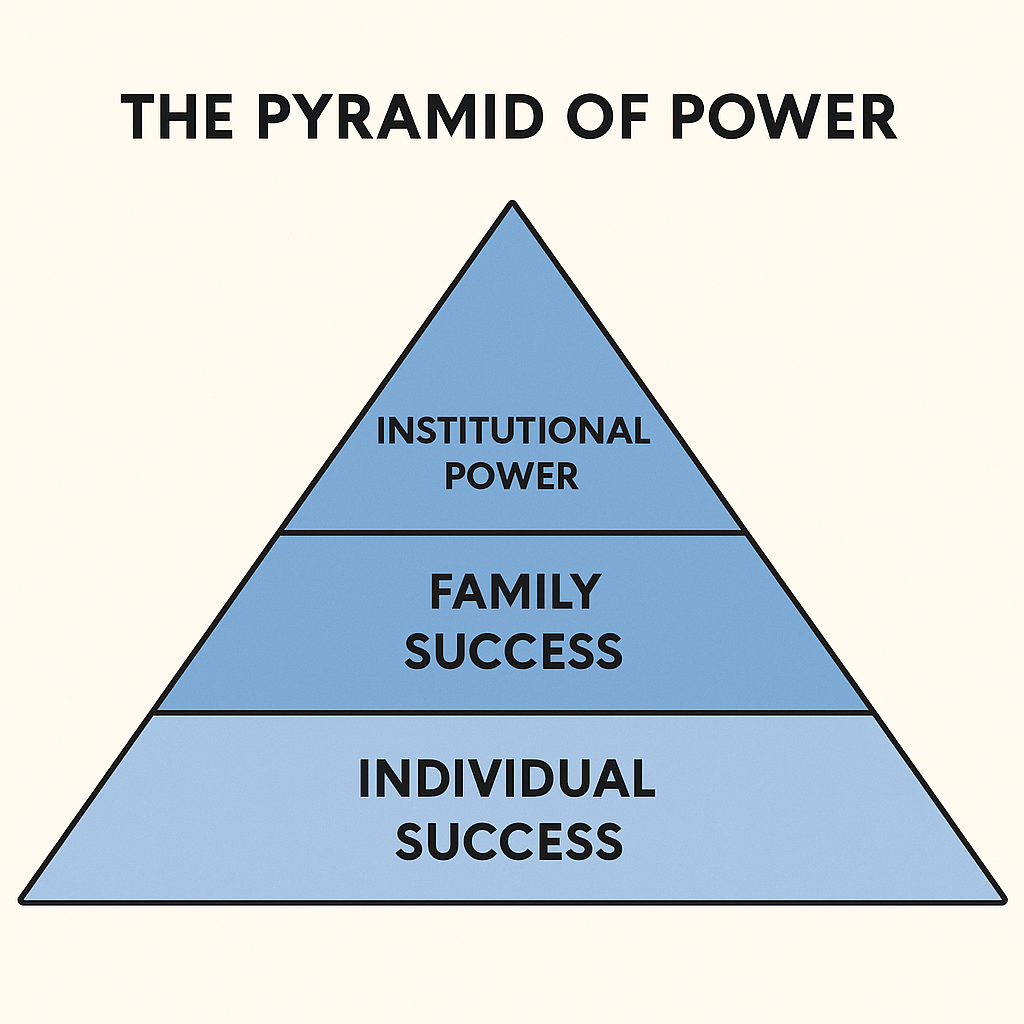
None of this is exotic. It is standard operating procedure for every dynasty this essay has named. It has simply never been marketed to African America as something within reach, because the wealth management industry profits more from selling individual products than from building family institutions that don’t need it.

Institutions of the wider Black ecosystem have a direct, self-interested role here, and this is where the case must be made in dollars, not sentiment. A Black-owned bank or credit union that captures family trust deposits and estate accounts gains stable, patient capital instead of transactional balances. A historically Black college or university that structures a real endowed-chair or scholarship-naming relationship with a family — rather than accepting a one-time gift — gains a recurring donor relationship spanning generations rather than a single tax-season transaction. Fisk, Tougaloo, Dillard, and Xavier of Louisiana have decades of experience cultivating exactly this kind of multigenerational donor family; Alcorn State, Coppin State, Savannah State, Bethune-Cookman, Norfolk State, Delaware State, Fort Valley State, and Morgan State could each become the anchor institution for a rising family dynasty if they pursued the relationship as deliberately as the Rockefellers pursued the University of Chicago or the Dukes pursued the university that bears their name. The institution that captures a family early, before its capital scales, is the institution that owns the relationship when that capital multiplies. This is not charity. It is customer acquisition, and any HBCU treating it otherwise is leaving its own endowment on the table.

The same logic extends past the water’s edge. Diaspora capital coordination — joint investment vehicles linking African American family offices with counterparts in the Caribbean and across Africa Core — is not a symbolic gesture toward Pan-Africanism. It is a hedge against the concentration risk of building wealth inside a single, historically hostile domestic market. A family real estate or infrastructure fund co-managed across African American, Jamaican, and Ghanaian family offices diversifies political risk, currency exposure, and asset class in one structure, while building exactly the kind of institutional density and strategic coordination that isolated, single-country family wealth can never achieve alone.

None of this happens through moral appeal, and this publication has no interest in making one. Appeals to racial solidarity have moved conferences and Twitter timelines; they have not moved balance sheets. The case for family institutionalization has to be made the way the Waltons, the Kochs, and the Wallenbergs made it to their own descendants: this structure protects what you have from your own children’s mistakes, from probate courts, from market volatility, and from the actuarial certainty that someone in every family eventually dies without a plan. Estate planning is not morbid. It is the single highest-leverage act of institution-building available to a family with under a million dollars in assets, and it costs less than a used car.

There is also a governance failure hiding inside the sentimental version of Black wealth-building that deserves direct confrontation. Families that treat wealth distribution as an equality exercise — splitting everything evenly among heirs regardless of role, competence, or commitment — are optimizing for fairness at the expense of survival. The Family Business Institute’s own data on why family enterprises collapse points overwhelmingly to succession disputes and undefined governance, not lack of capital. A family that assigns real roles — someone accountable for investment decisions, someone accountable for philanthropic strategy, someone accountable for legal and tax exposure — and backs those roles with actual authority, not just a title at Thanksgiving, will outlast a family that insists every cousin gets an equal, undifferentiated vote on every decision. Institutions require hierarchy. Families building institutions will have to get comfortable with that, however uncomfortable it sits against a cultural instinct toward flattened, communal decision-making.

The alternative to all of this is not neutral. It is continued erosion. Every family that fails to formalize governance sends its capital back into the undifferentiated churn of individual consumption — the paycheck model this publication has criticized elsewhere, in which wealth is treated as something to be spent rather than something to be commanded. Every dollar that leaves the Black institutional ecosystem through an unplanned estate, an uninsured death, or a liquidated piece of land is a dollar the next generation has to earn from zero, while families with institutional infrastructure simply compound what they already hold. The compounding gap in the Federal Reserve’s data is not an accident of history. It is the visible output of one set of families running institutional software and another set running none at all.

The mason in Americus did not fail his family. He succeeded at everything available to him in 1952, in a state where a Black man building wealth at all was itself an act of defiance. What failed him was the absence of a structure that could have held what he built past his own lifetime, and the absence of a plan to let that first asset become seed capital for a second and third — a trust, a governance document, a designated successor with both the authority and the training to keep the estate whole and growing, whatever form that estate took or became. That absence is fixable, at a scale of millions of families, in this generation, and it applies as much to a brokerage account or a stake in a family business as it does to eleven acres of Georgia clay. The Kochs turned one refinery into a dozen industries. The Rothschilds turned a banking desk into vineyards and mines. Neither family mistook where they started for where they had to stay. It requires no act of Congress and no act of philanthropy from outside the community. It requires families to stop organizing themselves as clusters of individuals bound by affection, and start organizing as institutions bound by structure, because affection does not survive probate court and structure does. The eleven acres are gone. Whatever the next generation holds — land, equity, a business, a portfolio, or something none of them have thought to build yet — does not have to stop there, and does not have to follow them into the ground.

Disclaimer: This article was assisted by ClaudeAI.
The Prospect Heights Empire, Part II: From Newsprint to Natural Resources — How Flavor Group Holdings Built a Vertical Integration Strategy for the Ages

We ain’t gotta dream no more, man. We got real shit. Real estate we can touch. – Stringer Bell

There is a concept in corporate strategy called vertical integration which is the deliberate extension of a company’s ownership up or down its supply chain in order to capture margin that would otherwise accrue to a third party, reduce dependency on suppliers with competing interests, and build structural moats that competitors cannot easily replicate. Standard Oil practiced it. Carnegie Steel perfected it. The major timber and paper conglomerates of the twentieth century built generational fortunes on it. Khadijah James understood something about the magazine business that most publishers learn too late: the product you sell is content, but the input you cannot live without is paper. And paper, in the mid-1990s, was not simply a commodity. It was a strategic vulnerability. Flavor Group Holdings, had it been built with the institutional discipline the prior analysis outlined, would have recognized this vulnerability by no later than 1997. What follows is the story of how it would have addressed it and how that address would have positioned the company for a generational transformation that most legacy media firms failed to execute.

In 1997, the average ton of coated magazine paper cost between $850 and $1,100, depending on grade, supplier relationship, and contract structure. For an independent publisher without the purchasing leverage of Condé Nast or Hearst, paper costs could represent 25 to 35 percent of total production expense. Flavor magazine, growing its print run and expanding its distribution footprint, would have been acutely sensitive to this dynamic. Kyle Barker, reviewing the company’s cost structure with the same analytical discipline he applied to equity portfolios, would have identified paper as the single largest controllable variable in the production budget. He could not control advertiser sentiment. He could not control newsstand foot traffic. He could not control the postal rates that governed subscription economics. But he could, in theory, control the cost of the raw input upon which everything else depended.

The strategic logic of timber acquisition was straightforward. Timberland in the Northeast — the forests of Maine, Vermont, and upstate New York — and the Southeast — the pine flatwoods of Georgia, Alabama, and North Carolina — had been the backbone of American papermaking since the late nineteenth century. By the mid-1990s, consolidation in the timber industry had created an unusual market dynamic: large tracts of productive timberland were available at prices that undervalued their long-term yield, precisely because institutional investors had not yet developed the appetite for timberland as an asset class that they would later demonstrate through the proliferation of Timber Investment Management Organizations. Overton Wakefield Jones, whose expertise in physical infrastructure extended naturally to land assessment and property management, would have led the due diligence on initial timber acquisitions. Kyle would have structured the financing, likely through a combination of SBA rural development lending and community development financial institution capital. Maxine would have drafted the easement agreements, the timber rights contracts, and the supply agreements that would formalize the relationship between the timber subsidiary and the magazine operation.

The initial acquisition target was 15,000 to 20,000 acres of mixed hardwood and softwood timberland in Maine and Georgia, purchased between 1997 and 2001 at an average price of $400 to $700 per acre consistent with market rates for productive timberland in those regions during that period. Total acquisition cost at the midpoint: approximately $9 million, financed with 60 percent debt against the land’s appraised productive value. What Flavor Group Properties now held was not simply commercial real estate in Brooklyn. It held a natural resource asset with a biological growth cycle, a recurring harvest yield, and a supply relationship with its sister company that guaranteed a baseline demand for its output. The New York Times connection deserves its own examination. By the late 1990s, the Times consumed approximately 200,000 metric tons of newsprint annually, sourcing from multiple suppliers across North America and Scandinavia. An independent, Black-owned timber operation with certified sustainable forestry practices and competitive delivered costs to the Times’ printing facilities in New York and New Jersey would have represented precisely the kind of supplier diversity that large institutional customers were beginning to prioritize under pressure from shareholders and advocacy organizations. Flavor Group Timber, positioned as a minority-owned sustainable forestry operation with direct supply relationships to the Northeast’s largest paper consumers, would have been a compelling commercial proposition, one that combined genuine cost competitiveness with the reputational differentiation that procurement officers could document. The Times as a primary customer would not have been charity. It would have been commerce.

The structural shift in paper demand did not arrive without warning. The signals were present and legible well before their full consequences materialized. U.S. newsprint consumption peaked in 1998 and began a decline that would prove both sustained and accelerating. Printing and writing paper demand followed a similar trajectory after 2000, ultimately falling more than 30 percent from its peak by 2010. The causes were not mysterious: digital news consumption, desktop publishing, email, and eventually the smartphone demolished the economic foundation of the industries that had historically consumed the most paper. Kyle Barker, reading the data with the same discipline he applied to equity valuations, would have begun signaling concern about the long-term demand trajectory of printing and writing paper no later than 2002. The question before the Flavor Group Holdings board was not whether the shift was real — the data made that question moot. The question was what to do with timberland optimized for a demand profile that was structurally contracting.

The answer came in two phases, both of which required the kind of strategic patience that only a company with a diversified revenue base and a disciplined governance structure could sustain. The first phase was a deliberate pivot within the timber portfolio toward the segments of the paper market that were growing rather than contracting. Packaging paper — corrugated boxes, containerboard, kraft paper — was experiencing demand growth driven by a structural shift that would later be named e-commerce but was already visible in the late 1990s as catalog retail and early internet commerce began to reshape consumer purchasing behavior. The same digital transformation that was destroying demand for newsprint was simultaneously creating demand for the boxes that delivered the products ordered online. By 2005, packaging paper represented over 40 percent of total U.S. paper production. By 2020, it accounted for more than 50 percent. Flavor Group Timber’s response was to work with its mill partners and supply chain relationships to shift harvest and processing toward fiber grades appropriate for packaging applications, a conversion that required capital investment but was achievable within the existing land base and timber management infrastructure. The Southeast pine holdings were particularly well-suited for this transition, given the fiber characteristics of Southern yellow pine and the geographic concentration of containerboard manufacturing capacity in Georgia, Alabama, and the Carolinas. The second category that continued to perform was sanitary paper products such as tissue, paper towels, and related consumer hygiene products that demand for which proved remarkably durable across economic cycles. This segment is dominated by large integrated manufacturers with proprietary consumer brands, making direct market entry difficult for a company of Flavor Group’s scale. The strategic play here was not manufacturing but supply: positioning the timber holdings as a certified sustainable fiber source for contract manufacturers and consumer products companies seeking to strengthen their environmental sourcing credentials.

The second phase of the timber strategy represented a more ambitious conceptual leap, and it required the company to think about its land holdings not as a paper input operation but as a biological platform capable of supporting multiple overlapping output streams. By 2008, it was apparent to anyone watching the materials science and energy sectors that biomass — organic material derived from forest and agricultural waste, including wood chips, sawdust, bark, and non-merchantable timber — was becoming a meaningful feedstock for both energy generation and next-generation materials production. The forest residuals that had historically been burned as waste or left to decompose were being revalued as inputs for cellulosic ethanol production, biogas generation, and, most significantly for Flavor Group’s strategic trajectory, the emerging field of bioplastics. Bioplastics, materials derived from biological sources rather than petrochemical inputs, were receiving significant research investment and early commercial development from companies seeking alternatives to conventional plastics in packaging applications. The confluence of e-commerce-driven packaging demand, regulatory pressure on single-use plastics in European markets, and consumer preference shifts created a market pull for bio-based packaging materials that was structurally aligned with precisely what Flavor Group Timber’s land base could provide.

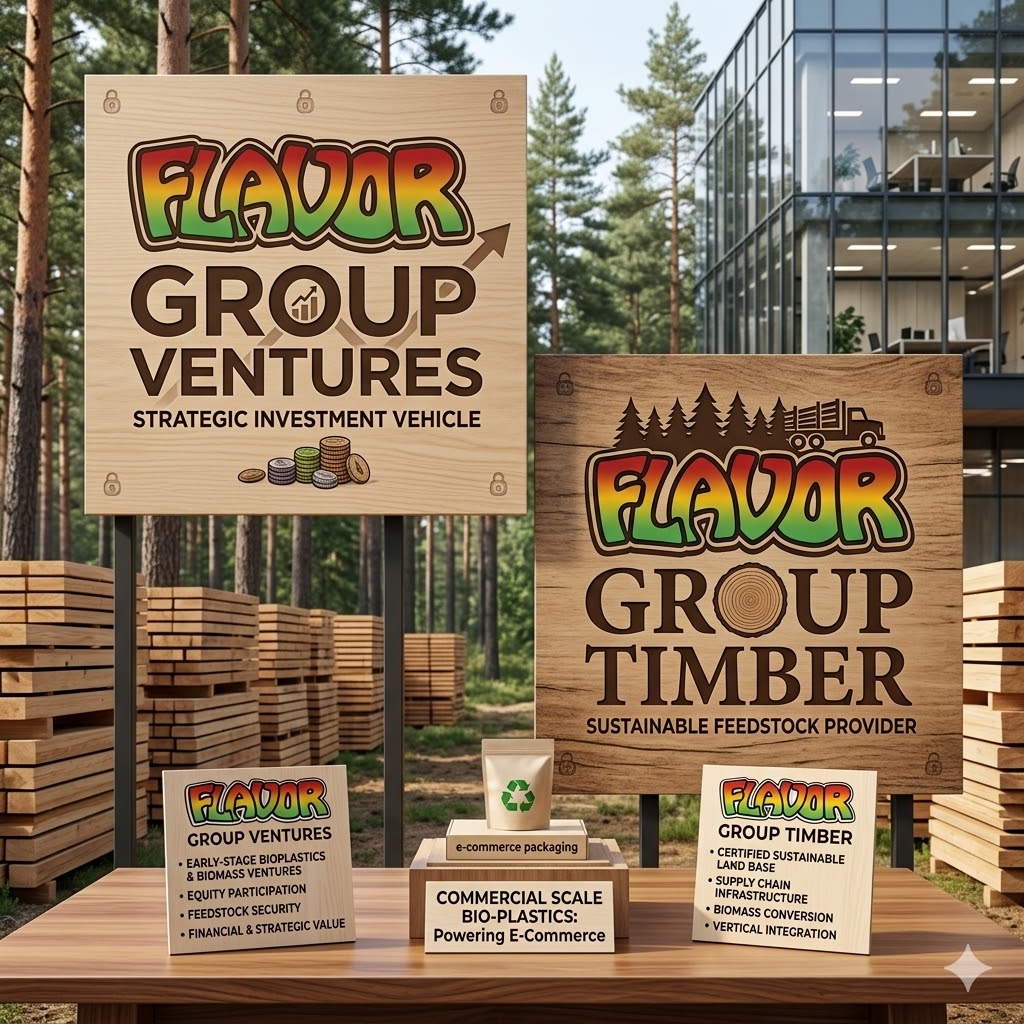
The strategic investment here was not vertical integration into bioplastics manufacturing which is a capital-intensive, technically complex undertaking beyond the company’s core competency at that stage of development. It was equity participation in early-stage bioplastics and biomass ventures through Flavor Group Ventures, the holding company’s investment vehicle that Kyle had been building since the early 2000s as a repository for the company’s excess cash flow. The investment thesis was straightforward: companies developing bio-based packaging materials needed not only capital but also feedstock security that had reliable, sustainable, cost-competitive access to the biological raw materials their processes required. Flavor Group Timber, with its certified sustainable land base and established supply chain infrastructure, could provide both financial capital and strategic value to early-stage bioplastics ventures in a way that purely financial investors could not. It was, in the language of modern venture capital, a strategic investor with genuine operational relevance to the companies it was backing. By 2015, Flavor Group Ventures held equity positions in four bioplastics and biomass processing companies — two of which had reached commercial scale in packaging applications for e-commerce clients, creating a financial return that compounded the underlying land value of the timber holdings.

Step back and consider what Flavor Group Holdings had assembled by 2015, beginning from a magazine operation and a Brooklyn brownstone in 1995. The media and content division, anchored by Flavor magazine’s digital transition and Synclaire’s talent network, had evolved into a multi-platform content business with subscription revenue, branded partnerships, and a podcast and video operation serving the same audience the original magazine had cultivated for two decades. The legal and advisory division, under Maxine Shaw’s continued leadership, had become one of the most respected Black-owned commercial law practices in the Northeast, with a client roster that included entertainment companies, real estate developers, and the timber industry supply chain relationships that Flavor Group’s own business development had generated. The real estate and land management division held commercial and residential properties in Prospect Heights, Crown Heights, and Bedford-Stuyvesant alongside approximately 22,000 acres of productive timberland in Maine and Georgia. The timber and natural resources division supplied packaging paper clients across the Northeast, held supply agreements with consumer products manufacturers seeking certified sustainable fiber, and managed a portfolio of forest residuals contracts with biomass energy facilities in the Southeast. The ventures division held minority equity positions in bioplastics, biomass processing, and sustainable materials companies, an early-stage portfolio assembled at valuations that by 2020 had generated returns consistent with the upper quartile of venture capital performance in the materials science sector. A conservative enterprise value estimate for this portfolio in 2020: between $400 million and $600 million, depending on the bioplastics portfolio’s mark-to-market performance and the real estate cap rate applied to the Brooklyn holdings.

There is a temptation to read this analysis as speculation, an exercise in imagining what fictional characters might have accomplished had their writers been economists rather than television producers. That temptation should be resisted, because the companies described here are not fictional. Every business model, every asset class, every strategic pivot outlined in this analysis has real-world precedents built by real people with the same inputs available to Khadijah, Kyle, Maxine, Régine, Synclaire, and Overton. Boise Cascade began as a lumber company and became a diversified paper and packaging enterprise. Potlatch Corporation managed timberland as a REIT and generated durable returns across multiple paper market cycles. Sappi, the South African pulp and paper company, executed a packaging pivot in its North American operations that preserved institutional value through the printing paper decline. The difference between those companies and the one that was never built on that Brooklyn brownstone is not talent, geography, or access to capital in any absolute sense. It is the deliberate decision to build an institution rather than simply pursue a career.

Khadijah James understood that Flavor was more than a magazine. The question she never got to answer on television and that every ambitious professional working from a brownstone office or a shared apartment in a gentrifying neighborhood ought to be asking right now is how deep the roots of that institution could have grown. Timber is patient capital. So is institution building. Both require the wisdom to plant trees whose shade you may not sit under for decades. Both reward the discipline to tend what you have planted rather than sell it before the harvest. The forest, it turns out, was always the point.

Disclaimer: This article was assisted by ClaudeAI.

Highest Paying Dividend Index ETFs by Sector (2025 Update)

Investing Together: How Families Can Benefit from a Sector-Based Dividend ETF Portfolio

In an age where financial literacy is just as important as traditional education, building a culture of investing within the family unit can be transformative. A sector-based dividend ETF (Exchange-Traded Fund) portfolio, such as the one recently highlighted in the “Highest Paying Dividend Index ETFs by Sector (2025 Update),” provides not only a reliable source of income through dividends but also a foundational tool for families to grow generational wealth, teach financial principles, and maintain economic resilience across economic cycles.

Why Dividend ETFs?

Dividend ETFs are a type of fund that holds a collection of dividend-paying stocks. Instead of owning individual companies and worrying about the performance of one or two stocks, ETFs give you diversified exposure to many companies within a sector. For example, the Vanguard Real Estate ETF (VNQ) gives investors exposure to real estate investment trusts (REITs), which typically pay higher-than-average dividends. Similarly, Utilities Select Sector SPDR Fund (XLU) provides exposure to utility companies, a sector known for steady performance and consistent dividend payments.

What makes these ETFs especially attractive is their passive income potential. By subtracting expense ratios (i.e., the fees to manage the ETF) from the dividend yield, we calculate the real annual dividend yield—the true income an investor earns. As families build portfolios with these tools, they are effectively laying the groundwork for consistent cash flow, which can be reinvested, used for expenses, or saved for long-term goals.


Benefits to Families

1. Creating a Passive Income Stream

Each ETF in the portfolio provides a small “paycheck” in the form of dividends, typically distributed quarterly. A well-diversified ETF portfolio can yield between 1.10% to nearly 4.00% annually, even after accounting for fees. For families, this means having a source of income that doesn’t rely on active work. Over time, reinvesting those dividends can lead to exponential growth—a concept known as compounding.

Let’s say a family invests $10,000 evenly across the top-performing ETFs like VNQ (3.88%), XLU (3.40%), and XLP (2.40%). Even at a modest return, that’s hundreds of dollars per year generated simply for holding onto investments—funds that could be used for savings, college funds, vacations, or even to reinvest further.

2. Sector Diversification Reduces Risk

This approach spreads investment risk across multiple parts of the economy: healthcare, real estate, technology, consumer goods, industrials, and more. By investing in ETFs that represent different sectors, families protect themselves from being overly exposed to one industry’s downturn. For example, if the technology sector underperforms, the utilities or real estate sectors—known for stability—can balance the portfolio.

This type of diversification is often compared to the phrase: “Don’t put all your eggs in one basket.” It’s especially vital for families who may not have the resources to weather major financial downturns without support.

3. Education and Involvement

Perhaps one of the most overlooked benefits of a family investment strategy is the educational component. Children who grow up in households where investments are discussed openly tend to have a better understanding of money management, risk, and long-term planning. Sitting together to review ETFs, tracking dividends, and discussing financial goals as a family can become a hands-on, real-world economics lesson.

Imagine a young child asking why a utility company pays more in dividends than a tech company. That conversation could spark curiosity that leads to lifelong financial competence.

4. Building Generational Wealth

Families often think of wealth in terms of property or inheritances. However, stock portfolios—especially those that grow with dividends—can quietly become powerful financial legacies. With dividend reinvestment plans (DRIPs), families can automatically reinvest earnings, buying more shares without lifting a finger.

Over 10–20 years, such compounding can result in significant growth—even for modest contributions. A $5,000 investment today in an ETF yielding 3.5% reinvested annually could be worth well over $10,000 within two decades, assuming modest appreciation. Multiply that across several ETFs and contributions over time, and you’re not just saving—you’re building a legacy.


Getting Started

For families interested in building this type of portfolio, consider the following steps:

  1. Start Small: You don’t need thousands of dollars. Most brokers now offer fractional shares. You can start investing with as little as $5 or $10.
  2. Pick Core Sectors: Start with 3-5 sectors that align with long-term stability (e.g., healthcare, utilities, consumer goods).
  3. Set Up a DRIP: Automatically reinvest dividends to maximize compounding over time.
  4. Have Monthly Check-ins: Discuss how the investments are performing, what dividends were earned, and what sectors are thriving. Involve your children if appropriate.
  5. Use Tax-Advantaged Accounts: Consider using Roth IRAs, 529 college savings plans, or custodial accounts to maximize tax efficiency.

Basic Materials

  • ETF: Materials Select Sector SPDR Fund (XLB)
  • Issuer: State Street
  • Dividend Yield: 2.10%
  • Expense Ratio: 0.10%
  • Real Annual Dividend Yield: 2.00%​

Consumer Goods

  • ETF: Consumer Staples Select Sector SPDR Fund (XLP)
  • Issuer: State Street
  • Dividend Yield: 2.50%
  • Expense Ratio: 0.10%
  • Real Annual Dividend Yield: 2.40%​

Financials

  • ETF: Financial Select Sector SPDR Fund (XLF)
  • Issuer: State Street
  • Dividend Yield: 2.30%
  • Expense Ratio: 0.10%
  • Real Annual Dividend Yield: 2.20%​

Healthcare

  • ETF: Health Care Select Sector SPDR Fund (XLV)
  • Issuer: State Street
  • Dividend Yield: 1.60%
  • Expense Ratio: 0.10%
  • Real Annual Dividend Yield: 1.50%​

Industrial Goods

  • ETF: Industrial Select Sector SPDR Fund (XLI)
  • Issuer: State Street
  • Dividend Yield: 1.90%
  • Expense Ratio: 0.10%
  • Real Annual Dividend Yield: 1.80%​

Services (Consumer Discretionary)

  • ETF: Consumer Discretionary Select Sector SPDR Fund (XLY)
  • Issuer: State Street
  • Dividend Yield: 1.20%
  • Expense Ratio: 0.10%
  • Real Annual Dividend Yield: 1.10%​

Technology

  • ETF: Technology Select Sector SPDR Fund (XLK)
  • Issuer: State Street
  • Dividend Yield: 1.30%
  • Expense Ratio: 0.10%
  • Real Annual Dividend Yield: 1.20%​

Utilities

  • ETF: Utilities Select Sector SPDR Fund (XLU)
  • Issuer: State Street
  • Dividend Yield: 3.50%
  • Expense Ratio: 0.10%
  • Real Annual Dividend Yield: 3.40%​

Real Estate

  • ETF: Vanguard Real Estate ETF (VNQ)
  • Issuer: Vanguard
  • Dividend Yield: 4.00%
  • Expense Ratio: 0.12%
  • Real Annual Dividend Yield: 3.88%​

Final Thoughts

Wealth isn’t just about having money—it’s about having the knowledge and structure in place to build and preserve it. A sector-based dividend ETF portfolio provides families a chance to learn together, earn together, and plan together. It turns investing from something abstract into a shared experience with real-life value.

The image of a family gathered around a laptop, reviewing charts and dividend yields, is more than a snapshot—it’s a vision of the future. A future where African American families, and all families, are empowered to take control of their financial destinies one dividend at a time.