
Tag Archives: wealth transfer

Building Dynasties: What It Will Take for African American Families to Rise to Power

“control, control of resources, control of self, control of nation, requires preparation — Garveyism was about total preparation.” – Dr. John Henrik Clarke, writing on Marcus Garvey’s philosophy of Black institutional power
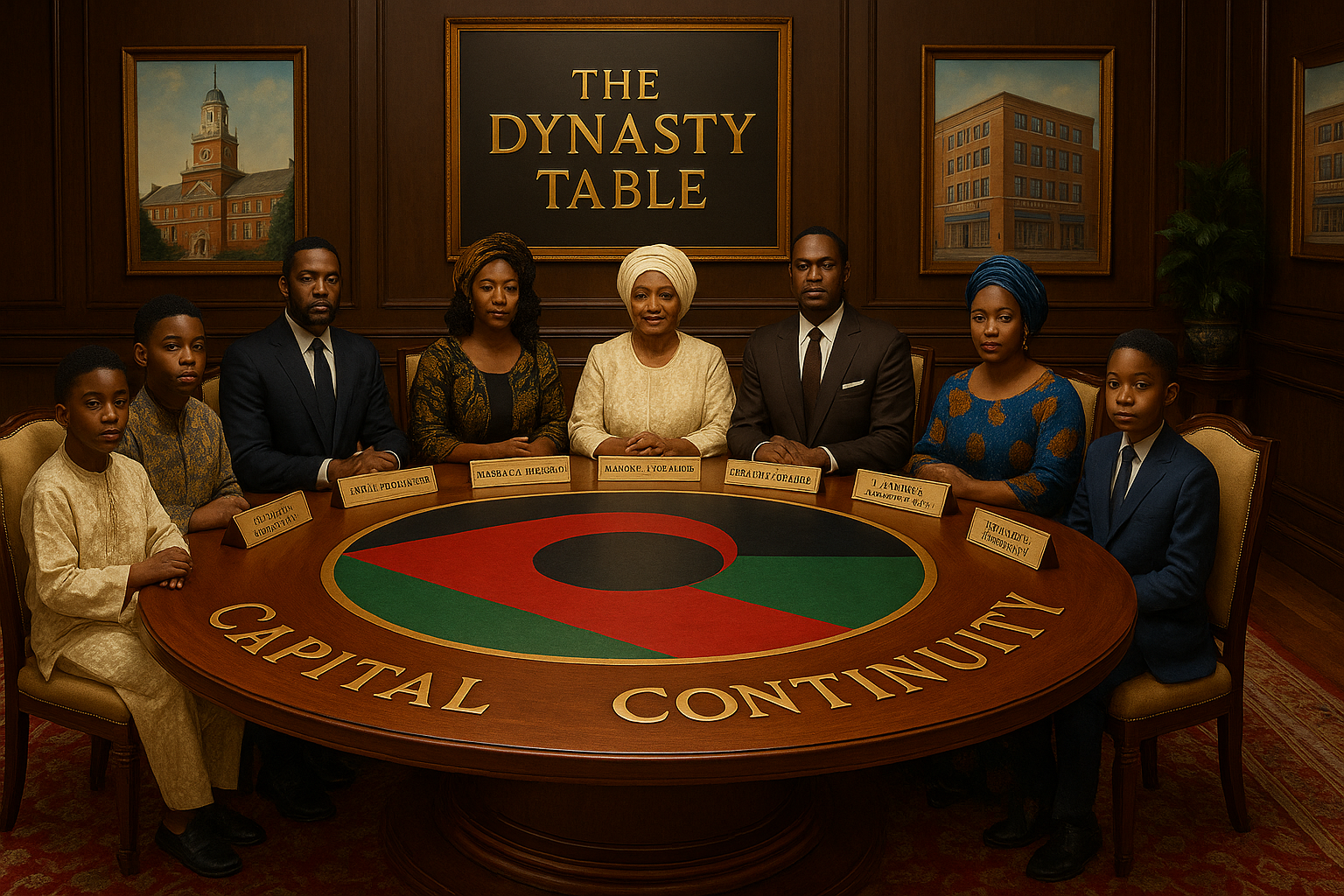
In 1952, a mason in Americus, Georgia bought eleven acres with cash he’d saved from three decades of laying brick. He built a house on it, a smokehouse behind it, and a wraparound porch where he told his grandchildren that the land was the family’s now, forever. He died in 1979. By 1994, the eleven acres had been split six ways, sold in fragments to cover a funeral, a divorce, and two bad business loans. Today a subdivision sits where the smokehouse stood. The mason did everything right by the logic he was given: work, save, buy, own. What he lacked was not virtue. It was infrastructure. Nobody had ever taught him that land without governance is just land waiting to be divided.

That story is not an outlier. It is the median outcome. And it is the central argument of this piece: African America’s problem was never a shortage of individual achievement. It is a near-total absence of the legal, financial, and cultural machinery that converts one generation’s success into the next generation’s platform. Until that machinery is built, deliberately and aggressively, every dollar earned by this community will keep dying with the person who earned it.

Start with the scoreboard, because the scoreboard is brutal. The Federal Reserve’s 2022 Survey of Consumer Finances put median Black household net worth at $44,900, against $285,000 for the median White household — a gap of more than six to one, and one that widened in absolute dollar terms even as Black wealth grew faster in percentage terms during the pandemic recovery. Growth rate is a vanity metric when the base is this small. A 60 percent increase on $28,000 is still poverty with better arithmetic. The gap is not closing. It is compounding, in the same way interest compounds, except in the wrong direction.

Now layer on top of that the single largest wealth movement in American history, already underway. Cerulli Associates projects that $84 trillion will pass from the Baby Boomer and Silent Generations to heirs and charities through 2045, the bulk of it concentrated among households that were already high-net-worth. This is not a rising tide. It is an inheritance economy, and inheritance economies reward whoever already has family structures in place to receive, consolidate, and reinvest capital across generations. Families without that structure will watch the transfer happen around them, not to them. The transfer is not going to wait for African America to get its paperwork in order.

This is where the sentimental version of “generational wealth” needs to be retired. Passing down money is not the same as passing down power, and Black America has been sold the former as if it were the latter. Power, as any serious student of the Waltons, the Rockefellers, or the Kochs understands, does not come from an inheritance check. It comes from the entity that controls the check. The Walton family does not merely benefit from Walmart’s success; through Walton Enterprises LLC and the Walton Family Holdings Trust, they collectively control roughly 45 percent of the company’s outstanding shares, a concentrated bloc large enough to determine board composition, executive succession, and long-term strategy three generations after Sam Walton’s death. That is not inheritance. That is institutionalized command, engineered through trust structures, family governance, and a refusal to let ownership fragment. Jay-Z’s net worth impresses a magazine cover. It does nothing for the fortieth Black family down the street, because it is not organized as an institution — it is one man’s balance sheet, subject to one man’s mortality.

The uncomfortable truth is that most families, of any race, fail at this. Research tracked by the Family Business Institute finds that roughly 30 percent of family-owned businesses survive into a second generation, about 12 percent make it to a third, and only 3 percent endure into a fourth. Succession is hard even with capital, even with lawyers, even with three generations of practice at running something. What that data point exposes is not that Black families are uniquely undisciplined — it’s that family continuity is a discipline nobody is taught, and African America has had roughly one-fifth of the time (counting from Emancipation, and accounting for the systematic destruction of Black wealth through redlining, urban renewal, and outright terrorism such as the 1921 razing of Tulsa’s Greenwood district) to build the muscle memory that older American dynasties built over five and six generations. The response to that deficit cannot be more individual grit. It has to be structure, copied deliberately from where it already works, and adapted ruthlessly to this community’s actual starting conditions.

So build the structure. A family constitution — a written document specifying mission, capital rules, and succession mechanics — costs nothing but discipline and an afternoon with a competent estate attorney, yet almost no Black family has one, while every dynasty mentioned above treats theirs as more binding than a corporate bylaw. A family office does not require billionaire assets to justify its existence; pooled family capital in the low six figures is sufficient to retain a fee-only advisor, establish an LLC or trust structure, and begin making coordinated decisions across a real portfolio — brokerage accounts, retirement vehicles, business equity, insurance-funded trusts, even royalty and intellectual-property streams — instead of six relatives each managing a fragment of the same family’s capital in isolation. Land is one asset class among several and should be governed the same way the rest are: never liquidated to cover an emergency when it could instead be collateralized, folded into a trust, or held alongside an equity stake in a family business and a diversified investment account, each professionally managed rather than administered by whichever relative answered the phone first.

None of these families stayed inside their founding asset. Koch Industries began as a part-interest in a single Minnesota oil refinery bought out in the 1940s and 1960s; under Charles Koch it diversified deliberately into pipelines, fertilizer, pulp and paper, ranching, glass, electronics, and commodities trading, so that no single market downturn — a refining glut, a paper-price collapse, a bad cattle season — could touch the whole estate at once. The Rothschilds began as court bankers to European nobility in the 1760s and, over two centuries, moved family capital into railways, mining, real estate, energy, and, notably, wine estates like Château Lafite and Château Mouton — acquired not as hobbies but as productive, appreciating assets that diversified the family’s holdings away from the banking sector that made them. Even the Waltons, whose fortune is most associated with a single company, don’t hold it as a single asset: Walton Enterprises runs its own internal investment arm allocating family capital into private equity, real estate, and outside ventures entirely apart from Walmart stock, precisely so the family’s fate isn’t fused to one retailer’s stock price. In every case, the founding asset became the seed capital for a portfolio, not the permanent shape of the estate. That is the model the eleven acres in Americus should be measured against. The land was never meant to be the ceiling of that family’s wealth — it was meant to be collateral for the next asset, security for a loan into a business, a hedge alongside a brokerage account, one holding in a portfolio instead of the whole of it. Held that way, structured that way, it doesn’t matter whether the estate a family passes down began as land, a barbershop, a nursing license, or a pension. What matters is whether it was ever allowed to grow past its origin.
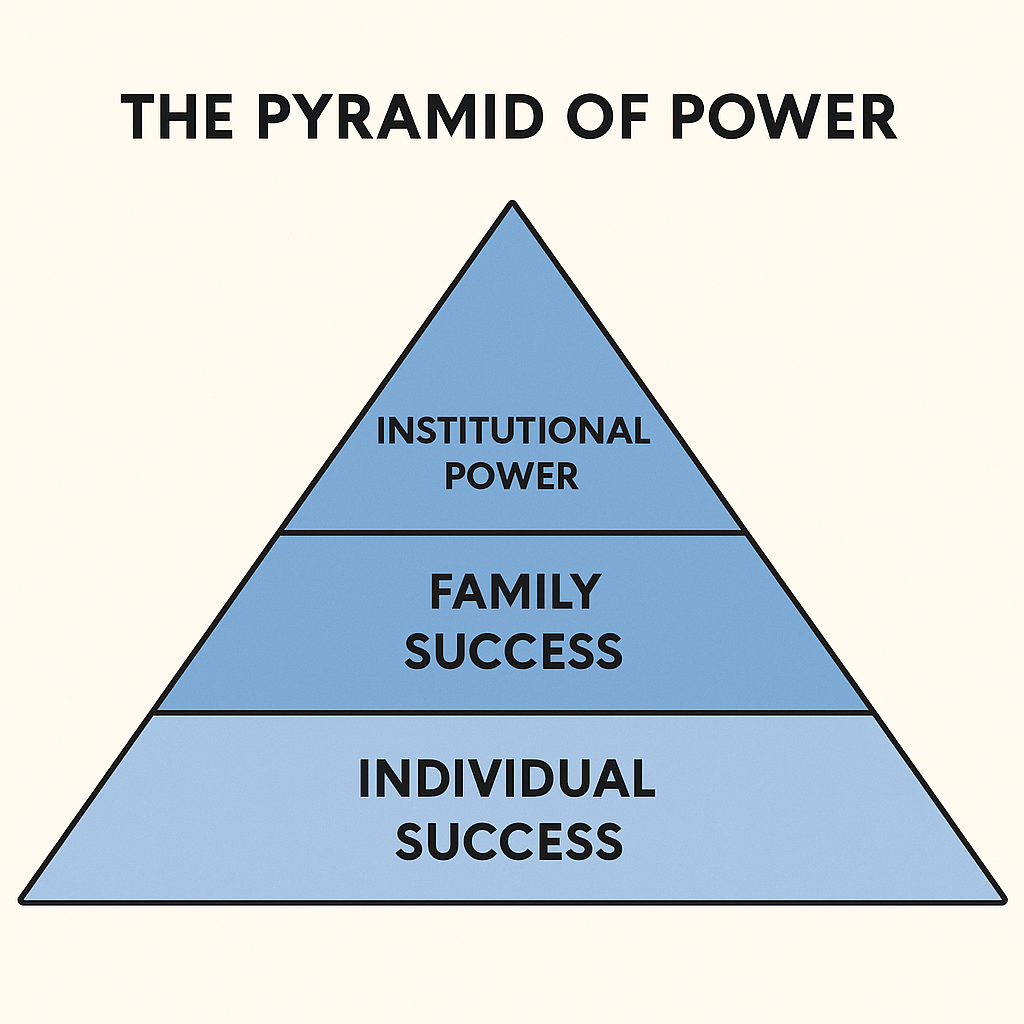
None of this is exotic. It is standard operating procedure for every dynasty this essay has named. It has simply never been marketed to African America as something within reach, because the wealth management industry profits more from selling individual products than from building family institutions that don’t need it.

Institutions of the wider Black ecosystem have a direct, self-interested role here, and this is where the case must be made in dollars, not sentiment. A Black-owned bank or credit union that captures family trust deposits and estate accounts gains stable, patient capital instead of transactional balances. A historically Black college or university that structures a real endowed-chair or scholarship-naming relationship with a family — rather than accepting a one-time gift — gains a recurring donor relationship spanning generations rather than a single tax-season transaction. Fisk, Tougaloo, Dillard, and Xavier of Louisiana have decades of experience cultivating exactly this kind of multigenerational donor family; Alcorn State, Coppin State, Savannah State, Bethune-Cookman, Norfolk State, Delaware State, Fort Valley State, and Morgan State could each become the anchor institution for a rising family dynasty if they pursued the relationship as deliberately as the Rockefellers pursued the University of Chicago or the Dukes pursued the university that bears their name. The institution that captures a family early, before its capital scales, is the institution that owns the relationship when that capital multiplies. This is not charity. It is customer acquisition, and any HBCU treating it otherwise is leaving its own endowment on the table.

The same logic extends past the water’s edge. Diaspora capital coordination — joint investment vehicles linking African American family offices with counterparts in the Caribbean and across Africa Core — is not a symbolic gesture toward Pan-Africanism. It is a hedge against the concentration risk of building wealth inside a single, historically hostile domestic market. A family real estate or infrastructure fund co-managed across African American, Jamaican, and Ghanaian family offices diversifies political risk, currency exposure, and asset class in one structure, while building exactly the kind of institutional density and strategic coordination that isolated, single-country family wealth can never achieve alone.

None of this happens through moral appeal, and this publication has no interest in making one. Appeals to racial solidarity have moved conferences and Twitter timelines; they have not moved balance sheets. The case for family institutionalization has to be made the way the Waltons, the Kochs, and the Wallenbergs made it to their own descendants: this structure protects what you have from your own children’s mistakes, from probate courts, from market volatility, and from the actuarial certainty that someone in every family eventually dies without a plan. Estate planning is not morbid. It is the single highest-leverage act of institution-building available to a family with under a million dollars in assets, and it costs less than a used car.

There is also a governance failure hiding inside the sentimental version of Black wealth-building that deserves direct confrontation. Families that treat wealth distribution as an equality exercise — splitting everything evenly among heirs regardless of role, competence, or commitment — are optimizing for fairness at the expense of survival. The Family Business Institute’s own data on why family enterprises collapse points overwhelmingly to succession disputes and undefined governance, not lack of capital. A family that assigns real roles — someone accountable for investment decisions, someone accountable for philanthropic strategy, someone accountable for legal and tax exposure — and backs those roles with actual authority, not just a title at Thanksgiving, will outlast a family that insists every cousin gets an equal, undifferentiated vote on every decision. Institutions require hierarchy. Families building institutions will have to get comfortable with that, however uncomfortable it sits against a cultural instinct toward flattened, communal decision-making.

The alternative to all of this is not neutral. It is continued erosion. Every family that fails to formalize governance sends its capital back into the undifferentiated churn of individual consumption — the paycheck model this publication has criticized elsewhere, in which wealth is treated as something to be spent rather than something to be commanded. Every dollar that leaves the Black institutional ecosystem through an unplanned estate, an uninsured death, or a liquidated piece of land is a dollar the next generation has to earn from zero, while families with institutional infrastructure simply compound what they already hold. The compounding gap in the Federal Reserve’s data is not an accident of history. It is the visible output of one set of families running institutional software and another set running none at all.

The mason in Americus did not fail his family. He succeeded at everything available to him in 1952, in a state where a Black man building wealth at all was itself an act of defiance. What failed him was the absence of a structure that could have held what he built past his own lifetime, and the absence of a plan to let that first asset become seed capital for a second and third — a trust, a governance document, a designated successor with both the authority and the training to keep the estate whole and growing, whatever form that estate took or became. That absence is fixable, at a scale of millions of families, in this generation, and it applies as much to a brokerage account or a stake in a family business as it does to eleven acres of Georgia clay. The Kochs turned one refinery into a dozen industries. The Rothschilds turned a banking desk into vineyards and mines. Neither family mistook where they started for where they had to stay. It requires no act of Congress and no act of philanthropy from outside the community. It requires families to stop organizing themselves as clusters of individuals bound by affection, and start organizing as institutions bound by structure, because affection does not survive probate court and structure does. The eleven acres are gone. Whatever the next generation holds — land, equity, a business, a portfolio, or something none of them have thought to build yet — does not have to stop there, and does not have to follow them into the ground.

Disclaimer: This article was assisted by ClaudeAI.

The Institutional Imperative: Moving Beyond Individual Black Wealth Narratives

I would rather earn 1% off a 100 people’s efforts than 100% of my own efforts. – John D. Rockefeller

The contrast is stark and telling. On one screen, a promotional poster for a docuseries about Black wealth features accomplished individuals—entrepreneurs, entertainers, and personal finance influencers. On another, the Bloomberg Invest conference lineup showcases representatives from Goldman Sachs, BlackRock, sovereign wealth funds, and central banks. This visual juxtaposition reveals a fundamental problem in how African American wealth building is conceived, discussed, and ultimately constrained in America: we’re having an individual conversation while everyone else is having an institutional one.

When African American wealth is discussed in mainstream media and even within our own communities, the focus overwhelmingly centers on individual achievement and personal financial literacy. The narrative typically revolves around budgeting tips, entrepreneurship stories, side hustles, and the importance of “building your own.” While these elements certainly matter, they represent only a fraction of how wealth is actually created, preserved, and transferred across generations in America.

Compare this to how other communities approach wealth building. Bloomberg conferences don’t feature panels on how to save money or start a small business. Instead, they convene institutional investors managing trillions of dollars, central bankers who set monetary policy, executives from asset management firms overseeing pension funds, and sovereign wealth fund managers representing entire nations’ financial interests. The conversation isn’t about individual wealth accumulation it’s about institutional capital allocation, market infrastructure, regulatory frameworks, and systemic wealth generation. This isn’t merely a difference in scale; it’s a difference in kind. Individual wealth building, no matter how successful, operates within a system. Institutional wealth building shapes that system.

The economic implications of this gap are staggering. Consider the arithmetic presented in the text message exchange: if approximately 95% of African American debt is held by non-Black institutions, and that debt carries an average interest rate of 8%, African American households collectively transfer roughly $120 billion annually in interest payments to institutions that have no vested interest in Black wealth creation or community reinvestment. This figure isn’t just large it’s transformative. To put it in perspective, $120 billion annually exceeds the GDP of many nations. That likely at least 10% of African America’s $2.1 trillion in buying power is leaving the community for interest before a single bill is paid or single investment can be made. It represents capital that flows out of Black communities without generating corresponding wealth-building infrastructure within those communities. This is the cost of institutional absence.

When communities lack their own lending institutions, investment banks, insurance companies, and asset management firms, they become permanent capital exporters. Every mortgage payment, every car loan, every credit card balance becomes a wealth transfer rather than a wealth circulation mechanism. Other communities long ago recognized this dynamic and built institutional frameworks to capture, recycle, and multiply capital within their own ecosystems.

Institutional wealth building operates on fundamentally different principles than individual wealth accumulation. It involves capital pooling and deployment, where institutions aggregate capital from thousands or millions of sources and deploy it strategically for returns that benefit the collective. Pension funds, for instance, don’t teach their beneficiaries how to pick stocks they hire professional managers to generate returns that secure retirements for entire workforces. Large institutions don’t just participate in markets; they shape them. They influence interest rates, capital flows, regulatory frameworks, and investment trends. When BlackRock or Vanguard shifts their investment thesis, entire sectors respond.

Institutions are designed to outlive individuals. They create mechanisms for wealth transfer that transcend personal mortality, ensuring that capital accumulates across generations rather than dispersing with each estate. By pooling resources, institutions can absorb risks that would devastate individuals, enabling them to pursue longer-term, higher-return strategies that individuals cannot access. Perhaps most importantly, institutional capital commands political attention and shapes policy in ways that individual wealth, however substantial, simply cannot.

The current institutional deficit in African American communities isn’t accidental it’s the product of deliberate historical forces. During the early 20th century, Black communities did build impressive institutional infrastructure. Black Wall Street in Tulsa, thriving business districts in Rosewood, Florida, and numerous Black-owned banks, insurance companies, and investment firms represented genuine institutional wealth building. These were systematically destroyed sometimes literally, as in the Tulsa Race Massacre of 1921, and sometimes through discriminatory policies, denial of business licenses, exclusion from capital markets, and targeted regulatory enforcement. The institutions that survived faced existential challenges during desegregation, as the most affluent Black customers gained access to white institutions that had previously excluded them. The result is that African Americans today face a unique challenge: rebuilding institutional infrastructure in a mature capitalist economy where the institutional landscape is already dominated by established players with centuries of accumulated capital, networks, and political influence.

Given this context, why does African American wealth discourse remain so focused on individual action? Several factors contribute to this pattern. American culture celebrates individual achievement and self-made success. This narrative is particularly seductive for African Americans seeking to overcome discrimination through personal excellence. However, it obscures the reality that most substantial wealth in America is institutional, not individual. Teaching people to budget or start a business is concrete and actionable. Discussing the need for African American-owned asset management firms managing hundreds of billions in capital is abstract and seemingly impossible for most people to influence. Individual success stories make compelling content. Institutional finance is complex, technical, and doesn’t generate the emotional engagement that drives social media metrics and television ratings.

Institutional finance is deliberately exclusionary, with high barriers to entry, specialized knowledge requirements, and established networks that are difficult to penetrate. This makes it harder for diverse voices to participate in and shape these conversations. Moreover, focusing on individual responsibility can deflect attention from systemic inequalities and the need for institutional reform. If wealth gaps are framed as the result of individual choices rather than institutional access, the solution becomes personal change rather than structural change.

The problem is that individual wealth building, while important, simply cannot close the wealth gap or address the capital hemorrhage happening through institutional absence. You cannot budget your way to institutional power. You cannot side-hustle your way to sovereign wealth fund influence. Closing the institutional gap would require coordinated action across multiple domains. This means growing and creating Black-owned banks, credit unions, insurance companies, asset management firms, and investment banks capable of competing at scale—institutions managing not millions but billions and eventually trillions in assets.

It requires ensuring that the substantial capital in public pension funds, university endowments, and foundation assets that serve African American communities is managed with intentionality about wealth creation within those communities. Building investment funds that can provide growth capital to Black-owned businesses beyond the startup phase, enabling them to scale to institutional size, becomes essential. Creating institutions that can acquire, develop, and manage commercial and residential real estate at scale, capturing appreciation and rental income for community benefit, must be prioritized. Developing institutional voices that can effectively advocate for policies that support Black wealth building, from community reinvestment requirements to procurement set-asides to tax structures that favor long-term capital formation, is critical.

This isn’t a call to abandon individual financial responsibility or entrepreneurship both remain important. Rather, it’s a recognition that these individual efforts need institutional infrastructure to support them, multiply their effects, and prevent the constant capital drain that currently undermines them. The Bloomberg conference model reveals what serious wealth building conversations look like among communities that already possess institutional power. The participants aren’t there to learn how to balance their personal checking accounts they’re there to discuss macroeconomic trends, regulatory changes, emerging markets, and trillion-dollar capital allocation decisions.

African American communities need forums that operate at the same level of institutional sophistication. This means convening the leaders of Black-owned financial institutions, pension fund managers, university endowment chiefs, foundation presidents, private equity partners, and policymakers to discuss not individual wealth tips but institutional strategy. It means asking questions like: How do we coordinate capital deployment across Black-owned financial institutions to maximize community impact? How do we leverage public pension fund capital to support Black wealth building without sacrificing returns? What regulatory changes would most effectively support Black institutional development? How do we build the pipeline of talent needed to manage billions in institutional capital?

The real challenge can be distilled into three interconnected imperatives: individually Black people must get wealthier, there must be an increase in Black institutional investing, and the overall wealth of Black people as a whole must increase. All three are important, yet the current discourse focuses almost exclusively on the first element while neglecting the second and third. The reality is that without institutional infrastructure, individual wealth gains will continue to leak out of the community rather than accumulating into collective wealth.

A fundamental truth that much of African American wealth discourse has yet to fully internalize is that wealth is created through institutions. There exists a critical misalignment between how wealth is actually built and how we talk about building it. We prioritize individual wealth accumulation without recognizing that the causality runs in the opposite direction—institutional infrastructure creates the conditions for sustainable individual and collective wealth building, not the other way around. We can celebrate individual achievement, teach financial literacy, promote entrepreneurship, and encourage personal responsibility all we want. But until African American communities build and control institutions that can pool capital, shape markets, influence policy, and deploy resources strategically across generations, the wealth gap will persist and likely widen.

A docuseries about successful individuals may be inspiring. But inspiration without infrastructure leads nowhere. Other communities learned this lesson generations ago (from us) and built accordingly. A critical question cuts to the heart of the matter: Who in these wealth-building conversations is representing an African American institution? When wealth dialogues feature only individuals representing themselves or individual brands rather than institutions representing collective capital and community interests, we’re having the wrong conversation at the wrong altitude.

It’s time for African American wealth conversations to graduate from the individual focus to the institutional imperative. The Bloomberg model isn’t just for other people it’s a template for how serious wealth building actually works. The question isn’t whether African Americans can produce individually wealthy people we’ve proven that repeatedly. The question is whether we can build the institutional infrastructure that turns individual success into collective, multigenerational wealth. That’s the conversation we should be having, and it needs to happen at the same level of sophistication and institutional focus that other communities take for granted. Until then, we’re simply rearranging deck chairs while hundreds of billions if not trillions flow out of our communities annually, enriching institutions that have no stake in our collective prosperity.

Disclaimer: This article was assisted by ClaudeAI.

What Is To Become Of African American Baby Boomers’ $188 Billion In Wealth?

“Everything that I’ve gone through informs me and my opinions in a way, I guess because I am a child of segregation. I lived through it. I lived in it. I was of it.” – Samuel L. Jackson

One thing most financially literate people realize is that it is not how much you make, but it is how much you keep. Those who are of a wealth building mindset realize it is not how much you keep, but how much of your capital is actually working to make you wealthier without your labor being attached to it. African American individuals, households, and institutions struggle in both cases, but mightily in the latter. Most African American wealth, as highlighted by the amount of time the African American dollar remains in our community (less than 6 hours), does little to no work for the wealth building of those three entities. A major reason for this is that African American individuals, households, and yes, even institutions put little to none of their money in African American institutions – ironically.

Economic Disparities

“According to a report by the Federal Reserve, the median net worth of African American households headed by someone aged 55-64 (who would generally be considered Baby Boomers) was around $39,000 in 2019. This is substantially lower than the median net worth of European American households in the same age group, which was around $184,000 in 2019. It’s important to note that there is significant variation within both groups, and wealth is influenced by a range of factors including income, education, and access to resources.”

Insider Intelligence gives a generational demographic breakdown reporting that, “Baby boomers were the largest living adult population until 2019. According to the US Census Bureau, US boomers have remained the second-largest population group in 2022, comprised of 69.6 million people ages 58 to 76.” And Statista reports that there are 43.26 million Boomer households meaning that approximately 4.8 million of those are African American. This then puts African American Baby Boomer wealth at approximately $187.2 billion – but what of it?

Each eldest generation will push wealth forward one way or another. Where it flows though can be largely up to the person. Some will push it to the next generation of family and friends, charities and organizations, and there are a host of other options of where money can find itself as one begins to consider their legacy both in the here and now or from the beyond. One things is crystal clear though from a Brookings Institute study, African Americans are falling behind with every passing generation, “30% of European American households received an inheritance in 2019 at an average level of $195,500 compared to 10% of African American households at an average level of $100,000.” African Americans both receive 50 percent less than their European American counterpart and European Americans are three times more likely to get an inheritance than their African American counterpart – but again what of it?

While the wealth of even African American Baby Boomers is not that of their counterparts, it should have the opportunity to make far more considerable impact than it probably actually will. As African American baby boomers age, a significant transfer of wealth is expected to occur. This presents an opportunity for younger generations to invest in education, home ownership, and entrepreneurial ventures. However, research indicates that many African American families face systemic barriers, such as lower access to financial resources and education, which could impact how this wealth is utilized and preserved.

Despite the considerable wealth held by baby boomers, economic disparities persist within the African American community and its institutions. Issues such as income inequality, lack of business ownership, access to African American owned financial institutions, limited access to financial literacy resources, and a disconnected institutional ecosystem can hinder the effective management and growth of inherited wealth. Addressing these disparities will be crucial in ensuring that future generations can leverage this wealth for long-term benefits.

Philanthropy and Community Investment

Many African American baby boomers are inclined to support causes that uplift their communities. This philanthropic inclination could lead to increased investment in African American nonprofits, education initiatives, and other community organizations. By directing funds towards institutional development, these donors can help address systemic issues and create lasting change.

Financial Planning and Literacy

The management of this wealth will largely depend on the financial literacy of both the current baby boomer generation and their heirs. Increasing access to financial education, resources, and African American owned financial institutions is essential to ensure that wealth is not only preserved but also strategically invested. Programs aimed at enhancing financial connectivity between African American households and African American financial institutions within the African American community can play a significant role in maximizing the impact of this wealth.

The fate of the $188 billion in wealth held by African American baby boomers is not just about the transfer of assets; it’s about how those assets can be utilized to build a stronger future for the community. By focusing on education, philanthropy, and addressing systemic barriers, there is potential for this wealth to make a profound impact on the lives of future generations. Ensuring that this wealth is effectively managed and directed towards meaningful causes will be crucial in shaping a more equitable and prosperous future for the African American community. In the end, the only real question is how much of the $188 billion will end up in African American institutions. Whether those organizations be African American social, economic, or political institutions is up to the household, but this is the most acute potential for institutional transformation that African America will have seen since 1865.

Disclosure: This article was assisted by NOVA AI and ChatGPT.