
“I think it’s time to kill for our women / Time to heal our women, be real to our women / And if we don’t we’ll have a race of babies / That will hate the ladies, that make the babies” – Tupac Shakur
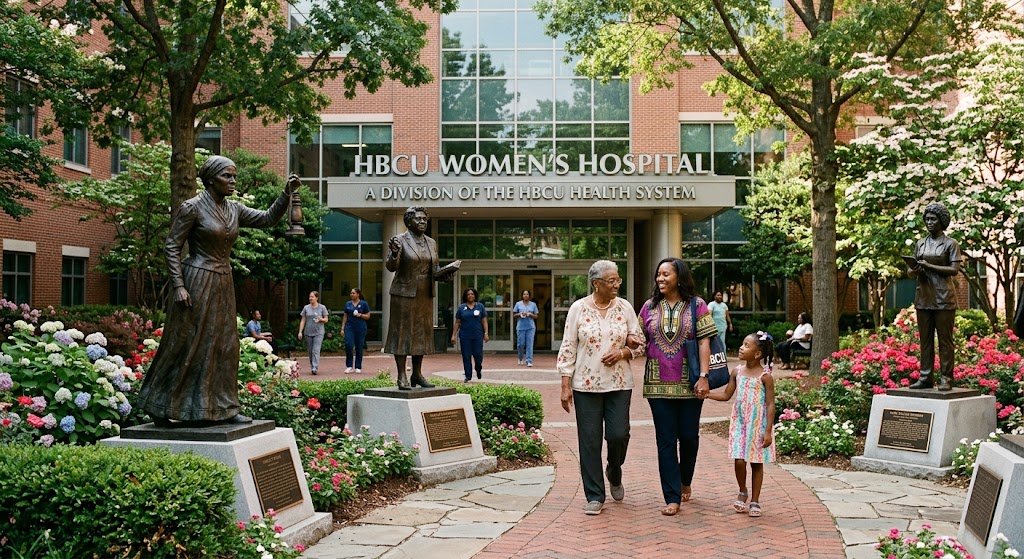
A Black woman went into labor on a Tuesday night. The hospital ten minutes from her home had stopped delivering babies the year before. A board in another community had reviewed the numbers and decided that women like her did not pay enough to keep that wing open. So her husband drove her ninety minutes down a two-lane road in the dark, hazard lights on, while her blood pressure climbed with no one there to measure it. In the emergency bay of a hospital that had never seen her chart, far from the doctors and nurses who knew her, looked like her, and cared for her, she gave birth to a daughter who may one day suffer her same fate. Her community had never moved to take institutional ownership of that hospital, leaving it always vulnerable to the whims of others. Eleven days later she died at home, of a complication a single follow-up visit would likely have caught, in a county where there was no longer anywhere to go for one. Her death certificate listed the cause. It did not list the decision.
The United States has spent two decades treating the deaths of Black women as a clinical puzzle. It has studied implicit bias, revised hemorrhage protocols, and funded awareness campaigns, and the numbers have barely moved. The reason is that the failure is not primarily clinical. It is institutional. Black women in America receive their care, from adolescence through old age, almost entirely from institutions that Black America does not own, govern, finance, or staff at scale. Their outcomes are decided in boardrooms where they have no seat. Communities rise or fall on the strength of their institutions, not the brilliance of their individuals, and healthcare is where that principle is measured in lives. HBCU Money argues that the HBCU Health System, a proposed national network developed by The Diaspora Projects, is the first serious attempt in two generations to treat Black women’s health as an ownership problem rather than a sensitivity problem.
Childbirth is where the failure is most visible, and the data are stubborn. The National Center for Health Statistics reports that in 2024 the maternal mortality rate for Black women was 44.8 deaths per 100,000 live births. That was significantly higher than the rates for white women (14.2), Hispanic women (12.1), and Asian women (18.1). That figure is the improved one, since the Black rate peaked at 69.9 in 2021. The gap held through both the peak and the decline. But maternal death is a single chapter in a much longer story, and focusing on it alone has allowed the rest of that story to go largely unexamined.
A Black woman’s encounter with the health system does not begin in a delivery room or end there. It runs across decades and across nearly every major disease:
- Hypertension. According to the American Heart Association, 59.2 percent of Black women live with high blood pressure, among the highest rates in the world. Only about one in five Black adults with hypertension has it under control.
- Stroke. Black women have the highest stroke prevalence of any group, at 5.4 percent, against 2.9 percent for all women.
- Fibroids. By age 50, up to 80 percent of Black women develop uterine fibroids. They are two to three times more likely to develop symptomatic fibroids, and fibroids are the leading reason American women undergo hysterectomy.
- Lupus. Data from the Georgia Lupus Registry show lupus incidence among Black women aged 30 to 59 nearly three times that of white women.
- HIV. In 2023, Black women accounted for half of all HIV diagnoses among women, despite making up 13 percent of the female population.
- Cancer. Black women are 38 percent more likely to die of breast cancer despite a 5 percent lower incidence. Their death rate from uterine cancer is roughly double that of white women, and their cervical cancer mortality is 40 to 50 percent higher.
These are not separate crises. They are one institutional failure, repeated across every service line from screening and diagnosis to surgery and long-term management. The connections between them are not incidental. The hypertension that kills a Black woman in pregnancy is the same hypertension that, left uncontrolled, kills her at fifty through stroke or heart failure. The fibroids diagnosed late in a fragmented system become the hysterectomy that a coordinated one might have prevented.
The clearest evidence that this is a problem of ownership rather than access comes from outside the United States. The United Kingdom has what America does not: universal coverage through the National Health Service. If coverage were the binding constraint, British disparities would have closed. They have not. Oxford’s National Perinatal Epidemiology Unit, which runs the MBRRACE-UK surveillance programme, found that in 2022–24 Black women faced a risk of maternal death nearly three times that of white women. Over the same period, the UK’s overall maternal mortality rate rose 20 percent. A Black mother in London with full coverage and a Black mother in Mississippi on Medicaid share the same structural position. The institution delivering her care was not built by her community, is not governed by it, and does not depend on its loyalty to survive. Coverage is not control.
The pattern is as old as American medicine’s treatment of Black women’s bodies, and its origins are institutional. Between 1845 and 1849, in Montgomery, Alabama, the white physician James Marion Sims experimented on at least seven enslaved Black women and girls. The work produced a surgical repair for a chronic childbirth complication and earned him the title “Father of Gynecology.” Because the women were enslaved, Sims needed legal permission only from their owners, not from the women themselves. He operated on Anarcha, an enslaved teenager, at least 13 times without anesthesia before he had a technique considered safe enough for white patients. His experiments on another woman, Lucy, failed and brought her close to death from severe blood poisoning. Sims later became president of the American Medical Association, and his statue still stands on the grounds of the Alabama State Capitol, a short distance from Alabama State University.
The lesson for institution builders is precise. Black women held no authority over the institution being built on their bodies, no equity in the knowledge they produced, and no seat in the profession it founded. The specific abuse has ended. The allocation of authority largely has not.
African America answered exclusion by building, and for a time it built at remarkable scale. As HBCU Money documented in 2012, drawing on Nathaniel Wesley Jr.’s Black Hospitals in America, there were roughly 500 African American-owned and controlled hospitals at the apex. Today, only Howard University’s remains. Detroit alone was home to 18 hospitals owned and operated by African Americans between 1917 and 1991. These institutions trained the nurses and physicians that white hospitals refused, gave Black patients a place to be treated with dignity, and kept a meaningful share of the community’s health spending inside the community. Their decline from 500 to one is among the largest institutional losses African America sustained in the twentieth century. It rarely appears in conversations about the wealth gap or the health gap, though it belongs in both.
The HBCU sector owned part of that infrastructure, and the way it was lost is instructive. Flint-Goodridge Hospital in New Orleans was founded by Black women for Black people, through the work of the Phyllis Wheatley Club. At the time, Black New Orleanians could otherwise be treated only in Charity Hospital’s segregated ward. Dillard University took over the hospital in 1929 and built it a new facility in 1932. When Dillard sold the hospital in 1983, its president, Samuel DuBois Cook, laid out the causes of its decline. He cited mismanagement and financial irregularities, the desegregation of hospitals, and a patient base that was 90 percent Medicare or Medicaid, along with “the loss of broad community support.” A group of 47 Black doctors, two dentists, and one pharmacist tried to buy it. It went instead to National Medical Enterprises for $1.8 million and closed in 1985.
Cook’s list should be read as a design specification rather than an epitaph. A hospital with weak governance, a revenue base concentrated in public payers, and no organized community capital behind it will not survive competition, however necessary it may be. Integration did not transfer Black hospitals to Black communities on better terms. It dissolved them, as patients, physicians, and the federal payment streams created in 1965 flowed toward larger white-owned systems. Any serious attempt to rebuild must answer all three failures at once.
The capital-retention consequences are still compounding. Medicaid finances more than 40 percent of U.S. births and 65 percent of births to Black mothers. According to KFF, there were 3,628,934 U.S. births in 2024, 13 percent of them to Black mothers. That implies roughly 470,000 Black births a year, about 300,000 of them paid for by Medicaid. And births are only the most countable stream. Every blood pressure visit, every mammogram, every fibroid surgery, and every lupus infusion is also a revenue event. Across a Black woman’s lifetime, nearly all of that revenue is booked by institutions outside the Black ecosystem. Black women generate the volume. Others hold the asset.
The present position of the HBCU medical enterprise shows how thin its institutional footing has become. Howard University Hospital is the nation’s only teaching hospital located on an HBCU campus, and Howard nearly gave up control of it. Adventist HealthCare took over its management in 2020 under an arrangement that anticipated an eventual purchase, and both management agreements ended in February 2026. Meharry Medical College trains at Nashville General Hospital, which is governed by the Metropolitan Nashville Hospital Authority from the former Meharry-Hubbard Hospital building. Until a 2025 agreement, Meharry chief executive James Hildreth said, the college had been “relegated to the public comment section of the board meetings.” Morehouse School of Medicine conducts most of its clinical training at Grady Memorial Hospital, and Charles R. Drew University depends on Martin Luther King Jr. Community Hospital and county facilities. None of the four controls its clinical platform outright.
This matters because these four schools are the country’s most effective concentrators of Black medical talent. According to the AAMC, they have educated roughly half of all Black doctors in the United States. Yet only 5.2 percent of American physicians are Black, while African Americans are nearly 14 percent of the population. Concentrating talent without owning institutions amounts to a training subsidy for other systems. The HBCU ecosystem produces the physicians, and mainstream health systems capture the careers, the billing, and the data.
Meanwhile, the delivery infrastructure that Black women in the South rely on is contracting. The March of Dimes classifies 1,104 counties, about 35 percent of the national total, as maternity care deserts. Nearly half of Texas counties fall into that category, and 68 percent of Mississippi’s rural hospitals have no labor and delivery unit. A June 2026 report from the Center for Healthcare Quality and Payment Reform counts 139 rural hospitals that have stopped delivering babies since the end of 2020, or plan to before the end of this year. Researchers writing in Health Affairs found that obstetric staffing becomes financially unworkable under the low reimbursement that comes with a high share of Medicaid patients. Federal Medicaid reductions enacted in 2025 tighten that vise. Obstetrics is the first service line to go because it is the most expensive to staff, but the economics that close a maternity wing eventually reach the cardiology clinic and the cancer center too. This is Flint-Goodridge’s payer-mix problem, now operating at national scale.
In 2012, HBCU Money argued that not every HBCU needed to build a hospital, but that every HBCU should invest in community clinics connected regionally to an African American-owned hospital. What that argument lacked was an operating architecture. The Diaspora Projects has now proposed one: the HBCU Health System (HBCU-HS). It is a national network built on the intellectual capital, legacy, and community trust of HBCUs, designed to stand alongside the country’s leading academic medical systems. The system would operate four units:
- HBCU Academic Medical Centers, with flagship hubs planned at Howard University Hospital, Meharry Medical College, Morehouse School of Medicine, and Charles R. Drew University.
- HBCU Regional Clinics, organized as federally qualified health centers on HBCU campuses and in alumni communities.
- A Virtual Care Network, a national telehealth platform staffed by HBCU-trained providers.
- The HBCU Health Plan, offering coverage to students, faculty, and alumni.
A 15-member National Board of Trustees would govern the system. It would draw on HBCU presidents, medical professionals, public health scholars, and alumni, supported by advisory councils on women’s, men’s, and children’s health.
The flagship designations are a plan, not signed affiliations, and converting them into binding agreements is the system’s first task. The terms matter as much as the signatures. Meharry’s experience at Nashville General shows what a clinical relationship looks like without governance rights. Every HBCU-HS affiliation should therefore carry board seats, data rights, and a defined share of clinical revenue. Anything less reproduces the arrangement Sims’s patients lived under, in which Black women supply the clinical foundation and someone else holds the authority.
The plan’s most important structural choice is to give women’s health its own flagship subsidiary, HBCU Women’s Health, rather than folding it into a general service line. Its mandate spans a woman’s entire life: maternal mortality, fibroids, breast cancer, menopause, and doula and midwifery training. A subsidiary with that mandate can also integrate the cardiovascular, autoimmune, and cancer care that fragmented systems scatter across unconnected specialists. The rationale is institutional.
Compared with white women, a larger share of Black women’s maternal deaths occur between 43 days and a year after delivery, pointing to gaps in follow-up care. That is the stretch of time when no single institution owns the patient. The same gap recurs throughout her life: between the gynecologist who notes the fibroid and the surgeon who removes the uterus, between the blood pressure reading at a pharmacy kiosk and the cardiologist she never sees, between the lupus flare and the rheumatologist three counties away. A system that unites community clinics, telehealth, and a trained workforce under one governance structure can own her care across the decades in a way disconnected providers cannot.
The plan’s ten-year goal of halving Black maternal mortality would bring the rate to about 22 deaths per 100,000. That would still exceed today’s white rate, which is why the target should be understood as a floor rather than a finish line. Comparable targets for hypertension control, earlier fibroid diagnosis, and breast cancer staging should sit alongside it.
The regional clinic phase is where the system meets Black women where they live. Prairie View A&M, Southern, Jackson State, and North Carolina A&T are named as sites for years four through seven. All four sit in states where obstetric access is contracting and hypertension and stroke rates are among the nation’s highest, and all four already train health professionals. The network should reach further. Alcorn State runs a nursing school in Natchez, where the community campus of Merit Health Natchez has stopped delivering babies. Coppin State and Bethune-Cookman run nursing programs embedded in Black urban communities. Xavier University of Louisiana is establishing a new medical school with Ochsner Health.
Most of these campuses are public universities in states with little appetite for race-conscious institution-building, which limits what they can do directly. Their alumni associations and foundations, however, are legally independent entities. They can hold clinic real estate and contract with HBCU-HS where the universities themselves cannot, and the regional phase should be structured through them from the outset.
The system’s ambitions should not stop at the hospitals that already exist. Where a community has lost its maternity wing or its hospital entirely, affiliation with HBCU-HS can make a new one financeable. Affiliation brings a physician and nursing pipeline from HBCU schools, a teaching mission, and a national referral network that no standalone hospital can assemble on its own. There is precedent. Martin Luther King Jr. Community Hospital opened in 2015 on the campus of the shuttered King/Drew medical center and became a clinical home for Charles R. Drew University. Howard has said its plan to build a new, state-of-the-art hospital will continue regardless of changes in management. The financing tools already exist: HUD’s Section 242 program insures hospital mortgages, and USDA’s Community Facilities program lends to rural hospitals. HBCU-HS should maintain a standing hospital development function to bring these pieces together. The system would supply the clinical and academic anchor, Black banks and credit unions would take participations in the financing, and federal programs would carry the long-term debt.
The HBCU Health Plan answers the second failure on Cook’s list. Flint-Goodridge died with nine in ten of its patients on public payers. Today, across 107 federally designated HBCUs, student premiums, employee benefits, and alumni coverage flow to mainstream insurers. An HBCU-owned plan would keep those premiums inside the ecosystem, reinvest underwriting margins in care, and give every hub and clinic a commercially insured patient base alongside its Medicaid volume. No single HBCU has a risk pool large enough to sustain such a plan, but a pool spanning dozens of institutions and their alumni does. The plan should launch with student coverage, where enrollment is predictable, and expand into employee and alumni products as the pool matures.
The third failure, the absence of organized community capital, is a financing question that the ecosystem has more pieces to answer today than it did in 1983. Philanthropic capital has shown it can move at scale toward HBCU medicine: Bloomberg Philanthropies committed $600 million to the four HBCU medical schools in 2024. But that money builds endowments, not ownership of care platforms. The operating layer is a job for Black-owned financial institutions. HBCU Money’s 2025 directories count 17 African American-owned banks with roughly $6.72 billion in combined assets and 205 African American-owned credit unions with roughly $8.15 billion, together about $15 billion. That cannot finance an academic medical center on its own. It can hold the system’s operating deposits, finance clinic real estate and mobile units, and anchor loan participations in new hospital projects. Federally qualified health center status adds federal grants and enhanced Medicaid payment rates, which makes the choice of the FQHC model as much a financial decision as a clinical one.
The research arm deserves equal weight. The plan routes clinical data into a shared National Black Health Database and would establish an HBCU Life Expectancy Research Center to publish an annual Black Longevity Index. A database, however, needs laboratories behind it. Hormone receptor-negative breast cancers, which are harder to treat, occur 65 percent more often in Black women and kill them at 2.2 times the rate. Fibroids, lupus, and hypertensive disease follow similar patterns of disproportionate burden and, historically, disproportionate neglect in the research agenda. HBCU-HS should fund and co-locate clinical research units and wet laboratories at its flagship hubs and at partner campuses with established research capacity, including the pharmacy colleges at Xavier and Florida A&M. The studies that matter most to Black women should be designed, run, and owned inside the ecosystem. Whoever owns the dataset and the laboratory sets the research agenda, and Black women have been the subjects of American medical research since Montgomery, rarely its owners. The system’s affiliation with the Hamer-Whatley Food Security Trust extends that logic upstream. Through shared board seats and clinical referrals, it ties clinical care to the nutritional conditions that drive hypertension, diabetes, and heart disease long before a woman reaches a hospital bed.
Dr. John Henrik Clarke understood the hierarchy of institutional priorities better than many of the leaders who followed him. “If I ever have any influence over a state,” he wrote, “the first thing I would build is a decent hospital.” He measured a civilization by how it cared for its oldest and its youngest. By that measure, a people that does not own a single network of hospitals serving its women has not finished building its civilization. It is renting one.
The HBCU Health System’s ten-year plan runs from flagship hubs to regional clinics to national virtual care and partnerships across Africa and the Caribbean. Its success will depend less on its scale than on whether the ecosystem treats it as infrastructure rather than as a program. That requires five commitments now:
- The flagship affiliations must be negotiated with governance rights rather than as courtesy partnerships.
- The alumni associations and foundations of public HBCUs should prepare to serve as the clinics’ legal and real-estate partners.
- Black-owned banks and credit unions should position themselves as the system’s depositories and lenders.
- The system should establish a standing development channel for new hospitals and research laboratories.
- HBCU Women’s Health should lead, with a mandate covering a woman’s whole life rather than a single moment in it, because the women of this community have carried the cost of institutional absence longer than anyone.
The woman in the parable died because no one in her community had standing to decide whether her hospital would keep its doors open to her. Anarcha and Lucy had no standing either, and neither, in the end, did the community that watched Flint-Goodridge sell for $1.8 million. The HBCU Health System is, at bottom, a claim to that standing. African America cannot vote its way into the boardroom of a hospital system it does not own. It can build one.
Disclaimer: This article was assisted by ClaudeAI.

