Tag Archives: wealth building

The 1.8% Problem: What the Wealth Data Says About NIL’s HBCU Gap

“In a race-based capitalist society, it’s not what you know — it’s what you own.” – Dr. Claud Anderson
In 1975, a small manufacturing town watched its largest employer announce a new headquarters two counties over. The mayor called a meeting of the leading families and asked them to match the incentive package the rival town had offered. The families were respected, well-connected, active in every civic club in the region but not one of them owned the mill, the bank, or the rail line that had made the town matter in the first place. They owned homes, pensions, and good names. The headquarters left. Two decades later, when a regional grocery distributor scouted the same corridor for a new warehouse hub, it wasn’t the town’s civic reputation that won the deal, it was the fact that, by then, three local families owned the land, the trucking contracts, and the cold-storage facility the distributor needed to move product. Ownership, not affection, decided where capital went.

That distinction between people who care about an institution and people who own enough to move capital toward it is the one that has been missing from nearly every conversation about Name, Image and Likeness and the widening chasm between Historically Black Colleges and Universities and their Power Four counterparts. The prevailing HBCU theory of the NIL era held that Black America’s demonstrable, generational devotion to its football and basketball programs would translate into competitive collective fundraising once the NCAA’s amateurism rules fell. It has not, and it will not, because the premise was never about devotion. It was about ownership, and on that metric the arithmetic was never close.

Consider what happened in West Texas this summer. Texas Tech’s football stadium, known for decades as Jones AT&T Stadium, was renamed Galaxy Stadium in a naming-rights agreement reported at $75 million, replacing AT&T as the venue’s corporate partner. Galaxy Digital is a cryptocurrency and AI-infrastructure company that operates a large data campus in nearby Dickens County, currently undergoing a multibillion-dollar expansion. Its founder and chief executive, Mike Novogratz, is a Princeton graduate. AT&T, the company that held the naming rights before it, is led by John Stankey, a graduate of Loyola Marymount and UCLA. Neither man has any alumni tie to Texas Tech. The deal was not an act of institutional loyalty. It was a commercial transaction, a company with regional infrastructure interests buying brand proximity to a media asset with roughly 60,000 seats and a television footprint. Around the same time, Ripple became the first cryptocurrency sponsor to appear on a college jersey, at the University of Kansas, the alma mater of Ripple’s chief executive, Brad Garlinghouse, but a decision made unilaterally by a founder who controls his company’s marketing budget, not a fundraising campaign that mobilized thousands of small donors.

Compare that to the version of “alumni giving” available to HBCUs. Mark Cuban, a 1981 graduate of Indiana University and among the wealthiest men to build his fortune from a single company he founded and sold, has been a steady donor to his alma mater: roughly five million dollars for a sports media center in 2015, six million for the rugby program, and an undisclosed “big number” more recently funneled toward Indiana’s transfer portal recruiting. These are genuinely generous gifts from a genuinely engaged alumnus. They are also, by an order of magnitude or more, smaller than what a single infrastructure company paid for a stadium’s name. That gap is the entire story. When the money comes from an alumnus who happens to own a company outright, the number is real but bounded by one person’s balance sheet. When the money comes from a corporation with no alumni relationship at all, the number reflects what an asset, the media rights, the stadium, the media market, is worth on the open market, and it dwarfs even the most generous individual gift.

HBCUs have access to neither lever at scale, and the reason is visible in the numbers rather than in sentiment. HBCU Money’s 2024 Annual Wealth Report, drawing on Federal Reserve data, put total African American household assets at roughly $7.1 trillion. Private businesses — the asset class that actually produces boosters capable of writing nine-figure checks — accounted for just $330 billion of that, or 4.7% of African American household assets, and only 1.8% of all U.S. household private business assets. For a population that is roughly 13 to 14% of the country, a 1.8% share of the nation’s private business wealth is not a gap; it is close to an absence, and it is the single most underrepresented major asset category in the entire report relative to population share. Corporate equities and mutual fund shares told the same story from a different angle: also $330 billion, also 4.7% of Black household assets, but a mere 0.7% of total U.S. household equity holdings meaning African American households are not meaningfully participating in the ownership side of public markets either.

What African American households do hold, in scale, is retirement income tied to employment. Defined benefit pension entitlements totaled $1.73 trillion or 24.4% of all African American household assets, and 9.7% of the nation’s defined benefit pension assets, by far the highest representation of any asset category relative to population share. Add defined contribution plans like 401(k)s, another $880 billion and 12.4% of assets, and pension entitlements alone account for nearly 37% of everything African American households own — more than real estate, more than every other asset class combined except real estate itself. That is not a portfolio built by owners. It is a balance sheet built by workers: people whose wealth exists because an employer, public or private, guaranteed them a retirement benefit in exchange for decades of labor, not because they held equity in the enterprise itself. The wealth is real, and the institutions that produced it, often public-sector employers and unionized industries, deserve credit for building it. But a pension check, however large in aggregate, cannot write a stadium naming-rights deal. Only ownership can, and ownership is precisely the asset class where the data shows African American households are furthest from parity.

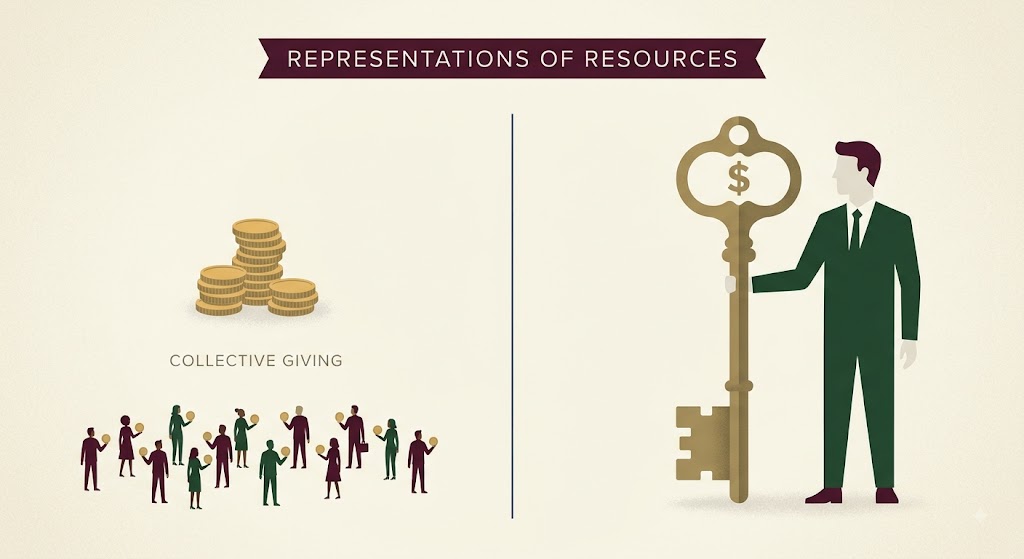
This is not a story about HBCU alumni failing to show up. It is a story about a capital-formation deficit that predates NIL by a century, rooted in exclusion from mainstream lending, redlining that kept Black-owned enterprise from accumulating the commercial real estate and equity positions that compound into founder-scale wealth, and a labor-market history that concentrated African American economic participation in employment rather than ownership, a history the wealth data confirms is still very much the present, not just the past. NIL simply exposed, in real time and in dollar figures anyone can look up, a gap that institutional strategists have been describing in more abstract terms for years. The mistake was believing that emotional intensity, the unmatched loyalty HBCU alumni show their bands, their homecomings, their institutions could substitute for what only ownership scale provides. It cannot. A hundred thousand donors giving fifty dollars each produces five million dollars and an enormous amount of goodwill. It does not produce seventy-five million dollars, because the mathematics of collective small-dollar giving and the mathematics of a single balance sheet decision operate on entirely different curves.

The strategic response, then, cannot be a better fundraising pitch. It has to be a redirection of where HBCU athletic and institutional leadership spend their effort. Conference-level collective bargaining, SWAC and MEAC schools pooling media rights and NIL infrastructure rather than competing individually for the same small donor base, captures at least some of the scale economics that individual HBCUs cannot achieve alone. Building actual venture and private equity vehicles modeled on efforts like Ariel Investments’ Project Black, which exists explicitly to grow Black-owned enterprises to the scale where their founders become the next generation of nine-figure donors, addresses the underlying ownership gap rather than the symptom. HBCU athletic departments should pursue infrastructure and commercial partnerships on the same terms Galaxy Digital pursued Texas Tech; as deals tied to real assets (media rights, campus real estate, facility co-location) rather than appeals to conscience from companies with no alumni connection to lose sleep over. And alumni giving programs should shift from one-time gifts toward equity-bearing vehicles — alumni investment funds tied to HBCU-linked enterprises — that convert working-professional generosity into compounding ownership stakes rather than annual write-offs.

None of this closes the gap by next season. The wealth data suggests the honest horizon for building an HBCU-linked ownership class capable of matching this kind of capital is measured in decades, not fundraising cycles, the private business share of African American wealth has moved only marginally year over year even as pensions and real estate continued compounding. But the alternative of continuing to ask a donor base of working professionals to out-fundraise infrastructure companies and telecom giants was never a strategy. It was a hope mistaken for one.

Disclaimer: This article was assisted by ClaudeAI.
Where Is The African American MBA At HBCUs?

“I built a conglomerate and emerged the richest black man in the world in 2008 but it didn’t happen overnight. It took me 30 years to get to where I am today. Youths of today aspire to be like me but they want to achieve it overnight. It’s not going to work. To build a successful business, you must start small and dream big. In the journey of entrepreneurship, tenacity of purpose is supreme.” — Aliko Dangote

It could be argued that many HBCUs do not see themselves as African American institutions. They just happen to be a college where African American students are the predominant student population – for now. A place where you may happen to find more African American professors than you would elsewhere. But in terms of intentionally being a place looking to serve the social, economic, and political interests of African America and the African Diaspora as a whole not so much. Schools like Harvard and the Ivy League in general seek to serve WASP interests, BYU and Utah universities serve Mormon interests, there is a litany of Catholic universities led by the flagship the University of Notre Dame serving Catholic interests, and around 30-40 women’s colleges serving women’s interests. Arguably, none are more intentional though than Jewish universities who seek to serve Jewish Diasporic interests. They do so intentionally and unapologetically. It is highlighted in two prominent dual programs.

Brandeis University, “founded in the year of Israel’s independence, Brandeis is a secular, research-intensive university that is built on the foundation of Jewish history and experience and dedicated to Jewish values such as a respect for scholarship, critical thinking and making a positive difference in the world.”

Master of Arts in Jewish Professional Leadership and Social Impact MBA In partnership with the Heller School for Social Policy and Management: “If you want to become a Jewish community executive, this program will give you the skills and expertise you need: a strong foundation in both management and nonprofit practices, as well as a deep knowledge of Judaica and contemporary Jewish life. You’ll take courses taught by scholars across the university, including management courses focused on nonprofit organizations and courses specific to the Jewish community.”

Master of Arts in Jewish Professional Leadership and Master in Public Policy: “If you want to become a professional leader who can effect positive change for the Jewish community at the policy level, you’ll need policy analysis and development skills as well as knowledge of Judaic studies and contemporary Jewish life — all of which our MA-MPP track is designed to impart. This track will teach you how to both assess policy and practice and design and implement strategic solutions.”

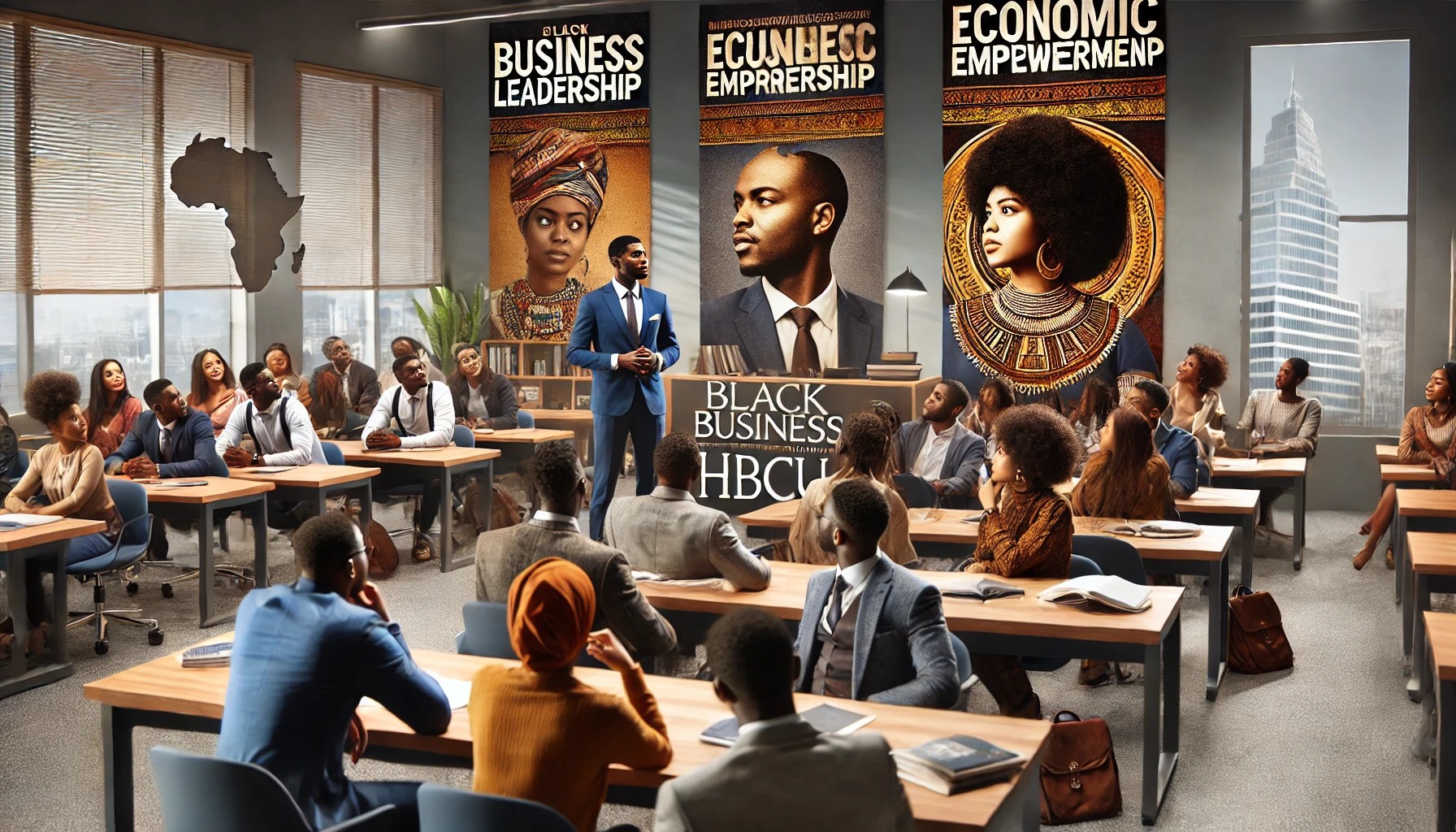
In the United States, the racial wealth gap remains stubbornly wide. For every dollar of wealth held by the average white household, the average Black household holds just 14 cents, according to the Federal Reserve. While policy debates rage on, a quieter revolution could be ignited in the lecture halls and boardrooms of Historically Black Colleges and Universities (HBCUs). It is time for these institutions to take the lead in launching a new kind of MBA—one rooted in African American entrepreneurship.

This would not be a symbolic gesture of representation. Rather, it would be a radical recalibration of business education in service of economic sovereignty. The proposed African American MBA, anchored at HBCUs, would fuse conventional business acumen with a deep focus on building and scaling Black-owned enterprises—injecting capital, credibility, and cultural context into the fight for economic justice.

A Different Kind of MBA

Traditional MBA programs—whether in Boston, Palo Alto, or London—have long celebrated entrepreneurship, but they rarely address the distinct structural barriers faced by African American founders: racialized lending, limited intergenerational capital, and investor bias, among others. An African American MBA would tackle these head-on.

Students would learn to navigate venture capital ecosystems that have historically excluded them, build business models designed for resource-scarce environments, and craft growth strategies anchored in community reinvestment. The curriculum would include case studies of Black-owned business successes and failures, from the Johnson Publishing Company to the modern fintech startup Greenwood Bank.

Such a program would not just train entrepreneurs; it would cultivate what economist Jessica Gordon Nembhard refers to as “economic democracy”—an ownership-driven economy where Black communities produce and own the value they generate.

From Theory to Practice

For this model to work, HBCUs must go beyond coursework. They must build ecosystems.

At the core of the program would be university-based business incubators providing capital, mentorship, and workspace. Students could launch ventures with real funding—from alumni-backed angel networks or Black-owned community development financial institutions (CDFIs). Annual pitch competitions would create visibility and momentum, offering grants, equity investment, or convertible notes to top-performing student ventures.

A tight integration with Black-owned businesses, supply chains, and financial institutions would form the scaffolding. Students might spend time embedded in legacy enterprises like McKissack & McKissack, or cutting-edge startups in healthtech, agritech, and media.

These ecosystems would provide fertile ground for venture creation while catalyzing local job growth. In doing so, they would re-anchor HBCUs as engines of regional economic development, not just academic training grounds.

The HBCU Edge

HBCUs are uniquely positioned to own this space. They already produce 80% of the nation’s Black judges, half of its Black doctors, and a third of its Black STEM graduates. Yet despite this outsized impact, their business schools have yet to consolidate around a unifying purpose.

By championing entrepreneurship explicitly tailored to African American realities, HBCUs could claim a domain left underserved by Ivy League and flagship public institutions.

Moreover, HBCUs benefit from strong community credibility, a network of engaged alumni, and access to philanthropic capital increasingly earmarked for racial equity. With ESG mandates guiding corporate philanthropy and DEI budgets under scrutiny, there is untapped potential for long-term partnerships with companies seeking measurable social impact through supplier diversity, mentorship, or procurement commitments.

Risks and Realities

Skeptics will ask: Will such a degree be taken seriously in the broader market? Will it pigeonhole students into “Black businesses” instead of the Fortune 500? The answer lies in the performance of the ventures it produces. Success, not symbolism, will be the ultimate validator.

Indeed, many of the world’s most transformative businesses have emerged from institutions that bet on community-specific models. Consider how Stanford’s proximity to Silicon Valley allowed it to incubate global tech companies—or how Israel’s Technion helped power a startup nation.

An African American MBA need not limit its graduates to one demographic. Rather, it provides a launchpad from which Black entrepreneurs can build scalable, inclusive ventures rooted in lived experience. And in doing so, change the face of entrepreneurship itself.

The Road Ahead

If a handful of HBCUs lead the way—Howard, Spelman, North Carolina A&T, and Texas Southern come to mind—they could collectively establish a national center of excellence for African American entrepreneurship. Over time, this could grow into a consortium offering joint degrees, online programming, and cross-campus business accelerators.

The long-term vision? A Black entrepreneurial ecosystem rivaling that of Cambridge or Palo Alto, but infused with the resilience, cultural currency, and social mission uniquely forged by African American history.

This would not merely be an academic experiment. It would be a new chapter in a centuries-old story—one where the descendants of slaves become the architects of capital.

Focusing an African American MBA program offered by HBCUs on entrepreneurship could be transformative for fostering economic growth and self-sufficiency within the Black community. Here’s how such a program might look:

Program Vision and Goals

  • Empower Black Entrepreneurs: Equip students with the tools and networks to build successful businesses that create wealth and opportunities within African American communities.
  • Address Systemic Barriers: Focus on overcoming challenges like access to capital, discriminatory practices, and underrepresentation in high-growth industries.
  • Build Community Wealth: Promote entrepreneurship as a pathway to closing the racial wealth gap and revitalizing underserved areas.

Curriculum Highlights

Core MBA Foundations:

  • Finance for Entrepreneurs: Teach how to secure funding, manage cash flow, and create financial models tailored to African American small and medium enterprises (SMEs).
  • Marketing and Branding: Strategies for building culturally relevant brands that resonate with diverse audiences.
  • Operations and Scaling: Guidance on running efficient operations and scaling businesses sustainably.

Specialized Courses:

  • Tomorrow’s Entrepreneurship: Building ventures with dual goals of profit, community impact, and focus on industries of the future.
  • Navigating VC and Angel Investments: Training on pitching to investors, negotiating terms, and understanding equity structures.
  • Black-Owned Business Case Studies: Analyze successes and failures of prominent African American entrepreneurs. Much like the Harvard Business Review that sells case studies there would be an opportunity for HBCU business schools to create a joint venture for the HBCU Business Review and sell case studies relating to African American entrepreneurship.

Hands-On Experiences

Business Incubator:

  • A dedicated incubator at the HBCU to provide seed funding, mentorship, and workspace for students to develop their ventures.

Real-World Projects:

  • Partner students with local Black-owned businesses to solve real business challenges.

Annual Pitch Competitions:

  • A platform for students to showcase business ideas to potential investors, with prizes and funding opportunities.

Partnerships and Networks

Corporate and Community Collaborations:

  • Partnerships with companies that prioritize supplier diversity programs to provide procurement opportunities for graduates.
  • Collaborations with established Black entrepreneurs for mentorship and guest lectures.

Access to Capital:

  • Establish a dedicated fund or partnership with Black-owned financial institutions to provide startup capital.

Measurable Outcomes

  • Startups Launched: Track the number of new businesses started by graduates.
  • Jobs Created: Measure the economic impact of those businesses in local communities.
  • Community Investment: Monitor how much revenue is reinvested into underserved neighborhoods.

In contrast to institutions that intentionally serve specific cultural, religious, or ideological communities, many HBCUs appear to operate as predominantly African American in demographic composition rather than as institutions deeply invested and intentional in advancing the collective social, economic, and political interests of African Americans and the African Diaspora. While other universities—whether Ivy League institutions catering to elite WASP traditions, religious universities fostering faith-based leadership, or Jewish universities purposefully cultivating Jewish communal leadership—explicitly align their missions with the advancement of their respective communities, HBCUs often lack this same level of strategic intent. If HBCUs wish to remain vital and relevant in the future, they may need to more deliberately embrace their role as institutions committed to the upliftment of African American communities, not just as spaces where Black students and faculty are well-represented, but as powerful engines of social transformation.

The Lack Of Marriage Is Holding Back African American Wealth – And How HBCUs Can Help

“Paradise is one’s own place, One’s own people, One’s own world, Knowing and known. Perhaps even Loving and loved.” – Octavia Butler

The declining marriage rates among African Americans are increasingly recognized as a significant factor holding back wealth accumulation within the community. This trend has profound implications for economic stability and intergenerational wealth transfer. Understanding the connection between marriage and wealth, along with relevant statistics, sheds light on this critical issue.

Married couples generally experience greater financial stability than single individuals. According to the U.S. Census Bureau, married couples tend to have higher median household incomes. In 2021, the median household income for married couples was approximately $100,000, compared to about $60,000 for single-parent households, which disproportionately include African American families.

Research has shown that marriage contributes significantly to wealth accumulation. A study by the Institute for Family Studies found that households headed by married couples have about three to four times the wealth of those headed by single individuals. Specifically, Black married couples had a median net worth of $131,000 in 2019, compared to only $29,000 for Black single individuals. This disparity highlights the financial advantages of marriage in building wealth.

From an economic development perspective, marriage plays a crucial role in the transfer of wealth between generations. Households with married parents are better positioned to pass down assets. A report from the Federal Reserve in 2019 indicated that only 45% of Black households had any wealth to pass on, compared to 70% of white households. The lack of marriage in the African American community limits opportunities for families to create and sustain intergenerational wealth.

It also has acute impact on social development within the African American community. Marriage can provide emotional and social stability, which is vital for sound financial decision-making. Couples often collaborate on budgeting, saving, and investing, leading to better financial outcomes. According to a Pew Research Center study, married couples are more likely to engage in long-term financial planning, further enhancing their wealth-building capacity.

The decline in marriage rates among African Americans is linked to systemic issues, including economic inequality, high incarceration rates, and historical trauma. The National Center for Family & Marriage Research reports that the marriage rate for African Americans has dropped significantly over the past few decades, from 60% in the 1960s to just 29% in 2021. Addressing these systemic barriers is essential for promoting stable relationships and supporting marriage as a pathway to wealth.

Cultural perceptions around marriage also play a role. While many African Americans value family and community, there may be less emphasis on traditional marriage structures. However, promoting awareness of the economic benefits of marriage within the community could encourage individuals to consider its advantages for wealth accumulation and stability.

Ways HBCUs Can Help Promote Black Marriage

HBCUs can play a pivotal role in promoting marriage within the African American community by implementing several strategies:

  • Educational Programs: HBCUs can offer workshops and seminars focused on relationship skills, financial literacy, and the benefits of marriage. By educating students on effective communication, conflict resolution, and financial planning, these programs can foster healthier relationships.
  • Mentorship and Counseling: Establishing mentorship programs that connect students with African American married couples can provide positive role models. Counseling services that focus on relationship dynamics and conflict resolution can also support students in building strong partnerships.
  • Community Engagement: HBCUs can organize community events that celebrate marriage and family life, encouraging students to engage with positive narratives around marriage. These events can include discussions, panels, and social activities that promote the value of committed relationships.
  • Collaborative Research: HBCUs can engage in research initiatives that explore the factors influencing marriage rates in the African American community. Understanding these dynamics can inform policies and programs aimed at supporting healthy relationships.
  • Scholarships and Incentives: Creating scholarship programs for students who participate in marriage enrichment programs can incentivize students to invest in their relationships while also promoting the value of African American marriage within the community.
  • Marriage Endowments: HBCU alumni can partner with the UNCF and Thurgood Marshall Fund to create an endowment that provides head start capital for African American marriages among their alumni. This head start capital can be disbursed at once or over a set number of years ensuring that couples get off to a financially stable start.

The decline in marriage rates among African Americans poses significant challenges to wealth accumulation and economic stability. By addressing the underlying issues and promoting the benefits of marriage, HBCUs can play a crucial role in fostering healthy relationships within the community. Implementing educational programs, mentorship opportunities, and community engagement initiatives can help strengthen marriage as a pathway to wealth and empower future generations to build a more financially secure future.

There is no African American community without the African American family and there is no African American family without African American marriage. At the very center of anything we discuss must be the institutional stabilization of the African American family and therefore African American marriages and partnerships. Right now the foundation of community and institution building is in crisis with no real way to stem the tide of the crisis. Building in more institutional support services for mental, physical, and nutritional health are just a few of the things needed along with financial stability programs would go a long way to the stability of African American marriage and partnerships. Generational wealth or generational poverty is on the line and great sacrifice must be made if we want the former and not more of the latter.

HBCU Money™ Dozen 1/27 – 1/31

high-noon

Did you miss HBCU Money™ Dozen via Twitter? No worry. We are now putting them on the site for you to visit at your leisure. We have made some changes here at HBCU Money™ Dozen. We are now solely focused on research and central bank articles from the previous week.

Research

Astronomy’s carbon footprint is shocking: Let’s reduce it with some green sky thinking l New Scientist http://ow.ly/t9CJI

Stand back Earth. The star next door – Alpha Centauri B – may host a ‘superhabitable’ world l New Scientist http://ow.ly/t9CVb

The amazing inside story of the Texas library with no books l NetworkWorld http://ow.ly/t9DyE

How do flame retardants affect children’s health? l US EPA Research http://ow.ly/t9DTR

A Cryptocurrency Backed By Solar Energy l Clean Technica http://dlvr.it/4qKPNG

Watch HIV spread inside a mouse’s gut l New Scientist http://youtu.be/eT0mQEjepLs (related story http://ow.ly/t9Eg0 )

Federal Reserve, Central Banks, & Financial Departments

Volatility of household income increased about 30%, on average, between 1970s and 2000s l Richmond Fed http://ow.ly/t9Etd

Half the world cooks with solid fuels and faces health risks. l World Bank http://wrld.bg/t86X2

Mexico holds rate, but keeps eye on inflationary pressures l Central Bank News http://dlvr.it/4qJryG

Notes from the Field: Wealth Building–Keeping it Local l Cleveland Fed http://ow.ly/t9F73

Global economic growth acceleration tempered by deflation risks l Dallas Fed http://bit.ly/1edoI9o

In last 30 years, world lost $3.8 trillion to natural disasters. l World Bank http://wrld.bg/t6UwM

Thank you as always for joining us on Saturday for HBCU Money™ Dozen. The 12 most important research and finance articles of the week.