Tag Archives: finance

The Half of One Percent Problem: What Population Parity Would Actually Look Like for Black Banking

“African Americans love to quote that the dollar does not stay in our community but a few hours, which is true, but it is the belief that if they just buckle down and patronize more Black businesses. Unfortunately, until we understand institution to institution circulation and retention of capital, patronizing is just a redundant talking point. The same as trying to move oil – with no pipelines.” – William A. Foster, IV
A city plans for a population of five hundred thousand. It builds roads sized for five hundred thousand, schools sized for five hundred thousand, a water system sized for five hundred thousand. Then, by policy rather than accident, it allows only thirty thousand of those residents to ever draw water from the municipal system. The other four hundred seventy thousand are permitted to live in the city, work in the city, pay taxes to the city but they must find their water elsewhere, in smaller private wells scattered across town, each one a fraction of the capacity the city itself was built to provide. No one calls this a water crisis. They call it culture, or preference, or the free market sorting itself out. The wells keep drying up. The city keeps growing. Nobody asks why the math never closes.

That is, in miniature, the condition of African American banking in the United States in 2025. It is not a story about seventeen small institutions doing their best against long odds, though that story is true and worth telling. It is a story about scale; about what full institutional participation in the American banking system would actually require, measured in dollars, and about how far short of that requirement the current system sits. The gap is not rhetorical. It is arithmetic, and once it is laid out in full, it becomes difficult to discuss African American banking capacity using the language of individual bank performance at all. The conversation has to move to population, to proportion, and to the institutional habits that keep the proportion from closing.

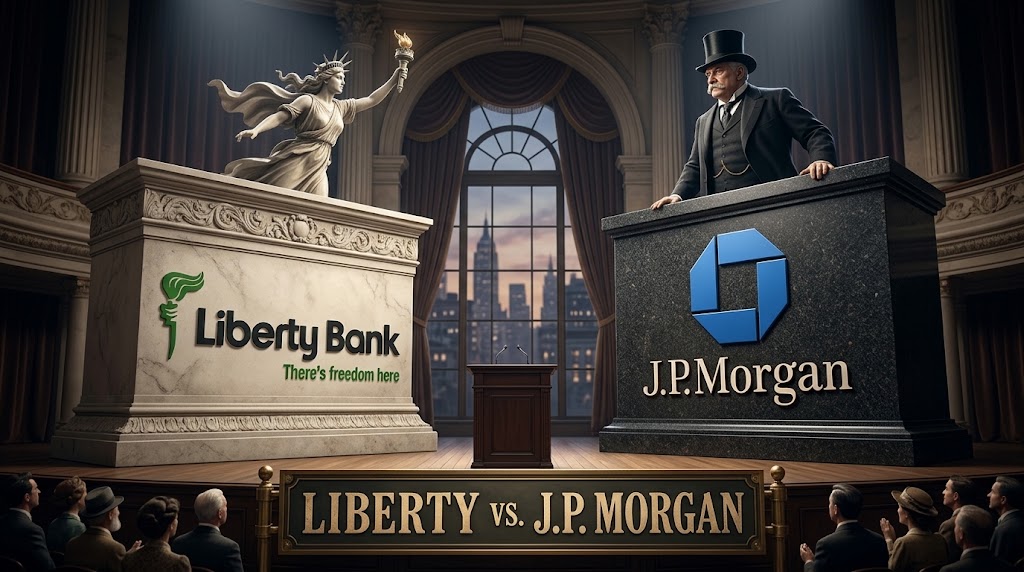
Start with the top of the American banking system. As of March 31, 2026, the seventeen largest U.S. domestically chartered commercial banks by consolidated assets led by JPMorgan Chase at just over $4.0 trillion, followed by Bank of America, Citibank, Wells Fargo, and thirteen others hold a combined $16.36 trillion in assets. Now set beside that figure the complete universe of African American-owned banks in the country: seventeen institutions, spanning fifteen states and territories, holding a combined $6.72 billion. The ratio between the two groups is roughly 2,432 to 1. JPMorgan Chase alone holds approximately 597 times the combined assets of every African American-owned bank in the country put together. Liberty Bank & Trust of New Orleans, the single largest African American-owned bank in America at $1.1 billion, is outweighed by JPMorgan Chase alone at a ratio of roughly 3,634 to 1.

The scale of that gap becomes easier to hold in mind with a single object. In October 2025, JPMorgan Chase opened its new global headquarters at 270 Park Avenue in Manhattan; a 1,388-foot tower designed by architect Norman Foster, built at a reported cost of approximately $4 billion. The building alone cost nearly 60 percent of the combined total assets of every African American-owned bank in the United States. JPMorgan Chase did not draw down its balance sheet to build it, did not strain its capital position, and continued operating as the largest bank in the world throughout construction. The tower is, in other words, a rounding error for JPMorgan Chase and very nearly the entire African American banking sector’s balance sheet at the same time, the same dollar figure describing two entirely different orders of magnitude, depending on which side of the ledger it sits.

These comparisons are dramatic, but they are also, in a sense, unfair not to African American banks, but to the argument. Comparing seventeen community and regional institutions to the seventeen largest banks in the wealthiest economy in human history will always produce a lopsided ratio; the same exercise run against Sweden’s entire banking sector would look similarly stark. The more useful question, and the one that actually measures institutional health, is proportional. What share of America’s banking assets would African American-owned banks hold if African America held banking assets in proportion to its share of the American population — no more, no less, simply parity?

The U.S. Census Bureau’s 2025 population estimates place the Black-alone population of the United States at approximately 46.2 million people, or roughly 13.5 percent of the national population. HBCU Money’s own 2025 African American Owned Bank Directory places total FDIC-tracked domestic bank assets at approximately $24.9 trillion. If African America held banking assets proportional to its population share of the country, African American-owned banks would need to control approximately $3.36 trillion in assets or 13.5 percent of $24.9 trillion. The actual figure, again, is $6.72 billion. The gap between where population parity would place African American banking capacity and where it actually sits is approximately $3.355 trillion. To close that gap through organic growth at current rates where the sector’s total assets grew from $6.4 billion in 2024 to $6.7 billion in 2025, a $326 million increase would take not years or decades but centuries. Put differently: African American-owned banks would need to be roughly 500 times larger, in aggregate, than they are today simply to reach proportional representation. Not to dominate the banking sector. Not to overtake it. To match it.

It is worth sitting with what $3.36 trillion actually represents, because the number is large enough to lose its meaning through repetition. It is larger than the GDP of every country on earth except roughly the top eight. It is more than five hundred times the combined assets of every African American-owned bank that currently exists. It is, notably, not money that needs to be created from nothing it already exists, circulating through the American banking system, much of it deposited by African American individuals, businesses, churches, fraternities and sororities, professional associations, and institutions, simply routed through banks that are not African American-owned. The gap is not primarily a wealth-creation problem, though wealth creation matters. It is a capital-retention and capital-routing problem. The money exists. It is banking somewhere else.

This is where the conversation has to move from macroeconomics to institutional behavior, because the population-parity gap cannot be explained by African American banks lacking capable leadership, sound underwriting, or FDIC compliance. It has to be explained by where African American capital — individual, corporate, and institutional — chooses to be deposited, and the data on that question is uncomfortable. HBCU Money’s 2023 analysis of HBCU banking relationships found that of the country’s 107 HBCUs (U.S. Department of Education designation) and roughly 68 to 104 Predominantly Black Institutions (a federally designated but demographically fluid category, per the Postsecondary National Policy Institute), together approximately 200 institutions, only two were believed to bank with an African American-owned institution: Florida Memorial University, an HBCU, and Roxbury Community College, a PBI, both of which bank with OneUnited Bank. That means the overwhelming majority of the flagship educational institutions of Black America, the same institutions publicly organized around the mission of Black advancement, do not patronize the Black banking sector at all. This is not a scattered oversight. It is a structural pattern, and it repeats across nearly every category of African American institution: businesses, chambers of commerce, professional associations, churches, fraternal organizations, and nonprofits overwhelmingly bank with mainstream white-owned lenders, not because those lenders are barred by any law from serving them, but because institutional inertia, existing banking relationships, perceived convenience, and — bluntly — habit route the capital elsewhere by default.

Consider the case that HBCU Money’s 2023 piece surfaced: Howard University, the most prominent HBCU in the country, entered a five-year, $3.4 million-per-year partnership with PNC Bank to fund an entrepreneurship center on its own campus. PNC is a fine institution and the grant funded real programming. But PNC’s consolidated assets stand at roughly $568 billion as of early 2026, an amount that dwarfs the combined assets of every remaining African American-owned bank many times over, while Industrial Bank, an African American-owned institution with over $770 million in assets, sits a few miles away in the same city Howard calls home, unbanked by the university it neighbors. This is not a story about villainy. PNC did not do anything wrong by funding a center at Howard. It is a story about institutional default: when the moment came to choose a banking partner, the largest, most convenient, most established option was chosen, and the community institution built to receive exactly this kind of patronage was not seriously considered as an alternative. Multiply that single decision by every HBCU, every Black professional association, every African American-owned business banking outside the sector, every fraternity and sorority housing its national treasury with a conventional lender, and the population-parity gap stops looking mysterious. It looks like the predictable output of thousands of individually reasonable decisions that, in aggregate, produce collective institutional abandonment.

The deeper issue is what might be called the B2B lapse in African America’s institutional framework, the absence of a functioning business-to-business and institution-to-institution circulation system comparable to what other ethnic economic communities maintain as a matter of course. Economic development research has long noted that a dollar circulating within a tightly networked community; Asian immigrant enclaves, Jewish community networks, historically insular white ethnic communities tends to pass through many hands and institutions before leaving that community’s economic orbit, sometimes for weeks. The African American dollar, by contrast, is frequently cited as leaving the community’s economic orbit within hours, not because African American consumers spend irresponsibly, but because the institutional infrastructure that would capture and recirculate that dollar: Black-owned suppliers banking with Black-owned banks, insured by Black-owned insurers, audited by Black-owned accounting firms, financed by Black-owned lenders was never built to the density that other communities achieved, and where pieces of it do exist, they are not systematically used by the institutions closest to them. This is Institutional Density and Capital Retention, HBCU Money’s foundational concepts, expressed as a single measurable failure: African American institutions do not bank African American, insure African American, or contract African American at anywhere near the rate that would let the ecosystem compound on itself.

The consequence of that lapse is not merely symbolic. Capital retention compounds. A dollar deposited in an African American-owned bank does not simply sit there; under fractional reserve banking, it becomes the basis for loans to African American-owned businesses, African American homebuyers, and African American institutions that a mainstream lender evaluating the same borrowers through unfamiliar underwriting assumptions, without community-specific knowledge, and often with documented disparities in approval rates is statistically less likely to extend. Every HBCU endowment, every Black professional association’s operating account, every Black-owned business’s payroll account that banks outside the African American-owned system is not merely a missed opportunity for solidarity. It is a forgone multiplier on the community’s own capital, and it is the single most tractable lever available for narrowing the $3.36 trillion gap, because it does not require new wealth creation, it requires redirection of wealth that already exists.

“Do we want power? Or do we want the illusion of inclusion and equality? Because they are not the same.”

An institutional ecosystem that controls 0.027 percent of its own country’s banking assets does not set terms — it accepts them, from lenders who evaluate its businesses, its homebuyers, and its institutions on assumptions built for someone else’s community. Every dollar redirected into an African American-owned bank is a dollar that compounds inside the ecosystem instead of outside it becoming loan capital for the next Black-owned business, the next Black homebuyer, the next Black institution, and every dollar that stays outside it is a dollar the ecosystem permanently forfeits control over. Closing the population-parity gap is not a matter of asking African American institutions to sacrifice convenience for symbolism. It is a matter of an ecosystem deciding whether it intends to hold power over its own capital or continue lending that power to institutions that already hold $16 trillion of it.

The apex of African American banking’s share of national assets was 1926, when the sector held roughly 0.2 percent of America’s banking assets; ten times its current 0.027 percent share, achieved with a fraction of today’s Black professional class, Black business revenue, and Black institutional wealth. The population-parity gap is not a ceiling African America has never approached. It is a floor the community once stood far closer to, and has since drifted away from not through catastrophe, but through a hundred years of unexamined institutional habit. Closing even a fraction of that distance would not require African America to build something unprecedented. It would require African America’s own institutions to stop routing their capital away from the very system built to hold it.

Disclaimer: This article was assisted by ClaudeAI.
Mapping the Gap: The Geography of African American Banks and Credit Unions in 2025

African Americans navigating their financial lives are operating inside two fundamentally different types of institutions, and understanding that difference is not academic it is strategic. JPMorgan Chase, the largest bank in the United States with over $3.9 trillion in assets, is a publicly traded corporation owned by shareholders. Its mandate is profit. It can accept corporate deposits, underwrite municipal bonds, finance international trade, issue letters of credit that move goods across oceans, syndicate billion-dollar loans, and operate in 100 countries. When a city government needs to finance a new highway, when a developer needs to close on a $200 million mixed-use project, when a corporation needs to hedge currency risk across three continents — JPMorgan is in that room. Navy Federal Credit Union, the largest credit union in the United States with approximately $180 billion in assets, is a member-owned cooperative. Its mandate is service to its members, who must meet eligibility requirements tied to military affiliation. It offers mortgages, car loans, checking accounts, and credit cards often at better rates and lower fees than JPMorgan but it cannot write a commercial real estate construction loan for a developer, cannot underwrite a municipal bond for a city, cannot finance an export contract for a manufacturer shipping goods to West Africa, and has no presence in international capital markets. Navy Federal is a powerful institution for what it does. It simply does not do what JPMorgan does, and JPMorgan does not do what Navy Federal does at the community level. For African Americans, this distinction carries enormous consequence. A community with only credit unions has access to consumer financial products; mortgages, auto loans, personal savings but lacks the commercial banking infrastructure needed to finance business growth, real estate development, institutional deposits, and economic expansion. A community with only banks, and specifically only large national banks with no cultural accountability, has access to products but not necessarily to equitable underwriting, community reinvestment, or the trust that comes from shared ownership. The absence of an African American-owned bank in Ohio or Wisconsin is not just symbolic. It means no institution with a community mandate is positioned to finance the next African American developer, fund the next HBCU-adjacent business corridor, or serve as a depository for the growing institutional wealth of Black organizations in those states.

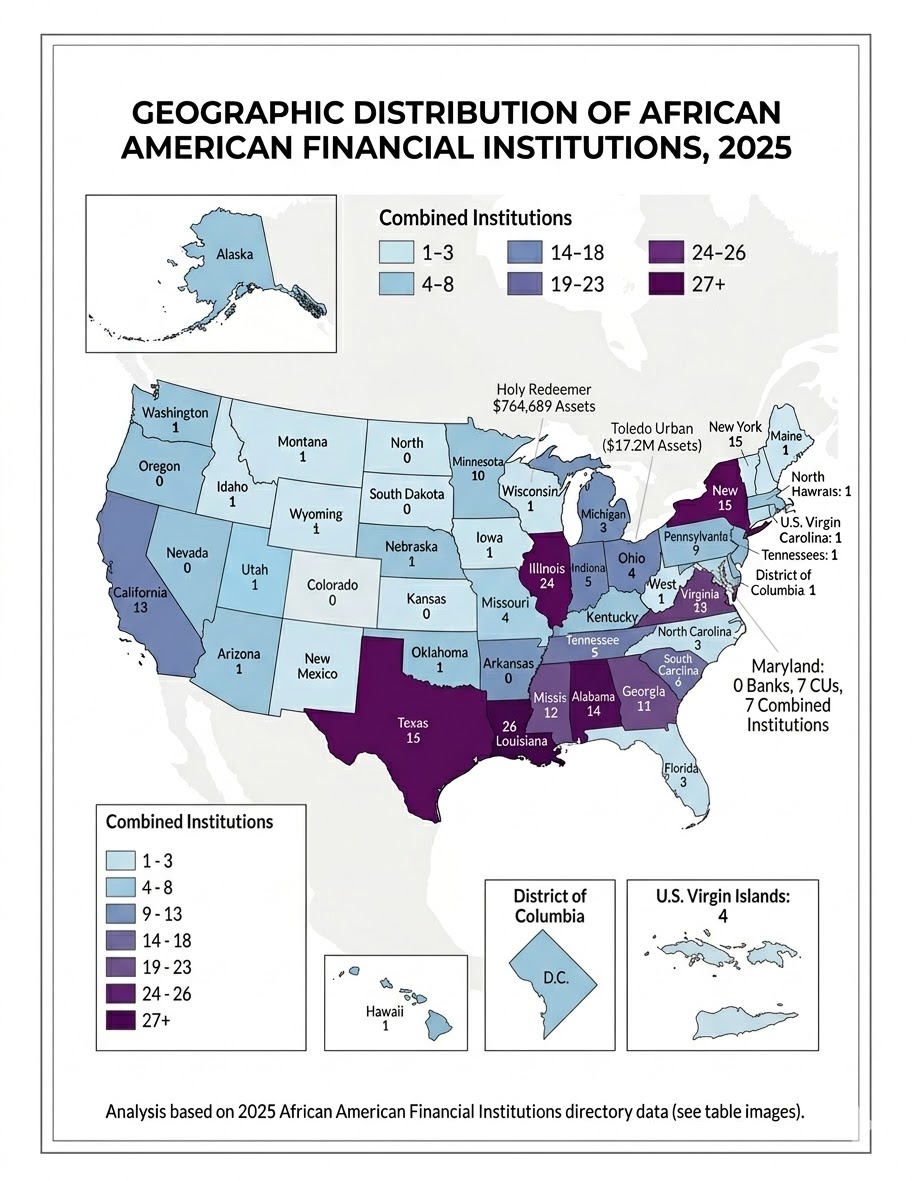
When the geography of African American banks and credit unions is examined together, a more complete — though still incomplete — picture of Black financial infrastructure emerges across the United States. The 2025 African American Owned Bank Directory covers 17 institutions across 15 states and territories. The 2025 NCUA data on African American credit unions adds 205 institutions across 29 states and territories, carrying $8.15 billion in assets and serving approximately 727,000 members. Combined, the two sectors represent over 220 institutions and more than $14.8 billion in assets operating across 31 states and territories. But geography, not just totals, is where the real story lives.

Thirteen states have both an African American-owned bank and at least one African American credit union: Alabama, the District of Columbia, Georgia, Illinois, Louisiana, Michigan, Mississippi, North Carolina, Oklahoma, Pennsylvania, South Carolina, Tennessee, and Texas. These are the states with the fullest financial ecosystem — where a community member can choose between a bank product and a credit union product from an institution with cultural roots in their community. Louisiana stands out, with one bank and 25 credit unions, the most of any state in the credit union count. Illinois follows with one bank and 23 credit unions.

Two states have African American banks but no African American credit unions in the NCUA data: Massachusetts, home to OneUnited Bank, and Utah, newly represented by Redemption Bank. These institutions serve their communities without the complementary infrastructure of a credit union network. Conversely, 16 states and territories have African American credit unions but no African American-owned bank: Arkansas, California, Connecticut, Delaware, Florida, Indiana, Maryland, Minnesota, Missouri, New Jersey, New York, Ohio, Virginia, the U.S. Virgin Islands, West Virginia, and Wisconsin.

The cases of Ohio and Wisconsin, discussed at length in the bank directory analysis, illustrate the limits of credit union coverage as a substitute for bank presence. Ohio has four African American credit unions with combined assets of approximately $18.3 million: Mahoning Valley in Youngstown, Mt. Zion Woodlawn in Cincinnati, Cleveland Church of Christ in Cleveland, and Toledo Urban in Toledo. Of these, Toledo Urban is the only institution of meaningful scale at $17.2 million in assets with 4,324 members. The other three are micro-institutions, each under $600,000 in assets and under 400 members. Wisconsin’s single credit union, Holy Redeemer Community of SE Wisconsin based in Milwaukee, holds just $764,689 in assets and serves 239 members. For a city where African Americans comprise roughly 39 percent of the population, that represents an institutional void that one small credit union cannot fill. Neither Ohio nor Wisconsin has an African American financial institution capable of writing a commercial real estate loan, funding a startup, or underwriting a mortgage for a first-generation homebuyer at any meaningful scale.

African American Financial Institutions by State, 2025

StateAfrican American BanksAfrican American Credit UnionsCombined Institutions
Alabama21214
Arkansas033
California011
Connecticut033
Delaware011
District of Columbia11011
Florida033
Georgia2911
Illinois12324
Indiana055
Louisiana12526
Maryland077
Massachusetts101
Michigan145
Minnesota022
Mississippi11112
Missouri044
New Jersey099
New York01515
North Carolina123
Ohio044
Oklahoma112
Pennsylvania189
South Carolina156
Tennessee156
Texas11415
Utah101
U.S. Virgin Islands044
Virginia01313
West Virginia011
Wisconsin011

Maryland presents a striking and instructive contrast. It has no African American-owned bank, a gap noted in the 2025 directory, yet it is the single largest state for African American credit union assets, hosting seven institutions with a combined $4.47 billion in assets. That figure is driven primarily by two institutions: Andrews Federal Credit Union in Suitland with $2.47 billion in assets and 142,076 members, and Municipal Employees Credit Union of Baltimore with $1.26 billion in assets and 98,358 members. Maryland’s credit union sector is, in asset terms, larger than the entire African American bank sector nationally. This is remarkable. It is also a reminder that credit unions and banks occupy different structural roles. Andrews Federal and MECU of Baltimore are large, sophisticated institutions with product offerings that approach commercial banking but they are member cooperatives, not banks, and their ownership structure, regulatory environment, and community lending mandates differ accordingly. Maryland’s absence from the bank directory is still a gap worth addressing, even with $4.47 billion in credit union assets in the state.

Virginia and Missouri follow a similar pattern to Maryland, albeit at smaller scale. Virginia has 13 African American credit unions with $471 million in assets but no African American-owned bank. Missouri has four credit unions with $481 million in assets, anchored by St. Louis Community Credit Union at $431.5 million, and also no bank. New York has 15 credit unions with $76 million in assets and no African American bank, a particularly stark figure given the size of New York’s African American population and its status as the financial capital of the country.

The states that are entirely absent from both the bank and credit union directories deserve attention. While the combined coverage of 31 states and territories is broader than either sector alone, large portions of the country remain without any African American-owned financial institution. States like Nevada, Arizona, Colorado, Washington, Oregon, and much of the Mountain West and Pacific Northwest have no representation in either directory. As African Americans continue to migrate to new metros — Las Vegas, Phoenix, Denver, Seattle — the absence of community-controlled financial institutions in those corridors becomes a growing concern.

The combined picture is this: African American banks and credit unions together hold approximately $14.8 billion in assets, serve over 700,000 credit union members and the deposit base of 17 banks, and operate across 31 states and territories. The credit union sector, at $8.15 billion in assets across 205 institutions, is actually slightly larger than the bank sector’s $6.72 billion across 17 institutions, a reflection of the credit union model’s greater accessibility and the longer runway some of these institutions have had to grow. But the two sectors are not interchangeable. Banks can hold commercial deposits, write business loans, issue letters of credit, and serve as the financial backbone of an entrepreneurial ecosystem in ways that most credit unions cannot. Credit unions, in turn, offer member ownership, lower fees, and community accountability that publicly or privately held banks may not. The African American community needs both, in every state where its population is substantial. Right now, it has neither in too many places that matter.

Sources: HBCU Money 2025 African American Owned Bank Directory; 2025 NCUA African American Credit Union Institutions data. Asset figures in U.S. dollars.

Disclaimer: This article was assisted by Claude (Anthropic).

Credit Card Rate Caps Could Deepen Financial Inequality for African American Households

Our credit system, like almost institutional reality we have is very much dependent on Others. Until we realize and work towards infrastructure of our own institutional ownership within the credit landscape, then we will continue to be prey for predators and subsidizers that enriches others and their institutions. – William A. Foster, IV

When President Donald Trump announced a proposed 10% cap on credit card interest rates in January 2026, most Americans greeted the news with skeptical hope. The move seemed like a potential lifeline for families struggling with debt burdens and interest rates that often exceed 20%, even as many questioned whether it could actually happen. But for African American households, this well-intentioned policy could become another barrier in a financial system that has historically excluded and disadvantaged them.

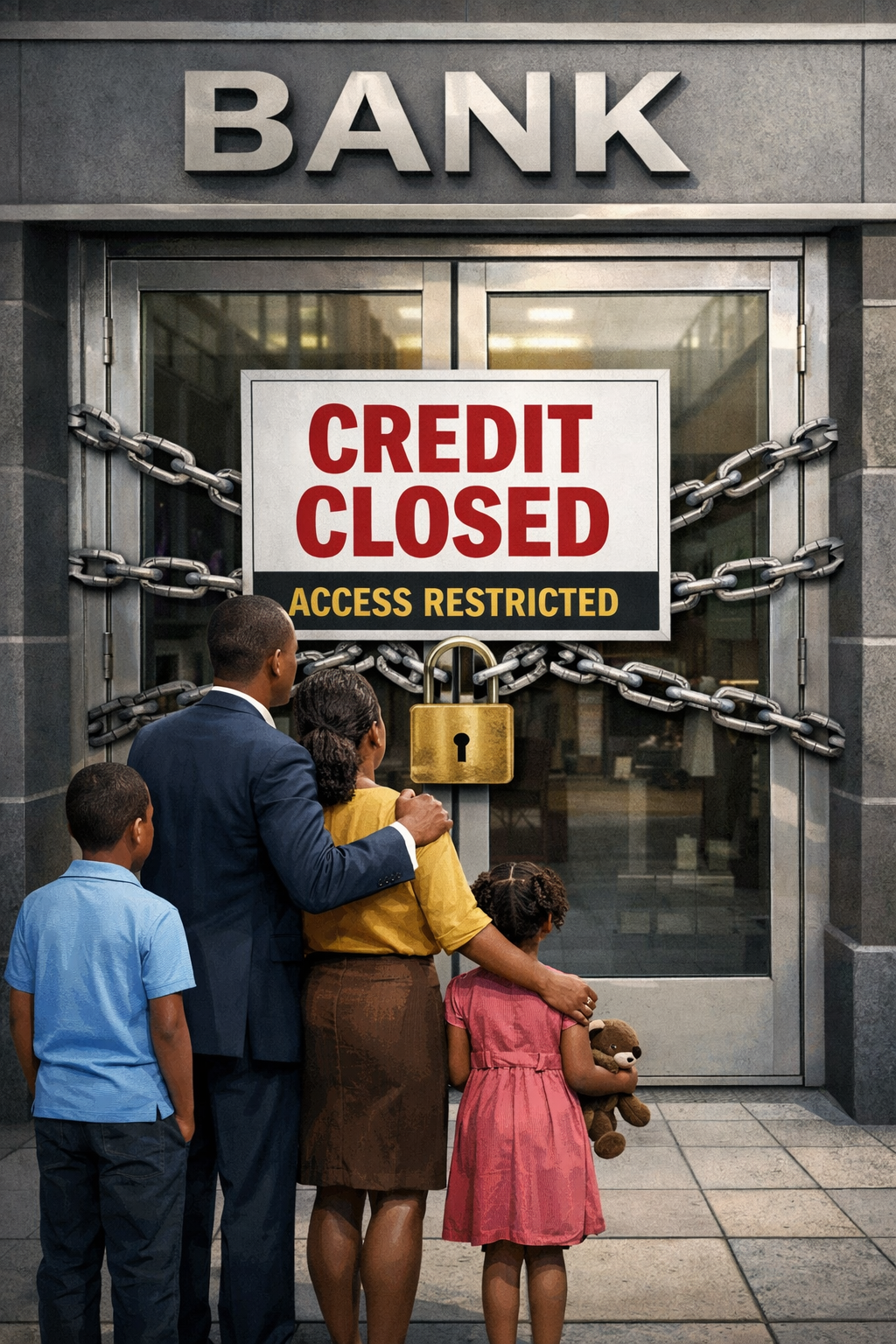
The challenge lies not in the intention behind rate caps, but in their likely consequences. While lower interest rates sound beneficial on the surface, the economic reality of credit markets means that banks facing reduced profitability will respond by restricting who can access credit in the first place. For African American families already fighting against systemic barriers to financial services, this could close doors that were only partially open to begin with.

African American households face dramatically different credit market realities than their white counterparts. According to the FDIC’s 2023 survey, more than 10% of Black Americans lack access to basic checking or savings accounts, compared to just 2% of white Americans. This banking gap represents more than inconvenience it fundamentally limits the ability to build the credit history that determines access to affordable loans, mortgages, and yes, credit cards.

The wealth disparity tells an even starker story. The median net worth of white households stands at approximately $188,200, nearly eight times the $24,100 median for Black households. This gap isn’t accidental it’s the product of generations of discriminatory policies from redlining to predatory lending, compounded by the deterioration of African American-owned banks and credit unions. As Black ownership of financial institutions has declined, the community has become more reliant on external institutions for credit, creating conditions that invited more predatory lending into African American neighborhoods. When African Americans do access credit, they consistently face higher interest rates than white borrowers with similar incomes. High-income Black homeowners, for instance, receive mortgage rates comparable to low-income white homeowners.

The dependence on consumer credit has reached critical levels in African American households. Recent analysis from HBCU Money’s 2024 African America Annual Wealth Report reveals that consumer credit has surged to $740 billion, now representing nearly half of all African American household debt and approaching parity with home mortgage obligations of $780 billion. This near 1:1 ratio between consumer credit and mortgage debt represents a fundamental inversion of healthy household finance. For white households, the ratio stands at approximately 3:1 in favor of mortgage debt over consumer credit. The African American community stands alone in this precarious position, where high-interest, unsecured borrowing rivals the debt secured by appreciating assets.

These disparities matter enormously when considering how banks will respond to rate caps. Credit card companies operate on risk-based pricing models, charging higher rates to borrowers they perceive as riskier based on credit scores, income stability, and banking relationships. African American borrowers, because of structural disadvantages in each of these areas, already cluster in categories that receive higher interest rates. When banks can no longer charge those rates, they will simply stop offering credit to these borrowers entirely.

The banking industry’s response to Trump’s proposal has been swift and unequivocal: a 10% interest rate cap would force them to dramatically restrict credit availability. Analysis from the American Bankers Association suggests that nearly 95% of subprime borrowers, those with credit scores below 680 would lose access to credit cards under even a 15% cap. With rates currently averaging around 20%, a 10% ceiling would affect even more borrowers. Industry analysts estimate that between 82% and 88% of credit cardholders could see their cards eliminated or their credit limits drastically reduced. The Electronic Payments Coalition warns that low to moderate income consumers would be hit hardest, precisely the demographic where African American households are disproportionately represented.

This isn’t just industry fearmongering. Historical evidence supports these concerns. When Illinois implemented a 36% APR cap on all borrowing, lending to subprime borrowers plummeted. Similar patterns emerged from 19th-century usury laws and research on payday loan restrictions. The consistent pattern is clear: when rate caps make lending unprofitable, lenders exit the market or tighten requirements. For African American households, this creates a devastating catch-22. They’re more likely to need credit due to lower wealth levels and less access to family financial support. Yet they’re also more likely to be denied that credit or pushed into predatory alternatives when traditional sources dry up.

The credit card industry categorizes borrowers by risk, with subprime borrowers facing the highest rates but also the greatest need for access to credit. African American consumers are overrepresented in subprime categories, not because of personal failing but because of systemic factors that suppress credit scores. Historical discrimination in housing, employment, and lending created wealth gaps that persist through generations. Lower wealth means less ability to weather financial shocks, leading to missed payments that damage credit scores.

When major banks stop serving subprime borrowers, those families don’t suddenly stop needing credit. They turn to alternative sources and here’s where the rate cap could cause real harm. Payday lenders, pawn shops, auto title loans, and other fringe financial services often charge effective annual percentage rates far exceeding credit card rates, sometimes reaching 300% to 400% or higher. These services operate in a less regulated space where consumer protections are weaker and predatory practices more common.

African American neighborhoods already contain disproportionately high concentrations of these alternative lenders, a modern echo of historical redlining patterns. Bank branches are scarce in many predominantly Black communities, while check-cashing outlets and payday loan storefronts proliferate. A rate cap that drives more families into this unregulated market would exacerbate existing inequities. The irony is profound. A policy designed to protect consumers from high interest rates could push vulnerable families toward even higher costs and fewer protections. JPMorgan analysts warned that the rate cap could redirect borrowing away from regulated banks toward pawn shops and non-bank consumer lenders, increasing risks for consumers already under financial strain.

The consequences of restricted credit access extend far beyond the immediate inability to make purchases. Credit cards serve as emergency funds for families without substantial savings, a category that includes a disproportionate number of African American households. For many Black families facing persistent income gaps, credit cards function not just as a convenience but as an income supplemental tool, helping to bridge the gap between earnings and the actual cost of living. When a car breaks down, a medical bill arrives, or a job loss creates temporary income disruption, credit cards can mean the difference between weathering the storm and falling into a debt spiral that damages credit for years.

The reality is that consumer credit has become essential infrastructure for African American household finance. With consumer credit growing by 10.4% in 2024, more than double the 4.0% growth in mortgage debt, Black families are increasingly dependent on expensive borrowing to maintain living standards. This isn’t a choice so much as a structural reality of trying to survive on incomes that remain roughly 60% of median white household income while facing higher costs for everything from insurance to groceries in predominantly Black neighborhoods.

Small business ownership represents another critical pathway to wealth building where African Americans face systemic barriers. Black entrepreneurs already struggle to access business loans, with approval rates significantly lower than for white business owners with similar qualifications, another systemic issue from African American banks and credit unions having limited deposits and being unable to extend loans and credit. Many small business owners use personal credit cards to fund startup costs, inventory purchases, and cash flow gaps. Restricting credit card access would eliminate this crucial financing option for aspiring Black entrepreneurs.

The rewards and benefits ecosystem could also shift dramatically. Banks have indicated they would likely reduce or eliminate rewards programs to offset lost interest income from rate caps. While this might seem minor compared to interest savings, rewards programs have become an important tool for building value, particularly for higher-credit consumers who pay balances in full monthly. The Vanderbilt Policy Accelerator research found that borrowers with credit scores of 760 or lower would see reductions in credit card rewards under a rate cap. Perhaps most concerning is the potential for credit scoring and financial history deterioration. When credit lines are closed or limits reduced, credit utilization ratios increase, which damages credit scores. This creates a downward spiral where reduced access leads to worse credit, which leads to further reduced access. For African American families working to build credit and financial stability, this could set progress back by years.

The genuine problem of high credit card interest rates and mounting consumer debt deserves serious policy attention. But effective solutions must account for how credit markets actually function and who would be most affected by reduced access. Rather than interest rate caps, policymakers should consider approaches that expand access while addressing affordability. Strengthening African American-owned banks, credit unions, and community development financial institutions would restore economic self-determination to communities that once had thriving financial ecosystems. These institutions don’t just serve African American communities they’re owned by them, led by them, and invested in their long-term prosperity. Historically, Black-owned banks have proven they can maintain sound lending practices while understanding the full context of their customers’ financial lives in ways that large, distant institutions simply cannot.

Currently, there are only 18 Black or African American owned banks with combined assets of just $6.4 billion, a tiny fraction of the industry. The absence of robust Black-owned financial institutions means that virtually all of the $740 billion in consumer credit carried by African American households flows to institutions outside the community. With African American-owned banks holding assets equivalent to less than 1% of Black household debt, the overwhelming majority of interest payments—potentially $120 billion annually—enriches predominantly white-owned institutions with no vested interest in Black wealth creation or community reinvestment. This extraction mechanism operates continuously, draining capital that could otherwise be intermediated through Black-owned institutions to support local lending and community development.

Strengthening requirements for transparent pricing, fee limitations, and responsible lending standards could protect consumers without eliminating credit availability. Regulators could mandate clearer disclosure of total costs, limit penalty fees that disproportionately burden those already struggling, and establish guardrails against predatory terms while preserving access to credit itself. Yet even these modest reforms face an uphill battle in the current political climate. The reality is that meaningful policy solutions require political will that simply doesn’t exist right now for addressing racial economic disparities directly. This makes the unintended consequences of blunt instruments like interest rate caps even more dangerous—they can restrict credit access under the banner of consumer protection while offering no viable alternatives.

The fundamental reality is clear: waiting for federal policy to solve credit access problems is a losing strategy. African American households face a specific set of economic challenges rooted in a specific history, and the solutions must be equally specific not generic approaches that treat all groups the same. The path forward requires African American communities to build their own financial infrastructure. This means capitalizing and expanding Black-owned banks and credit unions that can offer credit products designed for the actual economic realities of their customers, not risk models built on white wealth patterns. It means creating community-based lending circles and cooperative credit arrangements that leverage collective resources. It means developing alternative credit scoring systems that account for rent payments, utility bills, and other financial behaviors that traditional models ignore.

Rebuilding this sector isn’t about charity or inclusion; it’s about economic self-determination. Black-owned financial institutions have historically understood that a credit score doesn’t tell the whole story of a person’s creditworthiness, and they’ve made sound lending decisions based on relationship banking and community knowledge that large institutions can’t replicate. The challenge isn’t convincing European American owned banks to be fairer, it’s building the capacity to not need them as much. When African American communities had stronger networks of Black-owned banks, insurance companies, and credit unions, they had more options and more power. Rebuilding that infrastructure, combined with individual financial strategies that emphasize building assets and reducing dependence on consumer credit, offers a more sustainable path than hoping for beneficial federal intervention.

A 10% interest rate cap might sound appealing in the abstract, but for African American households, it likely means one thing: less access to the credit system entirely. The question then becomes not whether mainstream banks will treat Black borrowers fairly, but how communities can create their own credit access systems that serve their actual needs. That’s not a policy problem it’s a community capacity problem, and it requires community-driven solutions.

Disclaimer: This article was assisted by ClaudeAI.
HBCU Money Presents: African America’s 2024 Annual Wealth Report

African American household wealth reached $5.6 trillion in 2024, marking a half-trillion-dollar increase that signals both progress and persistent structural challenges in the nation’s racial wealth landscape. While the topline growth appears encouraging, the composition reveals a familiar pattern: wealth remains overwhelmingly concentrated in illiquid assets, with real estate and retirement accounts comprising nearly 60% of total holdings. The year’s most dynamic growth came from corporate equities and mutual fund shares, which surged 22.2% to $330 billion—yet this represents less than 5% of African American assets and a mere 0.7% of total U.S. household equity holdings, underscoring how far removed Black households remain from the wealth-generating mechanisms of capital markets.

The liability side of the ledger tells an equally sobering story. Consumer credit climbed to $740 billion in 2024, now representing nearly half of all African American household debt and growing at more than double the rate of asset appreciation. This shift toward unsecured, high-interest borrowing—particularly as it outpaces home mortgage debt—suggests that rising asset values are not translating into improved financial flexibility or reduced economic vulnerability. What makes this dynamic even more troubling is the extractive nature of the debt itself: with African American-owned banks holding just $6.4 billion in combined assets, it’s clear that the vast majority of the $1.55 trillion in African American household liabilities flows to institutions outside the community. This means that interest payments, fees, and the wealth-building potential of lending relationships are being systematically siphoned away from Black-owned financial institutions that could reinvest those resources back into African American communities, perpetuating a cycle where debt burdens intensify even as the capital generated from servicing that debt enriches institutions with no vested interest in Black wealth creation.

ASSETS

In 2024, African American households held approximately $7.1 trillion in total assets, an increase of more than $500 billion from 2023, with corporate equities and mutual fund shares recording the fastest year-over-year growth from a relatively small base, even as wealth remained heavily concentrated in real estate and retirement accounts—together accounting for more than 58% of total assets.

Real Estate

Total Value: $2.24 trillion

Definition: Real estate is defined as the land and any permanent structures, like a home, or improvements attached to the land, whether natural or man-made.

% of African America’s Assets: 34.2%

% of U.S. Household Real Estate Assets: 5.1%

Change from 2023: +4.3% ($100 billion)

Real estate remains the dominant asset class for African American households, accounting for over one-third of total household assets. While modest appreciation continued in 2024, ownership remains highly concentrated in primary residences rather than income-producing or institutional real estate, limiting liquidity and leverage potential.

Consumer Durable Goods

Total Value: $620 billion

Definition: Consumer durables, also known as durable goods, are a category of consumer goods that do not wear out quickly and therefore do not have to be purchased frequently. They are part of core retail sales data and are considered durable because they last for at least three years, as the U.S. Department of Commerce defines. Examples include large and small appliances, consumer electronics, furniture, and furnishings.

% of African America’s Assets: 8.8%

% of U.S. Household Durable Good Assets: 6.2%

Change from 2023: +3.3% ($20 billion)

Corporate equities and mutual fund shares 

Total Value: $330 billion

Definition: A stock, also known as equity, is a security that represents the ownership of a fraction of the issuing corporation. Units of stock are called “shares” which entitles the owner to a proportion of the corporation’s assets and profits equal to how much stock they own. A mutual fund is a pooled collection of assets that invests in stocks, bonds, and other securities.

% of African America’s Assets: 4.7%

% of U.S. Household Equity Assets: 0.7%

Change from 2023: +22.2% ($60 billion)

Defined benefit pension entitlements

Total Value: $1.73 trillion

Definition: Defined-benefit plans provide eligible employees with guaranteed income for life when they retire. Employers guarantee a specific retirement benefit amount for each participant based on factors such as the employee’s salary and years of service.

% of African America’s Assets: 24.4%

% of U.S. Household Defined Benefit Pension Assets: 9.7%

Change from 2023: +7.5% ($40 billion)

Defined contribution pension entitlements

Total Value: $880 billion

Definition: Defined-contribution plans are funded primarily by the employee. The most common type of defined-contribution plan is a 401(k). Participants can elect to defer a portion of their gross salary via a pre-tax payroll deduction. The company may match the contribution if it chooses, up to a limit it sets.

% of African America’s Assets: 12.4%

% of U.S. Household Defined Contribution Pension Assets: 6.0%

Change from 2023: +4.8% ($40 billion)

Private businesses

Total Value: $330 billion

% of African America’s Assets: 4.7%

% of U.S. Household Private Business Assets: 1.8%

Change from 2023: +3.1% ($10 billion)

Other assets

Total Value: $770 billion

Definition: Alternative investments can include private equity or venture capital, hedge funds, managed futures, art and antiques, commodities, and derivatives contracts.

% of African America’s Assets: 10.9%

% of U.S. Household Other Assets: 2.7%

Change from 2023: +6.9% ($50 billion)

LIABILITIES

“From 2023 to 2024, African American household liabilities rose by approximately $100 billion, with consumer credit, now representing nearly 48% of all liabilities, driving the majority of the increase and reinforcing structural constraints on net wealth accumulation despite rising asset values.”

Home Mortgages

Total Value: $780 billion

Definition: Debt secured by either a mortgage or deed of trust on real property, such as a house and land. Foreclosure and sale of the property is a remedy available to the lender. Mortgage debt is a debt that was voluntarily incurred by the owner of the property, either for purchase of the property or at a later point, such as with a home equity line of credit.

% of African America’s Liabilities: 50.3%

% of U.S. Household Mortgage Debt: 5.8%

Change from 2023: +4.0% ($30 billion)

Consumer Credit

Total Value: $740 billion

Definition: Consumer credit, or consumer debt, is personal debt taken on to purchase goods and services. Although any type of personal loan could be labeled consumer credit, the term is more often used to describe unsecured debt of smaller amounts. A credit card is one type of consumer credit in finance, but a mortgage is not considered consumer credit because it is backed with the property as collateral. 

% of African American Liabilities: 47.7%

% of U.S. Household Consumer Credit: ~15.0%

Change from 2023: +10.4% ($70 billion)

Other Liabilities

Total Value: $30 billion

Definition: For most households, liabilities will include taxes due, bills that must be paid, rent or mortgage payments, loan interest and principal due, and so on. If you are pre-paid for performing work or a service, the work owed may also be construed as a liability.

% of African American Liabilities: 2.0%

% of U.S. Household Other Liabilities: ~2.8%

Change from 2023: 0% (No material change)

Source: Federal Reserve

What Berkshire Buys Next: The Five Giants That Fit Buffett’s Playbook

In Omaha, Berkshire Hathaway’s cash pile has grown so large that even Wall Street marvels at its inertia. With over $380 billion in cash and short-term Treasuries, the conglomerate is sitting on more dry powder than most central banks. Yet Warren Buffett and his successor, Greg Abel, have long maintained that capital must only move when the odds of permanent capital loss are near zero.

Now, with global markets resetting post-2020 stimulus and inflation anchoring valuations, the question becomes: what could Berkshire buy next that would be both large enough to matter and philosophically sound enough to pass Buffett’s test of simplicity, durability, and trust?

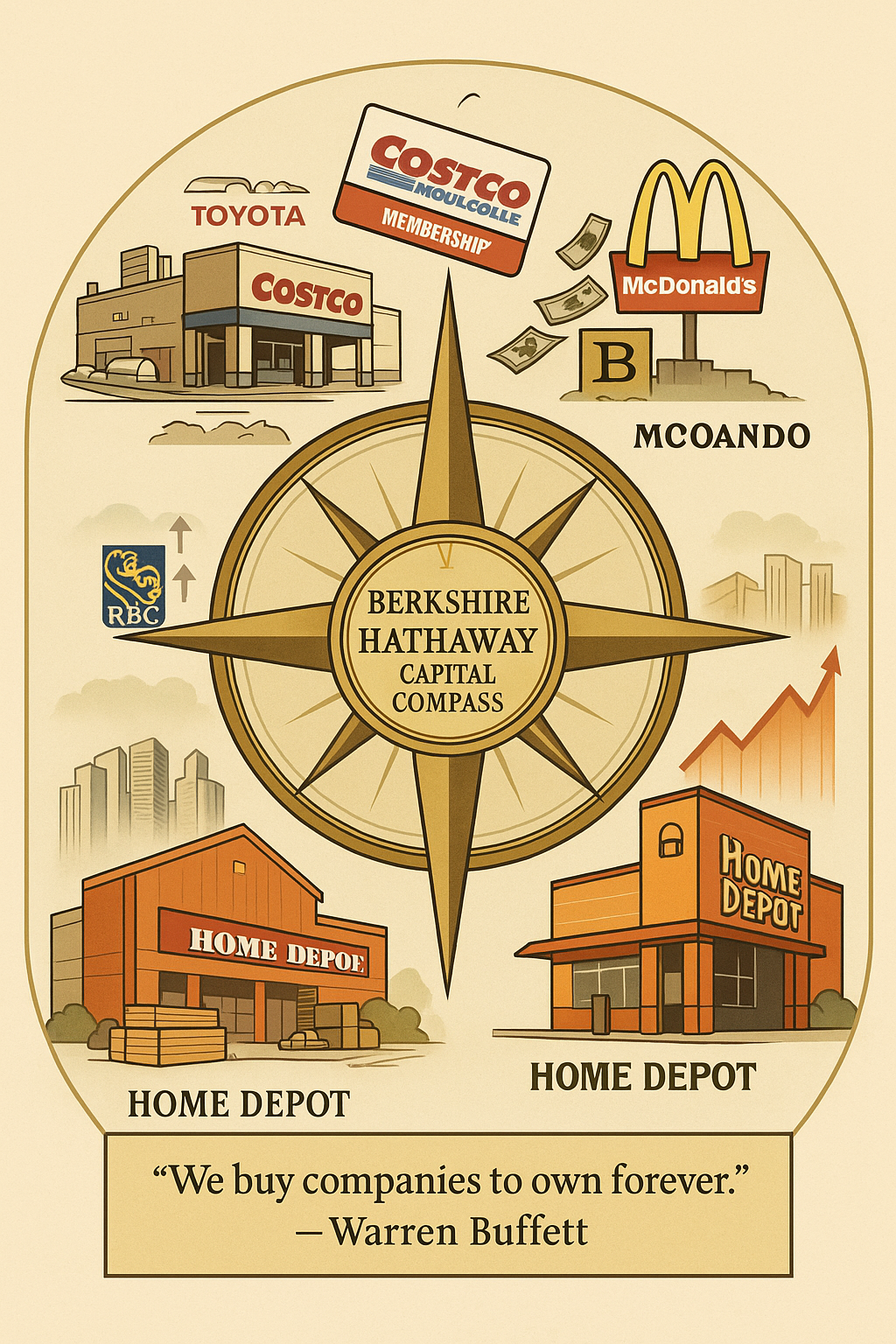
The five most plausible candidates — Costco, McDonald’s, Home Depot, Royal Bank of Canada, and Toyota — each satisfy that mix of prudence, predictability, and permanence that defines Berkshire’s century-long strategy of buying “businesses, not tickers.”

Buffett’s philosophy has been remarkably consistent for over six decades: buy simple, cash-rich, moated businesses led by trustworthy managers. Berkshire’s model of quasi-permanent ownership, decentralized operations, and disciplined capital allocation has made it the corporate equivalent of a sovereign wealth fund — except its sovereign is capitalism itself.

Greg Abel, the man expected to succeed Buffett, has only reinforced this model. Coming from Berkshire Energy, Abel represents the “real economy” side of the house preferring tangible assets, regulated returns, and predictable cash flow over the exuberance of speculative innovation.

Hence, the next Berkshire deal is not likely to be an AI startup or fintech disrupter. It will be a “forever asset” — a company that compounds quietly and defends its margins under any macro regime.

Given Berkshire’s sheer scale of over $1 trillion in market capitalization a target must have an enterprise value north of $200 billion to meaningfully “move the needle.” Anything smaller, and the math of compounding becomes negligible.

🧩 The Berkshire Universe: Themes and Tendencies

Berkshire’s portfolio reads like a map of the American and global economy’s most reliable arteries:

CategoryCore HoldingsTraits
FinancialsAmEx, Bank of America, Moody’s, ChubbHigh ROE, capital-light, recurring revenue
Consumer StaplesCoca-Cola, Kraft Heinz, DiageoGlobal brands, predictable demand
Energy / IndustrialsChevron, Occidental, MitsubishiReal assets, inflation hedge
TechnologyApple, Amazon (small), VeriSignCash-rich ecosystems
Infrastructure / InsuranceBNSF Railway, BH ReinsuranceTangible durability, “float” generation

This structure provides a blueprint for what comes next: reinforcement, not reinvention. Berkshire rarely pivots; it doubles down on what works. It will seek businesses that (1) resemble what it already understands, and (2) offer inflation-protected earnings streams in a world of higher nominal rates.

From the universe of firms valued between $200 billion and $450 billion, only a handful exhibit the balance of predictability, management integrity, and strategic fit Berkshire demands.

A closer look through Buffett’s filters narrows the field to Costco, McDonald’s, Home Depot, Royal Bank of Canada, and Toyota. Each operates in a sector Berkshire already knows and each represents a bridge between the company’s past and its post-Buffett future.

1. Costco Wholesale (Ticker: COST)

The Cult of Value Meets the Culture of Discipline

Buffett has long admired Costco’s operating model. It is a retailer that sells everything from fresh salmon to fine jewelry but in truth, it sells trust. Its membership model generates annuity-like revenue, while its relentless efficiency and scale provide a durable moat against both inflation and digital disruption.

Charlie Munger, Buffett’s late partner, once served on Costco’s board and famously said, “Costco is one of the most admirable capitalistic institutions in the world.” That legacy alone makes a partial acquisition symbolically powerful.

While a full buyout (market cap ≈ $405 billion) may be too expensive, a 20–30% stake would make sense. It would give Berkshire exposure to global consumer spending and provide a stabilizing counterpart to its stake in Apple, a brand built on loyalty, not leverage.

In the age of shrinking retail margins, Costco remains an inflation hedge, its pricing power born from scale, not greed. Buffett has always preferred such quiet dominance.

2. McDonald’s (Ticker: MCD)

Fast Food, Slow Capital

If there were ever a brand that personifies Buffett’s doctrine of “durable competitive advantage,” it is McDonald’s. With over 40,000 locations in 100+ countries and a business model centered on franchised cash flow, McDonald’s is the quintessential predictable earner.

Its asset-light structure means free cash flow margins north of 25%, while its real-estate footprint functions as an embedded REIT. In a world of digital payments, delivery, and global inflation, McDonald’s pricing agility is unmatched. It can raise prices by 5% globally without denting demand, a privilege of brand addiction.

Moreover, McDonald’s cultural synergy with Coca-Cola (another Berkshire cornerstone) cannot be overstated. Both are global empires built on ubiquity, habit, and nostalgia. A merger of ownership philosophy, if not of products, would anchor Berkshire’s consumer-staples dynasty for another half-century.

At ~$218 billion market cap, McDonald’s is one of the few full-scale acquisitions Berkshire could realistically afford outright.

3. Home Depot (Ticker: HD)

Owning the American Rebuild

Buffett once said that he bets on the “resilience of the American homeowner.” Home Depot, valued around $372 billion, is the most efficient expression of that belief.

As infrastructure spending rises and housing shortages intensify, Home Depot sits at the crossroads of construction, repair, and consumer credit. Its business model converts cyclical demand into steady dividend growth. For Berkshire, already owning materials firms and insulation producers, a significant stake in Home Depot would complete a “vertical household economy” from supply chain to consumer.

Its store footprint and brand loyalty parallel BNSF’s railroad network: both are national arteries essential to the domestic economy. Buffett loves owning irreplaceable distribution infrastructure and Home Depot’s logistics system is precisely that.

4. Royal Bank of Canada (Ticker: RY)

The Conservative Bank That Would Make Carnegie Smile

Berkshire’s financial core is deep, but largely American. A Royal Bank of Canada acquisition would expand its footprint across North America’s second-largest and most stable financial system.

RBC’s strengths are conservative underwriting, dominant market share in wealth management, and a culture of steady, compounding profitability which mirror Buffett’s historical love of American Express and Bank of America.

Moreover, Canada’s heavily regulated banking environment protects incumbents from competition. Berkshire thrives in such “wide-moat oligopolies.”

At a market cap of $208 billion, the bank is small enough for a full acquisition but large enough to deploy Berkshire’s idle cash meaningfully. It would also diversify currency exposure and hedge U.S. economic concentration, a quiet, Abel-style move.

5. Toyota Motor Corp. (Ticker: TM)

Japan’s Crown Jewel of Industrial Resilience

Berkshire already owns minority stakes in five major Japanese trading houses, a calculated bet on the nation’s industrial discipline. Extending that strategy into Toyota would be the logical next step.

Toyota’s balance sheet, manufacturing excellence, and hybrid-vehicle leadership make it a quintessential “Buffett business” hidden inside an automaker. Unlike the tech-saturated EV startups, Toyota’s philosophy of gradual innovation, prudence, and reliability mirrors Berkshire’s own.

The two even share a cultural ethos: long-termism over trend-chasing.

At roughly $268 billion market cap, a 10–20% strategic stake would echo Buffett’s Japanese diversification theme without the regulatory complexity of a full acquisition. It would also position Berkshire for the eventual rise of hybrid and hydrogen vehicles in emerging markets, aligning with its energy portfolio’s shift toward renewables.

💰 Financial Feasibility: Deploying $250 Billion Wisely

Even Berkshire’s cash hoard has limits. Deploying $150–$250 billion must pass both the Buffett test (certainty of cash flow) and the Abel test (inflation resilience).

A possible portfolio of acquisitions could look like this:

TargetMarket Cap (USD)Likely ApproachStrategic Rationale
Costco$405B20–30% stakeGlobal retail + subscription revenue
McDonald’s$218BFull acquisitionCash flow, brand power, inflation hedge
Home Depot$372B20–30% stakeU.S. infrastructure exposure
Royal Bank of Canada$208BFull acquisitionNorth American financial expansion
Toyota$268B10–20% stakeJapan industrial diversification

In total, such a deployment would utilize around $200 billion, leaving liquidity for buybacks and opportunistic purchases.

This mirrors Berkshire’s historical pattern: buying large minority stakes in global champions, then waiting for market corrections to accumulate more — the “silent control” strategy that has defined its rise.

Strategic Summary: The Post-Buffett Blueprint

The post-Buffett Berkshire era will be one of institutional continuity, not radical change. Greg Abel’s likely leadership ensures that the company remains disciplined, risk-averse, and industrially grounded.

These five potential acquisitions — Costco, McDonald’s, Home Depot, Royal Bank of Canada, and Toyota — collectively represent Berkshire’s five pillars of permanence:

  1. Consumer Trust (Costco) – Loyalty as an economic moat.
  2. Everyday Habit (McDonald’s) – Cash flow as culture.
  3. Infrastructure (Home Depot) – Building the backbone of America.
  4. Finance (RBC) – Conservative capital compounding.
  5. Industry (Toyota) – Global operational excellence.

Each adds a layer of diversification without diluting Berkshire’s DNA. Together, they form a defensive fortress against inflation, technological disruption, and economic cycles — precisely the environment Berkshire was built to survive.

For HBCU endowments and African American institutional investors, Berkshire’s approach holds a powerful parallel. The key lesson is patience married to scale. Berkshire’s compounding model demonstrates how disciplined reinvestment — not speculative churn — builds generational wealth.

Like Berkshire, HBCU financial ecosystems can create “institutional compounding engines” by investing in enterprises that share cultural familiarity, operational durability, and intergenerational value. Buffett calls it “the joy of owning good businesses forever.”

For African American institutions, that translates to owning — not merely funding — the infrastructure of our own economies.

Berkshire Hathaway stands at an inflection point. The post-Buffett era will not be about reinvention but reaffirmation — proving that its model of ethical capitalism can persist without its founding prophet.

The five plausible acquisitions ahead — Costco, McDonald’s, Home Depot, Royal Bank of Canada, and Toyota — are not just balance-sheet moves; they are philosophical statements.

Each embodies what Buffett has called the “virtue of patience in a speculative age.” And as markets oscillate between AI euphoria and geopolitical anxiety, Berkshire remains what it has always been: a monument to quiet power and compounding discipline.

For long-term investors — from sovereign funds to HBCU endowments — that discipline remains the truest asset class of all.

Disclaimer: This article was assisted by ChatGPT.