We ain’t gotta dream no more, man. We got real shit. Real estate we can touch. – Stringer Bell
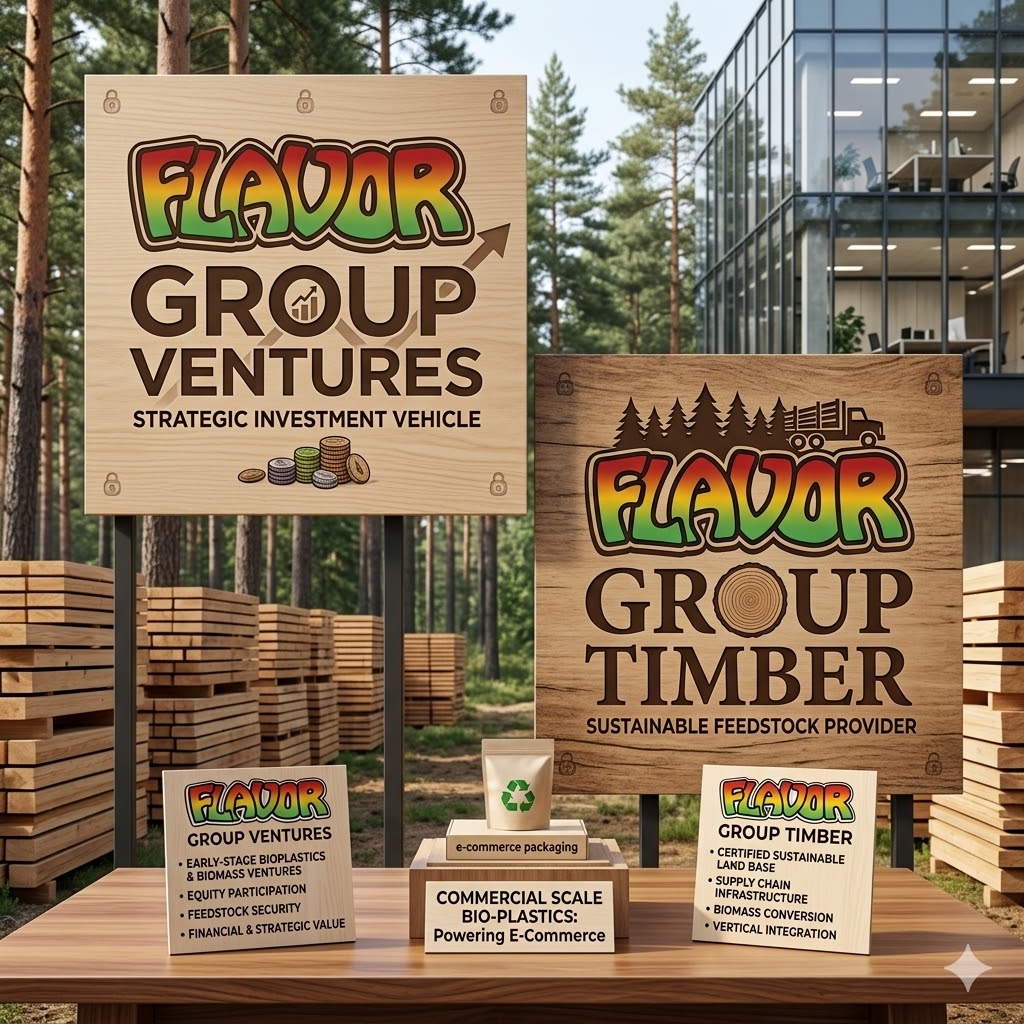
There is a concept in corporate strategy called vertical integration which is the deliberate extension of a company’s ownership up or down its supply chain in order to capture margin that would otherwise accrue to a third party, reduce dependency on suppliers with competing interests, and build structural moats that competitors cannot easily replicate. Standard Oil practiced it. Carnegie Steel perfected it. The major timber and paper conglomerates of the twentieth century built generational fortunes on it. Khadijah James understood something about the magazine business that most publishers learn too late: the product you sell is content, but the input you cannot live without is paper. And paper, in the mid-1990s, was not simply a commodity. It was a strategic vulnerability. Flavor Group Holdings, had it been built with the institutional discipline the prior analysis outlined, would have recognized this vulnerability by no later than 1997. What follows is the story of how it would have addressed it and how that address would have positioned the company for a generational transformation that most legacy media firms failed to execute.
In 1997, the average ton of coated magazine paper cost between $850 and $1,100, depending on grade, supplier relationship, and contract structure. For an independent publisher without the purchasing leverage of Condé Nast or Hearst, paper costs could represent 25 to 35 percent of total production expense. Flavor magazine, growing its print run and expanding its distribution footprint, would have been acutely sensitive to this dynamic. Kyle Barker, reviewing the company’s cost structure with the same analytical discipline he applied to equity portfolios, would have identified paper as the single largest controllable variable in the production budget. He could not control advertiser sentiment. He could not control newsstand foot traffic. He could not control the postal rates that governed subscription economics. But he could, in theory, control the cost of the raw input upon which everything else depended.
The strategic logic of timber acquisition was straightforward. Timberland in the Northeast — the forests of Maine, Vermont, and upstate New York — and the Southeast — the pine flatwoods of Georgia, Alabama, and North Carolina — had been the backbone of American papermaking since the late nineteenth century. By the mid-1990s, consolidation in the timber industry had created an unusual market dynamic: large tracts of productive timberland were available at prices that undervalued their long-term yield, precisely because institutional investors had not yet developed the appetite for timberland as an asset class that they would later demonstrate through the proliferation of Timber Investment Management Organizations. Overton Wakefield Jones, whose expertise in physical infrastructure extended naturally to land assessment and property management, would have led the due diligence on initial timber acquisitions. Kyle would have structured the financing, likely through a combination of SBA rural development lending and community development financial institution capital. Maxine would have drafted the easement agreements, the timber rights contracts, and the supply agreements that would formalize the relationship between the timber subsidiary and the magazine operation.
The initial acquisition target was 15,000 to 20,000 acres of mixed hardwood and softwood timberland in Maine and Georgia, purchased between 1997 and 2001 at an average price of $400 to $700 per acre consistent with market rates for productive timberland in those regions during that period. Total acquisition cost at the midpoint: approximately $9 million, financed with 60 percent debt against the land’s appraised productive value. What Flavor Group Properties now held was not simply commercial real estate in Brooklyn. It held a natural resource asset with a biological growth cycle, a recurring harvest yield, and a supply relationship with its sister company that guaranteed a baseline demand for its output. The New York Times connection deserves its own examination. By the late 1990s, the Times consumed approximately 200,000 metric tons of newsprint annually, sourcing from multiple suppliers across North America and Scandinavia. An independent, Black-owned timber operation with certified sustainable forestry practices and competitive delivered costs to the Times’ printing facilities in New York and New Jersey would have represented precisely the kind of supplier diversity that large institutional customers were beginning to prioritize under pressure from shareholders and advocacy organizations. Flavor Group Timber, positioned as a minority-owned sustainable forestry operation with direct supply relationships to the Northeast’s largest paper consumers, would have been a compelling commercial proposition, one that combined genuine cost competitiveness with the reputational differentiation that procurement officers could document. The Times as a primary customer would not have been charity. It would have been commerce.
The structural shift in paper demand did not arrive without warning. The signals were present and legible well before their full consequences materialized. U.S. newsprint consumption peaked in 1998 and began a decline that would prove both sustained and accelerating. Printing and writing paper demand followed a similar trajectory after 2000, ultimately falling more than 30 percent from its peak by 2010. The causes were not mysterious: digital news consumption, desktop publishing, email, and eventually the smartphone demolished the economic foundation of the industries that had historically consumed the most paper. Kyle Barker, reading the data with the same discipline he applied to equity valuations, would have begun signaling concern about the long-term demand trajectory of printing and writing paper no later than 2002. The question before the Flavor Group Holdings board was not whether the shift was real — the data made that question moot. The question was what to do with timberland optimized for a demand profile that was structurally contracting.
The answer came in two phases, both of which required the kind of strategic patience that only a company with a diversified revenue base and a disciplined governance structure could sustain. The first phase was a deliberate pivot within the timber portfolio toward the segments of the paper market that were growing rather than contracting. Packaging paper — corrugated boxes, containerboard, kraft paper — was experiencing demand growth driven by a structural shift that would later be named e-commerce but was already visible in the late 1990s as catalog retail and early internet commerce began to reshape consumer purchasing behavior. The same digital transformation that was destroying demand for newsprint was simultaneously creating demand for the boxes that delivered the products ordered online. By 2005, packaging paper represented over 40 percent of total U.S. paper production. By 2020, it accounted for more than 50 percent. Flavor Group Timber’s response was to work with its mill partners and supply chain relationships to shift harvest and processing toward fiber grades appropriate for packaging applications, a conversion that required capital investment but was achievable within the existing land base and timber management infrastructure. The Southeast pine holdings were particularly well-suited for this transition, given the fiber characteristics of Southern yellow pine and the geographic concentration of containerboard manufacturing capacity in Georgia, Alabama, and the Carolinas. The second category that continued to perform was sanitary paper products such as tissue, paper towels, and related consumer hygiene products that demand for which proved remarkably durable across economic cycles. This segment is dominated by large integrated manufacturers with proprietary consumer brands, making direct market entry difficult for a company of Flavor Group’s scale. The strategic play here was not manufacturing but supply: positioning the timber holdings as a certified sustainable fiber source for contract manufacturers and consumer products companies seeking to strengthen their environmental sourcing credentials.
The second phase of the timber strategy represented a more ambitious conceptual leap, and it required the company to think about its land holdings not as a paper input operation but as a biological platform capable of supporting multiple overlapping output streams. By 2008, it was apparent to anyone watching the materials science and energy sectors that biomass — organic material derived from forest and agricultural waste, including wood chips, sawdust, bark, and non-merchantable timber — was becoming a meaningful feedstock for both energy generation and next-generation materials production. The forest residuals that had historically been burned as waste or left to decompose were being revalued as inputs for cellulosic ethanol production, biogas generation, and, most significantly for Flavor Group’s strategic trajectory, the emerging field of bioplastics. Bioplastics, materials derived from biological sources rather than petrochemical inputs, were receiving significant research investment and early commercial development from companies seeking alternatives to conventional plastics in packaging applications. The confluence of e-commerce-driven packaging demand, regulatory pressure on single-use plastics in European markets, and consumer preference shifts created a market pull for bio-based packaging materials that was structurally aligned with precisely what Flavor Group Timber’s land base could provide.
The strategic investment here was not vertical integration into bioplastics manufacturing which is a capital-intensive, technically complex undertaking beyond the company’s core competency at that stage of development. It was equity participation in early-stage bioplastics and biomass ventures through Flavor Group Ventures, the holding company’s investment vehicle that Kyle had been building since the early 2000s as a repository for the company’s excess cash flow. The investment thesis was straightforward: companies developing bio-based packaging materials needed not only capital but also feedstock security that had reliable, sustainable, cost-competitive access to the biological raw materials their processes required. Flavor Group Timber, with its certified sustainable land base and established supply chain infrastructure, could provide both financial capital and strategic value to early-stage bioplastics ventures in a way that purely financial investors could not. It was, in the language of modern venture capital, a strategic investor with genuine operational relevance to the companies it was backing. By 2015, Flavor Group Ventures held equity positions in four bioplastics and biomass processing companies — two of which had reached commercial scale in packaging applications for e-commerce clients, creating a financial return that compounded the underlying land value of the timber holdings.
Step back and consider what Flavor Group Holdings had assembled by 2015, beginning from a magazine operation and a Brooklyn brownstone in 1995. The media and content division, anchored by Flavor magazine’s digital transition and Synclaire’s talent network, had evolved into a multi-platform content business with subscription revenue, branded partnerships, and a podcast and video operation serving the same audience the original magazine had cultivated for two decades. The legal and advisory division, under Maxine Shaw’s continued leadership, had become one of the most respected Black-owned commercial law practices in the Northeast, with a client roster that included entertainment companies, real estate developers, and the timber industry supply chain relationships that Flavor Group’s own business development had generated. The real estate and land management division held commercial and residential properties in Prospect Heights, Crown Heights, and Bedford-Stuyvesant alongside approximately 22,000 acres of productive timberland in Maine and Georgia. The timber and natural resources division supplied packaging paper clients across the Northeast, held supply agreements with consumer products manufacturers seeking certified sustainable fiber, and managed a portfolio of forest residuals contracts with biomass energy facilities in the Southeast. The ventures division held minority equity positions in bioplastics, biomass processing, and sustainable materials companies, an early-stage portfolio assembled at valuations that by 2020 had generated returns consistent with the upper quartile of venture capital performance in the materials science sector. A conservative enterprise value estimate for this portfolio in 2020: between $400 million and $600 million, depending on the bioplastics portfolio’s mark-to-market performance and the real estate cap rate applied to the Brooklyn holdings.
There is a temptation to read this analysis as speculation, an exercise in imagining what fictional characters might have accomplished had their writers been economists rather than television producers. That temptation should be resisted, because the companies described here are not fictional. Every business model, every asset class, every strategic pivot outlined in this analysis has real-world precedents built by real people with the same inputs available to Khadijah, Kyle, Maxine, Régine, Synclaire, and Overton. Boise Cascade began as a lumber company and became a diversified paper and packaging enterprise. Potlatch Corporation managed timberland as a REIT and generated durable returns across multiple paper market cycles. Sappi, the South African pulp and paper company, executed a packaging pivot in its North American operations that preserved institutional value through the printing paper decline. The difference between those companies and the one that was never built on that Brooklyn brownstone is not talent, geography, or access to capital in any absolute sense. It is the deliberate decision to build an institution rather than simply pursue a career.
Khadijah James understood that Flavor was more than a magazine. The question she never got to answer on television and that every ambitious professional working from a brownstone office or a shared apartment in a gentrifying neighborhood ought to be asking right now is how deep the roots of that institution could have grown. Timber is patient capital. So is institution building. Both require the wisdom to plant trees whose shade you may not sit under for decades. Both reward the discipline to tend what you have planted rather than sell it before the harvest. The forest, it turns out, was always the point.
Disclaimer: This article was assisted by ClaudeAI.