Tag Archives: Black institutional wealth

The Five Evergreen Acres: A Land Investment Framework for Every Stage of African American Life

Land is the only thing in the world that amounts to anything, for it’s the only thing in this world that lasts. It’s the only thing worth working for, worth fighting for… – Ted Turner

Raw land is among the oldest and most durable asset classes available to private investors. For the HBCU community — individuals, families, alumni associations, and institutional partners — it is also among the most underutilized.

There is a social media post circulating in land investment circles that reads simply: “Forget the luck of the Irish. We prefer the certainty of a deed.” Beneath that caption sits a framework titled “5 Evergreen Land Staples” — timberland, pastureland, recreational property, waterfront land, and prime agricultural ground — each chosen for the same fundamental quality: enduring income or appreciation that does not require the daily volatility management of equities or the tenant fragility of residential real estate. The post is from Land.com, a mainstream marketplace catering primarily to rural landowners. The audience it implicitly addresses is white, rural, and generationally landed. Yet the analytical framework it articulates is precisely what the African American institutional ecosystem needs to operationalize and the HBCU community, with its networks of graduates, alumni chapters, and anchor institutions spread across the American South and beyond, is uniquely positioned to execute it at scale.

The stakes are not trivial. As the Federation of Southern Cooperatives Land Assistance Fund has documented, African Americans own less than 1% of all privately owned rural land in the United States. That figure represents one of the most consequential economic collapses in modern American history, a loss that accelerated across the 20th century through discriminatory lending, heirs’ property dispossession, and the systematic exclusion of Black farmers from federal agricultural credit systems. Between 1910 and 2020, African American land ownership fell by roughly 90%, from an estimated 15–16 million acres to less than 2 million today. Reversing even a fraction of that trajectory requires not only individual decision-making but coordinated institutional action. This article maps a practical framework anchored in the five evergreen land categories for how African Americans at every life stage, and HBCU-affiliated institutions at every organizational level, can begin to build durable land portfolios through structures that keep capital inside the ecosystem.

Before addressing who should invest and how, it is worth establishing why the five categories on that social media post represent genuinely strategic holdings rather than speculative fashions. Timberland is distinctive because its primary asset — standing timber — continues growing in value as long as it stands. As one institutional investor noted at the 2009 Timberland Investment World Summit, timber was the only major asset class not to decline during the Great Recession: “As long as the sun is shining trees will grow and your timber’s value will increase.” For long-horizon investors, which includes endowments, alumni foundations, and family trusts, timberland offers inflation protection, biological growth as a return mechanism, and periodic harvest income that can be timed to liquidity needs. Pastureland generates recurring lease income from ranchers and livestock operators with relatively low management overhead, while the underlying land appreciates over time and the lessee carries operational risk. For a first-generation land investor or a young family with limited bandwidth for active management, a leased pasture parcel generates cash flow from day one. Recreational property, including hunting and fishing grounds, has benefited from the structural shift toward experiential consumption, outdoor recreation spending in the United States now exceeds $780 billion annually and the demand for private access through leased hunting rights or short-term rentals has made rural recreational parcels a viable income source even at modest scale. Waterfront land commands a persistent scarcity premium, as lakefront, riverfront, and coastal parcels face an absolute supply constraint that no amount of construction can remedy, with appreciation rates for quality holdings historically outpacing inland equivalents by substantial margins. Prime agricultural land, the fifth category, combines appreciation and income in proportions that no other asset class consistently replicates, with farmland producing positive real returns in nearly every decade since World War II while the growing global demand for food production adds a structural tailwind that shows no sign of abating.

For the African American individual investor, particularly recent HBCU graduates entering the workforce, raw land is rarely the first investment that financial advisors recommend. Equities, retirement accounts, and residential real estate occupy the conventional hierarchy. This is understandable but strategically incomplete. Raw land, particularly rural parcels in the 10–100 acre range, is far more accessible in price terms than most urban professionals realize. In many parts of the rural South and Midwest, quality pastureland or timberland can be acquired for $1,500–$4,000 per acre, meaning a 20-acre parcel may require a down payment comparable to what urban renters spend in twelve months on housing. The critical discipline for individual investors is to treat the first land acquisition not as a lifestyle purchase but as a strategic asset. A 20-acre timberland parcel generates modest income while the timber matures but builds balance sheet equity that can later be pledged as collateral for subsequent acquisitions, a mechanism that generationally landed families have used for centuries. The key to making this work is choosing land that produces some income immediately, whether through a hunting lease, a hay-cutting arrangement, or a grazing license, so that carrying costs do not exceed cash flow while long-term appreciation accrues. Structurally, individuals should acquire rural land through a single-member LLC rather than in personal name, for both liability protection and eventual transfer efficiency. The LLC structure also allows for the clean addition of family members as equity holders over time, laying the legal groundwork for the next stage of ownership.

A young family with children faces a different calculus than a single investor. The time horizon extends to 30 or 40 years, the need for tax-efficient transfer becomes relevant, and the question of heirs’ property known as the informal, undivided ownership arrangement that has caused the dispossession of millions of acres of Black-owned land must be proactively addressed from the first deed. Heirs’ property arrangements leave undivided interests in land vulnerable to partition sales, through which any one heir can force a sale often to outside buyers at below-market prices. A young family acquiring land today should structure the purchase inside a family LLC or land trust from inception, with a clear operating agreement specifying decision-making rights, buyout provisions, and management authority. This structural discipline costs several hundred dollars in legal fees at formation but eliminates the single greatest mechanism by which Black-owned land has historically been lost. For young families, pastureland and prime agricultural ground are the most suitable of the five categories. Leased to a working farmer on an annual or multi-year cash rent arrangement, these parcels generate predictable income typically $100–$300 per acre annually in productive regions while the family’s equity compounds. Agricultural land near HBCUs, particularly the 1890 land-grant institutions with active extension programs, offers an additional advantage: the university’s agronomic and soil science resources can improve the land’s productivity and rental value over time, particularly where a formal university-farmer partnership exists.

For African American households in the wealth-accumulation or pre-retirement phase, typically those between 45 and 65 with existing equity in residential real estate or retirement accounts, raw land fills a specific portfolio gap. It provides non-correlated returns, inflation protection, and estate planning flexibility that equity-heavy portfolios lack. At this stage, the five-category framework can be pursued more deliberately. Waterfront land and timberland, which require longer holding periods to realize full appreciation, are most appropriate for mature investors who do not need near-term liquidity. A modest timber holding, held for 20 years through a managed investment timberland organization, can produce both periodic harvest income and terminal land value appreciation that substantially outpaces a bond portfolio over the same horizon. Conservation easements on qualifying land parcels offer an additional mechanism: by granting a qualified land trust a permanent easement that restricts development, the landowner receives a federal income tax deduction equal to the value of the development rights surrendered, a tool that high-income African American professionals have underutilized relative to white rural landowners who have deployed it extensively. This is also the stage at which entry into private Real Estate Investment Trust structures becomes viable. A private REIT organized around agricultural or timberland holdings allows a group of accredited investors like friends, family members, or professional associates to pool capital into a formal investment vehicle with a shared land portfolio, professional management, and pass-through tax treatment. Unlike publicly traded REITs, a private land REIT can be sized for a community of 10–50 investors, managed by a professional trustee, and built specifically around the five evergreen categories. The formation cost is meaningful but amortizes quickly across the investor pool, and the structure creates a formal institutional container for what would otherwise remain fragmented individual decisions.

Not every land investment begins with a formal institutional structure. Some of the most durable private wealth in America was built by small groups of trusted individuals such as former college roommates, fraternity and sorority members, professional cohort peers who pooled capital informally before any institution took notice. For the HBCU community, this peer-to-peer investment model is both historically familiar and structurally underdeployed. A group of five former classmates, each contributing $10,000, creates a $50,000 acquisition fund. In rural land markets across the South, that capital is sufficient to purchase 15–30 acres of quality pastureland or recreational property with room for closing costs and an operating reserve. The land is titled inside a jointly owned LLC, the operating agreement governs decision-making and buyout rights, and the group begins building a shared balance sheet that none of them could have assembled individually on the same timeline. The social infrastructure already exists. HBCU alumni networks are among the most tight-knit in American higher education, and the bonds forged between classmates across Greek organizations, residence halls, student government, and athletic programs carry the relational trust that small investment partnerships require above all else. What is missing is not the social capital but the financial framework to convert it into land equity. The practical steps are straightforward: the group agrees on an investment policy covering land category, geographic focus, minimum hold period, and income distribution schedule; forms an LLC with an operating agreement drafted by a real estate attorney; designates a managing member responsible for vendor relationships, lease management, and annual reporting; and commits to a first acquisition within a defined timeframe, preventing the initiative from dissolving into indefinite planning. Over time, these peer land partnerships can grow through reinvested income, additional capital calls, and the addition of new members at formally appraised entry valuations. A group that begins with five classmates and 25 acres can, within a decade of disciplined reinvestment, hold a diversified portfolio spanning multiple land categories across several states anchored not by institutional mandate but by the simple decision of like-minded people to build something together.

HBCU alumni associations sit at the intersection of institutional loyalty and latent investment capital. Most chapters hold reserve funds that have been accumulated through dues, fundraising, and event revenue that are parked in bank accounts earning negligible interest. Very few chapters have formalized investment policies, and this represents one of the most tractable missed opportunities in the HBCU ecosystem. An alumni chapter with $200,000 in reserves can, with proper legal structuring, become a founding limited partner in a private land REIT or a land investment LLC alongside other chapters. Five chapters pooling $200,000 each creates a $1 million acquisition fund capable of purchasing 250–500 acres of quality pastureland, timberland, or agricultural ground in rural markets adjacent to HBCUs. That land, leased and managed professionally, generates annual income that returns to the chapters while the underlying asset appreciates. Over a 15-year horizon, the portfolio can be refinanced to fund new acquisitions replicating the leverage cycle that institutional endowments have used with alternative assets for decades. The governance structure matters enormously. An alumni land partnership should be organized as a limited partnership or private REIT with an independent general partner or trustee, clear investment policy statements, annual audited financial statements, and a defined liquidity event horizon. The informality that characterizes most alumni chapter finances is incompatible with institutional land ownership at scale. But with proper structuring, the alumni network becomes what it has always had the potential to be: a distributed institutional investor class with shared objectives and collective bargaining power. Nationally coordinated alumni associations, the general alumni bodies of the major HBCU systems, are positioned to act at an even larger scale. A national alumni association with 50,000 dues-paying members and a modest per-member investment program could capitalize a seven-figure land acquisition fund within a single fiscal year. Structured as a private REIT with a land-grant mission overlay, specifically acquiring land adjacent to 1890 HBCU campuses or in counties with high concentrations of African American agricultural heritage, such a fund would generate financial returns while simultaneously reinforcing the geographic and economic footprint of the institutions themselves.

The structure of land acquisition matters as much as the acquisition itself, and for the African American investor at every level — individual, family, peer partnership, or alumni association — the financing institution is a strategic choice, not merely a transactional convenience. African American-owned banks hold just $6.4 billion in assets, while African American credit unions hold $8.2 billion, meaning these institutions together control less than $15 billion in combined lending capacity despite serving a market of more than 40 million people — insufficient to exert meaningful influence in national credit markets without deliberate capital infusion from within the community itself. When an African American investor finances a land purchase through a Black-owned bank or credit union rather than a mainstream white-owned lender, the mortgage deposit strengthens that institution’s liquidity ratio, expands its lending capacity through fractional reserve multiplication, and keeps the interest income circulating within the ecosystem rather than exiting to a Wall Street balance sheet. Every dollar deposited into an African American financial institution can translate into multiples of additional lending capacity once multiplied through the banking system — meaning that the collective financing decisions of HBCU alumni and community investors are not merely personal financial choices but acts of institutional capitalization. A community that builds land equity through Black-owned financial institutions simultaneously strengthens two pillars of its economic architecture: the land base that generates long-term wealth and the banking infrastructure that finances the next generation of acquisition.

At the institutional tier, the strategic imperative is even more pronounced. As of 2014, Tuskegee University controlled approximately 5,000 acres, ranking 12th among all American colleges in total land holdings, while Alabama A&M (2,300 acres), Alcorn State (1,756 acres), Prairie View A&M (1,502 acres), Kentucky State (915 acres), and Southern University (884 acres) collectively controlled more than 12,000 acres, placing all six among the top 100 college landowners in the United States. Those figures have not been comprehensively updated in the intervening decade, and the actual current land position of these institutions accounting for acquisitions, dispositions, and reclassifications likely differs. What has not changed is the strategic imperative to treat that land base as a productive investment asset rather than passive institutional real estate. A coordinated commitment of $1 million from each of the nineteen 1890 land-grant HBCUs would create a $19 million revolving fund capable, through its placement in African American banks and credit unions, of generating $7–$10 in agricultural lending capacity for every dollar committed financing not just land acquisition but the full productive cycle of African American farming. That mechanism addresses credit access. The complementary challenge is equity accumulation: deploying HBCU endowment capital, alongside alumni and friends’ capital, into the five evergreen land categories through a structured private REIT. An HBCU-anchored land REIT, capitalized with institutional endowment commitments as the senior tranche and alumni association and individual investor capital as subordinate tranches, would create a properly tiered investment structure with aligned incentives. The endowment’s priority return on its senior capital is protected; alumni investors participate in the upside above that hurdle; and the land itself remains in community-aligned ownership regardless of which investor class holds primacy at any given moment. Over time, the REIT’s land holdings can be diversified across all five evergreen categories — timberland for long-horizon appreciation, pastureland and agricultural ground for current income, waterfront parcels for high-appreciation positioning, and recreational property for near-term income generation — creating a portfolio whose income streams are non-correlated and whose asset values compound independently of equity market cycles.

The five evergreen land categories are individually sound investment ideas. Their strategic power for the HBCU community, however, lies not in isolated individual transactions but in the construction of a layered, coordinated ecosystem from the 22-year-old HBCU graduate purchasing her first 20-acre pasture parcel in Alabama, to the alumni chapter launching a multi-state agricultural REIT, to the 1890 HBCUs deploying endowment capital as the institutional anchor of a Black-managed timberland fund. At the most fundamental level, virtually every economic system man has ever created relies on one undeniable truth: whoever controls the land controls the system. The African American institutional ecosystem has the networks, the talent, and increasingly the structured financial vehicles to re-enter land ownership at meaningful scale. What it requires now is the strategic coordination to treat land not as a nostalgic aspiration but as a compounding institutional asset — one deed, one acre, one fund at a time.

Disclaimer: This article was assisted by ClaudeAI.

The Ecosystem We Have Not Built: What the HERD Survey Tells Us About HBCU Research Infrastructure

When you can do the common things of life in an uncommon way, you will command the attention of the world. – George Washington Carver

In Washington, the phrase “support for HBCUs” has become one of the most reliable applause lines in American political life. Presidents invoke it. Appropriations committees cite it. Press releases are issued, summits are convened, and photographs are taken with smiling institutional presidents. And then, year after year, the National Center for Science and Engineering Statistics releases the Higher Education Research and Development (HERD) Survey, the most comprehensive longitudinal dataset tracking university research investment in the United States, and the applause gives way to the same uncomfortable arithmetic.

In FY 2024, 59 HBCUs and affiliated institutions spent a combined $929.2 million on research and development. That is a large number in isolation. It is a devastating number in context. The total national higher education R&D enterprise that same year amounted to $117.7 billion. HBCUs accounted for 0.79% of it which is less than eight-tenths of one percent of the nation’s research investment, for institutions that produce a disproportionate share of Black STEM graduates, pre-medical students, and humanities scholars. The gap between what this figure is and what it should be is not a rounding error. It is a policy failure of the first order. But before laying the entirety of that failure at Washington’s feet, it is worth asking a harder question: how much of it is also self-inflicted?

What is worse than the current number is the trajectory. In 2015, the HBCU share of national R&D stood at 0.82%. In 2024, it stands at 0.79%. Ten years, three presidencies, dozens of executive orders, and multiple congressional funding packages later, the needle has moved — backward. The absolute dollar figures have grown, from $565.8 million in 2015 to $929.2 million in 2024, an increase of roughly 64% over the decade. But that growth is illusory when measured against the expansion of the national enterprise itself. The entire higher education R&D sector grew from $68.7 billion to $117.7 billion over the same period, an increase of 71%. HBCUs did not keep pace. They ran, and the field ran faster.

This is not a partisan observation. The data is indifferent to party affiliation. Under the Obama administration in FY 2015, HBCUs held a 0.82% share. By FY 2016, Obama’s final full year, it had slipped to 0.80%. Under the first Trump administration, the share fell steadily from 0.75% in 2017 to a decade-low of 0.63% in 2020. The Biden era produced the strongest absolute growth — $929 million in 2024 against $542 million in 2020 — but even at its peak, the Biden era only recovered the share to 0.79%, still below the Obama-era baseline. No administration has treated parity as a governing imperative. No Congress has appropriated at the scale the problem requires.

The HERD data makes the scale of the problem legible in a way that press releases cannot obscure. To reach just 1% of national R&D investment, a number that is not ambitious but merely honest, given that HBCUs serve a population roughly 15% of the total undergraduate student body, annual HBCU research expenditures would need to reach $1.18 billion, a gap of $248 million from current levels. To reach 2%, still proportionally below HBCU enrollment weight, the number is $2.35 billion, a gap of more than $1.4 billion annually. At 5%, which is arguably the minimum threshold for serious institutional research competitiveness, the annual requirement rises to $5.89 billion. These are not fantastical projections. They are the arithmetic of what it costs to matter in the modern knowledge economy.

There is one additional data point that every HBCU president, board member, alumni association chair, and development officer should be required to sit with before any other conversation about strategy begins. In FY 2024, 39 individual PWIs each spent more on research and development than all 59 HBCUs combined. Not more per institution. More in total more than $929 million apiece, individually, at 39 separate universities, while the entire organized HBCU sector could not collectively match what any one of them spent alone. Johns Hopkins, the perennial top-ranked research university, spent $4.1 billion on R&D in FY 2024, an amount more than four times the combined output of every HBCU in the country. But Johns Hopkins is not the only comparison that should give pause. The University of Pennsylvania spent $2.2 billion, an amount more than twice the entire HBCU sector. The University of California San Francisco spent $2.1 billion. The University of Michigan spent $2.1 billion. The University of Wisconsin-Madison spent $1.9 billion. These are not the top five institutions in the country by research output simply because they are wealthier or more selective than HBCUs in some abstract sense. They are the top five because they decided, at an institutional level, that research was the primary mechanism through which a university generates long-term power — economic, political, and reputational — and they built accordingly. Each of those five institutions, on its own, individually outspends every HBCU in America combined by a factor of two or more. Ohio State. Texas A&M. These are not exotic outliers. Several of them are state universities with public missions not fundamentally dissimilar from many HBCUs. The difference is not that their researchers are more talented or their communities more deserving. The difference is that somewhere in their institutional histories, research became the mission not a supplement to it. That reorientation produced decades of compounding returns. HBCUs are still debating whether to begin.

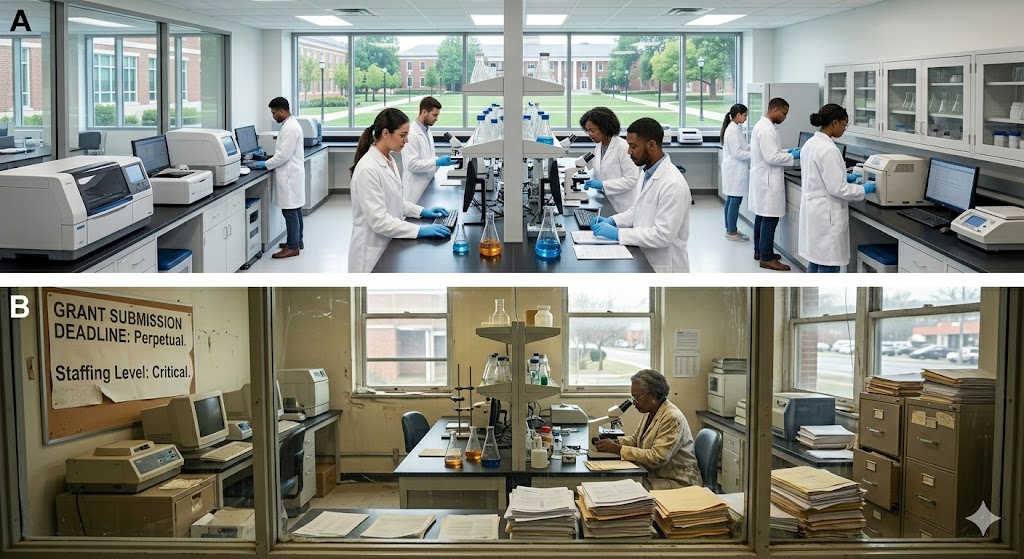
The external funding gap is real. But it exists alongside and is partly enabled by a pattern of institutional self-neglect that the HBCU sector has been reluctant to examine with full candor. Too many HBCU administrations, particularly those overseeing graduate programs, have treated research not as a strategic priority but as a grant-chasing appendage: a necessary line item for federal reporting, a credential for accreditation purposes, something the provost manages while the president attends to enrollment and donor relations. The result is an institutional culture in which research infrastructure is perpetually undercapitalized, grant offices are understaffed, and the graduate school — the engine of every serious research university — is treated as a placeholder for undergraduates (the bulk of most HBCU graduate schools are their own undergraduates) rather than the economic generator it is designed to be. This is not an abstraction. It shows up directly in the HERD rankings.

Howard University, the flagship of HBCU research activity, spent $101.8 million in FY 2024, ranking 178th nationally. North Carolina A&T, which has made the most deliberate institutional bet on STEM research, spent $81.8 million and ranked 192nd. Morehouse School of Medicine spent $68.7 million and ranked 212th. Florida A&M spent $68.7 million and ranked 213th. These are the top tier four institutions spending a combined $321 million out of the sector’s $929 million total. The other 55 institutions divided the remaining $608 million, an average of just $11 million each. And that average flatters the distribution considerably. Grambling State University, one of the most storied names in HBCU history, spent $486,000 in FY 2024, ranked 811th nationally, in the 13th percentile. Shaw University spent $452,000. Coppin State spent $304,000. Mississippi Valley State spent $161,000. Jarvis Christian College spent $150,000. These are institutions with graduate programs, loyal alumni networks, and deep community roots. The research numbers they are producing are not the result of limited potential. They are the result of limited prioritization. There is a meaningful distinction between the two, and the sector has been too comfortable blurring it.

The comparison with peer land-grant and regional public universities is instructive and uncomfortable. A regional public university with comparable enrollment to Morgan State or Tennessee State will typically have a dedicated technology transfer office, a research commercialization incubator, multiple endowed research chairs, and a graduate school that is explicitly linked to the institution’s strategic revenue plan. These are not luxuries at those institutions. They are understood as core infrastructure. At too many HBCUs, they remain aspirational bullet points in strategic plans that are never fully funded.

The institutional neglect of research infrastructure does not exist in a vacuum. It is reinforced and in many ways perpetuated by a philanthropic culture among HBCU alumni that directs dollars toward the visible and the sentimental rather than the strategic. Ask an HBCU alumni association what its fundraising priorities are, and the answers are predictable: scholarships, athletics, the marching band, campus beautification, the homecoming experience. These are not illegitimate priorities. Scholarships keep students enrolled. A great homecoming is an institutional identity statement. But they are not the investments that build research universities, and the gap between where HBCU alumni philanthropy flows and where HBCU research infrastructure requires investment is one of the most consequential misalignments in Black institutional life.

The problem is structural and informational. HBCU alumni, by and large, do not know what their institutions’ research portfolios look like. They do not know that their alma mater ranks in the 13th percentile of national research expenditures. They do not know that the graduate school is operating without a dedicated technology licensing office. They have never been presented with a case for why endowing a research chair in computational biology or environmental science would generate more long-term institutional value than another scholarship fund. No one has made that case to them, because the institutions themselves have not fully internalized it. PWI alumni are regularly presented with precisely this framing. Major research universities run sophisticated campaigns explaining to their donor bases that an endowed professorship creates a permanent research income stream, that a gift to a technology commercialization fund can generate licensing revenue that multiplies the original gift, that an investment in graduate fellowships attracts research talent that then generates grant overhead that funds the next generation of infrastructure. The cause-and-effect chain from donation to institutional research capacity to economic output is laid out explicitly. HBCU development offices have, with notable exceptions, not made this case. The result is that HBCU alumni who are themselves scientists, engineers, physicians, and entrepreneurs give generously to scholarships while their institutions’ research infrastructure atrophies. They are loyal donors funding an incomplete vision of what their institutions could be.

The competitive gap is widening not only in research expenditure but in the commercialization infrastructure that converts research into institutional wealth and nowhere is that gap more nakedly visible than in patent production. The National Academy of Inventors publishes an annual ranking of U.S. universities by utility patents granted. In 2024, the University of California system led the country with 540 patents. MIT produced 295. The University of Texas system produced 234. Purdue produced 213. Stanford produced 199. Not one HBCU appears anywhere in the top 100. Not Howard. Not NC A&T. Not Florida A&M. The list runs to 100 institutions and ends with universities holding 14 patents each. HBCUs could not place a single institution on it. This is not incidental. It is the downstream consequence of four and a half decades of abdication from the commercialization economy that the Bayh-Dole Act of 1980 made available to every research university in America. That legislation gave universities ownership of discoveries made with federal research funding — a structural gift that created the legal architecture for technology licensing offices, spinoff companies, and the university-based venture ecosystem that now anchors the innovation economies of entire regions. MIT’s technology licensing office has generated billions in cumulative revenue and been instrumental in creating hundreds of companies. Stanford’s equivalent has returned substantial royalty income to its operating budget and endowment for decades. The institutions that built aggressive commercialization infrastructure around Bayh-Dole are now compounding institutional wealth at a rate that has nothing to do with tuition receipts or annual federal appropriations. HBCUs have largely been bystanders to this transformation for forty-five years. Every year that an HBCU produces federally funded research without a pipeline for commercializing it is a year in which intellectual property that legally belongs to the institution is effectively abandoned. The patents are not filed. The licensing agreements are not negotiated. The spinoff companies are not formed. The wealth that research can generate, wealth that is independent of enrollment cycles, tuition sensitivity, and federal political winds is left on the table. When a major technology company funds a research center at MIT or Carnegie Mellon, it is making an investment in an ecosystem that has already demonstrated the capacity to convert that investment into commercially viable output. That ecosystem produced Google. It produced Genentech. It produced the foundational patents behind industries that did not exist a generation ago. The question for HBCUs is not how to be invited into that ecosystem. Invitation is not the goal, and dependence on the goodwill of institutions that have never prioritized Black wealth creation is not a strategy. The goal is to build a parallel ecosystem; one anchored in HBCU research infrastructure, capitalized through the African diaspora, and oriented toward producing the companies, the patents, and the intellectual property that generate Black institutional wealth on a generational time horizon. The African American community has spending power measured in the trillions. The African continent represents one of the fastest-growing concentrations of capital and technological ambition in the world. The Caribbean and broader diaspora hold resources, networks, and markets that no MIT spinoff has been designed to serve. An HBCU-anchored research commercialization ecosystem, built in genuine partnership with diaspora capital rather than in perpetual petition to federal appropriators, is the architecture through which an African American-owned Google becomes imaginable not as aspiration, but as institutional output. Stanford did not produce Google because it got lucky. It produced Google because it had spent decades building the research infrastructure, the technology transfer capacity, the graduate talent pipelines, and the investor relationships that made commercializable discovery an institutional inevitability rather than an accident. HBCUs have the community. They have the talent. They have, in the diaspora, a potential capital base that dwarfs what most research universities could claim at the moment they began building. What they have not yet built is the infrastructure that converts all of that latent capacity into compounding institutional power. That is the work. And it cannot begin until the sector decides that research is not an afterthought it is the foundation.

None of that ecosystem can be built, however, if the students arriving at HBCU research programs have spent their entire academic formation inside institutions that treated STEM as an afterthought. The research university does not begin at the graduate school. It begins at the pipeline that feeds it. The elite PWI research institutions that dominate the HERD rankings and the NAI patent list are not drawing their graduate talent from underfunded schools with overextended teachers and no competition culture. They are drawing from Phillips Exeter, Phillips Andover, and the constellation of elite preparatory institutions that have spent generations building exactly the kind of STEM competition infrastructure (doctoral-level coaches, state-of-the-art laboratories, national Olympiad pipelines) that produces the researchers who then generate the patents and the companies. The African American community once had more than 100 Black boarding schools. Four remain. The collapse of that infrastructure is not unrelated to the HERD data. It is part of the same story. Rebuilding a network of elite Black private day schools and boarding schools institutions explicitly designed as STEM pipelines into HBCUs and from HBCUs into the research economy is not a separate conversation from the one this article is having. It is the upstream chapter of it. An HBCU research ecosystem capable of producing commercially viable intellectual property requires a feeder system that has been preparing Black students for that level of scientific culture since before they arrive on campus. The Eight Schools Association does not produce Intel Science Fair winners by accident. Neither will HBCUs produce the next generation of research scientists, patent-holders, and technology entrepreneurs without building the institutional infrastructure that makes that outcome systematic rather than exceptional.

The deepest problem, however, is one that no federal grant program and no alumni campaign can solve on its own. It is a problem of institutional identity. Research at most HBCUs is understood as the work of a specific class of people: faculty with PhDs, graduate students, grant administrators. It is not understood as the work of the institution. This is a fundamentally impoverished conception of what a research university is, and it has real consequences for both the quantity and the quality of what gets produced. The most research-intensive universities in the world do not operate this way. At institutions where research is genuinely central to the mission, the orientation pervades the entire organization. The facilities management team understands that their work maintains the physical infrastructure on which research depends. Procurement staff understand that how they manage equipment acquisition and vendor relationships affects the cost-efficiency of the research enterprise. The administrative staff in grant offices understand themselves as investigators’ partners, not their compliance monitors. The groundskeepers and custodial staff who maintain the physical environment of laboratories and research spaces are part of an institution that takes seriously what happens inside those spaces. This is not sentimentality. It is operational culture. And it is the difference between institutions that treat research as a revenue center and those that treat it as a credential.

For HBCUs, the argument for this kind of whole-institution research identity is not merely operational. It is strategic and historical. The communities that HBCUs were built to serve have profound, unmet research needs: in environmental health, in medical outcomes, in economic development, in urban infrastructure, in food systems, in financial services. The proximity of HBCUs to those communities — geographic, cultural, institutional — is itself a competitive research advantage that no PWI can fully replicate. Community-engaged research, participatory research models, place-based longitudinal studies of Black American communities — these are areas in which HBCUs have natural authority. But capitalizing on that authority requires treating research as a whole-institution commitment, not a departmental function. It means building research literacy across every level of the institution. It means having honest conversations, from the boardroom to the grounds crew, about what research is, why it matters, and what the institution loses every year it is treated as secondary. Not because every employee will write a journal article, but because institutional culture is built through shared understanding of institutional purpose. When everyone connected to a campus understands that its long-term capacity to serve its community is tied to its research productivity, the institution begins to function differently. Budget priorities shift. Hiring decisions reflect research capacity. Alumni giving conversations expand beyond the sentimental to the strategic.

The institutions already gaining ground demonstrate the model. Morgan State’s growth from $13.6 million in 2015 to $55.5 million in 2024 — a 309% increase — did not come from waiting on Washington. It came from deciding that research was a strategic priority and building the administrative infrastructure to compete for it. Winston-Salem State’s 840% growth over the same period came from targeting federal health research dollars with institutional precision. Delaware State nearly tripled its portfolio. These trajectories prove the capacity exists.

There are also signs that the sector is beginning to grasp the coordination imperative. On April 29, 2026, fifteen HBCUs announced the formation of the Association of HBCU Research Institutions (AHRI), a national coalition explicitly designed to accelerate research capacity, increase the number of HBCUs achieving R1 Carnegie Classification, and expand collective policy influence. The founding membership includes Howard, the sector’s only R1 institution, alongside thirteen R2 institutions: Clark Atlanta, Delaware State, Florida A&M, Hampton, Jackson State, Morgan State, NC A&T, Prairie View A&M, South Carolina State, Southern University, Tennessee State, Texas Southern, and Virginia State. Collectively, AHRI’s members account for roughly half of all competitively awarded federal research funding among HBCUs. The coalition is co-located with the Association of American Universities and has secured a three-year, $1 million grant from Harvard’s Legacy of Slavery initiative, with Harvard’s Office of the Vice Provost for Research providing technical assistance. The formation of AHRI is the most substantive structural move the HBCU research sector has made in a generation, and it deserves to be recognized as such. But one million dollars over three years, measured against a sector-wide research gap of hundreds of millions annually and a patent economy in which HBCUs hold zero of the top 100 positions, is a foundation, not a solution. The significance of AHRI is not the capital it has raised. It is the architecture it represents — fifteen institutions deciding that isolation is no longer a viable strategy. If that architecture is built upon seriously, capitalized at the scale the HERD data demands, and extended to the 44 HBCU/PBI institutions not yet in the coalition, it becomes the organizational infrastructure through which the ecosystem this article has described can actually be constructed. If it becomes another announcement without a follow-through funding strategy, the HERD Survey will record the same story in 2034 that it has recorded every year since 2015.

But the formation of AHRI also demands a harder question that the coalition’s announcement did not address: how much genuine institutional autonomy do its member institutions actually have? Research strategy is a function of institutional governance. An institution that cannot independently set its research agenda, control its own board appointments, or protect its leadership from politically motivated interference cannot build the kind of sustained, multi-year research infrastructure the HERD data demands regardless of what coalition it joins. This is not a hypothetical concern. Prairie View A&M, one of AHRI’s founding members, operates within the Texas A&M University System, a governance structure in which the flagship institution’s interests, priorities, and resource allocation decisions do not always align with those of a historically Black land-grant whose research mission serves a fundamentally different community. The degree to which Prairie View can pursue an independent research commercialization strategy, build its own technology transfer infrastructure, or make unilateral decisions about patent filing and licensing within that system is a question the coalition’s formation does not resolve. Texas Southern, another AHRI founding member, has experienced more direct interference: its board has been subject to hostile gubernatorial appointments that resulted in the termination of institutional leadership in ways that the broader HBCU community recognized as reflecting political interests rather than institutional ones. Tennessee State has faced comparable dynamics, with the state’s Republican-controlled legislature effectively vacating its board and replacing it with gubernatorial appointees, a maneuver that places the strategic direction of a public HBCU in the hands of an administration with no particular stake in HBCU research excellence. An HBCU that cannot protect its own president, control its own board, or govern its own research agenda is not positioned to build a serious research enterprise regardless of its AHRI membership. The coalition is only as strategically coherent as the institutional autonomy of its members. That autonomy, for several of its founding institutions, is not guaranteed. It is contested.

The structural argument that the data ultimately forces is this: no external actor — no administration, no Congress, no philanthropic initiative operating at current scales — has demonstrated the will to close a gap this large. Replicating and scaling what the sector’s fastest-growing research institutions have done requires HBCU administrations to stop treating their research enterprises as afterthoughts, HBCU alumni to stop treating their philanthropy as sentiment, and HBCU communities to start treating institutional research capacity as what it actually is — a long-term economic and political asset that compounds in value every year it is invested in, and deteriorates every year it is not.

The HERD Survey is updated annually. And annually, the same story is told. The question is whether the institutions that story concerns have finally decided to write a different one.


Data sourced from the National Center for Science and Engineering Statistics, Higher Education R&D Survey (HERD), FY 2015–2024; and the National Academy of Inventors, 2024 Top 100 U.S. Universities Granted U.S. Utility Patents. All HERD expenditure figures are in thousands of current dollars.

Disclaimer: This article was assisted by ClaudeAI.

The DEI Distraction: Why Black Business Leaders Are Defending the Wrong Battlefield

It is simple. Our talent and capital is either empowering and enriching our institutional ecosystem – or it is doing that for someone else. We are begging Others’ to let our talent and capital make them richer and more powerful. – William A. Foster, IV

When Bloomberg Businessweek convened a roundtable of prominent Black business executives in late March 2026 to discuss the Trump administration’s sweeping rollback of diversity, equity, and inclusion initiatives, the gathering carried an unmistakable weight. The participants — Ursula Burns of Integrum, Lisa Wardell of the American Express board, Jacob Walthour Jr. of Blueprint Capital Advisors, Nicole Reboe of Rich Talent Group, and Chris Williams of Siebert Williams Shank represent some of the most accomplished figures in American corporate life. Their concerns are real. Their frustrations are earned. And they are, with the greatest respect, focused on exactly the wrong problem.

The DEI debate has consumed enormous intellectual and political energy among Black business leadership. Executives like Burns have emphasized that DEI efforts historically helped address systemic barriers rather than provide unfair advantages. This is correct as far as it goes. But defending the legitimacy of DEI however righteous the argument is fundamentally an argument about access to other people’s institutions. It is a debate about whether African American talent will be permitted to generate wealth for corporate structures that it does not own, govern, or ultimately benefit from in proportion to its contribution. Winning that argument secures a seat at a table built by someone else, financed by someone else, and passed on to someone else’s heirs.

The more consequential question, one that the DEI debate reliably obscures is this: what is the strategic value of Black business ownership as the foundation of an autonomous African American institutional ecosystem, and why has that ecosystem remained so structurally underdeveloped compared to the scale of Black talent and labor flowing through the broader American economy?

The case against centering the DEI debate as the primary lens for Black economic advancement is, at its core, an argument about capital flows. Every dollar of Black labor and talent that enters a corporation it does not own produces returns that are retained, reinvested, and compounded within that corporation’s ownership structure. The wages extracted represent a fraction of the value created. This is not a critique unique to the experience of African Americans, it is the fundamental logic of capitalism. The distinction, however, is that other ethnic and national communities have historically used their productive capacity to capitalize their own institutional ecosystems: banks, insurance companies, real estate holding entities, research universities, and media operations that recirculate wealth within the community rather than exporting it.

Between 2017 and 2022, Black-owned employer businesses grew by nearly 57 percent, adding more than 70,000 new firms, injecting $212 billion into the economy and paying over $61 billion in salaries. That is not a trivial contribution. But its structural limitations are equally stark. Black Americans make up 14 percent of the U.S. population but own only 3.3 percent of businesses. More revealing still: if Black business ownership continues to grow at its current rate of 4.72 percent annually, it will take 256 years to reach parity with the share of Black people in America, a timeline that leaves racial wealth gaps entrenched across generations. No DEI program, however well-designed or vigorously defended, addresses that structural gap. DEI operates within the existing distribution of institutional ownership. It does not alter it. A Black executive ascending to the C-suite of a Fortune 500 company is a personal achievement of consequence, but it does not transfer a dollar of equity to the African American institutional ecosystem. The corporation retains its ownership structure, its compounding endowment, and its ability to extend opportunity to subsequent generations on its own terms.

This is not an argument that employment in major corporations is without value. It is an argument about strategic priority and institutional logic. The Bloomberg roundtable reflects the perspective of individuals who have navigated the highest levels of American corporate life with exceptional skill. But the very fact that their primary public posture is a defense of DEI — a program designed to manage the terms of Black participation in institutions owned by others — illustrates how thoroughly that framework has captured the strategic imagination of Black business leadership. White workers overall still hold 71 percent of executive jobs, 61 percent of manager positions, and 54 percent of professional roles. DEI, at its most effective, redistributed a fraction of corporate leadership positions without altering the underlying structure of institutional ownership. The wealth generated by those institutions through equity appreciation, retained earnings, and compounding investment portfolios continued to flow overwhelmingly to the same ownership class it always has.

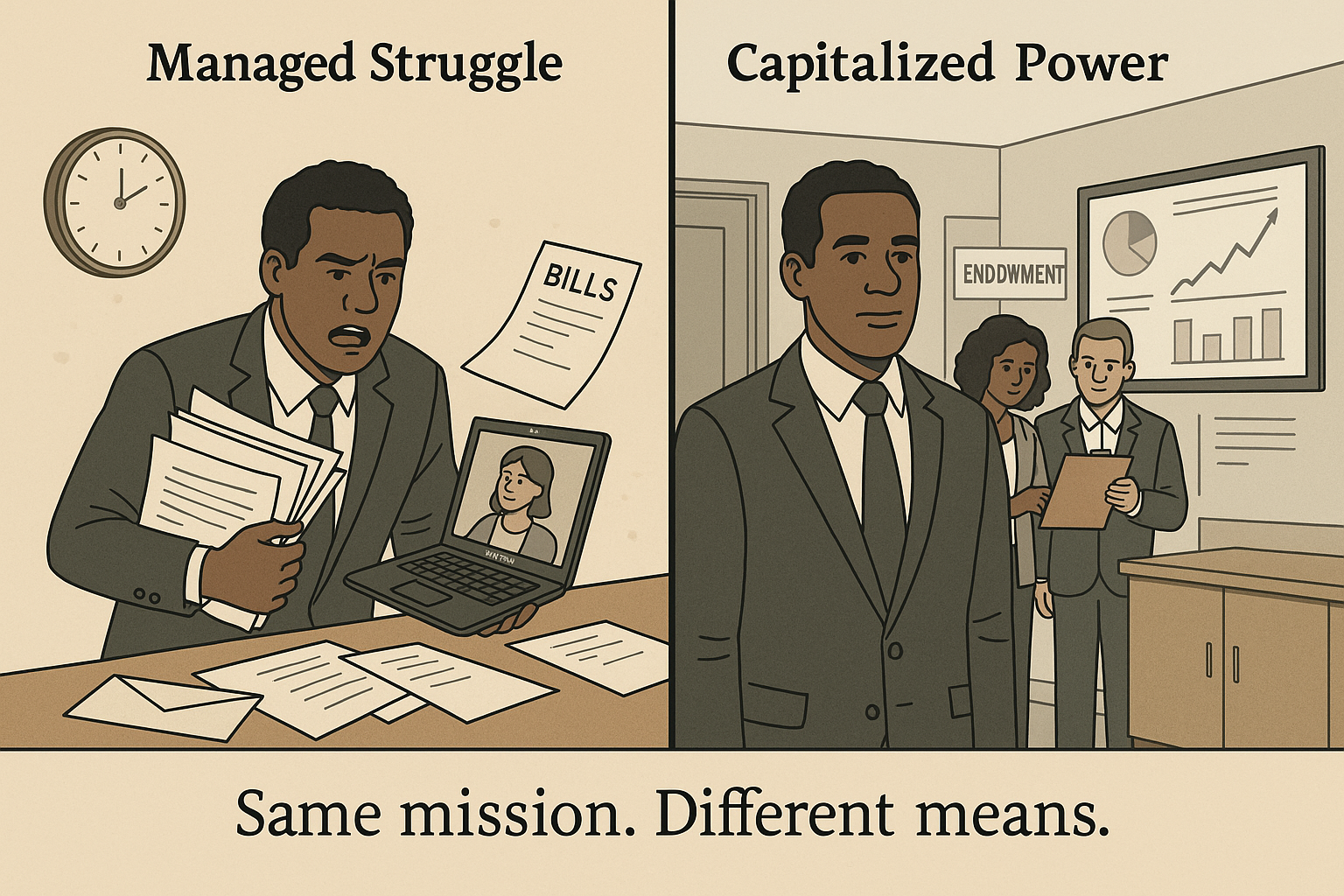
The parallel structure that could generate equivalent wealth retention within the African American community requires not better access to existing institutions but the construction and capitalization of independent ones. HBCUs represent the most significant existing node in that potential ecosystem. They are anchor institutions with land assets, research capacity, and the ability to concentrate and retain Black talent. But they remain chronically undercapitalized relative to their peer institutions, in large part because the most financially productive graduates of HBCUs and of Black communities broadly are systematically routed into corporations and financial institutions that extract rather than recirculate their productive capacity.

Black households have, on average, 77 percent less wealth than white households — roughly $958,000 less per household, representing approximately 24 cents for every dollar of white family wealth. That gap is not primarily explained by differences in income or educational attainment. It is explained by differences in asset ownership, intergenerational wealth transfer, and institutional investment. The DEI framework, even at its most ambitious, addresses income. It does not address assets. If the share of Black employer businesses reached parity with the share of the Black population, cities across the country could see as many as 757,000 new businesses, 6.3 million more jobs, and an additional $824 billion in revenue circulating in local economies. That figure represents the economic magnitude of the ownership gap and none of it is captured by diversity metrics in corporate hiring. The structural barriers to closing that gap are not primarily political. They are financial. On average, 35 percent of white business owners received all the financing they applied for, compared to 16 percent of Black business owners. Black entrepreneurs are nearly three times more likely than white entrepreneurs to have business growth and profitability negatively impacted by a lack of financial capital, and 70.6 percent rely on personal and family savings for financing which means that lower household wealth creates a compounding disadvantage that no corporate diversity initiative is designed to resolve. This is the architecture of the problem: insufficient institutional wealth produces insufficient capital formation, which constrains business ownership, which perpetuates insufficient institutional wealth. DEI does not break that cycle because it operates entirely outside of it.

The African American institutional ecosystem: HBCUs and their endowments, African American owned banks and credit unions, Black-owned insurance and real estate entities, and community development financial institutions represents the structural alternative to the DEI framework. It is not a consolation prize for those excluded from mainstream corporate life. It is the only mechanism capable of generating the compounding institutional wealth that produces genuine economic sovereignty. HBCUs enroll approximately 10 percent of Black college students while producing a disproportionate share of Black professionals in STEM, law, medicine, and business. They hold land assets in some of the most economically dynamic metros in the South. They maintain alumni networks that, if systematically directed toward institutional investment rather than individual career advancement, could generate endowment growth and enterprise development at a scale currently untapped. The strategic argument is straightforward: every Black student who graduates from an HBCU and subsequently directs their career, capital, and philanthropic energy toward institutions within the aforementioned African American ecosystem compounds the institutional wealth available to the next generation. Every Black student who takes that same talent into a corporation it does not own, however successfully, contributes to the wealth of an institution that will not reciprocate at the ecosystem level.

This is not an argument for economic separatism. It is an argument for institutional density, the same logic that has guided the development of Jewish philanthropic networks, Korean rotating credit associations, and the university endowment strategies of the Ivy League. Strong communities maintain reinforcing networks of institutions that recirculate capital and concentrate talent. The DEI framework asks Black Americans to enrich other communities’ institutional networks on the condition of fairer treatment. The ownership framework asks Black Americans to build their own.

None of this is to diminish the real harm caused by the current administration’s DEI rollbacks. Black-owned businesses that relied on federal contracting set-asides have seen immediate, concrete losses with some small business owners reporting the loss of $15,000 to $20,000 per month due to reduced contract flows. The SBA admitted only 65 companies to its 8(a) business development program in 2025, compared with more than 2,000 admissions over the previous four years. These are real economic injuries that warrant legal and political challenge. But the defensive posture of protecting DEI within institutions that Black America does not control is insufficient as a long-term economic strategy. The Bloomberg roundtable produced eloquent testimony about the frustrations of Black executives navigating a hostile political environment. It produced very little discussion of what autonomous Black institutional infrastructure should look like, or how the talent assembled in that room of capital allocators, board directors, investment bankers, and talent executives might direct its resources toward building it.

The transition from a DEI-centered to an ownership-centered strategic framework requires institutional coordination that does not yet exist at scale. It requires HBCU endowments to function as patient capital for Black enterprise ecosystems rather than passive investment portfolios. It requires Black-owned financial institutions to be capitalized and connected to the deal flow generated by Black corporate executives. It requires alumni networks to function as economic infrastructure rather than social affinity groups. And it requires Black business leadership to measure its success not by representation metrics within institutions it does not own, but by the growth of institutional assets within the ecosystem it does. The DEI debate is real and the rollback is damaging. But the strategic imagination of Black business leadership will remain constrained so long as its primary horizon is defined by the terms of inclusion offered by others. The more consequential work — slower, less visible, and politically unrewarded — is the construction of institutions powerful enough that the terms of inclusion become irrelevant. That is the work HBCUs and the broader African American institutional ecosystem exist to support. It is the work that this moment demands.

When Big Gifts Cast Long Shadows: Why HBCUs Blessed by MacKenzie Scott Must Invest in the HBCUs and African American Institutions Still Left Behind

“Power grows when it circulates. If only one HBCU rises, none of us truly rise.”

MacKenzie Scott’s philanthropy has reshaped the HBCU landscape in ways that few could have imagined a decade ago. When her unrestricted gifts began landing across the sector, they offered something rare in Black institutional life: immediate liquidity, strategic freedom, and the assumption that HBCUs knew best how to use the capital given to them. Institutions like Prairie View A&M, Tuskegee, Winston-Salem State, Spelman, Morgan State, and others seized this moment to strengthen balance sheets, expand programs, retire debt, and set in motion long-term visions often delayed by years of underfunding.

But while headlines celebrated these historic gifts, another truth ran quietly beneath the surface many of the smallest, oldest, and most financially fragile HBCUs received nothing. Texas College, Voorhees, Morris, short-funded religiously affiliated colleges, and two-year HBCUs were notably absent from the list. Their exclusion was not due to a lack of mission, quality, or need. It was due to visibility, a structural inequality baked into the philanthropic landscape.

Large and mid-sized HBCUs possess communications offices, audited financial statements, national reputations, and alumni networks large enough to keep their names in circulation. Small HBCUs often have one person doing the work of an entire department, no national brand presence, and no full-time staff dedicated to donor engagement. Philanthropy at scale tends to flow to institutions already “discoverable,” which means the colleges that need the money most are often the least visible to donors like Scott. This is not a critique of her giving; she has done more for HBCUs than any private donor in a generation. Where the African American donors of consequence is a another article for another day. It is an indictment of a philanthropic system that confuses visibility with worthiness.

Unrestricted capital, however, changes power dynamics. When an HBCU receives $20 million, $40 million, or $50 million with no strings attached, it is receiving not just money but institutional autonomy. It is gaining the ability to build, to plan, to hire, to innovate, and to settle the long-deferred obligations that drain mission-driven organizations. This autonomy carries with it an important question: what responsibility does an HBCU have to the larger ecosystem when it receives this kind of power?

HBCUs often describe themselves as part of a shared lineage, a collective built from necessity and sustained by interdependence. If that is true, then institutions that receive transformative gifts have a responsibility to circulate a portion of that capital to the HBCUs that remain structurally invisible. This is not a matter of charity; it is a matter of ecosystem logic. A rising tide only lifts all boats if every institution has a boat capable of floating.

Even a small redistribution—2 to 5 percent of unrestricted gifts—would represent a meaningful shift. A $50 million gift becomes a $1–2.5 million contribution to a collective pool. A $20 million gift becomes $400,000–$1 million. A $5 million gift becomes $100,000–$250,000. Spread across the dozens of HBCUs that received Scott’s funds, such a strategy could generate $40–60 million in shared capital almost immediately. For a small HBCU with a $12 million budget, even a $500,000 infusion can stabilize operations, hire essential staff, or stave off accreditation risks. And for two-year HBCUs—critical institutions that often serve first-generation and working-class students—$250,000 can transform workforce programs or upgrade classroom technology.

When unrestricted money flows into the ecosystem, it should not be seen as belonging solely to the institution receiving it. It should be viewed as a rare chance to strengthen the entire system that sustains Black educational capacity. That means revisiting the historic practices of resource sharing that once defined HBCUs. There was a time when faculty were exchanged, when larger institutions lent administrators to smaller ones, and when collective survival was at the center of institutional strategy. Financial scarcity eroded much of that ethos over time; unrestricted capital can revive it.

The need for this kind of intra-HBCU investment becomes even more urgent when we consider how philanthropy shapes public perception. When a small HBCU faces financial distress, politicians and media often use its weakness as a reason to question the entire sector. But when a small HBCU strengthens, expands, and stabilizes, it lifts the credibility of the collective. The fate of one HBCU inevitably influences the political and philanthropic fortunes of the others. Strengthening the weakest institutions is not optional it is a strategic imperative for the strongest ones.

Shared capital also opens the door to new structures that benefit the entire ecosystem. Larger HBCUs could help create a visibility accelerator that provides grant-writing support, marketing expertise, budgeting assistance, and donor engagement tools for smaller institutions. They could establish a joint endowment fund where smaller HBCUs gain access to investment managers they could never otherwise afford. They could create emergency liquidity pools to help institutions weather short-term cash shortages that often cascade into long-term crises. They could co-sponsor research initiatives, faculty exchanges, and new academic programs at institutions that have the vision but lack the staff or funding to execute.

These are not theoretical ideas; they are practices used by well-resourced universities and nonprofit networks across the country. Major universities routinely fund pipeline schools, partner institutions, and community colleges. Corporations build up their suppliers. Regional governments pool funding to strengthen smaller municipalities. In almost every sector except the HBCU sector, power is used to build the ecosystem, not just the institution.

One of the most overlooked consequences of Scott’s gifts is the cultural message they send: large HBCUs are now in a position to move beyond survival mode and into builder mode. They can start thinking not just about their own campuses but about the health of the entire HBCU network. They have the resources to help smaller institutions become discoverable to future donors, to strengthen donor reporting infrastructure, to modernize back offices, and to raise their visibility in national conversations.

Redistribution is not about guilt. It is not about moral obligation. It is about strategic logic. Large HBCUs cannot thrive in a sector where small HBCUs collapse. For the ecosystem to have political leverage, credibility in national policy debates, and a future pipeline of Black scholars and professionals, the entire network must be strong. When an HBCU closes or falters, opponents of Black institutional development use that failure as proof of irrelevance. When an HBCU grows even a small one it becomes a success story that benefits the whole landscape.

The Scott gifts represent a once-in-a-generation financial turning point, but they are only a starting point. If HBCUs treat them as isolated blessings, the impact will be uneven and short-lived. If they treat them as seed capital for an ecosystem-wide transformation, the impact could reshape Black educational power for decades. Large HBCUs must decide whether they will be institutions that simply grow or institutions that help the entire sector evolve.

Smaller HBCUs cannot increase visibility alone. They cannot hire full development teams or produce 50-page donor reports without capital. They cannot expand new programs without bridge funding. They cannot modernize their infrastructure without partners. But the HBCUs that did receive unrestricted capital can change the landscape for them and by doing so, they strengthen the entire ecosystem.

This moment is not just about money. It is about whether HBCUs will use new wealth to reproduce old hierarchies or to build new pathways for collective power. In a philanthropic world that rewards visibility, the institutions that already stand in the light now have the responsibility and the means to illuminate the rest.

The measure of true power within the HBCU ecosystem is not what one institution accumulates. It is what the ecosystem can create together what none of its institutions could build alone. The future of HBCU philanthropy will depend on whether those blessed with unrestricted gifts choose to expand their own shadows or choose instead to cast light.

Disclaimer: This article was assisted by ChatGPT.

The “Real World” Myth: How Sending African American Children to PWIs Undermines African American Institutional Power

“When you control a man’s thinking you do not have to worry about his actions. He will find his ‘proper place’ and will stay in it. You do not need to send him to the back door. He will go without being told; in fact, if there is no back door, he will cut one for his special benefit.”
Carter G. Woodson, The Mis-Education of the Negro

For generations, African American families have been told a myth that has become so pervasive it often passes without challenge: the idea that sending their children to predominantly white institutions (PWIs) of higher education better prepares them for the “real world.” On its surface, the reasoning sounds practical. Parents believe that if their child learns how to navigate white spaces, acquires the habits and codes of those spaces, and builds networks with white peers, they will be more successful in corporate America and society at large. It is a calculation born of centuries of survival in a society structured against African Americans.

But this calculation, when examined deeply, does not hold up to scrutiny. Instead of preparing African American students for the “real world,” the widespread preference for PWIs undermines the institutional power of African Americans and deprives HBCUs of the very human and financial capital they need to thrive.

The “real world” itself is not a fixed entity. It is not a monolith that African Americans must prepare to join on white terms. The real world is what a group of people make it. White Americans have defined their world and fortified it through their institutions such as universities, banks, hospitals, corporations, and foundations. Asian Americans, Jewish Americans, and other groups have done similarly, leveraging their educational and economic institutions to shape their reality. Yet, African America, too often, has internalized the belief that its institutions are insufficient, opting instead to send its brightest students and most valuable tuition dollars into the coffers of PWIs.

This is not simply a matter of personal choice. It is a collective decision with collective consequences. The more African American families buy into the “real world” myth, the weaker HBCUs become, and the less capable African America is of shaping its own real world.

The PWI Path and Its Assumptions

African American parents who choose PWIs for their children often do so with good intentions. They want their children to access elite resources, prestigious networks, and the perceived stamp of approval that comes with a degree from a PWI. They assume that because the U.S. labor market is majority white, exposure to that environment early on is critical to future success.

But these assumptions reveal several contradictions. White students do not consider attending an HBCU to balance their cultural experiences. They do not think, “I’ve had too much whiteness; I need a more balanced education.” Instead, they progress from a PWI undergraduate degree to a PWI graduate school, then into PWI-dominated corporate and institutional spaces. Their cultural immersion is never questioned, because their institutions define normalcy.

Meanwhile, African Americans alone have been conditioned to believe that too much African American immersion is dangerous, insular, or unrepresentative of the “real world.” The irony is sharp: a student may attend an HBCU, which is itself a diverse universe of African American culture, class, geography, and ideology, and still be told they have not had enough “exposure.” Yet a white student who grows up in an all-white town, attends an all-white PWI, and joins all-white firms is never told they lack “diversity of experience.”

This asymmetry is not accidental. It is a reflection of who controls institutional narratives in America. African Americans who absorb the “real world” myth are effectively outsourcing their children’s futures to white institutions, all while their own institutions wither from neglect.

The Diversity Within HBCUs

Another overlooked dimension of this myth is the assumption that HBCUs are homogeneous, insular spaces. This could not be further from the truth. The African American experience itself is vast. It includes children of Caribbean immigrants, descendants of enslaved Africans, first-generation college students from rural Mississippi, affluent families from Washington, D.C., African students from Nigeria and Ghana, Afro-Latinx students from Puerto Rico and the Dominican Republic, and more.

To attend an HBCU is not to encounter “less” diversity; it is to engage with the broad spectrum of the African Diaspora in concentrated form. These institutions are living laboratories of cultural exchange, intellectual competition, and class interaction.

By contrast, a PWI often provides African American students with only a sliver of diversity: they are frequently tokenized, expected to represent their entire race, and shuffled into diversity programming that centers their marginalization. Their peers may never learn about African American life beyond stereotypes, because the institution itself was never designed to illuminate African American experiences.

Thus, the African American student at an HBCU receives not just an education, but an immersion in African American pluralism is a preparation for engaging the world on African American terms. The PWI student, meanwhile, often internalizes the idea that their presence is conditional, exceptional, or peripheral.

Institutional Power and the Capital Flight from HBCUs

Every African American student who chooses a PWI over an HBCU represents more than an individual choice. It is the redirection of tuition dollars, alumni loyalty, and future endowment contributions away from African American institutions.

Imagine if even half of the African American students currently enrolled at PWIs redirected themselves to HBCUs. The financial impact would be transformative. Endowments would grow, faculty recruitment would expand, research capacity would increase, and the prestige of HBCUs would rise proportionally. These gains would compound over decades, creating a feedback loop of institutional strength.

Instead, what we have is a leakage of capital and talent into institutions that do not prioritize African American empowerment. PWIs benefit from African American enrollment statistics, which they parade as evidence of diversity, while offering little in terms of institutional reciprocity. They gain the reputational boost, while HBCUs lose the enrollment and financial stability they desperately need.

The result is predictable: HBCUs remain underfunded, under-endowed, and under-appreciated, not because they lack quality, but because too many African American families believe the myth that their children will be better off elsewhere.

The Real World Is What We Make It

The central flaw in the “real world” argument is the assumption that African Americans must adapt to a world built by others rather than shape their own. The real world is not an objective standard but it is the result of group will, institutional building, and cultural reinforcement.

White Americans shaped their “real world” through the sustained investment in Harvard, Yale, Princeton, and thousands of other institutions that center their history, culture, and power. Jewish Americans created their “real world” through a network of universities, foundations, and cultural centers that prioritize their collective survival. Asian Americans are building their own “real world” through business networks, educational pipelines, and capital flows that stretch across the Pacific.

If African Americans accept the premise that their children must be trained in white institutions to succeed, they have already conceded that they cannot or will not shape their own real world. They have abandoned the project of institutional power in favor of individual adaptation. This is not preparation; it is surrender.

Psychological Implications: Internalizing Inferiority

Beyond the economic impact, the myth has deep psychological consequences. African American students raised on the belief that HBCUs are not “the real world” internalize a subtle but corrosive idea: that their own culture is insufficient. They may carry degrees from elite PWIs, but the cost is often an alienation from African American institutional life.

The psychological message is clear—white spaces are the pinnacle of preparation, while African American spaces are something to escape. This creates a generational feedback loop where each successive cohort of African American parents pushes harder for PWIs, believing they are giving their children an advantage, while in reality they are weakening the very institutions that could make African America self-sufficient.

It also distorts identity. An African American child who grows up believing they must leave their community to succeed will often view their success as individual rather than collective. They may become comfortable being the “only one in the room,” rather than building the rooms where African Americans are not tokens but owners.

The Comparative Case: No Other Group Thinks This Way

No other racial or ethnic group in America sends its children away from its own institutions to gain “real world” experience. White families do not think Harvard students lack preparation because they have spent too much time around other white students. Jewish families do not believe their children need to avoid Jewish institutions to be competitive. Chinese Americans do not view Chinese language schools or cultural institutions as a liability to their children’s preparation.

It is only African Americans who accept this self-defeating logic. This uniqueness underscores the lingering effects of centuries of racial conditioning. From slavery to Jim Crow to modern structural racism, African Americans have been taught that their own institutions are inferior. The “real world” myth is simply the modernized version of this lesson.

By contrast, when other groups send their children to institutions, they do so with the understanding that these institutions will strengthen their cultural identity while equipping them to engage broader society on their own terms. For African Americans, the task must be the same: build HBCUs into the kind of institutions that define, rather than defer to, the real world.

Rethinking the “Preparation” Narrative

If the goal of higher education is preparation, then the question is: preparation for what? For African Americans, preparation should not simply mean being employable in someone else’s institution. It should mean being capable of building, leading, and sustaining African American institutions.

An HBCU graduate is not less prepared for corporate America than a PWI graduate; in many cases, they are more resilient, more culturally grounded, and more aware of systemic barriers. The difference is that the HBCU graduate, if supported by their community, is positioned to reinvest in African American institutional life.

The narrative that PWIs uniquely prepare African Americans for the “real world” ignores the fact that many HBCU alumni have gone on to excel in every imaginable field from politics, science, business, culture while also strengthening the institutions of African America. The preparation HBCUs offer is not narrow; it is holistic, rooted in both academic rigor and cultural affirmation.

A Call to Reclaim Institutional Power

For African Americans to continue believing in the “real world” myth is to ensure that the next century looks much like the last: individual success stories amid collective institutional weakness. To break this cycle, African American families must reorient their thinking.

Sending a child to an HBCU is not a limitation; it is an investment in collective power. It is a statement that African Americans will not only participate in the real world but will define it. It is a recognition that every tuition dollar, every alumni donation, and every student enrollment strengthens the institutional backbone of African America.

The time has come to retire the myth once and for all. The real world is not something African Americans must be prepared for by others. It is something African Americans must build for themselves, through the strengthening of HBCUs and the rejection of narratives that undermine them.

Until that shift happens, African America will remain trapped in a paradox: sending its children to PWIs in search of preparation, only to find that the institutions that could truly empower them are being starved of the very resources they need.

The “real world” is not out there waiting. It is in our hands to create.

 Disclaimer: This article was assisted by ChatGPT.