
I would rather earn 1% off a 100 people’s efforts than 100% of my own efforts. – John D. Rockefeller

The contrast is stark and telling. On one screen, a promotional poster for a docuseries about Black wealth features accomplished individuals—entrepreneurs, entertainers, and personal finance influencers. On another, the Bloomberg Invest conference lineup showcases representatives from Goldman Sachs, BlackRock, sovereign wealth funds, and central banks. This visual juxtaposition reveals a fundamental problem in how African American wealth building is conceived, discussed, and ultimately constrained in America: we’re having an individual conversation while everyone else is having an institutional one.
When African American wealth is discussed in mainstream media and even within our own communities, the focus overwhelmingly centers on individual achievement and personal financial literacy. The narrative typically revolves around budgeting tips, entrepreneurship stories, side hustles, and the importance of “building your own.” While these elements certainly matter, they represent only a fraction of how wealth is actually created, preserved, and transferred across generations in America.
Compare this to how other communities approach wealth building. Bloomberg conferences don’t feature panels on how to save money or start a small business. Instead, they convene institutional investors managing trillions of dollars, central bankers who set monetary policy, executives from asset management firms overseeing pension funds, and sovereign wealth fund managers representing entire nations’ financial interests. The conversation isn’t about individual wealth accumulation it’s about institutional capital allocation, market infrastructure, regulatory frameworks, and systemic wealth generation. This isn’t merely a difference in scale; it’s a difference in kind. Individual wealth building, no matter how successful, operates within a system. Institutional wealth building shapes that system.
The economic implications of this gap are staggering. Consider the arithmetic presented in the text message exchange: if approximately 95% of African American debt is held by non-Black institutions, and that debt carries an average interest rate of 8%, African American households collectively transfer roughly $120 billion annually in interest payments to institutions that have no vested interest in Black wealth creation or community reinvestment. This figure isn’t just large it’s transformative. To put it in perspective, $120 billion annually exceeds the GDP of many nations. That likely at least 10% of African America’s $2.1 trillion in buying power is leaving the community for interest before a single bill is paid or single investment can be made. It represents capital that flows out of Black communities without generating corresponding wealth-building infrastructure within those communities. This is the cost of institutional absence.
When communities lack their own lending institutions, investment banks, insurance companies, and asset management firms, they become permanent capital exporters. Every mortgage payment, every car loan, every credit card balance becomes a wealth transfer rather than a wealth circulation mechanism. Other communities long ago recognized this dynamic and built institutional frameworks to capture, recycle, and multiply capital within their own ecosystems.
Institutional wealth building operates on fundamentally different principles than individual wealth accumulation. It involves capital pooling and deployment, where institutions aggregate capital from thousands or millions of sources and deploy it strategically for returns that benefit the collective. Pension funds, for instance, don’t teach their beneficiaries how to pick stocks they hire professional managers to generate returns that secure retirements for entire workforces. Large institutions don’t just participate in markets; they shape them. They influence interest rates, capital flows, regulatory frameworks, and investment trends. When BlackRock or Vanguard shifts their investment thesis, entire sectors respond.
Institutions are designed to outlive individuals. They create mechanisms for wealth transfer that transcend personal mortality, ensuring that capital accumulates across generations rather than dispersing with each estate. By pooling resources, institutions can absorb risks that would devastate individuals, enabling them to pursue longer-term, higher-return strategies that individuals cannot access. Perhaps most importantly, institutional capital commands political attention and shapes policy in ways that individual wealth, however substantial, simply cannot.
The current institutional deficit in African American communities isn’t accidental it’s the product of deliberate historical forces. During the early 20th century, Black communities did build impressive institutional infrastructure. Black Wall Street in Tulsa, thriving business districts in Rosewood, Florida, and numerous Black-owned banks, insurance companies, and investment firms represented genuine institutional wealth building. These were systematically destroyed sometimes literally, as in the Tulsa Race Massacre of 1921, and sometimes through discriminatory policies, denial of business licenses, exclusion from capital markets, and targeted regulatory enforcement. The institutions that survived faced existential challenges during desegregation, as the most affluent Black customers gained access to white institutions that had previously excluded them. The result is that African Americans today face a unique challenge: rebuilding institutional infrastructure in a mature capitalist economy where the institutional landscape is already dominated by established players with centuries of accumulated capital, networks, and political influence.
Given this context, why does African American wealth discourse remain so focused on individual action? Several factors contribute to this pattern. American culture celebrates individual achievement and self-made success. This narrative is particularly seductive for African Americans seeking to overcome discrimination through personal excellence. However, it obscures the reality that most substantial wealth in America is institutional, not individual. Teaching people to budget or start a business is concrete and actionable. Discussing the need for African American-owned asset management firms managing hundreds of billions in capital is abstract and seemingly impossible for most people to influence. Individual success stories make compelling content. Institutional finance is complex, technical, and doesn’t generate the emotional engagement that drives social media metrics and television ratings.
Institutional finance is deliberately exclusionary, with high barriers to entry, specialized knowledge requirements, and established networks that are difficult to penetrate. This makes it harder for diverse voices to participate in and shape these conversations. Moreover, focusing on individual responsibility can deflect attention from systemic inequalities and the need for institutional reform. If wealth gaps are framed as the result of individual choices rather than institutional access, the solution becomes personal change rather than structural change.
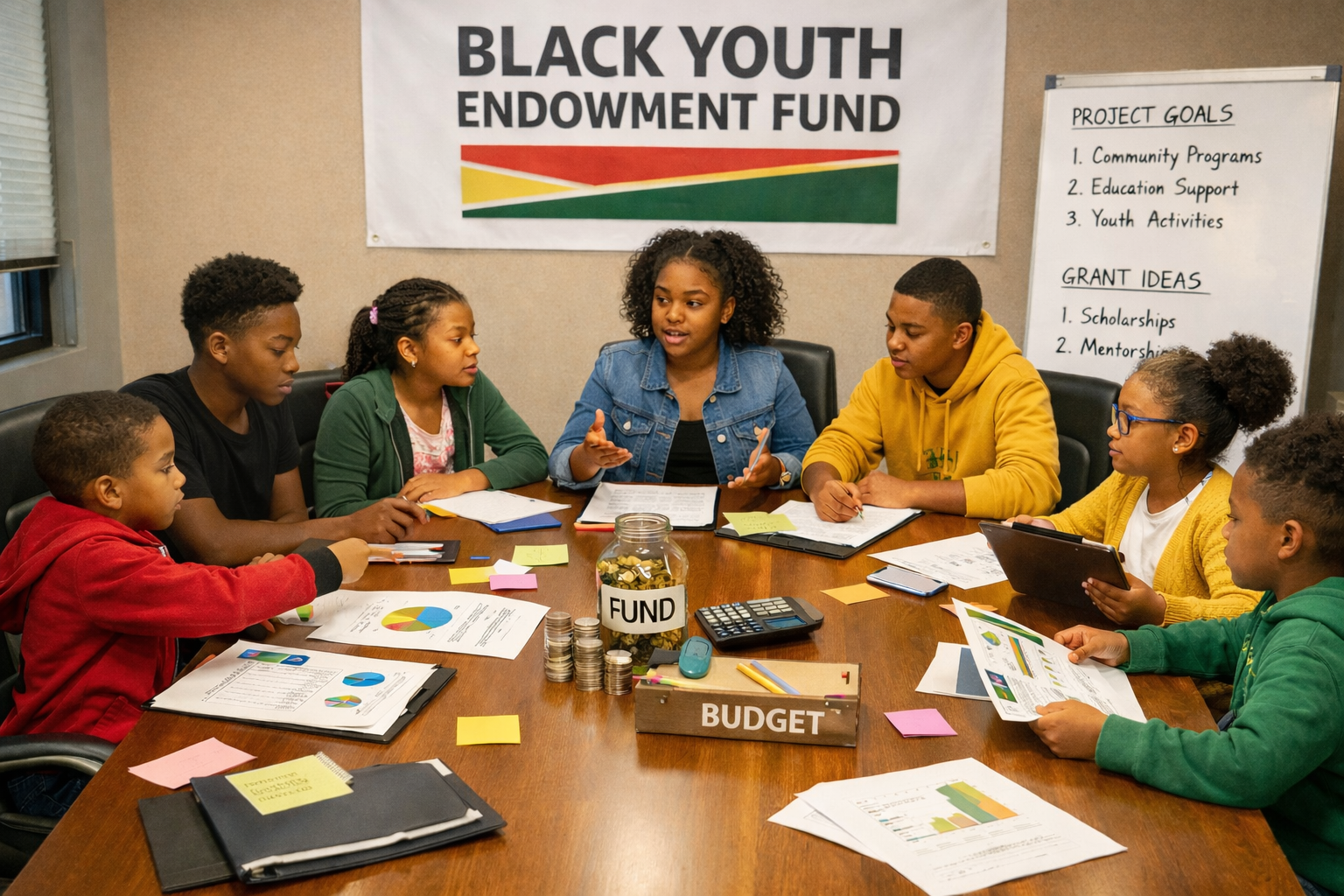
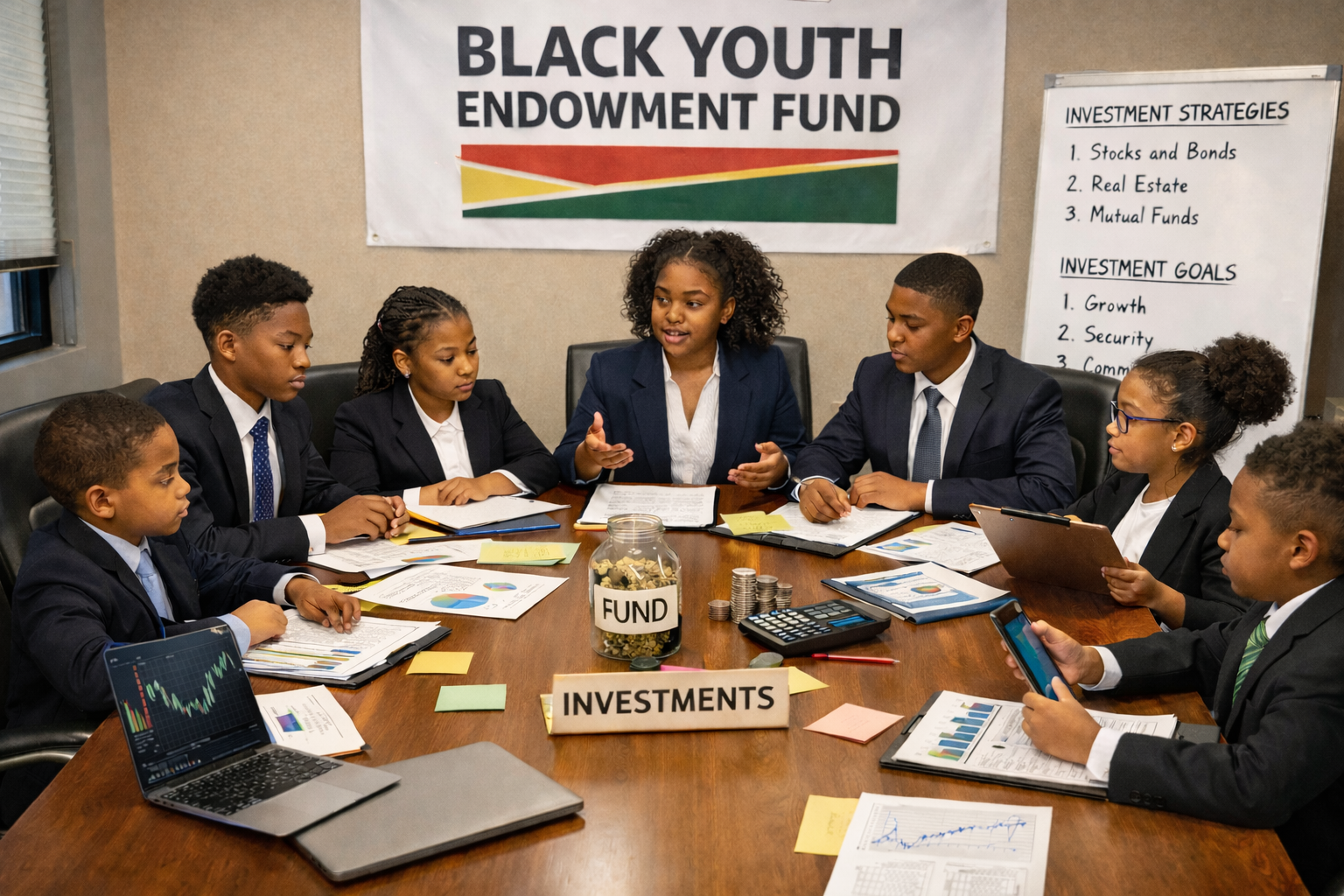
The problem is that individual wealth building, while important, simply cannot close the wealth gap or address the capital hemorrhage happening through institutional absence. You cannot budget your way to institutional power. You cannot side-hustle your way to sovereign wealth fund influence. Closing the institutional gap would require coordinated action across multiple domains. This means growing and creating Black-owned banks, credit unions, insurance companies, asset management firms, and investment banks capable of competing at scale—institutions managing not millions but billions and eventually trillions in assets.
It requires ensuring that the substantial capital in public pension funds, university endowments, and foundation assets that serve African American communities is managed with intentionality about wealth creation within those communities. Building investment funds that can provide growth capital to Black-owned businesses beyond the startup phase, enabling them to scale to institutional size, becomes essential. Creating institutions that can acquire, develop, and manage commercial and residential real estate at scale, capturing appreciation and rental income for community benefit, must be prioritized. Developing institutional voices that can effectively advocate for policies that support Black wealth building, from community reinvestment requirements to procurement set-asides to tax structures that favor long-term capital formation, is critical.
This isn’t a call to abandon individual financial responsibility or entrepreneurship both remain important. Rather, it’s a recognition that these individual efforts need institutional infrastructure to support them, multiply their effects, and prevent the constant capital drain that currently undermines them. The Bloomberg conference model reveals what serious wealth building conversations look like among communities that already possess institutional power. The participants aren’t there to learn how to balance their personal checking accounts they’re there to discuss macroeconomic trends, regulatory changes, emerging markets, and trillion-dollar capital allocation decisions.
African American communities need forums that operate at the same level of institutional sophistication. This means convening the leaders of Black-owned financial institutions, pension fund managers, university endowment chiefs, foundation presidents, private equity partners, and policymakers to discuss not individual wealth tips but institutional strategy. It means asking questions like: How do we coordinate capital deployment across Black-owned financial institutions to maximize community impact? How do we leverage public pension fund capital to support Black wealth building without sacrificing returns? What regulatory changes would most effectively support Black institutional development? How do we build the pipeline of talent needed to manage billions in institutional capital?
The real challenge can be distilled into three interconnected imperatives: individually Black people must get wealthier, there must be an increase in Black institutional investing, and the overall wealth of Black people as a whole must increase. All three are important, yet the current discourse focuses almost exclusively on the first element while neglecting the second and third. The reality is that without institutional infrastructure, individual wealth gains will continue to leak out of the community rather than accumulating into collective wealth.
A fundamental truth that much of African American wealth discourse has yet to fully internalize is that wealth is created through institutions. There exists a critical misalignment between how wealth is actually built and how we talk about building it. We prioritize individual wealth accumulation without recognizing that the causality runs in the opposite direction—institutional infrastructure creates the conditions for sustainable individual and collective wealth building, not the other way around. We can celebrate individual achievement, teach financial literacy, promote entrepreneurship, and encourage personal responsibility all we want. But until African American communities build and control institutions that can pool capital, shape markets, influence policy, and deploy resources strategically across generations, the wealth gap will persist and likely widen.
A docuseries about successful individuals may be inspiring. But inspiration without infrastructure leads nowhere. Other communities learned this lesson generations ago (from us) and built accordingly. A critical question cuts to the heart of the matter: Who in these wealth-building conversations is representing an African American institution? When wealth dialogues feature only individuals representing themselves or individual brands rather than institutions representing collective capital and community interests, we’re having the wrong conversation at the wrong altitude.
It’s time for African American wealth conversations to graduate from the individual focus to the institutional imperative. The Bloomberg model isn’t just for other people it’s a template for how serious wealth building actually works. The question isn’t whether African Americans can produce individually wealthy people we’ve proven that repeatedly. The question is whether we can build the institutional infrastructure that turns individual success into collective, multigenerational wealth. That’s the conversation we should be having, and it needs to happen at the same level of sophistication and institutional focus that other communities take for granted. Until then, we’re simply rearranging deck chairs while hundreds of billions if not trillions flow out of our communities annually, enriching institutions that have no stake in our collective prosperity.
Disclaimer: This article was assisted by ClaudeAI.


 HBCU Money