Monthly Archives: April 2026

Minding Whose Store: African America Businesses Generate Just 0.43% of U.S. Revenue

Large numbers without context can be misleading to our economic reality and how institutionally poor we are. – William A. Foster, IV
If you are minding someone else’s store, then who is minding yours? Or maybe you focusing on what someone else is doing has not even allowed you to focus long enough to open your own store. These were my thoughts in 2014 when the Huffington Post decided to let the world know that the New York Times has no African American writers in their culture section. I had to take a deep breath knowing that many African Americans would chase this story and scream bloody murder and cries for fairness and justice. Of course Huffington Post at no point in time addressed the real problem of just why things like this occur, namely the New York Times (nor Huffington Post) has any African American ownership. Ironically, the same African Americans who are screaming bloody murder have probably never picked up the Amsterdam News, a 100 year old plus African American newspaper headquartered in New York that was started with a $10 investment ($356 in 2025 dollars) in 1909.

Let us talk about some numbers that should shake us to our core — not as a source of despair, but as a call to serious, sustained action. According to a February 2025 Brookings Institution report analyzing U.S. Census Bureau data, there are approximately 194,585 Black-owned employer businesses in the United States — firms with at least one employee — which generated a combined $212 billion in revenue in 2022, the most recent year of available data. Those 194,585 employer firms collectively employ approximately 1.2 million people. When non-employer businesses are included, the total number of Black-owned firms rises to approximately 3.6 million. But here is the critical detail buried in that larger number: roughly 96% of all Black-owned businesses are non-employer firms, and the average non-employer small business earns just $47,794 per year. The economic weight of the entire sector, in other words, rests on a relatively narrow base of employer firms. That $212 billion figure sounds substantial until you hold it up against a single data point: Wal-Mart’s annual revenue.

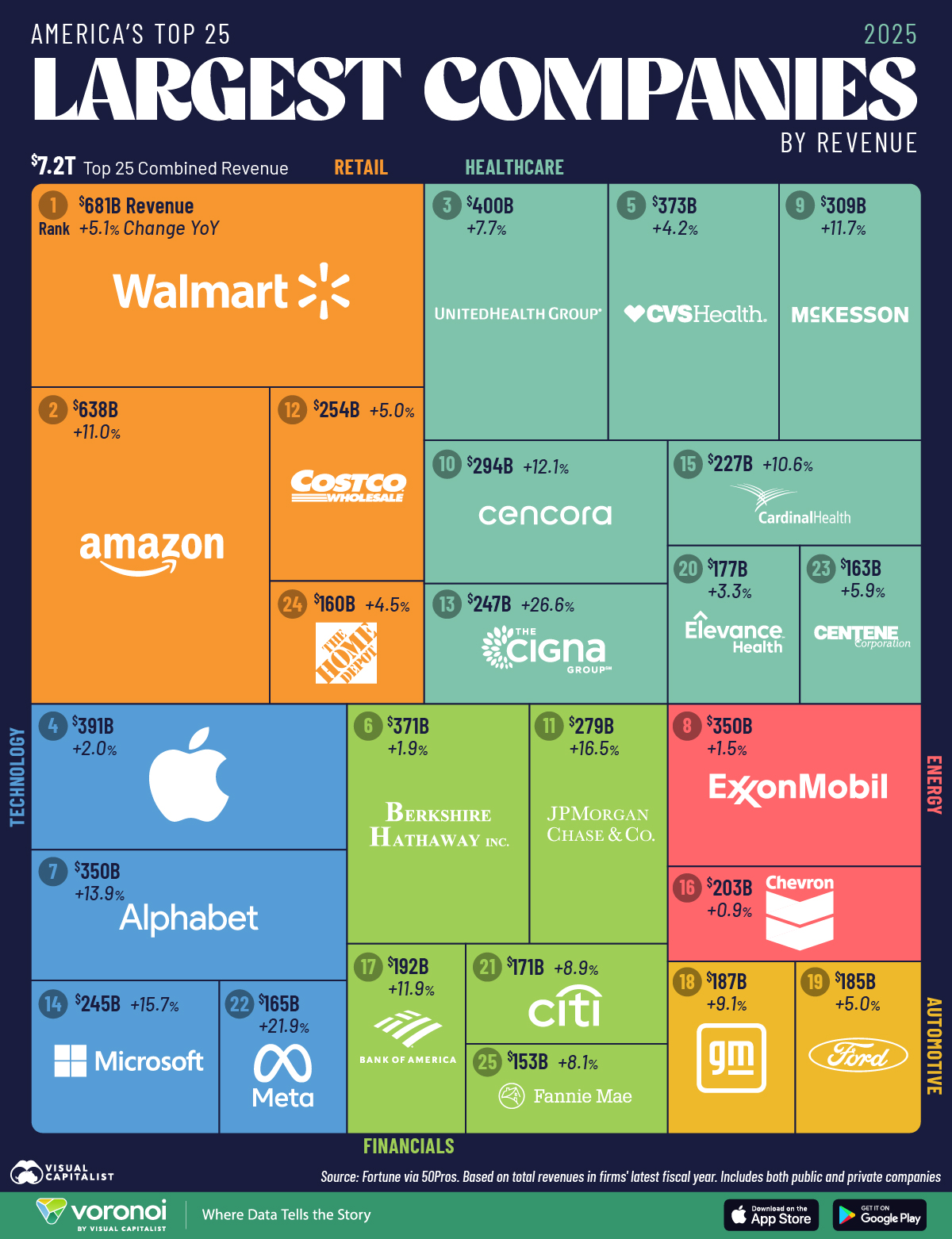
In its most recent fiscal year ending January 31, 2025, Wal-Mart Stores, Inc. reported global revenues of approximately $681 billion. Its U.S. operations alone, the stores that sit in our neighborhoods, that employ our family members at wages that often keep them below the poverty line, that accept our dollars by the billions every single day generated revenues that dwarf the total economic output of every African American-owned employer business in America combined. One company. One corporation founded by one family in Rogers, Arkansas in 1962. That single enterprise generates in annual revenue more than three times what nearly 200,000 Black-owned employer firms produced together.

And Walmart is not alone in that distinction. According to the 2025 Fortune 500, there are 15 individual American companies — each one, by itself — whose annual revenue exceeds the combined $212 billion generated by all Black-owned employer businesses in the United States. Walmart. Amazon. UnitedHealth Group. Apple. CVS Health. Berkshire Hathaway. Alphabet. ExxonMobil. McKesson. Cencora. JPMorgan Chase. Costco. Cigna. Microsoft. Cardinal Health. Fifteen companies. Nearly 200,000 Black-owned businesses. The math is not close.

Now zoom out further. Total revenues across all U.S. businesses in 2022 were $50.9 trillion. Adjusting for estimated growth through 2025, that figure is approximately $58.9 trillion. Black-owned businesses, generating an estimated $251 billion in 2025, represent roughly 0.43% of all U.S. business revenue for a community that makes up 14.4% of the population. That is a representation ratio of 1 to 33. Black Americans are generating business revenue at one thirty-third the rate their population share would suggest. And if Black-owned businesses were generating revenue proportional to their share of the U.S. population, that figure would not be $251 billion — it would be $8.5 trillion. The gap between where Black business stands today and where population parity would place it is approximately $8.2 trillion. That is not a talking point. That is the scoreboard.

Every few years, a video goes viral. A store manager says something racist. A Black customer is followed around a retail floor. Social media explodes. Calls for a boycott trend for 48 hours. And then, quietly and almost universally, people go back to shopping. The outrage dissipates. The dollars continue flowing. This is not an indictment of any individual. The economics of convenience and price are real. Wal-Mart did not become the world’s largest retailer by accident it built a supply chain and a pricing strategy that made it genuinely difficult for lower and middle-income Americans to shop elsewhere. But the conversation about African American spending power, often cited at $1.3 trillion annually, too frequently begins and ends with the individual consumer. Buy Black. Shop Black. Support Black businesses. The moral case is sound. The economic impact, however, is limited so long as it depends entirely on the goodwill and discretion of individual purchasing decisions.

The more instructive question is not whether Black consumers will choose to spend with Black businesses. It is whether Black businesses exist that other communities have no choice but to spend with. Every community that has achieved durable economic power has done so not only through consumer loyalty campaigns but through institution-to-institution capital flows. When a Jewish-owned law firm retains a Jewish-owned accounting firm, when an Asian-owned manufacturer contracts with an Asian-owned logistics company, when a white-owned corporation deposits its cash reserves in a white-owned bank that is not individual charity. That is an ecosystem. Capital circulates. Wealth compounds. Institutions grow. The African American community generates $1.3 trillion in annual spending but has yet to build the institutional infrastructure that would allow a meaningful share of that capital to circulate within the community before it exits. We need Black-owned businesses operating in sectors that other communities must engage — technology, logistics, healthcare, finance, agriculture, defense contracting — not merely retail and personal services. The goal is not to ask anyone to spend with us out of solidarity. The goal is to build enterprises so essential, so deeply woven into supply chains and institutional relationships, that the transaction happens regardless of anyone’s racial sympathies.

But this failure of institutional circulation is not only about what non-Black institutions do with their dollars. It is equally about what Black institutions do with theirs. As HBCU Money has documented, only two HBCUs are believed to bank with Black-owned banks meaning more than 90% of historically Black colleges and universities do not deposit their institutional funds with African American-owned financial institutions. Howard University, African America’s flagship HBCU, partnered with PNC Bank — an institution with over $550 billion in assets — to create a $3.4 million annual entrepreneurship center focused on teaching students about wealth building, while Industrial Bank, a Black-owned institution with $723 million in assets, operates in Howard’s own backyard. Virginia Union University announced a real estate partnership with Keller Williams, a non-Black national franchise, rather than any of the Black-owned real estate firms operating in Richmond. Alabama State University directed a $125 million financial transaction to a non-Black institution when Black-owned alternatives existed. These are not isolated incidents. They are a pattern. The six-hour circulation rate of the Black dollar is not solely a consumer problem it is an institutional one. When the very institutions built to serve African America will not circulate capital with African American-owned enterprises, they are not just minding someone else’s store. They are funding it.

The late Dr. Amos Wilson, in his landmark work on Black economics, argued that the question of Black political and social power could not be separated from the question of Black economic power. You cannot negotiate from a position of strength when you are economically dependent on those with whom you are negotiating. This is not a new observation. Booker T. Washington said it. Marcus Garvey built a shipping line around it. The founders of Black Wall Street in Tulsa, Oklahoma died for it. What makes the Wal-Mart comparison so instructive is not that it should produce shame. It should produce strategy. When Sam Walton opened his first store, he was not competing with Sears and Kmart by screaming about their hiring practices. He was building infrastructure — distribution networks, vendor relationships, loss-leader pricing strategies, and real estate positioning. He was minding his store. The result, three generations later, is a company that generates more revenue than the combined output of all African American businesses in the nation. The African American community has the talent. We have demonstrated that abundantly, in every field from medicine to technology to entertainment to law. We have the consumer base. At $1.3 trillion in annual spending, the Black consumer market is the envy of marketers worldwide. What has historically been missing is the intentional, sustained, and institutionalized redirection of that spending power toward Black-owned businesses at scale.

It would be intellectually dishonest to lay the entire weight of this disparity at the feet of consumer behavior alone. Structural barriers to Black business ownership are real and documented. Access to capital remains the single greatest obstacle. African American business owners are rejected for small business loans at rates significantly higher than their white counterparts — Black-owned small businesses received full funding in just 38% of cases, compared with 62% for white-owned firms. The racial wealth gap — driven in large part by decades of discriminatory housing policy, redlining, and exclusion from wealth-building programs like the GI Bill — means that Black entrepreneurs often lack the family wealth and generational capital that serves as seed funding for so many successful businesses. But the capital problem runs even deeper than loan denial rates. According to HBCU Money’s 2024 African America Annual Wealth Report, African American household assets reached $7.1 trillion in 2024 — yet consumer credit has surged to $740 billion, now approaching near-parity with home mortgage obligations of $780 billion. For white and Asian households, the ratio of mortgage debt to consumer credit stands at approximately 3:1. For African American households, it is nearly 1:1 — meaning a disproportionate share of Black borrowing finances consumption rather than wealth-building assets. Consumer credit grew by 10.4% in 2024, more than double the 4.0% growth in mortgage debt, suggesting that rising asset values are not translating into improved financial flexibility. The community is running faster to stay in place.

What makes this particularly damaging for business formation is where that debt flows. With African American-owned banks holding just $6.4 billion in combined assets — down from 48 institutions in 2001 to just 18 today — the overwhelming majority of the $1.55 trillion in African American household liabilities flows to institutions outside the community. A conservative estimate puts annual interest payments transferred from Black households to non-Black financial institutions at approximately $120 billion. For context, that is more than half of what all Black-owned businesses generate in revenue in an entire year, flowing out of the community in interest payments alone. There is also genuine cause for measured optimism. The Brookings Institution found that Black-owned employer businesses grew by 56.9% between 2017 and 2022 with over half of all new employer businesses started in America during that period being Black-owned. Black-female-owned businesses grew at an even faster clip of 71.6%. Revenue from Black-owned employer businesses rose by 65.7%, and total payroll increased by 69.5%. This is not a community standing still. Yet consider what the employment numbers reveal about the depth of the remaining challenge. Of the roughly 22 million African Americans in the civilian labor force, only 1.2 million — fewer than 1 in 18 — work for a Black-owned business. That means the overwhelming majority of Black workers are building someone else’s enterprise, generating wealth that flows outside the community. Now consider this: there are approximately 3.4 million Black-owned non-employer firms — businesses with no employees at all. If every single one of those firms hired just one African American, Black business employment would go from 1.2 million to 4.6 million overnight — nearly quadrupling the number of African Americans whose economic livelihood is tied to Black ownership. That single hire, multiplied across 3.4 million businesses, would represent one of the most transformative economic shifts in African American history, without a single new business being started, without a single new law being passed, and without waiting for anyone’s permission. The challenge is that the gap between where we are and where parity demands we be remains enormous. Black Americans represent 14.4% of the U.S. population but own just 3.3% of employer businesses. To reach proportional representation, the number of Black-owned employer firms would need to more than quadruple. That is a generation’s worth of sustained work and it cannot be done without both structural support and the intentional recirculation of capital through Black-owned financial institutions. African American-owned banks, credit unions, and community development financial institutions exist specifically to fill this gap. HBCUs already produce 80% of the nation’s Black judges, half of its Black doctors, and a third of its Black STEM graduates — yet their business schools have yet to consolidate around a unifying entrepreneurial mission. A purpose-built African American MBA, anchored at HBCUs and focused explicitly on building and scaling Black-owned enterprises, could be the missing institutional link between Black talent and Black capital. The infrastructure, while still insufficient, is growing. The question is whether HBCUs — and the community they serve — will demand more of it.

Minding your own store does not mean ignoring injustice. It means recognizing that the most durable response to injustice is economic self-determination. It means that for every hour spent outraged about the New York Times culture desk, there should be five hours spent building, funding, patronizing, and amplifying African American-owned media. It means that HBCUs which have historically been the primary incubators of Black professional and entrepreneurial talent deserve the full financial and institutional support of the African American community, not just during homecoming season or when they make the national news for a coaching hire. It means that the $212 billion generated by African American employer businesses today should be $424 billion in a decade, and that achieving that goal requires both new business formation and a deliberate shift in where Black consumer dollars are spent. One company — one family’s vision, relentlessly executed over six decades — built an enterprise that generates more revenue than all 3.6 million Black-owned businesses in America combined. Imagine what those 3.6 million businesses could do if they were built with that same relentlessness, funded by that same community, and patronized by that same loyalty. That is the store worth minding. That is the story worth chasing.


HBCU Money is the leading financial resource for the HBCU community. Visit us at hbcumoney.com.

Disclaimer: This article was assisted by ClaudeAI.
More Than Sports: HBCU Conferences Need To Create Their Own Endowment Foundations

“If you want to go fast, go alone. If you want to go far, go together.” – African Proverb

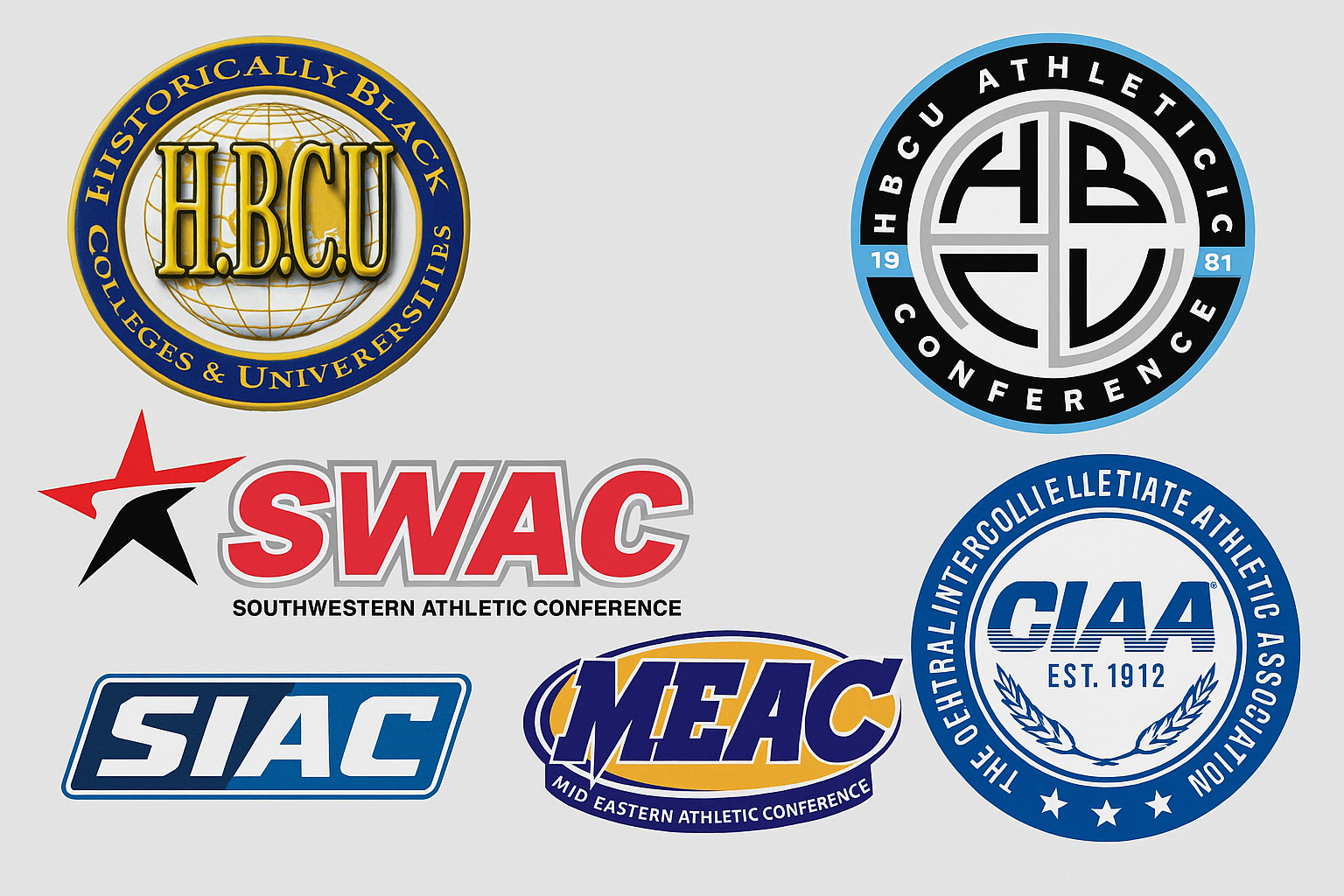
In the world of HBCUs, sports are often the glittering front porch. The stadiums, the bands, the rivalries—they draw the crowds, the attention, the media. But behind that porch is a house often held together by financial duct tape. For decades, HBCU athletic conferences like the SWAC, MEAC, SIAC, and CIAA have focused on managing competition and culture. But the economic foundation underneath them is alarmingly thin.

The financial disparity between HBCU athletic institutions and their predominantly white peers is not simply about who has better training facilities or more ESPN airtime. It’s about the difference between operating with an endowment mindset versus a sponsorship mindset. PWIs leverage their conference structures to coordinate billions in collective endowments, research funding, and intellectual capital. Meanwhile, HBCU conferences still operate paycheck to paycheck, dependent on event-driven income, annual sponsors, and episodic corporate philanthropy.

It is time for that to change. The next great leap in HBCU economic sovereignty must come through the creation of endowment foundations at the conference level—independent yet cooperative financial vehicles that can invest in the long-term needs of HBCU institutions, students, and faculty.

The Forgotten Leverage of Collective Wealth

Historically, African American communities have mastered the art of doing more with less. From the Black Wall Streets of the early 20th century to mutual aid societies, pooling resources has long been a survival strategy. But in the modern higher education economy, survival is not enough. Institutions must thrive. And thriving requires capital—specifically, patient capital.

A conference-wide endowment foundation could be just that. It would allow HBCU conferences to strategically deploy financial resources where they are most needed—not only for athletics, but for academic innovation, student scholarships, research collaborations, alumni entrepreneurship, and faculty retention.

Each of the four major HBCU athletic conferences represents a combined student population of tens of thousands and a deep well of alumni, many of whom have entered the upper echelons of law, medicine, tech, government, and business. If each conference coordinated an endowment foundation targeting just 5% of its alumni giving annually and directed those funds into a permanent asset fund managed by Black-owned asset managers and banks, we would begin to see a fundamental shift in institutional leverage.

When The Game Ends, What Remains?

The problem is not talent. It’s time horizon.

HBCU conferences have too often focused on short-term visibility over long-term viability. A celebrity coach may raise a program’s profile for a season, but a well-capitalized endowment will sustain it for generations. PWIs understand this deeply. The Big Ten and SEC do not just operate athletic schedules. Their conference-level infrastructure includes powerful media rights contracts, legal teams, joint academic initiatives, and most importantly—shared wealth.

Take the Ivy League. Its member schools may not be athletic powerhouses, but collectively they manage over $200 billion in endowment assets. While HBCUs often compete against each other for grants, donors, and students, Ivy League and Big Ten schools collaborate to amplify their influence. Why can’t HBCUs do the same?

A SWAC Endowment Foundation, for example, could support:

  • Annual capital grants for member HBCUs to build dormitories, research centers, or innovation labs.
  • A Black student investment fund, empowering students to manage a real portfolio.
  • A faculty sabbatical and fellowship program to retain top talent within the HBCU ecosystem.
  • Grants to fund summer bridge and college prep programs across rural Black communities.
  • Ownership stakes in infrastructure projects in HBCU towns—student housing, broadband, and more.

A 21st Century Wealth Blueprint for HBCUs

The structure is not complicated, but the will must be. Each HBCU conference should establish an independent 501(c)(3) endowment foundation. The foundation would be governed by a board composed of conference commissioners, university presidents, HBCU alumni investment professionals, and student liaisons.

The foundation would start with a 10-year capital campaign. Initial targets? Raising $100 million per conference by year ten. This is modest. If 10,000 alumni gave $1,000 over a decade—just $100 a year—it would amount to $10 million. Pair that with philanthropic and corporate matching, estate giving, and mission-driven Black investors, and these endowments become engines of independence.

Critically, these endowment foundations should also commit to investing 100% of their assets with Black asset managers, banks, and venture capital firms. According to a 2021 Knight Foundation report, less than 1.4% of the over $80 trillion in asset management is controlled by diverse firms. HBCU conferences can help change that while keeping their dollars circulating within their own ecosystem.

Why It Matters: Ownership, Control, and The Power to Say No

The absence of financial infrastructure has often forced HBCUs to compromise. Take whatever TV deal is offered. Accept unfavorable game contracts. Cancel athletic seasons due to budget shortfalls. Move championship games to cities with no cultural or economic benefit to Black communities.

An endowment changes the game. With financial strength comes the power to say no—no to deals that don’t serve the community, no to external forces dictating priorities, and no to underestimating the value of HBCU brands.

It also allows for coordinated lobbying efforts. A conference endowment could fund policy centers and advocacy work in Washington to push for equitable funding, infrastructure investments, and higher education reform that centers Black institutions. Endowments are not just about dollars. They are about direction.

Cultural Buy-In & Structural Challenges

Skeptics will ask: who will manage it? Will universities compete instead of collaborate? Will presidents agree to hand over some control?

These are valid questions—but solvable ones. What’s required is a paradigm shift. The same way the United Negro College Fund (UNCF) once proved that HBCUs could raise money collectively, athletic conferences can prove that they can build wealth collectively. Trust can be built through transparency. Foundations must publish quarterly reports, undergo annual audits, and invite stakeholders to participate in governance.

The cultural buy-in must be intergenerational. Students should see themselves as builders of legacy, not just borrowers of opportunity. Alumni must view giving not as charity, but as strategic investment in their own institutional ecosystem.

And universities must remember: autonomy and alignment are not enemies. One HBCU’s success is every HBCU’s opportunity.

From Halftime Shows to Financial Shows of Strength

The world is watching HBCUs now more than ever. Celebrities are giving. TV deals are emerging. Black students are reconsidering PWI alternatives. But without institutional infrastructure—especially financial infrastructure—this moment may pass like many others before it.

We cannot build generational legacy off emotional moments alone. It requires structure, discipline, vision, and capital. Conference endowments offer the structure. Our community provides the capital. And our students are the vision.

Let this be the era where HBCU athletic conferences moved from entertainment to enterprise. From event coordination to economic coordination. From standing on the field to standing on financial foundations.

Because after the buzzer sounds, after the lights dim, and after the trophies are stored—what remains is what was built.

That Kind of Man Is Never Poor: Why Educated, Enterprising, and Ambitious Black Love Demands Mutual Support

Being deeply loved by someone gives you strength, while loving someone deeply gives you courage. — Lao Tzu

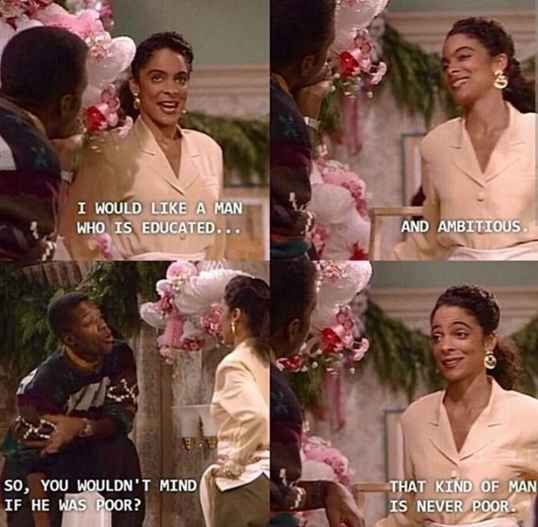
When A Different World aired that exchange in the late 1980s, it landed at the intersection of two of Black America’s oldest and most contested conversations: what we owe each other in love, and what it means to build a life of purpose and prosperity together. Whitley wasn’t asking for a rich man. She was describing an orientation toward life — educated, enterprising, and ambitious — and asserting that a person who lives that way will never be poor in the ways that truly count. But there was always a condition embedded in that vision, one the show understood even if it didn’t always name it explicitly: that kind of life requires a partner who isn’t just admiring from the sidelines. It requires someone who is building alongside you, pushing when the vision dims, holding when the weight becomes too much, and trusting even when the outcome isn’t yet visible. The kind of Black love that produces educated, enterprising, and ambitious people is not passive. It is active, intentional, and deeply communal.

Educated. Enterprising. Ambitious. These words sit comfortably on a vision board. They sound aspirational. But strip away the aesthetics and examine what each one actually demands of a Black person navigating this country, and you quickly understand why none of them can be carried alone. To be educated in Black America is not simply to hold a degree. It is to have committed to a process of self-understanding and world-understanding that this society has never made free or easy. For the hundreds of thousands who chose an HBCU, it was a decision to be educated and loved at the same time — to develop intellectual rigor inside institutions that did not require them to leave their Blackness at the door. That experience shapes how you move through the world, how you build, and critically, what you need from a partner. You need someone who values what you carry from that formation, who sees your education not as a credential but as a worldview that deserves to be exercised. A partner who belittles your ambitions, dismisses your networks, or resents your growth is not a partner in any real sense. They are a ceiling. To be enterprising is to see possibilities where systems have deliberately created barriers. Black entrepreneurship in this country has always been an act of defiance and an act of community building simultaneously. But enterprising requires risk. It requires long stretches of uncertainty, of not knowing if the next quarter will hold. A partner who cannot sit in that uncertainty with you, who confuses instability with failure, who demands the comfort of a steady paycheck over the potential of a built thing — that partnership will eventually become a negotiation between your dreams and their fears. And in that negotiation, someone always loses. To be ambitious is to insist that your potential has no ceiling. In Black America, that insistence is both a personal conviction and a political act. Ambition burns a tremendous amount of fuel. It consumes time, emotional bandwidth, and sometimes the very relationships that were supposed to sustain it. A partner who cannot celebrate your wins because your wins somehow diminish them, who needs you to stay small so they feel safe, is not a companion in ambition. They are its opposite. This is why Whitley’s answer to Dwayne was so quietly radical. She was not describing a checklist. She was describing a compatibility of spirit — the recognition that two people with aligned orientations toward growth could build something neither could build alone.

It is easy to focus on Whitley in this conversation because her words were so precise. But Dwayne’s question deserves equal examination. He did not ask what Whitley wanted in a husband — as if cataloguing features — but what kind of husband she wanted. He was asking about character, about essence. Dwayne Wayne was himself educated, enterprising, and ambitious. A genius-level engineering student at Hillman, a man who went on to a career that took him literally around the world. But what made him a worthy partner for Whitley, and what made their fictional union one of the most enduring love stories in Black popular culture, was not just his individual achievement. It was what he did with his love. He showed up. He advocated. He flew to her wedding to another man and interrupted it because he knew — and she knew — that their partnership was bigger than the fear that had kept them apart. That is what mutual support looks like in its most dramatic form. But most of us will not have our moment at an altar with a ballroom watching. Most of us will have the quieter, harder moments: the conversation at 11pm when one partner has been passed over again at work and needs to hear that their worth is not determined by that institution’s blindness. The weekend when one partner is grinding on a business plan and the other has to carry the household without resentment. The year when one partner’s career accelerates and the other has to find their own footing without collapsing into competition. Those moments are where Black love either becomes what it was always capable of being — or where it begins to quietly erode.

There is a damaging script in some corners of our community that frames one partner’s support for the other as sacrifice — as if partnership is a zero-sum arrangement where one person’s advancement necessarily comes at the other’s expense. This script has done enormous harm. It has produced couples who keep score rather than build, who compete where they should collaborate, and who eventually sit across from each other with years of resentment between them. The couples and partnerships that thrive understand something different. They understand that support is strategy. When you invest in your partner’s growth, you are not losing; you are expanding the resources available to your shared life. When a husband supports his wife’s MBA program by increasing his domestic load for two years, he is not diminished. He is invested. When a wife believes in her husband’s business concept before the market does and holds the household steady while he builds, she is not sacrificing her own ambition. She is deploying it strategically, because she understands that what they are building together is bigger than what either could build alone. This is the economic logic of Black love, and it is powerful. The HBCU power couples who go on to build medical practices, investment funds, cultural institutions, and businesses that employ other Black people do not build those things in spite of their partnerships. They build them through their partnerships. The art empire, the medical group, the legal practice — these are not solo achievements. They are the products of two people who chose, over and over again, to take the other’s dreams seriously.

And here is where that vision expands into something even larger — because educated, enterprising, and ambitious Black love is never just about two people. It has always carried a community inside it, and when it is at its most powerful, it carries an entire Diaspora. When two HBCU graduates build a life together, they bring their networks, their institutions, their mentors, and their commitments with them. The Hillman alumni network that became the seed capital for a Pan-African art fund was not a business transaction. It was the activation of bonds formed through years of shared education and shared love for an institution. Those investors did not write checks because of a pitch deck. They wrote checks because they trusted each other, because Hillman had taught them to see their prosperity as connected. That is the genius embedded in the HBCU tradition — it does not just educate individuals, it builds the relational infrastructure through which communities can act collectively. And it is Black love, in both the romantic and communal sense, that activates that infrastructure over and over again across generations.

But the full scope of what that love can build becomes visible only when we follow it to its institutional conclusion. Individual success, however impressive, is ultimately fragile. Wealth concentrated in one person can be lost in a generation. Knowledge that lives in one mind leaves when that person does. Influence that depends on a single relationship dissolves when that relationship ends. What endures is what gets built into institutions — into ownership structures, endowments, programs, and organizations that outlast any individual and continue to serve the community long after the founders are gone. This is why the most consequential dimension of educated, enterprising, and ambitious Black love is not what it produces in a household. It is what it deposits into institutions. The Black couple that builds a business strong enough to employ a hundred people and endow a scholarship fund is not just building a legacy for their children. They are building infrastructure for a community. The pair that pours their professional expertise back into an HBCU — consulting, donating, recruiting, advocating — is strengthening an institution that will educate and love thousands of Black students for decades to come. The partnership that structures its wealth to include collective vehicles — investment funds, foundations, land trusts, community development corporations — is doing something that individual accumulation, no matter how impressive, simply cannot do. It is converting personal achievement into communal capacity.

The Diaspora dimension of this is not incidental. It is essential. Black America has never existed in isolation from the broader African Diaspora, and the most visionary HBCU partnerships have always understood this. When Whitley Gilbert-Wayne stood in a Tokyo gallery and asked why African Americans were not building art collections anchored in the work of artists from across the Diaspora — from Salvador to Senegal, from Detroit to Durban — she was asking a fundamentally institutional question. Not just who collects this art, but who owns the infrastructure through which it is valued, appraised, traded, and preserved. Not just who appreciates Black beauty, but who controls the institutions that define and protect it. The Pan-African Art Appraisal program she helped establish between an HBCU and the University of Namibia was not a cultural gesture. It was an institutional act — the creation of a pipeline that would train a new generation of appraisers with both the technical competence and the cultural fluency to set the value of Diaspora art on terms that served the Diaspora. That is institutional ownership. That is what educated, enterprising, and ambitious Black love looks like when it reaches its full expression. And it could not have been built by either Whitley or Dwayne alone. It required the engineering career that took them to Tokyo. It required the art history formation that gave Whitley the language to see what she was seeing. It required the Hillman network that provided the initial capital and the Hillman-forged trust that made that capital available. It required, underneath all of it, a partnership that held steady across continents and career pivots and the slow, difficult work of building something that had never existed before.

What Dwayne and Whitley modeled — in fiction, and what so many HBCU couples have modeled in fact — is that Black love at its most generative is not primarily a private arrangement. It is a public act. Every time a Black couple directs their business patronage to Black-owned firms, they are building Black enterprise. Every time they mentor a younger HBCU graduate, they are extending the network that made their own success possible. Every time they sit on a board, anchor a fund, or pressure an institution to collect and commission work by Diaspora artists, they are expanding the definition of who gets to own and control cultural and financial infrastructure. Every time they build a business with an exit strategy that includes employee ownership or community benefit, they are ensuring that the wealth they created does not simply exit the community when they do. This is not idealism. This is what institutional ownership actually looks like in practice, and it is built one educated, enterprising, ambitious Black partnership at a time.

This is what A Different World was always pointing toward, even in its lightest moments. The romance between Dwayne and Whitley existed inside a world populated by people who pushed each other, competed with each other, loved each other, and collectively embodied the argument that Black excellence is not a solitary achievement. It is produced in community, sustained in community, and ultimately returned to community — and to a Diaspora that has always been waiting for us to bring our full selves, and our full institutional capacity, home.

If you are educated, enterprising, and ambitious — or trying to become those things — you are carrying a vision that is bigger than your own comfort. You are carrying, whether you have named it this way or not, an argument about what Black people are capable of when given the space, the resources, and the love to fully become. That vision requires a partner who takes it seriously. Not someone who merely tolerates your ambition, but someone who sees it as part of what they fell in love with. Not someone who supports you when it is convenient, but someone who holds the ground when the terrain gets difficult. Not someone who loves you in spite of your drive, but someone whose own drive calls yours forward. And if you are that partner for someone else, understand the magnitude of what you are doing. The quiet support, the unanticipated covering, the refusal to compete where you should collaborate — these are not small acts. They are the infrastructure on which entire legacies, and entire institutions, are built. The spouse who holds the household while the other writes the dissertation. The partner who talks you back from quitting. The friend-turned-love who looks at your half-formed idea and says, without hesitation, “I see it. Let’s build it.” These acts do not always make headlines. But they make everything else possible — the businesses, the collections, the endowments, the programs, the institutions that will carry Black and Diaspora communities forward long after any of us are here to see it.

Whitley Gilbert was not describing a fantasy when she told Dwayne what she wanted. She was describing a reality she was already willing to be part of — a partnership defined not by the presence of wealth but by the presence of character. Educated. Enterprising. Ambitious. And underneath all of it, the kind of love that builds, holds, risks, believes, and ultimately deposits something permanent into the world. That kind of love is never poor. And the institutions it builds are the inheritance of a Diaspora that was always worth the investment.


HBCU Money covers economic, finance, and investment news from an HBCU perspective. Follow us at hbcumoney.com.

Disclaimer: This article was assisted by ClaudeAI.