Tag Archives: Black Economic Power

The Color Line Was Never Broken: MLB’s Jackie Robinson Day and the Permanent Absence of Black Ownership

Blacks are the only group of people in America who have been taught to invest their time, talents, and resources into other people’s businesses and institutions rather than their own.– Dr. Claude Anderson

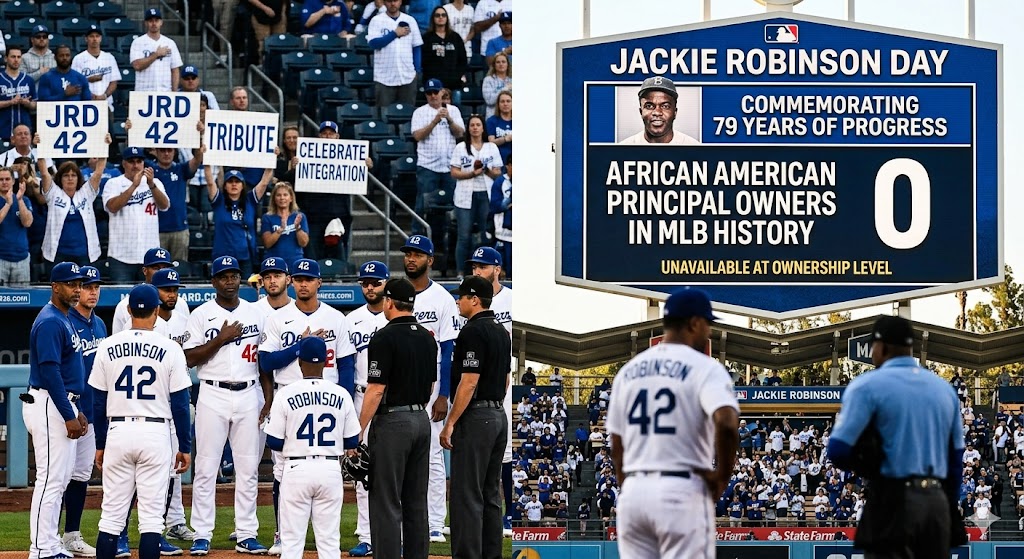
Every April 15th, Major League Baseball dresses itself in the iconography of racial progress. Every player, coach, manager, and umpire in the league wears number 42, the retired number of Jackie Robinson, in a league-wide act of commemorative solidarity. Stadiums host ceremonies. The commissioner issues statements. The Negro Leagues Baseball Museum is quoted in the wire copy. This year marked the 79th anniversary of Robinson’s debut with the Brooklyn Dodgers, and the ritual was performed with its usual solemnity and precision. Bob Kendrick, president of the Negro Leagues Baseball Museum, offered the occasion’s defining sentiment: every player of color who now enjoys the sport owes it to this man. It was the kind of statement that lands well precisely because it is true and precisely because it forecloses the question that actually matters: what do the owners of the sport owe?

The answer, measurable across 79 years, is nothing. Because in the entire recorded history of Major League Baseball, there has never been a single African American principal owner of a franchise. Not one. The league that wraps itself annually in the image of the man who broke its color barrier has never permitted Black Americans to sit at the table where the real decisions are made and the real wealth is accumulated. Jackie Robinson Day, in this light, is not a celebration. It is a ritual performance of symbolism in the absence of substance, a ceremony that honors a labor breakthrough while quietly burying the ownership catastrophe that labor breakthrough produced.

Dr. Claude Anderson diagnosed this dynamic with clinical precision in Black Labor, White Wealth: The Search for Power and Economic Justice. Anderson’s central thesis is that African Americans have historically been incorporated into American economic structures as labor inputs essential to the production of wealth but systematically excluded from its ownership and accumulation. The pattern Anderson traces across centuries of American economic life finds one of its most vivid contemporary illustrations in professional baseball. In 1947, there were zero African American owners in Major League Baseball. In 2026, there are zero African American owners in Major League Baseball. The number has not moved in nearly eight decades of ceremonies, commemorations, and retired jerseys. Whatever integration accomplished for those who could play, it accomplished nothing for those who might own.

The financial stakes of that absence are not abstract. The average MLB franchise value entering the 2026 season is $3.17 billion, a 12 percent increase from the prior year. The New York Yankees are valued at $9 billion; the Los Angeles Dodgers at $8 billion. Thirty franchises, each a multigenerational wealth vehicle, each appreciating at rates that make even the highest player salaries look modest by comparison. The mathematics of ownership versus labor in professional sports is not complicated: franchises compound wealth over generations, while athletic careers end, often before age 35, and rarely produce the kind of capital base required to enter the ownership market. George Steinbrenner paid $10 million for the New York Yankees in 1973; the team is now valued at nearly $9 billion — a 900-fold increase. No player’s salary trajectory has ever approximated that kind of return. The wealth gap between Black athletes and the owners who profit from their labor is not a gap it is a chasm, and it has been widening for eight decades while baseball holds its annual ceremony.

What made this chasm possible was the structural transformation that Robinson’s entry into MLB initiated. Rube Foster, considered the father of Negro League Baseball, was insistent as early as 1910 that Black teams should be owned by Black men. The Negro Leagues were not merely a segregated alternative to the major leagues they were an ownership infrastructure, an economic ecosystem, a complex of jobs, investment, and community capital that functioned precisely because it was self-contained. Virtually all of the initial Negro League ownership was Black, according to Garrick Kebede, a Houston-based financial adviser and Negro League Baseball historian. When Robinson crossed the color line under Branch Rickey’s terms, he did not negotiate a merger. He negotiated a labor transfer. African American talent, the asset that had built and sustained the Negro Leagues, departed for a structure in which African Americans held no ownership stake, no board seats, no equity, and no decision-making authority. The Negro Leagues, stripped of their best labor, collapsed. The ownership infrastructure they represented was dismantled. What remained was the arrangement that has persisted ever since: Black labor generating wealth for white ownership, with the annual ceremony serving as the cultural lubricant that makes the arrangement palatable.

This publication has argued before that what African Americans celebrate when they celebrate Robinson’s debut is better understood as a miscelebration, an uncritical embrace of a “first” that, examined structurally, represented institutional dispossession rather than institutional advancement. The framework is not complicated. A community’s economic power derives not from its ability to supply labor to others’ institutions, but from its capacity to build, own, and control institutions of its own. The Negro Leagues were such an institution. Their destruction produced precisely the outcome that Dr. Anderson’s framework would predict: a permanently subordinate position within an economic structure controlled by others, with symbolic inclusion substituting for actual power.

The percentage of Black players on Opening Day rosters increased from 6.0 percent in 2024 to 6.2 percent in 2025 to 6.8 percent in 2026 — the first back-to-back annual increases in at least two decades. MLB has invested in developmental programs aimed at reversing the long decline of Black players in the sport, and the league has used this uptick as evidence of progress on Jackie Robinson Day. The framing is instructive in its evasions. At the apex of Black participation in MLB, the figure reached 18.7 percent in 1981. Today’s 6.8 percent, celebrated as a milestone, remains less than half that peak and remains, critically, a measure only of labor participation. The ownership figure has not changed. It is zero. It has always been zero. The developmental programs that produce more Black players produce more labor for an ownership class that has never included a single African American. Whatever the developmental intention, the structural outcome is the same as it has always been: more Black men supplying the asset that generates wealth for others.

This is not, it must be stressed, an argument against Black Americans playing baseball. It is an argument about what the celebration of their playing, in the absence of ownership, actually signifies. It signifies that the arrangement Branch Rickey designed in 1947 one in which Black labor would integrate the league while Black ownership was never contemplated has proven durable across nearly eight decades and shows no sign of structural challenge. The 30 franchise owners whose combined wealth now runs into the hundreds of billions of dollars conduct their business in owners’ meetings that have never included an African American voice with the authority that ownership confers. The decisions made in those meetings about labor rules, revenue sharing, market expansion, franchise relocation, broadcast deals are made entirely without African American ownership participation. This is not an oversight. It is the design of the arrangement that Robinson’s entry formalized.

The institutional lessons of this history extend well beyond baseball. The Negro Leagues offer a template not for nostalgia but for analysis: what does it take to build an economic ecosystem that retains capital within a community rather than exporting it to others? The answer, in the Negro Leagues as in other domains, was ownership. When the Kansas City Monarchs played, the revenue stayed within a structure where Black owners, Black managers, Black vendors, and Black communities captured the economic return on Black athletic talent. That structure was dismantled not by force, but by the gravitational pull of integration on terms that never included ownership as a condition.

The HBCU athletic ecosystem faces an analogous set of choices in the present. The temptation to pursue visibility and validation within structures owned and controlled by others (the Power Five conferences, the NCAA tournament apparatus) reproduces the 1947 logic at the college level. As this publication has examined in detail, the HBCU Power Five has a combined all-time record of 4-55 in the NCAA tournament, and the SWAC and MEAC combined typically earn no more than approximately $680,000 in tournament payouts, roughly $34,000 per school when distributed across conference members. The alternative: owning the tournament, controlling the broadcast rights, building an HBCU Athletic Association would produce less spectacle and more capital. It would reproduce, in athletic governance, the logic that Rube Foster understood a century ago: the economic return on Black talent should accrue to Black institutions.

The broader African American institutional ecosystem — Black owned public and private companies, Black financial institutions, professional associations, fraternal organizations, and HBCUs themselves — contains the capacity for the kind of coordinated ownership strategy that MLB has never permitted and that the Negro League era briefly demonstrated was possible. The question is not whether that capacity exists. It is whether the community’s leadership is willing to pursue ownership as a strategic objective rather than labor participation as a cultural achievement. Dr. Anderson’s framework demands that distinction. So does the arithmetic of 30 MLB franchises averaging $3.17 billion in value, every one of them owned by someone who is not African American, generating their returns on a sport whose very mythology of racial progress was built on the back of a Black man who received no ownership stake in exchange for making the mythology possible.

Every April 15th, the number 42 appears on every jersey in Major League Baseball. It is, in its way, an honest accounting. Forty-two is the number of a man whose labor the league appropriated, whose institutional infrastructure it dismantled, and whose memory it now rents annually for its own legitimacy. What would constitute actual progress is the number of African American principal owners in MLB. That number is zero. It has always been zero. Until it changes, Jackie Robinson Day is not a celebration. It is an invoice of unpaid, and accumulating interest.

Disclaimer: This article was assisted by ClaudeAI.

Minding Whose Store: African America Businesses Generate Just 0.43% of U.S. Revenue

Large numbers without context can be misleading to our economic reality and how institutionally poor we are. – William A. Foster, IV

If you are minding someone else’s store, then who is minding yours? Or maybe you focusing on what someone else is doing has not even allowed you to focus long enough to open your own store. These were my thoughts in 2014 when the Huffington Post decided to let the world know that the New York Times has no African American writers in their culture section. I had to take a deep breath knowing that many African Americans would chase this story and scream bloody murder and cries for fairness and justice. Of course Huffington Post at no point in time addressed the real problem of just why things like this occur, namely the New York Times (nor Huffington Post) has any African American ownership. Ironically, the same African Americans who are screaming bloody murder have probably never picked up the Amsterdam News, a 100 year old plus African American newspaper headquartered in New York that was started with a $10 investment ($356 in 2025 dollars) in 1909.

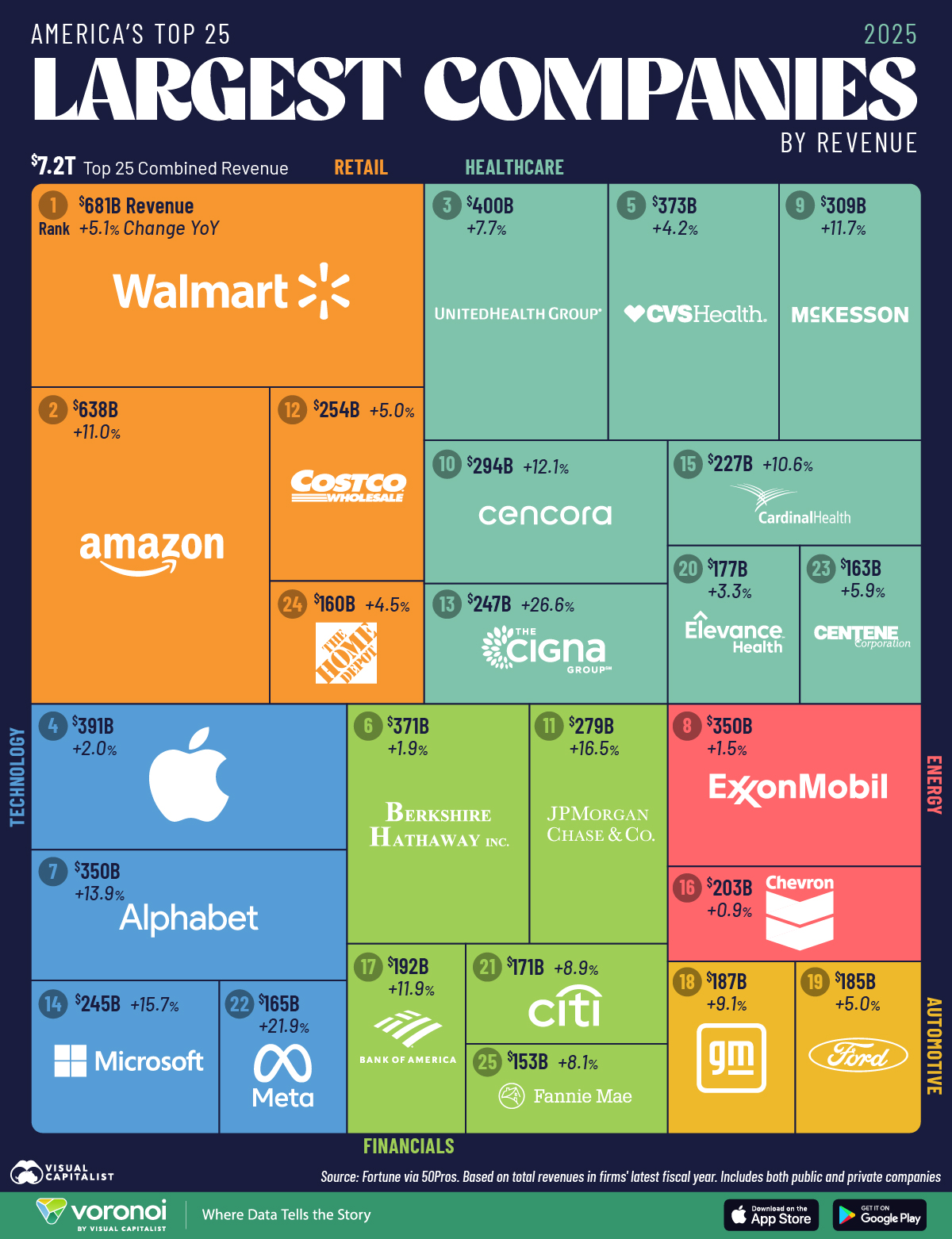
Let us talk about some numbers that should shake us to our core — not as a source of despair, but as a call to serious, sustained action. According to a February 2025 Brookings Institution report analyzing U.S. Census Bureau data, there are approximately 194,585 Black-owned employer businesses in the United States — firms with at least one employee — which generated a combined $212 billion in revenue in 2022, the most recent year of available data. Those 194,585 employer firms collectively employ approximately 1.2 million people. When non-employer businesses are included, the total number of Black-owned firms rises to approximately 3.6 million. But here is the critical detail buried in that larger number: roughly 96% of all Black-owned businesses are non-employer firms, and the average non-employer small business earns just $47,794 per year. The economic weight of the entire sector, in other words, rests on a relatively narrow base of employer firms. That $212 billion figure sounds substantial until you hold it up against a single data point: Wal-Mart’s annual revenue.

In its most recent fiscal year ending January 31, 2025, Wal-Mart Stores, Inc. reported global revenues of approximately $681 billion. Its U.S. operations alone, the stores that sit in our neighborhoods, that employ our family members at wages that often keep them below the poverty line, that accept our dollars by the billions every single day generated revenues that dwarf the total economic output of every African American-owned employer business in America combined. One company. One corporation founded by one family in Rogers, Arkansas in 1962. That single enterprise generates in annual revenue more than three times what nearly 200,000 Black-owned employer firms produced together.

And Walmart is not alone in that distinction. According to the 2025 Fortune 500, there are 15 individual American companies — each one, by itself — whose annual revenue exceeds the combined $212 billion generated by all Black-owned employer businesses in the United States. Walmart. Amazon. UnitedHealth Group. Apple. CVS Health. Berkshire Hathaway. Alphabet. ExxonMobil. McKesson. Cencora. JPMorgan Chase. Costco. Cigna. Microsoft. Cardinal Health. Fifteen companies. Nearly 200,000 Black-owned businesses. The math is not close.

Now zoom out further. Total revenues across all U.S. businesses in 2022 were $50.9 trillion. Adjusting for estimated growth through 2025, that figure is approximately $58.9 trillion. Black-owned businesses, generating an estimated $251 billion in 2025, represent roughly 0.43% of all U.S. business revenue for a community that makes up 14.4% of the population. That is a representation ratio of 1 to 33. Black Americans are generating business revenue at one thirty-third the rate their population share would suggest. And if Black-owned businesses were generating revenue proportional to their share of the U.S. population, that figure would not be $251 billion — it would be $8.5 trillion. The gap between where Black business stands today and where population parity would place it is approximately $8.2 trillion. That is not a talking point. That is the scoreboard.

Every few years, a video goes viral. A store manager says something racist. A Black customer is followed around a retail floor. Social media explodes. Calls for a boycott trend for 48 hours. And then, quietly and almost universally, people go back to shopping. The outrage dissipates. The dollars continue flowing. This is not an indictment of any individual. The economics of convenience and price are real. Wal-Mart did not become the world’s largest retailer by accident it built a supply chain and a pricing strategy that made it genuinely difficult for lower and middle-income Americans to shop elsewhere. But the conversation about African American spending power, often cited at $1.3 trillion annually, too frequently begins and ends with the individual consumer. Buy Black. Shop Black. Support Black businesses. The moral case is sound. The economic impact, however, is limited so long as it depends entirely on the goodwill and discretion of individual purchasing decisions.

The more instructive question is not whether Black consumers will choose to spend with Black businesses. It is whether Black businesses exist that other communities have no choice but to spend with. Every community that has achieved durable economic power has done so not only through consumer loyalty campaigns but through institution-to-institution capital flows. When a Jewish-owned law firm retains a Jewish-owned accounting firm, when an Asian-owned manufacturer contracts with an Asian-owned logistics company, when a white-owned corporation deposits its cash reserves in a white-owned bank that is not individual charity. That is an ecosystem. Capital circulates. Wealth compounds. Institutions grow. The African American community generates $1.3 trillion in annual spending but has yet to build the institutional infrastructure that would allow a meaningful share of that capital to circulate within the community before it exits. We need Black-owned businesses operating in sectors that other communities must engage — technology, logistics, healthcare, finance, agriculture, defense contracting — not merely retail and personal services. The goal is not to ask anyone to spend with us out of solidarity. The goal is to build enterprises so essential, so deeply woven into supply chains and institutional relationships, that the transaction happens regardless of anyone’s racial sympathies.

But this failure of institutional circulation is not only about what non-Black institutions do with their dollars. It is equally about what Black institutions do with theirs. As HBCU Money has documented, only two HBCUs are believed to bank with Black-owned banks meaning more than 90% of historically Black colleges and universities do not deposit their institutional funds with African American-owned financial institutions. Howard University, African America’s flagship HBCU, partnered with PNC Bank — an institution with over $550 billion in assets — to create a $3.4 million annual entrepreneurship center focused on teaching students about wealth building, while Industrial Bank, a Black-owned institution with $723 million in assets, operates in Howard’s own backyard. Virginia Union University announced a real estate partnership with Keller Williams, a non-Black national franchise, rather than any of the Black-owned real estate firms operating in Richmond. Alabama State University directed a $125 million financial transaction to a non-Black institution when Black-owned alternatives existed. These are not isolated incidents. They are a pattern. The six-hour circulation rate of the Black dollar is not solely a consumer problem it is an institutional one. When the very institutions built to serve African America will not circulate capital with African American-owned enterprises, they are not just minding someone else’s store. They are funding it.

The late Dr. Amos Wilson, in his landmark work on Black economics, argued that the question of Black political and social power could not be separated from the question of Black economic power. You cannot negotiate from a position of strength when you are economically dependent on those with whom you are negotiating. This is not a new observation. Booker T. Washington said it. Marcus Garvey built a shipping line around it. The founders of Black Wall Street in Tulsa, Oklahoma died for it. What makes the Wal-Mart comparison so instructive is not that it should produce shame. It should produce strategy. When Sam Walton opened his first store, he was not competing with Sears and Kmart by screaming about their hiring practices. He was building infrastructure — distribution networks, vendor relationships, loss-leader pricing strategies, and real estate positioning. He was minding his store. The result, three generations later, is a company that generates more revenue than the combined output of all African American businesses in the nation. The African American community has the talent. We have demonstrated that abundantly, in every field from medicine to technology to entertainment to law. We have the consumer base. At $1.3 trillion in annual spending, the Black consumer market is the envy of marketers worldwide. What has historically been missing is the intentional, sustained, and institutionalized redirection of that spending power toward Black-owned businesses at scale.

It would be intellectually dishonest to lay the entire weight of this disparity at the feet of consumer behavior alone. Structural barriers to Black business ownership are real and documented. Access to capital remains the single greatest obstacle. African American business owners are rejected for small business loans at rates significantly higher than their white counterparts — Black-owned small businesses received full funding in just 38% of cases, compared with 62% for white-owned firms. The racial wealth gap — driven in large part by decades of discriminatory housing policy, redlining, and exclusion from wealth-building programs like the GI Bill — means that Black entrepreneurs often lack the family wealth and generational capital that serves as seed funding for so many successful businesses. But the capital problem runs even deeper than loan denial rates. According to HBCU Money’s 2024 African America Annual Wealth Report, African American household assets reached $7.1 trillion in 2024 — yet consumer credit has surged to $740 billion, now approaching near-parity with home mortgage obligations of $780 billion. For white and Asian households, the ratio of mortgage debt to consumer credit stands at approximately 3:1. For African American households, it is nearly 1:1 — meaning a disproportionate share of Black borrowing finances consumption rather than wealth-building assets. Consumer credit grew by 10.4% in 2024, more than double the 4.0% growth in mortgage debt, suggesting that rising asset values are not translating into improved financial flexibility. The community is running faster to stay in place.

What makes this particularly damaging for business formation is where that debt flows. With African American-owned banks holding just $6.4 billion in combined assets — down from 48 institutions in 2001 to just 18 today — the overwhelming majority of the $1.55 trillion in African American household liabilities flows to institutions outside the community. A conservative estimate puts annual interest payments transferred from Black households to non-Black financial institutions at approximately $120 billion. For context, that is more than half of what all Black-owned businesses generate in revenue in an entire year, flowing out of the community in interest payments alone. There is also genuine cause for measured optimism. The Brookings Institution found that Black-owned employer businesses grew by 56.9% between 2017 and 2022 with over half of all new employer businesses started in America during that period being Black-owned. Black-female-owned businesses grew at an even faster clip of 71.6%. Revenue from Black-owned employer businesses rose by 65.7%, and total payroll increased by 69.5%. This is not a community standing still. Yet consider what the employment numbers reveal about the depth of the remaining challenge. Of the roughly 22 million African Americans in the civilian labor force, only 1.2 million — fewer than 1 in 18 — work for a Black-owned business. That means the overwhelming majority of Black workers are building someone else’s enterprise, generating wealth that flows outside the community. Now consider this: there are approximately 3.4 million Black-owned non-employer firms — businesses with no employees at all. If every single one of those firms hired just one African American, Black business employment would go from 1.2 million to 4.6 million overnight — nearly quadrupling the number of African Americans whose economic livelihood is tied to Black ownership. That single hire, multiplied across 3.4 million businesses, would represent one of the most transformative economic shifts in African American history, without a single new business being started, without a single new law being passed, and without waiting for anyone’s permission. The challenge is that the gap between where we are and where parity demands we be remains enormous. Black Americans represent 14.4% of the U.S. population but own just 3.3% of employer businesses. To reach proportional representation, the number of Black-owned employer firms would need to more than quadruple. That is a generation’s worth of sustained work and it cannot be done without both structural support and the intentional recirculation of capital through Black-owned financial institutions. African American-owned banks, credit unions, and community development financial institutions exist specifically to fill this gap. HBCUs already produce 80% of the nation’s Black judges, half of its Black doctors, and a third of its Black STEM graduates — yet their business schools have yet to consolidate around a unifying entrepreneurial mission. A purpose-built African American MBA, anchored at HBCUs and focused explicitly on building and scaling Black-owned enterprises, could be the missing institutional link between Black talent and Black capital. The infrastructure, while still insufficient, is growing. The question is whether HBCUs — and the community they serve — will demand more of it.

Minding your own store does not mean ignoring injustice. It means recognizing that the most durable response to injustice is economic self-determination. It means that for every hour spent outraged about the New York Times culture desk, there should be five hours spent building, funding, patronizing, and amplifying African American-owned media. It means that HBCUs which have historically been the primary incubators of Black professional and entrepreneurial talent deserve the full financial and institutional support of the African American community, not just during homecoming season or when they make the national news for a coaching hire. It means that the $212 billion generated by African American employer businesses today should be $424 billion in a decade, and that achieving that goal requires both new business formation and a deliberate shift in where Black consumer dollars are spent. One company — one family’s vision, relentlessly executed over six decades — built an enterprise that generates more revenue than all 3.6 million Black-owned businesses in America combined. Imagine what those 3.6 million businesses could do if they were built with that same relentlessness, funded by that same community, and patronized by that same loyalty. That is the store worth minding. That is the story worth chasing.


HBCU Money is the leading financial resource for the HBCU community. Visit us at hbcumoney.com.

Disclaimer: This article was assisted by ClaudeAI.
Owning The Diamond: Why HBCU Women Entrepreneurs Should Buy a Women’s Pro Baseball Team

“Let us put our moneys together; let us use our moneys; let us put our moneys out at usury among ourselves, and reap the benefits ourselves.” – Maggie L. Walker, pioneering African American banker and businesswoman:

It is not enough to cheer from the stands.
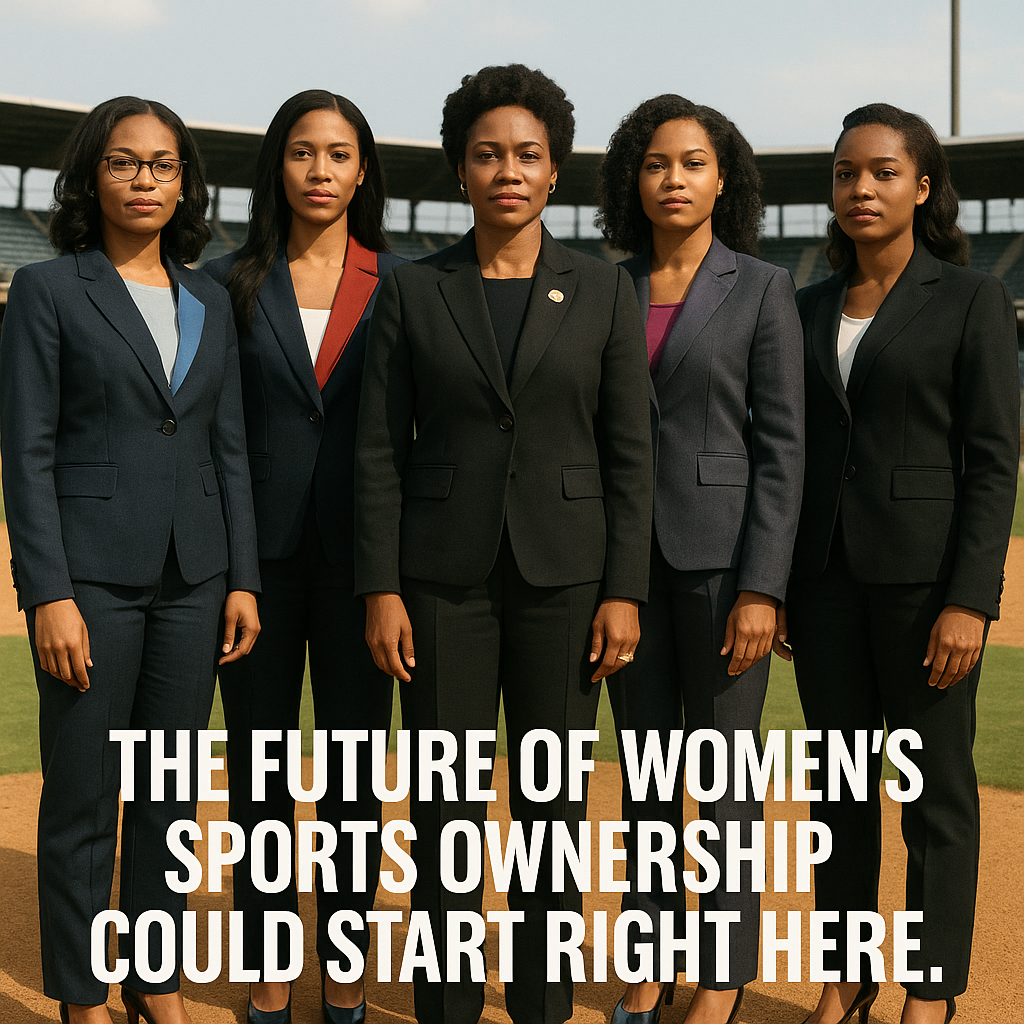
IIt is not enough to cheer from the stands. If HBCU women entrepreneurs and the institutions that produced them are serious about building generational wealth, influence, and visibility in the global sports economy, then ownership, not participation, must be the goal. The emergence of the Women’s Pro Baseball League (WPBL) offers just such a moment. Four inaugural franchises in Los Angeles, San Francisco, New York, and Boston mark the first professional women’s baseball league in the United States since 1954. And yet, amid this historic announcement, one question should echo across the HBCU landscape: Who will own a piece of it?

Ownership in sports is about more than trophies it’s about capital, culture, and control. While athletes inspire, it is owners who shape the economic ecosystem: negotiating television contracts, setting standards for pay equity, deciding where teams are located, and determining which communities benefit from their presence. In American sports, Black ownership remains vanishingly rare. Fewer than a handful of African Americans have ever held majority stakes in professional teams across all major leagues. Among women, ownership representation is even smaller. Yet the HBCU ecosystem comprising over a hundred institutions, $4 billion in endowment capital (though still dwarfed by their PWI counterparts), and a growing class of wealthy and capable alumni possesses both the human and institutional capital to change that reality. Buying a WPBL franchise would be a powerful signal: that African American women are no longer content to merely play or support the game, but to own the infrastructure of it.

The WPBL represents a once-in-a-century opportunity. The last women’s professional baseball league folded in 1954 when postwar America reverted to its gendered labor norms and refused to institutionalize women’s success on the field. Today, that same sport returns in a vastly different economy one defined by media fragmentation, digital storytelling, and institutional investing that rewards niche audiences and strong narratives. Women’s sports are on the rise. The WNBA just received a $75 million investment round from Nike, Condoleezza Rice, Laurene Powell Jobs, and others. Women’s college basketball ratings have exploded, drawing more viewers than some men’s sports. The National Women’s Soccer League has seen team valuations grow fivefold in the past five years. Investors are realizing what the data already shows: undervalued leagues often yield outsized returns once visibility and infrastructure catch up.

The WPBL sits at this exact inflection point. Early investors will not just shape the league they will define its culture, inclusivity, and profitability. This is why HBCU women entrepreneurs, backed by HBCU endowments and alumni capital, should move swiftly. Ownership here is not a vanity project it is a long-term equity position in the fastest-growing frontier of professional sports.

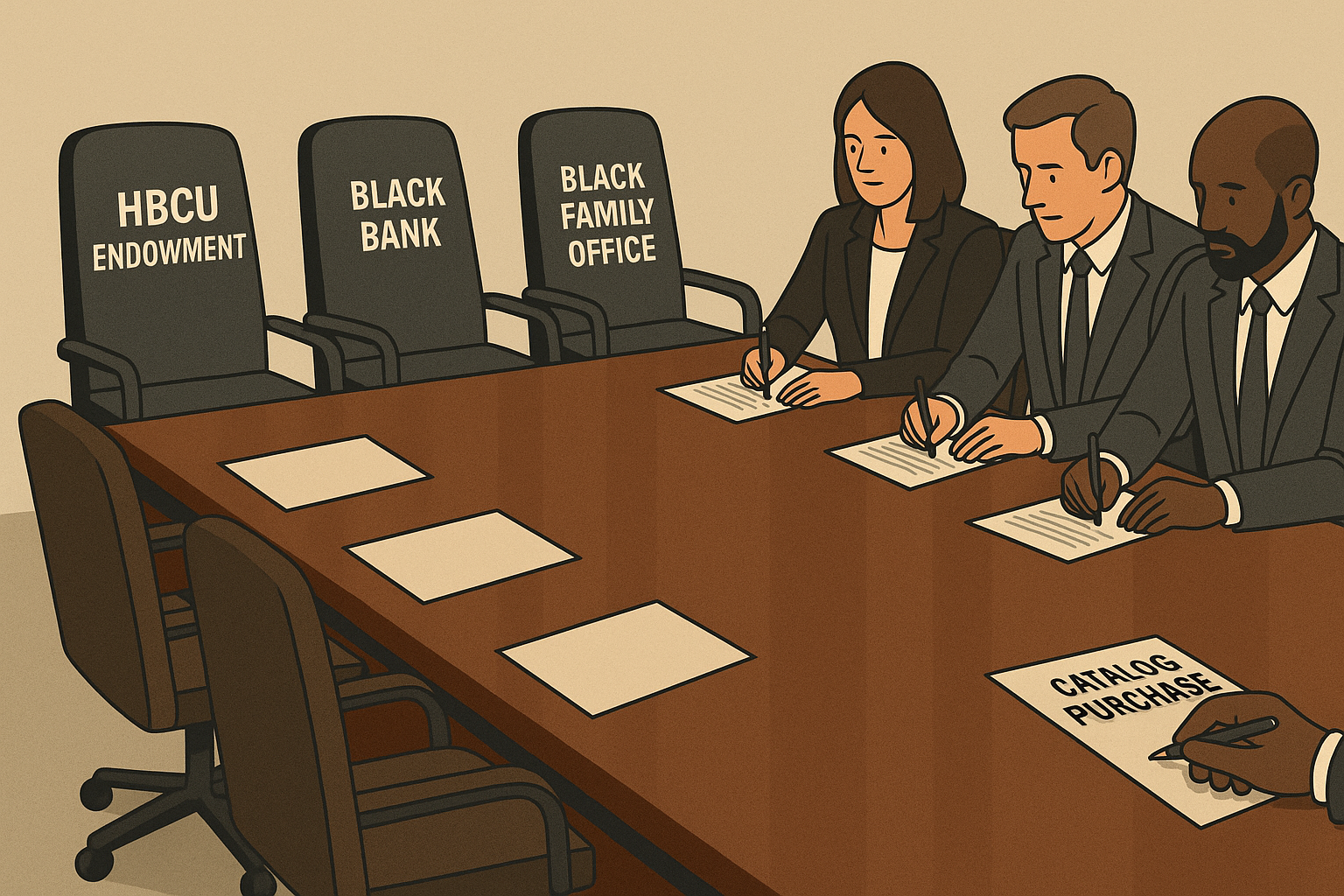
Start-up sports franchises are not the billion-dollar investments of the NFL or NBA. The WPBL’s initial teams are expected to sell for figures in the mid-seven to low-eight figures: expensive, yes, but feasible through a syndicate model combining entrepreneurial capital and institutional backing. A $15 million franchise, for instance, could be financed with $5 million in equity from HBCU women entrepreneurs, $3 million in matching commitments from HBCU endowments through a joint-venture investment arm, $5 million in debt financing via an African American–owned bank or credit union consortium, and $2 million in naming rights, sponsorship pre-sales, and city incentives.

Such a structure distributes risk while maximizing institutional leverage. It also allows for a reinvestment loop: returns from franchise appreciation, media deals, or merchandising could feed back into the endowments that helped fund the acquisition, growing HBCU wealth through private equity in sports. At a modest ten percent annualized return over fifteen years, a $3 million endowment investment could grow to more than $12.5 million, even before accounting for franchise appreciation. The social return of visibility, leadership, and influence would be immeasurable.

HBCU women entrepreneurs already lead some of the most innovative ventures in the country from fintech to fashion to wellness. They have built companies with leaner budgets, higher risk tolerance, and community-driven missions. That same acumen could translate seamlessly into sports ownership. A women-led ownership group rooted in HBCU culture would bring authenticity to a league whose audience is already primed for inclusive storytelling. They would not merely own a team they would shape its identity around empowerment, intellect, and cultural sophistication. Imagine a team whose executive suite reflects Spelman’s academic rigor, Howard’s creative dynamism, and FAMU’s entrepreneurial grit.

Moreover, the investment aligns with HBCU women’s long history of institution building. From Mary McLeod Bethune’s founding of Bethune-Cookman University to Maggie Lena Walker’s creation of the first Black woman–owned bank, African American women have always been at the forefront of merging mission with market. Buying a professional sports franchise is simply a modern continuation of that legacy.

Most HBCU endowments remain undercapitalized. Collectively, they total roughly $4 billion, compared to Harvard’s $50 billion alone. That gap underscores why traditional endowment investing centered on conservative asset classes may not close the wealth chasm. Sports equity, particularly in emerging women’s leagues, represents a hybrid investment: cultural capital meets growth asset. Endowments could carve out a modest allocation for strategic co-investment vehicles aimed at ownership in minority- or women-led sports ventures. Such a move would not only produce potential returns but reposition HBCU endowments as active agents in wealth creation, mirroring how elite universities use their endowments as venture capital arms. The same institutions that once nurtured the first generations of African American scholars could now nurture the first generation of African American women sports owners.

The path to ownership would unfold in phases: coalition building, institutional partnerships, financial structuring, branding, and media engagement. The first step would be forming an HBCU Women Sports Ownership Council an alliance of HBCU alumnae entrepreneurs, investors, attorneys, and sports professionals. Its mission would be to identify a WPBL franchise opportunity, conduct due diligence, and negotiate terms. Next, endowments, foundations, and alumni associations could serve as anchor investors via a pooled HBCU Sports Ownership Fund. African American–owned financial institutions would provide credit facilities, ensuring that capital circulation strengthens Black banking. The team’s branding could reflect HBCU values of intellect, resilience, and excellence. Annual “HBCU Heritage Games,” scholarships for women in sports management, and partnerships with K–12 baseball programs would ensure the franchise deepens institutional impact.

By the time Opening Day 2027 arrives, the vision becomes real. A stadium in Atlanta or Houston cities with deep HBCU roots roars with excitement. The team, perhaps named The Monarchs in tribute to the Negro Leagues, takes the field in uniforms stitched by a Black-owned apparel company. The owner’s suite is filled not with venture capitalists, but HBCU women—founders, engineers, bankers, educators—raising glasses to history. Every ticket sold funds scholarships. Every broadcast includes HBCU branding. Every victory multiplies across the ecosystem, from the university’s endowment statement to the little girl in the stands whispering, “She looks like me.” That is the multiplier effect of ownership.

A defining mark of this ownership group’s legacy should not only be who owns the team but who benefits from it. When an HBCU-led syndicate buys a women’s professional baseball team, it must ensure that every dollar of the fan experience circulates through Black and HBCU-centered businesses. Ownership without ecosystem-building simply recreates dependency; real power multiplies through participation.

An HBCU women’s ownership group has the chance to build an authentically circular sports economy, where concession stands, catering services, and retail vendors reflect the same entrepreneurial DNA as the team itself. The model for this begins with women like Pinky Cole, founder of Slutty Vegan, who transformed plant-based dining into a cultural and economic phenomenon through purpose-driven branding and community investment. Her ability to merge food, culture, and empowerment offers a blueprint for how HBCU women entrepreneurs could anchor the ballpark experience in ownership and identity.

Complementing this vision is the role of HBCU-owned service enterprises like Perkins Management Services Company, founded by Nicholas Perkins, a Fayetteville State University alumnus and owner of Fuddruckers. Perkins Management operates food services across HBCUs and federal institutions, combining operational scale with cultural competence. Partnering with Perkins Management to run stadium concessions or hospitality would ensure that the team’s operations mirror the ownership group’s values efficiency, reinvestment, and excellence.

Such an approach would transform the stadium into an economic hub for HBCU enterprise. Food vendors would come from HBCU alumni-owned companies. Uniform suppliers could source from HBCU textile programs. Merchandise stands could feature HBCU student designs. Hospitality contracts would prioritize HBCU-affiliated culinary programs. The music during games could feature HBCU marching bands or alumni artists. Even the stadium’s artwork could highlight HBCU painters and photographers, ensuring every sensory detail honors the ecosystem that made the ownership possible. A fan buying food or merchandise would not just be a consumer they’d be participating in a shared mission to strengthen African American institutions.

This reimagined sports environment would also offer internships, apprenticeships, and consulting opportunities for HBCU students and faculty. Business students could study operations. Communication majors could intern with the PR team. Engineering departments could advise on stadium energy efficiency. Each partnership would turn the franchise into a living classroom of applied HBCU excellence.

At a time when major leagues outsource globally, a women’s baseball franchise owned by HBCU women could reimagine localization and reinvestment as competitive advantage. Every game day would circulate dollars through a self-sustaining ecosystem that feeds back into HBCU entrepreneurship. Because when the ballpark itself is powered by HBCU women’s enterprise from boardroom to concession stand it ceases to be a venue. It becomes a living institution.

If the Women’s Pro Baseball League truly takes off, early ownership will be the golden ticket. African American investors have often entered markets too late once valuations skyrocket and access narrows. Now, before the WPBL matures, is the time for HBCU institutions and their entrepreneurial alumnae to act collectively. The call is not for charity but for strategy. Pooling even a fraction of the capital that circulates annually among HBCU alumni could change the power dynamic in sports forever. Endowments could stake equity. Alumni could invest through private funds. Students could study the economics of their own institution’s franchise. The result would be a feedback loop of wealth, wisdom, and visibility.

The first women’s professional baseball league in seventy years deserves first-of-its-kind ownership and no community is more qualified to deliver it than HBCU women. Because when HBCU women own the field, the entire game changes.

Disclaimer: This article was assisted by ChatGPT.