
Tag Archives: Black cultural institutions

The Deed and the Broom: What a Clark Atlanta Alum’s Return to San Francisco Teaches About Owning Black Culture, Not Just Staffing It

A house kept alive by donations, year after year, is not yet an institution. It is a beloved dependency — and the job of the leader who inherits it is to make it stop being one.– William A. Foster, IV
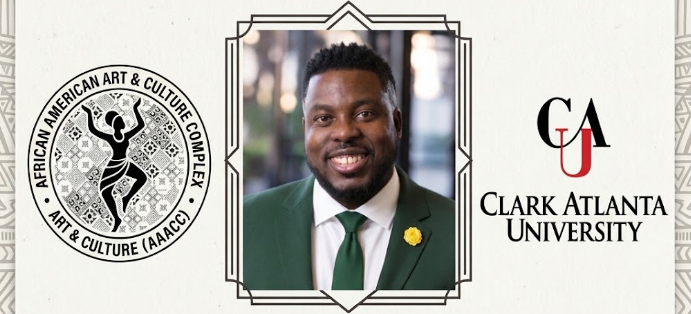
Dr. Murrell D. Green’s appointment as permanent Executive Director of San Francisco’s African American Art & Culture Complex is a leadership story. The balance sheet underneath it is the real story and it is one every institution builder in the Diaspora should be reading closely.

A boy swept the floor of a house that was not his. He was paid little and understood less, only that the house held things worth protecting; paintings, records, the particular quiet of people who had built something out of almost nothing. Years passed. The boy left, earned degrees, learned how institutions actually survive: budgets, boards, the difference between a gift and a foundation. When the house needed someone to hold its deed, the family that had raised it did not look for a stranger with a impressive resume. They looked for the boy who already knew where the floor creaked. He returned, not as a favor to his childhood, but because he alone understood that a house kept alive by donations year after year is not yet an institution. It is a beloved dependency. His first job was not to sweep. It was to ask who owns the walls, who owns the roof, and what happens the year the sweeping stops being enough.

The African American Art & Culture Complex in San Francisco’s Western Addition announced on June 1, 2026, that Dr. Murrell D. Green will become its permanent Executive Director, closing a six-month national search that drew more than 300 applicants. Coverage of the appointment has, understandably, centered on sentiment: a Fillmore native, raised in the shadow of the very building he now leads, returning home to steward a 32-year-old cultural institution. That framing is accurate. It is also incomplete. The more consequential story is what Dr. Green inherits financially, and what his selection signals about how HBCU-trained leadership is increasingly being asked to solve problems that Black cultural institutions have never fully solved for themselves — capital structure, revenue diversification, and reserve strength.

Dr. Green’s credentials read as a case study in institutional density built across multiple systems rather than one. He holds degrees from two PWIs, and most importantly Clark Atlanta University, and currently serves as Dean of Counseling and Wellness Services within the California Community College system. He previously sat as an elected Trustee of City College of San Francisco, having first been appointed by then-Mayor London Breed. His resume also includes President-Elect of the African American Male Education Network & Development, Board Vice President of Alive & Free/Omega Boys Club, and Advisory Board Chair for the Bayview YMCA. This is not a cultural sector career. It is a governance and education-administration career that happens to be arriving at a cultural institution and that distinction matters for how the Complex should now be run.

It matters because Dr. Green’s own history with the Complex predates his credentials. He served the organization years ago as Office Manager and Youth Leader, and, in a detail the Complex’s own announcement highlighted with evident affection, once played both Santa and “Wakanda Claus” at its community holiday events. The Board’s decision to return to a familiar face after a lengthy, well-publicized national search is itself an institutional signal worth reading. Continuity of relationship, not novelty of resume, was treated as the higher-value asset. For institutions built on community trust rather than market share, that is often the correct call but it is a call that only pays off if the returning leader is empowered to change the underlying model, not simply preserve it.

The Complex’s own recent history underscores why continuity was treated as a strategic asset rather than a consolation choice. Dr. Green succeeds Niquole Esters, who served as Interim Executive Director beginning last August after the departure of co-directors Melonie and Melorra Green (no relation) following eight years of joint leadership. In a short window, Esters opened a building-wide exhibition on artist Emory Douglas that drew significant crowds and press coverage, overhauled the Complex’s communications infrastructure, and expanded its Community Day partnerships. The Board’s public praise for that tenure suggests the institution enters this transition with operational momentum rather than crisis. That is a genuine advantage. It is also a reason the coming period should be judged on capital strategy, not merely on programming and visibility, both of which the Complex has already demonstrated it can produce.

That underlying model is where the self-interest case begins. Public tax filings show the Complex generated $3.84 million in revenue against $3.43 million in expenses for the fiscal year ending June 2024, a net gain of roughly $410,000 and net assets of $1.42 million. On its face, a healthy year. Underneath it, a structurally fragile one: contributions accounted for 85.9 percent of total revenue, program services for just 7.9 percent, and investment income for zero dollars — in any year on record. The building itself, a 32,000-square-foot former brewery converted into cultural space across the 1980s and ’90s, is owned outright by the City and County of San Francisco, not the Complex. The organization that Dr. Green now leads appears to hold no real estate, no endowment, and no investment portfolio. It holds relationships, and it converts those relationships into contributions, year after year, at whatever rate donors are willing to sustain.

That rate is not stable. The prior fiscal year, ending June 2023, produced $4.45 million in revenue but a net loss of $188,000. The year before that, ending June 2022, produced a net loss of $138,861. A donation-dependent institution with no investment income and no owned capital does not merely risk a bad year it risks a bad year becoming a permanent contraction, because there is no reserve architecture designed to absorb it. This is the same structural vulnerability that HBCU Money has documented repeatedly in HBCU endowment reporting: thin reserves, revenue concentration in gifts rather than diversified income, and an absence of owned, appreciating assets standing between the institution and its next difficult fiscal year. The Complex is not an HBCU. But it is subject to the identical arithmetic, and it is now led by someone whose training runs directly through one.

The timing raises the stakes further. The Complex’s building at 762 Fulton Street is slated to close temporarily for seismic renovation beginning in January 2027 — seven months into Dr. Green’s tenure. A forced closure of a donation-dependent institution’s only physical venue is precisely the scenario a thin balance sheet is least equipped to survive. Board Vice President Mattie Scott framed the closure as a test of resilience, the certainty that the Complex will reopen stronger. That certainty will be manufactured by financial planning, not sentiment, and it is now Dr. Green’s job to manufacture it.

There is a broader pattern here worth naming plainly for readers building their own institutions across the Diaspora. Clark Atlanta, like Fisk, Tougaloo, Dillard, and Xavier of Louisiana, continues to produce administrators who move into leadership of civic and cultural institutions well outside the HBCU ecosystem itself, an export of trained human capital that rarely gets counted in conversations about HBCU return on investment, but that compounds institutional capacity across Black America regardless of which building the leader ultimately sits in. The question African American institution builders should be tracking over the next eighteen months is not whether Dr. Green succeeds as a beloved, familiar presence. He clearly already has. The question is whether he converts an institution held together by annual generosity into one held together by owned capital; diversified program revenue, an actual investment posture, and reserves sized to survive a scheduled closure rather than merely announce faith in the reopening.

That is the difference between staffing a culture and owning it. San Francisco’s Black community will be watching Dr. Green’s leadership for what it means to the Fillmore. Institution builders elsewhere in the Diaspora should be watching it for what it reveals about the financial architecture underneath nearly every comparable Black cultural institution in the country and whether HBCU-trained leadership can finally be the generation that rebuilds that architecture, not just occupies it.

Disclaimer: This article was assisted by ClaudeAI.
That Kind of Man Is Never Poor: Why Educated, Enterprising, and Ambitious Black Love Demands Mutual Support

Being deeply loved by someone gives you strength, while loving someone deeply gives you courage. — Lao Tzu

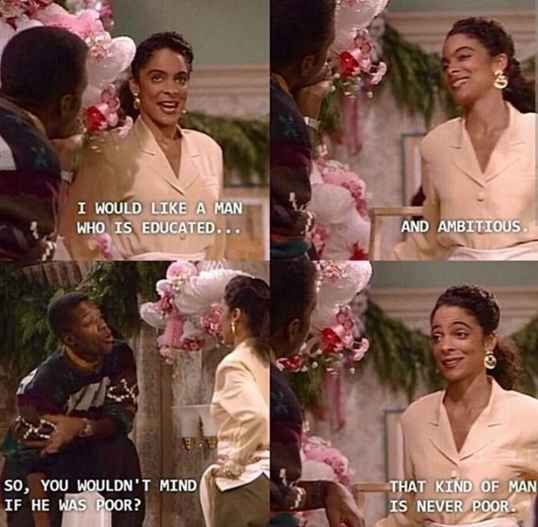
When A Different World aired that exchange in the late 1980s, it landed at the intersection of two of Black America’s oldest and most contested conversations: what we owe each other in love, and what it means to build a life of purpose and prosperity together. Whitley wasn’t asking for a rich man. She was describing an orientation toward life — educated, enterprising, and ambitious — and asserting that a person who lives that way will never be poor in the ways that truly count. But there was always a condition embedded in that vision, one the show understood even if it didn’t always name it explicitly: that kind of life requires a partner who isn’t just admiring from the sidelines. It requires someone who is building alongside you, pushing when the vision dims, holding when the weight becomes too much, and trusting even when the outcome isn’t yet visible. The kind of Black love that produces educated, enterprising, and ambitious people is not passive. It is active, intentional, and deeply communal.

Educated. Enterprising. Ambitious. These words sit comfortably on a vision board. They sound aspirational. But strip away the aesthetics and examine what each one actually demands of a Black person navigating this country, and you quickly understand why none of them can be carried alone. To be educated in Black America is not simply to hold a degree. It is to have committed to a process of self-understanding and world-understanding that this society has never made free or easy. For the hundreds of thousands who chose an HBCU, it was a decision to be educated and loved at the same time — to develop intellectual rigor inside institutions that did not require them to leave their Blackness at the door. That experience shapes how you move through the world, how you build, and critically, what you need from a partner. You need someone who values what you carry from that formation, who sees your education not as a credential but as a worldview that deserves to be exercised. A partner who belittles your ambitions, dismisses your networks, or resents your growth is not a partner in any real sense. They are a ceiling. To be enterprising is to see possibilities where systems have deliberately created barriers. Black entrepreneurship in this country has always been an act of defiance and an act of community building simultaneously. But enterprising requires risk. It requires long stretches of uncertainty, of not knowing if the next quarter will hold. A partner who cannot sit in that uncertainty with you, who confuses instability with failure, who demands the comfort of a steady paycheck over the potential of a built thing — that partnership will eventually become a negotiation between your dreams and their fears. And in that negotiation, someone always loses. To be ambitious is to insist that your potential has no ceiling. In Black America, that insistence is both a personal conviction and a political act. Ambition burns a tremendous amount of fuel. It consumes time, emotional bandwidth, and sometimes the very relationships that were supposed to sustain it. A partner who cannot celebrate your wins because your wins somehow diminish them, who needs you to stay small so they feel safe, is not a companion in ambition. They are its opposite. This is why Whitley’s answer to Dwayne was so quietly radical. She was not describing a checklist. She was describing a compatibility of spirit — the recognition that two people with aligned orientations toward growth could build something neither could build alone.

It is easy to focus on Whitley in this conversation because her words were so precise. But Dwayne’s question deserves equal examination. He did not ask what Whitley wanted in a husband — as if cataloguing features — but what kind of husband she wanted. He was asking about character, about essence. Dwayne Wayne was himself educated, enterprising, and ambitious. A genius-level engineering student at Hillman, a man who went on to a career that took him literally around the world. But what made him a worthy partner for Whitley, and what made their fictional union one of the most enduring love stories in Black popular culture, was not just his individual achievement. It was what he did with his love. He showed up. He advocated. He flew to her wedding to another man and interrupted it because he knew — and she knew — that their partnership was bigger than the fear that had kept them apart. That is what mutual support looks like in its most dramatic form. But most of us will not have our moment at an altar with a ballroom watching. Most of us will have the quieter, harder moments: the conversation at 11pm when one partner has been passed over again at work and needs to hear that their worth is not determined by that institution’s blindness. The weekend when one partner is grinding on a business plan and the other has to carry the household without resentment. The year when one partner’s career accelerates and the other has to find their own footing without collapsing into competition. Those moments are where Black love either becomes what it was always capable of being — or where it begins to quietly erode.

There is a damaging script in some corners of our community that frames one partner’s support for the other as sacrifice — as if partnership is a zero-sum arrangement where one person’s advancement necessarily comes at the other’s expense. This script has done enormous harm. It has produced couples who keep score rather than build, who compete where they should collaborate, and who eventually sit across from each other with years of resentment between them. The couples and partnerships that thrive understand something different. They understand that support is strategy. When you invest in your partner’s growth, you are not losing; you are expanding the resources available to your shared life. When a husband supports his wife’s MBA program by increasing his domestic load for two years, he is not diminished. He is invested. When a wife believes in her husband’s business concept before the market does and holds the household steady while he builds, she is not sacrificing her own ambition. She is deploying it strategically, because she understands that what they are building together is bigger than what either could build alone. This is the economic logic of Black love, and it is powerful. The HBCU power couples who go on to build medical practices, investment funds, cultural institutions, and businesses that employ other Black people do not build those things in spite of their partnerships. They build them through their partnerships. The art empire, the medical group, the legal practice — these are not solo achievements. They are the products of two people who chose, over and over again, to take the other’s dreams seriously.

And here is where that vision expands into something even larger — because educated, enterprising, and ambitious Black love is never just about two people. It has always carried a community inside it, and when it is at its most powerful, it carries an entire Diaspora. When two HBCU graduates build a life together, they bring their networks, their institutions, their mentors, and their commitments with them. The Hillman alumni network that became the seed capital for a Pan-African art fund was not a business transaction. It was the activation of bonds formed through years of shared education and shared love for an institution. Those investors did not write checks because of a pitch deck. They wrote checks because they trusted each other, because Hillman had taught them to see their prosperity as connected. That is the genius embedded in the HBCU tradition — it does not just educate individuals, it builds the relational infrastructure through which communities can act collectively. And it is Black love, in both the romantic and communal sense, that activates that infrastructure over and over again across generations.

But the full scope of what that love can build becomes visible only when we follow it to its institutional conclusion. Individual success, however impressive, is ultimately fragile. Wealth concentrated in one person can be lost in a generation. Knowledge that lives in one mind leaves when that person does. Influence that depends on a single relationship dissolves when that relationship ends. What endures is what gets built into institutions — into ownership structures, endowments, programs, and organizations that outlast any individual and continue to serve the community long after the founders are gone. This is why the most consequential dimension of educated, enterprising, and ambitious Black love is not what it produces in a household. It is what it deposits into institutions. The Black couple that builds a business strong enough to employ a hundred people and endow a scholarship fund is not just building a legacy for their children. They are building infrastructure for a community. The pair that pours their professional expertise back into an HBCU — consulting, donating, recruiting, advocating — is strengthening an institution that will educate and love thousands of Black students for decades to come. The partnership that structures its wealth to include collective vehicles — investment funds, foundations, land trusts, community development corporations — is doing something that individual accumulation, no matter how impressive, simply cannot do. It is converting personal achievement into communal capacity.

The Diaspora dimension of this is not incidental. It is essential. Black America has never existed in isolation from the broader African Diaspora, and the most visionary HBCU partnerships have always understood this. When Whitley Gilbert-Wayne stood in a Tokyo gallery and asked why African Americans were not building art collections anchored in the work of artists from across the Diaspora — from Salvador to Senegal, from Detroit to Durban — she was asking a fundamentally institutional question. Not just who collects this art, but who owns the infrastructure through which it is valued, appraised, traded, and preserved. Not just who appreciates Black beauty, but who controls the institutions that define and protect it. The Pan-African Art Appraisal program she helped establish between an HBCU and the University of Namibia was not a cultural gesture. It was an institutional act — the creation of a pipeline that would train a new generation of appraisers with both the technical competence and the cultural fluency to set the value of Diaspora art on terms that served the Diaspora. That is institutional ownership. That is what educated, enterprising, and ambitious Black love looks like when it reaches its full expression. And it could not have been built by either Whitley or Dwayne alone. It required the engineering career that took them to Tokyo. It required the art history formation that gave Whitley the language to see what she was seeing. It required the Hillman network that provided the initial capital and the Hillman-forged trust that made that capital available. It required, underneath all of it, a partnership that held steady across continents and career pivots and the slow, difficult work of building something that had never existed before.

What Dwayne and Whitley modeled — in fiction, and what so many HBCU couples have modeled in fact — is that Black love at its most generative is not primarily a private arrangement. It is a public act. Every time a Black couple directs their business patronage to Black-owned firms, they are building Black enterprise. Every time they mentor a younger HBCU graduate, they are extending the network that made their own success possible. Every time they sit on a board, anchor a fund, or pressure an institution to collect and commission work by Diaspora artists, they are expanding the definition of who gets to own and control cultural and financial infrastructure. Every time they build a business with an exit strategy that includes employee ownership or community benefit, they are ensuring that the wealth they created does not simply exit the community when they do. This is not idealism. This is what institutional ownership actually looks like in practice, and it is built one educated, enterprising, ambitious Black partnership at a time.

This is what A Different World was always pointing toward, even in its lightest moments. The romance between Dwayne and Whitley existed inside a world populated by people who pushed each other, competed with each other, loved each other, and collectively embodied the argument that Black excellence is not a solitary achievement. It is produced in community, sustained in community, and ultimately returned to community — and to a Diaspora that has always been waiting for us to bring our full selves, and our full institutional capacity, home.

If you are educated, enterprising, and ambitious — or trying to become those things — you are carrying a vision that is bigger than your own comfort. You are carrying, whether you have named it this way or not, an argument about what Black people are capable of when given the space, the resources, and the love to fully become. That vision requires a partner who takes it seriously. Not someone who merely tolerates your ambition, but someone who sees it as part of what they fell in love with. Not someone who supports you when it is convenient, but someone who holds the ground when the terrain gets difficult. Not someone who loves you in spite of your drive, but someone whose own drive calls yours forward. And if you are that partner for someone else, understand the magnitude of what you are doing. The quiet support, the unanticipated covering, the refusal to compete where you should collaborate — these are not small acts. They are the infrastructure on which entire legacies, and entire institutions, are built. The spouse who holds the household while the other writes the dissertation. The partner who talks you back from quitting. The friend-turned-love who looks at your half-formed idea and says, without hesitation, “I see it. Let’s build it.” These acts do not always make headlines. But they make everything else possible — the businesses, the collections, the endowments, the programs, the institutions that will carry Black and Diaspora communities forward long after any of us are here to see it.

Whitley Gilbert was not describing a fantasy when she told Dwayne what she wanted. She was describing a reality she was already willing to be part of — a partnership defined not by the presence of wealth but by the presence of character. Educated. Enterprising. Ambitious. And underneath all of it, the kind of love that builds, holds, risks, believes, and ultimately deposits something permanent into the world. That kind of love is never poor. And the institutions it builds are the inheritance of a Diaspora that was always worth the investment.


HBCU Money covers economic, finance, and investment news from an HBCU perspective. Follow us at hbcumoney.com.

Disclaimer: This article was assisted by ClaudeAI.