Category Archives: Lifestyle

No, Your (Black) Parents Are Never Giving You Your Birth Certificate

“History is not everything, but it is a starting point. History is a clock that people use to tell their political and cultural time of day.” – Dr. John H. Clarke
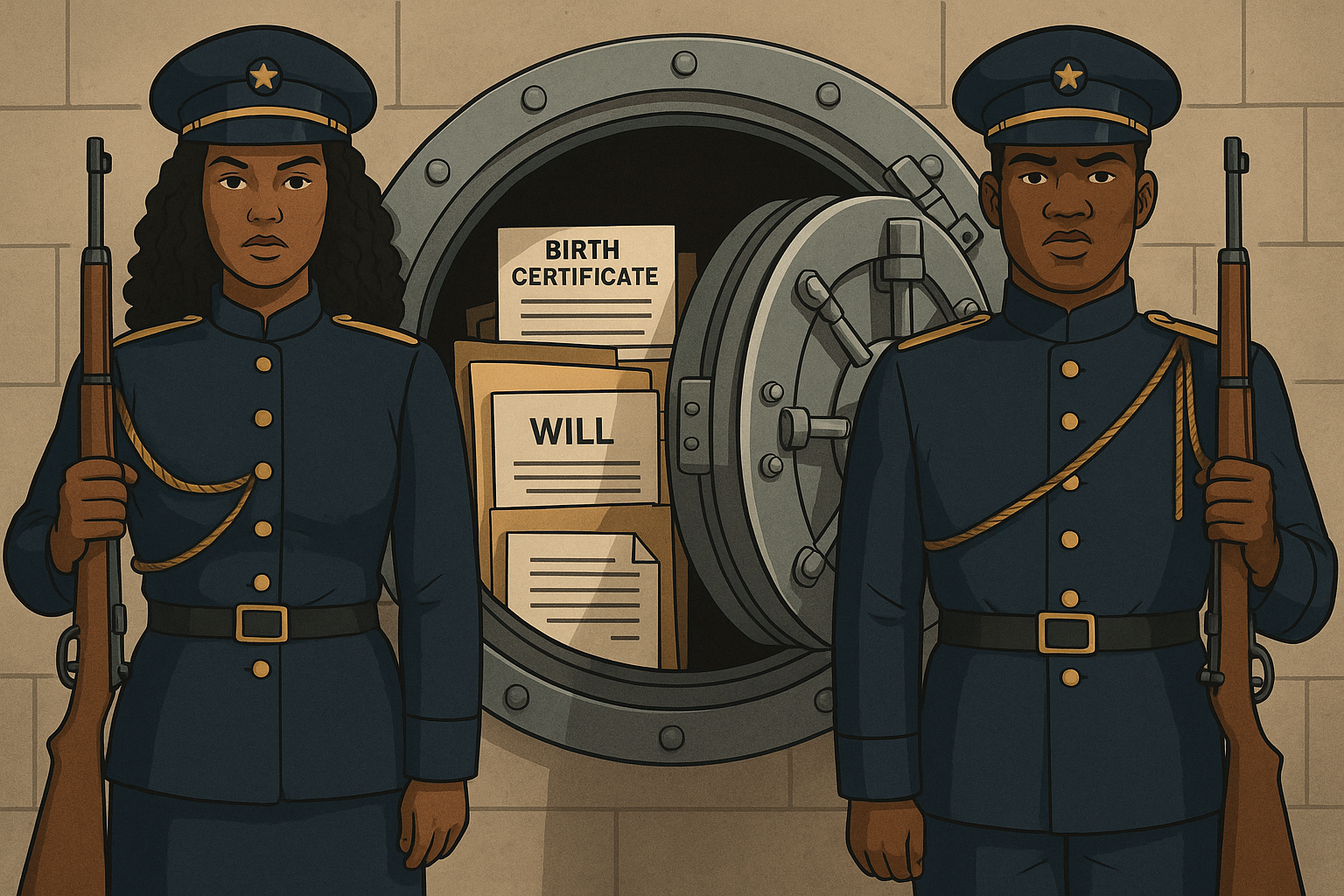
When J.J. McAvoy posted that she had called her parents for her birth certificate — she is 32 years old, married, and had just given birth — and received a photocopy in return, the laughter that swept across social media was immediate and recognizable. The joke landed because so many African Americans already lived it. But McAvoy herself was quick to reframe what she had set in motion. She noted that many of those taking the post with undue gravity were, in her observation, mostly white and that within Black communities, and among children of immigrants broadly, the hoarding of vital documents is less a dysfunction than a cultural inheritance, a running joke with serious roots.

She was right to make the distinction, and right not to dwell on it. The gap in comprehension she identified is real, but it is a symptom rather than a subject. The more substantive question is what that document like a birth certificate, a social security card, a passport held at the airport by a father who will not be reasoned with has historically meant to the people who guard it so fiercely.

The story of documentation and Black life in America is, at its core, a story about legal existence being contingent and contested. In the antebellum South, free Black Americans were required to carry freedom papers at all times, documents that proved they were not property. The absence of those papers whether lost, stolen, or destroyed by someone who stood to profit from the confusion could mean re-enslavement regardless of the truth. Men and women who had purchased their freedom, who had been manumitted by slaveholders, who had been born free, were reduced to the credibility of their paperwork in a system that had already decided their testimony was worth less than the word of any white stranger. That terror was not abstract. It had names and dates and courthouses attached to it.

After emancipation, the Freedmen’s Bureau attempted to register the formerly enslaved — births, marriages, labor contracts — in part because these populations had been deliberately excluded from the civic record-keeping that gave other Americans legal standing and recognizition as humans and not property. The effort was incomplete and short-lived, terminated by a federal government that lost its appetite for Reconstruction before the work was finished. For much of the late nineteenth and early twentieth centuries, Black births in the rural South were irregularly registered or not registered at all, and the consequences were not merely administrative. They affected access to public education, to Social Security benefits when the program launched in 1935, to military service documentation, and ultimately to the GI Bill, the single largest wealth-generating policy instrument of the twentieth century, from which Black veterans were largely excluded in practice even when nominally included in law. A generation of men who had served their country returned home and were told, in the language of paperwork and procedure, that the country did not fully recognize them in return.

To understand what that does to a family’s relationship with documents is to understand why a mother in 2025 hands her 32-year-old daughter a photocopy with the quiet conviction that she is doing the right thing. The original stays home. It always has. It always will.

The immigrant dimension that McAvoy raised adds a distinct but parallel layer. Across the African diaspora from the Caribbean to West Africa to East Africa bureaucratic records have historically been instruments of colonial administration, tools used to enumerate populations for taxation, labor extraction, and political control rather than for their benefit. The post-independence period did not always improve the relationship between these communities and their states’ record-keeping capacities. Families who migrated to the United Kingdom, Canada, or the United States brought with them a highly practical awareness that official documentation was difficult to obtain, slow to replace, and potentially decisive at border crossings, immigration hearings, and employment offices. The father who holds all the passports at the airport is not performing control for its own sake. He is managing risk in an environment where he has learned, from experience or inheritance, that the cost of a lost document may be measured in years, not inconvenience.

The white commenters who read McAvoy’s post and felt something like offense who interpreted the photocopy as a slight against her autonomy, a failure of parental trust, or evidence of some controlling dynamic in need of correction were responding from a place of privilege, one so ambient and unexamined that it had long since stopped announcing itself. The comfort of never having needed to fear a document, or its absence, had quietly become their baseline assumption about how the world works and baselines, by nature, are invisible to the people standing on them. This is not to say that white American parents never hold onto their children’s documents many do, and for reasons that are practical, sentimental, or simply habitual. But the framework underneath that habit is categorically different. When a Black mother keeps the original and hands her daughter a photocopy, she is participating in a tradition of protective custodianship that was forged under conditions of genuine institutional threat. When the behavior appears in other communities, it tends to reflect preference or personality rather than the accumulated memory of a legal system that spent generations using paperwork as an instrument of exclusion. The gesture may look the same from the outside. The history behind it is not.

But that experience has a shape, and its shape matters here. For many white Americans, particularly those whose families arrived in earlier waves of European immigration and were absorbed into the documented mainstream within a generation or two, vital records have long been administrative conveniences rather than instruments of survival. A birth certificate sits in a drawer until it is needed for a passport, then returns to the drawer. The state is presumed, on the whole, to be a reliable record-keeper and a reasonably neutral one. When something is lost, it can be replaced without particular consequence. What that experience does not contain and therefore cannot easily imagine the gravity of is the long American tradition of using documentation not to protect Black people but to control, exclude, and erase them.

This is not ancient history dressed up for rhetorical effect. It is a through line. In the postbellum South, the absence of a birth certificate was used to deny Black children access to public schools. Across the early twentieth century, irregular birth registration in Black communities, a product of deliberate neglect rather than accident, was later used to disqualify those same people from New Deal programs, Social Security, and veterans’ benefits. The administrative record was never neutral. It was a gate, and the gatekeepers were selective about who they waved through. In more recent decades, voter ID laws have disproportionately affected Black Americans in part because the chain of documentation required to obtain qualifying identification — a birth certificate to get a state ID, a state ID to get further documentation collapses for people whose births were never properly registered or whose records were lost, damaged, or bureaucratically stranded across county lines. The Kafkaesque quality of that loop is not incidental. It is the contemporary expression of a system that has historically found it useful to keep certain people difficult to verify. To be undocumented, in the eyes of the American state, has too often meant being unentitled to vote, to own, to claim what was owed.

The land tells the same story. Heirs property, land passed down across generations without a will or clear legal title is, at its root, a documentation failure that was never accidental. During the Jim Crow era, many Black families deliberately avoided formal documentation of their land holdings out of a well-founded distrust of white attorneys and a court system that had shown them repeatedly it was not a venue for justice but another instrument of exploitation. The bitter irony is that the very avoidance of a system designed to harm them created a vulnerability that system then moved to exploit. The U.S. Department of Agriculture has called heirs property the leading cause of Black involuntary land loss, estimating it contributed to a 90 percent decline in Black-owned farmland between 1910 and 1997. Today, heirs property is estimated to make up more than a third of Southern Black-owned land — some 3.5 million acres worth more than $28 billion — with owners left particularly vulnerable to speculators and developers who can exploit partition laws to acquire their property, in some cases by purchasing the interest of a single heir and then forcing a full sale as a fractional owner. In Brazos County, Texas, African American families lost long-held acreage to men who weaponized arcane documents to acquire plots potentially worth millions, land that in some cases had been held since before living memory, worked by hand across multiple generations. What was taken was not simply real estate. It was the accumulated wealth of people who had been denied nearly every other avenue for building it. The birth certificate in the fireproof box and the deed that was never drawn up are expressions of the same wound, the wound of a people who learned, at great cost, that the law’s paperwork could be turned against them, and who then had to decide, with imperfect information and scarce resources, whether engaging with it or avoiding it posed the greater danger. Both choices carried consequences. The system ensured that.
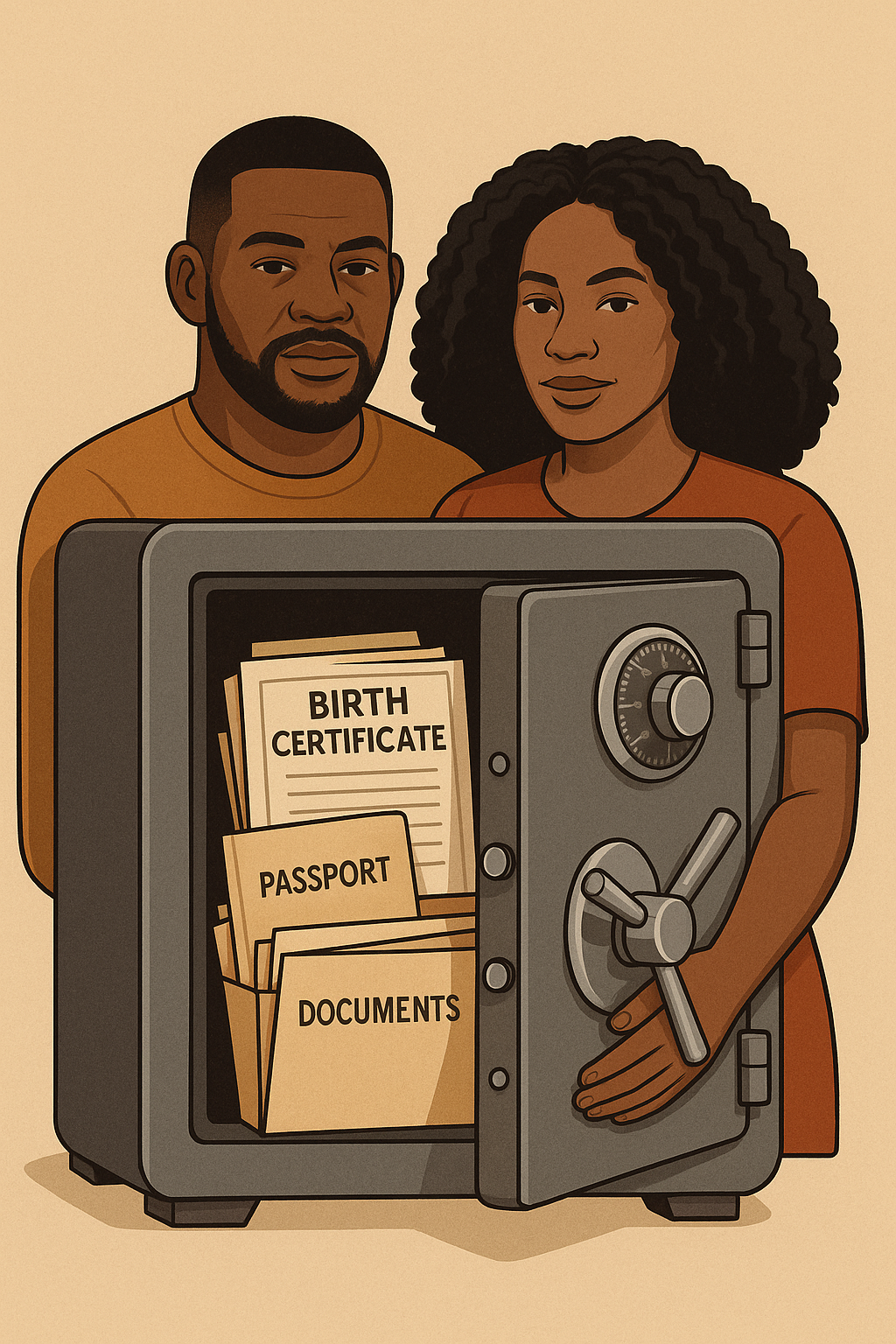
That presumption of institutional reliability, then, is itself a form of inherited privilege not dramatic or visible, but structural, and so deeply internalized that its absence in others can read as pathology rather than history. To look at a Black mother handing her adult daughter a photocopy and see dysfunction is to see only the surface of an arrangement whose foundations run several centuries deep. The offense taken in those comments was, in a sense, the product of a history too comfortable to have produced the habit being observed, a history in which the document was never a weapon aimed at you, and so you cannot quite believe it was ever aimed at anyone.

This dynamic plays out in notable ways within the culture of Historically Black Colleges and Universities. Move-in day at an HBCU is, among many things, a study in the document-as-heirloom. Parents arrive not just with linens and storage bins but with accordion folders thick with immunization records, financial aid correspondence, and original birth certificates that will not be staying in any dorm room drawer. Admissions counselors at HBCUs have long understood the architecture of this arrangement — when a student answers a records request with “my mom has that,” it is not treated as negligence but recognized as a family system functioning exactly as designed. Financial aid officers are accustomed to parents appearing at the table for signings long past the age of legal majority, not because the student is incapable but because the family has not yet completed its own internal transfer of authority. Registrars learn, over years of practice, that some students cannot recite their Social Security numbers from memory because those numbers live in a locked cabinet several states away. At HBCUs, these realities are met with institutional familiarity rather than bureaucratic impatience, a quiet advantage compared to the more rigid cultures of predominantly white institutions, where the assumption of individual administrative independence can feel, to students carrying this inheritance, like a form of alienation.

It is worth noting, as McAvoy did briefly, that this behavior can also carry a more complicated valence that can be control over adult children expressed through the withholding of legal personhood, a dynamic that is not unique to any community but takes on particular texture where independence has historically been constrained by external forces. The refusal of a parent to release a document can be love and caution in equal measure, but it can also be an assertion of ongoing authority that outlasts its original justification. Both things are true and coexist without contradiction.

What the joke obscures, and what the history illuminates, is the quiet administrative heroism that this behavior represents across generations. Grandmothers who maintained informal genealogies because census records were incomplete or falsified. Church ledgers that served as the only registration of births in communities where the county courthouse was not a safe place. Families who kept originals under mattresses and in kitchen cabinets because they had learned the hard way that institutions lose things, or make things disappear. The photocopy McAvoy received is not a failure of trust in her, it is an artifact of that long vigilance, passed down intact.

Eventually, there comes a time when the document must change hands. Whether it is applying for a passport, enrolling a child in school, or as in McAvoy’s case giving birth to the next generation, adulthood makes its administrative demands, and the family archive must begin its transfer. The transition is rarely smooth, because what is being transferred is not merely paper. The most effective approach is one that frames the conversation not as a retrieval but as a succession signaling to the parent that the custodial function they have performed for decades is not being dismissed but inherited. A request built around the language of responsibility, of building a family file and carrying the record forward, lands with considerably more weight than a casual ask between other errands. Offering to digitize the entire family archive to scan and organize every document the household holds reframes the transaction as continuation rather than extraction, and gives the parent something to receive rather than simply something to surrender. And beneath any practical negotiation, there is the recognition that their reluctance was never spite. It was stewardship, practiced under conditions that made stewardship necessary.

The gap this dynamic reveals also represents an opening. A culturally responsive document safekeeping and digital archiving service built specifically for African American families sitting somewhere between a secure cloud vault, a legacy planning firm, and a notarial service, and animated by the particular anxieties and histories this community carries does not yet exist at meaningful scale. Black-owned banks and credit unions are especially well-positioned to move into this space, bundling document protection and vital records vaulting with existing wealth-building and financial literacy programs. The vision is not complicated: a family opens a savings account and, alongside it, receives access to a secure repository for their vital records, estate documents, and generational paperwork all of it portable, encrypted, and governed by the family rather than an institution with a different set of interests. In a community where trust has been earned slowly and lost quickly, that kind of service is not merely a product. It is a cultural preservation mission with a business model attached.

What a viral moment like this one surfaces, beneath the laughter, is that communities navigate the world differently depending on what history has taught them the stakes of navigation are. For those who have never had reason to doubt that the state would honor their existence when called upon to do so, a birth certificate is a formality. For those whose families have lived through its denial, its destruction, or its instrumentalization against them, it is something considerably more serious and the person who holds it is performing a function that goes well beyond filing.

So yes, laugh at the photocopy. The humor is earned and it is real. But when the original finally passes into your hands embossed seal, official signature, the full weight of the state’s acknowledgment that you exist — take a moment to understand what your parents were holding all those years. They were not just keeping a document safe. They were keeping you legible in a world that has not always been eager to read you. That is not bureaucracy. That is love with a filing system.

Disclaimer: This article was assisted by ClaudeAI.

A Different World, Same Old Hierarchies: Colorism, Class, and the Untold Pairings of Hillman College

“Television doesn’t just reflect our world—it reinforces its unspoken rules. And sometimes, it’s in what’s left unsaid that the truth screams loudest.”

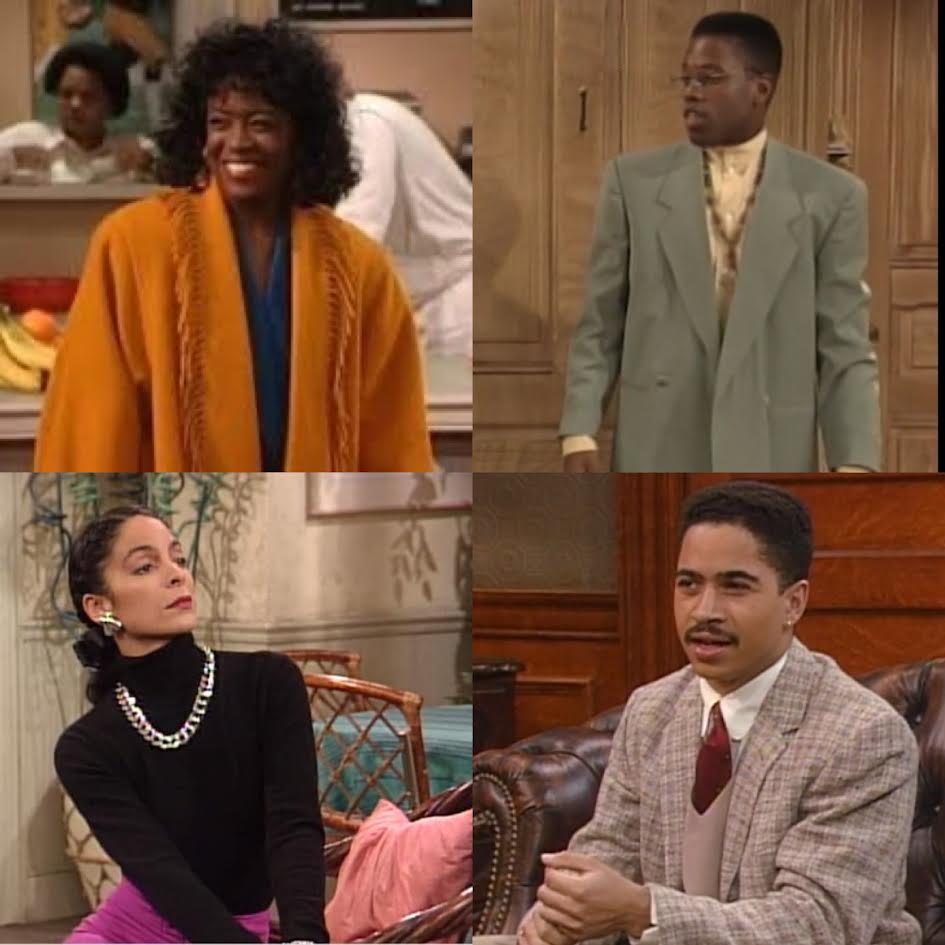
There is perhaps no show more foundational to African American Gen X and elder millennial identity than A Different World. Premiering in 1987 as a spinoff from The Cosby Show, the sitcom quickly found its own voice and purpose, blossoming into a cultural beacon that reflected the richness and complexity of Black college life at fictional Hillman College—an HBCU modeled after Spelman, Howard, and other elite institutions.

From apartheid and HIV awareness to campus politics and colorism, the show tackled subjects few mainstream programs dared to touch. But even within its groundbreaking storytelling, some narratives were never fully explored. Perhaps most glaring among these were the unexplored romantic pairings of Ron Johnson and Whitley Gilbert, and Kimberly Reese and Dwayne Wayne. Their absence is not simply a matter of creative choice, but rather a symptom of entrenched internalized hierarchies of colorism, class, and gendered desirability—even in Black-led creative spaces.

This isn’t merely nostalgia-fueled fan fiction. It’s a cultural audit.

Ron Johnson: Miscast by Archetype, Not Background

Ronald Johnson, Jr. was not some scrappy kid from the margins. He was a light-skinned, second-generation college student from Detroit, Michigan. His father owned a car dealership, and Ron worked summers there—signaling not just work ethic, but a proximity to Black wealth and business infrastructure. In fact, by Hillman’s standards, he and Whitley Gilbert were socioeconomically parallel: both came from upper-middle-class families, both had access to private social capital, and both had expectations of upward mobility baked into their upbringing.

And yet, Ron’s portrayal consistently tilted toward buffoonery. He was the punchline. The skirt-chaser. The guy you liked but didn’t take seriously. His aesthetic—flashy suits, jewelry, and New Jack Swing flair—was coded as nouveau riche and unserious, despite being emblematic of a generation of young Black men redefining business and culture.

Meanwhile, Whitley Gilbert, with her Southern debutante air, was elevated as aspirational. She was light-skinned, soft-spoken (when she wanted to be), and came from a family steeped in respectability politics. That she would end up with Dwayne Wayne—a Brooklyn-born, dark-skinned, ambitious math major with a heart of gold—was played as a triumph of emotional growth and opposites attracting. But the coupling obscured the more natural pairing: Whitley and Ron.

Why were two light-skinned, upper-middle-class, culturally fluent characters kept apart?

The answer lies in how class and colorism intersect with gender expectations in Black storytelling. Ron’s light skin and wealth didn’t earn him narrative maturity because he was not written as emotionally serious. Whitley’s light skin and wealth did, because Black women must still fit a limited spectrum of desirability to be seen as love-worthy.

The Subtle Rejection of Intra-Class, Intra-Color Love

Pairing Whitley and Ron could have offered a natural and compelling relationship arc, exploring how two Black elite youth—one from the industrial North, one from the genteel South—navigate love, identity, and social expectations. Ron was not without emotional depth. He showed loyalty, ambition (eventually co-owning a nightclub), and a genuine desire to be taken seriously.

But Whitley’s arc was preordained. She was meant to be elevated—refined through her relationship with Dwayne Wayne, whose dark skin, nerdy brilliance, and working-class roots made him both lovable and “in need of” polish. The show allowed Dwayne to evolve from a bumbling flirt into a serious partner, but that grace wasn’t extended to Ron. His business acumen was never valorized. His family wealth never framed as legacy-building. His light skin did not shield him from being typecast.

Why? Because Black masculinity on screen is often given limited templates: the hustler, the hero, or the helpmate. Ron didn’t fit any box neatly enough. He was light-skinned without gravitas, rich without respect, and flirtatious without the redemption arc. The result? He was denied the narrative dignity of love with someone in his actual social class.

Whitley Gilbert: The Chosen Debutante

Whitley’s character arc—from elitist to empathetic—was among the show’s most powerful. Her internal classism was challenged, her superficiality peeled away, and her vulnerability finally exposed. But she was also shielded by her presentation: light-skinned, poised, and conventionally attractive within Eurocentric standards.

This made her “worthy” of the show’s grandest romance—the epic, sometimes rocky, and ultimately redemptive love story with Dwayne Wayne. Their courtship wasn’t just about two young adults figuring it out; it was a narrative about respectability and romantic transformation, a staple of Black middle-class media.

But what if Whitley had fallen for Ron? It wouldn’t have been about transformation. It would have been about familiarity—two people from the same world finding common ground. That wasn’t the story the show wanted to tell. It wanted aspirational transformation, not intra-class reflection.

That choice reveals the quiet but powerful ways in which class and colorism combine to sculpt who gets to be complex, who gets to grow, and who gets chosen.

Kimberly Reese: The Invisible Anchor

If Whitley Gilbert was the show’s belle, Kimberly Reese was its backbone. Played by Charnele Brown, Kim was dark-skinned, hyper-focused, and working multiple jobs to stay afloat in pre-med. She represented a different kind of Black excellence: gritty, grounded, and God-fearing.

Yet, for all her virtues, Kim was largely ignored romantically. She had flings and moments, but never a grand love story. Her pairing with Ron was fleeting. Her moment with Matthew, a white medical student, felt more like a plot device than an earnest exploration of interracial love. She was never positioned as a leading lady in the way Whitley was.

But why not pair Kimberly with Dwayne?

Both were academically driven, socially awkward at times, and navigating the pressures of being exceptional. Both came from working-class families. A relationship between them could have explored what it means to build a future together—struggling to balance career goals, family expectations, and a desire to uplift each other.

Instead, the show doubled down on the colorist formula: dark-skinned man, light-skinned woman. Dwayne and Kimberly were emotionally compatible, but Kim was never allowed to be seen as “soft” or romantic enough to be chosen.

She was the strong Black woman. And in television, that often means being alone.

The Economics of On-Screen Desirability

At HBCUs, where the intersection of class and colorism is often most stark, these dynamics are not fiction. They are lived experience. Generational wealth, skin tone, regional culture—all shape who gets attention, who is seen as “wife material,” and who becomes invisible. A Different World was written by people who understood those dynamics intimately, which is why their omissions are so revealing.

The coupling of Dwayne and Whitley functioned not just as a love story, but as a marketing strategy. A light-skinned woman and dark-skinned man satisfied the public’s craving for aspirational integration—of class, color, and character. Ron and Kim, both of whom would’ve represented more internally coherent couplings with their respective counterparts, were left out not because they lacked chemistry, but because they challenged the marketable image of what Black love was supposed to look like on television.

The Reboot Hillman Needs

What if A Different World were rebooted with new eyes?

  • Ron and Whitley: two heirs to Black economic mobility navigating authenticity, ambition, and vulnerability.
  • Dwayne and Kim: two strivers, from humble beginnings, falling in love through academic rigor and emotional resilience.

Today’s Hillman could tell these stories. And it must. Because representation is not just about being on screen—it’s about how we are portrayed. Who is seen as lovable. Who gets growth. Who gets the happy ending.

If the goal is not just to show Black faces but to dismantle Black hierarchies, then these “what-ifs” are not trivial. They are necessary.

Love in the Shadow of Respectability

A Different World did for HBCUs what few shows have ever done for any institution. It made them aspirational. It brought them into the living rooms of millions. But it also brought with it the quiet assumptions of who gets to be desired, respected, and redeemed.

Ron Johnson was more than a clown. He was a young Black man with legacy wealth, light skin, and untapped emotional depth. Kimberly Reese was more than a study machine. She was the embodiment of strength and softness—if only the writers had allowed it.

The couples we never saw reveal as much about us as the ones we did. And in the silence of those omissions lies the challenge for future creators: will they continue to tell safe stories, or will they tell the stories that make us all feel seen?

Disclaimer: This article was assisted by ChatGPT.

From Showtime to Shutout: What the Lakers Sale Says About Black Ownership in Sports

“Wealth is created in ownership. If you don’t own, you’re always at someone else’s mercy.” – Robert F. Smith

June 2025’s record-shattering $10 billion sale of the Los Angeles Lakers to Guggenheim Partners chief Mark Walter confirmed what many already suspected: franchise values are rocketing into the financial stratosphere. Yet the deal also spotlighted a harsher truth. After nearly a half-century of hard-court brilliance and gridiron dominance, African Americans are still largely locked out of true ownership power. This article examines why—tracing the structural barriers that keep Black wealth on the playing field instead of in the owner’s suite, and outlining the institutional reforms needed to change the score.

From the Field to the Boardroom: Still a One-Way Street

African Americans make up roughly 70–75 percent of NBA players and about 60–65 percent of NFL rosters. In the WNBA, the share is even higher. Yet across 154 combined franchises in the NBA, NFL, MLB, and NHL:

  • Zero teams are majority-owned by African Americans in the NFL, MLB, or NHL.
  • Only one historic example (Robert L. Johnson’s Charlotte Bobcats/Hornets) and one recent example (Michael Jordan, 2010–2023) exist in the NBA.

Three forces keep that door shut:

  1. Intergenerational-Wealth Deficit – Most Black athletes are first-generation millionaires, while many current owners are third- or fourth-generation billionaires.
  2. Limited Collective Capital Vehicles – Black-controlled banks and investment firms are few and undercapitalized relative to mainstream counterparts.
  3. Opaque League Gatekeeping – Franchise valuations above $4 billion and insider-driven vetting processes deter new entrants without deep networks.

The Robert L. Johnson Breakthrough—And the Mirage of Progress

On December 18, 2002, BET founder Robert L. Johnson secured the NBA’s Charlotte expansion franchise for $300 million, becoming the first African American majority owner of a modern U.S. pro team. The milestone was historic, but it proved fragile. Lacking a pipeline of Black institutional capital—no HBCU endowment co-investors, no African American businesses or firms operating as minority owners—Johnson operated alone. By 2010 he sold controlling interest to Michael Jordan, whose own 2023 exit returned the league to its status quo: African American talent on the court, minimal African American equity off it. Symbolic breakthroughs absent institutional follow-through do not create sustainable inclusion.

The LeBron Conundrum: Cultural Power Without Governance Leverage

Billion-dollar athlete-entrepreneur LeBron James epitomizes the new Black business titan—owning film studios, apparel lines, and minority stakes in Fenway Sports Group. Yet even LeBron, arguably the most financially astute athlete of his generation, cannot write a solo check for a majority share of an NBA or NFL team. Average franchise prices now exceed $4 billion in the NBA and $6.5 billion in the NFL.

LeBron’s estimated net worth, while staggering at $1.2 billion, pales in comparison to the financial firepower wielded by new Lakers controlling owner Mark Walter, who is worth an estimated $5.5 to $6 billion personally—and controls access to far greater institutional capital. As CEO of Guggenheim Partners, Walter leads a global financial firm with over $345 billion in assets under management (AUM), according to the firm’s own reporting.

That institutional reach gives Walter an unparalleled advantage: the ability to deploy capital at scale, with leverage, and over long time horizons. His 2012 acquisition of the Los Angeles Dodgers for $2 billion was just the beginning. Now, his control over the Lakers reflects how ownership is secured not by personal wealth alone—but by deep institutional infrastructure.

The gap is not merely one of celebrity or business acumen—it is one of capital architecture. LeBron’s wealth is largely rooted in earned income and venture-backed enterprises, while Walter’s access to Guggenheim’s multi-hundred-billion-dollar asset base enables him to execute major acquisitions swiftly and without co-investors.

Until African Americans gain collective control of similar institutional investment vehicles—through private equity firms, pension-managed funds, or bank-led syndicates—Black excellence in sports will continue to be celebrated on the court, but denied authority in the boardroom.

Building a Syndicate That Can Actually Write a Check

If African Americans are to move from the highlight reel to the cap table, the capital stack must shift from aspirational community pooling to institutional syndication—driven by organizations already designed to deploy large checks and assume complex risk. Pragmatism, not idealism, is the order of the day.

Capital SourceAsset BaseRealistic Deployment Rationale
Black-Owned Banks (18 nationwide)$6.4 billion in assetsFDIC-insured balance sheets, access to low-cost deposits—including the growing wave of Fortune 500 “diversity deposits”—can underwrite debt facilities or pledge Tier 1 capital to a buyout fund.
Black Investment & Private-Equity Firms (e.g., Ariel, Vista, Fairview, RLJ)$70–90 billion AUM (collectively)Deep GP/LP relationships with public pensions and foundations; experienced at assembling $100–$500 million special-purpose vehicles (SPVs) around a single asset.
HBCU Endowments (102 institutions)≈ $5 billion totalAsk for 0.5–1 percent commitments per school—$25–50 million system-wide—providing research access, internships, and brand equity rather than acting as anchors.
Athlete Sidecar FundVariableStructure a managed feeder that lets players co-invest passively (no tithes or self-directing). Capital is professionally deployed—removing behavioral risk.
Corporate & Public PensionsTrillionsMany plans reserve 5–10 percent for “emerging managers.” A Black-led sports-ownership PE fund fits this mandate.

1. Banks as Capital Bridges
Black-owned banks can’t buy teams outright, but they can warehouse capital and extend critical financial infrastructure. By leveraging corporate “diversity deposits” and issuing credit facilities, they can become crucial intermediaries that keep transaction fees and governance influence in Black hands.

2. Investment Firms as Syndicate Architects
Black-led PE firms already understand the terrain. By structuring a flagship $400–$600 million sports-focused fund, they can attract institutional LPs and scale their acquisitions from minority WNBA stakes to majority control in emerging or undervalued leagues.

3. HBCUs as Modest Strategic LPs
HBCUs should not be burdened with anchoring such funds. Instead, they can contribute symbolic capital, student talent pipelines, and academic value. For example, a 1 percent commitment from Howard or Spelman tied to naming rights or internship guarantees would align mission with opportunity.

4. Athletes & African American Families as Co-Investors, Not Donors
A feeder fund with low buy-ins and lock-up periods allows them to invest with institutional support. This protects them from high-risk self-management and ensures alignment with professional fund managers.

5. Execution Timeline

  • 2026–2028: Assemble GP team, secure $150 million from banks and PE partners, with layered support from HBCUs and athlete and African American businesses co-investors.
  • 2028–2032: Close a $500 million Fund I and acquire equity in two WNBA teams and a controlling NWSL stake bundled with real estate.
  • 2032–2037: Launch Fund II at $1 billion, targeting a controlling interest in an MLS or NBA franchise.
  • 2040: Own a major-league asset with governance representation from African American banks, investment firms, and HBCU partners—creating long-term cash flows and intergenerational wealth held by Black institutions.

Media Rights and the Power Gap

Owning teams is only half the battle. The NBA’s next domestic media deal could top $75 billion, and yet no Black-owned network will participate directly in those revenues. Streaming platforms, RSNs, data-analytics firms, and betting partnerships—all profit off Black athletic performance. Until African American institutions enter the media-rights supply chain, the revenue fountainhead remains out of reach.

Cultural Iconography, Financial Dispossession

Hip-hop tracks blare in arenas, sneaker culture drives merchandise sales, and social-media highlights fuel league engagement—but licensing profits flow to predominantly white ownership groups. Careers end; ownership dynasties do not. The average NFL tenure is 3.3 years; Robert Kraft has owned the Patriots for 31 years. Equity compounds; salaries evaporate.

From the Boardroom, Not the Ball Court: Where Owners Really Make Their Money

A glaring misconception is that sports fortunes begin with sports talent. In practice, franchise control stems from non-sports industries:

OwnerTeam(s)Primary Wealth Source
Steve BallmerLA ClippersMicrosoft stock
Stan KroenkeRams, Nuggets, ArsenalReal estate / Walmart marital fortune
Robert KraftPatriotsPaper & packaging
Mark CubanMavericksBroadcast.com tech exit
Joe TsaiNets, LibertyAlibaba IPO
Josh HarrisCommanders, 76ersApollo Global Mgmt. (private equity)

None earned money playing pro sports; all deployed patient, appreciating, often tax-advantaged capital to buy franchises. In contrast, athlete income is earned, highly taxed, and front-loaded. A $200 million NBA contract, after taxes, agents, and lifestyle inflation, seldom equals the liquidity needed for a $6 billion NFL acquisition.

African Americans dominate labor yet rely on labor income to pursue ownership—an uphill climb when the ownership class uses diversified portfolios, inheritance, and leverage. The gap is not just financial; it’s structural.

A Blueprint Forward

African American banks, PE firms, and institutional investors must build syndicates that mirror the strategies of the existing ownership class—while rooting the returns inside Black institutions.

  • 2026–2030 – Launch a $500 million Fund I with contributions from banks, investment firms, HBCUs, and athletes.
  • 2030–2035 – Acquire multiple minority and controlling stakes in undervalued leagues.
  • 2035–2045 – Expand into media-rights, merchandising, and facilities ownership.
  • 2045–2050 – Control a major-league asset and use it to empower future generations via scholarships, pensions, research grants, and equity reinvestment.

Owning the Game—or Owning What Funds the Game?

The persistent call for African American ownership in major league sports raises a deeper question: Should African Americans even prioritize owning sports franchises, when we remain almost entirely absent from the very industries—technology, finance, energy, real estate—that generate the wealth used to buy these teams in the first place?

Mark Walter didn’t become the Lakers’ majority owner through basketball. He did it through Guggenheim Partners—a financial firm managing $345 billion in assets. Steve Ballmer bought the Clippers not from years of courtside ambition, but from cashing out Microsoft stock. Owners dominate sports not because of athletic brilliance, but because they own pipelines, patents, trading desks, and land—the assets that make sports ownership a byproduct, not a goal.

For African Americans, the concern isn’t just that they don’t own the team. It’s that they don’t own the banks that financed the team, the media companies that broadcast the games, or the tech platforms monetizing fan engagement. It is a misallocation of focus to aim for the outcome—sports ownership—without first entering the industries that produce ownership-level capital.

There’s no harm in wanting a seat in the owner’s box. But the more strategic question is: why not aim to own the entire ecosystem? The scoreboard. The stadium real estate. The ticketing software. The AI that tracks player stats. The advertising networks.

Athletes made sports cool. Billionaires made sports profitable. African America must ask whether it wants symbolic entry into an elite club—or whether it wants to control the industries that fund the club.

The real power isn’t just in the arena. It’s in what surrounds it. And until African Americans own those arenas—of finance, data, infrastructure, and media—they will always be positioned to play the game, but not define it.

Final Whistle

The scoreboard of ownership still reads 0-154 against African Americans in most major leagues. Talent fills highlight reels; equity fills trust funds. The route to flipping that score will not be paved by bigger contracts or more MVP trophies. It will be built through African American banks mobilizing capital, investment firms leading syndicates, and HBCU institutions gaining board seats—not just honorary jerseys.

Athletes have inspired generations. Now, institutions must finance generations.

The next dynasty to celebrate should not just hoist a trophy—it should hold a deed.

Disclaimer: This article was assisted by ChatGPT.

Would The Ivy League Athletic Model Work For HBCUs?

“Challenges make you discover things about yourself that you never really knew.” — Cicely Tyson

When you encounter most HBCU alumni regarding their athletic programs they all desire to be a football powerhouse. They believe that this will lead to a land of riches and honey. At the core of this delusion though is that the wealth gap between P5 athletics boosters and HBCU boosters larger than the wealth gap between is greater than the southern most tip of Florida to upstate New York. Phil Knight, University of Oregon booster and Nike owner, has a net worth of $35 billion. Oprah Winfrey is the wealthiest African American HBCU alumni with a net worth of $3 billion and the last we checked does not act as a booster to her alma mater. Meanwhile, Phil Knight in 2012 alone built the University of Oregon football team a facility to the tune of almost $70 million – and got the state legislature to amend a law to make the building legal since it ran afoul of code. But many HBCU alumni believe that if we get the “talent” to come “home” it will level the playing field. It will not. It is exhausting even explaining that the wealthy of many major athletic programs has more to do with the PWI developing and graduating entrepreneurs like Phil Knight who go on to create multibillion firms and therefore have millions to give back than whatever latest 18 year old recruit they have snagged. For greater context, Phil Knight’s building donation is almost 4X Prairie View A&M University’s athletic budget, the highest among all HBCUs.

In our last SWAC/MEAC Financial Review, the two conferences combined for a loss of over $160 million in 2019-2020 if you took away their subsidies (and even with subsidies the two conferences were in the red). These $150 million in subsidies largely coming in the form of student loan fees which for most HBCUs means students packing on student loans for the sake of athletics. Something infuriating when you consider over 90 percent of HBCU students finish with student loan debt versus less than half that amount at Top 50 endowed schools, many who play DIII football or have no football program at all. That is $150 million in subsidies that could be going to scholarships, research, investments, and so many more things that produce an actual return on investment is an understatement. The idea though that HBCUs could try an athletic model that does not aspire to be P5 (no major television contracts are coming either) seems to be lost on all HBCU athletic leadership and alumni. But what if instead of focusing on the P5 schools, we instead focused on the Ivy League’s athletic model.

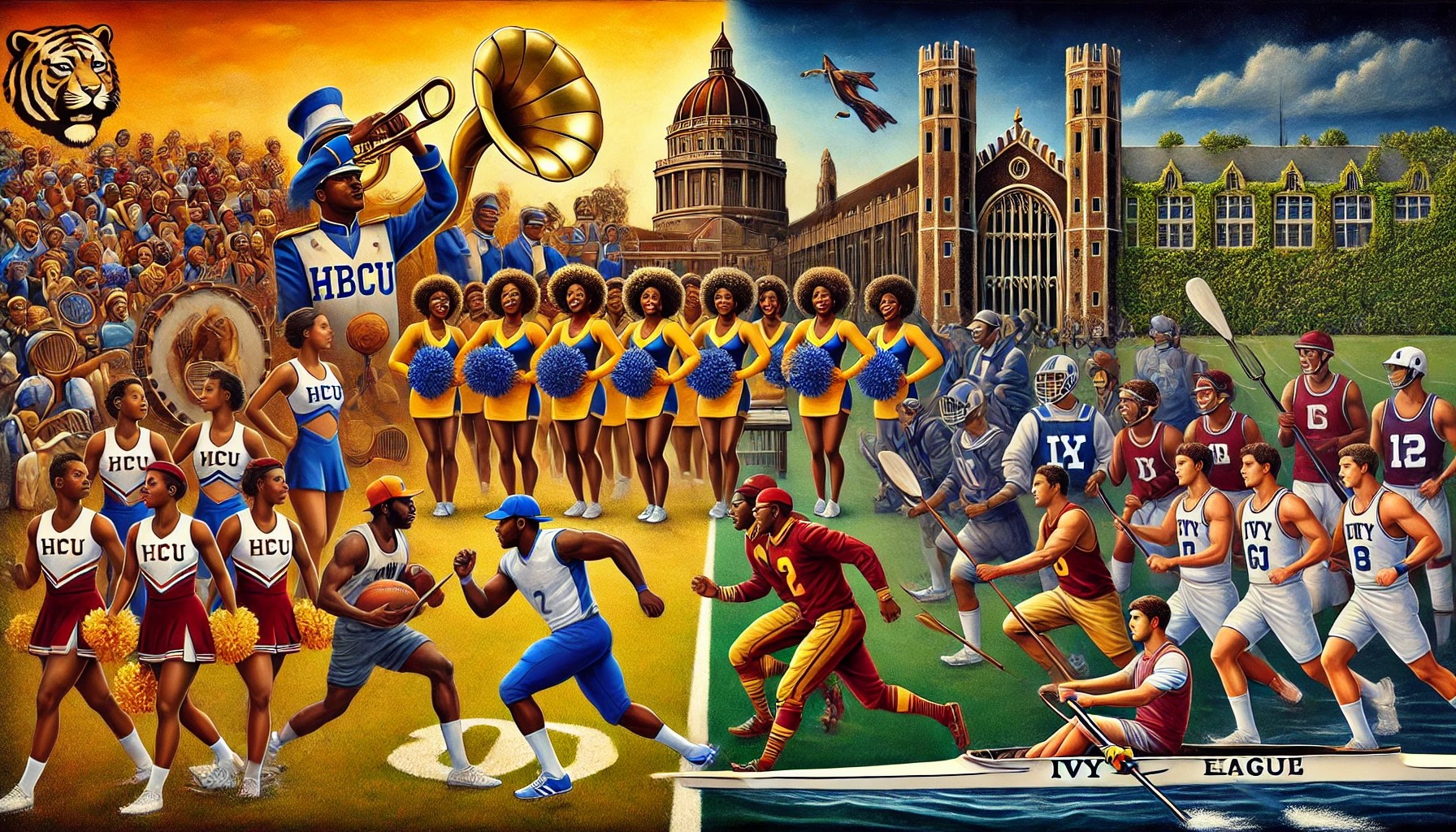
The Ivy League athletic model is characterized by its emphasis on academic excellence, limited athletic scholarships, and a focus on holistic student development. As historically Black colleges and universities (HBCUs) contemplate their athletic strategies, the potential adaptation of the Ivy League model raises important questions, especially concerning financial resources, alumni support, and institutional missions. Here’s a closer look at several key factors:

Financial Context: Endowments and Alumni Giving

HBCU Endowments: HBCUs generally have lower endowments compared to their Ivy League counterparts. For example, the average endowment for an HBCU is around $100 million, while top Ivy League schools like Harvard have endowments exceeding $50 billion. This significant disparity in financial resources impacts the ability of HBCUs to fund athletic programs and support student-athlete scholarships.

Ivy League Endowments: The Ivy League’s strong financial standing allows for extensive investments in athletics, facilities, and academic resources. Schools like Yale and Princeton have endowments of over $25 billion, which provide them with a substantial financial cushion to support a holistic student-athlete experience.

Alumni Giving Rates: HBCUs face challenges with alumni giving. For instance, HBCUs have an average alumni giving rate of about 15-20%, whereas Ivy League schools boast rates often exceeding 50%. This higher giving rate in the Ivy League reflects a stronger tradition of alumni engagement and philanthropic support, which is critical for sustaining athletic and academic programs.

Research Budgets and Institutional Support

HBCU Research Budgets: Research funding at HBCUs is generally lower than that of Ivy League institutions. While some HBCUs, like Howard University, receive substantial federal research grants, many others struggle to secure consistent funding. For instance, HBCUs collectively received approximately $1.5 billion in research funding in 2019, a fraction of what Ivy League schools secure annually.

Ivy League Research Funding: In contrast, Ivy League institutions benefit from robust research budgets, with individual schools like Johns Hopkins receiving over $2 billion in annual research funding. This financial backing enhances their ability to integrate athletics with academic resources, providing student-athletes with more comprehensive support.

Holistic Development and Community Engagement

The Ivy League model emphasizes the development of well-rounded individuals. HBCUs share a similar mission of producing leaders who are socially conscious and community-oriented. Adopting the Ivy model’s focus on holistic development could resonate well with HBCUs’ core values. This approach can enhance student engagement and create a strong support system for athletes.

Influence of Ivy League Billionaires

The presence of wealthy alumni, often referred to as “Ivy League billionaires,” contributes significantly to the financial health of Ivy institutions. Notable alumni from Ivy League schools frequently engage in philanthropy, enhancing the schools’ resources for academics and athletics. HBCUs lack a comparable number of affluent alumni, which affects their fundraising potential and overall financial sustainability.

Potential Challenges and Considerations

Implementing the Ivy League model in HBCUs presents both opportunities and challenges:

  • Funding Limitations: The financial constraints of HBCUs compared to Ivy League schools necessitate a tailored approach. Without significant endowment and alumni support, fully adopting a no-athletic-scholarship model could limit HBCUs’ competitiveness in attracting top athletic talent.
  • Cultural Fit: The cultural and historical contexts of HBCUs differ significantly from those of Ivy League schools. Any model adopted must align with the unique missions and student populations of HBCUs.

While the Ivy League athletic model offers valuable insights into promoting academic achievement and holistic development, its application in HBCUs would require careful adaptation. Financial disparities in endowments, alumni giving, and research funding pose significant challenges. However, by focusing on the integration of academic and athletic excellence while fostering community engagement and support, HBCUs can create a unique model that reflects their values and enhances student success both on and off the field.

In the end, HBCUs have to accept the realities on the ground. We have tried chasing the golden ticket of athletics only to find out time and time again it is fool’s gold. It is not the thing that will alter the financial realities of our institutions. If anything it may be the thing that causes their failure as a looming admissions’ crisis is looming across all of American higher education and without a lot of dry powder on hand many institutions will easily go the way of the Dodo bird. It is time to think differently, think acutely, and chart a path that maybe uncomfortable or not what we originally imagined but will ensure the existence, sustainability, and success for future HBCU generations.

Disclosure: This was written with the assistance of ChatGPT.

Circulating The HBCU Business Dollar: HBCU Money Partners With Proud Product For The HBCU Money Logo Tee

HBCU Money has partnered with Proud Product to sell its HBCU Money Logo Tee through the HBCU Grad online store, creating a powerful collaboration that promotes both HBCU pride and financial empowerment. This partnership is a strategic move that brings together two brands dedicated to uplifting Historically Black Colleges and Universities (HBCUs) and fostering economic growth within the Black community.

HBCU Money is known for its commitment to financial literacy, economic development, and wealth-building strategies specifically tailored for HBCU students, graduates, and supporters. By teaming up with Proud Product, a brand that celebrates HBCU culture and academic excellence through apparel, this collaboration expands the reach of HBCU Money’s mission.

HBCU Grad’s Shopify-based platform provides an accessible and well-established marketplace for HBCU-themed merchandise, making it easier for supporters to purchase the HBCU Money Logo Tee. This partnership allows HBCU Money to leverage HBCU Grad’s e-commerce expertise and existing customer base while reinforcing a shared vision of empowering HBCU communities.

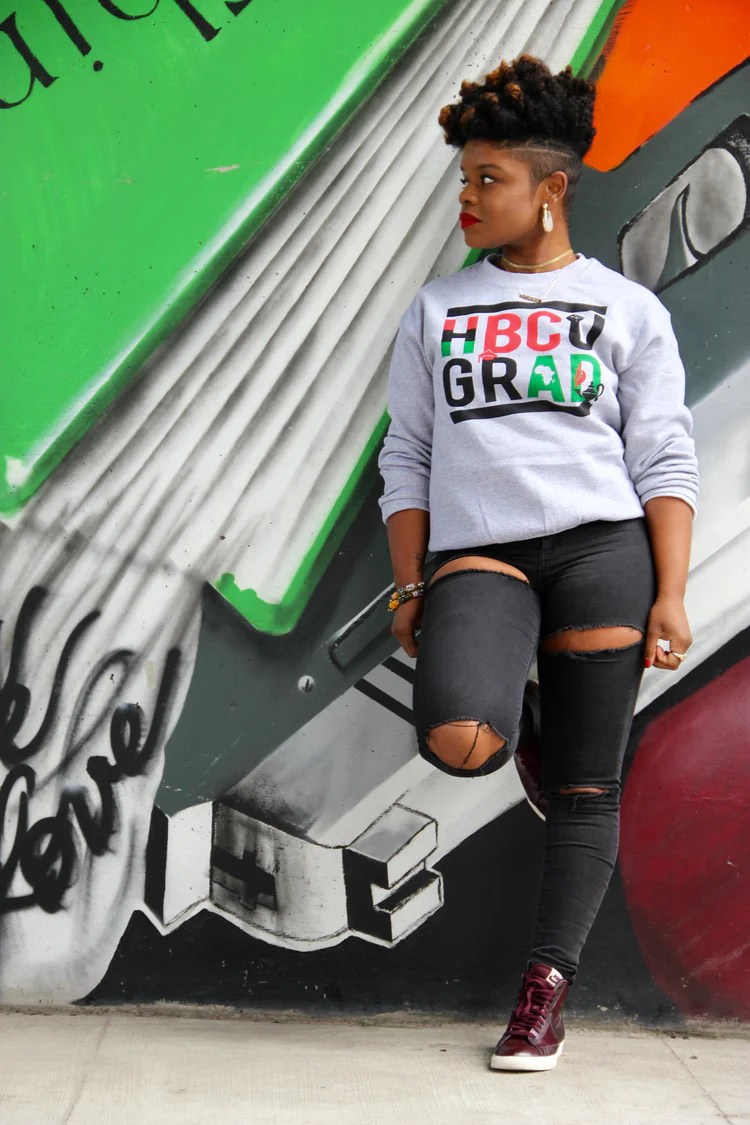
The HBCU Money Logo Tee, available in heather gray, is more than just a t-shirt—it represents a movement focused on financial awareness and economic independence. By purchasing this shirt through Proud Product, buyers are not only expressing their school spirit but also supporting two HBCU-owned brands that prioritize education, financial stability, and generational wealth.

This collaboration is an example of how HBCU-focused businesses can work together to amplify their impact. By joining forces, HBCU Money and Proud Product are strengthening the culture, supporting Black entrepreneurship, and promoting a message of financial empowerment—one t-shirt at a time.