Tag Archives: tuskegee university

HBCU Money’s 2024 Top 10 HBCU Endowments

Note: These data are based on colleges, universities, affiliated foundations, and related nonprofit organizations that volunteered to participate in NACUBO’s endowment study series.” – NACUBO

Howard University has finally done it. They have become the first HBCU to cross the $1 billion endowment mark. An indelible mark that is now the benchmark for potential to survive the coming admissions cliff that U.S. colleges and universities will face as demographics have acutely shifted from the number of students going to college and the number of colleges who will be able to withstand a downturn. HBCUs (like many smaller colleges and universities) are disproportionately reliant on tuition revenues and government funding to keep the doors open and lights on. The factors are a myriad from low African American wealth to limited investment models for their endowments. The latter being something of a chicken and egg situation whereby when you have less you are more conservative with your investment strategy, but this also leads to minimal returns. Without heavy alumni giving to ensure consistent endowment capital it is hard for HBCUs to take more investment risk.

The PWI-HBCU NACUBO Top 10 Endowment Gap for 2024 stands at $129.2 to $1, which is an increase from 2023’s $128.7 to $1.*

HIGHLIGHTS:

  • Top 10 HBCU Endowment Total – $2.6 billion*
  • Top 10 PWI Endowment Total – $336.0 billion
  • Number of PWIs Above $2 billion – 78
  • Number of PWIs Above $1 billion – 148
  • Number of HBCUs Above $1 billion – 1
  • Number of HBCUs Above $100 million – 8
  • 669 colleges, universities, and education-related foundations completed NACUBO’s FY24 survey and those institutions hold $884.3 billion of endowment assets with an average endowment of $1.3 billion and median endowment of $244.4 million.
  • HBCUs comprised 1.5 percent of NACUBO’s reporting institutions and 0.3 percent of the reporting endowment assets.
  • PWI endowments (30) with endowments over $5 billion hold 58.5 percent of the $884.3 billion in endowment assets.

All values are in millions ($000)**

Previous year in parentheses for Endowment Value Per Full-Time Student

1. Howard University – $1,032,496 (11.4%)

Endowment Value Per Full-Time Student – $76,960 ($81,341)

2. Spelman College – $506,709 (6.7%)

Endowment Value Per Full-Time Student – $199,727 ($197,713)

3. Morehouse College – $263,080 (3.5%)

Endowment Value Per Full-Time Student – $104,521 (N/A)

4. North Carolina A&T State University  – $201,942 (22.6%)

Endowment Value Per Full-Time Student – $15,519 (N/A)

5.  Meharry Medical College – $193,938 (8.2%)

Endowment Value Per Full-Time Student – $178,909 ($165,394)

6. Florida A&M University – $124,141 (9.5%)

Endowment Value Per Full-Time Student – $13,393 ($6,044)

7. Virginia State University – $96,544 (-4.4%)

Endowment Value Per Full-Time Student – $19,555 ($22,903)

8. Norfolk State University – $96,403 (15.4%)

Endowment Value Per Full-Time Student – $15,947 ($16,149)

9. Fayetteville State University – $34,915 (11.6%)

Endowment Value Per Full-Time Student – $5,931 ($5,479)

10. American Baptist College – $1,237 (22.8%)

Endowment Value Per Full-Time Student – $29,463 (N/A)

*Due to Hampton University, Morgan State University, Tuskegee University, and Kentucky State University not participating this year significantly altered the Top 10 HBCUs endowment combined total. We estimate with these HBCUs included the Top 10 HBCU endowments probably are near $2.9 billion.

**The change in market value does NOT represent the rate of return for the institution’s investments. Rather, the change in the market value of an endowment from FY23 to FY24 reflects the net impact of:
1) withdrawals to fund institutional operations and capital expenses;
2) the payment of endowment management and investment fees;
3) additions from donor gifts and other contributions; and
4) investment gains or losses.

SOURCE: NACUBO

Take a look at how an endowment works. Not only scholarships to reduce the student debt burden but research, recruiting talented faculty & students, faculty salaries, and a host of other things can be paid for through a strong endowment. It ultimately is the lifeblood of a college or university to ensure its success generation after generation.


2023’s HBCU Million Dollar Gifts: No African American Million Dollar Gifts To HBCUs

“Philanthropy is an exercise in power, by definition by the wealthy.” – Rob Reich

After an abysmal 2022, the HBCU Million Dollar Gifts list in 2023 bounced back? Well, sort of. In 2022 there were only three donations and now in 2023 there are five. Mathematically one would argue for that being a 66 percent increase, but then one realizes there were twice as many $100 million donations given or pledged to PWIs as there were $1 million donations given or pledged to HBCUs it throws water colder than the artic onto the conversation. Furthermore, one of those donations was pledged in 2023 by one Sean Combs who is now arguably in so much legal trouble that the pledge will likely never turn into a gift for its recipient, Jackson State University. To make the donation by Mr. Combs even more frustrating, it was the only one among the list by an African American further reinforcing that African American donors who can give million dollar donations are still not interested in supporting HBCUs with any fever.

The donations that did arrive went to the usual suspects of Howard (2), Spelman, and Tuskegee. Unless Spelman has a massive donation up its sleeve (and it is certainly possible), then Howard is going to coast to becoming the first HBCU to have a $1 billion endowment. To put in perspective how large the acute the donor crisis is between PWI and HBCU donors requires just taking a look at the largest 2023 donation by a donor. James Simons and Marilyn Simons gave a gift of $500 million to SUNY Stony Brook. A donation equal to over 50 percent of the Howard University’s endowment and over 90 percent of Spelman College’s endowment. Meanwhile, African America’s wealthy are virtually silent year after year.

There continues to be a massive disconnect of African America pouring resources into its own institutions. This is as true of the lack of African American donors to HBCUs as the embarrassment that virtually no HBCUs bank with an African American owned bank or even two premier HBCUs in Hampton University and North Carolina A&T University leaving an HBCU conference for a PWI one. The island mentality of everyone and every institution looking out for themselves while claiming they are for the community has reached a nauseating level year after year and should make anyone wonder if there is any reason to have hope. None of this fairs well for smaller HBCUs with the looming enrollment cliff crisis facing all American colleges and universities and for which HBCUs will certainly bear the brunt as with almost every crisis that America has.

Overall donations to all colleges and universities were down a second straight year in 2023 dropping from 275 to 259 Million Dollar Gifts.

$1 Million Plus Donations To All Colleges: 259

$100 Million Plus Donations To All Colleges: 10

$1 Million Plus Donations Value To All Colleges: $6.1 Billion

$1 Million Plus Median Donation To All Colleges: $10.0 Million

$1 Million Plus Average Donation To All Colleges: $23.6 Million

$1 Million Plus Donations To HBCUs: 5

$100 Million Plus Donations To HBCUs: 0

$1 Million Plus Donations Value To HBCUs: $45.6 Million

$1 Million Plus Median Donation To HBCUs: $10.0 Million

$1 Million Plus Average Donation To HBCUs: $9.3 Million

HBCU Percentage of Donations To All Colleges: 1.9%

HBCU Percentage of Donation Value To All Colleges: 0.8%

1. Carrie Walton Penner and Gregory Penner (pictured) – $20.0 million
Recipient: Howard University
Source of Wealth: Professional Sports, Family Wealth, Finance

2. MacKenzie Scott (pictured) – $12.0 million
Recipient: Howard University
Source of Wealth: Technology, Retail

3. John Brown and Rosemary Brown (pictured) – $10.0 million
Recipient: Spelman College
Source of Wealth: Health Products

4.Stephen Feinberg – $3.6 million
Recipient: Tuskegee University
Source of Wealth: Finance

5.Sean Combs – $1.0 million (Pledge)
Recipient: Jackson State University
Source of Wealth: Entertainment

Source: Chronicle of Philanthropy

HBCU Money’s 2020 Top 10 HBCU Endowments

For the first time since we began reporting the Top Ten HBCU endowments, an HBCU endowment that we knew should be present but was not reporting is now present – Morehouse College. Hopefully next year we will see Tuskegee University join the fray. This provides a far more accurate picture of the HBCU endowment picture, at least at the top. While many will wonder why the endowments do not appear larger after massive donations that happen in 2020, it should be understood that many donations will not be reflective in the institutions endowment figures until fiscal year 2021 is reported so expect to see massive jumps for many HBCUs in the next calendar year.

However, examining the HBCU endowment world prior Mackenzie Scott’s 2020 philanthropy shows Howard University powering ahead toward becoming the first HBCU endowment to $1 billion. Their lead over number two Spelman extended from $302 million in 2019 to $355 million in 2020. Unfortunately, only four of the ten HBCU endowments saw increases in their endowment market value, while amongst the PWI’s Top Ten endowments all ten saw increases in their market value.* The Top Ten PWI endowments for 2020 combined for $199.8 billion versus $2 billion for the Top Ten HBCU endowments showing an institutional wealth gap of almost $100 to $1.

There is going to be a continued mixed bag of endowment reality among HBCUs. The Have and Have Nots among HBCU endowments has exacerbated and despite the attention during 2020 most smaller HBCUs have yet to secure donations that would secure their future. Even many of those who did are still sitting in a precarious perch. The NACUBO average endowment is over $907 million, an amount that is almost five times the average HBCU endowment and an average that not even Howard has reached yet. This means that while the “lottery” donations from non-HBCU sources is great, it absolutely does not remove the charge from HBCU alumni of being vigilant givers to their institutions. If HBCUs could simply get more of their alumni giving small amounts on a consistent basis that would do wonders for improving endowments. It goes without saying the other reality is that all HBCUs need to increase their student populations so that they are graduating more alumni and therefore more potential donors.

HIGHLIGHTS:

  • HBCU Endowment Total – $2.0 billion
  • Number of PWIs Above $2 billion – 55
  • Number of PWIs Above $1 billion – 114
  • HBCU Median – $95.6 million (-2.62%)
  • NACUBO Median – $165.7 million (0.58%)
  • HBCU Average – $187.7 million (0.13%)
  • NACUBO Average – $903.1 million (1.56%)

All values are in millions ($000)

1. Howard University – $712,410 (2.83%)

2. Spelman College – $377,942 (-3.21%)

3.  Hampton University – $280,598 (-0.69%)

4.  Morehouse College – $157,081 (0.64%)

5.  Meharry Medical College – $156,719 (-1.53%)

6. Florida A&M University – $95,635 (-2.63%)

7. North Carolina A&T State University  – $73,809 (7.82%)

8.  University of the Virgin Islands – $66,894 (-6.68%)

9. Tennessee State University – $63,020 (3.12%)

10. Virginia State University – $56,149 (-2.15%)

OTHERS REPORTING:

*The change in market value does NOT represent the rate of return for the institution’s investments. Rather, the change in the market value of an endowment from FY19 to FY20 reflects the net impact of:
1) withdrawals to fund institutional operations and capital expenses;
2) the payment of endowment management and investment fees;
3) additions from donor gifts and other contributions; and
4) investment gains or losses.

SOURCE: NACUBO

Take a look at how an endowment works. Not only scholarships to reduce the student debt burden but research, recruiting talented faculty & students, faculty salaries, and a host of other things can be paid for through a strong endowment. It ultimately is the lifeblood of a college or university to ensure its success generation after generation.

HBCU Money™ Presents: The George W. Carver 2017’s Top 20 HBCU Research Institutions

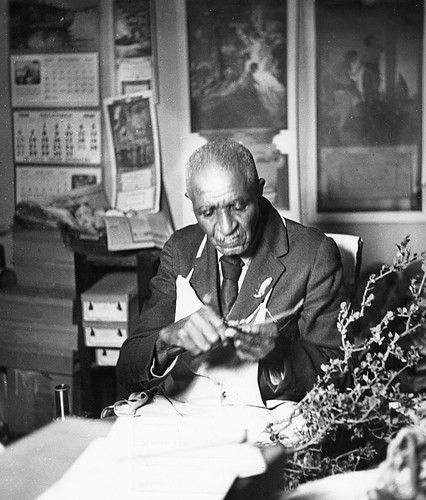
Dr. George Washington Carver (January 5, 1864-January 5, 1943) was an American scientist, botanist, educator, and inventor. Carver is best known for his research into alternative crops to cotton, such as peanuts, soybeans, and sweet potatoes. He wanted poor farmers to grow these alternative crops to aid in the nutrition of farm families and to provide another source of cash income to improve the farmer’s quality of life. Dr. Carver is shown at work at Tuskegee University in September 1938. Photo Courtesy National Archives and Records Administration. r

HBCUs continue to go backwards in the research field according to the latest National Science Foundation data. In 2015, research expenditures for the top 20 HBCUs combined for $425.7 million, while 2017 combines for $424.7 million. Over the past five years, HBCU research expenditures have dropped almost 4.7 percent or a loss of $20.7 million.

  • The top ranked HBCU, Howard University, ranked 203rd and the twentieth ranked HBCU, Virginia State University, ranked 325th among America’s college research landscape.
  • The MEAC maintains their dominance with eight schools versus the SWAC’s four.
  • Division II/III schools also comprise four schools on the list.
  • 1890 HBCUs, land-grant universities, dominate the top twenty with eleven of the top HBCU research universities.
  • All HBCUs combined account for $537.8 million in research expenditures. There are 45 PWI/HWCUs who have research budgets above this amount individually.

Rank. HBCU. Previous Year In Parentheses.

  1. Howard University – $45.8 million ($41.0 million)
  2. Florida A&M University – $37.6 million ($45.4 million)
  3. N.C. A&T State Univ. – $37.4 million ($33.8 million)
  4. Morehouse School of Medicine – $36.9 million ($38.8 million)
  5. Alabama A&M University – $31.7 million ($30.3 million)
  6. Jackson State University – $22.8 million ($23.8 million)
  7. Delaware State University – $20.8 million ($21.3 million)
  8. Tennessee State University – $18.1 million ($19.5 million)
  9. Meharry Medical College – $16.8 million ($14.8 million)
  10. Tuskegee University – $16.5 million ($16.5 million)
  11. Hampton University – $16.6 million ($14.2 million)
  12. Alcorn State University – $16.1 million ($8.2 million)
  13. Charles R. Drew University – $15.7 million ($13.4 million)
  14. Morgan State University – $15.0 million ($15.7 million)
  15. S.C. State University – $14.3 million ($13.1 million)
  16. N.C. Central University – $14.1 million ($12.5 million)
  17. Prairie View A&M University – $14.0 million ($12.6 million)
  18. Xavier University of LA. – $12.4 million ($12.1 million)
  19. Langston University – $11.5 million ($11.2 million)
  20. Virginia State University – $10.8 million ($8.1 million)

TOP 20 COMBINED TOTAL: $424.7 million ($425.7 million)

Additional Notes:

The HWCU-HBCU gap for research among top 20 research institutions is $53:1

Top 20 HWCUs Combined: $22.7 billion ($23.2 billion)

Top 20 Average HWCU – $1.2 billion

Top 20 Average HBCU – $21.2 million

Top 20 Median HWCU – $1.1 billion

Top 20 Median HBCU – $16.5 million

Source: National Science Foundation

Donate To Every School In The CIAA/SIAC Challenge

How many HBCUs have you donated money too? Below are the jump pages for every CIAA/SIAC school and/or foundation’s giving page. We challenge HBCU alumni to give to their own and as many HBCUs as possible.

There are 25 HBCUs between the CIAA and SIAC with approximately 75,000 students. The two historic HBCU conferences cover a lot of geography from the Midwest to the Southeast and up the eastern coast.

Albany State University Give Now

Albany State University Foundation

Benedict College Give Now

Bowie State University Give Now

Bowie State University Foundation

Central State University Give Now

Central State University Foundation

Claflin University Give Now

Clark Atlanta University Give Now

Elizabeth City State University Give Now

Elizabeth City State University Foundation

Fayetteville State University Give Now

Fort Valley State University Give Now

Fort Valley State University Foundation

Johnson C. Smith University Give Now

Kentucky State University Give Now

Kentucky State University Foundation

Lane College Give Now

LeMoyne-Owen College Give Now

Lincoln University Give Now

The Lincoln Fund

Livingstone College Give Now

Miles College Give Now

Morehouse College Give Now

Paine College Give Now

Saint Augustine’s University Give Now

Savannah State University Give Now

Savannah State University Foundation

Tuskegee University Give Now

Virginia State University Give Now

Virginia State University Foundation

Virginia Union University Give Now

Winston-Salem State University Give Now

Winston-Salem State University Foundation