Tag Archives: texas southern university

A Merger of (Potential) Might: Why Prairie View A&M and Texas Southern Should Combine Their Foundations to Challenge the Endowment Establishment

It is reason, and not passion, which must guide our deliberations, guide our debate, and guide our decision. – Barbara Jordan
In the gilded halls of America’s elite universities, financial firepower is both a symbol and source of dominance. Endowments—the great silent engines of academia—determine not only which students get scholarships but which schools can recruit Nobel-calibre faculty, fund original research, and shape public policy. At the apex of this order stands UTIMCO, the University of Texas and Texas A&M’s investment juggernaut, with more than $70 billion under management. Below, far below, exist the undercapitalised yet ambitious Historically Black Colleges and Universities (HBCUs) of Texas.

Two of the state’s largest HBCUs—Prairie View A&M University (PVAMU) and Texas Southern University (TSU)—have long histories, loyal alumni, and vital missions. What they do not have is institutional wealth. PVAMU’s foundation reported a modest $1.83 million in net assets in 2022. TSU’s foundation, better capitalised, holds $22.7 million. Combined, that amounts to just $24.5 million. For comparison, Rice University, less than 50 miles from either campus, holds an endowment north of $7.8 billion.

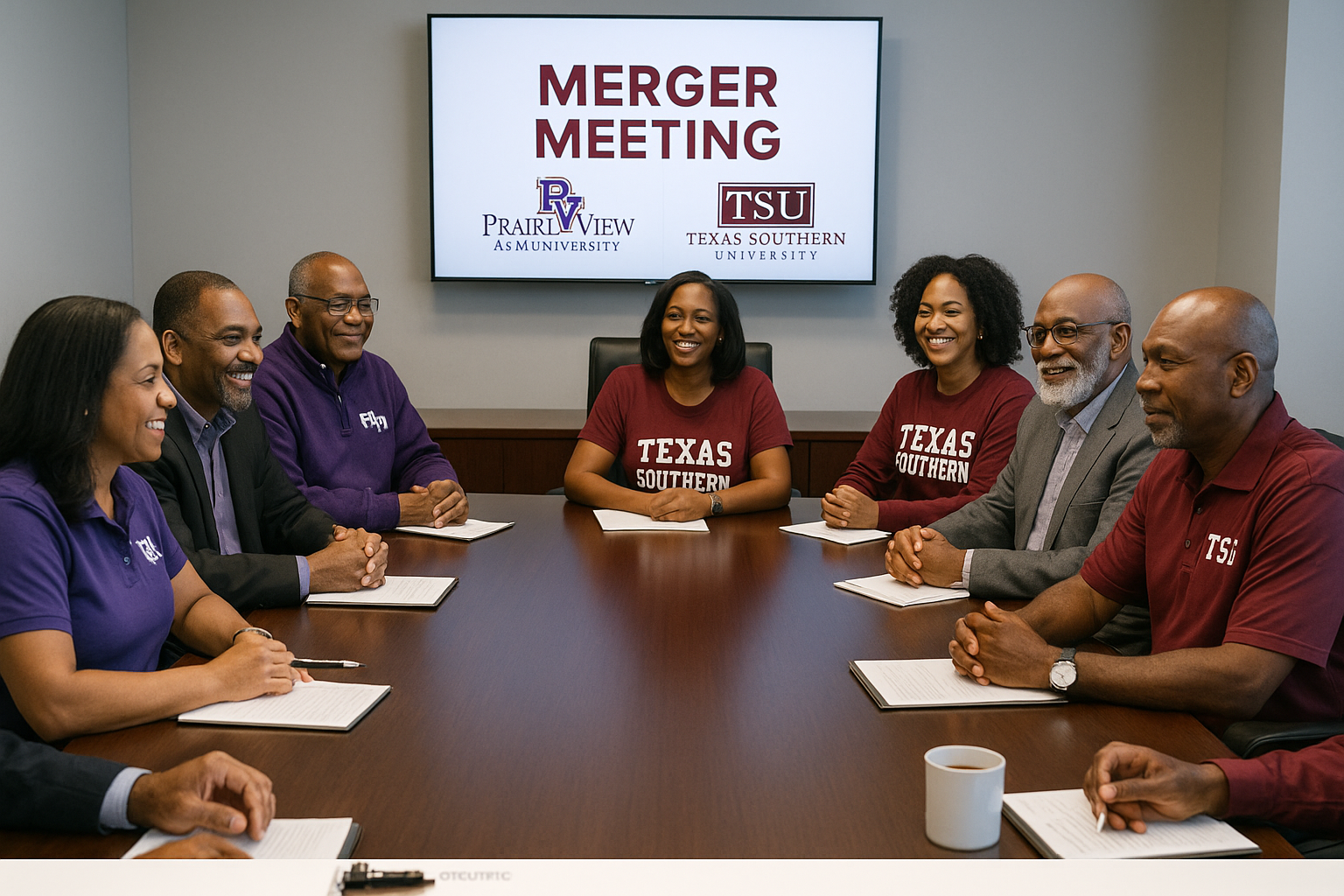
That yawning disparity matters. But it also presents an opportunity: a merger of the two foundations into a single, more potent philanthropic and investment entity. Done properly, it could reorient how Black higher education competes—not by appealing to fairness or guilt, but through scale, strategy, and institutional force.

A Rebalancing Act

To understand the potential of a PVAMU-TSU foundation merger, one must first grasp the dynamics of university endowments. Large endowments benefit from economies of scale, granting them access to exclusive investment opportunities—private equity, venture capital, hedge funds—often unavailable to smaller players. They attract the best fund managers, demand lower fees, and can weather market volatility without compromising their missions. Small foundations, by contrast, tend to be conservatively invested, costly to manage per dollar, and too fragmented to punch above their weight.

A consolidated HBCU foundation in Texas would be small compared to UTIMCO, but large relative to its peers. With a $25 million corpus as a starting point, the new entity could position itself for growth by professionalising its investment strategy, adopting a more ambitious donor engagement plan, and forming partnerships with Black-owned banks, family offices, and community institutions. Call it the Texas Black Excellence Fund, or perhaps, more simply, the TexHBCU Endowment.

To be sure, the legal and logistical barriers to such a merger are real. Foundation boards guard their autonomy jealously. Alumni pride can turn parochial. Governance models would need careful negotiation to ensure representation and avoid turf wars. But the arguments in favour are compelling.

The Power of One

First, a merger would cut overhead. Legal, accounting, auditing, and compliance costs—duplicated today—could be streamlined. A joint fundraising apparatus could create a single point of entry for corporate partners and high-net-worth donors. Branding efforts would gain coherence: instead of competing for attention, the institutions would stand together as a symbol of Black institutional unity and strength.
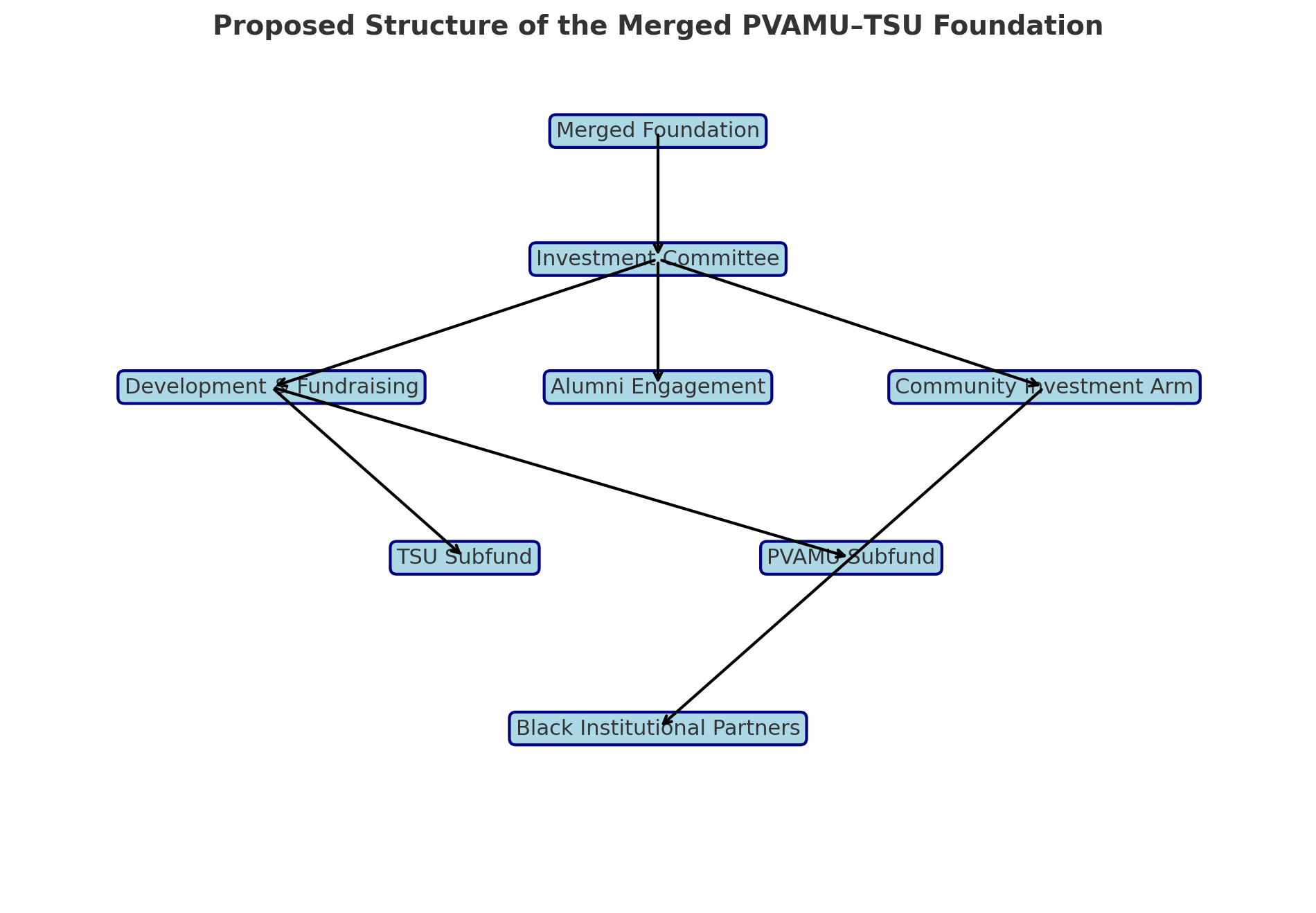
Second, scale invites leverage. A $25 million foundation cannot change the world overnight, but it can attract co-investments, engage in pooled funds, and perhaps even launch a purpose-driven asset management firm in the model of UTIMCO. If successful, this would be the first Black-led institutional investor of serious size in Texas—capable not only of managing endowment funds but of influencing broader economic flows across Black Texas.

Third, the merger would send a strategic signal to policymakers and philanthropic networks. It would say, in effect: “We are no longer asking for permission to grow. We are building the engine ourselves.” That tone matters. Too often, HBCUs are framed as needing rescue. A merged foundation flips that narrative. It becomes an asset allocator, a market participant, a builder of capital rather than a petitioner of it.

UTIMCO: A Goliath in the Crosshairs?

No one expects a $25 million fund to challenge a $70 billion behemoth. But that is not the point. UTIMCO’s dominance is as much political as it is financial. Its influence flows from its role as gatekeeper to resources, shaping everything from campus architecture to graduate fellowships. The merged HBCU foundation would not dethrone UTIMCO—it would decentralise power by becoming a second pole.

Indeed, the comparison may inspire mimicry. Just as UTIMCO serves multiple institutions, so too could a joint HBCU foundation. Prairie View and Texas Southern are only the beginning. Over time, the model could scale to include other Black-serving institutions across Texas and the South. This would amplify investment impact and accelerate institutional wealth-building.

Moreover, such a foundation could adopt an unapologetically developmental investment strategy. Where UTIMCO optimises for returns, the TexHBCU fund could optimise for both returns and racial equity—by investing in Black entrepreneurs, affordable housing, climate-resilient infrastructure, or educational tech. The dual mandate—profit and purpose—would not be a hindrance but a hallmark.

Regional Stakes

Prairie View sits on a rural hilltop. Texas Southern sprawls in urban Houston. But their communities are deeply connected—culturally, economically, demographically. A combined foundation could create regional development strategies that go beyond scholarship aid.

Imagine a venture fund seeding Black-owned start-ups in Houston’s Third Ward. A real estate initiative turning vacant lots into mixed-income housing for PVAMU students and local residents. A workforce development fund retraining returning citizens for green jobs across both cities. Each dollar invested becomes more than a balance sheet entry; it becomes a force for transformation.

This matters not just to students and faculty, but to the broader Texas economy. Black Texans make up 13% of the state population but own less than 3% of its small businesses. Educational attainment gaps persist. Institutional neglect deepens. The merger would not fix all this—but it would give the community a new tool for shaping its destiny.

Copy, Then Paste

If the model works, it would not stay in Texas. Southern University in Louisiana has multiple campuses and foundations that could benefit from consolidation. So does the University System of Maryland’s HBCUs. Indeed, the entire sector could adopt a federated endowment strategy—unified in purpose but distributed in governance.

HBCUs have long suffered from institutional atomisation. They are asked to compete individually in a system that rewards consolidation. Merging foundations is not just a finance play—it is a strategy for survival and sovereignty.

The Alternative: Stagnation

Critics may say a merger is too ambitious. That it risks alumni backlash or donor confusion. That it could take years to execute. But delay is itself a cost. Each year the foundations remain separate is another year of opportunity lost. Another year where millions in potential returns go unrealised. Another year where larger institutions deepen their lead.

PVAMU and TSU have histories to be proud of. But institutional pride must not become institutional inertia. A merger is not surrender—it is evolution.

In the long arc of higher education, moments of boldness define legacy. This is one of those moments. Two foundations. One future. Let the uniting begin.

How Much Would The SWAC/MEAC Earn If Texas Southern University & Howard University Made The Final Four?

How Much is 1 Unit Worth?

“The value of one unit changes each year, and in 2022, it is estimated to be $338,887. That’s up a little bit from 2021, when a unit was worth $337,141.” according to Boardroom.

Here’s how it all plays out:

  • The SWAC/MEAC sent two teams to the NCAA Tournament: Texas Southern University and Howard University.
  • The two teams have earned one ECF unit for the SWAC/MEAC by making it to the tournament ($338,887 x 2 = $677,774).
  • Let’s say Texas Southern University wins the 16/16 play in game in the First Four. By then playing the traditional 16/1 (the First Round), Texas Southern gets another unit for the SWAC and gives it the possibility of earning seven units versus Howard University being able to earn a maximum of six units due to not having to play in a play-in game.*
  • Let’s say Texas Southern and Howard both lose their 16/1 games. Texas Southern University would have earned two units and Howard University would have earned one unit.*
  • Should both win and then have a Second Round loss. That’s one more unit for both and nothing more.
  • Now, let’s say both go on a miracle run to the national championship game. They would earn an additional unit for playing in the Second Round, Sweet 16, Elite Eight, and National Semifinal, for a total of thirteen units.
  • In total, this gives the SWAC/MEAC 13 units from this tournament, to be paid each year for the next six years, resulting in a total of $4.41M annually given to the SWAC/MEAC. That’s $26.43M total, which the conference will pay out to each of its 20 teams. If distributed equally, that’s $220,250 per school, per year, for a total of $1.32M.**

*HBCU Money was not able to confirm that the play-in game is worth an additional unit but serves as one in our example.

**Wins in the semifinals or final don’t count for units.

The 2019-2020 SWAC/MEAC Athletic Financial Review

In the fourth HBCU Money report on the SWAC/MEAC’s athletic finances, there has been one trend that is consistent – an acute amount of red on the balance sheet of each respective HBCU as it pertains to their athletic departments and it continues to grow redder and redder. Since HBCU Money first began reporting the SWAC/MEAC Athletic Financial Review, there have been losses of $128.6 million (2014-2015), $147.1 million (2016-2017), $150.7 million (2017-2018), and this year they continue their trend of the athletic black hole with losses over $161 million through athletics with no correction in sight. Not exactly the cash generating juggernauts that HBCU alumni have in mind when it comes to how deeply many believe that athletics can be the financial savior to HBCU financial prosperity. Instead, athletics seems to be potentially at the crux of many HBCU financial woes. Almost unfathomable is that many in the SWAC/MEAC have athletic budgets higher than their research budgets.

The harsh reality is that even with all the popularity buzz generated by Jackson State University’s head football coach, Deion Sanders, the factors working against HBCU athletics ever achieving real profitability remains a pipe dream at best. To land a major television contract, which is the only reason on mass that the SEC and Big 10 are the profitable athletic programs they are requires something that HBCU alumni bases severely lack. Large fan bases that have high incomes and an affluence. The harsh reality that HBCUs have small alumni bases, a reality that has been exacerbated post-desegregation where now HBCUs only get 9 percent of African Americans in college, combined with African America having both the lowest median income and wealth do not make for a recipe for advertisers to pay top dollar to television stations who would then healthily compensate HBCU institutions. HBCU athletics can be profitable, but it requires a completely different business model than our PWI counterparts. See, “The 5 Steps To HBCU Athletic Profitability”.

HBCU athletic revenues went down while expenses and subsidies went up in 2019-2020. That is usually a trend all would prefer be flipped. Students continue to bear the brunt of generating HBCU athletic revenues. This year’s review shows that approximately 73 percent of HBCU athletic revenues are generated through subsidies, up from 70 percent the year prior. Something to consider when 90 percent of HBCU students graduate with student loan debt.

REVENUES (in millions)

Total: $200.4 (down 1.2% from 2017-2018)

Median: $10.3 (down 4.6% from 2017-2018)

Average: $10.6  (up 5.0% from 2017-2018)

Highest revenue: Prairie View A&M University  $18.7 million

Lowest revenue: Coppin State University  $2.8 million

EXPENSES (in millions)

Total: $213.0 (up 0.5% from 2017-2018)

Median: $12.5 (up 15.7% from 2017-2018)

Average: $11.2 (up 5.7% from 2017-2018)

Highest expenses: Prairie View A&M University  $18.7 million

Lowest expenses: Mississippi Valley State University  $3.9 million

SUBSIDY

Total: $148.4 (up 4.9% from 2017-2018)

Median: $6.4 (down 18.4% from 2017-2018)

Average: $7.1 (unchanged from 2017-2018)

Highest subsidy: Prairie View A&M University $15.5 million

Lowest subsidy: Coppin State University $1.7 million

Highest % of revenues: Delaware State University: 92.0%

Lowest % of revenues: Florida A&M University: 37.0%

PROFIT/LOSS (W/ SUBSIDY)

Total: $-12.7 million (down 40.0% from 2017-2018)

Median: $0 (up 100.0% from 2017-2018)

Average: $-666,295 (down 46.3% from 2017-2018)

Highest profit/loss: North Carolina A&T State University  $615,094

Lowest profit/loss: North Carolina Central University  $-6,264,082

PROFIT/LOSS (W/O SUBSIDY)

Total: $-161.0 million (down 6.8% from 2017-2018)

Median: $-9.8 million (down 40.0% from 2017-2018)

Average: $-8.5 million (down 13.3% from 2017-2018)

Highest profit/loss: Mississippi Valley State University  $-2,177,123

Lowest profit/loss: Prairie View A&M University  $-15,417,471

CONCLUSION: At current, it would take an approximately $4.3 billion endowment dedicated to athletics to ween the SWAC/MEAC off of these subsidies onto a sustainable path. A sum greater than all HBCU endowments combined. Perhaps through merchandise sales, Jackson State could see its way to profitability without subsidies. Perhaps, but as former HBCU alumnus and NFL Hall of Famer Shannon Sharpe recently said, “There is only one Deion Sanders”. One thing is for certain, HBCUs have not done a proper cost-benefit analysis for the money they spend and subsidize to their athletic departments nor have they explored potential alternative models.

Editor’s Note: Howard and Bethune-Cookman are excluded in this report because they are private institutions and their athletic finances were not included in this report.

Source: USA Today

Texas Southern University Host NAREB’s Black Homeownership Summit

“We need to intentionally invest in health, in home ownership, in entrepreneurship, in access to democracy, in economic empowerment. If we don’t do these things, we shouldn’t be surprised that racial inequality persists because inequalities compound.” – Pete Buttigieg

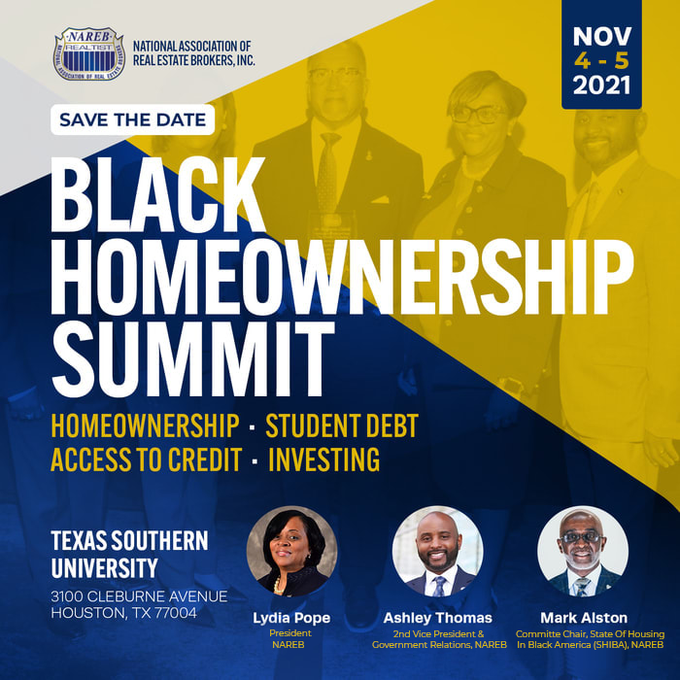
On the campus of Texas Southern University on November 4th and 5th, the National Association of Real Estate Brokers, an organization representing the interest of African American real estate professionals, hosted a homeownership summit with focuses on not only homeownership, but also student debt, access to credit, and investing. The importance of such an event being held on an HBCU campus can not be understated.

Intertwining African American institutions with each other has long been a struggle for the community’s development with African American institutions often operating on islands instead of a connected ecosystem. Events like NAREB’s Black Homeownership Summit at Texas Southern University helps highlight the power, potential, and scalability of what happens when African American (and Diaspora) institutions work together. What better place to address Black homeownership after all than on the campus of an HBCU? Soon to be African American graduates and professionals will be at the vanguard of trying to close the acute homeownership crisis that African America continues to face (graph below).

One of the keynote speakers at the NAREB Black Homeownership Summit event was Teresa Bryce Bazemore, CEO and President of the Federal Home Loan Bank of San Francisco, speaking exclusively to HBCU Money about the event said, “We need all the parties in the housing finance industry and other stakeholders to collectively work to eliminate the barriers to homeownership. In this new environment, all consumers including Black and Brown people should be able to participate equally in the dream of homeownership. We need initiatives that can help potential buyers with improving their credit, saving for down payments and understanding the entire home buying process from A to Z. We also need to make sure that the lending rules are equitable.”

HBCU Money’s Suggested Five Initiatives For HBCUs Can/Should Be But Not Limited Too:

  • Making financial literacy a mandatory part of matriculation for HBCU students. This can be done through the financial aid office, workshops, or a class.
  • Providing HBCU students work study jobs that go into the community at African American K-12 schools and teaching financial literacy.
  • Partnering with African American owned banks and credit unions. Due to their deposit bases, many African American owned banks and credit unions simply can not participate in the primary mortgage market and there are few to none African American owned non-bank mortgage lenders. This leaves the African American community in an extremely vulnerable position to predatory lending as has been demonstrated and shown time and time again. HBCUs are a key to growing assets within African American financial institutions through students, alumni, and institutionally.
  • Offering more scholarships for ALL students. Scholarships are purposed to reduce student loan debt, but they are often resigned to high achieving students despite the majority of students being in the middle. This becomes highly problematic for African Americans who usually do not have the familial wealth to assist in paying down or off their student loan debt. HBCUs while cheaper than our PWI counterparts on the whole could be doing even more to reduce the student loan debt burden for African American students by ensuring that any student who is academically eligible has an opportunity to reduce their student loan debt burden. This provides an opportunity upon graduation that more of their initial paycheck is going towards wealth building and potential homeownership rather than debt burden.
  • Encouraging the use of startups like HBCU Real Estate, who has part of their mission statement to use a portion of their profits to provide down payment assistance for HBCU alumni who seek to purchase primary or investment properties.

Homeownership and real estate ownership have long been a cornerstone to establishing generational wealth in the United States. Despite this, the African American homeownership has never crossed over the 50 percent threshold and according to MarketWatch and has always maintained a 20-30 percentage point gap between African and European Americans. African America’s civilian noninsittuional population as of October 2021 was 33.7 million and its civilian labor force is 20.6 million and the African American labor force 20 and over is 19.9 million. Assuming that 44 percent of the 19.9 million are homeowners (8.7 million), it would take approximately 1.5 million more African Americans to become homeowners to get African America above 51 percent. Based on the most recent data provided by Zillow, the typical value of U.S. homes is $308,220 as of September 2021. Between 1999 and 2021, the median price has almost tripled from $111,000 to $308,220. This means in order for those 1.5 million to acquire homes they would need down payments of approximately $16.2 billion using FHA’s 3.5 percent down financing or $10,800 per potential African American homebuyer. While it does not on the surface seem like a lot to many, that number represents almost 45 percent of the African American median net worth, but a mere 6 percent of European American median net worth.

Just for perspective on that $16.2 billion, there are no African Americans with a net worth more than that, but there are 45 Americans whose single net worth exceeds $16.2 billion. The road to achieving more African American homeownership will be no small task, but events like NAREB/Texas Southern will go a long way in us doing the hard work together, lifting the heavy load together, and ultimately achieving our goal together.

Donate To Every School In The SWAC/MEAC Challenge

How many HBCUs have you donated money too? Below are the jump pages for every SWAC/MEAC school and/or foundation’s giving page. We challenge HBCU alumni to give to their own and as many HBCUs as possible.

There are 21 HBCUs between the SWAC/MEAC. That means there are 21 opportunities to give that stretch from Texas to Maryland and impact the institutional opportunities of tens of thousands of African American students, their families, and our communities. How many will you impact?

Alabama A&M University Give now

Alabama A&M University Foundation


Alabama State University give now

Alabama state university foundation


alcorn state university give now

alcorn state university foundation


University of Arkansas Pine Bluff give now


Bethune Cookman University Give Now

Mary McLeod Bethune Foundation


coppin state university give now

CSU Development Foundation


Delaware State University give now

Delaware state university foundation


florida a&m university give now

Florida A&M University Foundation


Grambling State University Give Now

Grambling University Foundation


Howard University Give Now


Jackson State University Give Now

Jackson State Development Foundation


University of Maryland Eastern Shore Give Now


Mississippi Valley State University Give Now

Mississippi Valley State University Foundation


Morgan State University Give Now

Morgan State University Foundation


Norfolk State University Give Now

NSU Foundation


North Carolina A&T State University Give Now

North Carolina A&T Real Estate Foundation


North Carolina Central University Give Now

NCCU Foundation


Prairie View A&M University Give Now

Prairie View A&M Foundation


South Carolina State University Give now

South Carolina State University Foundation


Southern University and A&M College Give Now

Southern University System Foundation


Texas Southern University Give Now