Tag Archives: jackson state university

Appeased: Mississippi’s Flagship HBCU Gets An “Agreement” Instead Of A Law School

“Freedom has never been free.” – Medgar Evers

It never ceases to amaze how easily appeased African America can be. We need 40 acres and instead allow ourselves to be given a pot with some dirt in it and are expected to act grateful. Ironically, often we do. “They gave us something” could be a whole mantra that we hear far too often when we need to show our communities that the mantra is “We fight not capitulate”. Time and time again PWIs show that they will put alligator and piranha filled moats around things like law schools, MBAs, and research to ensure that HBCUs never encroach on that institutional power. We get “agreements” that allow PWIs to pick and choose the best and brightest of our undergraduates for their graduate schools. The next Thurgood Marshall cannot come from one of our own HBCU law schools like the late justice but inevitably from a PWI law school where the molding of law and its purpose will be shaped how they see fit. Usually still to their benefit. The flagship HBCU in Mississippi cannot have a law school, it has an agreement. Imagine Ole Miss getting an “agreement” with something in Jackson State’s control. You cannot imagine it because it would never happen.

Historical and Structural Underrepresentation

  • Limited Legal Education Options for African Americans: Historically, African Americans were denied access to legal education at predominantly white institutions (PWIs) and were often left with no choice but to attend the few law schools established at Historically Black Colleges and Universities (HBCUs). Today, there are only six HBCU law schools:
    • Howard University School of Law
    • Southern University Law Center
    • Texas Southern University Thurgood Marshall School of Law
    • Florida A&M University College of Law
    • North Carolina Central University School of Law
    • University of the District of Columbia David A. Clarke School of Law
  • None in Mississippi: Despite Mississippi’s large African American population (nearly 40% of the state), there are no HBCU-affiliated law schools in the state. This lack forces African American students to compete for limited seats at existing law schools, often in environments that may not prioritize their unique needs or cultural experiences.

Historical Context of Discrimination in Mississippi Higher Education

  • Systemic Exclusion: For much of the 20th century, African Americans were excluded from attending predominantly white institutions (PWIs) in Mississippi. Segregation laws and practices relegated Black students to underfunded HBCUs, such as Jackson State University.
  • Funding Disparities: HBCUs in Mississippi have historically received significantly less funding than PWIs. This underfunding has limited their ability to expand academic offerings and infrastructure, including professional programs like law schools.

Ongoing Disparities

  • Resource Inequities: Mississippi’s higher education system continues to show disparities in funding and resources between HBCUs and PWIs. These inequities impact the quality of education and opportunities available to students at HBCUs.
  • Underrepresentation in Legal Education: African Americans remain underrepresented in Mississippi’s existing law schools, including the University of Mississippi School of Law and Mississippi College School of Law. These institutions do not adequately address the unique challenges faced by Black students and communities.
  • Pipeline Challenges: The lack of professional schools at HBCUs in Mississippi limits pathways for Black students to enter high-impact fields like law, perpetuating disparities in representation and leadership.

Historical Challenges at the University of Mississippi

  • Resistance to Integration: The admission of James Meredith in 1962 as the first African American student at Ole Miss was met with violent riots, requiring federal intervention. This historical event illustrates the extreme resistance to racial integration and set the tone for ongoing challenges faced by African American students.
  • Legacy of Segregation: The University of Mississippi, like many Southern institutions, has a deeply entrenched history of segregation that continues to influence campus culture and attitudes.

Ongoing Issues Faced by African American Students

  • Hostile Campus Environment: Many African American students at Ole Miss report feeling unwelcome or isolated due to a predominantly white student body and lingering racial tensions. Incidents of racism, such as vandalism of monuments and racist social media posts, contribute to a climate of hostility.
  • Symbolic Racism: The continued presence of Confederate symbols, including statues and the former use of Confederate imagery in campus traditions, reinforces a sense of exclusion for Black students. Efforts to remove or contextualize these symbols have been slow and controversial.
  • Underrepresentation: African American students are underrepresented at Ole Miss compared to the state’s demographics, limiting opportunities for meaningful diversity and inclusion.
  • Incidents of Racial Harassment: High-profile incidents, such as the noose placed around the statue of James Meredith in 2014, serve as stark reminders of ongoing racial animosity. These events create psychological distress and reinforce systemic barriers for Black students.

The African American brain drain into predominantly white institutions (PWIs) poses a significant challenge to the mission of historically Black colleges and universities (HBCUs) like Jackson State University (JSU). Establishing a law school at JSU would address this issue by offering a culturally affirming and accessible path for African American students to pursue legal education. This initiative would help retain talent, strengthen HBCU legacies, and diversify the legal profession.

Understanding African American Brain Drain

  • What is Brain Drain? Brain drain occurs when highly capable and motivated individuals, particularly African Americans, leave HBCUs to pursue educational and career opportunities at PWIs. This is often due to the lack of specialized or professional programs, such as law schools, at HBCUs.
  • Mississippi’s Context: Mississippi is home to several HBCUs, including Jackson State University, but none of these institutions offer legal education. As a result, aspiring African American lawyers in Mississippi are compelled to attend PWIs such as the University of Mississippi School of Law or Mississippi College School of Law, or leave the state entirely.

Impacts of Brain Drain

  • Cultural Isolation: African American students at PWIs often report feelings of isolation and marginalization due to a lack of diversity in faculty, curriculum, and campus culture. This can hinder their academic and professional development.
  • Loss of HBCU Legacy: When African American students leave HBCUs for PWIs, they miss the opportunity to benefit from the culturally affirming and supportive environments HBCUs provide. HBCUs foster a sense of community and empowerment that is particularly important in professional fields like law.
  • Weakened HBCU Influence: Brain drain diminishes the influence of HBCUs by limiting their ability to produce leaders in fields like law, where African Americans are already underrepresented. This affects the ability of HBCUs to contribute to societal change through their alumni.

The Role of PWIs in African American Brain Drain

  • Limited Inclusion: PWIs often fail to adequately support African American students. Issues such as implicit bias, underrepresentation among faculty, and a lack of focus on issues relevant to African American communities make these institutions less ideal for Black students.
  • Recruitment of Top Talent: Many PWIs actively recruit top African American talent, which they recognize as essential for promoting diversity. However, these efforts can inadvertently draw students away from HBCUs that would better align with their cultural and educational needs.

Mississippi became the last state to remove the Confederate battle flag from its state flag in 2020. The birthplace of Medgar Evers who was murdered in his driveway. It is the home of the Freedom Summer that saw three voting rights activists murdered that brought nationwide attention and shun a spotlight on the atrocities. The potential for the impact of a law school at Jackson State University and the creation of the seventh HBCU law school would be profound. African Americans constitute almost 15 percent of the US population and 40 percent of the Mississippi population, but less than 9 percent of Mississippi’s active lawyers are African American. An “agreement” with Ole Miss is highly unlikely to change that paradigm. This is a chance for an African American institution to not take the bull by the horns, but be the bull.

Amplifying the Civil Rights Legacy

  • Mississippi’s Legacy of Activism: The state has been at the center of the civil rights movement, with many battles fought for racial equality and justice. A JSU law school could build on this legacy, preparing lawyers to continue the fight against discrimination and inequality.
  • Empowering Marginalized Communities: By training lawyers from diverse backgrounds, the law school could directly address issues like voting rights, criminal justice reform, and educational equity—critical areas in a state still grappling with the effects of systemic racism.

The Role of JSU in Filling the Gap

  • Addressing Local Needs: A law school at JSU would directly address the absence of African American legal institutions in Mississippi, offering a local and affordable option for students who wish to study law in a supportive environment.
  • Culturally Relevant Curriculum: As an HBCU, JSU could design a curriculum that emphasizes the legal challenges faced by African American communities, such as systemic racism, criminal justice reform, and civil rights advocacy.
  • Building a Pipeline of Black Lawyers: By increasing access to legal education for African Americans, JSU could help diversify the legal profession and prepare graduates to address the specific legal needs of marginalized communities.

How a JSU Law School Can Address Brain Drain

  • Retaining Talent in Mississippi: Establishing a law school at JSU would give African American students in Mississippi the option to pursue legal education at an HBCU without leaving their state or community.
  • Culturally Relevant Education: A JSU law school could tailor its programs to address the legal challenges most relevant to African American communities, such as civil rights, voting rights, and criminal justice reform.
  • Strengthening HBCU Legacies: By offering a law program, JSU could enhance its reputation as a premier institution for African American education and leadership, attracting top talent to remain within the HBCU ecosystem.

The Need for an Inclusive Legal Education at JSU

  • Safe and Supportive Environment: An HBCU law school at Jackson State University would provide a nurturing environment for African American students, free from the racial hostility that has been reported at Ole Miss.
  • Focus on African American Legal Issues: A law school at JSU could emphasize areas of law that disproportionately impact Black communities, such as civil rights, voting rights, criminal justice reform, and housing law.
  • Addressing the Legacy of Exclusion: By creating a pathway to legal education specifically designed to empower marginalized groups, JSU could challenge the structural inequalities that have persisted in Mississippi’s higher education system.

Broader Benefits of a JSU Law School

  • Community Impact: Graduates of a JSU law school would be more likely to practice in underserved and predominantly African American communities, addressing legal deserts in Mississippi and beyond.
  • Representation in the Legal Profession: Increasing the number of African American lawyers trained at an HBCU would help diversify the legal profession and create more advocates for systemic change.
  • Economic and Cultural Reinvestment: Retaining African American students at JSU would help prevent the economic and cultural losses associated with brain drain, fostering stronger HBCU communities and alumni networks.

Mississippi’s lack of African American legal institutions highlights the urgency of a law school at JSU. Such a school would address historical exclusion, provide a platform for empowerment and justice, and meet the unique legal needs of African American communities. JSU’s law school could play a pivotal role in advancing social justice and transforming the legal profession.

The challenges African American students face at PWIs like the University of Mississippi further emphasize the need for supportive alternatives. A law school at Jackson State University would create an environment where Black legal scholars can thrive, challenging systemic inequities in higher education. By fostering a new generation of African American lawyers, JSU could significantly advance African America’s institutional empowerment, justice, and opportunity across Mississippi and beyond.

It is hard to imagine with the current social and political climate that has seen the Southern “attitude” towards African America emboldened that a partnership or agreement with the flagship institution of that attitude being anything more than cover for continued behavior and a means of a subversive quelling of African American institutional empowerment and independence. The Medgar Evers Law School at Jackson State University located in the capital of the state that is a symbol of power being named after Medgar Evers and a substance of power being a law school in the heart of Dixie. A heart that African America needs to be break.

2023’s HBCU Million Dollar Gifts: No African American Million Dollar Gifts To HBCUs

“Philanthropy is an exercise in power, by definition by the wealthy.” – Rob Reich

After an abysmal 2022, the HBCU Million Dollar Gifts list in 2023 bounced back? Well, sort of. In 2022 there were only three donations and now in 2023 there are five. Mathematically one would argue for that being a 66 percent increase, but then one realizes there were twice as many $100 million donations given or pledged to PWIs as there were $1 million donations given or pledged to HBCUs it throws water colder than the artic onto the conversation. Furthermore, one of those donations was pledged in 2023 by one Sean Combs who is now arguably in so much legal trouble that the pledge will likely never turn into a gift for its recipient, Jackson State University. To make the donation by Mr. Combs even more frustrating, it was the only one among the list by an African American further reinforcing that African American donors who can give million dollar donations are still not interested in supporting HBCUs with any fever.

The donations that did arrive went to the usual suspects of Howard (2), Spelman, and Tuskegee. Unless Spelman has a massive donation up its sleeve (and it is certainly possible), then Howard is going to coast to becoming the first HBCU to have a $1 billion endowment. To put in perspective how large the acute the donor crisis is between PWI and HBCU donors requires just taking a look at the largest 2023 donation by a donor. James Simons and Marilyn Simons gave a gift of $500 million to SUNY Stony Brook. A donation equal to over 50 percent of the Howard University’s endowment and over 90 percent of Spelman College’s endowment. Meanwhile, African America’s wealthy are virtually silent year after year.

There continues to be a massive disconnect of African America pouring resources into its own institutions. This is as true of the lack of African American donors to HBCUs as the embarrassment that virtually no HBCUs bank with an African American owned bank or even two premier HBCUs in Hampton University and North Carolina A&T University leaving an HBCU conference for a PWI one. The island mentality of everyone and every institution looking out for themselves while claiming they are for the community has reached a nauseating level year after year and should make anyone wonder if there is any reason to have hope. None of this fairs well for smaller HBCUs with the looming enrollment cliff crisis facing all American colleges and universities and for which HBCUs will certainly bear the brunt as with almost every crisis that America has.

Overall donations to all colleges and universities were down a second straight year in 2023 dropping from 275 to 259 Million Dollar Gifts.

$1 Million Plus Donations To All Colleges: 259

$100 Million Plus Donations To All Colleges: 10

$1 Million Plus Donations Value To All Colleges: $6.1 Billion

$1 Million Plus Median Donation To All Colleges: $10.0 Million

$1 Million Plus Average Donation To All Colleges: $23.6 Million

$1 Million Plus Donations To HBCUs: 5

$100 Million Plus Donations To HBCUs: 0

$1 Million Plus Donations Value To HBCUs: $45.6 Million

$1 Million Plus Median Donation To HBCUs: $10.0 Million

$1 Million Plus Average Donation To HBCUs: $9.3 Million

HBCU Percentage of Donations To All Colleges: 1.9%

HBCU Percentage of Donation Value To All Colleges: 0.8%

1. Carrie Walton Penner and Gregory Penner (pictured) – $20.0 million
Recipient: Howard University
Source of Wealth: Professional Sports, Family Wealth, Finance

2. MacKenzie Scott (pictured) – $12.0 million
Recipient: Howard University
Source of Wealth: Technology, Retail

3. John Brown and Rosemary Brown (pictured) – $10.0 million
Recipient: Spelman College
Source of Wealth: Health Products

4.Stephen Feinberg – $3.6 million
Recipient: Tuskegee University
Source of Wealth: Finance

5.Sean Combs – $1.0 million (Pledge)
Recipient: Jackson State University
Source of Wealth: Entertainment

Source: Chronicle of Philanthropy

The 2019-2020 SWAC/MEAC Athletic Financial Review

In the fourth HBCU Money report on the SWAC/MEAC’s athletic finances, there has been one trend that is consistent – an acute amount of red on the balance sheet of each respective HBCU as it pertains to their athletic departments and it continues to grow redder and redder. Since HBCU Money first began reporting the SWAC/MEAC Athletic Financial Review, there have been losses of $128.6 million (2014-2015), $147.1 million (2016-2017), $150.7 million (2017-2018), and this year they continue their trend of the athletic black hole with losses over $161 million through athletics with no correction in sight. Not exactly the cash generating juggernauts that HBCU alumni have in mind when it comes to how deeply many believe that athletics can be the financial savior to HBCU financial prosperity. Instead, athletics seems to be potentially at the crux of many HBCU financial woes. Almost unfathomable is that many in the SWAC/MEAC have athletic budgets higher than their research budgets.

The harsh reality is that even with all the popularity buzz generated by Jackson State University’s head football coach, Deion Sanders, the factors working against HBCU athletics ever achieving real profitability remains a pipe dream at best. To land a major television contract, which is the only reason on mass that the SEC and Big 10 are the profitable athletic programs they are requires something that HBCU alumni bases severely lack. Large fan bases that have high incomes and an affluence. The harsh reality that HBCUs have small alumni bases, a reality that has been exacerbated post-desegregation where now HBCUs only get 9 percent of African Americans in college, combined with African America having both the lowest median income and wealth do not make for a recipe for advertisers to pay top dollar to television stations who would then healthily compensate HBCU institutions. HBCU athletics can be profitable, but it requires a completely different business model than our PWI counterparts. See, “The 5 Steps To HBCU Athletic Profitability”.

HBCU athletic revenues went down while expenses and subsidies went up in 2019-2020. That is usually a trend all would prefer be flipped. Students continue to bear the brunt of generating HBCU athletic revenues. This year’s review shows that approximately 73 percent of HBCU athletic revenues are generated through subsidies, up from 70 percent the year prior. Something to consider when 90 percent of HBCU students graduate with student loan debt.

REVENUES (in millions)

Total: $200.4 (down 1.2% from 2017-2018)

Median: $10.3 (down 4.6% from 2017-2018)

Average: $10.6  (up 5.0% from 2017-2018)

Highest revenue: Prairie View A&M University  $18.7 million

Lowest revenue: Coppin State University  $2.8 million

EXPENSES (in millions)

Total: $213.0 (up 0.5% from 2017-2018)

Median: $12.5 (up 15.7% from 2017-2018)

Average: $11.2 (up 5.7% from 2017-2018)

Highest expenses: Prairie View A&M University  $18.7 million

Lowest expenses: Mississippi Valley State University  $3.9 million

SUBSIDY

Total: $148.4 (up 4.9% from 2017-2018)

Median: $6.4 (down 18.4% from 2017-2018)

Average: $7.1 (unchanged from 2017-2018)

Highest subsidy: Prairie View A&M University $15.5 million

Lowest subsidy: Coppin State University $1.7 million

Highest % of revenues: Delaware State University: 92.0%

Lowest % of revenues: Florida A&M University: 37.0%

PROFIT/LOSS (W/ SUBSIDY)

Total: $-12.7 million (down 40.0% from 2017-2018)

Median: $0 (up 100.0% from 2017-2018)

Average: $-666,295 (down 46.3% from 2017-2018)

Highest profit/loss: North Carolina A&T State University  $615,094

Lowest profit/loss: North Carolina Central University  $-6,264,082

PROFIT/LOSS (W/O SUBSIDY)

Total: $-161.0 million (down 6.8% from 2017-2018)

Median: $-9.8 million (down 40.0% from 2017-2018)

Average: $-8.5 million (down 13.3% from 2017-2018)

Highest profit/loss: Mississippi Valley State University  $-2,177,123

Lowest profit/loss: Prairie View A&M University  $-15,417,471

CONCLUSION: At current, it would take an approximately $4.3 billion endowment dedicated to athletics to ween the SWAC/MEAC off of these subsidies onto a sustainable path. A sum greater than all HBCU endowments combined. Perhaps through merchandise sales, Jackson State could see its way to profitability without subsidies. Perhaps, but as former HBCU alumnus and NFL Hall of Famer Shannon Sharpe recently said, “There is only one Deion Sanders”. One thing is for certain, HBCUs have not done a proper cost-benefit analysis for the money they spend and subsidize to their athletic departments nor have they explored potential alternative models.

Editor’s Note: Howard and Bethune-Cookman are excluded in this report because they are private institutions and their athletic finances were not included in this report.

Source: USA Today

HBCU Money™ Presents: The George W. Carver 2017’s Top 20 HBCU Research Institutions

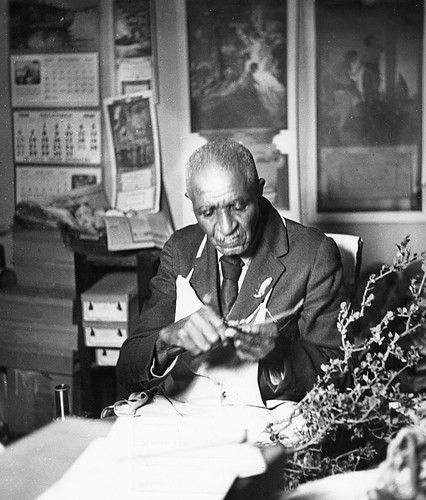
Dr. George Washington Carver (January 5, 1864-January 5, 1943) was an American scientist, botanist, educator, and inventor. Carver is best known for his research into alternative crops to cotton, such as peanuts, soybeans, and sweet potatoes. He wanted poor farmers to grow these alternative crops to aid in the nutrition of farm families and to provide another source of cash income to improve the farmer’s quality of life. Dr. Carver is shown at work at Tuskegee University in September 1938. Photo Courtesy National Archives and Records Administration. r

HBCUs continue to go backwards in the research field according to the latest National Science Foundation data. In 2015, research expenditures for the top 20 HBCUs combined for $425.7 million, while 2017 combines for $424.7 million. Over the past five years, HBCU research expenditures have dropped almost 4.7 percent or a loss of $20.7 million.

  • The top ranked HBCU, Howard University, ranked 203rd and the twentieth ranked HBCU, Virginia State University, ranked 325th among America’s college research landscape.
  • The MEAC maintains their dominance with eight schools versus the SWAC’s four.
  • Division II/III schools also comprise four schools on the list.
  • 1890 HBCUs, land-grant universities, dominate the top twenty with eleven of the top HBCU research universities.
  • All HBCUs combined account for $537.8 million in research expenditures. There are 45 PWI/HWCUs who have research budgets above this amount individually.

Rank. HBCU. Previous Year In Parentheses.

  1. Howard University – $45.8 million ($41.0 million)
  2. Florida A&M University – $37.6 million ($45.4 million)
  3. N.C. A&T State Univ. – $37.4 million ($33.8 million)
  4. Morehouse School of Medicine – $36.9 million ($38.8 million)
  5. Alabama A&M University – $31.7 million ($30.3 million)
  6. Jackson State University – $22.8 million ($23.8 million)
  7. Delaware State University – $20.8 million ($21.3 million)
  8. Tennessee State University – $18.1 million ($19.5 million)
  9. Meharry Medical College – $16.8 million ($14.8 million)
  10. Tuskegee University – $16.5 million ($16.5 million)
  11. Hampton University – $16.6 million ($14.2 million)
  12. Alcorn State University – $16.1 million ($8.2 million)
  13. Charles R. Drew University – $15.7 million ($13.4 million)
  14. Morgan State University – $15.0 million ($15.7 million)
  15. S.C. State University – $14.3 million ($13.1 million)
  16. N.C. Central University – $14.1 million ($12.5 million)
  17. Prairie View A&M University – $14.0 million ($12.6 million)
  18. Xavier University of LA. – $12.4 million ($12.1 million)
  19. Langston University – $11.5 million ($11.2 million)
  20. Virginia State University – $10.8 million ($8.1 million)

TOP 20 COMBINED TOTAL: $424.7 million ($425.7 million)

Additional Notes:

The HWCU-HBCU gap for research among top 20 research institutions is $53:1

Top 20 HWCUs Combined: $22.7 billion ($23.2 billion)

Top 20 Average HWCU – $1.2 billion

Top 20 Average HBCU – $21.2 million

Top 20 Median HWCU – $1.1 billion

Top 20 Median HBCU – $16.5 million

Source: National Science Foundation

Donate To Every School In The SWAC/MEAC Challenge

How many HBCUs have you donated money too? Below are the jump pages for every SWAC/MEAC school and/or foundation’s giving page. We challenge HBCU alumni to give to their own and as many HBCUs as possible.

There are 21 HBCUs between the SWAC/MEAC. That means there are 21 opportunities to give that stretch from Texas to Maryland and impact the institutional opportunities of tens of thousands of African American students, their families, and our communities. How many will you impact?

Alabama A&M University Give now

Alabama A&M University Foundation


Alabama State University give now

Alabama state university foundation


alcorn state university give now

alcorn state university foundation


University of Arkansas Pine Bluff give now


Bethune Cookman University Give Now

Mary McLeod Bethune Foundation


coppin state university give now

CSU Development Foundation


Delaware State University give now

Delaware state university foundation


florida a&m university give now

Florida A&M University Foundation


Grambling State University Give Now

Grambling University Foundation


Howard University Give Now


Jackson State University Give Now

Jackson State Development Foundation


University of Maryland Eastern Shore Give Now


Mississippi Valley State University Give Now

Mississippi Valley State University Foundation


Morgan State University Give Now

Morgan State University Foundation


Norfolk State University Give Now

NSU Foundation


North Carolina A&T State University Give Now

North Carolina A&T Real Estate Foundation


North Carolina Central University Give Now

NCCU Foundation


Prairie View A&M University Give Now

Prairie View A&M Foundation


South Carolina State University Give now

South Carolina State University Foundation


Southern University and A&M College Give Now

Southern University System Foundation


Texas Southern University Give Now