Tag Archives: 1890 hbcus

Institutional Agriculture: How HBCUs and Black Banks Can Build a Farm Credit System of Our Own

It’s tough for all farmers, but when you throw in discrimination and racism and unfair lending practices, it’s really hard for you to make it. – John Boyd, Jr., Founder of the National Black Farmers Association

America’s oldest financial divide is agricultural. Once, the majority of African Americans lived and labored on land; now, less than 1.4% of the nation’s 3.4 million farmers are African American. The disappearance of Black farmers is not only a human story—it is a story of capital deprivation, institutional neglect, and the collapse of an ecosystem that once linked land, education, and community credit. To reverse this, imagine if each of the 19 land-grant institutions in the 1890 HBCU system committed $1 million from their endowments and alumni associations to create a unified private lending fund. This $19 million “1890 Fund” would not sit passively in treasuries or bond portfolios but circulate directly through African American banks and credit unions, financing African American farmers and food producers across the country. Such a fund would be modest in scale but revolutionary in concept, a self-directed act of institutional cooperation that reconnects three critical arteries of African American economic life: land-grant HBCUs, African American financial institutions, and Black agricultural producers.

The 1890 HBCUs, institutions such as Tuskegee University, Prairie View A&M, North Carolina A&T, and Florida A&M were established as part of the Second Morrill Act of 1890 to serve African Americans excluded from the original land-grant colleges. Their purpose was not abstract scholarship but applied science: to teach, research, and extend knowledge about agriculture, engineering, and the mechanical arts. Over time, many of these schools evolved into comprehensive universities. Yet the decline of Black farmers and the consolidation of farmland under non-Black ownership represent a direct erosion of the very population these universities were created to serve. Between 1910 and 2020, African American land ownership fell by roughly 90%, from an estimated 15–16 million acres to less than 2 million today. The structural dispossession through discriminatory lending, heirs’ property laws, and USDA bias has left African American farmers with less access to credit and fewer pathways to generational land retention. HBCUs were founded to be a shield against such vulnerability. The 1890 Fund would revive that founding spirit, transforming their agricultural programs and extension centers into engines of financial empowerment rather than merely research hubs dependent on federal grants.

Each 1890 HBCU would allocate $1 million from a combination of its endowment and alumni association reserves, with matching commitments encouraged through philanthropic donors or corporate partners. The pooled fund $19 million at launch would be professionally managed under a cooperative structure, similar to a community development financial institution or business development company. The fund would not make direct loans itself but would place its capital into African American-owned banks and credit unions identified in HBCU Money’s 2024 African American-Owned Bank Directory. Institutions such as OneUnited Bank, Industrial Bank, Citizens Trust Bank, and smaller but vital credit unions like FAMU Federal Credit Union or Hope Credit Union would serve as the lending conduits. In effect, the 1890 Fund would function as the “wholesale” capital pool of low-interest (but profitable), long-duration deposits or certificates placed with African American banks that, in turn, originate and service loans to qualified African American farmers, cooperatives, and agri-businesses. Loans would range from $25,000 micro-lines for new producers to $500,000 or more for established operations seeking equipment, irrigation, or land expansion. Priority would be given to farmers with relationships to HBCU agricultural programs such as those who have completed workshops, extension training, or student partnerships. Each bank or credit union participating would commit to transparent reporting, with loan performance and demographic data shared annually with the 1890 Foundation. The revolving structure of repayments would ensure that as farmers succeed, their payments replenish the pool for new borrowers creating a regenerative loop of institutional and community wealth.

Routing the fund through African American financial institutions is not symbolic it is structural. Historically, Black farmers were denied access to credit through traditional banks and faced redlining by federal programs. Even today, USDA lending disproportionately benefits white farmers. African American banks and credit unions remain among the few institutions with both the cultural understanding and community trust necessary to underwrite these borrowers responsibly. Moreover, these banks themselves are chronically undercapitalized. With combined assets of roughly $7.5 billion across the sector, African American banks represent barely 0.001% of total U.S. banking assets, insufficient to exert meaningful influence in national credit markets. By placing deposits into these banks, HBCUs would strengthen their liquidity ratios, reduce dependence on volatile retail deposits, and expand lending capacity far beyond the fund’s nominal amount through fractional reserve leverage. In short, every dollar committed by an HBCU could translate into $7–$10 in agricultural lending capacity once multiplied through the banking system.

HBCU alumni associations hold untapped potential as financial intermediaries. While endowments must operate under fiduciary and investment constraints, alumni associations often have greater flexibility. They can act as private limited partners in the 1890 Fund, contributing capital from dues, life membership funds, or targeted campaigns such as “Adopt-a-Farmer.” Imagine an alumni chapter of Florida A&M underwriting 10 acres of hydroponic greens for a local farmer who agrees to hire FAMU agriculture graduates. Or Prairie View alumni pooling funds to purchase cold-chain trucks for dairy producers across Texas. These actions extend the HBCU brand into the real economy transforming loyalty into tangible economic development. Each alumni association could also create its own micro-fund linked to the central 1890 Fund, mirroring the “chapter endowment” concept used by major universities. This networked structure would democratize investment and bring the broader African American middle class into the process of agricultural renaissance.

Lending alone does not sustain farmers; ecosystems do. The 1890 Fund would operate most effectively if it integrated with the broader HBCU agricultural and business infrastructure. HBCU agricultural economists could conduct continuous impact analysis tracking how capital access affects yields, profitability, and land retention. Their findings would strengthen advocacy for increased African American private capital. Extension programs could pair loan recipients with agronomists and soil scientists to ensure that capital is used productively and sustainably. HBCU-affiliated food labs, hospitality programs, and dining services could prioritize procurement from funded farmers, creating closed-loop demand. Business schools could develop crop insurance products and risk models tailored to small producers, mitigating the vulnerability that has historically devastated African American farms. Student internships in finance, agriculture, and data science could be embedded in the fund’s operations training the next generation of agricultural financiers and analysts. This approach transforms the 1890 Fund from a mere loan pool into a comprehensive agricultural development platform.

The greatest strength of the 1890 Fund lies in its multiplier effect. Consider: $19 million revolving annually at a conservative 6% loan rate generates roughly $1.1 million in annual interest income—income that can be reinvested or partially distributed back to participating universities to grow the fund. If repayments are recycled annually, the fund could underwrite over $100 million in cumulative loans within its first decade. The macroeconomic ripple is job creation, land retention, and input purchases that would expand rural GDP in African American counties and increase deposit growth for the participating banks. Contrast this with the status quo: endowment funds largely held in Wall Street instruments that yield moderate returns but generate no localized impact. By re-directing even a fraction of assets into mission-aligned community lending, HBCUs align their investments with their historic purpose of educating and empowering the descendants of those who built the land.

The global contest for food security is intensifying. Nations that control food production, water, and soil fertility will control the future. For African America, regaining agricultural capacity is not nostalgic it is strategic. Every acre restored to productive use by African American farmers increases food sovereignty and reduces dependence on foreign or corporate supply chains. If HBCUs act collectively through the 1890 Fund, they position themselves as key players in regional and national food policy. They could partner with African universities for climate-resilient crop research, link with Caribbean agricultural cooperatives for trade, and develop transatlantic agribusiness ventures under the banner of Black institutional power. Such cooperation would redefine “land-grant” for the 21st century not as a relic of American expansion but as a global model of Pan-African capital deployment.

The road to building the 1890 Fund will not be smoothed by political cooperation. The federal and state governments that oversee the 1890 land-grant system are, in many cases, openly hostile toward African American advancement. Most of the 1890 HBCUs operate in states where racial resentment, austerity politics, and legislative interference remain the norm. These are states that have withheld or delayed millions in matching funds, imposed discriminatory audits, and used political appointments to keep HBCUs subordinate to their predominantly white peers. Under such conditions, the 1890 Fund is not merely an investment vehicle it is a form of institutional defense. Federal and state policy cannot be relied upon to sustain African American agriculture or financial independence. The only realistic path forward is one where HBCUs, alumni associations, and African American banks coordinate their own internal economy of capital, shielded from political manipulation.

This is where the 1890 Foundation becomes indispensable. Established to support the collective mission of the 1890 universities, the Foundation already exists as a neutral, centralized, and professionally managed entity capable of administering joint initiatives on behalf of all 19 institutions. Tasking it with managing the 1890 Fund would provide immediate credibility, legal infrastructure, and continuity. The Foundation could structure the fund as a private, revolving loan pool, capitalized through contributions from university endowments, alumni associations, and strategic partners, while remaining beyond the reach of hostile state legislatures. Governance through the 1890 Foundation would also protect participating universities from political retaliation. Rather than each HBCU appearing to act independently potentially inviting scrutiny from governors or state boards the fund’s activities could be coordinated under the Foundation’s national charter. This collective structure would allow for scale, professional risk management, and a unified investment policy aligned with the long-term interests of African American farmers and institutions.

Nevertheless, challenges remain. Some university boards, especially those with state-appointed trustees, may hesitate to commit endowment dollars to what they perceive as politically sensitive or unconventional investments. The uneven size of endowments ranging from under $50 million at smaller 1890s to more than $200 million at the largest could create tensions over proportional contributions. And while the 1890 Foundation provides an ideal governance structure, it would still need to secure regulatory clarity and investment expertise to manage a multi-million-dollar lending operation through external financial institutions. These risks, however, are outweighed by the opportunity to build economic sovereignty in an era of state hostility. The very conditions meant to weaken HBCUs like political obstruction, financial starvation, and bureaucratic oversight can become the catalysts for collective independence. If the 1890 Fund channels its capital through African American banks and credit unions, it strengthens two institutional pillars simultaneously: HBCUs regain control over how their endowments circulate, and Black-owned financial institutions gain the liquidity and leverage they need to expand.

The political hostility surrounding 1890 HBCUs should not be seen as a deterrent, but as confirmation of why this fund must exist. It demonstrates that African American progress, even in the 21st century, cannot depend on state benevolence. By empowering the 1890 Foundation to manage a private, self-sustaining fund, HBCUs would be acting in the same spirit of independence that defined their creation in 1890 when the federal government forced states to either open their existing land-grant colleges to Black students or create new ones for them. The 1890 Fund would be the modern continuation of that act of defiance transforming exclusion into enterprise. Through the 1890 Foundation’s leadership, African American endowments, farmers, and banks could finally operate in unison, beyond the grasp of state control. In doing so, they would build not just a lending mechanism, but a shield—a financial structure capable of outlasting political hostility and securing the long-term survival of Black agricultural and institutional power.

If the 1890 Fund fulfills its purpose, its long-term success should evolve into something even greater, a joint venture between the 1890 Foundation, African American banks, and African American credit unions that establishes a new national financial institution: one modeled on the Farm Credit System but existing independently from it to preserve full financial sovereignty. The Farm Credit System is a government-sponsored network of cooperative lenders that provides over $400 billion in loans and financial services to farmers, ranchers, and agricultural businesses across the United States. Its reach is vast and influential, covering roughly 40% of all agricultural debt in the country. Yet African American farmers have historically been excluded from its benefits. The FCS, like much of American agricultural policy, was built in an era when Black ownership was being systematically dismantled. It became a backbone for white rural wealth while African American farmers were left to navigate a labyrinth of local banks, discriminatory USDA programs, and predatory lending.

A successful 1890 Fund would prove that African American institutions: universities, banks, and credit unions can design a credit network capable of rivaling the FCS’s effectiveness, without its dependencies or racial exclusions. Over time, this collaboration could be formalized into a joint enterprise: the African American Agricultural Credit Alliance: a cooperative, member-driven, nationwide system built to finance not just farms but the entire food and fiber value chain. Like the FCS, it could be composed of multiple regional lending cooperatives, each capitalized by a blend of HBCU endowment investments, bank deposits, and credit union member capital. At its center would sit a national coordinating body responsible for liquidity management, risk pooling, and bond issuance. But unlike the FCS, this alliance would be entirely private and its governance drawn from the 1890 Foundation, the African American Credit Union Coalition, and the National Black Farmers Association. The goal would not be to replicate the FCS’s structure exactly but to rival its scale, providing affordable credit, insurance, equipment financing, and agri-business investment under the umbrella of Black-owned control.

Refusing to integrate into the existing Farm Credit System is not a rejection of efficiency it is a declaration of sovereignty. The FCS, though cooperative in name, ultimately answers to federal regulators, congressional committees, and a system of oversight that has never prioritized Black agricultural survival. Independence ensures that capital allocation decisions remain rooted in African American priorities—restoring land, building ownership, and sustaining communities rather than maximizing short-term returns. Financial sovereignty also allows for creative lending models that the FCS cannot adopt under federal restrictions, such as cooperative land trusts, heirs’ property buyouts, carbon-credit-backed collateral, or blockchain-based agricultural exchanges.

The evolution from the 1890 Fund to a fully realized agricultural credit system would expand capital from millions into billions. Once the fund demonstrates consistent performance, its track record could attract institutional investors like African American foundations, pension funds, and even sovereign funds from the African diaspora seeking mission-aligned, asset-backed investments. Through securitization and bond issuance, the alliance could channel long-term capital into rural Black communities, funding everything from precision agriculture and agroforestry to food processing and logistics. This would make agriculture once again an attractive sector for young entrepreneurs and HBCU graduates. Over time, the 1890 Fund could thus mature into an ecosystem capable of reindustrializing Black rural America through ownership and control of capital.

The creation of such a system would carry global implications. It could link with agricultural cooperatives in Africa and the Caribbean, forming a transatlantic agricultural finance corridor and positioning African American institutions as both lenders and investors in global food systems. The founding of the 1890 Fund, therefore, would not be an endpoint but the beginning of a long journey toward financial nationhood. The eventual establishment of an independent agricultural credit alliance would mark the institutionalization of economic sovereignty—a transformation from temporary coordination to permanent capacity.

The 1890 Fund embodies the principle that power comes from ownership, not participation. For too long, African American institutions have waited for external validation or federal rescue. The tools for rebuilding agricultural sovereignty already exist: universities with land and research infrastructure, banks with local lending channels, and farmers with generational knowledge. When linked together, these elements form a complete ecosystem capable of restoring both land and leverage. The $1 million commitment from each 1890 HBCU would not be a gift it would be a strategic investment in self-determination. If executed, within a generation the 1890 Fund could help reclaim millions of acres, incubate thousands of Black-owned farms, and expand the asset base of African American financial institutions. It would also serve as a model for other sectors like manufacturing, housing, and technology demonstrating how collective capital deployment transforms a marginalized community into a nation within a nation.

As Dr. Booker T. Washington once observed, “No race can prosper till it learns that there is as much dignity in tilling a field as in writing a poem.” The modern corollary is that no people can be free until they can finance their own fields. The 1890 Fund is not only a mechanism for loans it is a blueprint for liberation through institutional coordination. Its success could lay the groundwork for a sovereign financial architecture that, like the land it seeks to reclaim, will belong entirely to the people who cultivate it.

Disclaimer: This article was assisted by ChatGPT.

Why 1890 HBCUs Must Develop A Joint Tree Nursery: Sowing Legacy, Profit, and Power

“Since new developments are the products of a creative mind, we must therefore stimulate and encourage that type of mind in every way possible.” – George Washington Carver

The 1890 Land-Grant HBCUs were created not out of generosity but from segregation. And yet, over 130 years later, these institutions have carved out vital roles in agricultural education, food systems innovation, and land stewardship within the African American community. With the ever-growing climate crisis, shrinking agricultural landholdings for African Americans, and a glaring need for sustainable economic engines, the case for a joint tree nursery among the 1890 HBCUs is less an idea and more an imperative. The time for silos is over. A joint nursery would allow the 1890s to consolidate resources, amplify research, and plant the seeds—literally and economically—of a new generational legacy.

The Decline of African American Landownership and Ongoing Discrimination

In 1910, African Americans owned between 16–19 million acres of farmland. The years around this period would also see the Red Summer of 1919, when African Americans were violently targeted and lynched—many as punishment for owning land and asserting agency. Today, that number has dwindled to just 5.3 million acres as of 2022, according to the USDA’s Census of Agriculture, representing less than 0.6% of all U.S. farmland.

The decline is not just the result of economic shifts—it is the result of orchestrated policies and racially motivated practices. From the USDA’s long-standing discriminatory loan denials to heirs’ property laws that have gutted intergenerational land transfer, the path of African American landownership has been riddled with legal landmines. The Pigford v. Glickman settlement acknowledged this in part, but much of the damage remains.

The 2022 USDA Census also shows that Black producers make up just 1.4% of all U.S. farmers and generate only 0.5% of all farm-related income. These are not just agricultural figures—they are a ledger of institutional neglect.

A tree nursery jointly stewarded by the 1890 HBCUs could serve as a bulwark against further erosion. It would offer seedlings, training, and enterprise development that support African American landowners, reinforcing land retention, sustainable usage, and intergenerational economic viability.

Political Hostilities Facing HBCUs

Despite their vital role in education, research, and community development, HBCUs—especially 1890 land-grant institutions—have faced persistent political and financial challenges. These institutions continue to experience disparities in state and federal funding compared to predominantly white institutions (PWIs). Some of the key political hostilities facing HBCUs include:

  • Underfunding and Resource Disparities: Many 1890 HBCUs receive significantly less funding than their 1862 land-grant counterparts. Studies have shown that some states fail to allocate matching funds as required by federal law, putting HBCUs at a financial disadvantage.
  • Legislative Attacks on DEI Initiatives: In recent years, political efforts to limit diversity, equity, and inclusion (DEI) programs have targeted HBCUs and other minority-serving institutions. These measures threaten scholarship opportunities, faculty recruitment, and student support services.
  • Land-Grant Inequities: Unlike 1862 land-grant universities, 1890 HBCUs were historically excluded from receiving direct land allocations, resulting in fewer resources to develop agricultural research and extension programs. This inequity continues to hinder the growth of HBCU-led agricultural initiatives.
  • Institutional Wealth Gap: A stark difference exists between the endowments of 1890 HBCUs and their 1862 counterparts. Many 1862 land-grant universities have endowments in the billions, while 1890 HBCUs often operate with significantly smaller financial reserves. This gap limits their ability to invest in infrastructure, research, and large-scale agricultural projects. By collaborating, 1890 HBCUs can leverage collective resources to overcome these financial disparities.
  • Bureaucratic Challenges in Federal Funding: While the federal government provides grants and research funding for HBCUs, bureaucratic red tape often delays disbursement, limiting their ability to expand programs and infrastructure.
  • Hostile Political Climates in Some States: Certain state governments have attempted to merge or close HBCUs under the guise of budget cuts, despite the institutions’ strong academic contributions. These efforts undermine the historical and cultural significance of HBCUs in providing equitable education.

By establishing a joint tree nursery, 1890 HBCUs can leverage collective power to secure funding, build partnerships, and showcase the tangible benefits of investing in Black-led agricultural and environmental initiatives.

Benefits of Developing a Joint 1890 HBCU Tree Nursery

Environmental Sustainability and Climate Change Mitigation

Deforestation and land degradation disproportionately affect African American communities, contributing to environmental injustices such as poor air quality and increased vulnerability to natural disasters. A joint tree nursery among all 1890 HBCUs would:

  • Provide seedlings for reforestation projects in Black-owned lands and underserved communities
  • Help mitigate climate change by sequestering carbon dioxide through afforestation and agroforestry initiatives
  • Promote soil conservation and reduce erosion, particularly in the South, where agricultural practices have historically led to soil depletion

Economic Empowerment and Job Creation

A tree nursery initiative would not only benefit HBCU students and faculty but also offer economic opportunities to local landowners. Potential benefits include:

  • Revenue Generation: HBCUs can sell tree seedlings to farmers, municipalities, and reforestation programs, creating an additional income stream
  • Employment Opportunities: These nurseries can provide jobs for students, alumni, and community members in nursery management, forestry, and agribusiness sectors
  • Support for Black Farmers: Providing affordable seedlings and training on agroforestry practices can help African American landowners diversify their income and maximize land productivity

The Economic Benefits of the Timber Industry

The timber industry presents a lucrative opportunity for African American landowners and HBCUs. A joint tree nursery can serve as a foundation for engaging in sustainable forestry and timber production. Some key economic benefits include:

  • High Market Demand: The U.S. timber industry generates over $300 billion annually, with growing demand for sustainable wood products in construction, paper, and bioenergy sectors
  • Long-Term Investment: Timberland is a valuable asset that appreciates over time, providing generational wealth-building opportunities for Black landowners
  • Carbon Credit Market: African American landowners can participate in carbon credit programs by managing timberlands for carbon sequestration, receiving financial incentives for maintaining forests
  • HBCU Forestry Programs: Expanding forestry education at HBCUs can produce a new generation of Black professionals in timber management, conservation, and agribusiness
  • Sustainable Agroforestry: Integrating tree farming with traditional agriculture can enhance soil health, improve biodiversity, and create additional revenue streams for small-scale farmers

Enhancing Agricultural Education and Research

Many 1890 HBCUs already have robust agricultural programs. Establishing a joint tree nursery would further enrich their curricula by:

  • Offering hands-on training in silviculture, agroforestry, and nursery management
  • Creating research opportunities in sustainable land management, biodiversity conservation, and climate resilience
  • Facilitating collaborations with government agencies, non-profits, and private sector partners in reforestation and urban greening initiatives

Cross-Institutional Leverage: Strength in Numbers

A joint venture allows for economies of scale. Rather than every 1890 HBCU creating a small, under-resourced nursery, a consortium-based model allows for regional specialization and centralized management. One school could lead genetic research, another logistics, and another economic modeling. By specializing within the larger system, each institution contributes to a whole far greater than its parts.

Shared governance would also model cooperative economics for students and landowners alike—an important lesson in collective power for African American institutions that have long been made to compete rather than collaborate.

Community Wealth Building

The ultimate beneficiaries of this nursery aren’t just students or the HBCUs themselves—but the millions of African American families with access to underutilized or at-risk land. With the right training, seedlings, and partnerships, that land can be revitalized. It can produce not only timber but herbs, fruits, shade, and carbon credits.

The nursery becomes the beginning of a longer story—of community land trusts, green business corridors, and intergenerational financial literacy built around land-based wealth.

Seeding Sovereignty: A Strategic Call to Action

Developing a joint tree nursery among all 1890 HBCUs is more than an agricultural endeavor. It is an act of economic strategy, cultural restoration, environmental justice, and institutional collaboration. It’s about controlling the seed, the soil, and the story.

HBCUs have always been tasked with doing more with less. The joint nursery is an opportunity to do more—together—and build an enduring institutional asset rooted in cooperation, conservation, and community wealth.

Moreover, this initiative holds symbolic power. In the act of planting trees, 1890 HBCUs will be planting legacy—sending a signal that African American institutions are prepared not only to survive hostile economic climates, but to thrive through collective will. Trees are not short-term investments; they require long-term vision, care, and commitment—just like the kind of intergenerational institution-building African America must embrace.

The nursery would also be an anchor institution for Black innovation in climate tech, agroforestry finance, and regional ecosystem services. The act of growing trees connects economics with ecology, and by anchoring that process within the halls and lands of 1890 HBCUs, we bring knowledge production, carbon markets, and green workforce development under African American institutional ownership.

This is more than sustainability—it is sovereignty. The type of sovereignty that rewrites narratives around Black land loss, economic disempowerment, and environmental marginalization. In a future where climate, capital, and culture will increasingly intersect, the 1890 HBCUs must see a joint tree nursery not as a boutique project but as a national imperative rooted in Pan-African strategy and local resilience.

The seeds of sovereignty are ready. The land is waiting. The only question is whether the institutions tasked with leading our communities into the future will plant now, or later—when the cost of delay may be too great to bear.

How the Government Helped White Americans Steal Black Farmland – And Why 1890 HBCUs Are Partially To Blame

Every good citizen makes his country’s honor his own, and cherishes it not only as precious but as sacred. He is willing to risk his life in its defense and is conscious that he gains protection while he gives it. – Andrew Jackson

Ukraine has been preparing for years for the eventual invasion that would come from Russia. It has been so even prior to Russia’s invasion and capture of Crimea in 2014. Why? Ukraine’s intelligence for one, President Vladamir Putin’s writings that expressed sentiment that the breakup of the Soviet Union was a great tragedy of the 20th century, Russia’s 2008 invasion of Georgia, and because well that is WHO Russia is and has shown itself to be. It would have been more of a shock were Ukraine to act shocked at Russia invading more than Russia invading. Put another way, if Ike Turner slapped someone and they were surprised, who is crazier – them or Ike Turner?

This seems to be African America always when it comes to European America though. Constantly surprised by consistent behavior. Harlem, Houston’s Third Ward, New Orleans, Compton, Roxbury, so on and so forth. What do all of these have in common? They were once thriving African American strongholds until gentrification. Each time the gentrification wave came, African Americans in those communities were caught off guard, unable and unprepared to launch a counterattack (or offensive).

In a recent article by The New Republic titled, “How the Government Helped White Americans Steal Black Farmland”, in detailed fashion we learned about one of the most vital departments of any country, agriculture, which impacts land, development, life expectancy, water and mineral rights, and so much more was used by the U.S. government through the USDA to spearhead the wealth transfer of African American farmland into European America’s hands. “Black farmers not only lost out on these massive subsidies—they have been effectively disenfranchised within the modern agricultural system. Under conditions of savage oppression, Black families emerged in the early 1900s with almost 20 million acres of farmland and “the largest amount of property they would ever own within the United States,” according to the historian Manning Marable. Since then, they have lost roughly 90 percent of that acreage” says New Republic. According to New Republic, there will be a study put out soon by the American Economic Association’s Papers and Proceedings journal that will value the land lost between 1920 and 1997 at approximately $326 billion. An amount that is equal to over 20 percent of African America’s $1.6 trillion buying power. The $326 billion valuation excludes the 160 million acres that Africa Americans who were enslaved were owed post Civil War from Special Order No. 15 that guaranteed the former enslaved population of around 4 million 40 acres apiece, but was reneged upon by the U.S. government ultimately making the loss arguably worth trillions today. Yes, trillions. The economic loss has had catastrophic social, economic, and political echoing impacts for generations. “Revolution is based on land. Land is the basis of all independence. Land is the basis of freedom, justice, and equality”, Malcolm X said. This alluded to the belief that every revolution was and is about land given that it impacts everything that lays to bear on any group, community, country, and diaspora. African American institutions, especially those focused on agriculture, should have made the protection of African American land a strategic priority.

Enter the 1890 HBCUs, which were created with the Second Morrill Act of 1890. There were 19 HBCUs created under this act (and two HBCUs which were created under the First Morrill Act of 1862, which primarily created HWCU agriculturally focused colleges and universities). For all intents and purpose, 1862 and 1890 colleges and universities were created with an emphasis on agriculture. Tuskegee, through the political clout of Booker T. Washington, is the only private HBCU that has land-grant status. The other two private universities that are land-grant institutions are Cornell and MIT. Among the 1890 HBCUs, they have three of the six HBCU law schools housed at Florida A&M University, Southern University System, and University of the District of the Columbia. Despite this, based on their websites none of three have any focus/concentration on agricultural law. This means that more than likely African American farmers and landowners are in the hands of lawyers who are both non-African American and trained at an HWCU/PWI institution. Given historical behavior, it is not hard to assume that those lawyers do not work in the best interest of our community. It also once again poses the question of the lack of strategy among African America at using its institutions to protect its social, economic, and political interest. Stemming the tide requires a change in HBCU strategy and realizing the purpose of our institutions is to serve and protect the other parts of the African American ecosystem.

There are a few pointed pivots that 1890 HBCUs can do to serve and protect the agricultural interest of African America. First, the three 1890 law schools (FAMU, SUS, and UDC) can create an African American agriculture concentration in their law schools. Again, to be clear, an African American agriculture concentration is not the same as general agriculture, which tends to be from a Eurocentric perspective. Focusing on agricultural law from the African American agricultural perspective and interest is paramount. Secondly, the three 1890 law schools can create a joint organization for African American Agriculture Defense Fund that will serve as a means to fund law defense for African American farmers, lobbying efforts towards African American agriculture, and regional African American agriculture legal research. Thirdly, all of the 1890 HBCUs needs to create master’s programs in agricultural law and policy focused on their respective local, state, and regional geographies. They can then push for alumni to create scholarships that will allow for a pipeline of agriculture majors to pursue law degrees at the three 1890 HBCU law schools. Lastly (but not all), a concerted emphasis on offering courses, lectures, and seminars on the purchase and maintenance of African American land ownership emphasized to students and alumni and available to our entire community.

If HBCUs are not going to be part of the institutional ecosystem built to serve and protect African American interest, then what is their purpose? Without protecting African American land, what little is left of it, then what is to come of African America? Protecting African American land takes more than just HBCUs, it also requires African American owned financial institutions, real estate organizations, families, communities, and more. However, 1890 HBCUs must take the vanguard and protect what we have so that we can start to stem the tide and move the trend upward again. The notion that land theft and assaults have been happening to African America for 100 years and we still have yet to respond with a counterattack or an offensive of our own is telling. HBCUs also are becoming more and more vulnerable to their land and the communities they are in, which are typically African American, being gentrified and the use of predatory land theft and assaults heightened. Howard University, Prairie View A&M University, and Texas Southern University all are witnessing land theft and assaults on the land surrounding their institutions. Unfortunately, there was and continues to be no unified strategic planning to protect them. In Howard University’s case, white residents have even been so gall as to suggest that the school be moved. This is just one example of over a century of attitudes that have helped lead to others justifying land assaults on African American landownership. We know who are our enemies are, we have the intelligence and tools, now is the time to start urgently preparing our troops to defend our lands.

HBCU Money Presents: 2017’s African American Farmers Report

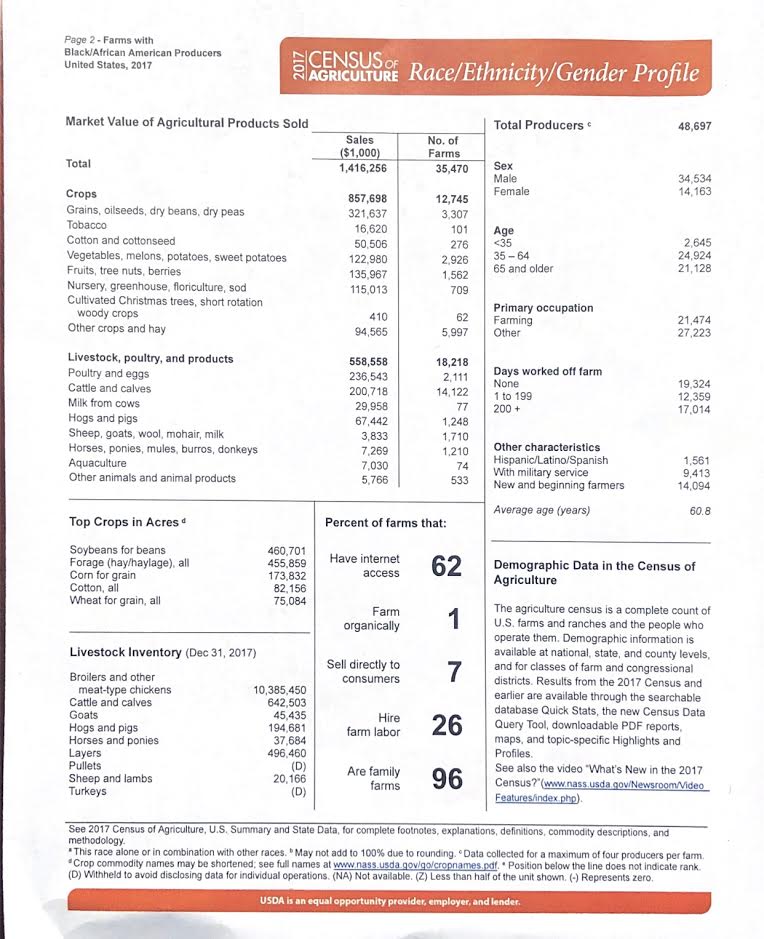
The state of African American farms continues to be a vital component to the African American economy, this despite investment and participation in it on a downward trend. We are highlighting key findings from the 2017 USDA Agriculture Census with 2012 comparison in parentheses where available.

Number of Farms: 35,470 (36,382)

Land in farms (acres): 4,673,140 (4,563,805)

Average size of farm (acres): 132 (125)

Market Value of products sold: $1,416,256,000 ($1,311,6332,000)

Market Value of crops sold: $857,698,000

Market value of livestock, poultry, & products: $558,558,000

Government payments: $58,807,000 (60,731,000)

Average Per Farm Receiving Payments: $7,108 ($5,509)

69 Percent of African American Farms are between 10-180 acres

4 Percent of African American Farms are over 500 acres

43 percent of African American farmers are over the age of 65

5 percent of African American farmers are under the age of 35


HBCU Money™ Presents: The George W. Carver 2017’s Top 20 HBCU Research Institutions

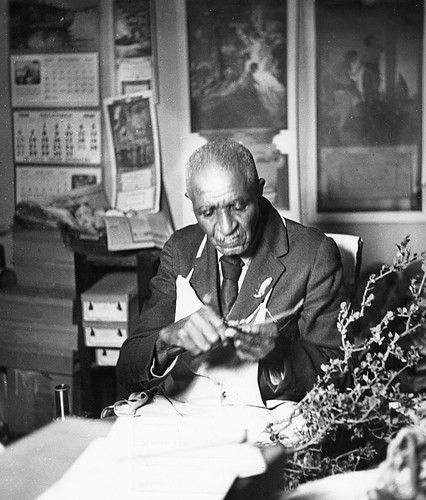
Dr. George Washington Carver (January 5, 1864-January 5, 1943) was an American scientist, botanist, educator, and inventor. Carver is best known for his research into alternative crops to cotton, such as peanuts, soybeans, and sweet potatoes. He wanted poor farmers to grow these alternative crops to aid in the nutrition of farm families and to provide another source of cash income to improve the farmer’s quality of life. Dr. Carver is shown at work at Tuskegee University in September 1938. Photo Courtesy National Archives and Records Administration. r

HBCUs continue to go backwards in the research field according to the latest National Science Foundation data. In 2015, research expenditures for the top 20 HBCUs combined for $425.7 million, while 2017 combines for $424.7 million. Over the past five years, HBCU research expenditures have dropped almost 4.7 percent or a loss of $20.7 million.

  • The top ranked HBCU, Howard University, ranked 203rd and the twentieth ranked HBCU, Virginia State University, ranked 325th among America’s college research landscape.
  • The MEAC maintains their dominance with eight schools versus the SWAC’s four.
  • Division II/III schools also comprise four schools on the list.
  • 1890 HBCUs, land-grant universities, dominate the top twenty with eleven of the top HBCU research universities.
  • All HBCUs combined account for $537.8 million in research expenditures. There are 45 PWI/HWCUs who have research budgets above this amount individually.

Rank. HBCU. Previous Year In Parentheses.

  1. Howard University – $45.8 million ($41.0 million)
  2. Florida A&M University – $37.6 million ($45.4 million)
  3. N.C. A&T State Univ. – $37.4 million ($33.8 million)
  4. Morehouse School of Medicine – $36.9 million ($38.8 million)
  5. Alabama A&M University – $31.7 million ($30.3 million)
  6. Jackson State University – $22.8 million ($23.8 million)
  7. Delaware State University – $20.8 million ($21.3 million)
  8. Tennessee State University – $18.1 million ($19.5 million)
  9. Meharry Medical College – $16.8 million ($14.8 million)
  10. Tuskegee University – $16.5 million ($16.5 million)
  11. Hampton University – $16.6 million ($14.2 million)
  12. Alcorn State University – $16.1 million ($8.2 million)
  13. Charles R. Drew University – $15.7 million ($13.4 million)
  14. Morgan State University – $15.0 million ($15.7 million)
  15. S.C. State University – $14.3 million ($13.1 million)
  16. N.C. Central University – $14.1 million ($12.5 million)
  17. Prairie View A&M University – $14.0 million ($12.6 million)
  18. Xavier University of LA. – $12.4 million ($12.1 million)
  19. Langston University – $11.5 million ($11.2 million)
  20. Virginia State University – $10.8 million ($8.1 million)

TOP 20 COMBINED TOTAL: $424.7 million ($425.7 million)

Additional Notes:

The HWCU-HBCU gap for research among top 20 research institutions is $53:1

Top 20 HWCUs Combined: $22.7 billion ($23.2 billion)

Top 20 Average HWCU – $1.2 billion

Top 20 Average HBCU – $21.2 million

Top 20 Median HWCU – $1.1 billion

Top 20 Median HBCU – $16.5 million

Source: National Science Foundation