African American household wealth reached $5.6 trillion in 2024, marking a half-trillion-dollar increase that signals both progress and persistent structural challenges in the nation’s racial wealth landscape. While the topline growth appears encouraging, the composition reveals a familiar pattern: wealth remains overwhelmingly concentrated in illiquid assets, with real estate and retirement accounts comprising nearly 60% of total holdings. The year’s most dynamic growth came from corporate equities and mutual fund shares, which surged 22.2% to $330 billion—yet this represents less than 5% of African American assets and a mere 0.7% of total U.S. household equity holdings, underscoring how far removed Black households remain from the wealth-generating mechanisms of capital markets.
The liability side of the ledger tells an equally sobering story. Consumer credit climbed to $740 billion in 2024, now representing nearly half of all African American household debt and growing at more than double the rate of asset appreciation. This shift toward unsecured, high-interest borrowing—particularly as it outpaces home mortgage debt—suggests that rising asset values are not translating into improved financial flexibility or reduced economic vulnerability. What makes this dynamic even more troubling is the extractive nature of the debt itself: with African American-owned banks holding just $6.4 billion in combined assets, it’s clear that the vast majority of the $1.55 trillion in African American household liabilities flows to institutions outside the community. This means that interest payments, fees, and the wealth-building potential of lending relationships are being systematically siphoned away from Black-owned financial institutions that could reinvest those resources back into African American communities, perpetuating a cycle where debt burdens intensify even as the capital generated from servicing that debt enriches institutions with no vested interest in Black wealth creation.
ASSETS
In 2024, African American households held approximately $7.1 trillion in total assets, an increase of more than $500 billion from 2023, with corporate equities and mutual fund shares recording the fastest year-over-year growth from a relatively small base, even as wealth remained heavily concentrated in real estate and retirement accounts—together accounting for more than 58% of total assets.
Real Estate
Total Value: $2.24 trillion
Definition: Real estate is defined as the land and any permanent structures, like a home, or improvements attached to the land, whether natural or man-made.
% of African America’s Assets: 34.2%
% of U.S. Household Real Estate Assets: 5.1%
Change from 2023: +4.3% ($100 billion)
Real estate remains the dominant asset class for African American households, accounting for over one-third of total household assets. While modest appreciation continued in 2024, ownership remains highly concentrated in primary residences rather than income-producing or institutional real estate, limiting liquidity and leverage potential.
Consumer Durable Goods
Total Value: $620 billion
Definition: Consumer durables, also known as durable goods, are a category of consumer goods that do not wear out quickly and therefore do not have to be purchased frequently. They are part of core retail sales data and are considered durable because they last for at least three years, as the U.S. Department of Commerce defines. Examples include large and small appliances, consumer electronics, furniture, and furnishings.
% of African America’s Assets: 8.8%
% of U.S. Household Durable Good Assets: 6.2%
Change from 2023: +3.3% ($20 billion)
Corporate equities and mutual fund shares
Total Value: $330 billion
Definition: A stock, also known as equity, is a security that represents the ownership of a fraction of the issuing corporation. Units of stock are called “shares” which entitles the owner to a proportion of the corporation’s assets and profits equal to how much stock they own. A mutual fund is a pooled collection of assets that invests in stocks, bonds, and other securities.
% of African America’s Assets: 4.7%
% of U.S. Household Equity Assets: 0.7%
Change from 2023: +22.2% ($60 billion)
Defined benefit pension entitlements
Total Value: $1.73 trillion
Definition: Defined-benefit plans provide eligible employees with guaranteed income for life when they retire. Employers guarantee a specific retirement benefit amount for each participant based on factors such as the employee’s salary and years of service.
% of African America’s Assets: 24.4%
% of U.S. Household Defined Benefit Pension Assets: 9.7%
Change from 2023: +7.5% ($40 billion)
Defined contribution pension entitlements
Total Value: $880 billion
Definition: Defined-contribution plans are funded primarily by the employee. The most common type of defined-contribution plan is a 401(k). Participants can elect to defer a portion of their gross salary via a pre-tax payroll deduction. The company may match the contribution if it chooses, up to a limit it sets.
% of African America’s Assets: 12.4%
% of U.S. Household Defined Contribution Pension Assets: 6.0%
Change from 2023: +4.8% ($40 billion)
Private businesses
Total Value: $330 billion
% of African America’s Assets: 4.7%
% of U.S. Household Private Business Assets: 1.8%
Change from 2023: +3.1% ($10 billion)
Other assets
Total Value: $770 billion
Definition: Alternative investments can include private equity or venture capital, hedge funds, managed futures, art and antiques, commodities, and derivatives contracts.
% of African America’s Assets: 10.9%
% of U.S. Household Other Assets: 2.7%
Change from 2023: +6.9% ($50 billion)
LIABILITIES
“From 2023 to 2024, African American household liabilities rose by approximately $100 billion, with consumer credit, now representing nearly 48% of all liabilities, driving the majority of the increase and reinforcing structural constraints on net wealth accumulation despite rising asset values.”
Home Mortgages
Total Value: $780 billion
Definition: Debt secured by either a mortgage or deed of trust on real property, such as a house and land. Foreclosure and sale of the property is a remedy available to the lender. Mortgage debt is a debt that was voluntarily incurred by the owner of the property, either for purchase of the property or at a later point, such as with a home equity line of credit.
% of African America’s Liabilities: 50.3%
% of U.S. Household Mortgage Debt: 5.8%
Change from 2023: +4.0% ($30 billion)
Consumer Credit
Total Value: $740 billion
Definition: Consumer credit, or consumer debt, is personal debt taken on to purchase goods and services. Although any type of personal loan could be labeled consumer credit, the term is more often used to describe unsecured debt of smaller amounts. A credit card is one type of consumer credit in finance, but a mortgage is not considered consumer credit because it is backed with the property as collateral.
% of African American Liabilities: 47.7%
% of U.S. Household Consumer Credit: ~15.0%
Change from 2023: +10.4% ($70 billion)
Other Liabilities
Total Value: $30 billion
Definition: For most households, liabilities will include taxes due, bills that must be paid, rent or mortgage payments, loan interest and principal due, and so on. If you are pre-paid for performing work or a service, the work owed may also be construed as a liability.
It’s tough for all farmers, but when you throw in discrimination and racism and unfair lending practices, it’s really hard for you to make it. – John Boyd, Jr., Founder of the National Black Farmers Association
America’s oldest financial divide is agricultural. Once, the majority of African Americans lived and labored on land; now, less than 1.4% of the nation’s 3.4 million farmers are African American. The disappearance of Black farmers is not only a human story—it is a story of capital deprivation, institutional neglect, and the collapse of an ecosystem that once linked land, education, and community credit. To reverse this, imagine if each of the 19 land-grant institutions in the 1890 HBCU system committed $1 million from their endowments and alumni associations to create a unified private lending fund. This $19 million “1890 Fund” would not sit passively in treasuries or bond portfolios but circulate directly through African American banks and credit unions, financing African American farmers and food producers across the country. Such a fund would be modest in scale but revolutionary in concept, a self-directed act of institutional cooperation that reconnects three critical arteries of African American economic life: land-grant HBCUs, African American financial institutions, and Black agricultural producers.
The 1890 HBCUs, institutions such as Tuskegee University, Prairie View A&M, North Carolina A&T, and Florida A&M were established as part of the Second Morrill Act of 1890 to serve African Americans excluded from the original land-grant colleges. Their purpose was not abstract scholarship but applied science: to teach, research, and extend knowledge about agriculture, engineering, and the mechanical arts. Over time, many of these schools evolved into comprehensive universities. Yet the decline of Black farmers and the consolidation of farmland under non-Black ownership represent a direct erosion of the very population these universities were created to serve. Between 1910 and 2020, African American land ownership fell by roughly 90%, from an estimated 15–16 million acres to less than 2 million today. The structural dispossession through discriminatory lending, heirs’ property laws, and USDA bias has left African American farmers with less access to credit and fewer pathways to generational land retention. HBCUs were founded to be a shield against such vulnerability. The 1890 Fund would revive that founding spirit, transforming their agricultural programs and extension centers into engines of financial empowerment rather than merely research hubs dependent on federal grants.
Each 1890 HBCU would allocate $1 million from a combination of its endowment and alumni association reserves, with matching commitments encouraged through philanthropic donors or corporate partners. The pooled fund $19 million at launch would be professionally managed under a cooperative structure, similar to a community development financial institution or business development company. The fund would not make direct loans itself but would place its capital into African American-owned banks and credit unions identified in HBCU Money’s 2024 African American-Owned Bank Directory. Institutions such as OneUnited Bank, Industrial Bank, Citizens Trust Bank, and smaller but vital credit unions like FAMU Federal Credit Union or Hope Credit Union would serve as the lending conduits. In effect, the 1890 Fund would function as the “wholesale” capital pool of low-interest (but profitable), long-duration deposits or certificates placed with African American banks that, in turn, originate and service loans to qualified African American farmers, cooperatives, and agri-businesses. Loans would range from $25,000 micro-lines for new producers to $500,000 or more for established operations seeking equipment, irrigation, or land expansion. Priority would be given to farmers with relationships to HBCU agricultural programs such as those who have completed workshops, extension training, or student partnerships. Each bank or credit union participating would commit to transparent reporting, with loan performance and demographic data shared annually with the 1890 Foundation. The revolving structure of repayments would ensure that as farmers succeed, their payments replenish the pool for new borrowers creating a regenerative loop of institutional and community wealth.
Routing the fund through African American financial institutions is not symbolic it is structural. Historically, Black farmers were denied access to credit through traditional banks and faced redlining by federal programs. Even today, USDA lending disproportionately benefits white farmers. African American banks and credit unions remain among the few institutions with both the cultural understanding and community trust necessary to underwrite these borrowers responsibly. Moreover, these banks themselves are chronically undercapitalized. With combined assets of roughly $7.5 billion across the sector, African American banks represent barely 0.001% of total U.S. banking assets, insufficient to exert meaningful influence in national credit markets. By placing deposits into these banks, HBCUs would strengthen their liquidity ratios, reduce dependence on volatile retail deposits, and expand lending capacity far beyond the fund’s nominal amount through fractional reserve leverage. In short, every dollar committed by an HBCU could translate into $7–$10 in agricultural lending capacity once multiplied through the banking system.
HBCU alumni associations hold untapped potential as financial intermediaries. While endowments must operate under fiduciary and investment constraints, alumni associations often have greater flexibility. They can act as private limited partners in the 1890 Fund, contributing capital from dues, life membership funds, or targeted campaigns such as “Adopt-a-Farmer.” Imagine an alumni chapter of Florida A&M underwriting 10 acres of hydroponic greens for a local farmer who agrees to hire FAMU agriculture graduates. Or Prairie View alumni pooling funds to purchase cold-chain trucks for dairy producers across Texas. These actions extend the HBCU brand into the real economy transforming loyalty into tangible economic development. Each alumni association could also create its own micro-fund linked to the central 1890 Fund, mirroring the “chapter endowment” concept used by major universities. This networked structure would democratize investment and bring the broader African American middle class into the process of agricultural renaissance.
Lending alone does not sustain farmers; ecosystems do. The 1890 Fund would operate most effectively if it integrated with the broader HBCU agricultural and business infrastructure. HBCU agricultural economists could conduct continuous impact analysis tracking how capital access affects yields, profitability, and land retention. Their findings would strengthen advocacy for increased African American private capital. Extension programs could pair loan recipients with agronomists and soil scientists to ensure that capital is used productively and sustainably. HBCU-affiliated food labs, hospitality programs, and dining services could prioritize procurement from funded farmers, creating closed-loop demand. Business schools could develop crop insurance products and risk models tailored to small producers, mitigating the vulnerability that has historically devastated African American farms. Student internships in finance, agriculture, and data science could be embedded in the fund’s operations training the next generation of agricultural financiers and analysts. This approach transforms the 1890 Fund from a mere loan pool into a comprehensive agricultural development platform.
The greatest strength of the 1890 Fund lies in its multiplier effect. Consider: $19 million revolving annually at a conservative 6% loan rate generates roughly $1.1 million in annual interest income—income that can be reinvested or partially distributed back to participating universities to grow the fund. If repayments are recycled annually, the fund could underwrite over $100 million in cumulative loans within its first decade. The macroeconomic ripple is job creation, land retention, and input purchases that would expand rural GDP in African American counties and increase deposit growth for the participating banks. Contrast this with the status quo: endowment funds largely held in Wall Street instruments that yield moderate returns but generate no localized impact. By re-directing even a fraction of assets into mission-aligned community lending, HBCUs align their investments with their historic purpose of educating and empowering the descendants of those who built the land.
The global contest for food security is intensifying. Nations that control food production, water, and soil fertility will control the future. For African America, regaining agricultural capacity is not nostalgic it is strategic. Every acre restored to productive use by African American farmers increases food sovereignty and reduces dependence on foreign or corporate supply chains. If HBCUs act collectively through the 1890 Fund, they position themselves as key players in regional and national food policy. They could partner with African universities for climate-resilient crop research, link with Caribbean agricultural cooperatives for trade, and develop transatlantic agribusiness ventures under the banner of Black institutional power. Such cooperation would redefine “land-grant” for the 21st century not as a relic of American expansion but as a global model of Pan-African capital deployment.
The road to building the 1890 Fund will not be smoothed by political cooperation. The federal and state governments that oversee the 1890 land-grant system are, in many cases, openly hostile toward African American advancement. Most of the 1890 HBCUs operate in states where racial resentment, austerity politics, and legislative interference remain the norm. These are states that have withheld or delayed millions in matching funds, imposed discriminatory audits, and used political appointments to keep HBCUs subordinate to their predominantly white peers. Under such conditions, the 1890 Fund is not merely an investment vehicle it is a form of institutional defense. Federal and state policy cannot be relied upon to sustain African American agriculture or financial independence. The only realistic path forward is one where HBCUs, alumni associations, and African American banks coordinate their own internal economy of capital, shielded from political manipulation.
This is where the 1890 Foundation becomes indispensable. Established to support the collective mission of the 1890 universities, the Foundation already exists as a neutral, centralized, and professionally managed entity capable of administering joint initiatives on behalf of all 19 institutions. Tasking it with managing the 1890 Fund would provide immediate credibility, legal infrastructure, and continuity. The Foundation could structure the fund as a private, revolving loan pool, capitalized through contributions from university endowments, alumni associations, and strategic partners, while remaining beyond the reach of hostile state legislatures. Governance through the 1890 Foundation would also protect participating universities from political retaliation. Rather than each HBCU appearing to act independently potentially inviting scrutiny from governors or state boards the fund’s activities could be coordinated under the Foundation’s national charter. This collective structure would allow for scale, professional risk management, and a unified investment policy aligned with the long-term interests of African American farmers and institutions.
Nevertheless, challenges remain. Some university boards, especially those with state-appointed trustees, may hesitate to commit endowment dollars to what they perceive as politically sensitive or unconventional investments. The uneven size of endowments ranging from under $50 million at smaller 1890s to more than $200 million at the largest could create tensions over proportional contributions. And while the 1890 Foundation provides an ideal governance structure, it would still need to secure regulatory clarity and investment expertise to manage a multi-million-dollar lending operation through external financial institutions. These risks, however, are outweighed by the opportunity to build economic sovereignty in an era of state hostility. The very conditions meant to weaken HBCUs like political obstruction, financial starvation, and bureaucratic oversight can become the catalysts for collective independence. If the 1890 Fund channels its capital through African American banks and credit unions, it strengthens two institutional pillars simultaneously: HBCUs regain control over how their endowments circulate, and Black-owned financial institutions gain the liquidity and leverage they need to expand.
The political hostility surrounding 1890 HBCUs should not be seen as a deterrent, but as confirmation of why this fund must exist. It demonstrates that African American progress, even in the 21st century, cannot depend on state benevolence. By empowering the 1890 Foundation to manage a private, self-sustaining fund, HBCUs would be acting in the same spirit of independence that defined their creation in 1890 when the federal government forced states to either open their existing land-grant colleges to Black students or create new ones for them. The 1890 Fund would be the modern continuation of that act of defiance transforming exclusion into enterprise. Through the 1890 Foundation’s leadership, African American endowments, farmers, and banks could finally operate in unison, beyond the grasp of state control. In doing so, they would build not just a lending mechanism, but a shield—a financial structure capable of outlasting political hostility and securing the long-term survival of Black agricultural and institutional power.
If the 1890 Fund fulfills its purpose, its long-term success should evolve into something even greater, a joint venture between the 1890 Foundation, African American banks, and African American credit unions that establishes a new national financial institution: one modeled on the Farm Credit System but existing independently from it to preserve full financial sovereignty. The Farm Credit System is a government-sponsored network of cooperative lenders that provides over $400 billion in loans and financial services to farmers, ranchers, and agricultural businesses across the United States. Its reach is vast and influential, covering roughly 40% of all agricultural debt in the country. Yet African American farmers have historically been excluded from its benefits. The FCS, like much of American agricultural policy, was built in an era when Black ownership was being systematically dismantled. It became a backbone for white rural wealth while African American farmers were left to navigate a labyrinth of local banks, discriminatory USDA programs, and predatory lending.
A successful 1890 Fund would prove that African American institutions: universities, banks, and credit unions can design a credit network capable of rivaling the FCS’s effectiveness, without its dependencies or racial exclusions. Over time, this collaboration could be formalized into a joint enterprise: the African American Agricultural Credit Alliance: a cooperative, member-driven, nationwide system built to finance not just farms but the entire food and fiber value chain. Like the FCS, it could be composed of multiple regional lending cooperatives, each capitalized by a blend of HBCU endowment investments, bank deposits, and credit union member capital. At its center would sit a national coordinating body responsible for liquidity management, risk pooling, and bond issuance. But unlike the FCS, this alliance would be entirely private and its governance drawn from the 1890 Foundation, the African American Credit Union Coalition, and the National Black Farmers Association. The goal would not be to replicate the FCS’s structure exactly but to rival its scale, providing affordable credit, insurance, equipment financing, and agri-business investment under the umbrella of Black-owned control.
Refusing to integrate into the existing Farm Credit System is not a rejection of efficiency it is a declaration of sovereignty. The FCS, though cooperative in name, ultimately answers to federal regulators, congressional committees, and a system of oversight that has never prioritized Black agricultural survival. Independence ensures that capital allocation decisions remain rooted in African American priorities—restoring land, building ownership, and sustaining communities rather than maximizing short-term returns. Financial sovereignty also allows for creative lending models that the FCS cannot adopt under federal restrictions, such as cooperative land trusts, heirs’ property buyouts, carbon-credit-backed collateral, or blockchain-based agricultural exchanges.
The evolution from the 1890 Fund to a fully realized agricultural credit system would expand capital from millions into billions. Once the fund demonstrates consistent performance, its track record could attract institutional investors like African American foundations, pension funds, and even sovereign funds from the African diaspora seeking mission-aligned, asset-backed investments. Through securitization and bond issuance, the alliance could channel long-term capital into rural Black communities, funding everything from precision agriculture and agroforestry to food processing and logistics. This would make agriculture once again an attractive sector for young entrepreneurs and HBCU graduates. Over time, the 1890 Fund could thus mature into an ecosystem capable of reindustrializing Black rural America through ownership and control of capital.
The creation of such a system would carry global implications. It could link with agricultural cooperatives in Africa and the Caribbean, forming a transatlantic agricultural finance corridor and positioning African American institutions as both lenders and investors in global food systems. The founding of the 1890 Fund, therefore, would not be an endpoint but the beginning of a long journey toward financial nationhood. The eventual establishment of an independent agricultural credit alliance would mark the institutionalization of economic sovereignty—a transformation from temporary coordination to permanent capacity.
The 1890 Fund embodies the principle that power comes from ownership, not participation. For too long, African American institutions have waited for external validation or federal rescue. The tools for rebuilding agricultural sovereignty already exist: universities with land and research infrastructure, banks with local lending channels, and farmers with generational knowledge. When linked together, these elements form a complete ecosystem capable of restoring both land and leverage. The $1 million commitment from each 1890 HBCU would not be a gift it would be a strategic investment in self-determination. If executed, within a generation the 1890 Fund could help reclaim millions of acres, incubate thousands of Black-owned farms, and expand the asset base of African American financial institutions. It would also serve as a model for other sectors like manufacturing, housing, and technology demonstrating how collective capital deployment transforms a marginalized community into a nation within a nation.
As Dr. Booker T. Washington once observed, “No race can prosper till it learns that there is as much dignity in tilling a field as in writing a poem.” The modern corollary is that no people can be free until they can finance their own fields. The 1890 Fund is not only a mechanism for loans it is a blueprint for liberation through institutional coordination. Its success could lay the groundwork for a sovereign financial architecture that, like the land it seeks to reclaim, will belong entirely to the people who cultivate it.
“When I’m asked about the relevance to Black people of what I do, I take that as an affront. It presupposes that Black people have never been involved in exploring the heavens, but this is not so. Ancient African empires – Mali, Songhai, Egypt – had scientists, astronomers. The fact is that space and its resources belong to us, not to any one group.” – Mae Jemison
The United States government’s recent decision to withdraw its only research vessel from Antarctica represents more than a logistical setback for American science it signals a historic opportunity for Historically Black Colleges and Universities to claim leadership in one of the world’s most critical research frontiers.
When scientists like Alison Murray learned their Antarctic diving research would be indefinitely postponed due to the vessel withdrawal, it exposed a troubling reality: America is ceding scientific leadership in polar regions at precisely the moment when climate research has become existentially urgent. Yet within this crisis lies an opening that forward-thinking HBCU leaders and initiatives like the proposed HBCU Exploration Institute (HEI) should seize immediately.
The withdrawal of U.S. research capabilities from Antarctica isn’t happening in isolation. It reflects broader federal retreat from exploratory science across multiple domains from deep-sea mapping to atmospheric research to space exploration. As scientists told The Washington Post, building a replacement vessel could take years, leaving a generation of young researchers without access to critical field sites and diminishing American influence on a continent where geopolitical and scientific stakes are rising rapidly.
Currently, only a handful of nations operate dedicated Antarctic vessels capable of navigating the continent’s treacherous ice-choked waters. As America pulls back, countries including China, Russia, and even smaller nations are expanding their polar research fleets and infrastructure. This isn’t merely about scientific prestige it’s about who shapes climate policy, who controls access to research sites, who sets international standards for environmental stewardship, and ultimately, who benefits from discoveries made in these frontier regions.
For HBCUs, this federal abandonment creates a three-fold opportunity: to fill genuine research gaps with immediate societal value, to establish institutional leadership in high-stakes scientific domains, and to fundamentally reframe the narrative about who leads exploration and discovery in the 21st century.
The HBCU Exploration Institute concept outlined in its founding business plan isn’t simply about participating in exploration it’s about transforming who controls the means of discovery. The proposed organization would operate research vessels, aircraft, field stations, and space payloads governed and staffed by HBCU talent, creating a parallel infrastructure to traditional federal research systems. This model offers several strategic advantages in the current moment. First, HBCUs can move with greater institutional agility than large federal bureaucracies. While government agencies debate budget allocations and political appointees shift priorities with each administration, a Pan-African, HBCU-led exploration organization could secure diverse funding streams—from philanthropic foundations to international partnerships to corporate sponsors—that insulate research from political winds.
HBCUs bring essential perspectives to exploration science that mainstream institutions have historically marginalized. The concept of “exploration power” examining whose data is gathered, who gathers it, and who benefits is central to HEI’s mission. This isn’t abstract ethics; it’s practical strategy. Research conducted in partnership with African and Caribbean institutions, for example, can build diplomatic relationships and shared intellectual property frameworks that strengthen both African American and African Diaspora scientific capacity. The HBCU network represents untapped human capital. Talented Black students and faculty have faced persistent barriers to entry in traditional exploration fields, from oceanography to aerospace. An HBCU-led initiative could create direct pipelines from undergraduate research to polar expeditions to faculty positions, bypassing gatekeeping mechanisms that have kept exploration science predominantly white and economically privileged.
Perhaps most significantly, launching an HBCU exploration initiative at this moment positions these institutions as leaders not just in American higher education, but within the global African diaspora’s intellectual ecosystem. African and Caribbean nations are rapidly expanding their own scientific capabilities. The African Union Space Agency, launched in recent years, coordinates satellite programs and space research across the continent. Caribbean nations are investing in climate resilience research essential to their survival. Yet many of these institutions lack the infrastructure, funding, and international partnerships that even modestly-resourced American HBCUs can access.
An HBCU Exploration Institute operating polar icebreakers, conducting deep-sea research, and launching satellite payloads wouldn’t just advance American science it would establish HBCUs as anchor institutions for Pan-African scientific collaboration. Imagine Howard University leading joint oceanographic research with the University of Ghana, or Spelman College coordinating atmospheric monitoring stations across the Caribbean. The reputational gains would be transformative. This matters for recruitment, fundraising, and influence. Prospective students choosing between HBCUs v. PWIs would see real HBCU ships, real HBCU expeditions, and real HBCU career pathways into exploration science. Donors and foundations seeking to support climate research and diversity initiatives simultaneously would find a natural home. And HBCU presidents would have new platforms for thought leadership on issues from climate power to space policy to scientific diplomacy.
Here’s an uncomfortable truth: this initiative will only succeed if HBCU alumni associations mobilize with the same intensity, pride, and financial commitment they bring to homecoming football games and basketball tournaments. Every fall, HBCU alumni pour millions into athletics for season tickets, tailgate sponsorships, facility upgrades, coaching staff salaries. Alumni associations organize elaborate events, coordinate donor campaigns, and celebrate athletic achievements with genuine institutional pride. The Battle of the Real HU generates more alumni engagement and media attention than most academic programs receive in a decade. That energy, that organizational capacity, that willingness to invest must now be redirected toward exploration science with the same fervor.
Imagine if Howard University’s alumni association launched a “Name a Research Station” campaign with the same production value as a homecoming concert. Picture Spelman graduates organizing Antarctic expedition watch parties with the same enthusiasm as NCAA tournament viewing events. Envision FAMU’s National Alumni Association creating an “Explorers Circle” giving society that receives the same social prestige as premium athletic booster clubs. This isn’t criticism of HBCU athletics culture it’s a call to expand that culture to encompass scientific exploration. The infrastructure already exists. Alumni associations know how to run capital campaigns, coordinate reunion giving, leverage social networks, and create moments of collective pride. These skills transfer directly to funding research vessels and field stations.
The proposed HBCU Exploration Institute requires $102 million over three years. That sounds daunting until you consider that HBCU athletic programs collectively generate hundreds of millions annually, most of it from student fees. A coordinated campaign across major HBCU alumni networks—Howard, Spelman, Morehouse, Hampton, Tuskegee, FAMU, North Carolina A&T, Southern, Jackson State, Prairie View A&M—could realistically raise $25-30 million in year one if alumni leadership treats this with athletic-level urgency. Some institutions have already demonstrated this model. When North Carolina A&T needed to upgrade its engineering facilities, alumni responded with major gifts because they understood engineering excellence as core to institutional identity. Spelman’s alumni have funded science facilities and research programs. But these efforts have remained institution-specific and episodic. What’s needed now is collective, sustained mobilization.
Alumni associations must take several concrete actions immediately. First, every major HBCU alumni organization should establish an Exploration Science Committee with the same organizational status as athletic support committees. These groups would coordinate giving campaigns, identify potential major donors from alumni ranks, and create visibility for exploration research. Second, alumni homecoming and reunion events must begin celebrating scientific exploration with the same pageantry as athletics. Feature returning researchers presenting expedition findings. Honor alumni working in climate science, oceanography, and aerospace with the same recognition as athletic hall of fame inductees. Create traditions around scientific achievement that become part of institutional identity.
Third, alumni networks must leverage their professional positions to open doors. HBCU graduates work throughout corporate America, foundation leadership, and government agencies. An organized alumni effort could secure corporate sponsorships, foundation meetings, and federal partnership discussions that individual institutions struggle to access. When Hampton alumni at NASA advocate for HBCU partnerships, or Spelman graduates at the Mellon Foundation champion exploration science grants, institutional barriers dissolve. Fourth, alumni giving must be restructured to prioritize exploration infrastructure. Many alumni give to scholarship funds or general operating budgets, which is valuable but doesn’t build transformative capacity. Alumni associations should create specific endowments for vessel operations, expedition funding, and fellowship programs—tangible assets that generate sustained visibility and research output.
The cultural shift required is significant but not unprecedented. HBCU alumni already understand institutional pride, collective identity, and the power of coordinated action. They’ve built that culture around athletics because athletics has been positioned as central to HBCU identity and excellence. Exploration science must now be positioned the same way. This means changing the narrative from “HBCUs need better STEM programs” to “HBCUs will lead humanity’s next era of discovery.” It means alumni bragging about their school’s Antarctic expedition with the same pride they show for conference championships. It means young alumni seeing paths to exploration careers at their alma maters, not just at mainstream institutions.
The financial model becomes achievable when viewed through this lens. If each of the top 20 HBCU alumni associations committed to raising just $5 million over three years for exploration science—less than many spend on athletic facility upgrades—the startup capital is secured. Add foundation grants and federal partnerships, and the budget is covered. But more than money, alumni provide legitimacy, momentum, and accountability. When alumni demand progress on exploration science initiatives with the same intensity they demand winning seasons, institutional leadership responds. When alumni celebrate research expeditions with the same enthusiasm as rivalry games, prospective students take notice. When alumni networks coordinate giving and advocacy, transformation becomes possible.
The HEI business plan proposes a $102 million startup budget over three years to acquire vessels, establish field stations, fund expeditions, and build fellowship programs. That’s substantial, but it’s also achievable given current philanthropic interest in both climate research and HBCU development. The Bezos Earth Fund has committed billions to climate research. The Mellon Foundation has prioritized HBCU infrastructure investment. NASA and NOAA, despite federal constraints, actively seek diverse institutional partnerships. A well-organized HBCU consortium could secure multi-year commitments from these sources, particularly by framing the initiative as addressing federal research gaps.
The immediate focus should be marine research, where the vessel shortage is acute. Acquiring or leasing even one ocean-capable research ship—potentially a refitted commercial vessel—would allow HBCUs to begin Antarctic and Arctic research within two years rather than waiting for federal capacity to rebuild. Partnering with international research programs could offset operational costs while building the diplomatic relationships that strengthen HBCU global standing. Field stations in strategic locations like the Gulf Coast, Alaska, Ghana, the U.S. Virgin Islands would serve multiple functions: research platforms, student training sites, and hubs for international collaboration. These don’t require massive funding; even modest facilities become transformative when they provide HBCU students access to environments and equipment unavailable on their home campuses.
The fellowship and expedition programs are equally critical. Summer research academies focusing on polar, marine, and aerospace exploration would create immediate visibility and impact. Graduate fellowships with guaranteed expedition participation would attract top-tier students who might otherwise choose mainstream programs. Faculty sabbaticals at international field sites would bring research capacity and publications that elevate institutional rankings.
Predictable objections will emerge: HBCUs lack the expertise, the infrastructure, the established research networks. But these arguments mistake historical exclusion for inherent incapacity. HBCUs have produced astronauts, oceanographers, and polar scientists they’ve simply done so while their parent institutions received minimal support for exploration science infrastructure. Moreover, the proposed model explicitly builds on existing strengths. Many HBCUs have robust Earth science, environmental science, and physics programs that lack only field research opportunities. The institute wouldn’t create scientific capacity from nothing; it would provide the ships, stations, and funding to activate capacity that already exists but remains underutilized. The real risk isn’t that HBCUs might fail at exploration science it’s that by not trying, they’ll watch other institutions and nations claim leadership in domains that will define 21st-century research prestige and funding.
Federal withdrawal from Antarctic research won’t reverse quickly. Budget constraints, political dysfunction, and competing priorities mean the vessel gap could persist for a decade or more. That timeline perfectly matches the HEI five-year development plan, which envisions operational vessels and field stations by year three and landmark research publications by year four. HBCUs face a choice. They can wait for federal capacity to rebuild, competing for scarce berths on research vessels if and when they return to service. Or they can recognize this moment as the opportunity it is: a chance to build independent exploration infrastructure, establish diaspora research leadership, and fundamentally shift the narrative about who belongs in humanity’s most ambitious scientific endeavors.
But this choice isn’t just for presidents and administrators it’s for the millions of HBCU alumni whose collective power remains largely untapped for scientific advancement. The same alumni networks that fill stadiums, fund athletic scholarships, and travel across the country for homecoming games must now channel that organizational capacity toward building research fleets and exploration programs. The motto proposed for the HBCU Exploration Institute is “To Discover, To Lead, To Belong.” That sequence matters. Discovery creates the intellectual foundation. Leadership transforms institutions and influences policy. But belonging establishing permanent presence in exploration science requires infrastructure, commitment, and the willingness to act when opportunities emerge.
America’s retreat from Antarctica isn’t just a setback for researchers like Alison Murray. It’s an invitation for institutions that have been systematically excluded from exploration science to step forward and claim the leadership role they’ve always been capable of holding. The question is whether HBCU leaders and, crucially, whether HBCU alumni will recognize this moment and seize it before it passes. The energy, pride, and resources are already there mobilized. Now they must be redirected toward putting HBCU names on research vessels sailing to Antarctica, field stations conducting climate research, and satellite payloads orbiting Earth. That’s a legacy worth more than any championship trophy.
“It is not wrong to go back for that which you have forgotten.” — Akan Proverb (Sankofa)
There is an old story told among the Akan of West Africa about a young man who left his village to study the ways of the marketplace. He was gifted — quick with numbers, persuasive with words, tireless in his industry. He returned years later fluent in the language of commerce, able to negotiate price and manage inventory with the best merchants the region had produced. But when the village elders gathered to ask what he had learned about water rights, about the law, about the obligations of the prosperous to the community that had sent him, he had nothing to say. He had been trained, thoroughly and well, for someone else’s purposes. The village had paid for a leader and received a clerk. This is not a story about ingratitude. It is a story about what happens when the institutions that form young people lose the plot of why they were built.
American universities increasingly exist to serve labor markets rather than form citizens. For Historically Black Colleges and Universities, this institutional deformation represents both a warning and an opening.
There is a revealing diagnostic embedded in a question any professor can pose on the first day of class: why are you here? The answers that come back — to get a job, to build a career, to make money — are not wrong, exactly. But they describe something much narrower than what a university was designed to produce. They describe a transaction. And the institutionalization of that transactional logic, across American higher education over the past four decades, has imposed costs that neither the labor economists who designed the system nor the accreditation bodies that certified it have been willing to fully account for.
The restructuring of higher education along market lines was not an accident. It was a policy choice, made in stages beginning in the 1980s, that progressively reoriented public universities toward workforce preparation, compressed the space available for general education and humanistic inquiry, and transferred the financial risk of education from public institutions onto individual students and their families. The student loan crisis is one symptom of this reorientation. The proliferation of vocational credentialing at the expense of liberal arts is another. Less visible but equally consequential is the effect on what universities produce in human terms — the disposition, analytical range, and civic formation of their graduates.
The student who arrives believing that a degree functions as an employment guarantee is not making a category error. She has been told this, repeatedly, by the institutions that enrolled her, the federal loan apparatus that financed her, and a media ecosystem that measures the value of a college education almost exclusively through salary differentials and debt-to-income ratios. The deeper problem is that she has also been deprived of a more useful framework: one that treats higher education as preparation not merely for employment but for the exercise of institutional power, the stewardship of community capital, and the formation of judgment capable of operating across a lifetime of economic and social change. Those are the competencies that distinguish a genuinely educated person from a credentialed one, and the distinction matters enormously in communities where institutional infrastructure remains fragile and leadership pipelines are thin.
This is where the argument becomes specifically relevant to HBCUs rather than to American higher education in the aggregate. The corporate conditioning of higher education has affected all universities, but its effects are not uniform. Institutions with established research endowments, mature alumni networks, and direct pipelines into elite professional employment have the institutional mass to absorb the distortions of vocationalism without catastrophic loss. Their graduates arrive pre-loaded with social capital, family networks, and access to the informational infrastructure of elite labor markets, which provides a buffer against the worst consequences of credential inflation and employer algorithmic sorting. For students entering higher education without that buffer which describes the majority of HBCU students, who are disproportionately first-generation, from households without investment assets, and entering labor markets where anti-Black discrimination remains empirically well-documented the consequences of treating college purely as a job training apparatus are considerably more severe.
The failure here is not primarily pedagogical. It is institutional. A university that produces graduates oriented entirely toward employment rather than toward the exercise of judgment and institutional agency will not generate the lawyers, policy architects, financial professionals, and civic entrepreneurs that HBCU communities need to build and sustain institutional power at scale. It will generate employees, some of them well-compensated who move through institutions built by others, serve purposes defined by others, and accumulate assets at the individual level while contributing nothing in aggregate to the reconstruction of African American institutional infrastructure. This is not a condemnation of individual ambition. It is an observation about systemic output. Systems produce what they are designed to produce, and the current design of American higher education, including at too many HBCUs, is producing workers rather than institution-builders.
The philosophical traditions embedded in African educational thought, the Akan concept of formation through relationship and ethical accountability, the Yoruba understanding of wisdom as holistic rather than merely technical, the West African griotic tradition of knowledge as communally held and intergenerationally transmitted, are not romantic additions to this argument. They are structural insights that happen to align with what contemporary institutional economics also recommends. Communities with strong institutions maintain those institutions through intergenerational transfer of knowledge, norms, and relational networks. Universities are among the most important sites of that transfer. When they are reconfigured as credentialing factories, they sever precisely the intergenerational connections that give institutions their durability.
The practical implication is direct. HBCUs that wish to build and sustain institutional power over the coming decades cannot simply replicate the corporate conditioning model of majority-serving universities and expect different outcomes. They need to produce graduates who understand that they are entering labor markets that are global, algorithmically mediated, and structurally hostile to workers without differentiated human capital and who have therefore been trained to think strategically about their own positioning, to build networks rather than merely seek employers, and to direct talent and capital toward institution-building rather than individual accumulation alone. This is not an argument against job preparation. It is an argument that job preparation divorced from institutional formation is insufficient, and that HBCUs have both the historical mission and the competitive positioning to offer something more.
The competitive advantage here is not sentimental. HBCUs were founded on the premise that Black Americans required institutions of their own not merely to access credentials but to develop leadership capable of navigating hostile environments and building community power from limited material resources. That founding logic which is fundamentally an institutional rather than a purely pedagogical argument remains operative. The hostile environment has changed its form, but not its fundamental character. The algorithms that now sort résumés for corporate HR departments are no less effective at producing racially disparate outcomes than the credentialing barriers of earlier eras. The private equity firms that have acquired significant positions in historically Black neighborhoods are no less effective at extracting community wealth than earlier mechanisms of economic predation. Navigating these environments requires precisely the kind of formation — analytical, strategic, institutionally literate — that the corporate conditioning model explicitly does not provide.
What this means in practice is that HBCU curricula, advising structures, alumni networks, and institutional partnerships need to be reoriented around a clearer theory of what the institution is producing and for what purpose. Producing graduates who are competitive in labor markets is a necessary but insufficient condition. The sufficient condition is producing graduates who are capable of building, leading, and sustaining institutions who understand capital formation, governance, and strategic coordination well enough to direct resources toward collective rather than purely individual ends. The universities that produced the lawyers and economists of the civil rights movement were not doing job training. They were doing institution-building, and the institutions they built changed the material conditions of an entire people.
That model does not require romantic nostalgia for mid-century higher education. It requires clear-eyed assessment of what the current model fails to produce and deliberate institutional design to fill the gap. HBCUs are not going to reclaim this ground through curriculum revision alone. They will reclaim it by building the endowments, research infrastructure, alumni capital networks, and employment relationships that allow them to make credible institutional promises to students; promises that extend beyond the transaction of the degree and into the sustained support of graduate careers and community investment. The credential factory model is a low-margin business that does not serve students, institutions, or communities well. The alternative is harder to build, but it is the only model that creates durable institutional power. That has always been the actual mission. The question is whether the institutions are prepared to pursue it.
Disclaimer: This article was assisted by ClaudeAI.
“If you can provide the funding and you get the leadership, you’ll have a competitive team.” – T. Boone Pickens
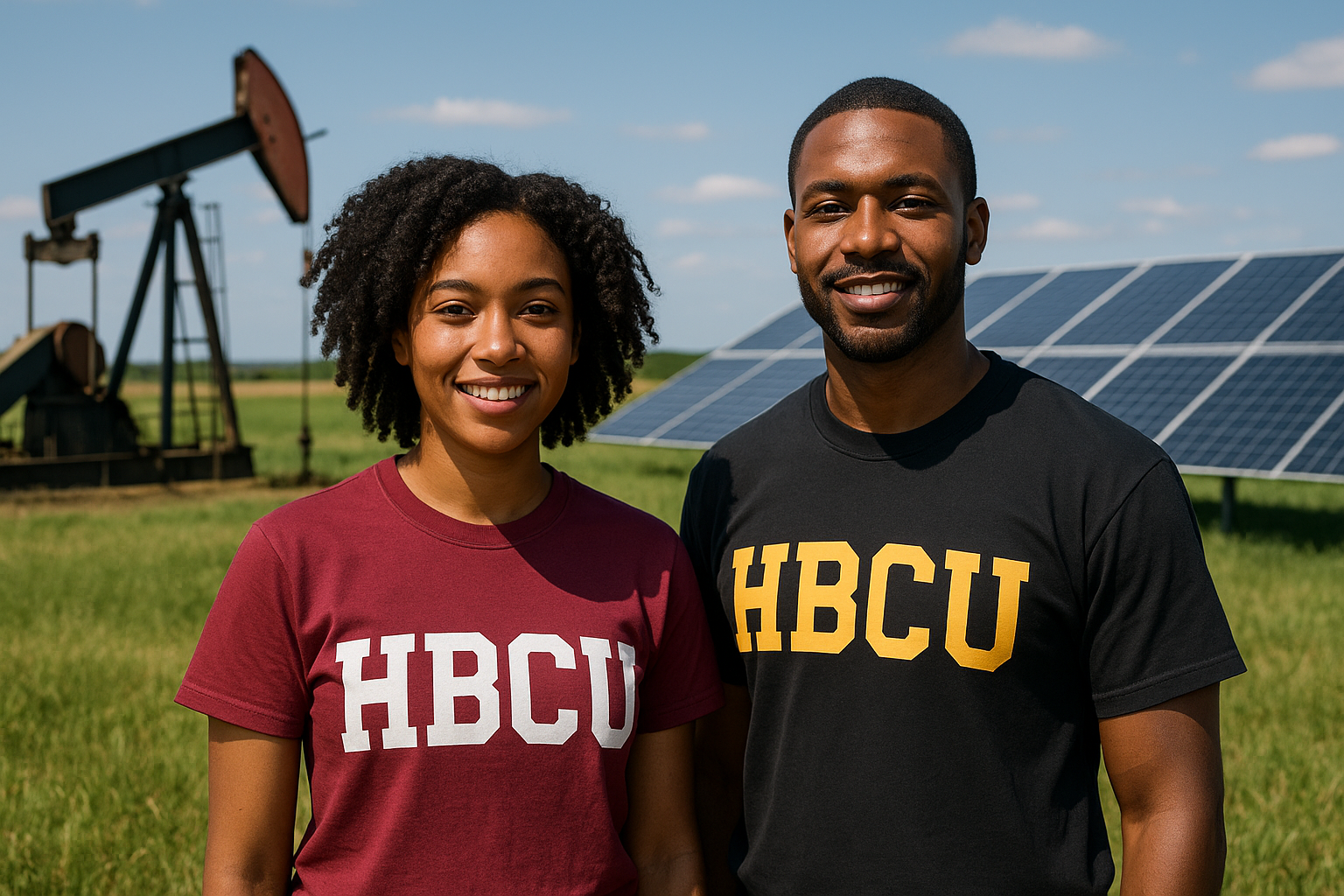
The Southern United States is awash in energy. From Texas to Louisiana, Mississippi to Alabama, these states are responsible for the bulk of America’s oil and gas production. They are also home to the vast majority of Historically Black Colleges and Universities (HBCUs), institutions that have graduated generations of African American engineers, scientists, and business professionals. Yet, despite the geographic overlap and the energy sector’s enormous influence, there is an unmistakable void when it comes to HBCU alumni-founded firms in oil, gas, or even renewables. It is a paradox of proximity without participation—resources in abundance, yet ownership remains out of reach.
This disconnect is not simply a function of chance. It is the product of historical exclusion, structural barriers, and decades of capital disinvestment. The energy industry, especially oil and gas, has long been one of the most capital-intensive and closed sectors of the U.S. economy. The upstream business of exploration and drilling is not built for first-time entrepreneurs without deep-pocketed backers, multigenerational industry ties, or significant institutional support. Most HBCU alumni have none of the above.
For much of the 20th century, Black Americans were excluded from both land ownership in oil-rich regions and the educational infrastructure required to engage in the energy economy. HBCUs historically focused on liberal arts, education, and public service—disciplines that addressed urgent post-emancipation needs and segregation-era employment restrictions. Petroleum engineering, energy policy, and oil finance were simply not part of the curriculum. And while HBCUs today have engineering programs, few have the dedicated energy labs, industry partnerships, or commercialization infrastructure that their predominantly white counterparts enjoy. At places like the University of Texas or Texas A&M, oil research institutes, private equity-backed incubators, and billion-dollar endowments serve as launchpads for energy ventures. No HBCU currently operates at that scale.
Then there is the question of capital. Even if an HBCU graduate had the technical know-how and vision to build an energy company, the financing would almost certainly be out of reach. According to the Federal Reserve’s most recent small business credit survey, Black entrepreneurs are more likely to be denied loans, receive lower funding offers, and face higher interest rates. In oil and gas, where drilling a single exploratory well can cost millions, these hurdles become insurmountable. And in the renewable energy space, which requires less upfront capital but still demands serious investment and regulatory navigation, Black founders are still underrepresented. Less than 2% of clean energy businesses are Black-owned, a figure confirmed by data from the Department of Energy and Brookings Institution.
There are, however, rare examples that offer a blueprint for what could be. Volt Energy, a solar development firm founded by HBCU alumnus Gilbert Campbell, has successfully executed projects for corporate and government clients. Its success is owed not just to entrepreneurial grit, but to strategic positioning in the rapidly growing clean energy sector and the willingness of federal partners to prioritize minority-owned firms. Another example is PEER Consultants, founded by Dr. Lilia Abron, an environmental engineering firm that has spent decades advancing sustainability and energy access in underserved communities. These stories are powerful but isolated.
Public and private efforts to address the imbalance are underway, albeit slowly. The Biden Administration’s Justice40 initiative mandates that 40% of certain federal climate investments benefit disadvantaged communities, opening the door for more HBCU-linked projects. The Department of Energy’s HBCU Clean Energy Education Prize, launched in 2023, is another signal of intent. It provides multi-million-dollar funding to HBCUs for curriculum development, student research, and partnerships in clean energy. But such programs are only as impactful as the ecosystems that surround them. Without access to long-term venture funding, procurement opportunities, and business mentorship, their reach will be limited.
Much of the challenge lies within institutional economics. The endowment gap between HBCUs and wealthier PWIs (predominantly white institutions) is massive. The entire HBCU sector holds less than $6 billion in endowment funds. By contrast, the University of Texas system—heavily funded by state oil revenues—controls more than $30 billion through its UTIMCO investment vehicle. These endowments don’t just fund scholarships; they finance research labs, spinouts, and equity investments in faculty or alumni-founded ventures. HBCUs, without comparable financial arms, cannot deploy the same kind of catalytic capital.
In this environment, oil-rich states like Texas, Louisiana, and Mississippi may continue to generate immense wealth from energy while HBCU alumni remain employees at best and consumers at worst. Ownership, the core driver of generational wealth and political leverage, continues to elude them.
But the renewable transition could offer an inflection point. The barriers to entry are lower, the policies more inclusive, and the urgency to diversify the energy economy is real. Solar and battery storage firms don’t require billion-dollar capex or land acquisition. Distributed energy resources, community solar projects, energy efficiency startups, and green construction ventures are all areas where HBCU alumni could lead—if properly funded and supported.
That shift requires vision, not just from government, but also from philanthropists, Black-owned banks, and corporate ESG programs. Capital alone, however, will not solve the problem. HBCUs must also expand their academic footprint into energy entrepreneurship, clean tech commercialization, and regulatory policy. More importantly, HBCU alumni must begin to see energy not just as an employer, but as a domain in which to build power, both economic and political.
The stakes are higher than ever. Energy is not simply about electricity or gasoline—it is about who owns the infrastructure of the future. Whether it’s solar farms, transmission networks, EV charging corridors, or hydrogen production, the assets being built today will define tomorrow’s winners. If HBCU graduates are not in the room now, they risk being locked out of that ownership for another generation.
The irony of standing on land that produces billions of dollars in oil revenues while holding none of the titles is no longer tolerable. The future energy economy must be diverse not only in technology but in ownership. For HBCUs, the time to act is now—not for symbolic inclusion, but for structural participation.
From fossil fuels to photovoltaics, the opportunity exists to move from resource curse to resource empowerment. Whether that opportunity is seized will depend on whether HBCUs, their alumni, and their partners choose to build ownership into the core of their energy future, or remain content with being near power, but never in control of it.
Supporting Data & Charts
1. Oil Production by HBCU States (2023, million barrels):