
The most disrespected person in America is the Black woman. The most unprotected person in America is the Black woman. The most neglected person in America is the Black woman. — Malcolm X, 1962
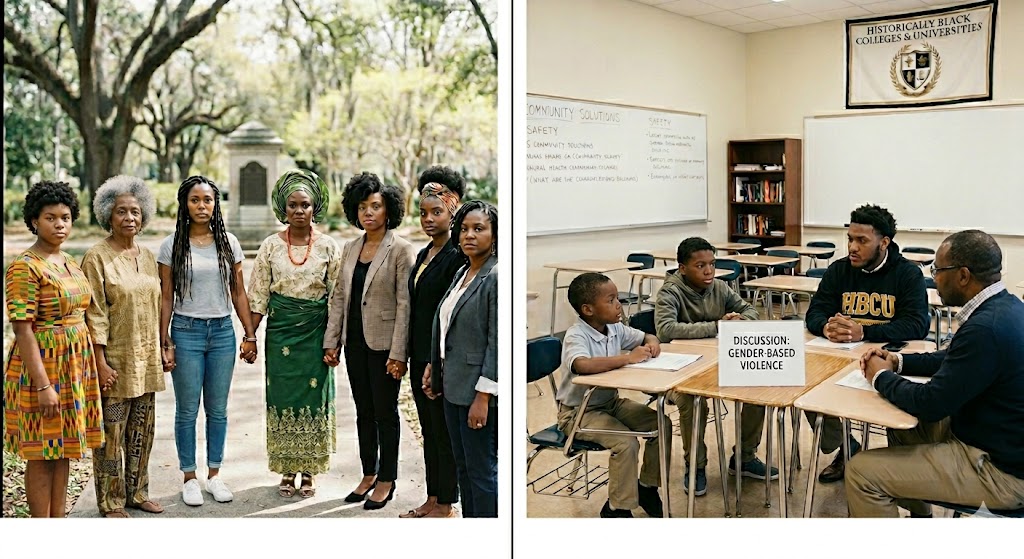
Malcolm X’s oft-quoted declaration that the Black woman is “the most disrespected, unprotected, and neglected person in America” was delivered in 1962. More than six decades later, the data have not refuted him. A CNN investigation published in late March 2026 has exposed something that demands a serious, institutional response from every sector of Black America, including and especially its colleges and universities. A months-long investigation uncovered a hidden, online world where the commodification and amplification of sexual violence against women is flourishing, a network of men sharing techniques for drugging their partners, filming the assaults, trading the videos, and livestreaming them to paying audiences. The site at the center of the investigation, Motherless.com, had 62 million visits in February 2026 alone, with its core audience based in the United States, and hosts more than 20,000 videos of so-called “sleep” content footage of women filmed without their knowledge while unconscious. To place that figure in context: 62 million people would constitute the 25th largest country in the world — larger than South Korea, Algeria, and Canada. That is the monthly audience for a single platform built around the sexual violation of unconscious women. It is not a subculture. It is a global institution of predation, and it is operating primarily out of the United States.
Gender violence is not a single act. It is a spectrum of harm rooted in the unequal distribution of power between men and women that manifests across every stage of life and every social environment. It includes rape and sexual assault, intimate partner violence, domestic abuse, and femicide. It includes sexual harassment in workplaces, schools, and public spaces. It includes child sexual abuse, the grooming of minors, and child marriage — the practice of forcing girls into unions before they are legally or developmentally capable of consent, which remains prevalent across parts of Africa, the Caribbean, and South Asia, and which is not absent from communities within the United States. It includes stalking, coercive control, and psychological abuse that leaves no visible wound but dismantles a person’s autonomy over time. It includes digital abuse — the non-consensual sharing of intimate images, online harassment campaigns, and, as the CNN investigation has now documented in clinical detail, the organized online distribution of assault footage as a commodity. Gender violence is, in the fullest sense, a system: one that is reproduced through culture, enabled by institutions that fail to act, and sustained by the silence of those who witness it and say nothing. Understanding it as a system, rather than as a series of isolated incidents perpetrated by exceptional individuals, is the prerequisite for any institutional response that will actually reduce it.
This is not a peripheral issue. It is not a culture war distraction. It is a public health emergency and a civilizational challenge, and the African American institutional ecosystem, which has historically risen to meet civilizational challenges, cannot treat it as someone else’s problem.It is a problem acutely within our community as well.
The scale of what CNN uncovered speaks to a level of organized predation that defies casual dismissal. Inside the Telegram group documented by CNN, men from Poland, West Africa, Spain, and across the world shared specific drugs and doses for sedating their partners, traded assault videos for feedback, and livestreamed the abuse of unconscious women in real time for $20 a viewer, with cryptocurrency as the preferred payment method. A French lawmaker who was herself drugged by a former senator described these groups as “an online rape academy, where every subject is taught.” Perpetrators are also systematically engineering their conduct around evidentiary challenges shifting toward zolpidem, or Ambien, specifically because it exits the body in seven to eight hours, meaning that by the time a survivor wakes up, registers that something may have happened, and reaches a hospital, the toxicological window may already have closed.
The forensic sophistication of this network, the deliberate drug selection, the cryptocurrency payments, the global coordination points to something beyond impulsive misconduct. It reflects a learned culture of predation, one that is being transmitted across generations of men through digital infrastructure. That transmission infrastructure is now operating at scale, and it is finding ready audiences in the United States.
For Black America, the alarm must ring louder still, because the baseline conditions that produce vulnerability to gender violence are already catastrophically elevated within the community.
The statistics are not ambiguous. More than four in ten Black women experience physical violence from an intimate partner during their lifetimes — a rate higher than white women, Latinas, and Asian and Pacific Islander women. More than 20 percent of Black women are raped during their lifetimes, a higher share than among women overall. Black women face a particularly high risk of being killed at the hands of a man, and one study found they were two and a half times more likely to be murdered by men than their white counterparts, with more than nine in ten Black female victims knowing their killers. More recent data sharpens the picture further: Black adult women are six times more likely to be killed than white women, and an estimated 51 percent of Black female adult homicides are related to intimate partner violence.
The problem is not confined to adulthood. One in four Black girls will be sexually abused before the age of 18, and 40 to 60 percent of Black women report being subjected to coercive sexual contact by age 18. For every Black woman who reports rape, at least 15 do not. Nearly 92 percent of Black women homicide victims knew their killers, and 56 percent of those killings were committed by a current or former intimate partner with 92 percent of those cases being intraracial.
What Black America is experiencing is not an anomaly. It is the domestic expression of a global pattern that follows Black and African-descended women across every geography in which they live. In the Caribbean, recent studies conducted in Grenada, Guyana, Jamaica, Suriname, and Trinidad and Tobago indicate that 27 to 40 percent of women have experienced violence at the hands of their partners. Jamaica holds the second-highest rate of femicide in the world, and in Guyana, 55 percent of women reported having experienced at least one form of violence, including intimate partner violence and non-partner sexual abuse. In the United Kingdom, Black and Black British women experience gender-based violence including domestic violence at higher rates than other minority ethnic groups. On the African continent, South Africa’s Human Sciences Research Council found higher victimization rates specifically among Black African women, and in a single quarter of 2024 alone, 957 women were murdered, with more than 10,000 rapes reported. In direct response to this continental emergency, the African Union adopted its first dedicated legal instrument aimed at ending all forms of violence against women and girls in February 2025, a convention that specifically promotes positive masculinity and greater accountability as a unique feature of its framework.
The global dimension is not incidental to the American story. It is the same story told across different jurisdictions. The same cultural scripts that normalize male dominance and erode accountability for violence against women operate in Kingston and Cape Town and London and Detroit. The same digital networks that the CNN investigation exposed are recruiting perpetrators from West Africa, Europe, and the United States simultaneously. This is a Diaspora crisis, and it demands a Diaspora response. HBCUs, which have increasingly built academic and institutional relationships with African and Caribbean universities, are positioned to connect these dots to situate the American crisis within its global context, to learn from interventions that are working elsewhere, and to contribute research and programming models to a broader African diaspora conversation about the protection of Black women. The African Union’s masculinity framework, the Caribbean’s regional data infrastructure, and the HBCU ecosystem’s cultural reach into Black American communities are assets that, taken together, could form the foundation of a genuinely transnational response. That potential will remain unrealized as long as American Black institutions treat gender violence as a domestic social services problem rather than what it actually is: a global threat to Black women that requires the same level of coordinated diaspora strategy that these institutions bring to economic development and political advocacy.
These numbers do not describe a community that is adequately protecting its women. They describe a structural failure that has accumulated over generations, one that requires structural remedies not simply moral condemnation, and not simply resources directed at survivors after the fact. The problem must be addressed at the point of formation: in boys, in young men, in the cultural scripts that normalize domination and erode accountability.
This is where HBCUs and the broader African American institutional ecosystem must act with far greater seriousness and coordination than they have to date.
The HBCU sector occupies a unique position in this conversation. These institutions enroll a substantial share of Black college students, graduate a disproportionate share of Black professionals, and carry a legacy of moral leadership during periods of civilizational crisis. They are also, frankly, not immune from the problem. Gender violence and retaliation are common in higher education, and Black campuses are not insulated from this reality. Students at HBCUs confront gender injustices that particularly affect the lives of women and gender nonconforming persons, and HBCUs, by primarily centering institutional focus on the enrollment challenges of Black men, can inadvertently support a belief that Black women and LGBTQIA+ students face fewer obstacles, an assumption that does not survive contact with the data.
There is existing infrastructure to build on. Research has examined culturally specific domestic violence prevention programs for HBCU campuses, finding that cultural barriers and preconceived stigmas reduce the effectiveness of standard prevention programs meaning that interventions designed for predominantly white institutions cannot simply be transplanted into HBCU contexts. In 2024, the Department of Justice’s Office on Violence Against Women awarded 19 grants totaling $9.48 million through a special initiative supporting HBCUs, Hispanic-Serving Institutions, and Tribal Colleges and Universities to strengthen campus responses to domestic violence, dating violence, sexual assault, and stalking. These grants represent a foundation. They do not represent a comprehensive response and they should not be the primary funding mechanism. The private sector has both the resources and the standing to act with far greater scale and far less bureaucratic latency than federal grant cycles allow. One hundred African American millionaires committing $500,000 per campus over two years would deliver $500,000 in dedicated programming support to every HBCU, a total investment of $50 million that would instantly dwarf existing federal allocations, establish donor-driven accountability structures, and signal to the entire sector that this is a philanthropic priority, not merely a compliance obligation. That capital commitment is not aspirational arithmetic. It is a straightforward mobilization of the wealth that already exists within the African American professional and entrepreneurial class, directed toward an institutional crisis that wealth alone cannot solve but that no institutional solution can be built without.
What is needed is something more ambitious in scope and more durable in design. The CNN investigation is a data point about what is already circulating through digital culture, the attitudes, the techniques, the normalization of violation, before young men arrive on any campus. The university is downstream of the problem, and while campus programming is necessary, it is insufficient on its own. The pipeline of harm begins in early childhood, and the intervention architecture must match. This requires HBCUs and their affiliated institutional ecosystems to coordinate across three tiers.
The first is early childhood and K-12 engagement. Organizations like 100 Black Men of America, which operates mentorship programs in cities across the country and works directly with boys from middle school age through young adulthood, are positioned to embed gender respect curricula into the environments where boys develop their foundational understanding of power and relationship. This is not sensitivity training; it is character formation infrastructure. The organization’s existing mentorship architecture structured, sustained, male-to-male, and explicitly oriented toward community development is precisely the vehicle through which collective accountability norms can be transmitted before boys reach campus. Urban League affiliates and Jack and Jill of America, which maintains strong networks among Black middle-class families with children, offer complementary reach into different socioeconomic strata. None of this formation work operates in a vacuum, however. It must be reinforced by sustained, visible messaging through the media infrastructure that Black families actually consume. Black-owned media outlets (television networks, radio stations, digital platforms, and podcasts with significant Black audiences) carry an institutional responsibility to make gender violence a recurring subject of public discourse rather than an episodic response to national headlines. PSA campaigns developed in partnership with HBCU communications and media programs, featuring Black men speaking directly and without deflection about the protection of Black women and girls, would represent a meaningful use of that infrastructure. The message cannot come only from institutions; it must circulate through culture, and Black-owned media is the vehicle for that circulation.
The second tier is the HBCU campus itself, which must move beyond compliance frameworks toward genuine culture change. Research has found that many Black males use toxic masculinity as a crutch to conceal insecurity and hardship, and that Black men with higher levels of anxiety and aggressive confrontational styles are more likely to endorse intimate partner violence beliefs while Black men who identify more with collectivist values are less likely to do so. This finding has direct programmatic implications: interventions that strengthen identification with community, mutual obligation, and the protection of the group are more effective than those that approach the problem primarily through legal deterrence or shame. HBCUs should develop standing male accountability cohorts not one-time training sessions, but sustained, semester-long formations that engage students in the intellectual, historical, and practical dimensions of gender justice within Black institutional life. Faculty development is equally critical and equally neglected. The HBCU Faculty Development Network, a national organization that supports effective teaching and professional growth across HBCUs and minority-serving institutions, represents a ready infrastructure through which gender violence prevention training can be integrated into faculty and administrator development at scale. Professors, academic advisors, and student affairs staff are among the earliest points of contact when students in crisis reach out or when warning signs emerge; they require preparation that goes well beyond Title IX compliance checklists, and the Faculty Development Network has the convening capacity to deliver it. The campus is also a high-density media environment with captive audiences at predictable moments, and HBCU athletic events represent one of the most underutilized platforms in Black institutional life for norm-setting messaging. HBCU football and basketball games draw tens of thousands of attendees (students, alumni, families, and community members) and are increasingly broadcast to national audiences. PSA spots aired during these events, developed with the same production seriousness as any institutional branding campaign and featuring Black men calling other Black men to explicit accountability, would reach a cross-generational audience in a context that carries genuine cultural weight. Homecoming weekends alone represent a communication opportunity that no digital campaign can replicate. The question is whether HBCU athletic conferences and their media partners treat this as part of their institutional mandate or continue to leave halftime to entertainment alone.
The third tier is the broader community ecosystem, and it requires more than exhortation directed at existing organizations. What is needed is a sector-wide initiative coordinated through the institutional bodies that actually govern HBCU life: the Thurgood Marshall College Fund and the United Negro College Fund, both of which maintain direct relationships with HBCU presidents and boards and have the organizational capacity to set sector-wide standards, attract expert partners, and hold institutions accountable for measurable outcomes. A gender violence prevention framework embedded in HBCU enrollment requirements, first-year experience programming, and faculty development designed in partnership with research institutions and evidence-based practitioners, and tracked longitudinally would represent a genuine structural intervention rather than a campus-by-campus patchwork of compliance exercises. The sector has coordinated on financial aid advocacy, accreditation defense, and federal funding campaigns. It must now coordinate on the protection of Black women and girls from a global infrastructure of organized sexual predation that is actively recruiting its next generation of perpetrators through the same devices sitting in every Black student’s pocket.
Cutting across all three tiers is a research and institutional development problem that has received far too little attention. Effective intervention requires data — longitudinal, culturally specific, and grounded in the actual dynamics of Black family and community life. That research capacity exists within the HBCU ecosystem and needs to be dramatically strengthened. Hampton University’s National Center for Black Family Life, which has operated for over four decades and produces an Annual Report on the State of Black Families, represents exactly the kind of HBCU-anchored research institution that should be at the center of this work. It is neither well-funded nor well-known relative to the scale of the problem it is positioned to address. Institutions like it; research centers embedded within HBCUs, oriented toward Black family formation and community health, capable of generating the culturally specific data that generic national surveys do not produce need philanthropic investment, federal research partnerships, and coordinated visibility across the HBCU sector. The absence of robust, HBCU-generated research on gender violence within Black communities is itself a strategic gap. It leaves the field to outside institutions whose framing does not always reflect Black community realities and whose findings do not reliably reach Black institutional decision-makers. Closing that gap is not an academic exercise; it is a precondition for evidence-based programming that actually works.
It is important to be precise about what this argument is and is not making. Groups dedicated to involving men in ending violence against women have operated for decades; organizations like Men Stopping Violence in Atlanta use an ecological, community-based accountability model that demonstrates the potential for disrupting traditions of abuse and dominance at individual, familial, local, national, and global levels. The model works. The evidence supports it. What has been missing is the willingness of Black institutional leadership to adopt it at scale, fund it sustainably, talk about it publicly, and hold themselves accountable for measurable outcomes. Black men at every level of institutional life, from university presidents to student leaders to media personalities with large audiences must be willing to discuss this problem actively and without the defensive hedging that has allowed it to fester. The “not all men” reflex is a cultural tax levied on Black women every time they attempt to raise the alarm. Black men who understand what is at stake for their community have both the standing and the obligation to retire it.
The CNN investigation does not represent an aberration. It represents the visible tip of a global infrastructure of learned predation that is operating through the same digital channels that Black boys and young men inhabit daily. The WHO has noted that reliable data on drug-facilitated sexual assault is scarce by design, because the crime is severely underreported — a product of the shame, guilt, perceived self-blame, and absence of memory that make these cases particularly hard for survivors to come forward on, compounded by inadequate law enforcement training and a prosecution record that gives survivors little reason to expect the process to go well. The underreporting problem is especially severe in Black communities, where historical distrust of law enforcement creates additional barriers to disclosure.
The Black woman, as Malcolm X observed, has carried more than her share in this country. She has built institutions, sustained families, anchored communities, and produced excellence under conditions of compound marginalization. The question before Black America’s institutional leadership (university presidents, national officers of civic and professional organizations, sorority leadership, professional association executives, Black media owners, and community development directors) is whether they will mobilize the full weight of that institutional infrastructure in her defense. Not as an act of charity, but as a strategic imperative: communities that do not protect their women do not survive as communities. They fracture, they hollow out, and they lose the institutional density on which collective advancement depends.
The online academy exposed by CNN is teaching a curriculum of violation to an audience that is, in substantial part, American and potentially present in every Black community in the country. The answer must be a counter-curriculum one built from early childhood through college, amplified through Black-owned media, announced at halftime on HBCU fields and courts, connected to diaspora partners from Accra to Kingston to London, and driven by Black men who are willing to say plainly that this is their problem to solve. HBCUs are not the only institution with a role to play. But they are among the most important, and the moment demands that they act accordingly.
Organizations Working to End Gender Violence: Where to Direct Your Support
The article you have just read describes a crisis. The following organizations are doing the institutional work of responding to it. Readers who wish to support this work financially or through advocacy are encouraged to consider each of these organizations based on geography, focus area, and mission alignment.
Ujima: The National Center on Violence Against Women in the Black Community — The only national resource center in the United States dedicated exclusively to addressing domestic violence, sexual assault, and community violence within the Black community. Ujima leads training, research, policy advocacy, and technical assistance with a focus on healing Black women and girls across the African diaspora. (ujimacommunity.org)
Black Women’s Blueprint — Founded in 2008 by Black women in Brooklyn, Black Women’s Blueprint is a transnational civil and human rights organization that centers the experiences of women of African descent in the fight against sexual violence, reproductive injustice, and racial inequality. The organization convened the first Black Women’s Truth and Reconciliation Commission on Sexual Violence in United States history and provides technical assistance to HBCU campuses on gender violence prevention. (blackwomensblueprint.org)
A Long Walk Home — Founded in 2003 by sisters Salamishah and Scheherazade Tillet, this Chicago-based national nonprofit uses art and activism to empower Black girls and young women to end gender-based violence. Its Girl/Friends Leadership Institute trains Black girls ages 12 to 17 as social justice leaders, and the organization was a lead organizer of the #MuteRKelly campaign. (alongwalkhome.org)
The Safe Sisters Circle — Founded in 2018 by attorney Alana C. Brown, this Black woman-founded and led Washington, D.C. nonprofit provides free, culturally specific legal representation, mental health support, and advocacy to Black women and girl survivors of domestic violence and sexual assault in the city’s most underserved communities. (safesisterscircle.org)
National Black Women’s Justice Institute (NBWJI) — Founded by Dr. Monique Couvson, NBWJI works at the intersection of gender violence, race, and the criminal justice system — specifically to reduce sexual assault and domestic violence in African American communities while interrupting the school-to-confinement pipeline for Black girls. (nbwji.org)
Men Stopping Violence — An Atlanta-based organization with nearly four decades of experience using a community-based accountability model to end male violence against women. Men Stopping Violence is explicitly man-focused in its intervention design, training men and boys to disrupt the cultural norms that enable violence — making it particularly relevant to the accountability agenda outlined in this article. (menstoppingviolence.org)
Ms. Foundation for Women — One of the first funders of domestic violence shelters and sexual assault hotlines in the United States, now led by a Black woman and investing specifically in women-led movements at the intersection of race and gender violence. The Foundation funds many of the smaller, community-based Black organizations doing direct service work that national funders overlook. (ms.foundation.org)
Hampton University National Center for Black Family Life — As referenced in this article, the National Center for Black Family Life at Hampton University is the only HBCU-anchored research institution producing systematic annual data on the state of Black families in America. Philanthropic support for its research infrastructure directly strengthens the evidentiary foundation for evidence-based gender violence prevention across the sector. (ncbfl.org)
Girls for Gender Equity (GGE) — A Brooklyn-based organization founded by Joanne Smith in 2001 that works with Black and Brown girls and gender-expansive youth to dismantle the structural conditions that produce gender violence, including sexual harassment in schools and the criminalization of Black girls. GGE’s work bridges the early childhood and campus intervention tiers outlined in this article. (ggenyc.org)
If you are in immediate danger or need crisis support, contact the National Domestic Violence Hotline at 1-800-799-7233 (available 24 hours) or text START to 88788
Disclaimer: This article was assisted by ClaudeAI.
 HBCU Money