Tag Archives: finance

HBCU Money Presents: African America’s 2024 Annual Wealth Report

African American household wealth reached $7.1 trillion in 2024, marking a half-trillion-dollar increase that signals both progress and persistent structural challenges in the nation’s racial wealth landscape. While the topline growth appears encouraging, the composition reveals a familiar pattern: wealth remains overwhelmingly concentrated in illiquid assets, with real estate and retirement accounts comprising nearly 60% of total holdings. The year’s most dynamic growth came from corporate equities and mutual fund shares, which surged 22.2% to $330 billion—yet this represents less than 5% of African American assets and a mere 0.7% of total U.S. household equity holdings, underscoring how far removed Black households remain from the wealth-generating mechanisms of capital markets.

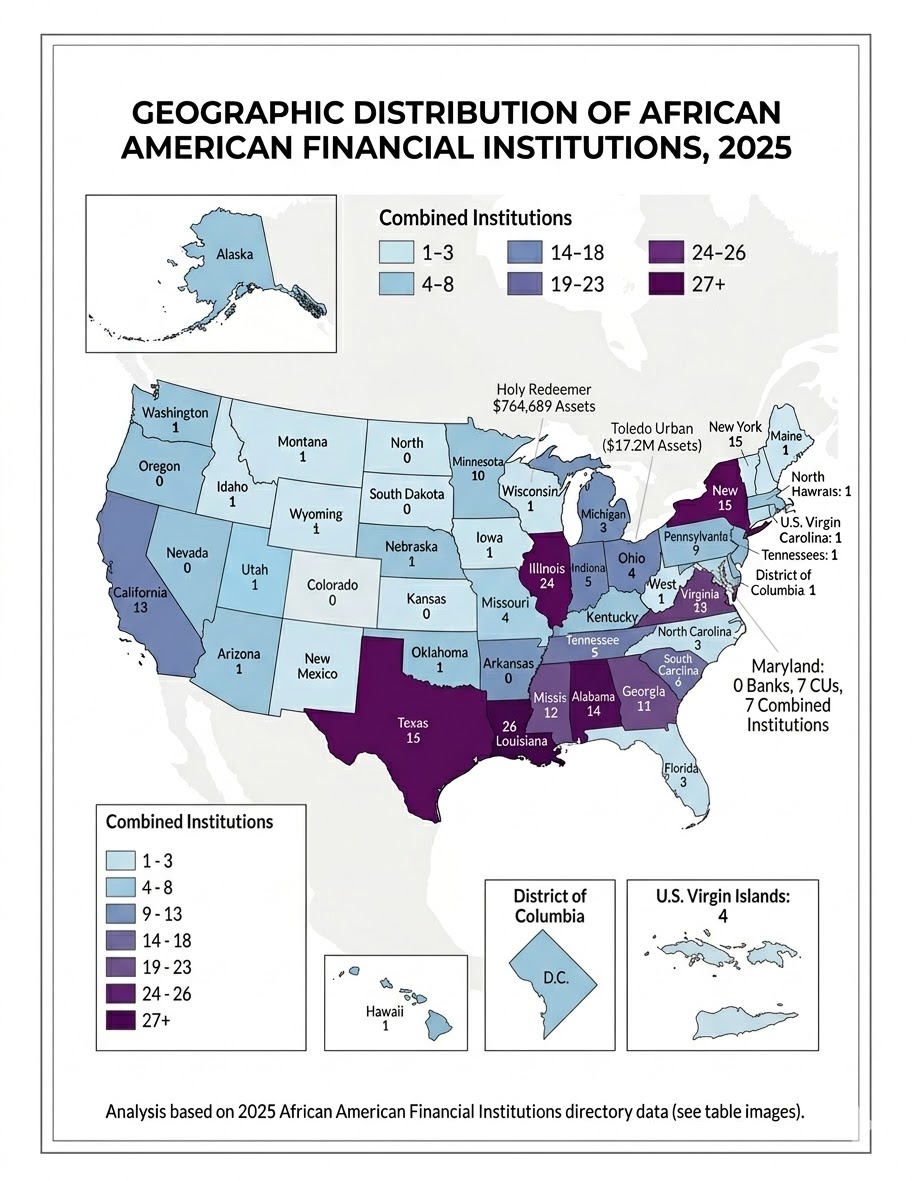
The liability side of the ledger tells an equally sobering story. Consumer credit climbed to $740 billion in 2024, now representing nearly half of all African American household debt and growing at more than double the rate of asset appreciation. This shift toward unsecured, high-interest borrowing—particularly as it outpaces home mortgage debt—suggests that rising asset values are not translating into improved financial flexibility or reduced economic vulnerability. What makes this dynamic even more troubling is the extractive nature of the debt itself: with African American-owned banks holding just $6.4 billion in combined assets, it’s clear that the vast majority of the $1.55 trillion in African American household liabilities flows to institutions outside the community. This means that interest payments, fees, and the wealth-building potential of lending relationships are being systematically siphoned away from Black-owned financial institutions that could reinvest those resources back into African American communities, perpetuating a cycle where debt burdens intensify even as the capital generated from servicing that debt enriches institutions with no vested interest in Black wealth creation.

ASSETS

In 2024, African American households held approximately $7.1 trillion in total assets, an increase of more than $500 billion from 2023, with corporate equities and mutual fund shares recording the fastest year-over-year growth from a relatively small base, even as wealth remained heavily concentrated in real estate and retirement accounts—together accounting for more than 58% of total assets.

Real Estate

Total Value: $2.24 trillion

Definition: Real estate is defined as the land and any permanent structures, like a home, or improvements attached to the land, whether natural or man-made.

% of African America’s Assets: 34.2%

% of U.S. Household Real Estate Assets: 5.1%

Change from 2023: +4.3% ($100 billion)

Real estate remains the dominant asset class for African American households, accounting for over one-third of total household assets. While modest appreciation continued in 2024, ownership remains highly concentrated in primary residences rather than income-producing or institutional real estate, limiting liquidity and leverage potential.

Consumer Durable Goods

Total Value: $620 billion

Definition: Consumer durables, also known as durable goods, are a category of consumer goods that do not wear out quickly and therefore do not have to be purchased frequently. They are part of core retail sales data and are considered durable because they last for at least three years, as the U.S. Department of Commerce defines. Examples include large and small appliances, consumer electronics, furniture, and furnishings.

% of African America’s Assets: 8.8%

% of U.S. Household Durable Good Assets: 6.2%

Change from 2023: +3.3% ($20 billion)

Corporate equities and mutual fund shares 

Total Value: $330 billion

Definition: A stock, also known as equity, is a security that represents the ownership of a fraction of the issuing corporation. Units of stock are called “shares” which entitles the owner to a proportion of the corporation’s assets and profits equal to how much stock they own. A mutual fund is a pooled collection of assets that invests in stocks, bonds, and other securities.

% of African America’s Assets: 4.7%

% of U.S. Household Equity Assets: 0.7%

Change from 2023: +22.2% ($60 billion)

Defined benefit pension entitlements

Total Value: $1.73 trillion

Definition: Defined-benefit plans provide eligible employees with guaranteed income for life when they retire. Employers guarantee a specific retirement benefit amount for each participant based on factors such as the employee’s salary and years of service.

% of African America’s Assets: 24.4%

% of U.S. Household Defined Benefit Pension Assets: 9.7%

Change from 2023: +7.5% ($40 billion)

Defined contribution pension entitlements

Total Value: $880 billion

Definition: Defined-contribution plans are funded primarily by the employee. The most common type of defined-contribution plan is a 401(k). Participants can elect to defer a portion of their gross salary via a pre-tax payroll deduction. The company may match the contribution if it chooses, up to a limit it sets.

% of African America’s Assets: 12.4%

% of U.S. Household Defined Contribution Pension Assets: 6.0%

Change from 2023: +4.8% ($40 billion)

Private businesses

Total Value: $330 billion

% of African America’s Assets: 4.7%

% of U.S. Household Private Business Assets: 1.8%

Change from 2023: +3.1% ($10 billion)

Other assets

Total Value: $770 billion

Definition: Alternative investments can include private equity or venture capital, hedge funds, managed futures, art and antiques, commodities, and derivatives contracts.

% of African America’s Assets: 10.9%

% of U.S. Household Other Assets: 2.7%

Change from 2023: +6.9% ($50 billion)

LIABILITIES

“From 2023 to 2024, African American household liabilities rose by approximately $100 billion, with consumer credit, now representing nearly 48% of all liabilities, driving the majority of the increase and reinforcing structural constraints on net wealth accumulation despite rising asset values.”

Home Mortgages

Total Value: $780 billion

Definition: Debt secured by either a mortgage or deed of trust on real property, such as a house and land. Foreclosure and sale of the property is a remedy available to the lender. Mortgage debt is a debt that was voluntarily incurred by the owner of the property, either for purchase of the property or at a later point, such as with a home equity line of credit.

% of African America’s Liabilities: 50.3%

% of U.S. Household Mortgage Debt: 5.8%

Change from 2023: +4.0% ($30 billion)

Consumer Credit

Total Value: $740 billion

Definition: Consumer credit, or consumer debt, is personal debt taken on to purchase goods and services. Although any type of personal loan could be labeled consumer credit, the term is more often used to describe unsecured debt of smaller amounts. A credit card is one type of consumer credit in finance, but a mortgage is not considered consumer credit because it is backed with the property as collateral. 

% of African American Liabilities: 47.7%

% of U.S. Household Consumer Credit: ~15.0%

Change from 2023: +10.4% ($70 billion)

Other Liabilities

Total Value: $30 billion

Definition: For most households, liabilities will include taxes due, bills that must be paid, rent or mortgage payments, loan interest and principal due, and so on. If you are pre-paid for performing work or a service, the work owed may also be construed as a liability.

% of African American Liabilities: 2.0%

% of U.S. Household Other Liabilities: ~2.8%

Change from 2023: 0% (No material change)

Source: Federal Reserve

What Berkshire Buys Next: The Five Giants That Fit Buffett’s Playbook

In Omaha, Berkshire Hathaway’s cash pile has grown so large that even Wall Street marvels at its inertia. With over $380 billion in cash and short-term Treasuries, the conglomerate is sitting on more dry powder than most central banks. Yet Warren Buffett and his successor, Greg Abel, have long maintained that capital must only move when the odds of permanent capital loss are near zero.

Now, with global markets resetting post-2020 stimulus and inflation anchoring valuations, the question becomes: what could Berkshire buy next that would be both large enough to matter and philosophically sound enough to pass Buffett’s test of simplicity, durability, and trust?

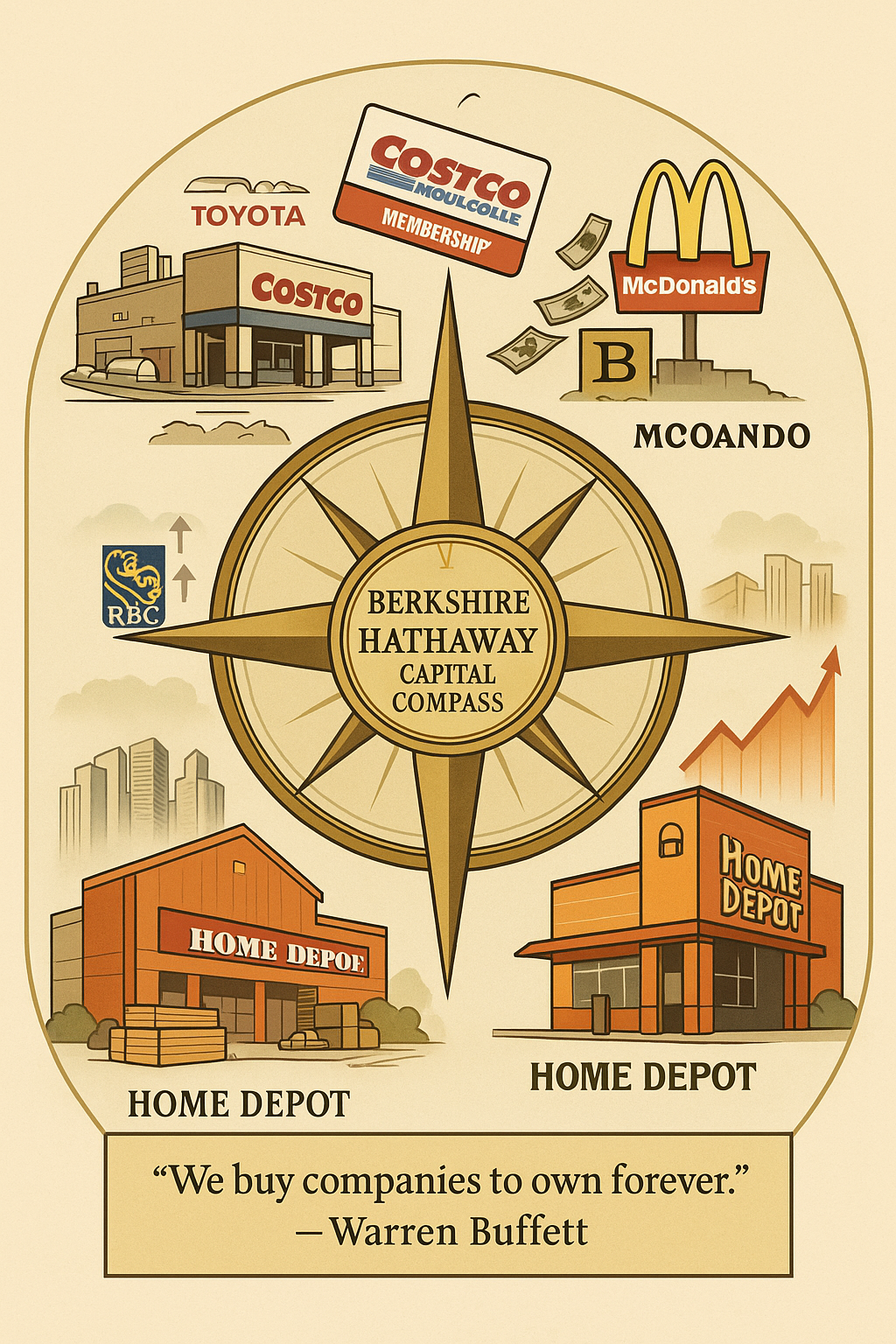
The five most plausible candidates — Costco, McDonald’s, Home Depot, Royal Bank of Canada, and Toyota — each satisfy that mix of prudence, predictability, and permanence that defines Berkshire’s century-long strategy of buying “businesses, not tickers.”

Buffett’s philosophy has been remarkably consistent for over six decades: buy simple, cash-rich, moated businesses led by trustworthy managers. Berkshire’s model of quasi-permanent ownership, decentralized operations, and disciplined capital allocation has made it the corporate equivalent of a sovereign wealth fund — except its sovereign is capitalism itself.

Greg Abel, the man expected to succeed Buffett, has only reinforced this model. Coming from Berkshire Energy, Abel represents the “real economy” side of the house preferring tangible assets, regulated returns, and predictable cash flow over the exuberance of speculative innovation.

Hence, the next Berkshire deal is not likely to be an AI startup or fintech disrupter. It will be a “forever asset” — a company that compounds quietly and defends its margins under any macro regime.

Given Berkshire’s sheer scale of over $1 trillion in market capitalization a target must have an enterprise value north of $200 billion to meaningfully “move the needle.” Anything smaller, and the math of compounding becomes negligible.

🧩 The Berkshire Universe: Themes and Tendencies

Berkshire’s portfolio reads like a map of the American and global economy’s most reliable arteries:

CategoryCore HoldingsTraits
FinancialsAmEx, Bank of America, Moody’s, ChubbHigh ROE, capital-light, recurring revenue
Consumer StaplesCoca-Cola, Kraft Heinz, DiageoGlobal brands, predictable demand
Energy / IndustrialsChevron, Occidental, MitsubishiReal assets, inflation hedge
TechnologyApple, Amazon (small), VeriSignCash-rich ecosystems
Infrastructure / InsuranceBNSF Railway, BH ReinsuranceTangible durability, “float” generation

This structure provides a blueprint for what comes next: reinforcement, not reinvention. Berkshire rarely pivots; it doubles down on what works. It will seek businesses that (1) resemble what it already understands, and (2) offer inflation-protected earnings streams in a world of higher nominal rates.

From the universe of firms valued between $200 billion and $450 billion, only a handful exhibit the balance of predictability, management integrity, and strategic fit Berkshire demands.

A closer look through Buffett’s filters narrows the field to Costco, McDonald’s, Home Depot, Royal Bank of Canada, and Toyota. Each operates in a sector Berkshire already knows and each represents a bridge between the company’s past and its post-Buffett future.

1. Costco Wholesale (Ticker: COST)

The Cult of Value Meets the Culture of Discipline

Buffett has long admired Costco’s operating model. It is a retailer that sells everything from fresh salmon to fine jewelry but in truth, it sells trust. Its membership model generates annuity-like revenue, while its relentless efficiency and scale provide a durable moat against both inflation and digital disruption.

Charlie Munger, Buffett’s late partner, once served on Costco’s board and famously said, “Costco is one of the most admirable capitalistic institutions in the world.” That legacy alone makes a partial acquisition symbolically powerful.

While a full buyout (market cap ≈ $405 billion) may be too expensive, a 20–30% stake would make sense. It would give Berkshire exposure to global consumer spending and provide a stabilizing counterpart to its stake in Apple, a brand built on loyalty, not leverage.

In the age of shrinking retail margins, Costco remains an inflation hedge, its pricing power born from scale, not greed. Buffett has always preferred such quiet dominance.

2. McDonald’s (Ticker: MCD)

Fast Food, Slow Capital

If there were ever a brand that personifies Buffett’s doctrine of “durable competitive advantage,” it is McDonald’s. With over 40,000 locations in 100+ countries and a business model centered on franchised cash flow, McDonald’s is the quintessential predictable earner.

Its asset-light structure means free cash flow margins north of 25%, while its real-estate footprint functions as an embedded REIT. In a world of digital payments, delivery, and global inflation, McDonald’s pricing agility is unmatched. It can raise prices by 5% globally without denting demand, a privilege of brand addiction.

Moreover, McDonald’s cultural synergy with Coca-Cola (another Berkshire cornerstone) cannot be overstated. Both are global empires built on ubiquity, habit, and nostalgia. A merger of ownership philosophy, if not of products, would anchor Berkshire’s consumer-staples dynasty for another half-century.

At ~$218 billion market cap, McDonald’s is one of the few full-scale acquisitions Berkshire could realistically afford outright.

3. Home Depot (Ticker: HD)

Owning the American Rebuild

Buffett once said that he bets on the “resilience of the American homeowner.” Home Depot, valued around $372 billion, is the most efficient expression of that belief.

As infrastructure spending rises and housing shortages intensify, Home Depot sits at the crossroads of construction, repair, and consumer credit. Its business model converts cyclical demand into steady dividend growth. For Berkshire, already owning materials firms and insulation producers, a significant stake in Home Depot would complete a “vertical household economy” from supply chain to consumer.

Its store footprint and brand loyalty parallel BNSF’s railroad network: both are national arteries essential to the domestic economy. Buffett loves owning irreplaceable distribution infrastructure and Home Depot’s logistics system is precisely that.

4. Royal Bank of Canada (Ticker: RY)

The Conservative Bank That Would Make Carnegie Smile

Berkshire’s financial core is deep, but largely American. A Royal Bank of Canada acquisition would expand its footprint across North America’s second-largest and most stable financial system.

RBC’s strengths are conservative underwriting, dominant market share in wealth management, and a culture of steady, compounding profitability which mirror Buffett’s historical love of American Express and Bank of America.

Moreover, Canada’s heavily regulated banking environment protects incumbents from competition. Berkshire thrives in such “wide-moat oligopolies.”

At a market cap of $208 billion, the bank is small enough for a full acquisition but large enough to deploy Berkshire’s idle cash meaningfully. It would also diversify currency exposure and hedge U.S. economic concentration, a quiet, Abel-style move.

5. Toyota Motor Corp. (Ticker: TM)

Japan’s Crown Jewel of Industrial Resilience

Berkshire already owns minority stakes in five major Japanese trading houses, a calculated bet on the nation’s industrial discipline. Extending that strategy into Toyota would be the logical next step.

Toyota’s balance sheet, manufacturing excellence, and hybrid-vehicle leadership make it a quintessential “Buffett business” hidden inside an automaker. Unlike the tech-saturated EV startups, Toyota’s philosophy of gradual innovation, prudence, and reliability mirrors Berkshire’s own.

The two even share a cultural ethos: long-termism over trend-chasing.

At roughly $268 billion market cap, a 10–20% strategic stake would echo Buffett’s Japanese diversification theme without the regulatory complexity of a full acquisition. It would also position Berkshire for the eventual rise of hybrid and hydrogen vehicles in emerging markets, aligning with its energy portfolio’s shift toward renewables.

💰 Financial Feasibility: Deploying $250 Billion Wisely

Even Berkshire’s cash hoard has limits. Deploying $150–$250 billion must pass both the Buffett test (certainty of cash flow) and the Abel test (inflation resilience).

A possible portfolio of acquisitions could look like this:

TargetMarket Cap (USD)Likely ApproachStrategic Rationale
Costco$405B20–30% stakeGlobal retail + subscription revenue
McDonald’s$218BFull acquisitionCash flow, brand power, inflation hedge
Home Depot$372B20–30% stakeU.S. infrastructure exposure
Royal Bank of Canada$208BFull acquisitionNorth American financial expansion
Toyota$268B10–20% stakeJapan industrial diversification

In total, such a deployment would utilize around $200 billion, leaving liquidity for buybacks and opportunistic purchases.

This mirrors Berkshire’s historical pattern: buying large minority stakes in global champions, then waiting for market corrections to accumulate more — the “silent control” strategy that has defined its rise.

Strategic Summary: The Post-Buffett Blueprint

The post-Buffett Berkshire era will be one of institutional continuity, not radical change. Greg Abel’s likely leadership ensures that the company remains disciplined, risk-averse, and industrially grounded.

These five potential acquisitions — Costco, McDonald’s, Home Depot, Royal Bank of Canada, and Toyota — collectively represent Berkshire’s five pillars of permanence:

  1. Consumer Trust (Costco) – Loyalty as an economic moat.
  2. Everyday Habit (McDonald’s) – Cash flow as culture.
  3. Infrastructure (Home Depot) – Building the backbone of America.
  4. Finance (RBC) – Conservative capital compounding.
  5. Industry (Toyota) – Global operational excellence.

Each adds a layer of diversification without diluting Berkshire’s DNA. Together, they form a defensive fortress against inflation, technological disruption, and economic cycles — precisely the environment Berkshire was built to survive.

For HBCU endowments and African American institutional investors, Berkshire’s approach holds a powerful parallel. The key lesson is patience married to scale. Berkshire’s compounding model demonstrates how disciplined reinvestment — not speculative churn — builds generational wealth.

Like Berkshire, HBCU financial ecosystems can create “institutional compounding engines” by investing in enterprises that share cultural familiarity, operational durability, and intergenerational value. Buffett calls it “the joy of owning good businesses forever.”

For African American institutions, that translates to owning — not merely funding — the infrastructure of our own economies.

Berkshire Hathaway stands at an inflection point. The post-Buffett era will not be about reinvention but reaffirmation — proving that its model of ethical capitalism can persist without its founding prophet.

The five plausible acquisitions ahead — Costco, McDonald’s, Home Depot, Royal Bank of Canada, and Toyota — are not just balance-sheet moves; they are philosophical statements.

Each embodies what Buffett has called the “virtue of patience in a speculative age.” And as markets oscillate between AI euphoria and geopolitical anxiety, Berkshire remains what it has always been: a monument to quiet power and compounding discipline.

For long-term investors — from sovereign funds to HBCU endowments — that discipline remains the truest asset class of all.

Disclaimer: This article was assisted by ChatGPT.

African America’s June 2025 Jobs Report – 6.8%

Overall Unemployment: 4.1%

African America: 6.8%

Latino America: 4.8%

European America: 3.6%

Asian America: 3.5%

Analysis: European Americans’ unemployment rate has remained steady for four straight months with virtually no change in unemployment rate. Asian Americans decreased 10 basis points and Latino Americans decreased 30 basis points from May, respectively. African America’s unemployment rate increased by 80 basis points from May.

AFRICAN AMERICAN EMPLOYMENT REVIEW

AFRICAN AMERICAN MEN: 

Unemployment Rate – 6.9%

Participation Rate – 68.8%

Employed – 9,752,000

Unemployed – 721,000

African American Men (AAM) saw a increase in their unemployment rate by 170 basis points in June. The group had a mild rebound in their participation rate in June by 30 basis points. African American Men lost 117,000 jobs in June and saw their number of unemployed increase by 181,000.

AFRICAN AMERICAN WOMEN: 

Unemployment Rate – 5.8%

Participation Rate – 60.9%

Employed – 10,248,000

Unemployed – 634,000

African American Women saw a decrease in their unemployment rate by 40 basis points in June. The group decreased their participation rate in June by 80 basis points. African American Women lost 84,000 jobs in June and saw their number of unemployed decrease by 50,000.

AFRICAN AMERICAN TEENAGERS:

Unemployment Rate – 19.2%

Participation Rate – 30.0%

Employed – 651,000

Unemployed – 155,000

African American Teenagers unemployment rate increased by 480 basis points. The group saw their participation rate increased by 210 basis points in June. African American Teenagers added 10,000 jobs in May and saw their number of unemployed also decrease 41,000.

African American Men-Women Job Gap: African American Women currently have 496,000 more jobs than African American Men in June. This is an increase from 463,000 in May.

CONCLUSION: The overall economy added 147,000 jobs in June while African America lost 193,000 jobs. From CNN, “It is becoming harder for Americans to find work: The average duration of unemployment rose from 21.8 weeks to 23 weeks, and the share of unemployed workers who have been out of a job for 27 weeks or longer rose to 23.3%, edging closer to a three-year high. Trump’s tariffs — and the dizzying back and forth on implementing them and pausing them — has caused many businesses to stall major decision-making or spending, including hiring.”

Source: Bureau of Labor Statistics

This Week in the Economy: May 26–30, 2025

Tracking Black Economic Stakes in America’s Economic Indicators and Central Bank Signals

Monday, May 26 – Memorial Day

No scheduled economic events
While markets rest, Black workers—especially in essential sectors—continue to labor under wage suppression. National holidays often illuminate persistent labor disparities where African Americans overrepresent in underpaid, underprotected service roles.


Tuesday, May 27

  • Minneapolis Fed President Neel Kashkari Speech (Tokyo, 4:00 AM & 8:00 PM ET)

Known for his dovish leanings, Kashkari may highlight global risks to U.S. growth. For African Americans, particularly those vulnerable to job cuts in an economic slowdown, his tone on future rate cuts is critical.

  • Durable-Goods Orders (Apr): -7.8% (Prev: +9.2%)

A sharp plunge signals weakening investment and manufacturing demand. This contraction could hit Black industrial workers and logistics employees, especially those in Southern and Midwestern states.

  • Durable-Goods Minus Transportation (Apr): Data Pending

A flat reading here would confirm broad weakness beyond aerospace and autos, hurting smaller suppliers and minority-owned industrial businesses.

  • Case-Shiller Home Price Index (Mar): Data Pending (Prev: +4.5%)

Rising home prices continue to push African Americans out of first-time homeownership, especially in major urban markets like Atlanta, D.C., and Charlotte, where HBCU alumni are concentrated.

  • Consumer Confidence (May): 86.0 (No Change)

Flat confidence underscores persistent economic anxiety. For Black households carrying higher debt loads and experiencing lower wealth levels, stagnation in sentiment suggests limited consumption growth and continued vulnerability.


Wednesday, May 28

  • Minneapolis Fed President Neel Kashkari Speech (Tokyo, 4:00 AM ET)

Expect continued remarks on global financial coordination. The impact of any global tightening or deflation trends could ripple into U.S. credit markets, disproportionately hurting communities already locked out of affordable loans.

  • FOMC Meeting Minutes (2:00 PM ET)

This will reveal how serious the Fed is about easing policy. Delay in rate cuts prolongs high borrowing costs, keeping homeownership and business investment out of reach for many African Americans and HBCUs.


Thursday, May 29

  • Initial Jobless Claims (May 24): 228,000 (Prev: 227,000)

Minimal movement masks deeper problems; Black unemployment remains higher than national averages, and layoffs still skew toward underrepresented groups in precarious industries.

  • GDP (Q1 First Revision): -0.3%

A contracting economy, even marginally, means slower hiring and investment. For African American workers and business owners already operating with less margin for error, the pressure will rise.

  • Richmond Fed President Tom Barkin Speech (8:30 AM ET)

Representing a region with many HBCUs and Black rural towns, Barkin’s remarks could preview whether the Fed sees these communities as economic priorities or statistical footnotes.

  • Pending Home Sales (Apr): -0.4% (Prev: +6.1%)

Slumping pending sales point to ongoing housing market stress. This especially harms African American families trying to transition from renters to owners amid high mortgage rates.

  • Chicago Fed President Austan Goolsbee Speech (10:40 AM ET)

Goolsbee’s economic pragmatism could bring a dose of realism on inequality. If he signals concern over underperformance in low-income markets, that could hint at future support for inclusive growth.

  • Fed Governor Adriana Kugler Speech (2:00 PM ET)

Kugler may touch on labor market disparities and wage equity. Her background in labor economics makes her one of the more likely Fed voices to mention economic stratification directly.

  • San Francisco Fed President Mary Daly Speech (4:00 PM ET)

Daly often discusses inclusion and systemic barriers—her speech could reinforce the need for policy tools that close gaps in employment, housing, and education for Black communities.

  • Dallas Fed President Lorie Logan Speech (8:25 PM ET)

Logan oversees a region with growing Black populations in cities like Dallas and Houston. Her take on regional growth and monetary policy could influence credit access and labor demand in these hubs.


Friday, May 30

  • Personal Income (Apr): +0.3% (Prev: +0.5%)

Income growth slowing means wage pressures are easing—a problem for African American households already earning less and struggling with rising living costs.

  • Consumer Spending (Apr): +0.2% (Prev: +0.7%)

Weaker spending growth reflects household caution. Black consumers, often with fewer financial safety nets, are pulling back out of necessity—not choice.

  • PCE Index & Core PCE (Apr): +0.1% | YoY PCE: 2.2%, Core: 2.6%

Inflation is slowing but still above target. High price persistence in areas like housing and food continues to affect African American families, who spend a larger share of income on essentials.

  • Advanced U.S. Trade Balance (Apr): Data Pending (Prev: -$163.2B)

A massive trade deficit signals continued reliance on imports. U.S.-based Black manufacturers and exporters remain sidelined by structural inequalities in scale, capital, and global market access.

  • Advanced Retail Inventories (Apr): Data Pending (Prev: -0.1%)

Inventory declines suggest caution among retailers, which could mean reduced orders for minority-owned suppliers and less hiring in warehouse/logistics sectors with strong Black labor representation.

  • Advanced Wholesale Inventories (Apr): Data Pending (Prev: +0.4%)

If inventories keep rising, distributors may slow purchasing cycles, tightening cash flow for small suppliers—particularly those without banking relationships or supplier diversity contracts.

  • Chicago Business Barometer (PMI, May): 45.5 (Prev: 44.6)

A sub-50 reading indicates contraction. For African American professionals and businesses in Midwest metro markets, sluggish growth can stall economic progress and widen existing gaps.

  • Consumer Sentiment (Final, May): 50.8

Still hovering at recessionary levels, sentiment continues to reflect fear. Among Black households facing persistent inflation and limited safety nets, pessimism may trigger more cautious economic behavior.

  • San Francisco Fed President Mary Daly Speech (4:45 PM ET)

Her final remarks of the week may reinforce the theme of inclusive recovery—or warn of economic divergence. Either way, Daly remains a Fed leader worth watching for HBCU communities and Black policymakers.


HBCU Money Insight:
This week’s economic data confirms what many in Black America already feel—stagnant wages, expensive goods, and unaffordable homes. Despite easing inflation, the lack of meaningful policy response to racial economic disparities remains glaring. As Fed voices speak from Tokyo to Texas, the African American economy remains in the shadows of the headlines.

Where Is The African American MBA At HBCUs?

“I built a conglomerate and emerged the richest black man in the world in 2008 but it didn’t happen overnight. It took me 30 years to get to where I am today. Youths of today aspire to be like me but they want to achieve it overnight. It’s not going to work. To build a successful business, you must start small and dream big. In the journey of entrepreneurship, tenacity of purpose is supreme.” — Aliko Dangote

It could be argued that many HBCUs do not see themselves as African American institutions. They just happen to be a college where African American students are the predominant student population – for now. A place where you may happen to find more African American professors than you would elsewhere. But in terms of intentionally being a place looking to serve the social, economic, and political interests of African America and the African Diaspora as a whole not so much. Schools like Harvard and the Ivy League in general seek to serve WASP interests, BYU and Utah universities serve Mormon interests, there is a litany of Catholic universities led by the flagship the University of Notre Dame serving Catholic interests, and around 30-40 women’s colleges serving women’s interests. Arguably, none are more intentional though than Jewish universities who seek to serve Jewish Diasporic interests. They do so intentionally and unapologetically. It is highlighted in two prominent dual programs.

Brandeis University, “founded in the year of Israel’s independence, Brandeis is a secular, research-intensive university that is built on the foundation of Jewish history and experience and dedicated to Jewish values such as a respect for scholarship, critical thinking and making a positive difference in the world.”

Master of Arts in Jewish Professional Leadership and Social Impact MBA In partnership with the Heller School for Social Policy and Management: “If you want to become a Jewish community executive, this program will give you the skills and expertise you need: a strong foundation in both management and nonprofit practices, as well as a deep knowledge of Judaica and contemporary Jewish life. You’ll take courses taught by scholars across the university, including management courses focused on nonprofit organizations and courses specific to the Jewish community.”

Master of Arts in Jewish Professional Leadership and Master in Public Policy: “If you want to become a professional leader who can effect positive change for the Jewish community at the policy level, you’ll need policy analysis and development skills as well as knowledge of Judaic studies and contemporary Jewish life — all of which our MA-MPP track is designed to impart. This track will teach you how to both assess policy and practice and design and implement strategic solutions.”

In the United States, the racial wealth gap remains stubbornly wide. For every dollar of wealth held by the average white household, the average Black household holds just 14 cents, according to the Federal Reserve. While policy debates rage on, a quieter revolution could be ignited in the lecture halls and boardrooms of Historically Black Colleges and Universities (HBCUs). It is time for these institutions to take the lead in launching a new kind of MBA—one rooted in African American entrepreneurship.

This would not be a symbolic gesture of representation. Rather, it would be a radical recalibration of business education in service of economic sovereignty. The proposed African American MBA, anchored at HBCUs, would fuse conventional business acumen with a deep focus on building and scaling Black-owned enterprises—injecting capital, credibility, and cultural context into the fight for economic justice.

A Different Kind of MBA

Traditional MBA programs—whether in Boston, Palo Alto, or London—have long celebrated entrepreneurship, but they rarely address the distinct structural barriers faced by African American founders: racialized lending, limited intergenerational capital, and investor bias, among others. An African American MBA would tackle these head-on.

Students would learn to navigate venture capital ecosystems that have historically excluded them, build business models designed for resource-scarce environments, and craft growth strategies anchored in community reinvestment. The curriculum would include case studies of Black-owned business successes and failures, from the Johnson Publishing Company to the modern fintech startup Greenwood Bank.

Such a program would not just train entrepreneurs; it would cultivate what economist Jessica Gordon Nembhard refers to as “economic democracy”—an ownership-driven economy where Black communities produce and own the value they generate.

From Theory to Practice

For this model to work, HBCUs must go beyond coursework. They must build ecosystems.

At the core of the program would be university-based business incubators providing capital, mentorship, and workspace. Students could launch ventures with real funding—from alumni-backed angel networks or Black-owned community development financial institutions (CDFIs). Annual pitch competitions would create visibility and momentum, offering grants, equity investment, or convertible notes to top-performing student ventures.

A tight integration with Black-owned businesses, supply chains, and financial institutions would form the scaffolding. Students might spend time embedded in legacy enterprises like McKissack & McKissack, or cutting-edge startups in healthtech, agritech, and media.

These ecosystems would provide fertile ground for venture creation while catalyzing local job growth. In doing so, they would re-anchor HBCUs as engines of regional economic development, not just academic training grounds.

The HBCU Edge

HBCUs are uniquely positioned to own this space. They already produce 80% of the nation’s Black judges, half of its Black doctors, and a third of its Black STEM graduates. Yet despite this outsized impact, their business schools have yet to consolidate around a unifying purpose.

By championing entrepreneurship explicitly tailored to African American realities, HBCUs could claim a domain left underserved by Ivy League and flagship public institutions.

Moreover, HBCUs benefit from strong community credibility, a network of engaged alumni, and access to philanthropic capital increasingly earmarked for racial equity. With ESG mandates guiding corporate philanthropy and DEI budgets under scrutiny, there is untapped potential for long-term partnerships with companies seeking measurable social impact through supplier diversity, mentorship, or procurement commitments.

Risks and Realities

Skeptics will ask: Will such a degree be taken seriously in the broader market? Will it pigeonhole students into “Black businesses” instead of the Fortune 500? The answer lies in the performance of the ventures it produces. Success, not symbolism, will be the ultimate validator.

Indeed, many of the world’s most transformative businesses have emerged from institutions that bet on community-specific models. Consider how Stanford’s proximity to Silicon Valley allowed it to incubate global tech companies—or how Israel’s Technion helped power a startup nation.

An African American MBA need not limit its graduates to one demographic. Rather, it provides a launchpad from which Black entrepreneurs can build scalable, inclusive ventures rooted in lived experience. And in doing so, change the face of entrepreneurship itself.

The Road Ahead

If a handful of HBCUs lead the way—Howard, Spelman, North Carolina A&T, and Texas Southern come to mind—they could collectively establish a national center of excellence for African American entrepreneurship. Over time, this could grow into a consortium offering joint degrees, online programming, and cross-campus business accelerators.

The long-term vision? A Black entrepreneurial ecosystem rivaling that of Cambridge or Palo Alto, but infused with the resilience, cultural currency, and social mission uniquely forged by African American history.

This would not merely be an academic experiment. It would be a new chapter in a centuries-old story—one where the descendants of slaves become the architects of capital.

Focusing an African American MBA program offered by HBCUs on entrepreneurship could be transformative for fostering economic growth and self-sufficiency within the Black community. Here’s how such a program might look:

Program Vision and Goals

  • Empower Black Entrepreneurs: Equip students with the tools and networks to build successful businesses that create wealth and opportunities within African American communities.
  • Address Systemic Barriers: Focus on overcoming challenges like access to capital, discriminatory practices, and underrepresentation in high-growth industries.
  • Build Community Wealth: Promote entrepreneurship as a pathway to closing the racial wealth gap and revitalizing underserved areas.

Curriculum Highlights

Core MBA Foundations:

  • Finance for Entrepreneurs: Teach how to secure funding, manage cash flow, and create financial models tailored to African American small and medium enterprises (SMEs).
  • Marketing and Branding: Strategies for building culturally relevant brands that resonate with diverse audiences.
  • Operations and Scaling: Guidance on running efficient operations and scaling businesses sustainably.

Specialized Courses:

  • Tomorrow’s Entrepreneurship: Building ventures with dual goals of profit, community impact, and focus on industries of the future.
  • Navigating VC and Angel Investments: Training on pitching to investors, negotiating terms, and understanding equity structures.
  • Black-Owned Business Case Studies: Analyze successes and failures of prominent African American entrepreneurs. Much like the Harvard Business Review that sells case studies there would be an opportunity for HBCU business schools to create a joint venture for the HBCU Business Review and sell case studies relating to African American entrepreneurship.

Hands-On Experiences

Business Incubator:

  • A dedicated incubator at the HBCU to provide seed funding, mentorship, and workspace for students to develop their ventures.

Real-World Projects:

  • Partner students with local Black-owned businesses to solve real business challenges.

Annual Pitch Competitions:

  • A platform for students to showcase business ideas to potential investors, with prizes and funding opportunities.

Partnerships and Networks

Corporate and Community Collaborations:

  • Partnerships with companies that prioritize supplier diversity programs to provide procurement opportunities for graduates.
  • Collaborations with established Black entrepreneurs for mentorship and guest lectures.

Access to Capital:

  • Establish a dedicated fund or partnership with Black-owned financial institutions to provide startup capital.

Measurable Outcomes

  • Startups Launched: Track the number of new businesses started by graduates.
  • Jobs Created: Measure the economic impact of those businesses in local communities.
  • Community Investment: Monitor how much revenue is reinvested into underserved neighborhoods.

In contrast to institutions that intentionally serve specific cultural, religious, or ideological communities, many HBCUs appear to operate as predominantly African American in demographic composition rather than as institutions deeply invested and intentional in advancing the collective social, economic, and political interests of African Americans and the African Diaspora. While other universities—whether Ivy League institutions catering to elite WASP traditions, religious universities fostering faith-based leadership, or Jewish universities purposefully cultivating Jewish communal leadership—explicitly align their missions with the advancement of their respective communities, HBCUs often lack this same level of strategic intent. If HBCUs wish to remain vital and relevant in the future, they may need to more deliberately embrace their role as institutions committed to the upliftment of African American communities, not just as spaces where Black students and faculty are well-represented, but as powerful engines of social transformation.