I think I’m the first man to sit on top of the world.– Matthew Henson

In 1893, a young man from Atlanta named William Edward Burghardt Du Bois boarded a ship bound for Hamburg, Germany. He was twenty-five years old, the first African American to earn a doctorate from Harvard, and he was going somewhere his community had never sent one of its own. His mother had died the year before. There was no institutional infrastructure to support the journey, no alumni network on the other side, no guarantee of safety in a world that had made its hostility to Black ambition abundantly clear. What there was, was a belief held by Du Bois and by the handful of people who helped fund the passage that the world was the classroom, and that a mind like his required the whole of it. He spent two years at the University of Berlin, studied under some of the foremost economists and sociologists of the age, traveled through Poland and Bohemia, and returned to America permanently transformed. The scholarship he produced in the decades that followed; The Souls of Black Folk, Black Reconstruction, the founding of the NAACP, a half-century of institutional architecture for African American intellectual and political life was shaped in no small part by what he saw, absorbed, and became when someone trusted him with the world. The question this generation must answer is whether we still believe what those people believed: that our children are worth the risk of sending them beyond what we can see.
The world has never been more interconnected, yet a troubling pattern persists in African American communities: our children are being held back from transformative global experiences that could accelerate their intellectual development and expand their life opportunities. While parents understandably want to keep their children safe, an ultra risk-averse mindset is creating invisible barriers that limit our youth’s exposure to the very experiences that build confident, globally-minded leaders.
The numbers tell a sobering story. African American students represent 13% of the U.S. college student population but account for only 6.1% of study abroad participants which is a figure that, while double the 3.4% share they held twenty years ago in 2003-04, remains deeply disproportionate. In 2023-24, there were nearly 300,000 Americans studying in other countries. Approximately two-thirds were white. Black students were 6% of that total and Black men specifically accounted for only 2% of all study abroad participants, despite men comprising one-third of the student population overall. Only 10 percent of U.S. undergraduates participate in study abroad programs at all, and only 25 percent of those are racial or ethnic minority students. This disparity isn’t about access to information or even solely about economics it’s about a cultural reluctance to let our children venture beyond familiar boundaries, even when financial aid and scholarships make these opportunities accessible.
The problem is compounded at the institutional level. At HBCUs specifically, only 3.4% of undergraduate students study abroad during their college careers, compared to a 10.4% participation rate across all institutions nationally. Critically, this gap cannot be explained away by a shortage of programs: at least 58% of HBCUs already offer study abroad opportunities. The barrier is participation, not access. And that participation gap has structural consequences that extend well beyond individual students.
When we examine the trajectory of successful global leaders, entrepreneurs, and innovators across all fields, a common thread emerges: early exposure to diverse environments, challenging experiences, and opportunities to step outside their comfort zones. Programs like Semester at Sea don’t just teach geography or culture they fundamentally reshape how young people see themselves in relation to the world. Students who circumnavigate the globe while earning college credit return home with expanded networks, cross-cultural competencies, and a confidence that comes from navigating unfamiliar situations successfully.
Yet too many African American parents hesitate when presented with such opportunities for their high school or college-aged children. The concerns are familiar: What if something happens? Will they be safe? Isn’t it better to focus on getting good grades right here at home? These questions, while coming from a place of love and legitimate historical awareness of real dangers, inadvertently communicate a limiting worldview to our children. The irony is profound. The same community that produced Frederick Douglass, who taught himself to read against all odds, and Mae Jemison, who literally reached for the stars, now sometimes struggles to let teenagers spend a summer studying at Oxford or a semester sailing around the world with their peers.
Consider the intellectual development that happens when a student participates in programs like Greenheart Travel’s high school abroad experiences or Oxford Summer Courses’ mathematics scholars program. These aren’t vacations they’re intensive academic and personal development experiences that challenge young minds in ways traditional classroom settings cannot replicate. At Oxford Scholastica’s summer programs, students engage with university-level material, debate with peers from dozens of countries, and learn to articulate their ideas in diverse academic contexts. They return home not just with impressive credentials for college applications, but with fundamentally expanded intellectual capabilities and confidence in their ability to compete on global stages.
Similarly, experiential programs like Peace Corps Prep for teens or wilderness expeditions through organizations like Camp Bighorn teach resilience, leadership, and problem-solving in real-world contexts that no classroom can simulate. When a young person learns to navigate challenging terrain, work with diverse teams, and push through discomfort, they develop the psychological resilience that becomes foundational for handling college pressures, career challenges, and life’s inevitable obstacles. The tragedy is that African American youth who miss these experiences enter college and career spaces at a disadvantage compared to peers who’ve accumulated years of such enrichment. They haven’t had the chance to fail and recover in lower-stakes environments. They haven’t built the international networks that often prove valuable throughout life. They haven’t developed the cultural fluency that makes them comfortable in any room, anywhere in the world.
We discuss achievement gaps in test scores and graduation rates endlessly, but we rarely address the experiential achievement gap that profoundly impacts intellectual development. When a student spends their summer studying advanced mathematics at Oxford alongside peers from Singapore, India, and Germany, they’re not just learning math they’re absorbing different approaches to problem-solving, different work ethics, and different ways of thinking about intellectual challenges. Research consistently shows that diverse experiences and exposure to different perspectives enhance cognitive flexibility, creativity, and critical thinking skills. Yet we’re denying our children these very experiences out of fear. We’re raising them in intellectual and experiential bubbles while the world becomes more interconnected and competitive.
The African American students who do participate in programs like Semester at Sea or international summer academies consistently report transformative experiences. They talk about finally feeling intellectually challenged, about discovering academic passions they didn’t know existed, about making connections that led to research opportunities, internships, and career paths they never imagined. They describe returning home with a clarity about their capabilities and their place in the world that their peers who never left home simply don’t possess. Research confirms what these students experience. Students who study abroad are approximately 50% less likely to experience long-term unemployment compared to non-mobile peers, and are more likely to hold positions involving cross-border cooperation and international responsibilities. Study abroad alumni contribute $1.8 billion in added income to the economy and support over 17,000 jobs. Beyond career outcomes, study abroad participants are 20% more likely to remain in school than students who do not study abroad, and those who participate graduate at a rate of 97.5% which is a figure that should command serious attention at institutions where completion rates are a persistent strategic concern. These aren’t marginal benefits they’re life-changing advantages that we’re systematically denying our children.
There is an additional dimension to this gap that connects individual outcomes to institutional strategy. Of all American students studying abroad in 2023-24, only 3% attended universities on the African continent and that number actually declined from the year prior. Meanwhile, Africa Core nations send more than seven times as many students to American universities as America sends to theirs. For African American students, this imbalance is not merely a statistic it represents a severed connection to the ancestral homeland of the global diaspora, and a missed opportunity to build the transoceanic institutional relationships that diasporic communities in other traditions have long leveraged for economic and political power.
The path forward requires honest conversations within African American families and communities about what we truly want for our children. Do we want them safe and close, or do we want them prepared for a world that won’t coddle them? Do we want them comfortable, or do we want them competitive with peers who’ve been building global competencies since middle school? This isn’t about being reckless with our children’s safety or ignoring legitimate concerns about racial discrimination they might face abroad. It’s about conducting realistic risk assessments rather than defaulting to “no” out of generalized anxiety. Most of these programs have been operating safely for decades, with robust support systems specifically designed to protect young participants. The risks of sending a teenager to a reputable international program are often lower than the risks they face in many American neighborhoods daily.
Financial barriers are real, but they’re often overestimated. Organizations like Greenheart Travel, Semester at Sea, and others offer substantial financial aid and scholarships. Black households represent 14% of total discretionary spending in the U.S., allocating $259 billion annually to non-essential purchases. Many families who could find funding for new cars, elaborate graduation parties, or expensive sneakers could redirect those resources toward experiences that would provide infinitely more value. It’s about priorities — what are we truly investing in when we invest in our children’s futures? Today’s economy rewards those who can think globally, collaborate across cultures, and navigate complexity with confidence. The jobs our children will compete for increasingly require the exact competencies that international experiences build: cross-cultural communication, adaptability, resilience, and global awareness.
When we prevent our children from accessing programs that build these competencies, we’re essentially pre-limiting their career ceilings. We’re ensuring they’ll enter college less prepared than peers who’ve already lived abroad, led wilderness expeditions, or studied at elite international institutions. We’re guaranteeing they’ll need to play catch-up in developing the global mindset that others have been cultivating for years. The world isn’t getting smaller or less complicated. Our children need to be prepared not just to navigate it, but to lead within it. That preparation doesn’t happen exclusively in classrooms in their hometowns. It happens when they’re challenged to adapt, to think differently, to see themselves as part of a global community rather than just their immediate environment.
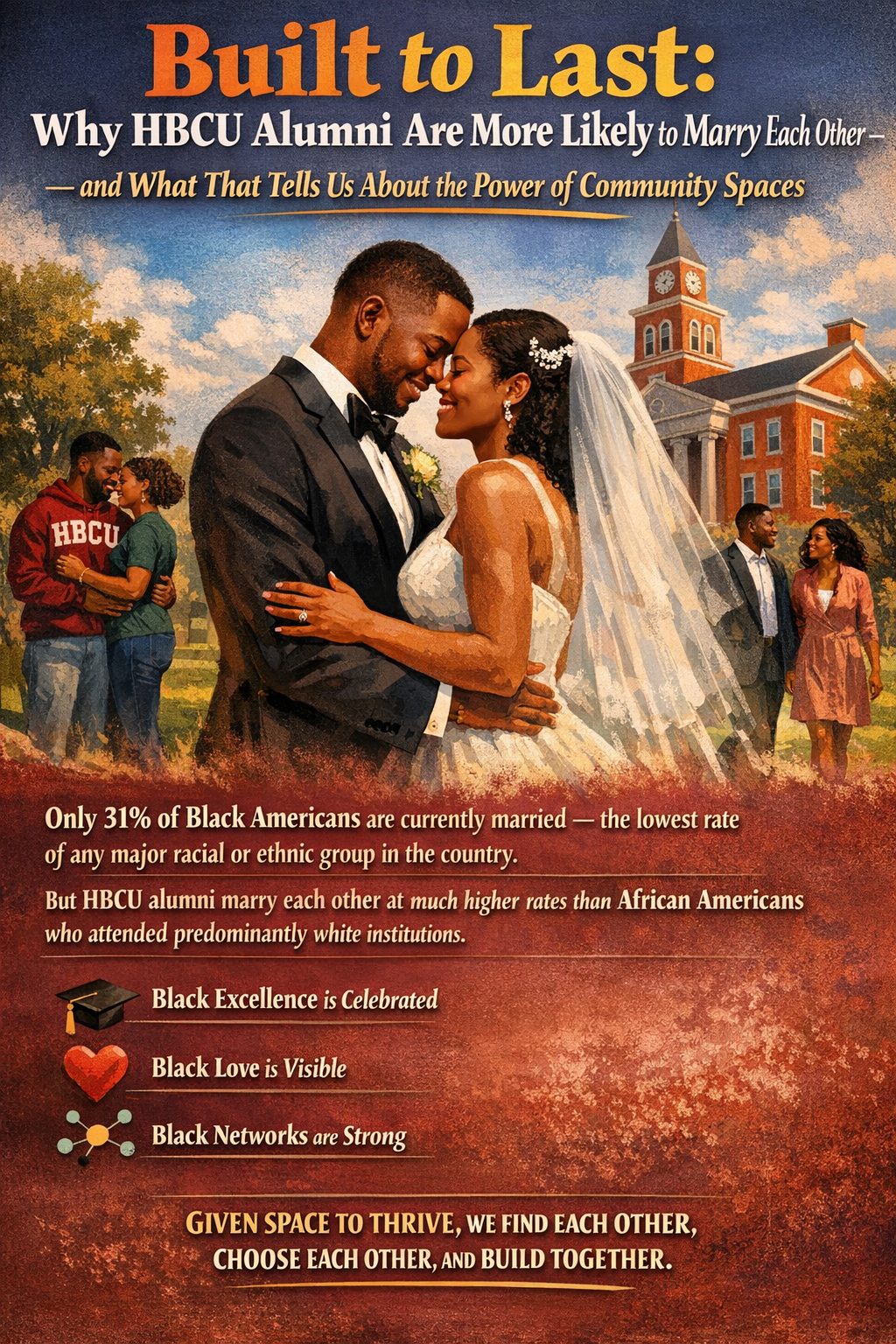
Our ancestors understood a fundamental truth: when spaces exclude you, you don’t just fight for access — you build your own. They didn’t wait for permission to educate their children; they built schools, colleges, and entire universities. They didn’t just seek integration into hostile towns; they built Tulsa’s Black Wall Street, Rosewood, and thriving communities across the country. They created what they needed when the world said they couldn’t have it. HBCUs weren’t created because Black people wanted segregation; they were created because we understood that if spaces wouldn’t welcome us, we had both the capability and responsibility to build spaces that would. When entire towns were torched, our ancestors rebuilt. When banks wouldn’t lend, we created our own financial institutions. When we needed safe spaces for our children to learn and grow, we built colleges that still stand as testaments to our determination and vision. This same spirit must animate our approach to global educational experiences. If we’re uncomfortable sending our children into predominantly white international programs where they may face isolation, microaggressions, or cultural insensitivity, then the answer isn’t to keep them home it’s to build programs that center their cultural identity while expanding their global consciousness.
Imagine study abroad programs that connect African American high school students with peers in Ghana, Nigeria, South Africa, Brazil, Trinidad, or London’s vibrant Black British communities. Programs where our children don’t just study European history and culture, but trace the African diaspora’s global influence and contributions. Where they learn Portuguese in Salvador, Bahia — the most African city outside of Africa — while studying Afro-Brazilian culture, resistance movements, and contemporary Black excellence. Consider summer academies at universities in Senegal or Jamaica, where African American students engage in rigorous STEM education while surrounded by Black professors, Black excellence, and societies where they are the majority, not the minority. Think about wilderness expeditions through African national parks led by Black conservationists, or maritime programs exploring the Caribbean’s ecology and history aboard vessels captained by people who look like our children.
These aren’t fantasies these are achievable programs that Black institutions, organizations, and entrepreneurs could create if we marshaled our resources and will. The global African diaspora numbers over 200 million people across six continents. Our children could literally travel the world while remaining connected to communities that share their heritage, understand their experiences, and celebrate their identity. And given that research confirms a direct correlation between studying abroad and Black identity development with Black students who study abroad demonstrating stronger self-efficacy, greater career clarity, and deeper cultural confidence — the case for diaspora-centered programming is not merely sentimental. It is institutional.
Programs designed by and for African American youth could address both the legitimate concerns parents have and the developmental needs our children deserve. They would provide cultural affirmation alongside global exposure. Students could develop international competencies while being surrounded by affirming environments that reinforce rather than challenge their sense of self-worth and belonging. Instead of being the only Black face in a room in Oxford, imagine our children learning from Black scholars at the University of Cape Town, engineers in Lagos’s tech hub, entrepreneurs in Kingston, or artists in Paris’s thriving African diaspora communities. This mentorship from global Black excellence would provide role models and guidance that looks like them and understands their experiences.
Learning about African civilizations’ contributions to mathematics while standing in Ethiopia, or studying the Haitian Revolution where it happened, or exploring maroon communities that successfully resisted slavery — these experiences don’t just teach history, they build pride and a sense of connection to a legacy of brilliance and resistance. This historical and cultural context strengthens identity in ways that traditional study abroad programs simply cannot. The relationships our children would build with peers from across the African diaspora would create networks that could support them throughout their lives and careers, while also helping them understand the diversity within Blackness globally. These networks within the diaspora become invaluable resources as our children pursue opportunities anywhere in the world.
Creating such programs would require the same institutional building that created HBCUs. We need investment from Black wealth. A fraction of African American financial resources, strategically invested, could create endowments for scholarship funds that make these programs accessible to students across economic backgrounds. We need new, independent organizations built specifically for this purpose. Black educators and entrepreneurs must create dedicated nonprofits and social enterprises focused exclusively on providing culturally-centered global education for K-12 students. These organizations would develop curricula, establish safety protocols, build partnerships with host communities in the diaspora, and market these opportunities to families who would trust programs designed with their children’s specific needs in mind. These new institutions would employ Black professionals as program directors, academic coordinators, and counselors, creating jobs within our community while building institutional capacity. Black professionals working in international settings must step up as local coordinators and mentors. Every Black American living in Ghana, South Africa, Brazil, the Caribbean, or anywhere in the diaspora represents a potential program site and mentor. We could create networks of willing professionals who would host students, provide professional mentorship, or facilitate cultural experiences. This distributed network would make programs both more affordable and more meaningful, as students would be embedded in authentic diaspora communities rather than tourist experiences.
It’s time for African American parents, educators, and community leaders to have difficult conversations about risk, opportunity, and what we truly owe the next generation. We owe them more than safety, we owe them preparation. We owe them experiences that will make them competitive, confident, and capable in any context they choose to enter. This means two parallel paths forward. First, actively researching and utilizing existing quality programs whether at Oxford, Semester at Sea, or elsewhere when they serve our children’s needs. But second, and perhaps more importantly, it means building our own infrastructure for global education that centers Black youth culturally while expanding them globally. We can no longer accept the false choice between keeping our children close and comfortable or sending them into spaces that weren’t designed with them in mind. Our ancestors didn’t accept such false choices they created third options, built new institutions, and forged paths where none existed.
The question facing African American families isn’t whether these programs are perfectly safe — nothing is. The question is whether the risk of inaction, of limiting our children’s exposure and experiences, is greater than the managed risks of letting them spread their wings globally. The evidence overwhelmingly suggests it is. Our children deserve the chance to develop into the globally-minded, intellectually sophisticated, culturally fluent leaders the world needs. That development doesn’t happen by accident, and it rarely happens when we keep them in familiar, comfortable environments. It happens when we trust them with challenges, support them through discomfort, and give them permission to become citizens of the world rather than just residents of their neighborhoods.
The choice is ours. We can continue the pattern of risk aversion that limits our children’s potential, or we can break the cycle and give them the global experiences that will unlock possibilities we might not even imagine. Better yet, we can build the institutions and programs that make these experiences culturally affirming, academically rigorous, and accessible to every Black child with the desire to see the world. Their future — and our community’s future — depends on which path we choose.
Disclaimer: This article was assisted by ClaudeAI.