Tag Archives: African American institutions

I Woke Up in a New Bugatti: Rap’s Poverty Promotion and the Illusion of Wealth Transfer

If you think you’re tops, you won’t do much climbing.  — Arnold Glasow

Hip-hop was born out of necessity. A sonic rebellion against poverty, violence, and systemic neglect, it emerged from the Bronx as a raw reflection of life in America’s forgotten corridors. But over the past four decades, it has transformed from cultural resistance into commercial royalty. Once recorded with borrowed turntables in community centers, it now echoes across Super Bowl halftime shows, luxury brand campaigns, and billion-dollar corporate balance sheets. Artists who once stood on corners are now seated at boardroom tables. The culture won. But the community did not.

The statistics tell a story of growth at the top and stagnation at the bottom. Hip-hop is now a $16 billion industry. It has created artists turned entrepreneurs who have expanded into liquor, fashion, tech, and sports. The music dominates global charts, sets fashion trends, and influences everything from algorithms to political campaigns. Yet this immense cultural capital has not translated into economic sovereignty for the African American community. Instead, the concentration of wealth in a few hands has often disguised the lack of institutional power. For all the charts conquered and headlines generated, African American banks, endowments, universities, and asset management firms remain modest, if not endangered.

At the heart of this failure lies a devastating contradiction. While rappers flaunt wealth more publicly than any generation before them, the economic conditions in many African American communities remain dire. The median net worth of Black households, as of 2022, stands at $44,100 compared to $284,310 for White households—a gap that has barely moved in decades. Hip-hop has become the most visible face of African American success, but that visibility is not backed by scale. There are no Black equivalents to BlackRock or Vanguard. No hip-hop-funded HBCU research lab. No Goldman Sachs of rap. Even the highest echelon of Black-owned investment firms manage a fraction of their white counterparts. Vista Equity Partners, the most prominent, oversees $103.8 billion, an extraordinary feat, yet still a rounding error next to BlackRock’s $10.5 trillion.

And even this level of institutional success is an outlier. Most Black-owned investment firms manage less than $10 billion. Most HBCUs have endowments below $50 million. The largest Black bank, OneUnited, holds roughly $650 million in assets, while Bank of America manages over $2.5 trillion. What hip-hop has delivered in influence, it has not delivered in capital. Instead of building institutions, it has made individuals rich. But those individuals exist within a system that continuously siphons wealth away from their communities.

This is not to say that artists bear the blame for economic injustice. But hip-hop has become a tool of seduction as much as expression. Its dominance in the global marketplace has aligned it with the poor man’s logic

of capitalism celebrating consumption, rewarding individualism, and elevating spectacle. In this model, buying a Bugatti becomes a symbol of power, while the absence of a Black mutual fund managing $100 billion barely registers. Lyrics obsess over fashion houses like Balenciaga, but rarely name Black-owned real estate firms or venture capital funds. The dream has shifted from ownership of blocks to ownership of Birkin bags.

This performative wealth is not just cultural; it’s systemic. The music industry itself is structured to extract more than it distributes. Record labels, streaming services, and publishing houses are disproportionately owned by entities with no allegiance to Black institutions. A 2023 report by Rolling Stone noted that artists receive less than $0.004 per stream on major platforms. Even when a track is streamed millions of times, the majority of profits flow to tech firms and record conglomerates, not to the creators or their communities. The money flows up and out. It is the same pattern that defines the broader African American economic experience: labor and creativity are extracted, while ownership and equity are denied.

The disparity is especially stark when one examines capital circulation. A dollar in the Black community circulates for less than 6 hours, according to HBCU Money, while in Jewish and Asian communities, it circulates for 17 and 20 days respectively. The consequence is an economy that is constantly depleted, reliant on external institutions for everything from finance to food. Hip-hop, despite its earnings, has not altered this trajectory. The Bugatti may be new, but the bank that financed it is old—and white.

This failure to institutionalize wealth is not accidental. It reflects deeper structural barriers, including a lack of access to financial infrastructure, intergenerational capital, and legal expertise. But it also reflects a shift in priorities within the culture itself. The era of public enemy and X-Clan once channeled music toward collective uplift. The current era often measures success by proximity to luxury, not impact on community. The metrics of power have changed from organization to ostentation.

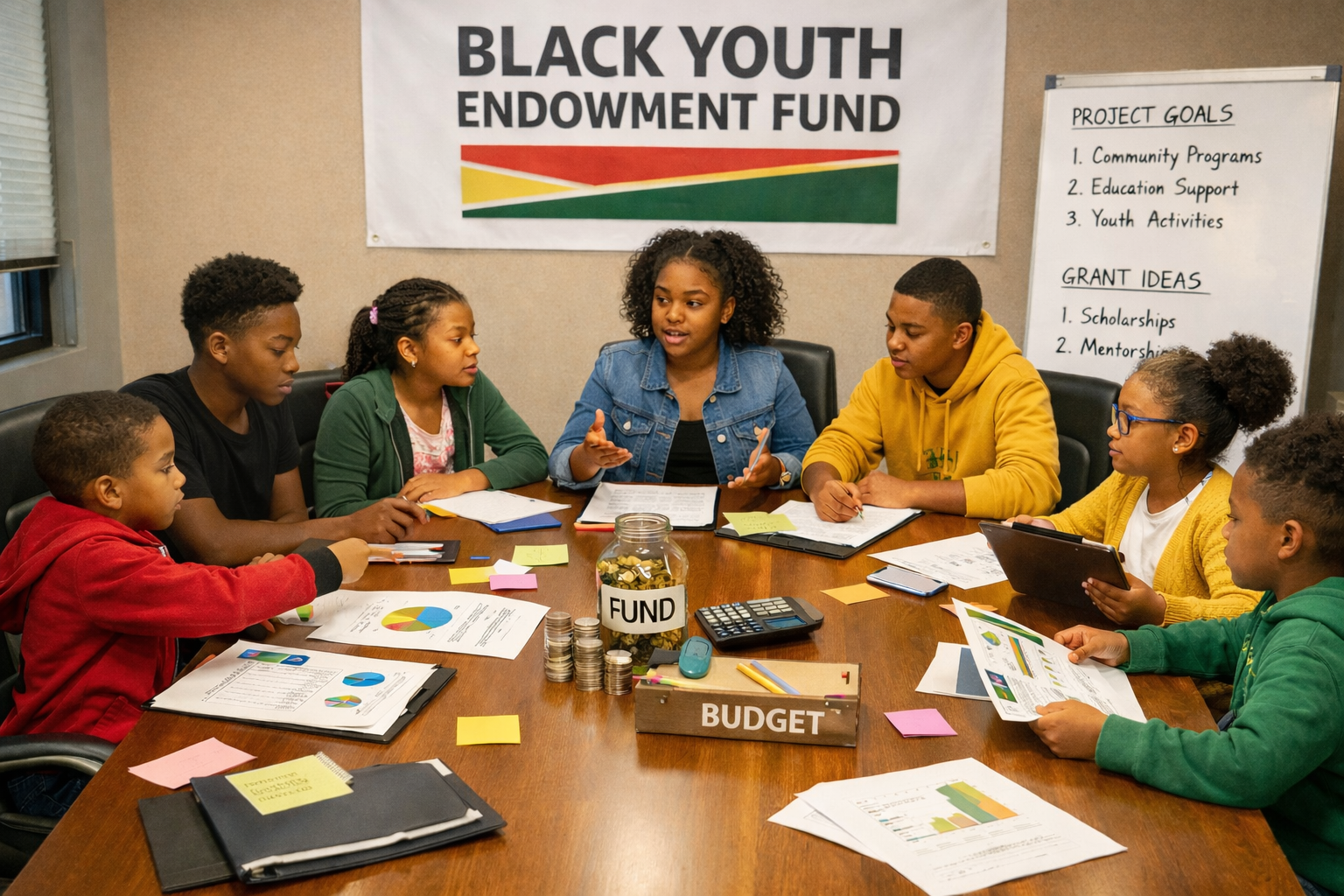
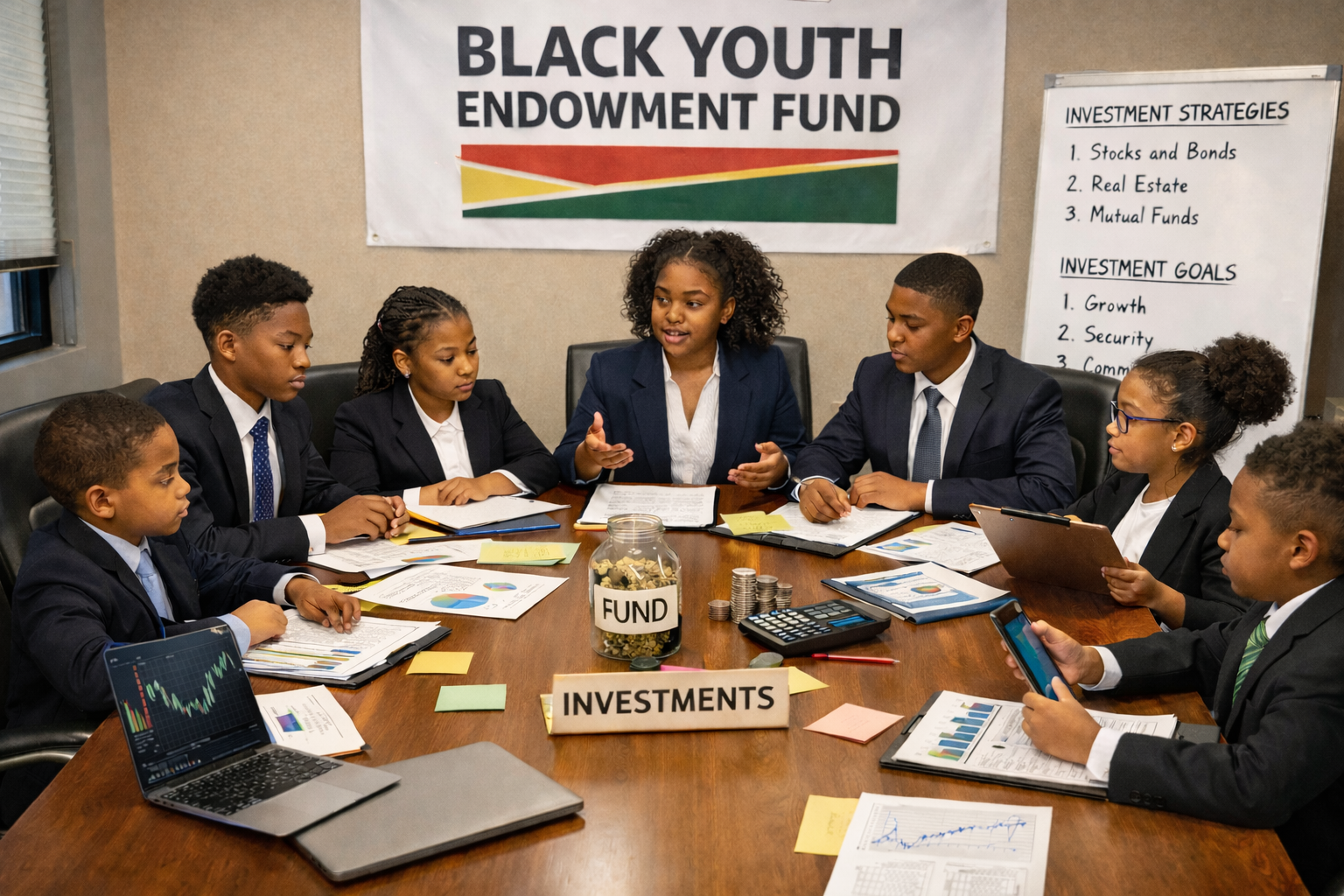
Still, there are exceptions that point to what is possible. But these efforts remain underfunded and under-celebrated. There is no coordinated movement among hip-hop elites to pool capital, fund cooperative ventures, or launch institutional vehicles capable of rivaling their white counterparts. What could a $1 billion hip-hop endowment fund do for HBCUs? For land ownership? For venture funding of African American startups? These questions are never asked because the Bugatti is louder than the balance sheet.

It’s not just about what rappers buy. It’s about what they build or more accurately, what they have not built. For every luxury watch, there could be a community-owned grocery store. For every $30 million home, there could be a regional loan fund or student scholarship pipeline. The failure to institutionalize success means that when an artist dies, their wealth often dies with them dispersed among heirs or recaptured by the state or private corporations. There is no hip-hop university. No national Black credit union seeded by artists. No sovereign wealth fund of the culture.

Arnold Glasow’s warning—“If you think you’re tops, you won’t do much climbing”—rings like an indictment. The culture believes it has arrived, but the destination is superficial. It has conquered billboards but not balance sheets. The climbing left to do is immense: building a generation of lawyers, financiers, real estate developers, and economists who can institutionalize the gains of cultural dominance. Without this, hip-hop’s economic contribution will remain symbolic, not structural. The world will continue to dance to the music, while Black America stays undercapitalized.

A Bugatti depreciates. Institutions compound. Until hip-hop’s economic power stops ending with the individual and starts building for the collective, the community will remain stuck in a loop of representation without accumulation. The corner coffee shop that became Starbucks is not owned by the block. And the music booming from its speakers will not change that. Not unless the wealth it generates is used to build not just to boast.

Disclaimer: This article was assisted by ChatGPT.

The Lost Generation: How Gen X Inherited the Collapse of Black Institutions

“We were sold the idea that the institutions that our great-grandparents built after enslavement, the institutitons that their blood, sweat, tears, and far too often their lives were sacrificed for no longer mattered. The institutions that protected our grandparents and parents no longer mattered. That we had no obligation, no duty to uphold them, strengthen them, defend them – and it may ultimately be our downfall.” – William A. Foster, IV

African America’s Generation X came of age in the shadow of promises made but never fulfilled. Born after the civil-rights movement and the legislative victories of the 1960s, they were told they were heirs to a new world of possibility. Yet for most, the landscape they entered was not one of expanding opportunity but of institutional decline. Gen X did not inherit the wealth of their White peers, nor did they inherit the institutional foundations that could have shielded them from the widening chasm of inequality. Instead, they became the “lost generation” of African America—not because they lacked talent or will, but because they were asked to build lives in the absence of functioning institutions.

The story is one of numbers as much as narratives. At mid-century, African Americans could point to over 134 banks, more than 500 hospitals, and a dense ecosystem of schools, businesses, and mutual-aid societies that created scaffolding for resilience. By the time Gen X came of age in the 1980s and 1990s, the majority of those institutions had collapsed. Today, fewer than 20 African American banks remain. The hospitals, once numbering in the hundreds, have shrunk to just one. The erasure of these structures left Gen X to navigate adulthood without the community-owned institutions that had once provided both opportunity and insulation.

This institutional decline coincided with the hardening of social and economic divides. African American median household wealth remains below $20,000, compared to more than $180,000 for White households. Home-ownership rates hover around 44 percent, far below the 73 percent enjoyed by Whites. Poverty, unemployment, and health disparities disproportionately fell on African American Gen X families, erasing many of the gains their parents’ generation had fought for. In health, the loss of African American hospitals meant fewer spaces for culturally competent care and fewer pathways for African American doctors, nurses, and administrators to train and serve their communities. In finance, the disappearance of banks meant fewer loans for businesses and homes, ensuring that the dollar cycled out of the community faster than it could ever build generational stability.

By the 1980s, when many Gen Xers were entering high school, even the educational system that had once cultivated excellence for African American children was being dismantled. A century earlier, African American boarding schools—descendants of Reconstruction-era self-help institutions—had trained teachers, scientists, craftsmen, and entrepreneurs. Schools such as Piney Woods, Laurinburg, and Pine Forge stood as examples of self-contained learning environments that instilled discipline and race pride. By 2014, only four remained. Their decline, chronicled in The Final Four: African American Boarding Schools on the Verge of Extinction, symbolized the erosion of intellectual infrastructure that once undergirded the Black middle class. These schools had produced generations of college-ready youth who often went on to HBCUs and then into the professions. When they withered, so did a crucial pipeline.

Their demise reflected not a lack of academic excellence but the disintegration of a supportive ecosystem. As integration policies shifted resources away from Black-controlled schools, and as affluent African American families pursued suburban acceptance, the boarding schools were left with dwindling endowments and shrinking enrollments. Their survival required a collective sense of purpose that the Gen X era—steeped in the illusion of individual advancement—could no longer muster. The extinction of these schools mirrored the broader trajectory of African American institutions: erasure through neglect, assimilation, and the seductive myth that success could be purely personal.

The same cultural dissonance emerged in the world of entertainment and higher education. On television, Gen X watched A Different World, a fictional HBCU experience that inspired a generation but also unintentionally reflected a pivot. The series’ most memorable duo, Dwayne Wayne and Ron Johnson, captured the promise and pitfalls of the Gen X mindset. As HBCU Money’s essay Dwayne Wayne & Ron Johnson Dropped the Ball: HBCUpreneurship observed, the show chronicled two brilliant young men who graduated not to build companies or institutions, but to take jobs inside someone else’s. Their story became emblematic of a generation encouraged to chase credentials rather than ownership.

Gen X was the first to be told that integration was complete, that they could “make it” anywhere. But what they were rarely told was that making it individually often meant abandoning the collective scaffolding their grandparents had built. The very concept of the HBCU as a launch pad for entrepreneurship faded into nostalgia. Dwayne and Ron’s missed opportunity was not fictional; it mirrored the real-world drift of African American college graduates into corporate dependency, even as those corporations benefited from their creativity without reinvesting in African American communities.

The consequences were measurable. While White entrepreneurial ecosystems flourished in the 1990s with the rise of venture capital and tech startups, African American business formation lagged far behind. Few HBCUs established business incubators, angel networks, or venture funds that could capture their graduates’ ingenuity. Gen X, trained to seek jobs rather than ownership, lacked both the financing structures and the cultural reinforcement to build enduring enterprises. The very generation that watched the digital revolution unfold found itself on the consumer end rather than the ownership end of that transformation.

In this sense, the decline of African American institutions was not merely physical but philosophical. The idea that collective power could yield freedom gave way to the belief that individual success was freedom itself. This ideological shift—fed by television, politics, and the allure of assimilation—eroded the cooperative ethos that once sustained Black Wall Streets and mutual-aid societies. Where earlier generations might have pooled resources to open a bank, Gen X was taught to seek a mortgage from Wells Fargo. Where their ancestors founded hospitals like Provident and Homer G. Phillips, Gen X looked to be admitted to the best White medical schools rather than to revive their own.

The paradox of Gen X is that they were told they had arrived at a moment of inclusion—seen in the growth of African American representation in politics, sports, entertainment, and corporate America—while the ground beneath them was collapsing. Symbolic milestones such as the first African American CEOs of Fortune 500 companies or the growing ranks of African American elected officials did not offset the fact that the ecosystem of African American hospitals, banks, and businesses was being erased. Gen X bore the brunt of this contradiction: celebrated for individual achievement while collectively stripped of institutional power.

The American economy of the 1980s and 1990s was primed for wealth building. Deregulation, real-estate booms, and the rise of the stock market created enormous opportunities for asset accumulation. Yet African American Gen Xers, lacking access to capital and institutional mentorship, were largely excluded. The few who broke through—whether in entertainment or professional fields—were exceptional precisely because the system offered so little support. They became proof of possibility for a generation starved of infrastructure, even as their fame obscured the underlying erosion.

By the early 2000s, as Gen X entered its peak earning years, the effects of institutional loss were unmistakable. The community’s wealth gap widened even as educational attainment rose. African American college-graduation rates climbed, but the payoff was smaller salaries, heavier debt, and less wealth accumulation. Without community-controlled banks or credit unions, they faced higher borrowing costs. Without business investment networks, they relied on personal savings to launch ventures, limiting scale and sustainability. Without hospitals and schools owned by the community, the circulation of dollars—once measured in weeks—shrank to hours.

The collapse of the boarding schools and the failure of HBCUpreneurship are not side stories; they are the connective tissue of this larger decline. Each represented a node of self-determination that could have anchored Gen X’s ascent. When those nodes vanished, Gen X’s trajectory became fragmented—brilliant individuals floating in isolation, disconnected from the institutional gravity that sustains a people. The lesson from the Final Four and from Dwayne Wayne and Ron Johnson is that without institutional continuity, culture becomes performance, not power.

The irony is that Gen X still carried the memory of what once was. Many were raised by grandparents who remembered owning land, operating local businesses, or attending all-Black schools where teachers lived in their neighborhoods. They inherited stories of collective pride, but not the structures that produced it. And because their own formative years coincided with mass media’s rise, those stories were often drowned out by consumer culture’s narrative of individual aspiration. Success became synonymous with escaping one’s community rather than empowering it.

That shift in imagination may be Gen X’s greatest tragedy. A people’s future is determined as much by what they believe is possible as by what they own. When the imagination of ownership fades, dependency becomes normalized. African America’s Gen X did not choose dependency; they adapted to a system that rewarded proximity to White institutions while punishing independent Black ones. Government contracts, corporate partnerships, and philanthropic grants replaced the cooperative economics of earlier eras. The result was a generation of professionals with unprecedented credentials but limited leverage.

Still, within this loss lies instruction. Gen X’s struggle clarifies that talent alone does not equal power. Communities achieve permanence only when they own the institutions that convert talent into infrastructure. The hospitals, banks, and boarding schools were not merely service providers—they were instruments of sovereignty. Their disappearance left African America reliant on external validation and vulnerable to the volatility of goodwill.

Oprah Winfrey, Michael Jordan, and Barack Obama stand as icons of Gen X achievement, but their presence cannot replace the 500 hospitals or 100 banks that once supported African American communities. Institutions are what allow success to scale beyond the individual. Without them, every victory is fleeting, every gain precarious. The Gen X dream of being “the first” often became a cycle of isolation: the first in the boardroom, the first on the cover, the first to arrive—but rarely the architect of a system that ensured there would be a second.

As Millennials and Gen Z inherit the debris of that collapse, they confront the same choice: to celebrate representation or to rebuild capacity. The wealth and power gaps remain staggering. African Americans are still nearly twice as likely to live in poverty and hold only about four percent of America’s small-business assets despite comprising thirteen percent of its population. The absence of institutions guarantees these outcomes; their reconstruction could begin to reverse them.

Rebuilding will require the mindset Gen X was never taught—to treat institutions as the truest form of freedom. That means HBCUs creating venture capital funds that invest in their graduates. It means restoring the legacy of African American boarding schools as incubators of discipline and intellect. It means reviving credit unions and community banks that finance local ownership. It means rediscovering that the measure of progress is not how many individuals cross the threshold of another people’s institutions, but how many institutions one’s own people can build and sustain.

Gen X stands, then, as both victim and warning: the generation that inherited the death of African American institutions and the collapse of mobility. Their story illustrates that the survival of a people rests not on individual ascent but on collective infrastructure. Without it, the next generation risks becoming lost as well. The lost generation’s greatest gift may be its clarity—the understanding that brilliance without ownership is bondage, and that no degree, celebrity, or salary can substitute for a hospital, a bank, a school, or a business owned in the name of one’s community.

Disclaimer: This article was assisted by ChatGPT.

The “Real World” Myth: How Sending African American Children to PWIs Undermines African American Institutional Power

“When you control a man’s thinking you do not have to worry about his actions. He will find his ‘proper place’ and will stay in it. You do not need to send him to the back door. He will go without being told; in fact, if there is no back door, he will cut one for his special benefit.”
Carter G. Woodson, The Mis-Education of the Negro

For generations, African American families have been told a myth that has become so pervasive it often passes without challenge: the idea that sending their children to predominantly white institutions (PWIs) of higher education better prepares them for the “real world.” On its surface, the reasoning sounds practical. Parents believe that if their child learns how to navigate white spaces, acquires the habits and codes of those spaces, and builds networks with white peers, they will be more successful in corporate America and society at large. It is a calculation born of centuries of survival in a society structured against African Americans.

But this calculation, when examined deeply, does not hold up to scrutiny. Instead of preparing African American students for the “real world,” the widespread preference for PWIs undermines the institutional power of African Americans and deprives HBCUs of the very human and financial capital they need to thrive.

The “real world” itself is not a fixed entity. It is not a monolith that African Americans must prepare to join on white terms. The real world is what a group of people make it. White Americans have defined their world and fortified it through their institutions such as universities, banks, hospitals, corporations, and foundations. Asian Americans, Jewish Americans, and other groups have done similarly, leveraging their educational and economic institutions to shape their reality. Yet, African America, too often, has internalized the belief that its institutions are insufficient, opting instead to send its brightest students and most valuable tuition dollars into the coffers of PWIs.

This is not simply a matter of personal choice. It is a collective decision with collective consequences. The more African American families buy into the “real world” myth, the weaker HBCUs become, and the less capable African America is of shaping its own real world.

The PWI Path and Its Assumptions

African American parents who choose PWIs for their children often do so with good intentions. They want their children to access elite resources, prestigious networks, and the perceived stamp of approval that comes with a degree from a PWI. They assume that because the U.S. labor market is majority white, exposure to that environment early on is critical to future success.

But these assumptions reveal several contradictions. White students do not consider attending an HBCU to balance their cultural experiences. They do not think, “I’ve had too much whiteness; I need a more balanced education.” Instead, they progress from a PWI undergraduate degree to a PWI graduate school, then into PWI-dominated corporate and institutional spaces. Their cultural immersion is never questioned, because their institutions define normalcy.

Meanwhile, African Americans alone have been conditioned to believe that too much African American immersion is dangerous, insular, or unrepresentative of the “real world.” The irony is sharp: a student may attend an HBCU, which is itself a diverse universe of African American culture, class, geography, and ideology, and still be told they have not had enough “exposure.” Yet a white student who grows up in an all-white town, attends an all-white PWI, and joins all-white firms is never told they lack “diversity of experience.”

This asymmetry is not accidental. It is a reflection of who controls institutional narratives in America. African Americans who absorb the “real world” myth are effectively outsourcing their children’s futures to white institutions, all while their own institutions wither from neglect.

The Diversity Within HBCUs

Another overlooked dimension of this myth is the assumption that HBCUs are homogeneous, insular spaces. This could not be further from the truth. The African American experience itself is vast. It includes children of Caribbean immigrants, descendants of enslaved Africans, first-generation college students from rural Mississippi, affluent families from Washington, D.C., African students from Nigeria and Ghana, Afro-Latinx students from Puerto Rico and the Dominican Republic, and more.

To attend an HBCU is not to encounter “less” diversity; it is to engage with the broad spectrum of the African Diaspora in concentrated form. These institutions are living laboratories of cultural exchange, intellectual competition, and class interaction.

By contrast, a PWI often provides African American students with only a sliver of diversity: they are frequently tokenized, expected to represent their entire race, and shuffled into diversity programming that centers their marginalization. Their peers may never learn about African American life beyond stereotypes, because the institution itself was never designed to illuminate African American experiences.

Thus, the African American student at an HBCU receives not just an education, but an immersion in African American pluralism is a preparation for engaging the world on African American terms. The PWI student, meanwhile, often internalizes the idea that their presence is conditional, exceptional, or peripheral.

Institutional Power and the Capital Flight from HBCUs

Every African American student who chooses a PWI over an HBCU represents more than an individual choice. It is the redirection of tuition dollars, alumni loyalty, and future endowment contributions away from African American institutions.

Imagine if even half of the African American students currently enrolled at PWIs redirected themselves to HBCUs. The financial impact would be transformative. Endowments would grow, faculty recruitment would expand, research capacity would increase, and the prestige of HBCUs would rise proportionally. These gains would compound over decades, creating a feedback loop of institutional strength.

Instead, what we have is a leakage of capital and talent into institutions that do not prioritize African American empowerment. PWIs benefit from African American enrollment statistics, which they parade as evidence of diversity, while offering little in terms of institutional reciprocity. They gain the reputational boost, while HBCUs lose the enrollment and financial stability they desperately need.

The result is predictable: HBCUs remain underfunded, under-endowed, and under-appreciated, not because they lack quality, but because too many African American families believe the myth that their children will be better off elsewhere.

The Real World Is What We Make It

The central flaw in the “real world” argument is the assumption that African Americans must adapt to a world built by others rather than shape their own. The real world is not an objective standard but it is the result of group will, institutional building, and cultural reinforcement.

White Americans shaped their “real world” through the sustained investment in Harvard, Yale, Princeton, and thousands of other institutions that center their history, culture, and power. Jewish Americans created their “real world” through a network of universities, foundations, and cultural centers that prioritize their collective survival. Asian Americans are building their own “real world” through business networks, educational pipelines, and capital flows that stretch across the Pacific.

If African Americans accept the premise that their children must be trained in white institutions to succeed, they have already conceded that they cannot or will not shape their own real world. They have abandoned the project of institutional power in favor of individual adaptation. This is not preparation; it is surrender.

Psychological Implications: Internalizing Inferiority

Beyond the economic impact, the myth has deep psychological consequences. African American students raised on the belief that HBCUs are not “the real world” internalize a subtle but corrosive idea: that their own culture is insufficient. They may carry degrees from elite PWIs, but the cost is often an alienation from African American institutional life.

The psychological message is clear—white spaces are the pinnacle of preparation, while African American spaces are something to escape. This creates a generational feedback loop where each successive cohort of African American parents pushes harder for PWIs, believing they are giving their children an advantage, while in reality they are weakening the very institutions that could make African America self-sufficient.

It also distorts identity. An African American child who grows up believing they must leave their community to succeed will often view their success as individual rather than collective. They may become comfortable being the “only one in the room,” rather than building the rooms where African Americans are not tokens but owners.

The Comparative Case: No Other Group Thinks This Way

No other racial or ethnic group in America sends its children away from its own institutions to gain “real world” experience. White families do not think Harvard students lack preparation because they have spent too much time around other white students. Jewish families do not believe their children need to avoid Jewish institutions to be competitive. Chinese Americans do not view Chinese language schools or cultural institutions as a liability to their children’s preparation.

It is only African Americans who accept this self-defeating logic. This uniqueness underscores the lingering effects of centuries of racial conditioning. From slavery to Jim Crow to modern structural racism, African Americans have been taught that their own institutions are inferior. The “real world” myth is simply the modernized version of this lesson.

By contrast, when other groups send their children to institutions, they do so with the understanding that these institutions will strengthen their cultural identity while equipping them to engage broader society on their own terms. For African Americans, the task must be the same: build HBCUs into the kind of institutions that define, rather than defer to, the real world.

Rethinking the “Preparation” Narrative

If the goal of higher education is preparation, then the question is: preparation for what? For African Americans, preparation should not simply mean being employable in someone else’s institution. It should mean being capable of building, leading, and sustaining African American institutions.

An HBCU graduate is not less prepared for corporate America than a PWI graduate; in many cases, they are more resilient, more culturally grounded, and more aware of systemic barriers. The difference is that the HBCU graduate, if supported by their community, is positioned to reinvest in African American institutional life.

The narrative that PWIs uniquely prepare African Americans for the “real world” ignores the fact that many HBCU alumni have gone on to excel in every imaginable field from politics, science, business, culture while also strengthening the institutions of African America. The preparation HBCUs offer is not narrow; it is holistic, rooted in both academic rigor and cultural affirmation.

A Call to Reclaim Institutional Power

For African Americans to continue believing in the “real world” myth is to ensure that the next century looks much like the last: individual success stories amid collective institutional weakness. To break this cycle, African American families must reorient their thinking.

Sending a child to an HBCU is not a limitation; it is an investment in collective power. It is a statement that African Americans will not only participate in the real world but will define it. It is a recognition that every tuition dollar, every alumni donation, and every student enrollment strengthens the institutional backbone of African America.

The time has come to retire the myth once and for all. The real world is not something African Americans must be prepared for by others. It is something African Americans must build for themselves, through the strengthening of HBCUs and the rejection of narratives that undermine them.

Until that shift happens, African America will remain trapped in a paradox: sending its children to PWIs in search of preparation, only to find that the institutions that could truly empower them are being starved of the very resources they need.

The “real world” is not out there waiting. It is in our hands to create.

 Disclaimer: This article was assisted by ChatGPT.

Give Black App: A Digital Gatekeeper For African American Philanthropy & Institutional Capital

“We must invest in ourselves. Without our own institutions, we will always be at the mercy of others.” – Mary McLeod Bethune

In the long arc of African American economic life, a recurring pattern emerges: the institutions most critical to our survival are consistently starved of capital, while the broader society thrives off of our labor, culture, and creativity. From Reconstruction-era mutual aid societies to the undercapitalized HBCUs of today, the struggle has never been whether African Americans are generous, but whether that generosity is systematically directed into institutions that can build durable power.

The Give Black App, founded by David C. Hughes, Alexus Hall, and Fran Harris, positions itself at this inflection point. It is not simply an app but a digital strategy—one attempting to reshape the flow of African American philanthropy and donations by curating, centralizing, and amplifying support for Black-led institutions.

The Context of Underfunding

African American nonprofits receive disproportionately less funding compared to their White counterparts. A 2020 Bridgespan study found that unrestricted net assets of White-led nonprofits were 76% larger than those of Black-led nonprofits, while revenues were 24% higher. These disparities compound over time. For HBCUs, the story is even starker: the endowments of all 100+ HBCUs combined is less than 1/10th of Harvard University’s alone.

Despite African America’s estimated $1.8 trillion in annual buying power, only a fraction is captured by its own institutions. Much of African American giving remains individual-to-individual or church-centered, providing immediate relief but not the kind of long-term institutional scaffolding needed to compete with White or global capital. Platforms like Give Black attempt to redirect that generosity into a framework where dollars reinforce permanence.

Building the Infrastructure of Giving

Give Black’s strength lies in infrastructure, a word often overlooked in philanthropy. The app operates as a digital gatekeeper, cataloguing Black-led nonprofits and enabling donors—whether individuals, alumni associations, or grassroots organizations—to find and fund them with ease.

This may seem simple, but its implications are profound. In an environment where discoverability is one of the greatest barriers for Black-led organizations, Give Black centralizes attention. For the countless nonprofits that lack robust marketing budgets, development officers, or national visibility, the app provides a seat at the table they would otherwise be denied.

The team itself reflects intentional design. Hughes, a Morehouse and Prairie View alumnus, carries the academic gravitas to engage institutions; Hall, with a background in cybersecurity and software sales, grounds the platform’s technical operations; Harris, a lifelong advocate of Black love and economic empowerment, provides the cultural grounding and marketing voice. Alongside them stand directors rooted in community engagement, finance, athletics, and science. Together, they represent a cross-section of African American life that mirrors the very community the app seeks to serve.

Philanthropy Meets Technology

Unlike GoFundMe or Benevity, which serve broad audiences, Give Black narrows its focus: African American-led institutions. This specificity is both its greatest strength and its potential vulnerability. By making African American philanthropy visible and trackable, the app attempts to normalize institutional giving within the community itself.

African American donors, long used to personal giving—funeral funds, tuition help, emergency assistance—are now asked to see their dollars not just as charity but as investment. An app that allows for transparency, accountability, and impact measurement may finally bridge the gap between intent and sustained institutional support.

Technology also democratizes giving. Younger generations, accustomed to digital wallets and mobile donations, are unlikely to write checks or mail contributions. By existing where they already transact, Give Black normalizes philanthropy as part of daily life. With proper marketing, it could serve as a digital equivalent of the collection plate—except one that sends dollars to Black think tanks, schools, health clinics, and endowment foundations rather than solely to Sunday offerings.

The Role of Fran Harris

Much of the initial confusion about Give Black’s leadership arises from Fran Harris’s name. She openly jokes about it—she is not the Fran Harris who was a WNBA champion or Shark Tank winner, though many assume otherwise. Instead, she distinguishes herself as someone whose “entire life has been about Black love and economic empowerment.”

That distinction matters. Whereas celebrity often drives visibility in African American philanthropy, Harris positions herself not as a star but as a steward of a broader vision. Her work focuses on the storytelling and cultural marketing needed to align African American giving with institutional capital. In a sense, her humor in addressing the name confusion underscores the seriousness of her actual role: grounding the app’s message in authenticity rather than celebrity.

The Gaps in the Strategy

Despite its promise, Give Black faces hurdles. First, fundraising expertise at the highest level appears limited within the core team. Major philanthropy is an industry of its own, requiring seasoned development officers capable of cultivating seven- and eight-figure gifts. Without this, Give Black risks becoming a platform for small-dollar giving—important, but insufficient for closing institutional capital gaps.

Second, technological depth must match ambition. While Hall’s cybersecurity background provides operational credibility, scaling a fintech-style platform requires CTO-level leadership. Issues of compliance, data integrity, and user trust are not optional—they are the foundation of sustainability.

Third, policy and compliance matter. Donations intersect with financial regulations, nonprofit law, and IRS oversight. To become the definitive gateway for Black giving, Give Black must not only build a sleek front end but also a back-end architecture that can withstand regulatory scrutiny and instill donor confidence.

Where the Opportunities Lie

The greatest opportunities for Give Black lie in institutional self-reliance.

One clear pathway is through alumni networks. HBCU alumni giving rates remain in the single digits, compared to 20–30% at elite PWIs. If Give Black positioned itself as the official conduit for alumni donations, it could help double or triple those rates over time. That alone would shift millions into endowments and operating budgets across the HBCU ecosystem.

Another opportunity lies in membership-based organizations—from professional networks to civic associations. Instead of dues going solely toward programming, portions could be funneled into long-term institutional giving through Give Black, creating a culture of collective philanthropy.

The Pan-African Diaspora represents yet another opening. African and Caribbean communities abroad are increasingly connected digitally. Give Black could expand to become a Pan-African philanthropic bridge, enabling solidarity between African Americans and global Black communities. Diaspora donors, often seeking trustworthy channels for giving, could find in Give Black a centralized, transparent platform.

Finally, the most transformative opportunity is to integrate endowment-building features directly into the app. Too much African American giving is trapped in the cycle of operating expenses. By redirecting portions of donations into permanent capital funds, Give Black could help institutions create reserves that outlast political climates and economic downturns.

Lessons from History

The urgency of Give Black’s mission must be seen against history. During the early 20th century, White-controlled philanthropy dictated the survival of many HBCUs. Institutions like Hampton and Tuskegee often relied on Northern industrialists whose donations came with ideological strings attached. The absence of African American-controlled philanthropic infrastructure meant dependency—and dependency always meant vulnerability.

Today, African American institutions still operate under the shadow of that dependency. Foundation funding remains racially skewed, and government support is often politically weaponized. Give Black, by offering a decentralized and community-driven alternative, challenges that cycle.

But history also warns: movements that lack discipline or scale are easily absorbed or ignored. Just as the Negro Leagues produced baseball talent but lacked the capital to maintain independence, so too can African American philanthropy generate excitement but fail to sustain institutional life if it is not channeled strategically.

The Verdict

Give Black App is not merely a digital donation tool. It is a test case: can African America leverage technology to redirect its wealth into its own institutions? The team’s composition, heavy in HBCU roots, marketing authenticity, and community engagement, suggests it understands both the stakes and the culture.

Still, the app must avoid the trap of becoming a feel-good project without measurable institutional outcomes. Its long-term success will be determined by whether it can:

  1. Secure partnerships with HBCUs, alumni associations, and membership-based organizations.
  2. Develop deep fundraising and compliance infrastructure.
  3. Normalize institutional giving across African American households.

If it does, Give Black could evolve into a cornerstone of African American institutional development—a kind of digital Freedman’s Bureau, redistributing not charity but power.

For African America, the stakes could not be higher. In an era where White nonprofits sit on multibillion-dollar endowments, while Black nonprofits scrape for survival, the question is not whether we are generous. It is whether our generosity is building the kind of institutions that ensure survival for centuries, not just survival for today.

Give Black, if scaled with vision and discipline, may finally provide the infrastructure to answer that question with a resounding yes.

The Firing of The BLS Commissioner Reaffirms: President Trump Only Believes In Fake Facts

“When power makes truth expendable, only the brave will keep records.” — HBCU Money Editorial Board

On August 1, 2025, the United States crossed a threshold most democracies fear but few anticipate with precision the moment a nation’s statistical agency becomes a political target not for corruption, but for accuracy.

Following a weaker-than-expected jobs report with just 73,000 jobs added in July and significant downward revisions to prior months, President Donald Trump abruptly ordered the firing of Dr. Erika McEntarfer, Commissioner of the Bureau of Labor Statistics (BLS). The justification? The data embarrassed him. The evidence? None. The implications? Profound.

For over a century, the BLS has served as the impartial scorekeeper of the American labor market. Its reports help inform everything from Federal Reserve monetary policy to wage negotiations, business expansion decisions, and university research. Most critically, the BLS is the foundation for public trust in employment data, a cornerstone of economic legitimacy.

Trump’s dismissal of Dr. McEntarfer, who was confirmed with bipartisan support and is regarded as a rigorous labor economist, did not challenge methodology, nor did it cite misconduct. Instead, it was an overt signal: when facts contradict the leader’s narrative, the facts must go.

This act is not merely executive overreach. It is an institutional decapitation. And it represents the clearest break yet from the post-WWII consensus that government data should be nonpartisan, methodologically sound, and politically untouchable. In a global economy, this is the equivalent of a currency devaluation not of the dollar, but of America’s data credibility.

When leadership no longer trusts or permits accurate data, policy becomes reactive, erratic, and performative. Investors, entrepreneurs, and institutions rely on the BLS to signal economic direction. Without it, credit markets misfire, fiscal policy lacks direction, and monetary policy becomes unmoored. For African American-owned banks, real estate firms, and HBCU endowment managers, this degrades their ability to assess employment trends in Black communities, apply for federal workforce grants, or time bond offerings based on unemployment benchmarks. Even philanthropic giving strategies may suffer if the poverty, wage, and employment data they are based on becomes manipulated or suppressed.

America’s strength lies in its institutions, not its individuals. By removing the head of a critical statistical agency on political grounds, the White House has signaled that no institution is beyond coercion. This undermines the rule of law and places civil servants especially those in technocratic roles on notice: loyalty matters more than evidence. African American civil servants, many of whom have worked tirelessly to diversify and reform these institutions from within, may see decades of credibility erased. It’s a chilling reminder that representation within agencies means little if those agencies are subject to autocratic whim.

International investors, trade partners, and credit agencies track U.S. labor data as a proxy for global economic health. If they begin to suspect that U.S. statistics are manipulated, they may hedge their investments, slow trade, or reevaluate the reliability of U.S. fiscal metrics. In the long-term, this can impact foreign direct investment in African American economic zones, HBCU research partnerships with global firms, and even diaspora remittance flows, if currency stability is affected by market anxiety.

Perhaps most dangerously, Trump’s decision follows a long trajectory of undermining truth-based systems elections, public health, the judiciary, and now economic data. This creates a vacuum in which conspiracy becomes conventional wisdom. In such an environment, fake facts become state currency. This has severe implications for African American institutions. Much of African American advocacy whether for reparations, investment, or educational equity rests on data. If national data sources are neutered or politicized, then the burden of proof shifts unfairly onto communities already under-resourced in research infrastructure.

HBCUs, Black think tanks, and African American foundations must view this firing not as a political blip, but a doctrine in action. When truth becomes negotiable, institutions that depend on it must move from passive reliance to active defense. HBCUs with strong economics, political science, or data science departments such as Howard, Spelman, and FAMU should develop Black-centered labor and socioeconomic data initiatives. These should complement, verify, or challenge federal data when necessary.

Institutions should also create safeguards digital, legal, and procedural to document how and when data manipulation may be occurring. This includes archiving historic BLS data, creating public dashboards, and writing explanatory briefs for the community. In addition, the next generation of data scientists, economists, and statisticians trained at HBCUs must be equipped not only with technical skill but a political consciousness of how truth is weaponized. Their work should be rooted not just in method, but in mission.

There is also an urgent need for civic engagement. African American policy organizations must pressure Congress to enact legal protections that insulate agencies like BLS, Census, and the Congressional Budget Office from political interference. Civil society must create watchdog coalitions that expose attempts to politicize data or intimidate public servants. Parallel to this, an emergency data defense fund backed by foundations and Black philanthropic leaders could help institutions respond rapidly to threats against data integrity.

Dr. McEntarfer’s firing is not merely about jobs data. It is about whether America will continue to govern itself by fact or by fiat. For African Americans, who have fought centuries of data invisibility, distortion, and misuse from redlining to police profiling the stakes are especially high.

The Bureau of Labor Statistics was once seen as above politics. That era is over.

African American institutions must now assume a new role not just consumers of data, but defenders of its integrity. If truth is to survive, it will not be because it was protected by tradition, but because it was guarded by those with the most to lose from its disappearance.

Disclaimer: This article was assisted by ChatGPT.