Island Mentality: Alabama State University’s $125 Million Decision Highlights HBCUs’ Continued Failure To Connect With The African American Financial Sector

Negro banks, as a rule, have failed because the people, taught that their own pioneers in business cannot function in this sphere, withdrew their deposits. – Dr. Carter G. Woodson
What is an ecosystem? How do you develop an ecosystem? Can we develop an African American ecosystem? It seems to be a question that a room full of African American institutional leadership have little understanding of based on the institutional decisions that are continuously made. In their academic paper entitled Economic Ecosystems, Philip E. Auerswald and Lokesh M. Dani, “An ecosystem is defined as a dynamically stable network of interconnected firms and institutions within bounded geographical space. It is proposed that representing regional economic networks as ‘ecosystems’ provides analytical structure and depth to theories of the sources of regional advantage, the role of entrepreneurs in regional development, and the determinants of resilience in regional economic systems.” The most vital part of that definition being interconnected firms and institutions. African American institutions in general at every turn fail to understand this concept and HBCUs are no exception. This is especially true of HBCUs choice of banks and now Alabama State University’s recent decision to forego a plethora of African American Owned Investment and Asset Management firms and hand $125 million to another European American owned investment firm. African American capital once again reinforcing European America’s financial ecosystem – not ours.

It is almost a redundant story at this point. African American institutions all operating on their own island and failing to interconnect and intertwine with each other. African America from individual to institutions all do what is best for themselves individually and not what is best for the collective and certainly not what connects and strengthens the collective. See Hampton University and North Carolina A&T State University decisions to leave an HBCU conference for a PWI one. To that vein is why over 90 percent of African America’s $100 billion in annual tuition revenue goes into PWIs and not HBCUs/PBIs. HBCUs provide very little means of an example for the community to follow. Instead, HBCUs are a glaring headlight of just how poorly African American institutions perform in strategically integrating themselves within the African American ecosystem, especially economically. There are no reports on HBCUs engagement with the African American private sector because HBCUs do not seemingly see that as important. How many of HBCU graduates work for African American owned companies? How much HBCU athletic sponsorship dollars come from African American owned companies/partnerships? How much of the HBCU endowment is invested in African American firms? These are basic questions that any leadership of an HBCU should be able to answer. Unfortunately as Jarrett Carter, Sr., founder of HBCU Digest, once eloquently put it, “Many HBCUs are just trying to be PWI-adjacent.”

Is $125 million a lot of money? Context matters. To any individual, most would agree $125 million is significant. To institutions, it varies on size, scope, and goals. For African American Financial Institutions, almost down to even the largest of our firms having an $125 million account would see their bottom line acutely move. Providing perspective on the landscape, Pension and Investments reports, “The global asset management industry showed some signs of recovery in 2023, with total assets under management (AUM) rising 12% year-over-year to nearly $120 trillion, according to research by Boston Consulting Group.” For African American Asset Managers, “The largest Black-owned asset managers are responsible for more than $253 billion in assets, according to FIN Searches data. Vista Equity Partners is the largest Black-owned firm in the industry, with the private equity manager handling $103.8 billion in assets.” African American Owned Asset Managers only account for 0.2 percent of the global AUM. By contrast, the Top 10 non-Black asset managers have $22 trillion assets under management which accounts for almost 20 percent of global AUM.
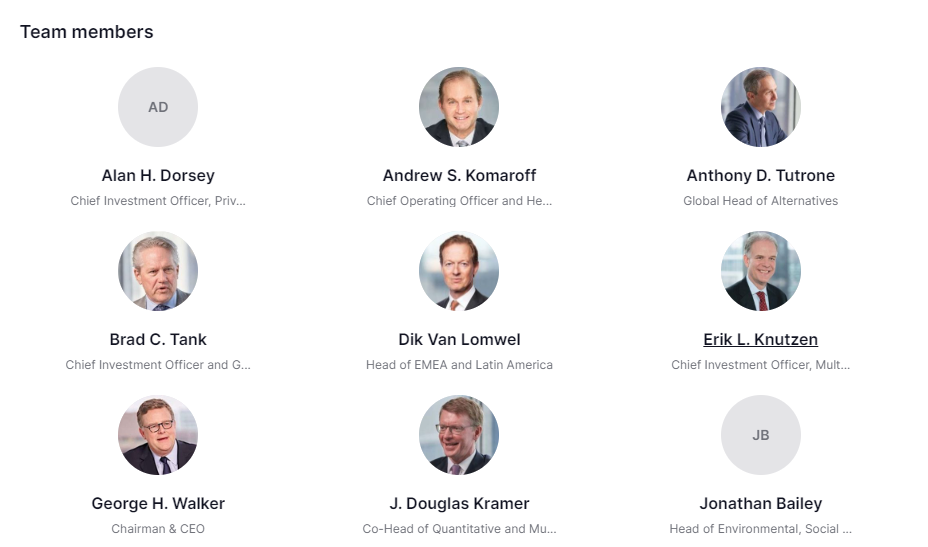
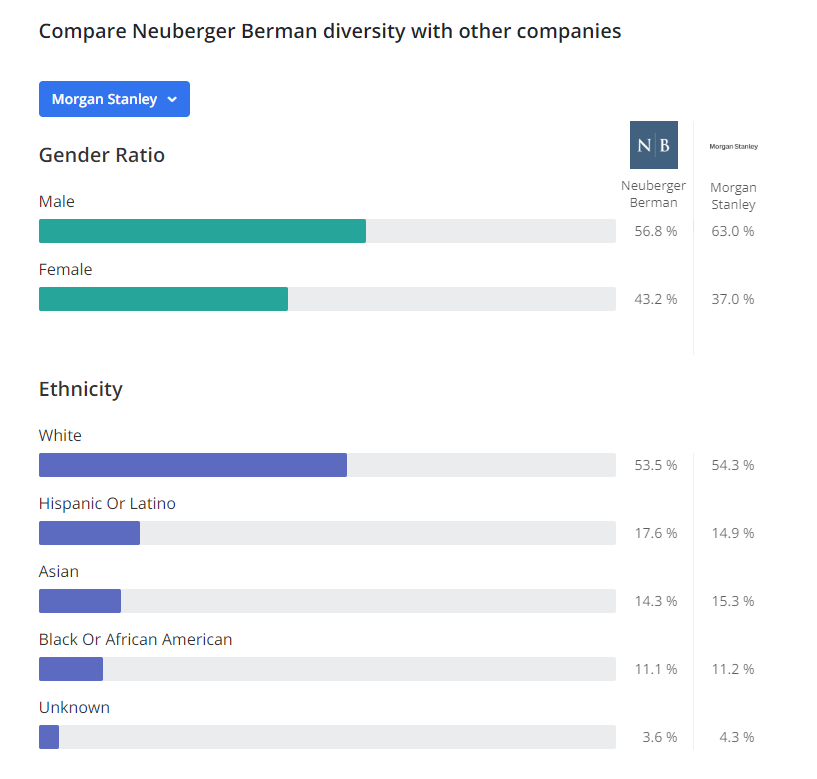
The asset management firm that Alabama State University chose according to World Benchmarking Alliance, “Neuberger Berman is a private employee-owned investment management firm (leadership pictured above) headquartered in New York, USA. It was founded in 1939 and has offices in 39 cities across 26 countries. The firm manages equities, fixed income, private equity and hedge fund portfolios for global institutional investors, advisors and high-net-worth individuals. It managed USD 460 billion of assets (under management) in 2021 and employed 2,647 staff in 2022.” This means that Alabama State University’s $125 million is equal to 0.02 percent of assets under management for Neuberger Berman. A drop in the bucket. The entirety of assets at African American Owned Asset Management firms is only 55 percent of Neuberger Berman assets under management. Alabama State University’s $125 million would have lifted the ENTIRE African American Owned Asset Management’s AUM by 0.05 percent. A move that would have strengthened the African American economic and financial ecosystem.
African America as a community talks about the circulation of the dollar or our lack thereof constantly, but what is virtually never talked about is the circulation of the African American institutional dollar being the largest part of that conversation. It is a fairly accepted statistic that the African American dollar does not stay in the African American community for a day, while other communities see their dollar stay in their communities for weeks and in the case of the Asian American community for almost a month. We often think of the circulation of our dollar like everything else, on an island or as an individual. An individual going and buying food from even an expensive African American owned restaurant is $100-200, but an HBCU building a new building means the opportunity for a new loan worth tens of millions for an African American owned bank, it means tens of millions for an African American owned construction company, so on and so forth. Instead, Bethune-Cookman University borrows from a notorious predatory lender to the African American community in Wells Fargo and almost finds itself losing those buildings due to foreclosure.

HBCU alumni know little about the state of finances or the movement of the money at their alma maters. HBCU administrators either willfully withholding the information or inept themselves of the importance of the information and providing it. Both are problematic. The notion that HBCUs cannot find African American investment firms is a painful thought knowing that a Google search would bring up the HBCU Money African American Owned Bank Directory at the very least. The likelihood is more in line with what Mr. Carter said in that a good deal of HBCU leadership simply wants to be like their PWI counterparts is far more likely. This would explain the debacle “donation” accepted by Florida A&M University’s president recently where a simple Google search would have avoided such embarrassment. Instead, Alabama State University’s Neuberger Berman relationship and a plethora of others instances (a decade ago when we reported “Spelman College & Regions Bank – A Failure To Disclose”) is that likely they are simply mimicking PWI actions and unwittingly reinforcing the PWI/European American ecosystem to say the least. Unfortunately, that mimicking reinforces another community’s economic and financial ecosystems not ours and why you may never see OneUnited Field at any HBCU’s athletic facility. Because we are holding out for J.P. Morgan, Bank of America, or Wells Fargo to show us the same love they show PWIs. Not acknowledging those are not our community’s banks.

If HBCUs are simply going to behave as PWI-adjacent institutions, then it is hard to argue with why over 90 percent of African Americans who go to college are not choosing HBCUs. For many it becomes a question of why get a knockoff when they can get the real thing. After all their ice is colder. HBCUs, HBCU alumni associations, and HBCU support organizations as a whole are not making decisions related to African American institutions ecosystem’s interests and interconnectivity and that is most glaring in the poor institutional decisions we are making in regards to our institutional finances and endowments.

African America’s May 2024 Jobs Report – 6.1%

OVERALL UNEMPLOYMENT: 3.9%

AFRICAN AMERICA: 6.1%

LATINO AMERICA: 5.0%

EUROPEAN AMERICA: 3.5%

ASIAN AMERICA: 3.1%

Analysis: European Americans unchanged for a second month in their unemployment rate. Asian and Latino Americans both saw increases of 30 and 20 basis points from May, respectively. African Americans had an increase in their unemployment rate of 50 basis points for May.

AFRICAN AMERICAN UNEMPLOYMENT RATE BY GENDER & AGE

AFRICAN AMERICAN MEN: 6.4%

AFRICAN AMERICAN WOMEN: 5.2% 

AFRICAN AMERICAN TEENAGERS: 13.9%

AFRICAN AMERICAN PARTICIPATION BY GENDER & AGE

AFRICAN AMERICAN MEN: 68.3%

AFRICAN AMERICAN WOMEN: 62.9%

AFRICAN AMERICAN TEENAGERS: 32.2%

Analysis: African American Men saw an increase in their unemployment rate by 120 basis points and African American Women increased by 20 basis points. African American Men decreased their participation rate in May by 40 basis points. African American Women had no change in their May participation rate. African American Teenagers unemployment rate decreased by a staggering 430 basis points, the second lowest rate in the past five months for the group. African American Teenagers saw their participation rate decrease by 100 basis points in May.

African American Men-Women Job Gap: African American Women currently have 924,000 more jobs than African American Men in May. This is an increase from 781,000 in April.

CONCLUSION: The overall economy added 272,000 jobs in May while African America lost 169,000 jobs. From Axios, “The big picture: The Federal Reserve wants to see signs the labor market is coming into better balance—that is, demand for workers catching up to the supply of them. Fed officials are all but certain to hold interest rates at a two-decade high at their policy meeting next week, as they wait for more evidence that price pressures are easing. Recent indicators have shown that to be the case: Data this week showed that employers are posting fewer job openings.”

HBCU Money’s 2023 African American Owned Bank Directory

All banks are listed by state. In order to be listed in our directory the bank must have at least 51 percent African American ownership. You can click on the bank name to go directly to their website.

OTHER KEY FINDINGS:

  • 11 of the 17 African American Owned Banks saw increases in assets from 2022.
  • African American Owned Banks (AAOBs) are in 16 states and territories. Key states absent are Maryland, Missouri, New York, and Virginia.
  • Adelphi Bank (OH) is the first African American Owned Bank (AAOB) started in 23 years.
  • Alabama and Georgia each have two AAOBs.
  • African American Owned Banks have approximately $5.8 billion of America’s $23.2 trillion bank assets (see above) or 0.02 percent. The apex of African American owned bank assets was in 1926 when AAOBs held 0.2 percent of America’s bank assets or 10 times the percentage they hold today.
  • African American Owned Banks control 1.7 percent of FDIC designated Minority-Owned Bank Assets.
  • 2023 Median AAOBs Assets: $168,701,000 ($150,072,000)
  • 2023 Average AAOBs Assets: $326,097,000 ($325,391,000)
  • TOTAL AFRICAN AMERICAN OWNED BANK ASSETS 2023: $5,867,738,000 ($5,531,655,000)

ALABAMA

ALAMERICA BANK

Location: Birmingham, Alabama

Founded: January 28, 2000

FDIC Region: Atlanta

Assets: $17,282,000

Asset Change (2022): UP 9.5%

COMMONWEALTH NATIONAL BANK

Location: Mobile, Alabama

Founded: February 19, 1976

FDIC Region: Atlanta

Assets: $66,944,000

Asset Change (2022): UP 9.2%

DISTRICT OF COLUMBIA

INDUSTRIAL BANK

Location: Washington, DC

Founded: August 18, 1934

FDIC Region: New York

Assets: $739,181,000

Asset Change (2022): UP 2.2%

GEORGIA

CARVER STATE BANK

Location: Savannah, Georgia

Founded: January 1, 1927

FDIC Region: Atlanta

Assets: $81,906,000

Asset Change (2022): DOWN 2.5%

CITIZENS TRUST BANK

Location: Atlanta, Georgia

Founded: June 18, 1921

FDIC Region: Atlanta

Assets: $741,413,000

Asset Change (2022): DOWN 8.1%

ILLINOIS

GN BANK

Location: Chicago, Illinois

Founded: January 01, 1934

FDIC Region: Chicago

Assets: $63,898,000

Asset Change (2022): DOWN 11.1%

LOUISIANA

LIBERTY BANK & TRUST COMPANY

Location: New Orleans, Louisiana

Founded: November 16, 1972

FDIC Region: Dallas

Assets: $1,048,899,000

Asset Change (2022): DOWN 3.4%

MASSACHUSETTS

ONEUNITED BANK

Location: Boston, Massachusetts

Founded: August 02, 1982

FDIC Region: New York

Assets: $755,706,000

Asset Change (2022): UP 1.6%

MICHIGAN

FIRST INDEPENDENCE BANK

Location: Detroit, Michigan

Founded: May 14, 1970

FDIC Region: Chicago

Assets: $607,167,000

Asset Change (2022): UP 29.6%

MISSISSIPPI

GRAND BANK FOR SAVINGS, FSB

Location: Hattiesburg, Mississippi

Founded: January 1, 1968

FDIC Region: Dallas

Assets: $161,125,000

Asset Change (2022): UP 38.9%

NORTH CAROLINA

MECHANICS & FARMERS BANK

Location: Durham, North Carolina

Founded: March 01, 1908

FDIC Region: Atlanta

Assets: $429,605,000

Asset Change (2022): UNCHANGED 

OHIO

ADELPHI BANK

Location: Columbus, Ohio

Founded: January 18, 2023

FDIC Region: Chicago

Assets: $43,945,000

Asset Change (2022): N/A

OKLAHOMA

FIRST SECURITY BANK & TRUST

Location: Oklahoma City, Oklahoma

Founded: April 06, 1951

FDIC Region: Dallas

Assets: $119,349,000

Asset Change (2022): UP 50.9%

PENNSYLVANIA

UNITED BANK OF PHILADELPHIA

Location: Philadelphia, Pennsylvania

Founded: March 23, 1992

FDIC Region: New York

Assets: $55,719,000

Asset Change (2022): DOWN 6.2%

SOUTH CAROLINA

OPTUS BANK

Location: Columbia, South Carolina

Founded: March 26, 1999

FDIC Region: Atlanta

Assets: $524,934,000

Asset Change (2022): UP 29.5%

TENNESSEE

CITIZENS SAVINGS B&T COMPANY

Location: Nashville, Tennessee

Founded: January 4, 1904

FDIC Region: Dallas

Assets: $176,277,000

Asset Change (2022): UP 17.5%

TEXAS

UNITY NB OF HOUSTON

Location: Houston, Texas

Founded: August 01, 1985

FDIC Region: Dallas

Assets: $209,014,000

Asset Change (2022): UP 1.3%

WISCONSIN

COLUMBIA SAVINGS & LOAN ASSOCIATION 

Location: Milwaukee, Wisconsin

Founded: January 1, 1924

FDIC Region: Chicago

Assets: $27,374,000

Asset Change (2022): UP 11.6%

SOURCE: FDIC

African America’s April 2024 Jobs Report – 5.6%

OVERALL UNEMPLOYMENT: 3.9%

AFRICAN AMERICA: 5.6%

LATINO AMERICA: 4.8%

EUROPEAN AMERICA: 3.5%

ASIAN AMERICA: 2.8%

Analysis: European Americans saw a tick up of 10 basis points in their unemployment rate after three straight months of no change. Asian and Latino Americans both saw increases of 30 basis points from April. African Americans had a decrease in their unemployment rate of 80 basis points for April.

AFRICAN AMERICAN UNEMPLOYMENT RATE BY GENDER & AGE

AFRICAN AMERICAN MEN: 5.2%

AFRICAN AMERICAN WOMEN: 5.0% 

AFRICAN AMERICAN TEENAGERS: 18.2%

AFRICAN AMERICAN PARTICIPATION BY GENDER & AGE

AFRICAN AMERICAN MEN: 68.7%

AFRICAN AMERICAN WOMEN: 62.9%

AFRICAN AMERICAN TEENAGERS: 33.2%

Analysis: African American Men saw an decrease in their unemployment rate by 100 basis points and African American Women decreased by 60 basis points. African American Men and Women decreased their participation rate in April by 90 basis points and 10 basis points, respectively. African American Teenagers unemployment rate pulls back with a decrease of 190 basis points, but still up almost 60 percent from January. African American Teenagers also had their participation rate increase by 40 basis points up to their highest participation rate over the past five months for the second month in a row.

African American Men-Women Job Gap: African American Women currently have 781,000 more jobs than African American Men in April. This is an increase from 710,000 in March.

CONCLUSION: The overall economy added 175,000 jobs in April while African America added 66,000 jobs. From New York Times, “The cooling job market could bring relief to a tight housing market, where the average rate for a 30-year mortgage hit 7.22 percent this week. “An economy that is too hot is not good for interest rates,” said Lawrence Yun, chief economist at the National Association of Realtors. “Hence, the latest news of some cooling in the labor market could mean the topping-out of mortgage rates this week before more sustained declines through the remainder of this year.”

Stanford-born Marriage Pact: Can HBCUs Copy & Paste This To Increase African American Marriage?

“Black love is a radical act.” – Audre Lorde

A few years ago, HBCU Money did a report highlighting which HBCU states had the highest African American marriage rates. In the piece, HBCU LOVE: Top Ten HBCU States With Highest African American Marriage Rate, Virginia led with 34 percent African American marriage rate. The national average African American marriage rate is 29.7 percent which seven HBCU states exceeded. It is no small leap to say that HBCUs play a vital role in these high marriage rates given their role in helping African Americans have a space dedicated to themselves and cultural pride that feeds into a desire for an African American partner. Not something as likely for African Americans who attend PWIs where so few options are available that it may make it quite difficult to match with or find an African American partner among so few options. It also is significant that HBCUs provide for the bulk of African American professionals in all fields and leading to cultural pride, economic stability, and alignment of values while learning to appreciate the diversity of African America which ultimately play a major role in leading to African American marriage.

Unfortunately, African American marriage rates are still struggling. Finding marriage or a life partner is culturally challenged where young women are stressed to focus on their books and young men are stressed to focus on the plethora of young women where on many HBCU campuses the women to men ratio is considerably unbalanced. This is a result of a myriad of social factors not least among them high school graduation rates among African American boys continues to struggle and those who do graduate have far too few who are actually college ready even if they are accepted. It also does not help that so many young women and men are coming from single parent households, the Office of Juvenile Justice and Delinquency Prevention reports only “four in ten Black children” live with two parents. This means that the majority of women and men on HBCU campuses know marriage only through a theoretical lens and to say little of what has shaped their views on marriage, partnership, and the institution that is African American (healthy) love. For African America that desperately needs more marriage for a myriad of reasons and HBCUs being one of the most optimal African American spaces (for those HBCUs who still care to be such) the question is how can that seedling be grown into a full blown redwood. Enter “The HBCU Marriage Pact”, a blend of HBCU pride, computer science blended together and you end up with HBCU Computer Love – “To share in my computer world, I no longer need a strategy, thanks to modern technology”. Copy and pasted from Stanford University’s Marriage Pact.

Leanne Italie of the Associated Press writes, “The Marriage Pact, an annual matching ritual that has become popular on nearly 90 college campuses around the U.S., has turned that dusty cliche into fun. And a few couples have found lasting love. Nearly half a million students have participated since the pact first rolled out at Stanford University in 2017. Born of an economics project by two students there, the pact involves an algorithm that rates matches based on such statements as “I prefer politically incorrect humor” and “I pride myself on telling hard truths.” Unlike dating apps and services, each student gets just one name, a percentage on the quality of the match and an email address to reach out.” Liam McGregor, creator of Stanford’s Marriage Pact, explained to Ms. Italie that, “Rather than dwell on physical beauty and personal stats like height and hair color, the Marriage Pact focuses its 50-question survey on core values. Communication styles and conflict resolution.” This is what significantly sets it apart from dating apps that allows for the distraction of aesthetics that often mislead our assessment of actual compatibility.

For this to work at HBCUs though it cannot be an exactly Copy & Paste without nuance. African Americans are caught in a vortex between not being able to afford to get married and not being able to afford not too. A large driver of closing the wealth gap is getting African American marriage rates up in order to scale capital and resources among African American families and into African American institutions. While the development of the HBCU Marriage Pact would go a long way it must also come with addressing some of the unique barriers that many African Americans face in building healthy relationships and this is where HBCUs and HBCU alumni associations can come in. Funding an African American Marriage Development Program. In the program students can learn about the history of African American marriage, healthy communication, receive therapy, learn household financial planning, etiquette, and other tools to increase the probability of a sustainable and productive marriage. For an added bonus, those who get married through the HBCU Marriage Pact would also be eligible to receive a financial grant to assist in funding the newlywed couple’s emergency fund in hopes of also mitigating some of the early financial pressures that African American couples face.

HBCUs themselves could coordinate consortium research around the HMP to conduct a longitudinal study to see the HMP’s potential impact. It has a myriad of interdisciplinary components that could be researched from education, economics, health, and many more. Quite an amazing prospect that we could be both putting into action a solvable problem and being the institutions that conduct the research around its theory.

The foundation of all Black institutions is the foundation of the African American family and it is in peril because African Americas are not pairing with each other for a myriad of reasons. But if we are to ensure there are African Americans tomorrow who want to attend HBCUs, then today and immediately we must engage of the work to incentivize and strategize for more of it to happen. The more African American couples who are also HBCU alumni deepens the empowerment and strength of both institutions continuing to be the institutions of our community and not gentrified or diluted like so many of our institutions have lay burden to or under attack by this very moment.

4 WAYS TO STRENGTHEN AN HBCU MARRIAGE PACT:

  • If they choose to sign up for the pact, then they must complete wholistic development of therapy, financial literacy, parenting classes, and more that would show they have the proper aptitude to be someone’s partner.
  • Developing HBCU marriage chapters in cities. This would allow HBCU couples to meet and network with each other to build and develop community.
  • Offer continuing education workshops in best marriage and family practices so that HBCU couples can continue to learn about best practices for community and family building.
  • Create an endowment that gives a financial reward marriage capped at the 10 year anniversary mark. $1,000 in year 1, $2,000 in year 2, so on and so forth up to year 10 when the couple receive $10,000. A combined $55,000 over ten years that would go into financially strengthening the burgeoning family.