Author Archives: hbcumoney

HBCU Money™ Turns 8 Years Old

By William A. Foster, IV

“Patience is not simply the ability to wait – it’s how we behave while we’re waiting.” – Joyce Meyer

Are we there yet? Any adult remembers asking this as a child and any parent remembers hearing this from a child. The trip could be to the grocery store or a road trip. Sometimes we think children are being impatient when it could be they are just excited and ready to explore all that awaits them at their destination. For myself and the building of HBCU Money, we are that metaphorical child.

Expecting to be much further, bigger, and covering far more ground by now. My HBCU Alumni Owned media contemporary Steven Gaither of HBCU Gameday recently put it best in a tweet, “Just because HBCU Gameday doesn’t show up at your school consistently doesn’t mean we are biased or hating. We don’t have the resources (manpower and money) to provide the same level of coverage for everyone consistently.” That really hit home for me. Steven and his team have been doing amazing work and have built an amazing following in a very short period, but like most HBCUpreneurs there is little in the way of resources available. We are often competing with major media and asked to cover our subject matter with the same level of quality all while doing it with 1/1000th of the resources. And yet, we know the work must be done and we will continue to do it. HBCU Money, HBCU Gameday, HBCU Digest, and other HBCU Alumni Owned media is not a luxury to our ecosystem, it is a necessity, imperative, and vital. The HBCU narrative, all of it from the good, the bad, and between absolutely must be controlled by those who know, love , and want to see the very best for our institutions.

In HBCU Money’s eighth year there is significantly more building to be done. The hiring of HBCU journalism graduates, YouTube channel to launch, acquisition of radio and television station, internship programs, and more. One day we will be ranking HBCU b-schools, graduate programs, and more. The vision is grand as I am sure it is for our colleagues, but patience is key because whether it happens in the next year or the next ten, we are here to stay, here to grow, and here to be a force. Thank you for eight years of support.

Rest In Peace Kobe & Gianna Bryant. May this year be a tribute to their work ethic from all of us at HBCU Money.
 

The Greatest Financial Literacy Video Ever (According To Our Editor)

“A wise person should have money in their head, but not in their heart.” – Jonathan Swift

By William A. Foster, IV

Anyone who knows me and has talked to me about money has been sent this video. As a financier who has been asked for personal finance help by family and friends along with once upon a time being a former adjunct professor whose primary job was to teach a prism of subjects for incoming freshmen at a local community college throughout the course, one of those being financial literacy, finding this video was like stumbling upon treasure.

Dan Griffin, CPA, in one hour could honestly change your financial life if you listen, take notes, and put into action everything he discusses. I have watched more financial literacy videos than I can count and this is hands down the best. It is not smoke and mirrors, nor him trying to sign you up for anything, or any of the quite frankly pompousness that I tend to come across with this new era of financial literacy experts that have cropped up as a niche industry. Are there credible people out there trying to teach financial literacy? Absolutely. Is it getting harder and harder to figure who is genuine and who is a pimp turned pastor turned financial advisor? Definitely. Dan Griffin’s video is the most basic financial “meal” imaginable, meat and potatoes. His voice throughout is never too high or low, but simply steady. Moving from one subject on the financial menu to the next and explaining them in depth while giving you additional information to look up on your own. Quite frankly, I have yet to see anyone come remotely close to this one hour.

If the wealth gap is to be closed both individual and institutionally, then it starts with improving our basic financial literacy and that is what this video does. As a bonus, we have also added how you can legally get to a point where you are paying no federal taxes.

HBCU Money Presents: 2017’s African American Farmers Report

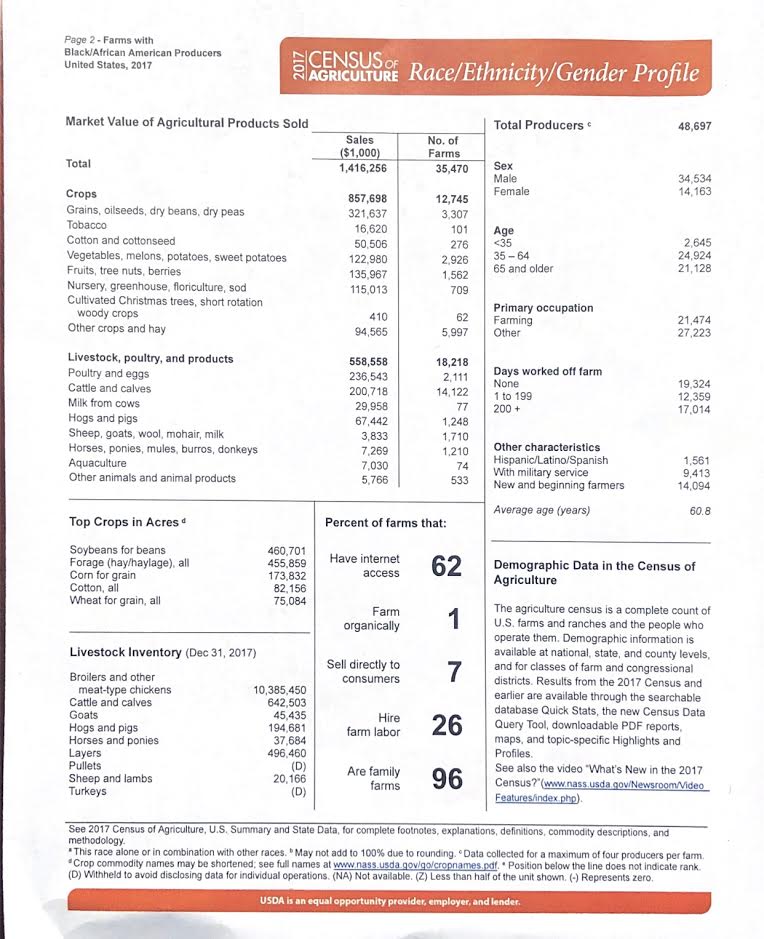
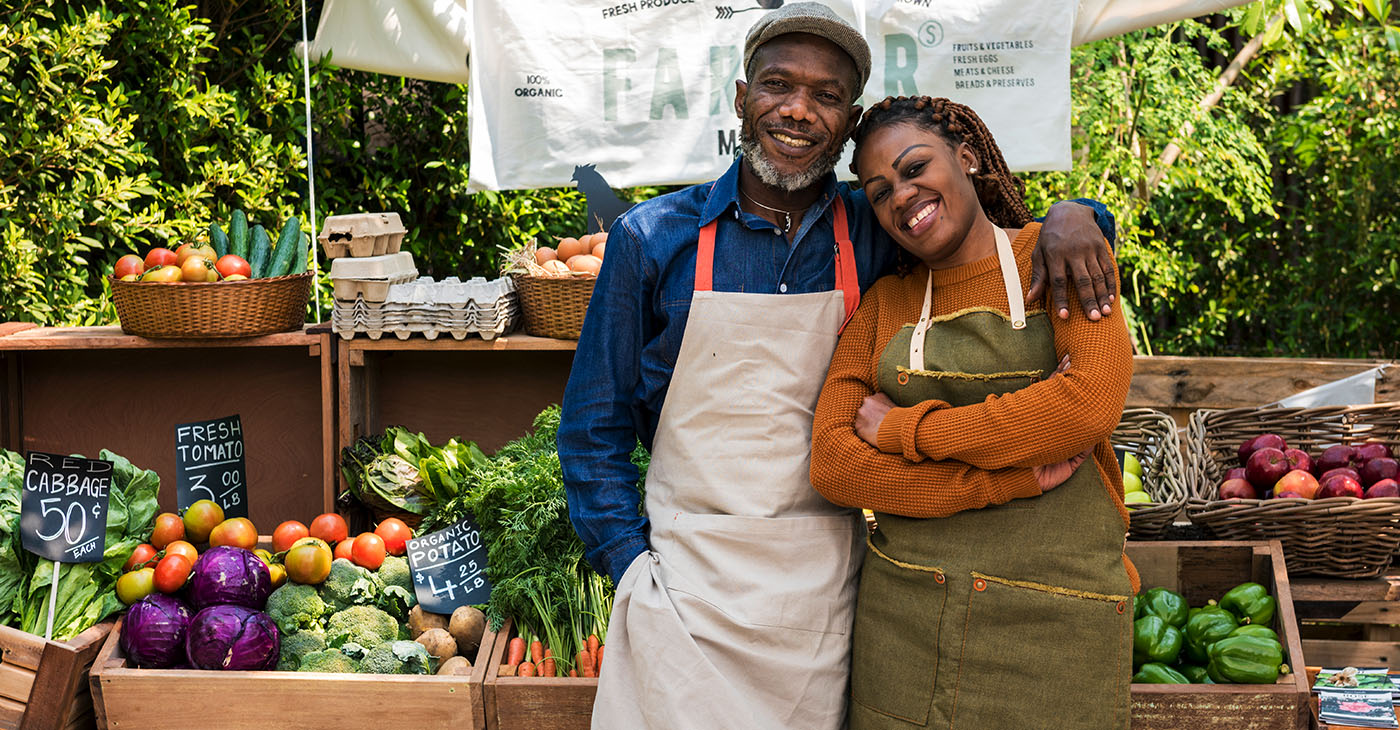
The state of African American farms continues to be a vital component to the African American economy, this despite investment and participation in it on a downward trend. We are highlighting key findings from the 2017 USDA Agriculture Census with 2012 comparison in parentheses where available.

Number of Farms: 35,470 (36,382)

Land in farms (acres): 4,673,140 (4,563,805)

Average size of farm (acres): 132 (125)

Market Value of products sold: $1,416,256,000 ($1,311,6332,000)

Market Value of crops sold: $857,698,000

Market value of livestock, poultry, & products: $558,558,000

Government payments: $58,807,000 (60,731,000)

Average Per Farm Receiving Payments: $7,108 ($5,509)

69 Percent of African American Farms are between 10-180 acres

4 Percent of African American Farms are over 500 acres

43 percent of African American farmers are over the age of 65

5 percent of African American farmers are under the age of 35


HBCU Money™ Presents: 2019’s HBCU Alumni NFL Players & Salaries

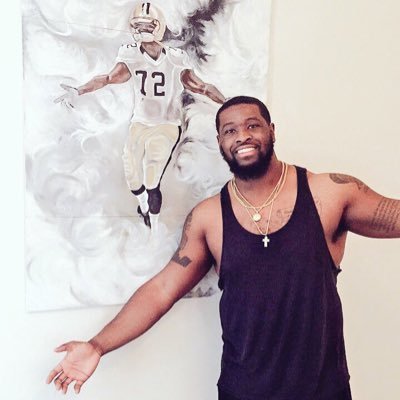
The 6th annual installment of tracking the earnings of HBCU alumni who are NFL players, the University of Arkansas-Pine Bluff’s Terron Armstead retains the crown with a $5.5 million raise over his 2018 salary.

HBCU Money™ FACTS:

  • HBCU NFL players combine for $43.6 million, an almost 13 percent increase from 2018, when HBCU NFL players earned $38.7 million.
  • South Carolina State University & North Carolina A&T are tied with 4 NFL players each.
  • The SWAC has 9 players versus the MEAC’s 12 players in the league.
  • Average salary for HBCU NFL players is $1.9 million, an increase of $100,000 from 2018.
  • Median salary for HBCU NFL players is $930,000.
  • HBCU players account for 1.4 percent of the NFL’s 32 team active roster spots.
  1. Terron Armstead /UAPB / $15.8 million
  2. Antoine Bethea / Howard / $3.625 million
  3. Chester Rogers / Grambling State / $3.095 million
  4. Joe Thomas / South Carolina State / $2.237 million
  5. Tytus Howard (R) / Alabama State / $2.223 million
  6. Javon Hargrave / South Carolina State / $2.198 million
  7. Rodney Gunter / Delaware State / $1.75 million
  8. Ryan Smith / North Carolina Central /$1.697 million
  9. Darius Leonard / South Carolina State / $1.647 million
  10. Isaiah Crowell / Alabama State / $1.25 million
  11. Antonio Hamilton / South Carolina State / $1 million
  12. Brandon Parker / North Carolina A&T / $930,758
  13. Tarik Cohen / North Carolina A&T / $803,914
  14. Grover Stewart / Albany State / $749.912
  15. Tony McRae / North Carolina A&T / $645,000
  16. KhaDarel Hodge / Prairie View A&M / $570,000 (Tied)
  17. Trent Scott / Grambling State / $570,000 (Tied)
  18. Darryl Johnson / North Carolina A&T / $519,522
  19. Joshua Miles / Morgan State / $513,664
  20. Trent Cannon / Virginia State / $511,096
  21. Danny Johnson / Southern / $510,862
  22. Jamie Gillan / UAPB / $498,333
  23. Da’Lance Turner / Alcorn State / $268,235

The 2017-2018 SWAC/MEAC Athletic Financial Review

In the third report over the past five years since HBCU Money first began reporting the SWAC/MEAC Athletic Financial Review, there have been losses of $130 million, then $147 million, this year they continue their trend of the athletic black hole of almost $151 million loss through athletics with no correction in sight. Almost unfathomable is that nine of the twenty-one schools* in the SWAC/MEAC have athletic budgets higher than their research budgets. It is disheartening at best that these two HBCU conferences can justify their member institutions athletic spending increasing at a faster rate than college inflation for tuition is in America.

If there is a canary in the coal mine, it is that the amount of subsidies put on the back of students this year overall, median, and average decreased for the first time, albeit by a negligible amount. But that canary is barely seen when no matter how you cut it, students are bearing the brunt of generating HBCU athletic revenues. This year’s review shows that approximately 70 percent of HBCU athletic revenues are generated through subsidies. Something to consider when 90 percent of HBCU students graduate with student loan debt.

REVENUES (in millions)

Total: $202.9 (up 7.1% from 2015-2016)

Median: $10.8 (up 6.1% from 2015-2016)

Average: $10.1  (up 6.8% from 2015-2016)

Highest revenue: Prairie View A&M University  $18.6 million

Lowest revenue: Coppin State University  $3.6 million

EXPENSES (in millions)

Total: $212.0 (up 9.2% from 2015-2016)

Median: $10.8 (up 7.1% from 2015-2016)

Average: $10.6 (up 9.3% from 2015-2016)

Highest expenses: Prairie View A&M University  $18.6 million

Lowest expenses: Mississippi Valley State University  $4.1 million

SUBSIDY

Total: $141.5 (unchanged from 2015-2016)

Median: $6.4 (down 18.4% from 2015-2016)

Average: $7.1 (unchanged from 2015-2016)

Highest subsidy: Prairie View A&M University $15.5 million

Lowest subsidy: Mississippi Valley State University $2.0 million

Highest % of revenues: Prairie View A&M University: 83.7%

Lowest % of revenues: Florida A&M University: 34.2%

PROFIT/LOSS (W/ SUBSIDY)

Total: $-9.1 million (down 97.9% from 2015-2016)

Median: $-26,890 (down 1,244.5% from 2015-2016)

Average: $-455,318 (down 97.9% from 2015-2016)

Highest profit/loss: North Carolina A&T State University  $573,062

Lowest profit/loss: South Carolina State University  $-3,560,974

PROFIT/LOSS (W/O SUBSIDY)

Total: $-150.7 million (down 2.4% from 2015-2016)

Median: $-7.0 million (up 10.0% from 2015-2016)

Average: $-7.5 million (down 1.8% from 2015-2016)

Highest profit/loss: Mississippi Valley State University  $-2,041,761

Lowest profit/loss: Prairie View A&M University  $-15,586,904

CONCLUSION: Older alumni’s desire for athletic glory without assessing the cost to obtain it is going to set younger alumni back decades from becoming contributing alumni – if they are ever able to. This shortsighted vision may have ripple effects far beyond the athletic realm. At current, it would take approximately a $3 billion endowment dedicated to athletics to ween the SWAC/MEAC off of these subsidies onto a sustainable path. Steph Curry’s adoption of Howard’s golf team is clearly a step in the right direction of trying to solve this puzzle without burdening students of today and tomorrow. In fact, the top 10 paid NBA players salary for 2019 is a combined $372 million or $160 million above what all of the SWAC/MEAC expenses are combined. Of course these players by no means can or should fund all of HBCU athletics, but it does show that if we can begin to think outside of the box about how to solve this crisis we must do so before it spirals beyond our reach.

Editor’s Note: Howard and Bethune-Cookman are excluded in this report because they are private institutions and their athletic finances were not included in this report or the 2015-2016 review.