“Wealth is created in ownership. If you don’t own, you’re always at someone else’s mercy.” – Robert F. Smith
June 2025’s record-shattering $10 billion sale of the Los Angeles Lakers to Guggenheim Partners chief Mark Walter confirmed what many already suspected: franchise values are rocketing into the financial stratosphere. Yet the deal also spotlighted a harsher truth. After nearly a half-century of hard-court brilliance and gridiron dominance, African Americans are still largely locked out of true ownership power. This article examines why—tracing the structural barriers that keep Black wealth on the playing field instead of in the owner’s suite, and outlining the institutional reforms needed to change the score.
From the Field to the Boardroom: Still a One-Way Street
African Americans make up roughly 70–75 percent of NBA players and about 60–65 percent of NFL rosters. In the WNBA, the share is even higher. Yet across 154 combined franchises in the NBA, NFL, MLB, and NHL:
Zero teams are majority-owned by African Americans in the NFL, MLB, or NHL.
Only one historic example (Robert L. Johnson’s Charlotte Bobcats/Hornets) and one recent example (Michael Jordan, 2010–2023) exist in the NBA.
Three forces keep that door shut:
Intergenerational-Wealth Deficit – Most Black athletes are first-generation millionaires, while many current owners are third- or fourth-generation billionaires.
Limited Collective Capital Vehicles – Black-controlled banks and investment firms are few and undercapitalized relative to mainstream counterparts.
Opaque League Gatekeeping – Franchise valuations above $4 billion and insider-driven vetting processes deter new entrants without deep networks.
The Robert L. Johnson Breakthrough—And the Mirage of Progress
On December 18, 2002, BET founder Robert L. Johnson secured the NBA’s Charlotte expansion franchise for $300 million, becoming the first African American majority owner of a modern U.S. pro team. The milestone was historic, but it proved fragile. Lacking a pipeline of Black institutional capital—no HBCU endowment co-investors, no African American businesses or firms operating as minority owners—Johnson operated alone. By 2010 he sold controlling interest to Michael Jordan, whose own 2023 exit returned the league to its status quo: African American talent on the court, minimal African American equity off it. Symbolic breakthroughs absent institutional follow-through do not create sustainable inclusion.
The LeBron Conundrum: Cultural Power Without Governance Leverage
Billion-dollar athlete-entrepreneur LeBron James epitomizes the new Black business titan—owning film studios, apparel lines, and minority stakes in Fenway Sports Group. Yet even LeBron, arguably the most financially astute athlete of his generation, cannot write a solo check for a majority share of an NBA or NFL team. Average franchise prices now exceed $4 billion in the NBA and $6.5 billion in the NFL.
LeBron’s estimated net worth, while staggering at $1.2 billion, pales in comparison to the financial firepower wielded by new Lakers controlling owner Mark Walter, who is worth an estimated $5.5 to $6 billion personally—and controls access to far greater institutional capital. As CEO of Guggenheim Partners, Walter leads a global financial firm with over $345 billion in assets under management (AUM), according to the firm’s own reporting.
That institutional reach gives Walter an unparalleled advantage: the ability to deploy capital at scale, with leverage, and over long time horizons. His 2012 acquisition of the Los Angeles Dodgers for $2 billion was just the beginning. Now, his control over the Lakers reflects how ownership is secured not by personal wealth alone—but by deep institutional infrastructure.
The gap is not merely one of celebrity or business acumen—it is one of capital architecture. LeBron’s wealth is largely rooted in earned income and venture-backed enterprises, while Walter’s access to Guggenheim’s multi-hundred-billion-dollar asset base enables him to execute major acquisitions swiftly and without co-investors.
Until African Americans gain collective control of similar institutional investment vehicles—through private equity firms, pension-managed funds, or bank-led syndicates—Black excellence in sports will continue to be celebrated on the court, but denied authority in the boardroom.
Building a Syndicate That Can Actually Write a Check
If African Americans are to move from the highlight reel to the cap table, the capital stack must shift from aspirational community pooling to institutional syndication—driven by organizations already designed to deploy large checks and assume complex risk. Pragmatism, not idealism, is the order of the day.
Capital Source
Asset Base
Realistic Deployment Rationale
Black-Owned Banks (18 nationwide)
$6.4 billion in assets
FDIC-insured balance sheets, access to low-cost deposits—including the growing wave of Fortune 500 “diversity deposits”—can underwrite debt facilities or pledge Tier 1 capital to a buyout fund.
Black Investment & Private-Equity Firms (e.g., Ariel, Vista, Fairview, RLJ)
$70–90 billion AUM (collectively)
Deep GP/LP relationships with public pensions and foundations; experienced at assembling $100–$500 million special-purpose vehicles (SPVs) around a single asset.
HBCU Endowments (102 institutions)
≈ $5 billion total
Ask for 0.5–1 percent commitments per school—$25–50 million system-wide—providing research access, internships, and brand equity rather than acting as anchors.
Athlete Sidecar Fund
Variable
Structure a managed feeder that lets players co-invest passively (no tithes or self-directing). Capital is professionally deployed—removing behavioral risk.
Corporate & Public Pensions
Trillions
Many plans reserve 5–10 percent for “emerging managers.” A Black-led sports-ownership PE fund fits this mandate.
1. Banks as Capital Bridges Black-owned banks can’t buy teams outright, but they can warehouse capital and extend critical financial infrastructure. By leveraging corporate “diversity deposits” and issuing credit facilities, they can become crucial intermediaries that keep transaction fees and governance influence in Black hands.
2. Investment Firms as Syndicate Architects Black-led PE firms already understand the terrain. By structuring a flagship $400–$600 million sports-focused fund, they can attract institutional LPs and scale their acquisitions from minority WNBA stakes to majority control in emerging or undervalued leagues.
3. HBCUs as Modest Strategic LPs HBCUs should not be burdened with anchoring such funds. Instead, they can contribute symbolic capital, student talent pipelines, and academic value. For example, a 1 percent commitment from Howard or Spelman tied to naming rights or internship guarantees would align mission with opportunity.
4. Athletes & African American Families as Co-Investors, Not Donors A feeder fund with low buy-ins and lock-up periods allows them to invest with institutional support. This protects them from high-risk self-management and ensures alignment with professional fund managers.
5. Execution Timeline
2026–2028: Assemble GP team, secure $150 million from banks and PE partners, with layered support from HBCUs and athlete and African American businesses co-investors.
2028–2032: Close a $500 million Fund I and acquire equity in two WNBA teams and a controlling NWSL stake bundled with real estate.
2032–2037: Launch Fund II at $1 billion, targeting a controlling interest in an MLS or NBA franchise.
2040: Own a major-league asset with governance representation from African American banks, investment firms, and HBCU partners—creating long-term cash flows and intergenerational wealth held by Black institutions.
Media Rights and the Power Gap
Owning teams is only half the battle. The NBA’s next domestic media deal could top $75 billion, and yet no Black-owned network will participate directly in those revenues. Streaming platforms, RSNs, data-analytics firms, and betting partnerships—all profit off Black athletic performance. Until African American institutions enter the media-rights supply chain, the revenue fountainhead remains out of reach.
Cultural Iconography, Financial Dispossession
Hip-hop tracks blare in arenas, sneaker culture drives merchandise sales, and social-media highlights fuel league engagement—but licensing profits flow to predominantly white ownership groups. Careers end; ownership dynasties do not. The average NFL tenure is 3.3 years; Robert Kraft has owned the Patriots for 31 years. Equity compounds; salaries evaporate.
From the Boardroom, Not the Ball Court: Where Owners Really Make Their Money
A glaring misconception is that sports fortunes begin with sports talent. In practice, franchise control stems from non-sports industries:
Owner
Team(s)
Primary Wealth Source
Steve Ballmer
LA Clippers
Microsoft stock
Stan Kroenke
Rams, Nuggets, Arsenal
Real estate / Walmart marital fortune
Robert Kraft
Patriots
Paper & packaging
Mark Cuban
Mavericks
Broadcast.com tech exit
Joe Tsai
Nets, Liberty
Alibaba IPO
Josh Harris
Commanders, 76ers
Apollo Global Mgmt. (private equity)
None earned money playing pro sports; all deployed patient, appreciating, often tax-advantaged capital to buy franchises. In contrast, athlete income is earned, highly taxed, and front-loaded. A $200 million NBA contract, after taxes, agents, and lifestyle inflation, seldom equals the liquidity needed for a $6 billion NFL acquisition.
African Americans dominate labor yet rely on labor income to pursue ownership—an uphill climb when the ownership class uses diversified portfolios, inheritance, and leverage. The gap is not just financial; it’s structural.
A Blueprint Forward
African American banks, PE firms, and institutional investors must build syndicates that mirror the strategies of the existing ownership class—while rooting the returns inside Black institutions.
2026–2030 – Launch a $500 million Fund I with contributions from banks, investment firms, HBCUs, and athletes.
2030–2035 – Acquire multiple minority and controlling stakes in undervalued leagues.
2035–2045 – Expand into media-rights, merchandising, and facilities ownership.
2045–2050 – Control a major-league asset and use it to empower future generations via scholarships, pensions, research grants, and equity reinvestment.
Owning the Game—or Owning What Funds the Game?
The persistent call for African American ownership in major league sports raises a deeper question: Should African Americans even prioritize owning sports franchises, when we remain almost entirely absent from the very industries—technology, finance, energy, real estate—that generate the wealth used to buy these teams in the first place?
Mark Walter didn’t become the Lakers’ majority owner through basketball. He did it through Guggenheim Partners—a financial firm managing $345 billion in assets. Steve Ballmer bought the Clippers not from years of courtside ambition, but from cashing out Microsoft stock. Owners dominate sports not because of athletic brilliance, but because they own pipelines, patents, trading desks, and land—the assets that make sports ownership a byproduct, not a goal.
For African Americans, the concern isn’t just that they don’t own the team. It’s that they don’t own the banks that financed the team, the media companies that broadcast the games, or the tech platforms monetizing fan engagement. It is a misallocation of focus to aim for the outcome—sports ownership—without first entering the industries that produce ownership-level capital.
There’s no harm in wanting a seat in the owner’s box. But the more strategic question is: why not aim to own the entire ecosystem? The scoreboard. The stadium real estate. The ticketing software. The AI that tracks player stats. The advertising networks.
Athletes made sports cool. Billionaires made sports profitable. African America must ask whether it wants symbolic entry into an elite club—or whether it wants to control the industries that fund the club.
The real power isn’t just in the arena. It’s in what surrounds it. And until African Americans own those arenas—of finance, data, infrastructure, and media—they will always be positioned to play the game, but not define it.
Final Whistle
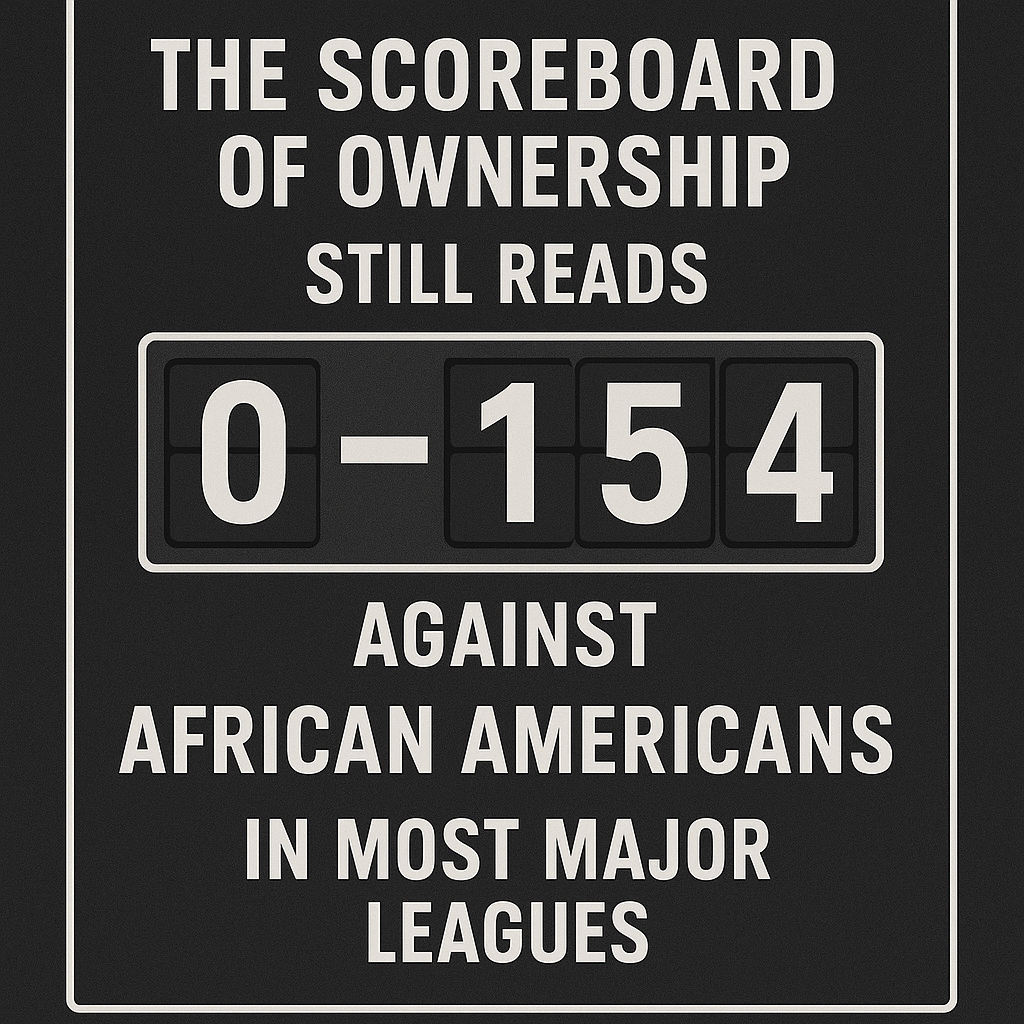
The scoreboard of ownership still reads 0-154 against African Americans in most major leagues. Talent fills highlight reels; equity fills trust funds. The route to flipping that score will not be paved by bigger contracts or more MVP trophies. It will be built through African American banks mobilizing capital, investment firms leading syndicates, and HBCU institutions gaining board seats—not just honorary jerseys.
Athletes have inspired generations. Now, institutions must finance generations.
The next dynasty to celebrate should not just hoist a trophy—it should hold a deed.
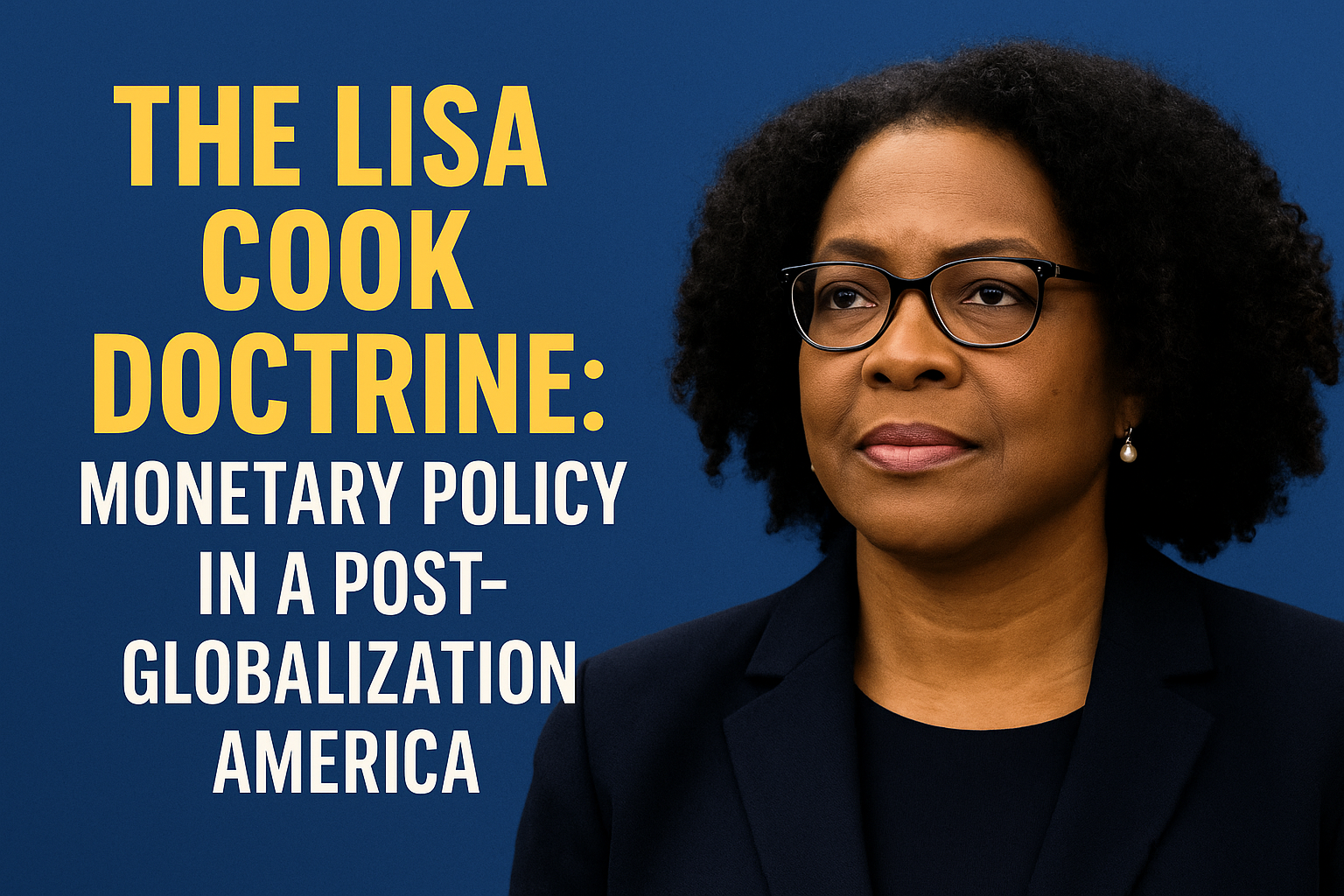
“Uncertainty is not an exception—it’s the economy’s new default. Our job isn’t to eliminate risk, but to build institutions resilient enough to thrive within it.” — Dr. Lisa D. Cook, Federal Reserve Governor& Spelman Alumna ’86
When Dr. Lisa D. Cook took the stage at the Council on Foreign Relations for the C. Peter McColough Series on International Economics, it was less a speech and more a declaration: the global economy is fragmenting, technology is compounding that fragmentation, and the Federal Reserve must remain nimble but principled in navigating this emerging disorder.
What makes Dr. Cook’s presence at the Federal Reserve so consequential is not simply her identity as the first African American woman to serve as a governor—though it is significant—but her lens. A lens forged not just through elite academic corridors, but one that dares to understand the edges of America’s economy—its marginalized labor markets, its precarious innovation system, and its uneven globalization. And if her remarks this week are any signal, Dr. Cook is actively shaping a monetary doctrine for this new epoch.
THE FEDERAL RESERVE AND ITS FRACTURED MANDATE
Dr. Cook reminded the audience that the Federal Reserve’s dual mandate—price stability and maximum employment—is being strained by new dynamics. Inflation, while down from pandemic-era peaks, remains stubbornly above target. Headline inflation is at 2.1 percent, core inflation at 2.5 percent—both still above the Fed’s 2 percent goal. On the employment side, job growth is steady, unemployment hovers at 4.2 percent, and labor force participation is not in freefall. But beneath these metrics lies disquiet.
That disquiet is coming from three fronts: trade protectionism, artificial intelligence, and long-term underinvestment in public innovation infrastructure.
In short, America’s economy is at a precipice—caught between inflation imported through tariffs and supply chain fragility, and deflationary pressures driven by automation and labor displacement.
Dr. Cook’s doctrine, it seems, is to hold the center.
TARIFFS: THE RETURN OF ECONOMIC NATIONALISM
Trade policy has re-entered the monetary discourse with a vengeance. For African American economists—and institutions like HBCUs that sit adjacent to both poor communities and international students from across the African diaspora—the discussion is no longer abstract. Dr. Cook underscored that tariffs, while politically popular, have a “nontrivial” inflationary effect.
Tariffs raise prices on imports, which businesses pass to consumers. But more importantly, they alter inflation expectations. And when inflation expectations become “unanchored,” monetary policy loses its credibility—and its traction.
This is not merely an economic concern, but a philosophical one. If the U.S. economy turns inward and abandons international trade cooperation, the financial consequences will not be equally shared. Institutions and people on the margins—like HBCUs, which rely on price-sensitive budgets and internationally sourced equipment—will be among the first to feel the tightening grip.
AI AND THE PRODUCTIVITY PARADOX
Artificial intelligence was one of the few bright spots in Dr. Cook’s analysis. While it introduces short-term labor displacement, it holds medium- to long-term potential for productivity gains, cost containment, and even inflation moderation.
Dr. Cook estimates productivity boosts from AI could range from 1 to 18 percent over the next decade. But this range, she admits, reflects the economic unknowns of the Fourth Industrial Revolution. For African American institutions, the message is twofold: AI will not wait for us to be ready, and without intentional investment in AI literacy and infrastructure, the economic benefits will bypass our communities entirely.
More than that, Dr. Cook emphasized the importance of how AI gets adopted. “It’s not job loss,” she clarified. “It’s task replacement.” The nuance matters. Black workers and businesses must advocate for job redesign, not job removal. This requires an active policy partnership between labor, government, and educational institutions.
HBCUs, with their historical ability to adapt curricula to new economic paradigms, have a window here. The time to build AI research centers, ethics think tanks, and public-private tech fellowships is not tomorrow—it is now.
UNCERTAINTY IS THE NEW NORMAL
Dr. Cook invoked former Fed Chair Ben Bernanke’s guidance: in times of heightened uncertainty, policymakers must plan for multiple scenarios. In Fed speak, this means optionality. In HBCU speak, this means resilience.
The Federal Reserve is not in a rate-cutting mood. Nor is it eager to hike. It is watching. And waiting. And watching some more. “The current stance is balanced,” Dr. Cook affirmed. “But that balance could shift in either direction.”
For HBCU leadership—especially those managing endowments, student financial aid disbursements, or capital investment strategies—this moment requires uncommon dexterity. Inflation could reaccelerate. Or the economy could cool into a stagflationary trap. The key is planning for a 2 percent interest world and a 6 percent one.
INNOVATION: TWENTY YEARS TO FRUITION
Perhaps the most poignant segment of Dr. Cook’s remarks came not from inflation or tariffs or AI—but from her reflections on innovation and time.
“It can take twenty years or more,” she noted, “from the time a student conceives an idea to the point it becomes a product on the market.”
That is a sobering timeline. And it is why public investment in basic research, early-stage science, and academic freedom matters so much. The ecosystem that birthed Silicon Valley started with small government grants, eccentric professors, and graduate students with uncertain job prospects.
For HBCUs, the lesson is urgent: waiting for federal investment in Black innovation ecosystems is no longer tenable. Institutions must pool their resources, coordinate R&D pipelines, and build their own version of the National Science Foundation if need be.
Tuskegee University had its agricultural labs. Howard had its medical research. North Carolina A&T and Prairie View have their engineering corridors. But the next phase of Black institutional development must consolidate these assets into a coordinated force, backed by investment funds, intellectual property banks, and patent commercialization arms.
THE GLOBAL BACKDROP: COORDINATION WITHOUT UNITY
On the global stage, Dr. Cook walked a careful line. She acknowledged that while central banks maintain regular dialogue—through G-7, G-20, OECD platforms—there is no grand consensus. Different countries have different mandates. The European Central Bank is laser-focused on inflation. The Bank of Japan must navigate currency volatility. The People’s Bank of China has geopolitical motives laced through its monetary calculus.
The Federal Reserve cannot outsource its decisions to global peers. But it can learn from them.
For African American policy circles and HBCU economics departments, this is a call to global literacy. We must teach our students to read the central bank minutes from Frankfurt, London, and Accra as readily as they read those from Washington.
INSTITUTIONAL IMPLICATIONS FOR HBCUs
What, then, should HBCU presidents, CFOs, and policy offices take from Dr. Cook’s remarks?
Protect Purchasing Power Inflation—especially if prolonged—can erode real endowment spending. HBCUs must explore inflation-hedged assets, indexed tuition strategies, and energy-efficient infrastructure.
Reimagine Labor Pipelines AI and global trade will redefine job descriptions. HBCUs must preemptively build training programs, certification pathways, and innovation hubs aligned with the labor market of 2030—not 2010.
Internalize Innovation If innovation takes 20 years, then we must stop relying on outside institutions to fund our intellectual property journey. We must build our own innovation endowments, grant programs, and incubators.
Globalize Strategically As America turns inward, HBCUs must look outward—toward African economies, Caribbean partnerships, and Latin American markets. Diversifying donor bases, research collaborations, and student recruitment internationally is no longer luxury. It is imperative.
Endowment Defense Against Rate Risk Whether rates rise or fall, HBCU financial managers must adopt more active duration management strategies and review fixed income allocations accordingly.
FINAL THOUGHT: THE JUDGMENT ECONOMY
Dr. Cook’s final words were a reminder that even in an era of algorithms and quantitative models, human judgment remains central.
The economy cannot be automated. And neither can policy. The strength of institutions, including the Federal Reserve, still rests on the character and clarity of its leaders.
For HBCUs and African American institutions broadly, Dr. Cook’s rise—and her vision—should be both inspiration and instruction. It is not enough to be present in the room. One must bring a philosophy. A framework. A doctrine.
The Lisa Cook Doctrine, if there is one, is clear: do not panic, do not stagnate, and never underestimate the power of intentional innovation guided by principled policy.
In an uncertain world, that kind of leadership is the rarest form of capital.
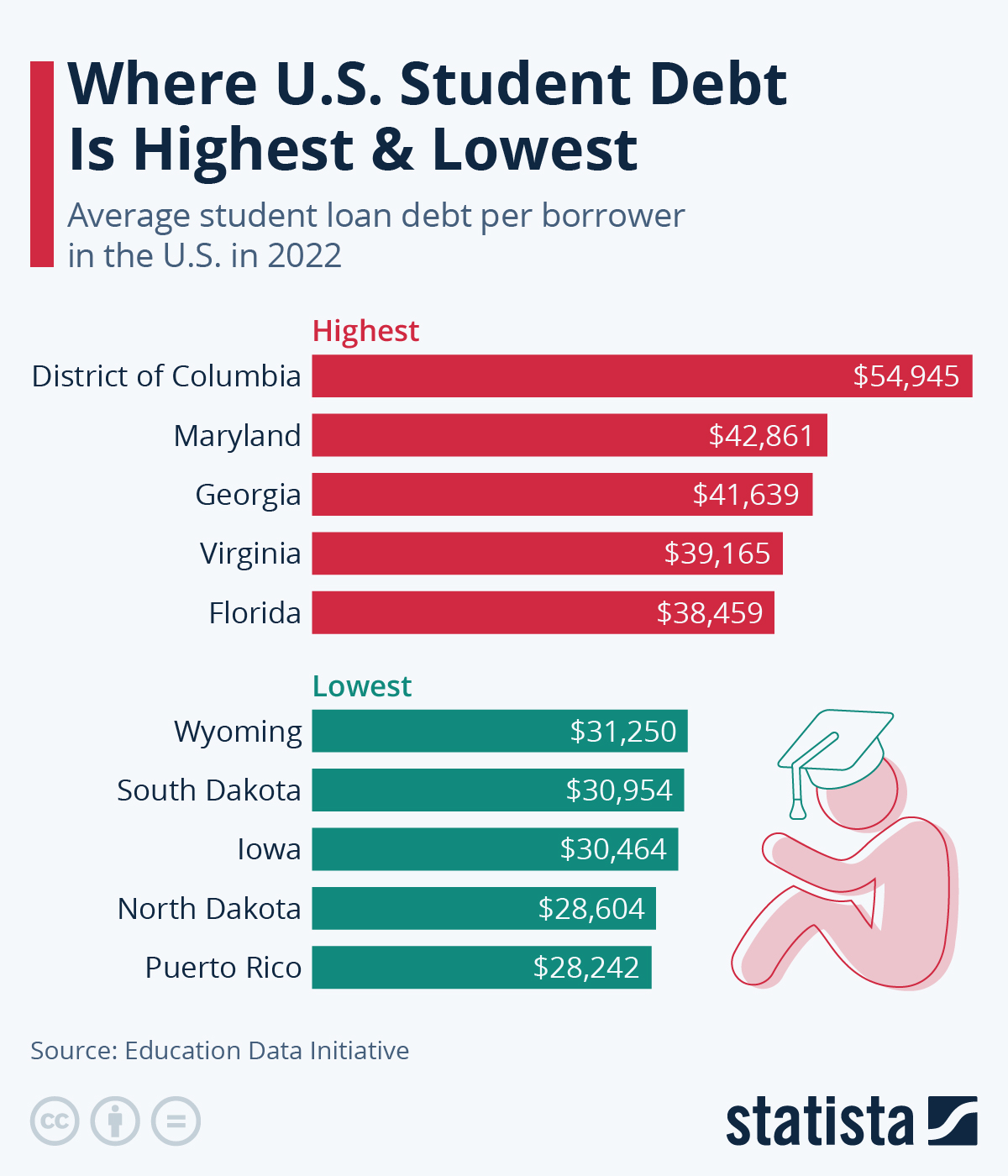
The most recent student loan data is an extremely hard gauge to use given its lag time. This data is the latest data available by ICAS, but also is pre-COVID and pre-George Floyd. The latter in that situation potentially produced a significant increase in student loan debt by students as many sought to help themselves and their families through financial aid refunds. COVID exposed African America’s acute financial fragility through poor health insurance, jobs with high exposure to COVID risk, and more. To the latter, in the post-George Floyd that also occurred where hundreds of millions poured into HBCU coffers led by MacKenzie Scott in levels never seen before and COVID relief funding through the CARES Act to colleges and universities witnessed HBCUs providing an immense amount of financial relief to its students to try and stem the debt tide.
HBCU graduates actually have some good news in that their median debt dropped approximately 8 percent from our last report while their PWI counterparts at major endowed institutions remained virtually unchanged. The bad news is that the percentage of HBCU graduates with debt remains unchanged while their PWI counterparts at major endowed institutions graduating with debt dropped almost 20 percent. This expands the gap of HBCU/PWI students graduating with debt from a previous 46 percentage points difference to now 52 percentage points in this latest report.
Numbers in parentheses shows the comparative results from the universities of the 30 largest endowments:
Median Total Debt of HBCU Graduates – $31,422 ($24,479)
Proportion of HBCU Graduates with debt – 85% (33%)
Median Private Debt of HBCU Graduates – $17,386 ($44,622)
Proportion of HBCU Graduates with private debt – 7% (5%)
Source: The Institute for College Access & Success
Looking at the numbers even further shows that HBCU Graduates debt is almost 30 percent higher than their PWI major endowed counterparts. This despite HBCUs being significantly cheaper, HBCU Graduates suffer from a student body that acutely comes from families that lack family assets and stability to assist. It is highlighted in the private debt component where PWI counterparts have significantly higher amounts of private debt. Potentially speaking to the borrowing power of those PWI families beyond federal financial aid.
It may be a few years before updated data from within the COVID era is available, but basic extrapolation suggest that even with the donations received after George Floyd and the CARES Act that HBCUs simply still lack the endowments to make up for the acute lack of African American household wealth combined with less than 10 percent of African Americans choosing HBCUs. The latter means that HBCUs operate with smaller alumni pools. These smaller pools means a smaller nominal giving of the alumni who do give and a significantly smaller probability that the HBCU can create a percentage of alumni who go onto become wealthy donors.
In the end, HBCU alumni who care about this must make available scholarship to a wider net of HBCU students while in school. Focusing on creating scholarship that is available to every student who is academically eligible and giving less emphasis to GPA. The large majority of any HBCU graduation class has GPAs between 2.0 and 3.0 and are the ones most likely to be left out of having any ability to decrease their student loan burdens making them almost never to be in a position to become donors.
By expanding eligibility requirements, scholarships can provide financial relief to those who need it most—students who are often balancing academics with work, family responsibilities, and other challenges. Many of these students demonstrate resilience, dedication, and a commitment to completing their education, yet traditional scholarship models disproportionately favor high achievers with GPAs above 3.5. While academic excellence should be celebrated, financial aid should not solely be reserved for the top percentage of students.
A broader approach to scholarships will help create a stronger alumni network in the long run, as more graduates will leave school with reduced debt, making them more likely to support their alma mater financially and contribute to future scholarship funds.
“Note: These data are based on colleges, universities, affiliated foundations, and related nonprofit organizations that volunteered to participate in NACUBO’s endowment study series.” – NACUBO
Howard University has finally done it. They have become the first HBCU to cross the $1 billion endowment mark. An indelible mark that is now the benchmark for potential to survive the coming admissions cliff that U.S. colleges and universities will face as demographics have acutely shifted from the number of students going to college and the number of colleges who will be able to withstand a downturn. HBCUs (like many smaller colleges and universities) are disproportionately reliant on tuition revenues and government funding to keep the doors open and lights on. The factors are a myriad from low African American wealth to limited investment models for their endowments. The latter being something of a chicken and egg situation whereby when you have less you are more conservative with your investment strategy, but this also leads to minimal returns. Without heavy alumni giving to ensure consistent endowment capital it is hard for HBCUs to take more investment risk.
The PWI-HBCU NACUBO Top 10 Endowment Gap for 2024 stands at $129.2 to $1, which is an increase from 2023’s $128.7 to $1.*
HIGHLIGHTS:
Top 10 HBCU Endowment Total – $2.6 billion*
Top 10 PWI Endowment Total – $336.0 billion
Number of PWIs Above $2 billion – 78
Number of PWIs Above $1 billion – 148
Number of HBCUs Above $1 billion – 1
Number of HBCUs Above $100 million – 8
669 colleges, universities, and education-related foundations completed NACUBO’s FY24 survey and those institutions hold $884.3 billion of endowment assets with an average endowment of $1.3 billion and median endowment of $244.4 million.
HBCUs comprised 1.5 percent of NACUBO’s reporting institutions and 0.3 percent of the reporting endowment assets.
PWI endowments (30) with endowments over $5 billion hold 58.5 percent of the $884.3 billion in endowment assets.
All values are in millions ($000)**
Previous year in parentheses for Endowment Value Per Full-Time Student
**The change in market value does NOT represent the rate of return for the institution’s investments. Rather, the change in the market value of an endowment from FY23 to FY24 reflects the net impact of: 1) withdrawals to fund institutional operations and capital expenses; 2) the payment of endowment management and investment fees; 3) additions from donor gifts and other contributions; and 4) investment gains or losses.
SOURCE: NACUBO
Take a look at how an endowment works. Not only scholarships to reduce the student debt burden but research, recruiting talented faculty & students, faculty salaries, and a host of other things can be paid for through a strong endowment. It ultimately is the lifeblood of a college or university to ensure its success generation after generation.
Negro banks, as a rule, have failed because the people, taught that their own pioneers in business cannot function in this sphere, withdrew their deposits. – Dr. Carter G. Woodson
What is an ecosystem? How do you develop an ecosystem? Can we develop an African American ecosystem? It seems to be a question that a room full of African American institutional leadership have little understanding of based on the institutional decisions that are continuously made. In their academic paper entitled Economic Ecosystems, Philip E. Auerswald and Lokesh M. Dani, “An ecosystem is defined as a dynamically stable network of interconnected firms and institutions within bounded geographical space. It is proposed that representing regional economic networks as ‘ecosystems’ provides analytical structure and depth to theories of the sources of regional advantage, the role of entrepreneurs in regional development, and the determinants of resilience in regional economic systems.” The most vital part of that definition being interconnected firms and institutions. African American institutions in general at every turn fail to understand this concept and HBCUs are no exception. This is especially true of HBCUs choice of banks and now Alabama State University’s recent decision to forego a plethora of African American Owned Investment and Asset Management firms and hand $125 million to another European American owned investment firm. African American capital once again reinforcing European America’s financial ecosystem – not ours.
It is almost a redundant story at this point. African American institutions all operating on their own island and failing to interconnect and intertwine with each other. African America from individual to institutions all do what is best for themselves individually and not what is best for the collective and certainly not what connects and strengthens the collective. See Hampton University and North Carolina A&T State University decisions to leave an HBCU conference for a PWI one. To that vein is why over 90 percent of African America’s $100 billion in annual tuition revenue goes into PWIs and not HBCUs/PBIs. HBCUs provide very little means of an example for the community to follow. Instead, HBCUs are a glaring headlight of just how poorly African American institutions perform in strategically integrating themselves within the African American ecosystem, especially economically. There are no reports on HBCUs engagement with the African American private sector because HBCUs do not seemingly see that as important. How many of HBCU graduates work for African American owned companies? How much HBCU athletic sponsorship dollars come from African American owned companies/partnerships? How much of the HBCU endowment is invested in African American firms? These are basic questions that any leadership of an HBCU should be able to answer. Unfortunately as Jarrett Carter, Sr., founder of HBCU Digest, once eloquently put it, “Many HBCUs are just trying to be PWI-adjacent.”
Is $125 million a lot of money? Context matters. To any individual, most would agree $125 million is significant. To institutions, it varies on size, scope, and goals. For African American Financial Institutions, almost down to even the largest of our firms having an $125 million account would see their bottom line acutely move. Providing perspective on the landscape, Pension and Investments reports, “The global asset management industry showed some signs of recovery in 2023, with total assets under management (AUM) rising 12% year-over-year to nearly $120 trillion, according to research by Boston Consulting Group.” For African American Asset Managers, “The largest Black-owned asset managers are responsible for more than $253 billion in assets, according to FIN Searches data. Vista Equity Partners is the largest Black-owned firm in the industry, with the private equity manager handling $103.8 billion in assets.” African American Owned Asset Managers only account for 0.2 percent of the global AUM. By contrast, the Top 10 non-Black asset managers have $22 trillion assets under management which accounts for almost 20 percent of global AUM.
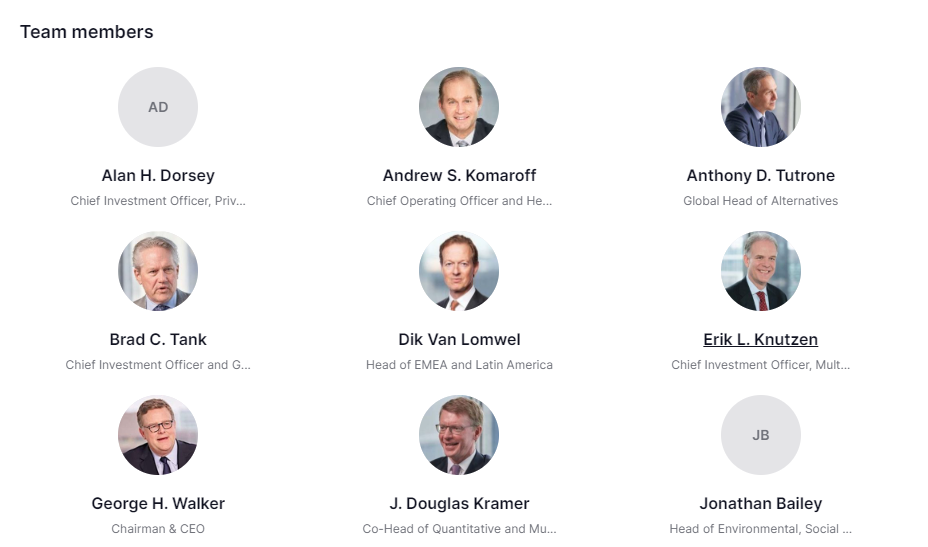
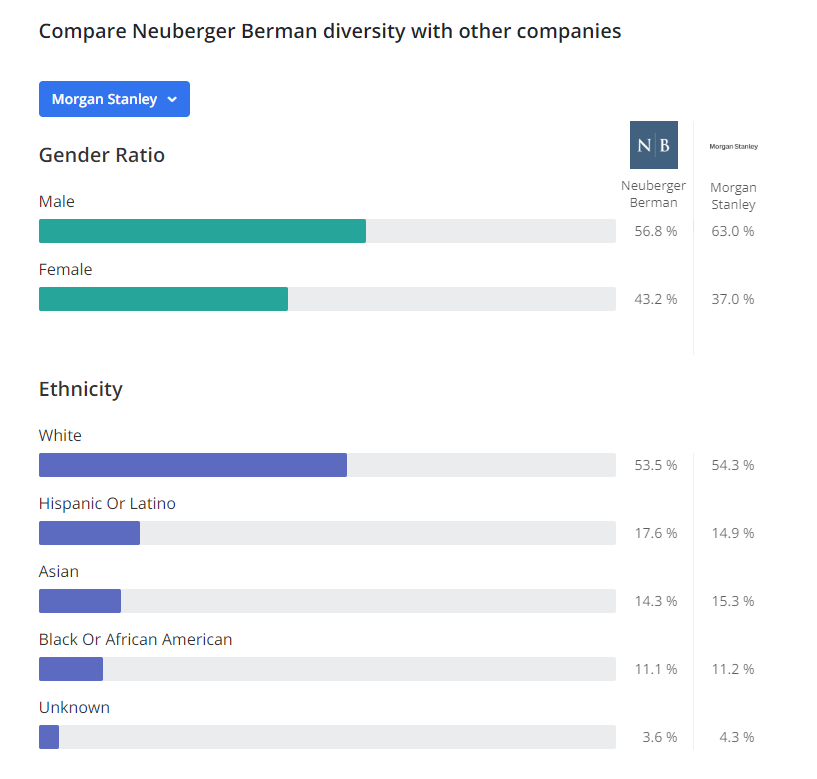
The asset management firm that Alabama State University chose according to World Benchmarking Alliance, “Neuberger Berman is a private employee-owned investment management firm (leadership pictured above) headquartered in New York, USA. It was founded in 1939 and has offices in 39 cities across 26 countries. The firm manages equities, fixed income, private equity and hedge fund portfolios for global institutional investors, advisors and high-net-worth individuals. It managed USD 460 billion of assets (under management) in 2021 and employed 2,647 staff in 2022.” This means that Alabama State University’s $125 million is equal to 0.02 percent of assets under management for Neuberger Berman. A drop in the bucket. The entirety of assets at African American Owned Asset Management firms is only 55 percent of Neuberger Berman assets under management. Alabama State University’s $125 million would have lifted the ENTIRE African American Owned Asset Management’s AUM by 0.05 percent. A move that would have strengthened the African American economic and financial ecosystem.
African America as a community talks about the circulation of the dollar or our lack thereof constantly, but what is virtually never talked about is the circulation of the African American institutional dollar being the largest part of that conversation. It is a fairly accepted statistic that the African American dollar does not stay in the African American community for a day, while other communities see their dollar stay in their communities for weeks and in the case of the Asian American community for almost a month. We often think of the circulation of our dollar like everything else, on an island or as an individual. An individual going and buying food from even an expensive African American owned restaurant is $100-200, but an HBCU building a new building means the opportunity for a new loan worth tens of millions for an African American owned bank, it means tens of millions for an African American owned construction company, so on and so forth. Instead, Bethune-Cookman University borrows from a notorious predatory lender to the African American community in Wells Fargo and almost finds itself losing those buildings due to foreclosure.
HBCU alumni know little about the state of finances or the movement of the money at their alma maters. HBCU administrators either willfully withholding the information or inept themselves of the importance of the information and providing it. Both are problematic. The notion that HBCUs cannot find African American investment firms is a painful thought knowing that a Google search would bring up the HBCU Money African American Owned Bank Directory at the very least. The likelihood is more in line with what Mr. Carter said in that a good deal of HBCU leadership simply wants to be like their PWI counterparts is far more likely. This would explain the debacle “donation” accepted by Florida A&M University’s president recently where a simple Google search would have avoided such embarrassment. Instead, Alabama State University’s Neuberger Berman relationship and a plethora of others instances (a decade ago when we reported “Spelman College & Regions Bank – A Failure To Disclose”) is that likely they are simply mimicking PWI actions and unwittingly reinforcing the PWI/European American ecosystem to say the least. Unfortunately, that mimicking reinforces another community’s economic and financial ecosystems not ours and why you may never see OneUnited Field at any HBCU’s athletic facility. Because we are holding out for J.P. Morgan, Bank of America, or Wells Fargo to show us the same love they show PWIs. Not acknowledging those are not our community’s banks.
If HBCUs are simply going to behave as PWI-adjacent institutions, then it is hard to argue with why over 90 percent of African Americans who go to college are not choosing HBCUs. For many it becomes a question of why get a knockoff when they can get the real thing. After all their ice is colder. HBCUs, HBCU alumni associations, and HBCU support organizations as a whole are not making decisions related to African American institutions ecosystem’s interests and interconnectivity and that is most glaring in the poor institutional decisions we are making in regards to our institutional finances and endowments.


 HBCU Money