“Note: These data are based on colleges, universities, affiliated foundations, and related nonprofit organizations that volunteered to participate in NACUBO’s endowment study series.” – NACUBO
Howard University has finally done it. They have become the first HBCU to cross the $1 billion endowment mark. An indelible mark that is now the benchmark for potential to survive the coming admissions cliff that U.S. colleges and universities will face as demographics have acutely shifted from the number of students going to college and the number of colleges who will be able to withstand a downturn. HBCUs (like many smaller colleges and universities) are disproportionately reliant on tuition revenues and government funding to keep the doors open and lights on. The factors are a myriad from low African American wealth to limited investment models for their endowments. The latter being something of a chicken and egg situation whereby when you have less you are more conservative with your investment strategy, but this also leads to minimal returns. Without heavy alumni giving to ensure consistent endowment capital it is hard for HBCUs to take more investment risk.
The PWI-HBCU NACUBO Top 10 Endowment Gap for 2024 stands at $129.2 to $1, which is an increase from 2023’s $128.7 to $1.*
HIGHLIGHTS:
Top 10 HBCU Endowment Total – $2.6 billion*
Top 10 PWI Endowment Total – $336.0 billion
Number of PWIs Above $2 billion – 78
Number of PWIs Above $1 billion – 148
Number of HBCUs Above $1 billion – 1
Number of HBCUs Above $100 million – 8
669 colleges, universities, and education-related foundations completed NACUBO’s FY24 survey and those institutions hold $884.3 billion of endowment assets with an average endowment of $1.3 billion and median endowment of $244.4 million.
HBCUs comprised 1.5 percent of NACUBO’s reporting institutions and 0.3 percent of the reporting endowment assets.
PWI endowments (30) with endowments over $5 billion hold 58.5 percent of the $884.3 billion in endowment assets.
All values are in millions ($000)**
Previous year in parentheses for Endowment Value Per Full-Time Student
**The change in market value does NOT represent the rate of return for the institution’s investments. Rather, the change in the market value of an endowment from FY23 to FY24 reflects the net impact of: 1) withdrawals to fund institutional operations and capital expenses; 2) the payment of endowment management and investment fees; 3) additions from donor gifts and other contributions; and 4) investment gains or losses.
SOURCE: NACUBO
Take a look at how an endowment works. Not only scholarships to reduce the student debt burden but research, recruiting talented faculty & students, faculty salaries, and a host of other things can be paid for through a strong endowment. It ultimately is the lifeblood of a college or university to ensure its success generation after generation.
Negro banks, as a rule, have failed because the people, taught that their own pioneers in business cannot function in this sphere, withdrew their deposits. – Dr. Carter G. Woodson
What is an ecosystem? How do you develop an ecosystem? Can we develop an African American ecosystem? It seems to be a question that a room full of African American institutional leadership have little understanding of based on the institutional decisions that are continuously made. In their academic paper entitled Economic Ecosystems, Philip E. Auerswald and Lokesh M. Dani, “An ecosystem is defined as a dynamically stable network of interconnected firms and institutions within bounded geographical space. It is proposed that representing regional economic networks as ‘ecosystems’ provides analytical structure and depth to theories of the sources of regional advantage, the role of entrepreneurs in regional development, and the determinants of resilience in regional economic systems.” The most vital part of that definition being interconnected firms and institutions. African American institutions in general at every turn fail to understand this concept and HBCUs are no exception. This is especially true of HBCUs choice of banks and now Alabama State University’s recent decision to forego a plethora of African American Owned Investment and Asset Management firms and hand $125 million to another European American owned investment firm. African American capital once again reinforcing European America’s financial ecosystem – not ours.
It is almost a redundant story at this point. African American institutions all operating on their own island and failing to interconnect and intertwine with each other. African America from individual to institutions all do what is best for themselves individually and not what is best for the collective and certainly not what connects and strengthens the collective. See Hampton University and North Carolina A&T State University decisions to leave an HBCU conference for a PWI one. To that vein is why over 90 percent of African America’s $100 billion in annual tuition revenue goes into PWIs and not HBCUs/PBIs. HBCUs provide very little means of an example for the community to follow. Instead, HBCUs are a glaring headlight of just how poorly African American institutions perform in strategically integrating themselves within the African American ecosystem, especially economically. There are no reports on HBCUs engagement with the African American private sector because HBCUs do not seemingly see that as important. How many of HBCU graduates work for African American owned companies? How much HBCU athletic sponsorship dollars come from African American owned companies/partnerships? How much of the HBCU endowment is invested in African American firms? These are basic questions that any leadership of an HBCU should be able to answer. Unfortunately as Jarrett Carter, Sr., founder of HBCU Digest, once eloquently put it, “Many HBCUs are just trying to be PWI-adjacent.”
Is $125 million a lot of money? Context matters. To any individual, most would agree $125 million is significant. To institutions, it varies on size, scope, and goals. For African American Financial Institutions, almost down to even the largest of our firms having an $125 million account would see their bottom line acutely move. Providing perspective on the landscape, Pension and Investments reports, “The global asset management industry showed some signs of recovery in 2023, with total assets under management (AUM) rising 12% year-over-year to nearly $120 trillion, according to research by Boston Consulting Group.” For African American Asset Managers, “The largest Black-owned asset managers are responsible for more than $253 billion in assets, according to FIN Searches data. Vista Equity Partners is the largest Black-owned firm in the industry, with the private equity manager handling $103.8 billion in assets.” African American Owned Asset Managers only account for 0.2 percent of the global AUM. By contrast, the Top 10 non-Black asset managers have $22 trillion assets under management which accounts for almost 20 percent of global AUM.
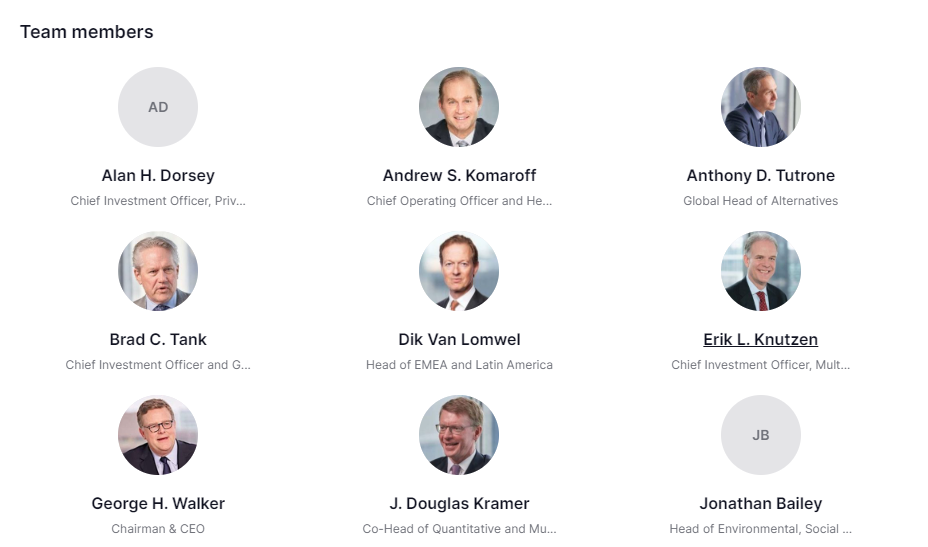
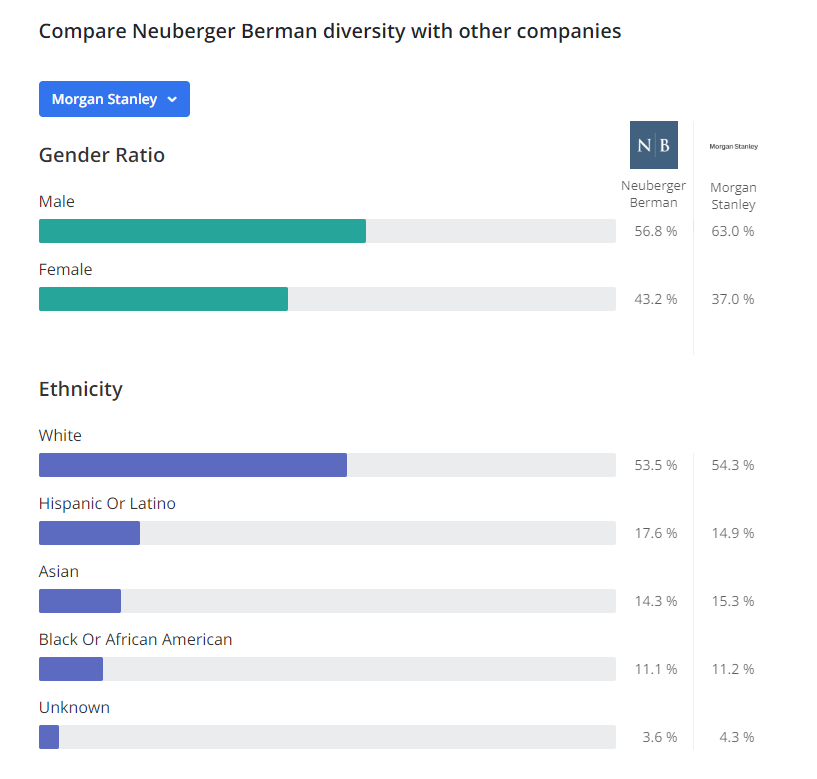
The asset management firm that Alabama State University chose according to World Benchmarking Alliance, “Neuberger Berman is a private employee-owned investment management firm (leadership pictured above) headquartered in New York, USA. It was founded in 1939 and has offices in 39 cities across 26 countries. The firm manages equities, fixed income, private equity and hedge fund portfolios for global institutional investors, advisors and high-net-worth individuals. It managed USD 460 billion of assets (under management) in 2021 and employed 2,647 staff in 2022.” This means that Alabama State University’s $125 million is equal to 0.02 percent of assets under management for Neuberger Berman. A drop in the bucket. The entirety of assets at African American Owned Asset Management firms is only 55 percent of Neuberger Berman assets under management. Alabama State University’s $125 million would have lifted the ENTIRE African American Owned Asset Management’s AUM by 0.05 percent. A move that would have strengthened the African American economic and financial ecosystem.
African America as a community talks about the circulation of the dollar or our lack thereof constantly, but what is virtually never talked about is the circulation of the African American institutional dollar being the largest part of that conversation. It is a fairly accepted statistic that the African American dollar does not stay in the African American community for a day, while other communities see their dollar stay in their communities for weeks and in the case of the Asian American community for almost a month. We often think of the circulation of our dollar like everything else, on an island or as an individual. An individual going and buying food from even an expensive African American owned restaurant is $100-200, but an HBCU building a new building means the opportunity for a new loan worth tens of millions for an African American owned bank, it means tens of millions for an African American owned construction company, so on and so forth. Instead, Bethune-Cookman University borrows from a notorious predatory lender to the African American community in Wells Fargo and almost finds itself losing those buildings due to foreclosure.
HBCU alumni know little about the state of finances or the movement of the money at their alma maters. HBCU administrators either willfully withholding the information or inept themselves of the importance of the information and providing it. Both are problematic. The notion that HBCUs cannot find African American investment firms is a painful thought knowing that a Google search would bring up the HBCU Money African American Owned Bank Directory at the very least. The likelihood is more in line with what Mr. Carter said in that a good deal of HBCU leadership simply wants to be like their PWI counterparts is far more likely. This would explain the debacle “donation” accepted by Florida A&M University’s president recently where a simple Google search would have avoided such embarrassment. Instead, Alabama State University’s Neuberger Berman relationship and a plethora of others instances (a decade ago when we reported “Spelman College & Regions Bank – A Failure To Disclose”) is that likely they are simply mimicking PWI actions and unwittingly reinforcing the PWI/European American ecosystem to say the least. Unfortunately, that mimicking reinforces another community’s economic and financial ecosystems not ours and why you may never see OneUnited Field at any HBCU’s athletic facility. Because we are holding out for J.P. Morgan, Bank of America, or Wells Fargo to show us the same love they show PWIs. Not acknowledging those are not our community’s banks.
If HBCUs are simply going to behave as PWI-adjacent institutions, then it is hard to argue with why over 90 percent of African Americans who go to college are not choosing HBCUs. For many it becomes a question of why get a knockoff when they can get the real thing. After all their ice is colder. HBCUs, HBCU alumni associations, and HBCU support organizations as a whole are not making decisions related to African American institutions ecosystem’s interests and interconnectivity and that is most glaring in the poor institutional decisions we are making in regards to our institutional finances and endowments.
How long have you been in real estate investment? 6 years
What has been the most exciting and/or fearful moment during your HBCUpreneur career? The moment I decided to leave my full time job as a senior physical therapist at a top tier hospital and become a full time entrepreneur and manifest my destiny!
What made you want to start real estate investing? I wanted to create wealth and have the freedom with my time to spend it how I wanted.
How do you handle complex problems? I simplify them to the basics on what is necessary to complete first then move to the least and unimpactful item last.
Who was the most influential person/people for you during your time in college? My professors, they were always encouraging and talked real life aspects to prepare me for the real world outside of school.
What is something you wish you had known prior to your first real estate investment? That I should have started investing in real estate ever since I was working and living at home with my mother after I graduated. I didn’t have to have all the pieces in place before I started.
Would you advise someone to buy a primary home or investment property first? I would advise them to do both. A primary home can be utilized to be your investment property, can house hack with a duplex or a single family home large enough to rent out rooms if you desired. Or purchase a primary home that allows you to save for down payment to another investment property or home to move into and rent your current one out.
What is one current trend in real estate investing, and how can investors take advantage of it? The updated fannie mae conventional loan to buy a multi-family (2-4 door unit), allows 5% down payment. Before it required 20-25% down payment, that is why all opted for FHA 3.5% down payment, now you can scale to more properties as a primary residence without having to refinance out of FHA loan every year or so.
Artificial Intelligence is everywhere and its presence in real estate is certainly likely to grow like everywhere else. How do you see it impacting real estate investing in particular? I would want it to underwrite a deal for me quick and fast or I upload a video of the house and it tells me all the repairs needed and estimated costs, that would be cool.
Do you see any potential headwinds that maybe facing real estate investors in the near future? No, true investors learn to adapt in any environment and any obstacle. As long as your mind is right, you will persevere.
Is there anything you read or follow in order to stay an informed real estate investor? I listen to podcasts all on the real estate subject, I take webinars and active at different networking events.
How do you believe HBCUs can help spur more aptitude for understanding real estate investment while their students are in school either as undergraduate or graduate students? I would say to offer more financial literacy courses, help students to understand you can make money but if you are not smart with those decisions Uncle Sam and bad habits will leave you with nothing. Also, to understand all the different taxes that come out of paycheck, it helps to offset extra money with an llc.
How do you deal with rejection? I smile and say thank you for your time.
When you have down time how do you like to spend it? I spend it being harassed by my kids and/or watching movies.
What was your most memorable HBCU memory? I met my husband at a local nightclub in Tallahassee. He was also at FAMU grad school, different major than me.
Lastly, is there any advice you have for budding HBCUpreneurs in real estate? Discipline leads to habits, habits lead to consistency, consistency leads to growth. Changing your mindset will open more doors for you!
“Note: These data are based on colleges, universities, affiliated foundations, and related nonprofit organizations that volunteered to participate in NACUBO’s endowment study series.” – NACUBO
With a looming enrollment crisis for all America’s colleges and universities, we are at a time where endowments are not only going to matter more they are going to matter the most. The building of endowments, cutting of some overweight athletic expenses that allow you to invest more, aggressive fundraising efforts, joint investing with other HBCUs, everything should be on the table. This is an arms race for survival. We have been at alert level red for awhile but apparently the sound of the siren has been broken. Now it is fixed and it is blaring. HBCU endowments are a key and integral component to African American wealth building both individually and institutionally. Their importance to African America’s economic survivability, sustainability, and empowerment cannot be overstated enough. That HBCU endowments continue to be that is a matter of conversation about who at HBCUs should be benefitting and prioritized most by our endowments.
HBCU endowment analysis from 2023 will not reflect that Spelman College kicked off 2024 with HBCUs largest ever donation and the first ever nine figure donation with its $100 million donation from Ronda Stryker and William Johnston. We will see how much of the $100 million makes it into Spelman’s actual endowment coffers this time next year, but even without it Spelman leads all HBCUs in NACUBO’s new category of endowment value per full-time equivalent (FTE) student with $197,713 per Spelmanite versus Florida A&M University’s worrisome $6,044 endowment value per full-time equivalent student. This arguably is a more accurate of how healthy a college or university’s endowment is performing to some degree which we covered in ‘Without Hyperactive Alumni, HBCUs Will Bear The Brunt Of The Building Tsunami Of College Closures And The End Of Their Blackness’. Only Spelman College and Meharry Medical College have endowment value per FTE above $100,000. The national average is $174,499 among all college and universities and median is $47,287. HBCUs reporting have an average of $63,861 and median of $19,256.
On the good news from 2023 is Morgan State University and Virginia State University breaking into the $100 million endowment club as only the ninth and tenth HBCUs to do so. It is assumed that Tuskegee University (not reported) based on their FY 2018 Fact Book also has an endowment above $100 million. This means that roughly 10 percent of the remaining HBCUs have endowments above $100 million. Unfortunately, the gap between that group and those below is staggering with there being questions of a larger percentage of HBCUs potentially having no endowment as a possibility. Lastly, unless Spelman comes through with another jaw-dropping donation (it is certainly possible), then at some point in 2024 Howard University’s endowment will cross the $1 billion mark making it the first HBCU to do so.
The PWI-HBCU NACUBO Top 10 Endowment Gap for 2023 stands at $128.7 to $1, which is an increase from 2022’s $127.5 to $1.*
HIGHLIGHTS:
Top 10 HBCU Endowment Total – $2.2 billion
Top 10 PWI Endowment Total – $321.6 billion
Number of PWIs Above $2 billion – 74
Number of PWIs Above $1 billion – 139
Number of HBCUs Above $1 billion – 0
Number of HBCUs Above $100 million – 9
688 colleges, universities, and education-related foundations completed NACUBO’s FY23 survey and those institutions hold $839 billion of endowment assets with an average endowment of $1.2 billion and median endowment of $209.1 million.
HBCUs comprised 1.4 percent of NACUBO’s reporting institutions and 0.3 percent of the reporting endowment assets.
PWI endowments (30) with endowments over $5 billion hold 58 percent of the $839 billion in endowment assets.
*Due to Hampton University and Morehouse College not participating this year significantly altered the Top 10 HBCUs endowment combined total. Therefore, HBCU Money took the editorial liberty of calculating the PWI-HBCU endowment gap based on 2022’s HBCU endowment total of $2.5 billion.
**The change in market value does NOT represent the rate of return for the institution’s investments. Rather, the change in the market value of an endowment from FY21 to FY22 reflects the net impact of: 1) withdrawals to fund institutional operations and capital expenses; 2) the payment of endowment management and investment fees; 3) additions from donor gifts and other contributions; and 4) investment gains or losses.
SOURCE: NACUBO
Take a look at how an endowment works. Not only scholarships to reduce the student debt burden but research, recruiting talented faculty & students, faculty salaries, and a host of other things can be paid for through a strong endowment. It ultimately is the lifeblood of a college or university to ensure its success generation after generation.
“95 percent of colleges are tuition driven.” – Robert Franek, The Princeton Review
HBCU alumni and their alumni associations need to demand immediately to see the financials of their HBCU – this is of course assuming their alumni associations house is in order but that is another article for another day. At public HBCUs this is bit easier because of them being a state institution, but private and especially religious-based private HBCUs that effort can prove to be a lot more complicated. However, you do not need to wait until you see fire to call the fire department if you already smell smoke. The fire is there you just cannot see it yet. This is the harsh reality for America’s college business model and this should be the terrifying reality for HBCUs. Far too many colleges in America have unsustainable businesses models and nothing highlights how glaringly broken the model is like their acute reliance on tuition revenue and paltry or nonexistent endowment revenue.
How did we get here? For HBCUs this issue started at desegregation when well over 90 percent of college bound African Americans would matriculate through HBCUs. The Civil Rights Movement fundamentally changed that and struck a death by a thousand cuts to not only HBCUs, but African American owned and operated institutions in general over the past 50 years. We all know the saying about “their ice is colder” so and so forth. African American neighborhoods slowly collapsed, African American owned and operated hospitals have gone from 500 to 1, African American owned banks were at over 50 just 25 years ago now are at 16 – and falling, African American boarding schools once a mighty 100 now only have 4 remaining. HBCUs have not been spared either with the closures of St. Paul’s College, Knoxville College, Bishop College, and Lewis College of Business being the most recent closures over the past thirty plus years.
The reality of what started then for HBCUs saw its fuse lit for PWIs in 2008 amidst the Great Recession when the world economy and capitalism as we know it almost collapsed. As most of African America/HBCUs know, when European America/PWIs catch cold, we catch pneumonia, COVID, Spanish Flu, all while having no insurance or African American doctors. The Great Recession’s effects were many, but perhaps its greatest impact is that many families moving forward simply have chosen to opt out of having children. In the years following, America’s peak high school graduation class is set to graduate in 2025 (see chart below) and forecast of graduating classes thereafter begins a precipitous decline. This poses an extremely bleak outlook for African America whose 2024-2025 and 2025-2026 classes are nominally equal to the African American graduating classes of 2009-2010 and 2010-2011 where in all four graduation years the number of graduates was north of 470,000. The stark difference is that it has taken 15 years to recover to that nominal number all while the percentage of African Americans graduating peaked in 2009-2010 and 2010-2011 when African American high school graduates accounted for 15 percent of American high school graduates. Since 2010-2011, percentages have been declining and will struggle to reach 14 percent of American high school graduates in 2024-2025 and 2025-2026.
In contrast, the two groups who are seeing the most precipitous increase are Hispanic America and Asian America, both who by 2025-2026 will have seen their percentages increase for 27 years without interruption. It poses the question and conversation of whether or not HBCUs can remain predominantly African American for another day, but that day is sooner than later especially given that HBCUs only get roughly 10-12 percent of the college bound African Americans that graduate from high school. USA Today reports, “Yet while 67% of white high school graduates went directly to college in 2020, the most recent year for which the figure is available, 54% of Black high school graduates did, the National Center for Education Statistics reports. That’s down from 66% in 2010.” Needless to say African American education from Early Childhood Education through Graduate School simply does not appear to be trending in any positive direction. Taking 54 percent of approximately 470,000 leaves us with around 254,000 college bound African Americans for HBCUs and based on the 10-12 percent we recruit it means that only 25,000 are likely to find their way to the 100 HBCUs or 2,500 per school. The math as they say is not going to math if this holds true, especially given the reliance on tuition revenue.
According to Appily, “In the United States alone, there are more than 6,500 postsecondary Title IV institutions. Of these institutions, 2,189 of them are Title IV non-degree-granting. The rest are degree-granting, with 1,485 being 2-year colleges and 2,828 being 4-year colleges.” Our number to focus on is the latter number of 2,828 4-year colleges. Of that 2,828 we know approximately 100 are HBCUs or 3 percent. Appily also states that there are approximately 1,626 public degree-granting universities and 1,202 private degree-granting colleges. That means that overall, almost 58 percent of American colleges are public and 42 percent are private. For HBCUs, it is essentially a 50/50 split down the line when it comes to public/private. From a geographic standpoint, 331 4-year colleges are located in the Mid-Atlantic, 495 4-year colleges in the Northeast, and 457 4-year colleges in the Midwest according to CollegeSimply. This accounts for 45 percent of the 4-year colleges in the entire country. On the contrary, HBCUs are highly concentrated in the Southeastern part of the United States which is something of a doubled edged sword. Birth rates in the aforementioned PWI geographic strongholds post-Great Recession are where the highest concentration of concern are so this is a plus, but HBCUs while not predominantly located in those areas are located in predominantly in the Southeast where high school gradation rates are the lowest among all regions in the country and where the states with the highest poverty rates are concentrated. So while the population demographics may not be an issue the ability to afford college most certainly will be and with HBCU endowments being what they are that will be even more magnified. The real question then becomes who is most at risk.
It would be far too elementary to say that simply having a large endowment is an indicator, but as a starting point let us see where that takes us. NACUBO’s 2022 Endowment Study reports 136 public/private colleges/universities in America with endowments over $1 billion – there are no HBCUs. We could even go a step further and look at endowment value per full-time student (see below) gives us a bit more insight. It shows that a university such as Princeton for instance that cost around $85,000 per year to attend that the university would need an endowment of $1.7 million per student to allow a student to attend for free. As we see, Princeton’s endowment value per full-time student is almost $4.1 million which far exceeds the coverage needed. Spelman College is the leading HBCU in endowment value per full-time student at $218,792 (see below) but based on their almost $50,000 per year cost of attendance it needs approximately $1 million per student to allow a student to attend for free. So we see the stark difference in endowment coverage for its full-time students between Princeton and Spelman, the leading PWI and HBCU, respectively.
It is also worth noting the drop between Princeton and Harvard is a 51 percent drop while Spelman to Howard is over 65 percent highlighting just how scarce the resources per student even within the top HBCUs versus their PWI counterparts. This is vital to note because endowments fund far more than student scholarships. They fund professor salaries, research, utilities, and so much more. Endowments returns are also rarely fully available to the operations side of the university to use. Most universities, especially the larger endowments, reinvest a significant amount of their endowment returns back into the endowment. A controversial practice for many who feel like multibillion dollar endowments should be used to battle the college inflation cost. That though requires an institution to have a multibillion endowment to argue about. Again, no HBCU has even $1 billion let alone multiple.
Like most African American individual and household statistics the outlook and trendlines look bleak, but most of us do not know or interested in what the data says. African American institutional outlooks and trendlines are not immune and given institutions weight on individual and household outcomes their trendlines tend to be the vanguard or foreshadow of the future. However, all hope is not lost. HBCU alumni and alumni associations must realize this is an emergency. It was an emergency yesterday, it was an emergency ten years ago, and it was an emergency fifty years ago the moment the seed of desegregation was planted. Waiting on the benevolence of ‘The Double-Edged Sword of White Philanthropy’ is not a sustainable answer or strategically sound. The question now is what is the strategy and possibility ahead.
HBCUs and their proxies lack targeted and developed pipelines that A) are improving the K-12 outcomes of African American students B) ensuring that those that do graduate are coming to HBCUs. For HBCUs that still care about being dominant African American institutions there is a roadmap they can follow. The directory from Black Minds Matter list 461 African American owned schools that span K-12 that provide at the very least a starting pool to develop. This means HBCU alumni must invest to ensure that these schools thrive and that students ultimately find their way in a pipeline that ends in both HBCU undergraduate and HBCU graduate schools. Donating to these K-12 African American schools has a myriad of echo effects: more HBCU teachers hired, develop the curriculums and institutional learning of tomorrow that prioritizes attending HBCUs, purchase supplemental equipment like new technology, ensuring our children are properly nourished, and more. All of this investment and engagement should ultimately lead to moving the African American selection of HBCUs above and beyond the paltry 10 percent we now have of African American bound college students and perhaps can reignite the high school graduation rates.
The other conversation we need to have, albeit a very uncomfortable one is HBCU mergers, creation of HBCU systems, and new institutional formations that may allow us to be more financially sustainable. For instance, Fisk and Meharry are quite literally across the street from each other. Public HBCUs in each state merging underneath a joint system while the campuses remain separate. Or at the very least creating shared foundations, i.e. The (insert state) HBCU Investment Foundation that would manage the endowments and institutional development of all the HBCUs in that state collectively. For once we have to be aggressively proactive and not wait until crisis is upon us and be our usual reactive. Far too many of our HBCUs simply will not survive and those that do will be left on islands and in a collectively weaker state to battle external forces that we know would prefer African American institutions go away all together.
In order for HBCUs to survive for another century enrollment has to start trending upward and hyperbolically. We must also make some hard choices about what we are choosing to spend our limited institutional money on. Should our athletics move down a division to save millions? Probably, especially if that money can be used to strengthen our endowments, reduce student loan debt so our graduates can build wealth faster, and invest in the K-12 pipeline. This and many more hard conversations need to be debated and discussed among HBCU alumni immediately. We are late, but we are not too late. Decisive actions need to be taken to put far more of our schools on sound financial footing and increase the pipeline of students coming in and the endowment value per full-time student. Otherwise, we maybe seeing a lot of HBCUs being read their last rites.





 HBCU Money