
Tag Archives: black entrepreneurship

Could You Spend $30 Million In 30 Days on Us? How Monty Brewster Could Have Spent $30 Million with African American Businesses

“And we’re in the business of being in business, and we’re doin’ business.” – “Monty” Brewster
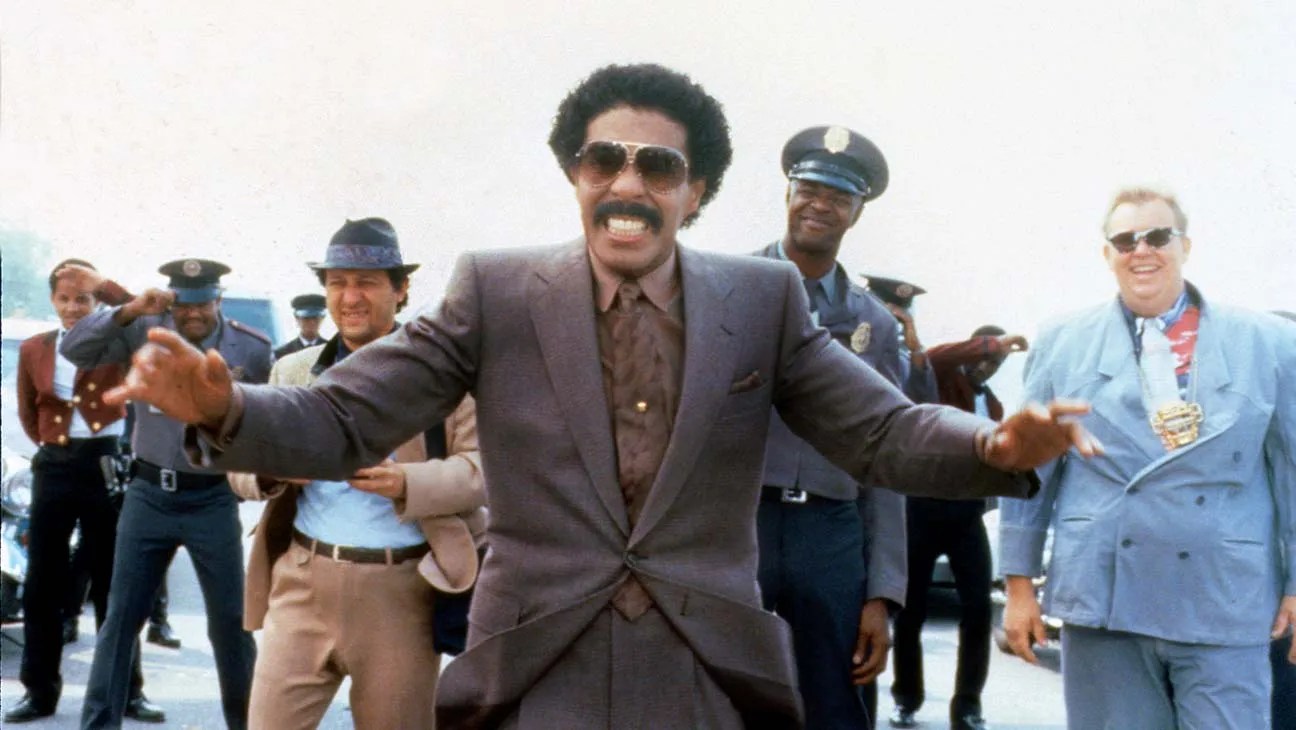
The 1985 film Brewster’s Millions, starring Richard Pryor as Montgomery “Monty” Brewster, tells the story of a man who must spend $30 million in 30 days without accumulating assets or informing anyone of his goal in order to inherit $300 million. Adjusted for inflation, Brewster’s $30 million would be approximately $85 million in today’s dollars, while the $300 million inheritance would be worth over $850 million. While Monty’s spending spree involved extravagant parties, failed investments, and creative tactics to burn through cash, the film missed an opportunity to showcase meaningful economic empowerment strategies. By directing his wealth toward African American businesses, Monty could have positively impacted communities while still meeting the conditions of the challenge. This article outlines how Brewster could have spent his fortune effectively within the African American business ecosystem.

  1. Investing in Education, Arts, and Wellness for African American Communities ($1.5 million or $4.25 million in today’s dollars)

Monty Brewster could have channeled a portion of his funds toward HBCUs, African American arts organizations, and health initiatives. These institutions play a vital role in developing African American leadership, entrepreneurship, and cultural advancement. Brewster could have funded scholarships, financed infrastructure improvements, or supported specialized academic programs such as business incubation centers. Additionally, Brewster could have become a major patron of African American artists, musicians, and cultural organizations. Funding live performances, commissioning murals and sculptures, or sponsoring large-scale cultural events would have allowed him to inject cash into the creative sector while meeting the requirement to spend without accumulating lasting assets.

Health disparities have historically affected African American communities. Brewster could have supported Black-owned health clinics, funded wellness programs, or launched temporary mental health outreach initiatives. Sponsoring community health fairs and free medical check-up events could have aligned with his spending goals. To adhere to his challenge’s constraints, Brewster is limited charitable giving to $1.5 million. Within that budget, he could have made substantial contributions to civil rights organizations such as the National Center for Black Family Life, Black Teacher Collaborative, and African American Credit Union Coalition. Funding advocacy campaigns, legal defense funds, and educational outreach programs would have ensured his spending aligned with causes that strengthen social equity. By underwriting public awareness campaigns or supporting temporary voter registration drives, he could have spent large sums while advancing civil rights initiatives.

  1. Supporting African American Media Companies ($4 million or $11.3 million in today’s dollars)

The media landscape has historically marginalized African American voices. Brewster could have spend money in Black-owned newspapers, radio stations, and production companies. By purchasing advertising space, sponsoring TV segments, or funding film productions that amplify African American stories, he could have spent millions while strengthening the narrative control of the community. This would have been especially true when he ran for mayor of New York City with his “None Of The Above” campaign which allows him to burn through millions.

  1. Empowering African American-Owned Interior Designers ($3 million or $8.5 million in today’s dollars)

Instead of investing in real estate projects with limited long-term impact, Brewster could have hired African American-owned interior design firms to revamp commercial spaces, restaurants, and event venues. Funding redesigns for offices, galleries, or retail spaces would have allowed him to spend significant amounts quickly while showcasing Black creative talent. Partnering with these designers to create temporary installations, pop-up exhibits, or themed public events would further align with Brewster’s spending objectives.

  1. Supporting Black-Owned Restaurants and Hospitality ($5 million or $14.2 million in today’s dollars)

Instead of squandering money on excessive parties with little social value, Brewster could have organized lavish gatherings catered exclusively by Black-owned restaurants, breweries, and event-planning companies. Hosting galas, networking events, or concerts powered by African American businesses would have rapidly spent millions while empowering these enterprises. Additionally, Brewster could have pre-paid months of reservations at Black-owned hotels for conferences, weddings, and events that celebrate Black culture.

  1. Promoting and Empowering African American Entrepreneurs in Technology ($4 million or $11.3 million in today’s dollars)

During the 1980s, technology was emerging as a transformative industry. Brewster could have directed funds to African American inventors, tech startups, and computer training programs. Sponsoring computer literacy drives in underserved neighborhoods, purchasing computers for community centers, or funding coding boot camps would have injected significant capital into this sector without violating the “no assets” condition. Additionally, Brewster could have launched a series of pitch competitions or startup grant programs to fund Black entrepreneurs. By awarding no-strings-attached grants to aspiring business owners, Brewster could have circulated his funds directly into the hands of innovative minds in the community. Creating a “Brewster’s Millionaire Fund” for new ventures would have established a lasting narrative of empowerment.

  1. Financing Black-Owned Transportation Companies ($4 million or $11.3 million in today’s dollars)

Brewster’s challenge required rapid cash outflows. He could have achieved this by chartering fleets of Black-owned transportation services, including buses, limousines, and taxis. Organizing free ride programs, senior citizen transport services, or back-to-school bus initiatives would have ensured meaningful community impact while fulfilling the spending requirements.

  1. Sponsoring Sports Teams in the African American Community ($4.5 million or $12.7 million in today’s dollars)

In the film, Brewster splurged on funding a struggling baseball team. He could have expanded this vision by sponsoring youth sports leagues, purchasing uniforms from Black-owned apparel companies, and financing travel expenses for underserved teams. By supporting athletics in underserved communities, he would have combined financial impact with social good.

  1. Creating Pop-Up Markets and Retail Experiences ($4 million or $11.3 million in today’s dollars)

To rapidly circulate cash, Brewster could have sponsored temporary markets that featured Black-owned businesses. By covering booth fees, marketing costs, and other overhead expenses, he could have injected cash into dozens of retail entrepreneurs. Such events would celebrate local artisans, designers, and vendors while creating a meaningful economic impact.

Monty Brewster’s dilemma of spending $30 million in 30 days presented a unique opportunity to create lasting change. By investing heavily in African American businesses, nonprofits, and community initiatives, Brewster could have met his goal while strengthening economic power in marginalized communities. Such a storyline would not only have showcased Brewster’s ingenuity but also highlighted the immense potential of targeted investment to uplift communities. If Hollywood ever revisits Brewster’s Millions, perhaps they will reimagine his spending spree as a transformative journey of economic empowerment.

2023’s African America Household Portfolio Creeps Towards $7 Trillion In Assets

At the end of 2023, African America had asset values totaling $6.54 trillion and liability values totaling $1.55 trillion. This is an increase of $330 billion and $40 billion, respectively. Below is a breakdown of that wealth by assets and liabilities as reported by the Federal Reserve’s Distribution of Household Wealth data. African American assets amounted to 4% of U.S. Household and African American liabilities amounted to 8.3% of U.S. Household liabilities. This is a 100 basis points decline in assets from 2022 and 50 basis points decline in liabilities from 2022.

HBCU Money took a look at what exactly the African American asset portfolio entailed. African Americans are highly concentrated in two main areas, real estate and retirement accounts (pensions and 401K), respectively. These two groups comprise over 70 percent of African American assets versus only 43 percent for European Americans. Corporate equities/mutual funds and private business ownership comprise a staggering 35.3 percent of European American assets versus only 9.2 percent for African Americans, these two categories also representing African America’s lowest asset holdings.

Examining where African America puts its money and theorizing why can give us insight into strategies that can help in closing both household and institutional wealth gaps.

ASSETS

Real estate – $2.24 trillion

Definition: Real estate is defined as the land and any permanent structures, like a home, or improvements attached to the land, whether natural or man-made.

% of African America’s Assets – 34.3%

% of U.S. Household Real Estate Assets – 5.0%

4.2% increase from 2022

Consumer durable goods – $570 billion (3.6% increase from 2022)

Definition: Consumer durables, also known as durable goods, are a category of consumer goods that do not wear out quickly and therefore do not have to be purchased frequently. They are part of core retail sales data and are considered durable because they last for at least three years, as the U.S. Department of Commerce defines. Examples include large and small appliances, consumer electronics, furniture, and furnishings.

% of African America’s Assets – 8.7%

% of U.S. Household Assets – 7.2%

3.6% increase from 2022

Corporate equities and mutual fund shares – $270 billion

Definition: A stock, also known as equity, is a security that represents the ownership of a fraction of the issuing corporation. Units of stock are called “shares” which entitles the owner to a proportion of the corporation’s assets and profits equal to how much stock they own. A mutual fund is a pooled collection of assets that invests in stocks, bonds, and other securities.

% of African America’s Assets – 4.3%

% of U.S. Household Assets – 0.7%

17.4% increase from 2022

Defined benefit pension entitlements – $1.66 trillion

Definition: Defined-benefit plans provide eligible employees with guaranteed income for life when they retire. Employers guarantee a specific retirement benefit amount for each participant based on factors such as the employee’s salary and years of service.

% of African America’s Assets – 25.4%

% of U.S. Household Assets – 9.5%

3.1% increase from 2022

Defined contribution pension entitlements – $730 billion

Definition: Defined-contribution plans are funded primarily by the employee. The most common type of defined-contribution plan is a 401(k). Participants can elect to defer a portion of their gross salary via a pre-tax payroll deduction. The company may match the contribution if it chooses, up to a limit it sets.

% of African America’s Assets – 11.2%

% of U.S. Household Assets – 5.6%

21.7% increase from 2022

Private businesses – $330 billion

Definition: A private company is a firm held under private ownership. Private companies may issue stock and have shareholders, but their shares do not trade on public exchanges and are not issued through an initial public offering (IPO). As a result, private firms do not need to meet the Securities and Exchange Commission’s (SEC) strict filing requirements for public companies.1 In general, the shares of these businesses are less liquid, and their valuations are more difficult to determine.

% of African America’s Assets – 5.0%

% of U.S. Household Assets – 2.1%

5.7% decrease from 2022

Other assets – $740 billion

Definition: Alternative investments can include private equity or venture capital, hedge funds, managed futures, art and antiques, commodities, and derivatives contracts.

% of African America’s Assets – 11.3%

% of U.S. Household Assets – 2.7%

2.8% increase from 2022

LIABILITIES

Home Mortgages – $770 billion

Definition: Debt secured by either a mortgage or deed of trust on real property, such as a house and land. Foreclosure and sale of the property is a remedy available to the lender. Mortgage debt is a debt that was voluntarily incurred by the owner of the property, either for purchase of the property or at a later point, such as with a home equity line of credit.

% of African America’s Liabilities – 50.3%

% of U.S. Household Liabilities – 6.0%

1.3% increase from 2022

Consumer Credit – $710 billion

Definition: Consumer credit, or consumer debt, is personal debt taken on to purchase goods and services. Although any type of personal loan could be labeled consumer credit, the term is more often used to describe unsecured debt of smaller amounts. A credit card is one type of consumer credit in finance, but a mortgage is not considered consumer credit because it is backed with the property as collateral. 

% of African America’s Liabilities – 47.7%

% of U.S. Household Liabilities – 14.8%

4.2% increase from 2022

Other Liabilities – $30 billion

Definition: For most households, liabilities will include taxes due, bills that must be paid, rent or mortgage payments, loan interest and principal due, and so on. If you are pre-paid for performing work or a service, the work owed may also be construed as a liability.

% of African America’s Liabilities – 1.9%

% of U.S. Household Liabilities – 2.7%

0.0 nonchange from 2022

Source: Federal Reserve

Report Shows 8 Out Of 10 HBCU States Are Best States For African American Entrepreneurs

A report by Merchant Maverick, a comparison site that reviews small business software and services, highlighted the top ten states for African American entrepreneurs in 2022. The results showed that eight of those states were home to HBCUs and the other two were Nevada and New Mexico, respectively. It certainly is likely that HBCUpreneurs are driving the African American entrepreneurship in these states. Unfortunately, it maybe more indirectly than intentionally. It does suggest though that with more intentional infrastructure these states could see even more boom in entrepreneurship for HBCUpreneurs. What is that intentional infrastructure? Incubators, accelerators, mentorship, and financing programs located on the campuses of HBCUs or through their alumni associations in partnership with African American Financial Institutions (AAFIs).

Virginia: Thanks to a trio of top five metrics, Virginia ranks soundly in the No. 1 spot. Black-run businesses employ 2.18% of the Old Dominion’s workforce (2nd nationally), and there are 755 Black-owned employer businesses per 1 million people (3rd nationally). Black-owned businesses also average an annual payroll of $437K, which ranks 5th overall. The state previously fared well in some of our other data reports — Virginia finished as the 4th-best state for Black women-owned businesses, and it ranked 10th in our recent best states for women-led startup report. In an effort to grow local minority-run businesses and encourage contracts with those businesses, the Virginia state government operates a directory of all certified small businesses within the state.

Maryland: With Black residents comprising 31% of the population, Maryland has the highest percentage of Black residents of any state on the East Coast, and the 4th-highest in the nation. As such, it shouldn’t be much of a surprise that Maryland has many Black business owners. The Free State ranks 1st nationally for the most Black-owned businesses per 1 million people (1,213), and also ranks 1st in percent of the workforce employed by Black-owned businesses (3.49%). Black-owned Maryland businesses additionally average a very respectable annual payroll of $465K, which is the 4th-highest in the nation. The state government offers several tools for minority business owners, including funding, small business certifications, and assistance programs.

Texas: While no metric clearly stands out, Texas ranks highly thanks to consistency. Black entrepreneurs may find it profitable to start a business in the Lone Star State — Black business owners average an annual income of $64,240 (10th overall) and Black-run businesses in the state average an annual payroll of $337K (17th overall). All of this cash can go further in Texas because the state lacks income tax. Resources available to local Black businesses include the Texas Black Expo and the Dallas Black Chamber of Commerce, both of which are organizations that aim to assist underserved businesses.

For the full report, visit Merchant Maverick here.

2022’s African America Household Portfolio Just Over $6 Trillion In Assets

At the end of 2022, African America had asset values totaling $6.2 trillion and liability values totaling $1.5 trillion. Below is a breakdown of those by wealth component by assets and liabilities as reported by the Federal Reserve’s Distribution of Household Wealth data. African American assets amounted to 5% of U.S. Household assets and African American liabilities amounted to 8.8% of U.S. Household liabilities.

HBCU Money took a look at what exactly the African American asset portfolio entailed. African Americans are highly concentrated in two main areas, real estate and retirement accounts (pensions and 401K), respectively. These two groups comprise almost 70 percent of African American assets versus only 43 percent for European Americans. Corporate equities/mutual funds and private business ownership comprise a staggering 35.1 percent of European American assets versus only 9.6 percent for African Americans, these two categories also representing African America’s lowest asset holdings.

Examining where African America puts its money and theorizing why can give us insight into strategies that can help in closing both household and institutional wealth gaps.

ASSETS

Real estate – $2.15 trillion

Definition: Real estate is defined as the land and any permanent structures, like a home, or improvements attached to the land, whether natural or man-made.

% of African America’s Assets – 33.1%

% of U.S. Household Real Estate Assets – 6.1%

10 Year % Growth – 187%

Consumer durable goods – $550 billion

Definition: Consumer durables, also known as durable goods, are a category of consumer goods that do not wear out quickly and therefore do not have to be purchased frequently. They are part of core retail sales data and are considered durable because they last for at least three years, as the U.S. Department of Commerce defines. Examples include large and small appliances, consumer electronics, furniture, and furnishings.

% of African America’s Assets – 7.2%

% of U.S. Household Assets – 7.3%

10 Year % Growth – 81%

Corporate equities and mutual fund shares – $270 billion

Definition: A stock, also known as equity, is a security that represents the ownership of a fraction of the issuing corporation. Units of stock are called “shares” which entitles the owner to a proportion of the corporation’s assets and profits equal to how much stock they own. A mutual fund is a pooled collection of assets that invests in stocks, bonds, and other securities.

% of African America’s Assets – 4.9%

% of U.S. Household Assets – 1.1%

10 Year % Growth – 90%

Defined benefit pension entitlements – $1.57 trillion

Definition: Defined-benefit plans provide eligible employees with guaranteed income for life when they retire. Employers guarantee a specific retirement benefit amount for each participant based on factors such as the employee’s salary and years of service.

% of African America’s Assets – 24.7%

% of U.S. Household Assets – 10.5%

10 Year % Growth – 51%

Defined contribution pension entitlements – $600 billion

Definition: Defined-contribution plans are funded primarily by the employee. The most common type of defined-contribution plan is a 401(k). Participants can elect to defer a portion of their gross salary via a pre-tax payroll deduction. The company may match the contribution if it chooses, up to a limit it sets.

% of African America’s Assets – 11.8%

% of U.S. Household Assets – 8.0%

10 Year % Growth – 163%

Private businesses – $350 billion

Definition: A private company is a firm held under private ownership. Private companies may issue stock and have shareholders, but their shares do not trade on public exchanges and are not issued through an initial public offering (IPO). As a result, private firms do not need to meet the Securities and Exchange Commission’s (SEC) strict filing requirements for public companies.1 In general, the shares of these businesses are less liquid, and their valuations are more difficult to determine.

% of African America’s Assets – 4.7%

% of U.S. Household Assets – 2.2%

10 Year % Growth – 106%

Other assets – $700 billion

Definition: Alternative investments can include private equity or venture capital, hedge funds, managed futures, art and antiques, commodities, and derivatives contracts.

% of African America’s Assets – 13.6%

% of U.S. Household Assets – 4.2%

10 Year % Growth – 136%

LIABILITIES

Home Mortgages – $770 billion

Definition: Debt secured by either a mortgage or deed of trust on real property, such as a house and land. Foreclosure and sale of the property is a remedy available to the lender. Mortgage debt is a debt that was voluntarily incurred by the owner of the property, either for purchase of the property or at a later point, such as with a home equity line of credit.

% of African America’s Liabilities – 56.1%

% of U.S. Household Liabilities – 7.2%

10 Year % Growth – 53.3%

Consumer Credit – $710 billion

Definition: Consumer credit, or consumer debt, is personal debt taken on to purchase goods and services. Although any type of personal loan could be labeled consumer credit, the term is more often used to describe unsecured debt of smaller amounts. A credit card is one type of consumer credit in finance, but a mortgage is not considered consumer credit because it is backed with the property as collateral. 

% of African America’s Liabilities – 42.1%

% of U.S. Household Liabilities – 14.1%

10 Year % Growth – 91.7%

Other Liabilities – $30 billion

Definition: For most households, liabilities will include taxes due, bills that must be paid, rent or mortgage payments, loan interest and principal due, and so on. If you are pre-paid for performing work or a service, the work owed may also be construed as a liability.

% of African America’s Liabilities – 1.8%

% of U.S. Household Liabilities – 2.8%

10 Year % Growth – 200%

Source: Federal Reserve

Why Do HBCUs Not Bank With Black Banks?

It could all be so simple But you‘d rather make it hard, loving you is like a battle and we both end up with scars. – Lauryn Hill

Something that should be so simple, HBCUs and other African American organizations, businesses, and other African American institutions have made not just a battle but sometimes it feels like a war. That battle, getting African American institutions to bank with the African American banking system with banks and/or credit unions owned and controlled by – African Americans. It is economic development 101 for other groups, but for African America it is seemingly Calculus III. Based on HBCU Money’s internal research on the matter only two, a PBI and HBCU, are believed to bank with a Black-owned bank. That means that just like the over 90 percent of African Americans who go to college not choosing HBCUs, well over 90 percent of HBCUs do not bank with a Black-owned bank. And in both cases, neither (AAOBs or HBCUs) are able to fulfill their potential as they would with the patronage and investment of those they were built to serve.

We asked the AI app Nova for their take on why HBCUs do not bank with African American owned banks and here was its answer: “There are a few reasons why many HBCUs may not bank with Black-owned banks. One reason is that larger, more established banks often offer more resources and services that HBCUs may need, such as investment services or customized financial solutions. Additionally, some HBCUs may feel more comfortable with larger, more established banks that have a long history of working with educational institutions. However, there has been a growing movement encouraging HBCUs to support Black-owned banks and businesses as a way to promote economic empowerment within the Black community. Many Black-owned banks have a strong commitment to supporting HBCUs, and may offer specialized products and services tailored to their needs.”

Despite AI being quite learned in its contribution to this. There are as they say – levels to this. Not least among them is the plight of public HBCUs lacking autonomy. It would take a massive student and alumni uprising in order to get a public HBCUs moved to an African American owned bank. Ultimately, public HBCUs are controlled by a board or if they are in a system, then a system’s board. In either case, the state’s flagship PWIs carrying the most financial weight and tend to be determinate of how all public universities in the state will behave and most certainly likely where they will bank. And while it is complicated to wrangle the institutional banking of public HBCUs into African American owned banks, their proxy organizations like alumni associations and foundations that serve them should not have anywhere near the issue of banking Black. Then there are the private HBCUs who have far more autonomy with their banking decisions and yet it seems potentially only one private HBCU actually banks Black. It is almost befuddling in the case of the Alabama and Georgia HBCUs not to bank Black. They both have two African American Owned Banks in headquartered in their states. Morehouse specifically just a few years ago had one of their alumni bring back African American owned banking to Oklahoma when alumnus Kevin Perry purchased controlling interest in First Security Bank & Trust. In fact, 14 of the 15 states and territories where there are African American owned banks have HBCUs/PBIs in them with Wisconsin being the lone exception.

African America’s flagship HBCU, Howard University, two years ago entered into a partnership with PNC Bank to create the PNC National Center for Entrepreneurship housed at Howard University. PNC’s Foundation providing Howard University with a rather obtuse $3.4 million a year grant for five years. PNC Bank is based in Pittsburgh,PA, its executive team in 2022 commanded $81 million in compensation, and the bank has assets over $550 billion – an amount that is over 100 times the size of all 16 remaining African American Owned Banks’ assets combined. We think Marcus Garvey just rolled over in his grave. Meanwhile, right in Howard University’s backyard is Industrial Bank, an African American Owned Bank with $723 million in assets, meaning PNC Bank has over 760 times the amount of assets of Industrial. There is in fact only one African American Owned Bank that has over $1 billion in assets, Liberty Bank & Trust in Louisiana.

That HBCU presidents and AAOB CEOs do not have closer relationships simply speaks to the island mentality that African American institutions as a whole have. Although our community loves to parrot the harsh reality of an African American dollar that does not circulate in our community’s even 6 hours while “the average lifespan of the dollar is approximately 28 days in Asian communities, 19 days in Jewish communities, 17 days in white communities”, according to a piece by the FAMUAN (see how we are circulating HBCU media capital). This has done nothing to make HBCU administrators understand that the circulation of the African American institutional dollar is far more impactful than the African American consumer collar. Despite as recently as 2017, there were four African American Owned Banks with HBCU alumni as CEOs. It is also not just on HBCUs, but AAOBs should be doing a better job of heavily pursuing those HBCUs that do have the autonomy to decide where they bank and forging deep relationships with them at multiple levels.

By forging that relationship HBCUs and AAOBs can multiply the probability of opportunities and profitability. That way when an HBCU alum creates the next Google, SpaceX, FedEx, or other Fortune 500 company, then they will already know the importance of banking with an AAOB and hiring HBCU alumni. It will be understood because the intentionality of our ecosystem’s success will be modeled and molded and as a result our community is empowered with success a rule and not the outlier it operates in now as so many of us continue to try and build a nation as an island instead of forging together.