Tag Archives: black economic empowerment

Are New Mexico, Maine, Puerto Rico, and the U.S. Virgin Islands the Only Social, Economic, and Politically Safe Territories for African Americans?

“Every great dream begins with a dreamer. Always remember, you have within you the strength, the patience, and the passion to reach for the stars to change the world.” — Harriet Tubman

For African Americans, safety has never been an assumed part of citizenship. It has always been an earned condition won through vigilance, strategy, and often migration. Whether fleeing the violent collapse of Reconstruction or the economic despair of the Jim Crow South, Black Americans have long measured geography as a question of survival. Today, in an America increasingly polarized by race, ideology, and inequality, that calculation has returned. Many are quietly asking: where can African Americans live, work, and raise families with peace of mind? The answer, surprisingly, may not be in traditional Black strongholds like Atlanta, Washington, D.C., or Houston, but in four unlikely places—New Mexico, Maine, Puerto Rico, and the U.S. Virgin Islands—where moderation, multicultural coexistence, and relative political calm offer something rare: a sense of safety that is not performative, but lived.

New Mexico’s reputation as a cultural crossroads has made it one of the few states where African Americans can exist without being framed entirely through America’s racial binary. Its tri-cultural balance among Native American, Hispanic, and White populations disperses dominance. Here, no single identity owns the political landscape. For African Americans who comprise about two percent of the population that means a degree of breathing room. Racial prejudice still exists, but it rarely defines every interaction. The social climate is cooperative, rooted in shared marginalization rather than supremacy. Albuquerque, Las Cruces, and Santa Fe have become quiet havens for African American educators, small-business owners, and retirees seeking both affordability and dignity.

Economically, New Mexico offers something most metropolitan centers have lost: a manageable cost of living and accessible capital. Housing remains attainable. Land ownership long denied to African Americans through discriminatory lending remains within reach for the working and middle class. The rise of renewable energy, sustainable agriculture, and technology hubs has also created new entry points for Black entrepreneurship. In Albuquerque’s South Valley or near Santa Fe’s art cooperatives, one can find a small but visible community of African Americans carving lives that are not merely about surviving but thriving without the constant defensive posture that characterizes so many other states. Safety here is less about walls and more about balance, a social equilibrium where race is a fact, not a fault line.

Maine, on the other hand, is proof that peace can coexist with isolation. Its African American population is minuscule, but its civic culture is built on moderation and integrity. The state’s “town meeting” governance style, where citizens vote directly on local issues, nurtures accountability rarely seen elsewhere. For African Americans who relocate to Portland, Bangor, or Augusta, that transparency matters. Racism in Maine exists, but it lacks institutional depth. More often, African Americans report curiosity over hostility, and when discrimination does occur, it tends to meet public rebuke rather than official silence.

Politically, Maine is refreshingly pragmatic. It elects moderates and independents, resists extremist rhetoric, and maintains a social compact where neighbors generally still speak to each other across ideological lines. For African Americans weary of coded politics, it feels like a return to something America once promised, a functioning democracy. The result is a form of safety rooted not in numbers, but in governance. A place where you can walk, vote, and live without fearing that tomorrow’s election will determine whether your humanity is negotiable.

But safety does not always mean the mainland. Beyond the continental U.S., Puerto Rico and the U.S. Virgin Islands present another dimension of refuge one built on shared African lineage and the lived realities of Caribbean identity. For African Americans seeking both cultural familiarity and distance from America’s racial fatigue, these territories offer a paradoxical safety: not post-racial, but post-obsessive.

Puerto Rico, long a bridge between Latin America and the U.S., exists in an in-between space that defies racial simplification. Its majority Afro-Latino population gives race a different vocabulary one where color is noticed but hierarchy is more fluid. African Americans arriving there encounter both kinship and complexity. In cities like San Juan or Ponce, African American expatriates blend into an Afro-diasporic continuum that feels familiar yet distinct. The island’s economic struggles are real: bankruptcy, hurricanes, and colonial neglect have left deep scars but its community resilience and shared sense of oppression produce solidarity rather than hostility. For African Americans, that means an environment where “Blackness” is neither exoticized nor demonized, but part of the island’s social DNA.

Economically, Puerto Rico also provides opportunities for African Americans seeking new beginnings in real estate, tourism, or renewable energy sectors. The island’s special tax status and evolving investment laws have attracted mainland professionals and entrepreneurs, some of whom are African American innovators bringing capital and ideas into local partnerships. In this sense, Puerto Rico is not only a sanctuary but also a frontier, a place where the African Diaspora’s ingenuity can meet an economy in reinvention. For those seeking cultural reconnection, the island’s Afro-Boricua traditions like bomba music, Loíza’s festivals, and the rhythms of African pride create an echo of belonging that many African Americans have long been denied in the continental United States.

Then there is the U.S. Virgin Islands, a cluster of Caribbean jewels that quietly symbolize what safe, small-scale Black governance can look like. On St. Thomas, St. Croix, and St. John, African-descended people form the majority. That demographic fact changes everything. Here, African Americans are not minorities but members of a larger Black polity with its own traditions, institutions, and history. The islands’ governance, while tied to Washington, reflects local leadership rooted in Afro-Caribbean sensibilities. For African Americans relocating from the mainland, this translates into a rare psychological experience: existing in a majority-Black jurisdiction where public policy, education, and business life are not filtered through White validation. Safety here is political self-determination.

Economically, the U.S. Virgin Islands are not without challenge like high import costs, hurricane vulnerability, and limited diversification test resilience but they offer something profound in return: cultural sovereignty. African Americans who move there often describe an adjustment period followed by a deep sense of exhale. The smallness of scale fosters community accountability, and the absence of constant racial tension allows ambition to flow without invisible friction. One can walk into a bank, a classroom, or a government office and see reflections rather than reminders of marginalization.

Taken together, New Mexico, Maine, Puerto Rico, and the U.S. Virgin Islands form a loose constellation of calm, a diaspora of safety within the larger storm of American contradiction. What unites them is not homogeneity, but a commitment to civility and shared humanity. Each location offers a different version of safety: political moderation in Maine, cultural equilibrium in New Mexico, diasporic kinship in Puerto Rico, and demographic sovereignty in the Virgin Islands. For African Americans navigating the exhaustion of a national identity under siege, these places suggest that peace might still be found without surrendering pride or progress.

The broader question, however, remains: why must African Americans still seek safety within the very nation they helped build? The resurgence of racial authoritarianism, book bans, and economic inequality reveals a hard truth that safety for African Americans is still conditional, still regional, still a choice rather than a guarantee. Yet, migration has always been the community’s answer to oppression. From the Underground Railroad to the Great Migration, movement has been both resistance and renaissance. Harriet Tubman’s words remain instructive: “Every great dream begins with a dreamer.” Migration, for African Americans, has always been dreaming in motion.

New Mexico and Maine show what governance without racial hysteria looks like. Puerto Rico and the Virgin Islands show what culture looks like when Blackness is normalized rather than marginalized. Together, they present a vision of what the United States could be if its diversity were truly reconciled with its democracy. They remind African America that safety is not about retreating from the nation but reimagining its geography of belonging.

Still, each of these places carries limitations. In New Mexico and Maine, African Americans may find safety but also scarcity with few cultural institutions, churches, or schools designed with them in mind. In Puerto Rico and the Virgin Islands, economic instability and natural disaster risks complicate long-term security. Yet, in all four, there exists something invaluable: the absence of daily racial siege. That reprieve can be transformative. It gives space for creativity, family stability, and the rebuilding of wealth without the constant drag of social mistrust.

As the nation’s politics grow more volatile, African American institutions (HBCUs, banks, and foundations) should view these geographies not simply as refuges but as development frontiers. Instead of imagining new HBCU presences in the Caribbean, they can expand partnerships with the University of the Virgin Islands already a proud HBCU anchoring the region to create joint research programs, faculty exchanges, and diasporic economic initiatives that strengthen both the mainland and the islands or research partnerships with Puerto Rican universities. Imagine Black-owned renewable energy firms anchoring in New Mexico, or a cooperative investment network expanding into Maine’s emerging industries. Safety, after all, is not just the absence of harm it’s the presence of opportunity.

There is a growing possibility that the 21st-century African American migration will not be toward cities of hustle, but toward territories of harmony. Where one can walk into a classroom, café, or coastal market and not feel their presence as provocation. Where the conversation around “diversity” is not theoretical but lived. The call of these four places is subtle but powerful: build where you can breathe.

If history is cyclical, then the current search for safety is not retreat but renewal. Each of these geographies offers a mirror to what African America has always done transform uncertainty into community. From the deserts of the Southwest to the coasts of New England and the Caribbean, a new map of refuge is emerging. Whether the destination is the Sandia Mountains, Casco Bay, San Juan’s Old Town, or Charlotte Amalie’s harbor, the journey is the same: toward dignity.

In the end, the question may not be whether these are the only safe places, but whether they are the first to show what safety could mean in practice. For a people whose freedom has always been self-forged, safety is never static it is strategy. And in that strategy, migration remains both memory and mission.

Disclaimer: This article was assisted by ChatGPT.

Give Black App: A Digital Gatekeeper For African American Philanthropy & Institutional Capital

“We must invest in ourselves. Without our own institutions, we will always be at the mercy of others.” – Mary McLeod Bethune

In the long arc of African American economic life, a recurring pattern emerges: the institutions most critical to our survival are consistently starved of capital, while the broader society thrives off of our labor, culture, and creativity. From Reconstruction-era mutual aid societies to the undercapitalized HBCUs of today, the struggle has never been whether African Americans are generous, but whether that generosity is systematically directed into institutions that can build durable power.

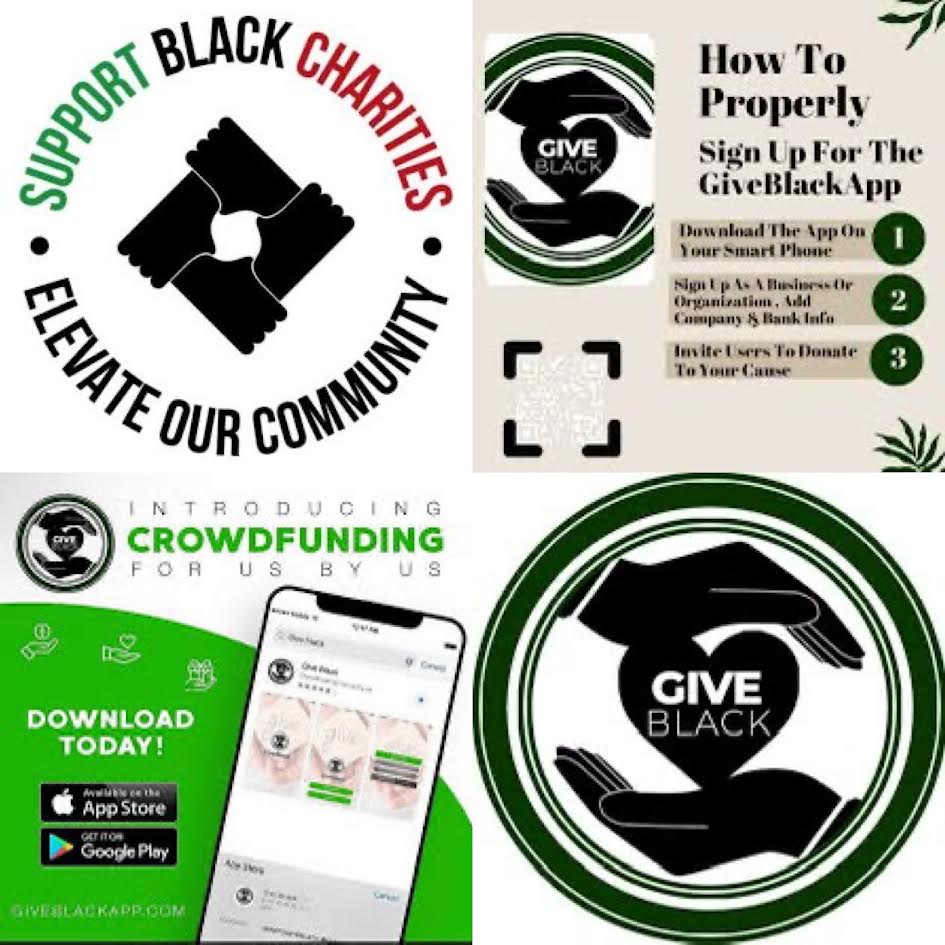
The Give Black App, founded by David C. Hughes, Alexus Hall, and Fran Harris, positions itself at this inflection point. It is not simply an app but a digital strategy—one attempting to reshape the flow of African American philanthropy and donations by curating, centralizing, and amplifying support for Black-led institutions.

The Context of Underfunding

African American nonprofits receive disproportionately less funding compared to their White counterparts. A 2020 Bridgespan study found that unrestricted net assets of White-led nonprofits were 76% larger than those of Black-led nonprofits, while revenues were 24% higher. These disparities compound over time. For HBCUs, the story is even starker: the endowments of all 100+ HBCUs combined is less than 1/10th of Harvard University’s alone.

Despite African America’s estimated $1.8 trillion in annual buying power, only a fraction is captured by its own institutions. Much of African American giving remains individual-to-individual or church-centered, providing immediate relief but not the kind of long-term institutional scaffolding needed to compete with White or global capital. Platforms like Give Black attempt to redirect that generosity into a framework where dollars reinforce permanence.

Building the Infrastructure of Giving

Give Black’s strength lies in infrastructure, a word often overlooked in philanthropy. The app operates as a digital gatekeeper, cataloguing Black-led nonprofits and enabling donors—whether individuals, alumni associations, or grassroots organizations—to find and fund them with ease.

This may seem simple, but its implications are profound. In an environment where discoverability is one of the greatest barriers for Black-led organizations, Give Black centralizes attention. For the countless nonprofits that lack robust marketing budgets, development officers, or national visibility, the app provides a seat at the table they would otherwise be denied.

The team itself reflects intentional design. Hughes, a Morehouse and Prairie View alumnus, carries the academic gravitas to engage institutions; Hall, with a background in cybersecurity and software sales, grounds the platform’s technical operations; Harris, a lifelong advocate of Black love and economic empowerment, provides the cultural grounding and marketing voice. Alongside them stand directors rooted in community engagement, finance, athletics, and science. Together, they represent a cross-section of African American life that mirrors the very community the app seeks to serve.

Philanthropy Meets Technology

Unlike GoFundMe or Benevity, which serve broad audiences, Give Black narrows its focus: African American-led institutions. This specificity is both its greatest strength and its potential vulnerability. By making African American philanthropy visible and trackable, the app attempts to normalize institutional giving within the community itself.

African American donors, long used to personal giving—funeral funds, tuition help, emergency assistance—are now asked to see their dollars not just as charity but as investment. An app that allows for transparency, accountability, and impact measurement may finally bridge the gap between intent and sustained institutional support.

Technology also democratizes giving. Younger generations, accustomed to digital wallets and mobile donations, are unlikely to write checks or mail contributions. By existing where they already transact, Give Black normalizes philanthropy as part of daily life. With proper marketing, it could serve as a digital equivalent of the collection plate—except one that sends dollars to Black think tanks, schools, health clinics, and endowment foundations rather than solely to Sunday offerings.

The Role of Fran Harris

Much of the initial confusion about Give Black’s leadership arises from Fran Harris’s name. She openly jokes about it—she is not the Fran Harris who was a WNBA champion or Shark Tank winner, though many assume otherwise. Instead, she distinguishes herself as someone whose “entire life has been about Black love and economic empowerment.”

That distinction matters. Whereas celebrity often drives visibility in African American philanthropy, Harris positions herself not as a star but as a steward of a broader vision. Her work focuses on the storytelling and cultural marketing needed to align African American giving with institutional capital. In a sense, her humor in addressing the name confusion underscores the seriousness of her actual role: grounding the app’s message in authenticity rather than celebrity.

The Gaps in the Strategy

Despite its promise, Give Black faces hurdles. First, fundraising expertise at the highest level appears limited within the core team. Major philanthropy is an industry of its own, requiring seasoned development officers capable of cultivating seven- and eight-figure gifts. Without this, Give Black risks becoming a platform for small-dollar giving—important, but insufficient for closing institutional capital gaps.

Second, technological depth must match ambition. While Hall’s cybersecurity background provides operational credibility, scaling a fintech-style platform requires CTO-level leadership. Issues of compliance, data integrity, and user trust are not optional—they are the foundation of sustainability.

Third, policy and compliance matter. Donations intersect with financial regulations, nonprofit law, and IRS oversight. To become the definitive gateway for Black giving, Give Black must not only build a sleek front end but also a back-end architecture that can withstand regulatory scrutiny and instill donor confidence.

Where the Opportunities Lie

The greatest opportunities for Give Black lie in institutional self-reliance.

One clear pathway is through alumni networks. HBCU alumni giving rates remain in the single digits, compared to 20–30% at elite PWIs. If Give Black positioned itself as the official conduit for alumni donations, it could help double or triple those rates over time. That alone would shift millions into endowments and operating budgets across the HBCU ecosystem.

Another opportunity lies in membership-based organizations—from professional networks to civic associations. Instead of dues going solely toward programming, portions could be funneled into long-term institutional giving through Give Black, creating a culture of collective philanthropy.

The Pan-African Diaspora represents yet another opening. African and Caribbean communities abroad are increasingly connected digitally. Give Black could expand to become a Pan-African philanthropic bridge, enabling solidarity between African Americans and global Black communities. Diaspora donors, often seeking trustworthy channels for giving, could find in Give Black a centralized, transparent platform.

Finally, the most transformative opportunity is to integrate endowment-building features directly into the app. Too much African American giving is trapped in the cycle of operating expenses. By redirecting portions of donations into permanent capital funds, Give Black could help institutions create reserves that outlast political climates and economic downturns.

Lessons from History

The urgency of Give Black’s mission must be seen against history. During the early 20th century, White-controlled philanthropy dictated the survival of many HBCUs. Institutions like Hampton and Tuskegee often relied on Northern industrialists whose donations came with ideological strings attached. The absence of African American-controlled philanthropic infrastructure meant dependency—and dependency always meant vulnerability.

Today, African American institutions still operate under the shadow of that dependency. Foundation funding remains racially skewed, and government support is often politically weaponized. Give Black, by offering a decentralized and community-driven alternative, challenges that cycle.

But history also warns: movements that lack discipline or scale are easily absorbed or ignored. Just as the Negro Leagues produced baseball talent but lacked the capital to maintain independence, so too can African American philanthropy generate excitement but fail to sustain institutional life if it is not channeled strategically.

The Verdict

Give Black App is not merely a digital donation tool. It is a test case: can African America leverage technology to redirect its wealth into its own institutions? The team’s composition, heavy in HBCU roots, marketing authenticity, and community engagement, suggests it understands both the stakes and the culture.

Still, the app must avoid the trap of becoming a feel-good project without measurable institutional outcomes. Its long-term success will be determined by whether it can:

  1. Secure partnerships with HBCUs, alumni associations, and membership-based organizations.
  2. Develop deep fundraising and compliance infrastructure.
  3. Normalize institutional giving across African American households.

If it does, Give Black could evolve into a cornerstone of African American institutional development—a kind of digital Freedman’s Bureau, redistributing not charity but power.

For African America, the stakes could not be higher. In an era where White nonprofits sit on multibillion-dollar endowments, while Black nonprofits scrape for survival, the question is not whether we are generous. It is whether our generosity is building the kind of institutions that ensure survival for centuries, not just survival for today.

Give Black, if scaled with vision and discipline, may finally provide the infrastructure to answer that question with a resounding yes.

HBCU B-Schools’ Leadership Still Embarrassingly Lacking In HBCU Alumni

The most difficult thing in life is to know yourself. — Thales

By any reasonable historical standard, Warren Buffett’s rejection by Benjamin Graham is more than a quaint anecdote; it is a powerful parable about institutional loyalty and long-term economic strategy. Graham, the father of value investing, turned away the future Oracle of Omaha not because Buffett was unqualified—far from it—but because he had a principle. Graham hired exclusively European American Jews at a time when Wall Street’s doors were locked tight against them. It was his quiet resistance to systemic exclusion and a way to build a parallel institution that could compete and thrive. Graham wasn’t interested in assimilation; he was focused on insulation, independence, and empowerment. The same cannot be said about the leadership structure of Historically Black Colleges and Universities (HBCUs), particularly their business schools.

A decade has passed since a comprehensive review was last undertaken on the leadership of HBCU business schools. One would hope that the intervening years would have ushered in a renaissance of internal cultivation—an era where HBCU alumni, steeped in the culture, history, and mission of these institutions, took the reins of their business schools. That hope remains, for the most part, unrealized. Instead, many HBCU B-schools continue to be led by individuals who are not products of these institutions, and in many cases, are fundamentally disconnected from the unique economic and cultural needs of the African American community.

The appointment of deans and senior faculty from predominantly white institutions (PWIs) is often lauded as a move toward “excellence” or “best practices.” The coded language of meritocracy is a familiar refrain—best person for the job, regardless of background. But this belief, as commonly practiced within HBCUs, is a convenient myth. It sidesteps the structural disadvantages HBCU graduates face in academia and business, and reinforces a dependency on external validation and leadership.

The consequence? A business education ecosystem within HBCUs that remains divorced from the very communities these schools are intended to serve. There is no pipeline, no incubator of internal talent, no clear strategy to empower HBCU alumni to lead, govern, and shape the next generation of Black business leadership.

Institutional Amnesia

In failing to privilege their own alumni in leadership selection, HBCU B-schools suffer from what might be called institutional amnesia. There is little effort to study and replicate the success of institutions that have prioritized internal development. Jewish, Catholic, and even Mormon institutions have all built robust networks by leveraging internal cultural capital and aligning institutional leadership with community objectives. HBCUs, by contrast, often appear to suffer from an inferiority complex that manifests in a relentless pursuit of PWI credentials as a proxy for excellence.

Even when HBCU alumni are in the pipeline, they are frequently passed over in favor of candidates whose resumes boast affiliations with Ivy League or flagship public institutions. The irony is rich and troubling: HBCUs, which claim to be dedicated to the uplift of African Americans, routinely reject their own in favor of the very systems that have historically excluded them.

The Data Tells the Story

Of the 85 accredited HBCU business schools and departments (based on the latest available data), fewer than 20% are led by HBCU alumni. Of that number, fewer than half have received their undergraduate and graduate education at an HBCU, further diluting the institutional knowledge that could be reinvested back into the system.

By contrast, 75% of business school deans and department chairs at Ivy League universities hold at least one degree from an Ivy League institution. This underscores the importance these institutions place on continuity, network loyalty, and internal cultural capital.

Lack of a Succession Strategy

The dearth of HBCU alumni in leadership roles is not merely a matter of optics—it is a strategic failure. The absence of a deliberate succession plan, where institutions identify, mentor, and elevate their own talent, weakens the intellectual and operational spine of HBCU B-schools. When young Black scholars and students do not see themselves reflected in positions of power within their own institutions, the implicit message is that their ascent must take place elsewhere.

Anecdotes abound of promising scholars who, having been educated and initially employed at HBCUs, eventually decamp to PWIs for better pay, prestige, or professional development. When those same scholars become leaders elsewhere, their institutional loyalty rarely circles back. The brain drain becomes self-perpetuating.

Cultural Incongruence and Strategic Drift

Leadership from outside HBCUs is not inherently problematic. However, leadership that does not understand or prioritize the mission-specific challenges and opportunities of HBCUs can lead to strategic drift. The market-driven nature of business education already pushes HBCUs to chase prestige metrics that are often defined by PWI standards—AACSB accreditation, international rankings, publication quotas. Yet these metrics seldom align with the needs of the African American community.

Who is building a curriculum around cooperative economics? Who is training students to start, fund, and grow businesses in historically Black neighborhoods? Who is leading research on Black entrepreneurship, Black banking, and financial exclusion? These priorities require not just academic competence but cultural commitment—something often missing in leadership that has not been formed within HBCUs.

The Cost of Outsourcing Leadership

The preference for external hires is also an expensive habit. Recruitment searches for deans can cost upwards of $250,000 when executive search firms are engaged. The revolving door of short-term leadership appointments, another consequence of weak institutional loyalty, creates instability in fundraising, student recruitment, and faculty morale.

Moreover, the indirect costs are enormous. When leadership lacks vision rooted in the mission of HBCUs, partnerships are misaligned, fundraising strategies are tone-deaf, and entrepreneurial ecosystems are underdeveloped. Business schools are economic engines, and the failure to connect them authentically to the community they serve is a missed opportunity of staggering proportions.

What Would Graham Do?

The story of Benjamin Graham and Warren Buffett is not merely about individual relationships; it is a case study in institutional integrity. Graham’s commitment to his community was not performative. It was strategic, values-driven, and unapologetically intentional. He understood that talent alone was insufficient. It had to be nurtured, protected, and positioned within the community’s own institutions.

African American leaders in education, particularly those responsible for HBCUs, must ask themselves: what kind of ecosystem are we building? Do we merely seek validation from the same institutions that denied us access for generations? Or are we committed to the difficult, often thankless work of institution-building?

The answer may well determine the fate of HBCUs in the 21st century.

A Call to Action

First, HBCU business schools must create formal succession pipelines for leadership from within their own alumni networks. This includes mentoring programs, leadership fellowships, and internal promotion tracks that incentivize long-term engagement.

Second, boards of trustees and presidential leadership must reexamine hiring criteria. Cultural alignment and mission understanding must be weighted as heavily as academic credentials.

Third, HBCUs should begin benchmarking themselves not against Harvard or Wharton but against institutions that have successfully used internal leadership to drive community outcomes. The benchmarks for success must be redefined to reflect mission, not mimicry.

Finally, alumni must hold their institutions accountable. Donations should come with expectations for institutional integrity. If alumni are good enough to fund these schools, they are certainly good enough to lead them.

HBCU B-schools sit at the intersection of education, economics, and cultural preservation. Their leadership must reflect that complexity. The time for apologetic hiring practices and external validation is over. It is time for HBCUs to know themselves—and to trust themselves enough to lead from within.

The Gridiron Mirage: Debunking the NFL as the Engine of African American Wealth

“A lot of enslaved people actually made money, but they had no power.” – William Rhoden

In the annals of American mythology, few institutions occupy as outsized a symbolic role in African American economic advancement as the National Football League. It is a league awash in spectacle and saturated with the rhetoric of opportunity. “The NFL has made more African American millionaires than any other institution,” say its defenders. This refrain—recited with patriotic pride or cynical resignation—has come to function as a social truism, a talisman held up to justify the nation’s meager investments in structural equity. But like most myths, its repetition does not make it true.

This article contends that this notion is not only false but insidious. It misrepresents the scale and structure of wealth in the African American community, diverts attention from more potent engines of generational prosperity, and masks the extractive and precarious nature of professional sports as a vehicle for wealth creation. The NFL is not a wealth escalator; it is, at best, a short-lived income spurt machine for a statistical elite, and at worst, a cultural and physical treadmill leading back to zero.

Gridiron Arithmetic: The Numbers Game

The first fallacy is numerical. As of the 2023 season, there were approximately 1,696 active NFL players spread across 32 teams. Around 58% of these players identified as African American, or roughly 984 athletes. Even when one accounts for the extended rosters, practice squads, and recent retirees still living off their earnings, the figure remains marginal—perhaps a few thousand men across multiple generations.

Contrast this with sectors such as healthcare, education, government, and business. The National Black MBA Association alone counts tens of thousands of members, many of whom have built sustainable wealth through entrepreneurship, investment, or corporate ascendancy. African American doctors number over 50,000. Black-owned businesses, according to the U.S. Census Bureau, exceed 140,000 with paid employees, and millions more operate as sole proprietorships.

The American Bar Association reports over 50,000 African American attorneys. Even the public sector, often decried as slow or bureaucratic, employs hundreds of thousands of Black professionals across local, state, and federal levels. These occupations, while lacking the glamour of a touchdown, generate far more stable, scalable, and generationally transferrable wealth.

Income vs. Wealth: The Shaky Foundations of NFL Riches

To understand the illusion, one must disentangle income from wealth. Wealth is not what one earns; it is what one owns. It is the portfolio, the property, the equity stake, the passive income stream, and, perhaps most critically, the ability to transfer resources across generations. NFL players earn substantial salaries during their brief careers—an average of $2.7 million per year, though the median is closer to $860,000. But careers are short, averaging just 3.3 years.

This creates what economists call a “high burn rate, low accumulation” profile. Studies have found that 15% of NFL players file for bankruptcy within 12 years of retirement, despite millions in earnings. Others do not go bankrupt but live in quiet precarity, reduced to local celebrity gigs and motivational speaking to sustain a post-football identity. The 2022 National Bureau of Economic Research paper “Bankruptcy Rates among NFL Players with Short-Lived Income” confirms this vulnerability, showing how the lack of financial literacy, support systems, and institutional guidance leads to dissipation rather than accumulation.

Meanwhile, wealth in America is driven by ownership: of businesses, real estate, stocks, and institutions. The NFL offers none of these to the vast majority of its Black athletes. Ownership, it must be said, remains the exclusive domain of white billionaires. As of 2025, there are zero majority African American owners of NFL franchises. While the NBA has made token strides—see Michael Jordan’s brief tenure as majority owner of the Charlotte Hornets—the NFL remains rigid in its old-world capital structure.

The Plantation Paradigm: Extraction, Not Empowerment

It is hard to avoid the uncomfortable metaphor that the NFL structurally resembles a modern-day plantation. African American bodies fuel the labor force, endure the risks, suffer the injuries, and entertain the masses. White ownership, white commissioners, and white-centered media conglomerates reap the institutional profits. The league generates $18 billion in annual revenue. The average team is valued at $5 billion. And yet, the athletes, even at the apex of their earning power, remain labor, not capital.

This is not a critique of sports per se. Athletics can inspire and galvanize. But the mythologizing of football as a viable strategy for racial uplift is akin to mistaking a single rainstorm for an irrigation system. The commodification of Black excellence in a space so structurally white in ownership and control cannot plausibly be the foundation for true economic emancipation.

This is made all the more clear by examining the fates of even the most successful. Players like Vince Young, who signed a $26 million contract and ended up broke, or Warren Sapp, who earned $82 million only to file for bankruptcy, are cautionary tales. Exceptions like LeBron James, who has parlayed his brand into equity ownerships and venture capital, are held up as archetypes. But these are aberrations, not templates. And they are not NFL stories.

The Opportunity Cost of Myth-Making

Perhaps the greatest harm of the “NFL creates millionaires” myth is opportunity cost. It distorts the allocation of attention, aspiration, and investment within the African American community. While youth in other demographics are taught to pursue STEM, financial literacy, or entrepreneurship, too many African American boys are sold a lottery ticket disguised as a profession. A 2021 study by the Journal of Black Studies found that African American adolescent males are 40 times more likely to aspire to a professional sports career than to become an engineer or entrepreneur.

This has ramifications far beyond the individual. It weakens pipelines to industries that are scalable, recession-resistant, and foundational to intergenerational wealth. No serious community-wide wealth can be built on the shoulders of 53-man rosters. Nor can economic independence arise from dependency on one of the most exploitative and physically damaging professions in modern labor.

There are also societal consequences. The overrepresentation of African Americans in professional sports distorts public perception. It fosters the narrative that “Black people are doing fine” because a few are seen in Super Bowl commercials or luxury car ads. It becomes a justification for denying systemic reform, funding cutbacks to HBCUs, or underinvestment in majority-Black schools. “Why do they need help?” ask the indifferent. “They have the NFL.”

Institutional Power vs Individual Stardom

In the game of wealth, institutions win. The NFL is an institution—one whose structure benefits its owners and media affiliates. The real wealth in sports lies not in being a player but in being an owner, a broadcaster, a media rights holder, or a licensed merchandiser. It lies in being Robert Kraft, not the running back who suffers a concussion under his ownership.

African American wealth building must shift its focus toward institutions that compound, aggregate, and replicate power. HBCUs, Black-owned banks, cooperative land trusts, investment syndicates, media companies, and technology accelerators are more viable pathways to collective advancement than any draft pick. Consider that a single Black-owned private equity fund managing $500 million will produce more Black millionaires than five decades of NFL careers.

In fact, historical analogues suggest that professional exclusion led to the construction of powerful Black institutions. During segregation, African Americans built hospitals, universities, bus lines, and newspapers. These were incubators of both economic and cultural power. In today’s integrationist fantasy, too many of these have been sacrificed in favor of proximity to elite white institutions—like the NFL—that will never relinquish true control.

The Global Lens: Transnational Wealth Thinking

Moreover, the fixation on domestic sports ignores the global economic realignment. The world’s fastest-growing wealth markets are in Africa, Asia, and Latin America. Forward-thinking African Americans should be exporting services, partnering with Pan-African institutions, and investing in sovereign wealth opportunities. Yet, the “NFL as savior” narrative keeps too many tethered to a narrow, provincial idea of success.

The NFL does not build factories. It does not fund innovation. It does not seed capital. It does not provide passive income. It does not own land, develop cities, or engage in infrastructure. It sells tickets. It sells ads. It breaks bodies. It builds billion-dollar stadiums on taxpayer subsidies and pays its workers less than hedge fund interns.

Real wealth is built through scale and succession. The Black farmer who owns 1,000 acres and passes it down is more transformative than the Pro Bowler whose children inherit post-career medical bills and reality show royalties.

Toward a New Narrative: Wealth Without Injury

African American communities need new wealth myths—ones grounded in fact, finance, and future orientation. The idea that the NFL is a pinnacle of Black achievement should be retired. In its place must come narratives about investment clubs, fintech startups, regenerative agriculture, urban development, and cooperative real estate ventures.

Educational institutions and cultural gatekeepers have a responsibility here. Public school counselors, pastors, and media platforms should deglamorize the sports-to-riches narrative and illuminate more durable paths. Foundations and philanthropies should invest not in football camps, but in coding bootcamps, maker spaces, and entrepreneurship labs.

Policy must evolve, too. Tax incentives should reward community ownership and capital retention. States should support Black-owned banks the way they support stadium construction. Reparations conversations should be about equity stakes, not honorary jerseys.

The NFL is not evil. It is, however, a business. And like all businesses, it is designed to maximize returns for its investors—not to solve racial inequality. The sooner we disabuse ourselves of the myth that it is a wealth escalator, the sooner we can begin the real work of building wealth—wealth that endures beyond the roar of the crowd, the flicker of the lights, or the brevity of a three-season career.

Trading Helmets for Holdings

In conclusion, the NFL is a distraction, not a development strategy. It is a parade, not a pipeline. It is a pageant of athletic excellence exploited for institutional enrichment. And it is a cultural sedative—one that soothes legitimate anger over systemic inequality with the spectacle of a few lucky gladiators.

The real revolution will not be televised on Monday Night Football. It will be written in balance sheets, ownership ledgers, and multi-generational trusts. African Americans must trade the helmet for holdings, the franchise tag for franchise ownership, and the myth of athletic salvation for the measured, compound reality of institutional power.

That is not as thrilling as a fourth-quarter comeback. But it is the only way to win the long game.

From Showtime to Shutout: What the Lakers Sale Says About Black Ownership in Sports

“Wealth is created in ownership. If you don’t own, you’re always at someone else’s mercy.” – Robert F. Smith

June 2025’s record-shattering $10 billion sale of the Los Angeles Lakers to Guggenheim Partners chief Mark Walter confirmed what many already suspected: franchise values are rocketing into the financial stratosphere. Yet the deal also spotlighted a harsher truth. After nearly a half-century of hard-court brilliance and gridiron dominance, African Americans are still largely locked out of true ownership power. This article examines why—tracing the structural barriers that keep Black wealth on the playing field instead of in the owner’s suite, and outlining the institutional reforms needed to change the score.

From the Field to the Boardroom: Still a One-Way Street

African Americans make up roughly 70–75 percent of NBA players and about 60–65 percent of NFL rosters. In the WNBA, the share is even higher. Yet across 154 combined franchises in the NBA, NFL, MLB, and NHL:

  • Zero teams are majority-owned by African Americans in the NFL, MLB, or NHL.
  • Only one historic example (Robert L. Johnson’s Charlotte Bobcats/Hornets) and one recent example (Michael Jordan, 2010–2023) exist in the NBA.

Three forces keep that door shut:

  1. Intergenerational-Wealth Deficit – Most Black athletes are first-generation millionaires, while many current owners are third- or fourth-generation billionaires.
  2. Limited Collective Capital Vehicles – Black-controlled banks and investment firms are few and undercapitalized relative to mainstream counterparts.
  3. Opaque League Gatekeeping – Franchise valuations above $4 billion and insider-driven vetting processes deter new entrants without deep networks.

The Robert L. Johnson Breakthrough—And the Mirage of Progress

On December 18, 2002, BET founder Robert L. Johnson secured the NBA’s Charlotte expansion franchise for $300 million, becoming the first African American majority owner of a modern U.S. pro team. The milestone was historic, but it proved fragile. Lacking a pipeline of Black institutional capital—no HBCU endowment co-investors, no African American businesses or firms operating as minority owners—Johnson operated alone. By 2010 he sold controlling interest to Michael Jordan, whose own 2023 exit returned the league to its status quo: African American talent on the court, minimal African American equity off it. Symbolic breakthroughs absent institutional follow-through do not create sustainable inclusion.

The LeBron Conundrum: Cultural Power Without Governance Leverage

Billion-dollar athlete-entrepreneur LeBron James epitomizes the new Black business titan—owning film studios, apparel lines, and minority stakes in Fenway Sports Group. Yet even LeBron, arguably the most financially astute athlete of his generation, cannot write a solo check for a majority share of an NBA or NFL team. Average franchise prices now exceed $4 billion in the NBA and $6.5 billion in the NFL.

LeBron’s estimated net worth, while staggering at $1.2 billion, pales in comparison to the financial firepower wielded by new Lakers controlling owner Mark Walter, who is worth an estimated $5.5 to $6 billion personally—and controls access to far greater institutional capital. As CEO of Guggenheim Partners, Walter leads a global financial firm with over $345 billion in assets under management (AUM), according to the firm’s own reporting.

That institutional reach gives Walter an unparalleled advantage: the ability to deploy capital at scale, with leverage, and over long time horizons. His 2012 acquisition of the Los Angeles Dodgers for $2 billion was just the beginning. Now, his control over the Lakers reflects how ownership is secured not by personal wealth alone—but by deep institutional infrastructure.

The gap is not merely one of celebrity or business acumen—it is one of capital architecture. LeBron’s wealth is largely rooted in earned income and venture-backed enterprises, while Walter’s access to Guggenheim’s multi-hundred-billion-dollar asset base enables him to execute major acquisitions swiftly and without co-investors.

Until African Americans gain collective control of similar institutional investment vehicles—through private equity firms, pension-managed funds, or bank-led syndicates—Black excellence in sports will continue to be celebrated on the court, but denied authority in the boardroom.

Building a Syndicate That Can Actually Write a Check

If African Americans are to move from the highlight reel to the cap table, the capital stack must shift from aspirational community pooling to institutional syndication—driven by organizations already designed to deploy large checks and assume complex risk. Pragmatism, not idealism, is the order of the day.

Capital SourceAsset BaseRealistic Deployment Rationale
Black-Owned Banks (18 nationwide)$6.4 billion in assetsFDIC-insured balance sheets, access to low-cost deposits—including the growing wave of Fortune 500 “diversity deposits”—can underwrite debt facilities or pledge Tier 1 capital to a buyout fund.
Black Investment & Private-Equity Firms (e.g., Ariel, Vista, Fairview, RLJ)$70–90 billion AUM (collectively)Deep GP/LP relationships with public pensions and foundations; experienced at assembling $100–$500 million special-purpose vehicles (SPVs) around a single asset.
HBCU Endowments (102 institutions)≈ $5 billion totalAsk for 0.5–1 percent commitments per school—$25–50 million system-wide—providing research access, internships, and brand equity rather than acting as anchors.
Athlete Sidecar FundVariableStructure a managed feeder that lets players co-invest passively (no tithes or self-directing). Capital is professionally deployed—removing behavioral risk.
Corporate & Public PensionsTrillionsMany plans reserve 5–10 percent for “emerging managers.” A Black-led sports-ownership PE fund fits this mandate.

1. Banks as Capital Bridges
Black-owned banks can’t buy teams outright, but they can warehouse capital and extend critical financial infrastructure. By leveraging corporate “diversity deposits” and issuing credit facilities, they can become crucial intermediaries that keep transaction fees and governance influence in Black hands.

2. Investment Firms as Syndicate Architects
Black-led PE firms already understand the terrain. By structuring a flagship $400–$600 million sports-focused fund, they can attract institutional LPs and scale their acquisitions from minority WNBA stakes to majority control in emerging or undervalued leagues.

3. HBCUs as Modest Strategic LPs
HBCUs should not be burdened with anchoring such funds. Instead, they can contribute symbolic capital, student talent pipelines, and academic value. For example, a 1 percent commitment from Howard or Spelman tied to naming rights or internship guarantees would align mission with opportunity.

4. Athletes & African American Families as Co-Investors, Not Donors
A feeder fund with low buy-ins and lock-up periods allows them to invest with institutional support. This protects them from high-risk self-management and ensures alignment with professional fund managers.

5. Execution Timeline

  • 2026–2028: Assemble GP team, secure $150 million from banks and PE partners, with layered support from HBCUs and athlete and African American businesses co-investors.
  • 2028–2032: Close a $500 million Fund I and acquire equity in two WNBA teams and a controlling NWSL stake bundled with real estate.
  • 2032–2037: Launch Fund II at $1 billion, targeting a controlling interest in an MLS or NBA franchise.
  • 2040: Own a major-league asset with governance representation from African American banks, investment firms, and HBCU partners—creating long-term cash flows and intergenerational wealth held by Black institutions.

Media Rights and the Power Gap

Owning teams is only half the battle. The NBA’s next domestic media deal could top $75 billion, and yet no Black-owned network will participate directly in those revenues. Streaming platforms, RSNs, data-analytics firms, and betting partnerships—all profit off Black athletic performance. Until African American institutions enter the media-rights supply chain, the revenue fountainhead remains out of reach.

Cultural Iconography, Financial Dispossession

Hip-hop tracks blare in arenas, sneaker culture drives merchandise sales, and social-media highlights fuel league engagement—but licensing profits flow to predominantly white ownership groups. Careers end; ownership dynasties do not. The average NFL tenure is 3.3 years; Robert Kraft has owned the Patriots for 31 years. Equity compounds; salaries evaporate.

From the Boardroom, Not the Ball Court: Where Owners Really Make Their Money

A glaring misconception is that sports fortunes begin with sports talent. In practice, franchise control stems from non-sports industries:

OwnerTeam(s)Primary Wealth Source
Steve BallmerLA ClippersMicrosoft stock
Stan KroenkeRams, Nuggets, ArsenalReal estate / Walmart marital fortune
Robert KraftPatriotsPaper & packaging
Mark CubanMavericksBroadcast.com tech exit
Joe TsaiNets, LibertyAlibaba IPO
Josh HarrisCommanders, 76ersApollo Global Mgmt. (private equity)

None earned money playing pro sports; all deployed patient, appreciating, often tax-advantaged capital to buy franchises. In contrast, athlete income is earned, highly taxed, and front-loaded. A $200 million NBA contract, after taxes, agents, and lifestyle inflation, seldom equals the liquidity needed for a $6 billion NFL acquisition.

African Americans dominate labor yet rely on labor income to pursue ownership—an uphill climb when the ownership class uses diversified portfolios, inheritance, and leverage. The gap is not just financial; it’s structural.

A Blueprint Forward

African American banks, PE firms, and institutional investors must build syndicates that mirror the strategies of the existing ownership class—while rooting the returns inside Black institutions.

  • 2026–2030 – Launch a $500 million Fund I with contributions from banks, investment firms, HBCUs, and athletes.
  • 2030–2035 – Acquire multiple minority and controlling stakes in undervalued leagues.
  • 2035–2045 – Expand into media-rights, merchandising, and facilities ownership.
  • 2045–2050 – Control a major-league asset and use it to empower future generations via scholarships, pensions, research grants, and equity reinvestment.

Owning the Game—or Owning What Funds the Game?

The persistent call for African American ownership in major league sports raises a deeper question: Should African Americans even prioritize owning sports franchises, when we remain almost entirely absent from the very industries—technology, finance, energy, real estate—that generate the wealth used to buy these teams in the first place?

Mark Walter didn’t become the Lakers’ majority owner through basketball. He did it through Guggenheim Partners—a financial firm managing $345 billion in assets. Steve Ballmer bought the Clippers not from years of courtside ambition, but from cashing out Microsoft stock. Owners dominate sports not because of athletic brilliance, but because they own pipelines, patents, trading desks, and land—the assets that make sports ownership a byproduct, not a goal.

For African Americans, the concern isn’t just that they don’t own the team. It’s that they don’t own the banks that financed the team, the media companies that broadcast the games, or the tech platforms monetizing fan engagement. It is a misallocation of focus to aim for the outcome—sports ownership—without first entering the industries that produce ownership-level capital.

There’s no harm in wanting a seat in the owner’s box. But the more strategic question is: why not aim to own the entire ecosystem? The scoreboard. The stadium real estate. The ticketing software. The AI that tracks player stats. The advertising networks.

Athletes made sports cool. Billionaires made sports profitable. African America must ask whether it wants symbolic entry into an elite club—or whether it wants to control the industries that fund the club.

The real power isn’t just in the arena. It’s in what surrounds it. And until African Americans own those arenas—of finance, data, infrastructure, and media—they will always be positioned to play the game, but not define it.

Final Whistle

The scoreboard of ownership still reads 0-154 against African Americans in most major leagues. Talent fills highlight reels; equity fills trust funds. The route to flipping that score will not be paved by bigger contracts or more MVP trophies. It will be built through African American banks mobilizing capital, investment firms leading syndicates, and HBCU institutions gaining board seats—not just honorary jerseys.

Athletes have inspired generations. Now, institutions must finance generations.

The next dynasty to celebrate should not just hoist a trophy—it should hold a deed.

Disclaimer: This article was assisted by ChatGPT.