Tag Archives: african american wealth

HBCU Money Presents: African America’s 2024 Annual Wealth Report

African American household wealth reached $7.1 trillion in 2024, marking a half-trillion-dollar increase that signals both progress and persistent structural challenges in the nation’s racial wealth landscape. While the topline growth appears encouraging, the composition reveals a familiar pattern: wealth remains overwhelmingly concentrated in illiquid assets, with real estate and retirement accounts comprising nearly 60% of total holdings. The year’s most dynamic growth came from corporate equities and mutual fund shares, which surged 22.2% to $330 billion—yet this represents less than 5% of African American assets and a mere 0.7% of total U.S. household equity holdings, underscoring how far removed Black households remain from the wealth-generating mechanisms of capital markets.

The liability side of the ledger tells an equally sobering story. Consumer credit climbed to $740 billion in 2024, now representing nearly half of all African American household debt and growing at more than double the rate of asset appreciation. This shift toward unsecured, high-interest borrowing—particularly as it outpaces home mortgage debt—suggests that rising asset values are not translating into improved financial flexibility or reduced economic vulnerability. What makes this dynamic even more troubling is the extractive nature of the debt itself: with African American-owned banks holding just $6.4 billion in combined assets, it’s clear that the vast majority of the $1.55 trillion in African American household liabilities flows to institutions outside the community. This means that interest payments, fees, and the wealth-building potential of lending relationships are being systematically siphoned away from Black-owned financial institutions that could reinvest those resources back into African American communities, perpetuating a cycle where debt burdens intensify even as the capital generated from servicing that debt enriches institutions with no vested interest in Black wealth creation.

ASSETS

In 2024, African American households held approximately $7.1 trillion in total assets, an increase of more than $500 billion from 2023, with corporate equities and mutual fund shares recording the fastest year-over-year growth from a relatively small base, even as wealth remained heavily concentrated in real estate and retirement accounts—together accounting for more than 58% of total assets.

Real Estate

Total Value: $2.24 trillion

Definition: Real estate is defined as the land and any permanent structures, like a home, or improvements attached to the land, whether natural or man-made.

% of African America’s Assets: 34.2%

% of U.S. Household Real Estate Assets: 5.1%

Change from 2023: +4.3% ($100 billion)

Real estate remains the dominant asset class for African American households, accounting for over one-third of total household assets. While modest appreciation continued in 2024, ownership remains highly concentrated in primary residences rather than income-producing or institutional real estate, limiting liquidity and leverage potential.

Consumer Durable Goods

Total Value: $620 billion

Definition: Consumer durables, also known as durable goods, are a category of consumer goods that do not wear out quickly and therefore do not have to be purchased frequently. They are part of core retail sales data and are considered durable because they last for at least three years, as the U.S. Department of Commerce defines. Examples include large and small appliances, consumer electronics, furniture, and furnishings.

% of African America’s Assets: 8.8%

% of U.S. Household Durable Good Assets: 6.2%

Change from 2023: +3.3% ($20 billion)

Corporate equities and mutual fund shares 

Total Value: $330 billion

Definition: A stock, also known as equity, is a security that represents the ownership of a fraction of the issuing corporation. Units of stock are called “shares” which entitles the owner to a proportion of the corporation’s assets and profits equal to how much stock they own. A mutual fund is a pooled collection of assets that invests in stocks, bonds, and other securities.

% of African America’s Assets: 4.7%

% of U.S. Household Equity Assets: 0.7%

Change from 2023: +22.2% ($60 billion)

Defined benefit pension entitlements

Total Value: $1.73 trillion

Definition: Defined-benefit plans provide eligible employees with guaranteed income for life when they retire. Employers guarantee a specific retirement benefit amount for each participant based on factors such as the employee’s salary and years of service.

% of African America’s Assets: 24.4%

% of U.S. Household Defined Benefit Pension Assets: 9.7%

Change from 2023: +7.5% ($40 billion)

Defined contribution pension entitlements

Total Value: $880 billion

Definition: Defined-contribution plans are funded primarily by the employee. The most common type of defined-contribution plan is a 401(k). Participants can elect to defer a portion of their gross salary via a pre-tax payroll deduction. The company may match the contribution if it chooses, up to a limit it sets.

% of African America’s Assets: 12.4%

% of U.S. Household Defined Contribution Pension Assets: 6.0%

Change from 2023: +4.8% ($40 billion)

Private businesses

Total Value: $330 billion

% of African America’s Assets: 4.7%

% of U.S. Household Private Business Assets: 1.8%

Change from 2023: +3.1% ($10 billion)

Other assets

Total Value: $770 billion

Definition: Alternative investments can include private equity or venture capital, hedge funds, managed futures, art and antiques, commodities, and derivatives contracts.

% of African America’s Assets: 10.9%

% of U.S. Household Other Assets: 2.7%

Change from 2023: +6.9% ($50 billion)

LIABILITIES

“From 2023 to 2024, African American household liabilities rose by approximately $100 billion, with consumer credit, now representing nearly 48% of all liabilities, driving the majority of the increase and reinforcing structural constraints on net wealth accumulation despite rising asset values.”

Home Mortgages

Total Value: $780 billion

Definition: Debt secured by either a mortgage or deed of trust on real property, such as a house and land. Foreclosure and sale of the property is a remedy available to the lender. Mortgage debt is a debt that was voluntarily incurred by the owner of the property, either for purchase of the property or at a later point, such as with a home equity line of credit.

% of African America’s Liabilities: 50.3%

% of U.S. Household Mortgage Debt: 5.8%

Change from 2023: +4.0% ($30 billion)

Consumer Credit

Total Value: $740 billion

Definition: Consumer credit, or consumer debt, is personal debt taken on to purchase goods and services. Although any type of personal loan could be labeled consumer credit, the term is more often used to describe unsecured debt of smaller amounts. A credit card is one type of consumer credit in finance, but a mortgage is not considered consumer credit because it is backed with the property as collateral. 

% of African American Liabilities: 47.7%

% of U.S. Household Consumer Credit: ~15.0%

Change from 2023: +10.4% ($70 billion)

Other Liabilities

Total Value: $30 billion

Definition: For most households, liabilities will include taxes due, bills that must be paid, rent or mortgage payments, loan interest and principal due, and so on. If you are pre-paid for performing work or a service, the work owed may also be construed as a liability.

% of African American Liabilities: 2.0%

% of U.S. Household Other Liabilities: ~2.8%

Change from 2023: 0% (No material change)

Source: Federal Reserve

Owning The Diamond: Why HBCU Women Entrepreneurs Should Buy a Women’s Pro Baseball Team

“Let us put our moneys together; let us use our moneys; let us put our moneys out at usury among ourselves, and reap the benefits ourselves.” – Maggie L. Walker, pioneering African American banker and businesswoman:

It is not enough to cheer from the stands.
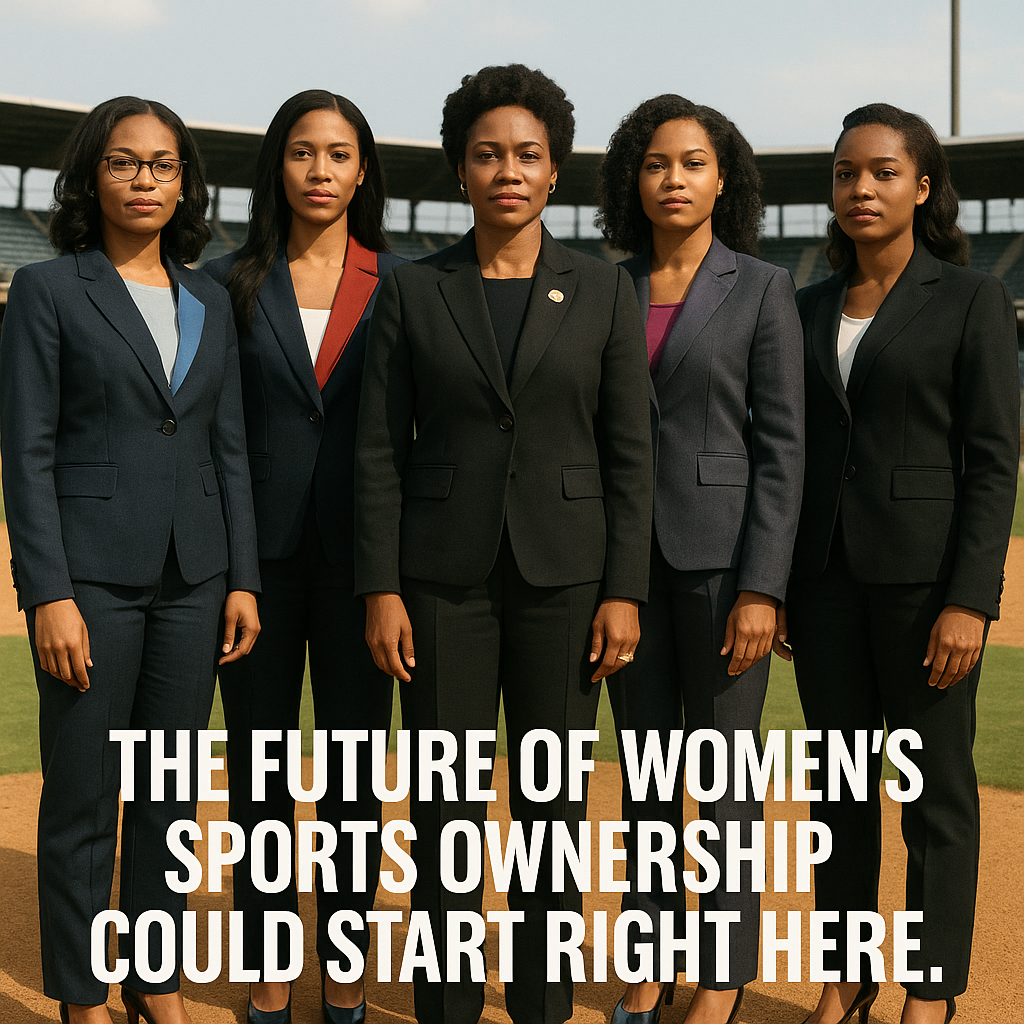
IIt is not enough to cheer from the stands. If HBCU women entrepreneurs and the institutions that produced them are serious about building generational wealth, influence, and visibility in the global sports economy, then ownership, not participation, must be the goal. The emergence of the Women’s Pro Baseball League (WPBL) offers just such a moment. Four inaugural franchises in Los Angeles, San Francisco, New York, and Boston mark the first professional women’s baseball league in the United States since 1954. And yet, amid this historic announcement, one question should echo across the HBCU landscape: Who will own a piece of it?

Ownership in sports is about more than trophies it’s about capital, culture, and control. While athletes inspire, it is owners who shape the economic ecosystem: negotiating television contracts, setting standards for pay equity, deciding where teams are located, and determining which communities benefit from their presence. In American sports, Black ownership remains vanishingly rare. Fewer than a handful of African Americans have ever held majority stakes in professional teams across all major leagues. Among women, ownership representation is even smaller. Yet the HBCU ecosystem comprising over a hundred institutions, $4 billion in endowment capital (though still dwarfed by their PWI counterparts), and a growing class of wealthy and capable alumni possesses both the human and institutional capital to change that reality. Buying a WPBL franchise would be a powerful signal: that African American women are no longer content to merely play or support the game, but to own the infrastructure of it.

The WPBL represents a once-in-a-century opportunity. The last women’s professional baseball league folded in 1954 when postwar America reverted to its gendered labor norms and refused to institutionalize women’s success on the field. Today, that same sport returns in a vastly different economy one defined by media fragmentation, digital storytelling, and institutional investing that rewards niche audiences and strong narratives. Women’s sports are on the rise. The WNBA just received a $75 million investment round from Nike, Condoleezza Rice, Laurene Powell Jobs, and others. Women’s college basketball ratings have exploded, drawing more viewers than some men’s sports. The National Women’s Soccer League has seen team valuations grow fivefold in the past five years. Investors are realizing what the data already shows: undervalued leagues often yield outsized returns once visibility and infrastructure catch up.

The WPBL sits at this exact inflection point. Early investors will not just shape the league they will define its culture, inclusivity, and profitability. This is why HBCU women entrepreneurs, backed by HBCU endowments and alumni capital, should move swiftly. Ownership here is not a vanity project it is a long-term equity position in the fastest-growing frontier of professional sports.

Start-up sports franchises are not the billion-dollar investments of the NFL or NBA. The WPBL’s initial teams are expected to sell for figures in the mid-seven to low-eight figures: expensive, yes, but feasible through a syndicate model combining entrepreneurial capital and institutional backing. A $15 million franchise, for instance, could be financed with $5 million in equity from HBCU women entrepreneurs, $3 million in matching commitments from HBCU endowments through a joint-venture investment arm, $5 million in debt financing via an African American–owned bank or credit union consortium, and $2 million in naming rights, sponsorship pre-sales, and city incentives.

Such a structure distributes risk while maximizing institutional leverage. It also allows for a reinvestment loop: returns from franchise appreciation, media deals, or merchandising could feed back into the endowments that helped fund the acquisition, growing HBCU wealth through private equity in sports. At a modest ten percent annualized return over fifteen years, a $3 million endowment investment could grow to more than $12.5 million, even before accounting for franchise appreciation. The social return of visibility, leadership, and influence would be immeasurable.

HBCU women entrepreneurs already lead some of the most innovative ventures in the country from fintech to fashion to wellness. They have built companies with leaner budgets, higher risk tolerance, and community-driven missions. That same acumen could translate seamlessly into sports ownership. A women-led ownership group rooted in HBCU culture would bring authenticity to a league whose audience is already primed for inclusive storytelling. They would not merely own a team they would shape its identity around empowerment, intellect, and cultural sophistication. Imagine a team whose executive suite reflects Spelman’s academic rigor, Howard’s creative dynamism, and FAMU’s entrepreneurial grit.

Moreover, the investment aligns with HBCU women’s long history of institution building. From Mary McLeod Bethune’s founding of Bethune-Cookman University to Maggie Lena Walker’s creation of the first Black woman–owned bank, African American women have always been at the forefront of merging mission with market. Buying a professional sports franchise is simply a modern continuation of that legacy.

Most HBCU endowments remain undercapitalized. Collectively, they total roughly $4 billion, compared to Harvard’s $50 billion alone. That gap underscores why traditional endowment investing centered on conservative asset classes may not close the wealth chasm. Sports equity, particularly in emerging women’s leagues, represents a hybrid investment: cultural capital meets growth asset. Endowments could carve out a modest allocation for strategic co-investment vehicles aimed at ownership in minority- or women-led sports ventures. Such a move would not only produce potential returns but reposition HBCU endowments as active agents in wealth creation, mirroring how elite universities use their endowments as venture capital arms. The same institutions that once nurtured the first generations of African American scholars could now nurture the first generation of African American women sports owners.

The path to ownership would unfold in phases: coalition building, institutional partnerships, financial structuring, branding, and media engagement. The first step would be forming an HBCU Women Sports Ownership Council an alliance of HBCU alumnae entrepreneurs, investors, attorneys, and sports professionals. Its mission would be to identify a WPBL franchise opportunity, conduct due diligence, and negotiate terms. Next, endowments, foundations, and alumni associations could serve as anchor investors via a pooled HBCU Sports Ownership Fund. African American–owned financial institutions would provide credit facilities, ensuring that capital circulation strengthens Black banking. The team’s branding could reflect HBCU values of intellect, resilience, and excellence. Annual “HBCU Heritage Games,” scholarships for women in sports management, and partnerships with K–12 baseball programs would ensure the franchise deepens institutional impact.

By the time Opening Day 2027 arrives, the vision becomes real. A stadium in Atlanta or Houston cities with deep HBCU roots roars with excitement. The team, perhaps named The Monarchs in tribute to the Negro Leagues, takes the field in uniforms stitched by a Black-owned apparel company. The owner’s suite is filled not with venture capitalists, but HBCU women—founders, engineers, bankers, educators—raising glasses to history. Every ticket sold funds scholarships. Every broadcast includes HBCU branding. Every victory multiplies across the ecosystem, from the university’s endowment statement to the little girl in the stands whispering, “She looks like me.” That is the multiplier effect of ownership.

A defining mark of this ownership group’s legacy should not only be who owns the team but who benefits from it. When an HBCU-led syndicate buys a women’s professional baseball team, it must ensure that every dollar of the fan experience circulates through Black and HBCU-centered businesses. Ownership without ecosystem-building simply recreates dependency; real power multiplies through participation.

An HBCU women’s ownership group has the chance to build an authentically circular sports economy, where concession stands, catering services, and retail vendors reflect the same entrepreneurial DNA as the team itself. The model for this begins with women like Pinky Cole, founder of Slutty Vegan, who transformed plant-based dining into a cultural and economic phenomenon through purpose-driven branding and community investment. Her ability to merge food, culture, and empowerment offers a blueprint for how HBCU women entrepreneurs could anchor the ballpark experience in ownership and identity.

Complementing this vision is the role of HBCU-owned service enterprises like Perkins Management Services Company, founded by Nicholas Perkins, a Fayetteville State University alumnus and owner of Fuddruckers. Perkins Management operates food services across HBCUs and federal institutions, combining operational scale with cultural competence. Partnering with Perkins Management to run stadium concessions or hospitality would ensure that the team’s operations mirror the ownership group’s values efficiency, reinvestment, and excellence.

Such an approach would transform the stadium into an economic hub for HBCU enterprise. Food vendors would come from HBCU alumni-owned companies. Uniform suppliers could source from HBCU textile programs. Merchandise stands could feature HBCU student designs. Hospitality contracts would prioritize HBCU-affiliated culinary programs. The music during games could feature HBCU marching bands or alumni artists. Even the stadium’s artwork could highlight HBCU painters and photographers, ensuring every sensory detail honors the ecosystem that made the ownership possible. A fan buying food or merchandise would not just be a consumer they’d be participating in a shared mission to strengthen African American institutions.

This reimagined sports environment would also offer internships, apprenticeships, and consulting opportunities for HBCU students and faculty. Business students could study operations. Communication majors could intern with the PR team. Engineering departments could advise on stadium energy efficiency. Each partnership would turn the franchise into a living classroom of applied HBCU excellence.

At a time when major leagues outsource globally, a women’s baseball franchise owned by HBCU women could reimagine localization and reinvestment as competitive advantage. Every game day would circulate dollars through a self-sustaining ecosystem that feeds back into HBCU entrepreneurship. Because when the ballpark itself is powered by HBCU women’s enterprise from boardroom to concession stand it ceases to be a venue. It becomes a living institution.

If the Women’s Pro Baseball League truly takes off, early ownership will be the golden ticket. African American investors have often entered markets too late once valuations skyrocket and access narrows. Now, before the WPBL matures, is the time for HBCU institutions and their entrepreneurial alumnae to act collectively. The call is not for charity but for strategy. Pooling even a fraction of the capital that circulates annually among HBCU alumni could change the power dynamic in sports forever. Endowments could stake equity. Alumni could invest through private funds. Students could study the economics of their own institution’s franchise. The result would be a feedback loop of wealth, wisdom, and visibility.

The first women’s professional baseball league in seventy years deserves first-of-its-kind ownership and no community is more qualified to deliver it than HBCU women. Because when HBCU women own the field, the entire game changes.

Disclaimer: This article was assisted by ChatGPT.

When Intel Leaves: Endowments, NCCU, and the $2.5 Billion NBA Paradox

“I know I got it made while the masses of black people are catchin’ hell, but as long as they ain’t free, I ain’t free.” – Muhammad Ali

The recent news that Intel will discontinue its $1 million annual funding of North Carolina Central University’s (NCCU) Technology Law and Policy Center is more than just a line item in the university’s budget. It is a sharp reminder of how precarious institutional development becomes when African American colleges and universities rely on the European American corporate cycle of generosity and withdrawal. Where is African American corporate philanthropy is a pertinent question, but an article for another day.

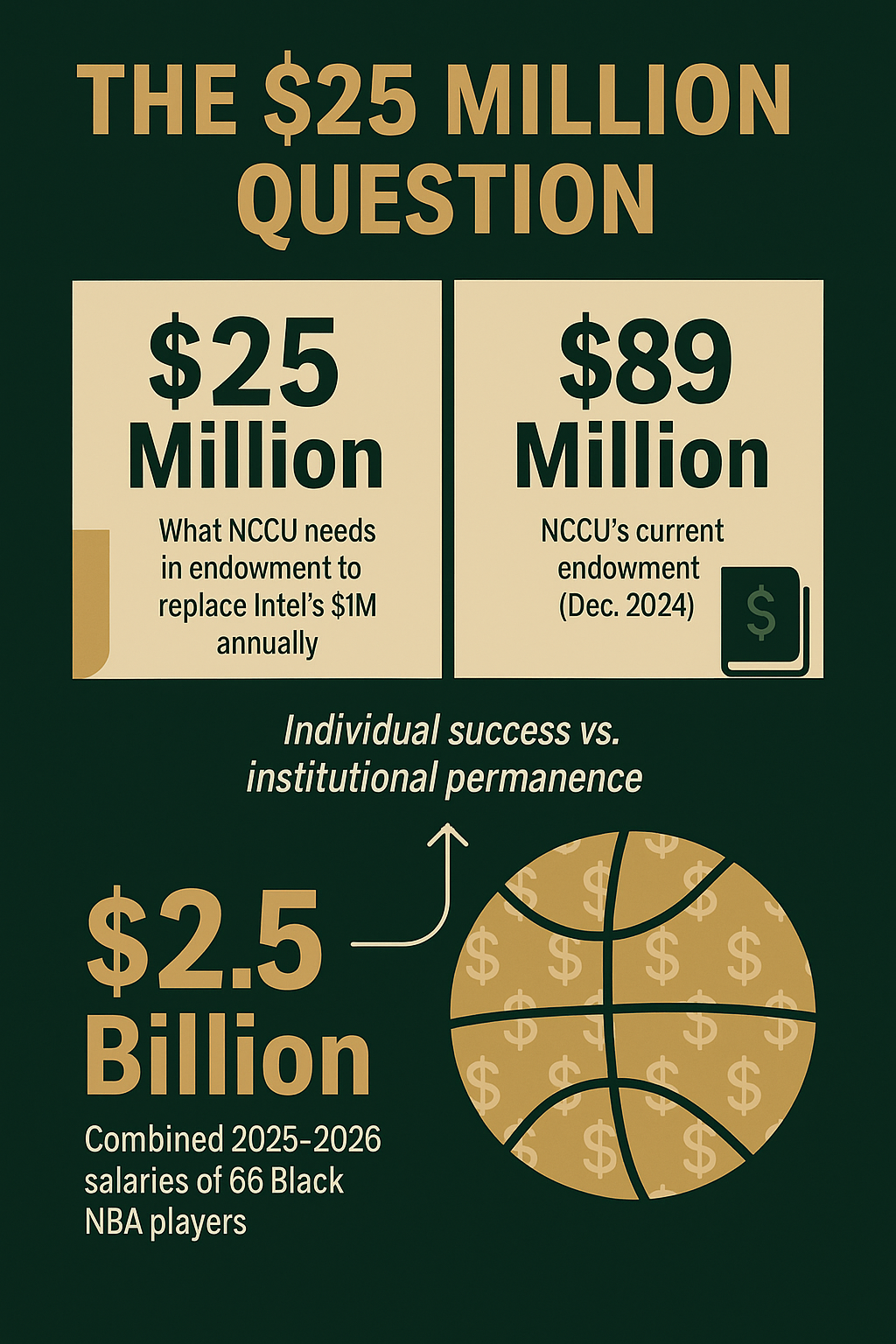
Intel’s departure leaves a gap that must now be filled through other means. But the mathematics of filling it points to a broader truth: without substantial, permanent endowments, HBCUs will remain vulnerable to the political and financial whims of European American corporations. To replace $1 million in annual program funding, NCCU would need to raise between $20 million and $25 million in endowment principal assuming a 4–5% annual spending rate, the standard in higher education finance.

The fact that an entire academic pipeline, designed to produce future African American lawyers and policymakers, can be destabilized by a single corporate decision underscores the fragility of HBCU institutional power. And it raises a haunting contrast: while 66 African American NBA players will together earn $2.5 billion in salaries this upcoming season, not a single African American university controls an endowment robust enough to insulate it from the kind of disruption Intel’s withdrawal has now caused.

The mechanics are straightforward. Endowments work by pooling donated capital, investing it, and spending a sustainable portion of annual returns—usually 4–5%. To replace Intel’s $1 million annual gift, NCCU must therefore build an endowment of $20–25 million. This is not extraordinary by university standards. At most predominantly white institutions (PWIs), a $25 million endowment is considered modest. At Harvard, Yale, or Stanford, it would not even make the footnotes. Yet for NCCU, an institution with an endowment of $89 million as of December 2024, the sudden need for another $20–25 million underscores the gap between HBCUs and their white peers.

The underlying truth is that corporate funding is inherently unstable. It ebbs and flows with market cycles, political administrations, and corporate priorities. Endowments, however, endure across generations. The very act of raising such capital is itself an exercise in institutional power: it demonstrates to the world that the university and its community can stand on their own financial feet.

Intel did not single out NCCU maliciously. The company is undergoing a profound transformation, not least because the U.S. government has become its largest shareholder after a multi-billion-dollar deal with the Trump administration. Like other firms facing political scrutiny, Intel is quietly shedding high-profile DEI commitments. For NCCU, however, the effect is real. The Technology Law and Policy Center was designed to provide African American law students with training in emerging technology and policy—a space historically closed to Black lawyers. It also featured internships at Intel, summer placements, and the now-defunct “Intel Rule,” which required outside law firms to staff diverse teams if they wanted Intel’s business. Now, without a replacement funding mechanism, the Center risks contraction. Students will still enroll. Faculty will still teach. But the acceleration that Intel’s money provided—the ability to recruit nationally, to build cutting-edge programming, to give students exposure to high-tech legal practice—will slow.

Enter the paradox of the NBA’s 66 Black players earning $25 million or more in the upcoming season. Collectively, those 66 players will earn $2.5 billion in salary during the 2025–2026 season. Each of these players individually makes at least what NCCU would need to permanently replace Intel’s $1 million annual commitment through endowment. The collective sum is staggering: $2.5 billion in one season—enough to seed $25 million endowments at 100 HBCUs.

It is not about individual responsibility. No one player can be expected to save an institution. But collectively, the paradox points to the imbalance between African American individual wealth and African American institutional poverty. Even if just 10% of that wealth—$250 million—were organized and directed into HBCU endowments, the result could replace Intel’s contribution not only at NCCU but across multiple campuses. Yet there is no mechanism, no institutional strategy, no coordinated pipeline that directs such flows into African American universities. This is not new. For decades, African American excellence has been harvested at the level of the individual, while African American institutions have remained underfunded. The NBA is simply the latest, most visible example.

The Intel withdrawal reminds us of a hard truth: reliance on outside benevolence is not a strategy for power. It is, at best, a strategy for survival. Corporate giving is always the first budget item to shrink when recession looms or political winds shift. For HBCUs, this means programs rise and fall on decisions made in Silicon Valley or Wall Street boardrooms—far removed from Durham, Tallahassee, Baton Rouge, or Montgomery. The vulnerability is compounded when African American communities assume that the generosity of corporations will substitute for building our own endowments. The danger is not simply financial but cultural: it conditions us to believe that power comes from outside, not from within.

Intel’s $1 million a year was not charity—it was investment. It bought Intel goodwill, a trained pipeline of diverse lawyers, and reputational capital in the DEI era. Now that DEI is politically unpopular, the investment is deemed expendable. This is why endowments matter. They are not subject to the quarterly report or the election cycle. They anchor institutions in the long term.

Let’s be clear about the scale of the challenge. The combined endowments of all HBCUs hover around $4 billion, compared to more than $800 billion at PWIs. Harvard alone has an endowment of nearly $52 billion. NCCU’s endowment stands at $89 million. To raise an additional $20–25 million to replace Intel’s support would represent a 22–28% increase in its current endowment base. Such a leap is achievable—but it requires strategy. It means cultivating alumni giving systematically. It means leveraging African American wealth beyond alumni, drawing in professional athletes, entertainers, and entrepreneurs. It means creating vehicles—donor-advised funds, pooled endowments, institutional investment cooperatives—that make giving both efficient and impactful. Most of all, it means shifting mindset. We must stop thinking of endowments as luxuries reserved for Ivy League institutions. They are necessities. They are the only way to secure institutional independence.

The Intel decision can serve as a turning point, if we are willing to see it clearly. Corporations are not institutional guardians. They may play a role, but they will not underwrite our survival. Their goals are their own. When interests diverge, as they now have, funding vanishes. Individual wealth must be institutionalized. The contrast between NBA salaries and HBCU endowment poverty is not about shaming athletes. It is about building structures that make institutional giving the default, not the exception. Endowments are the only safety net. No government program, no corporate sponsorship, no philanthropic fad can substitute. Only endowments give institutions perpetual capacity to fund themselves.

What would it take, concretely, for NCCU to raise the $25 million needed? A handful of major gifts in the $2–5 million range from alumni, athletes, or African American business leaders could jump-start the campaign. NBA, NFL, and WNBA players could be recruited to create a pooled fund. Instead of individual gifts, imagine a collective “Athletes for HBCU Endowments” initiative. African American foundations and community funds could direct grants toward seed capital, matched by alumni. If every NCCU law graduate gave $1,000 a year for ten years, the cumulative effect would approach the tens of millions. NCCU could also partner with African American-owned banks and investment firms to maximize returns and circulate dollars within the community. The strategy would not only replace Intel but set a precedent: when outside money leaves, we do not shrink. We build.

The broader question is not whether NCCU will survive the loss of Intel’s support. It will. The real question is whether African American institutions will continue to live in the shadow of dependency—or whether we will use moments like this to chart a new course. The paradox of $2.5 billion in NBA salaries versus the need for a $25 million endowment is not just a rhetorical flourish. It is a mirror held up to African America. It asks whether we will continue to celebrate individual wealth while neglecting collective survival.

Every dollar of Intel’s withdrawal can be replaced. But only if African American wealth is organized. Only if alumni, athletes, and entrepreneurs see endowments not as gifts but as obligations. Only if we remember that the true measure of power is not what any one of us earns, but what we can build together.

Intel has reminded us of an uncomfortable truth: corporate giving is temporary. Endowments are permanent. To replace $1 million a year, NCCU needs $25 million in endowment. That number is not insurmountable. It is the equivalent of one NBA salary in a single season. There are 66 African American players earning at least that much this year alone, with combined salaries of $2.5 billion. The juxtaposition is stark: individuals flourish while institutions starve. The future of HBCUs—and the broader African American ecosystem—depends on closing that gap. Until African America learns to institutionalize its wealth, every Intel withdrawal will feel like a crisis. But the day we build our endowments, such exits will be footnotes. And our institutions will finally stand on the firm ground they have always deserved.

Disclaimer: This article was assisted by ChatGPT.

Give Black App: A Digital Gatekeeper For African American Philanthropy & Institutional Capital

“We must invest in ourselves. Without our own institutions, we will always be at the mercy of others.” – Mary McLeod Bethune

In the long arc of African American economic life, a recurring pattern emerges: the institutions most critical to our survival are consistently starved of capital, while the broader society thrives off of our labor, culture, and creativity. From Reconstruction-era mutual aid societies to the undercapitalized HBCUs of today, the struggle has never been whether African Americans are generous, but whether that generosity is systematically directed into institutions that can build durable power.

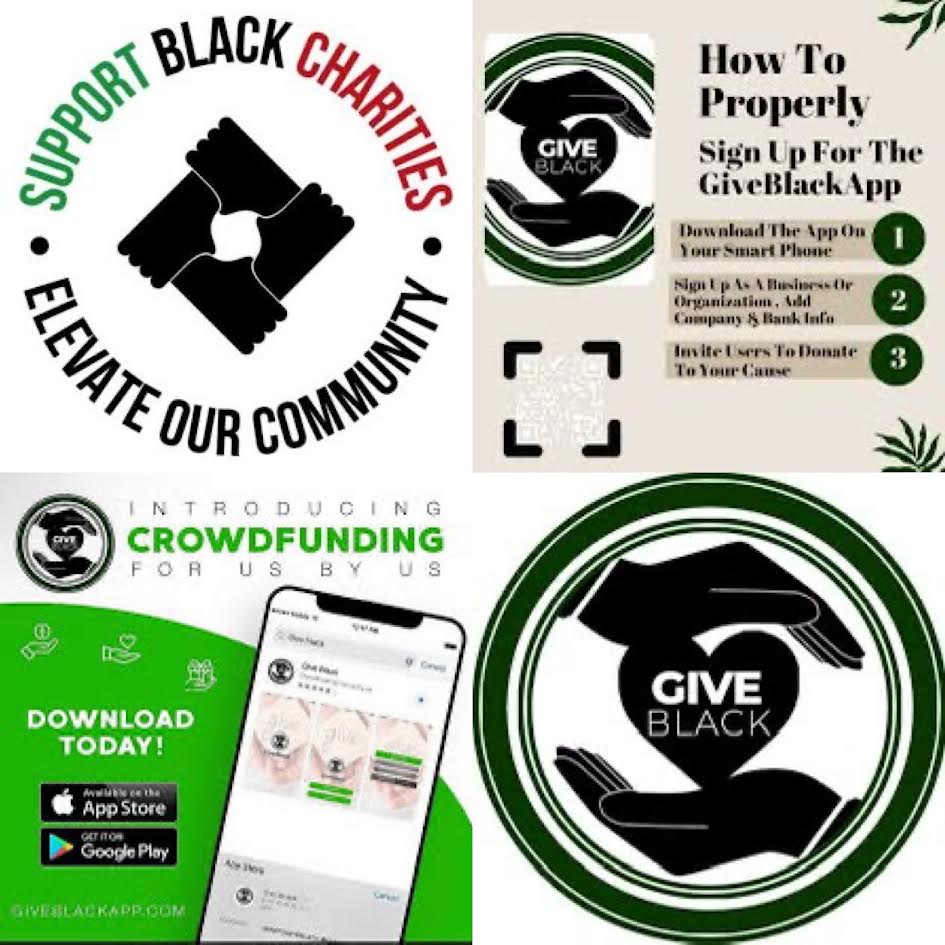
The Give Black App, founded by David C. Hughes, Alexus Hall, and Fran Harris, positions itself at this inflection point. It is not simply an app but a digital strategy—one attempting to reshape the flow of African American philanthropy and donations by curating, centralizing, and amplifying support for Black-led institutions.

The Context of Underfunding

African American nonprofits receive disproportionately less funding compared to their White counterparts. A 2020 Bridgespan study found that unrestricted net assets of White-led nonprofits were 76% larger than those of Black-led nonprofits, while revenues were 24% higher. These disparities compound over time. For HBCUs, the story is even starker: the endowments of all 100+ HBCUs combined is less than 1/10th of Harvard University’s alone.

Despite African America’s estimated $1.8 trillion in annual buying power, only a fraction is captured by its own institutions. Much of African American giving remains individual-to-individual or church-centered, providing immediate relief but not the kind of long-term institutional scaffolding needed to compete with White or global capital. Platforms like Give Black attempt to redirect that generosity into a framework where dollars reinforce permanence.

Building the Infrastructure of Giving

Give Black’s strength lies in infrastructure, a word often overlooked in philanthropy. The app operates as a digital gatekeeper, cataloguing Black-led nonprofits and enabling donors—whether individuals, alumni associations, or grassroots organizations—to find and fund them with ease.

This may seem simple, but its implications are profound. In an environment where discoverability is one of the greatest barriers for Black-led organizations, Give Black centralizes attention. For the countless nonprofits that lack robust marketing budgets, development officers, or national visibility, the app provides a seat at the table they would otherwise be denied.

The team itself reflects intentional design. Hughes, a Morehouse and Prairie View alumnus, carries the academic gravitas to engage institutions; Hall, with a background in cybersecurity and software sales, grounds the platform’s technical operations; Harris, a lifelong advocate of Black love and economic empowerment, provides the cultural grounding and marketing voice. Alongside them stand directors rooted in community engagement, finance, athletics, and science. Together, they represent a cross-section of African American life that mirrors the very community the app seeks to serve.

Philanthropy Meets Technology

Unlike GoFundMe or Benevity, which serve broad audiences, Give Black narrows its focus: African American-led institutions. This specificity is both its greatest strength and its potential vulnerability. By making African American philanthropy visible and trackable, the app attempts to normalize institutional giving within the community itself.

African American donors, long used to personal giving—funeral funds, tuition help, emergency assistance—are now asked to see their dollars not just as charity but as investment. An app that allows for transparency, accountability, and impact measurement may finally bridge the gap between intent and sustained institutional support.

Technology also democratizes giving. Younger generations, accustomed to digital wallets and mobile donations, are unlikely to write checks or mail contributions. By existing where they already transact, Give Black normalizes philanthropy as part of daily life. With proper marketing, it could serve as a digital equivalent of the collection plate—except one that sends dollars to Black think tanks, schools, health clinics, and endowment foundations rather than solely to Sunday offerings.

The Role of Fran Harris

Much of the initial confusion about Give Black’s leadership arises from Fran Harris’s name. She openly jokes about it—she is not the Fran Harris who was a WNBA champion or Shark Tank winner, though many assume otherwise. Instead, she distinguishes herself as someone whose “entire life has been about Black love and economic empowerment.”

That distinction matters. Whereas celebrity often drives visibility in African American philanthropy, Harris positions herself not as a star but as a steward of a broader vision. Her work focuses on the storytelling and cultural marketing needed to align African American giving with institutional capital. In a sense, her humor in addressing the name confusion underscores the seriousness of her actual role: grounding the app’s message in authenticity rather than celebrity.

The Gaps in the Strategy

Despite its promise, Give Black faces hurdles. First, fundraising expertise at the highest level appears limited within the core team. Major philanthropy is an industry of its own, requiring seasoned development officers capable of cultivating seven- and eight-figure gifts. Without this, Give Black risks becoming a platform for small-dollar giving—important, but insufficient for closing institutional capital gaps.

Second, technological depth must match ambition. While Hall’s cybersecurity background provides operational credibility, scaling a fintech-style platform requires CTO-level leadership. Issues of compliance, data integrity, and user trust are not optional—they are the foundation of sustainability.

Third, policy and compliance matter. Donations intersect with financial regulations, nonprofit law, and IRS oversight. To become the definitive gateway for Black giving, Give Black must not only build a sleek front end but also a back-end architecture that can withstand regulatory scrutiny and instill donor confidence.

Where the Opportunities Lie

The greatest opportunities for Give Black lie in institutional self-reliance.

One clear pathway is through alumni networks. HBCU alumni giving rates remain in the single digits, compared to 20–30% at elite PWIs. If Give Black positioned itself as the official conduit for alumni donations, it could help double or triple those rates over time. That alone would shift millions into endowments and operating budgets across the HBCU ecosystem.

Another opportunity lies in membership-based organizations—from professional networks to civic associations. Instead of dues going solely toward programming, portions could be funneled into long-term institutional giving through Give Black, creating a culture of collective philanthropy.

The Pan-African Diaspora represents yet another opening. African and Caribbean communities abroad are increasingly connected digitally. Give Black could expand to become a Pan-African philanthropic bridge, enabling solidarity between African Americans and global Black communities. Diaspora donors, often seeking trustworthy channels for giving, could find in Give Black a centralized, transparent platform.

Finally, the most transformative opportunity is to integrate endowment-building features directly into the app. Too much African American giving is trapped in the cycle of operating expenses. By redirecting portions of donations into permanent capital funds, Give Black could help institutions create reserves that outlast political climates and economic downturns.

Lessons from History

The urgency of Give Black’s mission must be seen against history. During the early 20th century, White-controlled philanthropy dictated the survival of many HBCUs. Institutions like Hampton and Tuskegee often relied on Northern industrialists whose donations came with ideological strings attached. The absence of African American-controlled philanthropic infrastructure meant dependency—and dependency always meant vulnerability.

Today, African American institutions still operate under the shadow of that dependency. Foundation funding remains racially skewed, and government support is often politically weaponized. Give Black, by offering a decentralized and community-driven alternative, challenges that cycle.

But history also warns: movements that lack discipline or scale are easily absorbed or ignored. Just as the Negro Leagues produced baseball talent but lacked the capital to maintain independence, so too can African American philanthropy generate excitement but fail to sustain institutional life if it is not channeled strategically.

The Verdict

Give Black App is not merely a digital donation tool. It is a test case: can African America leverage technology to redirect its wealth into its own institutions? The team’s composition, heavy in HBCU roots, marketing authenticity, and community engagement, suggests it understands both the stakes and the culture.

Still, the app must avoid the trap of becoming a feel-good project without measurable institutional outcomes. Its long-term success will be determined by whether it can:

  1. Secure partnerships with HBCUs, alumni associations, and membership-based organizations.
  2. Develop deep fundraising and compliance infrastructure.
  3. Normalize institutional giving across African American households.

If it does, Give Black could evolve into a cornerstone of African American institutional development—a kind of digital Freedman’s Bureau, redistributing not charity but power.

For African America, the stakes could not be higher. In an era where White nonprofits sit on multibillion-dollar endowments, while Black nonprofits scrape for survival, the question is not whether we are generous. It is whether our generosity is building the kind of institutions that ensure survival for centuries, not just survival for today.

Give Black, if scaled with vision and discipline, may finally provide the infrastructure to answer that question with a resounding yes.

When the Numbers Don’t Add Up: Shannon Sharpe’s $10 Million Settlement (Offer) and Savannah State University’s $12 Million Endowment

“If we don’t support our own institutions, who will? Our future depends on it.” – Dr. Johnnetta B. Cole

In a society where celebrity controversy often overshadows institutional legacy, the recent $10 million legal settlement offer by Shannon Sharpe is notable not just for its allegations, but for what it inadvertently reveals about the chasm between Black celebrity wealth and the underfunded institutions that shape it.

Sharpe, an NFL Hall of Famer turned sports media luminary, is embroiled in a sexual assault lawsuit in April 2025 that has added fuel to the fodder over his public image for years. The allegations, dating back to 2021, accused him of sexual assault and misconduct. Though the terms of the settlement do not admit guilt, the figure—$10 million—is enough to reverberate well beyond the courtroom. Particularly for Savannah State University, Sharpe’s alma mater, whose entire endowment hovers just north of $12 million.

That a single lawsuit settlement could nearly eclipse the full financial endowment of a university—an institution that has educated generations of Black students since its founding in 1890—demands attention. It is more than legal coincidence; it is cultural commentary. Sharpe’s settlement and Savannah State’s endowment share more than proximity in value—they reflect a profound misalignment between individual Black success and collective Black institutional health.

Celebrity Capitalism vs. Institutional Capital

Sharpe’s alleged settlement offer arrives at a time when he is more visible than ever. From ESPN panels to viral podcast interviews, he has crafted a new media identity grounded in charisma, cultural commentary, and athletic credibility. He is a multimillionaire many times over, and for much of the public, a figure of Black excellence.

And yet, while the scandal has put his reputation into question, the institutional damage is more structural than sensational. Savannah State University, like most HBCUs, remains chronically underfunded. In Georgia, the flagship University of Georgia enjoys an endowment exceeding $1.8 billion. Savannah State’s $12 million looks less like a war chest than a coin jar.

This contrast is not unique. Harvard’s endowment, currently over $50 billion, generates more passive income in a single day than most HBCUs earn annually. Meanwhile, Black cultural, entertainment, and sports figures continue to accumulate individual wealth—largely without corresponding reinvestment in the institutions that launched their journeys.

In Sharpe’s case, it is particularly jarring. He has long spoken with pride about Savannah State, often positioning his ascent from a small HBCU to NFL stardom as proof of grit, talent, and perseverance. But the question remains: can Black America afford to celebrate individual ascent while its institutions struggle to survive?

Institutions as the Forgotten Priority

The logic of endowments is simple: they are long-term capital. Through careful management, they yield investment income that sustains a university’s operations—faculty salaries, scholarships, research grants, infrastructure. A $12 million endowment, assuming a 5% annual drawdown, provides just $600,000 per year. That’s not enough to fund a single major building renovation or hire a cohort of tenure-track faculty.

Yet for a fraction of what he has paid in legal settlements, Sharpe—or any number of successful HBCU alumni—could fundamentally change the trajectory of such institutions. This is not to single out Sharpe, but to highlight the imbalance. In an ideal world, the very wealth that is now being paid out in settlements would be instead building libraries, research labs, and scholarship funds.

This tension is particularly visible among athletes and entertainers. Black America’s most visible ambassadors often emerge from institutions that are themselves invisible in the national philanthropic conversation. According to UNCF, the combined endowments of all HBCUs total less than $5 billion. The Ivies, by contrast, hold over $200 billion in endowment assets.

Culture, Crisis, and the Limits of Individualism

Sharpe’s settlement speaks to more than a personal reckoning—it is a cultural moment. It raises questions about power, accountability, and how society arbitrates guilt and innocence outside the courtroom. But for the Black community, it should also prompt deeper reflection on how fame and fortune are managed—and how institutions are too often left behind.

There is a troubling pattern: institutions that produce Black talent are celebrated in name, while being abandoned in practice. Alumni homecomings become nostalgic affairs, rich in ritual but poor in revenue. HBCUs are used as cultural references in music and fashion, but rarely as investment priorities.

The result is that even as African Americans make gains in representation and cultural power, their institutions remain at risk of irrelevance or collapse. The stakes are not merely educational—they are existential. Without strong institutions, there can be no sustainable community power.

What a $10 Million Gift Would Mean

Imagine instead that $10 million were a donation, not a payout. At Savannah State, that amount would nearly double the endowment overnight. It could launch a center for Black media studies, a school of sports journalism, or fund full scholarships for dozens of students. It could digitize archives, attract talent, and fund study-abroad programs that broaden horizons.

Better yet, it could serve as a challenge grant—a call for other high-profile HBCU alumni to match it, dollar for dollar. Such a campaign could transform the entire financial landscape of HBCUs in a single generation.

There is precedent. Oprah Winfrey’s $13 million donation to Morehouse College, Robert F. Smith’s debt forgiveness gesture at Morehouse’s graduation, and Reed Hastings’ $120 million donation to Spelman, Morehouse, and UNCF during the racial reckoning of 2020 showed what’s possible. But sporadic generosity is not a strategy. What’s needed is a systemic culture of giving—an institutional ethos that reorients Black wealth toward Black infrastructure.

Moving from Scandal to Structure

Sharpe, like many public figures, is navigating a complex personal and professional moment. Settling a case of this magnitude inevitably invites scrutiny. But what comes next is more important. Can this moment be a catalyst—not just for personal reflection, but for public responsibility?

Celebrity scandals are ephemeral. Institutions, if cared for, are permanent. The opportunity now is for Sharpe—and others in similar positions—to pivot toward legacy-building. That means using their platforms not only to defend their names, but to elevate their alma maters. To protect not just brand equity, but intellectual capital. To trade spectacle for structure.

A Future Worth Investing In

Savannah State University is not just a school—it is a symbol of survival, intellect, and potential. Its alumni include judges, scientists, teachers, engineers, and businesspeople. It deserves more than to be a footnote in a celebrity controversy. It deserves capital, vision, and strategic philanthropy.

In the end, the numbers don’t lie. A $10 million lawsuit may capture headlines. But a $12 million endowment defines futures. The question is not what Shannon Sharpe did or didn’t do—but what he and others like him will do next.

If fame is fleeting and fortune unpredictable, then perhaps the wisest investment is the one that cannot be taken away: the institutions that built you.