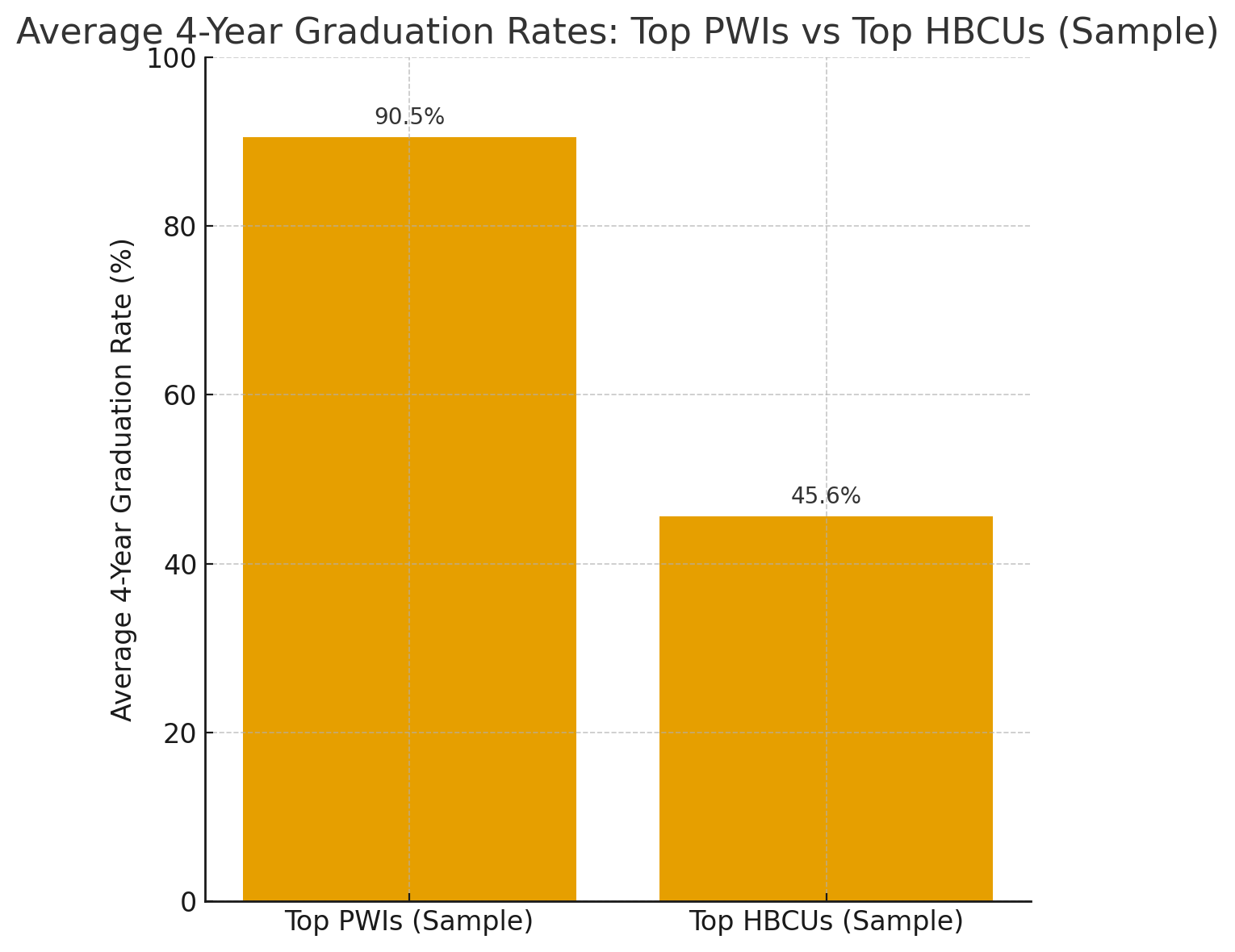
Category Archives: Philanthropy

Why African American Institutions Must Stop Chasing Donations and Start Building Endowments: The Investment Income Crisis in Black Philanthropy

“Philanthropy reflects not just generosity, but power. When African American foundations hold millions while their counterparts hold billions, the capacity to shape society is written in the balance sheets.” – HBCU Money Editorial Board

In the nonprofit and philanthropic world, financial statements tell a story much deeper than annual fundraising drives or program headlines. For African American institutions in particular, the real question of institutional power is not how much money comes in each year, but how much money is working on their behalf every day through investment income. The gap between African American legacy institutions and the nation’s major philanthropic foundations makes this truth impossible to ignore.

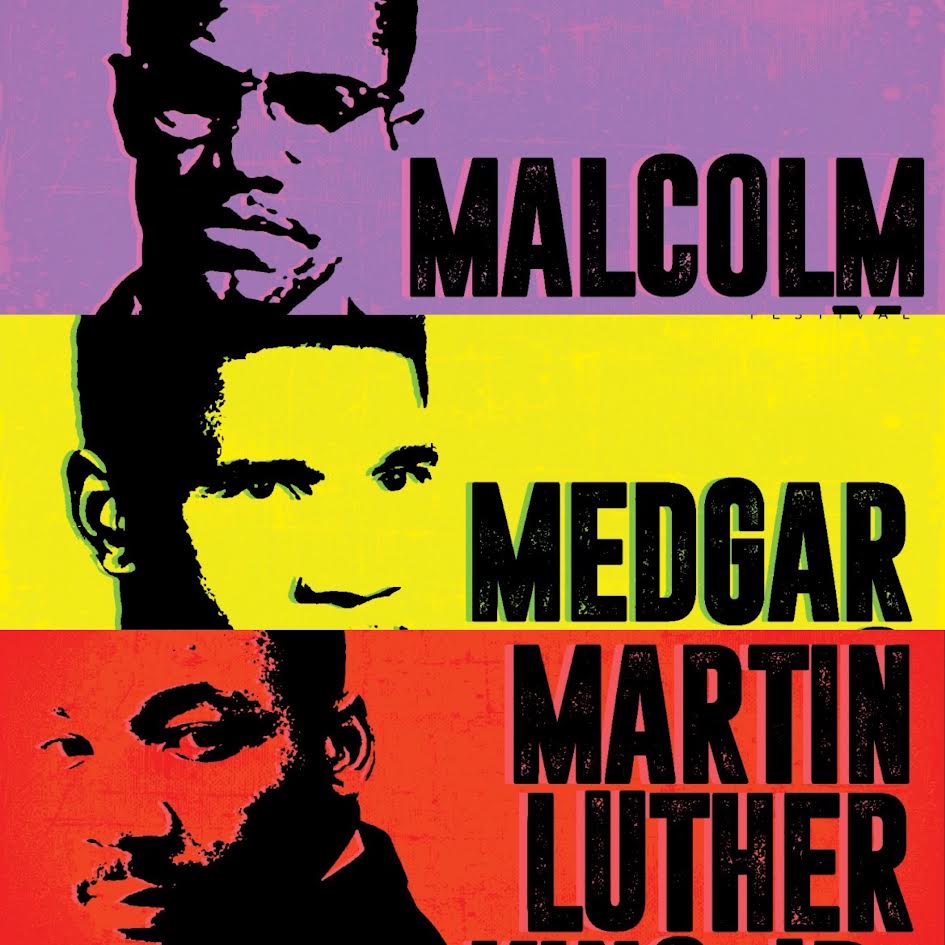
When most people evaluate nonprofits, they look at annual revenue: how much an institution raised in donations, how much it earned from programs, how much it reported on the IRS Form 990. By this metric, many organizations appear healthy. The King Center in Atlanta, for instance, reported $9.1 million in revenue in 2022, and the Malcolm X & Dr. Betty Shabazz Center reported $1.4 million in the same year. Even the Medgar & Myrlie Evers Institute, operating at a much smaller scale, posted $107,000 in revenue in 2023. Yet revenue alone is a deceptive indicator. It measures activity, not stability. Donations can be fickle. Program revenue can evaporate in downturns. Grants can dry up with shifts in political winds. A true measure of institutional health is whether an organization can generate its own independent cash flow — investment income.

The numbers reveal just how stark the divide is. The King Center, the strongest among African American legacy nonprofits, earned $788,000 in investment income in 2022. That represented nearly 9 percent of its total revenue, cushioning its operations with reliable, asset-driven support. By contrast, the Shabazz Center earned just $1,500 in investment income, and the Evers Institute earned nothing at all. Both remain almost entirely dependent on yearly contributions and program dollars. When compared to America’s powerhouse philanthropic institutions, the difference borders on staggering. The Ford Foundation generated $1.2 billion in investment income in 2022 — over 1,500 times what the King Center earned. The Rockefeller Foundation earned $120 million. The Walton Family Foundation, tied to the heirs of Walmart, brought in $240 million. The Bloomberg Family Foundation, anchored by the billionaire media mogul, generated $344 million. In this world, investment income is not supplemental; it is the engine. It underwrites operations, absorbs shocks, and ensures that missions continue even in the absence of donor enthusiasm. Investment portfolios are endowments of power, spinning off influence year after year.

This also clarifies why net income, the difference between revenue and expenses, is often misunderstood as a sign of strength. The King Center ran a $1.28 million surplus in 2022, while the Ford Foundation ran a $520 million deficit. Which institution is stronger? The answer is obvious: Ford. It can afford to run half a billion dollars in the red precisely because it has tens of billions in assets generating massive returns. Its deficit is a choice, not a crisis. By contrast, the Medgar Evers Institute’s deficit of just $25,000 in 2023 threatens its very survival because it has no investment base to fall back on. Net income measures short-term breathing room; investment income measures long-term power.

The contrast becomes sharper when examining the Steward Family Foundation, tied to David Steward, the wealthiest African American man. In 2023, the foundation reported $12.5 million in revenue and $857,000 in surplus, but just $29,000 in investment income. It holds only $22,000 in assets. Despite extraordinary personal wealth, the foundation is structured as a pass-through, distributing annual gifts rather than building a permanent, income-generating endowment. The Steward paradox highlights a broader challenge: African American wealth, even when achieved at extraordinary levels, has not consistently been institutionalized into enduring investment vehicles capable of generating influence across generations.

The implications of this reality are profound. Institutions without investment income are vulnerable to political tides, donor fatigue, and economic downturns. Their missions — whether preserving the legacy of Martin Luther King Jr., Malcolm X, or Medgar Evers — rest precariously on year-to-year survival. By contrast, the Ford or Rockefeller foundations can guarantee their voices in the public square for centuries. This imbalance in institutional financing means African American causes remain at the mercy of others’ benevolence while rival institutions are powered by their own wealth.

If investment income is the true measure of power, then African American institutions must pursue one clear priority: endowments. Not just annual fundraising, not just program grants, but the deliberate accumulation of assets whose returns will underwrite their missions indefinitely. Imagine if the King Center’s $788,000 in annual investment income could be multiplied tenfold or a hundredfold. Imagine if the Shabazz Center or the Medgar Evers Institute could fund their programming entirely from endowment returns. Imagine if the Steward Family Foundation transformed from a pass-through into a billion-dollar perpetual institution. This is the difference between surviving and shaping the future.

Investment income is the institutional equivalent of compound interest in personal finance. It rewards patience, discipline, and foresight. It separates organizations that merely exist from those that endure. For African American institutions, the lesson is clear: to secure legacies, to project influence, and to build power, they must shift their focus from short-term fundraising to long-term asset building. Only then can African American institutions stand as peers to Ford, Rockefeller, Walton, and Bloomberg — not just in name, but in financial reality.

Disclaimer: This article was assisted by ChatGPT.

When Intel Leaves: Endowments, NCCU, and the $2.5 Billion NBA Paradox

“I know I got it made while the masses of black people are catchin’ hell, but as long as they ain’t free, I ain’t free.” – Muhammad Ali

The recent news that Intel will discontinue its $1 million annual funding of North Carolina Central University’s (NCCU) Technology Law and Policy Center is more than just a line item in the university’s budget. It is a sharp reminder of how precarious institutional development becomes when African American colleges and universities rely on the European American corporate cycle of generosity and withdrawal. Where is African American corporate philanthropy is a pertinent question, but an article for another day.

Intel’s departure leaves a gap that must now be filled through other means. But the mathematics of filling it points to a broader truth: without substantial, permanent endowments, HBCUs will remain vulnerable to the political and financial whims of European American corporations. To replace $1 million in annual program funding, NCCU would need to raise between $20 million and $25 million in endowment principal assuming a 4–5% annual spending rate, the standard in higher education finance.

The fact that an entire academic pipeline, designed to produce future African American lawyers and policymakers, can be destabilized by a single corporate decision underscores the fragility of HBCU institutional power. And it raises a haunting contrast: while 66 African American NBA players will together earn $2.5 billion in salaries this upcoming season, not a single African American university controls an endowment robust enough to insulate it from the kind of disruption Intel’s withdrawal has now caused.

The mechanics are straightforward. Endowments work by pooling donated capital, investing it, and spending a sustainable portion of annual returns—usually 4–5%. To replace Intel’s $1 million annual gift, NCCU must therefore build an endowment of $20–25 million. This is not extraordinary by university standards. At most predominantly white institutions (PWIs), a $25 million endowment is considered modest. At Harvard, Yale, or Stanford, it would not even make the footnotes. Yet for NCCU, an institution with an endowment of $89 million as of December 2024, the sudden need for another $20–25 million underscores the gap between HBCUs and their white peers.

The underlying truth is that corporate funding is inherently unstable. It ebbs and flows with market cycles, political administrations, and corporate priorities. Endowments, however, endure across generations. The very act of raising such capital is itself an exercise in institutional power: it demonstrates to the world that the university and its community can stand on their own financial feet.

Intel did not single out NCCU maliciously. The company is undergoing a profound transformation, not least because the U.S. government has become its largest shareholder after a multi-billion-dollar deal with the Trump administration. Like other firms facing political scrutiny, Intel is quietly shedding high-profile DEI commitments. For NCCU, however, the effect is real. The Technology Law and Policy Center was designed to provide African American law students with training in emerging technology and policy—a space historically closed to Black lawyers. It also featured internships at Intel, summer placements, and the now-defunct “Intel Rule,” which required outside law firms to staff diverse teams if they wanted Intel’s business. Now, without a replacement funding mechanism, the Center risks contraction. Students will still enroll. Faculty will still teach. But the acceleration that Intel’s money provided—the ability to recruit nationally, to build cutting-edge programming, to give students exposure to high-tech legal practice—will slow.

Enter the paradox of the NBA’s 66 Black players earning $25 million or more in the upcoming season. Collectively, those 66 players will earn $2.5 billion in salary during the 2025–2026 season. Each of these players individually makes at least what NCCU would need to permanently replace Intel’s $1 million annual commitment through endowment. The collective sum is staggering: $2.5 billion in one season—enough to seed $25 million endowments at 100 HBCUs.

It is not about individual responsibility. No one player can be expected to save an institution. But collectively, the paradox points to the imbalance between African American individual wealth and African American institutional poverty. Even if just 10% of that wealth—$250 million—were organized and directed into HBCU endowments, the result could replace Intel’s contribution not only at NCCU but across multiple campuses. Yet there is no mechanism, no institutional strategy, no coordinated pipeline that directs such flows into African American universities. This is not new. For decades, African American excellence has been harvested at the level of the individual, while African American institutions have remained underfunded. The NBA is simply the latest, most visible example.

The Intel withdrawal reminds us of a hard truth: reliance on outside benevolence is not a strategy for power. It is, at best, a strategy for survival. Corporate giving is always the first budget item to shrink when recession looms or political winds shift. For HBCUs, this means programs rise and fall on decisions made in Silicon Valley or Wall Street boardrooms—far removed from Durham, Tallahassee, Baton Rouge, or Montgomery. The vulnerability is compounded when African American communities assume that the generosity of corporations will substitute for building our own endowments. The danger is not simply financial but cultural: it conditions us to believe that power comes from outside, not from within.

Intel’s $1 million a year was not charity—it was investment. It bought Intel goodwill, a trained pipeline of diverse lawyers, and reputational capital in the DEI era. Now that DEI is politically unpopular, the investment is deemed expendable. This is why endowments matter. They are not subject to the quarterly report or the election cycle. They anchor institutions in the long term.

Let’s be clear about the scale of the challenge. The combined endowments of all HBCUs hover around $4 billion, compared to more than $800 billion at PWIs. Harvard alone has an endowment of nearly $52 billion. NCCU’s endowment stands at $89 million. To raise an additional $20–25 million to replace Intel’s support would represent a 22–28% increase in its current endowment base. Such a leap is achievable—but it requires strategy. It means cultivating alumni giving systematically. It means leveraging African American wealth beyond alumni, drawing in professional athletes, entertainers, and entrepreneurs. It means creating vehicles—donor-advised funds, pooled endowments, institutional investment cooperatives—that make giving both efficient and impactful. Most of all, it means shifting mindset. We must stop thinking of endowments as luxuries reserved for Ivy League institutions. They are necessities. They are the only way to secure institutional independence.

The Intel decision can serve as a turning point, if we are willing to see it clearly. Corporations are not institutional guardians. They may play a role, but they will not underwrite our survival. Their goals are their own. When interests diverge, as they now have, funding vanishes. Individual wealth must be institutionalized. The contrast between NBA salaries and HBCU endowment poverty is not about shaming athletes. It is about building structures that make institutional giving the default, not the exception. Endowments are the only safety net. No government program, no corporate sponsorship, no philanthropic fad can substitute. Only endowments give institutions perpetual capacity to fund themselves.

What would it take, concretely, for NCCU to raise the $25 million needed? A handful of major gifts in the $2–5 million range from alumni, athletes, or African American business leaders could jump-start the campaign. NBA, NFL, and WNBA players could be recruited to create a pooled fund. Instead of individual gifts, imagine a collective “Athletes for HBCU Endowments” initiative. African American foundations and community funds could direct grants toward seed capital, matched by alumni. If every NCCU law graduate gave $1,000 a year for ten years, the cumulative effect would approach the tens of millions. NCCU could also partner with African American-owned banks and investment firms to maximize returns and circulate dollars within the community. The strategy would not only replace Intel but set a precedent: when outside money leaves, we do not shrink. We build.

The broader question is not whether NCCU will survive the loss of Intel’s support. It will. The real question is whether African American institutions will continue to live in the shadow of dependency—or whether we will use moments like this to chart a new course. The paradox of $2.5 billion in NBA salaries versus the need for a $25 million endowment is not just a rhetorical flourish. It is a mirror held up to African America. It asks whether we will continue to celebrate individual wealth while neglecting collective survival.

Every dollar of Intel’s withdrawal can be replaced. But only if African American wealth is organized. Only if alumni, athletes, and entrepreneurs see endowments not as gifts but as obligations. Only if we remember that the true measure of power is not what any one of us earns, but what we can build together.

Intel has reminded us of an uncomfortable truth: corporate giving is temporary. Endowments are permanent. To replace $1 million a year, NCCU needs $25 million in endowment. That number is not insurmountable. It is the equivalent of one NBA salary in a single season. There are 66 African American players earning at least that much this year alone, with combined salaries of $2.5 billion. The juxtaposition is stark: individuals flourish while institutions starve. The future of HBCUs—and the broader African American ecosystem—depends on closing that gap. Until African America learns to institutionalize its wealth, every Intel withdrawal will feel like a crisis. But the day we build our endowments, such exits will be footnotes. And our institutions will finally stand on the firm ground they have always deserved.

Disclaimer: This article was assisted by ChatGPT.
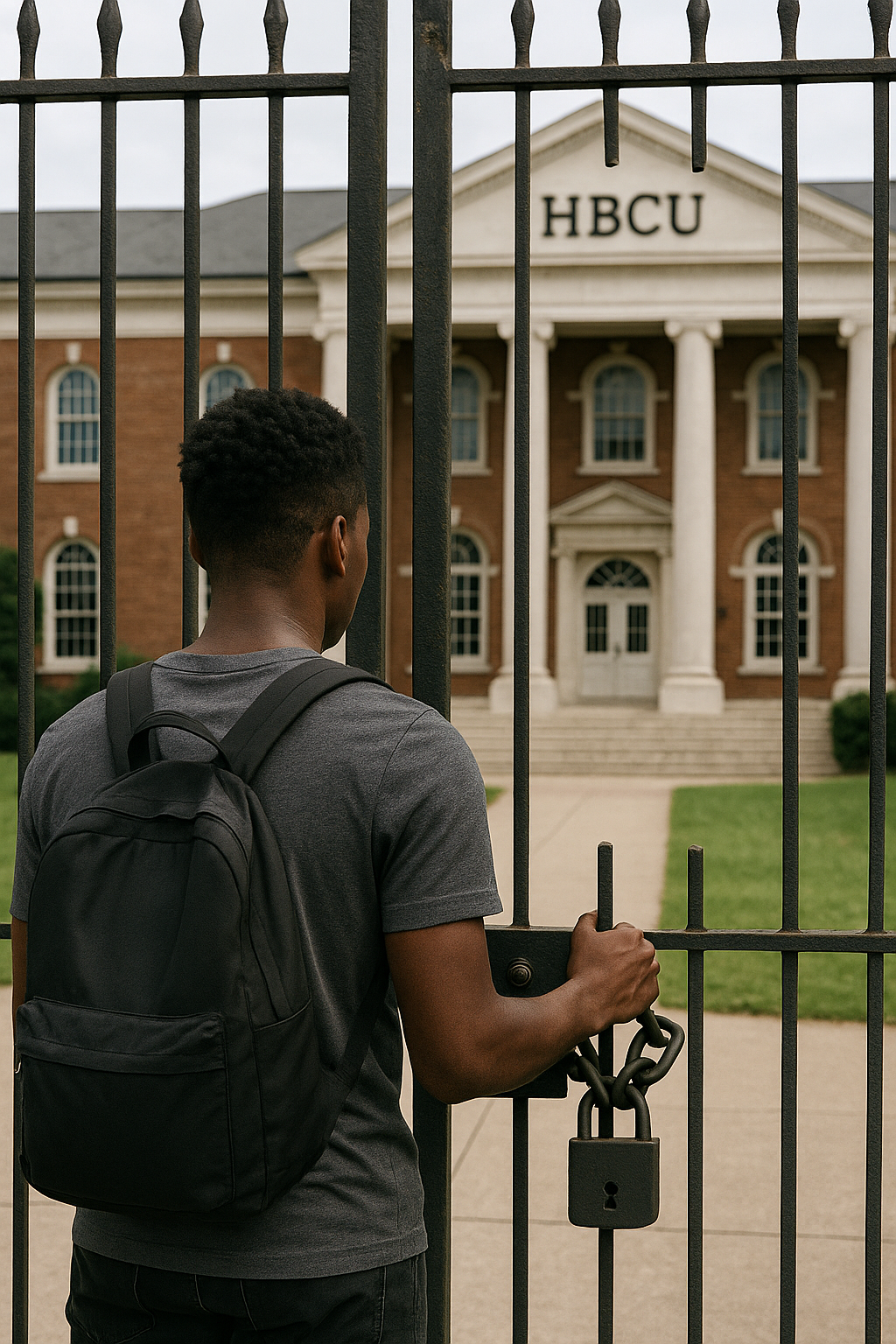
While Howard Is Chasing Harvard, What Public HBCUs Are Chasing UTIMCO?

“I make no apology for the love of competition.” – John Harbaugh

In the world of higher education finance, few numbers turn heads quite like endowment size. It is the ultimate scoreboard for institutional power—a metric that signals not only a university’s wealth but also its capacity to shape research, drive innovation, support students, and influence national policy. In this rarefied air, Howard University has made history, becoming the first Historically Black College or University (HBCU) to surpass the $1 billion endowment mark. According to HBCU Money’s 2024 rankings, Howard’s endowment now stands at $1.03 billion.

Spelman College, long regarded as Howard’s fiercest private competitor, received a record-setting $100 million donation in 2023. Yet even with that windfall, its endowment reached $506.7 million—leaving it more than $500 million behind Howard. Nevertheless, Spelman’s donor base remains one of the strongest in Black higher education, and it may still overtake Howard in the race to $2 billion. But the $1 billion baton has already been passed.

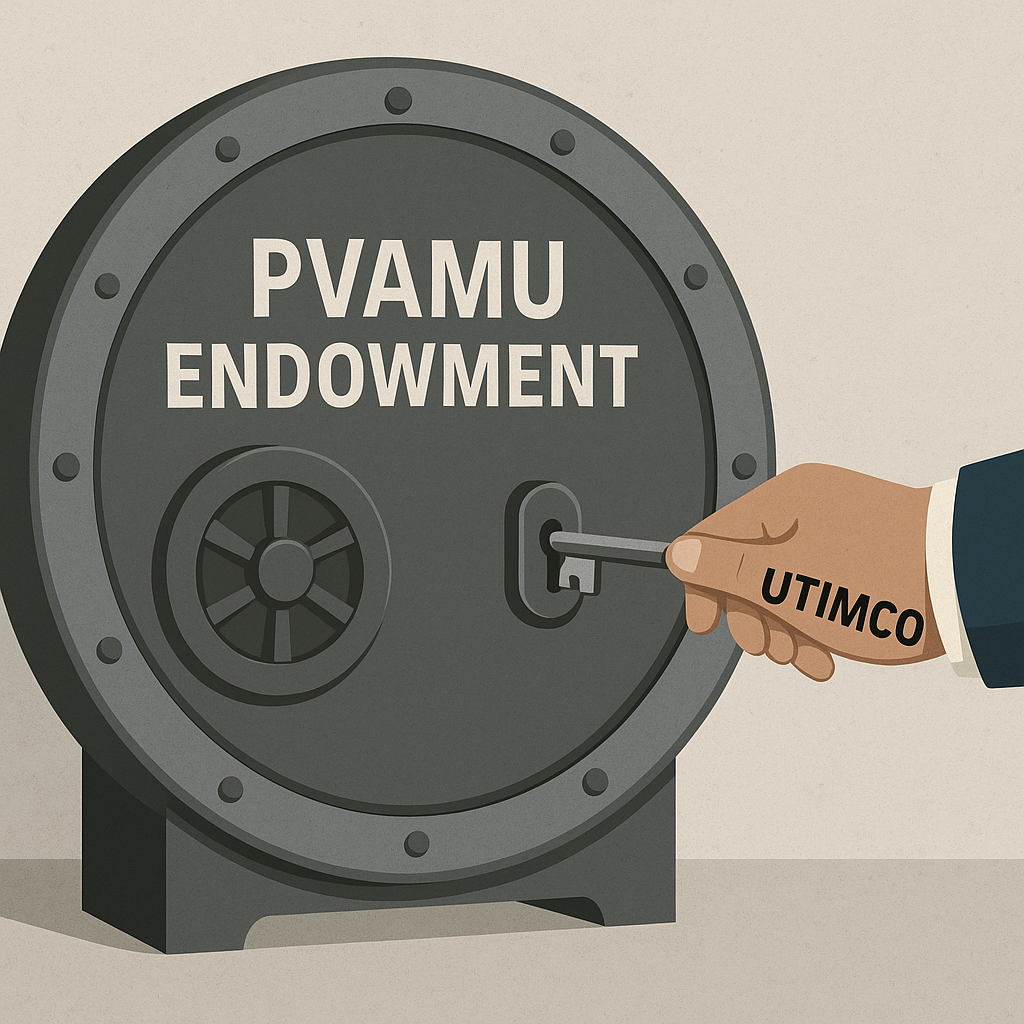
If Howard is chasing Harvard, and Spelman is setting its sights on Yale, then who among public HBCUs dares to chase the Goliath of public university endowments—UTIMCO?

The Silent Behemoth in Texas

UTIMCO—the University of Texas/Texas A&M Investment Management Company—is not just large; it is colossal. As of 2024, UTIMCO manages a staggering $64.3 billion in assets across the University of Texas and Texas A&M university systems. That figure is nearly $15 billion more than Harvard’s own endowment and more than three times the size of the second-largest public university endowment at the University of Michigan.

This financial empire is largely invisible to the public eye. Few outside of elite Texas financial and political circles are even aware of UTIMCO’s existence, let alone its scale. It quietly funds a wide spectrum of research, real estate development, and private equity plays that influence state and national agendas.

If an HBCU—or group of HBCUs—is ever to rival that level of public endowment control, it will not happen by accident. It must be built. And it will most likely be built collectively.

HBCUs and the Endowment Gap

The endowment disparity between HBCUs and Predominantly White Institutions (PWIs) has been well-documented. HBCUs represent around 3% of America’s colleges, yet account for less than 1% of total U.S. endowment wealth. According to a McKinsey report, HBCUs would need $12.5 billion in incremental funding to achieve endowment parity with similarly sized PWIs.

While private HBCUs like Howard and Spelman appear to be making some headway, public HBCUs remain largely behind. Most of them are tethered to state systems that have historically underfunded them and which rarely—if ever—extend the full benefits of their system-wide endowment strategies.

Consider the University of North Carolina System. It includes North Carolina A&T, the largest HBCU by enrollment, and North Carolina Central University. Yet both institutions have endowments under $200 million. Meanwhile, UNC Chapel Hill boasts an endowment exceeding $5.4 billion. Similarly, Florida A&M University has an endowment of less than $200 million, while the University of Florida’s soars above $2 billion.

The Case for a Public HBCU Endowment Challenger

In identifying a public HBCU capable of mounting a challenge to UTIMCO’s financial supremacy, the most promising strategy does not lie in the strength of one institution—but in the collective power of several. States that are home to multiple public HBCUs present the most viable path to establishing a unified, independently managed investment entity that can leverage scale, pooled capital, and institutional collaboration.

Virginia, Alabama, Georgia, North Carolina, South Carolina, and Mississippi all house two or more public HBCUs, each with proud legacies and strategic regional influence. A coordinated financial framework across these schools could form the foundation of a “Black UTIMCO”—a professionally managed, state-based consortium endowment capable of rivaling small PWI systems in both return and influence.

The most likely candidates must share a few key characteristics:

  1. State-Level Endowment Consortium Model – States with two or more public HBCUs, such as Virginia (Virginia State, Norfolk State), Georgia (Albany State, Fort Valley State, Savannah State), or Alabama (Alabama A&M, Alabama State), are uniquely positioned to pioneer a collective endowment strategy. Rather than relying on marginal support from broader university systems, these HBCUs could form a joint investment vehicle modeled on UTIMCO—pooling their endowments under a professionally managed, independent investment company. Such a fund would enable economies of scale, competitive asset management, and unified long-term planning, boosting their ability to generate investment alpha and philanthropic leverage.
  2. Flagship Status Among HBCUs – Institutions with strong alumni networks, national reputations, and federal research capabilities are better positioned to attract major philanthropy.
  3. Strategic Location – HBCUs located in fast-growing economic zones can leverage regional corporate ties for private partnerships.

However, creating such a financial architecture is not purely a technical endeavor. It is inherently political—and often fraught with social resistance.

The Political Geography of Resistance

Many of the states that host multiple public HBCUs are governed by conservative legislatures and state boards of regents that have long resisted equitable funding for Black institutions. Despite proclamations about diversity, equity, and inclusion, these power structures often withhold support from Black-led entities that could challenge traditional hierarchies.

  • Alabama, with Alabama State and Alabama A&M, underfunded its HBCUs by over $527 million between 1987 and 2020, according to the U.S. Department of Education.
  • Georgia’s consolidation of HBCUs like Albany State into broader system structures has often diluted their financial and governance autonomy.
  • Mississippi has repeatedly neglected basic infrastructure and funding needs at its three public HBCUs—Jackson State, Alcorn State, and Mississippi Valley State—despite allocating surpluses elsewhere. It is also no secret that Mississippi has purposely constructed a singular board of trustees for all of its public higher education institutions across the state with Ole Miss and Mississippi State unabashedly dominating the board.

Even in Virginia, perceived as more moderate, a move by Virginia State University and Norfolk State to pool their endowments might be seen as too bold a play in a state that still subtly resists Black institutional consolidation.

Social Impediments and Institutional Fragmentation

Beyond politics, there are intra-HBCU dynamics that complicate collaboration. These institutions have historically been forced to compete for scraps, which can breed a zero-sum mentality. Trustees, alumni, and administrations often prefer complete local control over modest assets rather than shared governance over substantial ones.

Convincing institutions to pool their endowments requires cultural alignment and a long-term vision of shared prosperity. Donors, too, may resist giving to multi-institutional funds, preferring the emotional appeal of a singular alma mater.

Nonetheless, this mindset must change. The math is clear: five public HBCUs each contributing $100 million can produce a $500 million investment base. That scale opens doors to private equity, hedge funds, and other vehicles that outperform the conservative allocations typically used by smaller institutional portfolios.

Institutions Poised for Leadership

  • North Carolina A&T State University, with an endowment of $201.9 million, remains the largest public HBCU endowment. With deep ties to tech and defense industries, it has both alumni momentum and industry leverage.
  • Florida A&M University, despite setbacks surrounding its pledged $237 million donation, has an official endowment of $124.1 million and stands to benefit immensely from partnership with institutions like Bethune-Cookman or Edward Waters.
  • Virginia State University and Norfolk State University, with $96.5 million and $88.2 million respectively, could combine to form the financial cornerstone of a Virginia HBCU Investment Company—managing nearly $185 million in assets at inception.

The Need for a “Black UTIMCO”

Rather than wait for state systems to share the wealth equitably, some in the HBCU policy space are advocating for the creation of a consortium endowment fund — a kind of “Black UTIMCO.” This collective endowment manager would pool assets from willing HBCUs, allowing them to negotiate better investment terms, lower fees, and generate alpha through scale.

Such an initiative would require governance innovation, donor transparency, and trust between institutions that are often underfunded and overburdened. But it may be the only viable path forward for public HBCUs to compete against mega-managers like UTIMCO, MITIMCo, or the Yale Investments Office.

A $5 billion consortium fund, even divided across 25 HBCUs, would be transformational. It could fund scholarships, capital improvements, faculty chairs, and technology upgrades, while giving HBCUs the financial leverage to attract major federal research grants.

A New Competitive Mindset

In American higher education, the metaphorical arms race is very real. Endowments are the stockpiles. Harvard and Yale are the gold standard in the private arena. UTIMCO is the titan in the public sector. And HBCUs, despite their contributions to Black excellence, continue to be locked out of the upper tier.

John Harbaugh’s quote about competition resonates because it points to a deeper truth: love of competition does not require parity at the outset, only the will to chase. Howard is in the final lap toward $1 billion, setting a new bar for Black institutional capital. Spelman may outdistance them on the next lap to $2 billion. But in the public sphere, the silence is deafening.

Where is the public HBCU that dares to dream of beating Michigan, surpassing UNC, or even challenging UTIMCO?

The Race Begins with Vision

Howard is chasing Harvard. Spelman is perhaps chasing Yale.

But no single public HBCU can chase UTIMCO. The scale is too vast, the machinery too entrenched, and the rules too uneven.

What public HBCUs can do, however, is combine. They can look across their borders, past their rivals, and toward a shared future. They can imagine a world where collective African American endowment power reshapes not just education, but the broader economy and policy landscape.

It is not a failure of ambition that no public HBCU has reached $1 billion. It is a failure of coordination and imagination.

The first African American UTIMCO will not be built by a single school. It will be built by a desire for compeition. A desire to win.

Give Black App: A Digital Gatekeeper For African American Philanthropy & Institutional Capital

“We must invest in ourselves. Without our own institutions, we will always be at the mercy of others.” – Mary McLeod Bethune

In the long arc of African American economic life, a recurring pattern emerges: the institutions most critical to our survival are consistently starved of capital, while the broader society thrives off of our labor, culture, and creativity. From Reconstruction-era mutual aid societies to the undercapitalized HBCUs of today, the struggle has never been whether African Americans are generous, but whether that generosity is systematically directed into institutions that can build durable power.

The Give Black App, founded by David C. Hughes, Alexus Hall, and Fran Harris, positions itself at this inflection point. It is not simply an app but a digital strategy—one attempting to reshape the flow of African American philanthropy and donations by curating, centralizing, and amplifying support for Black-led institutions.

The Context of Underfunding

African American nonprofits receive disproportionately less funding compared to their White counterparts. A 2020 Bridgespan study found that unrestricted net assets of White-led nonprofits were 76% larger than those of Black-led nonprofits, while revenues were 24% higher. These disparities compound over time. For HBCUs, the story is even starker: the endowments of all 100+ HBCUs combined is less than 1/10th of Harvard University’s alone.

Despite African America’s estimated $1.8 trillion in annual buying power, only a fraction is captured by its own institutions. Much of African American giving remains individual-to-individual or church-centered, providing immediate relief but not the kind of long-term institutional scaffolding needed to compete with White or global capital. Platforms like Give Black attempt to redirect that generosity into a framework where dollars reinforce permanence.

Building the Infrastructure of Giving

Give Black’s strength lies in infrastructure, a word often overlooked in philanthropy. The app operates as a digital gatekeeper, cataloguing Black-led nonprofits and enabling donors—whether individuals, alumni associations, or grassroots organizations—to find and fund them with ease.

This may seem simple, but its implications are profound. In an environment where discoverability is one of the greatest barriers for Black-led organizations, Give Black centralizes attention. For the countless nonprofits that lack robust marketing budgets, development officers, or national visibility, the app provides a seat at the table they would otherwise be denied.

The team itself reflects intentional design. Hughes, a Morehouse and Prairie View alumnus, carries the academic gravitas to engage institutions; Hall, with a background in cybersecurity and software sales, grounds the platform’s technical operations; Harris, a lifelong advocate of Black love and economic empowerment, provides the cultural grounding and marketing voice. Alongside them stand directors rooted in community engagement, finance, athletics, and science. Together, they represent a cross-section of African American life that mirrors the very community the app seeks to serve.

Philanthropy Meets Technology

Unlike GoFundMe or Benevity, which serve broad audiences, Give Black narrows its focus: African American-led institutions. This specificity is both its greatest strength and its potential vulnerability. By making African American philanthropy visible and trackable, the app attempts to normalize institutional giving within the community itself.

African American donors, long used to personal giving—funeral funds, tuition help, emergency assistance—are now asked to see their dollars not just as charity but as investment. An app that allows for transparency, accountability, and impact measurement may finally bridge the gap between intent and sustained institutional support.

Technology also democratizes giving. Younger generations, accustomed to digital wallets and mobile donations, are unlikely to write checks or mail contributions. By existing where they already transact, Give Black normalizes philanthropy as part of daily life. With proper marketing, it could serve as a digital equivalent of the collection plate—except one that sends dollars to Black think tanks, schools, health clinics, and endowment foundations rather than solely to Sunday offerings.

The Role of Fran Harris

Much of the initial confusion about Give Black’s leadership arises from Fran Harris’s name. She openly jokes about it—she is not the Fran Harris who was a WNBA champion or Shark Tank winner, though many assume otherwise. Instead, she distinguishes herself as someone whose “entire life has been about Black love and economic empowerment.”

That distinction matters. Whereas celebrity often drives visibility in African American philanthropy, Harris positions herself not as a star but as a steward of a broader vision. Her work focuses on the storytelling and cultural marketing needed to align African American giving with institutional capital. In a sense, her humor in addressing the name confusion underscores the seriousness of her actual role: grounding the app’s message in authenticity rather than celebrity.

The Gaps in the Strategy

Despite its promise, Give Black faces hurdles. First, fundraising expertise at the highest level appears limited within the core team. Major philanthropy is an industry of its own, requiring seasoned development officers capable of cultivating seven- and eight-figure gifts. Without this, Give Black risks becoming a platform for small-dollar giving—important, but insufficient for closing institutional capital gaps.

Second, technological depth must match ambition. While Hall’s cybersecurity background provides operational credibility, scaling a fintech-style platform requires CTO-level leadership. Issues of compliance, data integrity, and user trust are not optional—they are the foundation of sustainability.

Third, policy and compliance matter. Donations intersect with financial regulations, nonprofit law, and IRS oversight. To become the definitive gateway for Black giving, Give Black must not only build a sleek front end but also a back-end architecture that can withstand regulatory scrutiny and instill donor confidence.

Where the Opportunities Lie

The greatest opportunities for Give Black lie in institutional self-reliance.

One clear pathway is through alumni networks. HBCU alumni giving rates remain in the single digits, compared to 20–30% at elite PWIs. If Give Black positioned itself as the official conduit for alumni donations, it could help double or triple those rates over time. That alone would shift millions into endowments and operating budgets across the HBCU ecosystem.

Another opportunity lies in membership-based organizations—from professional networks to civic associations. Instead of dues going solely toward programming, portions could be funneled into long-term institutional giving through Give Black, creating a culture of collective philanthropy.

The Pan-African Diaspora represents yet another opening. African and Caribbean communities abroad are increasingly connected digitally. Give Black could expand to become a Pan-African philanthropic bridge, enabling solidarity between African Americans and global Black communities. Diaspora donors, often seeking trustworthy channels for giving, could find in Give Black a centralized, transparent platform.

Finally, the most transformative opportunity is to integrate endowment-building features directly into the app. Too much African American giving is trapped in the cycle of operating expenses. By redirecting portions of donations into permanent capital funds, Give Black could help institutions create reserves that outlast political climates and economic downturns.

Lessons from History

The urgency of Give Black’s mission must be seen against history. During the early 20th century, White-controlled philanthropy dictated the survival of many HBCUs. Institutions like Hampton and Tuskegee often relied on Northern industrialists whose donations came with ideological strings attached. The absence of African American-controlled philanthropic infrastructure meant dependency—and dependency always meant vulnerability.

Today, African American institutions still operate under the shadow of that dependency. Foundation funding remains racially skewed, and government support is often politically weaponized. Give Black, by offering a decentralized and community-driven alternative, challenges that cycle.

But history also warns: movements that lack discipline or scale are easily absorbed or ignored. Just as the Negro Leagues produced baseball talent but lacked the capital to maintain independence, so too can African American philanthropy generate excitement but fail to sustain institutional life if it is not channeled strategically.

The Verdict

Give Black App is not merely a digital donation tool. It is a test case: can African America leverage technology to redirect its wealth into its own institutions? The team’s composition, heavy in HBCU roots, marketing authenticity, and community engagement, suggests it understands both the stakes and the culture.

Still, the app must avoid the trap of becoming a feel-good project without measurable institutional outcomes. Its long-term success will be determined by whether it can:

  1. Secure partnerships with HBCUs, alumni associations, and membership-based organizations.
  2. Develop deep fundraising and compliance infrastructure.
  3. Normalize institutional giving across African American households.

If it does, Give Black could evolve into a cornerstone of African American institutional development—a kind of digital Freedman’s Bureau, redistributing not charity but power.

For African America, the stakes could not be higher. In an era where White nonprofits sit on multibillion-dollar endowments, while Black nonprofits scrape for survival, the question is not whether we are generous. It is whether our generosity is building the kind of institutions that ensure survival for centuries, not just survival for today.

Give Black, if scaled with vision and discipline, may finally provide the infrastructure to answer that question with a resounding yes.

A Legacy Reclaimed: Why SUNO and Dillard University Should Jointly Acquire the Amistad Research Center

When we control the archives, we control the memory. And when we control the memory, we control the meaning.” – Dr. Tera W. Hunter

The Amistad Research Center, one of the most significant archives of African American, ethnic minority, and social justice records in the United States, is facing a financial crisis that threatens its very existence. With nearly 40 percent of its federal funding cut and widespread staff layoffs already in effect, the Center is at a critical juncture. Rather than see it wither under institutional neglect or be absorbed into organizations disconnected from its cultural roots, a powerful and historically grounded solution stands within reach: a joint acquisition by Southern University at New Orleans and Dillard University.

This would not be a rescue it would be a return. Amistad was originally founded in 1966 at Fisk University and moved to Dillard in 1969, where it remained for nearly two decades. The Center thrived during its years at Dillard, deepening its collections and community relationships before relocating to Tulane University in 1987. That move, while promising better resources and facilities, ultimately distanced Amistad from the very community and institutional ecosystem that had nurtured its growth.

Southern University at New Orleans, founded in 1956, has long been an anchor for working-class Black families in New Orleans. Its commitment to public access, social justice, and Black advancement makes it a natural co-steward. Notably, Florence Borders, one of the most influential archivists in the history of Amistad, served as Senior Archivist at the Center from 1970 to 1989 before continuing her career as head archivist at SUNO. Her career trajectory embodies the institutional and intellectual bridge between Amistad, Dillard, and SUNO, a legacy that can now be cemented through a shared act of reclamation.

A joint venture would allow both HBCUs to leverage their complementary strengths. SUNO brings the infrastructure of a public institution and a clear mission focused on access and equity. Dillard offers private fundraising agility and deep roots in the liberal arts and cultural production. Together, they could create a sustainable governance structure that allows the archive to maintain its independence while benefiting from shared resources. Each university could contribute faculty, staff, research infrastructure, and development expertise toward a unified vision that ensures Amistad’s collections remain accessible, curated with cultural sensitivity, and protected against predatory acquisitions or institutional sidelining.

The benefits for students and faculty would be transformative. Internships, research assistantships, and practicums tied to archival collections would offer unparalleled experiential learning. New certificate programs in archival science, public history, and digital preservation could emerge positioning both institutions as national leaders in archival education. Amistad’s holdings over 15 million items, including manuscripts, oral histories, art, and periodicals could drive the creation of entire departments and interdisciplinary research clusters focused on African American, Afro-Caribbean, Latinx, Indigenous, and diasporic studies.

The public-facing impact of such a joint acquisition is equally significant. New Orleans, a city with a long history of being a crucible of Black culture and resistance, would gain a consolidated Black archival institution that serves not only scholars but communities. Cultural tourism centered on rotating exhibitions, lectures, and historical installations could add economic and civic value. A jointly governed Amistad Center could partner with local schools to support history education, oral history collection, and family archive projects embedding itself in the civic life of the region.

There are also compelling financial reasons for this move. A high-profile acquisition effort would attract major philanthropic interest, particularly among donors looking to support racial equity, archival preservation, and HBCU development. Foundations like Mellon, Ford, and IMLS have historically supported Amistad and similar institutions, but their funding often becomes more robust when institutional alignment and long-term sustainability are demonstrated. By crafting a visionary joint ownership model, SUNO and Dillard could access deeper grantmaking relationships while also launching a national endowment campaign to stabilize the archive permanently.

To be successful, the joint venture would need clear governance. A dedicated board composed of SUNO and Dillard faculty, independent scholars, archivists, community leaders, and Amistad staff should be established. This board would be responsible for curatorial direction, budget oversight, and public engagement ensuring the Center’s founding mission remains intact while also adapting to contemporary challenges and technologies.

This acquisition would signal a new paradigm in Black institutional development. It would show that HBCUs are no longer waiting to be invited into the rooms where decisions about cultural memory are made. Instead, they are building and owning those rooms. The quiet transfer of African American cultural assets into majority white institutions especially under financial duress has been a persistent form of cultural dispossession. What SUNO and Dillard can demonstrate is that reclamation is possible. That ownership, not just stewardship, is the future.

This opportunity will not wait. ARC’s financial instability is already endangering collections and community access. Every day that passes without an institutional intervention increases the risk of fragmentation, inaccessibility, or outright closure. The time to act is now—not just for preservation, but for power.

Together, Southern University at New Orleans and Dillard University can redefine what it means to protect and elevate Black history. They can transform the Amistad Research Center from a vulnerable institution into a fortified intellectual fortress. They can move us from crisis to control, from neglect to legacy.

This is more than a proposal. It is a blueprint for Black institutional sovereignty. History is watching. And it is offering a chance to write the next chapter not just about the past we preserve, but the future we intend to build.