Monthly Archives: November 2025

Is the Love of Sports Costing African America the STEM Future It Desperately Needs?

The future will not belong to those who can jump the highest, but to those who can think the deepest.” — Anonymous (Modern African Proverb Reimagined)

For every hour a Black boy or girl spends practicing, playing, or watching sports, it becomes an hour not spent mastering math, science, literature, or history. Over time, those missed hours compound not just in skill gaps, but in confidence gaps. And confidence, in education as in life, is everything. The long-term consequence of this imbalance may be far greater than lost academic opportunities. It may be the loss of African America’s ability to compete in the 21st-century economy and the slow erosion of its intellectual sovereignty.

Sports are a cherished part of African American culture, woven through family traditions, community pride, and generational memory. From Jackie Robinson to Serena Williams, from Doug Williams to Simone Biles, athletic greatness has symbolized resilience and excellence in a world that too often sought to deny both. But beneath the surface of that cultural triumph lies an uncomfortable reality: the love of the game may have become too consuming, crowding out the time, attention, and aspiration needed for mastery in science, technology, engineering, and mathematics — the disciplines defining wealth and power in the modern world.

A study by GradePower Learning found that American students spend about 1,000 hours in school each year — and roughly the same amount watching screens. For African American youth, however, there’s an additional pull: sports participation, practices, and games can consume 10 to 20 hours a week, not counting the time spent watching sports media, highlights, or discussing the latest player stats. By the time a child reaches high school graduation, those hours can exceed 8,000 — the equivalent of four full years of math or science instruction. What might have been time spent learning quadratic equations or Newton’s laws becomes time devoted to perfecting a crossover dribble or memorizing playbooks.

In theory, sports are said to teach discipline, teamwork, and perseverance — invaluable traits for life and leadership. But decades of African American participation in sports have shown that, in practice, these virtues rarely translate into collective advancement or institutional power for the community. Sports teach many to endure, but not necessarily to build. They inspire personal excellence but often without structural returns. Meanwhile, other ethnic groups are compounding their time in STEM preparation. In Asian households, it is not uncommon for students to attend supplemental weekend academies for math and science. The same can be said of many immigrant families who prioritize educational mastery as a direct pathway to generational wealth.

This divergence begins early. By middle school, African American students already lag behind in math and science proficiency, and by high school, many have internalized the belief that they “aren’t math people.” Yet, that belief is not innate; it’s cultivated by the habits of time and attention society rewards.

The youth sports economy in the United States is now valued at over $30 billion, according to USA Today. Parents are spending thousands each year on club fees, travel tournaments, gear, and coaching — often with dreams of athletic scholarships or professional contracts that statistically almost never come. A 2025 USA Today report noted that many parents invest between $5,000 and $10,000 annually per child in competitive sports, hoping to secure a college scholarship. Yet, NCAA data show that less than 2% of high school athletes earn athletic scholarships, and an even smaller fraction go on to professional sports.

When those numbers are mapped against household wealth, the economic irony becomes staggering. The median net worth of African American families remains around $44,900, compared to $285,000 for White families. If the average family spends $10,000 per year on youth sports for a decade, they could instead have invested $100,000 into a 529 education savings plan or a family investment fund. Compounded annually at 7%, that investment would yield roughly $196,000 by the time their child turns 18 — enough to pay for college tuition, or serve as seed capital for a business. But the investment goes into jerseys, tournaments, and sneakers. Sports is not just a pastime anymore; it’s an industry — one that thrives on hope, marketing, and the dream of ascension. For African American families, that dream often overshadows a deeper one: intellectual independence.

From the earliest ages, children internalize the models of success they see. If every hero they admire dribbles, runs, or dunks, it subtly shapes what they believe they must become to matter. The African American community has created icons in every field, but sports icons receive disproportionate visibility, media coverage, and cultural veneration. Young boys can name more NFL quarterbacks than Black engineers, scientists, or inventors. This imbalance creates a quiet but powerful feedback loop. The more the community celebrates athletic success as the highest expression of Black excellence, the fewer young people will be inspired to emulate scientific or entrepreneurial greatness. The idolization of the athlete — rather than the innovator — becomes a generational tax on imagination.

STEM confidence, like athletic skill, is built through repetition and exposure. A child who spends thousands of hours practicing sports builds confidence in their athletic identity. A child who spends thousands of hours exploring robotics or chemistry develops confidence in their intellectual identity. The problem is not talent — it’s time allocation.

If African America’s endowments are to grow, its intellectual capital must first be rebalanced. STEM fields are not just high-paying; they are high-leverage. Engineers design cities, coders build economies, and scientists control the frontiers of technology and medicine. When African American students are absent from these sectors, it isn’t just a diversity gap — it’s a sovereignty gap. Every innovation African America fails to own is an innovation it must rent from others. Every algorithm not written, every patent not filed, every lab not funded contributes to institutional dependency. Historically Black Colleges and Universities sit at a unique crossroads. While they have been strong in liberal arts, education, and social sciences, they must now pivot aggressively toward STEM dominance. Yet even they face a cultural headwind — many incoming students have been nurtured to see physical performance as validation of worth, while intellectual rigor is often seen as a burden rather than a badge.

An HBCU graduate in engineering or computer science may go on to invent, design, and build. An HBCU athlete may entertain millions. But the wealth gap between those two trajectories is not just individual — it’s institutional. Consider the compound effect of lost hours: one hour per day diverted from academic enrichment equals 365 hours per year. Over 13 years of schooling (Pre-K through 12th grade), that’s nearly 4,750 hours — more than two full school years of instruction. That’s just for one hour. Many student-athletes spend much more time — often 10 or more hours weekly — on practice, travel, and games. By high school, this could exceed 10,000 hours — the exact amount Malcolm Gladwell famously cited as the threshold for mastery in any field.

African American students are becoming masters — just not in the fields where mastery translates into institutional control or generational wealth. Imagine if even half of those hours were redirected into robotics clubs, science fairs, financial literacy programs, or coding bootcamps. The shift in intellectual and economic trajectory would be profound. Culture cannot change overnight, but it can evolve intentionally. African American parents, educators, and institutions must begin redefining what excellence looks like — and where the applause should go. Families should celebrate as loudly when a child aces a chemistry exam or builds a mobile app as when they score a touchdown. Public affirmation must follow academic achievement with the same enthusiasm it gives athletic performance.

The money spent on club sports, travel, and equipment could be partially reallocated to STEM programs, tutoring, or even early college credit courses. Financial discipline must mirror the rigor of athletic discipline. Imagine a Saturday morning robotics league with the same energy as youth basketball — complete with team jerseys, community support, and trophies. Institutions like HBCUs could sponsor regional competitions to make intellectual pursuit a spectator event. HBCUs can create mentorship pipelines connecting student-athletes with STEM majors to promote balance. Athletic departments should collaborate with STEM departments on interdisciplinary projects that merge sports analytics, biomechanics, and data engineering. Families can begin small: a weekly science documentary, math challenges at the dinner table, or trips to museums and tech expos. What matters most is that curiosity and analysis become part of the household rhythm.

America’s future wealth and power will flow through those who master technology, not those who merely consume it. The engineers designing renewable energy grids, the programmers writing AI code, and the scientists developing space propulsion systems are the ones shaping the next civilization. African America cannot afford to be absent from that frontier — nor can it afford to lose another generation to the illusion of athletic access as a substitute for academic and economic power. The cultural love of sports, once a symbol of survival and community, must now evolve into a love of systems, science, and strategy. The same passion that drives the athlete can drive the engineer. The same discipline that fuels a 5 a.m. workout can fuel a 5 a.m. study session. But only if the institutions — families, schools, and HBCUs — are intentional in redirecting that energy.

The African American community once used sports as a pathway to dignity in a segregated world. Now, the challenge is to use STEM as a pathway to dominance in a digitized one. The scoreboard has changed, and so must the game. For every hour spent on a basketball court, a track, or a field, there should be an equal hour at a computer, in a lab, or under a microscope. Not because sports don’t matter, but because the future does. To win this century, African America must love the pursuit of knowledge more than the pursuit of applause. Its children must learn to compete not just on the field — but in the lab, the boardroom, and the data center. Otherwise, the highlight reels will continue to roll, but the ownership of the next generation’s wealth and innovation will belong to someone else.

Disclaimer: This article was assisted by ChatGPT.

Why Families Get Less Time Together Now Than They Did 40 Years Ago: Work Has Devoured Community And Family Connection

“If you want to know how people are doing, then look at the institutions that serve them. For better or worse.” – William A. Foster, IV

The commercialization of everything has not simply weakened communities it has restructured the way people relate to each other, to time, and to the idea of a shared life. America once reserved certain days as collective pauses: Thanksgiving as a family gathering, Christmas and New Year’s as moments of reconnection, and Sundays as a weekly restoration ritual. Those pauses were essential to the glue of community. But as corporations learned how to monetize nearly every aspect of human behavior, they also learned how to monetize time. And once time is monetized, community becomes negotiable. The result is a society where the day after Thanksgiving is more about shopping than family, where Sundays revolve around televised commercial events instead of rest, and where companies treat holidays not as protected communal moments but as logistical inconveniences that employees must navigate by sacrificing their own paid-time-off.

Corporations in the U.S. used to close for multiple days around major holidays because leaders understood or at least accepted that there was social value in allowing workers time for extended connection. Today, many companies force employees to choose between working Wednesday or Friday of Thanksgiving week. Some go further, requiring workers to take PTO to cover days when the company simply prefers not to close. A corporation will not close on the Tuesday before Thanksgiving, even though the value of allowing families an uninterrupted Tuesday-through-Friday stretch is obvious. Instead, the corporate calendar eclipses the communal calendar. Workers do not receive time; they must purchase it back from the company by spending their accrued PTO. What should be a gift of time becomes another transaction.

The same pattern repeats in December. Instead of closing for the week between Christmas and New Year’s, a period that, for generations, represented the one guaranteed moment families could reconnect across states and schedules many companies remain open and again force employees to use PTO if they want to reclaim what was once a near-universal cultural pause. The winter holidays have always been about re-centering the family and revisiting community, but U.S. corporations have built a culture in which reconnection is permissible only if the worker pays for it. Christmas Eve and New Year’s Eve often become half-days only in name, with meetings scheduled up until the literal final hours of the year. The commercialization of everything means even time has become a commodity extracted from workers.

This commodification undermines rituals that once anchored communities. Thanksgiving’s meaning has deteriorated because U.S. corporations realized the value of turning the week into a shopping pipeline. Stores began opening earlier and earlier for Black Friday, at one point even opening on Thanksgiving Day itself, pulling millions of workers away from their families and shifting the cultural meaning of the holiday from gratitude to commercial urgency. Though some in-store openings have shifted back toward Friday, the mentality remains: Thanksgiving is now the runway for a sales spectacle. The gravitational pull of Black Friday redefines the whole week.

When a holiday is defined by commerce, its communal value becomes fragile. Families that could have enjoyed Tuesday-through-Friday together now negotiate employer schedules, travel restrictions, and school calendars that increasingly mirror the demands of the market rather than the needs of the community. The commercialization of the holiday season has created a society that knows how to shop together but not how to be together. That shift matters because a community is not sustained by consumption; it is sustained by time.

Time has always been the most essential ingredient of community. But a market-driven society reframes time not as something to invest in people but as something to extract from workers. When time becomes a commodity controlled by corporations, communities lose the ability to structure their own rhythm. Families and neighborhoods cannot coordinate shared rituals when their members’ time is fragmented by different schedules, mandatory workdays, and PTO requirements.

Sundays reveal another layer of this shift. Once the cultural pause of the week, they are now among the most commercially overloaded days in the United States. Football transformed from a pastime into a multi-billion-dollar economic engine that dominates Sundays. The sport is no longer simply a game; it is a national commercial event fueled by advertising, sponsorships, gambling partnerships, data-driven fantasy sports, and a seemingly endless suite of purchasable experiences. The day’s identity shifted from rest to consumption. Even non-fans find themselves orbiting the gravitational pull of the Sunday football economy because it shapes everything: traffic patterns, social gatherings, advertising cycles, and workplace conversations.

Fantasy sports accelerated this shift by financializing fandom. Fans no longer simply cheer for teams; they track player performance as if managing investment portfolios. The language is economic: valuations, projections, buy-low targets, sell-high opportunities. What once required nothing more than showing up and cheering now mirrors the logic of financial markets. Leisure becomes labor, and community becomes competition.

This is the deeper problem: commercialization transforms communal rituals into market events and then convinces people that those market events are the rituals. Communities once relied on shared, non-commercial practices to reinforce identity and belonging. But commercialization dilutes that belonging by replacing shared purpose with shared consumption. A community that once united around a meal now unites around a sales event. A nation that once treated Sunday as a day for collective pause now treats it as a day for collective consumption.

Commercialization does not simply erode existing rituals; it reorganizes values. A society that measures success by economic efficiency will not prioritize communal health. A corporation that sees time as a cost will not voluntarily grant extended holidays. A marketplace that thrives on attention will not tolerate moments of silence. Instead, the market expands into every cultural opening, converting the sacred into the sellable. Tradition becomes branding. Ritual becomes content. Holidays become data points in quarterly reports.

The impact on communities is devastating because community is long-term work. It requires slow, unstructured time. It requires the ability to gather without agenda. It requires rituals that reinforce shared identity rather than shared consumption. When those rituals are continuously squeezed out by commercial demands, communities become thinner, more fragile, and more transactional.

The erosion of extended holiday time is especially damaging for families that live far apart or work demanding schedules. Many households cannot afford to take multiple days of PTO just to recreate the family time corporations once protected by default. The cost of reconnection becomes another barrier to community life. Workers must decide whether to conserve PTO for emergencies or spend it trying to maintain family cohesion. When corporations determine the availability of communal time, families must purchase back their own togetherness.

This problem compounds for low-wage workers, who often lack PTO altogether or work in industries where holiday schedules are inflexible. The people who most need communal time are the least likely to receive it. And when communities lose time, they lose the ability to coordinate culture. Traditions become irregular. Gatherings become sporadic. The predictability that once held communities together dissolves.

Commercialization also changes how people inside communities view one another. When consumption becomes the primary way to participate in culture, individuals begin to see each other not as members of a shared community but as participants in a market. This mindset encourages competition rather than collaboration, individualism rather than collectivism. People learn to evaluate experiences based on personal benefit rather than shared investment. And because commercial experiences are easier to measure you either bought the thing or you didn’t they often overshadow the slower, intangible benefits of community life.

The rise of year-round commercial holidays reveals how deeply this shift has taken root. Major brands now create “shopping seasons” for Valentine’s Day, Mother’s Day, Father’s Day, the Fourth of July, Halloween, and even invented micro-holidays like “Friendsgiving” or “Prime Day.” These manufactured events fill every gap on the calendar, ensuring there is always something to consume. The cultural result is a society that never pauses. A community that never pauses cannot reflect, cannot reconnect, and cannot sustain itself. It becomes a collection of individuals moving in the same direction but never meeting in the same place.

The path forward requires redefining what society values. Communities must reclaim time especially the time around major holidays and weekly communal pauses from corporate capture. That means normalizing the idea that Tuesday-through-Friday closures during Thanksgiving week are not indulgent luxuries but necessary investments in social health. It means recognizing that the week between Christmas and New Year’s should be protected for what it historically represented: the one time families could reconnect without the market intruding. It means acknowledging that time is not merely a work resource but a community resource.

Rebuilding community in an era of commercialization requires treating time as sacred. Communities must defend it from monetization, protect it from corporate schedules, and structure their own rituals around it. When people reclaim time, they reclaim each other. When they reclaim each other, they reclaim the possibility of community.

Commercialization wants everything every hour, every holiday, every Sunday, every tradition. Communities cannot survive if they surrender all of it. They can only survive by choosing what will remain unmonetized, unbothered, and unbought. When communities choose to reclaim time, they choose to reclaim themselves.

Five suggestions on how government, new entrepreneurs, and families can recenter:

1. Government Should Legislate Protected Communal Time, Not Just “Holidays”

The U.S. treats holidays as economic opportunities, not civic responsibilities. Government can reverse the trend by formally protecting stretches of time — not single days — around core holidays.

  • Make the Tuesday–Friday of Thanksgiving week a state or federally protected family recess period.
  • Require companies to close without forcing workers to use PTO for the days before or after a federal holiday.
  • Extend similar protected time around Christmas–New Year’s, where many countries already guarantee weeklong holiday pauses.

This isn’t merely cultural; it’s economic. Countries with structured rest periods have higher productivity, lower burnout, stronger communities, and more resilient small-business ecosystems because people actually have time to engage in them.


2. Entrepreneurs Should Build Businesses Designed Around Community Rhythms, Not Quarter-by-Quarter Profit Cycles

New companies — especially those led by first-generation founders, Black founders, or mission-driven founders — can differentiate themselves by rejecting the “always open, always available” business model.

Innovative entrepreneurs can:

  • Design businesses that voluntarily close on Sundays and holidays, signaling that community time is part of the brand identity.
  • Give employees extended family leave during core cultural seasons, even if competitors do not.
  • Build loyalty by centering humanity over profit, a competitive advantage in a burned-out nation.
  • Create new economic sectors around rest: wellness retreats, community gathering hubs, shared childcare cooperatives, book lounges, family learning centers.

Companies that protect human time will attract workers, customers, and long-term loyalty far more effectively than companies that burn people out.


3. Families Should Reinstate Non-Commercial Rituals and Treat Them as Sacred

Families have more power than they realize. The market can only colonize a holiday if people participate.

To resist:

  • Institute device-free meals, especially on Sundays and during holiday weeks.
  • Declare certain traditions non-negotiable and non-commercial, such as potluck dinners, storytelling nights, board game evenings, cooking days, or family walks.
  • Celebrate holidays at home instead of at malls, theaters, or commercial venues.
  • Mark specific days as “no-buy days” to teach children that value is not tied to consumption.

Families that reclaim ritual reclaim identity — and identity is the strongest defense against commercialization.


4. Communities Should Rebuild Local Institutions That Compete With Commercial Time

When local institutions weaken, corporate culture fills the vacuum. Communities can counter by strengthening their own non-commercial options:

  • Community centers that stay open on Sundays for gatherings and learning.
  • Neighborhood potlucks, block dinners, or seasonal festivals not sponsored by corporations.
  • Skill-sharing circles where neighbors teach each other cooking, budgeting, repairs, gardening, and history.
  • Mini-libraries, micro-museums, and small-town storytelling or history nights.

These spaces create a social gravity that pulls people away from fantasy sports, retail calendars, and weekend consumer rituals.


5. National Culture Makers — Writers, Schools, Platforms, HBCUs — Should Reframe Rest as a Citizenship Value

The U.S. treats rest as laziness, even though rest is the foundation of creativity, productivity, and community.

New institutions can step in and shift the narrative:

  • Schools can teach the social history of holidays, not just their dates.
  • Universities (especially HBCUs) can lead research on rest-economics, community cohesion, and commercial overreach.
  • Media outlets and creators can reframe rest as a civic duty, not a weakness.
  • Public campaigns can promote “Family Hours,” “Community Time,” or “Disconnect Days.”

When rest becomes culturally honorable, exploitation becomes culturally shameful.

Disclaimer: This article was assisted by ChatGPT.

The (Black) Power Couple & Family Business That Could Have Been: Entrepreneur Ron Johnson & Dr. Kimberly Reese, M.D.

By William A. Foster, IV

“Black love encompasses romantic partnerships, familial bonds, friendships, and a collective commitment to uplifting and empowering each other.” – Taylor Moorer & Alexander Dorsey

Generated image

Let me begin with this. There was no character on A Different World that held my attention the way Kimberly Reese did. Graceful. Brilliant. Driven. A woman on her way to becoming a doctor and never once apologizing for her intellect. I was mesmerized. And I still am. So forgive me if this article has a bit more heart than business metrics—though trust me, we’ll get to those too.

Kimberly Reese, played by Charnele Brown, was more than just the token “smart Black woman” character. She was a symbol. She was the dream our mamas prayed for us to meet and our daddies hoped we’d bring home. She was what happens when Black excellence meets Southern charm meets pre-med grit. And then there was Ron Johnson. Ronald Marlon Johnson. A whole enigma. Part clown. Part visionary. If Dwayne Wayne was Silicon Valley, Ron Johnson was Bed-Stuy with a business plan. He wasn’t just comic relief, he was a prototype. The first glimpse we got of the HBCUpreneur: the student hustler learning lessons in the real world as much as in the classroom. Ron Johnson was what every HBCU business school ought to teach: how to build from where you are with what you have.

But instead of marrying into mogulhood with Kimberly Reese and forming a real HBCU power couple like the Obamas of Black medicine and enterprise the writers took another route. A safe one. A disappointing one. This is the story that should have been written. This is the power couple and family business that could have been.

According to a 2023 report from the National Black Chamber of Commerce, over 70% of Black-owned businesses are sole proprietorships meaning they begin and end with one person. Fewer than 10% survive into the second generation. That’s not a flaw in ambition. It’s a failure in structure. We don’t often think in dynasties. In systems. In scaling. Now imagine a Ron Johnson who took that Hillman business degree and didn’t just open a club or restaurant, but built RJ Health Enterprises; an integrated chain of community health clinics, urgent cares, and medical real estate investments focused on underserved Black communities across the South. Imagine Kimberly Reese as co-founder and Chief Medical Officer. A respected OB/GYN on the board of Meharry, Howard Med, and Morehouse School of Medicine. Their flagship clinic, “Reese & Johnson Family Health,” could’ve become a cornerstone of African American healthcare.

We’re talking about a $500 million business in 15 years. Not hypothetical. Real math. According to IBISWorld, the U.S. urgent care market was valued at $38 billion in 2023. Black communities represent a disproportionate share of preventable hospitalizations due in part to lack of affordable, trusted, and culturally competent providers. The Reese-Johnson health business could have been both remedy and revolution.

There is something revolutionary about a Black man and woman building together not just emotionally, but economically. As of 2024, only 8% of all U.S. employer businesses are owned by Black Americans, and of that sliver, a mere 2% are co-owned by Black spouses or partners. Family businesses, when managed strategically, are intergenerational launchpads. Take the Hoffmann-Oeri family of Switzerland, owners of pharmaceutical giant Roche. Their company, founded in 1896, now generates over $70 billion annually. But more importantly, it has built economic moats and family wealth for six generations.

The Reese-Johnson duo had the potential blueprint: a physician’s vision for preventative and culturally attuned care, an entrepreneur’s eye for monetizing access, experience, and brand, and a shared identity rooted in the HBCU ethos of service and innovation. They weren’t just fictional characters. They were avatars for what could be real.

The fact that no HBCU business school has a “Ron Johnson Center for Entrepreneurship” or that no HBCU medical school offers a joint MD-MBA program named after fictional pioneers like Reese and Johnson is a shame. Not because we need to deify characters but because those characters gave us a canvas to imagine bigger for ourselves. HBCUs too often shape students to be labor. To integrate. To get the job. But not to create the job. And certainly not to imagine owning an empire with the person you love, built from the same institution that educated you both. If we are serious about economic empowerment, we must institutionalize HAO (HBCU Alumni Owned) companies as a KPI for alumni success. A different world wasn’t just the name of the show. It should have been the result.

By 2005, Reese and Johnson, both Hillman alums, launch RJ Med Group with three components: RJ Clinics, a chain of urgent care centers in HBCU cities: Jackson, Baton Rouge, Baltimore, Atlanta, Tallahassee, and Salisbury. Clinics cater to walk-ins and are integrated with digital records and telehealth by 2010. RJ Research Institute, a Black-led nonprofit focused on studying racial disparities in maternal health, hypertension, and mental health. Sponsored research partnerships with Xavier, Howard Med, and NIH. RJ Ventures, a holding company investing in HBCU med tech startups, pharmacy delivery services, and neighborhood health food stores. The group employs over 5,000 across the South and sponsors 200+ internships annually for HBCU students in medicine, public health, business, and tech. And of course, they endow the $10 million Hillman Health Equity Fellowship.

We’ve seen versions of this in real life: John and Nettie Singleton, co-founders of a Harlem-based pharmaceutical distribution company that grossed $22 million before being acquired. Dr. Patrice and Raymond Harris, founders of a network of Black-owned mental health clinics in Georgia. Michelle and Barack Obama—yes, yes, we know. But their synergy reminds us how intellect, ambition, and partnership can turn policy into legacy. Ron and Kimberly could’ve been the HBCU version of this—part CVS, part Kaiser Permanente, part Wakandan vision.

Because representation is not just about visibility. It’s about possibility. When the writers broke them up, it wasn’t just a romantic loss it was a missed opportunity to show Black America what family business could look like when rooted in love, purpose, and institution. Television shapes narratives. And narratives shape expectations. And expectations? They shape outcomes. If there were more shows modeling Black couples building businesses, maybe more Black MBAs and MDs would consider entrepreneurship as a couple’s journey. Maybe more HBCUs would invest in interdisciplinary labs between medicine and business schools. Maybe that “different world” we dreamed of would feel more like a blueprint than a slogan.

As HBCU alumni and stakeholders, we must write our stories forward. We must see every Kimberly Reese as not just a doctor, but a dynasty builder. Every Ron Johnson as more than a hustler, but an heir. And we must stop waiting for television to imagine our greatness. Let HBCUs teach love in their curriculum not just as poetry, but as partnership. Teach ownership as legacy. Teach entrepreneurship as service. Let our future Hillman couples dream bigger than GPAs and Greek life. Let them dream empires.

Kimberly Reese and Ron Johnson didn’t get the ending we hoped. But that doesn’t mean their story was pointless. It means we were given the tools. Now it’s on us to build.

Owning The Diamond: Why HBCU Women Entrepreneurs Should Buy a Women’s Pro Baseball Team

“Let us put our moneys together; let us use our moneys; let us put our moneys out at usury among ourselves, and reap the benefits ourselves.” – Maggie L. Walker, pioneering African American banker and businesswoman:

It is not enough to cheer from the stands.
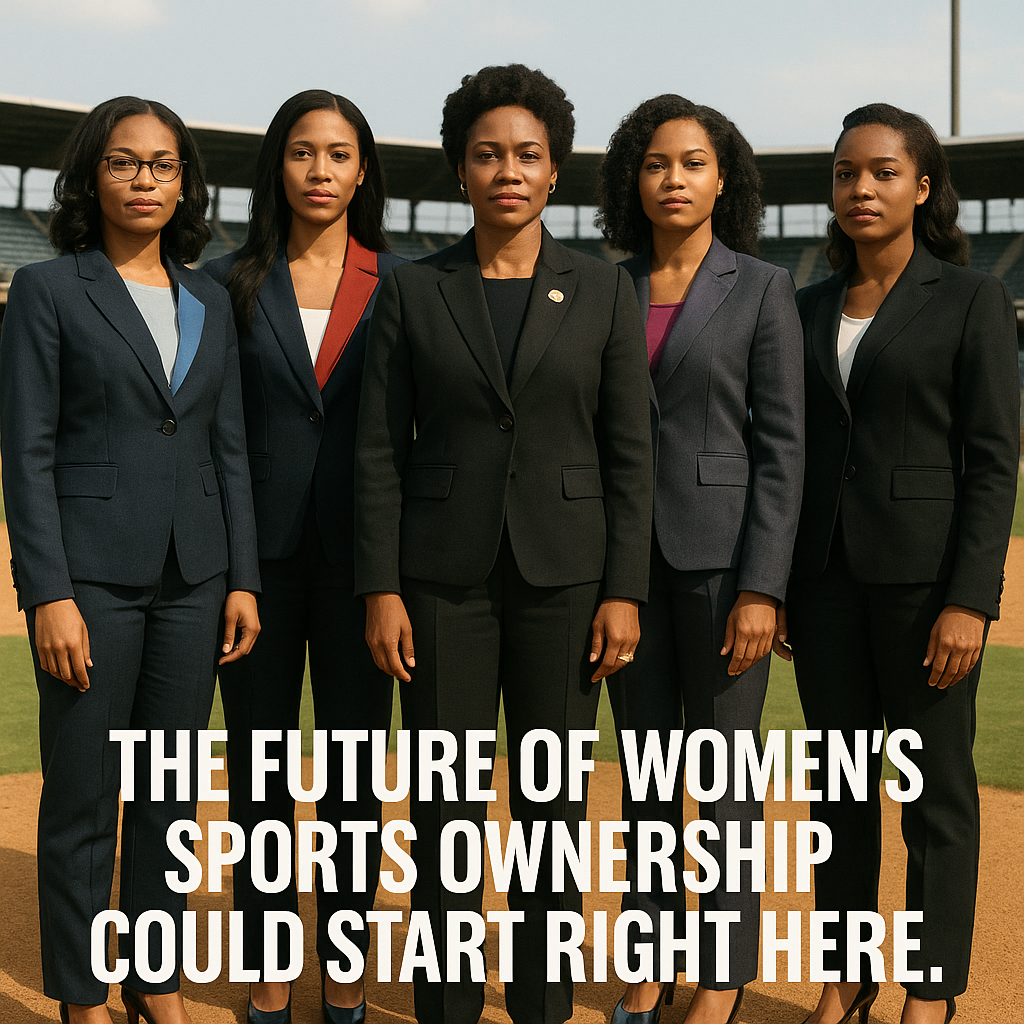
IIt is not enough to cheer from the stands. If HBCU women entrepreneurs and the institutions that produced them are serious about building generational wealth, influence, and visibility in the global sports economy, then ownership, not participation, must be the goal. The emergence of the Women’s Pro Baseball League (WPBL) offers just such a moment. Four inaugural franchises in Los Angeles, San Francisco, New York, and Boston mark the first professional women’s baseball league in the United States since 1954. And yet, amid this historic announcement, one question should echo across the HBCU landscape: Who will own a piece of it?

Ownership in sports is about more than trophies it’s about capital, culture, and control. While athletes inspire, it is owners who shape the economic ecosystem: negotiating television contracts, setting standards for pay equity, deciding where teams are located, and determining which communities benefit from their presence. In American sports, Black ownership remains vanishingly rare. Fewer than a handful of African Americans have ever held majority stakes in professional teams across all major leagues. Among women, ownership representation is even smaller. Yet the HBCU ecosystem comprising over a hundred institutions, $4 billion in endowment capital (though still dwarfed by their PWI counterparts), and a growing class of wealthy and capable alumni possesses both the human and institutional capital to change that reality. Buying a WPBL franchise would be a powerful signal: that African American women are no longer content to merely play or support the game, but to own the infrastructure of it.

The WPBL represents a once-in-a-century opportunity. The last women’s professional baseball league folded in 1954 when postwar America reverted to its gendered labor norms and refused to institutionalize women’s success on the field. Today, that same sport returns in a vastly different economy one defined by media fragmentation, digital storytelling, and institutional investing that rewards niche audiences and strong narratives. Women’s sports are on the rise. The WNBA just received a $75 million investment round from Nike, Condoleezza Rice, Laurene Powell Jobs, and others. Women’s college basketball ratings have exploded, drawing more viewers than some men’s sports. The National Women’s Soccer League has seen team valuations grow fivefold in the past five years. Investors are realizing what the data already shows: undervalued leagues often yield outsized returns once visibility and infrastructure catch up.

The WPBL sits at this exact inflection point. Early investors will not just shape the league they will define its culture, inclusivity, and profitability. This is why HBCU women entrepreneurs, backed by HBCU endowments and alumni capital, should move swiftly. Ownership here is not a vanity project it is a long-term equity position in the fastest-growing frontier of professional sports.

Start-up sports franchises are not the billion-dollar investments of the NFL or NBA. The WPBL’s initial teams are expected to sell for figures in the mid-seven to low-eight figures: expensive, yes, but feasible through a syndicate model combining entrepreneurial capital and institutional backing. A $15 million franchise, for instance, could be financed with $5 million in equity from HBCU women entrepreneurs, $3 million in matching commitments from HBCU endowments through a joint-venture investment arm, $5 million in debt financing via an African American–owned bank or credit union consortium, and $2 million in naming rights, sponsorship pre-sales, and city incentives.

Such a structure distributes risk while maximizing institutional leverage. It also allows for a reinvestment loop: returns from franchise appreciation, media deals, or merchandising could feed back into the endowments that helped fund the acquisition, growing HBCU wealth through private equity in sports. At a modest ten percent annualized return over fifteen years, a $3 million endowment investment could grow to more than $12.5 million, even before accounting for franchise appreciation. The social return of visibility, leadership, and influence would be immeasurable.

HBCU women entrepreneurs already lead some of the most innovative ventures in the country from fintech to fashion to wellness. They have built companies with leaner budgets, higher risk tolerance, and community-driven missions. That same acumen could translate seamlessly into sports ownership. A women-led ownership group rooted in HBCU culture would bring authenticity to a league whose audience is already primed for inclusive storytelling. They would not merely own a team they would shape its identity around empowerment, intellect, and cultural sophistication. Imagine a team whose executive suite reflects Spelman’s academic rigor, Howard’s creative dynamism, and FAMU’s entrepreneurial grit.

Moreover, the investment aligns with HBCU women’s long history of institution building. From Mary McLeod Bethune’s founding of Bethune-Cookman University to Maggie Lena Walker’s creation of the first Black woman–owned bank, African American women have always been at the forefront of merging mission with market. Buying a professional sports franchise is simply a modern continuation of that legacy.

Most HBCU endowments remain undercapitalized. Collectively, they total roughly $4 billion, compared to Harvard’s $50 billion alone. That gap underscores why traditional endowment investing centered on conservative asset classes may not close the wealth chasm. Sports equity, particularly in emerging women’s leagues, represents a hybrid investment: cultural capital meets growth asset. Endowments could carve out a modest allocation for strategic co-investment vehicles aimed at ownership in minority- or women-led sports ventures. Such a move would not only produce potential returns but reposition HBCU endowments as active agents in wealth creation, mirroring how elite universities use their endowments as venture capital arms. The same institutions that once nurtured the first generations of African American scholars could now nurture the first generation of African American women sports owners.

The path to ownership would unfold in phases: coalition building, institutional partnerships, financial structuring, branding, and media engagement. The first step would be forming an HBCU Women Sports Ownership Council an alliance of HBCU alumnae entrepreneurs, investors, attorneys, and sports professionals. Its mission would be to identify a WPBL franchise opportunity, conduct due diligence, and negotiate terms. Next, endowments, foundations, and alumni associations could serve as anchor investors via a pooled HBCU Sports Ownership Fund. African American–owned financial institutions would provide credit facilities, ensuring that capital circulation strengthens Black banking. The team’s branding could reflect HBCU values of intellect, resilience, and excellence. Annual “HBCU Heritage Games,” scholarships for women in sports management, and partnerships with K–12 baseball programs would ensure the franchise deepens institutional impact.

By the time Opening Day 2027 arrives, the vision becomes real. A stadium in Atlanta or Houston cities with deep HBCU roots roars with excitement. The team, perhaps named The Monarchs in tribute to the Negro Leagues, takes the field in uniforms stitched by a Black-owned apparel company. The owner’s suite is filled not with venture capitalists, but HBCU women—founders, engineers, bankers, educators—raising glasses to history. Every ticket sold funds scholarships. Every broadcast includes HBCU branding. Every victory multiplies across the ecosystem, from the university’s endowment statement to the little girl in the stands whispering, “She looks like me.” That is the multiplier effect of ownership.

A defining mark of this ownership group’s legacy should not only be who owns the team but who benefits from it. When an HBCU-led syndicate buys a women’s professional baseball team, it must ensure that every dollar of the fan experience circulates through Black and HBCU-centered businesses. Ownership without ecosystem-building simply recreates dependency; real power multiplies through participation.

An HBCU women’s ownership group has the chance to build an authentically circular sports economy, where concession stands, catering services, and retail vendors reflect the same entrepreneurial DNA as the team itself. The model for this begins with women like Pinky Cole, founder of Slutty Vegan, who transformed plant-based dining into a cultural and economic phenomenon through purpose-driven branding and community investment. Her ability to merge food, culture, and empowerment offers a blueprint for how HBCU women entrepreneurs could anchor the ballpark experience in ownership and identity.

Complementing this vision is the role of HBCU-owned service enterprises like Perkins Management Services Company, founded by Nicholas Perkins, a Fayetteville State University alumnus and owner of Fuddruckers. Perkins Management operates food services across HBCUs and federal institutions, combining operational scale with cultural competence. Partnering with Perkins Management to run stadium concessions or hospitality would ensure that the team’s operations mirror the ownership group’s values efficiency, reinvestment, and excellence.

Such an approach would transform the stadium into an economic hub for HBCU enterprise. Food vendors would come from HBCU alumni-owned companies. Uniform suppliers could source from HBCU textile programs. Merchandise stands could feature HBCU student designs. Hospitality contracts would prioritize HBCU-affiliated culinary programs. The music during games could feature HBCU marching bands or alumni artists. Even the stadium’s artwork could highlight HBCU painters and photographers, ensuring every sensory detail honors the ecosystem that made the ownership possible. A fan buying food or merchandise would not just be a consumer they’d be participating in a shared mission to strengthen African American institutions.

This reimagined sports environment would also offer internships, apprenticeships, and consulting opportunities for HBCU students and faculty. Business students could study operations. Communication majors could intern with the PR team. Engineering departments could advise on stadium energy efficiency. Each partnership would turn the franchise into a living classroom of applied HBCU excellence.

At a time when major leagues outsource globally, a women’s baseball franchise owned by HBCU women could reimagine localization and reinvestment as competitive advantage. Every game day would circulate dollars through a self-sustaining ecosystem that feeds back into HBCU entrepreneurship. Because when the ballpark itself is powered by HBCU women’s enterprise from boardroom to concession stand it ceases to be a venue. It becomes a living institution.

If the Women’s Pro Baseball League truly takes off, early ownership will be the golden ticket. African American investors have often entered markets too late once valuations skyrocket and access narrows. Now, before the WPBL matures, is the time for HBCU institutions and their entrepreneurial alumnae to act collectively. The call is not for charity but for strategy. Pooling even a fraction of the capital that circulates annually among HBCU alumni could change the power dynamic in sports forever. Endowments could stake equity. Alumni could invest through private funds. Students could study the economics of their own institution’s franchise. The result would be a feedback loop of wealth, wisdom, and visibility.

The first women’s professional baseball league in seventy years deserves first-of-its-kind ownership and no community is more qualified to deliver it than HBCU women. Because when HBCU women own the field, the entire game changes.

Disclaimer: This article was assisted by ChatGPT.

When the Gift Isn’t the Power: Prairie View’s Historic Donations and the Quiet Reality of UTIMCO Control

“A gift can open a door, but only ownership lets you walk through it on your own terms.”

When Prairie View A&M University announced that it had received a historic $63 million unrestricted gift from philanthropist MacKenzie Scott, headlines celebrated the moment as a watershed for the institution, the Texas A&M University System, and the broader HBCU sector. It was framed as both a moral recognition of PVAMU’s legacy and a financial turning point that would catalyze new academic, cultural, and research frontiers.

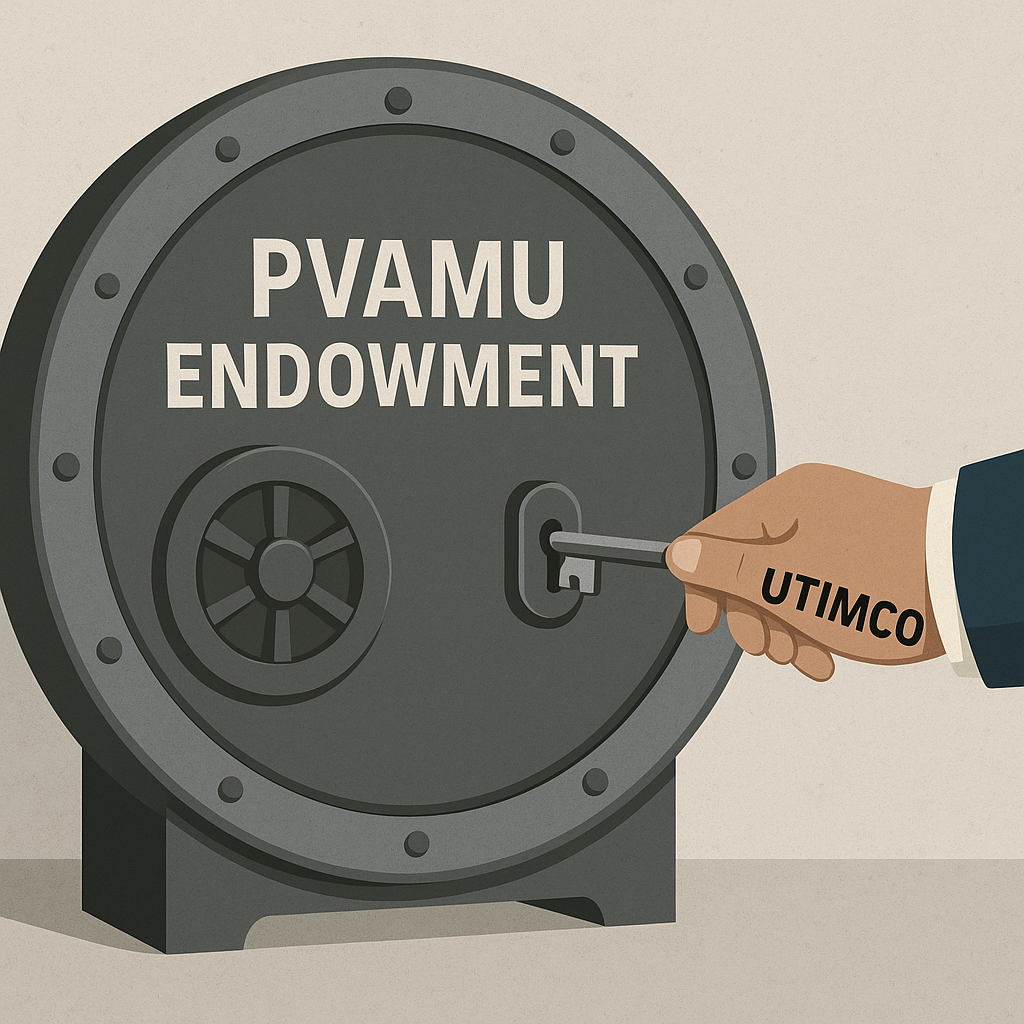
And yet, behind the applause and the very real gratitude there remains a more sobering, structural reality: Prairie View does not actually control its capital. The university’s endowment, like that of all Texas A&M System schools, is controlled and managed by UTIMCO, the University of Texas/Texas A&M Investment Management Company. UTIMCO is one of the largest public endowment management entities in the United States, overseeing well over $70 billion in assets. It is powerful, sophisticated, and critically not directly accountable to Prairie View’s leadership or the African American community whose future PVAMU represents.

This is the overlooked truth in the philanthropic triumph narrative: historic gifts do not necessarily translate into historic power. And power, not simply capital, is the currency African American institutions have always lacked most in the American economic order. Prairie View A&M University’s situation is a case study in the difference.

This article explores:

  • Why Prairie View’s record-setting gift still leaves it structurally dependent
  • How UTIMCO’s control restricts the institution’s long-term sovereignty
  • What this tells us about HBCU philanthropy and institutional design
  • Why African American institutional power requires ownership, not just funding
  • What steps Prairie View, other public HBCUs, and African American philanthropists can take to change the paradigm

This is not about questioning the value or impact of MacKenzie Scott’s generosity. It is about ensuring that gifts to African American institutions actually translate into durable, compounding power not momentary uplift that still sits under someone else’s governance.

The Gift Was Unprecedented—But the Structure Wasn’t

MacKenzie Scott’s philanthropic investments in Prairie View were transformational by any measure. Unrestricted capital is rare. Unrestricted capital at that scale is almost unheard of for HBCUs. Prairie View announced bold plans: initiatives in student success, research expansion, recruitment of top scholars, and community-facing programs that would have immediate impact.

However, beneath these aspirational goals lies a structural constraint. As a member of the Texas A&M University System, Prairie View’s endowment assets are not independently managed. Instead, they are placed under UTIMCO stewardship.

This means:

  • Prairie View cannot choose its own investment strategy
  • Prairie View cannot decide its own risk profile
  • Prairie View cannot determine long-term reinvestment philosophies
  • Prairie View cannot directly leverage its endowment as collateral or strategic capital
  • Prairie View has limited input into how its own financial future is shaped

Prairie View is wealthy in name, but not in governance. This is the difference between having money and having power.

Why UTIMCO Control Matters

UTIMCO is a financial powerhouse. It runs an endowment strategy modeled on the “Yale model” of diversified, high-yield, alternative-asset heavy investing. Its size gives it access to premier private equity, hedge funds, venture capital, and global asset vehicles that smaller endowments could never reach. But Prairie View is not UTIMCO’s strategic priority. And Prairie View does not have representation proportionate to its needs, mission, or history on the governance side of the investment enterprise.

The problems with this arrangement are structural, not personal:

1. Prairie View’s capital becomes part of a system that does not share its cultural mission.

UTIMCO’s fiduciary responsibility is to the entire system—primarily UT Austin and Texas A&M University, the two flagship institutions with the largest political influence and endowment weight.

2. Prairie View does not benefit proportionately from its own growth.

When UTIMCO’s investments outperform, the rising tide lifts the entire system but Prairie View’s small allocation does not allow it to meaningfully influence direction or capture outsized opportunity.

3. Prairie View is locked out of using its endowment to build independent institutional leverage.

For example:

  • Launching Prairie View–controlled venture funds
  • Building independent real-estate portfolios
  • Creating sovereign partnerships with African universities
  • Developing major research parks or revenue-producing assets
  • Issuing bonds based on endowment performance
  • Using the endowment to create a Prairie View Development Corporation
  • Deposit into African American Owned Banks

These are the exact strategies that allow elite institutions to become global players. Without endowment control, Prairie View cannot follow the same playbook.

4. African American institutional power remains externally governed.

Even when philanthropy flows to us, governance does not.
This is the core dilemma.

The Limits of Public-Sector HBCU Philanthropy

Public HBCUs occupy an uncomfortable position in American philanthropy. They exist inside systems created by and for institutions that do not share their origin story, demographic composition, or cultural mission. As a result, public HBCUs rarely benefit from the full compounding power that large donations should create. A $63 million donation to a private HBCU with full endowment control is a generational shift. A $63 million donation to a public HBCU inside a state-controlled investment empire is uplift but not sovereignty. The structure, not the gift itself, limits the long-term multiplier effect.

The True Power of an Endowment Is Governance, Not Size

The most elite universities such as Harvard, Yale, Stanford understand that the endowment is not merely a pot of money. It is the engine of independence, the foundation of strategic risk-taking, and the vault that allows them to pursue multi-century planning horizons. Prairie View’s endowment, while larger than before, becomes one more line item inside a massive investment entity whose priorities were never designed around the empowerment of African American institutions.

This raises fundamental questions:

  • If Prairie View doubled or tripled its endowment, would it gain any more control?
  • If Prairie View received a $500 million gift tomorrow, would it govern that capital?
  • What does “wealth” mean if the institution cannot direct it?

These questions get at the heart of African American philanthropic strategy:
Power is not the receipt of capital it is the control of capital.

Why This Matters for African American Philanthropy

The African American community is entering a new era of giving. Donors both internal and external to the community are showing increased willingness to fund African American institutions, particularly HBCUs. But if those donations sit inside structures that we do not control, then the long-term compounding advantage is lost. Philanthropy that uplifts without empowering is charity. Philanthropy that transfers capital and governance is institution-building. Prairie View deserves the latter. All HBCUs deserve the latter. African America deserves the latter.

What Would It Look Like for Prairie View to Have Full Capital Control?

If Prairie View controlled its own endowment strategy, several catalytic changes could occur:

1. PVAMU could launch its own independent investment office.

This would allow:

  • Hiring Black fund managers
  • Building partnerships with African investment firms
  • Investing directly in Prairie View–based startups
  • Growing an internal investment culture among alumni and students

2. PVAMU could build a multibillion-dollar research and development ecosystem.

The endowment could seed:

  • A Prairie View Innovation Corridor
  • A Black-owned semiconductor research consortium
  • Autonomous vehicle labs
  • Agricultural technology incubators
  • An African Diaspora science and engineering exchange
  • A rural Texas innovation hub exporting expertise globally

3. PVAMU could pursue independent financial engineering strategies.

Including:

  • Issuing bonds based on endowment earnings
  • Creating a real estate trust
  • Launching a PVAMU-controlled venture fund
  • Building a revenue-producing hospital network
  • Constructing Prairie View–owned student housing developments

4. PVAMU could fundamentally reshape African American institutional futures.

With full investment autonomy, Prairie View could become:

  • A national model for Black endowment governance
  • A financial anchor for African American rural communities
  • A bridge between Texas and the global African Diaspora
  • A site of intergenerational wealth-creation for African American students
  • An institution that attracts not only students but developers, scientists, and investors

This is the scale of possibility currently constrained by UTIMCO governance.

What Needs to Change—A Philanthropic and Policy Framework

To transition from uplift to sovereignty, African American leaders, donors, and policymakers must pursue concrete reforms:

1. Public HBCUs must secure special provisions for independent endowment management.

This could include:

  • Carve-outs from state systems
  • Special legislative exemptions
  • Hybrid governance models where system oversight continues but investment control shifts with the ultimate goal of full sovereignty

2. Large donors should explicitly require endowment autonomy as part of major gifts.

Imagine if MacKenzie Scott had stipulated:

“This gift must be placed in a separately managed fund controlled solely by Prairie View A&M University and its own designated board of trustees.”

That single sentence would have changed the institution’s next 100 years.

3. Prairie View alumni must build parallel philanthropic capital pools.

This includes:

  • Alumni-controlled investment funds
  • Prairie View-specific donor-advised funds
  • Community investment vehicles
  • A Prairie View Cooperative Endowment Fund

These independent vehicles can partner with but not be controlled by state systems.

4. National African American institutions must lobby for HBCU endowment independence.

A single policy shift could alter the landscape for every public HBCU:

Public HBCUs must have governance authority over capital donated specifically to them.

A Moment of Truth for HBCU Philanthropy

Prairie View’s historic gift was a moment of celebration—but also a moment of clarity. If African American institutions cannot control the endowments gifted to them, then the path to sovereignty remains blocked.

The philanthropic sector must confront this truth:

We cannot build African American power without African American control of African American capital.

Prairie View A&M University has always carried a dual identity, an HBCU of national importance inside a system not built for it. The generosity of donors like MacKenzie Scott can change the scale of Prairie View’s work, but only structural reform can change the nature of Prairie View’s power. The next era of HBCU philanthropy cannot simply be about larger gifts. It must be about gifts that come with governance, strategy, and autonomy.

Because endowments don’t build institutions.
Endowment sovereignty does.

Disclaimer: This article was assisted by ChatGPT.