
Tag Archives: Pan-African finance

The Largest IPO in African History Is Happening. Where Are African America’s Institutions?

Our work is the presentatoin of our capabilities. – Edward Gibbon
There is an old story about a village that lived along a great river. Every season, merchants from distant lands traveled that river, loading their boats with timber, ore, and grain pulled from the very land the villagers had worked for generations. Those merchants sailed downstream to markets where fortunes were made and power was consolidated, and season by season, neighboring tribes who had learned to build boats and send their own goods to market grew stronger their granaries fuller, their children better protected, their voices louder in the councils where decisions were made about who owned what and who owed whom. The village elders watched all of this from the bank. They were not ignorant men and women. They knew the river better than any merchant who passed through. They understood its currents, its seasons, its dangers. But they had never built boats. The lumber was expensive. The tools were hard to come by. The timing was never quite right. And so the resources of their land flowed downstream in other people’s vessels, enriching other people’s villages, while their own families and sibling villages just around the bend, bound to them by blood and history grew more exposed with each passing year. Then one season, a young man and a young woman stood before the elders and said: we know how to build the boats. We know where the timber is. We know the market downstream. The only question is whether this village will finally decide that the river belongs to us too.

The most consequential capital markets event in African history is unfolding in real time, and there is no reason for HBCU endowments and alumni associations to be spectators.

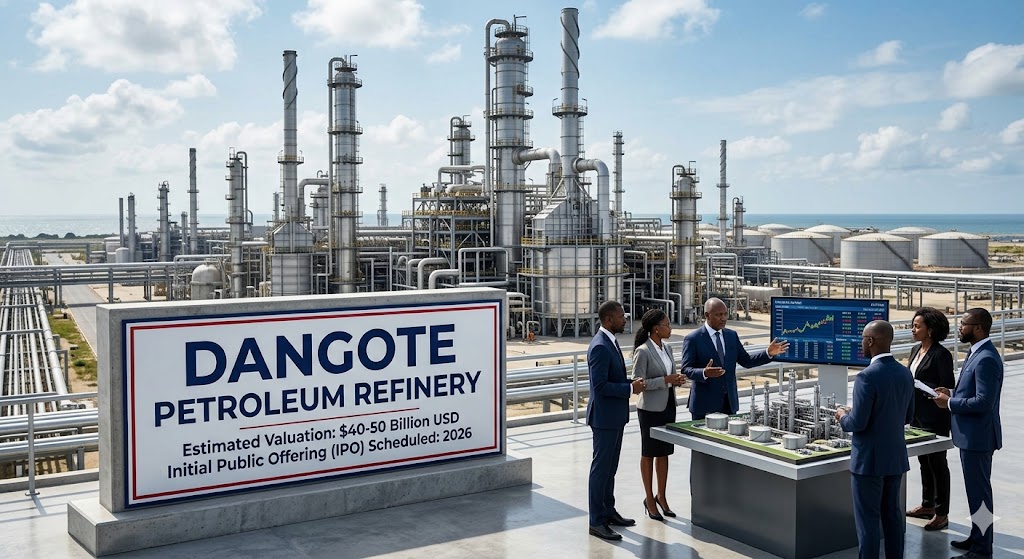
Aliko Dangote, the Nigerian industrialist whose Dangote Petroleum Refinery and Petrochemicals FZE has already reshaped the energy economics of West Africa, is preparing to take the refinery public. The offering structured as a coordinated multi-exchange IPO spanning the Nigerian Exchange, the Johannesburg Stock Exchange, the Nairobi Securities Exchange, the Ghana Stock Exchange, and several additional African bourses carries a valuation range of $40 billion to $50 billion. At a 10% stake offering, the actual transaction size approaches $5 billion, making it by a wide margin the largest equity offering ever conducted on an African stock exchange. The IPO subscription window is expected to open later in 2026.

For HBCU endowment officers, foundation boards, and alumni association investment committees who have spent the last decade searching for alternative assets that offer both competitive returns and meaningful institutional alignment, this transaction deserves serious analysis. It is not a charity play or a symbolic gesture toward Pan-African solidarity. It is a hard industrial asset, generating real revenue in hard currency, operating at the center of a continental energy transformation that will define the next quarter century of African economic development.

The strategic case begins with the asset itself.

The Dangote Refinery, located in the Ibeju-Lekki Free Trade Zone on the outskirts of Lagos, is the world’s largest single-train crude oil processing facility, with a current capacity of 650,000 barrels per day. It reached full operational capacity in early 2024, has already turned Nigeria into a net fuel exporter, and has disrupted global trade routes that previously ran refined petroleum products from European refineries back into the African market. The refinery currently supplies over 90% of Nigeria’s domestic petrol demand and has exported refined fuel to five African countries. The Dangote Group’s revenues have grown from $3.3 billion to $18 billion over the past five years, and the refinery’s expansion roadmap which envisions more than doubling capacity to 1.4 million barrels per day is the central purpose of the IPO capital raise.

One structural feature of the transaction is particularly noteworthy for institutional investors operating in the United States: dividends will be paid in US dollars, even though shares are purchased in naira. This is not a minor administrative detail. It addresses the core foreign-exchange risk concern that typically limits American institutional appetite for African equity markets. Dollar-denominated dividends from an asset generating dollar-denominated revenues — the refinery sells its output at global commodity prices — transforms the currency risk profile of the investment from speculative to manageable. For HBCU endowments that are overwhelmingly concentrated in US equities and fixed income, this creates a genuine entry point into the African investment universe without the full currency risk exposure that has historically made direct African market participation unattractive.

Now consider where HBCU endowments currently stand in the landscape of American higher education finance.

According to the most recent NACUBO-Commonfund Study of Endowments, HBCU institutions accounted for approximately $2.4 billion of the $944 billion in total endowment assets reported by participating institutions. The average HBCU endowment was $236.7 million, compared to $1.4 billion for all NCSE respondents. Only two HBCUs — Howard University, which crossed the $1 billion threshold, and Spelman College hold endowments above $500 million. The PWI-to-HBCU endowment gap among the top 10 institutions in each category stands at roughly 129 to 1. HBCU endowment gift flows fell to $67.7 million in FY25 from $91.9 million in FY24. On nearly every metric, the structural undercapitalization of HBCU institutional wealth is not merely significant; it is a threat to the long-term viability of institutions that serve as the backbone of African American professional formation.

The investment allocation patterns compounding this problem are equally stark. HBCU endowments allocate just 14% of their portfolios to alternative asset classes, compared to 41% for their non-HBCU peers — a 27-percentage-point gap that systematically excludes them from the asset classes driving the highest long-term returns. The reasons are structural and understandable: smaller endowments have fewer investment staff, face higher minimum investment thresholds at most alternative asset managers, and operate with more conservative board mandates. But the consequence is that HBCU endowments are systematically excluded from the alternative and international asset classes that generate the outsized returns sustaining the endowments of Harvard, Yale, and the University of Texas system. The compounding effect of this exclusion over decades is not a gap — it is a chasm.

The Dangote IPO, precisely because of its scale, its multi-exchange structure, and its dollar dividend commitment, represents an unusual opportunity to begin addressing one dimension of this allocation problem.

For institutions with sufficient endowment size to participate as institutional investors in the international tranche of the offering — Howard, Spelman, Hampton, and a small handful of others — the case for direct participation is straightforward. A position in the world’s largest single-train refinery, at an entry valuation of $40 to $50 billion, in an asset whose expansion is already funded and whose revenues are denominated in the currency in which your dividends will be paid, provides genuine portfolio diversification, inflation protection through commodity-linked revenues, and exposure to the fastest-urbanizing, fastest-growing consumer energy market on earth. Africa’s urban population is projected to double by 2050. Every major city added to the African urban grid requires energy infrastructure. The Dangote Refinery is positioned at the center of that demand trajectory.

For institutions whose endowment size makes direct participation in the IPO difficult which is the reality for most of the HBCU sector the answer is not to sit out. It is to aggregate. The 1890 Foundation, which serves as the coordinating hub for the nation’s 19 historically Black land-grant universities and has already demonstrated its capacity to administer large-scale federal partnerships, is the most credible existing infrastructure for a consortium investment vehicle among its member institutions. A formally structured investment fund operating through the 1890 network governed by participating endowment officers, managed by professional advisers with international markets experience, and capitalized through pooled contributions from member institutions would provide access to investment minimums and due diligence resources that no individual 1890 institution could assemble independently. The SWAC, MEAC, SIAC, CIAA, and HBCU Athletic Conference represent analogous organizing structures across the sector where the same consortium investment logic applies where each already functions as a governance body with member institutions, shared administrative infrastructure, and collective standing that could anchor a pooled investment vehicle.

HBCU alumni associations belong in this conversation, but not as secondary vehicles for the institution’s benefit. They belong as independent institutional investors making strategic decisions on their own financial merits. An alumni association that builds an investment fund with its own governance, its own professional management, and its own return targets is building institutional wealth for its membership, not running a philanthropic pipeline to its parent institution. The distinction matters. An alumni association investment fund capitalized by members seeking competitive financial returns will attract a different level of participation, a different quality of governance, and ultimately a different scale of capital than one framed as an alumni giving mechanism wearing investment clothes. Where coordination between a university endowment and its alumni association investment fund makes strategic sense such as co-investment in a shared opportunity, shared due diligence costs, complementary positions in the same offering that coordination should happen by design, not by default. But each institution must be making an independent decision of financial merit.

The argument for this model is not merely aspirational. It has historical precedent in other diaspora investment networks. The Indian American diaspora has consistently channeled capital into Indian infrastructure and technology sectors through organized networks of high-net-worth investors coordinated through professional associations and regional affinity groups. Cuban American capital networks have played a documented role in channeling investment back into businesses serving the diaspora in South Florida. Jewish American institutional networks have sustained diaspora bond programs through organized professional and philanthropic structures for decades. The mechanisms are known. The question is whether African American institutional leadership will build the organizational infrastructure to replicate them.

But the case for HBCU institutional participation in the Dangote IPO extends beyond portfolio diversification or even diaspora solidarity. It is about the connective tissue between two halves of the same people that has never been fully built. African American institutions sit on intellectual capital in agriculture, medicine, engineering, law, public policy, and the sciences that is directly relevant to the development challenges facing African Core nations. African institutions sit on natural capital, emerging market infrastructure, and a demographic growth trajectory that represents the most significant economic expansion of the twenty-first century. The relationship between the two has been episodic and philanthropic where it should be structural and transactional. An HBCU endowment that holds equity in the Dangote Refinery is not making a charitable gesture toward the continent — it is establishing a financial relationship that creates the institutional logic for research partnerships, faculty exchanges, student pipelines, and joint ventures that philanthropy alone never compels. Capital is the language institutions speak to each other when they intend to be taken seriously. Beyond the bilateral opportunity, there is a harder truth: Africa’s resources have been extracted, its assets undervalued, and its markets structured to serve outside interests since the colonial era. That dynamic does not end on its own. It ends when African institutions and their diaspora counterparts accumulate enough ownership stake in African Core assets that the continent’s wealth begins compounding inward rather than flowing out. Every dollar of HBCU and African American institutional capital deployed into African equity markets is a dollar that does not go to the outside investors who have historically treated the African Core as a source of raw return without reciprocal obligation. Ownership is the only permanent answer to extraction.

The Dangote IPO is not only an investment proposition. It is a test of whether Black institutional America can organize itself to participate in the capital formation of the African Core, the region whose industrialization will define the global economy’s next chapter or whether, once again, the value created in this geography will accrue primarily to investors who had the institutional organization to show up.

Nigeria’s regulatory environment carries the political and macroeconomic variance typical of any large, resource-rich emerging economy no more inherently unstable than the frontier and emerging markets of Eastern Europe, Southeast Asia, or Latin America that well-capitalized endowments have allocated to for decades without treating the risk as exceptional. That Nigerian markets have historically been characterized as uniquely risky reflects less about Nigeria’s actual risk profile than about the systematic undervaluation of African Core economies by external rating frameworks designed to serve the capital interests of institutions that benefit from keeping African assets mispriced. The multi-exchange listing structure presents a genuine operational challenge: coordinating clearing, settlement, and trading standards across multiple African exchanges simultaneously has no established precedent at this scale, and execution risk is real. Currency risk, while substantially mitigated by the dollar dividend structure, is not eliminated. And the refinery carries $3.65 billion in outstanding debt, with plans to repay through operations and asset sales — a material factor in any serious valuation analysis.

These risks are real. They do not, however, distinguish this offering from the risk profile of the emerging market private equity and infrastructure funds that well-capitalized non-HBCU endowments have been allocating to for the past two decades. The difference is not that those endowments found risk-free investments in emerging markets. The difference is that they built the institutional capacity to analyze and manage those risks, and they positioned themselves to capture the returns that came with accepting them.

HBCU endowments that remain concentrated in domestic equities and fixed income because they lack the investment staff to evaluate an African infrastructure IPO are not being prudent. They are being institutionally underpowered in a way that will compound against their beneficiaries for generations.

The path forward requires several concrete steps. First, HBCU endowment boards and foundation leadership should commission formal analysis of the Dangote prospectus as it becomes available and engage the offering’s appointed advisers — Stanbic IBTC Capital, Vetiva Advisory Services, and FirstCap — to understand the terms available to international institutional participants. Second, the 1890 Foundation, UNCF, the Thurgood Marshall College Fund, the HBCU Faculty Development Network, and the leadership of the SWAC, MEAC, SIAC, CIAA, and HBCU Athletic Conference should open formal conversations now about the governance structure of consortium investment vehicles within their respective networks, before this offering closes and before the next one arrives. Each of these organizations already operates across multiple institutions with shared administrative infrastructure; the investment coordination function is an extension of capacity they already possess, not a capability they would need to build from scratch. Third, HBCU alumni association leadership (national organizations, alumni chapters, and the professional networks that shadow every major HBCU) should be building investment fund infrastructure as a parallel track, governed independently and capitalized on financial merit, with coordination with institutional endowments happening where it creates genuine value for both parties.

The architecture of African wealth is being redrawn. The Dangote IPO is not a metaphor for that process. It is the process, in concrete form, open for institutional participation by any investor with the organizational capacity to engage it.

The young man and the young woman are standing before the elders. The boats can be built. The only question is whether this village will finally decide that the river belongs to them too.


This article is for informational and analytical purposes only and does not constitute investment advice. Prospective investors should conduct independent due diligence and consult qualified financial advisers before making investment decisions.

Disclaimer: This article was assisted by ClaudeAI.
Pan-African Capital: HBCU Endowments, African American Banks, and Kenya’s Growth Story

“When HBCU endowments and African American banks act together, they stop being small players. They become a financial force that nations must reckon with.” – HBCU Money Editorial Board

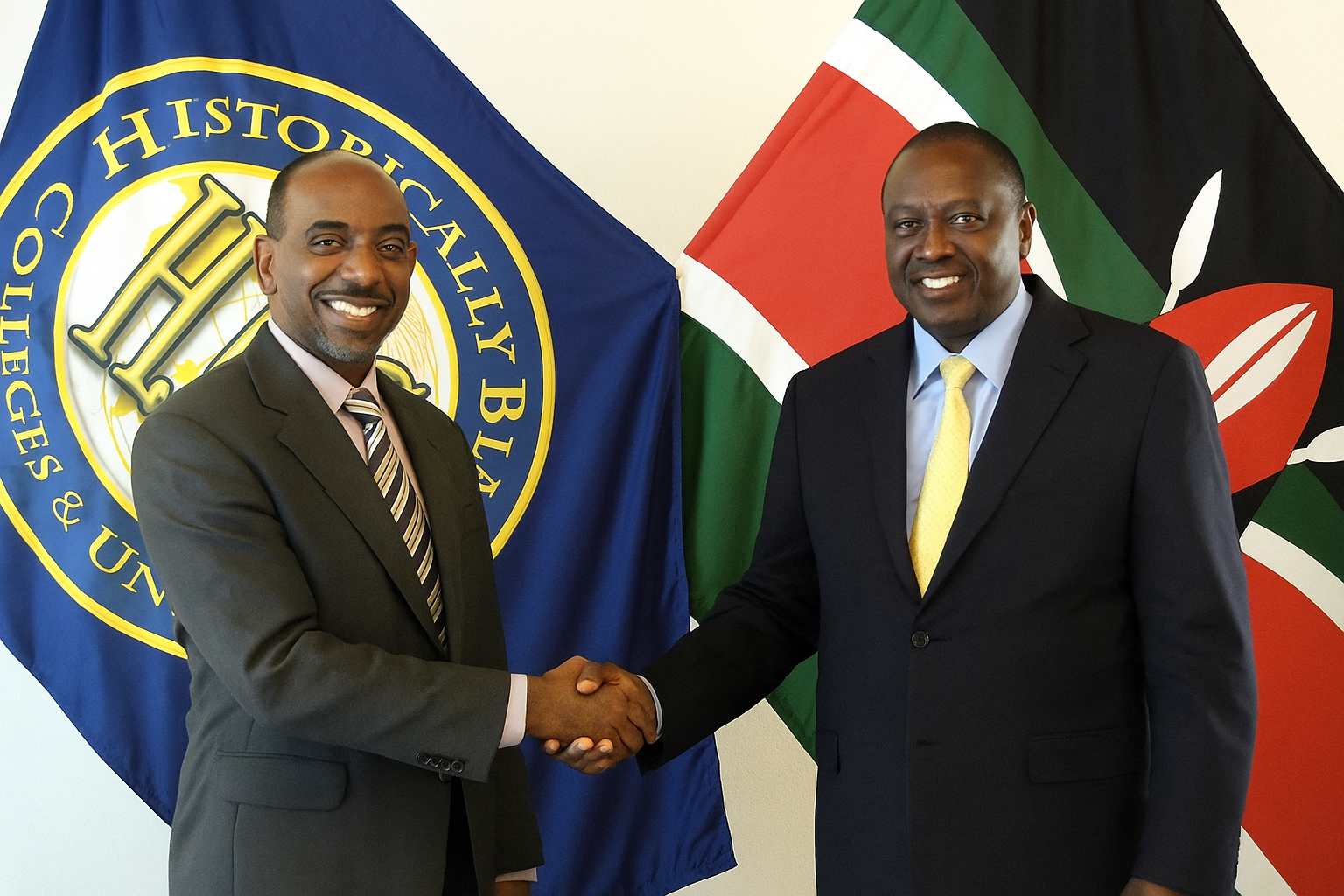
In the next several decades, the fault lines of global growth will not run through New York or London but through Nairobi, Lagos, and Accra. Kenya, sitting at the intersection of East Africa’s financial corridor and global trade routes, has become a laboratory for innovation in fintech, agriculture, and infrastructure. Yet despite centuries of cultural, spiritual, and blood connections, African America remains structurally absent from this new frontier of opportunity. Our financial institutions and HBCU endowments are under-leveraged in international markets, particularly in Africa, even as Asian, European, and Middle Eastern investors carve out dominant positions. For African American financial institutions and HBCU endowments, Kenya represents more than just an emerging market. It is a strategic stage for institutional wealth-building, geopolitical leverage, and reconnecting the African Diaspora through shared prosperity. The opportunity lies not simply in making isolated investments but in creating transatlantic joint ventures that bring together capital, expertise, and institutional strategy.

Kenya is more than safari brochures and tourist postcards. Its economy has quietly matured into one of Africa’s most diversified. With a GDP of over $110 billion and growth rates consistently outperforming many global peers, Kenya is often referred to as East Africa’s economic anchor. Nairobi has developed into the region’s financial hub, hosting multinational headquarters, stock exchange operations, and a robust startup ecosystem. Agriculture remains central, with Kenya exporting coffee, tea, and horticultural products while seeking to expand into value-addition agribusiness. Technology is another frontier, with Nairobi’s “Silicon Savannah” serving as a magnet for fintech, led by the global success of M-Pesa. Rapid urbanization fuels infrastructure and real estate demand, while Kenya’s leadership in geothermal and renewable energy has made it a global model. For African American institutions, the attraction lies not only in the growth metrics but in the alignment of needs: Kenya seeks patient capital, educational partnerships, and trusted diaspora allies, while African American institutions seek diversification, higher yields, and independence from U.S.-centric markets.

Despite African America’s aggregate $1.8 trillion in consumer spending, the community’s institutional capital remains modest. Only a handful of Black-owned banks, credit unions, and venture firms exist, and most hold under $1 billion in assets. HBCU endowments combined are less than $4 billion—an amount dwarfed by single Ivy League endowments. Yet within these constraints lies enormous potential. African American financial institutions already possess the regulatory infrastructure to pool and allocate capital, while HBCU endowments, though smaller in scale, carry moral weight and symbolic capital that can unlock global partnerships. Together, these institutions can create vehicles for international deployment of African American wealth, something that has been absent throughout our history. Imagine a pooled investment fund where Howard University, Spelman College, and Florida A&M commit $25 million collectively, matched by $25 million from Black-owned banks. That $50 million fund could be deployed into Kenyan agritech ventures, renewable energy projects, or commercial real estate. The collaboration would be historic: an African Diaspora financial ecosystem investing directly in Africa’s future.

The reasons to prioritize such engagement are strategic. Diversification is one. U.S. capital markets are increasingly low-yield for small institutional investors, while African markets offer higher growth potential and uncorrelated returns. Another is first-mover advantage. Unlike European or Asian investors, African American institutions do not carry the baggage of colonial relationships, which makes trust-based partnerships more viable. Transnational investment also provides institutional leverage. Just as Jewish, Irish, and Italian communities have leveraged diaspora ties for economic and political power, African Americans can build similar networks of influence. Beyond finance, there is the educational pipeline. HBCUs can link faculty, students, and alumni into research, study abroad, and entrepreneurial ventures tied to investments in Kenya. And finally, there is legacy. These investments address the absence of transgenerational institutional wealth that has long defined the African American economic condition.

The structures to achieve this vision can be diverse. A Diaspora investment fund pooling capital from HBCU endowments, Black-owned banks, and other African American institutions could professionally manage investments in Kenya. Public-private partnerships could align capital with Kenya’s infrastructure push in transport, energy, and housing. Venture capital and startup accelerators in Nairobi could connect HBCU students with Africa’s entrepreneurial scene while generating equity returns. Real estate investment trusts, driven by Nairobi’s urbanization, could provide stable income streams. Even education-linked ventures in e-learning and vocational training could generate both profit and intellectual reciprocity.

The barriers are real but not insurmountable. Kenya requires foreign investors to comply with incorporation, licensing, and work permit laws, which demand careful navigation. Currency risk from fluctuations in the Kenyan shilling must be hedged. Information gaps are wide, with many African American institutions unfamiliar with African business environments, highlighting the need for trusted partnerships and research. The relatively small scale of HBCU endowments makes collaboration indispensable. Above all, transparent governance and professional management are critical to avoid reputational risk. Yet none of these barriers are unique. European, Asian, and African investors face them daily and manage to thrive.

This is not only an economic project but a political one. The creation of a formal African American–Kenya Investment Council, for example, could coordinate through the Four Points Chamber of Commerce, HBCUs, and Kenyan universities to advocate for favorable treaties, tax incentives, and research collaborations. African American institutions investing abroad alter the narrative at home: no longer just a constituency asking for inclusion, but a global economic player with interests that stretch across the Atlantic. Such evolution creates leverage in Washington, Wall Street, and international forums.

Take agritech as a concrete example. Kenya’s agricultural sector employs over 60 percent of its labor force, yet productivity remains limited by technology and infrastructure. African American banks could co-finance ventures in irrigation, cold storage, and logistics platforms. HBCUs such as Tuskegee and Prairie View A&M could supply expertise in agricultural science and training. The returns could be strong, while the ventures also address food security and climate resilience—issues central to Africa’s stability. This is an example of investment tied not only to financial return but to global relevance.

The deeper point is that these ventures embed African American institutions into Africa’s growth story. They create a new narrative where HBCU students intern at Nairobi startups, Kenyan entrepreneurs raise capital from African American banks, and families on both sides of the Atlantic see tangible proof that the Diaspora is not fragmented but interwoven. In a world where capital dictates influence, these ties are transformative. They represent not just diversification but restoration, an opportunity to re-knit the fabric of a dispersed people through shared prosperity.

The cost of inaction is steep. China has entrenched itself in Kenya and across Africa through the Belt and Road Initiative. Gulf states are investing heavily in energy and real estate. European firms continue to capture opportunities in agriculture and infrastructure. If African American institutions remain passive, they will again watch as others define Africa’s economic trajectory, forfeiting both profits and influence. Worse, they will remain locked in a domestic cycle of undercapitalization and marginalization, failing to establish the transatlantic presence that could transform their institutional standing.

For too long, African America has celebrated individual success while neglecting institutional power. The result has been wealth without leverage and influence without permanence. Kenya and the wider African continent present a chance to reverse this trajectory. African American financial institutions and HBCU endowments can seize the opportunity by building joint investment vehicles that are ambitious, strategic, and collaborative. To invest in Kenya is to invest not only in profitable ventures but in the future of a Diaspora united by shared capital, shared strategy, and shared destiny. The transatlantic bridge is waiting to be built. The question is whether African America will summon the courage, coordination, and vision to cross it.

Step-by-step practical framework that African American financial institutions and HBCU endowments could follow to launch their first $50 million joint Kenya investment fund:

Imagine a handful of African American bank CEOs and HBCU endowment chiefs sitting together in a boardroom. The room is filled with cautious optimism. They know that together, they control billions in assets. What they don’t yet have is a proven model for working together to extend institutional power abroad. That meeting marks the first step: the coalition. A steering committee is formed, with voices from banking, academia, and outside advisors who know Kenya’s economic landscape. Their mandate is clear—launch a fund that delivers returns, but also anchors a new Pan-African economic relationship.

Step 1: Establish a Foundational Coalition

  • Identify core partners: Secure commitments from 3–5 African American banks and 5–7 HBCUs with at least $50M in combined investable capital.
  • Set up a steering committee: Include representatives from bank leadership, HBCU endowment managers, and external advisors with Africa market expertise.
  • Define purpose: Clearly state the dual mission: generating strong financial returns while building a bridge for institutional Pan-African economic partnerships.

The first order of business is to commission a feasibility study. Consultants with expertise in Kenya’s political economy, regulatory framework, and sector opportunities are hired. They map out the terrain: Kenya’s fast-growing fintech sector, renewable energy projects feeding off abundant solar and wind, agribusiness tied to both domestic and export markets, and logistics hubs serving East Africa’s gateway economy. Risks are weighed—currency volatility, regulatory hurdles, political cycles—but so are opportunities. The committee sees promise.

Step 2: Commission a Feasibility Study

  • Hire consultants with Kenya expertise: Legal, financial, and political economy experts based in both the U.S. and Kenya.
  • Sector focus analysis: Prioritize sectors Kenya is inviting foreign direct investment into—agriculture, fintech, renewable energy, real estate, and logistics.
  • Risk assessment: Evaluate currency volatility, repatriation policies, political stability, and regulatory compliance.

Next, the legal and financial scaffolding of the fund takes shape. They agree on a traditional GP/LP structure based in the U.S. for investor familiarity, with a Kenyan arm for local operations. Banks pledge their first tranches—perhaps $5M each. HBCUs, with smaller endowments but a deep sense of mission, contribute $2–3M apiece. Collectively, the first commitments reach $30M, enough to begin building credibility. The remaining capital will come from outside partners.

Step 3: Create the Legal & Financial Structure

  • Fund structure: Decide whether the vehicle will be a private equity fund, venture fund, or blended finance model.
  • Jurisdiction: Likely establish a U.S.-based LP/GP model for investor confidence, with a Kenyan subsidiary or partnership entity.
  • Capital commitments: Each bank and HBCU pledges proportional investments. Example: 3 banks commit $5M each, 7 HBCUs commit $2–3M each, plus matching funds from development finance institutions.

Those partners are cultivated carefully. Calls are made to the African Development Bank, IFC, and the U.S. International Development Finance Corporation. Each sees value in a diaspora-led fund connecting capital from the African American community to African markets. Meanwhile, Kenyan pension funds and cooperatives are invited to co-invest. Diaspora high-net-worth individuals are offered side-car vehicles. With these anchor and matching partners, the fund’s $50M target is within reach.

Step 4: Secure Anchor & Matching Partners

  • DFIs and multilaterals: Approach institutions like African Development Bank (AfDB), U.S. International Development Finance Corporation (DFC), and IFC for co-investments.
  • Kenyan institutions: Partner with local pension funds, cooperatives (SACCOs), or universities to establish local credibility and co-ownership.
  • Diaspora investors: Offer side-car investment vehicles for African American and African diaspora high-net-worth individuals.

Governance is another priority. The steering committee transforms into an investment committee, balanced between African American institutional leaders and Kenyan business experts. An advisory board is established with specialists in agriculture, energy, real estate, and fintech. Transparency is emphasized—annual impact reports will detail not only financial returns, but jobs created, student exchanges launched, and trade flows increased.

Step 5: Build Governance & Accountability Mechanisms

  • Investment committee: Balance between African American institutional reps and Kenyan business leaders.
  • Advisory board: Include sector specialists in agriculture, energy, fintech, etc.
  • Transparency: Publish annual reports and impact metrics, not just financial returns, but job creation and trade flows between HBCUs and Kenya.

Deal flow comes next. Nairobi-based investment professionals are hired to scout opportunities, vet local entrepreneurs, and structure partnerships. At the same time, HBCUs begin linking their own academic programs—business schools, agricultural research centers, and engineering departments—into the fund’s sector priorities. Student projects and faculty research now have real-world investment applications in Kenya.

Step 6: Develop Pipeline & Deal Flow

  • Partnership with Kenyan government: Leverage incentives offered to foreign investors, including tax breaks and special economic zones.
  • Local deal scouts: Hire Nairobi-based professionals to source deals in priority sectors.
  • HBCU connections: Link research and student projects to sectors targeted by the fund (e.g., agricultural science programs tied to Kenyan agribusiness investments).

With structure, governance, and deal flow in place, the fund launches its pilot tranche. $10M is deployed across two or three projects. A solar mini-grid company extending power to rural communities. A fintech platform simplifying mobile payments. A mid-sized agribusiness processing exports for global markets. These are not moonshots—they are solid, scalable enterprises that demonstrate both impact and return. The performance of this pilot will be watched closely. If successful, it will unlock the remainder of the $50M and set the stage for larger ambitions.

Step 7: Launch Pilot Investments ($10M tranche)

  • Start small within the $50M: Deploy $10M across 2–3 companies/projects.
  • Focus on scalable businesses: Renewable energy mini-grids, fintech payment platforms, or agri-processing facilities.
  • Monitor performance closely: Use pilot results to refine risk models, build confidence among stakeholders, and attract more investors.

Within 18 months, the pilot investments begin to show results. Jobs are created. Returns begin to flow. Confidence builds. The remaining capital is deployed, spreading across a diversified portfolio. HBCUs launch student and faculty exchanges with Kenyan institutions tied to the fund’s sectors. African American banks begin opening lines of credit to U.S. businesses interested in exporting to East Africa. The fund is no longer just an experiment—it is an institution in itself.

Step 8: Expand and Institutionalize

  • Scale to full $50M deployment: After 12–18 months of pilot success, release additional tranches.
  • Knowledge transfer: Create HBCU student and faculty exchange programs tied to investments.
  • Secondary fundraising: Use strong pilot performance to raise an additional $100M+ follow-on fund.

As momentum grows, the fund takes steps toward permanence. A Nairobi office is established, staffed by African American and Kenyan professionals alike. Training programs create a pipeline for HBCU students to intern in Kenya and Kenyan students to study at HBCUs. Over time, this exchange deepens the cultural and economic ties the fund was designed to spark.

Step 9: Create Long-Term Infrastructure

  • Permanent office in Nairobi: Establish a joint African American–Kenyan fund management company.
  • Training & pipeline development: Develop internship pipelines for HBCU students in Kenya, and Kenyan students at HBCUs.
  • Institutional trust: Turn the fund into a long-term institutional asset class for African American banks and HBCUs.

After five years, success is measured in multiple ways. Financially, the fund delivers returns in line with its targets—perhaps 12–15% IRR. Institutionally, it has created a precedent: HBCUs and African American banks can collaborate on global investments. Socially, it has created jobs in Kenya, exported knowledge and partnerships, and brought students and faculty into real-world economic diplomacy. Most importantly, it has built trust. Trust between African American institutions and African markets. Trust that this model can be scaled.

Step 10: Measure Success & Reinvest

  • Financial benchmarks: Target 12–15% IRR across diversified investments.
  • Social impact: Jobs created in Kenya, number of HBCU students/faculty involved, new African American businesses entering African markets.
  • Recycling capital: Reinvest returns into next-generation funds, building compounding institutional wealth.

With trust comes ambition. A second fund is planned—this time $100M, then $500M. The coalition envisions a Pan-African investment platform, deploying billions across sectors and countries. HBCUs, once thought of only as educational institutions, now sit at the table of international finance. African American banks, once dismissed as niche, now act as global intermediaries for diaspora capital.

The $50M Kenya fund was never just about money. It was about proving the power of joint institutionalism. It was about showing that African American capital, when organized and directed abroad, can generate wealth, influence, and opportunity for generations. And it was about establishing a roadmap that others can follow—a playbook for diaspora-led investment that starts in Kenya but could extend across the African continent.

Disclaimer: This article was assisted by ChatGPT.