Tag Archives: HBCUs

What Is To Become Of African American Baby Boomers’ $188 Billion In Wealth?

“Everything that I’ve gone through informs me and my opinions in a way, I guess because I am a child of segregation. I lived through it. I lived in it. I was of it.” – Samuel L. Jackson
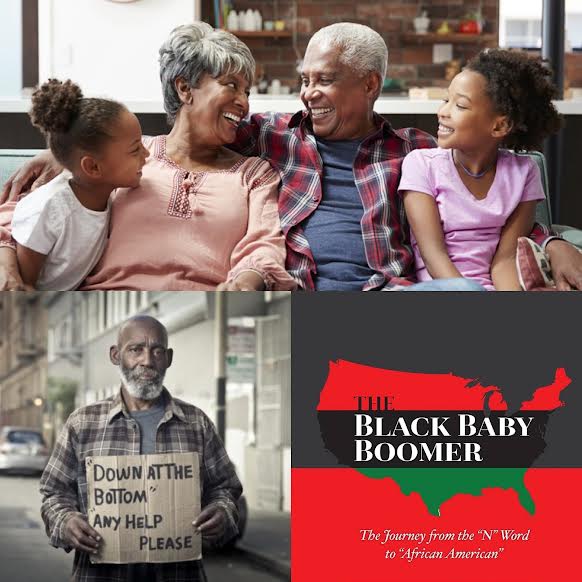
One thing most financially literate people realize is that it is not how much you make, but it is how much you keep. Those who are of a wealth building mindset realize it is not how much you keep, but how much of your capital is actually working to make you wealthier without your labor being attached to it. African American individuals, households, and institutions struggle in both cases, but mightily in the latter. Most African American wealth, as highlighted by the amount of time the African American dollar remains in our community (less than 6 hours), does little to no work for the wealth building of those three entities. A major reason for this is that African American individuals, households, and yes, even institutions put little to none of their money in African American institutions – ironically.

Economic Disparities

“According to a report by the Federal Reserve, the median net worth of African American households headed by someone aged 55-64 (who would generally be considered Baby Boomers) was around $39,000 in 2019. This is substantially lower than the median net worth of European American households in the same age group, which was around $184,000 in 2019. It’s important to note that there is significant variation within both groups, and wealth is influenced by a range of factors including income, education, and access to resources.”

Insider Intelligence gives a generational demographic breakdown reporting that, “Baby boomers were the largest living adult population until 2019. According to the US Census Bureau, US boomers have remained the second-largest population group in 2022, comprised of 69.6 million people ages 58 to 76.” And Statista reports that there are 43.26 million Boomer households meaning that approximately 4.8 million of those are African American. This then puts African American Baby Boomer wealth at approximately $187.2 billion – but what of it?

Each eldest generation will push wealth forward one way or another. Where it flows though can be largely up to the person. Some will push it to the next generation of family and friends, charities and organizations, and there are a host of other options of where money can find itself as one begins to consider their legacy both in the here and now or from the beyond. One things is crystal clear though from a Brookings Institute study, African Americans are falling behind with every passing generation, “30% of European American households received an inheritance in 2019 at an average level of $195,500 compared to 10% of African American households at an average level of $100,000.” African Americans both receive 50 percent less than their European American counterpart and European Americans are three times more likely to get an inheritance than their African American counterpart – but again what of it?

While the wealth of even African American Baby Boomers is not that of their counterparts, it should have the opportunity to make far more considerable impact than it probably actually will. As African American baby boomers age, a significant transfer of wealth is expected to occur. This presents an opportunity for younger generations to invest in education, home ownership, and entrepreneurial ventures. However, research indicates that many African American families face systemic barriers, such as lower access to financial resources and education, which could impact how this wealth is utilized and preserved.

Despite the considerable wealth held by baby boomers, economic disparities persist within the African American community and its institutions. Issues such as income inequality, lack of business ownership, access to African American owned financial institutions, limited access to financial literacy resources, and a disconnected institutional ecosystem can hinder the effective management and growth of inherited wealth. Addressing these disparities will be crucial in ensuring that future generations can leverage this wealth for long-term benefits.

Philanthropy and Community Investment

Many African American baby boomers are inclined to support causes that uplift their communities. This philanthropic inclination could lead to increased investment in African American nonprofits, education initiatives, and other community organizations. By directing funds towards institutional development, these donors can help address systemic issues and create lasting change.

Financial Planning and Literacy

The management of this wealth will largely depend on the financial literacy of both the current baby boomer generation and their heirs. Increasing access to financial education, resources, and African American owned financial institutions is essential to ensure that wealth is not only preserved but also strategically invested. Programs aimed at enhancing financial connectivity between African American households and African American financial institutions within the African American community can play a significant role in maximizing the impact of this wealth.

The fate of the $188 billion in wealth held by African American baby boomers is not just about the transfer of assets; it’s about how those assets can be utilized to build a stronger future for the community. By focusing on education, philanthropy, and addressing systemic barriers, there is potential for this wealth to make a profound impact on the lives of future generations. Ensuring that this wealth is effectively managed and directed towards meaningful causes will be crucial in shaping a more equitable and prosperous future for the African American community. In the end, the only real question is how much of the $188 billion will end up in African American institutions. Whether those organizations be African American social, economic, or political institutions is up to the household, but this is the most acute potential for institutional transformation that African America will have seen since 1865.

Disclosure: This article was assisted by NOVA AI and ChatGPT.

Love It Or Hate It: African American Education Needs More Private Schools

If you want a good education, go to private schools. If you can’t afford it, tough luck. You can go to the public school. – Paul LePage

The education landscape for African American students has long been marked by systemic challenges, including underfunded public schools and limited access to quality resources. As parents, educators, and community leaders seek solutions to these persistent issues, the establishment of more private schools specifically serving African American communities emerges as a potential avenue for improving educational outcomes. These institutions can provide tailored educational experiences that meet the unique needs of African American students, while also creating a stronger pipeline to historically Black colleges and universities (HBCUs).

If European Americans wanted to have quality public education for ALL Americans by now, we would have it. They do not and we can not afford to wait in hopes of appealing to a moral consciousness for it to happen. We must also accept that even it were to happen, the curriculum still would leave us out of the shaping and decision making process as it always has. Then we are surprised when our kids go through K-12 and know little to nothing about the contributions of African Americans and the African Diaspora upon finishing. There was slavery and then Martin Luther King, Jr. as it pertains to the “history” of African Americans in the United States in the current school systems for which we are dependent upon to educate our community and if some textbooks have their way slavery will soon be erased from the literature. In the intellectual arms race happening both here in the United States and throughout the world, African American education is sinking faster than the Titanic (it took approximately five minutes). The demarcation line has been crossed (long ago some would argue – desegregation) and it is time to take the offensive. African American private schools allow for African America to create its own de facto school systems where it controls the culture, curriculum, teacher quality, finances, and all of the subtleties that go into the education of our children from Early Childhood/Pre-K through 12th Grade.

In the United States, there are currently 30,492 private schools employing 529,574 teachers and educating almost 4.7 million students according to recent data by the NCES. On the public school side, there are 98,469 institutions employing 3.2 million teachers and educating 48.1 million students. For African Americans, they comprise 15 percent (7.22 million African American students) of the public school enrollment and 6 percent (423,000 African American students) of the private school enrollment. That is a national average of 18 teachers and 154 students for a ratio of 8 students per 1 teacher per private institution versus an average 33 teachers and 489 students for a ratio of 15 students per 1 teacher per public institution. Despite this reality, African American participation is second lowest among all groups just ahead of Hispanics, 50 percent behind European Americans, and 40 percent behind Asian Americans in private school participation. Private education for Asian Americans comprises almost 15 percent of their public/private student population, while private education only comprises 6 percent of the African American public/private population.

Addressing Systemic Inequities

Public schools in predominantly African American neighborhoods often face significant funding disparities, resulting in overcrowded classrooms, outdated materials, and limited extracurricular opportunities. Private schools can offer smaller class sizes, individualized attention, and enhanced resources such as more experienced teachers, state of the art technology and facilities just to name a few. By creating more private educational options, families can access environments that better meet their children’s academic and emotional needs.

Emphasis on Cultural Relevance

Private schools that cater to African American students can incorporate culturally relevant curricula that celebrate heritage and address the unique experiences of these students. Such an approach can foster a sense of belonging and identity, helping students thrive academically and socially. By emphasizing African American history, literature, and contributions, these schools can instill cultural pride and motivation in their students.

Diverse Educational Models

The expansion of private schools can introduce diverse educational models, including Montessori, Waldorf, and project-based learning, which may better suit the learning styles of African American students. These alternatives can provide innovative teaching methods that engage students more effectively than traditional approaches.

Strengthening the Pipeline to HBCUs

A significant benefit of increased private school options is the potential to strengthen the pipeline to HBCUs. Private schools can establish partnerships with HBCUs, offering students mentorship programs, college preparatory courses, and exposure to campus life.

  1. Early College Programs: Private schools can implement early college initiatives that allow high school students to earn college credits while still in high school. This can ease the transition to higher education and increase the likelihood of enrollment in HBCUs.
  2. College Counseling: Enhanced college counseling services can guide students through the application process, focusing on HBCUs and highlighting the unique opportunities these institutions offer, including supportive environments and rich cultural experiences.
  3. Scholarship Opportunities: Private schools can work with HBCUs to create scholarship programs specifically for their graduates, ensuring financial support for students who choose to continue their education at these institutions.

Parental Choice and Empowerment

More private schools can empower parents by offering them choices in their children’s education. Many African American families seek options beyond their local public schools, and increased access to African American private institutions can enable parents to select environments that align with their educational philosophies and cultural values.

Community Investment and Leadership

Establishing private schools within African American communities can encourage local investment and leadership. The New England 8, a set of premier boarding schools in the New England region, control over $8 billion in net assets alone. There is no reason to believe that African American boarding and private schools could not emerge to enhance African American institutional asset control through their own endowments and have an acute impact on African American towns and communities. Community members can take active roles in governance and decision-making, ensuring that schools reflect the needs and aspirations of the families they serve. This involvement can strengthen community ties and promote a sense of ownership in the educational process.

While private schools are not a panacea for the challenges facing African American education, increasing their availability can provide valuable alternatives for families seeking quality educational options. By addressing systemic inequities, offering culturally relevant curricula, and empowering communities, more private schools could play a crucial role in fostering academic success, personal growth for African American students, and ultimately provides more African American institutional ownership.

How many African American private schools are there? According to Black Minds Matter’s Black-Owned Schools Directory there are approximately 140 African American private schools.

Disclosure: This article was assisted with by ChatGPT.

2023’s HBCU Million Dollar Gifts: No African American Million Dollar Gifts To HBCUs

“Philanthropy is an exercise in power, by definition by the wealthy.” – Rob Reich

After an abysmal 2022, the HBCU Million Dollar Gifts list in 2023 bounced back? Well, sort of. In 2022 there were only three donations and now in 2023 there are five. Mathematically one would argue for that being a 66 percent increase, but then one realizes there were twice as many $100 million donations given or pledged to PWIs as there were $1 million donations given or pledged to HBCUs it throws water colder than the artic onto the conversation. Furthermore, one of those donations was pledged in 2023 by one Sean Combs who is now arguably in so much legal trouble that the pledge will likely never turn into a gift for its recipient, Jackson State University. To make the donation by Mr. Combs even more frustrating, it was the only one among the list by an African American further reinforcing that African American donors who can give million dollar donations are still not interested in supporting HBCUs with any fever.

The donations that did arrive went to the usual suspects of Howard (2), Spelman, and Tuskegee. Unless Spelman has a massive donation up its sleeve (and it is certainly possible), then Howard is going to coast to becoming the first HBCU to have a $1 billion endowment. To put in perspective how large the acute the donor crisis is between PWI and HBCU donors requires just taking a look at the largest 2023 donation by a donor. James Simons and Marilyn Simons gave a gift of $500 million to SUNY Stony Brook. A donation equal to over 50 percent of the Howard University’s endowment and over 90 percent of Spelman College’s endowment. Meanwhile, African America’s wealthy are virtually silent year after year.

There continues to be a massive disconnect of African America pouring resources into its own institutions. This is as true of the lack of African American donors to HBCUs as the embarrassment that virtually no HBCUs bank with an African American owned bank or even two premier HBCUs in Hampton University and North Carolina A&T University leaving an HBCU conference for a PWI one. The island mentality of everyone and every institution looking out for themselves while claiming they are for the community has reached a nauseating level year after year and should make anyone wonder if there is any reason to have hope. None of this fairs well for smaller HBCUs with the looming enrollment cliff crisis facing all American colleges and universities and for which HBCUs will certainly bear the brunt as with almost every crisis that America has.

Overall donations to all colleges and universities were down a second straight year in 2023 dropping from 275 to 259 Million Dollar Gifts.

$1 Million Plus Donations To All Colleges: 259

$100 Million Plus Donations To All Colleges: 10

$1 Million Plus Donations Value To All Colleges: $6.1 Billion

$1 Million Plus Median Donation To All Colleges: $10.0 Million

$1 Million Plus Average Donation To All Colleges: $23.6 Million

$1 Million Plus Donations To HBCUs: 5

$100 Million Plus Donations To HBCUs: 0

$1 Million Plus Donations Value To HBCUs: $45.6 Million

$1 Million Plus Median Donation To HBCUs: $10.0 Million

$1 Million Plus Average Donation To HBCUs: $9.3 Million

HBCU Percentage of Donations To All Colleges: 1.9%

HBCU Percentage of Donation Value To All Colleges: 0.8%

1. Carrie Walton Penner and Gregory Penner (pictured) – $20.0 million
Recipient: Howard University
Source of Wealth: Professional Sports, Family Wealth, Finance

2. MacKenzie Scott (pictured) – $12.0 million
Recipient: Howard University
Source of Wealth: Technology, Retail

3. John Brown and Rosemary Brown (pictured) – $10.0 million
Recipient: Spelman College
Source of Wealth: Health Products

4.Stephen Feinberg – $3.6 million
Recipient: Tuskegee University
Source of Wealth: Finance

5.Sean Combs – $1.0 million (Pledge)
Recipient: Jackson State University
Source of Wealth: Entertainment

Source: Chronicle of Philanthropy

Island Mentality: Alabama State University’s $125 Million Decision Highlights HBCUs’ Continued Failure To Connect With The African American Financial Sector

Negro banks, as a rule, have failed because the people, taught that their own pioneers in business cannot function in this sphere, withdrew their deposits. – Dr. Carter G. Woodson

What is an ecosystem? How do you develop an ecosystem? Can we develop an African American ecosystem? It seems to be a question that a room full of African American institutional leadership have little understanding of based on the institutional decisions that are continuously made. In their academic paper entitled Economic Ecosystems, Philip E. Auerswald and Lokesh M. Dani, “An ecosystem is defined as a dynamically stable network of interconnected firms and institutions within bounded geographical space. It is proposed that representing regional economic networks as ‘ecosystems’ provides analytical structure and depth to theories of the sources of regional advantage, the role of entrepreneurs in regional development, and the determinants of resilience in regional economic systems.” The most vital part of that definition being interconnected firms and institutions. African American institutions in general at every turn fail to understand this concept and HBCUs are no exception. This is especially true of HBCUs choice of banks and now Alabama State University’s recent decision to forego a plethora of African American Owned Investment and Asset Management firms and hand $125 million to another European American owned investment firm. African American capital once again reinforcing European America’s financial ecosystem – not ours.

It is almost a redundant story at this point. African American institutions all operating on their own island and failing to interconnect and intertwine with each other. African America from individual to institutions all do what is best for themselves individually and not what is best for the collective and certainly not what connects and strengthens the collective. See Hampton University and North Carolina A&T State University decisions to leave an HBCU conference for a PWI one. To that vein is why over 90 percent of African America’s $100 billion in annual tuition revenue goes into PWIs and not HBCUs/PBIs. HBCUs provide very little means of an example for the community to follow. Instead, HBCUs are a glaring headlight of just how poorly African American institutions perform in strategically integrating themselves within the African American ecosystem, especially economically. There are no reports on HBCUs engagement with the African American private sector because HBCUs do not seemingly see that as important. How many of HBCU graduates work for African American owned companies? How much HBCU athletic sponsorship dollars come from African American owned companies/partnerships? How much of the HBCU endowment is invested in African American firms? These are basic questions that any leadership of an HBCU should be able to answer. Unfortunately as Jarrett Carter, Sr., founder of HBCU Digest, once eloquently put it, “Many HBCUs are just trying to be PWI-adjacent.”

Is $125 million a lot of money? Context matters. To any individual, most would agree $125 million is significant. To institutions, it varies on size, scope, and goals. For African American Financial Institutions, almost down to even the largest of our firms having an $125 million account would see their bottom line acutely move. Providing perspective on the landscape, Pension and Investments reports, “The global asset management industry showed some signs of recovery in 2023, with total assets under management (AUM) rising 12% year-over-year to nearly $120 trillion, according to research by Boston Consulting Group.” For African American Asset Managers, “The largest Black-owned asset managers are responsible for more than $253 billion in assets, according to FIN Searches data. Vista Equity Partners is the largest Black-owned firm in the industry, with the private equity manager handling $103.8 billion in assets.” African American Owned Asset Managers only account for 0.2 percent of the global AUM. By contrast, the Top 10 non-Black asset managers have $22 trillion assets under management which accounts for almost 20 percent of global AUM.

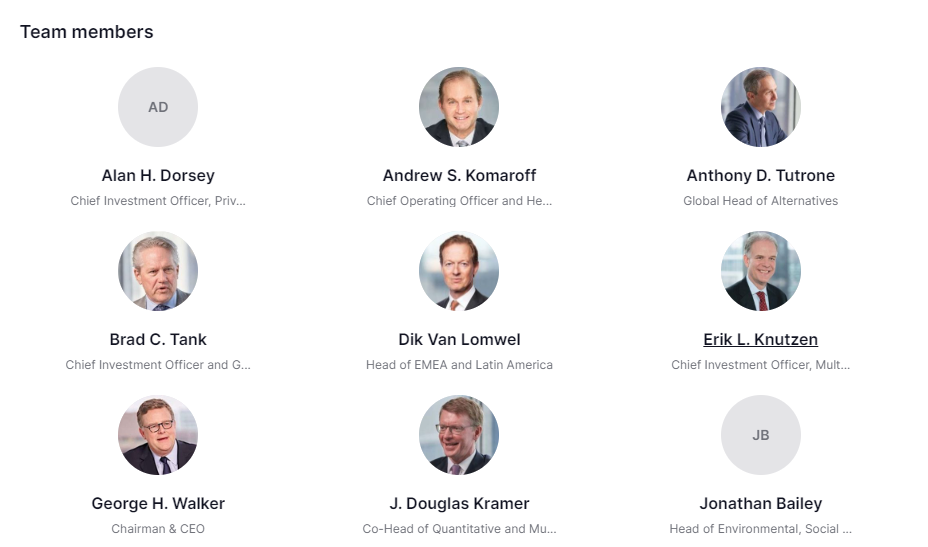
The asset management firm that Alabama State University chose according to World Benchmarking Alliance, “Neuberger Berman is a private employee-owned investment management firm (leadership pictured above) headquartered in New York, USA. It was founded in 1939 and has offices in 39 cities across 26 countries. The firm manages equities, fixed income, private equity and hedge fund portfolios for global institutional investors, advisors and high-net-worth individuals. It managed USD 460 billion of assets (under management) in 2021 and employed 2,647 staff in 2022.” This means that Alabama State University’s $125 million is equal to 0.02 percent of assets under management for Neuberger Berman. A drop in the bucket. The entirety of assets at African American Owned Asset Management firms is only 55 percent of Neuberger Berman assets under management. Alabama State University’s $125 million would have lifted the ENTIRE African American Owned Asset Management’s AUM by 0.05 percent. A move that would have strengthened the African American economic and financial ecosystem.

African America as a community talks about the circulation of the dollar or our lack thereof constantly, but what is virtually never talked about is the circulation of the African American institutional dollar being the largest part of that conversation. It is a fairly accepted statistic that the African American dollar does not stay in the African American community for a day, while other communities see their dollar stay in their communities for weeks and in the case of the Asian American community for almost a month. We often think of the circulation of our dollar like everything else, on an island or as an individual. An individual going and buying food from even an expensive African American owned restaurant is $100-200, but an HBCU building a new building means the opportunity for a new loan worth tens of millions for an African American owned bank, it means tens of millions for an African American owned construction company, so on and so forth. Instead, Bethune-Cookman University borrows from a notorious predatory lender to the African American community in Wells Fargo and almost finds itself losing those buildings due to foreclosure.

HBCU alumni know little about the state of finances or the movement of the money at their alma maters. HBCU administrators either willfully withholding the information or inept themselves of the importance of the information and providing it. Both are problematic. The notion that HBCUs cannot find African American investment firms is a painful thought knowing that a Google search would bring up the HBCU Money African American Owned Bank Directory at the very least. The likelihood is more in line with what Mr. Carter said in that a good deal of HBCU leadership simply wants to be like their PWI counterparts is far more likely. This would explain the debacle “donation” accepted by Florida A&M University’s president recently where a simple Google search would have avoided such embarrassment. Instead, Alabama State University’s Neuberger Berman relationship and a plethora of others instances (a decade ago when we reported “Spelman College & Regions Bank – A Failure To Disclose”) is that likely they are simply mimicking PWI actions and unwittingly reinforcing the PWI/European American ecosystem to say the least. Unfortunately, that mimicking reinforces another community’s economic and financial ecosystems not ours and why you may never see OneUnited Field at any HBCU’s athletic facility. Because we are holding out for J.P. Morgan, Bank of America, or Wells Fargo to show us the same love they show PWIs. Not acknowledging those are not our community’s banks.

If HBCUs are simply going to behave as PWI-adjacent institutions, then it is hard to argue with why over 90 percent of African Americans who go to college are not choosing HBCUs. For many it becomes a question of why get a knockoff when they can get the real thing. After all their ice is colder. HBCUs, HBCU alumni associations, and HBCU support organizations as a whole are not making decisions related to African American institutions ecosystem’s interests and interconnectivity and that is most glaring in the poor institutional decisions we are making in regards to our institutional finances and endowments.

HBCUs Have A $1.6 Billion Annual “Cost Of College” Deficit – And A Crisis Is Looming Because Of It

“When you face a crisis, you know who your true friends are.” – Magic Johnson

Nobody ask African American institutions to do more with less than African Americans themselves. We ask Liberty Bank & Trust, the largest African American owned bank by assets, with just over $1 billion to be able to do the same things that J.P. Morgan can do with almost $3 trillion. We ask Howard University with an endowment of less than $1 billion to do the same thing Harvard can do with an endowment of over $50 billion. The perplexing insanity of expectation that we have for African American institutions while European American institutions who get virtually 100 percent of their community’s buying power and over 90 percent of African America’s buying power against African American institutions who get virtually 0 percent of non-African American buying power and less than 10 percent of our own community’s buying power is so often lost on us it is infuriating. We really do give little thought to how much of our educational value both economically and intellectually we pour into non-African American institutions. The intellectual value would require a study of its own, but the economic value we can actually measure rather quickly on the higher education level at least.

According to the Postsecondary National Policy Institute, “In 2020, 36% of the 18–24-year-old Black population were enrolled in college compared to 40% of the overall U.S. population. Since Fall 2010, Black student enrollment has declined from 3.04 million to 2.38 million, a 22% decrease: Undergraduate enrollment declined from 2.67 million to 1.99 million, a 25% decrease.” Next the Education Data Initiative’s reports, “The average cost of college* in the United States is $35,551 per student per year, including books, supplies, and daily living expenses.” Combine those two statistics together and you have a working “cost of college” revenue for African America that is approximately $84.6 billion annually. Unfortunately, HBCUs and their approximately 214,200 students would be valued at only $7.6 billion or less than 9 percent if HBCUs “cost of college” was comparable, but it is not. HBCUs “cost of college” lands around $28,064 annually meaning African Americans at HBCUs value is approximately $6 billion or 7 percent. Beyond building your own intellectual institutions that represent your intellectual interest to the world, just economically it makes more sense for African Americans to choose HBCUs. Unfortunately, the discount is not just based on African American families being economically poorer, but also because African America socially devalues African American institutions so much that they are forced to offer a discount to attract those who economics face the highest uphill battle. This would explain in large parts why HBCUs in general have such acutely high percentage of Pell Grant students. HBCUs may be on a race to extinction without increasing its percentage of African Americans choosing them for college or seeing parabolic growth in their endowments.

The economic model as it stands is simply not sustainable. An institution can not both fail to garner massive support from its community and be cheaper. Unfortunately, because African American households are economically poor and psychologically devalue African American institutions, then being more expensive than the norm is not an option. This harsh reality that HBCUs just to close the approximately $7,500 gap or $1.6 billion in cost would mean attaching an endowment of $150,000 per current HBCU student or $32.1 billion or increase African American students from 214,200 percent (9 percent African American HBCU students) of those attending HBCUs by approximately 57,000 to 271,200 (11 percent African American HBCU students) – an over 25 percent increase from current. The cost to obtain those 57,000 new students (infrastructure aside) according to Nova AI, “the National Association for College Admission Counseling, the average cost per student recruited by a four-year private college was around $2,433 in 2018-2019” would be $138 million. Many HBCU stakeholders would question whether or not most HBCU campuses could handle a 25 percent increase in their African American student bodies when the infrastructure (housing, faculty, etc.) is already a struggle. However the $32.1 billion options is worth noting since current HBCU combined endowments are just a little over $2.5 billion. There are also 23 European Americans with net worths more than $32 billion and 0 African Americans. If the path to survival seems like a gauntlet seems suicidal, then you would be correct.

Increase African American students by 25 percent (and all the infrastructure cost it would entail) or come up with $32 billion seems like being kind to call it between a rock and a hard place of a decision. A pipe dream solution would be that the top 100 PWI endowments valued at almost $600 billion would take 5 percent ($32 billion) and reallocate it to HBCUs with each PWI giving proportional to their endowments. But hell has a better chance of freezing over given our recent piece on “Tone Deaf: Harvard Launches A $100 Million Endowment To Itself To Study Its Ties To Slavery – An Amount Greater Than 99 Percent Of HBCU Endowments”. Trying to squeeze the Federal government for it seems just as foolish given African America’s lack of political power let alone HBCUs lack of political power. All of this without even considering the decline in African Americans going to college, which is likely a correlation with the African American high school graduation rate where African American boys are struggling to finish. There is also the real consideration that many African Americans are seeing less incentive to go to college given the student loan debt and lack of opportunity thereafter. It leaves the question how many HBCUs remaining can survive to the next generation.

Ultimately, the solution will likely and largely lie with HBCU alumni associations and their ability to become more than just social organizations, but truly engaged of the business of group economics. We have discussed previously the “12 Things Your HBCU Alumni Association/Chapter Needs To Do To Be Financially Successful” and the sentiment remains true and urgent. Making HBCU alumni associations financially stronger would also allow HBCUs to be far more competitive for African American students and work towards that increased enrollment while being able to build the infrastructure along side it. The question remains though, can HBCU alumni transform their alumni associations into financial powerhouses in a manner that would allow them to achieve such a goal? You never know until you try, but one thing is for sure you miss 100 percent of the shots you do not take and the consequences here are the institutional death of HBCUs as we know them.