Tag Archives: HBCU

What Is To Become Of African American Baby Boomers’ $188 Billion In Wealth?

“Everything that I’ve gone through informs me and my opinions in a way, I guess because I am a child of segregation. I lived through it. I lived in it. I was of it.” – Samuel L. Jackson
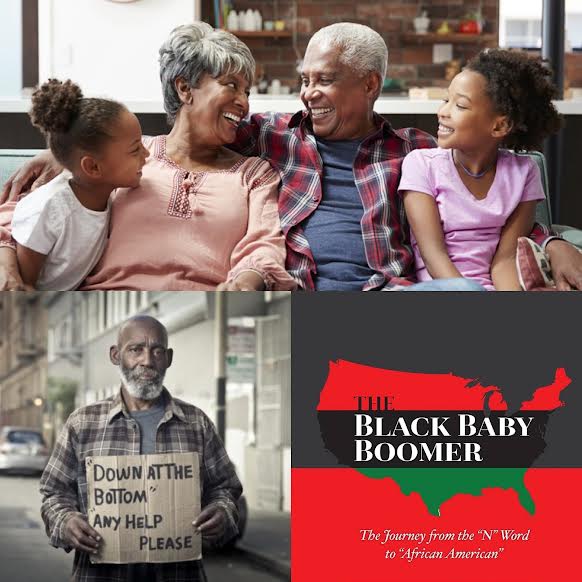
One thing most financially literate people realize is that it is not how much you make, but it is how much you keep. Those who are of a wealth building mindset realize it is not how much you keep, but how much of your capital is actually working to make you wealthier without your labor being attached to it. African American individuals, households, and institutions struggle in both cases, but mightily in the latter. Most African American wealth, as highlighted by the amount of time the African American dollar remains in our community (less than 6 hours), does little to no work for the wealth building of those three entities. A major reason for this is that African American individuals, households, and yes, even institutions put little to none of their money in African American institutions – ironically.

Economic Disparities

“According to a report by the Federal Reserve, the median net worth of African American households headed by someone aged 55-64 (who would generally be considered Baby Boomers) was around $39,000 in 2019. This is substantially lower than the median net worth of European American households in the same age group, which was around $184,000 in 2019. It’s important to note that there is significant variation within both groups, and wealth is influenced by a range of factors including income, education, and access to resources.”

Insider Intelligence gives a generational demographic breakdown reporting that, “Baby boomers were the largest living adult population until 2019. According to the US Census Bureau, US boomers have remained the second-largest population group in 2022, comprised of 69.6 million people ages 58 to 76.” And Statista reports that there are 43.26 million Boomer households meaning that approximately 4.8 million of those are African American. This then puts African American Baby Boomer wealth at approximately $187.2 billion – but what of it?

Each eldest generation will push wealth forward one way or another. Where it flows though can be largely up to the person. Some will push it to the next generation of family and friends, charities and organizations, and there are a host of other options of where money can find itself as one begins to consider their legacy both in the here and now or from the beyond. One things is crystal clear though from a Brookings Institute study, African Americans are falling behind with every passing generation, “30% of European American households received an inheritance in 2019 at an average level of $195,500 compared to 10% of African American households at an average level of $100,000.” African Americans both receive 50 percent less than their European American counterpart and European Americans are three times more likely to get an inheritance than their African American counterpart – but again what of it?

While the wealth of even African American Baby Boomers is not that of their counterparts, it should have the opportunity to make far more considerable impact than it probably actually will. As African American baby boomers age, a significant transfer of wealth is expected to occur. This presents an opportunity for younger generations to invest in education, home ownership, and entrepreneurial ventures. However, research indicates that many African American families face systemic barriers, such as lower access to financial resources and education, which could impact how this wealth is utilized and preserved.

Despite the considerable wealth held by baby boomers, economic disparities persist within the African American community and its institutions. Issues such as income inequality, lack of business ownership, access to African American owned financial institutions, limited access to financial literacy resources, and a disconnected institutional ecosystem can hinder the effective management and growth of inherited wealth. Addressing these disparities will be crucial in ensuring that future generations can leverage this wealth for long-term benefits.

Philanthropy and Community Investment

Many African American baby boomers are inclined to support causes that uplift their communities. This philanthropic inclination could lead to increased investment in African American nonprofits, education initiatives, and other community organizations. By directing funds towards institutional development, these donors can help address systemic issues and create lasting change.

Financial Planning and Literacy

The management of this wealth will largely depend on the financial literacy of both the current baby boomer generation and their heirs. Increasing access to financial education, resources, and African American owned financial institutions is essential to ensure that wealth is not only preserved but also strategically invested. Programs aimed at enhancing financial connectivity between African American households and African American financial institutions within the African American community can play a significant role in maximizing the impact of this wealth.

The fate of the $188 billion in wealth held by African American baby boomers is not just about the transfer of assets; it’s about how those assets can be utilized to build a stronger future for the community. By focusing on education, philanthropy, and addressing systemic barriers, there is potential for this wealth to make a profound impact on the lives of future generations. Ensuring that this wealth is effectively managed and directed towards meaningful causes will be crucial in shaping a more equitable and prosperous future for the African American community. In the end, the only real question is how much of the $188 billion will end up in African American institutions. Whether those organizations be African American social, economic, or political institutions is up to the household, but this is the most acute potential for institutional transformation that African America will have seen since 1865.

Disclosure: This article was assisted by NOVA AI and ChatGPT.

2023’s HBCU Million Dollar Gifts: No African American Million Dollar Gifts To HBCUs

“Philanthropy is an exercise in power, by definition by the wealthy.” – Rob Reich

After an abysmal 2022, the HBCU Million Dollar Gifts list in 2023 bounced back? Well, sort of. In 2022 there were only three donations and now in 2023 there are five. Mathematically one would argue for that being a 66 percent increase, but then one realizes there were twice as many $100 million donations given or pledged to PWIs as there were $1 million donations given or pledged to HBCUs it throws water colder than the artic onto the conversation. Furthermore, one of those donations was pledged in 2023 by one Sean Combs who is now arguably in so much legal trouble that the pledge will likely never turn into a gift for its recipient, Jackson State University. To make the donation by Mr. Combs even more frustrating, it was the only one among the list by an African American further reinforcing that African American donors who can give million dollar donations are still not interested in supporting HBCUs with any fever.

The donations that did arrive went to the usual suspects of Howard (2), Spelman, and Tuskegee. Unless Spelman has a massive donation up its sleeve (and it is certainly possible), then Howard is going to coast to becoming the first HBCU to have a $1 billion endowment. To put in perspective how large the acute the donor crisis is between PWI and HBCU donors requires just taking a look at the largest 2023 donation by a donor. James Simons and Marilyn Simons gave a gift of $500 million to SUNY Stony Brook. A donation equal to over 50 percent of the Howard University’s endowment and over 90 percent of Spelman College’s endowment. Meanwhile, African America’s wealthy are virtually silent year after year.

There continues to be a massive disconnect of African America pouring resources into its own institutions. This is as true of the lack of African American donors to HBCUs as the embarrassment that virtually no HBCUs bank with an African American owned bank or even two premier HBCUs in Hampton University and North Carolina A&T University leaving an HBCU conference for a PWI one. The island mentality of everyone and every institution looking out for themselves while claiming they are for the community has reached a nauseating level year after year and should make anyone wonder if there is any reason to have hope. None of this fairs well for smaller HBCUs with the looming enrollment cliff crisis facing all American colleges and universities and for which HBCUs will certainly bear the brunt as with almost every crisis that America has.

Overall donations to all colleges and universities were down a second straight year in 2023 dropping from 275 to 259 Million Dollar Gifts.

$1 Million Plus Donations To All Colleges: 259

$100 Million Plus Donations To All Colleges: 10

$1 Million Plus Donations Value To All Colleges: $6.1 Billion

$1 Million Plus Median Donation To All Colleges: $10.0 Million

$1 Million Plus Average Donation To All Colleges: $23.6 Million

$1 Million Plus Donations To HBCUs: 5

$100 Million Plus Donations To HBCUs: 0

$1 Million Plus Donations Value To HBCUs: $45.6 Million

$1 Million Plus Median Donation To HBCUs: $10.0 Million

$1 Million Plus Average Donation To HBCUs: $9.3 Million

HBCU Percentage of Donations To All Colleges: 1.9%

HBCU Percentage of Donation Value To All Colleges: 0.8%

1. Carrie Walton Penner and Gregory Penner (pictured) – $20.0 million
Recipient: Howard University
Source of Wealth: Professional Sports, Family Wealth, Finance

2. MacKenzie Scott (pictured) – $12.0 million
Recipient: Howard University
Source of Wealth: Technology, Retail

3. John Brown and Rosemary Brown (pictured) – $10.0 million
Recipient: Spelman College
Source of Wealth: Health Products

4.Stephen Feinberg – $3.6 million
Recipient: Tuskegee University
Source of Wealth: Finance

5.Sean Combs – $1.0 million (Pledge)
Recipient: Jackson State University
Source of Wealth: Entertainment

Source: Chronicle of Philanthropy

Starting a Philanthropy Club: A Collective Approach to African American Giving

“I have found that among its other benefits, giving liberates the soul of the giver.” – Dr. Maya Angelou. 

If you’ve been considering joining or starting an philanthropy club with your family, friends, or fellow HBCU alumni but are unsure if it’s the right move, you’ve come to the right place. The answer is it is absolutely the right move.

A few facts regarding African American organizations and nonprofits:

Philanthropy clubs can be a powerful tool for leveraging African American philanthropy from like-minded individuals. They not only enhance your financial literacy and knowledge about African American and African Diaspora organizations but also empower you to make informed philanthropic decisions. By pooling your resources with your family, you can collectively grow your impact African American nonprofits finances and outreach, fostering a sense of confidence and control over institutional development and empowerment.

Keep reading as we discuss why you might want to start an investment club and the steps you’ll need to take.

Why You’ll Want to Start a Philanthropy Club?

One of the biggest reasons to start an philanthropy club is that they want to learn and share ideas with people who share their values. It makes sense to start a philanthropy club with family, friends, or HBCU alumni because, most of the time, your values are well-aligned. Yes, you may have different opinions, but your values are generally on the same page.

Philanthropy clubs can be a great way to learn about African American causes, organizations, and nonprofits. Because some members may be more seasoned donors, givers, or active in the nonprofit space, they can share their knowledge on certain topics.

Philanthropy clubs are a great way to magnify small donations by each member into a large donation by a focused collective. the increase the impact associated with investing. However, with the rise in so many commission-free brokers, the fees for making a high volume of trades aren’t as big of a deal.

How to Start an Investment Club

If you’re ready to get your philanthropy club with family, friends, or HBCU alumni off the ground, you’ll want to follow these steps to ensure success:

1. Find and Organize Members

Finding members for a philanthropy club is generally one of the most challenging steps. However, it’s a little easier if you’re looking to start one with your family, friends, or HBCU alumni. Either way, ensuring the fit is correct before jumping in is crucial.

A solid philanthropy club should have at least 5 people but no more than 15 or 20. You must have enough ideas, but too many can make things more difficult. Each person will be required to identify a cause, organization, or nonprofit. Then, each month, a different member will present their cause, organization, or nonprofit to the group.

Before extending an invitation to different anyone, ask yourself a few questions. These will help you see if it will be a good fit.

  • Do you trust the person you’re thinking of inviting to be consistent and involved?
  • Will they bring research and ideas to the meetings?
  • Are they organized?
  • Are they going to pay the monthly donation on time?

2. Determine Your Goals

Once you have your members set, you must agree on your goals. Most clubs’ goals will be making donations and learning from others. But how are you going to get to that point?

It’s important to take some time to understand each member’s philanthropic approach. Are they willing to take on more risk or prefer to be more conservative? Do you want to stick with only well known organizations, or are members interested in startup organizations as well? Do they only want to give to domestic organizations? Or are they willing to give to African Diaspora nonprofits working in Haiti, Jamaica, UK, or Africa?

Developing a plan of attack and ensuring that each member is on the same page will be vital to success.

3. Decide How You Want To Give

Deciding on if you want to setup a legal structure for your philanthropy club is important because potentially over time, your club can setup an endowment that invest donors money and that can grow into a significant and sustainable amount of money. Having the necessary legal protections is going to be important. If your philanthropy club decides to actually invest its donations into investments that will grow over time so that the club has larger and more sustainable sums to give is important to think about.

The other option is to simply give everyone the option to donate on their own once the cause, organization, or nonprofit is decided upon. This route relies on the honor system or some type of peer accountability towards giving.

Each philanthropy club must do what works best for them and also realize that the club is allowed to evolve over time.

The Bottom Line

Philanthropy clubs are a great way to pool your donor funds and learn from other members. Just be sure that you join a group where everyone is willing to listen to ideas and pull their own weight within the club.

The Only African American Owned Bank In Texas Selects Morris Brown College Alum As Its Next CEO

Unity National Bank, headquartered in Houston, Texas, with $209 million in assets, is the eighth largest African American owned bank by assets. It is located just a stone’s throw away from Texas Southern University. Recently the bank named Pedro Bryant, a Morris Brown College alum, its new CEO and President. Unity National Bank has an immense opportunity to move up the rankings for African American banks with the right strategy. According to an Apartment List report in February 2024, San Antonio, Houston, Dallas, and Austin rank as the third, fourth, sixth, and seventh best cities in the US for African American professionals. Lendio also reports that Texas is home to over 400,000 African American owned businesses and almost 13,000 are employer firms. These ingredients mean that with Unity National Bank being the only African American owned bank in the state the runway for growth is theirs to capture. This also means a strengthening of ties between HBCUs and the African America private sector are that much stronger. The lack of cohesion between the two institutions (100 HBCUs and 16 African American owned banks) has largely been one of the key ingredients holding back the African American economy as intellectual and economic capital rarely circulates between HBCUs and the African American owned employer firms.

Unity National Bank’s Full Press Release:

Island Mentality: Alabama State University’s $125 Million Decision Highlights HBCUs’ Continued Failure To Connect With The African American Financial Sector

Negro banks, as a rule, have failed because the people, taught that their own pioneers in business cannot function in this sphere, withdrew their deposits. – Dr. Carter G. Woodson

What is an ecosystem? How do you develop an ecosystem? Can we develop an African American ecosystem? It seems to be a question that a room full of African American institutional leadership have little understanding of based on the institutional decisions that are continuously made. In their academic paper entitled Economic Ecosystems, Philip E. Auerswald and Lokesh M. Dani, “An ecosystem is defined as a dynamically stable network of interconnected firms and institutions within bounded geographical space. It is proposed that representing regional economic networks as ‘ecosystems’ provides analytical structure and depth to theories of the sources of regional advantage, the role of entrepreneurs in regional development, and the determinants of resilience in regional economic systems.” The most vital part of that definition being interconnected firms and institutions. African American institutions in general at every turn fail to understand this concept and HBCUs are no exception. This is especially true of HBCUs choice of banks and now Alabama State University’s recent decision to forego a plethora of African American Owned Investment and Asset Management firms and hand $125 million to another European American owned investment firm. African American capital once again reinforcing European America’s financial ecosystem – not ours.

It is almost a redundant story at this point. African American institutions all operating on their own island and failing to interconnect and intertwine with each other. African America from individual to institutions all do what is best for themselves individually and not what is best for the collective and certainly not what connects and strengthens the collective. See Hampton University and North Carolina A&T State University decisions to leave an HBCU conference for a PWI one. To that vein is why over 90 percent of African America’s $100 billion in annual tuition revenue goes into PWIs and not HBCUs/PBIs. HBCUs provide very little means of an example for the community to follow. Instead, HBCUs are a glaring headlight of just how poorly African American institutions perform in strategically integrating themselves within the African American ecosystem, especially economically. There are no reports on HBCUs engagement with the African American private sector because HBCUs do not seemingly see that as important. How many of HBCU graduates work for African American owned companies? How much HBCU athletic sponsorship dollars come from African American owned companies/partnerships? How much of the HBCU endowment is invested in African American firms? These are basic questions that any leadership of an HBCU should be able to answer. Unfortunately as Jarrett Carter, Sr., founder of HBCU Digest, once eloquently put it, “Many HBCUs are just trying to be PWI-adjacent.”

Is $125 million a lot of money? Context matters. To any individual, most would agree $125 million is significant. To institutions, it varies on size, scope, and goals. For African American Financial Institutions, almost down to even the largest of our firms having an $125 million account would see their bottom line acutely move. Providing perspective on the landscape, Pension and Investments reports, “The global asset management industry showed some signs of recovery in 2023, with total assets under management (AUM) rising 12% year-over-year to nearly $120 trillion, according to research by Boston Consulting Group.” For African American Asset Managers, “The largest Black-owned asset managers are responsible for more than $253 billion in assets, according to FIN Searches data. Vista Equity Partners is the largest Black-owned firm in the industry, with the private equity manager handling $103.8 billion in assets.” African American Owned Asset Managers only account for 0.2 percent of the global AUM. By contrast, the Top 10 non-Black asset managers have $22 trillion assets under management which accounts for almost 20 percent of global AUM.

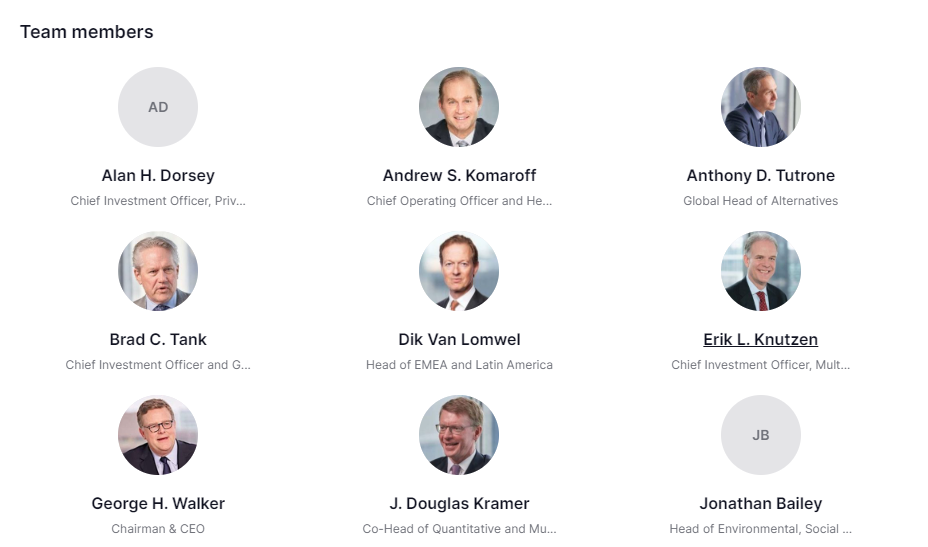
The asset management firm that Alabama State University chose according to World Benchmarking Alliance, “Neuberger Berman is a private employee-owned investment management firm (leadership pictured above) headquartered in New York, USA. It was founded in 1939 and has offices in 39 cities across 26 countries. The firm manages equities, fixed income, private equity and hedge fund portfolios for global institutional investors, advisors and high-net-worth individuals. It managed USD 460 billion of assets (under management) in 2021 and employed 2,647 staff in 2022.” This means that Alabama State University’s $125 million is equal to 0.02 percent of assets under management for Neuberger Berman. A drop in the bucket. The entirety of assets at African American Owned Asset Management firms is only 55 percent of Neuberger Berman assets under management. Alabama State University’s $125 million would have lifted the ENTIRE African American Owned Asset Management’s AUM by 0.05 percent. A move that would have strengthened the African American economic and financial ecosystem.

African America as a community talks about the circulation of the dollar or our lack thereof constantly, but what is virtually never talked about is the circulation of the African American institutional dollar being the largest part of that conversation. It is a fairly accepted statistic that the African American dollar does not stay in the African American community for a day, while other communities see their dollar stay in their communities for weeks and in the case of the Asian American community for almost a month. We often think of the circulation of our dollar like everything else, on an island or as an individual. An individual going and buying food from even an expensive African American owned restaurant is $100-200, but an HBCU building a new building means the opportunity for a new loan worth tens of millions for an African American owned bank, it means tens of millions for an African American owned construction company, so on and so forth. Instead, Bethune-Cookman University borrows from a notorious predatory lender to the African American community in Wells Fargo and almost finds itself losing those buildings due to foreclosure.

HBCU alumni know little about the state of finances or the movement of the money at their alma maters. HBCU administrators either willfully withholding the information or inept themselves of the importance of the information and providing it. Both are problematic. The notion that HBCUs cannot find African American investment firms is a painful thought knowing that a Google search would bring up the HBCU Money African American Owned Bank Directory at the very least. The likelihood is more in line with what Mr. Carter said in that a good deal of HBCU leadership simply wants to be like their PWI counterparts is far more likely. This would explain the debacle “donation” accepted by Florida A&M University’s president recently where a simple Google search would have avoided such embarrassment. Instead, Alabama State University’s Neuberger Berman relationship and a plethora of others instances (a decade ago when we reported “Spelman College & Regions Bank – A Failure To Disclose”) is that likely they are simply mimicking PWI actions and unwittingly reinforcing the PWI/European American ecosystem to say the least. Unfortunately, that mimicking reinforces another community’s economic and financial ecosystems not ours and why you may never see OneUnited Field at any HBCU’s athletic facility. Because we are holding out for J.P. Morgan, Bank of America, or Wells Fargo to show us the same love they show PWIs. Not acknowledging those are not our community’s banks.

If HBCUs are simply going to behave as PWI-adjacent institutions, then it is hard to argue with why over 90 percent of African Americans who go to college are not choosing HBCUs. For many it becomes a question of why get a knockoff when they can get the real thing. After all their ice is colder. HBCUs, HBCU alumni associations, and HBCU support organizations as a whole are not making decisions related to African American institutions ecosystem’s interests and interconnectivity and that is most glaring in the poor institutional decisions we are making in regards to our institutional finances and endowments.