Tag Archives: education

If the State Won’t Pay, the Rich Must: The $27.5 Billion Endowment Public Broadcasting Now Requires

“In the absence of state support, those with capital must decide: will they merely enjoy the benefits of a stable society—or invest in the institutions that make it possible?”
Arielle Morgan, Senior Fellow, Institute for Civic Infrastructure

The withdrawal of $1.1 billion in federal funding from the Corporation for Public Broadcasting is not merely a fiscal adjustment—it is a structural dislocation. It marks the effective end of a decades-long social contract in which the U.S. government ensured the existence of a nationwide, non-commercial broadcasting ecosystem intended to serve the public interest. For PBS, NPR, and their hundreds of affiliate stations across the country, the clock is now ticking toward an uncertain future.

But if the U.S. government is no longer willing to fund public broadcasting, another powerful bloc may have to: the ultra-wealthy and the corporations that have long built brand equity on the back of public trust and public platforms. In other words, the very elite who most benefit from stability, reliable information, and a functioning democracy may now be expected to underwrite one of its most foundational institutions.

The price tag? $27.5 billion.

A Simple, Uncomfortable Equation

To replace $1.1 billion in federal funding with investment returns, the equation is straightforward. Using a conservative draw rate of 4%—commonly applied by universities and foundations to ensure long-term preservation of capital—an endowment of $27.5 billion would be required to generate that annual payout.

This is not a charity exercise. It is a capital strategy.

To reach this target, two basic donor models stand out:

  • 275 individuals contributing $100 million each
  • 2,750 individuals contributing $10 million each

These figures are within striking distance of the top echelon of American wealth. As of 2024, the United States had over 800 billionaires and more than 23,000 centi-millionaires (individuals with $100 million or more in net worth). Put bluntly, it would require only 1.2% of America’s centi-millionaires to secure the future of public broadcasting in perpetuity.

What’s at Stake for the Elite

There is a growing recognition—even among the ultra-wealthy—that civil society must be preserved, even if governments no longer have the capacity or political will to do so. The fragility of liberal democracy, demonstrated by political polarization, misinformation, and institutional distrust, poses long-term risks not only to the electorate but also to markets, capital flows, and reputational value.

Public broadcasting—independent, educational, and widely trusted—has long been a stabilizing force in this ecosystem. Its reach into rural towns, inner cities, and suburban households makes it a conduit for shared narratives and factual baselines. It is not exaggeration to say that NPR and PBS, through All Things Considered, NewsHour, Frontline, and Sesame Street, have helped preserve a measure of social cohesion in a deeply divided country.

For the ultra-wealthy, losing this infrastructure would not simply be a cultural loss. It would be a strategic risk.

Hence the question: if the state won’t fund it, why won’t they?

The Precedent Is There

Large-scale philanthropic endowments are nothing new. In the past two decades:

  • Michael Bloomberg has donated over $3.3 billion to his alma mater Johns Hopkins University.
  • MacKenzie Scott has given away over $16 billion since 2019.
  • The Gates Foundation operates with a $67 billion endowment and deploys billions annually to global health and education initiatives.
  • Ken Griffin recently contributed $300 million to Harvard University.

Yet public broadcasting—a sector with tangible civic impact—has rarely drawn the same scale of contribution. This may be due in part to its status as a federal recipient, which gave the impression of permanence and stability. That illusion has now evaporated.

What remains is the opportunity to build a truly private-public media model—one whose operating capital is drawn from private wealth but whose editorial independence is legally insulated from donor interference.

A Corporate Response to a Public Crisis

Philanthropists are not the only entities positioned to act. Corporations, particularly those with vested interests in news, content, or public trust, have a strategic imperative to help capitalise such an endowment. Among the most obvious candidates:

  • Technology firms such as Apple, Amazon, Google, and Meta, which dominate digital content distribution and advertising, but face persistent scrutiny over misinformation and platform responsibility.
  • Media conglomerates such as Comcast, Disney, and Paramount, whose own news divisions benefit from a well-informed public and a credible informational ecosystem.
  • Financial firms such as JPMorgan Chase, Goldman Sachs, and BlackRock, for whom geopolitical and social stability underpin long-term asset growth.

Indeed, a structured vehicle—such as a Public Broadcasting Endowment Corporation (PBEC)—could allow corporations to make long-term contributions that are tax-deductible, reputationally beneficial, and materially impactful. Their names need not appear on programming or editorial decisions; the return on investment would be brand credibility and a stronger civic framework.

Moreover, such a fund could become a flagship ESG initiative—aligning corporate interests with measurable civic outcomes.

Structuring the Capital Stack

A diversified funding approach would enhance resilience and buy-in. A potential framework:

Donor TypeTarget ContributionTotal
275 HNWIs @ $100M$27.5 billion100%
OR
1,000 HNWIs @ $10M$10 billion36%
100 Corporates @ $100M$10 billion36%
Broad-based campaign$7.5 billion28%
Total$27.5 billion100%

A broad-based campaign could also complement elite contributions. Imagine a national “Democracy Dividend” campaign: one million Americans pledging $1,000 annually for ten years. That alone would yield $10 billion—a testament to public commitment alongside private wealth.

From Pledge Drives to Private Equity

Public broadcasting has traditionally raised funds through grassroots donations and corporate underwriting. But this model is no longer viable on its own. What is required is a transition from pledge drives to portfolio management.

The envisioned endowment would be governed by a professional board and investment committee, structured similarly to major university endowments. Earnings would be deployed annually to:

  • Sustain local PBS and NPR affiliates, especially in underserved areas
  • Support original investigative journalism and children’s educational content
  • Fund innovation in digital and streaming public media
  • Preserve and digitize historic programming archives
  • Maintain emergency broadcast systems and rural information networks

Crucially, editorial integrity would be enshrined by legal charter—preventing donors or sponsors from influencing content.

Philanthropy as Infrastructure

Too often, philanthropy is reactive—applied to symptoms rather than systems. An endowment, by contrast, is structural. It is a recognition that certain institutions are too important to be left at the mercy of annual budgets, market swings, or election cycles.

The erosion of federal support for public broadcasting is a warning signal. The infrastructure of civic life—fact-based journalism, educational programming, and communal storytelling—requires capital insulation, not just ideological support.

This is not about saving Big Bird or Masterpiece Theatre. It is about fortifying one of the last remaining platforms where Americans—regardless of political identity or geography—encounter one another not as algorithms or enemies, but as citizens.

Will the Wealthy Step Up?

The government has walked away. The funding gap is real. But the wealth to close it is readily available.

If even a fraction of the world’s wealthiest individuals and corporations stepped forward with capital rather than condolences, the future of public broadcasting could shift from a question of survival to a model of strategic, sovereign independence.

In the end, it is not about whether we can raise $27.5 billion. It is whether the people most capable of doing so will finally recognise that their wealth is not a wall—but a bridge to a more stable, informed, and democratic society.

🎯 Key Facts

  • Total CPB federal subsidy rescinded: $1.1 billion
  • This funding supports both PBS and NPR, primarily by supporting local member stations.
  • Goal: Replace $1.1 billion per year in perpetuity through investment returns from an endowment.

📊 Endowment Calculation Assumptions

To generate $1.1 billion annually, the endowment must safely yield that amount without depleting principal.

ScenarioInvestment ReturnAnnual Draw RateRequired Endowment
Conservative5% return4% draw$27.5 billion
Moderate6% return4% draw$27.5 billion
Ambitious8% return5% draw$22 billion

Rule of Thumb:

  • Endowment needed = Annual Budget ÷ Draw Rate
  • So for $1.1 billion with a 4% draw:
    $1,100,000,000 ÷ 0.04 = $27.5 billion

🏛️ Comparisons to Similar Institutions

InstitutionEndowmentNotes
Harvard University$50.7B (2024)Largest university endowment
Bill & Melinda Gates Foundation$67B (2024)Largest U.S. philanthropic fund
NPRN/ADoes not have a large central endowment
Howard University$1B (2024)Largest HBCU endowment

🔄 Alternatives or Supplements

If not a full endowment, partial coverage models could include:

  • A $5B–$10B endowment paired with annual fundraising
  • Public-private consortiums involving universities, foundations, and philanthropists

💡 Final Recommendation

To fully replace the $1.1B annual CPB subsidy, a minimum $27.5 billion endowment would be needed under conservative investment assumptions.
This figure ensures long-term sustainability without needing annual appropriations or political reauthorization.

Disclaimer: This article was assisted by ChatGPT.

Building Bridges for the Future: How Claflin University and Africa University Are Reimagining HBCU-African Higher Education Partnerships

“The regeneration of Africa means that a new and unique civilization is soon to be added to the world.” — Dr. Edward Wilmot Blyden

In a world increasingly threatened by climate change, biodiversity loss, and global inequality, it is not only science that must rise to meet the moment—it is institutions. The historic collaboration between Claflin University, a leading Historically Black College and University (HBCU) in Orangeburg, South Carolina, and Africa University in Zimbabwe is a testament to what the future of Pan-African higher education cooperation can and must look like.

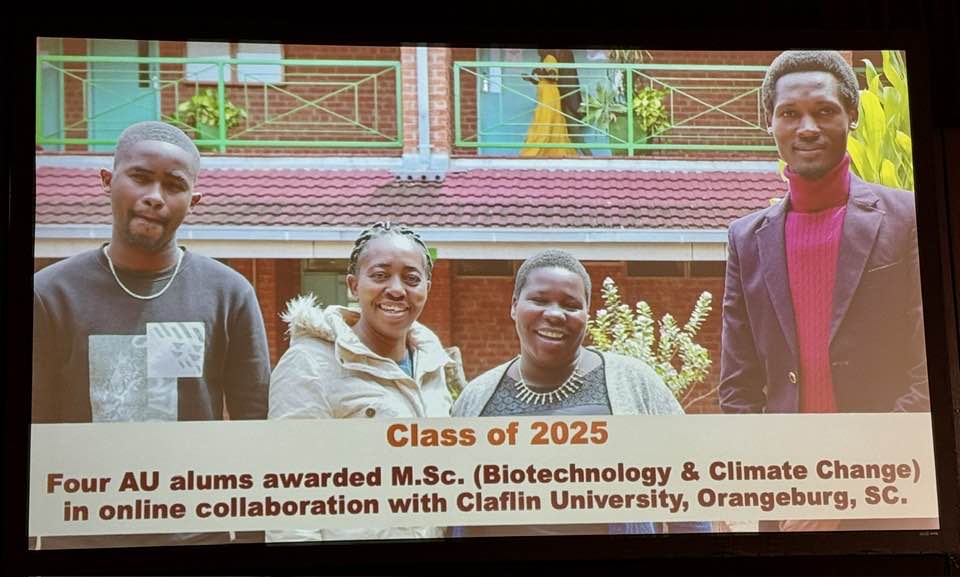
As seen in the powerful image of four smiling graduates—young scholars representing Africa University’s Class of 2025—this partnership is more than symbolic. These four AU alums were awarded Master of Science degrees in Biotechnology and Climate Change through an online program with Claflin University. It marks a significant step forward in bridging the gap between HBCUs and African universities, offering not just degrees, but transformation, elevation, and a realignment of institutional relationships across the African Diaspora.

Claflin University’s Dr. Gloria McCutcheon, a seasoned environmental scientist and scholar, alongside Africa University’s Dr. James Salley, deserves our deepest thanks and congratulations for stewarding this visionary effort. This is more than an academic exercise. It is an investment in Black global agency—an institutional architecture that boldly resists the neo-colonial fragmentation of Black intellect and instead forges knowledge capital across oceans.

The Institutional Revolution: Why It Matters

Historically, relationships between HBCUs and African universities have been underdeveloped. While shared historical and cultural lineages run deep, formal cooperation in research, degree programs, and faculty development has often been episodic and underfunded. This is due in part to a lack of intercontinental policy alignment, but also due to the structural underinvestment in both HBCUs and African institutions of higher learning.

Yet this partnership challenges that stagnation. By aligning their academic missions, Africa University and Claflin University are modeling a future where Black institutions on both sides of the Atlantic are no longer rivals for Western validation, but co-creators of global excellence.

Biotechnology and climate change are not only timely fields—they are strategic. These disciplines shape the future of agriculture, health, water, and energy. As climate change disproportionately affects the Global South, it is imperative that scientists and researchers from Africa and the African Diaspora lead in developing regionally grounded and globally relevant solutions. The MS program is designed with this in mind, empowering graduates with the tools to confront challenges that affect their communities directly.

This is the praxis of Black institutional sovereignty. It is not merely symbolic, it is materially transformational.

Online Education as Pan-African Infrastructure

One of the most remarkable elements of this partnership is its fully online format. In doing so, it sidesteps the exorbitant costs and restrictive visa policies that often inhibit African students from accessing U.S.-based graduate education. Rather than uprooting scholars from their communities and obligations, this model allows them to remain embedded in the ecosystems they intend to serve.

It is also a vital counterpoint to the often exploitative model of international student tuition dependency seen at many Predominantly White Institutions (PWIs). Instead of recruiting African students primarily as revenue sources, this partnership honors them as scholars and change-makers—collaborators in knowledge production, not customers.

This is especially crucial as online education technologies mature and expand access. The future of African Diaspora cooperation must be hybrid and tech-savvy, using every digital tool available to scale education, connect institutions, and reinforce the sovereignty of Black intellectual spaces.

Claflin’s leadership in this area signals what is possible for other HBCUs. Morehouse School of Medicine has already begun integrating global health partnerships, and Howard University has longstanding African studies initiatives. Yet this direct academic program collaboration between Claflin and Africa University sets a new precedent—one that should become a norm, not an exception.

The Bigger Picture: Climate, Biotechnology, and Black Sovereignty

The selection of Biotechnology and Climate Change as the focus of this master’s program is a strategic masterstroke. Climate adaptation, agricultural sustainability, and bio-innovation are the battlegrounds of the 21st century. From Nairobi to New Orleans, African-descended people are often the first to feel the tremors of ecological collapse. We are also, too often, the last to benefit from the technological revolutions responding to it.

By placing young African scholars at the cutting edge of these fields, Claflin and Africa University are not just preparing students for careers—they are preparing them to lead revolutions. Innovations in biotech can reshape everything from vaccine distribution to drought-resistant crops. Expertise in climate change can determine which communities survive sea-level rise, which economies can adapt to volatile weather, and which governments can formulate climate justice policies that center the most vulnerable.

This partnership builds knowledge that is simultaneously scientific and sovereign. It reflects a belief that Black students should not just study solutions crafted elsewhere, but invent their own. In a world that too often imposes external “development” frameworks on African nations and communities, this program declares: we are the architects of our own future.

A Framework for Expansion: What Comes Next?

One successful cohort is a seed. But the real question is how to scale this model.

Here are five recommendations:

  1. Joint Endowments – HBCUs and African universities should pursue shared endowment vehicles that fund joint programs, scholarships, and research. Such funds would represent a new kind of transatlantic educational capital—independent, mission-driven, and Pan-African in structure.
  2. Faculty Exchange Pipelines – Beyond student exchanges, institutions must prioritize reciprocal faculty exchange programs. African professors teaching at HBCUs (physically or virtually) and vice versa would broaden curricular offerings and deepen cultural fluency. HBCU Faculty Development Network is the perfect conduit to sponsor the programming infrastructure for such an exchange.
  3. Shared Research Institutes – HBCUs and African universities could establish co-branded research institutes focusing on themes like climate change, food security, public health, and digital governance—topics where the Global Black experience offers unique insights.
  4. Diasporic Accreditation Models – One major barrier is credential recognition. A Pan-African accreditation body could facilitate mutual recognition of degrees and allow smoother transitions for students moving between institutions in the Diaspora.
  5. Government & Philanthropy Engagement – African governments and HBCU-aligned philanthropies must see this kind of partnership as strategic infrastructure. They must fund it accordingly. Every dollar spent here is a dollar spent on self-determination.

The Role of Leadership

Credit must be given where it is due. Dr. Gloria McCutcheon’s work at Claflin demonstrates what it means for faculty to move beyond the classroom and into institution-building. Her leadership not only provided the academic structure for the MS program but built the trust and collaborative framework that such international partnerships demand.

Likewise, Dr. James Salley’s leadership at Africa University—an institution that has long carried the banner of Pan-African Christian higher education—has been instrumental. AU was founded on the principle of serving Africa through excellence, and this collaboration expands that mission into the Diaspora.

This is what visionary leadership looks like: daring to connect what colonialism sought to divide.

The Image as Testament

Courtesy of Claflin University

The image that inspired this article—four young scholars, standing confidently in front of a brick building, adorned in the sunlight of new opportunity—represents more than a graduation. It is a visual declaration of Pan-African potential. Their smiles, their presence, their achievement—each affirms the power of institutions that choose cooperation over competition, legacy over ego, and elevation over exploitation.

They are not just Claflin graduates or Africa University alumni. They are trailblazers of a new academic order—one that transcends borders and builds Black excellence into the very structure of education itself.

Final Thoughts: Pan-African Pedagogy Is The Future

In a century defined by ecological upheaval, technological disruption, and renewed global competition, the African Diaspora cannot afford fragmented institutions. HBCUs and African universities must see each other as natural allies—extensions of a common historical, intellectual, and cultural struggle.

This Claflin-AU partnership is not just a program. It is a model of what is possible when Pan-African Diaspora institutions collaborate with purpose. It is a rejection of dependency and a commitment to capacity-building. It is the beginning of an educational ecosystem rooted in mutual respect, sovereign vision, and Pan-African commitment.

Let it grow. Let others follow. Let this be the future of Pan-African education—intercontinental, interdisciplinary, empowering, and unapologetically transformative.

Congratulations again to the Class of 2025. Your success is our collective success.

#SCUMCConference #elevationandtransformation

$30 Billion: The Endowment Needed To Close The Annual Associate’s Degree Gap Between African American Men-Women

By William A. Foster, IV

“Dear Young Black Males… Always remember to hold your head up high, and NEVER doubt who you are. Believe in yourself SO much that other people’s negative words, opinions, and energy won’t discourage or hinder you.” – Stephanie Lahart

African Americans continue to be the only group where the women outnumber the men in terms of employment. The systemic reasons for this abound and not particularly the focus in this piece, but one of those areas is certainly educational obtainment. Whereas African American girls are in large part taught to focus on mental and academic achievement as a means of success, African American boys are taught to focus on physical and athletic achievement as a means of success. The two most notable gaps are at the Associate’s degree and Doctor’s degree levels where there is a difference of 350 basis points and 390 basis points, respectively. While it would be nice to see more African American young men getting Bachelor’s degrees, from an economic reality, simply getting more of them with an Associate’s is cheaper and faster in terms of return on investment for the community.

Enter the 10 HBCUs that are community or technical colleges along with UDC who has community college division while still being a 4-year institution. This collection of HBCUs represents a network of community and technical colleges dedicated to providing accessible, affordable education and workforce development opportunities. Focused on serving African American communities, these institutions offer associate degrees, certificates, and vocational training programs. There is also the opportunity to create a pipeline to four-year HBCUs or direct entry into the workforce. They emphasize community enrichment, economic mobility, and leadership development, often incorporating faith-based or mission-driven values. Collectively, they play a vital role in empowering individuals and strengthening the communities they serve.

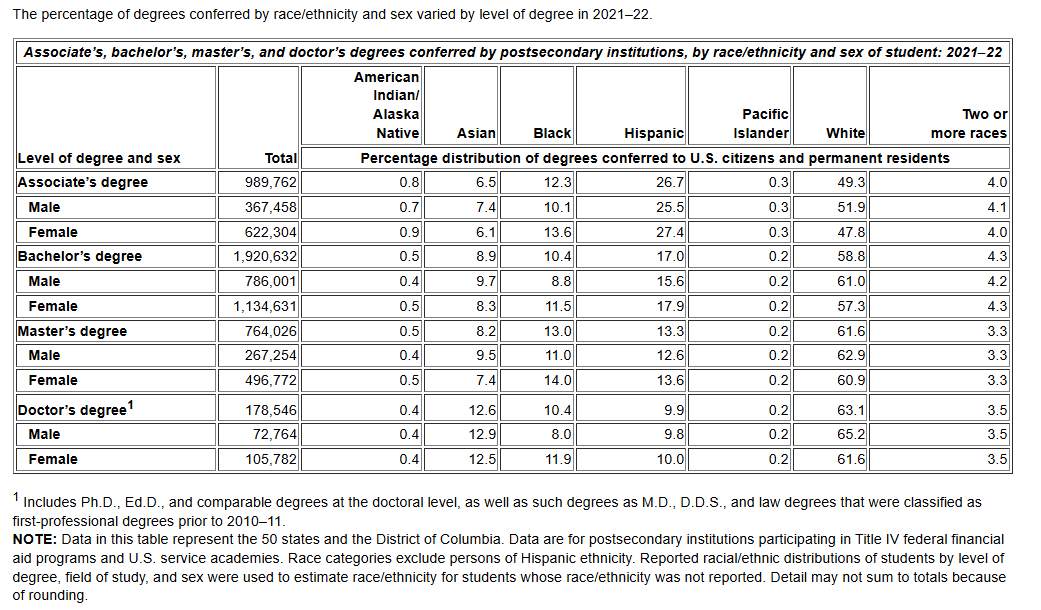
As of 2021-2022 according to NCES, there is an approximately 50,000 Associate’s degree gap between African American Women and Men (Table Below) with women obtaining almost 85,000 Associate degrees annually and men obtaining just over 37,000 Associate degrees annually. The major obstacle to these 10 HBCUs closing the gap is what ails most systemic issues facing African America – finances. These 10 HBCUs have an average tuition cost of $6,500 and median tuition cost of $5,300. But in order cost of attendance is a far more accurate because it includes the ability to pay for residence be it on-campus or off-campus, meal plans, books, and other necessities of educational obtainment. The average and median for that related to these 10 HBCUs is approximately $20,000 which is inclusive of the tuition and fee cost. This cost of attendance is due to both the low cost of tuition at two-year institutions in general and these HBCUs being located in affordable towns as a whole. However, it maybe a lot to ask if the goal is to truly incentivize enough African American Men to take two years if they were not intending to and by the numbers many clearly are not intending to go to college even for an Associate’s degree without a cherry on top. Simply ensuring they have full tuition and room/board is enticing, but it is likely not enough. If we look at this as a salary, then paying African American Men $20,000 a year to be students is probably not going to cut it. However, pushing that number to say $30,000 a year with a disposable income of $10,000 per year could be enough to bring many into the fray.

Here is the math of getting to $30 billion. Assuming our endowment for this program can generate 5% annually, then it would take $600,000 in principal to generate the $30,000 necessary per student. That is $600,000 times the 50,000 gap we need to close annually or $30 billion. Enough to generate $1.5 billion in interest. At current, there are no African American institutions that are either non-profit or for-profit valued at $30 billion. Howard University has the largest African American non-profit endowment and it is just under $1 billion. World Wide Technology is the most valuable for-profit firm at $20 billion and its African American ownership in the firm at 59 percent makes his stake worth approximately $12 billion.

There is even an argument that should this miraculous endowment appear if it should be spent on African American men ages 18-40 or if it should be focused on African American boys where you could provide supplemental education and academic investment at a far earlier age where you would need to spend a fraction of the $30,000 to get impactful long-term results. While there is a firm argument for this, my answer is resoundingly no. It should and would need to be spent on the 18-40 year old age group. The reason why is simple. African American Women need help now. The gap that has existed for sometime now has caused a crisis in the community with African American women being unable to find African American men that are suitable partners, the overweight responsibility of economic burden they carry, and much more. The closing of the gap is worth $7,700 in increased earnings per African American man who upgrades from a high school diploma to an Associate’s degree or $385 million annually if simply brought in balance with the number of Associate’s that African American Women earn.

The burning question of course is where we get $30 billion in assets from that can produce $1.5 billion annually (a 5 percent return). Unless someone is secretly hiding 300,000 bitcoins, they bought for $0.01 many years ago that are now worth $30 billion there may be no real solid answers. Time is of the essence so the notion that we are going to slow roll our way there as we do with most everything else financially is a nonstarter and just more of the same issues. Government funding is also almost certainly not an option given that regardless of political party very little has been done to rectify systemic issues that face African America. One party would like to give us nothing despite the fact that we pay into the tax system and the other party gives us symbolic and lip service. For context, there are only 5 university endowments that are greater than $30 billion.

In the end, the truth of the matter is this will not be solved by a single endowment or a single organization. However, $30 billion in a collective effort across multiple organizations coordinating with this goal may in fact be possible and pragmatic. With almost $2 trillion in buying power in theory the resources are there – sort of. Buying power can be very misleading because it does not actually speak to disposable income of the African American community. The money that is leftover after the bills are paid. Much of African America’s $2 trillion has very little leftover once you account for needs and necessities of African American households. This actually speaks quite a bit to African America’s buying power only account for almost 11 percent of America’s $18.5 trillion in buying power, but accounting for almost 14.5 percent of the American population. The $2 trillion should be closer to $2.7 trillion. That is $700 billion essentially “missing” from the African American households. Needless to say, it would a lot easier to find that $30 billion there.

A collective and strategic effort is necessary to bridge the Associate’s degree gap between African American men and women. While a $30 billion endowment seems daunting, the solution lies not in a single source of funding but rather in a coordinated approach involving multiple organizations, institutions, and innovative financial strategies. Leveraging partnerships with HBCUs, African American financial institutions, and philanthropic networks can help mobilize the resources needed to generate meaningful change. Furthermore, targeted outreach to influential individuals, businesses, and community leaders can catalyze fundraising efforts.

The focus must remain on providing African American men with the financial support necessary to pursue educational opportunities. By directly investing in their economic advancement, the ripple effect will extend beyond individuals to families and communities. The $385 million annual increase in earnings resulting from closing the Associate’s degree gap underscores the profound economic impact of this initiative. Equally important, this investment addresses the broader social and relational imbalances that have burdened African American women for decades.

Achieving this ambitious goal will require innovative thinking, sustained advocacy, and bold financial commitment. However, with collaboration and purpose, empowering African American men through education can yield lasting benefits for the entire community, fostering stability, opportunity, and generational wealth.

Love It Or Hate It: African American Education Needs More Private Schools

If you want a good education, go to private schools. If you can’t afford it, tough luck. You can go to the public school. – Paul LePage

The education landscape for African American students has long been marked by systemic challenges, including underfunded public schools and limited access to quality resources. As parents, educators, and community leaders seek solutions to these persistent issues, the establishment of more private schools specifically serving African American communities emerges as a potential avenue for improving educational outcomes. These institutions can provide tailored educational experiences that meet the unique needs of African American students, while also creating a stronger pipeline to historically Black colleges and universities (HBCUs).

If European Americans wanted to have quality public education for ALL Americans by now, we would have it. They do not and we can not afford to wait in hopes of appealing to a moral consciousness for it to happen. We must also accept that even it were to happen, the curriculum still would leave us out of the shaping and decision making process as it always has. Then we are surprised when our kids go through K-12 and know little to nothing about the contributions of African Americans and the African Diaspora upon finishing. There was slavery and then Martin Luther King, Jr. as it pertains to the “history” of African Americans in the United States in the current school systems for which we are dependent upon to educate our community and if some textbooks have their way slavery will soon be erased from the literature. In the intellectual arms race happening both here in the United States and throughout the world, African American education is sinking faster than the Titanic (it took approximately five minutes). The demarcation line has been crossed (long ago some would argue – desegregation) and it is time to take the offensive. African American private schools allow for African America to create its own de facto school systems where it controls the culture, curriculum, teacher quality, finances, and all of the subtleties that go into the education of our children from Early Childhood/Pre-K through 12th Grade.

In the United States, there are currently 30,492 private schools employing 529,574 teachers and educating almost 4.7 million students according to recent data by the NCES. On the public school side, there are 98,469 institutions employing 3.2 million teachers and educating 48.1 million students. For African Americans, they comprise 15 percent (7.22 million African American students) of the public school enrollment and 6 percent (423,000 African American students) of the private school enrollment. That is a national average of 18 teachers and 154 students for a ratio of 8 students per 1 teacher per private institution versus an average 33 teachers and 489 students for a ratio of 15 students per 1 teacher per public institution. Despite this reality, African American participation is second lowest among all groups just ahead of Hispanics, 50 percent behind European Americans, and 40 percent behind Asian Americans in private school participation. Private education for Asian Americans comprises almost 15 percent of their public/private student population, while private education only comprises 6 percent of the African American public/private population.

Addressing Systemic Inequities

Public schools in predominantly African American neighborhoods often face significant funding disparities, resulting in overcrowded classrooms, outdated materials, and limited extracurricular opportunities. Private schools can offer smaller class sizes, individualized attention, and enhanced resources such as more experienced teachers, state of the art technology and facilities just to name a few. By creating more private educational options, families can access environments that better meet their children’s academic and emotional needs.

Emphasis on Cultural Relevance

Private schools that cater to African American students can incorporate culturally relevant curricula that celebrate heritage and address the unique experiences of these students. Such an approach can foster a sense of belonging and identity, helping students thrive academically and socially. By emphasizing African American history, literature, and contributions, these schools can instill cultural pride and motivation in their students.

Diverse Educational Models

The expansion of private schools can introduce diverse educational models, including Montessori, Waldorf, and project-based learning, which may better suit the learning styles of African American students. These alternatives can provide innovative teaching methods that engage students more effectively than traditional approaches.

Strengthening the Pipeline to HBCUs

A significant benefit of increased private school options is the potential to strengthen the pipeline to HBCUs. Private schools can establish partnerships with HBCUs, offering students mentorship programs, college preparatory courses, and exposure to campus life.

  1. Early College Programs: Private schools can implement early college initiatives that allow high school students to earn college credits while still in high school. This can ease the transition to higher education and increase the likelihood of enrollment in HBCUs.
  2. College Counseling: Enhanced college counseling services can guide students through the application process, focusing on HBCUs and highlighting the unique opportunities these institutions offer, including supportive environments and rich cultural experiences.
  3. Scholarship Opportunities: Private schools can work with HBCUs to create scholarship programs specifically for their graduates, ensuring financial support for students who choose to continue their education at these institutions.

Parental Choice and Empowerment

More private schools can empower parents by offering them choices in their children’s education. Many African American families seek options beyond their local public schools, and increased access to African American private institutions can enable parents to select environments that align with their educational philosophies and cultural values.

Community Investment and Leadership

Establishing private schools within African American communities can encourage local investment and leadership. The New England 8, a set of premier boarding schools in the New England region, control over $8 billion in net assets alone. There is no reason to believe that African American boarding and private schools could not emerge to enhance African American institutional asset control through their own endowments and have an acute impact on African American towns and communities. Community members can take active roles in governance and decision-making, ensuring that schools reflect the needs and aspirations of the families they serve. This involvement can strengthen community ties and promote a sense of ownership in the educational process.

While private schools are not a panacea for the challenges facing African American education, increasing their availability can provide valuable alternatives for families seeking quality educational options. By addressing systemic inequities, offering culturally relevant curricula, and empowering communities, more private schools could play a crucial role in fostering academic success, personal growth for African American students, and ultimately provides more African American institutional ownership.

How many African American private schools are there? According to Black Minds Matter’s Black-Owned Schools Directory there are approximately 140 African American private schools.

Disclosure: This article was assisted with by ChatGPT.

Island Mentality: Alabama State University’s $125 Million Decision Highlights HBCUs’ Continued Failure To Connect With The African American Financial Sector

Negro banks, as a rule, have failed because the people, taught that their own pioneers in business cannot function in this sphere, withdrew their deposits. – Dr. Carter G. Woodson

What is an ecosystem? How do you develop an ecosystem? Can we develop an African American ecosystem? It seems to be a question that a room full of African American institutional leadership have little understanding of based on the institutional decisions that are continuously made. In their academic paper entitled Economic Ecosystems, Philip E. Auerswald and Lokesh M. Dani, “An ecosystem is defined as a dynamically stable network of interconnected firms and institutions within bounded geographical space. It is proposed that representing regional economic networks as ‘ecosystems’ provides analytical structure and depth to theories of the sources of regional advantage, the role of entrepreneurs in regional development, and the determinants of resilience in regional economic systems.” The most vital part of that definition being interconnected firms and institutions. African American institutions in general at every turn fail to understand this concept and HBCUs are no exception. This is especially true of HBCUs choice of banks and now Alabama State University’s recent decision to forego a plethora of African American Owned Investment and Asset Management firms and hand $125 million to another European American owned investment firm. African American capital once again reinforcing European America’s financial ecosystem – not ours.

It is almost a redundant story at this point. African American institutions all operating on their own island and failing to interconnect and intertwine with each other. African America from individual to institutions all do what is best for themselves individually and not what is best for the collective and certainly not what connects and strengthens the collective. See Hampton University and North Carolina A&T State University decisions to leave an HBCU conference for a PWI one. To that vein is why over 90 percent of African America’s $100 billion in annual tuition revenue goes into PWIs and not HBCUs/PBIs. HBCUs provide very little means of an example for the community to follow. Instead, HBCUs are a glaring headlight of just how poorly African American institutions perform in strategically integrating themselves within the African American ecosystem, especially economically. There are no reports on HBCUs engagement with the African American private sector because HBCUs do not seemingly see that as important. How many of HBCU graduates work for African American owned companies? How much HBCU athletic sponsorship dollars come from African American owned companies/partnerships? How much of the HBCU endowment is invested in African American firms? These are basic questions that any leadership of an HBCU should be able to answer. Unfortunately as Jarrett Carter, Sr., founder of HBCU Digest, once eloquently put it, “Many HBCUs are just trying to be PWI-adjacent.”

Is $125 million a lot of money? Context matters. To any individual, most would agree $125 million is significant. To institutions, it varies on size, scope, and goals. For African American Financial Institutions, almost down to even the largest of our firms having an $125 million account would see their bottom line acutely move. Providing perspective on the landscape, Pension and Investments reports, “The global asset management industry showed some signs of recovery in 2023, with total assets under management (AUM) rising 12% year-over-year to nearly $120 trillion, according to research by Boston Consulting Group.” For African American Asset Managers, “The largest Black-owned asset managers are responsible for more than $253 billion in assets, according to FIN Searches data. Vista Equity Partners is the largest Black-owned firm in the industry, with the private equity manager handling $103.8 billion in assets.” African American Owned Asset Managers only account for 0.2 percent of the global AUM. By contrast, the Top 10 non-Black asset managers have $22 trillion assets under management which accounts for almost 20 percent of global AUM.

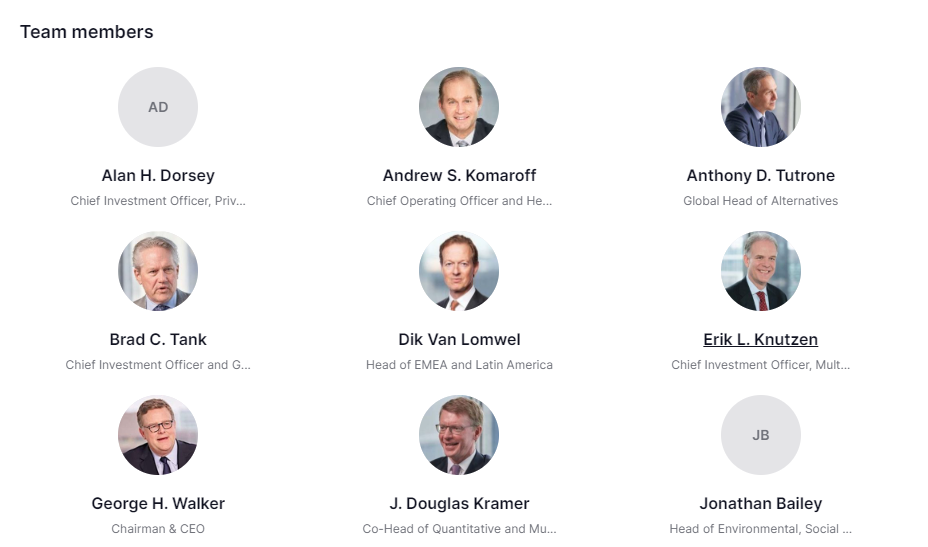
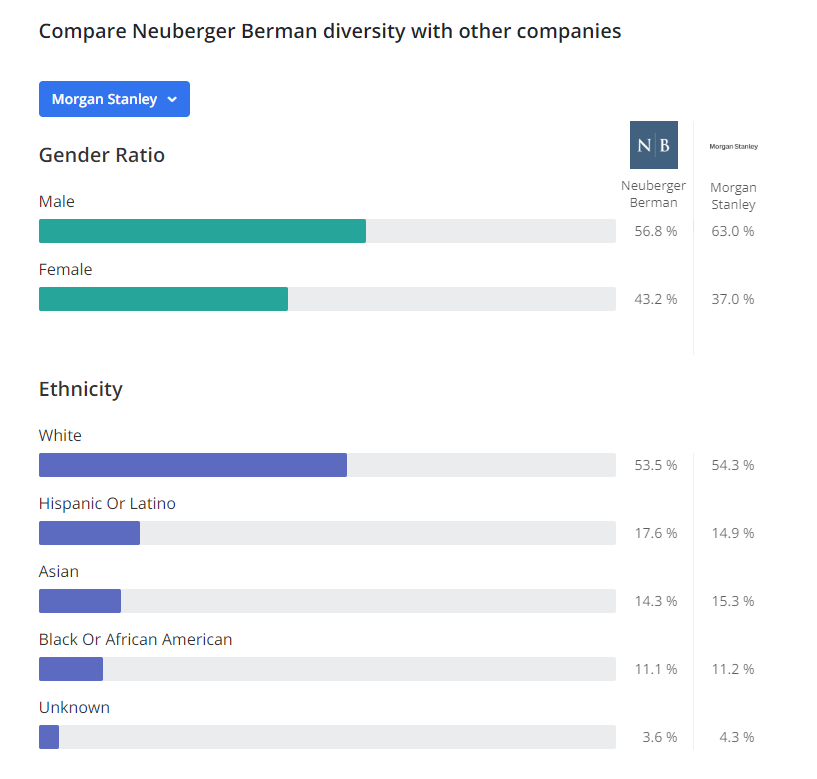
The asset management firm that Alabama State University chose according to World Benchmarking Alliance, “Neuberger Berman is a private employee-owned investment management firm (leadership pictured above) headquartered in New York, USA. It was founded in 1939 and has offices in 39 cities across 26 countries. The firm manages equities, fixed income, private equity and hedge fund portfolios for global institutional investors, advisors and high-net-worth individuals. It managed USD 460 billion of assets (under management) in 2021 and employed 2,647 staff in 2022.” This means that Alabama State University’s $125 million is equal to 0.02 percent of assets under management for Neuberger Berman. A drop in the bucket. The entirety of assets at African American Owned Asset Management firms is only 55 percent of Neuberger Berman assets under management. Alabama State University’s $125 million would have lifted the ENTIRE African American Owned Asset Management’s AUM by 0.05 percent. A move that would have strengthened the African American economic and financial ecosystem.

African America as a community talks about the circulation of the dollar or our lack thereof constantly, but what is virtually never talked about is the circulation of the African American institutional dollar being the largest part of that conversation. It is a fairly accepted statistic that the African American dollar does not stay in the African American community for a day, while other communities see their dollar stay in their communities for weeks and in the case of the Asian American community for almost a month. We often think of the circulation of our dollar like everything else, on an island or as an individual. An individual going and buying food from even an expensive African American owned restaurant is $100-200, but an HBCU building a new building means the opportunity for a new loan worth tens of millions for an African American owned bank, it means tens of millions for an African American owned construction company, so on and so forth. Instead, Bethune-Cookman University borrows from a notorious predatory lender to the African American community in Wells Fargo and almost finds itself losing those buildings due to foreclosure.

HBCU alumni know little about the state of finances or the movement of the money at their alma maters. HBCU administrators either willfully withholding the information or inept themselves of the importance of the information and providing it. Both are problematic. The notion that HBCUs cannot find African American investment firms is a painful thought knowing that a Google search would bring up the HBCU Money African American Owned Bank Directory at the very least. The likelihood is more in line with what Mr. Carter said in that a good deal of HBCU leadership simply wants to be like their PWI counterparts is far more likely. This would explain the debacle “donation” accepted by Florida A&M University’s president recently where a simple Google search would have avoided such embarrassment. Instead, Alabama State University’s Neuberger Berman relationship and a plethora of others instances (a decade ago when we reported “Spelman College & Regions Bank – A Failure To Disclose”) is that likely they are simply mimicking PWI actions and unwittingly reinforcing the PWI/European American ecosystem to say the least. Unfortunately, that mimicking reinforces another community’s economic and financial ecosystems not ours and why you may never see OneUnited Field at any HBCU’s athletic facility. Because we are holding out for J.P. Morgan, Bank of America, or Wells Fargo to show us the same love they show PWIs. Not acknowledging those are not our community’s banks.

If HBCUs are simply going to behave as PWI-adjacent institutions, then it is hard to argue with why over 90 percent of African Americans who go to college are not choosing HBCUs. For many it becomes a question of why get a knockoff when they can get the real thing. After all their ice is colder. HBCUs, HBCU alumni associations, and HBCU support organizations as a whole are not making decisions related to African American institutions ecosystem’s interests and interconnectivity and that is most glaring in the poor institutional decisions we are making in regards to our institutional finances and endowments.