
A house kept alive by donations, year after year, is not yet an institution. It is a beloved dependency — and the job of the leader who inherits it is to make it stop being one.– William A. Foster, IV
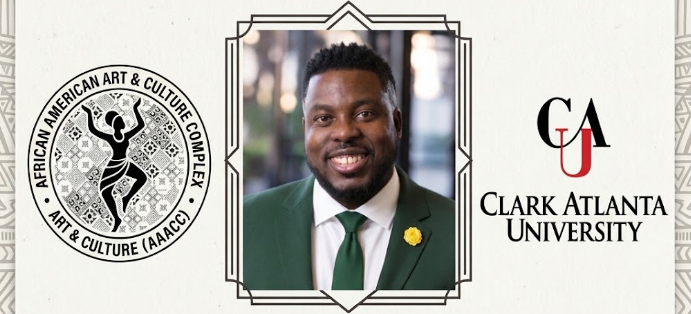
Dr. Murrell D. Green’s appointment as permanent Executive Director of San Francisco’s African American Art & Culture Complex is a leadership story. The balance sheet underneath it is the real story and it is one every institution builder in the Diaspora should be reading closely.
A boy swept the floor of a house that was not his. He was paid little and understood less, only that the house held things worth protecting; paintings, records, the particular quiet of people who had built something out of almost nothing. Years passed. The boy left, earned degrees, learned how institutions actually survive: budgets, boards, the difference between a gift and a foundation. When the house needed someone to hold its deed, the family that had raised it did not look for a stranger with a impressive resume. They looked for the boy who already knew where the floor creaked. He returned, not as a favor to his childhood, but because he alone understood that a house kept alive by donations year after year is not yet an institution. It is a beloved dependency. His first job was not to sweep. It was to ask who owns the walls, who owns the roof, and what happens the year the sweeping stops being enough.
The African American Art & Culture Complex in San Francisco’s Western Addition announced on June 1, 2026, that Dr. Murrell D. Green will become its permanent Executive Director, closing a six-month national search that drew more than 300 applicants. Coverage of the appointment has, understandably, centered on sentiment: a Fillmore native, raised in the shadow of the very building he now leads, returning home to steward a 32-year-old cultural institution. That framing is accurate. It is also incomplete. The more consequential story is what Dr. Green inherits financially, and what his selection signals about how HBCU-trained leadership is increasingly being asked to solve problems that Black cultural institutions have never fully solved for themselves — capital structure, revenue diversification, and reserve strength.
Dr. Green’s credentials read as a case study in institutional density built across multiple systems rather than one. He holds degrees from two PWIs, and most importantly Clark Atlanta University, and currently serves as Dean of Counseling and Wellness Services within the California Community College system. He previously sat as an elected Trustee of City College of San Francisco, having first been appointed by then-Mayor London Breed. His resume also includes President-Elect of the African American Male Education Network & Development, Board Vice President of Alive & Free/Omega Boys Club, and Advisory Board Chair for the Bayview YMCA. This is not a cultural sector career. It is a governance and education-administration career that happens to be arriving at a cultural institution and that distinction matters for how the Complex should now be run.
It matters because Dr. Green’s own history with the Complex predates his credentials. He served the organization years ago as Office Manager and Youth Leader, and, in a detail the Complex’s own announcement highlighted with evident affection, once played both Santa and “Wakanda Claus” at its community holiday events. The Board’s decision to return to a familiar face after a lengthy, well-publicized national search is itself an institutional signal worth reading. Continuity of relationship, not novelty of resume, was treated as the higher-value asset. For institutions built on community trust rather than market share, that is often the correct call but it is a call that only pays off if the returning leader is empowered to change the underlying model, not simply preserve it.
The Complex’s own recent history underscores why continuity was treated as a strategic asset rather than a consolation choice. Dr. Green succeeds Niquole Esters, who served as Interim Executive Director beginning last August after the departure of co-directors Melonie and Melorra Green (no relation) following eight years of joint leadership. In a short window, Esters opened a building-wide exhibition on artist Emory Douglas that drew significant crowds and press coverage, overhauled the Complex’s communications infrastructure, and expanded its Community Day partnerships. The Board’s public praise for that tenure suggests the institution enters this transition with operational momentum rather than crisis. That is a genuine advantage. It is also a reason the coming period should be judged on capital strategy, not merely on programming and visibility, both of which the Complex has already demonstrated it can produce.
That underlying model is where the self-interest case begins. Public tax filings show the Complex generated $3.84 million in revenue against $3.43 million in expenses for the fiscal year ending June 2024, a net gain of roughly $410,000 and net assets of $1.42 million. On its face, a healthy year. Underneath it, a structurally fragile one: contributions accounted for 85.9 percent of total revenue, program services for just 7.9 percent, and investment income for zero dollars — in any year on record. The building itself, a 32,000-square-foot former brewery converted into cultural space across the 1980s and ’90s, is owned outright by the City and County of San Francisco, not the Complex. The organization that Dr. Green now leads appears to hold no real estate, no endowment, and no investment portfolio. It holds relationships, and it converts those relationships into contributions, year after year, at whatever rate donors are willing to sustain.
That rate is not stable. The prior fiscal year, ending June 2023, produced $4.45 million in revenue but a net loss of $188,000. The year before that, ending June 2022, produced a net loss of $138,861. A donation-dependent institution with no investment income and no owned capital does not merely risk a bad year it risks a bad year becoming a permanent contraction, because there is no reserve architecture designed to absorb it. This is the same structural vulnerability that HBCU Money has documented repeatedly in HBCU endowment reporting: thin reserves, revenue concentration in gifts rather than diversified income, and an absence of owned, appreciating assets standing between the institution and its next difficult fiscal year. The Complex is not an HBCU. But it is subject to the identical arithmetic, and it is now led by someone whose training runs directly through one.
The timing raises the stakes further. The Complex’s building at 762 Fulton Street is slated to close temporarily for seismic renovation beginning in January 2027 — seven months into Dr. Green’s tenure. A forced closure of a donation-dependent institution’s only physical venue is precisely the scenario a thin balance sheet is least equipped to survive. Board Vice President Mattie Scott framed the closure as a test of resilience, the certainty that the Complex will reopen stronger. That certainty will be manufactured by financial planning, not sentiment, and it is now Dr. Green’s job to manufacture it.
There is a broader pattern here worth naming plainly for readers building their own institutions across the Diaspora. Clark Atlanta, like Fisk, Tougaloo, Dillard, and Xavier of Louisiana, continues to produce administrators who move into leadership of civic and cultural institutions well outside the HBCU ecosystem itself, an export of trained human capital that rarely gets counted in conversations about HBCU return on investment, but that compounds institutional capacity across Black America regardless of which building the leader ultimately sits in. The question African American institution builders should be tracking over the next eighteen months is not whether Dr. Green succeeds as a beloved, familiar presence. He clearly already has. The question is whether he converts an institution held together by annual generosity into one held together by owned capital; diversified program revenue, an actual investment posture, and reserves sized to survive a scheduled closure rather than merely announce faith in the reopening.
That is the difference between staffing a culture and owning it. San Francisco’s Black community will be watching Dr. Green’s leadership for what it means to the Fillmore. Institution builders elsewhere in the Diaspora should be watching it for what it reveals about the financial architecture underneath nearly every comparable Black cultural institution in the country and whether HBCU-trained leadership can finally be the generation that rebuilds that architecture, not just occupies it.
Disclaimer: This article was assisted by ClaudeAI.

