Tag Archives: adelphi bank

Two Pillars Fall: The Loss of Columbia Savings and Adelphi Bank and What It Means for African American Communities

We are watching the absolute collapse of African American institutions and our absolute dependency on Others’ institutions. It once felt like a slow train wreck, now it feels like a supersonic missile. – William A. Foster, IV

The 2025 African American Owned Bank Directory carries an absence that numbers alone cannot fully convey. Two institutions that appeared in last year’s listing — Columbia Savings and Loan Association of Milwaukee, Wisconsin, and Adelphi Bank of Columbus, Ohio — are no longer among the ranks of African American-owned financial institutions. Together, they represented nearly $130 million in assets: Columbia Savings at approximately $22 million and Adelphi Bank at approximately $106 million. Their departure is not merely a bookkeeping change. It is a geographic and community wound, one that leaves both Ohio and Wisconsin without a single African American-owned bank.

Founded on January 1, 1924, Columbia Savings and Loan Association was one of the oldest African American-owned financial institutions in the United States. A savings and loan chartered over a century ago in Milwaukee, it survived the Great Depression, the urban upheavals of the mid-20th century, the savings and loan crisis of the 1980s, and the 2008 financial collapse. It did not survive 2025. In our 2024 directory, Columbia carried $24,097,000 in assets, already down 12.0 percent from the prior year. By the time 2025 data was compiled, its assets had further declined to approximately $21,998,000 — a figure that, alongside declining capital levels, signaled an institution under extraordinary strain. For a savings and loan of its size, operating in a competitive market without the capital buffers available to larger institutions, the math had become unforgiving.

Milwaukee’s African American community is substantial, Black residents make up roughly 39 percent of the city’s population and yet they now have no African American-owned bank to call their own. This is not a small thing. African American-owned banks and savings institutions have historically served as anchors for communities that mainstream financial institutions have underserved or outright ignored. They have written mortgages in redlined neighborhoods, provided small business loans to entrepreneurs who couldn’t get a second meeting at a downtown bank, and offered a financial home to people who needed more than a transaction they needed trust.

If the loss of Columbia Savings is a story of a century-old institution exhausted by time and capital constraints, the loss of Adelphi Bank carries a different kind of grief. Founded on January 18, 2023, in Columbus, Ohio, Adelphi was the newest African American-owned bank in the country at the time of our 2024 directory. Prior to its founding, no new African American-owned bank had been chartered in 23 years. Adelphi’s launch was celebrated for exactly that reason: it represented a renewal, a sign that the community had not given up on building the financial infrastructure it needs.

In 2024, Adelphi reported $68,154,000 in assets, up 55.1 percent from the year prior, a remarkable growth trajectory for a de novo bank. By 2025, that figure had risen further to $106,369,000. And yet, despite that asset growth, the bank was no longer majority African American-owned by the time 2025 statistics were compiled. A growing balance sheet does not automatically translate into ownership stability. New banks are capital-intensive, and the pressures to bring in outside investors can, over time, dilute or displace founding ownership structures.

The result is that Ohio, the state that just two years ago was celebrating the founding of its first new African American-owned bank in over two decades, now has none. Columbus, the state capital and one of the fastest-growing cities in the Midwest, has no African American-owned bank. And critically, neither does the surrounding region that includes two of Ohio’s most important Historically Black Colleges and Universities: Central State University and Wilberforce University.

The relationship between African American-owned banks and HBCUs has long been identified by HBCU Money as one of the most underdeveloped partnerships in the Black economic ecosystem. HBCUs are intellectual and economic anchors for their communities. African American-owned banks are the financial connective tissue that can translate education, entrepreneurship, and homeownership aspirations into capital. When both are present in a region, the possibilities compound. When one disappears, the other is diminished.

Central State University and Wilberforce University sit in Greene and Xenia, Ohio, both within the orbit of Columbus and Dayton. Their students, faculty, staff, and alumni represent tens of thousands of people who need mortgages, small business loans, car notes, savings accounts, and lines of credit. Without an African American-owned bank anywhere in Ohio, those needs will be met if they are met at all by institutions with no particular relationship to their communities, no cultural competency born of shared experience, and no structural incentive to reinvest in the neighborhoods and towns these HBCUs serve. And if they are met, the profits and institutional ownership and influence will be to the benefit of Others and not the African American ecosystem. Once again, we will be subsidizing everyone else.

This is not a hypothetical harm. Research has consistently shown that African American-owned banks direct a greater share of their lending to African American borrowers and African American-owned businesses than Others’ institutions. They are not perfect, and they are not substitutes for broader policy change. But they are irreplaceable in the role they play, and their absence is felt in the very specific, very practical ways that matter most: a loan denied, a mortgage not written, a business that never got started.

The 2025 directory does carry one encouraging entry: Redemption Bank of Salt Lake City, Utah, founded February 20, 1974, and now appearing in the African American-owned bank listing with approximately $72,205,000 in assets under the FDIC’s San Francisco region. Its inclusion partially offsets the $128 million in assets lost with Columbia and Adelphi. Redemption Bank’s presence in Utah is notable given the state’s relatively small African American population and its distance from the major African American economic corridors. Its listing is a reminder that African American financial institution-building can and does happen in unexpected places.

But Redemption Bank’s $72 million in assets does not replace what was lost in Ohio and Wisconsin. It does not fill the geographic gap. It does not serve the students at Central State or Wilberforce, or the African American residents of Milwaukee’s north side. The net loss to African American institutional financial capacity in the Midwest is real, and no amount of welcome news from the Mountain West changes the map that communities in Columbus and Milwaukee are now looking at.

As noted in our 2024 directory, African American-owned banks hold approximately $6.4 billion of America’s $23.6 trillion in bank assets — roughly 0.027 percent. The apex of African American-owned bank assets, as a share of total U.S. banking, was 1926, when the sector held 0.2 percent — ten times today’s proportion. Nearly a century later, the sector has not recovered.

The structural disadvantages are well-documented: chronic undercapitalization, concentration in communities with lower median wealth, limited access to the interbank credit markets that larger institutions tap freely, and a customer base that has been systematically excluded from wealth-building for generations. These are not problems that individual bank managers can solve through hustle and grit alone. They require deliberate policy support, sustained community deposits, and coordinated investment from the HBCU ecosystem, African American businesses, and public-sector partners.

The post-2020 wave of corporate pledges to African American financial institutions provided some relief. Many of the banks in our directory saw asset growth between 2023 and 2024 partly as a result of those deposits. But corporate commitments are not permanent, and the institutions that did not receive them or that received too little too late remained exposed. Columbia Savings, with $24 million in assets and a 12 percent annual decline already in evidence by 2024, was unlikely to attract the kind of large-scale corporate or philanthropic deposit that might have stabilized it.

The loss of Columbia Savings and Adelphi Bank should be understood as a call to action, not an occasion for eulogy alone. Several things must happen.

First, the HBCU community in Ohio must begin conversations now about what it would take to support a new African American-owned financial institution in the state. Central State and Wilberforce cannot simply wait for the private sector to solve this. HBCU endowments, alumni associations, and institutional deposits are tools of economic development. Directing even a fraction of those resources toward a future Ohio-based African American-owned bank would be a meaningful first step.

Second, community organizations, African American business associations, and civic leaders in Milwaukee must assess whether a new chartered institution, a credit union, or a community development financial institution (CDFI) can fill some of the void left by Columbia Savings’ departure. Milwaukee’s African American community is large enough and its economic needs acute enough that the absence of a community-controlled financial institution is not sustainable.

Third, the national conversation about African American-owned banks must move from celebration to infrastructure. Every time a new institution is chartered, and Adelphi’s founding in 2023 was genuinely exciting, it must be supported with the capitalization, deposit commitments, and technical assistance that give it a fighting chance past its first few years. A bank that grows in assets but loses its founding ownership structure has not fulfilled its promise. The community has to be in the room, and at the table, not just at the ribbon-cutting.

Finally, we should note what these two losses mean for the map of African American financial geography. States absent from our 2025 directory now include Ohio, Wisconsin, Maryland, Missouri, New York, and Virginia — a list that encompasses some of the largest African American urban populations in the country. That map is a challenge and an indictment in equal measure. African Americans live and work and build in every corner of this country. Their financial institutions should too.

Columbia Savings and Loan Association (Milwaukee, WI) — Founded January 1, 1924 | 2024 Assets: $24,097,000 | 2025 Assets: $21,998,000

Adelphi Bank (Columbus, OH) — Founded January 18, 2023 | 2024 Assets: $68,154,000 | 2025 Assets: $106,369,000

Redemption Bank (Salt Lake City, UT) — Founded February 20, 1974 | 2025 Assets: $72,205,000 [New to directory]

Disclaimer: This article was assisted by Claude (Anthropic).

2024’s Most Powerful Women in African American Owned Banks

Whatever glory belongs to the race for a development unprecedented in history for the given length of time, a full share belongs to the womanhood of the race. – Mary McLeod Bethune

African American Owned Banks (AAOBs) continue to decline, down to 16 since from 21 since we last highlighted African American Owned Banks’ Most Powerful Women in 2013. The decline of almost 25 percent of African American Owned Banks over the past decade has meant less and less opportunity across the board and for African American women that appears to be the case as well. As our institutions decrease, so then do our ability to create opportunities for our communities. African American women in AAOBs have seen an increase only in the board of directors with all other positions seeing a decline.

Even with that reality, the numbers in comparison to their counterparts is still much greater. The largest 50 banks which are all non-AAOBs have only 1 woman (2 percent) at the helm according to American Banker. African American women comprise almost 20 percent of African American Owned Banks CEO positions.

2024 Statistics (2013 Statistics)

3 CEOs/President (4 CEOs/Presidents)

1 CFO (2 CFOs)

10 Vice-Presidents (13 Vice-Presidents)

8 Board of Directors (7 Board of Directors)

We have done our best to find out just who are some of the amazing African American women serving as executives and directors at African American Owned Banks around the country. However, some banks do not have their management or board of directors listed so we are sure we missed a few talented women, but for now here is who we found and some of their stories.

*HBCU Alumnus

COMMONWEALTH NATIONAL BANK

Beverly Cooper, Board of Directors

Mrs. Cooper is co-founder of the voter education non-profit Stand Up Mobile: A Blueprint for US.  She retired after 15 years as President of The Christian Benevolent Funeral Home, Inc. a family- owned business for 96 years. 

CITIZENS TRUST BANK

Cynthia N. Day, President/Chief Executive Officer

In February 2012, she became the Chief Executive Officer, the first permanently named female CEO in the Company’s history. Under her leadership as Chief Executive Officer, the bank has reached many milestones including achieving its highest level of performance during its 100 year existence. Further, most recently, the Bank was ranked, by S&P Global, #28 out of the Top 200 Performing Banks in the Country in its asset band.

Iris D. Goodly, Senior Vice President/ Director of Client Services and Operations

LIBERTY BANK & TRUST COMPANY

Jaimmé Collins, General Counsel, EVP and SVP of Strategy

In addition to being General Counsel, Ms. Collins manages Liberty’s strategic initiatives, joint ventures, regulatory matters, and leads Liberty Community Development Corporation (Liberty’s real estate development affiliate) and Liberty Foundation, Inc. (Liberty’s nonprofit affiliate).

Ann Duplessis, SVP of Bank Administration

*Tammy Joseph, SVP of Internal Controls

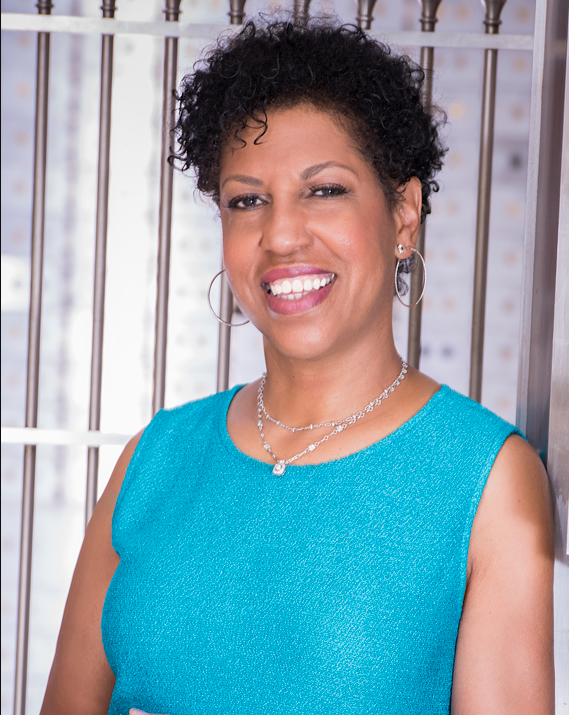
*Rhonda McMillan, SVP & Chief Credit Officer (pictured bottom right)

ONEUNITED BANK

Teri Williams, President and Chief Operating Officer

Responsible for implementation of the Bank’s strategic initiatives, as well as the day-to-day operations of the bank. These operational areas include all retail branches, marketing, compliance, lending, information technology, customer support, legal, and human resources. Under her leadership, OneUnited Bank has consolidated the local names and product offerings of four (4) banks to create a powerful national brand supported by innovative products and services. She brings 30 years of financial services expertise from premier institutions such as Bank of America and American Express, where she was one of the youngest Vice Presidents.

Sherri Brewer, Senior Vice President, Chief Retail Officer

She has been in the banking industry for 30 years. She has held senior level positions in the areas of sales, operations and consumer lending. Her responsibilities include management of five retail branches as well as the online branch, the banks facilities, item processing operations and the call center. She also serves as the Security Officer for the Bank. She has successfully managed two system conversions and one item processing conversion during her tenure. Ms. Brewer has worked for Wells Fargo, Orange County Credit Union, Business Bank of California, and First City Federal Credit Union.

FIRST INDEPENDENCE BANK

Linda Forte, Board of Directors

MECHANICS & FARMERS BANK

Emma S. Allen, Board of Directors

Connie J. White, Board of Directors

ADELPHI BANK

Greta Russell, Board of Directors

Gabrielle Whittaker, SVP of Consumer Banking and Community Relations

UNITED BANK OF PHILADELPHIA

Marionette Y. Wilson, Secretary of the Board of Directors

Ms. Wilson joined the Board of Directors of United Bank of Philadelphia in 1992 as a founding director. She is now retired but was formerly the Co-Founder/Partner, John Frazier, Inc., Philadelphia, PA from 1981-2002.

*Evelyn F. Smalls, President and Chief Executive Officer (pictured bottom left)

Mrs. Smalls is President and Chief Executive Officer of United Bank of Philadelphia, a minority-owned and controlled, full service commercial bank. With over 30 years experience in banking and community development, Mrs. Smalls is responsible for the leadership and management of the Bank including setting the direction of the organization, communicating its vision and adapting the culture and operations to achieve success.

Prior to her appointment as President and Chief Executive Officer, Mrs. Smalls served as Senior Vice President for Regulatory Compliance and Community Reinvestment. Her leadership helped establish the Bank’s community reinvestment model that has achieved consecutive “Outstanding” ratings from the Federal Reserve and FDIC since the Bank’s inception.

Mrs. Smalls received her Bachelor’s degree in Business from North Carolina Central University. 

Brenda M. Hudson-Nelson, Executive Vice President & CFO

Mrs. Hudson-Nelson has served as United Bank of Philadelphia’s Executive Vice President and Chief Financial Officer for twenty-five years. Mrs. Hudson-Nelson has thirty-four years experience within the financial services industry. Mrs. Hudson-Nelson’s responsibilities include directing financial planning, implementing, and overseeing the Bank’s systems of internal controls, managing the Bank’s investment portfolio, and monitoring and managing the Bank’s sensitivity to interest rate risk. Ms. Hudson-Nelson ensures that the Bank’s Annual Report, SEC Reports and other Regulatory Reports are filed accurately and timely. 

She served as Treasurer on the Boards of Director for the South Street Dance Company, CHOICE, Big Brothers/Big Sisters of America, Big Brothers/Big Sisters of Mercer County, and for Prevention Point Philadelphia.

Dimitria Davenport, Vice President, Community Banking & Compliance

With over 20 years in the financial services industry, she has held key roles within Training, Consumer Banking, Retail Administration and Human Resources.  Dimitria has spent the last eighteen years of her career working diligently to carry out United Bank’s mission of financially empowering people and businesses in the greater Philadelphia region. 

Dimitria serves on several Boards: The Executive Committee of The African American Chamber of Commerce, The City Schools and The New Hope Community Development Corporation.

CITIZENS SAVINGS B&T COMPANY

*Dr. LaDonna Boyd, Board of Directors (pictured top left)

As the fifth-generation president/CEO of the R.H. Boyd Family of Companies in Nashville, Tennessee, she’s a powerhouse of innovation and creativity, transforming the business landscape while championing social causes close to her heart.

She earned her bachelor’s in economics and with a minor in French from Spelman College, followed by an MBA with a finance concentration from Tennessee State University. She completed her with a Doctorate in Education with a focus on organizational leadership from Pepperdine University. She further honed her skills by earning two certificates in from Harvard University’s Extension School in Digital Marketing Strategy and Artificial Intelligence in Business: Creating Value With Machine Learning.

*Joan Fleming, SVP of Residential Lending and Community Development (pictured top right)

She is an industry leader- finding ways to produce results through her expertise, commitment and relationships. Joan has a passion for delivering value and benefit to her clients with an enthusiastic and friendly attitude. It is her commitment to serve the underserved by being an advocate for affordable housing and financial literacy. Her “thinking outside the box” mentality allows her to develop programs to ensure everyone can build wealth through homeownership. 

UNITY NATIONAL BANK OF HOUSTON

*Sharon E. Murphy, Board of Directors

HBCU Money’s 2023 African American Owned Bank Directory

All banks are listed by state. In order to be listed in our directory the bank must have at least 51 percent African American ownership. You can click on the bank name to go directly to their website.

OTHER KEY FINDINGS:

  • 11 of the 17 African American Owned Banks saw increases in assets from 2022.
  • African American Owned Banks (AAOBs) are in 16 states and territories. Key states absent are Maryland, Missouri, New York, and Virginia.
  • Adelphi Bank (OH) is the first African American Owned Bank (AAOB) started in 23 years.
  • Alabama and Georgia each have two AAOBs.
  • African American Owned Banks have approximately $5.8 billion of America’s $23.2 trillion bank assets (see above) or 0.02 percent. The apex of African American owned bank assets was in 1926 when AAOBs held 0.2 percent of America’s bank assets or 10 times the percentage they hold today.
  • African American Owned Banks control 1.7 percent of FDIC designated Minority-Owned Bank Assets.
  • 2023 Median AAOBs Assets: $168,701,000 ($150,072,000)
  • 2023 Average AAOBs Assets: $326,097,000 ($325,391,000)
  • TOTAL AFRICAN AMERICAN OWNED BANK ASSETS 2023: $5,867,738,000 ($5,531,655,000)

ALABAMA

ALAMERICA BANK

Location: Birmingham, Alabama

Founded: January 28, 2000

FDIC Region: Atlanta

Assets: $17,282,000

Asset Change (2022): UP 9.5%

COMMONWEALTH NATIONAL BANK

Location: Mobile, Alabama

Founded: February 19, 1976

FDIC Region: Atlanta

Assets: $66,944,000

Asset Change (2022): UP 9.2%

DISTRICT OF COLUMBIA

INDUSTRIAL BANK

Location: Washington, DC

Founded: August 18, 1934

FDIC Region: New York

Assets: $739,181,000

Asset Change (2022): UP 2.2%

GEORGIA

CARVER STATE BANK

Location: Savannah, Georgia

Founded: January 1, 1927

FDIC Region: Atlanta

Assets: $81,906,000

Asset Change (2022): DOWN 2.5%

CITIZENS TRUST BANK

Location: Atlanta, Georgia

Founded: June 18, 1921

FDIC Region: Atlanta

Assets: $741,413,000

Asset Change (2022): DOWN 8.1%

ILLINOIS

GN BANK

Location: Chicago, Illinois

Founded: January 01, 1934

FDIC Region: Chicago

Assets: $63,898,000

Asset Change (2022): DOWN 11.1%

LOUISIANA

LIBERTY BANK & TRUST COMPANY

Location: New Orleans, Louisiana

Founded: November 16, 1972

FDIC Region: Dallas

Assets: $1,048,899,000

Asset Change (2022): DOWN 3.4%

MASSACHUSETTS

ONEUNITED BANK

Location: Boston, Massachusetts

Founded: August 02, 1982

FDIC Region: New York

Assets: $755,706,000

Asset Change (2022): UP 1.6%

MICHIGAN

FIRST INDEPENDENCE BANK

Location: Detroit, Michigan

Founded: May 14, 1970

FDIC Region: Chicago

Assets: $607,167,000

Asset Change (2022): UP 29.6%

MISSISSIPPI

GRAND BANK FOR SAVINGS, FSB

Location: Hattiesburg, Mississippi

Founded: January 1, 1968

FDIC Region: Dallas

Assets: $161,125,000

Asset Change (2022): UP 38.9%

NORTH CAROLINA

MECHANICS & FARMERS BANK

Location: Durham, North Carolina

Founded: March 01, 1908

FDIC Region: Atlanta

Assets: $429,605,000

Asset Change (2022): UNCHANGED 

OHIO

ADELPHI BANK

Location: Columbus, Ohio

Founded: January 18, 2023

FDIC Region: Chicago

Assets: $43,945,000

Asset Change (2022): N/A

OKLAHOMA

FIRST SECURITY BANK & TRUST

Location: Oklahoma City, Oklahoma

Founded: April 06, 1951

FDIC Region: Dallas

Assets: $119,349,000

Asset Change (2022): UP 50.9%

PENNSYLVANIA

UNITED BANK OF PHILADELPHIA

Location: Philadelphia, Pennsylvania

Founded: March 23, 1992

FDIC Region: New York

Assets: $55,719,000

Asset Change (2022): DOWN 6.2%

SOUTH CAROLINA

OPTUS BANK

Location: Columbia, South Carolina

Founded: March 26, 1999

FDIC Region: Atlanta

Assets: $524,934,000

Asset Change (2022): UP 29.5%

TENNESSEE

CITIZENS SAVINGS B&T COMPANY

Location: Nashville, Tennessee

Founded: January 4, 1904

FDIC Region: Dallas

Assets: $176,277,000

Asset Change (2022): UP 17.5%

TEXAS

UNITY NB OF HOUSTON

Location: Houston, Texas

Founded: August 01, 1985

FDIC Region: Dallas

Assets: $209,014,000

Asset Change (2022): UP 1.3%

WISCONSIN

COLUMBIA SAVINGS & LOAN ASSOCIATION 

Location: Milwaukee, Wisconsin

Founded: January 1, 1924

FDIC Region: Chicago

Assets: $27,374,000

Asset Change (2022): UP 11.6%

SOURCE: FDIC