HBCU Money has partnered with Proud Product to sell its HBCU Money Logo Tee through the HBCU Grad online store, creating a powerful collaboration that promotes both HBCU pride and financial empowerment. This partnership is a strategic move that brings together two brands dedicated to uplifting Historically Black Colleges and Universities (HBCUs) and fostering economic growth within the Black community.
HBCU Money is known for its commitment to financial literacy, economic development, and wealth-building strategies specifically tailored for HBCU students, graduates, and supporters. By teaming up with Proud Product, a brand that celebrates HBCU culture and academic excellence through apparel, this collaboration expands the reach of HBCU Money’s mission.
HBCU Grad’s Shopify-based platform provides an accessible and well-established marketplace for HBCU-themed merchandise, making it easier for supporters to purchase the HBCU Money Logo Tee. This partnership allows HBCU Money to leverage HBCU Grad’s e-commerce expertise and existing customer base while reinforcing a shared vision of empowering HBCU communities.
The HBCU Money Logo Tee, available in heather gray, is more than just a t-shirt—it represents a movement focused on financial awareness and economic independence. By purchasing this shirt through Proud Product, buyers are not only expressing their school spirit but also supporting two HBCU-owned brands that prioritize education, financial stability, and generational wealth.
This collaboration is an example of how HBCU-focused businesses can work together to amplify their impact. By joining forces, HBCU Money and Proud Product are strengthening the culture, supporting Black entrepreneurship, and promoting a message of financial empowerment—one t-shirt at a time.
All kids need is a little help, a little hope and somebody who believes in them. – Magic Johnson
Universal Pre-K and early childhood development programs are something that is often lauded by the African American community as something that would assist our children and propel them academically in the future. Research shows that early childhood education has lasting long-term effects on children’s socioeconomic outcomes in almost every facet imaginable. However, currently quality early childhood education is largely reserved for more affluent communities. For good reason, the digital publication Prestige in their article ‘Inside the world’s most exclusive and expensive preschools’ noted, “We’re talking chef-made organic meals, sprawling campuses, and field trips to the Galapagos. Admission is highly competitive, often requiring interviews, assessments, and six-figure donations. For the one percent of the one percent, these exclusive early education experiences are less about ABCs and 123s and more about the connections and privilege.” The donations also do not remove one from the responsibility of the tuition which ranges annually from $20,000 to $30,000. These institutions offer art lessons, ballet classes, multiple languages, critical thinking and creativity, development of emotional intelligence, and much more. Things that many adults either get much later in life or never get at all. Having them instilled at three years old almost ensures a parabolic trajectory of success for the rest of life.
The notion that universal pre-k would close that gap is more wishful thinking that pragmatic reality. However, it is argued that something is better than nothing? It is also said that the road to hell is paved with good intentions and that is more likely the case for African American outcomes when it comes to universal pre-k than anything we wishfully hope would come from it. It may serve more as a de facto public day care experience than anything else where working class parents who need to be working and not able to afford day care and therefore caught in a vicious trap of working less and earning less because they cannot afford day care or working more and paying most of the additional income to day care to see a marginal income increase. African Americans in particular though should know by now that nothing is free even when it is said to be so.
We need only examine the outcomes of the public school system as it stands now for African Americans to realize what the outcomes of universal pre-k would produce. More of the same. Maybe worse because anti-indoctrination would essentially be happening immediately. While the argument for more early childhood education is a much needed one for African American children, it is also worth examining who would have the institutional ownership.
African American Schooling Post-Desegregation
Post-desegregation, African American education faced several challenges that have lingering effects today:
Unequal Integration:
While desegregation aimed to provide equal opportunities, many African American students remain in segregated schools due to residential patterns and systemic inequities.
Even in integrated schools, African American students often experience lower expectations and unequal access to advanced coursework.
Loss of Black Educators and Schools:
The closure of historically Black schools during desegregation displaced many Black educators, erasing culturally affirming spaces where African American students thrived.
This loss deprived students of role models who understood their cultural and community needs.
Institutional Racism:
African American students in integrated schools often faced bias, tracking into lower-level courses, and disproportionate disciplinary actions. These patterns persist today, contributing to unequal educational outcomes.
Current Public School Outcomes for African American Students
The current state of public education reveals persistent inequities that universal pre-K could unintentionally exacerbate for African American children:
Achievement Gaps:
African American students consistently score below their white peers on standardized tests, such as the National Assessment of Educational Progress (NAEP).
Contributing factors include under-resourced schools, limited access to advanced coursework, and a lack of culturally relevant curricula.
Disciplinary Disparities:
African American students are disproportionately disciplined, with preschool-aged African American boys accounting for 43% of suspensions despite being only 19% of enrollment.
Early exposure to punitive measures increases the likelihood of negative long-term educational and social outcomes.
Resource Inequities:
Schools serving predominantly African American communities are often underfunded, with larger class sizes, fewer qualified teachers, and outdated materials.
This lack of resources hinders early literacy, numeracy, and socio-emotional development.
Cultural Disconnects:
Many public school curricula and teaching practices fail to reflect or affirm African American cultural identities, leading to disengagement and lower academic performance.
Afrocentric Pre-K in Partnership with HBCUs
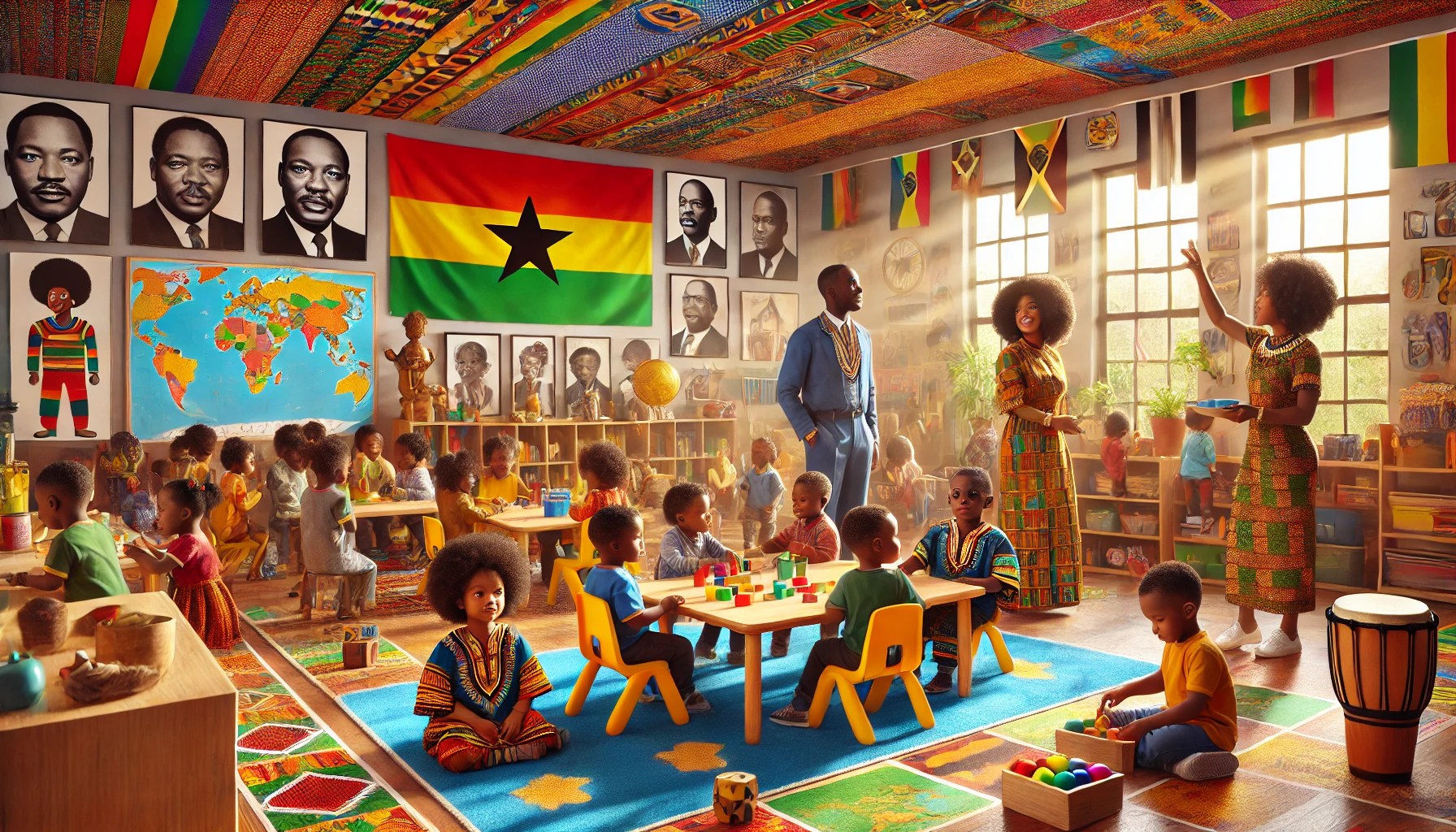
To counteract these challenges, Afrocentric pre-K programs, implemented in partnership with Historically Black Colleges and Universities (HBCUs), present a transformative solution.
Culturally Relevant Education:
Afrocentric curricula incorporate African and African American history, culture, and values, fostering a sense of identity and pride in young learners.
Lessons emphasize cooperative learning, creativity, and critical thinking, aligning with African cultural traditions.
HBCU Involvement:
HBCUs have long been leaders in producing culturally competent educators and advancing African American scholarship. Partnering with HBCUs allows pre-K programs to draw on their expertise, resources, and community connections.
Education students at HBCUs can gain hands-on training through internships and practicum opportunities in Afrocentric pre-K settings.
Teacher Training and Development:
HBCUs can offer professional development for pre-K educators, ensuring they are trained in culturally responsive teaching and child development.
Programs can also recruit and support Black educators, addressing the underrepresentation of African American teachers in early childhood education.
Community Engagement:
Partnerships between Afrocentric pre-K programs and HBCUs can strengthen community ties, involving parents and local organizations in curriculum development and program governance.
Family engagement initiatives can provide parents with resources to support learning at home.
Research and Evaluation:
HBCUs can lead research to assess the impact of Afrocentric pre-K programs on academic and social outcomes, ensuring continuous improvement.
Findings can inform policies to expand successful models nationally.
Key Features of Afrocentric Pre-K in Partnership with HBCUs
Curriculum Highlights:
Focus on African diasporic history and cultural pride.
Integration of science, technology, engineering, arts, and mathematics (STEAM) with a culturally relevant lens.
Emphasis on social-emotional learning and conflict resolution rooted in community values.
Accessible Locations:
Programs hosted on or near HBCU campuses to leverage facilities, staff, and community networks.
Empowerment-Focused Funding:
Public and private funding to ensure accessibility for all African American families. This could be led by HBCU alumni creating endowments for these partnerships.
Mentorship Opportunities:
Pairing pre-K students and their families with mentors from HBCU student bodies, fostering intergenerational learning and support.
Holistic Approach:
Nutrition, healthcare, and family support services integrated into the program to address broader disparities impacting African American children.
Recommendations for Implementation
Policy Advocacy:
Advocate for federal and state funding to establish Afrocentric pre-K programs in partnership with HBCUs.
Push for accountability measures to ensure equitable distribution of resources.
Pilot Programs:
Launch pilot Afrocentric pre-K programs at selected HBCUs to refine the model and gather evidence of effectiveness.
Community Collaboration:
Partner with African American community organizations, churches, and local businesses to support and sustain programs.
Long-Term Expansion:
Use data from pilot programs to scale Afrocentric pre-K nationally, prioritizing areas with high African American populations and educational inequities.
Universal pre-K, if not carefully implemented and there is little reason to believe it would be, risks perpetuating systemic inequities faced by African American children. Afrocentric pre-K programs owned by the communities or even under a unified African American organization, developed in collaboration with HBCUs, offer a culturally affirming, high-quality alternative that addresses historical and contemporary challenges. By grounding education in cultural pride, community engagement, and academic rigor, these programs can equip African American children with the foundation they need to thrive academically and socially. This provides an opportunity for the African American education pipeline to be extended and strengthened from early childhood education through higher education in institutions of our own.
Our decisions at their core must revolve around the strengthening of the African American institutional ecosystem and educational pipeline. We are training the future leadership of our institutions and the work begins immediately.
“I am not African because I was born in Africa but because Africa was born in me.” – Kwame Nkrumah
Sometimes even HBCUs forget that they are part of a global building of the African Diaspora’s building of social, economic, and political interests. The building of that interests strengthened the more African Diaspora institutions connect our ecosystem together and circulate our SEP capital among each other. Too often we get hung up on America desires and forget African responsibilities. As is often the case, the women of the tribe bring give us a gentle reminder as to where our focus needs to be.
Enter, Howard University’s Volleyball team and their voyage across Africa. If you have not heard the story by now, the team had an opportunity to go abroad and voted on where they should go. The team it was said overwhelmingly voted to head to the Motherland – Botswana and Zimbabwe, specifically. It would take the team and supporters raising $60,000 to fund the trip for 16 players and 4 coaches. For many PWIs, this would be simply a matter of picking up the phone and calling any handful of boosters to fund the trip, but at HBCUs we know things work a bit different. However, we also know when we put our mind to something, there is often very little that can stop us and the HBCU community was in full support of such a journey. Needless to say, many HBCU shareholders felt invested in making such a trip happen for a number of reasons.
While there they would participate in tournaments against teams from each of the aforementioned countries. It was an athletic immersion, cultural immersion, and as any African American can attest to their first time in Africa – a spiritual immersion. Historically Black Colleges and Universities (HBCUs) play a crucial role in the education and empowerment of African American students. Strengthening relationships with Africa is not only beneficial for HBCUs but also fosters mutual growth, cultural exchange, and academic collaboration. Here are several key reasons why these relationships are important:
Here are seven reasons why it is vital for of HBCUs to build relationships with Africa:
1. Cultural Exchange and Understanding
Building connections with African institutions allows HBCUs to engage in cultural exchanges that enrich the educational experience for students and faculty alike. Exposure to African cultures, languages, and histories enhances the curriculum and fosters a deeper understanding of the shared heritage between African Americans and their African counterparts. This cultural immersion can lead to a greater appreciation for diversity within the African diaspora.
2. Academic Collaboration and Research Opportunities
Partnerships with African universities can facilitate collaborative research initiatives addressing global challenges, such as public health, environmental sustainability, and social justice. Joint programs and projects allow HBCU faculty and students to contribute to meaningful solutions while benefiting from shared knowledge and resources. This collaboration can enhance the academic reputation of HBCUs and provide valuable research opportunities for students.
3. Enhancing Global Competence
In an increasingly interconnected world, fostering relationships with African institutions helps HBCU students develop global competencies. Understanding the political, economic, and social dynamics of African nations equips students with the skills needed to navigate and contribute to a global society. This experience is invaluable in preparing them for careers in international relations, global business, and public policy.
4. Economic Development and Entrepreneurship
Collaborative efforts between HBCUs and African institutions can promote entrepreneurship and economic development in both regions. Initiatives such as exchange programs, business incubators, and investment partnerships can create pathways for HBCU graduates to engage with African markets. This can stimulate job creation and economic growth, benefiting both communities.
5. Strengthening the African Diaspora
HBCUs can play a pivotal role in strengthening the ties within the African diaspora. By building relationships with Africa, they can contribute to a more unified understanding of shared struggles and successes. This connection fosters solidarity among people of African descent, promoting collective action on issues such as social justice, education, and economic empowerment.
6. Creating Opportunities for Students
Establishing partnerships with African universities opens doors for HBCU students to participate in study abroad programs, internships, and service learning opportunities. These experiences not only enhance their education but also allow them to build networks and gain firsthand insights into different cultural and social contexts.
7. Promoting Research on African Issues
HBCUs can leverage their unique perspectives to conduct research that addresses challenges faced by African nations. By focusing on topics such as health disparities, education, and development, HBCUs can contribute valuable insights and innovative solutions that benefit both African communities and the global academic community.
The relationships between HBCUs and Africa are crucial for promoting cultural exchange, academic collaboration, and economic development. By fostering these connections, HBCUs can enhance their educational offerings, prepare students for a globalized world, and strengthen the ties within the African diaspora. Ultimately, these relationships can lead to mutual growth and a deeper understanding of the rich tapestry of African and African American histories and cultures. By nurturing this connection, African Americans can strengthen their identities, honor their histories, and collaborate with others in the diaspora to address shared challenges. This relationship ultimately enriches the African American experience and contributes to a more unified and empowered global community of people of African descent.
“Everything that I’ve gone through informs me and my opinions in a way, I guess because I am a child of segregation. I lived through it. I lived in it. I was of it.” – Samuel L. Jackson
One thing most financially literate people realize is that it is not how much you make, but it is how much you keep. Those who are of a wealth building mindset realize it is not how much you keep, but how much of your capital is actually working to make you wealthier without your labor being attached to it. African American individuals, households, and institutions struggle in both cases, but mightily in the latter. Most African American wealth, as highlighted by the amount of time the African American dollar remains in our community (less than 6 hours), does little to no work for the wealth building of those three entities. A major reason for this is that African American individuals, households, and yes, even institutions put little to none of their money in African American institutions – ironically.
Economic Disparities
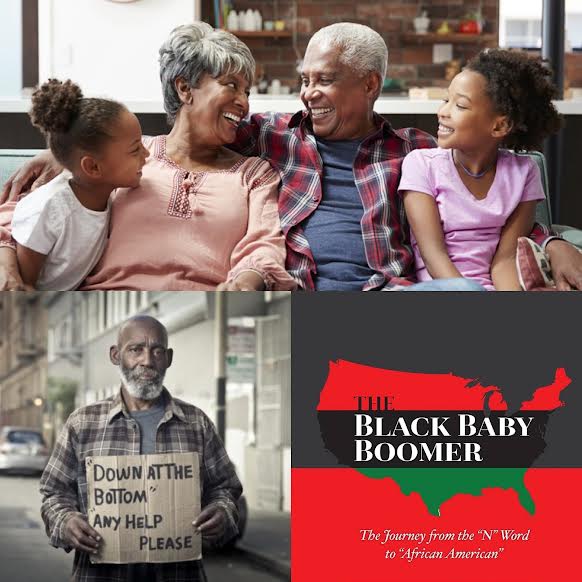
“According to a report by the Federal Reserve, the median net worth of African American households headed by someone aged 55-64 (who would generally be considered Baby Boomers) was around $39,000 in 2019. This is substantially lower than the median net worth of European American households in the same age group, which was around $184,000 in 2019. It’s important to note that there is significant variation within both groups, and wealth is influenced by a range of factors including income, education, and access to resources.”
Insider Intelligence gives a generational demographic breakdown reporting that, “Baby boomers were the largest living adult population until 2019. According to the US Census Bureau, US boomers have remained the second-largest population group in 2022, comprised of 69.6 million people ages 58 to 76.” And Statista reports that there are 43.26 million Boomer households meaning that approximately 4.8 million of those are African American. This then puts African American Baby Boomer wealth at approximately $187.2 billion – but what of it?
Each eldest generation will push wealth forward one way or another. Where it flows though can be largely up to the person. Some will push it to the next generation of family and friends, charities and organizations, and there are a host of other options of where money can find itself as one begins to consider their legacy both in the here and now or from the beyond. One things is crystal clear though from a Brookings Institute study, African Americans are falling behind with every passing generation, “30% of European American households received an inheritance in 2019 at an average level of $195,500 compared to 10% of African American households at an average level of $100,000.” African Americans both receive 50 percent less than their European American counterpart and European Americans are three times more likely to get an inheritance than their African American counterpart – but again what of it?
While the wealth of even African American Baby Boomers is not that of their counterparts, it should have the opportunity to make far more considerable impact than it probably actually will. As African American baby boomers age, a significant transfer of wealth is expected to occur. This presents an opportunity for younger generations to invest in education, home ownership, and entrepreneurial ventures. However, research indicates that many African American families face systemic barriers, such as lower access to financial resources and education, which could impact how this wealth is utilized and preserved.
Despite the considerable wealth held by baby boomers, economic disparities persist within the African American community and its institutions. Issues such as income inequality, lack of business ownership, access to African American owned financial institutions, limited access to financial literacy resources, and a disconnected institutional ecosystem can hinder the effective management and growth of inherited wealth. Addressing these disparities will be crucial in ensuring that future generations can leverage this wealth for long-term benefits.
Philanthropy and Community Investment
Many African American baby boomers are inclined to support causes that uplift their communities. This philanthropic inclination could lead to increased investment in African American nonprofits, education initiatives, and other community organizations. By directing funds towards institutional development, these donors can help address systemic issues and create lasting change.
Financial Planning and Literacy
The management of this wealth will largely depend on the financial literacy of both the current baby boomer generation and their heirs. Increasing access to financial education, resources, and African American owned financial institutions is essential to ensure that wealth is not only preserved but also strategically invested. Programs aimed at enhancing financial connectivity between African American households and African American financial institutions within the African American community can play a significant role in maximizing the impact of this wealth.
The fate of the $188 billion in wealth held by African American baby boomers is not just about the transfer of assets; it’s about how those assets can be utilized to build a stronger future for the community. By focusing on education, philanthropy, and addressing systemic barriers, there is potential for this wealth to make a profound impact on the lives of future generations. Ensuring that this wealth is effectively managed and directed towards meaningful causes will be crucial in shaping a more equitable and prosperous future for the African American community. In the end, the only real question is how much of the $188 billion will end up in African American institutions. Whether those organizations be African American social, economic, or political institutions is up to the household, but this is the most acute potential for institutional transformation that African America will have seen since 1865.
Disclosure: This article was assisted by NOVA AI and ChatGPT.
If you want a good education, go to private schools. If you can’t afford it, tough luck. You can go to the public school. – Paul LePage
The education landscape for African American students has long been marked by systemic challenges, including underfunded public schools and limited access to quality resources. As parents, educators, and community leaders seek solutions to these persistent issues, the establishment of more private schools specifically serving African American communities emerges as a potential avenue for improving educational outcomes. These institutions can provide tailored educational experiences that meet the unique needs of African American students, while also creating a stronger pipeline to historically Black colleges and universities (HBCUs).
If European Americans wanted to have quality public education for ALL Americans by now, we would have it. They do not and we can not afford to wait in hopes of appealing to a moral consciousness for it to happen. We must also accept that even it were to happen, the curriculum still would leave us out of the shaping and decision making process as it always has. Then we are surprised when our kids go through K-12 and know little to nothing about the contributions of African Americans and the African Diaspora upon finishing. There was slavery and then Martin Luther King, Jr. as it pertains to the “history” of African Americans in the United States in the current school systems for which we are dependent upon to educate our community and if some textbooks have their way slavery will soon be erased from the literature. In the intellectual arms race happening both here in the United States and throughout the world, African American education is sinking faster than the Titanic (it took approximately five minutes). The demarcation line has been crossed (long ago some would argue – desegregation) and it is time to take the offensive. African American private schools allow for African America to create its own de facto school systems where it controls the culture, curriculum, teacher quality, finances, and all of the subtleties that go into the education of our children from Early Childhood/Pre-K through 12th Grade.
In the United States, there are currently 30,492 private schools employing 529,574 teachers and educating almost 4.7 million students according to recent data by the NCES. On the public school side, there are 98,469 institutions employing 3.2 million teachers and educating 48.1 million students. For African Americans, they comprise 15 percent (7.22 million African American students) of the public school enrollment and 6 percent (423,000 African American students) of the private school enrollment. That is a national average of 18 teachers and 154 students for a ratio of 8 students per 1 teacher per private institution versus an average 33 teachers and 489 students for a ratio of 15 students per 1 teacher per public institution. Despite this reality, African American participation is second lowest among all groups just ahead of Hispanics, 50 percent behind European Americans, and 40 percent behind Asian Americans in private school participation. Private education for Asian Americans comprises almost 15 percent of their public/private student population, while private education only comprises 6 percent of the African American public/private population.
Addressing Systemic Inequities
Public schools in predominantly African American neighborhoods often face significant funding disparities, resulting in overcrowded classrooms, outdated materials, and limited extracurricular opportunities. Private schools can offer smaller class sizes, individualized attention, and enhanced resources such as more experienced teachers, state of the art technology and facilities just to name a few. By creating more private educational options, families can access environments that better meet their children’s academic and emotional needs.
Emphasis on Cultural Relevance
Private schools that cater to African American students can incorporate culturally relevant curricula that celebrate heritage and address the unique experiences of these students. Such an approach can foster a sense of belonging and identity, helping students thrive academically and socially. By emphasizing African American history, literature, and contributions, these schools can instill cultural pride and motivation in their students.
Diverse Educational Models
The expansion of private schools can introduce diverse educational models, including Montessori, Waldorf, and project-based learning, which may better suit the learning styles of African American students. These alternatives can provide innovative teaching methods that engage students more effectively than traditional approaches.
Strengthening the Pipeline to HBCUs
A significant benefit of increased private school options is the potential to strengthen the pipeline to HBCUs. Private schools can establish partnerships with HBCUs, offering students mentorship programs, college preparatory courses, and exposure to campus life.
Early College Programs: Private schools can implement early college initiatives that allow high school students to earn college credits while still in high school. This can ease the transition to higher education and increase the likelihood of enrollment in HBCUs.
College Counseling: Enhanced college counseling services can guide students through the application process, focusing on HBCUs and highlighting the unique opportunities these institutions offer, including supportive environments and rich cultural experiences.
Scholarship Opportunities: Private schools can work with HBCUs to create scholarship programs specifically for their graduates, ensuring financial support for students who choose to continue their education at these institutions.
Parental Choice and Empowerment
More private schools can empower parents by offering them choices in their children’s education. Many African American families seek options beyond their local public schools, and increased access to African American private institutions can enable parents to select environments that align with their educational philosophies and cultural values.
Community Investment and Leadership
Establishing private schools within African American communities can encourage local investment and leadership. The New England 8, a set of premier boarding schools in the New England region, control over $8 billion in net assets alone. There is no reason to believe that African American boarding and private schools could not emerge to enhance African American institutional asset control through their own endowments and have an acute impact on African American towns and communities. Community members can take active roles in governance and decision-making, ensuring that schools reflect the needs and aspirations of the families they serve. This involvement can strengthen community ties and promote a sense of ownership in the educational process.
While private schools are not a panacea for the challenges facing African American education, increasing their availability can provide valuable alternatives for families seeking quality educational options. By addressing systemic inequities, offering culturally relevant curricula, and empowering communities, more private schools could play a crucial role in fostering academic success, personal growth for African American students, and ultimately provides more African American institutional ownership.
How many African American private schools are there? According to Black Minds Matter’s Black-Owned Schools Directory there are approximately 140 African American private schools.
Disclosure: This article was assisted with by ChatGPT.






 HBCU Money