Category Archives: Technology

Has The Internet Become A Utility? No, But It Is Close

 Opportunity has power over all things. — Sophocles

I have constantly made the argument that just because you put someone on a nuclear submarine does not mean they will innately figure out how to pilot it. In fact, disaster is more likely to happen. Just giving someone access to information does not mean they will automatically know how to better themselves unless that portal is strictly designed to do so. However, the internet is filled with as much junk (if not more) than useful information. People will therefore gravitate to what they have learned to comprehend. There is the argument that having water in your home is better than not, but what if that water is more toxic than clean. The faucet becomes deadly, not helpful.

What is a utility? The dictionary defines a public utility as “a business enterprise, as a public-service corporation, performing an essential public service and regulated by the federal, state, or local government.”

Based on this definition, the internet does not quite fit the criteria of a public utility—at least, not yet. While the internet has certainly become an essential service in modern society, it lacks the same level of regulation and universal accessibility that defines traditional utilities like electricity, water, and gas. These utilities are tightly controlled to ensure consistency, affordability, and access for all, regardless of socioeconomic status. The internet, by contrast, is still largely managed by private corporations that set their own prices, establish service areas, and determine the quality of the connection users receive. This has led to disparities in access, with high-speed broadband readily available in affluent urban areas while rural and lower-income communities often struggle with slow or unreliable connections.

One of the biggest distinctions between the internet and traditional utilities is the role of regulation. Electricity and water services are heavily regulated because they are deemed necessary for survival and public welfare. In contrast, the internet operates in a more laissez-faire environment. While governments have attempted to introduce regulations such as net neutrality—intended to ensure equal access to all online content—these efforts have faced pushback from major telecommunications companies. The debate over whether the internet should be classified as a public utility is an ongoing one, with proponents arguing that universal access is a fundamental right in an increasingly digital world, while opponents fear overregulation could stifle innovation and increase costs.

Despite these challenges, the internet has become nearly indispensable in daily life. It is the backbone of modern communication, education, commerce, and entertainment. Job applications, telehealth services, remote work opportunities, and access to government resources all depend on a reliable internet connection. The COVID-19 pandemic underscored just how vital internet access is, as schools transitioned to online learning and businesses adopted work-from-home models. Those without reliable internet were left at a severe disadvantage, further exacerbating existing inequalities.

Another factor to consider is infrastructure. Traditional utilities operate on a centralized infrastructure model, where a single provider (often a government-regulated entity) manages distribution to all consumers. The internet, however, consists of a decentralized network of private providers, each controlling different segments of the infrastructure. While this decentralization has allowed for rapid innovation and expansion, it has also led to fragmentation, where service quality and pricing vary widely based on geographic location. In areas with limited competition, internet providers can charge high fees for subpar service, leaving consumers with little recourse.

Cost is another key element in the utility debate. Utilities like water and electricity are subject to price regulations to prevent excessive charges. The internet, however, remains largely unregulated in this regard, with broadband costs in the United States being some of the highest in the world. Many low-income households cannot afford high-speed internet, effectively locking them out of opportunities that require online access. This digital divide reinforces socioeconomic disparities, as those with consistent internet access gain educational and economic advantages over those who are disconnected.

Moreover, the quality of the internet experience is not uniform. Unlike water, which is expected to be safe to drink regardless of where you live, the internet experience varies widely based on available bandwidth, provider policies, and regional infrastructure. Some communities suffer from data caps, throttling, and unreliable service, while others enjoy ultra-fast fiber-optic connections. This inconsistency highlights another major difference between the internet and true public utilities.

If the internet were to become a public utility, significant changes would need to occur. Governments would have to step in to ensure equitable access, set fair pricing standards, and improve infrastructure in underserved areas. Public broadband initiatives, such as municipal networks, have already been proposed and implemented in some areas, offering lower-cost, high-speed options as an alternative to private ISPs. However, these efforts are often met with legal and political challenges, as existing providers fight to maintain their market dominance.

The argument that the internet should be classified as a utility stems from its necessity in modern life. Just as society determined that water, electricity, and gas are essential for a functioning household, the internet is increasingly seen as an essential service. Many believe that access to the digital world should not be a privilege but a right. However, until regulations catch up with this reality, the internet remains in a gray area—essential, but not yet universally protected and regulated like a true public utility.

To enhance the discussion on the internet’s status as a utility, it’s essential to examine the digital divide—the gap between those who have access to modern information and communication technologies and those who do not. Despite advancements in global connectivity, significant disparities persist both within the United States and worldwide.

Global Perspective

As of 2022, approximately 2.7 billion people, or one-third of the world’s population, remained without internet access. Additionally, 53% lacked access to high-speed broadband, limiting their ability to engage fully in the digital economy.

The divide is more pronounced between high-income and low-income countries. In high-income nations, internet usage stands at about 93%, whereas in low-income countries, only 27% of the population is online. This discrepancy highlights the infrastructural and economic challenges faced by developing regions in achieving digital parity.

Gender disparities also contribute to the global digital divide. Globally, 70% of men use the internet compared to 65% of women. Women account for a disproportionate share of the offline population, outnumbering male non-users by 17%. This gap underscores the need for targeted initiatives to promote digital inclusion among women.

United States Perspective

In the United States, while 95% of adults use the internet and 90% own a smartphone, only 80% have high-speed internet at home. This indicates that a significant portion of the population still lacks reliable broadband access, affecting their ability to participate fully in digital activities.

Income disparities significantly influence internet access. In 2019, 44% of adults in households earning below $30,000 annually did not have broadband services. This lack of access can hinder opportunities for education, employment, and access to essential services.

Educational attainment also plays a role in digital connectivity. Adults with higher education levels are more likely to have internet access, highlighting the intersection between education and digital inclusion.

Racial and ethnic disparities further exacerbate the digital divide. In 2021, 71% of White non-Hispanics used a PC or tablet, compared to 57% of African Americans and 54% of Hispanics. These differences can perpetuate existing inequalities in education and employment opportunities.

Implications

The digital divide has far-reaching consequences. Individuals without reliable internet access face challenges in job applications, accessing healthcare, and participating in educational opportunities. For instance, during the COVID-19 pandemic, students without home internet struggled with remote learning, exacerbating educational inequalities.

Addressing the digital divide is crucial for ensuring equitable access to information and opportunities. Potential solutions include investing in infrastructure to expand broadband access, implementing affordable internet programs, and enhancing digital literacy initiatives. Bridging this gap is essential for the internet to be considered a true utility, accessible and beneficial to all.

The digital divide—the gap between those with access to modern information and communication technologies and those without—profoundly affects various sectors, notably entrepreneurship and Historically Black Colleges and Universities (HBCUs).

Impact on Entrepreneurship

Entrepreneurs rely heavily on digital tools for marketing, sales, communication, and operations. Limited access to high-speed internet and digital technologies hampers business growth and innovation.

  • Rural Entrepreneurs: In the United States, rural small businesses face significant challenges due to inadequate broadband access. This deficiency restricts their ability to expand customer bases through online sales and reduces operational efficiencies. Research indicates that limited broadband access correlates with reduced business innovation in rural areas, as it impedes the adoption of cloud-based technologies essential for modern business operations.
  • Women Entrepreneurs in Developing Countries: The high cost of mobile data and unreliable internet connectivity disproportionately affect female entrepreneurs in developing nations. A survey across 96 countries revealed that 45% of women in business lack regular internet access due to expense and connectivity issues, hindering their capacity to market products, communicate with customers, and receive payments.
  • General Entrepreneurial Challenges: The digital divide limits access to digital finance, reducing diversified funding sources for disadvantaged groups. This constraint affects the ability to engage in open innovation processes, as individuals without access to information and communication technologies (ICT) cannot participate effectively in the digital economy.

Impact on HBCUs

Historically Black Colleges and Universities play a crucial role in providing higher education to African American communities. However, many HBCUs face challenges related to the digital divide.

  • Infrastructure Limitations: A significant number of HBCUs are located in areas with limited broadband access, often referred to as “broadband deserts.” This lack of high-speed internet hampers the institutions’ ability to offer digital learning resources and affects students’ educational experiences.
  • Funding and Resources: HBCUs have historically been underfunded, limiting their capacity to invest in necessary digital infrastructure and technology. This financial constraint exacerbates the digital divide, affecting the quality of education and the institutions’ competitiveness.
  • Digital Literacy and Inclusion: Despite these challenges, HBCUs are actively working to bridge the digital divide by fostering digital literacy and inclusivity. Initiatives include collaborative assignment designs and amplifying student voices to enhance digital learning experiences.

Efforts to Bridge the Gap

Addressing the digital divide requires concerted efforts from governments, private sectors, and educational institutions.

  • Investments in Infrastructure: Allocating funds to improve broadband infrastructure in underserved areas is crucial. For instance, federal agencies have directed significant financial support towards technology initiatives in HBCUs to enhance digital equity.
  • Public-Private Partnerships: Collaborations between corporations and educational institutions can lead to substantial improvements in digital infrastructure. Such partnerships aim to enhance technology access and digital literacy among students and the broader community.
  • Policy Initiatives: Governments can implement policies to reduce the cost of mobile data and internet services, making them more affordable for entrepreneurs and educational institutions. Such measures are vital in developing countries where the cost remains a significant barrier.

The digital divide significantly impacts entrepreneurship and HBCUs by limiting access to essential digital tools and resources. Addressing this issue is critical for fostering economic growth, innovation, and educational equity.

Ultimately, the question of whether the internet should become a utility comes down to societal priorities. If we agree that digital access is fundamental to education, employment, healthcare, and civic engagement, then steps must be taken to ensure it is available to all, regardless of income or location. This may mean rethinking current regulatory frameworks, expanding public broadband initiatives, or enforcing stricter oversight of internet service providers. Until then, the internet remains on the verge of utility status—vital, but not yet universally accessible or regulated in the way that other essential services are.

Can NFTs Help HBCUs Close The Endowment Gap?

Black people lived right by the railroad tracks, and the train would shake their houses at night. I would hear it as a boy, and I thought: I’m gonna make a song that sounds like that. – Little Richards

The individual, familial, community, and institutional wealth gaps between African America and all other groups continues to widen. Despite the consequential donations from Mackenzie Scott and Michael Bloomberg in 2020 to HBCUs it is simply not enough consistently and overwhelming enough to put out the fire. That fire being the HWCU-HBCU endowment gap, which is over $100 to $1 – and widening. Ironically, African America is often standing there with a water hose in their hand watching their house burn while waiting on their neighbor to bring a bucket of water over and help. Why do we say African America has the water hose? By HBCU Money estimates, African America’s tuition revenue value to all colleges is worth $60 billion annually – only $6 billion of that goes makes it way to HBCUs. There are 100 plus HBCUs, but only two have institutional banking relationships with African American owned banks. In other words, there are things that if we just looked inwardly there would be substantive change happening. Instead, we continue to wait for the “lottery” of other’s grace to befall upon us. And to that point, one of the greatest financial opportunities of our lifetime maybe falling upon us to use a resource within our institutions – our creativity.

It is no secret that African American creativity drives American culture. African American creativity has and is often exploited to the social and financial benefit of other groups. There maybe no greater example of that than hip-hop (and the music industry in general) where African American musicians created a genre of music that is now global in reach, but very little of it is actually owned by African Americans. Enter, the internet. Enter, NFTs. The internet is not flat nor is it democratized – after all even on the internet all of the mediums like Amazon, Facebook, Alphabet, Twitter, Square, etc. none are owned by African Americans. However, there is an increasing amount of decentralization that seems to be taking root in pockets of the World Wide Web where opportunities can be staked out. For instance, had an HBCU endowment in July 2011 purchased 5,000 bitcoins which at the time were $13.91 for a total of $69,550, then that HBCU today would have a value of $330 million today. To the best of our knowledge, there are no HBCUs holding bitcoin or any other cryptocurrencies in their portfolio. And while there is still plenty of time to add cryptocurrencies to the portfolio, there is also a new opportunity that one could easily argue is the equivalent of buying cryptocurrencies ten years ago. The NFT.

NFTs or non-fungible tokens are “Non-fungible” more or less means that it’s unique and can not be replaced with something else. For example, a bitcoin is fungible — trade one for another bitcoin, and you’ll have exactly the same thing. A one-of-a-kind trading card, however, is non-fungible. If you traded it for a different card, you’d have something completely different.”, says Mitchell Clark from The Verge. NFTs also work off the Ethereum blockchain, Ethereum being a cryptocurrency and blockchains are a digital distributed, decentralized, public ledger that exists across a network. So what can be a NFT? Again, Mitchell Clark from The Verge, “NFTs can really be anything digital (such as drawings, music, your brain downloaded and turned into an AI), but a lot of the current excitement is around using the tech to sell digital art.” NFTs are already showing their potential. A 14-year old girl made over $1 million from selling 8,000 NFTs according to Business Insider. The most expensive NFT sold to date went for $69 million at Christie’s. An amount that would still be greater than any donation ever given to an HBCU. Now imagine unlocking the creativity that exist on HBCU campuses with students, faculty, and staff.

This could ultimately be a win-win for everyone involved if setup properly. HBCUs can provide the space, hardware, infrastructure, and other support needed while students, faculty, and staff can provide the immense creative capital that we know. Unlocking African America creativity on campuses could quite literally means tens if not hundreds of billions into African American families, communities, and HBCUs. The incentive for HBCUs to invest in this infrastructure is simple. Financially more stable graduates, improved retention rates, potentially higher alumni donor rates, and a new stream of income for endowments.

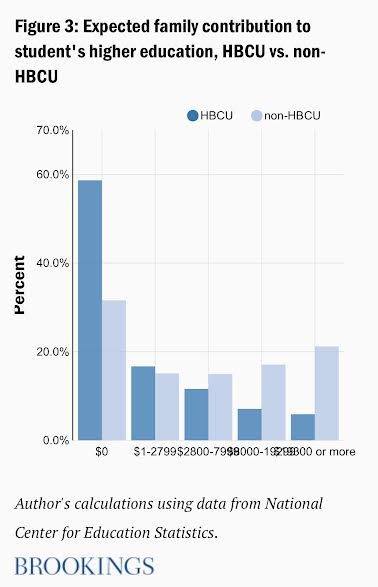
Students could see themselves earning enough to reduce or eliminate student borrowing costs. An immense hinderance to HBCU graduates creating generational wealth for themselves and their family. This barrier to wealth also is something that it could be argued contributes to poor alumni donor giving at HBCUs. HBCU donations of significance often come from older HBCU alumni who tend to wait and give a large donation either at the end of life or through their estate once they have passed on. HBCU students on a whole as reflecting in HBCU Pell Grant numbers are coming from far more low-income backgrounds their PWI counterparts. Brookings reports that almost 60% of HBCU students expect $0 in family contributions (graph below) to their education as opposed to less than one-third for non-HBCU students. On the other end less than 6 percent of HBCU students expect their family to contribute at least $19,300 to their education versus over 20 percent of non-HBCU students. This means that despite HBCUs on average costing significantly less than their PWI counterparts, HBCU students are still more likely to graduate with student loan debt and significant student loan debt loads. The most recent HBCU Money report showing that 86 percent of HBCU graduates finish with debt and a median of over $34,000 in student loan debt versus 40 percent and $24,000 in student loan debt for those coming from Top 50 endowed colleges and universities.

For HBCUs, the previous mentioned is great for their long-term sustainability, but in this case there is a huge financial reward to be had by HBCU endowments today. By providing the infrastructure, helping ensure the intellectual property rights, and more – HBCUs can create financial partnerships with students, faculty, and staff. This means that in the same way there is NIL (name, image, likeness) happening in collegiate sports, HBCUs too could use these partnerships as a means to recruit more African American faculty who often cringe at the pay rates at HBCUs. It also means that if a student, faculty, or staff produces an NFT for example that sells for $100,000, then potentially on a 50-50 split that the HBCU’s endowment just increased by $50,000. There is also the opportunity to have a foray into the entrepreneurship that is already taking root in the NFT as well as the supporting properties that will support it as an industry and asset class. As we mentioned, intellectual property attorneys in this new age will become even more valuable. There are currently six HBCU law schools who could create a focus on both IP and on digital IP in particular and those schools would be rewarded handsomely by being at the forefront of the curve. Simply put, there is just too much opportunity and money that has yet to even scratch the surface of value for HBCUs to not get involved in NFTs.

The acute importance of closing the endowment gap must be at the forefront of HBCU alumni conversations if our institutions are to be sustained into the next Millenia. It must be if we are to take serious the closing of the individual and institutional wealth gaps for African America. More importantly if HBCUs are to move beyond simply surviving and into empowered institutions that are truly able to serve the social, economic, and political interest of African America and the Diaspora, then having the institutional wealth and endowments necessary to do so is paramount. Climbing this mountain will be no easy task, but we can simply look at the wealth that has been created by our labor and our creativity as an enduring possibility of possibility. This time we must be the ownership of that creativity and protect its ownership at all costs.

A Patent Created Is A Million Earned: HBCUs Are Not Keeping Pace In The Intellectual Property Arms Race Among American Colleges

“Necessity…the mother of invention.” – Plato

How did David beat Goliath, then go on to become a “Goliath” himself? With a rock, pebble, or stone depending on who is telling the story. However, it is truly what that piece of Earth hurling towards his enemy from his cache represented that is often most lost in the story. After all, most stories in the Bible are parables and in this case, while David gets all of the glory, it was truly the slingshot that was the star. The slingshot represented an idea, ingenuity, and research all at the same time. It was a representation of how even the smallest solutions can tackle the biggest problems and for David, the riches represent what is awarded to those who dare go after them.

What is a patent? According to the definition provided by the World Intellectual Property Organization, “A patent is an exclusive right granted for an invention, which is a product or a process that provides, in general, a new way of doing something, or offers a new technical solution to a problem. To get a patent, technical information about the invention must be disclosed to the public in a patent application.”

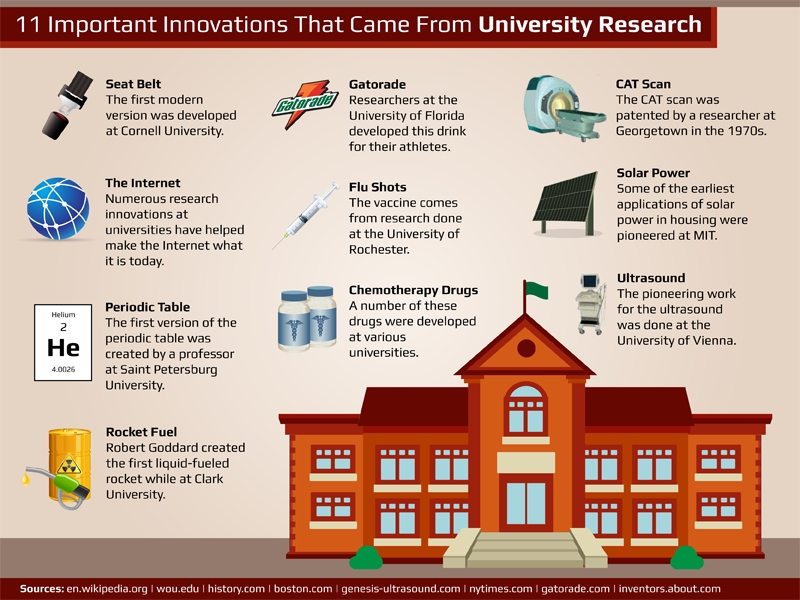
From 1969 to 2012, the U.S. Patent & Trademark Office granted 75,353 to America’s colleges and universities. However, during that same period HBCUs were granted an apathetic 101 patents, an amount less than one percent (0.13% to be exact) is a telling story of just one of the factors that hold back HBCUs financial sustainability. In the past twenty years alone since the turn of the 21st century, patents to colleges and universities have increased from 1,307 to 5,898, an almost five fold increase. In the same time period, the value of the revenue from those patents has also seen a meteoric rise to the tune of a 1,700 percent increase in value from $130 million annually to a staggering $2.2 billion annually. This does not even factor in the societal relevance that these institutions beget as a result. Can you imagine the financial and social impact that comes with being the college who invented the seat belt (Cornell University) or an even more well known invention, Gatorade (University of Florida)? The latter has earned the University of Florida over $1 billion in royalties alone. Even more to the point of colleges and universities profiting handsomely from intellectual property, according to an article in IP Watchdog in 2017, “a judge ordered Apple to pay the University of Wisconsin $506 million for infringing one of its tech patents. Last year, Carnegie-Mellon University won $750 million in a patent infringement lawsuit against Marvell Technology Group.” Those two settlements alone are worth fifty percent of all HBCU endowments combined. Needless to say, this is an arena that HBCUs need to make inroads into if survival and sustainability are long-term goals for our institutions.

PATENTS BY HBCU (1969-2012)

  1. Howard University – 18
  2. Morehouse School of Medicine – 17
  3. Florida A&M University – 16
  4. North Carolina A&T State University – 12
  5. Hampton University – 10
  6. Spelman College – 6
  7. Jackson State University – 4
  8. North Carolina Central University – 4
  9. Meharry Medical College – 3
  10. Tuskegee University – 2
  11. Alabama A&M University – 1
  12. Alabama A&M University Institute – 1
  13. Alcorn State University – 1
  14. Charles R. Drew University of Medicine – 1
  15. Claflin University – 1
  16. Delaware State University Foundation – 1
  17. Fort Valley State College – 1
  18. Shaw University – 1
  19. Virginia State University – 1
  20. Bowie State University – 1*

For all of the creativity that our culture has and exist on our campuses from faculty to students and more, there is little if any at times from administrations and alumni when it comes to finding creative solutions to our financial issues. Since desegregation took root in our institutions and began to gut them, a financial crisis has been brewing and its presence shows up every time we see another HBCU close its doors and even more starkly today in the amount of student loan debt HBCU graduates finish with as a result of poor endowments. HBCUs have taken on a what has seemingly become a check to check mentality in dealing with its financial viability. Instead of investments in R&D and entrepreneurship (Can HBCUs Produce Billionaires?), which is where the nation’s wealth has truly been generated for colleges and their alumni, we have seen far too many HBCUs and their alumni seemingly double down on being dependent on tuition revenue, make poor investments in athletics with no real return possible, focusing their students on getting jobs not creating them, and at times a feeling of lip service in relation to developing stronger pre-alumni and alumni programs that would strengthen giving.

It begs the question where do we go from here? How do we get administrations to ensure that intellectual property & patent development is a stronger part of its focus and how do we get alumni to give their time and money in a way that compliments and assist HBCUs in the infrastructure needed for said development? And ultimately, how do we turn our campuses into intellectual property machines? Let us examine, just a few points (but certainly not limited too) what HBCUs and their alumni could do to unleash its intellectual prowess:

First and foremost, we have to look at our research, patent development, and the like from a holistic viewpoint, meaning that anyone and any department on campus can be engaged in this process. That means everyone from the traditional route of professors and researchers to students to staff to cafeteria workers or lawn and building maintenance. Everyone must be part of this and everyone must be mentally engaged and present. A patent can come from anywhere and for us it needs too. For example, Paul Quinn a few years ago eliminated salt and pork from its campus, but what if a cafeteria worker created a way to still “salt” a product or their farm created a method by which you could raise a pig that does not adversely impact a human’s health. This would become an extremely valuable intellectual property that could be commercialized into a company that the school had an ownership stake in or licensing it out to major food companies and receiving royalties the way the University of Florida does with Gatorade to this very day.

Second, campuses need an intellectual property czar and department. Yes, create a position whose only job it is to promote, oversee, and help develop intellectual property. Their job would be to help ease the process, especially for the likes of students and staff who may not be as familiar with the process as professors, but even with professors helping ease the burden of the process would go a long way. The czar and department would be charged with identifying potential customers and creating commercial relationships where the intellectual property maybe of value. They would also assist in bringing in intellectual help if an idea is being developed but the technology or expertise to bring it to bear is not available on the campus. Perhaps, a relationship with a local software company or factory lends itself to the completion of the patent or intellectual property. Also finding opportunities where intellectual focus can financially benefit the school. An example of this would be the X Prize Foundation, where in 1996 for instance a businessman and entrepreneur offered a $10 million prize to the first privately financed team that could build and fly a three-passenger vehicle 100 kilometers into space twice within two weeks. Participating in these not only has potential financial benefits, but also raises the profile of the institution.

Thirdly, community and alumni access. Allowing the use of this broadens the probability that ideas and opportunities will come to the schools themselves and serve as a potential repository. Imagine for instance had Tuskegee been setup in such a way that when Lonnie Johnson, the Tuskegee alum who invented the Super Soaker, was able to come back to the school, use some of its resources, get assistance, etc. in exchange for a percentage of future or potential royalties. In 2013, he was awarded almost $75 million alone in royalties from Hasbro. An amount that is well over half of Tuskegee’s assumed endowment. Community access would also include summer camps to engage K-12 children in thinking as problem solvers. In other words, also developing the pipeline of intellectual property creators of tomorrow is integral.

Lastly, alumni must donate to create time for this all to be possible. How many HBCU professors can sit on campus for a semester, not teach, and simply focus on research? Very few, if any. How many students could stay on campus over the summer and experiment? Again, very few, if any. In fact, one of the primary problems that HBCU campuses have over summers is shutting down facilities in an effort to save money instead of opening them up for use to their professors, staff, students, and even the community. Those summer camps for K-12, which can lead to future HBCU students. Again, they need support and funds. Alumni must supply the funds to keep the lights on. Summertime is not a time to shutdown, but a time to have an opportunity to do the out of the box things that perhaps the semester schedules bog down. That can not happen without a targeted focus and strategic giving by alumni.

Patents, intellectual property, and the financial benefits that come with them currently are largely aligned with some of the nation’s largest endowments should come to no surprise to anyone who follows higher education finance. The top five producing patent colleges and universities between 1969-2012 (2018 endowment rank in parentheses), University of California (12) has 7,488 patents, MIT (6) has 4,017 patents, Stanford University (4) has 2,403 patents, CIT (34) has 2,365 patents, and the University of Texas (3) has 2,321 patents. In fact, these five schools have a combined endowment value of $51.5 billion as of 2018. Is there primary revenue from patents? Certainly not, but is the money insignificant? Also, certainly not. For HBCUs though, it could be life saving.

Even the way we engage this process may need to be outside of the normal box. For a lot of schools, even with alumni support, it maybe difficult to implement a program like this. However, one solution could be that the five HBCU conferences take the lead to allow for scale and best use of resources or HBCUs partner with other HBCUs and create a IP consortium and they profit-share. Stronger together. However it has to come together, it must. The financial future of HBCUs is rooted in becoming the problem solvers of today and tomorrow. It is time we focus, harness, and unleash the brilliant minds that constitute our institutions. Our bodies were used to build wealth for others for centuries, it is time to let our minds be the slingshot to our own (financial) freedom.

*Bowie State University was awarded its first patent in 2018.

The Forgotten Mission – HBCUs Account For Less Than One Percent Of America’s College Research Spending

A man wearing black pants, a white shirt and black shoes, writing on the wall. He is drawing a line of gears and writing business-related words above and below the gears

“Many think that the principal mission of universities is to transmit knowledge; they miss the key point that teaching and research are inseparable. American universities must continue to discover new kinds of knowledge and new ways of thinking.” – Dr. Eric Kandel

In 1896, Booker T. Washington invited George Washington Carver to head Tuskegee Institute’s Agriculture Department. For almost five decades Carver would set himself in stone as the greatest scientist and research ever to grace the halls of an HBCU. To this day he and his accomplishments are the measuring stick by which all HBCU research and scientists are measured. Yet, the fever by which Tuskegee invested in Carver and his research seems like a distant memory in HBCU lore and strategy.

HBCUs have always been known for promoting their values of community service and teaching, but oft left out of the conversation is the research portion of our institutions. The importance of research can not be overstated. As mentioned in the article The University of Power & Wealth that research and an environment of campus entrepreneurship to commercialize that research has produced companies like FedEx, Microsoft, Google, Facebook, Time Warner, and Dell just to name a few of the more well known companies. Not just companies, but products like Gatorade, which was invented at the University of Florida in 1965 and from which the university still receives royalties north of $10 million annually from Pepsi. There have also been inventions that simply serve the societal good like oral contraceptives and the seat belt that were created by college research and ingenuity.

HBCUs comprise approximately 2.3 percent of all colleges and universities in America. However, they make up only 0.7 percent of the research and development spending by American universities. Just to get to its representative amount of 2.3 percent would require R&D spending to increase from its current $500 million to $1.5 billion. Unfortunately, almost every conversation had with HBCU leadership and alumni would lead many to believe the answer to fixing our financial problems is through sports. A recent report by the NCAA showed that only 14 of the 120 Football Bowl Subdivision schools made money from campus athletics. That profit is primarily thanks to television deals through their conferences that HBCUs have little hope of obtaining at scale. That is not to say they can not be profitable, they can, but not following the playing book of their counterparts. For a more intimate perspective let us look at the University of Texas, the school with the one of the most valuable football programs in the country. It produces $109 million in revenue according to Forbes. Sounds great, right? Sounds like the answer to all of our prayers. Because when you are dehydrated even a bit of spit your way will appear to be a glass of water. Meanwhile, the University of Pittsburgh, America’s top grossing university hospital, produced revenue of $11.87 billion or 109 times the revenue that the University of Texas football program produces annually. In fact, even the University of Texas’s most valuable asset is its hospital, which generates almost $5 billion in revenue annually and has unbridled power in the city of Houston’s Texas Medical Center, the largest of its kind in the world.

Currently, HBCUs as aforementioned produce approximately $500 million collectively in research expenditures annually. There are 40 HWCU/PWI schools that individually do $500 million or greater annually and 8 of those 40 conduct $1 billion or greater annually according to the National Science Foundation. The gap between the top twenty HWCU/PWI and HBCUs when it relates to research continues to grow with the most recent data showing for every $1 that HBCUs spend on research, their counterparts are spending $52.

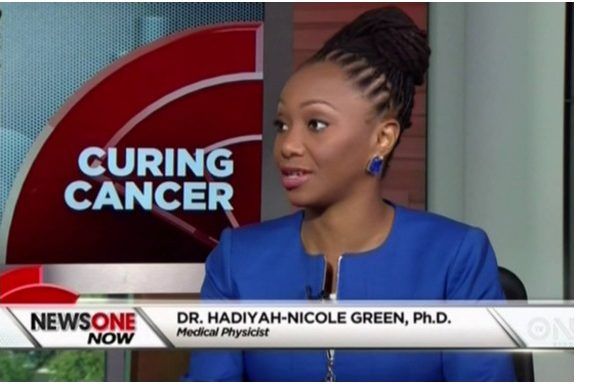
This is not to say that HBCUs are not doing prominent research, they most certainly are. Dr. Hadiyah-Nicole Green, a physicist, alum of Alabama A&M University, and who was a professor at Tuskegee University and now serves at Morehouse School of Medicine, received a $1.1 million grant for a pioneering technology that can kill cancer cells with lasers. That is just one of many prominent discoveries happening within HBCU research, but there are more fields and much more that needs to be taking place from history, economics, STEM fields, and many more. HBCU research should be touching every facet of African American and African Diaspora life. Yet, the commitment and infrastructure to do so is significantly lacking to close the gap.

We have examples of brand new stadiums that cost an HBCU $60 million, but two-thirds of that cost  was paid for by increasing student fees. Where is the same commitment to research? What would it take to build the first HBCU into a billion dollar research institution?

  1. VISION – This is as abstract as it is tangible. Either alumni or a president needs to commit to research as an integral part of the institution and what their plan would be to grow a strategic plan of making it a larger part of the HBCU’s DNA. One way to go about this is to bring in a president with a research background who truly understands and values both STEM and Humanities research and the possibilities it can open for an institution willing to invest in it. We explored a list of a potential HBCU presidents with at least six of the choices having solid research backgrounds in everything from technology to archaeology. These are the type of people who know what it takes to build the infrastructure and develop a strategy as it relates to building a research juggernaut.
  2. RESEARCH PHILANTHROPY – Also known as targeted giving. We see this when alumni are asked to become boosters. Athletics on most college campuses, HBCUs included, has had more targeted giving than other departments. It works primarily because alumni feel the giving is tangible. Give to athletics and your teams win is the tagline. HBCUs must lay out a similar vision and tagline for research. Alumni need to know why they need to give to research and what exactly it is building – see number one. Virginia State University Economics alumni have taken matters in their own hands created an endowment for their department of which a percentage is directly to be used for economics research. It is vital that alumni know what their donation is going to be used for and how much it will take to accomplish the objective.
  3. ALL HANDS ON DECK – By this we mean that research must be present throughout the entire campus. Who on an HBCU campus should be conducting research? Everyone. Quite literally. Freshmen upon entering should know that in order to graduate they will need to have completed some type of supervised research. More students are taking longer than four years to complete undergraduate these days so they may as well add this component while they are matriculating. It may go a long way to keeping them focused as well. According to Science Magazine it also has become a vital piece of obtaining employment or improving graduate schools, “undergraduates participate in research all the time; in chemistry, 72% of graduates had some research experience, according to a recent study sponsored by the National Science Foundation (NSF). In environmental science, the study found, 74% of undergraduates had research experience.” However, it can not stop with the undergraduates or even the graduates, faculty and staff must be involved. Remember the Gatorade? The groundskeeper department may create the next amazing product that can go from college grounds to residential  homes across the country. Make everyone invested in it.
  4. STOP ACADEMIC INCEST – This is strictly for HBCUs with graduate schools.  Far too many HBCU undergraduates who graduate from HBCUs with graduate schools who do not have a job lined up or still not sure what they want to do just park themselves in the school’s graduate school as a placeholder. For those HBCUs, they do not mind because the student keeps supplying them with tuition revenue for a few more years. This is short sighted and apathetic. If the majority of your graduate school is made up of your own undergraduates you are doing something wrong. Students do not benefit from it because they never get new perspectives. Remember, HBCUs are not a monolith of intellect. Students themselves benefit from a change of scenery and institutional DNA. The same goes for the institutions. An infusion of new intellectual capital, more sharpened, and the cream of other HBCUs alumni raises the research prowess.
  5. THE PIPELINE – Last, but not least – the pipeline. This means that HBCUs must be connected. HBCU must make it a point to push their HBCU undergraduates into HBCU graduate schools (just not their own). If the HBCU is an undergraduate institution, then it must ensure its alumni are choosing HBCU graduate schools if they are considering furthering their education. For instance, Texas Southern and Prairie View A&M, two public HBCUs in Texas, have within their own state six private HBCUs that are undergraduate only. Alumni from both institutions are coming together to create scholarships through the HBCU Endowment Foundation that would provide scholarships from the six private HBCUs to those two HBCU’s graduate schools. A vital means to keeping the cream of the intellectual capital from the pipeline within it. A key example of the pipeline is the aforementioned Dr. Hadiyah Nicole-Green (pictured below) who attended Alabama A&M University for undergraduate and has become a faculty at Tuskegee University and is now at Morehouse School of Medicine.

caption_4177707-e1475619049636

These are just a tip of the iceberg that HBCUs must do to improve the research prowess of our institutions from undergraduate to graduate and throughout the campus. Colleges and universities importance in creating and impacting societal, economic, and political research can not be understated of the acute importance it prevails. HBCUs can find long-term financial security in more research and increasing their value to African America and to the world in general. We do not need to produce another George Washington Carver, but an army of Carvers. If we are to be present in the institutional landscape for another century, then we must ensure that research is an important part of our foundational pillars we build upon.

HBCU Institute Of Technology & HBCU School Of Mines: The 21st Century HBCU

Whatever we succeed in doing is a transformation of something we have failed to do. Thus, when we fail, it is only because we have given up. – Paul Valery

There are times I wonder what was going through Steve Jobs and Steve Wozniak head when they realized they could combine a telephone, camera, music player, and computer all in one device. They were reimagining what a telephone could be, what it could do, and how it could impact the world. The same must become true of institutions like Lewis College of Business, Morris Brown, and St. Paul’s. These institutions at their core must remain HBCUs, but their niche within the HBCU ecosystem must become something different. Their purpose must become something reimagined.

LewisCollegeofBusiness

Two types of universities exist currently that HBCUs have no presence in and that African American sorely needs an established institutional presence in. They are institutes of technology and colleges of mines. A Wikipedia page describing institutes of technology is listed as “an institution of higher education and advanced engineering and scientific research or professional vocation education, specializing in science, engineering, and technology or different sorts of technical subjects.”  The Colorado College of Mines (the school has a 1.2 percent African American student body) is described as a teaching and research institution devoted to engineering and applied science, with special expertise in the development and stewardship of the Earth’s natural resources by U.S. News. Currently, there are twenty institutes of technology throughout the United States, Massachusetts Institute of Technology and California Institute of Technology being by far the most prestigious. There are six independent college of mines and over a dozen of these type colleges located within universities.

As it stands now there are two truths. First, technologist are becoming the new barons. They are ushering in a new gilded age of wealth. Silicon Valley, a creation spun from Stanford University, is a flush with the best and brightest minds shaping the technology of tomorrow. A great many of them coming from places like the aforementioned MIT and CIT. The 2009 Kauffman report, showed that MIT-trained entrepreneurs produce over $2 trillion in revenues. Wade Roush of Xconomy also reported, “On average, MIT graduates form just under 1,000 companies every year, according to an executive summary of the report shared with the media before today’s announcement. Massachusetts is home to some 6,900 alumni-founded companies, while another 18,900 are scattered around the world, including 4,100 in California. MIT alumni-founded companies employ just under a million people in Massachusetts, 526,000 in California, 231,000 in New York, 184,000 in Texas, and 136,000 in Virginia.” If they were a nation, they would have the eleventh largest economy in the world based on GDP. In comparison, African American owned businesses sales do not generate even 0.5 percent of MIT-owned firms sales. An HBCU institution dedicated to technology could allow for innovations that help us close the technological gap in America and the business wealth gap.

morris-brown-college

Secondly, energy demand is frothing as emerging market demand intensifies and developing countries build up their economies. Four of America’s largest ten companies by revenue are in energy and six of the world’s largest ten companies by revenue are in energy. Africa has almost ten percent of the world’s oil reserves and eight percent of the world’s gas reserves, according to a BP statistical review. The US shale boom in North Dakota will make America in the coming decade one of the largest exporters of gas and oil to the rest of the world reversing a long standing trend of being energy dependent. In the graph below, US employment growth in the oil and gas industry is growing faster than total private sector employment. In Africa, where countries are even more dependent on oil and gas revenues, opportunities are even greater. Although I have focused on the oil and gas because of their prominence, a college of mines also includes extraction of coals and other fossil fuels. There is also the extraction of things like gold, diamonds, and other gems that are extracted. Given the expansion into space mining of asteroids that seems to be on the horizon by companies like Google and others, opportunities in mining are quite frankly out of this world.

jobpercent

To add a cherry on top about these two industries and the universities that produce them is the philanthropy to colleges and universities that accompanies the wealth. In the last decade, The Chronicle of Philanthropy shows that the top 10 donations from energy and technology have donated a combined $707 million and $965 million, respectively. Basically, over the past ten years these two fields alone have produced donations equivalent to all 100 plus HBCUs have accumulated over the past one hundred plus years. The largest donation ever to a college or university was from CIT alum and Intel, a semiconductor company with a market value of $121 billion and 108 000 employees, co-founder Gordon Moore donated $600 million to CIT in 2001. Thirty times the size of the largest donation ever given to an HBCU.

Saint Pauls College Closing_237

Instead of losing more HBCUs, schools like Lewis College of Business (MI) , Morris Brown (GA) , and St. Paul’s (VA) could be re-fit to enter areas where African America needs a stronger strategic presence both industrially and geographically. This gives an increased opportunity for research, specialization skills training, and entrepreneurial development. Three areas that HBCUs as a whole sorely need improvement. We must be bold and imaginative to save our beloved institutions – the phone of opportunity is ringing, but what kind of device will we be picking up?