Category Archives: Real Estate

Why 1890 HBCUs Must Develop A Joint Tree Nursery: Sowing Legacy, Profit, and Power

“Since new developments are the products of a creative mind, we must therefore stimulate and encourage that type of mind in every way possible.” – George Washington Carver

The 1890 Land-Grant HBCUs were created not out of generosity but from segregation. And yet, over 130 years later, these institutions have carved out vital roles in agricultural education, food systems innovation, and land stewardship within the African American community. With the ever-growing climate crisis, shrinking agricultural landholdings for African Americans, and a glaring need for sustainable economic engines, the case for a joint tree nursery among the 1890 HBCUs is less an idea and more an imperative. The time for silos is over. A joint nursery would allow the 1890s to consolidate resources, amplify research, and plant the seeds—literally and economically—of a new generational legacy.

The Decline of African American Landownership and Ongoing Discrimination

In 1910, African Americans owned between 16–19 million acres of farmland. The years around this period would also see the Red Summer of 1919, when African Americans were violently targeted and lynched—many as punishment for owning land and asserting agency. Today, that number has dwindled to just 5.3 million acres as of 2022, according to the USDA’s Census of Agriculture, representing less than 0.6% of all U.S. farmland.

The decline is not just the result of economic shifts—it is the result of orchestrated policies and racially motivated practices. From the USDA’s long-standing discriminatory loan denials to heirs’ property laws that have gutted intergenerational land transfer, the path of African American landownership has been riddled with legal landmines. The Pigford v. Glickman settlement acknowledged this in part, but much of the damage remains.

The 2022 USDA Census also shows that Black producers make up just 1.4% of all U.S. farmers and generate only 0.5% of all farm-related income. These are not just agricultural figures—they are a ledger of institutional neglect.

A tree nursery jointly stewarded by the 1890 HBCUs could serve as a bulwark against further erosion. It would offer seedlings, training, and enterprise development that support African American landowners, reinforcing land retention, sustainable usage, and intergenerational economic viability.

Political Hostilities Facing HBCUs

Despite their vital role in education, research, and community development, HBCUs—especially 1890 land-grant institutions—have faced persistent political and financial challenges. These institutions continue to experience disparities in state and federal funding compared to predominantly white institutions (PWIs). Some of the key political hostilities facing HBCUs include:

  • Underfunding and Resource Disparities: Many 1890 HBCUs receive significantly less funding than their 1862 land-grant counterparts. Studies have shown that some states fail to allocate matching funds as required by federal law, putting HBCUs at a financial disadvantage.
  • Legislative Attacks on DEI Initiatives: In recent years, political efforts to limit diversity, equity, and inclusion (DEI) programs have targeted HBCUs and other minority-serving institutions. These measures threaten scholarship opportunities, faculty recruitment, and student support services.
  • Land-Grant Inequities: Unlike 1862 land-grant universities, 1890 HBCUs were historically excluded from receiving direct land allocations, resulting in fewer resources to develop agricultural research and extension programs. This inequity continues to hinder the growth of HBCU-led agricultural initiatives.
  • Institutional Wealth Gap: A stark difference exists between the endowments of 1890 HBCUs and their 1862 counterparts. Many 1862 land-grant universities have endowments in the billions, while 1890 HBCUs often operate with significantly smaller financial reserves. This gap limits their ability to invest in infrastructure, research, and large-scale agricultural projects. By collaborating, 1890 HBCUs can leverage collective resources to overcome these financial disparities.
  • Bureaucratic Challenges in Federal Funding: While the federal government provides grants and research funding for HBCUs, bureaucratic red tape often delays disbursement, limiting their ability to expand programs and infrastructure.
  • Hostile Political Climates in Some States: Certain state governments have attempted to merge or close HBCUs under the guise of budget cuts, despite the institutions’ strong academic contributions. These efforts undermine the historical and cultural significance of HBCUs in providing equitable education.

By establishing a joint tree nursery, 1890 HBCUs can leverage collective power to secure funding, build partnerships, and showcase the tangible benefits of investing in Black-led agricultural and environmental initiatives.

Benefits of Developing a Joint 1890 HBCU Tree Nursery

Environmental Sustainability and Climate Change Mitigation

Deforestation and land degradation disproportionately affect African American communities, contributing to environmental injustices such as poor air quality and increased vulnerability to natural disasters. A joint tree nursery among all 1890 HBCUs would:

  • Provide seedlings for reforestation projects in Black-owned lands and underserved communities
  • Help mitigate climate change by sequestering carbon dioxide through afforestation and agroforestry initiatives
  • Promote soil conservation and reduce erosion, particularly in the South, where agricultural practices have historically led to soil depletion

Economic Empowerment and Job Creation

A tree nursery initiative would not only benefit HBCU students and faculty but also offer economic opportunities to local landowners. Potential benefits include:

  • Revenue Generation: HBCUs can sell tree seedlings to farmers, municipalities, and reforestation programs, creating an additional income stream
  • Employment Opportunities: These nurseries can provide jobs for students, alumni, and community members in nursery management, forestry, and agribusiness sectors
  • Support for Black Farmers: Providing affordable seedlings and training on agroforestry practices can help African American landowners diversify their income and maximize land productivity

The Economic Benefits of the Timber Industry

The timber industry presents a lucrative opportunity for African American landowners and HBCUs. A joint tree nursery can serve as a foundation for engaging in sustainable forestry and timber production. Some key economic benefits include:

  • High Market Demand: The U.S. timber industry generates over $300 billion annually, with growing demand for sustainable wood products in construction, paper, and bioenergy sectors
  • Long-Term Investment: Timberland is a valuable asset that appreciates over time, providing generational wealth-building opportunities for Black landowners
  • Carbon Credit Market: African American landowners can participate in carbon credit programs by managing timberlands for carbon sequestration, receiving financial incentives for maintaining forests
  • HBCU Forestry Programs: Expanding forestry education at HBCUs can produce a new generation of Black professionals in timber management, conservation, and agribusiness
  • Sustainable Agroforestry: Integrating tree farming with traditional agriculture can enhance soil health, improve biodiversity, and create additional revenue streams for small-scale farmers

Enhancing Agricultural Education and Research

Many 1890 HBCUs already have robust agricultural programs. Establishing a joint tree nursery would further enrich their curricula by:

  • Offering hands-on training in silviculture, agroforestry, and nursery management
  • Creating research opportunities in sustainable land management, biodiversity conservation, and climate resilience
  • Facilitating collaborations with government agencies, non-profits, and private sector partners in reforestation and urban greening initiatives

Cross-Institutional Leverage: Strength in Numbers

A joint venture allows for economies of scale. Rather than every 1890 HBCU creating a small, under-resourced nursery, a consortium-based model allows for regional specialization and centralized management. One school could lead genetic research, another logistics, and another economic modeling. By specializing within the larger system, each institution contributes to a whole far greater than its parts.

Shared governance would also model cooperative economics for students and landowners alike—an important lesson in collective power for African American institutions that have long been made to compete rather than collaborate.

Community Wealth Building

The ultimate beneficiaries of this nursery aren’t just students or the HBCUs themselves—but the millions of African American families with access to underutilized or at-risk land. With the right training, seedlings, and partnerships, that land can be revitalized. It can produce not only timber but herbs, fruits, shade, and carbon credits.

The nursery becomes the beginning of a longer story—of community land trusts, green business corridors, and intergenerational financial literacy built around land-based wealth.

Seeding Sovereignty: A Strategic Call to Action

Developing a joint tree nursery among all 1890 HBCUs is more than an agricultural endeavor. It is an act of economic strategy, cultural restoration, environmental justice, and institutional collaboration. It’s about controlling the seed, the soil, and the story.

HBCUs have always been tasked with doing more with less. The joint nursery is an opportunity to do more—together—and build an enduring institutional asset rooted in cooperation, conservation, and community wealth.

Moreover, this initiative holds symbolic power. In the act of planting trees, 1890 HBCUs will be planting legacy—sending a signal that African American institutions are prepared not only to survive hostile economic climates, but to thrive through collective will. Trees are not short-term investments; they require long-term vision, care, and commitment—just like the kind of intergenerational institution-building African America must embrace.

The nursery would also be an anchor institution for Black innovation in climate tech, agroforestry finance, and regional ecosystem services. The act of growing trees connects economics with ecology, and by anchoring that process within the halls and lands of 1890 HBCUs, we bring knowledge production, carbon markets, and green workforce development under African American institutional ownership.

This is more than sustainability—it is sovereignty. The type of sovereignty that rewrites narratives around Black land loss, economic disempowerment, and environmental marginalization. In a future where climate, capital, and culture will increasingly intersect, the 1890 HBCUs must see a joint tree nursery not as a boutique project but as a national imperative rooted in Pan-African strategy and local resilience.

The seeds of sovereignty are ready. The land is waiting. The only question is whether the institutions tasked with leading our communities into the future will plant now, or later—when the cost of delay may be too great to bear.

Norfolk State University Alumna & Community Banker Carla Holmes Discusses The History Of Black Homeownership

The ache for home lives in all of us, the safe place where we can go as we are and not be questioned. Maya Angelou

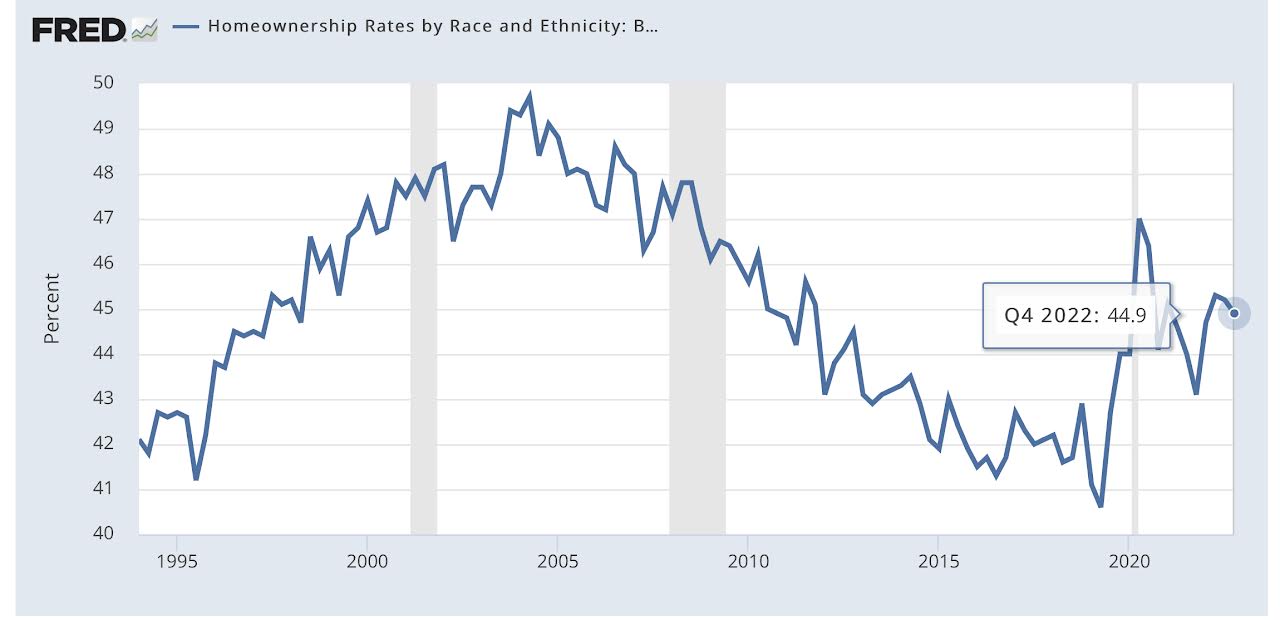
African American homeownership (pictured below) has never breached above 50 percent. Ever. According to HBCU Money data, it would take $14.7 billion in down payments for African American homeownership to just reach 50.1 percent. This is assuming that those 900,000 African American households would only be using FHA at 3.5 percent down. A debatable matter on the risk side that such low down payments would pose to households should the real estate market turn against them in the early years of their ownership. The $14.7 billion could decrease given the geography of African Americans being predominantly focused in the southeastern United States where homes on the whole are cheaper than much of the rest of the country. Using the southeastern median home price in fact would drop the $14.7 billion down to $12.3 billion. How big is this number? African American owned banks (what is left of them) only hold $4.3 billion in assets combined. The approximately 100 remaining HBCUs have combined endowments of around $3 billion. There are 44 people (none of which are African Americans) on the Forbes 400 who are individually worth more than $14.7 billion.

The causes of this are many, but the impact of it has been extremely pointed. In a country where homeownership has significant social and economic value to a group, African Americans have largely been starved of the social and economic oxygen that homeownership prevails and continue to lack the ecosystem necessary to make the sustained push above and beyond what has now become the mythical 50 percent line. But all hope is not lost.

Recently, Carla Holmes, a Norfolk State University alumnae and community banker, sat down for an interview to discuss the history of African American homeownership and more importantly the potential path forward. “I often say that community development found me. I noticed there was a need for education and training in the community and especially in the Black community in moving towards homeownership and understanding more about affordable housing.”

For the full podcast and interview click here.

Closing The Wealth Gap: HBCU Couples Should Prioritize Two Homesteads Before Marriage

Owning a home is a keystone of wealth – both financial affluence and emotional security. – Suze Orman

Poor people know they are poor. Unfortunately, it is the African American working and middle class who do not know they are also poor. The problematic reality that because you can buy something does not mean you can afford it plagues much of African America’s working and middle class. These tend to be households who have higher education, higher incomes, and higher homeownership rates – but they also tend to have financial net worths that are just as poor as – well, the poor. Why? They tend to be more acutely indebted due to their education, home, car, and consumer poor, just as financially illiterate, and almost always just as asset poor as their poor counterparts in the African American community. However, any conversation about passive or investment income or financial health as a pillar in line with mental health and other priorities of a well functioning household is often met with angst or disgust. The prioritization of asset accumulation over consumption is met with more resistance than Americans against British taxation without representation – and we know how that ended. But not to worry, there seems to be no revolution brewing here (sarcasm). African American wealth accumulation continues to be an afterthought of the African American household. Upper middle class, affluent, rich, or wealthy being a thought of more as something for “others” and not ourselves. The achievement of degrees, a house, cars, and consumption is all we seem to believe life requires. Should times get tough, many within the community will tell you that a second job, a better paying job, or more education is more times than not the answer to a “better” life. Again, wealth and asset accumulation not so much.

How dire is the wealth situation for African America? Bloomberg recently reported that Black-White wealth gap has not budged in the past 40 plus years and is actually trending worse. McKinsey and Company report that nearly 20 percent of African American households have a negative net worth. The National Community Reinvestment Council’s report shows, “African Americans, who in many categories have the greatest gender economic equality, have the greatest gender wealth disparity though still having little wealth compared to Whites. Single Black men’s median wealth was $10,100, compared to Single Black women’s median wealth of $1,700.” An immense issue when one considers that the majority of African American households are headed up by single African American women. One would certainly suggest that because women are the load bearers for raising and providing for African American children and often extended family that this has also severely hampered their ability to accumulate wealth. An issue that is not as prevalent for African American men. None the less, it proves dire for the community as a whole that this is the case. Last but certainly not least (or all), there is the matter that African American homeownership has never breached above 50 percent which for the majority of families serves as the foundation that a lot of intergenerational wealth is built upon.

One of the general wedges to the wealth gap is asset ownership. Two-thirds of African American wealth according to Bloomberg is held in housing and very little in other asset classes like stocks in particular. This has presented an acute problem over the past 70 years as Bloomberg reports, “stocks have appreciated five times as much as housing prices.” However, the complexity of wealth without a conversation around income and disposable income which is income left over after expenses that can be used for savings and investing is vital to the conversation. African American median income is $45,870 according to Statista, the highest it has been in the past 30 years. The problem of course is that it remains the lowest of all four ethnic groups tracked (see graph below) with Latinos, European, and Asian Americans having median incomes of $55,321, $74,912, $94,903, respectively. Unfortunately, there is not a high enough savings rate that could truly overcome this lack of income. Despite the perception, African Americans are savers in line with their European American counterparts. Again, you can not catch up in a race running at the same speed as someone who is 100 yards ahead of you. This is the problem for African America. We are trying to save and invest at the same rate as those who have in most cases six times our wealth. So if home ownership is already our largest asset, then why are we suggesting that African American couples prioritize having two going into a marriage rather than one after they get married?

Every HBCU state except for Pennsylvania offers a homestead exemption. What is the homestead exemption? According to Investopedia, “The homestead exemption is a way to minimize property taxes for homeowners. It is also a legal provision offered in most states that helps shield a home from some creditors following the death of a homeowner’s spouse or the declaration of bankruptcy. The homestead tax exemption can provide surviving spouses with ongoing property tax relief, which is done on a graduated scale so that homes with lower assessed values benefit the most. The homestead exemption is helpful since it is designed to provide both physical shelter and financial protection, which can block the forced sale of a primary residence.” A person or couple can only have one homestead at a time, unless they both enter into the marriage with their own homestead. At which point, both parties are allowed to retain their individual homesteads. This means both properties will be taxed at a reduced rate creating more disposable income. Something they would not be able to do if they simply purchased a second home later in the marriage. What is that second homestead worth potentially?

According to Mortgage Calculator, the average annual property taxes in the United States is approximately $3,800. The homestead exemption typically saves approximately $500 off of that tax bill. That $500 invested annually for 30 years at 8 percent return is worth over an extra $60,000 to a household and that is just the tax savings reinvested. Naturally, the second homestead would be rented out by the couple and used to generate additional passive income. Assuming the couple could generate a profit of $200 per month or $2,400 annually off that second property, they now have $2,900 to invest annually which over the course of 30 years at 8 percent return is worth over $350,000. We have not even added on the building of the equity from appreciation or the extremely low interest rates that accompany homestead properties versus traditional investment properties. Banks are far more likely to see a homestead property as a lower risk than investment properties which they believe a borrower is more likely to walk away from than those that are homesteaded. Equity borrowed from the home could be used to reduce the households general tax bill overall further, leveraged to purchase non-homestead investment properties, or simply borrowed and used to invest in the stock market and because it is seen as “debt” does not carry tax liability on it. In other words, if a couple borrows $50,000 of equity out of their homestead property and make $10,000 on it, then they would only be paying taxes on the $10,000 but you still actually have $60,000 at your disposal. Whereas if you saved $50,000 and then made $10,000 on it, then you would be paying taxes on the entire $60,000. That almost $3,000 per year that would be coming from that property would also be an increase of 6 percent on the African American median income.

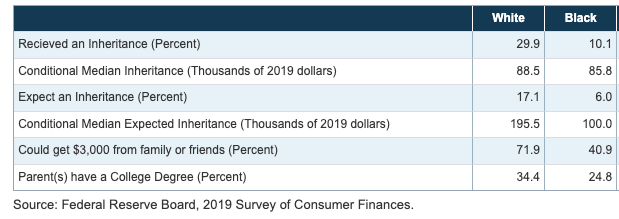
In the end of it all, assets and income go hand in hand. The more assets a family has the more income they produce and vice versa. In some ways, it is the epitome of the chicken and the egg conversation. For most African Americans, whom we see are highly unlikely to receive inheritance (see graph above) it becomes all about their family’s initial income and the race to acquire assets. Grievously, far too many African American families get the income and never convert it into assets. Taking advantage of prioritizing this little loophole can provide a family an extra $1 million in asset value and $80,000 in passive income if properly managed. An amount that currently would equal almost two times the African American median income. It is these small decisions that could have a monumental impact on the future of African American wealth and the closing of the wealth gap. In order for this to work as part of an overall strategy, HBCU alumni must prioritize having a sense of urgency about their finances and then be strategic about wealth and asset accumulation before tying the knot.

How the Government Helped White Americans Steal Black Farmland – And Why 1890 HBCUs Are Partially To Blame

Every good citizen makes his country’s honor his own, and cherishes it not only as precious but as sacred. He is willing to risk his life in its defense and is conscious that he gains protection while he gives it. – Andrew Jackson

Ukraine has been preparing for years for the eventual invasion that would come from Russia. It has been so even prior to Russia’s invasion and capture of Crimea in 2014. Why? Ukraine’s intelligence for one, President Vladamir Putin’s writings that expressed sentiment that the breakup of the Soviet Union was a great tragedy of the 20th century, Russia’s 2008 invasion of Georgia, and because well that is WHO Russia is and has shown itself to be. It would have been more of a shock were Ukraine to act shocked at Russia invading more than Russia invading. Put another way, if Ike Turner slapped someone and they were surprised, who is crazier – them or Ike Turner?

This seems to be African America always when it comes to European America though. Constantly surprised by consistent behavior. Harlem, Houston’s Third Ward, New Orleans, Compton, Roxbury, so on and so forth. What do all of these have in common? They were once thriving African American strongholds until gentrification. Each time the gentrification wave came, African Americans in those communities were caught off guard, unable and unprepared to launch a counterattack (or offensive).

In a recent article by The New Republic titled, “How the Government Helped White Americans Steal Black Farmland”, in detailed fashion we learned about one of the most vital departments of any country, agriculture, which impacts land, development, life expectancy, water and mineral rights, and so much more was used by the U.S. government through the USDA to spearhead the wealth transfer of African American farmland into European America’s hands. “Black farmers not only lost out on these massive subsidies—they have been effectively disenfranchised within the modern agricultural system. Under conditions of savage oppression, Black families emerged in the early 1900s with almost 20 million acres of farmland and “the largest amount of property they would ever own within the United States,” according to the historian Manning Marable. Since then, they have lost roughly 90 percent of that acreage” says New Republic. According to New Republic, there will be a study put out soon by the American Economic Association’s Papers and Proceedings journal that will value the land lost between 1920 and 1997 at approximately $326 billion. An amount that is equal to over 20 percent of African America’s $1.6 trillion buying power. The $326 billion valuation excludes the 160 million acres that Africa Americans who were enslaved were owed post Civil War from Special Order No. 15 that guaranteed the former enslaved population of around 4 million 40 acres apiece, but was reneged upon by the U.S. government ultimately making the loss arguably worth trillions today. Yes, trillions. The economic loss has had catastrophic social, economic, and political echoing impacts for generations. “Revolution is based on land. Land is the basis of all independence. Land is the basis of freedom, justice, and equality”, Malcolm X said. This alluded to the belief that every revolution was and is about land given that it impacts everything that lays to bear on any group, community, country, and diaspora. African American institutions, especially those focused on agriculture, should have made the protection of African American land a strategic priority.

Enter the 1890 HBCUs, which were created with the Second Morrill Act of 1890. There were 19 HBCUs created under this act (and two HBCUs which were created under the First Morrill Act of 1862, which primarily created HWCU agriculturally focused colleges and universities). For all intents and purpose, 1862 and 1890 colleges and universities were created with an emphasis on agriculture. Tuskegee, through the political clout of Booker T. Washington, is the only private HBCU that has land-grant status. The other two private universities that are land-grant institutions are Cornell and MIT. Among the 1890 HBCUs, they have three of the six HBCU law schools housed at Florida A&M University, Southern University System, and University of the District of the Columbia. Despite this, based on their websites none of three have any focus/concentration on agricultural law. This means that more than likely African American farmers and landowners are in the hands of lawyers who are both non-African American and trained at an HWCU/PWI institution. Given historical behavior, it is not hard to assume that those lawyers do not work in the best interest of our community. It also once again poses the question of the lack of strategy among African America at using its institutions to protect its social, economic, and political interest. Stemming the tide requires a change in HBCU strategy and realizing the purpose of our institutions is to serve and protect the other parts of the African American ecosystem.

There are a few pointed pivots that 1890 HBCUs can do to serve and protect the agricultural interest of African America. First, the three 1890 law schools (FAMU, SUS, and UDC) can create an African American agriculture concentration in their law schools. Again, to be clear, an African American agriculture concentration is not the same as general agriculture, which tends to be from a Eurocentric perspective. Focusing on agricultural law from the African American agricultural perspective and interest is paramount. Secondly, the three 1890 law schools can create a joint organization for African American Agriculture Defense Fund that will serve as a means to fund law defense for African American farmers, lobbying efforts towards African American agriculture, and regional African American agriculture legal research. Thirdly, all of the 1890 HBCUs needs to create master’s programs in agricultural law and policy focused on their respective local, state, and regional geographies. They can then push for alumni to create scholarships that will allow for a pipeline of agriculture majors to pursue law degrees at the three 1890 HBCU law schools. Lastly (but not all), a concerted emphasis on offering courses, lectures, and seminars on the purchase and maintenance of African American land ownership emphasized to students and alumni and available to our entire community.

If HBCUs are not going to be part of the institutional ecosystem built to serve and protect African American interest, then what is their purpose? Without protecting African American land, what little is left of it, then what is to come of African America? Protecting African American land takes more than just HBCUs, it also requires African American owned financial institutions, real estate organizations, families, communities, and more. However, 1890 HBCUs must take the vanguard and protect what we have so that we can start to stem the tide and move the trend upward again. The notion that land theft and assaults have been happening to African America for 100 years and we still have yet to respond with a counterattack or an offensive of our own is telling. HBCUs also are becoming more and more vulnerable to their land and the communities they are in, which are typically African American, being gentrified and the use of predatory land theft and assaults heightened. Howard University, Prairie View A&M University, and Texas Southern University all are witnessing land theft and assaults on the land surrounding their institutions. Unfortunately, there was and continues to be no unified strategic planning to protect them. In Howard University’s case, white residents have even been so gall as to suggest that the school be moved. This is just one example of over a century of attitudes that have helped lead to others justifying land assaults on African American landownership. We know who are our enemies are, we have the intelligence and tools, now is the time to start urgently preparing our troops to defend our lands.

Texas Southern University Host NAREB’s Black Homeownership Summit

“We need to intentionally invest in health, in home ownership, in entrepreneurship, in access to democracy, in economic empowerment. If we don’t do these things, we shouldn’t be surprised that racial inequality persists because inequalities compound.” – Pete Buttigieg

On the campus of Texas Southern University on November 4th and 5th, the National Association of Real Estate Brokers, an organization representing the interest of African American real estate professionals, hosted a homeownership summit with focuses on not only homeownership, but also student debt, access to credit, and investing. The importance of such an event being held on an HBCU campus can not be understated.

Intertwining African American institutions with each other has long been a struggle for the community’s development with African American institutions often operating on islands instead of a connected ecosystem. Events like NAREB’s Black Homeownership Summit at Texas Southern University helps highlight the power, potential, and scalability of what happens when African American (and Diaspora) institutions work together. What better place to address Black homeownership after all than on the campus of an HBCU? Soon to be African American graduates and professionals will be at the vanguard of trying to close the acute homeownership crisis that African America continues to face (graph below).

One of the keynote speakers at the NAREB Black Homeownership Summit event was Teresa Bryce Bazemore, CEO and President of the Federal Home Loan Bank of San Francisco, speaking exclusively to HBCU Money about the event said, “We need all the parties in the housing finance industry and other stakeholders to collectively work to eliminate the barriers to homeownership. In this new environment, all consumers including Black and Brown people should be able to participate equally in the dream of homeownership. We need initiatives that can help potential buyers with improving their credit, saving for down payments and understanding the entire home buying process from A to Z. We also need to make sure that the lending rules are equitable.”

HBCU Money’s Suggested Five Initiatives For HBCUs Can/Should Be But Not Limited Too:

  • Making financial literacy a mandatory part of matriculation for HBCU students. This can be done through the financial aid office, workshops, or a class.
  • Providing HBCU students work study jobs that go into the community at African American K-12 schools and teaching financial literacy.
  • Partnering with African American owned banks and credit unions. Due to their deposit bases, many African American owned banks and credit unions simply can not participate in the primary mortgage market and there are few to none African American owned non-bank mortgage lenders. This leaves the African American community in an extremely vulnerable position to predatory lending as has been demonstrated and shown time and time again. HBCUs are a key to growing assets within African American financial institutions through students, alumni, and institutionally.
  • Offering more scholarships for ALL students. Scholarships are purposed to reduce student loan debt, but they are often resigned to high achieving students despite the majority of students being in the middle. This becomes highly problematic for African Americans who usually do not have the familial wealth to assist in paying down or off their student loan debt. HBCUs while cheaper than our PWI counterparts on the whole could be doing even more to reduce the student loan debt burden for African American students by ensuring that any student who is academically eligible has an opportunity to reduce their student loan debt burden. This provides an opportunity upon graduation that more of their initial paycheck is going towards wealth building and potential homeownership rather than debt burden.
  • Encouraging the use of startups like HBCU Real Estate, who has part of their mission statement to use a portion of their profits to provide down payment assistance for HBCU alumni who seek to purchase primary or investment properties.

Homeownership and real estate ownership have long been a cornerstone to establishing generational wealth in the United States. Despite this, the African American homeownership has never crossed over the 50 percent threshold and according to MarketWatch and has always maintained a 20-30 percentage point gap between African and European Americans. African America’s civilian noninsittuional population as of October 2021 was 33.7 million and its civilian labor force is 20.6 million and the African American labor force 20 and over is 19.9 million. Assuming that 44 percent of the 19.9 million are homeowners (8.7 million), it would take approximately 1.5 million more African Americans to become homeowners to get African America above 51 percent. Based on the most recent data provided by Zillow, the typical value of U.S. homes is $308,220 as of September 2021. Between 1999 and 2021, the median price has almost tripled from $111,000 to $308,220. This means in order for those 1.5 million to acquire homes they would need down payments of approximately $16.2 billion using FHA’s 3.5 percent down financing or $10,800 per potential African American homebuyer. While it does not on the surface seem like a lot to many, that number represents almost 45 percent of the African American median net worth, but a mere 6 percent of European American median net worth.

Just for perspective on that $16.2 billion, there are no African Americans with a net worth more than that, but there are 45 Americans whose single net worth exceeds $16.2 billion. The road to achieving more African American homeownership will be no small task, but events like NAREB/Texas Southern will go a long way in us doing the hard work together, lifting the heavy load together, and ultimately achieving our goal together.