African American household wealth reached $5.6 trillion in 2024, marking a half-trillion-dollar increase that signals both progress and persistent structural challenges in the nation’s racial wealth landscape. While the topline growth appears encouraging, the composition reveals a familiar pattern: wealth remains overwhelmingly concentrated in illiquid assets, with real estate and retirement accounts comprising nearly 60% of total holdings. The year’s most dynamic growth came from corporate equities and mutual fund shares, which surged 22.2% to $330 billion—yet this represents less than 5% of African American assets and a mere 0.7% of total U.S. household equity holdings, underscoring how far removed Black households remain from the wealth-generating mechanisms of capital markets.
The liability side of the ledger tells an equally sobering story. Consumer credit climbed to $740 billion in 2024, now representing nearly half of all African American household debt and growing at more than double the rate of asset appreciation. This shift toward unsecured, high-interest borrowing—particularly as it outpaces home mortgage debt—suggests that rising asset values are not translating into improved financial flexibility or reduced economic vulnerability. What makes this dynamic even more troubling is the extractive nature of the debt itself: with African American-owned banks holding just $6.4 billion in combined assets, it’s clear that the vast majority of the $1.55 trillion in African American household liabilities flows to institutions outside the community. This means that interest payments, fees, and the wealth-building potential of lending relationships are being systematically siphoned away from Black-owned financial institutions that could reinvest those resources back into African American communities, perpetuating a cycle where debt burdens intensify even as the capital generated from servicing that debt enriches institutions with no vested interest in Black wealth creation.
ASSETS
In 2024, African American households held approximately $7.1 trillion in total assets, an increase of more than $500 billion from 2023, with corporate equities and mutual fund shares recording the fastest year-over-year growth from a relatively small base, even as wealth remained heavily concentrated in real estate and retirement accounts—together accounting for more than 58% of total assets.
Real Estate
Total Value: $2.24 trillion
Definition: Real estate is defined as the land and any permanent structures, like a home, or improvements attached to the land, whether natural or man-made.
% of African America’s Assets: 34.2%
% of U.S. Household Real Estate Assets: 5.1%
Change from 2023: +4.3% ($100 billion)
Real estate remains the dominant asset class for African American households, accounting for over one-third of total household assets. While modest appreciation continued in 2024, ownership remains highly concentrated in primary residences rather than income-producing or institutional real estate, limiting liquidity and leverage potential.
Consumer Durable Goods
Total Value: $620 billion
Definition: Consumer durables, also known as durable goods, are a category of consumer goods that do not wear out quickly and therefore do not have to be purchased frequently. They are part of core retail sales data and are considered durable because they last for at least three years, as the U.S. Department of Commerce defines. Examples include large and small appliances, consumer electronics, furniture, and furnishings.
% of African America’s Assets: 8.8%
% of U.S. Household Durable Good Assets: 6.2%
Change from 2023: +3.3% ($20 billion)
Corporate equities and mutual fund shares
Total Value: $330 billion
Definition: A stock, also known as equity, is a security that represents the ownership of a fraction of the issuing corporation. Units of stock are called “shares” which entitles the owner to a proportion of the corporation’s assets and profits equal to how much stock they own. A mutual fund is a pooled collection of assets that invests in stocks, bonds, and other securities.
% of African America’s Assets: 4.7%
% of U.S. Household Equity Assets: 0.7%
Change from 2023: +22.2% ($60 billion)
Defined benefit pension entitlements
Total Value: $1.73 trillion
Definition: Defined-benefit plans provide eligible employees with guaranteed income for life when they retire. Employers guarantee a specific retirement benefit amount for each participant based on factors such as the employee’s salary and years of service.
% of African America’s Assets: 24.4%
% of U.S. Household Defined Benefit Pension Assets: 9.7%
Change from 2023: +7.5% ($40 billion)
Defined contribution pension entitlements
Total Value: $880 billion
Definition: Defined-contribution plans are funded primarily by the employee. The most common type of defined-contribution plan is a 401(k). Participants can elect to defer a portion of their gross salary via a pre-tax payroll deduction. The company may match the contribution if it chooses, up to a limit it sets.
% of African America’s Assets: 12.4%
% of U.S. Household Defined Contribution Pension Assets: 6.0%
Change from 2023: +4.8% ($40 billion)
Private businesses
Total Value: $330 billion
% of African America’s Assets: 4.7%
% of U.S. Household Private Business Assets: 1.8%
Change from 2023: +3.1% ($10 billion)
Other assets
Total Value: $770 billion
Definition: Alternative investments can include private equity or venture capital, hedge funds, managed futures, art and antiques, commodities, and derivatives contracts.
% of African America’s Assets: 10.9%
% of U.S. Household Other Assets: 2.7%
Change from 2023: +6.9% ($50 billion)
LIABILITIES
“From 2023 to 2024, African American household liabilities rose by approximately $100 billion, with consumer credit, now representing nearly 48% of all liabilities, driving the majority of the increase and reinforcing structural constraints on net wealth accumulation despite rising asset values.”
Home Mortgages
Total Value: $780 billion
Definition: Debt secured by either a mortgage or deed of trust on real property, such as a house and land. Foreclosure and sale of the property is a remedy available to the lender. Mortgage debt is a debt that was voluntarily incurred by the owner of the property, either for purchase of the property or at a later point, such as with a home equity line of credit.
% of African America’s Liabilities: 50.3%
% of U.S. Household Mortgage Debt: 5.8%
Change from 2023: +4.0% ($30 billion)
Consumer Credit
Total Value: $740 billion
Definition: Consumer credit, or consumer debt, is personal debt taken on to purchase goods and services. Although any type of personal loan could be labeled consumer credit, the term is more often used to describe unsecured debt of smaller amounts. A credit card is one type of consumer credit in finance, but a mortgage is not considered consumer credit because it is backed with the property as collateral.
% of African American Liabilities: 47.7%
% of U.S. Household Consumer Credit: ~15.0%
Change from 2023: +10.4% ($70 billion)
Other Liabilities
Total Value: $30 billion
Definition: For most households, liabilities will include taxes due, bills that must be paid, rent or mortgage payments, loan interest and principal due, and so on. If you are pre-paid for performing work or a service, the work owed may also be construed as a liability.
“Revolution is based on land. Land is the basis of all independence. Land is the basis of freedom, justice, and equality.” – Malcolm X
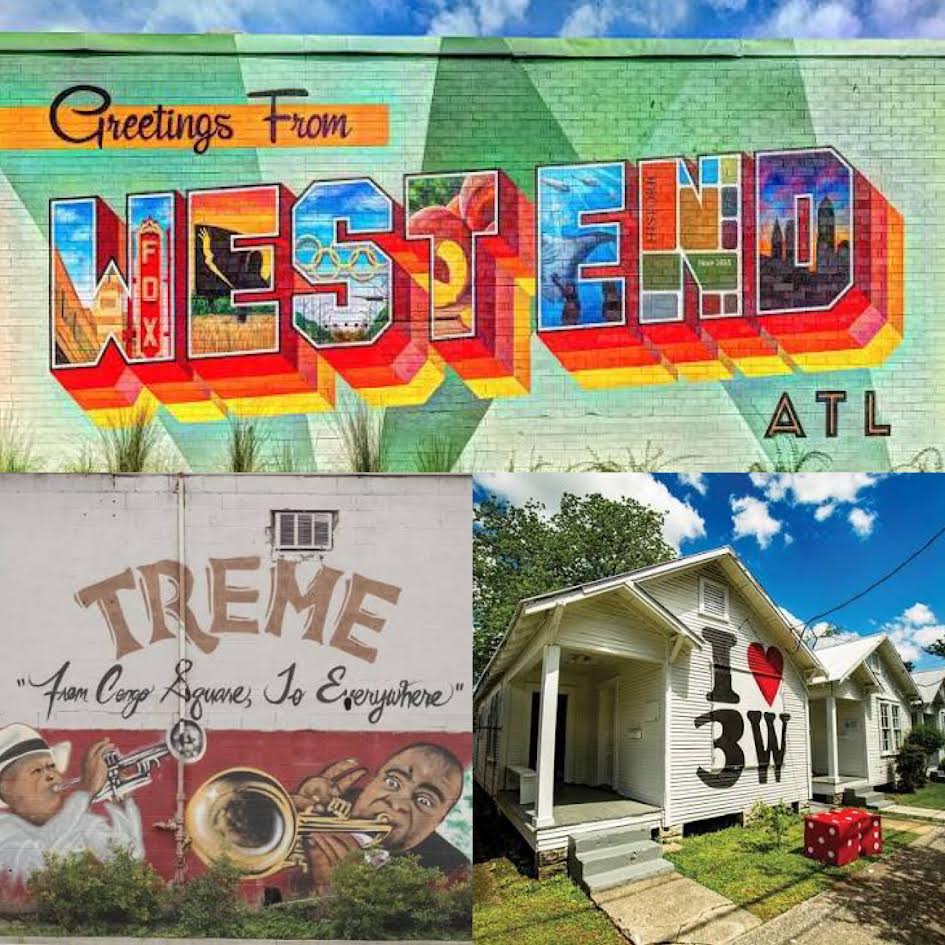
Few institutions have carried the weight of controversy in American housing like the homeowners’ association (HOA). For much of the 20th century, HOAs were weaponized as a tool of institutional racism restricting African Americans from buying into White neighborhoods through deed covenants, enforcing exclusionary zoning, and serving as gatekeepers of generational wealth accumulation. The very mechanism of neighborhood governance became one more way African America was told “you do not belong.” Yet history has a way of flipping its instruments. The very structural force once used to keep us out may be one of the few institutional levers available to keep us in. As gentrification and predatory development rapidly encroach upon historically African American communities from Houston’s Third Ward to Atlanta’s West End, from Washington D.C.’s Shaw to New Orleans’ Tremé, the need for institutional tools of land sovereignty grows urgent. Civic associations, while noble, often lack teeth. It may be time for African American neighborhoods to rethink the HOA, not as a relic of exclusion but as a shield of survival.
Most African American neighborhoods today rely on civic clubs or neighborhood associations. These bodies are typically voluntary, underfunded, and lack the legal authority to enforce community decisions. They can advocate to city councils, organize block cleanups, and serve as a cultural glue, but when it comes to confronting a developer with millions in capital and legal teams, they are simply outgunned. Civic associations cannot foreclose properties when owners ignore rules or dues, build substantial war chests because dues are voluntary and non-enforceable, or control property transfers when long-time residents sell. This means that even when a neighborhood is organized and has strong social cohesion, it remains structurally weak in the face of predatory real estate activity. Developers exploit this weakness buying distressed properties, lobbying city officials for zoning changes, and rapidly altering the fabric of communities without consent.
Unlike civic clubs, HOAs are legally binding entities. When properly designed and governed, they give communities leverage that is otherwise impossible. The ability to foreclose ensures compliance and funding. If dues are unpaid, the HOA has a mechanism to protect the community’s collective interests. Mandatory dues create a stable revenue stream. A community with 200 homes each contributing $500 annually generates $100,000. Over five years, that becomes half a million which is enough to hire lawyers, challenge city zoning, and even purchase properties outright. This institutional capital transforms neighborhoods from reactive to proactive. HOAs can also insert right-of-first-refusal clauses, allowing them to buy homes before they go to outside investors, preventing predatory acquisitions and allowing neighborhoods to decide who their neighbors will be and what developments fit the collective vision. Rules around property maintenance, density, and usage can prevent developers from converting single-family homes into high-turnover rentals or Airbnbs. These standards are not just about aesthetics they are about protecting neighborhood identity and safety.
To advocate HOAs for African American communities is not to ignore their history. For decades, HOAs were bastions of exclusion. They operated in tandem with banks, appraisers, and city planners to enforce segregation. Deed restrictions openly barred African Americans and other minorities from ownership. Even when those covenants became unenforceable after Shelley v. Kraemer (1948), HOAs found new ways to enforce segregation through indirect mechanisms. But history also shows how institutions can be repurposed. Universities once denied African Americans; now HBCUs are among our strongest institutions. Banks once denied us credit; now Black-owned banks serve as pillars of community capital. The HOA, when reimagined under African American sovereignty, can become not a wall keeping us out, but a fortress keeping us in.
Houston’s Third Ward is emblematic. A historically Black neighborhood anchored by Texas Southern University, it has been ground zero for gentrification. Developers like TPC Endeavors LLC have defied city red tags, continued illegal construction, and ignored deed restrictions designed to protect single-family character. Residents organized, called 311, attended City Council meetings but the civic tools they had were insufficient. Enforcement by the city was lax. Meanwhile, developers were renting red-tagged properties as Airbnbs. Imagine if Third Ward had a robust HOA structure. With mandatory dues, it could hire legal counsel to file injunctions. With right-of-first-refusal, it could have purchased properties neighbors wished to sell, keeping them out of speculative hands. With codified rules, it could have legally enforced single-family restrictions, protecting housing stock for families rather than transient rentals. Instead, the community is stuck fighting asymmetrical battles, people with civic will against people with institutional power. The outcome, absent intervention, is predictable: displacement.
At its core, the case for African American HOAs is about institutional economics, the accumulation of collective capital to withstand systemic pressures. The median net worth of White households is nearly eight times that of Black households. Real estate is the largest component of wealth for African American families. When neighborhoods gentrify, this wealth is not preserved; it is extracted. HOAs serve as protectors of that capital by stabilizing community land values under African American governance. They enable neighborhoods to pool financial and legal resources to resist external exploitation. They foster long-term family residence, giving children environments with consistent community standards, building social and cultural capital alongside financial wealth. HOAs also enable neighborhoods to act like firms: they can engage developers on their own terms, negotiate concessions, or even partner in development deals that align with community interests.
Of course, HOAs are not a panacea. Poorly run HOAs can become abusive or corrupt, mirroring the very forces they are meant to resist. Mandatory payments can strain low-income residents, though creative structures such as sliding scales, subsidies, or partnerships with HBCUs and community foundations can mitigate this. Forming an HOA requires legal expertise and state recognition, which many African American communities lack immediate access to, though partnerships with HBCU law schools could be a solution. Neighborhoods may resist HOAs due to historical mistrust or fear of bureaucracy. Education campaigns and transparent governance are crucial.
The HBCU ecosystem has a unique role to play. Many HBCUs are surrounded by historically Black neighborhoods now under siege from gentrification. These institutions could provide the technical, legal, and financial scaffolding for community HOAs. Law schools could draft HOA charters and litigate against predatory developers. Business schools could train HOA boards in financial management. Architecture and urban planning programs could design neighborhood development standards. University endowments could provide seed capital to help HOAs acquire distressed properties. If HBCUs become the backbone of HOA development, they transform from being passive neighbors to active protectors of Black land sovereignty.
Imagine a network of African American HOAs across the country, each tied to local HBCUs, each building collective war chests, each controlling neighborhood development. Together, they form a patchwork of institutional sovereignty one block at a time, one neighborhood at a time. This is not just about resisting gentrification. It is about reclaiming agency over land, the foundational asset of all wealth and power. Without land sovereignty, African American communities will forever be tenants in someone else’s design. With HOAs, we have the chance to rewrite that story.
While HOAs have been historically tainted by their role in exclusion, African America must confront a hard truth: institutional problems require institutional solutions. Civic will, without institutional teeth, cannot withstand predatory capital. HOAs, properly structured and governed, give our neighborhoods enforcement power, financial capacity, and development control. Land sovereignty is not optional; it is existential. Gentrification is not just about higher rents or new coffee shops, it is about the slow erasure of African American communities from the map. If we are to remain, to build intergenerational wealth, and to strengthen our institutional power, then we must be willing to use every tool available. The HOA may have once been a weapon against us. It can now be the fortress that protects us.
Model HOA Framework for African American Communities
1. Charter Outline
A. Name and Purpose
Name: [Neighborhood Name] Community Land Trust HOA
Mission: To preserve and protect African American homeownership, stabilize property values, and foster community-driven development.
Objectives:
Protect neighborhood land from predatory acquisition and gentrification.
Maintain architectural and cultural integrity of the neighborhood.
Build collective financial resources for legal, development, and maintenance initiatives.
Empower residents with decision-making authority over neighborhood development.
B. Membership
All property owners within the HOA boundary are automatically members.
Membership is determined by the community.
Voting rights are proportional to ownership, with one vote per property.
C. Governance Structure
Board of Directors: 5–9 elected members serving staggered three-year terms.
Committees:
Finance & Investment Committee
Architectural & Community Standards Committee
Legal & Advocacy Committee
Outreach & Education Committee
Decision-making: Major decisions (property acquisition, legal action, development approvals) require a 2/3 majority vote of the board and approval by 50%+1 of voting members.
D. Covenants and Bylaws
Rules governing property use, maintenance, and modifications.
Right-of-first-refusal on property sales to maintain African American ownership and prevent predatory acquisitions.
Restrictions on commercial rental operations (e.g., short-term rentals like Airbnb) unless approved by the board.
Enforcement of community standards through fines, liens, and, if necessary, foreclosure.
2. Funding Structure
A. Mandatory Dues
Base dues calculated per household (example: $500–$1,000/year depending on neighborhood size and needs).
Sliding scale or hardship exemptions for low-income homeowners, with supplemental funding from foundations or HBCUs.
B. Special Assessments
Imposed for extraordinary needs such as legal battles, property acquisition, or infrastructure repairs.
Must be approved by majority vote of HOA members.
C. Reserve Fund / War Chest
25–30% of annual dues set aside into a reserve fund for long-term projects or emergency legal needs.
Goal: Maintain liquidity to purchase at-risk properties and fund legal actions without delay.
D. Partnerships & Grants
Collaborate with HBCUs, local Black-owned banks, and philanthropic foundations for technical and financial support.
Seek grants specifically for community land trusts, anti-gentrification initiatives, or neighborhood revitalization.
E. The HOA Investment Fund
Neighborhood Endowment: A portion of dues is invested to build a long-term community fund. This endowment can invest in local African American businesses, the stock market, or other vetted opportunities. Returns are used to subsidize senior citizens and low-income residents, provide relief during emergencies, and strengthen the HOA’s financial independence.
Emergency Fund: A dedicated reserve for disasters, legal challenges, or community emergencies.
Special Assessments: Levied for large projects (legal defense, infrastructure, property acquisition).
3. Enforcement Mechanisms
A. Fines and Liens
Fines for non-compliance with HOA rules (maintenance, property use, etc.).
Unpaid fines converted into liens that attach to the property.
B. Legal Authority
Covenants provide authority to take legal action against violators, including:
Enforcing property use restrictions
Preventing unauthorized sales or rentals
Challenging predatory development through court injunctions
C. Foreclosure
In extreme cases of non-payment or serious violations, the HOA has the right to foreclose on the property to protect collective community interests.
Requires board approval and due process, with transparency to all members.
D. Right-of-First-Refusal
The HOA can purchase homes before they are sold to external buyers.
Maintains neighborhood ownership continuity and allows control over development aligned with community goals.
4. Community Engagement and Education
Regular town halls and workshops on:
Financial literacy and collective wealth building
Understanding HOA powers and responsibilities
Recognizing predatory developers and speculative practices
Partnerships with local HBCUs to provide pro bono legal clinics, urban planning advice, and leadership development for HOA board members.
Volunteer committees for property upkeep, neighborhood beautification, and cultural preservation.
5. Oversight and Accountability
Annual audits of finances by independent accountants.
Mandatory annual reporting to members detailing:
Income and expenses
Property acquisitions
Enforcement actions taken
Development approvals or denials
Board elections conducted transparently with all members notified in advance.
6. Strategic Objectives for Anti-Gentrification
Property Acquisition Strategy
Identify at-risk properties before they are sold to outside investors.
Use reserve funds or special assessments to purchase and hold properties for resale to qualified African American buyers.
Legal Defense Fund
Maintain a portion of the war chest specifically for litigation against predatory developers and enforcement of zoning codes.
Cultural and Architectural Preservation
Set clear standards for renovations and new construction that reflect neighborhood heritage.
Ensure that new development aligns with the neighborhood’s long-term vision and identity.
Economic Empowerment
Encourage local entrepreneurship and small business ownership within the HOA’s commercial spaces.
Partner with HBCUs and Black-owned banks to provide financing, mentorship, and business support.
“If you don’t find a way to make money while you sleep, you will work until you die.” — T. Harv Eker
Consider two farmers working adjacent plots of land. The first rises before dawn every morning, tills his soil by hand, plants his seeds, and harvests his crop himself. He is disciplined, tireless, and skilled. The second farmer also works diligently, but years ago he invested in irrigation systems, acquired additional acreage, and hired capable hands to manage the daily operations. Each morning, while both men are productive, the second farmer’s land is already generating yield before he laces his boots. By harvest season, the gap between them is not a matter of effort it is a matter of systems.
Now imagine that the first farmer was legally prohibited, for generations, from owning irrigation equipment. That he was denied title to additional acreage by the institutions that financed everyone else’s expansion. That every time he accumulated enough surplus to invest in infrastructure, external forces — legal, financial, social — interrupted the accumulation. By the time those prohibitions were lifted, the second farmer’s systems had compounded across decades. His children inherited not just land, but infrastructure. The first farmer’s children inherited his work ethic, and little else.
This is not a parable about laziness or ambition. It is a precise structural description of the passive income gap that defines African American economic life in the early twenty-first century and understanding it in those terms is the prerequisite to closing it.
In the American imagination, wealth is synonymous with work. The culture celebrates grit, discipline, and the relentless pursuit of the paycheck. Yet the country’s most economically durable families rarely labor for their living in the conventional sense. Their fortunes compound quietly through investments, dividend-paying equities, rental properties, and business interests that operate independent of their daily involvement. The accumulation of such passive income streams is not merely a personal finance preference it is the mechanism through which wealth reproduces itself across generations. And according to data from the U.S. Census Bureau and the Federal Reserve, African American households are more structurally excluded from that mechanism than any other major demographic group in the country.
Only approximately seven percent of Black households report receiving passive income of any kind whether from rental properties, interest-bearing instruments, dividends, or business ownership. By comparison, roughly twenty-four percent of white households report such income. The disparity in amounts is equally stark: the median passive income for Black families barely reaches two thousand dollars annually, compared to nearly five thousand dollars for white households. These are not marginal differences. They represent a fundamental divergence in how wealth is structured and reproduced and they do not emerge from differences in financial discipline or cultural values. They emerge from history operating through institutions.
The mechanics of that history are well documented, even if their ongoing consequences are frequently underestimated. For much of the twentieth century, the institutional infrastructure of American wealth-building was explicitly closed to Black participation. Federal mortgage programs underwrote suburban homeownership for millions of white families in the postwar decades while systematically excluding Black applicants through redlining and racially restrictive covenants. The GI Bill, nominally universal, was administered through local institutions that largely denied Black veterans access to its most wealth-generating provisions, the low-interest mortgages and business loans that seeded a generation of white middle-class asset ownership. Stock brokers ignored Black neighborhoods. Community banks serving Black depositors were chronically undercapitalized and disproportionately targeted for closure. The Freedman’s Savings Bank, established specifically to channel Black economic activity into formal financial infrastructure, was mismanaged into collapse within a decade of its founding, an early and formative lesson in institutional betrayal that resonates through surveys of Black financial trust to this day.
The result of these compounding exclusions is a wealth ecosystem structurally oriented toward earned income rather than asset income. Black households are more likely to rely entirely on wages and salaries, less likely to hold inherited financial assets, and more burdened by student loan debt, a combination that severely constrains the capital available for investment in income-generating assets. Asset inequality is, in this respect, more consequential than income inequality. A household can earn a substantial salary and still possess near-zero wealth if it holds no appreciating assets. Without passive income streams, every financial obligation must be met from current earnings, leaving no margin for accumulation, no buffer against disruption, and nothing to transmit to the next generation. The passive income gap is therefore not merely a measure of present financial well-being it is a structural indicator of generational economic capacity.
Chart: Chamber of Commerce using U.S. Census Bureau’s 2019 American Community Survey
The equity markets represent the most accessible entry point into passive income for households without inherited capital. The proliferation of low-cost index funds and exchange-traded funds has dramatically lowered the technical and financial barriers to market participation. A diversified position in a broad market index fund can now be established with modest, regular contributions, and fractional share platforms have effectively eliminated the minimum capital requirements that once made meaningful market participation inaccessible for many lower- and middle-income investors. Among Black households, market participation has increased measurably in recent years, accelerated in part by the financial disruptions and digital financial education that accompanied the pandemic period. Dividend reinvestment plans which automatically direct dividend payments into additional share purchases allow even small positions to compound without requiring additional capital contributions. These are not trivial instruments. Deployed consistently over time, they are the infrastructure through which institutional endowments and old-money family offices have maintained their positions across generations. They are now, for the first time in any meaningful sense, structurally available to households without inherited wealth.
Real estate has historically functioned as the second pillar of American household wealth accumulation, and its role in the passive income gap is correspondingly significant. The Black homeownership rate stood at approximately 44 percent as recently as 2022 — a figure notably lower than it was when the Fair Housing Act was passed in 1968, reflecting not merely the legacy of discriminatory exclusion but also the continuing structural disadvantages that Black households face in mortgage markets, including higher denial rates, less favorable loan terms, and reduced access to the equity-rich suburban markets where appreciation has been most concentrated. Homeownership is not, by itself, a passive income strategy but it is the entry point through which most households access the equity necessary to finance investment property acquisition. The ownership gap is therefore a compounding disadvantage: it reduces both wealth and the capacity to generate wealth-from-wealth.
Emerging platforms have begun to partially address this barrier through fractional real estate investment vehicles that allow individuals to acquire positions in income-generating properties without the capital requirements of direct ownership. Models built around real estate investment trusts provide exposure to rental income streams at low entry thresholds. More structurally interesting are the cooperative investment models emerging in cities including Birmingham, Baltimore, and Chicago, where Black investors are pooling capital to acquire multi-family residential properties and distributing rental income proportionally among participants. These arrangements draw on a long tradition of cooperative capital formation, the rotating savings circles and community lending mechanisms that have historically served as informal substitutes for formal financial infrastructure in excluded communities and are now being formalized and scaled through digital coordination tools and legal structures designed for collective ownership. The model is neither novel nor experimental in the broader historical context; variations on it have been used by Jewish, Chinese, and Caribbean diaspora communities as mechanisms for capital accumulation in the absence of full access to mainstream financial markets. Its resurgence in African American communities reflects both necessity and strategic clarity.
Business ownership represents perhaps the most consequential pathway to passive income, particularly for businesses structured to operate without requiring the founder’s continuous direct involvement. The income generated by a well-organized business is qualitatively different from wages as it is not capped by hours worked and can, in principle, be transmitted to heirs through equity transfer. Yet Black-owned businesses face systematic barriers to the capital necessary to reach the scale at which passive ownership becomes possible. A 2021 analysis by the Brookings Institution found that Black-owned businesses were roughly half as likely to receive funding as their white-owned counterparts, and received approximately one-third as much capital even when controlling for creditworthiness. The consequence is a concentration of Black entrepreneurship at the micro-enterprise level, where businesses are structurally dependent on the founder’s labor and consequently cannot generate the passive returns that characterize institutional-scale business ownership.
Digital business models have partially disrupted this barrier. Information products like online courses, subscription content, software tools, and digital publications require relatively low startup capital and can generate recurring revenue without proportional increases in labor. The emergence of platform infrastructure for content monetization has created genuine passive income streams for creators and educators operating at modest scale. These are not transformative institutional mechanisms on their own, but they represent a meaningful point of entry for households seeking to establish income streams beyond wages, and they are increasingly being pursued with strategic intentionality by individuals embedded in broader networks of Black financial education and community investment.
The cultural dimension of financial trust cannot be analytically separated from the structural picture. Survey data consistently document lower levels of trust in financial institutions among Black Americans — a pattern that persists even after controlling for income and education levels. This distrust is not irrational. It reflects an accurate historical assessment of institutional behavior: from the collapse of the Freedman’s Bank in 1874 to the predatory lending practices that concentrated subprime mortgage products in Black neighborhoods during the 2000s housing cycle, the relationship between Black households and formal financial institutions has been characterized by recurring exploitation and exclusion. The result is that a meaningful portion of the passive income gap reflects not ignorance of investment vehicles but rational caution about the institutions through which those vehicles are accessed. Closing the gap therefore requires not only financial education but institutional reconstruction, the development of Black-owned and Black-serving financial infrastructure that can provide access to capital markets through institutions whose incentive structures are aligned with their depositors’ and investors’ interests.
Community development financial institutions, Black-owned credit unions, and the financial operations of HBCUs themselves represent the institutional layer through which this reconstruction must occur. HBCU endowments, though modest relative to their peer institutions at predominantly white universities, serve as collective investment vehicles for the institutional community — and their growth is directly linked to the capacity of these institutions to generate passive income that funds scholarships, research, and operational independence. An HBCU with a three-hundred-million-dollar endowment generating a five-percent annual return has fifteen million dollars of non-tuition, non-appropriation income available for strategic deployment. An HBCU with a thirty-million-dollar endowment has one-tenth that capacity. The endowment gap is, at the institutional level, an exact structural analog of the household passive income gap and it carries the same generational implications. Institutions that cannot generate income from assets must perpetually depend on current revenue, limiting their strategic horizon to the immediate fiscal year and rendering them structurally unable to absorb disruption or invest in long-term capacity.
The policy dimension of this problem demands a more clear-eyed analysis than it typically receives, particularly given the political environment in which African American institutions now operate. The standard progressive policy toolkit — baby bonds, expanded retirement account access, first-time homebuyer assistance — rests on a premise that is increasingly difficult to sustain: that the federal government is a reliable or even neutral partner in the project of Black wealth-building. The current political configuration has demonstrated, with considerable consistency, that federal programs nominally universal in design are administered in ways that do not correct for existing disparities. Baby bonds are instructive precisely because their limitations reveal the problem. A program that provides every child an equal account at birth does not close a gap, it freezes it. A Black child beginning life in a household with negligible net worth, in a neighborhood with depressed property values, attending an underfunded school, and likely to carry disproportionate student debt into adulthood does not need the same starting account as a white child born into inherited equity and institutional access. Equal treatment applied to unequal conditions produces unequal outcomes. That is not a reform strategy. It is a restatement of the problem in more palatable language.
The more productive analytical frame is institutional self-sufficiency where the deliberate construction of economic infrastructure that does not depend on federal goodwill for its operation. This means directing capital toward Black-owned banks and credit unions capable of underwriting mortgages and business loans within the ecosystem, rather than routing every dollar of financial activity through institutions whose risk models and lending criteria systematically disadvantage Black borrowers. It means building the capitalization of HBCU endowments and community development financial institutions to the level where they can function as genuine sources of patient capital by financing real estate development, seeding early-stage enterprises, and providing the long-term investment infrastructure that currently exists almost exclusively outside the Black institutional ecosystem. And it means pursuing, at the state and municipal level, the targeted policy interventions that remain viable where federal action has become unreliable: land trusts, community investment tax credits, procurement preferences for Black-owned firms, and regulatory frameworks that support cooperative ownership structures. The political geography of the United States still contains jurisdictions where these instruments are achievable. The strategic priority is to concentrate and coordinate their use.
The passive income gap is ultimately a structural problem with structural solutions. For African American households, the accumulation of income-generating assets has been systematically disrupted across generations by explicit policy and institutional exclusion. What has emerged is a wealth ecosystem oriented almost entirely toward labor income — economically fragile, generationally limited, and structurally disconnected from the compounding mechanisms through which durable wealth reproduces itself. Addressing this gap requires coordinated action across multiple institutional levels: household investment behavior, community capital formation, HBCU endowment strategy, Black-owned financial infrastructure, and federal policy. No single mechanism is sufficient. The challenge is to build, simultaneously, the individual financial practices and the institutional architecture through which those practices can achieve scale.
The farmers in the opening parable were not separated by work ethic. They were separated by infrastructure — by access to the systems that allow effort to compound. The task before African American institutions and households is not to work harder. It is to build the irrigation.
Final Takeaways: Actionable Steps
🔹 Step 1: Open a brokerage account (Fidelity, Vanguard, or Charles Schwab) and start investing in stocks, ETFs, or REITs. 🔹 Step 2: If possible, buy a rental property or start with REITs for real estate exposure. 🔹 Step 3: Automate savings & investments through 401(k), Roth IRA, or Robo-advisors. 🔹 Step 4: Explore low-risk passive businesses. 🔹 Step 5: Consider group investing with family or community investment clubs.
At the end of 2023, African America had asset values totaling $6.54 trillion and liability values totaling $1.55 trillion. This is an increase of $330 billion and $40 billion, respectively. Below is a breakdown of that wealth by assets and liabilities as reported by the Federal Reserve’s Distribution of Household Wealth data. African American assets amounted to 4% of U.S. Household and African American liabilities amounted to 8.3% of U.S. Household liabilities. This is a 100 basis points decline in assets from 2022 and 50 basis points decline in liabilities from 2022.
HBCU Money took a look at what exactly the African American asset portfolio entailed. African Americans are highly concentrated in two main areas, real estate and retirement accounts (pensions and 401K), respectively. These two groups comprise over 70 percent of African American assets versus only 43 percent for European Americans. Corporate equities/mutual funds and private business ownership comprise a staggering 35.3 percent of European American assets versus only 9.2 percent for African Americans, these two categories also representing African America’s lowest asset holdings.
Examining where African America puts its money and theorizing why can give us insight into strategies that can help in closing both household and institutional wealth gaps.
ASSETS
Real estate – $2.24 trillion
Definition: Real estate is defined as the land and any permanent structures, like a home, or improvements attached to the land, whether natural or man-made.
% of African America’s Assets – 34.3%
% of U.S. Household Real Estate Assets – 5.0%
4.2% increase from 2022
Consumer durable goods – $570 billion (3.6% increase from 2022)
Definition: Consumer durables, also known as durable goods, are a category of consumer goods that do not wear out quickly and therefore do not have to be purchased frequently. They are part of core retail sales data and are considered durable because they last for at least three years, as the U.S. Department of Commerce defines. Examples include large and small appliances, consumer electronics, furniture, and furnishings.
% of African America’s Assets – 8.7%
% of U.S. Household Assets – 7.2%
3.6% increase from 2022
Corporate equities and mutual fund shares – $270 billion
Definition: A stock, also known as equity, is a security that represents the ownership of a fraction of the issuing corporation. Units of stock are called “shares” which entitles the owner to a proportion of the corporation’s assets and profits equal to how much stock they own. A mutual fund is a pooled collection of assets that invests in stocks, bonds, and other securities.
% of African America’s Assets – 4.3%
% of U.S. Household Assets – 0.7%
17.4% increase from 2022
Defined benefit pension entitlements – $1.66 trillion
Definition: Defined-benefit plans provide eligible employees with guaranteed income for life when they retire. Employers guarantee a specific retirement benefit amount for each participant based on factors such as the employee’s salary and years of service.
% of African America’s Assets – 25.4%
% of U.S. Household Assets – 9.5%
3.1% increase from 2022
Defined contribution pension entitlements – $730 billion
Definition: Defined-contribution plans are funded primarily by the employee. The most common type of defined-contribution plan is a 401(k). Participants can elect to defer a portion of their gross salary via a pre-tax payroll deduction. The company may match the contribution if it chooses, up to a limit it sets.
% of African America’s Assets – 11.2%
% of U.S. Household Assets – 5.6%
21.7% increase from 2022
Private businesses – $330 billion
Definition: A private company is a firm held under private ownership. Private companies may issue stock and have shareholders, but their shares do not trade on public exchanges and are not issued through an initial public offering (IPO). As a result, private firms do not need to meet the Securities and Exchange Commission’s (SEC) strict filing requirements for public companies.1 In general, the shares of these businesses are less liquid, and their valuations are more difficult to determine.
% of African America’s Assets – 5.0%
% of U.S. Household Assets – 2.1%
5.7% decrease from 2022
Other assets – $740 billion
Definition: Alternative investments can include private equity or venture capital, hedge funds, managed futures, art and antiques, commodities, and derivatives contracts.
% of African America’s Assets – 11.3%
% of U.S. Household Assets – 2.7%
2.8% increase from 2022
LIABILITIES
Home Mortgages– $770 billion
Definition: Debt secured by either a mortgage or deed of trust on real property, such as a house and land. Foreclosure and sale of the property is a remedy available to the lender. Mortgage debt is a debt that was voluntarily incurred by the owner of the property, either for purchase of the property or at a later point, such as with a home equity line of credit.
% of African America’s Liabilities – 50.3%
% of U.S. Household Liabilities – 6.0%
1.3% increase from 2022
Consumer Credit – $710 billion
Definition: Consumer credit, or consumer debt, is personal debt taken on to purchase goods and services. Although any type of personal loan could be labeled consumer credit, the term is more often used to describe unsecured debt of smaller amounts. A credit card is one type of consumer credit in finance, but a mortgage is not considered consumer credit because it is backed with the property as collateral.
% of African America’s Liabilities – 47.7%
% of U.S. Household Liabilities – 14.8%
4.2% increase from 2022
Other Liabilities – $30 billion
Definition: For most households, liabilities will include taxes due, bills that must be paid, rent or mortgage payments, loan interest and principal due, and so on. If you are pre-paid for performing work or a service, the work owed may also be construed as a liability.
At the end of 2022, African America had asset values totaling $6.2 trillion and liability values totaling $1.5 trillion. Below is a breakdown of those by wealth component by assets and liabilities as reported by the Federal Reserve’s Distribution of Household Wealth data. African American assets amounted to 5% of U.S. Household assets and African American liabilities amounted to 8.8% of U.S. Household liabilities.
HBCU Money took a look at what exactly the African American asset portfolio entailed. African Americans are highly concentrated in two main areas, real estate and retirement accounts (pensions and 401K), respectively. These two groups comprise almost 70 percent of African American assets versus only 43 percent for European Americans. Corporate equities/mutual funds and private business ownership comprise a staggering 35.1 percent of European American assets versus only 9.6 percent for African Americans, these two categories also representing African America’s lowest asset holdings.
Examining where African America puts its money and theorizing why can give us insight into strategies that can help in closing both household and institutional wealth gaps.
ASSETS
Real estate – $2.15 trillion
Definition: Real estate is defined as the land and any permanent structures, like a home, or improvements attached to the land, whether natural or man-made.
% of African America’s Assets – 33.1%
% of U.S. Household Real Estate Assets – 6.1%
10 Year % Growth – 187%
Consumer durable goods – $550 billion
Definition: Consumer durables, also known as durable goods, are a category of consumer goods that do not wear out quickly and therefore do not have to be purchased frequently. They are part of core retail sales data and are considered durable because they last for at least three years, as the U.S. Department of Commerce defines. Examples include large and small appliances, consumer electronics, furniture, and furnishings.
% of African America’s Assets – 7.2%
% of U.S. Household Assets – 7.3%
10 Year % Growth – 81%
Corporate equities and mutual fund shares – $270 billion
Definition: A stock, also known as equity, is a security that represents the ownership of a fraction of the issuing corporation. Units of stock are called “shares” which entitles the owner to a proportion of the corporation’s assets and profits equal to how much stock they own. A mutual fund is a pooled collection of assets that invests in stocks, bonds, and other securities.
% of African America’s Assets – 4.9%
% of U.S. Household Assets – 1.1%
10 Year % Growth – 90%
Defined benefit pension entitlements – $1.57 trillion
Definition: Defined-benefit plans provide eligible employees with guaranteed income for life when they retire. Employers guarantee a specific retirement benefit amount for each participant based on factors such as the employee’s salary and years of service.
% of African America’s Assets – 24.7%
% of U.S. Household Assets – 10.5%
10 Year % Growth – 51%
Defined contribution pension entitlements – $600 billion
Definition: Defined-contribution plans are funded primarily by the employee. The most common type of defined-contribution plan is a 401(k). Participants can elect to defer a portion of their gross salary via a pre-tax payroll deduction. The company may match the contribution if it chooses, up to a limit it sets.
% of African America’s Assets – 11.8%
% of U.S. Household Assets – 8.0%
10 Year % Growth – 163%
Private businesses – $350 billion
Definition: A private company is a firm held under private ownership. Private companies may issue stock and have shareholders, but their shares do not trade on public exchanges and are not issued through an initial public offering (IPO). As a result, private firms do not need to meet the Securities and Exchange Commission’s (SEC) strict filing requirements for public companies.1 In general, the shares of these businesses are less liquid, and their valuations are more difficult to determine.
% of African America’s Assets – 4.7%
% of U.S. Household Assets – 2.2%
10 Year % Growth – 106%
Other assets – $700 billion
Definition: Alternative investments can include private equity or venture capital, hedge funds, managed futures, art and antiques, commodities, and derivatives contracts.
% of African America’s Assets – 13.6%
% of U.S. Household Assets – 4.2%
10 Year % Growth – 136%
LIABILITIES
Home Mortgages– $770 billion
Definition: Debt secured by either a mortgage or deed of trust on real property, such as a house and land. Foreclosure and sale of the property is a remedy available to the lender. Mortgage debt is a debt that was voluntarily incurred by the owner of the property, either for purchase of the property or at a later point, such as with a home equity line of credit.
% of African America’s Liabilities – 56.1%
% of U.S. Household Liabilities – 7.2%
10 Year % Growth – 53.3%
Consumer Credit – $710 billion
Definition: Consumer credit, or consumer debt, is personal debt taken on to purchase goods and services. Although any type of personal loan could be labeled consumer credit, the term is more often used to describe unsecured debt of smaller amounts. A credit card is one type of consumer credit in finance, but a mortgage is not considered consumer credit because it is backed with the property as collateral.
% of African America’s Liabilities – 42.1%
% of U.S. Household Liabilities – 14.1%
10 Year % Growth – 91.7%
Other Liabilities – $30 billion
Definition: For most households, liabilities will include taxes due, bills that must be paid, rent or mortgage payments, loan interest and principal due, and so on. If you are pre-paid for performing work or a service, the work owed may also be construed as a liability.




 HBCU Money