
Tag Archives: black families

The Lack Of Marriage Is Holding Back African American Wealth – And How HBCUs Can Help

“Paradise is one’s own place, One’s own people, One’s own world, Knowing and known. Perhaps even Loving and loved.” – Octavia Butler
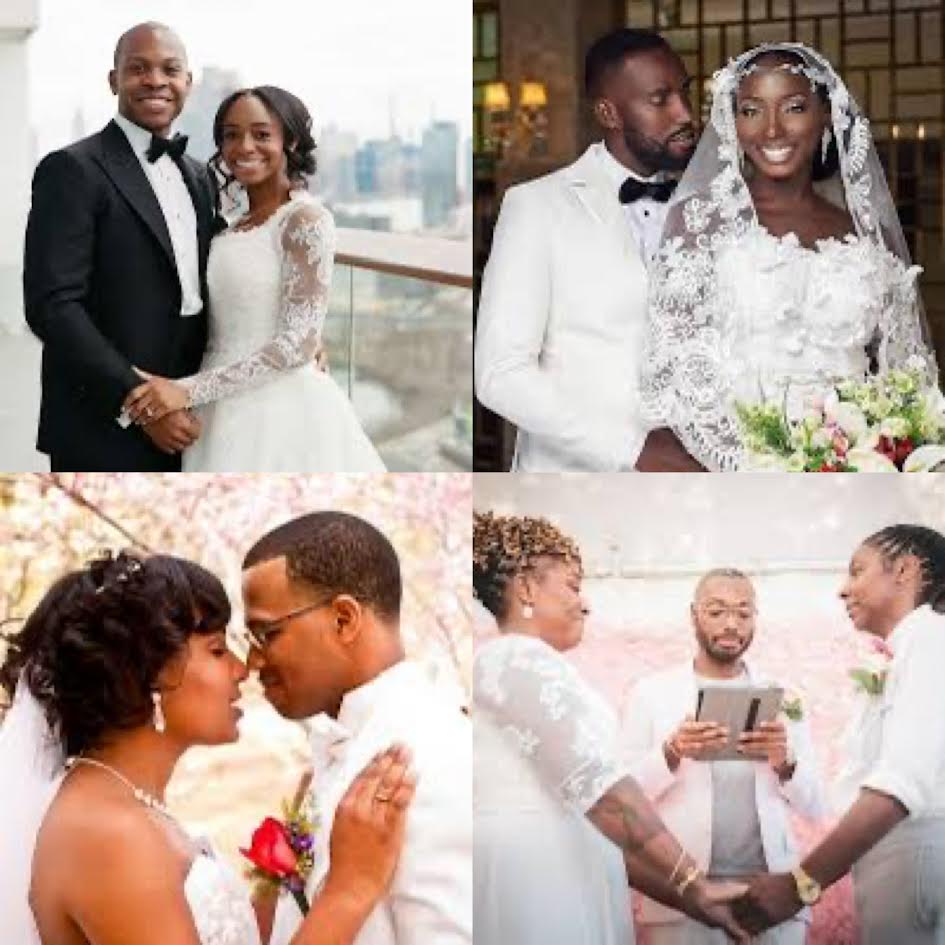
The declining marriage rates among African Americans are increasingly recognized as a significant factor holding back wealth accumulation within the community. This trend has profound implications for economic stability and intergenerational wealth transfer. Understanding the connection between marriage and wealth, along with relevant statistics, sheds light on this critical issue.

Married couples generally experience greater financial stability than single individuals. According to the U.S. Census Bureau, married couples tend to have higher median household incomes. In 2021, the median household income for married couples was approximately $100,000, compared to about $60,000 for single-parent households, which disproportionately include African American families.

Research has shown that marriage contributes significantly to wealth accumulation. A study by the Institute for Family Studies found that households headed by married couples have about three to four times the wealth of those headed by single individuals. Specifically, Black married couples had a median net worth of $131,000 in 2019, compared to only $29,000 for Black single individuals. This disparity highlights the financial advantages of marriage in building wealth.

From an economic development perspective, marriage plays a crucial role in the transfer of wealth between generations. Households with married parents are better positioned to pass down assets. A report from the Federal Reserve in 2019 indicated that only 45% of Black households had any wealth to pass on, compared to 70% of white households. The lack of marriage in the African American community limits opportunities for families to create and sustain intergenerational wealth.

It also has acute impact on social development within the African American community. Marriage can provide emotional and social stability, which is vital for sound financial decision-making. Couples often collaborate on budgeting, saving, and investing, leading to better financial outcomes. According to a Pew Research Center study, married couples are more likely to engage in long-term financial planning, further enhancing their wealth-building capacity.

The decline in marriage rates among African Americans is linked to systemic issues, including economic inequality, high incarceration rates, and historical trauma. The National Center for Family & Marriage Research reports that the marriage rate for African Americans has dropped significantly over the past few decades, from 60% in the 1960s to just 29% in 2021. Addressing these systemic barriers is essential for promoting stable relationships and supporting marriage as a pathway to wealth.

Cultural perceptions around marriage also play a role. While many African Americans value family and community, there may be less emphasis on traditional marriage structures. However, promoting awareness of the economic benefits of marriage within the community could encourage individuals to consider its advantages for wealth accumulation and stability.

Ways HBCUs Can Help Promote Black Marriage

HBCUs can play a pivotal role in promoting marriage within the African American community by implementing several strategies:

  • Educational Programs: HBCUs can offer workshops and seminars focused on relationship skills, financial literacy, and the benefits of marriage. By educating students on effective communication, conflict resolution, and financial planning, these programs can foster healthier relationships.
  • Mentorship and Counseling: Establishing mentorship programs that connect students with African American married couples can provide positive role models. Counseling services that focus on relationship dynamics and conflict resolution can also support students in building strong partnerships.
  • Community Engagement: HBCUs can organize community events that celebrate marriage and family life, encouraging students to engage with positive narratives around marriage. These events can include discussions, panels, and social activities that promote the value of committed relationships.
  • Collaborative Research: HBCUs can engage in research initiatives that explore the factors influencing marriage rates in the African American community. Understanding these dynamics can inform policies and programs aimed at supporting healthy relationships.
  • Scholarships and Incentives: Creating scholarship programs for students who participate in marriage enrichment programs can incentivize students to invest in their relationships while also promoting the value of African American marriage within the community.
  • Marriage Endowments: HBCU alumni can partner with the UNCF and Thurgood Marshall Fund to create an endowment that provides head start capital for African American marriages among their alumni. This head start capital can be disbursed at once or over a set number of years ensuring that couples get off to a financially stable start.

The decline in marriage rates among African Americans poses significant challenges to wealth accumulation and economic stability. By addressing the underlying issues and promoting the benefits of marriage, HBCUs can play a crucial role in fostering healthy relationships within the community. Implementing educational programs, mentorship opportunities, and community engagement initiatives can help strengthen marriage as a pathway to wealth and empower future generations to build a more financially secure future.

There is no African American community without the African American family and there is no African American family without African American marriage. At the very center of anything we discuss must be the institutional stabilization of the African American family and therefore African American marriages and partnerships. Right now the foundation of community and institution building is in crisis with no real way to stem the tide of the crisis. Building in more institutional support services for mental, physical, and nutritional health are just a few of the things needed along with financial stability programs would go a long way to the stability of African American marriage and partnerships. Generational wealth or generational poverty is on the line and great sacrifice must be made if we want the former and not more of the latter.

Love It Or Hate It: African American Education Needs More Private Schools

If you want a good education, go to private schools. If you can’t afford it, tough luck. You can go to the public school. – Paul LePage

The education landscape for African American students has long been marked by systemic challenges, including underfunded public schools and limited access to quality resources. As parents, educators, and community leaders seek solutions to these persistent issues, the establishment of more private schools specifically serving African American communities emerges as a potential avenue for improving educational outcomes. These institutions can provide tailored educational experiences that meet the unique needs of African American students, while also creating a stronger pipeline to historically Black colleges and universities (HBCUs).

If European Americans wanted to have quality public education for ALL Americans by now, we would have it. They do not and we can not afford to wait in hopes of appealing to a moral consciousness for it to happen. We must also accept that even it were to happen, the curriculum still would leave us out of the shaping and decision making process as it always has. Then we are surprised when our kids go through K-12 and know little to nothing about the contributions of African Americans and the African Diaspora upon finishing. There was slavery and then Martin Luther King, Jr. as it pertains to the “history” of African Americans in the United States in the current school systems for which we are dependent upon to educate our community and if some textbooks have their way slavery will soon be erased from the literature. In the intellectual arms race happening both here in the United States and throughout the world, African American education is sinking faster than the Titanic (it took approximately five minutes). The demarcation line has been crossed (long ago some would argue – desegregation) and it is time to take the offensive. African American private schools allow for African America to create its own de facto school systems where it controls the culture, curriculum, teacher quality, finances, and all of the subtleties that go into the education of our children from Early Childhood/Pre-K through 12th Grade.

In the United States, there are currently 30,492 private schools employing 529,574 teachers and educating almost 4.7 million students according to recent data by the NCES. On the public school side, there are 98,469 institutions employing 3.2 million teachers and educating 48.1 million students. For African Americans, they comprise 15 percent (7.22 million African American students) of the public school enrollment and 6 percent (423,000 African American students) of the private school enrollment. That is a national average of 18 teachers and 154 students for a ratio of 8 students per 1 teacher per private institution versus an average 33 teachers and 489 students for a ratio of 15 students per 1 teacher per public institution. Despite this reality, African American participation is second lowest among all groups just ahead of Hispanics, 50 percent behind European Americans, and 40 percent behind Asian Americans in private school participation. Private education for Asian Americans comprises almost 15 percent of their public/private student population, while private education only comprises 6 percent of the African American public/private population.

Addressing Systemic Inequities

Public schools in predominantly African American neighborhoods often face significant funding disparities, resulting in overcrowded classrooms, outdated materials, and limited extracurricular opportunities. Private schools can offer smaller class sizes, individualized attention, and enhanced resources such as more experienced teachers, state of the art technology and facilities just to name a few. By creating more private educational options, families can access environments that better meet their children’s academic and emotional needs.

Emphasis on Cultural Relevance

Private schools that cater to African American students can incorporate culturally relevant curricula that celebrate heritage and address the unique experiences of these students. Such an approach can foster a sense of belonging and identity, helping students thrive academically and socially. By emphasizing African American history, literature, and contributions, these schools can instill cultural pride and motivation in their students.

Diverse Educational Models

The expansion of private schools can introduce diverse educational models, including Montessori, Waldorf, and project-based learning, which may better suit the learning styles of African American students. These alternatives can provide innovative teaching methods that engage students more effectively than traditional approaches.

Strengthening the Pipeline to HBCUs

A significant benefit of increased private school options is the potential to strengthen the pipeline to HBCUs. Private schools can establish partnerships with HBCUs, offering students mentorship programs, college preparatory courses, and exposure to campus life.

  1. Early College Programs: Private schools can implement early college initiatives that allow high school students to earn college credits while still in high school. This can ease the transition to higher education and increase the likelihood of enrollment in HBCUs.
  2. College Counseling: Enhanced college counseling services can guide students through the application process, focusing on HBCUs and highlighting the unique opportunities these institutions offer, including supportive environments and rich cultural experiences.
  3. Scholarship Opportunities: Private schools can work with HBCUs to create scholarship programs specifically for their graduates, ensuring financial support for students who choose to continue their education at these institutions.

Parental Choice and Empowerment

More private schools can empower parents by offering them choices in their children’s education. Many African American families seek options beyond their local public schools, and increased access to African American private institutions can enable parents to select environments that align with their educational philosophies and cultural values.

Community Investment and Leadership

Establishing private schools within African American communities can encourage local investment and leadership. The New England 8, a set of premier boarding schools in the New England region, control over $8 billion in net assets alone. There is no reason to believe that African American boarding and private schools could not emerge to enhance African American institutional asset control through their own endowments and have an acute impact on African American towns and communities. Community members can take active roles in governance and decision-making, ensuring that schools reflect the needs and aspirations of the families they serve. This involvement can strengthen community ties and promote a sense of ownership in the educational process.

While private schools are not a panacea for the challenges facing African American education, increasing their availability can provide valuable alternatives for families seeking quality educational options. By addressing systemic inequities, offering culturally relevant curricula, and empowering communities, more private schools could play a crucial role in fostering academic success, personal growth for African American students, and ultimately provides more African American institutional ownership.

How many African American private schools are there? According to Black Minds Matter’s Black-Owned Schools Directory there are approximately 140 African American private schools.

Disclosure: This article was assisted with by ChatGPT.

Would Huey & Riley Freeman Attend An HBCU?

“There is a place in God’s sun for the youth “farthest down” who has the vision, the determination, and the courage to reach it.” – Mary McLeod Bethune

It is no secret that desegregation crippled just about every African American owned institution from neighborhoods to businesses to HBCUs – and many would argue the foundational institutions of Black marriage and African American families themselves. African American institutional ownership was faced with having to compete for human capital of the very people whose interest they were built to serve and the institutional ownership that all other non-European American groups envy. In turn, our institutions experienced a mass exodus as African Americans believed that the grass was truly greener and ice colder on the Eurocentric side. Fast forward to today, many African Americans believe they live in a pseudo-meritocracy, a dystopian like post-racial world where even having African American institutions of our own is somehow un-American and participating in our own institutional spaces is a sign of being the “not quite good enough negro” as many of us attempt to impress the European American gaze. This despite other demographics firmly having their own such as Notre Dame for the European Catholics, Brandeis being a secular European Jewish institution, and of course Harvard the flagship WASP institution, so on and so on. Never mind that the majority of the HWCU/PWIs that tout “diversity” often have less than 5 percent African Americans on their campus – and the majority are often there only to play sports.

Case in point, the University of Texas who is one of the most profitable athletic program in the country has a less than 5 percent African American population on its campus. The numbers are even starker when it comes to African American males who make up less than 2 percent of overall campus population, but comprise around 70 percent of the football and basketball teams. HWCU/PWIs have shown one thing to be true, and that is they want the best and brightest of our young women and the fastest and strongest of our young men. HBCUs have been unable to compete due to misperception of inclusion and the reality of the resource/wealth gap between our communities that desegregation and the GI Bill largely caused. Many HBCUs go decades before they can raise enough funding for new facilities or scholarships. Harvard’s endowment in one year can lose more money than the amount all 100 plus HBCUs have combined and still be one of the largest higher education endowments in the world.

In an environment where higher education is getting more and more expensive, African American students who come from the group with the lowest median net worth and income in the country often make college choices based on financial needs more than most. The result, continued exodus and plummeting of African Americans choosing HBCUs due to the lack of scholarship and aid available and the ever present belief that white is right and better.. Currently, less than 10 percent of African American going to college are choosing HBCUs over HWCU/PWIs. A detriment to alumni sizes, social networks, donations, and most dire – HBCU endowments. Just increasing the 10 percent to 25 percent could stave off many of the financial woes facing HBCUs and start to bring circulation of intellectual and financial capital into African American institutions. So how can HBCUs recruit in “Woodcrest”? How do you recruit African Americans who have become immersed in non-Black communities to HBCUs? How do you recruit African Americans who are in African American communities that are impoverished and are only looking to get out? How do you recruit middle class and affluent African American families who have the financial resources African American institutions so desperately need? How do you get African Americans to care more about African American institutionalism than we do African American individualism?

Two of America’s most beloved animated characters of the past 20 years are Huey and Riley Freeman voiced by the regal and benevolent Regina King. The Boondocks first premiered in comic form in 1997 and by 2005 would find their way to television and into our hearts. Huey, the tormented revolutionary and his younger brother Riley, the wanna be thug/hustler and athlete who shows glimpses of artistic genius. Their grandfather, voiced by the late great John Witherspoon, has moved them to a predominantly European American suburb away from the Southside of Chicago’s predominantly African American community at the most formative time in their life. Grandpa Freeman is also part of the Civil Rights generation and is a friend of Dr. Martin Luther King, Jr.’s as it turned out in an episode called ‘The Return of the King’. A controversial episode, but poignant of what happens when children, in this case Riley, are removed from cultural immersion of our own community. Riley has no idea who Dr. Martin Luther King Jr. is and often refers to him as “Morgan Freeman King” in the episode. The irony should not be lost on the Morgan Freeman dig who himself believes Black History Month and being identified as African American is an insult. In another episode, this one more focused on Huey, entitled A Huey Freeman Christmas, Huey convinced his European American teacher to let him write and direct the Christmas play. Naturally, Huey being who he is makes Jesus Black and makes a very Afrocentric production that was ultimately seen by no one as parents of Huey’s European American classmates boycotted the play since their kids were not in it, appalled by its Afrocentricity, and ultimately had the teacher fired for being “irresponsible” highlighting how European Americans will put down one of their own to maintain institutional power. The school was named the J. Edgar Hoover Elementary after all, named for the notorious FBI who infiltrated, spied upon, and sought the destruction of everyone from Dr. Martin Luther King, Jr., Malcolm X, Black Panthers, and every other African American individual and institution he even remotely viewed as a threat to the European American institutional power structure.

Riley ignorant of his cultural identity, Huey militantly attempting to push his Afrocentricity into an Eurocentric institutional space, and Grandad feeling as if he has “made it” because he is able to eat cheese with The Man. This is the family you have to convince that an African American institution and space is the best place to be. There also is the influence of the community on Huey and Riley. Tom DuBois who is married to a European American woman, Uncle Ruckus who rails against all things Black – while being the darkest character on the show, Tom’s daughter Jazmine whom you are never quite sure how she identifies and that probably is the point, and countless others who throughout the show push against anything and everything that would empower African American institutionalism at all turns. In fact, there is no exposure or presence of any Black institutions on the show. The Boondocks one could argue was actually the forerunner to Blackish, but that is another article for another time. With so much pushing against Huey or Riley choosing an HBCU and their grandfather allowing them to attend an HBCU, how do we overcome such an obstacle? Is it possible? Is it even worth the energy?

The answer of course is – it is complicated. How do you win a war most of your population does not know it is in? Another part is turning every other cheek to be included and a proverbial peace that means its erasure? Those that do know they are in a war are fighting with antiquated strategies, equipment, and/or resources? HBCUs have limited resources and manpower to dedicate to recruiting. HBCUs one advantage is being an African American space, an African American institution dedicated to African American empowerment, or at least they were. Many HBCUs see making recruitment of African Americans a secondary objective in favor of more ethnic diversity – ignoring African American and Diaspora diversity as they attempt to parrot their PWI counterparts, declines in African American faculty and research geared towards African American interests becoming ever more pervasive – institutional gentrification by our own hands. In other words, many HBCUs are trying to become a watered down version of a PWI. This makes their case for recruiting even harder because of the aforementioned issues of limited resources and manpower. If a college student is going to choose a PWI versus an HBCU posing as a PWI knockoff, then usually they will go with the one who is the real thing so to speak. For those HBCUs trying to hold the line it is rough. They have to convince an African American population that does not want to live in or build African American communities, bank with African American banks, and see their ancestry as starting at slavery more than they see it internationalized with the Diaspora as Malcolm X and so many other Pan-Africanist have desperately tried to connect to little avail. That being educated by African Americans in an African American space as something valuable, worthwhile, and imperative to the African American community’s empowerment. A small task it is not.

How do we even get to students like Huey and Riley? Their geography is world’s away from any African American institution, their socialization will largely save for trips back to Chicago sparingly be within the confines of European American institutions and spaces, education will be firmly European American with a likelihood of an European American perspective on diversity being from European American majority ideology, and certainly it would be remiss to say that neither of their possible love interest are African American girls. Jazmine, the daughter of Tom and Sara DuBois, who is biracial and fits the cultural aptitude that often comes with those who have African American fathers and European American mothers where the mother drives the cultural nourishment and almost certainly are reared with an anti-Afrocentric value system. Riley’s probable love interest that is Cindy McPhearson, an European American girl, who shares a lot of the same interest and often similar toxic behaviors as Riley. One could argue they make even more sense should it play out than Huey and Jazmine from a qualitative level. All which was described, virtually none of it sits within an African American space or possibility. Yet, these are exactly the African American students you could argue we are in large part trying to recruit to HBCUs. This is the group that you need more than any other if you want to increase the African American rate choosing HBCUs to increase from 10 percent to 25 percent.

If African Americans are going to continue to not be proactive in the development of African American communities and empowerment of African American marriage and families then this entire conversation maybe for naught within a few generations as we will have self-gentrified ourselves out of existence. The question of how we get our talents and resources to prioritize the building of new African American institutions, supporting of existing African American institutions, and the empowering of all of our African American institutions is the central question for our survivability and furthermore our success as a people.