Category Archives: Uncategorized

Charlamagne Tha God & Jemele Hill: The Debate They Both Got Right and Wrong

“If you don’t own anything, you don’t have any power.” — Dr. Claud Anderson

When Charlamagne Tha God proclaimed, “Wake your ass up and get to trade school!” after NVIDIA’s CEO Jensen Huang suggested that the next wave of American millionaires will come from plumbers and electricians, he was not simply shouting into the void. He was echoing a national frustration, one rooted in the rising irrelevance of a degree-driven economy that no longer guarantees stability or wealth. Student debt has grown into a generational shackle, corporate loyalty is dead, and a working class once promised a middle-class life for earning a degree has found itself boxed out of the very prosperity it was told to chase. Charlamagne’s message resonated because trades feel like a lifeboat in an economy where white-collar work has become overcrowded, uncertain, and increasingly automated. But Jemele Hill’s response, “There’s nothing wrong with getting a trade, but the people in the billionaire and millionaire class aren’t sending their kids to trade schools” was the kind of truth that punctures illusions. She was not critiquing the trades; she was critiquing the belief that skill, in isolation from ownership, can produce power.

Her point hits harder within African America because our community has historically been guided into labor paths whether trade or degree that position us as workers within someone else’s institutions. It is not a coincidence. As HBCU Money examined in “Washington Was The Horse And DuBois Was The Cart”, the historical tension between industrial education and classical higher learning was never about choosing one or the other. It was about sequencing. Booker T. Washington understood that African America first needed an economic base, a foundation of labor mastery and enterprise capacity. W.E.B. DuBois emphasized intellectual development and leadership cultivation. But Washington was right about one thing: without an economic foundation, intellectual prowess has no institutional home. And without institutional homes, neither the trade nor the degree can produce freedom. African America today is suffering because we abandoned Washington’s base-building and misinterpreted DuBois’s talent development as permission to serve institutions built by others.

Charlamagne’s trade-school enthusiasm fits neatly into Washington’s horse, the practical skill that generates economic usefulness. But Hill’s critique reflects DuBois’s cart understanding how society actually distributes power. The mistake is that neither Washington nor DuBois ever argued that skill alone, or schooling alone, was enough. Both ultimately pointed toward institutional ownership. Neither wanted African Americans to remain permanently in the labor class. The trades were supposed to evolve into construction companies, electrical firms, cooperatives, and land-based enterprises. The degrees were supposed to evolve into banks, research centers, hospitals, and political institutions. What we actually did was pursue skills and credentials not power. We mistook competence for control.

This is why the trades-versus-degrees debate is meaningless without ownership. Becoming a plumber or an electrician provides income, but not institutional leverage. Becoming a lawyer or an accountant provides upward mobility, but not institutional control. A community with thousands of tradespeople and thousands of degreed professionals but without banks, construction firms, land ownership, hospitals, newspapers, media companies, sovereign endowments, or venture capital funds is still a community of laborers no matter how educated or skilled.

This structural truth becomes even clearer when viewed through the lens of how the wealthiest Americans use education. HBCU Money’s analysis, “Does Graduate School Matter? America’s 100 Wealthiest: 44 Percent Have Graduate Degrees”, observes that while nearly half of America’s wealthiest individuals do hold graduate degrees, the degrees themselves are not the source of wealth. They are tools of amplification. They work because the individuals earning them already have ownership pathways through family offices, endowments, corporations, foundations, and networks that translate education into power. Graduate school matters when you have an institution to run. It matters far less when your degree leads you into institutions owned by others.

African American graduates rarely inherit institutions; they inherit responsibility to institutions that do not belong to them. So the degree becomes a ladder into someone else’s building. And trades, stripped of the communal ownership networks they once fed, become a ladder into someone else’s factory, subcontracting chain, or municipal maintenance operation. We are always climbing into structures that someone else owns.

This cycle was not always our trajectory. The tragedy is that HBCUs once created institutional ecosystems where skill and knowledge were used to build African American economic capacity—not merely transfer it outward. As HBCU Money argued in “HBCU Construction: Revisiting Work-Study Trade Training”, many HBCUs historically operated construction, carpentry, and trade programs that literally built the campuses themselves. Students learned trades while constructing residence halls, dining facilities, barns, academic buildings, and infrastructure that the institution would own for generations. That model kept money circulating internally, built hard assets, created institutional wealth, and established capacity for African American contracting firms. It produced not just skilled laborers it produced apprentices, foremen, entrepreneurs, and business owners. It produced Washington’s economic foundation.

The abandonment of these models created a void. Trades became disconnected from institutional development. Degrees became pathways to external employment. And HBCUs which once trained students to build institutions were transformed into pipelines feeding corporate America and federal agencies that rarely reinvest into African American institutions at scale. This is why the trade-school-versus-college debate is hollow. Both are simply skill paths. Without ownership, both lead to dependence.

Charlamagne’s sense of urgency comes from watching African American millennials and Gen Z face an economy with fewer footholds than their parents had. But urgency alone cannot produce strategy. Hill, consciously or unconsciously, pointed out that the wealthy understand something we have not fully grasped: the ultimate purpose of skill, whether manual or intellectual, is to strengthen one’s own institutional ecosystem not someone else’s. The wealthy do not send their children to college to find jobs; they send them to college to learn to oversee family enterprises, influence policy, govern philanthropic endowments, and maintain social capital networks. A wealthy family’s electrician child does not go into electrical maintenance he goes into managing the electrical firm the family owns.

This is the distinction African America must confront. We keep choosing roles instead of building infrastructure. We choose jobs. We do not choose institutions. We chase wages. We do not chase ownership. This is not because African Americans lack talent or ambition. It is because integration disconnected African America from its economic development logic. In the push to integrate into white institutions, we abandoned the very institutions that anchored our communities—banks, hospitals, insurance companies, manufacturing cooperatives, and HBCU-based work-study and trade ecosystems.

The future requires rebuilding a Washington-first, DuBois-second model. The horse that is the economic base must return. The cart that is the intellectual class must attach to institutions that the community owns. Trades should feed African American contracting firms, electrical cooperatives, and infrastructure companies that service Black communities and employ Black workers. Degrees should feed African American financial institutions, research centers, HBCU endowments, political think tanks, and venture funds. Every skill, trade, or degree must be tied to institutional expansion.

Otherwise, we will continue mistaking income for empowerment, education for sovereignty, and representation for ownership. Trade or degree, individual success means little when the community remains institutionally dependent. Wealth that dies with individuals is not power; it is a temporary advantage. Power is continuity. Power is structure. Power is ownership.

The choice before African America is not between trade and degree. It is between labor and ownership. No skill, not plumbing, not engineering, not medicine, not law creates power without institutions. We are not lacking talented individuals; we are lacking the institutional architecture that turns talent into sovereignty.

Charlamagne spoke to survival. Hill spoke to structure. Washington spoke to foundation. DuBois spoke to leadership. The synthesis of all four is the path forward. Without institutions, African America will always remain the labor in someone else’s empire even when the labor is highly paid, well-trained, and excellently credentialed. Only ownership transforms skill into power, and without rebuilding our institutional ecosystem, we will continue to debate trades and degrees while owning neither the companies nor the universities.

Ownership is the only path. Without it, neither the horse nor the cart will ever move.

Disclaimer: This article was assisted by ChatGPT.

From Exclusion to Empowerment: How HOAs Can Protect Black Neighborhoods

“Revolution is based on land. Land is the basis of all independence. Land is the basis of freedom, justice, and equality.” – Malcolm X 
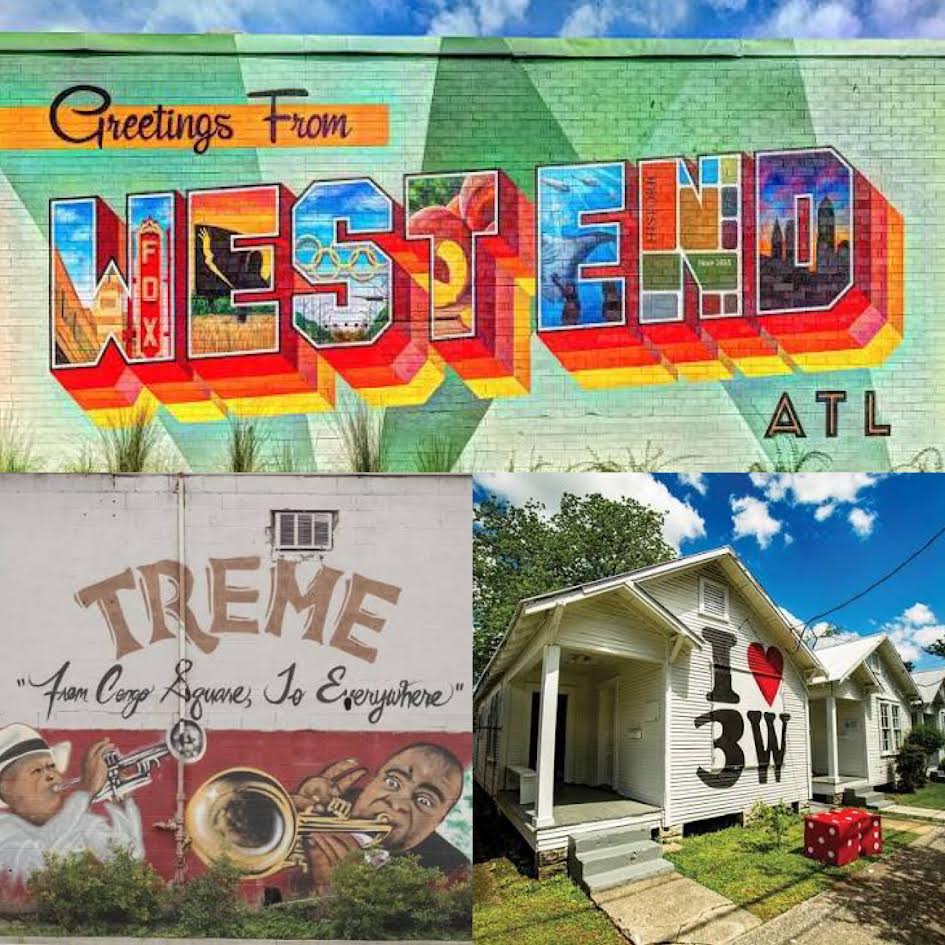
Few institutions have carried the weight of controversy in American housing like the homeowners’ association (HOA). For much of the 20th century, HOAs were weaponized as a tool of institutional racism restricting African Americans from buying into White neighborhoods through deed covenants, enforcing exclusionary zoning, and serving as gatekeepers of generational wealth accumulation. The very mechanism of neighborhood governance became one more way African America was told “you do not belong.” Yet history has a way of flipping its instruments. The very structural force once used to keep us out may be one of the few institutional levers available to keep us in. As gentrification and predatory development rapidly encroach upon historically African American communities from Houston’s Third Ward to Atlanta’s West End, from Washington D.C.’s Shaw to New Orleans’ Tremé, the need for institutional tools of land sovereignty grows urgent. Civic associations, while noble, often lack teeth. It may be time for African American neighborhoods to rethink the HOA, not as a relic of exclusion but as a shield of survival.

Most African American neighborhoods today rely on civic clubs or neighborhood associations. These bodies are typically voluntary, underfunded, and lack the legal authority to enforce community decisions. They can advocate to city councils, organize block cleanups, and serve as a cultural glue, but when it comes to confronting a developer with millions in capital and legal teams, they are simply outgunned. Civic associations cannot foreclose properties when owners ignore rules or dues, build substantial war chests because dues are voluntary and non-enforceable, or control property transfers when long-time residents sell. This means that even when a neighborhood is organized and has strong social cohesion, it remains structurally weak in the face of predatory real estate activity. Developers exploit this weakness buying distressed properties, lobbying city officials for zoning changes, and rapidly altering the fabric of communities without consent.

Unlike civic clubs, HOAs are legally binding entities. When properly designed and governed, they give communities leverage that is otherwise impossible. The ability to foreclose ensures compliance and funding. If dues are unpaid, the HOA has a mechanism to protect the community’s collective interests. Mandatory dues create a stable revenue stream. A community with 200 homes each contributing $500 annually generates $100,000. Over five years, that becomes half a million which is enough to hire lawyers, challenge city zoning, and even purchase properties outright. This institutional capital transforms neighborhoods from reactive to proactive. HOAs can also insert right-of-first-refusal clauses, allowing them to buy homes before they go to outside investors, preventing predatory acquisitions and allowing neighborhoods to decide who their neighbors will be and what developments fit the collective vision. Rules around property maintenance, density, and usage can prevent developers from converting single-family homes into high-turnover rentals or Airbnbs. These standards are not just about aesthetics they are about protecting neighborhood identity and safety.

To advocate HOAs for African American communities is not to ignore their history. For decades, HOAs were bastions of exclusion. They operated in tandem with banks, appraisers, and city planners to enforce segregation. Deed restrictions openly barred African Americans and other minorities from ownership. Even when those covenants became unenforceable after Shelley v. Kraemer (1948), HOAs found new ways to enforce segregation through indirect mechanisms. But history also shows how institutions can be repurposed. Universities once denied African Americans; now HBCUs are among our strongest institutions. Banks once denied us credit; now Black-owned banks serve as pillars of community capital. The HOA, when reimagined under African American sovereignty, can become not a wall keeping us out, but a fortress keeping us in.

Houston’s Third Ward is emblematic. A historically Black neighborhood anchored by Texas Southern University, it has been ground zero for gentrification. Developers like TPC Endeavors LLC have defied city red tags, continued illegal construction, and ignored deed restrictions designed to protect single-family character. Residents organized, called 311, attended City Council meetings but the civic tools they had were insufficient. Enforcement by the city was lax. Meanwhile, developers were renting red-tagged properties as Airbnbs. Imagine if Third Ward had a robust HOA structure. With mandatory dues, it could hire legal counsel to file injunctions. With right-of-first-refusal, it could have purchased properties neighbors wished to sell, keeping them out of speculative hands. With codified rules, it could have legally enforced single-family restrictions, protecting housing stock for families rather than transient rentals. Instead, the community is stuck fighting asymmetrical battles, people with civic will against people with institutional power. The outcome, absent intervention, is predictable: displacement.

At its core, the case for African American HOAs is about institutional economics, the accumulation of collective capital to withstand systemic pressures. The median net worth of White households is nearly eight times that of Black households. Real estate is the largest component of wealth for African American families. When neighborhoods gentrify, this wealth is not preserved; it is extracted. HOAs serve as protectors of that capital by stabilizing community land values under African American governance. They enable neighborhoods to pool financial and legal resources to resist external exploitation. They foster long-term family residence, giving children environments with consistent community standards, building social and cultural capital alongside financial wealth. HOAs also enable neighborhoods to act like firms: they can engage developers on their own terms, negotiate concessions, or even partner in development deals that align with community interests.

Of course, HOAs are not a panacea. Poorly run HOAs can become abusive or corrupt, mirroring the very forces they are meant to resist. Mandatory payments can strain low-income residents, though creative structures such as sliding scales, subsidies, or partnerships with HBCUs and community foundations can mitigate this. Forming an HOA requires legal expertise and state recognition, which many African American communities lack immediate access to, though partnerships with HBCU law schools could be a solution. Neighborhoods may resist HOAs due to historical mistrust or fear of bureaucracy. Education campaigns and transparent governance are crucial.

The HBCU ecosystem has a unique role to play. Many HBCUs are surrounded by historically Black neighborhoods now under siege from gentrification. These institutions could provide the technical, legal, and financial scaffolding for community HOAs. Law schools could draft HOA charters and litigate against predatory developers. Business schools could train HOA boards in financial management. Architecture and urban planning programs could design neighborhood development standards. University endowments could provide seed capital to help HOAs acquire distressed properties. If HBCUs become the backbone of HOA development, they transform from being passive neighbors to active protectors of Black land sovereignty.

Imagine a network of African American HOAs across the country, each tied to local HBCUs, each building collective war chests, each controlling neighborhood development. Together, they form a patchwork of institutional sovereignty one block at a time, one neighborhood at a time. This is not just about resisting gentrification. It is about reclaiming agency over land, the foundational asset of all wealth and power. Without land sovereignty, African American communities will forever be tenants in someone else’s design. With HOAs, we have the chance to rewrite that story.

While HOAs have been historically tainted by their role in exclusion, African America must confront a hard truth: institutional problems require institutional solutions. Civic will, without institutional teeth, cannot withstand predatory capital. HOAs, properly structured and governed, give our neighborhoods enforcement power, financial capacity, and development control. Land sovereignty is not optional; it is existential. Gentrification is not just about higher rents or new coffee shops, it is about the slow erasure of African American communities from the map. If we are to remain, to build intergenerational wealth, and to strengthen our institutional power, then we must be willing to use every tool available. The HOA may have once been a weapon against us. It can now be the fortress that protects us.

Model HOA Framework for African American Communities


1. Charter Outline

A. Name and Purpose

  • Name: [Neighborhood Name] Community Land Trust HOA
  • Mission: To preserve and protect African American homeownership, stabilize property values, and foster community-driven development.
  • Objectives:
    1. Protect neighborhood land from predatory acquisition and gentrification.
    2. Maintain architectural and cultural integrity of the neighborhood.
    3. Build collective financial resources for legal, development, and maintenance initiatives.
    4. Empower residents with decision-making authority over neighborhood development.

B. Membership

  • All property owners within the HOA boundary are automatically members.
  • Membership is determined by the community.
  • Voting rights are proportional to ownership, with one vote per property.

C. Governance Structure

  • Board of Directors: 5–9 elected members serving staggered three-year terms.
  • Committees:
    • Finance & Investment Committee
    • Architectural & Community Standards Committee
    • Legal & Advocacy Committee
    • Outreach & Education Committee
  • Decision-making: Major decisions (property acquisition, legal action, development approvals) require a 2/3 majority vote of the board and approval by 50%+1 of voting members.

D. Covenants and Bylaws

  • Rules governing property use, maintenance, and modifications.
  • Right-of-first-refusal on property sales to maintain African American ownership and prevent predatory acquisitions.
  • Restrictions on commercial rental operations (e.g., short-term rentals like Airbnb) unless approved by the board.
  • Enforcement of community standards through fines, liens, and, if necessary, foreclosure.

2. Funding Structure

A. Mandatory Dues

  • Base dues calculated per household (example: $500–$1,000/year depending on neighborhood size and needs).
  • Sliding scale or hardship exemptions for low-income homeowners, with supplemental funding from foundations or HBCUs.

B. Special Assessments

  • Imposed for extraordinary needs such as legal battles, property acquisition, or infrastructure repairs.
  • Must be approved by majority vote of HOA members.

C. Reserve Fund / War Chest

  • 25–30% of annual dues set aside into a reserve fund for long-term projects or emergency legal needs.
  • Goal: Maintain liquidity to purchase at-risk properties and fund legal actions without delay.

D. Partnerships & Grants

  • Collaborate with HBCUs, local Black-owned banks, and philanthropic foundations for technical and financial support.
  • Seek grants specifically for community land trusts, anti-gentrification initiatives, or neighborhood revitalization.

E. The HOA Investment Fund

  • Neighborhood Endowment: A portion of dues is invested to build a long-term community fund. This endowment can invest in local African American businesses, the stock market, or other vetted opportunities. Returns are used to subsidize senior citizens and low-income residents, provide relief during emergencies, and strengthen the HOA’s financial independence.
  • Emergency Fund: A dedicated reserve for disasters, legal challenges, or community emergencies.
  • Special Assessments: Levied for large projects (legal defense, infrastructure, property acquisition).

3. Enforcement Mechanisms

A. Fines and Liens

  • Fines for non-compliance with HOA rules (maintenance, property use, etc.).
  • Unpaid fines converted into liens that attach to the property.

B. Legal Authority

  • Covenants provide authority to take legal action against violators, including:
    • Enforcing property use restrictions
    • Preventing unauthorized sales or rentals
    • Challenging predatory development through court injunctions

C. Foreclosure

  • In extreme cases of non-payment or serious violations, the HOA has the right to foreclose on the property to protect collective community interests.
  • Requires board approval and due process, with transparency to all members.

D. Right-of-First-Refusal

  • The HOA can purchase homes before they are sold to external buyers.
  • Maintains neighborhood ownership continuity and allows control over development aligned with community goals.

4. Community Engagement and Education

  • Regular town halls and workshops on:
    • Financial literacy and collective wealth building
    • Understanding HOA powers and responsibilities
    • Recognizing predatory developers and speculative practices
  • Partnerships with local HBCUs to provide pro bono legal clinics, urban planning advice, and leadership development for HOA board members.
  • Volunteer committees for property upkeep, neighborhood beautification, and cultural preservation.

5. Oversight and Accountability

  • Annual audits of finances by independent accountants.
  • Mandatory annual reporting to members detailing:
    • Income and expenses
    • Property acquisitions
    • Enforcement actions taken
    • Development approvals or denials
  • Board elections conducted transparently with all members notified in advance.

6. Strategic Objectives for Anti-Gentrification

  1. Property Acquisition Strategy
    • Identify at-risk properties before they are sold to outside investors.
    • Use reserve funds or special assessments to purchase and hold properties for resale to qualified African American buyers.
  2. Legal Defense Fund
    • Maintain a portion of the war chest specifically for litigation against predatory developers and enforcement of zoning codes.
  3. Cultural and Architectural Preservation
    • Set clear standards for renovations and new construction that reflect neighborhood heritage.
    • Ensure that new development aligns with the neighborhood’s long-term vision and identity.
  4. Economic Empowerment
    • Encourage local entrepreneurship and small business ownership within the HOA’s commercial spaces.
    • Partner with HBCUs and Black-owned banks to provide financing, mentorship, and business support.

Disclaimer: This article was assisted by ChatGPT.
The Gridiron Mirage: Debunking the NFL as the Engine of African American Wealth

“A lot of enslaved people actually made money, but they had no power.” – William Rhoden

In the annals of American mythology, few institutions occupy as outsized a symbolic role in African American economic advancement as the National Football League. It is a league awash in spectacle and saturated with the rhetoric of opportunity. “The NFL has made more African American millionaires than any other institution,” say its defenders. This refrain—recited with patriotic pride or cynical resignation—has come to function as a social truism, a talisman held up to justify the nation’s meager investments in structural equity. But like most myths, its repetition does not make it true.

This article contends that this notion is not only false but insidious. It misrepresents the scale and structure of wealth in the African American community, diverts attention from more potent engines of generational prosperity, and masks the extractive and precarious nature of professional sports as a vehicle for wealth creation. The NFL is not a wealth escalator; it is, at best, a short-lived income spurt machine for a statistical elite, and at worst, a cultural and physical treadmill leading back to zero.

Gridiron Arithmetic: The Numbers Game

The first fallacy is numerical. As of the 2023 season, there were approximately 1,696 active NFL players spread across 32 teams. Around 58% of these players identified as African American, or roughly 984 athletes. Even when one accounts for the extended rosters, practice squads, and recent retirees still living off their earnings, the figure remains marginal—perhaps a few thousand men across multiple generations.

Contrast this with sectors such as healthcare, education, government, and business. The National Black MBA Association alone counts tens of thousands of members, many of whom have built sustainable wealth through entrepreneurship, investment, or corporate ascendancy. African American doctors number over 50,000. Black-owned businesses, according to the U.S. Census Bureau, exceed 140,000 with paid employees, and millions more operate as sole proprietorships.

The American Bar Association reports over 50,000 African American attorneys. Even the public sector, often decried as slow or bureaucratic, employs hundreds of thousands of Black professionals across local, state, and federal levels. These occupations, while lacking the glamour of a touchdown, generate far more stable, scalable, and generationally transferrable wealth.

Income vs. Wealth: The Shaky Foundations of NFL Riches

To understand the illusion, one must disentangle income from wealth. Wealth is not what one earns; it is what one owns. It is the portfolio, the property, the equity stake, the passive income stream, and, perhaps most critically, the ability to transfer resources across generations. NFL players earn substantial salaries during their brief careers—an average of $2.7 million per year, though the median is closer to $860,000. But careers are short, averaging just 3.3 years.

This creates what economists call a “high burn rate, low accumulation” profile. Studies have found that 15% of NFL players file for bankruptcy within 12 years of retirement, despite millions in earnings. Others do not go bankrupt but live in quiet precarity, reduced to local celebrity gigs and motivational speaking to sustain a post-football identity. The 2022 National Bureau of Economic Research paper “Bankruptcy Rates among NFL Players with Short-Lived Income” confirms this vulnerability, showing how the lack of financial literacy, support systems, and institutional guidance leads to dissipation rather than accumulation.

Meanwhile, wealth in America is driven by ownership: of businesses, real estate, stocks, and institutions. The NFL offers none of these to the vast majority of its Black athletes. Ownership, it must be said, remains the exclusive domain of white billionaires. As of 2025, there are zero majority African American owners of NFL franchises. While the NBA has made token strides—see Michael Jordan’s brief tenure as majority owner of the Charlotte Hornets—the NFL remains rigid in its old-world capital structure.

The Plantation Paradigm: Extraction, Not Empowerment

It is hard to avoid the uncomfortable metaphor that the NFL structurally resembles a modern-day plantation. African American bodies fuel the labor force, endure the risks, suffer the injuries, and entertain the masses. White ownership, white commissioners, and white-centered media conglomerates reap the institutional profits. The league generates $18 billion in annual revenue. The average team is valued at $5 billion. And yet, the athletes, even at the apex of their earning power, remain labor, not capital.

This is not a critique of sports per se. Athletics can inspire and galvanize. But the mythologizing of football as a viable strategy for racial uplift is akin to mistaking a single rainstorm for an irrigation system. The commodification of Black excellence in a space so structurally white in ownership and control cannot plausibly be the foundation for true economic emancipation.

This is made all the more clear by examining the fates of even the most successful. Players like Vince Young, who signed a $26 million contract and ended up broke, or Warren Sapp, who earned $82 million only to file for bankruptcy, are cautionary tales. Exceptions like LeBron James, who has parlayed his brand into equity ownerships and venture capital, are held up as archetypes. But these are aberrations, not templates. And they are not NFL stories.

The Opportunity Cost of Myth-Making

Perhaps the greatest harm of the “NFL creates millionaires” myth is opportunity cost. It distorts the allocation of attention, aspiration, and investment within the African American community. While youth in other demographics are taught to pursue STEM, financial literacy, or entrepreneurship, too many African American boys are sold a lottery ticket disguised as a profession. A 2021 study by the Journal of Black Studies found that African American adolescent males are 40 times more likely to aspire to a professional sports career than to become an engineer or entrepreneur.

This has ramifications far beyond the individual. It weakens pipelines to industries that are scalable, recession-resistant, and foundational to intergenerational wealth. No serious community-wide wealth can be built on the shoulders of 53-man rosters. Nor can economic independence arise from dependency on one of the most exploitative and physically damaging professions in modern labor.

There are also societal consequences. The overrepresentation of African Americans in professional sports distorts public perception. It fosters the narrative that “Black people are doing fine” because a few are seen in Super Bowl commercials or luxury car ads. It becomes a justification for denying systemic reform, funding cutbacks to HBCUs, or underinvestment in majority-Black schools. “Why do they need help?” ask the indifferent. “They have the NFL.”

Institutional Power vs Individual Stardom

In the game of wealth, institutions win. The NFL is an institution—one whose structure benefits its owners and media affiliates. The real wealth in sports lies not in being a player but in being an owner, a broadcaster, a media rights holder, or a licensed merchandiser. It lies in being Robert Kraft, not the running back who suffers a concussion under his ownership.

African American wealth building must shift its focus toward institutions that compound, aggregate, and replicate power. HBCUs, Black-owned banks, cooperative land trusts, investment syndicates, media companies, and technology accelerators are more viable pathways to collective advancement than any draft pick. Consider that a single Black-owned private equity fund managing $500 million will produce more Black millionaires than five decades of NFL careers.

In fact, historical analogues suggest that professional exclusion led to the construction of powerful Black institutions. During segregation, African Americans built hospitals, universities, bus lines, and newspapers. These were incubators of both economic and cultural power. In today’s integrationist fantasy, too many of these have been sacrificed in favor of proximity to elite white institutions—like the NFL—that will never relinquish true control.

The Global Lens: Transnational Wealth Thinking

Moreover, the fixation on domestic sports ignores the global economic realignment. The world’s fastest-growing wealth markets are in Africa, Asia, and Latin America. Forward-thinking African Americans should be exporting services, partnering with Pan-African institutions, and investing in sovereign wealth opportunities. Yet, the “NFL as savior” narrative keeps too many tethered to a narrow, provincial idea of success.

The NFL does not build factories. It does not fund innovation. It does not seed capital. It does not provide passive income. It does not own land, develop cities, or engage in infrastructure. It sells tickets. It sells ads. It breaks bodies. It builds billion-dollar stadiums on taxpayer subsidies and pays its workers less than hedge fund interns.

Real wealth is built through scale and succession. The Black farmer who owns 1,000 acres and passes it down is more transformative than the Pro Bowler whose children inherit post-career medical bills and reality show royalties.

Toward a New Narrative: Wealth Without Injury

African American communities need new wealth myths—ones grounded in fact, finance, and future orientation. The idea that the NFL is a pinnacle of Black achievement should be retired. In its place must come narratives about investment clubs, fintech startups, regenerative agriculture, urban development, and cooperative real estate ventures.

Educational institutions and cultural gatekeepers have a responsibility here. Public school counselors, pastors, and media platforms should deglamorize the sports-to-riches narrative and illuminate more durable paths. Foundations and philanthropies should invest not in football camps, but in coding bootcamps, maker spaces, and entrepreneurship labs.

Policy must evolve, too. Tax incentives should reward community ownership and capital retention. States should support Black-owned banks the way they support stadium construction. Reparations conversations should be about equity stakes, not honorary jerseys.

The NFL is not evil. It is, however, a business. And like all businesses, it is designed to maximize returns for its investors—not to solve racial inequality. The sooner we disabuse ourselves of the myth that it is a wealth escalator, the sooner we can begin the real work of building wealth—wealth that endures beyond the roar of the crowd, the flicker of the lights, or the brevity of a three-season career.

Trading Helmets for Holdings

In conclusion, the NFL is a distraction, not a development strategy. It is a parade, not a pipeline. It is a pageant of athletic excellence exploited for institutional enrichment. And it is a cultural sedative—one that soothes legitimate anger over systemic inequality with the spectacle of a few lucky gladiators.

The real revolution will not be televised on Monday Night Football. It will be written in balance sheets, ownership ledgers, and multi-generational trusts. African Americans must trade the helmet for holdings, the franchise tag for franchise ownership, and the myth of athletic salvation for the measured, compound reality of institutional power.

That is not as thrilling as a fourth-quarter comeback. But it is the only way to win the long game.

The American Brain Drain: Could the Next Superpower Rise from U.S. Talent Exodus?

“Talent wins games, but teamwork and intelligence wins championships.” – Michael Jordan

America’s diversity leaving Ellis Island. (AI)

The 20th century bore witness to a dramatic shift in global power as the United States cemented its status as the world’s foremost superpower. A pivotal contributor to this ascent was the influx of foreign intellectual capital—most notably following World War II, when a cadre of German scientists, engineers, and thinkers were transplanted to American soil under Operation Paperclip. Today, history may be rhyming: a quiet but consequential outflow of talented Americans is underway, and it may herald the ascent of a new global power.

Paperclip’s Precedent

America’s victory in the Cold War owed much to borrowed brilliance. Operation Paperclip, a covert government initiative, spirited more than 1,600 German technologists across the Atlantic. Among them was Wernher von Braun, whose pioneering work in rocketry helped put a man on the moon. The absorption of such expertise turbocharged America’s scientific and military prowess, transforming it into an unrivalled innovator on the global stage.

This historical lesson is instructive: when knowledge migrates, power often follows. Should today’s American émigrés find fertile ground elsewhere, the implications could be similarly seismic.

Why the Exodus?

More Americans, particularly the skilled and educated, are eyeing exits. The motivations are myriad:

  1. Living Costs and Economic Pressures – Astronomical housing prices, stagnating real wages, and an eroding middle class are prompting professionals to seek prosperity elsewhere. Countries like Canada, Germany and Portugal combine affordability with opportunity.
  2. Fractured Politics – Deepening partisanship, institutional paralysis, and cultural polarization—exacerbated by the MAGA movement—have left many disillusioned with America’s trajectory.
  3. Healthcare and Wellbeing – The United States remains the only wealthy nation without universal healthcare. By contrast, expatriates praise the peace of mind afforded by European and Asian systems.
  4. Remote Work’s Liberation – The pandemic redefined where work happens. For many, the logic of staying tethered to a high-cost, high-stress American city has evaporated.
  5. Emerging Market Allure – Some are lured by dynamism abroad. Nations once considered periphery are now innovation hubs. The pull is not only economic but aspirational.

Contenders for the Crown

Which nations might inherit America’s intellectual capital—and potentially its mantle? Only a handful, those with welcoming immigration regimes and ambitious national strategies, are poised to benefit.

Canada

Long the polite alternative to its southern neighbour, Canada is quietly absorbing talent at scale. Toronto and Vancouver, buoyed by tech booms and liberal visa policies, have become sanctuaries for America’s disaffected coders, scientists, and entrepreneurs.

Germany

As the EU’s economic engine, Germany combines formidable infrastructure with a commitment to industrial leadership. Berlin’s start-up scene and Bavaria’s engineering prowess offer rich pickings for those with ambition.

Portugal

Once peripheral, Portugal now leads in lifestyle migration. The Golden Visa scheme, coupled with a burgeoning tech ecosystem in Lisbon and Porto, makes it an attractive landing spot for digital nomads and founders alike.

Australia

Far-flung but forward-looking, Australia blends quality of life with economic resilience. Melbourne and Sydney are magnets for talent, helped by pathways to permanent residency.

Singapore

The Lion City is capitalism distilled: efficient, safe, and strategically situated. Its government aggressively courts foreign expertise, and its tech, finance, and logistics sectors are world-class. Few places convert brainpower into GDP as ruthlessly.

Ghana

Perhaps the most surprising contender, Ghana has recast itself as a Pan-African beacon. Through initiatives like the “Year of Return” and incentives for diaspora entrepreneurs, it is reversing the historical brain drain. With growing tech and finance sectors and remarkable political stability, Accra may become a nucleus for Black global talent.

HBCUs Look to Africa

Among the emigrants are graduates of America’s Historically Black Colleges and Universities (HBCUs). These institutions, long ignored in the mainstream, are now exporting a new vanguard of Black intellectuals and professionals.

In nations like Ghana, Nigeria, and Rwanda, HBCU alumni are finding not only economic opportunity but also cultural affirmation. Business-friendly policies, grants of land, and dual citizenship are part of the welcome mat. Crucially, these professionals are not just seeking refuge—they are shaping the future of African innovation.

Africa’s universities and research institutions are likewise tapping into this talent pipeline. Joint ventures, think tanks, and faculty exchanges hint at a new Pan-African intellectual economy—one rooted in both heritage and ambition.

America’s Loss

What happens when a country loses its best minds?

  1. Innovation Decays – Fewer patent filings, less scientific output, and diminished R&D. The United States risks ceding supremacy in emerging fields like AI, biotech, and clean energy.
  2. Economic Hollowing – Entrepreneurs take jobs and capital with them. Venture funding flows to where start-ups congregate.
  3. Soft Power Slips – America’s influence derives not just from military might but from cultural prestige and intellectual leadership. An exodus of thinkers imperils both.
  4. Strategic Risk – Just as the U.S. turned German rocket science into military advantage, others may now do the same with American AI or biotech expertise.

Can the Tide Be Turned?

Reversing this trend requires boldness:

  • Healthcare Reform – Without universal care, the U.S. will continue to appear brutal and bizarre to its own citizens.
  • Education and Infrastructure Investment – STEM pipelines and next-gen transit systems can rekindle optimism.
  • Immigration Overhaul – Welcoming the world’s best talent, while retaining its own, should be a bipartisan imperative.
  • Depolarisation – A republic in perpetual gridlock cannot inspire confidence.

A New Centre of Gravity?

Brain drain is not new. But in an age where ideas, not armies, shape empires, its impact is profound. If America does not reckon with its internal contradictions, it may soon find that the next superpower was made in America—by Americans—somewhere else.

Disclaimer: This article was assisted by ChatGPT.

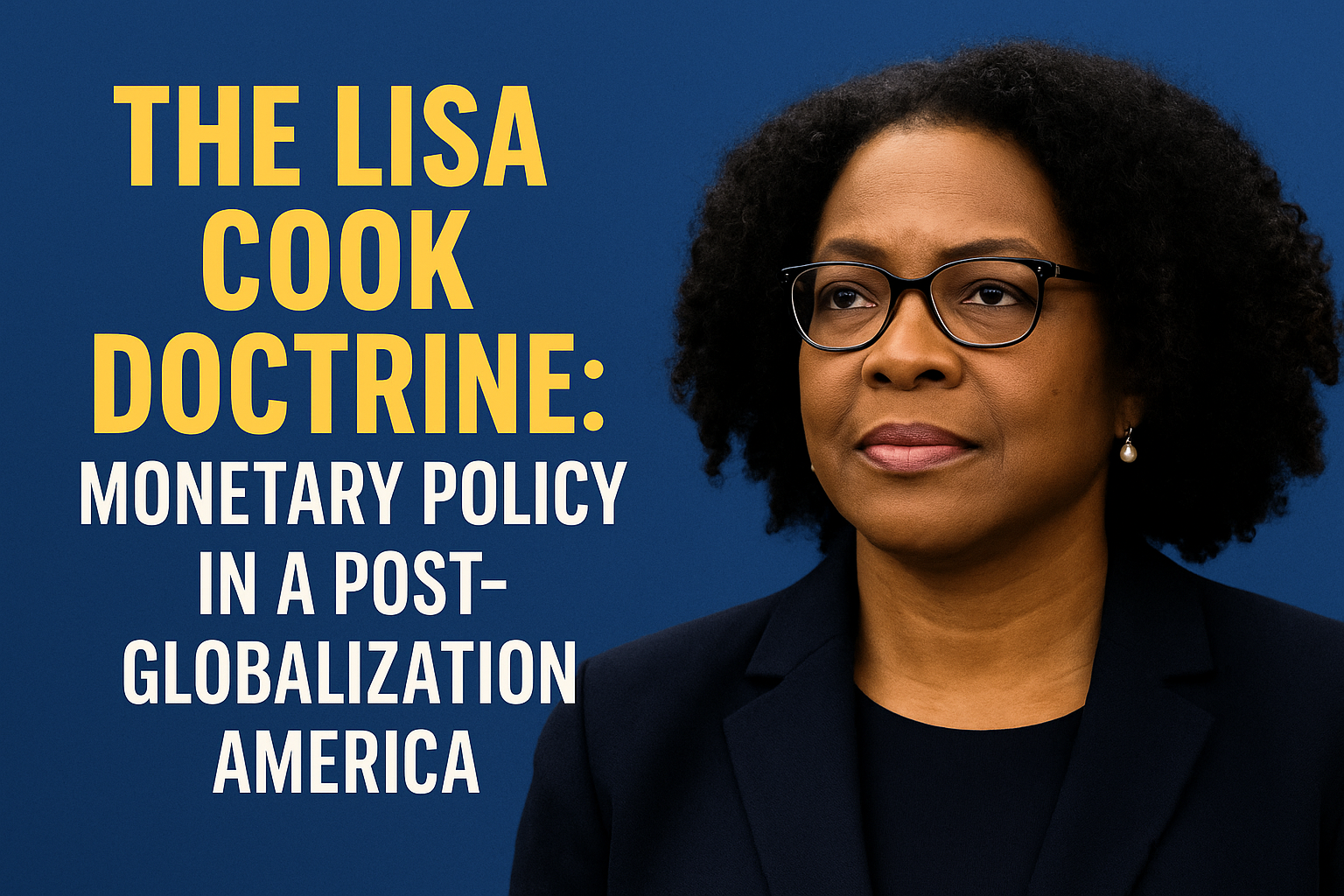
The Lisa Cook Doctrine: Monetary Policy In A Post-Globalization American

“Uncertainty is not an exception—it’s the economy’s new default. Our job isn’t to eliminate risk, but to build institutions resilient enough to thrive within it.” — Dr. Lisa D. Cook, Federal Reserve Governor & Spelman Alumna ’86

When Dr. Lisa D. Cook took the stage at the Council on Foreign Relations for the C. Peter McColough Series on International Economics, it was less a speech and more a declaration: the global economy is fragmenting, technology is compounding that fragmentation, and the Federal Reserve must remain nimble but principled in navigating this emerging disorder.

What makes Dr. Cook’s presence at the Federal Reserve so consequential is not simply her identity as the first African American woman to serve as a governor—though it is significant—but her lens. A lens forged not just through elite academic corridors, but one that dares to understand the edges of America’s economy—its marginalized labor markets, its precarious innovation system, and its uneven globalization. And if her remarks this week are any signal, Dr. Cook is actively shaping a monetary doctrine for this new epoch.

THE FEDERAL RESERVE AND ITS FRACTURED MANDATE

Dr. Cook reminded the audience that the Federal Reserve’s dual mandate—price stability and maximum employment—is being strained by new dynamics. Inflation, while down from pandemic-era peaks, remains stubbornly above target. Headline inflation is at 2.1 percent, core inflation at 2.5 percent—both still above the Fed’s 2 percent goal. On the employment side, job growth is steady, unemployment hovers at 4.2 percent, and labor force participation is not in freefall. But beneath these metrics lies disquiet.

That disquiet is coming from three fronts: trade protectionism, artificial intelligence, and long-term underinvestment in public innovation infrastructure.

In short, America’s economy is at a precipice—caught between inflation imported through tariffs and supply chain fragility, and deflationary pressures driven by automation and labor displacement.

Dr. Cook’s doctrine, it seems, is to hold the center.

TARIFFS: THE RETURN OF ECONOMIC NATIONALISM

Trade policy has re-entered the monetary discourse with a vengeance. For African American economists—and institutions like HBCUs that sit adjacent to both poor communities and international students from across the African diaspora—the discussion is no longer abstract. Dr. Cook underscored that tariffs, while politically popular, have a “nontrivial” inflationary effect.

Tariffs raise prices on imports, which businesses pass to consumers. But more importantly, they alter inflation expectations. And when inflation expectations become “unanchored,” monetary policy loses its credibility—and its traction.

This is not merely an economic concern, but a philosophical one. If the U.S. economy turns inward and abandons international trade cooperation, the financial consequences will not be equally shared. Institutions and people on the margins—like HBCUs, which rely on price-sensitive budgets and internationally sourced equipment—will be among the first to feel the tightening grip.

AI AND THE PRODUCTIVITY PARADOX

Artificial intelligence was one of the few bright spots in Dr. Cook’s analysis. While it introduces short-term labor displacement, it holds medium- to long-term potential for productivity gains, cost containment, and even inflation moderation.

Dr. Cook estimates productivity boosts from AI could range from 1 to 18 percent over the next decade. But this range, she admits, reflects the economic unknowns of the Fourth Industrial Revolution. For African American institutions, the message is twofold: AI will not wait for us to be ready, and without intentional investment in AI literacy and infrastructure, the economic benefits will bypass our communities entirely.

More than that, Dr. Cook emphasized the importance of how AI gets adopted. “It’s not job loss,” she clarified. “It’s task replacement.” The nuance matters. Black workers and businesses must advocate for job redesign, not job removal. This requires an active policy partnership between labor, government, and educational institutions.

HBCUs, with their historical ability to adapt curricula to new economic paradigms, have a window here. The time to build AI research centers, ethics think tanks, and public-private tech fellowships is not tomorrow—it is now.

UNCERTAINTY IS THE NEW NORMAL

Dr. Cook invoked former Fed Chair Ben Bernanke’s guidance: in times of heightened uncertainty, policymakers must plan for multiple scenarios. In Fed speak, this means optionality. In HBCU speak, this means resilience.

The Federal Reserve is not in a rate-cutting mood. Nor is it eager to hike. It is watching. And waiting. And watching some more. “The current stance is balanced,” Dr. Cook affirmed. “But that balance could shift in either direction.”

For HBCU leadership—especially those managing endowments, student financial aid disbursements, or capital investment strategies—this moment requires uncommon dexterity. Inflation could reaccelerate. Or the economy could cool into a stagflationary trap. The key is planning for a 2 percent interest world and a 6 percent one.

INNOVATION: TWENTY YEARS TO FRUITION

Perhaps the most poignant segment of Dr. Cook’s remarks came not from inflation or tariffs or AI—but from her reflections on innovation and time.

“It can take twenty years or more,” she noted, “from the time a student conceives an idea to the point it becomes a product on the market.”

That is a sobering timeline. And it is why public investment in basic research, early-stage science, and academic freedom matters so much. The ecosystem that birthed Silicon Valley started with small government grants, eccentric professors, and graduate students with uncertain job prospects.

For HBCUs, the lesson is urgent: waiting for federal investment in Black innovation ecosystems is no longer tenable. Institutions must pool their resources, coordinate R&D pipelines, and build their own version of the National Science Foundation if need be.

Tuskegee University had its agricultural labs. Howard had its medical research. North Carolina A&T and Prairie View have their engineering corridors. But the next phase of Black institutional development must consolidate these assets into a coordinated force, backed by investment funds, intellectual property banks, and patent commercialization arms.

THE GLOBAL BACKDROP: COORDINATION WITHOUT UNITY

On the global stage, Dr. Cook walked a careful line. She acknowledged that while central banks maintain regular dialogue—through G-7, G-20, OECD platforms—there is no grand consensus. Different countries have different mandates. The European Central Bank is laser-focused on inflation. The Bank of Japan must navigate currency volatility. The People’s Bank of China has geopolitical motives laced through its monetary calculus.

The Federal Reserve cannot outsource its decisions to global peers. But it can learn from them.

For African American policy circles and HBCU economics departments, this is a call to global literacy. We must teach our students to read the central bank minutes from Frankfurt, London, and Accra as readily as they read those from Washington.


INSTITUTIONAL IMPLICATIONS FOR HBCUs

What, then, should HBCU presidents, CFOs, and policy offices take from Dr. Cook’s remarks?

  1. Protect Purchasing Power
    Inflation—especially if prolonged—can erode real endowment spending. HBCUs must explore inflation-hedged assets, indexed tuition strategies, and energy-efficient infrastructure.
  2. Reimagine Labor Pipelines
    AI and global trade will redefine job descriptions. HBCUs must preemptively build training programs, certification pathways, and innovation hubs aligned with the labor market of 2030—not 2010.
  3. Internalize Innovation
    If innovation takes 20 years, then we must stop relying on outside institutions to fund our intellectual property journey. We must build our own innovation endowments, grant programs, and incubators.
  4. Globalize Strategically
    As America turns inward, HBCUs must look outward—toward African economies, Caribbean partnerships, and Latin American markets. Diversifying donor bases, research collaborations, and student recruitment internationally is no longer luxury. It is imperative.
  5. Endowment Defense Against Rate Risk
    Whether rates rise or fall, HBCU financial managers must adopt more active duration management strategies and review fixed income allocations accordingly.

FINAL THOUGHT: THE JUDGMENT ECONOMY

Dr. Cook’s final words were a reminder that even in an era of algorithms and quantitative models, human judgment remains central.

The economy cannot be automated. And neither can policy. The strength of institutions, including the Federal Reserve, still rests on the character and clarity of its leaders.

For HBCUs and African American institutions broadly, Dr. Cook’s rise—and her vision—should be both inspiration and instruction. It is not enough to be present in the room. One must bring a philosophy. A framework. A doctrine.

The Lisa Cook Doctrine, if there is one, is clear: do not panic, do not stagnate, and never underestimate the power of intentional innovation guided by principled policy.

In an uncertain world, that kind of leadership is the rarest form of capital.