Category Archives: Philanthropy

Have HBCUs Given Up On Recruiting African American Students?

“Change will not come if we wait for some other person or some other time. We are the ones we’ve been waiting for. We are the change that we seek.” – Barack Obama

It almost seems like an absurd question to ask, but…

in 2025, the idea that Historically Black Colleges and Universities (HBCUs) are no longer focused on recruiting African American students is not as far-fetched as it sounds. It’s a question whispered in alumni boardrooms, discussed in quiet conversations among concerned parents, and pondered in the minds of young Black students as they decide where to apply. While HBCUs remain vital institutions for the Black community, the numbers and decisions behind closed doors suggest that a shift is underway—one that demands scrutiny, reflection, and action.

In the decades since desegregation opened the doors of Predominantly White Institutions (PWIs) to Black students, the role and mission of HBCUs have been evolving. According to data from the Pew Research Center, Black student enrollment at HBCUs increased by just 15% from 1976 to 2022. Meanwhile, enrollment of students from other racial and ethnic groups rose by a staggering 117% during the same period. In 1976, Black students made up 85% of HBCU enrollment. By 2022, that number had dropped to 76%. That means nearly one in four HBCU students today is not Black. At at least five HBCUs, such as Bluefield State University, Lincoln University (MO), and West Virginia State University, White students now comprise the majority. While some view this as a testament to progress and inclusion, others see it as a troubling signal that the core mission of HBCUs, educating and empowering African American students, their families, and ultimately the social, economic, and political interest of African America, may be slipping.

Nowhere is this shift more alarming than in the enrollment of Black male students. In 1976, Black men made up 38% of students at HBCUs. By 2022, that number had fallen to just 26%. The decline is not only concerning it is an existential threat to the cultural and academic ecosystem of HBCUs, which once produced the very architects of Black political, business, and religious life. Many HBCUs now boast majority-female student bodies, a testament to the resilience and commitment of Black girls, but also a glaring reflection of systemic failure to support Black boys in education from kindergarten through college. The disappearance of Black young men from HBCU campuses must be seen for what it is: a crisis.

Some of the explanations are economic. Many HBCUs struggle with limited financial resources. According to HBCU Money’s 2024 endowment rankings, only one HBCU, Howard University, has an endowment exceeding $1 billion. Most HBCUs operate with endowments below $100 million, leaving them vulnerable to financial pressures that force them to make difficult choices. In that context, expanding recruitment to non-Black students may seem like a pragmatic strategy to increase tuition revenue, especially when those students are attracted by athletic scholarships in sports like soccer, baseball, and tennis—sports where African American participation is historically underrepresented. But when HBCUs prioritize this kind of recruitment while failing to maintain deep engagement with the Black communities that birthed them, they risk trading mission for margin.

The situation has also been shaped by the recruitment arms race. PWIs now actively recruit top Black students with full-ride scholarships, aggressive outreach, and promises of diversity and inclusion. For many Black high schoolers, a name-brand PWI with a large endowment and impressive campus facilities appears more appealing and more financially accessible than an underfunded HBCU. This has contributed to an image crisis for many HBCUs. Once the first choice for Black excellence, some HBCUs are increasingly viewed as a second-tier option, even among Black students themselves. This perception isn’t entirely fair, but it’s not without basis. Fewer in-person recruitment visits, fewer marketing campaigns that center Black identity, and an overreliance on digital outreach have all contributed to HBCUs becoming less visible in the spaces that matter most.

And yet, 2023 may have marked an inflection point. When the U.S. Supreme Court struck down race-conscious admissions at PWIs, many Black students and families began rethinking their college plans. In the aftermath of the ruling, applications to HBCUs surged. According to Inside Higher Ed, institutions such as Howard University, Florida A&M University, and North Carolina A&T reported double-digit increases in applications in 2024. These students, disillusioned by the erasure of diversity efforts at mainstream universities, began looking again to HBCUs as spaces where their identities were affirmed, not tolerated. This renewed interest is an opportunity, but also a test. Will HBCUs meet the moment?

To do so, recruitment must become intentional again not just broad-based or reactive. The recruitment of African American students, especially Black male students, needs to return to being a top institutional priority. That means more than sending emails or relying on the Common Black College Application. It means going into Black neighborhoods, hosting HBCU nights at community centers and churches, building relationships with high school counselors, and creating early K-8 pipeline programs. It means building community and cultural trust. The reality is, many Black high school students no longer have any personal connection to an HBCU. They may not know an alum. They may never have stepped on a campus. For HBCUs to thrive, they must reintroduce themselves.

And this is where alumni become vital. HBCU alumni are among the most loyal in the nation, but they are too often treated only as sources of homecoming participants. In truth, they are the best ambassadors. Empowering alumni to lead recruitment efforts, fund scholarships, and bring HBCU visibility to their local schools is an untapped strategy with enormous potential. HBCUs must support this with resources and coordination, not just hope.

The work also includes tackling affordability. More than 70% of HBCU students are Pell Grant eligible, compared to just 39% of students nationally. That means HBCUs disproportionately serve low-income, first-generation college students. For these students, even small gaps in aid can become barriers. Innovations like the reduced tuition and work-study model at Paul Quinn College show that reimagining cost structures is possible. Institutions that find ways to lower costs, provide housing and food support, and prioritize need-based aid will be the ones that retain and graduate more Black students.

At a deeper level, this conversation is not just about numbers. It’s about identity. The cultural mission of HBCUs cannot be outsourced. HBCUs are sacred institutions, repositories of Black intellectualism, resistance, and imagination. When they drift too far from that mission, they risk becoming something entirely different. Diversity should be additive, not dilutive. To serve the world, HBCUs must first continue serving the people who built them.

This doesn’t mean rejecting change. It means anchoring change in purpose. HBCUs can welcome diversity without losing their soul. But to do so, they must recommit to the hard, intentional work of finding and lifting up Black students not just those with 4.0 GPAs and high SAT scores, but also the creative thinkers, the late bloomers, the future leaders hiding in overlooked ZIP codes. These students may not be polished when they arrive, but neither were the trailblazers who founded these institutions. We owe them the same belief.

In the end, the question “Have HBCUs given up on recruiting African American students?” is not an accusation it is a call. A call to reignite the radical vision that gave birth to these schools in the first place. A call to remember that every Black student recruited to an HBCU is a declaration of faith in Black futures. A call to stop letting budget constraints dictate who gets to belong in spaces we built. And a call to Black America to advocate, to donate, to volunteer, and to remind our youth that these institutions are not relics of the past. They are sanctuaries for tomorrow. A fort of many that protects the social, economic, and political interest of African America.

In the words of Zora Neale Hurston, “There are years that ask questions and years that answer.” This year, the question has been asked. What comes next is up to all of us.


Sidebar Feature: Black Male Enrollment Crisis

  • In 2022, only 26% of HBCU students were Black men.
  • Compare that to 38% in 1976.
  • Solutions include mentorship pipelines, mental health support, re-entry programs for formerly incarcerated youth, and dedicated Black male scholarships.

HBCU Money Action Items: How You Can Help (K-8 Focused)

1. The HBCU Express: Mobile Campus Experience

Transform a retired school bus into a rolling HBCU ambassador painted in your school’s colors, filled with college memorabilia, yearbooks, and screens showing campus life. Drive it to elementary schools during lunch or after school, let kids climb aboard, sit in “college seats,” and take photos. Make it an event kids talk about for weeks. Bonus: Offer free rides to campus tours for families.

2. Saturday HBCU Youth Academies (On-Campus or Virtual)

Host monthly Saturday programs where K-8 students take classes taught by alumni and current students—coding, dance, robotics, creative writing, step team, debate. For chapters near campus, hold sessions in campus facilities with meals in the dining hall. For distant chapters (like a New York chapter for a Virginia HBCU), run virtual sessions where kids still see campus backgrounds, hear from current students, and feel connected to the institution. Hybrid models work too—virtual learning followed by an annual in-person campus visit.

3. HBCU Summer Day Camp Scholarships & Sponsorships

If the HBCU already runs summer day camps for ages 8-14, alumni chapters can fund full or partial scholarships so more K-8 students from underserved communities can attend for free. Chapters can also sponsor transportation (charter buses from their city to campus), provide camp supplies, fund field trips, or endow specific camp programs (STEM lab, arts workshop, sports clinic). For distant chapters, sponsor a group of local kids to travel to campus for the week-long experience—cover registration, travel, and meals. This removes financial barriers and gets more Black children on campus during formative years.

4. Adopt-a-School Family Weekends

Alumni chapters “adopt” local elementary or middle schools and sponsor quarterly weekend campus visits for groups of families with K-8 children. Time visits around campus events—football or basketball games, step shows, concert series, or even quiet weekends when students are just hanging out on the yard. Provide transportation, cover game tickets or event admission, and assign each family a paid student tour guide who walks them through dorms, the student center, dining halls, and academic buildings. Let kids eat campus food, sit in lecture halls, and watch college students in their natural environment. Parents see the affordability, safety, and culture while kids fall in love with the energy. End with a family cookout or pizza party where alumni share their stories and parents ask real questions about financial aid, academics, and campus life. You’re selling the parents on the investment and indoctrinating the kids with belonging. Make it so memorable that families go home and tell everyone about “their weekend at the HBCU.”

5. HBCU Junior Homecoming

Create a “Little Yard Fest” during homecoming week specifically for K-8 students—kid-friendly step show performances, band practice visits, meet-and-greets with the mascot, face painting in school colors, and a mini parade. Let children experience the joy, pride, and cultural richness of HBCU homecoming. Give every child an “Future Class of 20XX” t-shirt. When homecoming becomes their childhood memory, attending becomes their teenage dream.

6. Community-Based Tutoring & Enrichment Centers

Alumni chapters establish free after-school and weekend tutoring programs in their local communities—at libraries, community centers, churches, or alumni members’ offices. Offer homework help, test prep, reading circles, and subject-specific support led by alumni volunteers. Decorate spaces with HBCU banners, pennants, and imagery. Kids get academic support while being surrounded by HBCU pride. Current college students can join virtually to provide tutoring, creating direct peer connections across distances.

7. HBCU Family Culture Days at Museums & Theaters

Partner with local museums, science centers, theaters, or cultural institutions to sponsor “HBCU Family Days” where alumni associations buy out tickets so parents and guardians can bring their K-8 children for free. Brand it visibly with school colors, have alumni volunteers greet families wearing HBCU gear, distribute information packets about the school, and create photo opportunities. Follow up with invitations to visit campus. It positions the HBCU as an institution invested in Black family enrichment and intellectual development.

8. Live Virtual Campus Walks & Class Sit-Ins

Alumni chapters coordinate with student organizations (SGA, fraternities, sororities, academic clubs) to host live virtual campus tours where current students walk K-8 children through campus via smartphone or camera—showing dorms, the yard, dining halls, the library, labs, and student hangout spots. Go beyond static tours: arrange for interested students to virtually “sit in” on actual college classes, club meetings, or rehearsals. Let them see what college life really looks like in real-time. Schedule Q&A sessions where kids can ask current students anything. This works for any chapter regardless of geographic distance and makes the campus feel accessible and alive.

The goal: make HBCU campuses feel like second homes before kids even reach high school. When college decisions come, they won’t be choosing the unknown—they’ll be coming home.

Disclaimer: This article was assisted by ChatGPT and ClaudeAI.

When Big Gifts Cast Long Shadows: Why HBCUs Blessed by MacKenzie Scott Must Invest in the HBCUs and African American Institutions Still Left Behind

“Power grows when it circulates. If only one HBCU rises, none of us truly rise.”

MacKenzie Scott’s philanthropy has reshaped the HBCU landscape in ways that few could have imagined a decade ago. When her unrestricted gifts began landing across the sector, they offered something rare in Black institutional life: immediate liquidity, strategic freedom, and the assumption that HBCUs knew best how to use the capital given to them. Institutions like Prairie View A&M, Tuskegee, Winston-Salem State, Spelman, Morgan State, and others seized this moment to strengthen balance sheets, expand programs, retire debt, and set in motion long-term visions often delayed by years of underfunding.

But while headlines celebrated these historic gifts, another truth ran quietly beneath the surface many of the smallest, oldest, and most financially fragile HBCUs received nothing. Texas College, Voorhees, Morris, short-funded religiously affiliated colleges, and two-year HBCUs were notably absent from the list. Their exclusion was not due to a lack of mission, quality, or need. It was due to visibility, a structural inequality baked into the philanthropic landscape.

Large and mid-sized HBCUs possess communications offices, audited financial statements, national reputations, and alumni networks large enough to keep their names in circulation. Small HBCUs often have one person doing the work of an entire department, no national brand presence, and no full-time staff dedicated to donor engagement. Philanthropy at scale tends to flow to institutions already “discoverable,” which means the colleges that need the money most are often the least visible to donors like Scott. This is not a critique of her giving; she has done more for HBCUs than any private donor in a generation. Where the African American donors of consequence is a another article for another day. It is an indictment of a philanthropic system that confuses visibility with worthiness.

Unrestricted capital, however, changes power dynamics. When an HBCU receives $20 million, $40 million, or $50 million with no strings attached, it is receiving not just money but institutional autonomy. It is gaining the ability to build, to plan, to hire, to innovate, and to settle the long-deferred obligations that drain mission-driven organizations. This autonomy carries with it an important question: what responsibility does an HBCU have to the larger ecosystem when it receives this kind of power?

HBCUs often describe themselves as part of a shared lineage, a collective built from necessity and sustained by interdependence. If that is true, then institutions that receive transformative gifts have a responsibility to circulate a portion of that capital to the HBCUs that remain structurally invisible. This is not a matter of charity; it is a matter of ecosystem logic. A rising tide only lifts all boats if every institution has a boat capable of floating.

Even a small redistribution—2 to 5 percent of unrestricted gifts—would represent a meaningful shift. A $50 million gift becomes a $1–2.5 million contribution to a collective pool. A $20 million gift becomes $400,000–$1 million. A $5 million gift becomes $100,000–$250,000. Spread across the dozens of HBCUs that received Scott’s funds, such a strategy could generate $40–60 million in shared capital almost immediately. For a small HBCU with a $12 million budget, even a $500,000 infusion can stabilize operations, hire essential staff, or stave off accreditation risks. And for two-year HBCUs—critical institutions that often serve first-generation and working-class students—$250,000 can transform workforce programs or upgrade classroom technology.

When unrestricted money flows into the ecosystem, it should not be seen as belonging solely to the institution receiving it. It should be viewed as a rare chance to strengthen the entire system that sustains Black educational capacity. That means revisiting the historic practices of resource sharing that once defined HBCUs. There was a time when faculty were exchanged, when larger institutions lent administrators to smaller ones, and when collective survival was at the center of institutional strategy. Financial scarcity eroded much of that ethos over time; unrestricted capital can revive it.

The need for this kind of intra-HBCU investment becomes even more urgent when we consider how philanthropy shapes public perception. When a small HBCU faces financial distress, politicians and media often use its weakness as a reason to question the entire sector. But when a small HBCU strengthens, expands, and stabilizes, it lifts the credibility of the collective. The fate of one HBCU inevitably influences the political and philanthropic fortunes of the others. Strengthening the weakest institutions is not optional it is a strategic imperative for the strongest ones.

Shared capital also opens the door to new structures that benefit the entire ecosystem. Larger HBCUs could help create a visibility accelerator that provides grant-writing support, marketing expertise, budgeting assistance, and donor engagement tools for smaller institutions. They could establish a joint endowment fund where smaller HBCUs gain access to investment managers they could never otherwise afford. They could create emergency liquidity pools to help institutions weather short-term cash shortages that often cascade into long-term crises. They could co-sponsor research initiatives, faculty exchanges, and new academic programs at institutions that have the vision but lack the staff or funding to execute.

These are not theoretical ideas; they are practices used by well-resourced universities and nonprofit networks across the country. Major universities routinely fund pipeline schools, partner institutions, and community colleges. Corporations build up their suppliers. Regional governments pool funding to strengthen smaller municipalities. In almost every sector except the HBCU sector, power is used to build the ecosystem, not just the institution.

One of the most overlooked consequences of Scott’s gifts is the cultural message they send: large HBCUs are now in a position to move beyond survival mode and into builder mode. They can start thinking not just about their own campuses but about the health of the entire HBCU network. They have the resources to help smaller institutions become discoverable to future donors, to strengthen donor reporting infrastructure, to modernize back offices, and to raise their visibility in national conversations.

Redistribution is not about guilt. It is not about moral obligation. It is about strategic logic. Large HBCUs cannot thrive in a sector where small HBCUs collapse. For the ecosystem to have political leverage, credibility in national policy debates, and a future pipeline of Black scholars and professionals, the entire network must be strong. When an HBCU closes or falters, opponents of Black institutional development use that failure as proof of irrelevance. When an HBCU grows even a small one it becomes a success story that benefits the whole landscape.

The Scott gifts represent a once-in-a-generation financial turning point, but they are only a starting point. If HBCUs treat them as isolated blessings, the impact will be uneven and short-lived. If they treat them as seed capital for an ecosystem-wide transformation, the impact could reshape Black educational power for decades. Large HBCUs must decide whether they will be institutions that simply grow or institutions that help the entire sector evolve.

Smaller HBCUs cannot increase visibility alone. They cannot hire full development teams or produce 50-page donor reports without capital. They cannot expand new programs without bridge funding. They cannot modernize their infrastructure without partners. But the HBCUs that did receive unrestricted capital can change the landscape for them and by doing so, they strengthen the entire ecosystem.

This moment is not just about money. It is about whether HBCUs will use new wealth to reproduce old hierarchies or to build new pathways for collective power. In a philanthropic world that rewards visibility, the institutions that already stand in the light now have the responsibility and the means to illuminate the rest.

The measure of true power within the HBCU ecosystem is not what one institution accumulates. It is what the ecosystem can create together what none of its institutions could build alone. The future of HBCU philanthropy will depend on whether those blessed with unrestricted gifts choose to expand their own shadows or choose instead to cast light.

Disclaimer: This article was assisted by ChatGPT.

When the Gift Isn’t the Power: Prairie View’s Historic Donations and the Quiet Reality of UTIMCO Control

“A gift can open a door, but only ownership lets you walk through it on your own terms.”

When Prairie View A&M University announced that it had received a historic $63 million unrestricted gift from philanthropist MacKenzie Scott, headlines celebrated the moment as a watershed for the institution, the Texas A&M University System, and the broader HBCU sector. It was framed as both a moral recognition of PVAMU’s legacy and a financial turning point that would catalyze new academic, cultural, and research frontiers.

And yet, behind the applause and the very real gratitude there remains a more sobering, structural reality: Prairie View does not actually control its capital. The university’s endowment, like that of all Texas A&M System schools, is controlled and managed by UTIMCO, the University of Texas/Texas A&M Investment Management Company. UTIMCO is one of the largest public endowment management entities in the United States, overseeing well over $70 billion in assets. It is powerful, sophisticated, and critically not directly accountable to Prairie View’s leadership or the African American community whose future PVAMU represents.

This is the overlooked truth in the philanthropic triumph narrative: historic gifts do not necessarily translate into historic power. And power, not simply capital, is the currency African American institutions have always lacked most in the American economic order. Prairie View A&M University’s situation is a case study in the difference.

This article explores:

  • Why Prairie View’s record-setting gift still leaves it structurally dependent
  • How UTIMCO’s control restricts the institution’s long-term sovereignty
  • What this tells us about HBCU philanthropy and institutional design
  • Why African American institutional power requires ownership, not just funding
  • What steps Prairie View, other public HBCUs, and African American philanthropists can take to change the paradigm

This is not about questioning the value or impact of MacKenzie Scott’s generosity. It is about ensuring that gifts to African American institutions actually translate into durable, compounding power not momentary uplift that still sits under someone else’s governance.

The Gift Was Unprecedented—But the Structure Wasn’t

MacKenzie Scott’s philanthropic investments in Prairie View were transformational by any measure. Unrestricted capital is rare. Unrestricted capital at that scale is almost unheard of for HBCUs. Prairie View announced bold plans: initiatives in student success, research expansion, recruitment of top scholars, and community-facing programs that would have immediate impact.

However, beneath these aspirational goals lies a structural constraint. As a member of the Texas A&M University System, Prairie View’s endowment assets are not independently managed. Instead, they are placed under UTIMCO stewardship.

This means:

  • Prairie View cannot choose its own investment strategy
  • Prairie View cannot decide its own risk profile
  • Prairie View cannot determine long-term reinvestment philosophies
  • Prairie View cannot directly leverage its endowment as collateral or strategic capital
  • Prairie View has limited input into how its own financial future is shaped

Prairie View is wealthy in name, but not in governance. This is the difference between having money and having power.

Why UTIMCO Control Matters

UTIMCO is a financial powerhouse. It runs an endowment strategy modeled on the “Yale model” of diversified, high-yield, alternative-asset heavy investing. Its size gives it access to premier private equity, hedge funds, venture capital, and global asset vehicles that smaller endowments could never reach. But Prairie View is not UTIMCO’s strategic priority. And Prairie View does not have representation proportionate to its needs, mission, or history on the governance side of the investment enterprise.

The problems with this arrangement are structural, not personal:

1. Prairie View’s capital becomes part of a system that does not share its cultural mission.

UTIMCO’s fiduciary responsibility is to the entire system—primarily UT Austin and Texas A&M University, the two flagship institutions with the largest political influence and endowment weight.

2. Prairie View does not benefit proportionately from its own growth.

When UTIMCO’s investments outperform, the rising tide lifts the entire system but Prairie View’s small allocation does not allow it to meaningfully influence direction or capture outsized opportunity.

3. Prairie View is locked out of using its endowment to build independent institutional leverage.

For example:

  • Launching Prairie View–controlled venture funds
  • Building independent real-estate portfolios
  • Creating sovereign partnerships with African universities
  • Developing major research parks or revenue-producing assets
  • Issuing bonds based on endowment performance
  • Using the endowment to create a Prairie View Development Corporation
  • Deposit into African American Owned Banks

These are the exact strategies that allow elite institutions to become global players. Without endowment control, Prairie View cannot follow the same playbook.

4. African American institutional power remains externally governed.

Even when philanthropy flows to us, governance does not.
This is the core dilemma.

The Limits of Public-Sector HBCU Philanthropy

Public HBCUs occupy an uncomfortable position in American philanthropy. They exist inside systems created by and for institutions that do not share their origin story, demographic composition, or cultural mission. As a result, public HBCUs rarely benefit from the full compounding power that large donations should create. A $63 million donation to a private HBCU with full endowment control is a generational shift. A $63 million donation to a public HBCU inside a state-controlled investment empire is uplift but not sovereignty. The structure, not the gift itself, limits the long-term multiplier effect.

The True Power of an Endowment Is Governance, Not Size

The most elite universities such as Harvard, Yale, Stanford understand that the endowment is not merely a pot of money. It is the engine of independence, the foundation of strategic risk-taking, and the vault that allows them to pursue multi-century planning horizons. Prairie View’s endowment, while larger than before, becomes one more line item inside a massive investment entity whose priorities were never designed around the empowerment of African American institutions.

This raises fundamental questions:

  • If Prairie View doubled or tripled its endowment, would it gain any more control?
  • If Prairie View received a $500 million gift tomorrow, would it govern that capital?
  • What does “wealth” mean if the institution cannot direct it?

These questions get at the heart of African American philanthropic strategy:
Power is not the receipt of capital it is the control of capital.

Why This Matters for African American Philanthropy

The African American community is entering a new era of giving. Donors both internal and external to the community are showing increased willingness to fund African American institutions, particularly HBCUs. But if those donations sit inside structures that we do not control, then the long-term compounding advantage is lost. Philanthropy that uplifts without empowering is charity. Philanthropy that transfers capital and governance is institution-building. Prairie View deserves the latter. All HBCUs deserve the latter. African America deserves the latter.

What Would It Look Like for Prairie View to Have Full Capital Control?

If Prairie View controlled its own endowment strategy, several catalytic changes could occur:

1. PVAMU could launch its own independent investment office.

This would allow:

  • Hiring Black fund managers
  • Building partnerships with African investment firms
  • Investing directly in Prairie View–based startups
  • Growing an internal investment culture among alumni and students

2. PVAMU could build a multibillion-dollar research and development ecosystem.

The endowment could seed:

  • A Prairie View Innovation Corridor
  • A Black-owned semiconductor research consortium
  • Autonomous vehicle labs
  • Agricultural technology incubators
  • An African Diaspora science and engineering exchange
  • A rural Texas innovation hub exporting expertise globally

3. PVAMU could pursue independent financial engineering strategies.

Including:

  • Issuing bonds based on endowment earnings
  • Creating a real estate trust
  • Launching a PVAMU-controlled venture fund
  • Building a revenue-producing hospital network
  • Constructing Prairie View–owned student housing developments

4. PVAMU could fundamentally reshape African American institutional futures.

With full investment autonomy, Prairie View could become:

  • A national model for Black endowment governance
  • A financial anchor for African American rural communities
  • A bridge between Texas and the global African Diaspora
  • A site of intergenerational wealth-creation for African American students
  • An institution that attracts not only students but developers, scientists, and investors

This is the scale of possibility currently constrained by UTIMCO governance.

What Needs to Change—A Philanthropic and Policy Framework

To transition from uplift to sovereignty, African American leaders, donors, and policymakers must pursue concrete reforms:

1. Public HBCUs must secure special provisions for independent endowment management.

This could include:

  • Carve-outs from state systems
  • Special legislative exemptions
  • Hybrid governance models where system oversight continues but investment control shifts with the ultimate goal of full sovereignty

2. Large donors should explicitly require endowment autonomy as part of major gifts.

Imagine if MacKenzie Scott had stipulated:

“This gift must be placed in a separately managed fund controlled solely by Prairie View A&M University and its own designated board of trustees.”

That single sentence would have changed the institution’s next 100 years.

3. Prairie View alumni must build parallel philanthropic capital pools.

This includes:

  • Alumni-controlled investment funds
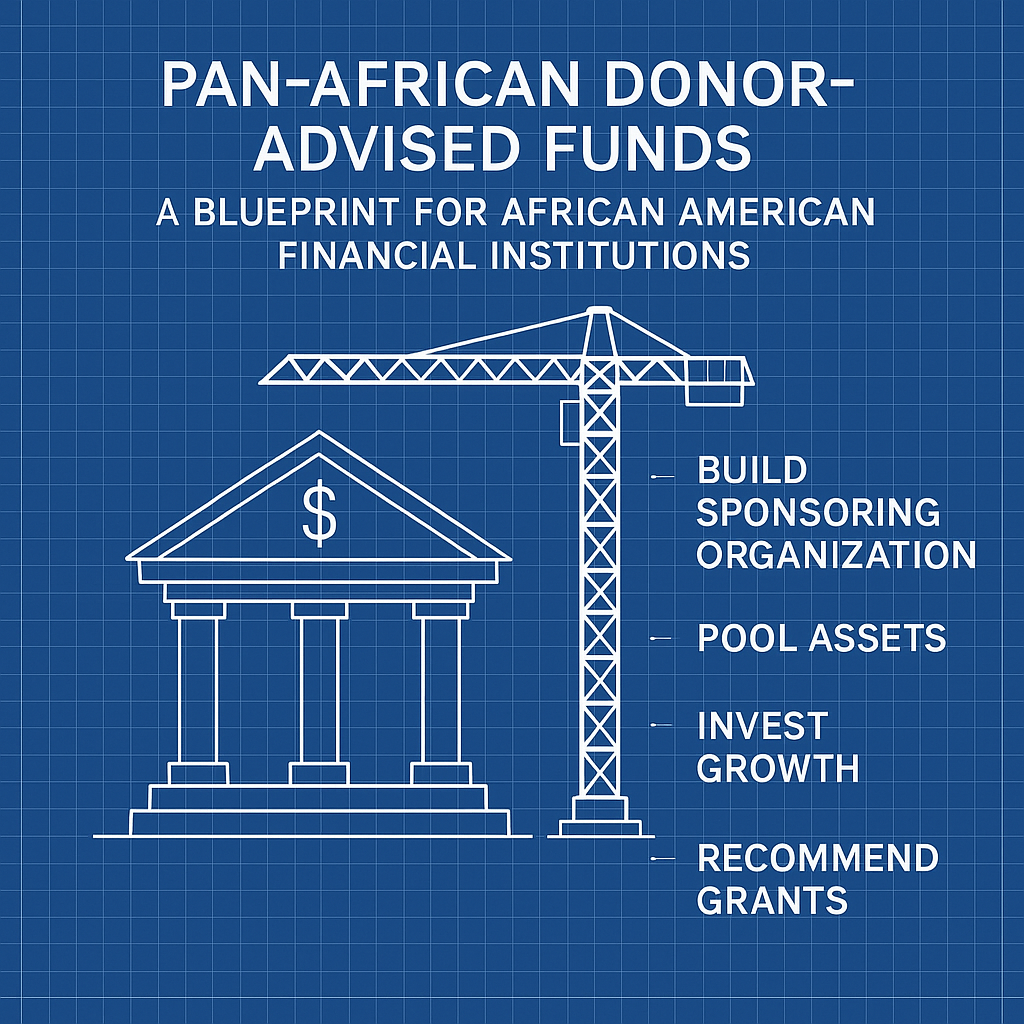
  • Prairie View-specific donor-advised funds
  • Community investment vehicles
  • A Prairie View Cooperative Endowment Fund

These independent vehicles can partner with but not be controlled by state systems.

4. National African American institutions must lobby for HBCU endowment independence.

A single policy shift could alter the landscape for every public HBCU:

Public HBCUs must have governance authority over capital donated specifically to them.

A Moment of Truth for HBCU Philanthropy

Prairie View’s historic gift was a moment of celebration—but also a moment of clarity. If African American institutions cannot control the endowments gifted to them, then the path to sovereignty remains blocked.

The philanthropic sector must confront this truth:

We cannot build African American power without African American control of African American capital.

Prairie View A&M University has always carried a dual identity, an HBCU of national importance inside a system not built for it. The generosity of donors like MacKenzie Scott can change the scale of Prairie View’s work, but only structural reform can change the nature of Prairie View’s power. The next era of HBCU philanthropy cannot simply be about larger gifts. It must be about gifts that come with governance, strategy, and autonomy.

Because endowments don’t build institutions.
Endowment sovereignty does.

Disclaimer: This article was assisted by ChatGPT.

Why African American Institutions Must Stop Chasing Donations and Start Building Endowments: The Investment Income Crisis in Black Philanthropy

“Philanthropy reflects not just generosity, but power. When African American foundations hold millions while their counterparts hold billions, the capacity to shape society is written in the balance sheets.” – HBCU Money Editorial Board

In the nonprofit and philanthropic world, financial statements tell a story much deeper than annual fundraising drives or program headlines. For African American institutions in particular, the real question of institutional power is not how much money comes in each year, but how much money is working on their behalf every day through investment income. The gap between African American legacy institutions and the nation’s major philanthropic foundations makes this truth impossible to ignore.

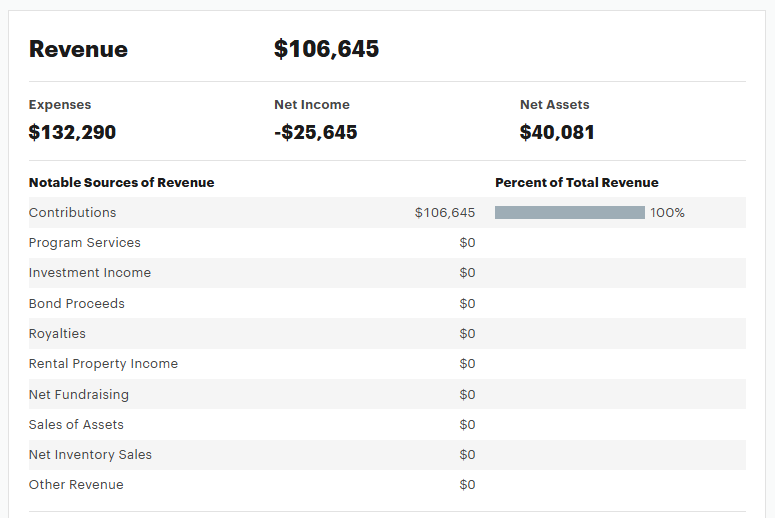
When most people evaluate nonprofits, they look at annual revenue: how much an institution raised in donations, how much it earned from programs, how much it reported on the IRS Form 990. By this metric, many organizations appear healthy. The King Center in Atlanta, for instance, reported $9.1 million in revenue in 2022, and the Malcolm X & Dr. Betty Shabazz Center reported $1.4 million in the same year. Even the Medgar & Myrlie Evers Institute, operating at a much smaller scale, posted $107,000 in revenue in 2023. Yet revenue alone is a deceptive indicator. It measures activity, not stability. Donations can be fickle. Program revenue can evaporate in downturns. Grants can dry up with shifts in political winds. A true measure of institutional health is whether an organization can generate its own independent cash flow — investment income.

The numbers reveal just how stark the divide is. The King Center, the strongest among African American legacy nonprofits, earned $788,000 in investment income in 2022. That represented nearly 9 percent of its total revenue, cushioning its operations with reliable, asset-driven support. By contrast, the Shabazz Center earned just $1,500 in investment income, and the Evers Institute earned nothing at all. Both remain almost entirely dependent on yearly contributions and program dollars. When compared to America’s powerhouse philanthropic institutions, the difference borders on staggering. The Ford Foundation generated $1.2 billion in investment income in 2022 — over 1,500 times what the King Center earned. The Rockefeller Foundation earned $120 million. The Walton Family Foundation, tied to the heirs of Walmart, brought in $240 million. The Bloomberg Family Foundation, anchored by the billionaire media mogul, generated $344 million. In this world, investment income is not supplemental; it is the engine. It underwrites operations, absorbs shocks, and ensures that missions continue even in the absence of donor enthusiasm. Investment portfolios are endowments of power, spinning off influence year after year.

This also clarifies why net income, the difference between revenue and expenses, is often misunderstood as a sign of strength. The King Center ran a $1.28 million surplus in 2022, while the Ford Foundation ran a $520 million deficit. Which institution is stronger? The answer is obvious: Ford. It can afford to run half a billion dollars in the red precisely because it has tens of billions in assets generating massive returns. Its deficit is a choice, not a crisis. By contrast, the Medgar Evers Institute’s deficit of just $25,000 in 2023 threatens its very survival because it has no investment base to fall back on. Net income measures short-term breathing room; investment income measures long-term power.

The contrast becomes sharper when examining the Steward Family Foundation, tied to David Steward, the wealthiest African American man. In 2023, the foundation reported $12.5 million in revenue and $857,000 in surplus, but just $29,000 in investment income. It holds only $22,000 in assets. Despite extraordinary personal wealth, the foundation is structured as a pass-through, distributing annual gifts rather than building a permanent, income-generating endowment. The Steward paradox highlights a broader challenge: African American wealth, even when achieved at extraordinary levels, has not consistently been institutionalized into enduring investment vehicles capable of generating influence across generations.

The implications of this reality are profound. Institutions without investment income are vulnerable to political tides, donor fatigue, and economic downturns. Their missions — whether preserving the legacy of Martin Luther King Jr., Malcolm X, or Medgar Evers — rest precariously on year-to-year survival. By contrast, the Ford or Rockefeller foundations can guarantee their voices in the public square for centuries. This imbalance in institutional financing means African American causes remain at the mercy of others’ benevolence while rival institutions are powered by their own wealth.

If investment income is the true measure of power, then African American institutions must pursue one clear priority: endowments. Not just annual fundraising, not just program grants, but the deliberate accumulation of assets whose returns will underwrite their missions indefinitely. Imagine if the King Center’s $788,000 in annual investment income could be multiplied tenfold or a hundredfold. Imagine if the Shabazz Center or the Medgar Evers Institute could fund their programming entirely from endowment returns. Imagine if the Steward Family Foundation transformed from a pass-through into a billion-dollar perpetual institution. This is the difference between surviving and shaping the future.

Investment income is the institutional equivalent of compound interest in personal finance. It rewards patience, discipline, and foresight. It separates organizations that merely exist from those that endure. For African American institutions, the lesson is clear: to secure legacies, to project influence, and to build power, they must shift their focus from short-term fundraising to long-term asset building. Only then can African American institutions stand as peers to Ford, Rockefeller, Walton, and Bloomberg — not just in name, but in financial reality.

Disclaimer: This article was assisted by ChatGPT.

When Intel Leaves: Endowments, NCCU, and the $2.5 Billion NBA Paradox

“I know I got it made while the masses of black people are catchin’ hell, but as long as they ain’t free, I ain’t free.” – Muhammad Ali

The recent news that Intel will discontinue its $1 million annual funding of North Carolina Central University’s (NCCU) Technology Law and Policy Center is more than just a line item in the university’s budget. It is a sharp reminder of how precarious institutional development becomes when African American colleges and universities rely on the European American corporate cycle of generosity and withdrawal. Where is African American corporate philanthropy is a pertinent question, but an article for another day.

Intel’s departure leaves a gap that must now be filled through other means. But the mathematics of filling it points to a broader truth: without substantial, permanent endowments, HBCUs will remain vulnerable to the political and financial whims of European American corporations. To replace $1 million in annual program funding, NCCU would need to raise between $20 million and $25 million in endowment principal assuming a 4–5% annual spending rate, the standard in higher education finance.

The fact that an entire academic pipeline, designed to produce future African American lawyers and policymakers, can be destabilized by a single corporate decision underscores the fragility of HBCU institutional power. And it raises a haunting contrast: while 66 African American NBA players will together earn $2.5 billion in salaries this upcoming season, not a single African American university controls an endowment robust enough to insulate it from the kind of disruption Intel’s withdrawal has now caused.

The mechanics are straightforward. Endowments work by pooling donated capital, investing it, and spending a sustainable portion of annual returns—usually 4–5%. To replace Intel’s $1 million annual gift, NCCU must therefore build an endowment of $20–25 million. This is not extraordinary by university standards. At most predominantly white institutions (PWIs), a $25 million endowment is considered modest. At Harvard, Yale, or Stanford, it would not even make the footnotes. Yet for NCCU, an institution with an endowment of $89 million as of December 2024, the sudden need for another $20–25 million underscores the gap between HBCUs and their white peers.

The underlying truth is that corporate funding is inherently unstable. It ebbs and flows with market cycles, political administrations, and corporate priorities. Endowments, however, endure across generations. The very act of raising such capital is itself an exercise in institutional power: it demonstrates to the world that the university and its community can stand on their own financial feet.

Intel did not single out NCCU maliciously. The company is undergoing a profound transformation, not least because the U.S. government has become its largest shareholder after a multi-billion-dollar deal with the Trump administration. Like other firms facing political scrutiny, Intel is quietly shedding high-profile DEI commitments. For NCCU, however, the effect is real. The Technology Law and Policy Center was designed to provide African American law students with training in emerging technology and policy—a space historically closed to Black lawyers. It also featured internships at Intel, summer placements, and the now-defunct “Intel Rule,” which required outside law firms to staff diverse teams if they wanted Intel’s business. Now, without a replacement funding mechanism, the Center risks contraction. Students will still enroll. Faculty will still teach. But the acceleration that Intel’s money provided—the ability to recruit nationally, to build cutting-edge programming, to give students exposure to high-tech legal practice—will slow.

Enter the paradox of the NBA’s 66 Black players earning $25 million or more in the upcoming season. Collectively, those 66 players will earn $2.5 billion in salary during the 2025–2026 season. Each of these players individually makes at least what NCCU would need to permanently replace Intel’s $1 million annual commitment through endowment. The collective sum is staggering: $2.5 billion in one season—enough to seed $25 million endowments at 100 HBCUs.

It is not about individual responsibility. No one player can be expected to save an institution. But collectively, the paradox points to the imbalance between African American individual wealth and African American institutional poverty. Even if just 10% of that wealth—$250 million—were organized and directed into HBCU endowments, the result could replace Intel’s contribution not only at NCCU but across multiple campuses. Yet there is no mechanism, no institutional strategy, no coordinated pipeline that directs such flows into African American universities. This is not new. For decades, African American excellence has been harvested at the level of the individual, while African American institutions have remained underfunded. The NBA is simply the latest, most visible example.

The Intel withdrawal reminds us of a hard truth: reliance on outside benevolence is not a strategy for power. It is, at best, a strategy for survival. Corporate giving is always the first budget item to shrink when recession looms or political winds shift. For HBCUs, this means programs rise and fall on decisions made in Silicon Valley or Wall Street boardrooms—far removed from Durham, Tallahassee, Baton Rouge, or Montgomery. The vulnerability is compounded when African American communities assume that the generosity of corporations will substitute for building our own endowments. The danger is not simply financial but cultural: it conditions us to believe that power comes from outside, not from within.

Intel’s $1 million a year was not charity—it was investment. It bought Intel goodwill, a trained pipeline of diverse lawyers, and reputational capital in the DEI era. Now that DEI is politically unpopular, the investment is deemed expendable. This is why endowments matter. They are not subject to the quarterly report or the election cycle. They anchor institutions in the long term.

Let’s be clear about the scale of the challenge. The combined endowments of all HBCUs hover around $4 billion, compared to more than $800 billion at PWIs. Harvard alone has an endowment of nearly $52 billion. NCCU’s endowment stands at $89 million. To raise an additional $20–25 million to replace Intel’s support would represent a 22–28% increase in its current endowment base. Such a leap is achievable—but it requires strategy. It means cultivating alumni giving systematically. It means leveraging African American wealth beyond alumni, drawing in professional athletes, entertainers, and entrepreneurs. It means creating vehicles—donor-advised funds, pooled endowments, institutional investment cooperatives—that make giving both efficient and impactful. Most of all, it means shifting mindset. We must stop thinking of endowments as luxuries reserved for Ivy League institutions. They are necessities. They are the only way to secure institutional independence.

The Intel decision can serve as a turning point, if we are willing to see it clearly. Corporations are not institutional guardians. They may play a role, but they will not underwrite our survival. Their goals are their own. When interests diverge, as they now have, funding vanishes. Individual wealth must be institutionalized. The contrast between NBA salaries and HBCU endowment poverty is not about shaming athletes. It is about building structures that make institutional giving the default, not the exception. Endowments are the only safety net. No government program, no corporate sponsorship, no philanthropic fad can substitute. Only endowments give institutions perpetual capacity to fund themselves.

What would it take, concretely, for NCCU to raise the $25 million needed? A handful of major gifts in the $2–5 million range from alumni, athletes, or African American business leaders could jump-start the campaign. NBA, NFL, and WNBA players could be recruited to create a pooled fund. Instead of individual gifts, imagine a collective “Athletes for HBCU Endowments” initiative. African American foundations and community funds could direct grants toward seed capital, matched by alumni. If every NCCU law graduate gave $1,000 a year for ten years, the cumulative effect would approach the tens of millions. NCCU could also partner with African American-owned banks and investment firms to maximize returns and circulate dollars within the community. The strategy would not only replace Intel but set a precedent: when outside money leaves, we do not shrink. We build.

The broader question is not whether NCCU will survive the loss of Intel’s support. It will. The real question is whether African American institutions will continue to live in the shadow of dependency—or whether we will use moments like this to chart a new course. The paradox of $2.5 billion in NBA salaries versus the need for a $25 million endowment is not just a rhetorical flourish. It is a mirror held up to African America. It asks whether we will continue to celebrate individual wealth while neglecting collective survival.

Every dollar of Intel’s withdrawal can be replaced. But only if African American wealth is organized. Only if alumni, athletes, and entrepreneurs see endowments not as gifts but as obligations. Only if we remember that the true measure of power is not what any one of us earns, but what we can build together.

Intel has reminded us of an uncomfortable truth: corporate giving is temporary. Endowments are permanent. To replace $1 million a year, NCCU needs $25 million in endowment. That number is not insurmountable. It is the equivalent of one NBA salary in a single season. There are 66 African American players earning at least that much this year alone, with combined salaries of $2.5 billion. The juxtaposition is stark: individuals flourish while institutions starve. The future of HBCUs—and the broader African American ecosystem—depends on closing that gap. Until African America learns to institutionalize its wealth, every Intel withdrawal will feel like a crisis. But the day we build our endowments, such exits will be footnotes. And our institutions will finally stand on the firm ground they have always deserved.

Disclaimer: This article was assisted by ChatGPT.