Category Archives: Business

From 500 To 1: The Death Of The African-American Owned Hospital

By William A. Foster, IV

The health of nations is more important than the wealth of nations. – Will Durant

bohosp

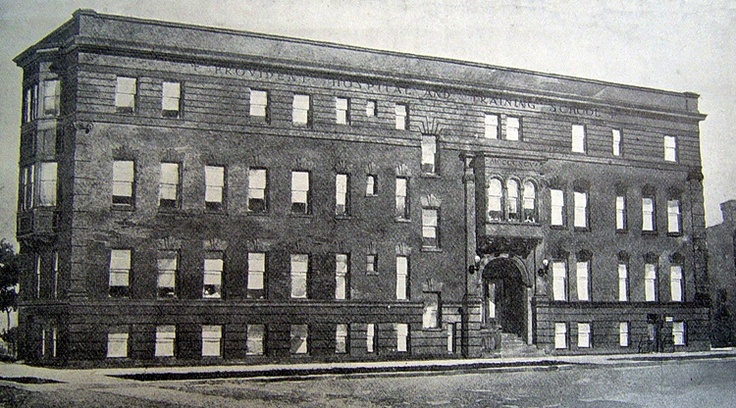
Pictured Above: Provident Hospital and Training School, Chicago, Illinois, 1896. Provident Hospital, the first African American-owned and operated hospital in America, was established in Chicago in 1891 by Dr. Daniel Hale Williams, an African American surgeon.

The idea that someone else will care for you, your family, or your community better than you seems to be the purveying attitude of African America in almost every facet of our strategy today. This is of course assuming you believe we have an institutional strategy of our own to begin with. Instead of building and competing for power and control we seem content on waiting for others to share their spoils with us because it is the “right” thing to do only to be “shocked” when others idea of right and our idea of right do not acquiesce.

The history of African America and health has always been a precarious one. A people descended from the medical genius, Imhotep, known as the “father of medicine” who performed the earliest known surgery to the inspiring story of Dr. Ben Carson in present times. Healing sanctuaries and temples to the goddess Sekhmet are known to be the earliest “hospitals” to date. Fast forward a few thousand years to America and African Americans in Detroit alone owned and operated 18 hospitals of their own between 1917 to 1991. The confines within their own hospitals and medical ecosystem would seemingly be the only place where safety existed. From colonial times to present time, as noted in Medical Apartheid by Harriet Washington, when African Americans went outside of their own medical ecosystem we were and are subject to some of the most brutal medical experiments and abuses known in medical history. In an interview with Democracy Now, Ms. Washington is quoted giving examples of these abuses from past to present, “James Marion Sims was a very important surgeon from Alabama, and all of his medical experimentation took place with slaves. He took the skulls of young children, young black children — only black children — and he opened their heads and moved around the bones of the skull to see what would happen. He bought, or otherwise acquired, a group of black women who he housed in a laboratory, and over the period of five years and approximately forty surgeries on one slave alone, he sought to cure a devastating complication of childbirth called vesicovaginal fistula.” Ironically, as it were, Dr. Sims would go on to become president of the American Medical Association. Ms. Washington then goes on to present times stating “It’s black boys who have been singled out for these very dangerous experiments, such as a fenfluramine experiment that took place right here in New York City between 1992 and 1997. A lot of the abuse in African Americans has dissipated, but that kind of research is being conducted in Africa, where the people are in the same situation. They don’t have rights. They don’t have access to medical care otherwise, and Africa is being treated as a laboratory for the West by Western researchers.” Despite this obvious and consistent pattern of behavior we continue to seek to dismantle our own medical ecosystem.

It is no secret that the health of the African American community has always been in peril. Arguably today, more so than it has ever been in our history in this country. To some, the issues of medicine are a one size fits all prescription for any human anywhere. It is true we all have the same anatomy certainly but historical diet from our ancestry, environment, stress from the Middle Passage, slavery, and socioeconomic burdens that culminated after desegregation have taken its toll and many other factors create unique factors in the African American health dynamic. In fact, every group  based on their historical geography and diet has unique health features in their present health makeup. As such what is conducive to one group will not necessarily work for another. The variables at play do not provide for blanket medical solutions or care. Biological diversity exist in every species be it cats (lions, cheetahs, tigers) or humans. Yet, our desire to ignore these realities for the sake of creating a racial or ancestral Utopia has created a boom in our health risk with no seemingly end in sight. The numbers bear out a bleak picture of African American health today. African American life expectancy is 4.3 years less than the average American and 4.8 years less than European Americans. We currently have the highest age-adjusted death rate among all populations. The infant mortality rate in America for all is 6.8 per 1000 births yet for African America it is 13.2 per 1000 births. Approximately 20 percent of all African Americans are uninsured versus a national average of 15.9 percent. We are going extinct and do not even realize it.

Nathaniel Wesley Jr.’s book “Black Hospitals in America: History, Contributions and Demise” points out that at our apex there were 500 African American owned and controlled hospitals. Today, Howard University in Washington D.C. is the last one standing. In 1983 as Dillard University was selling its hospital Flint-Goodridge their president at the time, Dr. Samuel Dubois Cook stated that its demise was a result of “tragic mismanagement, social change that desegregated hospitals, financial irregularities, the fact that 90 percent of the patients were on Medicare or Medicaid and the loss of broad community support”. It would be hard not to assume that these were the underlying cause of the majority of most African American owned hospitals since as we know fervently believe that our proverbial ice could not possibly be as cold as the ice in other communities.

Rethinking the role of hospitals in general is needed given the rapid rise of healthcare cost but especially so in the African American community where the ability to afford private healthcare is almost impossible given our lack of wealth. While Asian and European America’s median net worth both approach $100,000 the African American median net worth is close to $2,000 and dropping according to the Economic Policy institute. Hospitals in our communities should be fashioned as health and wellness focused on preventive care, nutrition, and alternative medicines more unique to our biology. HBCUs themselves while not all needing to build hospitals should all be investing in community clinics that are connected regionally with an African American owned hospital. The pre-med and business programs should create more courses on the development of these facilities. Its impact on both wealth creation and health improvement would do wonders for African America as a whole.

It could be said that for all the benefits of the Affordable Healthcare Act proposed by President Obama, our longer term interest in building a medical ecosystem focused on the needs and issues that face the African American and African Diaspora community would go much farther in improving our health as a people. After all if health is wealth and wealth is created by ownership then we must once again build and own the ecosystem that is the DNA of our blood, sweat, and tears.

African America’s Film Industry Should Look To Our Brethren In Nigeria

By William A. Foster, IV

I do not expect white media to create positive black (male) images. – Huey P. Newton

At the beginning of 2012 the release of a certain movie (remake) loosely based on historical facts created a civil war of sorts within African America. It had an all African American cast and African American director but was owned ultimately by a European American named George Lucas, net worth of $3.2 billion and creator of Star Wars franchise, and even more importantly distributed by an European American owned company that we all love to hate News Corp. (owners of Fox News). I’m sure Rupert Murdoch is thanking all of you who went out and supported the film as he can now pay Sean Hannity and Bill O’Reilly to stay on the air for a few more years. How many of our minds did that cross? African American supporters of the film drastically outnumbered the dissenters but most arguments in support were superficial much like measuring progress by the ability to sit at the front of the bus (instead of owning the bus company) or my favorite sign of progress African American athletes making millions (only 1 of the 92 major sports owners is African American meanwhile over 60% is African American labor). To succeed in capitalism you don’t need hard work or a lot of talent quiet as it’s kept. You need to understand two concepts and those are ownership and domination of as much of the economic food chain as possible. That is to say you need to be as close to a monopoly as legally allowed or that you can lobby to politicians to look a blind eye to. The monopoly can also be a certain Diaspora controlling the majority of an industry. An example would be the way Koreans have come to dominate the African American hair care industry. Apparently, according to many of us though you have to fight to sit at the front of the bus before you can think of owning the bus company. Imagine that.

As for Hollywood, every institution has a purpose. Every institution is owned and/or controlled by a certain Diaspora. Hollywood is an institution. Let me say again – Hollywood IS an European American institution. What is Hollywood’s purpose? Have you ever wondered why so many around the world want to come to America? Where do 60% of Hollywood’s profits come from? It comes from non-US markets. European America is “exporting” an image of paradise, its values, its idea of democrazy, and opportunity despite as we see in “America Builds an Aristrocracy”  that America is just as much an aristocracy as many other countries we claim to be anti-democratic and anti-opportunity. The social capital entertainment and movies generate make as Kanye said in his song All Falls Down “cause they make us hate our-self and love they wealth” makes many non-Americans desire for the perceived windfall of American opportunity and riches instead of staying and building up their country and its institutions. America benefits by ciphering some of the world’s best talent to become labor in its universities and businesses while maintaining a dominant European American ownership of these institutions. A domination that certainly seems to be crumbling to Asia and China more specifically but that isn’t to say they are falling far. A movie is of course more than just a story on a screen. Its shapes viewpoints and cultures. We know simplistically speaking it is why European American women have become the most desired women in the entire known world. Entertainment in general does this which is why we also see hip-hop’s presence abroad so impactful and now kids all over the world are break-dancing and have even become rappers themselves and yet African America owns and controls a marginal piece of hip-hop at best. Now, if you want to keep a people psychologically dependent and desiring to assimilate then you can’t give them strong images of themselves like stories of Black Wall Street and Harriet Tubman. Imagine that.

Nigeria has created Nollywood, which as of 2009 has become the 2nd largest film producer in the world behind Bollywood in India. Now while I personally could do without the knock-off Hollywood names they give themselves I can appreciate their desire to cultivate an industry of their own that represents them on the big screen and not waiting for Hollywood to do so. Even more so it provides counter social weight to the depiction of what it means to be a Nigerian and African which can be depicted and usually is in a negative light from Hollywood who has their own social idea of what Africa is. What is even more amazing is the number of African American actors going to Nollywood to star in films. The likes of Vivica Fox, Hakeem Kae-Kazim, Tom Sizemore, Michael Madsen, and even Kimberly Elise. That is what you call true African Dispora social and economic capital circulation. Franco Sacchi, director of documentary This is Nollywood, states that it has created tens of thousands of jobs and the industry is expanding and that Nigerians have complete control of the cinematic medium. Imagine that.

We are so romanticized with the idea of ONE America sometimes I’m convinced we will forsake our own interest to advance this ideology despite the reality that no other group practices it. We are like a child playing on the playground that sees the rules of the game written down and realizes that nobody else is playing by them so we spend all of our time trying to get the other players to play by them – so much so that we always end up coming in last. Our inability or indifference in dreaming of a world where we are masters of our own fate for the sake of a “united” America despite the fact that all other groups have shown through policy and action no desire for this to truly happen and honestly why should or would they? Is it because it is the “right” thing to do? By whose definition are we using for right or for determining morality? These are things that simply vary too much from culture, gender, ancestry, and others to have some universal meaning. And while some will argue me down there can be an agreed upon definition – do me a favor and don’t hold your breath waiting on it to happen. I’ve said it before and I’ll say it until I die (I might even get it etched on my tombstone) that no group of people in power in the history of mankind has ever voluntarily relinquished any of its power for the betterment of other groups. We get mad at groups who seek to protect their power and its self-interest ultimately because we refuse to do so. If we would spend more time doing the same we would have made real inroads to building up our institutional power as a people by now and not this as Malcolm said in jest “Progress is sitting next to white folks on a toilet” nonsense. Imagine that.

The answer is not magic. It’s simply pursuing vertical integration and ownership. This would give us a counterweight to the caricatures of how we are presented in Hollywood. As opposed to waiting on others having some moral awakening and treating us “fair”. I’ve heard the arguments well of course they have their own country in Nigeria so it’s possible. Is there something stopping us from building our own Nollywood in Atlanta? New York? Richmond? Is there not land we can buy and build? Control the medium as Mr. Sacchi stated from script to production to screen. Simply put there is no reason we can’t control the vertical integration of our movie industry from script to screen (even the vendors who serve the coffee and food on set). This would be true circulation of the African American talents and dollars. Pick any industry and repeat. Too often we are slaves to what is and don’t allow ourselves the freedom to imagine what could be. Yes, imagine that.

Just How Much Is Apple’s $117 Billion Cash Pile

“Cash is king.” – Unknown

Let’s compare the amount of Apple’s cash holdings to a few things:

If divided over all 40 million African Americans it would average out to $2,925 per person. The median net worth of African America is $2,170 (the lowest among all diaspora groups in the US).

It is 3.7 times the size of Harvard’s endowment (largest HWCU endowment and largest U.S. college endowment) and 216.7 times the size of Howard’s endowment (largest HBCU endowment).

It is 265.9 times the size of all HBCU research budgets combined.

It is 7.8 times the size of Jamaica’s GDP and 15.9 times the size Haiti’s GDP.

It is 6.2% of Africa’s entire GDP.

This is not to take any particular shot at Apple. It just happens to be the company with the largest corporate cash holdings at the time. US companies as a whole have $1.24 trillion in cash currently combined according to Moody’s which is 66% of the GDP of entire Africa. We’re talking “straight cash, homey” as Randy Moss said once.

Disclaimer: There is no ownership of any of the companies mentioned in this article by myself, my business, or my family as of this article’s publishing.

HBCU Construction: Revisiting Work Study & Trade Training

By William A. Foster, IV

Labor is the great producer of wealth; it moves all other causes. – Daniel Webster

We’ve all heard the stories as HBCU alum of the former slaves who initially upon attending their HBCU were involved in not only taking classes but also in the actual building of the HBCU. Their expertise as former blacksmiths and farmers on slave plantations allowed them to have a needed expertise to help build the initial buildings on our campuses. For these institutions and African America as a whole who were just getting its “start” in the 1870s and now charged with trying to close at that time a 300 year social, economic, and political gap there was significant benefit socially and economically in having students who could provide the initial labor to build the school. It created both pride in their new institution and a fiscal savings as these students typically not only provided the labor but in some instances made the bricks. One had to assume this was an amazing time to be a student. To see the birth of your own institution coming from your hands into buildings that would become the birthplace of African minds generations to come.

Today, the scene is much different. On almost every HBCU campus I’ve visited and even a few I’ve worked, the construction of new buildings is outsourced. Not only is it outsourced its virtually never outsourced to an African American construction company. The financing also almost never comes from an African Diaspora owned financial institution which why the establishment of the HBCU Credit Union is so vital.  Both of these points highlight a problem when it comes to circulation of our economic capital. Too often we forget about the business to business circulation and only seem to be focused on the consumer to business circulation. Now, certainly today’s student is different than that of our ancestors over 100 plus years ago in terms of upbringing and training. However, we have seen the over reliance on the DuBois model and not enough balance with the Washington model leaving us extremely vulnerable in down economies. That is to say our students should be flexible enough that they graduate with not only a degree of their mind but the ability to perform a trade with their hands. This balance can provide both a hedge in a down economy when white collar jobs get the brunt of the slashing or it can be additional income that one earns on the side. It can also be the impetus that spurs entrepreneurship into areas we are sorely under represented like construction.

The rising cost of education requires our schools become more creative on how work study is provided to our students. An average construction worker makes $29,211 annually which isn’t much for someone trying to support a family but it is the equivalent of four years worth of undergraduate Stafford Loans. Now imagine a student for four years earning $12,000 a year for four years working construction projects or other various infrastructure projects the university is engaged in. You’ve just created a $48,000 package in financial aid to start. Now at the end of the four years you have a student with no debt, potentially some savings, trained with a trade, armed with a degree, and a student with an even deeper social connection to the care of their university because it was the sweat from their brow that built it.

I do not want to suggest that we go on a building spree or that you don’t still need professional construction workers. I am suggesting that we need to use African American construction companies to increase our business to business circulation and require those companies hire some of our students. They themselves would provide the training to our students in conjunction with having lower cost labor for the project. It both saves the cost of the project to the school and increases the profits to the company. This is just the start of what needs to be part of a comprehensive plan to find more creative ways to decrease our students’ student loan burden and given HBCUs serious infrastructure needs this is a win-win for both student and HBCU as we expand and try to build up our endowments.

Asian American and European America both have a median net worth north of $95,000. African America’s median net worth is $2,170. The student loan debt burden is going to hurt us more than any in the generations to come if we do not get serious about finding ways to counter it. We cannot simply copy the “playbook” of our counterparts who have almost 50 times our wealth.

We have a chance to allow our students to add to the history of building ourselves up with our own two hands and mind. It’s a lesson from the past we desperately need to revisit.

Three Terms Hindering Africa America’s Institutional Development: Affirmative Action, Diversity, & Minority

By William A. Foster, IV

“All cruel people describe themselves as paragons of frankness.” – Tennessee Williams

This article will probably get me in trouble with the politically correct police and let’s all hold hands and get along crowd who typically have an idealistic view that all the resources in the world can magically be distributed evenly across all populations. However, truth is truth especially as it pertains to social, economic, and political (SEP) interest and until we have their idealistic world we have to consider that groups will continue to battle over power to control the resources much like what happens with every one of God’s other creations – imagine that. SEP interest drives every group’s institutional and individual decision-making except for one – African Americans. African America continues to chase the ever elusive ghost of assimilation and inclusion into the (European) American Dream to the expense of its own power. Below are the three terms that to me psychologically have and continue hamper our development and why.

Affirmative Action

Simply put this has been one of the most damaging policies toward a stronger African-American institutional power development. Affirmative Action was a bill pushed for by certain Civil Rights Movement (CRM) groups and was signed into law by Lyndon B. Johnson in 1965. It owes its roots to desegregation and the court case Brown v. Board of Education of Topeka, KS in 1954.

Desegregation’s ultimate culmination into the affirmative action law was all but the signature that wiped out African-American institutional development. Prior, we built towns such as “Black Wall Street” in Tulsa, OK and Rosewood, FL and countless self-sufficient African-American towns. These towns would be torn apart ultimately because of our lack of ability to obtain political retribution for social and economic attacks against us which is where the aim of the CRM should have been. Instead, a movement within the CRM decided that equality meant to be assimilated into European American owned and controlled institutions. We would all but abandon towns which we built, businesses we started, and colleges that were founded for our interest and then begin to define success not by what we owned or controlled anymore but by being the “first” to break through into institutions where we weren’t wanted and out flanked socially, economically, and politically. Despite an understanding that in capitalism the ultimate power lies in what you control directly or indirectly and what you own.

Today, less than 15% of African-Americans who can go to college attend HBCUs despite the institutional implications that a college and university can bring to a community as noted in The University of Power & Wealth. “Success” is defined as moving out of our neighborhoods and then we wonder why our elementary and secondary schools are weak. They are weak because the demand that drives home values up which in turn increases the amount of taxes available to fund our schools and then allows them to develop and pay quality teachers was abandoned so that we could live in a “good” neighborhood. The educated and professionals instead of being a permanent presence in the community for children to see (positive social capital) instead leave children to look up to those hanging on the corner (negative social capital). It use to be that our doctors, teachers, and other professionals lived in the community and therefore set the barometer of that community. Yet, we’ll claim they can find role models or they should seek out mentoring programs missing the point of setting the rule in a community for kids instead of hoping they’ll find a way to be the exception. Before affirmative action, we started companies like C.R. Patterson, the only African-American owned automobile manufacturing company. Now, most of define our success by the car we drive not the ones we build.

Minority

The problem for African America allowing itself to be labeled a minority are numerous but I’ll address specifically as it relates to economic policy and actions. In 2008, Dr. Verna Dauterive, alum of Wiley College, donated $25 million to the University of Southern California in memory of her late husband. The money would be used to fund a scholarship for minority students that pursued a doctorate in education. Who is a minority? The answer is simply anyone who is not a European-American male. That means the scholarships from that donation, at a school whose African-American population is not even five percent, never even have to be used for an African-American. It means that if USC so chose they could give that scholarship to anyone that’s not of African descent from here on out and they would be meeting the requirements of that donation. It should also be noted that USC has a $3.5 billion endowment while her undergraduate alma mater Wiley College has a reported $50 million endowment. To say the $25 million would have gone further at Wiley impacting African-Americans is without question.

Recently it was noted by Jarrett Carter, Editor of HBCU Digest, that many HBCUs lead their states in minority purchases. In fact, Prairie View A&M University, Mr. Carter noted leads the state of Texas with 38% of its contracts awarded to minority businesses. Again, it should be pointed out that does not mean $1 has to go to African-American businesses. As a former employee and graduate assistant at Prairie View A&M University it was not unusual for us to hear stories about European American families with businesses making the wife 51% owner of the business in order to access minority contracts. You have to love loopholes.

Diversity

Every year certain business magazines release “Most Diverse Companies” and they are always speaking of the labor that works for these major corporations. The reality is that while the labor might be diverse the ownership is still typically 99.9% European American. The current idea of diversity just means you were able to get the most talented of other groups to work for another group’s economic interest. Again, I can’t state enough that it is ownership who gets rewarded the most long-term not labor. We see this in college football where schools like the University of Texas have 50,000 students of which only 500 are African-American males and 50% of them are on the football or basketball team. A football team composed of almost 70% African-American males, and is the most profitable college football program in the United States. The profits then go into non-revenue athletic scholarships which are predominantly European American (see golf, softball, swimming, baseball, etc.), along with aiding research, faculty salaries, and much more. The 1% of the population with no SEP power at the university providing immensely to the 99% with all of the SEP power. Now that’s a change.

It is always important to note who is defining what. I always get annoyed by “diversity” often being hijacked and/or pigeon holed to only mean multiple cultures. Diversity is also always talked about from a European American majority. That is to say in a room of 10 people if you have 7 European Americans, 1 African-American, 1 Asian American, and 1 Latino American you have diversity. However, if you have 7 African-Americans, 1 European American, 1 Asian American, and 1 Latino American it is not perceived as diversity. This is the hurdle that HBCUs often face in perception by not only society as a whole but even sadder by African-Americans themselves. Every time a conversation about diversity comes up I have to point out there are a number of variables by which one can create a diverse setting beyond ancestry. If I have a room of eight people of African descent with two from Jamaica, two from Ghana, two from America, and two from Brazil and each of those two is a mixture of male/female then do I not have a diverse room? Yes, I do. I just happen to have one foundational link of ancestry. I can add variables such as but not limited to geographical upbringing, economic class, education, gender, etc. Just for the record HBCUs have always been willing to take poor and underserved European Americans and others. The reverse still is not true unless of course you can do something exceptional on a football field.

We must define things from our point of social, economic, and political interest and not just blindly follow someone else’s idea of what is “good” as their idea of “good” is always from their point of view and interest. I was on a radio show where one of the guests proclaimed to me that Martin Luther King, Jr. was fighting for our right to move into someone else’s neighborhood. A clear problem of what happens when you allow someone else to control your history. Even a man who screamed for our self-sufficiency as many seem to forget has had his image and message watered down over the years. In capitalism, everything is ownership or labor. This is neither good nor bad. It just is and we all know that knowing is half the battle.