Category Archives: Entrepreneurs

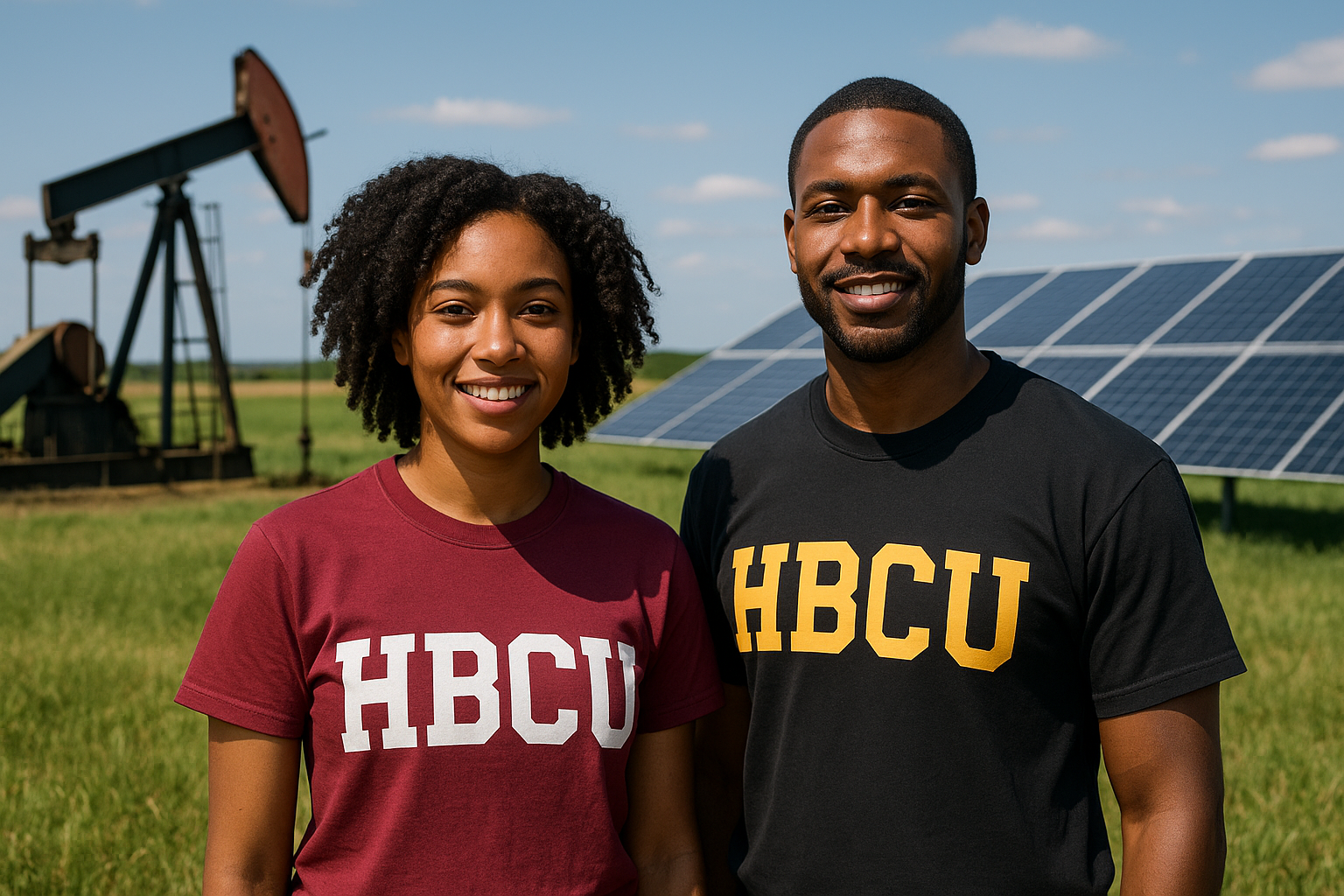
With So Much Oil In HBCU States – Where Are HBCU Alumni Owned Energy Firms?

“If you can provide the funding and you get the leadership, you’ll have a competitive team.” – T. Boone Pickens

The Southern United States is awash in energy. From Texas to Louisiana, Mississippi to Alabama, these states are responsible for the bulk of America’s oil and gas production. They are also home to the vast majority of Historically Black Colleges and Universities (HBCUs), institutions that have graduated generations of African American engineers, scientists, and business professionals. Yet, despite the geographic overlap and the energy sector’s enormous influence, there is an unmistakable void when it comes to HBCU alumni-founded firms in oil, gas, or even renewables. It is a paradox of proximity without participation—resources in abundance, yet ownership remains out of reach.

This disconnect is not simply a function of chance. It is the product of historical exclusion, structural barriers, and decades of capital disinvestment. The energy industry, especially oil and gas, has long been one of the most capital-intensive and closed sectors of the U.S. economy. The upstream business of exploration and drilling is not built for first-time entrepreneurs without deep-pocketed backers, multigenerational industry ties, or significant institutional support. Most HBCU alumni have none of the above.

For much of the 20th century, Black Americans were excluded from both land ownership in oil-rich regions and the educational infrastructure required to engage in the energy economy. HBCUs historically focused on liberal arts, education, and public service—disciplines that addressed urgent post-emancipation needs and segregation-era employment restrictions. Petroleum engineering, energy policy, and oil finance were simply not part of the curriculum. And while HBCUs today have engineering programs, few have the dedicated energy labs, industry partnerships, or commercialization infrastructure that their predominantly white counterparts enjoy. At places like the University of Texas or Texas A&M, oil research institutes, private equity-backed incubators, and billion-dollar endowments serve as launchpads for energy ventures. No HBCU currently operates at that scale.

Then there is the question of capital. Even if an HBCU graduate had the technical know-how and vision to build an energy company, the financing would almost certainly be out of reach. According to the Federal Reserve’s most recent small business credit survey, Black entrepreneurs are more likely to be denied loans, receive lower funding offers, and face higher interest rates. In oil and gas, where drilling a single exploratory well can cost millions, these hurdles become insurmountable. And in the renewable energy space, which requires less upfront capital but still demands serious investment and regulatory navigation, Black founders are still underrepresented. Less than 2% of clean energy businesses are Black-owned, a figure confirmed by data from the Department of Energy and Brookings Institution.

There are, however, rare examples that offer a blueprint for what could be. Volt Energy, a solar development firm founded by HBCU alumnus Gilbert Campbell, has successfully executed projects for corporate and government clients. Its success is owed not just to entrepreneurial grit, but to strategic positioning in the rapidly growing clean energy sector and the willingness of federal partners to prioritize minority-owned firms. Another example is PEER Consultants, founded by Dr. Lilia Abron, an environmental engineering firm that has spent decades advancing sustainability and energy access in underserved communities. These stories are powerful but isolated.

Public and private efforts to address the imbalance are underway, albeit slowly. The Biden Administration’s Justice40 initiative mandates that 40% of certain federal climate investments benefit disadvantaged communities, opening the door for more HBCU-linked projects. The Department of Energy’s HBCU Clean Energy Education Prize, launched in 2023, is another signal of intent. It provides multi-million-dollar funding to HBCUs for curriculum development, student research, and partnerships in clean energy. But such programs are only as impactful as the ecosystems that surround them. Without access to long-term venture funding, procurement opportunities, and business mentorship, their reach will be limited.

Much of the challenge lies within institutional economics. The endowment gap between HBCUs and wealthier PWIs (predominantly white institutions) is massive. The entire HBCU sector holds less than $6 billion in endowment funds. By contrast, the University of Texas system—heavily funded by state oil revenues—controls more than $30 billion through its UTIMCO investment vehicle. These endowments don’t just fund scholarships; they finance research labs, spinouts, and equity investments in faculty or alumni-founded ventures. HBCUs, without comparable financial arms, cannot deploy the same kind of catalytic capital.

In this environment, oil-rich states like Texas, Louisiana, and Mississippi may continue to generate immense wealth from energy while HBCU alumni remain employees at best and consumers at worst. Ownership, the core driver of generational wealth and political leverage, continues to elude them.

But the renewable transition could offer an inflection point. The barriers to entry are lower, the policies more inclusive, and the urgency to diversify the energy economy is real. Solar and battery storage firms don’t require billion-dollar capex or land acquisition. Distributed energy resources, community solar projects, energy efficiency startups, and green construction ventures are all areas where HBCU alumni could lead—if properly funded and supported.

That shift requires vision, not just from government, but also from philanthropists, Black-owned banks, and corporate ESG programs. Capital alone, however, will not solve the problem. HBCUs must also expand their academic footprint into energy entrepreneurship, clean tech commercialization, and regulatory policy. More importantly, HBCU alumni must begin to see energy not just as an employer, but as a domain in which to build power, both economic and political.

The stakes are higher than ever. Energy is not simply about electricity or gasoline—it is about who owns the infrastructure of the future. Whether it’s solar farms, transmission networks, EV charging corridors, or hydrogen production, the assets being built today will define tomorrow’s winners. If HBCU graduates are not in the room now, they risk being locked out of that ownership for another generation.

The irony of standing on land that produces billions of dollars in oil revenues while holding none of the titles is no longer tolerable. The future energy economy must be diverse not only in technology but in ownership. For HBCUs, the time to act is now—not for symbolic inclusion, but for structural participation.

From fossil fuels to photovoltaics, the opportunity exists to move from resource curse to resource empowerment. Whether that opportunity is seized will depend on whether HBCUs, their alumni, and their partners choose to build ownership into the core of their energy future, or remain content with being near power, but never in control of it.

Supporting Data & Charts

1. Oil Production by HBCU States (2023, million barrels):

StateProductionNumber of HBCUs
Texas20,0008
Louisiana4464
Mississippi1136
Alabama2714
Oklahoma1,8301

2. Black-Owned Firms in Energy (2022):

Sector% Black Ownership
Oil & Gas Extraction<1%
Solar Installation1.3%
Energy Consulting2.1%
Utility-Scale Renewables0.5%

3. Endowment Comparison (2024):

Institution/SystemEndowment ($B)
Harvard University53.2
Stanford University37.6
All HBCUs Combined5.2
UTIMCO (Texas System)65.3

Disclaimer: This article was assisted by ChatGPT.

The (Black) Power Couple & Family Business That Could Have Been: Entrepreneur Ron Johnson & Dr. Kimberly Reese, M.D.

By William A. Foster, IV

“Black love encompasses romantic partnerships, familial bonds, friendships, and a collective commitment to uplifting and empowering each other.” – Taylor Moorer & Alexander Dorsey

Generated image

Let me begin with this. There was no character on A Different World that held my attention the way Kimberly Reese did. Graceful. Brilliant. Driven. A woman on her way to becoming a doctor and never once apologizing for her intellect. I was mesmerized. And I still am. So forgive me if this article has a bit more heart than business metrics—though trust me, we’ll get to those too.

Kimberly Reese, played by Charnele Brown, was more than just the token “smart Black woman” character. She was a symbol. She was the dream our mamas prayed for us to meet and our daddies hoped we’d bring home. She was what happens when Black excellence meets Southern charm meets pre-med grit. And then there was Ron Johnson. Ronald Marlon Johnson. A whole enigma. Part clown. Part visionary. If Dwayne Wayne was Silicon Valley, Ron Johnson was Bed-Stuy with a business plan. He wasn’t just comic relief, he was a prototype. The first glimpse we got of the HBCUpreneur: the student hustler learning lessons in the real world as much as in the classroom. Ron Johnson was what every HBCU business school ought to teach: how to build from where you are with what you have.

But instead of marrying into mogulhood with Kimberly Reese and forming a real HBCU power couple like the Obamas of Black medicine and enterprise the writers took another route. A safe one. A disappointing one. This is the story that should have been written. This is the power couple and family business that could have been.

According to a 2023 report from the National Black Chamber of Commerce, over 70% of Black-owned businesses are sole proprietorships meaning they begin and end with one person. Fewer than 10% survive into the second generation. That’s not a flaw in ambition. It’s a failure in structure. We don’t often think in dynasties. In systems. In scaling. Now imagine a Ron Johnson who took that Hillman business degree and didn’t just open a club or restaurant, but built RJ Health Enterprises; an integrated chain of community health clinics, urgent cares, and medical real estate investments focused on underserved Black communities across the South. Imagine Kimberly Reese as co-founder and Chief Medical Officer. A respected OB/GYN on the board of Meharry, Howard Med, and Morehouse School of Medicine. Their flagship clinic, “Reese & Johnson Family Health,” could’ve become a cornerstone of African American healthcare.

We’re talking about a $500 million business in 15 years. Not hypothetical. Real math. According to IBISWorld, the U.S. urgent care market was valued at $38 billion in 2023. Black communities represent a disproportionate share of preventable hospitalizations due in part to lack of affordable, trusted, and culturally competent providers. The Reese-Johnson health business could have been both remedy and revolution.

There is something revolutionary about a Black man and woman building together not just emotionally, but economically. As of 2024, only 8% of all U.S. employer businesses are owned by Black Americans, and of that sliver, a mere 2% are co-owned by Black spouses or partners. Family businesses, when managed strategically, are intergenerational launchpads. Take the Hoffmann-Oeri family of Switzerland, owners of pharmaceutical giant Roche. Their company, founded in 1896, now generates over $70 billion annually. But more importantly, it has built economic moats and family wealth for six generations.

The Reese-Johnson duo had the potential blueprint: a physician’s vision for preventative and culturally attuned care, an entrepreneur’s eye for monetizing access, experience, and brand, and a shared identity rooted in the HBCU ethos of service and innovation. They weren’t just fictional characters. They were avatars for what could be real.

The fact that no HBCU business school has a “Ron Johnson Center for Entrepreneurship” or that no HBCU medical school offers a joint MD-MBA program named after fictional pioneers like Reese and Johnson is a shame. Not because we need to deify characters but because those characters gave us a canvas to imagine bigger for ourselves. HBCUs too often shape students to be labor. To integrate. To get the job. But not to create the job. And certainly not to imagine owning an empire with the person you love, built from the same institution that educated you both. If we are serious about economic empowerment, we must institutionalize HAO (HBCU Alumni Owned) companies as a KPI for alumni success. A different world wasn’t just the name of the show. It should have been the result.

By 2005, Reese and Johnson, both Hillman alums, launch RJ Med Group with three components: RJ Clinics, a chain of urgent care centers in HBCU cities: Jackson, Baton Rouge, Baltimore, Atlanta, Tallahassee, and Salisbury. Clinics cater to walk-ins and are integrated with digital records and telehealth by 2010. RJ Research Institute, a Black-led nonprofit focused on studying racial disparities in maternal health, hypertension, and mental health. Sponsored research partnerships with Xavier, Howard Med, and NIH. RJ Ventures, a holding company investing in HBCU med tech startups, pharmacy delivery services, and neighborhood health food stores. The group employs over 5,000 across the South and sponsors 200+ internships annually for HBCU students in medicine, public health, business, and tech. And of course, they endow the $10 million Hillman Health Equity Fellowship.

We’ve seen versions of this in real life: John and Nettie Singleton, co-founders of a Harlem-based pharmaceutical distribution company that grossed $22 million before being acquired. Dr. Patrice and Raymond Harris, founders of a network of Black-owned mental health clinics in Georgia. Michelle and Barack Obama—yes, yes, we know. But their synergy reminds us how intellect, ambition, and partnership can turn policy into legacy. Ron and Kimberly could’ve been the HBCU version of this—part CVS, part Kaiser Permanente, part Wakandan vision.

Because representation is not just about visibility. It’s about possibility. When the writers broke them up, it wasn’t just a romantic loss it was a missed opportunity to show Black America what family business could look like when rooted in love, purpose, and institution. Television shapes narratives. And narratives shape expectations. And expectations? They shape outcomes. If there were more shows modeling Black couples building businesses, maybe more Black MBAs and MDs would consider entrepreneurship as a couple’s journey. Maybe more HBCUs would invest in interdisciplinary labs between medicine and business schools. Maybe that “different world” we dreamed of would feel more like a blueprint than a slogan.

As HBCU alumni and stakeholders, we must write our stories forward. We must see every Kimberly Reese as not just a doctor, but a dynasty builder. Every Ron Johnson as more than a hustler, but an heir. And we must stop waiting for television to imagine our greatness. Let HBCUs teach love in their curriculum not just as poetry, but as partnership. Teach ownership as legacy. Teach entrepreneurship as service. Let our future Hillman couples dream bigger than GPAs and Greek life. Let them dream empires.

Kimberly Reese and Ron Johnson didn’t get the ending we hoped. But that doesn’t mean their story was pointless. It means we were given the tools. Now it’s on us to build.

Where Is The African American MBA At HBCUs?

“I built a conglomerate and emerged the richest black man in the world in 2008 but it didn’t happen overnight. It took me 30 years to get to where I am today. Youths of today aspire to be like me but they want to achieve it overnight. It’s not going to work. To build a successful business, you must start small and dream big. In the journey of entrepreneurship, tenacity of purpose is supreme.” — Aliko Dangote

It could be argued that many HBCUs do not see themselves as African American institutions. They just happen to be a college where African American students are the predominant student population – for now. A place where you may happen to find more African American professors than you would elsewhere. But in terms of intentionally being a place looking to serve the social, economic, and political interests of African America and the African Diaspora as a whole not so much. Schools like Harvard and the Ivy League in general seek to serve WASP interests, BYU and Utah universities serve Mormon interests, there is a litany of Catholic universities led by the flagship the University of Notre Dame serving Catholic interests, and around 30-40 women’s colleges serving women’s interests. Arguably, none are more intentional though than Jewish universities who seek to serve Jewish Diasporic interests. They do so intentionally and unapologetically. It is highlighted in two prominent dual programs.

Brandeis University, “founded in the year of Israel’s independence, Brandeis is a secular, research-intensive university that is built on the foundation of Jewish history and experience and dedicated to Jewish values such as a respect for scholarship, critical thinking and making a positive difference in the world.”

Master of Arts in Jewish Professional Leadership and Social Impact MBA In partnership with the Heller School for Social Policy and Management: “If you want to become a Jewish community executive, this program will give you the skills and expertise you need: a strong foundation in both management and nonprofit practices, as well as a deep knowledge of Judaica and contemporary Jewish life. You’ll take courses taught by scholars across the university, including management courses focused on nonprofit organizations and courses specific to the Jewish community.”

Master of Arts in Jewish Professional Leadership and Master in Public Policy: “If you want to become a professional leader who can effect positive change for the Jewish community at the policy level, you’ll need policy analysis and development skills as well as knowledge of Judaic studies and contemporary Jewish life — all of which our MA-MPP track is designed to impart. This track will teach you how to both assess policy and practice and design and implement strategic solutions.”

In the United States, the racial wealth gap remains stubbornly wide. For every dollar of wealth held by the average white household, the average Black household holds just 14 cents, according to the Federal Reserve. While policy debates rage on, a quieter revolution could be ignited in the lecture halls and boardrooms of Historically Black Colleges and Universities (HBCUs). It is time for these institutions to take the lead in launching a new kind of MBA—one rooted in African American entrepreneurship.

This would not be a symbolic gesture of representation. Rather, it would be a radical recalibration of business education in service of economic sovereignty. The proposed African American MBA, anchored at HBCUs, would fuse conventional business acumen with a deep focus on building and scaling Black-owned enterprises—injecting capital, credibility, and cultural context into the fight for economic justice.

A Different Kind of MBA

Traditional MBA programs—whether in Boston, Palo Alto, or London—have long celebrated entrepreneurship, but they rarely address the distinct structural barriers faced by African American founders: racialized lending, limited intergenerational capital, and investor bias, among others. An African American MBA would tackle these head-on.

Students would learn to navigate venture capital ecosystems that have historically excluded them, build business models designed for resource-scarce environments, and craft growth strategies anchored in community reinvestment. The curriculum would include case studies of Black-owned business successes and failures, from the Johnson Publishing Company to the modern fintech startup Greenwood Bank.

Such a program would not just train entrepreneurs; it would cultivate what economist Jessica Gordon Nembhard refers to as “economic democracy”—an ownership-driven economy where Black communities produce and own the value they generate.

From Theory to Practice

For this model to work, HBCUs must go beyond coursework. They must build ecosystems.

At the core of the program would be university-based business incubators providing capital, mentorship, and workspace. Students could launch ventures with real funding—from alumni-backed angel networks or Black-owned community development financial institutions (CDFIs). Annual pitch competitions would create visibility and momentum, offering grants, equity investment, or convertible notes to top-performing student ventures.

A tight integration with Black-owned businesses, supply chains, and financial institutions would form the scaffolding. Students might spend time embedded in legacy enterprises like McKissack & McKissack, or cutting-edge startups in healthtech, agritech, and media.

These ecosystems would provide fertile ground for venture creation while catalyzing local job growth. In doing so, they would re-anchor HBCUs as engines of regional economic development, not just academic training grounds.

The HBCU Edge

HBCUs are uniquely positioned to own this space. They already produce 80% of the nation’s Black judges, half of its Black doctors, and a third of its Black STEM graduates. Yet despite this outsized impact, their business schools have yet to consolidate around a unifying purpose.

By championing entrepreneurship explicitly tailored to African American realities, HBCUs could claim a domain left underserved by Ivy League and flagship public institutions.

Moreover, HBCUs benefit from strong community credibility, a network of engaged alumni, and access to philanthropic capital increasingly earmarked for racial equity. With ESG mandates guiding corporate philanthropy and DEI budgets under scrutiny, there is untapped potential for long-term partnerships with companies seeking measurable social impact through supplier diversity, mentorship, or procurement commitments.

Risks and Realities

Skeptics will ask: Will such a degree be taken seriously in the broader market? Will it pigeonhole students into “Black businesses” instead of the Fortune 500? The answer lies in the performance of the ventures it produces. Success, not symbolism, will be the ultimate validator.

Indeed, many of the world’s most transformative businesses have emerged from institutions that bet on community-specific models. Consider how Stanford’s proximity to Silicon Valley allowed it to incubate global tech companies—or how Israel’s Technion helped power a startup nation.

An African American MBA need not limit its graduates to one demographic. Rather, it provides a launchpad from which Black entrepreneurs can build scalable, inclusive ventures rooted in lived experience. And in doing so, change the face of entrepreneurship itself.

The Road Ahead

If a handful of HBCUs lead the way—Howard, Spelman, North Carolina A&T, and Texas Southern come to mind—they could collectively establish a national center of excellence for African American entrepreneurship. Over time, this could grow into a consortium offering joint degrees, online programming, and cross-campus business accelerators.

The long-term vision? A Black entrepreneurial ecosystem rivaling that of Cambridge or Palo Alto, but infused with the resilience, cultural currency, and social mission uniquely forged by African American history.

This would not merely be an academic experiment. It would be a new chapter in a centuries-old story—one where the descendants of slaves become the architects of capital.

Focusing an African American MBA program offered by HBCUs on entrepreneurship could be transformative for fostering economic growth and self-sufficiency within the Black community. Here’s how such a program might look:

Program Vision and Goals

  • Empower Black Entrepreneurs: Equip students with the tools and networks to build successful businesses that create wealth and opportunities within African American communities.
  • Address Systemic Barriers: Focus on overcoming challenges like access to capital, discriminatory practices, and underrepresentation in high-growth industries.
  • Build Community Wealth: Promote entrepreneurship as a pathway to closing the racial wealth gap and revitalizing underserved areas.

Curriculum Highlights

Core MBA Foundations:

  • Finance for Entrepreneurs: Teach how to secure funding, manage cash flow, and create financial models tailored to African American small and medium enterprises (SMEs).
  • Marketing and Branding: Strategies for building culturally relevant brands that resonate with diverse audiences.
  • Operations and Scaling: Guidance on running efficient operations and scaling businesses sustainably.

Specialized Courses:

  • Tomorrow’s Entrepreneurship: Building ventures with dual goals of profit, community impact, and focus on industries of the future.
  • Navigating VC and Angel Investments: Training on pitching to investors, negotiating terms, and understanding equity structures.
  • Black-Owned Business Case Studies: Analyze successes and failures of prominent African American entrepreneurs. Much like the Harvard Business Review that sells case studies there would be an opportunity for HBCU business schools to create a joint venture for the HBCU Business Review and sell case studies relating to African American entrepreneurship.

Hands-On Experiences

Business Incubator:

  • A dedicated incubator at the HBCU to provide seed funding, mentorship, and workspace for students to develop their ventures.

Real-World Projects:

  • Partner students with local Black-owned businesses to solve real business challenges.

Annual Pitch Competitions:

  • A platform for students to showcase business ideas to potential investors, with prizes and funding opportunities.

Partnerships and Networks

Corporate and Community Collaborations:

  • Partnerships with companies that prioritize supplier diversity programs to provide procurement opportunities for graduates.
  • Collaborations with established Black entrepreneurs for mentorship and guest lectures.

Access to Capital:

  • Establish a dedicated fund or partnership with Black-owned financial institutions to provide startup capital.

Measurable Outcomes

  • Startups Launched: Track the number of new businesses started by graduates.
  • Jobs Created: Measure the economic impact of those businesses in local communities.
  • Community Investment: Monitor how much revenue is reinvested into underserved neighborhoods.

In contrast to institutions that intentionally serve specific cultural, religious, or ideological communities, many HBCUs appear to operate as predominantly African American in demographic composition rather than as institutions deeply invested and intentional in advancing the collective social, economic, and political interests of African Americans and the African Diaspora. While other universities—whether Ivy League institutions catering to elite WASP traditions, religious universities fostering faith-based leadership, or Jewish universities purposefully cultivating Jewish communal leadership—explicitly align their missions with the advancement of their respective communities, HBCUs often lack this same level of strategic intent. If HBCUs wish to remain vital and relevant in the future, they may need to more deliberately embrace their role as institutions committed to the upliftment of African American communities, not just as spaces where Black students and faculty are well-represented, but as powerful engines of social transformation.

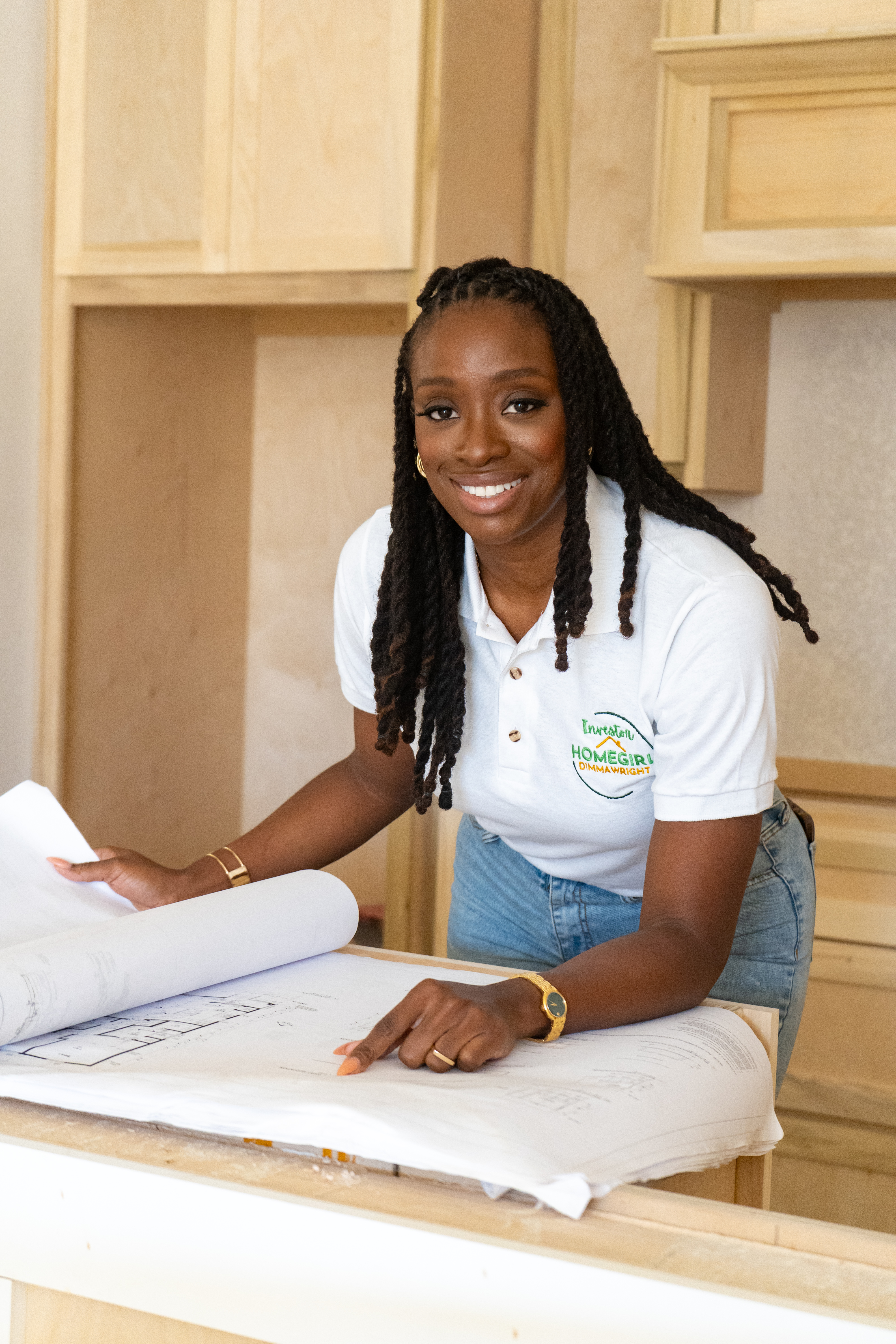
The HBCUpreneur Corner – Florida A&M University’s Dimma Wright & Dimma Wright Real Estate Consulting

Name: Dimma Wright

Alma Mater: Florida A&M University

How long have you been in real estate investment? 6 years

What has been the most exciting and/or fearful moment during your HBCUpreneur career? The moment I decided to leave my full time job as a senior physical therapist at a top tier hospital and become a full time entrepreneur and manifest my destiny!

What made you want to start real estate investing? I wanted to create wealth and have the freedom with my time to spend it how I wanted. 

How do you handle complex problems? I simplify them to the basics on what is necessary to complete first then move to the least and unimpactful item last.

Who was the most influential person/people for you during your time in college? My professors, they were always encouraging and talked real life aspects to prepare me for the real world outside of school.

What is something you wish you had known prior to your first real estate investment? That I should have started investing in real estate ever since I was working and living at home with my mother after I graduated.  I didn’t have to have all the pieces in place before I started.

Would you advise someone to buy a primary home or investment property first? I would advise them to do both.  A primary home can be utilized to be your investment property, can house hack with a duplex or a single family home large enough to rent out rooms if you desired.  Or purchase a primary home that allows you to save for down payment to another investment property or home to move into and rent your current one out.

What is one current trend in real estate investing, and how can investors take advantage of it?  The updated fannie mae conventional loan to buy a multi-family (2-4 door unit), allows 5% down payment. Before it required 20-25% down payment, that is why all opted for FHA 3.5% down payment, now you can scale to more properties as a primary residence without having to refinance out of FHA loan every year or so.

Artificial Intelligence is everywhere and its presence in real estate is certainly likely to grow like everywhere else. How do you see it impacting real estate investing in particular? I would want it to underwrite a deal for me quick and fast or I upload a video of the house and it tells me all the repairs needed and estimated costs, that would be cool.

Do you see any potential headwinds that maybe facing real estate investors in the near future? No, true investors learn to adapt in any environment and any obstacle.  As long as your mind is right, you will persevere.

Is there anything you read or follow in order to stay an informed real estate investor?  I listen to podcasts all on the real estate subject, I take webinars and active at different networking events.

How do you believe HBCUs can help spur more aptitude for understanding real estate investment while their students are in school either as undergraduate or graduate students? I would say to offer more financial literacy courses, help students to understand you can make money but if you are not smart with those decisions Uncle Sam and bad habits will leave you with nothing.  Also, to understand all the different taxes that come out of paycheck, it helps to offset extra money with an llc.

How do you deal with rejection? I smile and say thank you for your time.

When you have down time how do you like to spend it? I spend it being harassed by my kids and/or watching movies.

What was your most memorable HBCU memory? I met my husband at a local nightclub in Tallahassee. He was also at FAMU grad school, different major than me.

Lastly, is there any advice you have for budding HBCUpreneurs in real estate? Discipline leads to habits, habits lead to consistency, consistency leads to growth.  Changing your mindset will open more doors for you!

Two Wrongs Do Not Make A Generational Wealth: Elvin, Sondra, The Huxtables – And A Wilderness Store

You are the bows from which your children as living arrows are sent forth. – Khalil Gibran

Building wealth in this country is hard. Building African American wealth in this country feels like trying to send a man to the moon, but airplanes have not even been invented yet, you are blind, your hands are tied behind your back, and there is a constant threat of someone threatening to kill you because you breathed wrong that day – as you try to send a man to the moon. This is not just hyperbolic speak. The Brookings Institution reported that European Americans in the bottom 20th percentile have a 500 percent greater chance of reaching the top than their bottom 20th percentile African American counterparts.

This is in large part rooted in two key economic moments in African America’s economic history. First, post Civil War when African Americans were supposed to be given what would be equivalent to 160 million acres of land, Andrew Johnson reneged in typical European American fashion as the Native Americans can attest to on seemingly every treaty they tried to agree to. The 160 million acres of land is impossible to truly value in some ways in today’s dollars because of opportunities for development and where exactly that land would have been is unknown. However, using the USDA’s land valuation as an elementary measuring stick, “The United States farm real estate value, a measurement of the value of all land and buildings on farms, averaged $3,800 per acre for 2022, up $420 per acre (12.4 percent) from 2021.” Based on that $3,800 per acre valuation holding constant, then African America’s 160 million acres would be worth $608 billion. Again, this is just a valuation of that land holding constant as farm land. Given the urbanization of the United States over the past 150 years, it is safe to say that a good portion of that 160 million acres would have been developed and could move the value of that land into the trillions. The $608 billion would be worth almost $15,000 per every African American man, woman, and child today. It is in fact almost 40 percent of African America’s $1.6 trillion in buying power alone and almost 25 percent of African America’s $2.6 trillion in real estate holdings today.

Then there is the grand slam policy that truly dug a grave for African America’s economic future, America’s post World War II G.I. Bill that Russell Huxtable, Dr. Huxtable’s father and army veteran in the 761st tank battalion (Season 3 Episode 11 “War Stories), would have been likely denied along the rest of the 1.5 million African American soldiers who served in World War II. The G.I. Bill arguably built the wealth gap today as we known it because it provided government funds in a way never seen before and not seen since to a group in this particular case to European American veterans to go to college, buy homes that today are alone worth trillions to their descendants, start companies which have created trillions in wealth. It should be noted that a good deal of that wealth has flowed back into PWIs coffers over the years, where there are today more PWI endowments with $1 billion or more in value than there are HBCUs – who have yet to see even one of our institutions reach such endowment value. The government sponsored leverage to European Americans and denial to African Americans contributes today to the institutional depletion of African American owned banks that have dwindled from 134 to just 16 left as of 2023, African American owned hospitals from 500 to 1, African American boarding schools from 100 to 4, and the list goes on and on. And while Russell and Anna Huxtable did well for their children, the denial of those early access to capital would show up generations later in the form of fear that would have Dr. and Mrs. Huxtable encouraging their child and her partner to choose security over risk. It also causes Sandra and Elvin to be irrationally independent and not look to the Huxtables as initial investors in their wilderness store.

It is one of the more memorable storylines told within The Cosby Show’s universe. Elvin Thibodeaux and his bride the former Sandra Huxtable inform Dr. Huxtable and Mrs. Huxtable, Esq. that they are both abandoning the tried and true formula of doctor and lawyer professions to be entrepreneurs. After Mrs. Huxtable talks Dr. Huxtable off the cliff from Elvin’s announcement, it is then Dr. Huxtable’s turn to do the same for Mrs. Huxtable, Esq. who learns that her daughter plans to join her husband in their entrepreneurial journey and to quote Mrs. Huxtable’s feelings about her daughter’s husband “dragging” her daughter into this endeavor, “and ruin what is potentially the greatest legal mind of this century”. Mrs. Huxtable demands that Sandra repay her $79,648.22, the amount the Huxtables paid for Sandra to attend Princeton. Today, that same Princeton education would cost $83,140 per year or $332,560 for four years for perspective. Not only do Sandra and Elvin push forward with extreme begrudging support the Huxtables they do so as Sandra is pregnant with what everyone believes is one child that we know turns out to be twins who are aptly named, Winnie and Nelson as an ode to the Mandelas. Sondra and Elvin refusal to ask for any help or initially take any help finds them living in a slum apartment with a slumlord where the water coming out of the faucet is brown and a myriad of other problems. Ironically, it is Denise who brings the warring parties together and both sides apologize, make amends, and Sondra and Elvin agree (for the sake of the babies) that they will seek new housing with financial assistance from the Huxtables.

However, The Thibodeaux Wilderness Store (TWS) viewed through the lens of a sporting goods store would be part of an industry in the United States alone that has grown from $15.6 billion in 1992 to $64.5 billion as of 2021 according to Statista. An increase of over 400 percent. Led by the U.S. largest publicly traded sporting goods store, Dick’s Sporting Goods valued at $10 billion. The largest individual shareholder is the son of the founder, Edward Stack who has a 10 percent ownership of the company and a net worth of $1.9 billion according to Forbes. Now imagine for a moment instead of Dick Stack’s grandmother giving him a loan of $300 to start Dick Sporting Goods that the Huxtables give Sandra and Elvin the amount needed to start The Thibodeaux Wilderness Store that becomes worth $10 billion and would be the most valuable publicly traded African American owned company. Whereby, the Huxtable-Thibodeaux family clan is worth $1.9 billion and making them solidly among African America’s wealthiest.

Thibodeaux Wilderness Store as a company is easily the largest employer of African Americans in the country employing over 50,000 workers. Dr. and Mrs. Huxtable, Esq. become Hillman’s largest donors with the Huxtable name adorning Hillman’s medical school and Hanks (Claire’s maiden name) adorning the Hillman law school transforming Hillman into the only second full service HBCU along with Howard University. They are taken public by an African American investment banking firm and a percentage of the company’s stock is purchased and held by Hillman and other HBCU endowments. Their corporate banking sits with an African American owned bank that allows the bank to in turn provide loans to thousands of small African American businesses and potential African American homebuyers. This is the power of transformative wealth – it quite literally can transform if it is in the hands of the right people. However, as we see it takes a family taking the risk to build a firm backed by the capital, security, and support of the family and community around them. The latter is exactly what the Huxtables had to offer Elvin and Sondra as they sought to build their company.

Encouraging firm building within African American/HBCU families is vital to build generational wealth. Dr. and Mrs. Huxtable, Esq.’s jobs as doctor and lawyer, respectively allows a family to build up the capital base and stability needed to take on the risk of starting a firm. To take the family to the next level requires both their stability and their willingness to see their children and grandchildren take risk the stability provides. We often lose sight of this in thinking that high paying jobs are the thing that will build generational wealth when they are still ultimately just that – jobs. In both respects the Huxtables are vital and Sondra and Elvin are vital in the evolution of a family’s resources. Fighting the urge to settle is hard for many African American families because stability has been and is still a generational fight for many African American families with over 20 percent of African American families still trying to climb out of poverty, the largest among any ethnic group in the U.S., is easy to understand the reluctance. Yet, that reluctance is costing us greatly in our ability to create generational wealth for our families and transformative wealth for African American institutions and communities. Sondra and Elvin ultimately needed to embrace the help of the Huxtables and the Huxtables needed to embrace the risk of Sondra and Elvin. This is how we move forward, this is how we close the gap, and this is how we change the lives of 40 plus million that make up African America.