Monthly Archives: November 2025

What Berkshire Buys Next: The Five Giants That Fit Buffett’s Playbook

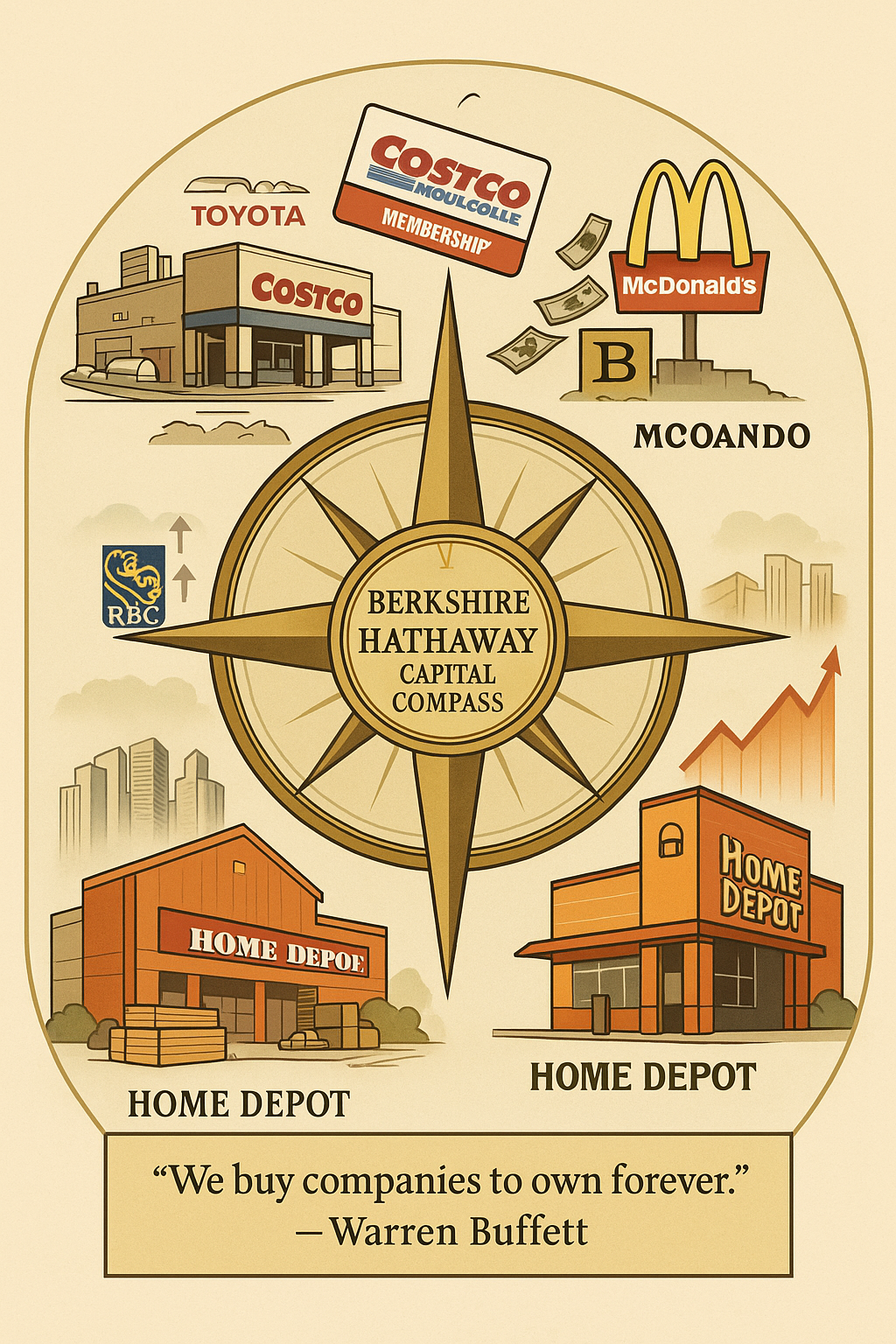
In Omaha, Berkshire Hathaway’s cash pile has grown so large that even Wall Street marvels at its inertia. With over $380 billion in cash and short-term Treasuries, the conglomerate is sitting on more dry powder than most central banks. Yet Warren Buffett and his successor, Greg Abel, have long maintained that capital must only move when the odds of permanent capital loss are near zero.

Now, with global markets resetting post-2020 stimulus and inflation anchoring valuations, the question becomes: what could Berkshire buy next that would be both large enough to matter and philosophically sound enough to pass Buffett’s test of simplicity, durability, and trust?

The five most plausible candidates — Costco, McDonald’s, Home Depot, Royal Bank of Canada, and Toyota — each satisfy that mix of prudence, predictability, and permanence that defines Berkshire’s century-long strategy of buying “businesses, not tickers.”

Buffett’s philosophy has been remarkably consistent for over six decades: buy simple, cash-rich, moated businesses led by trustworthy managers. Berkshire’s model of quasi-permanent ownership, decentralized operations, and disciplined capital allocation has made it the corporate equivalent of a sovereign wealth fund — except its sovereign is capitalism itself.

Greg Abel, the man expected to succeed Buffett, has only reinforced this model. Coming from Berkshire Energy, Abel represents the “real economy” side of the house preferring tangible assets, regulated returns, and predictable cash flow over the exuberance of speculative innovation.

Hence, the next Berkshire deal is not likely to be an AI startup or fintech disrupter. It will be a “forever asset” — a company that compounds quietly and defends its margins under any macro regime.

Given Berkshire’s sheer scale of over $1 trillion in market capitalization a target must have an enterprise value north of $200 billion to meaningfully “move the needle.” Anything smaller, and the math of compounding becomes negligible.

🧩 The Berkshire Universe: Themes and Tendencies

Berkshire’s portfolio reads like a map of the American and global economy’s most reliable arteries:

CategoryCore HoldingsTraits
FinancialsAmEx, Bank of America, Moody’s, ChubbHigh ROE, capital-light, recurring revenue
Consumer StaplesCoca-Cola, Kraft Heinz, DiageoGlobal brands, predictable demand
Energy / IndustrialsChevron, Occidental, MitsubishiReal assets, inflation hedge
TechnologyApple, Amazon (small), VeriSignCash-rich ecosystems
Infrastructure / InsuranceBNSF Railway, BH ReinsuranceTangible durability, “float” generation

This structure provides a blueprint for what comes next: reinforcement, not reinvention. Berkshire rarely pivots; it doubles down on what works. It will seek businesses that (1) resemble what it already understands, and (2) offer inflation-protected earnings streams in a world of higher nominal rates.

From the universe of firms valued between $200 billion and $450 billion, only a handful exhibit the balance of predictability, management integrity, and strategic fit Berkshire demands.

A closer look through Buffett’s filters narrows the field to Costco, McDonald’s, Home Depot, Royal Bank of Canada, and Toyota. Each operates in a sector Berkshire already knows and each represents a bridge between the company’s past and its post-Buffett future.

1. Costco Wholesale (Ticker: COST)

The Cult of Value Meets the Culture of Discipline

Buffett has long admired Costco’s operating model. It is a retailer that sells everything from fresh salmon to fine jewelry but in truth, it sells trust. Its membership model generates annuity-like revenue, while its relentless efficiency and scale provide a durable moat against both inflation and digital disruption.

Charlie Munger, Buffett’s late partner, once served on Costco’s board and famously said, “Costco is one of the most admirable capitalistic institutions in the world.” That legacy alone makes a partial acquisition symbolically powerful.

While a full buyout (market cap ≈ $405 billion) may be too expensive, a 20–30% stake would make sense. It would give Berkshire exposure to global consumer spending and provide a stabilizing counterpart to its stake in Apple, a brand built on loyalty, not leverage.

In the age of shrinking retail margins, Costco remains an inflation hedge, its pricing power born from scale, not greed. Buffett has always preferred such quiet dominance.

2. McDonald’s (Ticker: MCD)

Fast Food, Slow Capital

If there were ever a brand that personifies Buffett’s doctrine of “durable competitive advantage,” it is McDonald’s. With over 40,000 locations in 100+ countries and a business model centered on franchised cash flow, McDonald’s is the quintessential predictable earner.

Its asset-light structure means free cash flow margins north of 25%, while its real-estate footprint functions as an embedded REIT. In a world of digital payments, delivery, and global inflation, McDonald’s pricing agility is unmatched. It can raise prices by 5% globally without denting demand, a privilege of brand addiction.

Moreover, McDonald’s cultural synergy with Coca-Cola (another Berkshire cornerstone) cannot be overstated. Both are global empires built on ubiquity, habit, and nostalgia. A merger of ownership philosophy, if not of products, would anchor Berkshire’s consumer-staples dynasty for another half-century.

At ~$218 billion market cap, McDonald’s is one of the few full-scale acquisitions Berkshire could realistically afford outright.

3. Home Depot (Ticker: HD)

Owning the American Rebuild

Buffett once said that he bets on the “resilience of the American homeowner.” Home Depot, valued around $372 billion, is the most efficient expression of that belief.

As infrastructure spending rises and housing shortages intensify, Home Depot sits at the crossroads of construction, repair, and consumer credit. Its business model converts cyclical demand into steady dividend growth. For Berkshire, already owning materials firms and insulation producers, a significant stake in Home Depot would complete a “vertical household economy” from supply chain to consumer.

Its store footprint and brand loyalty parallel BNSF’s railroad network: both are national arteries essential to the domestic economy. Buffett loves owning irreplaceable distribution infrastructure and Home Depot’s logistics system is precisely that.

4. Royal Bank of Canada (Ticker: RY)

The Conservative Bank That Would Make Carnegie Smile

Berkshire’s financial core is deep, but largely American. A Royal Bank of Canada acquisition would expand its footprint across North America’s second-largest and most stable financial system.

RBC’s strengths are conservative underwriting, dominant market share in wealth management, and a culture of steady, compounding profitability which mirror Buffett’s historical love of American Express and Bank of America.

Moreover, Canada’s heavily regulated banking environment protects incumbents from competition. Berkshire thrives in such “wide-moat oligopolies.”

At a market cap of $208 billion, the bank is small enough for a full acquisition but large enough to deploy Berkshire’s idle cash meaningfully. It would also diversify currency exposure and hedge U.S. economic concentration, a quiet, Abel-style move.

5. Toyota Motor Corp. (Ticker: TM)

Japan’s Crown Jewel of Industrial Resilience

Berkshire already owns minority stakes in five major Japanese trading houses, a calculated bet on the nation’s industrial discipline. Extending that strategy into Toyota would be the logical next step.

Toyota’s balance sheet, manufacturing excellence, and hybrid-vehicle leadership make it a quintessential “Buffett business” hidden inside an automaker. Unlike the tech-saturated EV startups, Toyota’s philosophy of gradual innovation, prudence, and reliability mirrors Berkshire’s own.

The two even share a cultural ethos: long-termism over trend-chasing.

At roughly $268 billion market cap, a 10–20% strategic stake would echo Buffett’s Japanese diversification theme without the regulatory complexity of a full acquisition. It would also position Berkshire for the eventual rise of hybrid and hydrogen vehicles in emerging markets, aligning with its energy portfolio’s shift toward renewables.

💰 Financial Feasibility: Deploying $250 Billion Wisely

Even Berkshire’s cash hoard has limits. Deploying $150–$250 billion must pass both the Buffett test (certainty of cash flow) and the Abel test (inflation resilience).

A possible portfolio of acquisitions could look like this:

TargetMarket Cap (USD)Likely ApproachStrategic Rationale
Costco$405B20–30% stakeGlobal retail + subscription revenue
McDonald’s$218BFull acquisitionCash flow, brand power, inflation hedge
Home Depot$372B20–30% stakeU.S. infrastructure exposure
Royal Bank of Canada$208BFull acquisitionNorth American financial expansion
Toyota$268B10–20% stakeJapan industrial diversification

In total, such a deployment would utilize around $200 billion, leaving liquidity for buybacks and opportunistic purchases.

This mirrors Berkshire’s historical pattern: buying large minority stakes in global champions, then waiting for market corrections to accumulate more — the “silent control” strategy that has defined its rise.

Strategic Summary: The Post-Buffett Blueprint

The post-Buffett Berkshire era will be one of institutional continuity, not radical change. Greg Abel’s likely leadership ensures that the company remains disciplined, risk-averse, and industrially grounded.

These five potential acquisitions — Costco, McDonald’s, Home Depot, Royal Bank of Canada, and Toyota — collectively represent Berkshire’s five pillars of permanence:

  1. Consumer Trust (Costco) – Loyalty as an economic moat.
  2. Everyday Habit (McDonald’s) – Cash flow as culture.
  3. Infrastructure (Home Depot) – Building the backbone of America.
  4. Finance (RBC) – Conservative capital compounding.
  5. Industry (Toyota) – Global operational excellence.

Each adds a layer of diversification without diluting Berkshire’s DNA. Together, they form a defensive fortress against inflation, technological disruption, and economic cycles — precisely the environment Berkshire was built to survive.

For HBCU endowments and African American institutional investors, Berkshire’s approach holds a powerful parallel. The key lesson is patience married to scale. Berkshire’s compounding model demonstrates how disciplined reinvestment — not speculative churn — builds generational wealth.

Like Berkshire, HBCU financial ecosystems can create “institutional compounding engines” by investing in enterprises that share cultural familiarity, operational durability, and intergenerational value. Buffett calls it “the joy of owning good businesses forever.”

For African American institutions, that translates to owning — not merely funding — the infrastructure of our own economies.

Berkshire Hathaway stands at an inflection point. The post-Buffett era will not be about reinvention but reaffirmation — proving that its model of ethical capitalism can persist without its founding prophet.

The five plausible acquisitions ahead — Costco, McDonald’s, Home Depot, Royal Bank of Canada, and Toyota — are not just balance-sheet moves; they are philosophical statements.

Each embodies what Buffett has called the “virtue of patience in a speculative age.” And as markets oscillate between AI euphoria and geopolitical anxiety, Berkshire remains what it has always been: a monument to quiet power and compounding discipline.

For long-term investors — from sovereign funds to HBCU endowments — that discipline remains the truest asset class of all.

Disclaimer: This article was assisted by ChatGPT.

Are New Mexico, Maine, Puerto Rico, and the U.S. Virgin Islands the Only Social, Economic, and Politically Safe Territories for African Americans?

“Every great dream begins with a dreamer. Always remember, you have within you the strength, the patience, and the passion to reach for the stars to change the world.” — Harriet Tubman

For African Americans, safety has never been an assumed part of citizenship. It has always been an earned condition won through vigilance, strategy, and often migration. Whether fleeing the violent collapse of Reconstruction or the economic despair of the Jim Crow South, Black Americans have long measured geography as a question of survival. Today, in an America increasingly polarized by race, ideology, and inequality, that calculation has returned. Many are quietly asking: where can African Americans live, work, and raise families with peace of mind? The answer, surprisingly, may not be in traditional Black strongholds like Atlanta, Washington, D.C., or Houston, but in four unlikely places—New Mexico, Maine, Puerto Rico, and the U.S. Virgin Islands—where moderation, multicultural coexistence, and relative political calm offer something rare: a sense of safety that is not performative, but lived.

New Mexico’s reputation as a cultural crossroads has made it one of the few states where African Americans can exist without being framed entirely through America’s racial binary. Its tri-cultural balance among Native American, Hispanic, and White populations disperses dominance. Here, no single identity owns the political landscape. For African Americans who comprise about two percent of the population that means a degree of breathing room. Racial prejudice still exists, but it rarely defines every interaction. The social climate is cooperative, rooted in shared marginalization rather than supremacy. Albuquerque, Las Cruces, and Santa Fe have become quiet havens for African American educators, small-business owners, and retirees seeking both affordability and dignity.

Economically, New Mexico offers something most metropolitan centers have lost: a manageable cost of living and accessible capital. Housing remains attainable. Land ownership long denied to African Americans through discriminatory lending remains within reach for the working and middle class. The rise of renewable energy, sustainable agriculture, and technology hubs has also created new entry points for Black entrepreneurship. In Albuquerque’s South Valley or near Santa Fe’s art cooperatives, one can find a small but visible community of African Americans carving lives that are not merely about surviving but thriving without the constant defensive posture that characterizes so many other states. Safety here is less about walls and more about balance, a social equilibrium where race is a fact, not a fault line.

Maine, on the other hand, is proof that peace can coexist with isolation. Its African American population is minuscule, but its civic culture is built on moderation and integrity. The state’s “town meeting” governance style, where citizens vote directly on local issues, nurtures accountability rarely seen elsewhere. For African Americans who relocate to Portland, Bangor, or Augusta, that transparency matters. Racism in Maine exists, but it lacks institutional depth. More often, African Americans report curiosity over hostility, and when discrimination does occur, it tends to meet public rebuke rather than official silence.

Politically, Maine is refreshingly pragmatic. It elects moderates and independents, resists extremist rhetoric, and maintains a social compact where neighbors generally still speak to each other across ideological lines. For African Americans weary of coded politics, it feels like a return to something America once promised, a functioning democracy. The result is a form of safety rooted not in numbers, but in governance. A place where you can walk, vote, and live without fearing that tomorrow’s election will determine whether your humanity is negotiable.

But safety does not always mean the mainland. Beyond the continental U.S., Puerto Rico and the U.S. Virgin Islands present another dimension of refuge one built on shared African lineage and the lived realities of Caribbean identity. For African Americans seeking both cultural familiarity and distance from America’s racial fatigue, these territories offer a paradoxical safety: not post-racial, but post-obsessive.

Puerto Rico, long a bridge between Latin America and the U.S., exists in an in-between space that defies racial simplification. Its majority Afro-Latino population gives race a different vocabulary one where color is noticed but hierarchy is more fluid. African Americans arriving there encounter both kinship and complexity. In cities like San Juan or Ponce, African American expatriates blend into an Afro-diasporic continuum that feels familiar yet distinct. The island’s economic struggles are real: bankruptcy, hurricanes, and colonial neglect have left deep scars but its community resilience and shared sense of oppression produce solidarity rather than hostility. For African Americans, that means an environment where “Blackness” is neither exoticized nor demonized, but part of the island’s social DNA.

Economically, Puerto Rico also provides opportunities for African Americans seeking new beginnings in real estate, tourism, or renewable energy sectors. The island’s special tax status and evolving investment laws have attracted mainland professionals and entrepreneurs, some of whom are African American innovators bringing capital and ideas into local partnerships. In this sense, Puerto Rico is not only a sanctuary but also a frontier, a place where the African Diaspora’s ingenuity can meet an economy in reinvention. For those seeking cultural reconnection, the island’s Afro-Boricua traditions like bomba music, Loíza’s festivals, and the rhythms of African pride create an echo of belonging that many African Americans have long been denied in the continental United States.

Then there is the U.S. Virgin Islands, a cluster of Caribbean jewels that quietly symbolize what safe, small-scale Black governance can look like. On St. Thomas, St. Croix, and St. John, African-descended people form the majority. That demographic fact changes everything. Here, African Americans are not minorities but members of a larger Black polity with its own traditions, institutions, and history. The islands’ governance, while tied to Washington, reflects local leadership rooted in Afro-Caribbean sensibilities. For African Americans relocating from the mainland, this translates into a rare psychological experience: existing in a majority-Black jurisdiction where public policy, education, and business life are not filtered through White validation. Safety here is political self-determination.

Economically, the U.S. Virgin Islands are not without challenge like high import costs, hurricane vulnerability, and limited diversification test resilience but they offer something profound in return: cultural sovereignty. African Americans who move there often describe an adjustment period followed by a deep sense of exhale. The smallness of scale fosters community accountability, and the absence of constant racial tension allows ambition to flow without invisible friction. One can walk into a bank, a classroom, or a government office and see reflections rather than reminders of marginalization.

Taken together, New Mexico, Maine, Puerto Rico, and the U.S. Virgin Islands form a loose constellation of calm, a diaspora of safety within the larger storm of American contradiction. What unites them is not homogeneity, but a commitment to civility and shared humanity. Each location offers a different version of safety: political moderation in Maine, cultural equilibrium in New Mexico, diasporic kinship in Puerto Rico, and demographic sovereignty in the Virgin Islands. For African Americans navigating the exhaustion of a national identity under siege, these places suggest that peace might still be found without surrendering pride or progress.

The broader question, however, remains: why must African Americans still seek safety within the very nation they helped build? The resurgence of racial authoritarianism, book bans, and economic inequality reveals a hard truth that safety for African Americans is still conditional, still regional, still a choice rather than a guarantee. Yet, migration has always been the community’s answer to oppression. From the Underground Railroad to the Great Migration, movement has been both resistance and renaissance. Harriet Tubman’s words remain instructive: “Every great dream begins with a dreamer.” Migration, for African Americans, has always been dreaming in motion.

New Mexico and Maine show what governance without racial hysteria looks like. Puerto Rico and the Virgin Islands show what culture looks like when Blackness is normalized rather than marginalized. Together, they present a vision of what the United States could be if its diversity were truly reconciled with its democracy. They remind African America that safety is not about retreating from the nation but reimagining its geography of belonging.

Still, each of these places carries limitations. In New Mexico and Maine, African Americans may find safety but also scarcity with few cultural institutions, churches, or schools designed with them in mind. In Puerto Rico and the Virgin Islands, economic instability and natural disaster risks complicate long-term security. Yet, in all four, there exists something invaluable: the absence of daily racial siege. That reprieve can be transformative. It gives space for creativity, family stability, and the rebuilding of wealth without the constant drag of social mistrust.

As the nation’s politics grow more volatile, African American institutions (HBCUs, banks, and foundations) should view these geographies not simply as refuges but as development frontiers. Instead of imagining new HBCU presences in the Caribbean, they can expand partnerships with the University of the Virgin Islands already a proud HBCU anchoring the region to create joint research programs, faculty exchanges, and diasporic economic initiatives that strengthen both the mainland and the islands or research partnerships with Puerto Rican universities. Imagine Black-owned renewable energy firms anchoring in New Mexico, or a cooperative investment network expanding into Maine’s emerging industries. Safety, after all, is not just the absence of harm it’s the presence of opportunity.

There is a growing possibility that the 21st-century African American migration will not be toward cities of hustle, but toward territories of harmony. Where one can walk into a classroom, café, or coastal market and not feel their presence as provocation. Where the conversation around “diversity” is not theoretical but lived. The call of these four places is subtle but powerful: build where you can breathe.

If history is cyclical, then the current search for safety is not retreat but renewal. Each of these geographies offers a mirror to what African America has always done transform uncertainty into community. From the deserts of the Southwest to the coasts of New England and the Caribbean, a new map of refuge is emerging. Whether the destination is the Sandia Mountains, Casco Bay, San Juan’s Old Town, or Charlotte Amalie’s harbor, the journey is the same: toward dignity.

In the end, the question may not be whether these are the only safe places, but whether they are the first to show what safety could mean in practice. For a people whose freedom has always been self-forged, safety is never static it is strategy. And in that strategy, migration remains both memory and mission.

Disclaimer: This article was assisted by ChatGPT.

Family Matters: Since A Different World, Fictional African American Families All Go PWI

“If you can control a man’s thinking you do not have to worry about his action. When you determine what a man shall think you do not have to concern yourself about what he will do. If you make a man feel that he is inferior, you do not have to compel him to accept an inferior status, for he will seek it himself. If you make a man think that he is justly an outcast, you do not have to order him to the back door. He will go without being told; and if there is no back door, his very nature will demand one.” – Carter Godwin WoodsonThe Mis-Education of the Negro

When Whitley Gilbert left Hillman College to marry Dwayne Wayne, a generation of Black America cried, laughed, and dreamed in unison. For six seasons, A Different World gave us a vision of what it meant to grow intellectually, emotionally, and culturally at a Historically Black College or University (HBCU). Hillman wasn’t just a fictional school — it was a cultural landmark, a stand-in for the pride, politics, and promise of Black higher education.

But somewhere along the way, the narrative shifted. Fast-forward thirty years, and the children of Cliff and Clair Huxtable, Uncle Phil and Aunt Viv, or Dre and Rainbow Johnson are not headed to Hillman or Howard — they’re off to Ivy League PWIs or West Coast elite universities that barely acknowledge the HBCU ecosystem. On screen, Black excellence has become synonymous with integration, not institution-building.

What happened?

The Fade of Hillman: Why Representation Matters

To understand the cultural loss, we must understand what was gained when A Different World aired. Created as a spin-off from The Cosby Show, the series debuted in 1987 and eventually found its voice under the direction of Debbie Allen, a real-life HBCU graduate from Howard University. Allen infused the series with storylines rooted in the authentic experiences of Black students at Black schools — tackling topics like apartheid, colorism, student activism, Black love, and the sacredness of community.

The result? A nationwide spike in interest and applications to HBCUs. According to a 1992 report from the National Center for Education Statistics, Black college enrollment rose dramatically in the years A Different World aired — and many credit the show directly. The series normalized Black educational excellence, not through assimilation, but through self-determination.

In contrast, today’s TV shows treat HBCUs like cultural relics or, worse, invisible.

Fictional Families, Real Cultural Drift

In the post-Different World era, shows featuring Black families are more likely to send their children to predominantly white institutions (PWIs). On Black-ish, Dre and Rainbow’s son, Junior, eventually enrolls at a PWI despite an entire episode wrestling with the idea of going to Howard. In Grown-ish, Zoey Johnson attends the fictional California University, an obvious PWI stand-in, where the HBCU experience is nearly absent except when stereotypically contrasted for “wokeness” or culture clashes.

Even the reboot of Bel-Air, which offered a chance to lean into the richness of Black institutions, leans hard into elite whiteness. The Banks children navigate high schools and social spaces that echo white privilege, and the specter of HBCUs exists only in passing remarks — not as anchors of identity or aspiration.

On-screen, Blackness now often arrives pre-approved, curated for corporate palatability. Gone is the unapologetic emphasis on Black space and self-definition. The message is subtle but clear: assimilation is the prize; institution-building is passé.

Where Are the HBCU Families?

It is not just that fictional African American families aren’t choosing HBCUs — it’s that HBCUs don’t seem to exist in their world at all. Despite the fact that over 100 HBCUs operate in the United States — from Morehouse and Spelman in Atlanta, to Prairie View in Texas, to North Carolina A&T and Virginia State — they rarely show up in the stories told to us about our own families.

This erasure is not accidental. It reflects the broader cultural currents in which HBCUs have been strategically underfunded, disrespected by mainstream rankings, and underrepresented in media. And when art imitates life — or vice versa — the omission becomes part of a feedback loop: if HBCUs aren’t shown on TV, they seem less relevant; if they seem less relevant, fewer students apply; fewer students mean less alumni giving, and the cycle of marginalization continues.

Consider this: how many Black TV writers, producers, and showrunners today are HBCU alumni? How many even mention their HBCU pride in interviews, bios, or creative work?

The cultural pipeline has cracked — and the representation on screen reflects that fracture.

Assimilation as a Storyline — And a Trap

There’s a reason The Fresh Prince of Bel-Air worked so well. Will’s Philadelphia-born charisma collided with Carlton’s prep-school privilege, creating a comedy of contrasts rooted in class, code-switching, and internalized white gaze. But even then, Will and Carlton both eventually attended the fictional ULA — another HBCU stand-in — and the show made space to honor Black institutions. In today’s remakes and reboots, the goalpost has moved. The tension no longer lies in navigating Blackness within Black spaces — it’s about achieving acceptance in white ones.

That’s dangerous.

When every fictional Black success story leads to a PWI, the message isn’t just one of educational preference — it’s a silent endorsement of the idea that Black excellence only matters when validated by white institutions. It undermines the legacy of HBCUs and implicitly suggests that the spaces Black people built for themselves are less worthy of screen time or societal investment.

The Stakes Are Real

This is more than a cultural critique. It’s an economic, social, and political issue. HBCUs graduate 80% of Black judges, 50% of Black lawyers, 40% of Black engineers, and 40% of Black Members of Congress. They are engines of Black leadership — and media has the power to either support or suppress that momentum.

Shows like A Different World didn’t just entertain — they built pipelines. They encouraged enrollment, boosted donations, and sparked policy conversations. At their best, they acted as visual endowments, depositing cultural capital into communities that needed it most.

When those narratives disappear, so does the incentive for viewers to value or invest in HBCUs. Worse, it renders the very idea of building Black institutions obsolete in the cultural imagination.

Why The Writers’ Room Needs HBCUs

The disappearance of HBCUs from fictional family life is also a commentary on who’s writing the stories. As Hollywood grapples with diversity, equity, and inclusion, it continues to rely heavily on Ivy League or top PWI talent pipelines. While some HBCU alumni are breaking through — such as Lena Waithe (Columbia College Chicago, but often a supporter of HBCUs) and Taraji P. Henson (Howard University) — there is still no wide-scale industry embrace of HBCU-trained writers, producers, or creatives.

This matters.

Representation isn’t just about who’s on screen — it’s about who decides what stories are told, who centers the cultural context, and who gets to be the architect of Black futures.

The Cultural Cost of Being “The Only One”

There’s a deep psychological tax in being “the only one” — a familiar theme in shows that send Black characters to elite PWIs. Whether it’s Zoey Johnson navigating white professors or Carlton Banks handling racial profiling by the police, these storylines, while real, often celebrate survival rather than thriving. They portray success as proximity to whiteness rather than mastery of one’s own.

Contrast this with Hillman, where students struggled, triumphed, fell in love, challenged politics, and made mistakes — all within a culturally affirming environment. The campus was Black. The professors were Black. The rules, norms, and traditions were Black.

That distinction is powerful.

In a world increasingly shaped by algorithms, streaming wars, and performative diversity, where we imagine Black life unfolding — especially for fictional families — is just as important as what happens.

Black-Owned Media: The New Front Line of Cultural Restoration

If the absence of HBCUs from our screens reflects a loss of cultural focus, then the solution lies not just in pleading for more representation — but in owning the means of production, distribution, and storytelling. For generations, Black-owned media has served as a counterbalance to the marginalization found in mainstream outlets. But today, especially in an era defined by digital platforms, there’s a new frontier of opportunity — and HBCUs are uniquely positioned to lead.

To change the narrative, we must also change the narrators.

HBCUs as Incubators for Black Media Ownership

HBCUs are not just educational institutions — they are cultural laboratories. Schools like Howard University, Florida A&M, and North Carolina A&T have produced a long lineage of journalists, filmmakers, producers, broadcasters, and business leaders in media. Cathy Hughes, the founder of Urban One (formerly Radio One), the largest African American-owned broadcasting company in the U.S., began her media career at Howard. Her success is not the exception — it’s the proof of concept.

What if more HBCUs developed cross-disciplinary media programs that fused journalism, film production, and business with a distinctly Afrocentric and institution-building ethos? Imagine an HBCU student graduating not just with a film degree, but with the rights to a series developed in a campus-run studio, ready to be licensed to a Black-owned distribution network. Imagine HBCUs running their own content incubators — writing rooms, studios, streaming apps — where the next A Different World is created by us, for us.

Building Our Own Pipelines: From Classroom to Platform

For too long, Black creatives have had to depend on mainstream networks or streaming services to greenlight their work. This gatekeeping often results in sanitized or stereotyped representations, with HBCUs either ignored or distorted. But what if HBCUs created their own media pipelines — complete with production houses, content libraries, and distribution partnerships?

Howard University already owns WHUR 96.3, a powerhouse urban radio station in Washington, D.C. Florida A&M operates WANM, its campus radio station. Spelman and Morehouse have nurtured partnerships with media production companies. These are the seeds of a broader media ecosystem.

Now imagine:

  • HBCU Streaming Networks: Think “HBCUflix,” operated by a consortium of HBCUs with a content catalog drawn from student filmmakers, professors, and alumni creatives.
  • Campus-Controlled Local TV Stations: Using FCC-designated low-power TV station licenses to broadcast HBCU sports, lectures, news, and entertainment to local communities.
  • Black-Owned Newsrooms: Reviving the tradition of the Chicago Defender or Pittsburgh Courier in digital form, anchored by HBCU journalism schools.

This isn’t hypothetical. It’s blueprint-ready. What’s required is a collective investment of time, capital, and institutional will — plus alumni and philanthropic backing — to scale these models.

In the evolving landscape of Black-owned media, DeShuna Spencer stands out as a visionary force. As the founder and CEO of kweliTV, Spencer has created a platform that not only amplifies Black voices but also serves as a blueprint for how Historically Black Colleges and Universities (HBCUs) can reclaim and reshape cultural narratives through media ownership and innovation.

DeShuna Spencer and the Birth of kweliTV

DeShuna Spencer, a Memphis native and Jackson State University alumna, launched kweliTV out of a desire to see authentic Black stories represented in media. Frustrated by the lack of diverse and accurate portrayals of Black life on mainstream platforms, she envisioned a space where the global Black experience could be celebrated in its entirety. “Kweli” means “truth” in Swahili, reflecting the platform’s mission to present honest and multifaceted narratives of the African diaspora.

kweliTV curates a vast library of over 800 indie films, documentaries, web series, children’s programming, and more, sourced from North America, Africa, Latin America, the Caribbean, Europe, and Australia. The platform emphasizes content that has been recognized at film festivals, with 98% of its films having premiered at such events and 65% earning prestigious awards.

A Platform for Empowerment and Education

Beyond entertainment, kweliTV serves as an educational tool and a catalyst for social change. The platform’s mission is rooted in the belief that storytelling can drive activism, connect communities, and spark meaningful conversations . By showcasing content that delves into topics like racial equality, Black history, political activism, and wellness, kweliTV provides viewers with narratives that challenge stereotypes and promote understanding.

Recognizing the importance of education, Spencer has expanded kweliTV’s reach into academic institutions. The platform’s EDU component offers campus-wide subscriptions, delivering culturally rich content to schools and libraries. This initiative aims to shift the Black narrative, dismantle implicit bias, and address the erasure of Black history in education.

Supporting Black Creators

kweliTV is committed to economic inclusion and the empowerment of Black creatives. The platform collaborates with over 450 filmmakers worldwide, with 91% of them being of African descent and 50% women. Notably, 60% of subscription revenue is allocated to these creators, ensuring that they are compensated for their work and can continue producing impactful content.

In a move to further support its community, kweliTV launched kweliFUND, a crowdfunding platform designed exclusively for its creators. This initiative allows filmmakers to raise funds for their projects directly from the platform’s audience, fostering a sense of community and collaboration between creators and viewers.

A Model for HBCUs and Black-Owned Media

Spencer’s work with kweliTV offers a compelling model for how HBCUs can engage in media ownership and content creation. By establishing their own media platforms, HBCUs can provide students with hands-on experience in storytelling, production, and distribution, while also ensuring that Black narratives are told authentically and with nuance.

Furthermore, partnerships between HBCUs and platforms like kweliTV can facilitate the sharing of resources, expertise, and content, amplifying the reach and impact of Black stories. Such collaborations can also lead to the development of new media ventures, including streaming services, radio stations, and digital publications, all rooted in the rich cultural heritage of HBCUs.

Looking Ahead

DeShuna Spencer’s journey with kweliTV underscores the transformative power of media ownership in shaping cultural narratives. By prioritizing authenticity, education, and empowerment, Spencer has created a platform that not only entertains but also enlightens and inspires.

As HBCUs and Black-owned media entities look to the future, the example set by Spencer and kweliTV serves as a beacon, illustrating the profound impact that intentional storytelling and media ownership can have on communities and the broader cultural landscape.

For more information about kweliTV and its mission, visit kweli.tv.

Creating a Cultural Distribution Infrastructure

Ownership is not just about creating content; it’s about controlling how, when, and where that content reaches audiences. This is where distribution — the final, and often most powerful leg of the media supply chain — comes into play.

We’ve seen what happens when Black creators rely on platforms like Netflix, Amazon Prime, or Hulu: their content is subject to algorithmic bias, buried under trending categories that don’t serve Black audiences, or removed altogether without explanation.

The answer? HBCUs and Black-owned media must move to own the pipes — the literal and digital infrastructure of cultural delivery:

  • OTT Streaming Platforms: Develop Roku, Fire TV, and mobile app channels focused on HBCU-produced content, from sitcoms to documentaries to sports coverage.
  • Podcasting Networks: Establish campus-based podcast studios and national syndication pipelines, building on the success of Black podcasting voices in culture, politics, and mental health.
  • Media Training & Ownership Programs: Create degree and certificate programs focused specifically on media ownership, policy, and digital rights — the business side of the content coin.

These systems not only decentralize media control, but they also re-center HBCUs as hubs of cultural production and protection.

Reinforcing a Narrative of Sovereignty

This shift is not just about representation; it’s about sovereignty. Black-owned media — especially when powered by HBCUs — doesn’t just offer us better stories. It offers us control over how Black futures are imagined. It allows for stories where our children attend HBCUs not as exceptions but as norms, where our families are not defined by white validation but by Black institutions and Black love.

It also allows us to engage intergenerationally. Grandparents who once watched A Different World could stream its spiritual successor with their grandkids — not waiting on NBC, but logging into a platform built by us. The message? Black stories, Black education, and Black institutions still matter — and we’ll tell that truth ourselves.

A Call to Action: HBCUs, It’s Time

The time has come for HBCUs to formally declare themselves cultural content producers — not just pipelines to jobs in someone else’s newsroom, but architects of our own. This means:

  • Partnering with Black venture capitalists and philanthropists to fund media tech.
  • Creating cross-campus media alliances to pool talent and resources.
  • Reaching out to Black celebrities and alumni for licensing deals, co-productions, and endorsements.

We already have the minds. We have the stories. We have the history. Now we need to build the systems.

Because until we do, our children on screen will keep walking through Ivy-covered gates that never reflect the richness of the Black experience — and the cultural erasure will quietly continue.

But when we own the studio, the mic, and the means of distribution — Hillman will return, and this time, it won’t just be a different world.

Bringing Hillman Back: What’s Next?

It’s time for another renaissance.

There’s an opportunity here for Black creators, networks, and communities to reclaim HBCUs as vital to the cultural conversation. Imagine:

  • A new series that follows a multi-generational HBCU family through decades of change.
  • A young adult drama centered on students at Spelman, Morehouse, or Hampton navigating climate change, cancel culture, and campus love.
  • A sci-fi thriller set at a fictional HBCU where Black inventors and scientists are the last hope for humanity.

These aren’t pipe dreams. They are possible — and necessary.

Because culture moves policy. Culture shapes perception. And culture, at its best, reminds us of who we are and what we’re worth.

Final Word: Hillman Wasn’t Just a Show

Hillman was a blueprint. It showed us that we don’t need to ask permission to be excellent. That we can build institutions where our children are seen, heard, and nurtured. That we don’t have to shrink to fit someone else’s standard.

Today, as fictional African American families continue to send their children to PWIs — with barely a nod to the institutions that made their very existence possible — we must ask ourselves what kind of future we’re imagining.

Because if we don’t see HBCUs on our screens, in our scripts, and in our stories, we risk losing them in real life.

And that’s a different world we cannot afford.

Disclaimer: This article was assisted by ChatGPT.
The Lost Generation: How Gen X Inherited the Collapse of Black Institutions

“We were sold the idea that the institutions that our great-grandparents built after enslavement, the institutitons that their blood, sweat, tears, and far too often their lives were sacrificed for no longer mattered. The institutions that protected our grandparents and parents no longer mattered. That we had no obligation, no duty to uphold them, strengthen them, defend them – and it may ultimately be our downfall.” – William A. Foster, IV

African America’s Generation X came of age in the shadow of promises made but never fulfilled. Born after the civil-rights movement and the legislative victories of the 1960s, they were told they were heirs to a new world of possibility. Yet for most, the landscape they entered was not one of expanding opportunity but of institutional decline. Gen X did not inherit the wealth of their White peers, nor did they inherit the institutional foundations that could have shielded them from the widening chasm of inequality. Instead, they became the “lost generation” of African America—not because they lacked talent or will, but because they were asked to build lives in the absence of functioning institutions.

The story is one of numbers as much as narratives. At mid-century, African Americans could point to over 134 banks, more than 500 hospitals, and a dense ecosystem of schools, businesses, and mutual-aid societies that created scaffolding for resilience. By the time Gen X came of age in the 1980s and 1990s, the majority of those institutions had collapsed. Today, fewer than 20 African American banks remain. The hospitals, once numbering in the hundreds, have shrunk to just one. The erasure of these structures left Gen X to navigate adulthood without the community-owned institutions that had once provided both opportunity and insulation.

This institutional decline coincided with the hardening of social and economic divides. African American median household wealth remains below $20,000, compared to more than $180,000 for White households. Home-ownership rates hover around 44 percent, far below the 73 percent enjoyed by Whites. Poverty, unemployment, and health disparities disproportionately fell on African American Gen X families, erasing many of the gains their parents’ generation had fought for. In health, the loss of African American hospitals meant fewer spaces for culturally competent care and fewer pathways for African American doctors, nurses, and administrators to train and serve their communities. In finance, the disappearance of banks meant fewer loans for businesses and homes, ensuring that the dollar cycled out of the community faster than it could ever build generational stability.

By the 1980s, when many Gen Xers were entering high school, even the educational system that had once cultivated excellence for African American children was being dismantled. A century earlier, African American boarding schools—descendants of Reconstruction-era self-help institutions—had trained teachers, scientists, craftsmen, and entrepreneurs. Schools such as Piney Woods, Laurinburg, and Pine Forge stood as examples of self-contained learning environments that instilled discipline and race pride. By 2014, only four remained. Their decline, chronicled in The Final Four: African American Boarding Schools on the Verge of Extinction, symbolized the erosion of intellectual infrastructure that once undergirded the Black middle class. These schools had produced generations of college-ready youth who often went on to HBCUs and then into the professions. When they withered, so did a crucial pipeline.

Their demise reflected not a lack of academic excellence but the disintegration of a supportive ecosystem. As integration policies shifted resources away from Black-controlled schools, and as affluent African American families pursued suburban acceptance, the boarding schools were left with dwindling endowments and shrinking enrollments. Their survival required a collective sense of purpose that the Gen X era—steeped in the illusion of individual advancement—could no longer muster. The extinction of these schools mirrored the broader trajectory of African American institutions: erasure through neglect, assimilation, and the seductive myth that success could be purely personal.

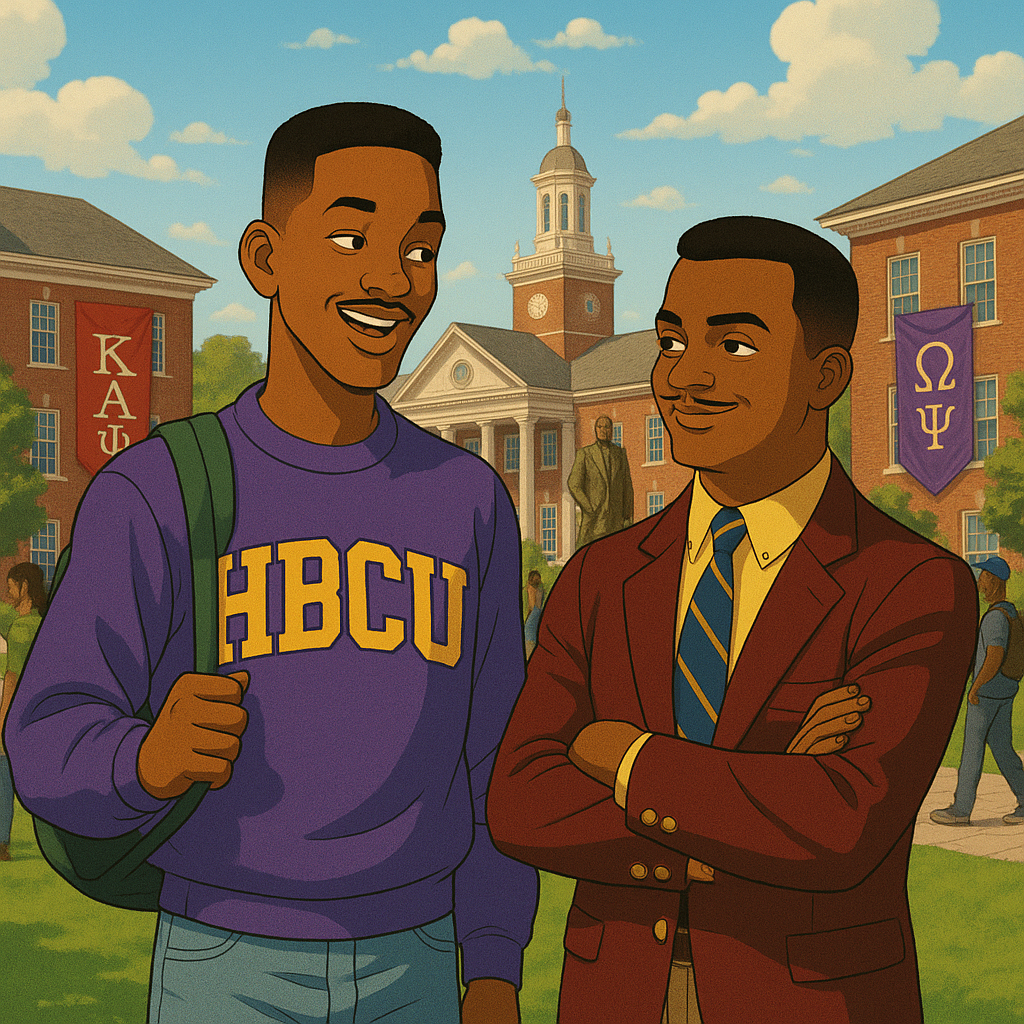
The same cultural dissonance emerged in the world of entertainment and higher education. On television, Gen X watched A Different World, a fictional HBCU experience that inspired a generation but also unintentionally reflected a pivot. The series’ most memorable duo, Dwayne Wayne and Ron Johnson, captured the promise and pitfalls of the Gen X mindset. As HBCU Money’s essay Dwayne Wayne & Ron Johnson Dropped the Ball: HBCUpreneurship observed, the show chronicled two brilliant young men who graduated not to build companies or institutions, but to take jobs inside someone else’s. Their story became emblematic of a generation encouraged to chase credentials rather than ownership.

Gen X was the first to be told that integration was complete, that they could “make it” anywhere. But what they were rarely told was that making it individually often meant abandoning the collective scaffolding their grandparents had built. The very concept of the HBCU as a launch pad for entrepreneurship faded into nostalgia. Dwayne and Ron’s missed opportunity was not fictional; it mirrored the real-world drift of African American college graduates into corporate dependency, even as those corporations benefited from their creativity without reinvesting in African American communities.

The consequences were measurable. While White entrepreneurial ecosystems flourished in the 1990s with the rise of venture capital and tech startups, African American business formation lagged far behind. Few HBCUs established business incubators, angel networks, or venture funds that could capture their graduates’ ingenuity. Gen X, trained to seek jobs rather than ownership, lacked both the financing structures and the cultural reinforcement to build enduring enterprises. The very generation that watched the digital revolution unfold found itself on the consumer end rather than the ownership end of that transformation.

In this sense, the decline of African American institutions was not merely physical but philosophical. The idea that collective power could yield freedom gave way to the belief that individual success was freedom itself. This ideological shift—fed by television, politics, and the allure of assimilation—eroded the cooperative ethos that once sustained Black Wall Streets and mutual-aid societies. Where earlier generations might have pooled resources to open a bank, Gen X was taught to seek a mortgage from Wells Fargo. Where their ancestors founded hospitals like Provident and Homer G. Phillips, Gen X looked to be admitted to the best White medical schools rather than to revive their own.

The paradox of Gen X is that they were told they had arrived at a moment of inclusion—seen in the growth of African American representation in politics, sports, entertainment, and corporate America—while the ground beneath them was collapsing. Symbolic milestones such as the first African American CEOs of Fortune 500 companies or the growing ranks of African American elected officials did not offset the fact that the ecosystem of African American hospitals, banks, and businesses was being erased. Gen X bore the brunt of this contradiction: celebrated for individual achievement while collectively stripped of institutional power.

The American economy of the 1980s and 1990s was primed for wealth building. Deregulation, real-estate booms, and the rise of the stock market created enormous opportunities for asset accumulation. Yet African American Gen Xers, lacking access to capital and institutional mentorship, were largely excluded. The few who broke through—whether in entertainment or professional fields—were exceptional precisely because the system offered so little support. They became proof of possibility for a generation starved of infrastructure, even as their fame obscured the underlying erosion.

By the early 2000s, as Gen X entered its peak earning years, the effects of institutional loss were unmistakable. The community’s wealth gap widened even as educational attainment rose. African American college-graduation rates climbed, but the payoff was smaller salaries, heavier debt, and less wealth accumulation. Without community-controlled banks or credit unions, they faced higher borrowing costs. Without business investment networks, they relied on personal savings to launch ventures, limiting scale and sustainability. Without hospitals and schools owned by the community, the circulation of dollars—once measured in weeks—shrank to hours.

The collapse of the boarding schools and the failure of HBCUpreneurship are not side stories; they are the connective tissue of this larger decline. Each represented a node of self-determination that could have anchored Gen X’s ascent. When those nodes vanished, Gen X’s trajectory became fragmented—brilliant individuals floating in isolation, disconnected from the institutional gravity that sustains a people. The lesson from the Final Four and from Dwayne Wayne and Ron Johnson is that without institutional continuity, culture becomes performance, not power.

The irony is that Gen X still carried the memory of what once was. Many were raised by grandparents who remembered owning land, operating local businesses, or attending all-Black schools where teachers lived in their neighborhoods. They inherited stories of collective pride, but not the structures that produced it. And because their own formative years coincided with mass media’s rise, those stories were often drowned out by consumer culture’s narrative of individual aspiration. Success became synonymous with escaping one’s community rather than empowering it.

That shift in imagination may be Gen X’s greatest tragedy. A people’s future is determined as much by what they believe is possible as by what they own. When the imagination of ownership fades, dependency becomes normalized. African America’s Gen X did not choose dependency; they adapted to a system that rewarded proximity to White institutions while punishing independent Black ones. Government contracts, corporate partnerships, and philanthropic grants replaced the cooperative economics of earlier eras. The result was a generation of professionals with unprecedented credentials but limited leverage.

Still, within this loss lies instruction. Gen X’s struggle clarifies that talent alone does not equal power. Communities achieve permanence only when they own the institutions that convert talent into infrastructure. The hospitals, banks, and boarding schools were not merely service providers—they were instruments of sovereignty. Their disappearance left African America reliant on external validation and vulnerable to the volatility of goodwill.

Oprah Winfrey, Michael Jordan, and Barack Obama stand as icons of Gen X achievement, but their presence cannot replace the 500 hospitals or 100 banks that once supported African American communities. Institutions are what allow success to scale beyond the individual. Without them, every victory is fleeting, every gain precarious. The Gen X dream of being “the first” often became a cycle of isolation: the first in the boardroom, the first on the cover, the first to arrive—but rarely the architect of a system that ensured there would be a second.

As Millennials and Gen Z inherit the debris of that collapse, they confront the same choice: to celebrate representation or to rebuild capacity. The wealth and power gaps remain staggering. African Americans are still nearly twice as likely to live in poverty and hold only about four percent of America’s small-business assets despite comprising thirteen percent of its population. The absence of institutions guarantees these outcomes; their reconstruction could begin to reverse them.

Rebuilding will require the mindset Gen X was never taught—to treat institutions as the truest form of freedom. That means HBCUs creating venture capital funds that invest in their graduates. It means restoring the legacy of African American boarding schools as incubators of discipline and intellect. It means reviving credit unions and community banks that finance local ownership. It means rediscovering that the measure of progress is not how many individuals cross the threshold of another people’s institutions, but how many institutions one’s own people can build and sustain.

Gen X stands, then, as both victim and warning: the generation that inherited the death of African American institutions and the collapse of mobility. Their story illustrates that the survival of a people rests not on individual ascent but on collective infrastructure. Without it, the next generation risks becoming lost as well. The lost generation’s greatest gift may be its clarity—the understanding that brilliance without ownership is bondage, and that no degree, celebrity, or salary can substitute for a hospital, a bank, a school, or a business owned in the name of one’s community.

Disclaimer: This article was assisted by ChatGPT.

More Than A Decade Later: New York’s Carver Bank Has Not Returned To African American Ownership

At close of market May 16th, 2025 Carver Federal Savings Bank (Ticker: CARV) stock price was $1.37 and had a market capitalization of $7 million.

In the heart of Harlem, a modest stone building bears a powerful legacy. Carver Federal Savings Bank, founded in 1948 to serve African Americans shut out of the financial system, once stood as a proud monument of Black economic independence. But more than a decade after a series of financial interventions shifted its ownership structure, Carver remains out of African American hands—raising questions about the future of Black-owned banking in America’s largest city.

For much of the 20th century, Carver Federal Savings Bank wasn’t just a bank—it was a symbol. Born in the crucible of racial segregation, the bank was named after George Washington Carver, a gesture toward economic empowerment and self-reliance in an era when African Americans couldn’t freely access mortgages, capital, or commercial loans. Carver stood apart as one of the few banks chartered to serve underserved Black communities with full-service financial products, not just basic deposit services. By the 2000s, Carver had grown into the largest Black-operated bank in the United States, holding nearly $800 million in assets and a footprint that extended across New York City. But the financial crisis of 2008 brought a devastating blow to community banks nationwide. Carver was no exception.

In 2011, to prevent collapse, Carver accepted a $55 million recapitalization led by Goldman Sachs, Morgan Stanley, Citigroup, and Prudential Financial. The deal saved the institution from immediate failure but came with a price: Black ownership was diluted, and eventually disappeared altogether. “It was like watching a cultural landmark sold off piece by piece,” says Alfred Edmond Jr., senior vice president at Black Enterprise. The investors involved in the bailout argued that their capital preserved an essential community institution. Without it, Carver may have followed the path of other Black banks that shuttered in the wake of the crisis. Yet critics argue that Wall Street’s “rescue” functioned more as a quiet takeover.

As of 2024, Carver is publicly traded under the ticker symbol CARV on the NASDAQ. But its board of directors and major shareholders no longer reflect the community it was founded to serve. African American representation remains, but it is symbolic at best—not controlling. This is not merely symbolic loss. According to a 2023 Federal Reserve report, only 16 Black-owned banks remain in the United States—down from more than 50 in the 1990s. Black-owned banks hold less than 0.01% of America’s banking assets, despite African Americans comprising over 13% of the population. These institutions face outsized scrutiny, undercapitalization, and, more recently, cultural erasure. “Carver’s transformation reflects a broader systemic problem,” says Mehrsa Baradaran, professor of law and author of The Color of Money: Black Banks and the Racial Wealth Gap. “These banks are often asked to solve problems created by centuries of exclusion without the capital or autonomy to do so.”

In the wake of the George Floyd protests in 2020, corporate America made a wave of public commitments to racial equity. JPMorgan Chase pledged $30 billion. Bank of America committed $1 billion. A smaller yet symbolically important gesture came in the form of investments into Black-owned banks, often through special deposit programs or equity infusions. Carver, still labeled as a Minority Depository Institution (MDI), became the recipient of some of this renewed attention. Goldman Sachs’s One Million Black Women initiative included community bank support. JPMorgan made technical assistance available. But none of these efforts changed the fact that the bank was no longer under Black control. “The irony is that companies are promoting racial equity while owning and profiting from a once-Black institution,” says Nicole C. Elam, president and CEO of the National Bankers Association. “There’s no accountability mechanism to ensure community control is returned.” Despite all the attention, Carver’s stock remains volatile, trading below $4 per share for much of 2024. Its market capitalization hovers under $20 million—hardly a prize for large investors. And yet, efforts to return control to Black investors or the community have stalled.

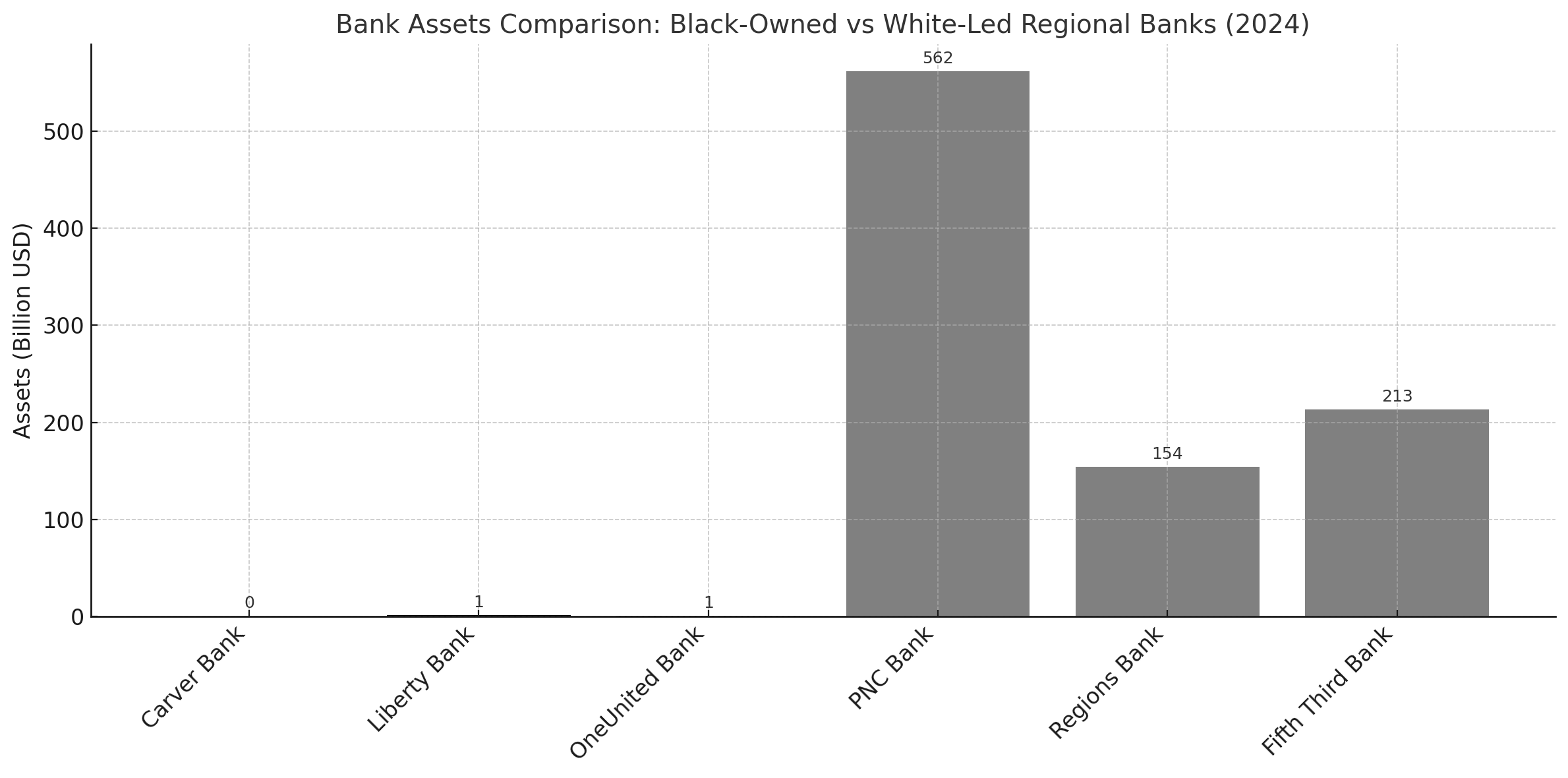
At first glance, the logic is simple. If Black community leaders or financial institutions want Carver back, why not just buy it? The answer, as usual, lies in a thicket of regulatory burdens, capital constraints, and systemic inequities. First, buying back a publicly traded bank is not cheap. Not only must investors pay for the shares, they must also meet stringent capital adequacy standards, undergo intense scrutiny from the Office of the Comptroller of the Currency (OCC) and the FDIC, and develop a viable turnaround plan. That requires not only money, but financial expertise and a willing group of institutional backers. Second, Black institutional capital remains relatively shallow. The combined assets of all Black banks in America are less than those of a mid-sized regional bank. Few HBCU endowments top $1 billion. Black venture capital and private equity firms are growing but still under-resourced. “If you don’t control the capital, you don’t control the bank,” says John Rogers Jr., founder of Ariel Investments. “And Black America still doesn’t have control of the capital.”

Some believe that the pandemic-era racial reckoning presented a missed opportunity. Corporate America was writing big checks. Foundations were searching for credible ways to support Black wealth-building. Influential Black philanthropists like Robert F. Smith and Mellody Hobson were encouraging long-term investments. With the right coordination, a capital stack combining philanthropy, mission-oriented investment, and community contributions could have reestablished Black control of Carver. But that coordination never materialized. “Institution building takes vision and orchestration. We had the moment. What we didn’t have was the mechanism,” says William Michael Cunningham, an economist and banking analyst. “Everyone wanted to help, but no one wanted to lead.”

New York’s political leadership has been largely silent on the issue. Harlem’s representation in the city council and state legislature rarely mentions Carver publicly. Even as the Adams administration touts equity initiatives and minority small business support, it has not made a coordinated effort to support community banking or institutional ownership transfer. Compare this to other minority community examples. In Chicago, the city has created a $100 million Community Wealth Fund to help finance minority entrepreneurs and institutions. In Atlanta, the Russell Center for Innovation and Entrepreneurship works closely with regional banks and city government to support Black business ecosystems. “New York talks a good game,” says Inez Barron, a former city councilmember. “But when it comes to economic infrastructure, the silence is deafening.”

The erosion of Black control of Carver has not gone unnoticed by its depositors. Harlem residents and small business owners say they still bank with Carver out of loyalty—but many no longer see it as their bank. “The staff are still great. The service is personal. But it doesn’t feel like we own it anymore,” says Celeste Washington, who owns a beauty salon two blocks from the 125th Street branch. “It feels like a museum of what Black finance used to be.” Others are more cynical. “It’s the same bank name, same building, but a different master,” says a former Carver employee who requested anonymity. “The soul’s been sold.”

Despite the challenges, some financial architects are working to engineer a return to community control. One idea gaining traction is a cooperative buyback. Using a vehicle similar to a special purpose acquisition company (SPAC), a collective of Black investors, philanthropists, and mission-driven capitalists could pool resources to buy out majority shareholders. A parallel idea involves transferring shares to a nonprofit trust governed by Harlem residents and business leaders. Others are pushing for a broader transformation of Black institutional capital. “We need to stop thinking of banks as only banks,” says economist Darrick Hamilton. “Think of them as economic platforms—distribution points for housing finance, entrepreneurship, education loans, and job creation. That’s what Carver could be again.” A Black-owned financial institution, particularly in a city as rich and diverse as New York, could be pivotal in building a community-centered economic ecosystem—from affordable housing cooperatives to small business lending networks to cultural real estate ownership.

Observers say that Black colleges and universities, especially those in the northeast like Howard University, Lincoln University (PA), and Morgan State, could play a strategic role. These institutions, along with Black philanthropic funds and pension boards, could pool endowment dollars to create an acquisition consortium. Even a modest $50 million fund could provide enough leverage to reclaim majority control and reorient Carver toward mission-driven service. “Imagine if Carver became the lead underwriter of mortgages for Black college alumni in major cities,” says Anthony Jackson, a Black banking consultant. “Or the back-end servicer of student loan refinancing for HBCU graduates. That kind of synergy could multiply.” The projected ROI on such a move isn’t trivial. Assuming a 10% annual return over 30 years, a $50 million investment grows to more than $872 million—more than the combined assets of most Black-owned banks today. It’s a long-term play—but one that offers strategic cultural, economic, and financial returns.

Carver’s story is still being written. It could continue as a bank preserved in name only, a hollowed-out shell of its former self. Or, with vision, coordination, and capital, it could return to its original purpose: not merely to serve Black communities, but to be owned by them. What’s at stake is more than a bank. It’s about ownership, power, and whether the symbols of Black advancement can be reclaimed—or will remain curated artifacts of a more ambitious past.

Disclaimer: This article was assisted by ChatGPT.