
Tag Archives: virginia state university

HBCU Money’s 2014 Top 10 HBCU Endowments

piggy-bank-with-glasses-m

The keyword for  2014’s HBCU endowments – disappointing. In the past twelve months, HBCU’s top ten endowments added $200 million to its coffers. So why is this disappointing? The S&P 500 over the past year had returns of 13.4 percent. The benchmark by which we measure endowment return success. Given many of the tax and capital advantages that college and university endowments have it takes quite a bit of effort to underperform the market. This year only six out of ten HBCU endowments outperformed the market, while HWCU counterparts clocked in at nine out of ten. This has allowed the institutional wealth gap between top 10 HWCU/HBCU endowments to balloon from 103:1 to 106:1 the past twelve months. 

This year was fairly standard with no real changes except one among the top ten, but what a change it was. The University of the Virgin Islands unseats Winston-Salem State University in the ten spot from last year after an unprecedented change in market value of 48.5 percent. A performance that not only led all HBCUs, but was fifth among the 851 American and Canadian endowments reporting. However, there is still real concern about the lack of HBCUs with at least $100 million endowments. Notable absences are Morehouse and Tuskegee who do not report. Even including these two, it would mean only approximately 7 percent of HBCUs are above this mark. This is concerning because even schools with only a $100 million endowment that achieved a market return of 13 percent leaves the school roughly $6.5 million to potentially to work with. Showing that HBCUs are still highly dependent and vulnerable to tuition revenue. A matter we saw continuously pop up after the Parent Plus Loan debacle that sent many HBCUers home. HBCU endowments should have been there to lessen the blow, but again given 93 percent of HBCUs are at $50 million or less it shows the vulnerability most are facing. The MEAC continues its dominance of the top ten HBCU endowments with four institutions present.

As always if you do not see your HBCU in the top 10 – DONATE!

Endowment in millions $000 (Change in Market Value*)

1. Howard University – $586 104 (14.0%)

2. Spelman College – $367 037 (12.2%)

3. Hampton University – $288 370 (13.5%)

4. Meharry Medical College – $136 975 (9.6%)

5. Florida A&M University – $127 186 (10.3%)

6. Tennessee State University – $50 492 (17.5%)

7. Texas Southern University – $46 577 (10.4%)

8. Virginia State University – $45 145 (18.6%)

9. North Carolina A&T State University – $43 785 (17.3%)

10. University of the Virgin Islands – $38 184 (48.5%)

Take a look at how an endowment works. Not only scholarships to reduce the student debt burden but research, recruiting talented faculty & students, faculty salaries, and a host of other things can be paid for through a strong endowment. It ultimately is the lifeblood of a college or university to ensure its success generation after generation.

endowment

*Note: The change in market value does NOT represent the rate of return for the institution’s investments. Rather, the change in the market value of an endowment from FY2013 to FY2014 reflects the net impact of: 1) withdrawals to fund institutional operations and capital expenses; 2) the payment of endowment management and investment fees; 3) additions from donor gifts and other contributions; and 4) investment gains or losses.

Additional Notes:
NACUBO Average Endowment – $616 188 (15.0%)
NACUBO Median Endowment – $112 967 (16.3%)
Top 10 HWCU Endowments combined – $180.3 billion
Top 10 HBCU Endowments combined – $1.7 billion
Source: National Association of College & University Business Officers

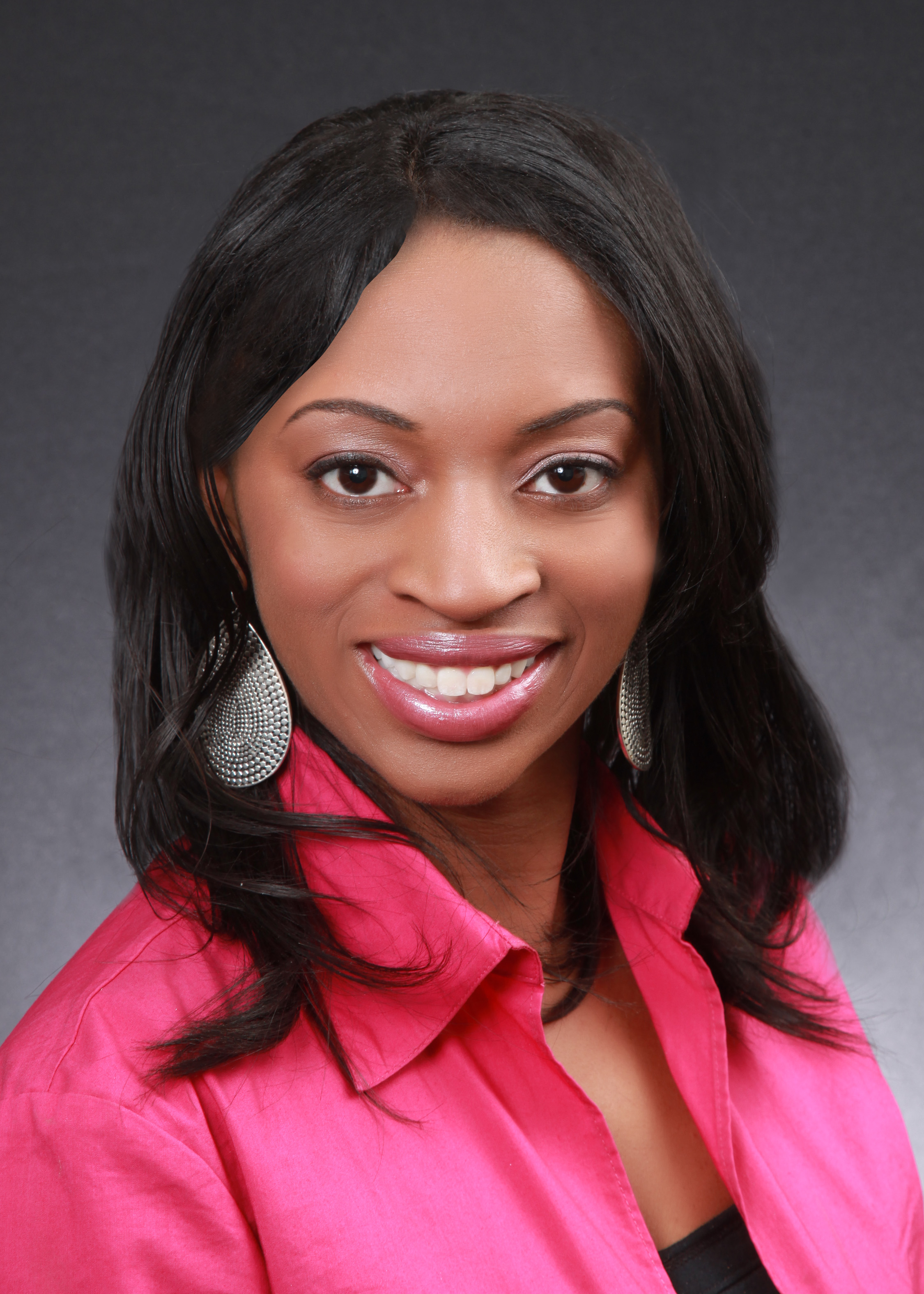
The HBCUpreneur Corner – Virginia State University’s Koren Underdue & KU Real Estate

KU Real Estate Logo

Name: Koren Underdue

Alma Mater: Virginia State University

Business Name & Description: KU Real Estate, specializing in selling residential real estate in the Triangle Area of North Carolina

What year did you found your company? 2011

What was the most exciting and/or fearful moment during your HBCUpreneur career? Taking the first step of starting my own business was both exciting and fearful at the same time. It was like having a baby. You are excited because you know what you just created is a blessing; however, you also know that you are the most vital player in its success. You must feed it, nurture it, and help it grow with leadership, integrity, and humility.

What made you want to start your own company? Prior to starting my own business I was managing for one of the largest banks in America and worked in their subprime market. With the failing economy, I soon realized that I needed to find something fast due to the uncertainty of our department and its future. Instead of looking for another job, I took the opportunity to begin real estate investing which lead to me starting my own brokerage company, KU Real Estate.

prof headshot 2012

Who was the most influential person/people for you during your time in college? My peers, it was incredible to be around “like minded” individuals who all brought something different to the table. Not only did we share ideas, goals, and aspirations, but we also challenged each other for greatness and encouraged each other to pursue our dreams.

How do you handle complex problems? That’s easy, simplify them. In general, problems are only as complex as we make them. I am learning through my experiences not to focus on the problem, yet focus on the solution.

What is something you wish you had known prior to starting your company? Honestly, I just wish that I was instilled with the “principals of success” at an early age. As a mother of three now, it is essential that I instill habits of success and leadership. I want them to know that they can aspire to do whatever their hearts desire; however, they must not be afraid of hard-work and dedication. As an entrepreneur, I strive to help them understand free enterprise and how it can provide more control of their financial future as they live their American Dream.

What do you believe HBCUs can do to spur more innovation and entrepreneurship while their students are in school either as undergraduate or graduate students? I would love to see HBCUs encourage students to step out more and challenge them to find their passion, their why, and assist them in starting their own business even while in school. Not only should HBCUs provide the fundamentals, but provide them with hands-on tools and resources to develop action plans. It would be great to see more business mentorships and also develop mastermind groups within the student body. Bill Gates was 20 when he started Microsoft, and Mark Zuckerberg launched Facebook from his dormitory of Harvard University also at the age of 20. I bring this up to state they were both young individuals with bright ideas and took a chance. Why can’t our young HBCU students do the same? They can and I can’t wait see the new movement of our HBCU community!

How do you deal with rejection? I accept rejection, and it does not discourage me, it motivates me. In business you will find many times someone telling you no or an opportunity you were hoping for fails. The great thing is it’s not the end of the world. I learned to accept it for what it is and embrace it. I never take it personally, but I do however examine the rejection. What was the reason why I was rejected? Is this something I can overcome? If so, I am developing my plan of action immediately to do so. What can I learn from this experience? Please note: Every rejection is an opportunity for a learning experience which will benefit the growth of your business no matter the outcome.

When you have down time how do you like to spend it? I love to spend time with my family, relax, and travel the world.

What was your most memorable HBCU memory? My most memorable HBCU memory was my graduation. That day represented accomplishment from years of hard work and dedication. It was a day to reflect on friendship, leadership, and how I was truly proud to be a VSU Trojan Alumni.

In leaving is there any advice you have for budding HBCUpreneurs? Just do it and don’t quit. Most businesses fail because they quit. Fail forward and never let go of your dream!

The Roth IRA Challenge: Virginia State University vs Clark Atlanta University

By William A. Foster, IV

vsucaut 12.29.15 AM

Without the spur of competition we’d loaf out our life. — Arnold Glasow

There is no secret that America as a whole is not saving enough for retirement and there is also a saying that when America catches a cold that African America has pneumonia. Currently, African Americans median monthly savings equates to only 51.4 percent and an abysmal 11 percent of the median monthly savings for European and Asian Americans, respectively. However, our behavior in terms of consumption and savings either as a result of ignorance or envy as it relates to our financial situation continues to have us acting with a behavior that does not show us closing the gap anytime soon. That is unless we hold ourselves and each other accountable.

It was a few months ago I was talking to a friend of mine who is a therapist and we were discussing how we really did not feel like we were saving enough for retirement. There were a number of factors influencing this for sure (student loans being the primary elephant in the room) but one thing we laughed about is how competitive we both were and that we should make a competition out of saving for retirement. She had no retirement accounts because her job did not offer 401(k) as it was such a small firm. I helped her set up her Roth IRA because I actually prefer it over the 401(k) for a number of different reasons. We decided to challenge each other to save a minimum of $50 a week and eventually  ramp it up to $100 a week to insure we were maxing out the annual allowance. The rules for Roth IRA allow you to contribute $5 000 over a 52 week period. A new fiscal year for Roth IRA’s typically starts April 15th to allow people to contribute tax refunds to it should they receive any. The penalty for missing a contribution was you had to donate $25 to the other person’s alma mater.

One of the things I found most interesting was that my friend grew up with a father who was an accountant so it was actually rather surprising that her aptitude about financial literacy was rather obtuse. Of course African American households in general talking about money seems to principally focus around how the bills will get paid. Budgeting, saving goals, investments, and other fiscal conversations are often left to happenstance. As it seems most often in our community we are catching and not pitching. That is to say we are reactive and not proactive about issues concerning ourselves, family, or community’s fiscal health among other things.

Ultimately, what I hope transpires as a result of our competition is a more active role and engagement about ideas for funding retirement. Talking about potential investment decisions and having an extra set of ideas to review your portfolio can be extremely beneficial. A group called Tiger 21, an investment club geared toward high net worth former entrepreneurs and executives, actually uses this peer review system. A member in each chapter must present, explain, and defend their portfolio to their peers at some point during the year. Is your peer over leveraged? Are they not holding enough cash? It also offers the opportunity for people to learn together, be accountable to each other, and compete with each other. Do you really need that extra purse or tennis shoes? Yes, it appears in the end I am my investors’ keeper.

Virginia State University Moves To Become Leading Producer Of African American Economist

A science of economics must be developed before a science of politics can be logically formulated. Essentially, economics is the science of determining whether the interests of human beings are harmonious or antagonistic. This must be known before a science of politics can be formulated to determine the proper functions of government. — Claude-Frédéric Bastiat

vsu

It seems every day for the past few weeks there are new emails to review for Virginia State University’s Barton Blanks who is a Stewardship Administration Manager for the university from a set of thirty-somethings economics alum. It all started when a donation that the university received was designated for the Department of Economics. However, there was no endowment or fund that was designated for the department. Mr. Blanks contacted the alum who made the donation and a trail of email conversations sprang up with several suggestions brought forward by Mr. Blanks. The alum then contacted other alums to get their feedback on the feasibility and commitment for an endowment based with the university’s foundation specifically for the Department of Economics. As it turned out there was much interest and so they began the outline of what would begin to establish the endowment and its purpose.

Virginia State University is one of the few HBCUs that offers pure economics as a major and just one of five that offers it on the graduate level. Like most HBCUs that offer economics they have a very small department, a very small budget, and usually never graduate more than ten undergraduate students a year. Economics is no major for the faint of heart but its possibilities and needs are endless in terms of developing the economic infrastructure of African America not to mention the power it produces. There has never been an HBCU Federal Reserve Governor and only two African American Federal Reserve Governors. A position that is nominated by the President and confirmed by the Senate. It appears this group of alumni is out to change that.

The endowment currently being set-up will go by the name The Sadie T. Mossell-Alexander & Eric E. Williams Economics Endowment. A clear ode to two African Diaspora economic pioneers. Dr. Sadie Alexander was the first African American woman to receive a PhD (economics) in the United States and while not an HBCU graduate herself her sister was the Dean of Women at Virginia State College, the forerunner to Virginia State becoming a university. Dr. Eric Williams was a prominent Economics professor at Howard University and wrote the book Capitalism and Slavery during his tenure there which is considered as important of a book about capitalism as Wealth of Nations by Adam Smith.

The endowment seeks to focus on a number of objectives. It will provide operations funds to the department, undergraduate and graduate scholarships, faculty awards, and the establishment of an institute. The unique thing about the undergraduate scholarships is that it gives funding to any and all economics majors who have at least a 2.0 GPA which the group hopes will eventually graduate undergraduates debt free. A move that should both increase enrollment in the program and create long-term wealth for the students, their families, and community. The groundbreaking institute being proposed will be the Marcus Garvey Institute of Diaspora Economics focused on the economic movements of different Diasporas and sub-Diasporas. This could be the first of many institutes that the group hopes to launch through the department.  Lastly, there is a provision in the endowment that would allow the university should it ever face a financial crisis the ability to access the endowment both principal and earnings as a short term loan. The economics alums behind the push are said to have a 25 year horizon to fulfill all of its initial goals which they plan to evaluate every 5-10 years and add on to the 25 year plan.

With only 2 of the top 10 ranked economic programs coming from public universities and no HBCUs in the top 100 this group faces an immense uphill battle. Especially given most top economic programs have budgets in excess of $60 million dollars and at least 50 faculty – Virginia State currently has approximately a $135 million total university budget and 6 faculty in the economics department for perspective. Ultimately, this group of alum has taken ownership of their department’s future with the establishment of this endowment. The success of it will eventually produce the largest number of African American graduates in the economics field annually as well as possibly create a new sub-field of economics research in Diaspora economics. There is no doubt that eventually not only will there be a Federal Reserve Governor coming from this group but eventually a Federal Reserve Chairman. Alums taking ownership of the future of their departments as de facto “shareholders” and strategist from the front lines is what we need to promote more of. Hopefully the traditional way of doing things where alums have been excluded from the strategy sessions often times will give way as alums not only seek to have their voices heard but are doing so by putting their money where their mouth is.

The HBCU Endowment Feature – Virginia State University

School Name: Virginia State University

Median Cost of Attendance: $20 966

Undergraduate Population: 5 075

Endowment Needed: $2 128 048 960

Analysis: Virginia State University needs $2.1 billion to allow all of its undergraduates to attend the university debt free annually at its current population and cost of attendance. VSU has both a foundation and university endowment that serve the institution and student body.The university’s endowment is $22.5 million as reported to NACUBO annual survey meaning if all of the endowment was dedicated to scholarship they would have enough for 1.07% of their student body to go to school debt free annually. On the brighter side, VSU is one of the fastest growing endowments in terms of capital and investment returns and with a strong push among alumni could see itself break into the rare air of HBCU endowments with $100 million plus in assets.

As always it should be noted that endowments provide a myriad of subsidies to the university for everything from scholarship, faculty & administration salaries, research, and much more.